John Morton, known primarily for his success with Datsun, reveals his extensive experience with Porsches and shares captivating stories from his racing career. The conversation dives into his early days, including his introduction to racing through go-karts and his time at Shelby American. Morton recounts his unexpected journey to Sebring, where he became a driver without prior practice on the track. His anecdotes about working with legends like Carroll Shelby and Ken Miles provide a unique glimpse into the racing world of the 1960s, making for an engaging listen.
Topics:john mortondatsun racingsebiring storiescarroll shelbygo-kart racinglotus 7ford vs ferrariporsche experiencesracing historyshelby american
John Morton is a race car driver. He raced with the Shelby, BRE Datsun, Lola, Porsche, Jaguar and Nissan. Then started vintage racing after 2002.
-1971 & 1972 Trans Am Championship in Datsun 510 -1979 class win at 24 Hours of Daytona in Ferrari 365 GTB/4 -1984 class win at Le Mans in a Lola. -1993 & 1995 class win at 12 Hours of Sebring in Nissan 300ZX -1994 winner of 12 Hours of Sebring and class win at Le Mans.
In this episode we talk about: -Spending his college money on Shelby racing school and a race car. -His time working at Shelby.
"I had a neighbor with a sports car and that attracted me to sports car racing. He had an MG and then he had a Jaguar XK 140 and then he had a Porsche. What kind of Porsche did he have?"
"because he had a car that we could drive to Florida and back for that kind of money. It was in Carmen, Gia, the three of us. We got there. I ran into Ken Miles right away."
"The shop. They moved it to the airport in 1965. Pretty much coincident when the GT 40 program was in its early stages. You could have just stayed there and worked, right?"
Select text to request an explanation
Welcome to Porsche Pattern with Bracken Helms, the show where we hear Bracken and his distinguished
guests from the Porsche community patter on about Porsches and all things automotive.
Porsche Pattern is sponsored by Circuit 6-4.
Circuit 6-4 creates authentic automotive apparel made for life-minded automotive enthusiasts.
The links for Circuit 6-4 are in the shown notes.
Okay, let's get to it.
John Morton, part one.
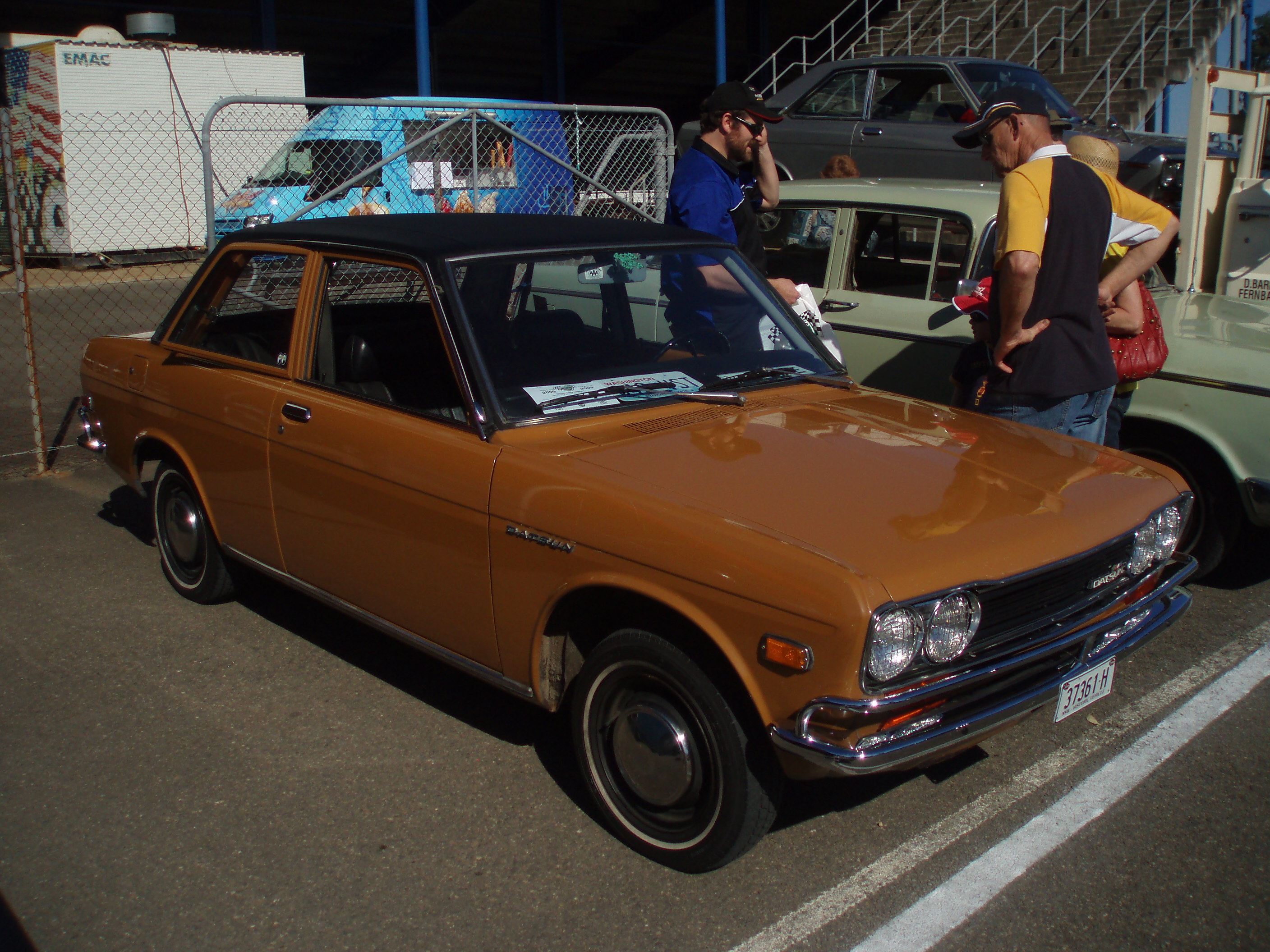
You probably know John Morton is more of the Datsun guy.
He doesn't really necessarily like being pigeonholed as just the Datsun guy because he's
driven so many cars.
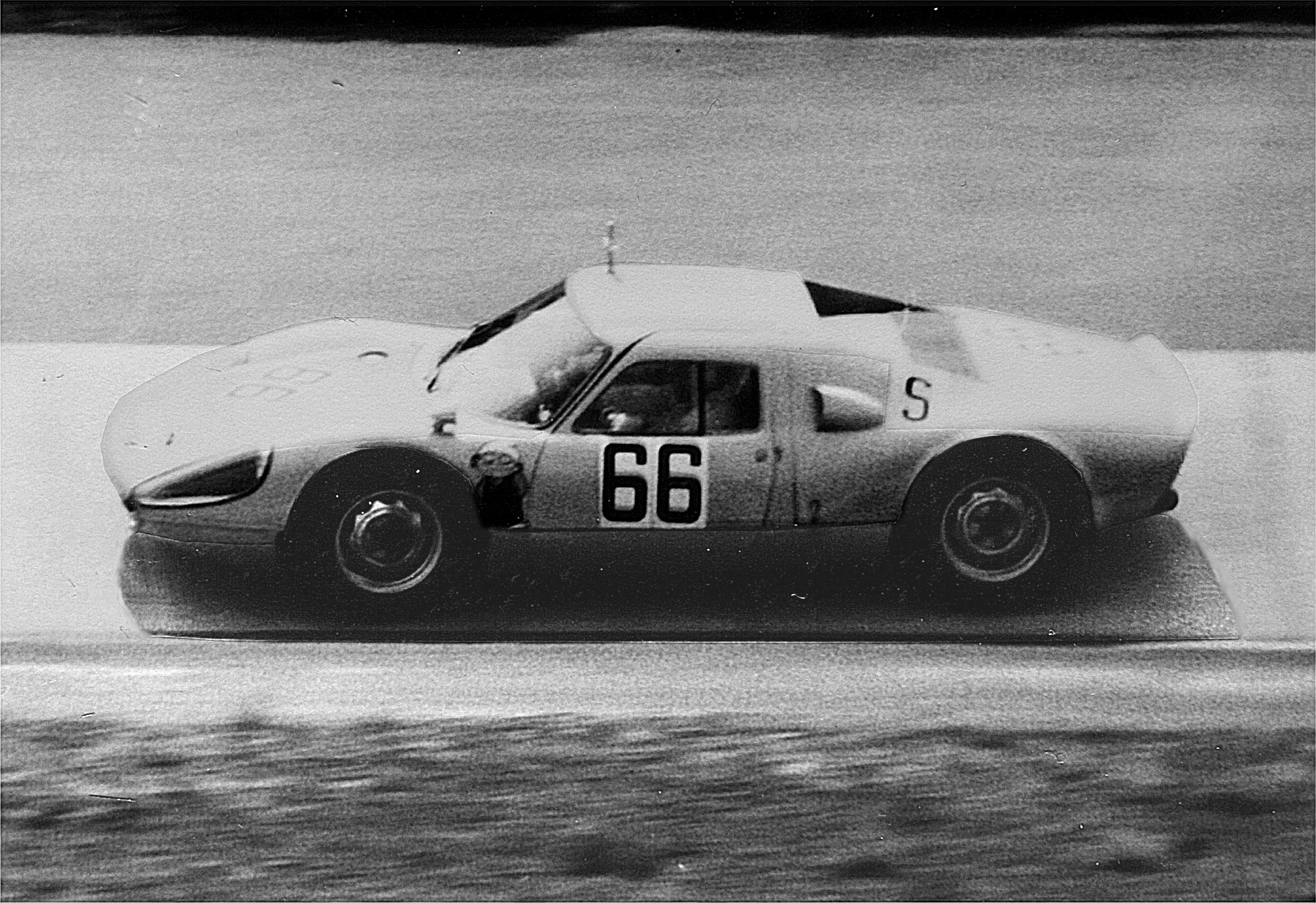
And what intrigued me is he's actually driven more Porsches than any other car.
But when you're dominant as he was when he was driving that Datsun 510 and the 240Z for
the BRE team, that's what you get remembered for.
All right.
At the very first, he's kind of like, well, you already know the story, like what am
I here for?
But he's kind of like teasing me.
But he wasn't like as forthcoming as I wanted him to be at first because I brought up
the Jalopy and there was more to the Jalopy story, but then I'm like, okay, we'll
move on to Shelby.
I'll get him talking.
And at first he like wasn't really talking.
So I'm just like, well, I'll just start telling the story and then he'll fill in the blanks
and then he'll get going.
And that's when he kind of like caught me and he was just like, you already know all
this.
And I'm like, yeah, I know this, but the audience doesn't and they don't want
to hear me blabber.
I mean, they don't care about me.
They care about you.
I'm just trying to get you to start telling the stories.
It's crazy that they never even let him practice.
So when he went out at Sebring, like he didn't even know the whole track.
He'd never even been around it.
Can you imagine going out in a race?
I mean, usually they at least walk it or they at least do a practice lap.
So anyway, here's John Morton, part one.
Who is John Morton?
Who am I?
An old man, an old man with gray hair and maybe hearing aids.
Okay.
So what attracted you to cars?
Our kid is attracted to cars unless there's something wrong with them.
I had a neighbor with a sports car and that attracted me to sports car racing.
He had an MG and then he had a Jaguar XK 140 and then he had a Porsche.
What kind of Porsche did he have?
A 356 Coupe 5960.
Okay.
My favorite was the XK 140.
So how long have you been racing?
You mean I've raced go-karts.
So I had a question about that.
Was the go-karts before you went to college?
Approximately at the same time.
There was a California phenomenon that kind of caught on all over the country.
But yeah, the first kart race I ran was in 1960.
Okay.
So let's figure out this timeline.
So you did go to Elkhart Lake with your father for like a race and that kind of when the light
bulb went off.
Correct.
That was 1957.
And then did you do the go-kart racing before or after you bought that Jalopy in college?
Kart racing had happened before that and concurrent with that.
So you rolled a car.
Was that the Jalopy?
Yeah.
And then after that, you bought the Lotus 7 while you were still in college?
No.
I was working at Shelby's when I bought the Lotus 7.
That was 1962.
I went to Shelby's racing school.
I drove to California.
Right.
So I'm wondering what car did you drive there?
At 1959 XK-1.
That's right.
You had a Jaguar before.
When you drove a Jaguar there, okay.
You didn't just ride to Shelby.
You rode to three schools.
It was like you were stuck on Shelby.
You rode to three different driving schools.
Yeah.
It was my third choice.
The first two choices were in England and they didn't, one of them didn't answer.
The other was out of business.
So you were going to leave college and move to England?
Had they answered?
Correct.
I don't know how that would have unfolded but yeah, it was my plan.
So you drive to Shelby.
You don't have a car so you have to spend more money because if you brought your
own car it was less money to do the school, right?
So I had to use the school car which was the first Cobra ever made.
It was the prototype that sold recently in the last five or six years.
It sold for $13 million.
I mean it was pretty run down when you got a hold of it though, right?
Well that's what they gave me to drive.
It had been through the magazines because they were introducing the Cobra.
Was on the cover of Road and Track and that sort of thing.
Shelby never sold it.
He always kept that car and after he died his foundation sold it.
Okay.
Well, when you arrived you were hoping that you were thinking, hey, I paid all this money,
Carol.
Shelby's going to be my teacher but it was Peter Brock and you had no idea who
he was.
Seward's like kind of bummed out.
Yeah.
You're reading this like a book report because all that was in the book I wrote.
So when did you get the Lotus 7?
I got it before I turned 21 back then you had to be 21 to race and I bought the Lotus 7
to start racing.
After you got done with the driving school you just approached Carol and was just
like, hey, give me a job.
No, I didn't say it like that.
During the school Shelby came out with the first Cobra that was going to be raced.
It was really the second Cobra as I recall maybe the third one is the first one that was
going to race and he took it out to Riverside to where the school was to test it with Billy
Krause as the driver and it raced about a couple weeks at the first Times Grand Prix
preliminary production car race and also the first race Stingray ever raced.
So Carol when he came out to the school to test that car Peter Brock introduced me to him
because I asked him to and then I asked Mr. Shelby if he might have a job at his factory,
the Cobra factory and he said, yeah, come see him Monday because the school ended on Friday
at Riverside.
The cars were built in Venice, California, which is a small town on the coast.
My brother used to live in Marina Del Rey.
So that's why they changed the name now that area where the Shelby factory was is now called
Marina Del Rey.
Oh, OK.
So about what area was it in?
You familiar with the area?
I mean, I've been to my brother's.
Well, he sold it now, but I've been down there a bunch.
Lincoln Boulevard and Washington Boulevard right at that intersection.
Three, three, four blocks from that intersection.
1042 Princeton Drive building still there.
And then so you showed up that Monday and he kind of gave you a mop
and you became the janitor for a short time until you became a parts chaser
because they were worried about the guy doing the parts chasing.
You've got all this.
I'm actually like, like I said, normally I just play dumb
and wait for you to unfold.
But I guess you already unfolded it.
So I guess I'll just try to like tone it down a little bit because I see.
Well, I mean, the listeners are going to be like,
you know, we don't care.
Like we want to hear his story.
We don't want to hear you being the narrator.
OK, so what happened from there?
I worked there for several months, put an order in for a lotus or seven.
So this is the one we were talking about earlier.
Yeah. So when does the lotus?
What was the other one, the 23?
Later was a 23.
I traded the seven on the 23.
Like how much later?
Partway into 1964 season.
What year did you go to the school?
The driving school.
Yeah. It's 1962.
So you had worked there two years before you begged to go to Sebring.
No, I went to Sebring when I was in college
because I went to college in South Carolina
and I went to Sebring as a spectator two years while I was in college.
Oh, OK.
But we're talking about the big can I go in there like, nah, I don't know.
And then they're like, we're going to pay you nothing.
That was that was 64.
I went in 63 on the team, too.
Oh, OK.
I rode in the truck in 64.
I went there as theoretically my job description was Night Watchman at the track.
And I ended up turning into a driver.
I had raced, you know, the Lotus.
OK, so let's let's just let's just tell this story of the Sebring 64
because that's a pretty funny story.
It is funny. Yeah.
I wanted to go to Sebring because now I'm part of this Shelby Grace shop
that had been the Reventlow building when they built the scarabs
during that period.
So I wasn't part of the crew nor was my friend.
We wanted to go and they said, we'll give you
twenty five dollars a piece to drive your own cars to Florida and bag.
So we said, OK, we got a guy another twenty five dollars
because he had a car that we could drive to Florida and back for that kind of money.
It was in Carmen, Gia, the three of us.
We got there. I ran into Ken Miles right away.
I knew him from Shelby's.
He worked there and he asked me if I had an FIA license,
which I didn't all added a CCA club license.
He asked if I could get one.
And I said, I don't see how I'm going to get an international racing license.
And he's made a little note that said John Morton is qualified for an FIA license.
Ken Miles, take this to race headquarters, see if they'll give you a license.
So I did and they did.
And I said, why?
And he said, well, because we have five cars and nine drivers.
We might need you to share the four twenty seven with me.
So the cars the previous year, sixty three were not quite as reliable.
So they thought they needed all that.
They thought they wouldn't need a ninth, a tenth driver.
But someone was bound to fail and they were much more reliable
and sixty four and they they were not failing.
So the two other guys that you came out there with,
were they drivers or they were just they just worked?
One of them was that became quite a good fabricator.
The other one was the guy that did the wiring for the race cars,
the cobras that were deemed race cars.
OK, because I mean, in my mind, my mind's wandering and I'm thinking, OK,
a lot of the people there seem to even if it was low end racing,
it seemed like everybody was kind of racing their cars.
No, they weren't.
They were there were a lot of very experienced mechanics.
Phil Remington, he was more than a mechanic.
He's really the reason the cobras were successful.
And there are a number of them that had been, you know,
involved in Indy car racing and they had some very good people
at Shelby and most of them were not drivers.
He had drivers, you know, he had really good drivers.
He had McDonald and and Miles and Billy Krauss and and then later
Ed Leslie and and Bob Johnson.
But yeah, he had he had drivers, but most of the people working in the shop.
There were only a couple in the shop that wanted to be race car drivers.
And I was one of them.
Then in the practice, I asked, can I practice?
Team manager was there, but Shelby wasn't in the team manager said,
I'm not going to let you practice until Shelby's here,
because I don't want to take that responsibility,
because I was just basically a couple of steps above the janitor.
Yeah. And so Miles crashed the car in practice.
This is a two eighty nine chassis with a four twenty seven engine
that was an experiment that Miles wanted to do.
He wanted to try that.
And as it turned out, it was very marginally successful.
So I had a question about that, like, what was the difference between the chassis?
A lot different, but there was no four twenty seven chassis.
So they wanted to try the big engine and the old chassis or the original chassis.
The chassis that has almost all the history of Shelby
of the Cobras was the two eighty nine chassis, not the four twenty seven.
This car that we're talking about.
And then later, Miles drove a dedicated four twenty seven
at Riverside Grand Prix or a preliminary race, I can't remember.
But yeah, that was the only other factory four twenty seven that I know of that race.
What's the difference between that one and the other cars you guys were racing?
The only difference was it had a four twenty seven engine in it.
Oh, so so his had the four twenty seven and all the other ones
were just two eighty nine chassis with two eighty nine engines.
I mean, just the way they were supposed to be.
Back to the factory, the normal car they raced.
And you think with all that extra power, it didn't really even equate
to that much of an advantage.
Well, and it had been he crashed it in practice, major damage.
And we worked on it and got it twisted round in shape enough
to to actually run the race.
But it had been damaged and it was still wounded.
But it did have a fresh four twenty seven.
They put another engine in it before the race, a Holman Moody stock car engine.
So it had power, but it started having trouble right away.
It had trouble with the brakes.
And then it had a number of problems during the race.
Most of the time I was driving it.
He drove it for three hours and he was tired because he'd been.
I think he cracked ribs when he crashed into the tree.
It wasn't perfect when I started driving it.
And it got less perfect as I as I continued until it finally blew up
about just before dark.
You didn't really know the track as well as some of the other people
because on your first outing, you had spun it a couple of times.
Like just but just like the first lap.
Then after that, you kind of got it right first lap.
I had been there twice as a spectator and then I'd been there
once as, you know, on the team.
And then as I watched the race, I learned the turns that I could see.
You know, I hadn't driven on them, but I'd seen them.
So I and then it went out and back then it went way out into the runways
because it was an airport had been a World War Two training base.
It was an airport now, but a dedicated racetrack for once a year.
And the cars disappeared out into the runways.
So I had never seen those turns because nobody could see them
from the spectator areas.
And that's what there were two of them.
And I spun on both of them.
They were just delineated by hay bales.
Yeah, Michael Kaiser sent me that the movie he did, The Speed Merchants.
And that was in 72.
And that kind of blew my mind.
Like you think about it now, it's such a big racetrack.
But in 72 in that movie, 51 weeks out of the year, it was just like
Nowhere'sville and then the one week that they raced, it was kind of
like they had to go out there and like burn all the weeds off
that came through the cracks in the road.
Like, well, parts of it were airport, active airport.
What the reason they had to have a night watchman is because
they had the old World War Two hangers for the cars.
They didn't leave them in the pits.
You know, the bigger teams, Shelby's team, Jim Hall's team,
the Cunningham team, they got a dedicated building, which was
an old World War Two hangar with remnants of owls done.
And, you know, they were just some shelter and they needed a night
watchman because they had a lot of crazy people, wild people.
They were spectators.
They didn't want to.
That's why I was deemed a night watchman.
OK, then they asked you to race and you didn't even have a helmet or get up.
No, I borrowed a helmet and then I bought a driving suit.
But I borrowed a helmet from one of the motorcycle guys.
And then because you're a low man on the totem pole and the engineers
send you out there and you're saying the brakes aren't working.
And they're kind of like, rookie, just keep driving.
So you finally came in and like, OK, well, have Ken Miles take it out.
Yeah, no, that's that's true.
I still think it's kind of funny that they were just kind of blowing you off
like, oh, he just doesn't know what he's doing out there.
Well, they I didn't mean to be.
But but I mean, you should know if the brakes work or not.
Well, I did. Yeah.
And so but they didn't believe you went out one lap and he came in and said,
brakes don't work. Yeah.
So when you told them, they're just like shaking it off.
But when he told them, it's kind of like, oh, I guess the brakes really don't
work. I guess the kid was telling the truth.
Yeah, that's that's the way it was. Yeah.
Oh, so was this a seabring that your family brought your wife to?
Yes. Yes.
So you had a lot going on during the seabring.
Yeah, I had a lot going on, but I don't use that as part of the story
because it gets too complicated.
But it just makes this weekend just so much more dramatic.
Well, it's pretty dramatic.
In fact, that whole trip netted me a daughter who's 60 years old right now.
So that's how long ago it was.
Right. So just secretly married.
Yeah. So you were trying to you were trying to avoid the being drafted.
So you got married kind of real quickly.
Well, they made a rule that it wasn't the Vietnam War wasn't going very hard yet.
And so it wasn't to stay out of Vietnam.
It was just to stay out of the army so I could keep racing.
But I think it was Lyndon Johnson said, if you're married,
you don't have to submit to the draft.
And people were marrying, you know, go into Las Vegas and marry in hookers
and whatever just to get out.
And they thought that, well, that won't work.
So they changed the rule that you had to have a child.
So I know that that you had an appointment and everything
and you just needed to be married.
So you're planning on getting married anyway, but you moved it up
or she was willing to move it up.
Yeah. But I didn't hear that you had to have a baby.
I thought that just happened.
What happened right away.
And the baby had nothing to do with that.
Right. But I just had a baby that was conceived
sometime in that week of Sebring.
Right. Yeah. Busy week.
Oh, and and to add it and to add into that,
your parents didn't know you got married.
Well, just add that little bit.
They found out.
Yeah. They brought her down.
But for a while, they didn't know.
No, they they didn't.
OK, so after that, you raced a little bit more with Shelby, right?
I raced at Elkhart Lake that year
that was in June of 64 after Sebring.
And then I drove with Ken Miles and Skip Scott.
And we won.
It was the Road America 500.
We finished second overall and first in the GT class.
And then the following week, I drove at Bridgehampton
on the team with a brand new Cobra
289 with Joe Freitas, another Shelby employee.
So years later, I drove for Shelby in 99.
We ran the Goodwood Revival
and then again in 04 in a Cobra Coupe.
And so when did Shelby sell you on this pipe dream of he was going to help you out?
Was that what was that with your the Lotus 23?
No, the seven.
So he was going to help you get some parts and help you race.
He was going to make it a project in the shop,
make a list of stuff I needed for the car to make it fast enough
to beat one of his rivals, Chick Vandergriff,
who was a big sports car dealer.
And he had a very good driver named Ronnie Bucknham.
Shelby came out to Willow Springs,
which I was going to race after I'd gone back east and run.
So I had gotten to be, you know, better.
I had a year's experience or a season's experience.
I came back to get my job back at Shelby's
because I'd taken a leave of absence.
Shelby came out to Willow Springs to watch Bucknham
and I almost beat him, you know, in Shelby's mind.
I was still the janitor.
This is before the Cobra stuff,
but this is before the Seabring and this was 63.
OK, and he told me I was going to,
he was going to make me a Mustang driver.
And he never did that, but he did.
But I did drive on the, you know, the Cobra's.
Was he just filling you full hot air?
Do you think there's any part of that?
He meant it. He did order some parts
because I kept bugging him about it.
You know, I got a close ratio set of close ratio gears
and an oil cooler, as I recall. That's that's what I got.
It was never a shop project,
but I did build the engine at the shop after hours.
Or we did, my friend and I.
OK, so you said it had a 904 engine in it.
No, I know the 23 is a 20.
23 has a 1600 cc English Ford double overhead cam engine.
I had the car brand new. That's what it had.
I raced it several times.
Shelby entered it for me in races.
He, you know, as a team car, because it was powered by Ford,
just transported it to the races through four races.
And then the West Coast big races at the end of the season.
I needed a two liter engine
because the class was two liter. You could put a different engine.
Some people put climax engines in them.
And some people put, you know,
various engines that were the full two liters
because the cars as they were built were 1600 cc.
So you're giving up 400 cc's of potential performance.
So I bought a Porsche engine
because my friend, a good friend of who worked at Shelby's also.
He put a Porsche 904 engine in Fulmars Lotus 23.
He won the championship in 65 and became a, you know, very successful driver.
That was the start of his real success.
So I thought I'll do the same thing.
And former had better success than I did
because he had a sponsor and I did. I didn't have any money.
And so it was the four cam, right?
Yeah. OK.
I paid thirty one hundred dollars for it.
From Otto Zipper and a dealer and a racer.
And they're worth a quarter of a million dollars today.
I sold my car with that engine for forty five hundred dollars
when I started driving for Dotson.
You weren't super excited about the Ford versus Ferrari movie
because it didn't accurately portray much of anything.
It was a little Hollywood like.
Correct. The people weren't really like the people.
Their personalities weren't really captured. Right.
That Phil Remington, Phil. Yeah, Phil Remington.
Yeah. Yeah. He's he was more than any other person responsible
for Shelby's success. The guy they just called Phil.
So when did Shelby move to Europe?
They only went to Europe to race.
They didn't move the the business to Europe.
The shop. They moved it to the airport in 1965.
Pretty much coincident when the GT 40 program was in its early stages.
You could have just stayed there and worked, right?
Or you couldn't. Oh, I got I got laid off.
They laid off because Ford had taken over a lot of the
and the Shelby was.
I don't want to say he was on the back burner.
He wasn't. But he was not.
It wasn't like the Shelby team was.
It was now it was more like the Ford team.
I mean, they got rid of a lot of people that they felt they didn't need.
And it was part Shelby and part Ford.
But it was because Ford took over, they moved to the airport.
They moved to LAX and took over two big hangers
and the complexion of the place changed.
It wasn't the fun it was earlier.
It was a different vibe, as you'd say today.
So was that kind of a scary time for you?
Yeah, because I had a wife and kid and no job.
But I continued to race my my Lotus Porsche
until 1968, the the SCCA runoffs at Riverside in 1968.
Last time I drove the car, I parked it and tried to sell it.
Thanks for joining us for today's episode.
If you enjoyed the show, please subscribe, comment, like and share with your friends.
Feel free to send questions or suggestions to the email in the description of the show.
Special thanks to our sponsor, Circuit64.
Goodbye for now.
We hope we can get together again for our next episode.
Now get out there and enjoy the cars and the people.
We'll see you in the next episode.
Request an explanation for:
8 cars
Scroll for more
8 cars featured
Request an Explanation
Heard something you'd like explained? We'll add it to this episode.
Sign in to request explanations for terms you heard.
Want to learn more?
Browse our glossary for plain-English explanations of automotive terms, jargon, and concepts.
See something that's not quite right? Our annotations are AI-generated and can sometimes miss the mark.
Click the flag icon on any annotation to suggest a correction.