
July 11, 2026 | Weekend Drive: Toyota’s Texas-sized plant investment; market resilient so far in 2026
About this episode
Toyota’s board greenlit a $3.6B expansion of its San Antonio truck plant, aiming to shift 150,000 Tacomas from Mexico to the U.S. for sales starting in 2030. The discussion frames it as both a response to tariff pressure and a capacity problem—Toyota is maxed out globally, so reshoring helps protect margins even though some production stays in Mexico. The hosts also assess a resilient 2026 market: hybrids are driving demand, while affordability issues persist beneath steady sales. Headwinds for the back half include lean inventories, fading EV momentum, high MSRPs, and macro uncertainty.
Larry Vellequette and Michael Martinez break down Toyota’s $3.6 billion San Antonio expansion and what it signals for U.S. manufacturing strategy. Plus, the auto market has held up better than expected through the first half, but headwinds are building.
annual reviews
"and the U.S. passed on locking in a long-term USMCA deal, choosing annual reviews instead, which could be a problem for an industry that plans a decade out."
Annual reviews are a policy approach where trade terms are reassessed year-by-year rather than being fixed for a long period. For automakers, this can add uncertainty to long-range planning for factories, sourcing, and vehicle production volumes.
San Antonio truck plant
"Toyota's board approved a $3.6 billion expansion of the San Antonio truck plant this week."
This is Toyota’s truck factory in San Antonio, Texas. The episode says Toyota is expanding it, partly to bring Tacoma production back to the U.S.
This refers to Toyota’s truck manufacturing facility in San Antonio, Texas. The segment highlights a major expansion there, which is tied to shifting Tacoma production and changing how Toyota supplies U.S. demand.
Baja, California
"We don't know what's going to happen there in 2030 at that plant in Baja, California. There will still be Tacomas built in Mexico at the new plant"
Baja California is in Mexico. The hosts are talking about a Toyota plant there and what might happen to Tacoma production by 2030.
Baja California is a Mexican state on the Baja California peninsula, referenced here as the location of Toyota’s Tacoma production. The hosts note uncertainty about what happens in 2030 at the plant there, even as some Tacoma production is moved to the U.S.
Guanajuato
"that they finished in 2021 in Guanajuato, which is near Baja. That will continue,"
Guanajuato is a region in Mexico where Toyota builds vehicles. The host is using it as an example of how production locations affect jobs and trade across North America.
Guanajuato is a Mexican state where Toyota production is referenced as having been completed in 2021. The host links it to Mexico’s broader auto-industry importance and to North American trade implications.
tariffs
"Well, what it means, long story short, extortion works. You slap a bunch of tariffs on a former free trade partner and a bunch of really, really regressive tariffs that cost billions of dollars for automakers."
Tariffs are extra taxes on imported products. If cars or parts cost more because of tariffs, companies often build them closer to where they’ll be sold.
Tariffs are taxes a country charges on imported goods. In the segment, the host argues that adding tariffs on a former free-trade partner makes imported vehicles/components more expensive, pushing automakers to shift production to avoid those costs.
free trade partner
"You slap a bunch of tariffs on a former free trade partner and a bunch of really, really regressive tariffs that cost billions of dollars for automakers."
A free trade partner is a country with trade arrangements that reduce barriers like tariffs. The segment contrasts that relationship with the new tariff approach, implying it changes the economics of where automakers produce and ship vehicles.
Toyota
"Yeah, they're going to move. They're going to decide, they got to make money. Toyota didn't do that last year, as we described."
Toyota is the car company in the story. They’re changing where they build cars so they can keep making money, especially when trade rules and tariffs change.
Toyota is the automaker being discussed as making production and manufacturing decisions in response to tariffs and capacity limits. In this segment, Toyota’s “moves” are framed as protecting profitability while expanding production footprint in North America.
maxed out
"They are maxed out. out not only in North America, but globally. Their production is maxed out."
“Maxed out” means the factories are already running at full capacity. So Toyota can’t easily make more vehicles without adding new production space.
“Maxed out” here means Toyota’s manufacturing capacity is fully utilized—there’s no spare production capability to add more vehicles. That capacity constraint is presented as a reason the new plant investment matters, even beyond tariff effects.
small compact pickup
"They don't have room to build what they want to build like a small compact pickup to fight other small compact pickups"
This means a smaller, more compact type of pickup truck. The host is saying Toyota wants to make this kind of truck, but their factories can’t add more output right now.
A “small compact pickup” refers to a lighter, smaller truck segment aimed at buyers who want pickup utility but in a more maneuverable, lower-size package. The host uses it to illustrate what Toyota wants to build but can’t due to capacity limits.
SOP
"But again, takes a long time to stand up an auto plant. First SOP is not until 2030."
SOP stands for “Start of Production.” It’s the target time when a new factory actually begins making cars, and the host is saying it won’t happen until 2030.
SOP means “Start of Production,” the planned date when a new factory begins producing vehicles at scale. The host notes that the first SOP is not until 2030, highlighting how long it takes to build and ramp up an auto plant.
tariff bill
"So for Toyota to be able to bring Tacoma here, lower that tariff bill. Remember, they paid, what was it, Larry, $8.6 billion in tariffs."
A tariff bill is the total cost of import taxes. If a company brings vehicles or parts into the U.S. from other countries, tariffs can make that more expensive—so building in the U.S. can reduce the bill.
A tariff bill is the total amount of money a company pays in tariffs—taxes charged on imported goods. Here, the host is framing Toyota’s U.S. production investment as a way to reduce how much it pays to import trucks.
USMCA
"We'll talk about USMCA and what's going on there. That's a really interesting aspect of all this."
USMCA is a trade agreement between the U.S., Mexico, and Canada. It helps determine what tariffs or trade rules apply to things like car parts and vehicles moving between those countries.
USMCA is the United States–Mexico–Canada Agreement, a trade deal that sets rules for how cars, parts, and other goods move across the three countries. The host says it’s a key part of the trade story because it affects tariff exposure and sourcing decisions.
SAR
"Cox Automotive is projecting a full year SAR of around $15.8 million. June came in at $16.1"
SAR means “seasonally adjusted rate.” It’s a sales number adjusted to account for seasonal patterns, so you can compare one month to another more fairly.
SAR stands for Seasonally Adjusted Rate, a way to express sales as if they were happening at a steady pace throughout the year. It helps compare months fairly by removing normal seasonal swings.
Cox Automotive
"But first, Mike, I wanted to talk a little bit about the market... Cox Automotive is projecting a full year SAR of around $15.8 million."
Cox Automotive is a company that follows car-market data. Here they’re being cited because they estimate how many cars will be sold over the full year.
Cox Automotive is a major automotive data and services company that tracks sales and market trends. In this segment, it’s used as the source for a forecast of the year’s sales rate.
market resilience in 2026
"What's holding the market up right now? ... it was still down 2.7% for the first half... we can expect to see further shrinkage in the market through the back half of the year."
They talk about how the car market is doing so far this year, why it’s not collapsing immediately, and what might happen later.
This segment discusses why the auto market has held up in the first half of 2026 despite uncertainty, and what that implies for the rest of the year.
hybrid powertrain
"In the short term, if you can go out and get a vehicle with a hybrid powertrain, you're not going to be spending as much at the pump."
A hybrid is a car that uses two kinds of power: a gas engine and an electric motor. Because it can rely on electricity sometimes, it usually costs less to drive than a regular gas-only car.
A hybrid powertrain combines an internal-combustion engine with an electric motor and battery. The system can use electricity for some driving and use the engine for others, often improving fuel economy versus a non-hybrid car.
full EV
"Consumers like that, they're still nervous about going full EV. So you see a real bright spot in the hybrid space."
A full EV is an electric car that doesn’t use gas. You charge it from electricity, and it drives using the battery.
“Full EV” refers to a battery-electric vehicle that runs only on electricity from a battery, without a gasoline engine. It’s different from hybrids and plug-in hybrids because there’s no engine to burn fuel.
affordability crisis
"she made the case that the affordability crisis, one of those things making it feel like the market shouldn't be so resilient, she says that that's actually more nuanced than the headline suggests."
An affordability crisis means cars (and the payments to buy them) have gotten too expensive for a lot of people. Even if people are still buying, it can feel harder to justify or manage the cost.
An affordability crisis is when the cost of owning or buying a car rises faster than many buyers’ budgets, making new vehicles feel out of reach. In this context, it’s tied to higher prices and financing stress even if sales remain relatively strong.
average transaction prices
"Average transaction prices have basically kept pace with inflation over a decade."
Average transaction prices are the typical prices people actually pay when they buy cars. It helps show whether buyers are paying more or less over time.
Average transaction prices are the typical prices paid for vehicles in actual sales transactions, not just list prices. They’re used to track how the mix of vehicles sold and negotiated prices are changing over time.
negative equity
"is a leftover from COVID. You have a number of people who are still dealing with negative equity from COVID."
Negative equity means your car is worth less than what you still owe on it. If you try to switch cars, that shortfall can follow you into the next loan.
Negative equity happens when you owe more on your current vehicle loan than the vehicle is worth. That can make it harder to trade in or upgrade, because the “gap” often gets rolled into the next loan.
certified pre-owned programs
"Many automakers right now, their certified pre-owned programs are turning records even though there aren't that many lease returns coming back in."
Certified pre-owned programs are a way automakers sell used cars that have been checked and come with extra coverage. They rely on enough people turning in cars (like lease returns) to keep the supply steady.
A certified pre-owned (CPO) program is a manufacturer-backed used-car program where the car is inspected and backed by a warranty or guarantee. The key point is that it creates a separate “used-but-certified” market that depends on trade-ins and lease returns.
lease returns
"We're still on the bottom end of that trough of having lease returns coming back to dealers to satisfy certified programs."
Lease returns are the cars that people hand back when their lease is up. If fewer cars come back, there are fewer used cars available for sale, which can keep prices higher.
Lease returns are the vehicles that come back to dealers or leasing companies when a lease term ends. Those returned cars often become inventory for certified pre-owned programs, so fewer returns can tighten supply and reduce discounting.
MSRP
"You have the record high MSRP prices we've talked about recently. You have lean inventories, and Cox has said that's the reason why..."
MSRP is the official price on the car’s window sticker that the manufacturer sets. When MSRP is high, it usually means fewer discounts and higher out-the-door costs for buyers.
MSRP (Manufacturer’s Suggested Retail Price) is the sticker price automakers publish as the baseline for what a car “should” cost. In this segment, the host ties high MSRP to reduced affordability and fewer deals in the market.
lean inventories
"You have lean inventories, and Cox has said that's the reason why if you go out shopping now or in the next few months, you're not going to find the summer deals..."
Lean inventories means there aren’t many cars sitting at dealerships. When there’s less supply, prices tend to stay higher and discounts are harder to find.
Lean inventories mean automakers and dealers have fewer cars available on lots than usual. When inventory is tight, buyers have less choice and automakers can hold prices higher, reducing the availability of seasonal “deals.”

RAV4
"Just a lot of folks don't have the inventory, and we've talked about how it's affecting some really key models like the RAV4, like the F-150..."
The Toyota RAV4 is a very popular compact SUV. The point here is that when there aren’t many cars available, even a normally strong seller can’t move as many units.
The Toyota RAV4 is one of Toyota’s highest-volume compact SUVs, so it’s a bellwether for how supply and pricing affect mainstream demand. In this segment, the host says inventory constraints are impacting how well it can sell.

Ford F150
"Just a lot of folks don't have the inventory, and we've talked about how it's affecting some really key models like the RAV4, like the F-150 that would otherwise be selling even better than they are now."
The Ford F-150 is a very popular full-size pickup truck. If dealerships don’t have enough inventory, buyers can’t buy them easily, so sales can slow down.
The Ford F-150 is the best-known full-size pickup in the U.S. market and typically sells in huge numbers. The host uses it as an example of how lean inventory can limit sales momentum even when demand exists.
oil and gas prices
"when oil and gas prices are going to come down. They'll dip for a few days and then suddenly shoot back up, so that may drive buyers away for the foreseeable future."
Oil and gas prices are basically the cost of fuel and energy. When those prices jump around, it can make people less willing to buy cars because their future fuel costs feel less predictable.
This refers to the market price of crude oil and natural gas, which strongly affects fuel costs and energy costs for consumers and businesses. When prices swing up and down, it can change how confident buyers feel about buying vehicles, especially if fuel costs are a big part of their decision.
macroeconomic
"Like I said earlier, all the factors, macroeconomic, microeconomics specific to the industry outside of it, all of them are pointing to contraction."
Macroeconomic just means the overall economy. If the economy is shaky or expensive to borrow money, fewer people buy cars or they buy later.
Macroeconomic factors are big-picture economic conditions like inflation, interest rates, and overall consumer demand. In auto, these can influence vehicle affordability, financing costs, and how many people are willing to buy new cars.
microeconomics
"Like I said earlier, all the factors, macroeconomic, microeconomics specific to the industry outside of it, all of them are pointing to contraction."
Microeconomics means the smaller, industry-level stuff—like how expensive it is to build cars and how much demand there is for them. That can affect whether the market grows or shrinks.
Microeconomics here means industry-specific economics—things like supply chain costs, production capacity, and how auto companies and suppliers are affected by policy and demand. Those details can push the auto market toward growth or contraction even if the broader economy is stable.
contraction
"It doesn't seem like we're going to grow like we did last year."
Contraction means things are getting smaller—like fewer cars being sold or built. It usually signals a weaker market and more cautious planning by automakers.
Contraction means the market is shrinking—less overall sales volume, production, or economic activity compared with the prior period. In auto, that often shows up as weaker demand, tighter inventory management, and more cautious forecasting.
GM Energy
"this week on Shift, we're digging into how GM Energy is building new technology to meet that demand."
GM Energy is a part of General Motors that works on energy technology. Here, they’re talking about tools that help the electric grid handle demand more reliably.
GM Energy is a General Motors subsidiary focused on energy-related technology and services. In this segment, it’s presented as piloting systems that help manage electricity demand and improve grid stability.
grid stability
"piloting to improve grid stability. In the future, the energy companies would be able to draw energy from or power from the batteries to be able to balance the grid"
Grid stability means the electric system stays “steady” and reliable. When lots of new loads like EV charging come online, the grid needs smarter balancing so power stays consistent.
Grid stability is the ability of the electric power system to keep voltage and frequency within safe limits as demand changes. With more EVs and battery storage, utilities need better tools to balance supply and demand without causing outages or equipment stress.
grid reliability
"that can be very significant in terms of improving grid stability and reliability going forward."
Grid reliability is how consistently the power system delivers electricity without failures or interruptions. Improving reliability often involves better forecasting, faster control systems, and flexible resources like batteries that can respond quickly.
EV Battery Recycling
"Kapoor also talks about GM Energy's partnership with Redwood and how EV Battery Recycling can help make battery materials more sustainable."
EV battery recycling means taking old EV batteries and reusing their valuable materials. That can reduce waste and make it easier to build new batteries without relying as much on new mining.
EV Battery Recycling is the process of recovering valuable materials from used electric-vehicle batteries. It can reduce the need for newly mined battery materials and improve sustainability by reusing components like lithium, nickel, and cobalt in new battery production.
Redwood
"Kapoor also talks about GM Energy's partnership with Redwood and how EV Battery Recycling can help make battery materials more sustainable."
Redwood is mentioned as a partner helping with EV battery recycling. The idea is to reuse battery materials instead of throwing them away.
Redwood is referenced as a partner in EV battery recycling efforts. The key point is that automakers can collaborate with specialized recyclers to recover battery materials and improve sustainability.
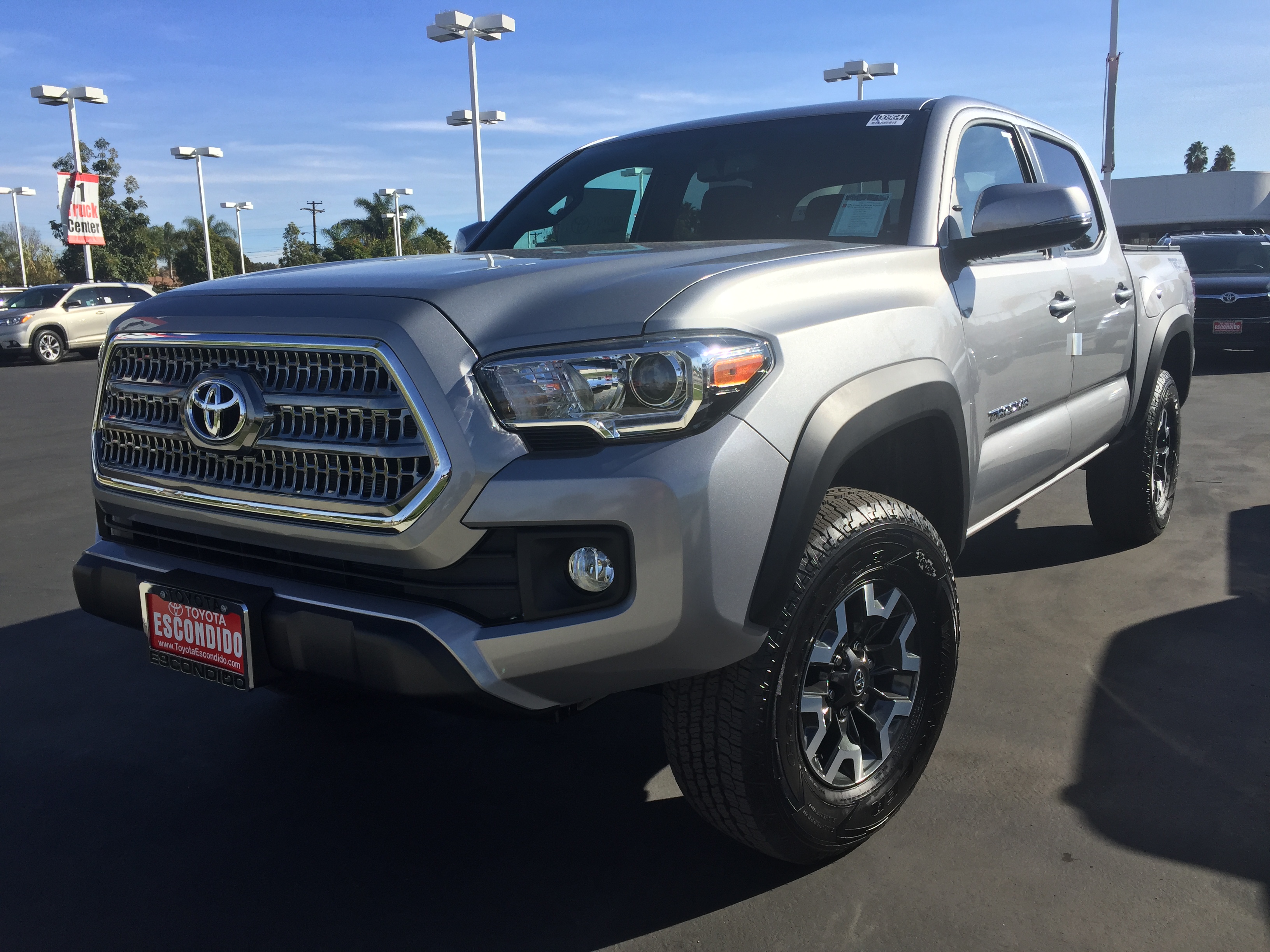
Toyota Tacoma
"We spent a lot of time this week on trade Toyota moving Tacoma production out of Mexico like we talked about,"
The Toyota Tacoma is a popular midsize truck. They’re discussing where it’s built, and that can affect how easily you can buy one and what it costs.
The Toyota Tacoma is a midsize pickup known for its off-road capability and strong enthusiast following. In this segment, it’s specifically tied to production moving out of Mexico, which matters because pickup supply chains and tariffs can affect pricing and availability.
25% tariff
"Yeah, we should remember too that there's [1295.5s] a 25% tariff coming out of Canada for everything that's coming out of Canada [1300.7s] and as long as well as everything coming out of Mexico."
A tariff is a government tax on imported products. If it’s 25%, that usually makes imported cars or parts cost more, which can affect where companies build and how much they charge.
A tariff is a tax the government charges on imported goods. A “25% tariff” means the tax rate is 25% of the value of the imported products, which can raise prices and change which factories and supply chains make sense.
Unifor
"Yeah, but also at the same time, what what Unifor is going to want is that, okay, [1309.2s] well, don't worry about the tariffs, just build more here and sell here or whatever you build. [1314.4s] But the companies aren't going to want to make that extra investment right now."
Unifor is a union in Canada that represents workers in industries like auto manufacturing. The discussion is about what the union wants companies to do—especially when tariffs and plant locations are involved.
Unifor is a Canadian labor union that represents workers in parts of the auto industry. In the segment, it’s referenced in the context of bargaining demands around tariffs and where companies should invest and build.
Brampton
"Well, and also there are empty plants sitting idle right now in Canada. It seems like they're [1325.5s] stacking up Larry. You got Brampton, Cammie, Ingersoll. It seems like not only does this"
Brampton is a city in Ontario, Canada. The host is naming it as one of the places with auto plants that may be sitting idle, which matters for jobs and future factory investment.
Brampton is a city in Ontario, Canada, and it’s mentioned here as part of the auto manufacturing footprint. The host is listing locations where plants may be idle, which affects decisions about future investment and production.
Cammie
"Well, and also there are empty plants sitting idle right now in Canada. It seems like they're [1325.5s] stacking up Larry. You got Brampton, Cammie, Ingersoll. It seems like not only does this"
“Cammie” sounds like it’s referring to Cambridge in Ontario, Canada. The host is listing Ontario locations where car factories may be sitting idle, which affects jobs and future plans.
“Cammie” appears to be a transcription of “Cambridge,” a city in Ontario, Canada. It’s listed alongside other Ontario locations to show where auto plants may be idle and under pressure from tariffs and production shifts.
Ingersoll
"Well, and also there are empty plants sitting idle right now in Canada. It seems like they're [1325.5s] stacking up Larry. You got Brampton, Cammie, Ingersoll. It seems like not only does this"
Ingersoll is a town in Ontario, Canada. It’s mentioned as another location tied to auto production, where idle plants can create uncertainty about future investment.
Ingersoll is a town in Ontario, Canada, referenced as another auto-related manufacturing location. The segment uses it to illustrate how multiple Canadian sites could face uncertainty if production is reduced or shifted.
unused production capacity
"it seems like not only does this [1338.2s] put their future in question, but also like, you know, how do you invest when you get, [1338.2s] you know, obviously depends on the company, but there's a bunch of unused production capacity [1343.8s] going on."
Unused production capacity means factories and production lines that could be making cars, but currently aren’t. When that happens, it can make it harder for companies to plan investments and keep costs under control.
Unused production capacity is manufacturing capability that exists (plants, lines, equipment) but isn’t being used. In auto manufacturing, it matters because idle capacity increases costs per car and can pressure companies to either invest in new product or reduce output.
turnkey solutions
"Because if it's their turnkey, their turnkey solutions, if you're, you know, BYD or or a [1397.5s] Chinese automaker to say, Oh, yeah, we'll build a plant there, or we'll take this plant, we'll"
Turnkey solutions are “ready-to-go” setups. The supplier handles most of the work so the factory can start producing cars again faster, instead of the buyer having to figure everything out from scratch.
Turnkey solutions are packaged, end-to-end offerings where a company provides the full setup needed to build and run a factory or production operation. In this context, it implies a Chinese automaker could take over an idle plant and quickly restart production with minimal disruption.
BYD
"Because if it's their turnkey, their turnkey solutions, if you're, you know, BYD or or a [1397.5s] Chinese automaker to say, Oh, yeah, we'll build a plant there, or we'll take this plant, we'll"
BYD is a big car company from China, especially known for electric cars and batteries. The host is mentioning it as an example of a company that could move into an idle plant and start building cars.
BYD is a major Chinese automaker known for electric vehicles and batteries. Here, it’s used as an example of a Chinese company that could potentially take over or restart production in North America using “turnkey” capabilities.
Request an Explanation
Heard something you'd like explained? We'll add it to this episode.
Sign in to request explanations for terms you heard.
Want to learn more?
Browse our glossary for plain-English explanations of automotive terms, jargon, and concepts.
Help improve this episode
See something that's not quite right? Our annotations are AI-generated and can sometimes miss the mark. Click the flag icon on any annotation to suggest a correction.