Keyloop is a software company for car dealerships. They’re saying their tools help dealers connect their systems so sales and marketing work better together.
Lana Payne is the head of Unifor, the Canadian auto workers’ union. She’s explaining what the union wants and what workers are worried about before contract talks.
David Kennedy is a journalist at Automotive News Canada. In this segment, he’s described as the person who interviewed Lana Payne before the contract talks.
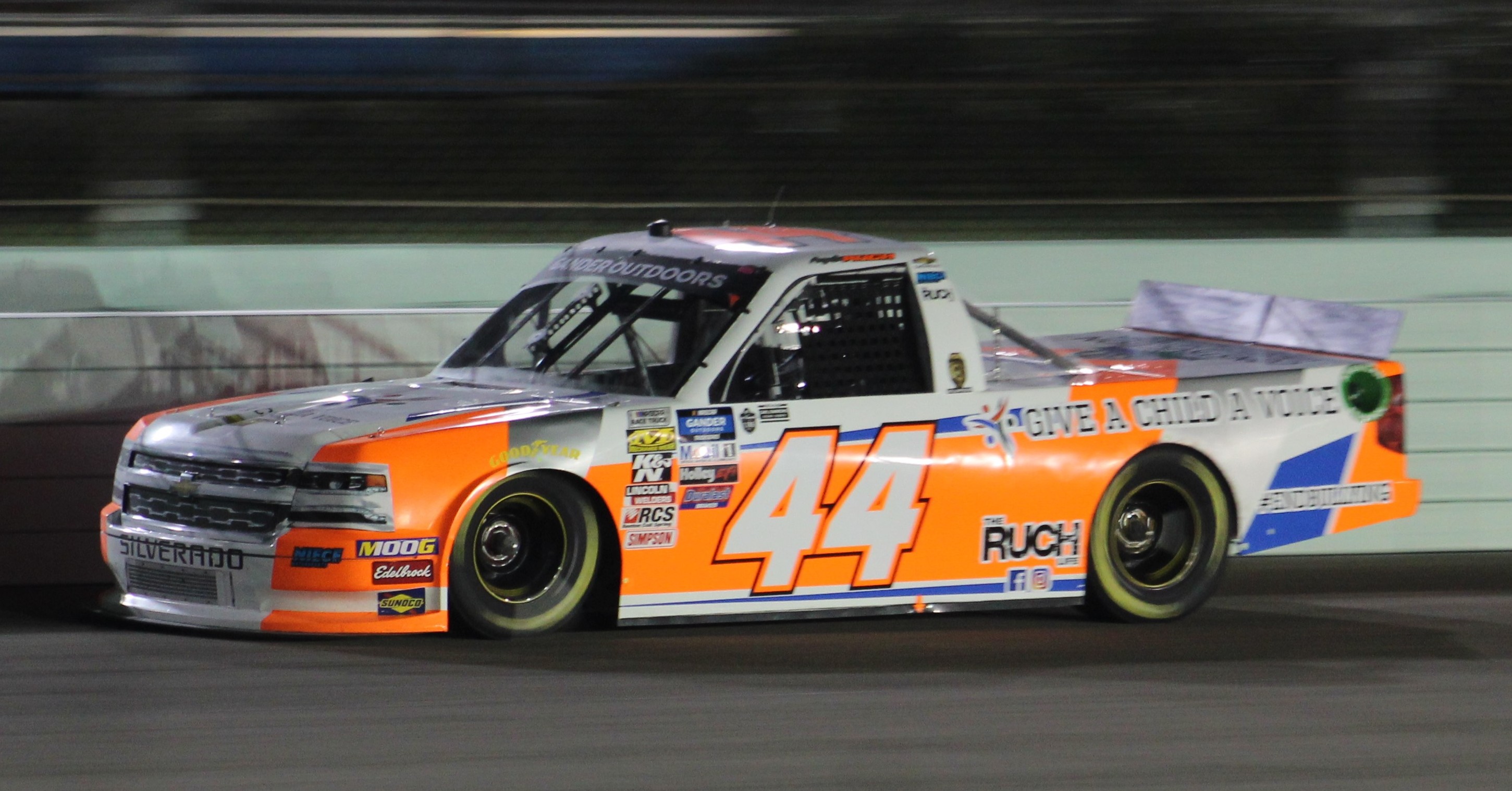
The Chevrolet Silverado 1500 is a popular full-size pickup truck. The podcast says GM might stop building this version at the Oshawa plant, which would affect jobs and production volume.
“Light duty” means the vehicle is in the lighter truck category, not the heavy commercial class. It’s a way of grouping trucks by how they’re used and regulated.
GM is the company behind brands like Chevrolet. The episode says GM may change what it builds in Oshawa, and GM disputes reports about cutting production.
“Heavy duty” means the truck is meant for tougher, heavier work. The episode says the plant might focus on heavy-duty pickups rather than the lighter ones.
A “two-shift operation” means the plant works two shifts each day. The point in the segment is that GM says the factory will keep running at that level.
The Honda Element was a quirky, boxy Honda that was popular with people who wanted a practical, outdoors-friendly vehicle. The podcast says Honda wants to bring it back, but as a hybrid crossover.
A “hybrid” uses a gas engine plus an electric motor. A “crossover” is like an SUV, but usually built more like a regular car for easier everyday driving.
The Honda CR-V is a small-to-midsize SUV that’s built for everyday driving and family use. It’s popular and usually sells in large numbers. The podcast mentions it because a new model could be placed between smaller and larger Honda SUVs, affecting where the CR-V fits in the lineup.
It means the dealership’s different computer systems are linked together. So information can flow smoothly between things like inventory, sales, and after-sales support.
It means the software runs on the internet (not just on computers inside the dealership). That can help different teams use the same information more easily.
“Digital retailing” is the process of selling cars using online tools—such as browsing inventory, configuring vehicles, and completing parts of the purchase digitally. It’s often paired with inventory and customer-data integration so online actions carry through to the dealership.
“Connected retail without the chaos” is marketing language describing an integrated dealership workflow where systems communicate cleanly. The “chaos” refers to fragmented processes—like repeated questions, duplicated data entry, and mismatched customer/inventory information.
USMCA is the trade agreement between the U.S., Mexico, and Canada. It affects rules for things like cars, parts, and manufacturing across all three countries.
Section 232 is a U.S. law that can add tariffs to imported goods if the government says they’re a national-security risk. Here, they’re talking about tariffs on cars and other industries and wanting them taken off first.
They’re giving a big number—about five million cars—to show how many vehicles are being imported instead of built locally. The point is that this volume affects how many factories and jobs the region supports.
“Free riders” here means businesses that take advantage of the market but don’t do the local building that would support jobs and factories. The guest argues importers are doing that by bringing in cars made elsewhere.
A supply chain is the whole system that makes and delivers cars and parts—factories, suppliers, shipping, and distribution. They’re saying the supply chain is stronger when more of the work happens locally.
Jim Farley is the CEO of Ford Motor Company (as referenced in the segment). His comments are used here as an example of how automakers are framing USMCA and labor-related enforcement as important to the auto industry.
The rapid response mechanism is a quick-response process under USMCA meant to protect workers’ rights. If workers’ ability to form unions is being restricted, this mechanism is supposed to help address it faster.
Right-to-work laws are U.S. state laws that restrict how unions can collect fees from workers. In labor negotiations, they’re often discussed because they can affect union funding and workers’ ability to participate in union activities.
Rules of origin are the trade rules that decide where a product is considered to be made. For cars and parts, they can push companies to build more of the work in North America to meet the agreement’s requirements.
Onshoring means bringing jobs or production back to a country or region. Here, it’s about making more auto work in North America instead of elsewhere.
LIVE
this episode is proudly supported by Keyloop. Recent research has shown that nearly 70% of
dealers are suffering with disconnected systems. Keyloop's Fusion Automotive retail platform
changes that. Search Keyloop Fusion to start your transformation journey today.
Hi everyone and welcome to the June 26th, 2026 episode of the Automotive News Canada podcast.
I'm your host, Greg Lason, the digital and mobile editor at Automotive News Canada.
Coming to you from just outside Windsor, Ontario, the automotive capital of Canada.
Today on the show we hear from Uniform President Lana Payne. She recently spoke with Automotive
News Canada Toronto Bureau Chief David Kennedy to talk just before contract negotiations between
the Union and Ford kicked off earlier this week. Lana spoke about what's at stake, the Union's
game plan and more. Canada cannot become the Australia of the North. It just can't. We've
had an auto industry for over a hundred years. We have to do everything we can in this set of
negotiations to protect it. But first to look at some of the top Canadian automotive stories of the
week. China's biggest automakers are seriously eyeing Canadian production. Industry Minister
Melanie Jolie says BYD, Cherry and Gile are willing to explore majority Canadian owned
joint ventures to assemble electric vehicles in Canada. During a visit to China, Jolie recently
met with Chinese auto executives. Ottawa is offering access to its new EV import quota in hopes
of landing investment and local manufacturing. Building vehicles in Canada would allow the
Chinese automakers to sell beyond the country's import limits. In sticking with manufacturing,
GM's Oshawa assembly plant could lose production of the light duty Chevrolet Silverado 1500
before the end of next year. That's according to industry analysts. That would leave the plant
building only heavy duty pickups and could reduce production at the factory to about 50,000 vehicles
annually. GM disputes reports of a production scale back and says employment and the current
two-shift operation are expected to continue. But Unifor says workers remain concerned as
contract talks approach this summer. Finally, in product news, Honda is planning to revive the
element and it will do so as a hybrid crossover aimed at outdoor enthusiasts and adventure seekers.
According to automotive news sources, production is expected to begin in Ohio in 2029. That plant
will serve as the model's sole global production hub. The new element would slot between the HRV
and CRV and target nearly 100,000 annual sales. Analysts say today's popularity of rugged
adventure themed vehicles could make the quirky crossover more successful than in its original run.
And that's a look at some of the top Canadian automotive stories of the week.
You can find more on those and other stories at our website, automotivenews.ca.
Coming up we hear from Unifor President Lana Payne.
This is Automotive News Canada and today I want to tell you about something
that's transforming dealership operations from the showroom to the service bay.
It's called Fusion, the all new automotive retail platform from Keyloop. It's built around four
connected domains, demand, supply, ownership and operate. Bringing your entire dealership
together in one powerful cloud-based ecosystem. Let's face it, most retailers are dealing with
systems that don't talk to each other. A recent survey found that half feel they're using too
many logins with the experience for dealers and consumers disjointed. Fusion solves that.
It connects your digital retailing inventory after sales and back office into one seamless
platform so your team can focus less on workarounds and more on what matters, the customer. And it's
for the Canadian market. Whether you're running a busy metro dealership in Toronto
or supporting customers in rural Alberta, Fusion helps deliver one smooth connected
experience from online browsing to in-store purchase to long-term ownership. It's not
just about streamlining operations, it's about making the experience better for everyone,
efficient workflows for your staff, no repeated questions for your customers, everything just
works. Keyloop calls it connected retail without the chaos and for Canadian dealerships looking to
simplify, scale and stay ahead, it's a smart move. Want to see it in action? Search Keyloop Fusion
and inquire today to get started. The all-new Fusion Automotive Retail Platform from Keyloop.
Welcome back to the Automotive News Canada podcast. I'm your host Greg Lason. We'll now
hear a conversation between Automotive News Canada, Toronto Bureau Chief David Kennedy
and Unifor President Lana Payne. Lana, thanks for being here. I just want to, as we tee up USMCA
talks with the United States, I'm just hoping you can spell out Unifor's wish list to start me off
here. What do you want to see on the Automotive file? I mean, obviously our first priority is to
get the tariffs removed that have been applied through the Section 232 on autos, but on all
sectors in the Canadian economy. That has to be a priority because anything, any discussion on
things like rules of origin or all of these other items that will likely become part of the negotiation
around auto are kind of useless and futile until we get to a place where we're discussing and having
those tariffs removed. So that's our number one priority. Our second priority is to advocate
for the position that we've talked about for over a year now, and that is if you
sell in North America, you build in North America and to try to get the US to focus on where the
real problem here, the problem is not Canada. The problem is we have regional auto industries
around the world, and in the case of where we live, it's North America. And in that region, we need to
be able to have an agreement that treats working people fair in all three countries, but also
that focuses on this very big problem we have. And that is we are importing 5000000 cars,
which is about 22% of the market, probably a little higher. In the US, it's 22%. So they're
importing three and a half million cars that are not built in North America. And that becomes a really
big problem because that number continues to grow. And so you can't enhance or have a more robust
supply chain, have a more robust manufacturing sector in auto and otherwise if you're not doing
something about the free riders. And so the importers in my mind are the free riders and it's
become a bigger problem. And that is really where we need to focus in the Kuzma talks. And nobody
has given me, I would say, a reason why we should not go down this path. If we truly want to protect
the Canadian auto industry, these are the kinds of discussions that we need to be having at the
table. And it's in the Americans interest to solve this problem too. Because obviously,
5000000 cars is 20 assembly plants worth of work. That is where we need to be focusing. How
do we bring more of that work to North America, not just sharing up a shrinking pie, which is
what we would be doing if we're only focusing on the North American manufacturing base.
And obviously you mentioned Section 232. For auto, that's really the problem here,
we know. The review is more encompassed in the wider review here. But for Canada,
how important is getting Section 232 ironed out to these overall discussions? Is it worth having
this review for Canada without fixing what's gone on in 232? Yeah, I mean, the reality is we
have to deal with this. We have seen a very large segment of our industrial base that has been
impacted. The uncertainty, the attack on investment, I would say that we have lost. And once you're
out of an investment cycle, we all know that means you better make it into the next one. This is
part of the problem. It's not even what's happening today. It is also what will happen tomorrow and
next year if we're unable to resolve this. And Canada cannot become the Australia of the North,
which it just can't. We've had an auto industry for over 100 years. We have to do everything we
can in this set of negotiations to protect it and protect it so that we are actually protecting
the foundation of an industrial economy in Canada because the auto industry is so linked to all of
these other elements, whether it is the steel industry, the aluminum industry in Canada,
the inputs for the auto industry, all of that is important. Mining, you name it, it's all connected
in the supply base. But also, I would say to you, the benefit and the ecosystem that gets created
around the auto sector, whether it is the engineering work that occurs, the software work
that occurs, that also is very important for the broader advanced manufacturing sector in Canada.
We are a nation of builders. We can't have, I would say to you, it is so critical to have a
strong manufacturing sector because that is also part of how you maintain and protect your own
sovereignty and your own national interests. Once that capacity is gone, it's a very, very big problem.
A lot at stake right now, but also, I believe there is a pathway through this and Canada is smart
about what we need to do. We've negotiated many deals and I'm happy to be part of the advisory
committee now with the prime minister and with our trade minister to work our way through this.
It'll be all hands on deck because that's what we're going to need. There is a lot at risk right
now. As we've already seen over the past few weeks, the temperature in the rooms
going up a little bit. We're seeing some more rhetoric fly. Beyond that, in your conversations
with both officials in Canada and the U.S., are you seeing appetite for a deal?
What I see is the conditions right now of what these tariffs have done to the United States
and to Canada. The U.S. manufacturing sector has been hurt dramatically by the tariffs that they
put on Canadian goods, whether or inputs, whether it's aluminum or steel or whatever the case may
be. Obviously, the closer you get to a deadline, the more important it is to focus in. This is true
of union negotiations the same way as it is of negotiating trade agreements. I believe when you
listen right now, you're going to get, because it's almost like the pre-negotiating stage,
there'll be a lot of posturing that is to be expected. What I would say to Canadians is,
don't be too fussed by that. We have a job to do at the bargaining table, and hopefully,
we're successful there. I do believe the U.S. needs an agreement with us. We are their number one
customer. We have created leverage for ourselves as well. Outside of the leverage that we naturally
would have, you hear it often from Jameson Greer. They are not happy with the fact that
American chardonnay, booze, have been removed from many of the shelves in Canada. That gives us a
leverage point in negotiations. We have others. We have lots of strength here based on the fact
that energy is, if you look at the energy markets and the fact that Canadian energy is needed in
the United States, if you look at aluminum, despite the fact that there's a tariff on it,
my gosh, does the U.S. need our aluminum right now? Despite what the president will say,
the whole situation in Iran has created, I would say, even more conditions that are favorable to
Canada to be able to get to a place where we're getting a trade deal. The other thing I would say,
is that it's very unlikely that this is going to be sorted by July 1. It's really important for us
to put this in perspective. I had no expectations that this would be done by July 1. I don't want
people to feel disappointed that that's the case. We just carry on and we put our heads down.
We negotiate as much as we can. Then in the reality, if we get to a place where a deal isn't
possible, we'll have to deal with that outcome at that time. You mentioned Canada being the U.S.
as best customers. Certainly, when it comes to auto, there's no argument. There's no other market
for D3 pickup trucks, for instance. Canada's the one that buys those, really, almost exclusively.
Are you seeing the companies who you represent or members working at the companies who you represent
step up a little bit more and make that argument in the United States?
Obviously, many of them have been doing some of this, what I would say, behind the scenes. In other
words, not in op-eds and all of that. Certainly, you have seen Jim Farley speak very clearly
of the CEO of Ford Motor Company about needing an Accusement USMCA, depending on what country you're
in. We use different acronyms. This is important to Ford Motor Company. It's important to the auto
industry and that we should focus on where our bigger problems are, for example, China. I'm in
agreement on a lot of those things, I would say, as we have to work together here. He's been very
clear from the beginning that we needed an ability to get an agreement around autos. If we had to
tinker around edges to do things, we had a whole priority list before we got into this trade war
around how we saw Accusement could be improved. For example, the rapid response mechanism, which
I'm sure you're aware of, which basically lays out an ability to protect things like freedom of
association and unionization, which was available to Mexican workers. Our position is that this
should be available in all of North America. There may come a time, for example, and this is where I
would be propositional, where workers in the Southern United States or other US states where
there are right to work laws, that they may also feel that their rights are being infringed, their
freedom of association is being infringed, and therefore should be able to have access to the
rapid response mechanism. That was one of our priorities. Obviously, talking about rules of
origin so that you could increase and onshore more of the work in North America was very important.
All of that is in column B, I would say to you right now. The main priority is getting the
terrace removed, having the side letter respected, and then looking at what else can we do together
to improve the auto industry for North America.
And just one final question. Obviously, the one other thing that's happened over the past few
months is China. I brought a pretty big policy change from Ottawa that probably hasn't made
things simpler in these discussions. So just take me through what that's done in the build-up to
these talks and where you expect it to go on the China EV deal.
I'm totally expecting the US to have this as an irritant, I think is the word that they've been
using the same way that having wine off the shelves here in Canada is an irritant for them.
The problem we have, of course, is that our experience with China is that they have a massive
overcapacity in their part of the world in terms of auto production. They want to dominate the
global auto industry. That is their goal. And they will not make an ounce of profit until they get
there. Until they can control the market, they're okay to take a loss for the rest of time. And
they're able to do that for all of the reasons that we know. So this is a very problematic area.
And I do expect that the US will raise this. I expect the issue of forced labor to be
also something that gets discussed, all of those things for sure. Because the reality is
we're not increasing our supply chain base in the auto industry with adding China to the ability to
just send cars into Canada and sell them here without actually having to manufacture anything here,
which is why we've been very clear China is a problem. But so are all these other countries
that import virtually for free while the rest of us are trying to build things in North America and
employ Canadians and Americans and Mexicans? And that is how do we as three countries secure that,
improve on that, and deal with this other problem over here? And I believe we're going to have to
get there. And China is just kind of sitting back quietly right now. The US is in some ways
driving many nations to China. And Canada has done this China deal allowing the importation of
China built EVs. And we've seen around the world, if you look at some of their companies,
they don't actually build up supply chains. What they do is they build the cars in China,
they send them in a box to a factory wherever that factory is, and they're assembled from a
knockdown kit and very little work is involved. That cannot be the future of the auto industry
in Canada or North America. We will all be losers if that's the future.
I'd like to thank Lana for her time and David for conducting the interview.
If you'd like to be a guest on the show, have a suggestion or simply want to comment,
email me at glasen.autonews.com. And remember, you can listen to all our previous podcasts on
Spotify, iTunes, Google Play, or on our website, automotivenews.ca. Just scroll to the podcast
hub in the middle of our homepage. And don't forget, you can follow Automotive News Canada on X,
where we're at Auto News Canada. And you can find me there, too, at G-Lasen ANC.
Finally, look for us on LinkedIn, just search Automotive News Canada. That does it for this
episode of the Automotive News Canada podcast. We hope you'll join us next time. So long, everybody.
About this episode
Unifor’s Lana Payne lays out priorities for USMCA-related auto negotiations, starting with removing Section 232 tariffs and then pushing for North America-based building. She argues tariff pressure has disrupted parts of the industrial base and that Canada has leverage as a top customer. The hosts also discuss USMCA enforcement tools like rapid response, plus rules of origin tied to onshoring. Elsewhere, GM faces uncertainty around Oshawa Silverado production, while Honda plans to revive the Element as a hybrid crossover.
China brands eye JVs, output; GM Oshawa’s future; and Honda Element’s comeback. Plus, Unifor President Lana Payne sets the table for the 2026 contract talks between her union and the Detroit 3 automakers.