
June 26, 2026 | The week’s top stories and Unifor’s Lana Payne sets the table for contract talks
About this episode
Unifor’s Lana Payne lays out priorities for USMCA-related auto negotiations, starting with removing Section 232 tariffs and then pushing for North America-based building. She argues tariff pressure has disrupted parts of the industrial base and that Canada has leverage as a top customer. The hosts also discuss USMCA enforcement tools like rapid response, plus rules of origin tied to onshoring. Elsewhere, GM faces uncertainty around Oshawa Silverado production, while Honda plans to revive the Element as a hybrid crossover.
China brands eye JVs, output; GM Oshawa’s future; and Honda Element’s comeback. Plus, Unifor President Lana Payne sets the table for the 2026 contract talks between her union and the Detroit 3 automakers.
Keyloop
"this episode is proudly supported by Keyloop. Recent research has shown that nearly 70% of dealers are suffering with disconnected systems. Keyloop's Fusion Automotive retail platform changes that."
Keyloop is a software company for car dealerships. They’re saying their tools help dealers connect their systems so sales and marketing work better together.
Keyloop is a company providing automotive retail software. In this segment, it’s positioned as a platform (Fusion Automotive) that helps dealers manage and connect their sales/marketing systems.
Lana Payne
"Today on the show we hear from Uniform President Lana Payne. She recently spoke with Automotive News Canada Toronto Bureau Chief David Kennedy to talk just before contract negotiations between the Union and Ford kicked off earlier this week."
Lana Payne is the head of Unifor, the Canadian auto workers’ union. She’s explaining what the union wants and what workers are worried about before contract talks.
Lana Payne is the president of Unifor, and she’s interviewed about what’s at stake in upcoming auto contract negotiations. In this segment, her role frames the labor side of discussions involving major automakers.
Unifor
"to talk just before contract negotiations between the Union and Ford kicked off earlier this week... But Unifor says workers remain concerned as contract talks approach this summer."
Unifor is a union in Canada. In this episode, they’re talking about contract talks that affect auto workers at companies like Ford and GM.
Unifor is a Canadian labor union representing workers in industries including automotive. Here, it’s central to the discussion of contract negotiations affecting Ford and GM workers.
David Kennedy
"She recently spoke with Automotive News Canada Toronto Bureau Chief David Kennedy to talk just before contract negotiations between the Union and Ford kicked off earlier this week."
David Kennedy is a journalist at Automotive News Canada. In this segment, he’s described as the person who interviewed Lana Payne before the contract talks.
David Kennedy is identified as Automotive News Canada’s Toronto Bureau Chief. He’s mentioned as the interviewer who spoke with Unifor president Lana Payne ahead of contract negotiations.
Ford
"contract negotiations between the Union and Ford kicked off earlier this week. Lana spoke about what's at stake, the Union's game plan and more."
Ford is the car company mentioned here. The episode says Unifor and Ford are about to start contract negotiations.
Ford is the automaker referenced in connection with Unifor contract negotiations. The segment uses Ford as one of the key companies where labor talks are about to begin.
contract negotiations
"contract negotiations between the Union and Ford kicked off earlier this week... But Unifor says workers remain concerned as contract talks approach this summer."
This part of the show is about union contract talks with car companies. It’s setting up what workers and the companies are negotiating.
The hosts focus on labor contract negotiations between Unifor and automakers. This is a structural storyline for the episode’s labor-related segment.
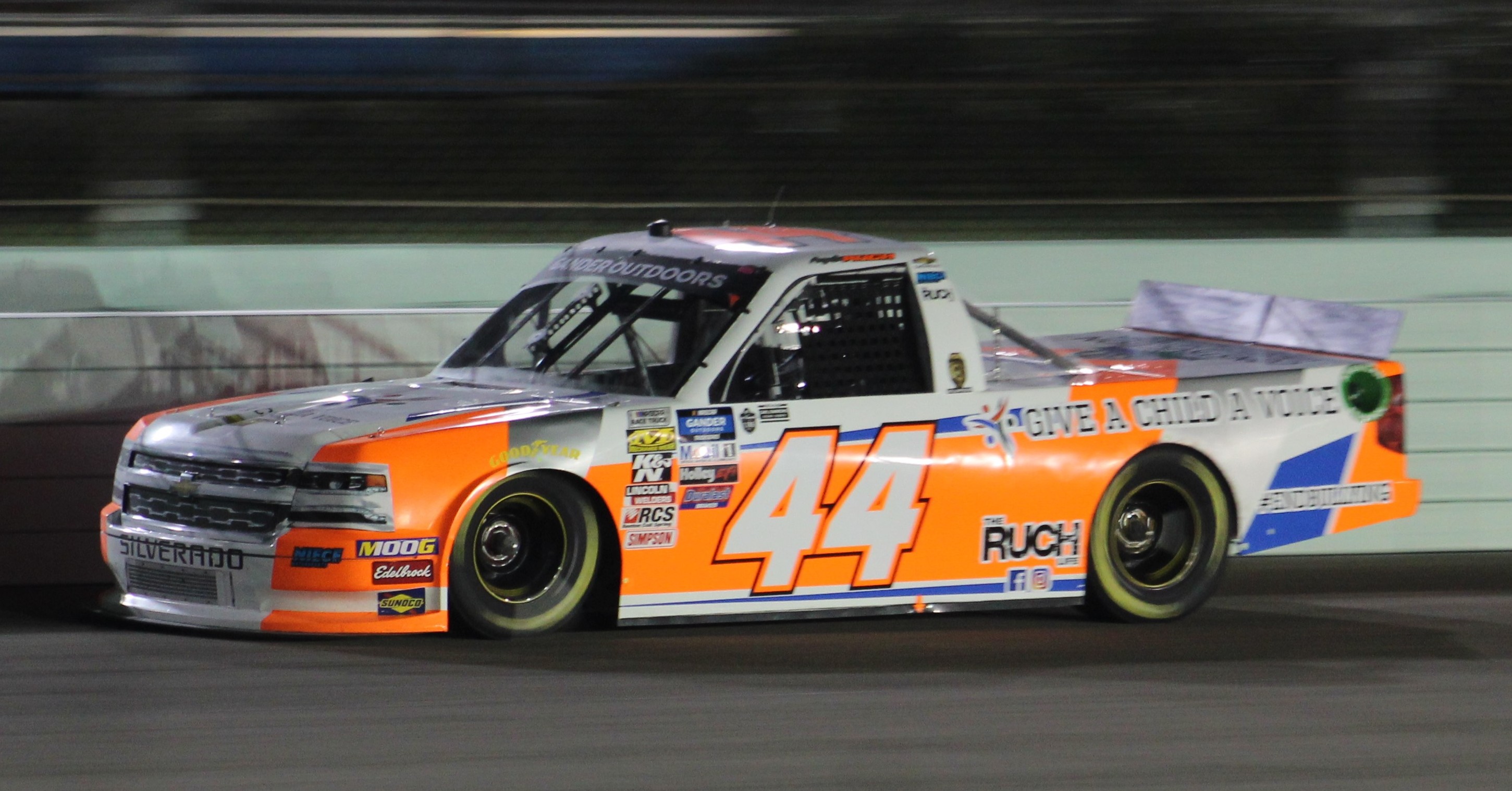
Chevrolet Silverado 1500
"GM's Oshawa assembly plant could lose production of the light duty Chevrolet Silverado 1500 before the end of next year."
The Chevrolet Silverado 1500 is a popular full-size pickup truck. The podcast says GM might stop building this version at the Oshawa plant, which would affect jobs and production volume.
The Chevrolet Silverado 1500 is a light-duty full-size pickup. The segment says GM’s Oshawa plant could lose production of this specific model, which would change what the factory builds.
light duty
"GM's Oshawa assembly plant could lose production of the light duty Chevrolet Silverado 1500 before the end of next year."
“Light duty” means the vehicle is in the lighter truck category, not the heavy commercial class. It’s a way of grouping trucks by how they’re used and regulated.
“Light duty” is a vehicle classification used in North America to separate smaller trucks and cars from heavier commercial vehicles. It matters because production planning and regulations often differ between light-duty and heavy-duty segments.
GM
"GM's Oshawa assembly plant could lose production... GM disputes reports of a production scale back and says employment and the current two-shift operation are expected to continue."
GM is the company behind brands like Chevrolet. The episode says GM may change what it builds in Oshawa, and GM disputes reports about cutting production.
GM (General Motors) is the automaker discussed in relation to potential production changes at its Oshawa assembly plant. The segment contrasts industry analysts’ claims with GM’s response about continuing operations.
heavy duty
"That would leave the plant building only heavy duty pickups and could reduce production at the factory to about 50,000 vehicles annually."
“Heavy duty” means the truck is meant for tougher, heavier work. The episode says the plant might focus on heavy-duty pickups rather than the lighter ones.
“Heavy duty” refers to the heavier commercial-vehicle class, typically built for higher loads and more demanding use. The segment implies Oshawa would shift toward building heavy-duty pickups instead of the light-duty Silverado 1500.
two-shift operation
"GM disputes reports of a production scale back and says employment and the current two-shift operation are expected to continue."
A “two-shift operation” means the plant works two shifts each day. The point in the segment is that GM says the factory will keep running at that level.
A “two-shift operation” means the factory runs two work shifts per day to increase throughput. It’s used here to argue that employment and production capacity would remain stable even if there were model changes.

Honda element
"Finally, in product news, Honda is planning to revive the element and it will do so as a hybrid crossover aimed at outdoor enthusiasts and adventure seekers."
The Honda Element was a quirky, boxy Honda that was popular with people who wanted a practical, outdoors-friendly vehicle. The podcast says Honda wants to bring it back, but as a hybrid crossover.
The Honda Element is a distinctive Honda model known for its boxy, utilitarian design and flexible interior layout. The segment says Honda plans to revive it as a hybrid crossover aimed at outdoor and adventure buyers.
hybrid crossover
"Honda is planning to revive the element and it will do so as a hybrid crossover aimed at outdoor enthusiasts and adventure seekers."
A “hybrid” uses a gas engine plus an electric motor. A “crossover” is like an SUV, but usually built more like a regular car for easier everyday driving.
A “hybrid” powertrain uses both an internal-combustion engine and an electric motor to improve efficiency and driveability. A “crossover” is a car-based vehicle that blends features of SUVs and passenger cars, typically prioritizing packaging and comfort over body-on-frame truck construction.

Honda Crv
"...b. The new element would slot between the HRV and CRV and target nearly 100,000 annual sales. Analysts ..."
The Honda CR-V is a small-to-midsize SUV that’s built for everyday driving and family use. It’s popular and usually sells in large numbers. The podcast mentions it because a new model could be placed between smaller and larger Honda SUVs, affecting where the CR-V fits in the lineup.
The Honda CR-V is a compact crossover SUV known for being practical, comfortable, and widely sold. In the podcast context, it’s important because the discussion is about how a new model could “slot between” the HR-V and CR-V, suggesting the CR-V sits in a higher-volume, mainstream position. That’s why it often comes up when analysts talk about sales targets and product lineup strategy.
connected domains
"It's built around four connected domains, demand, supply, ownership and operate. Bringing your entire dealership together in one powerful cloud-based ecosystem."
It means the dealership’s different computer systems are linked together. So information can flow smoothly between things like inventory, sales, and after-sales support.
“Connected domains” refers to linking separate dealership functions—like demand, supply, ownership, and operations—so they share data and workflows. In practice, it means the dealership can coordinate marketing, inventory, and customer follow-up without manual handoffs.
cloud-based ecosystem
"Bringing your entire dealership together in one powerful cloud-based ecosystem. Let's face it, most retailers are dealing with systems that don't talk to each other."
It means the software runs on the internet (not just on computers inside the dealership). That can help different teams use the same information more easily.
A “cloud-based ecosystem” is a set of software services hosted online rather than on-site servers. For dealerships, it typically enables shared access to customer and inventory data across departments and locations.
digital retailing
"It connects your digital retailing inventory after sales and back office into one seamless platform so your team can focus less on workarounds and more on what matters, the customer."
“Digital retailing” is the process of selling cars using online tools—such as browsing inventory, configuring vehicles, and completing parts of the purchase digitally. It’s often paired with inventory and customer-data integration so online actions carry through to the dealership.
connected retail without the chaos
"Keyloop calls it connected retail without the chaos and for Canadian dealerships looking to simplify, scale and stay ahead, it's a smart move."
“Connected retail without the chaos” is marketing language describing an integrated dealership workflow where systems communicate cleanly. The “chaos” refers to fragmented processes—like repeated questions, duplicated data entry, and mismatched customer/inventory information.
USMCA
"I just want to, as we tee up USMCA talks with the United States, I'm just hoping you can spell out Unifor's wish list to start me off here."
USMCA is the trade agreement between the U.S., Mexico, and Canada. It affects rules for things like cars, parts, and manufacturing across all three countries.
USMCA is the United States–Mexico–Canada Agreement, the trade deal governing how the three countries buy and sell across many industries, including automobiles. The episode frames Unifor’s “wish list” for contract talks around what should be changed or emphasized in the USMCA negotiations.
Section 232
"I mean, obviously our first priority is to get the tariffs removed that have been applied through the Section 232 on autos, but on all sectors in the Canadian economy."
Section 232 is a U.S. law that can add tariffs to imported goods if the government says they’re a national-security risk. Here, they’re talking about tariffs on cars and other industries and wanting them taken off first.
“Section 232” refers to a U.S. trade-law provision that allows the government to impose tariffs on imports when it determines they threaten national security. In this episode, it’s specifically tied to tariffs applied to autos and other sectors, and the guest is arguing those tariffs should be removed before other negotiation details matter.
5000000 cars
"And that is we are importing 5000000 cars, which is about 22% of the market, probably a little higher."
They’re giving a big number—about five million cars—to show how many vehicles are being imported instead of built locally. The point is that this volume affects how many factories and jobs the region supports.
The guest cites “5,000,000 cars” as the scale of imports into North America that are not built in the region. They use this figure to argue that import volumes are large enough to materially affect the number of manufacturing jobs and the strength of the regional auto industry.
free riders
"And so you can't enhance or have a more robust supply chain, have a more robust manufacturing sector in auto and otherwise if you're not doing something about the free riders."
“Free riders” here means businesses that take advantage of the market but don’t do the local building that would support jobs and factories. The guest argues importers are doing that by bringing in cars made elsewhere.
In this context, “free riders” means companies that benefit from the regional auto supply chain and market access without doing the corresponding local manufacturing. The guest uses it to argue that importers who bring in cars built outside North America are undermining the goal of a stronger regional manufacturing base.
supply chain
"And so you can't enhance or have a more robust supply chain, have a more robust manufacturing sector in auto and otherwise if you're not doing something about the free riders."
A supply chain is the whole system that makes and delivers cars and parts—factories, suppliers, shipping, and distribution. They’re saying the supply chain is stronger when more of the work happens locally.
A “supply chain” is the network of suppliers, factories, logistics, and distribution that gets parts and vehicles from raw materials to customers. The guest ties supply-chain strength to whether cars are built in North America versus imported from outside the region.
Jim Farley
"In other words, not in op-eds and all of that. Certainly, you have seen Jim Farley speak very clearly of the CEO of Ford Motor Company about needing an Accusement USMCA"
Jim Farley is the CEO of Ford Motor Company (as referenced in the segment). His comments are used here as an example of how automakers are framing USMCA and labor-related enforcement as important to the auto industry.
rapid response mechanism
"For example, the rapid response mechanism, which I'm sure you're aware of, which basically lays out an ability to protect things like freedom of association and unionization, which was available to Mexican workers."
The rapid response mechanism is a quick-response process under USMCA meant to protect workers’ rights. If workers’ ability to form unions is being restricted, this mechanism is supposed to help address it faster.
The rapid response mechanism is a USMCA labor enforcement tool that allows quicker action when labor rights—especially freedom of association and unionization—are allegedly being violated. The idea is to provide a faster path to address problems affecting workers in the supply chain.
right to work laws
"There may come a time, for example, and this is where I would be propositional, where workers in the Southern United States or other US states where there are right to work laws, that they may also feel that their rights are being infringed"
Right-to-work laws are U.S. state laws that restrict how unions can collect fees from workers. In labor negotiations, they’re often discussed because they can affect union funding and workers’ ability to participate in union activities.
rules of origin
"Obviously, talking about rules of origin so that you could increase and onshore more of the work in North America was very important."
Rules of origin are the trade rules that decide where a product is considered to be made. For cars and parts, they can push companies to build more of the work in North America to meet the agreement’s requirements.
Rules of origin are the criteria that determine whether a product (like an auto part) is considered “from” a particular country for trade purposes. In USMCA discussions, they’re important because they can influence how much work and manufacturing is done in North America to qualify for preferential treatment.
onshore
"Obviously, talking about rules of origin so that you could increase and onshore more of the work in North America was very important."
Onshoring means bringing jobs or production back to a country or region. Here, it’s about making more auto work in North America instead of elsewhere.
Onshoring is the strategy of moving production or jobs back into a country or region rather than keeping them overseas. In the auto context here, it’s about increasing North American manufacturing so more parts and work are produced within the region.
Request an Explanation
Heard something you'd like explained? We'll add it to this episode.
Sign in to request explanations for terms you heard.
Want to learn more?
Browse our glossary for plain-English explanations of automotive terms, jargon, and concepts.
Help improve this episode
See something that's not quite right? Our annotations are AI-generated and can sometimes miss the mark. Click the flag icon on any annotation to suggest a correction.