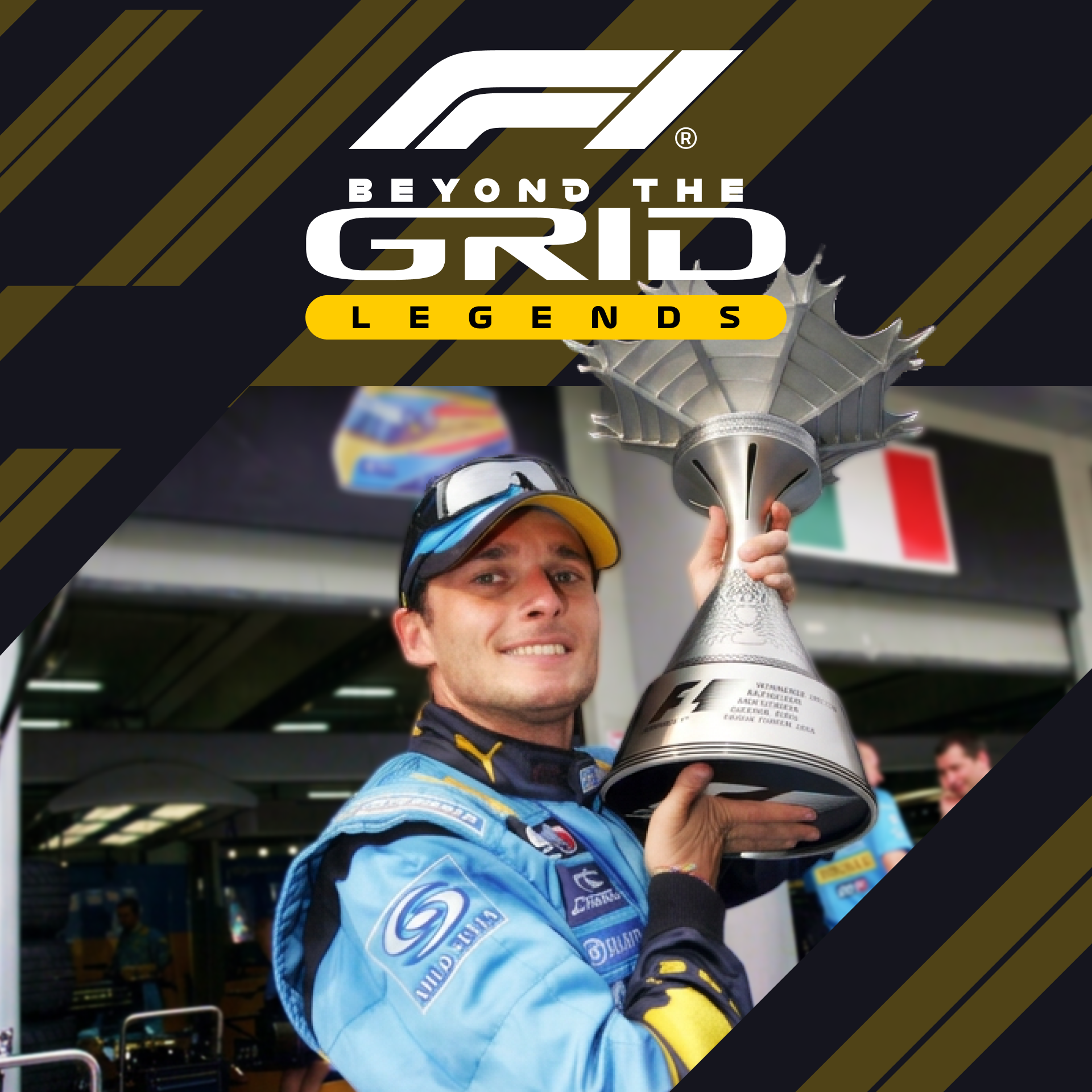
Giancarlo Fisichella is a former Formula 1 race driver from Italy. Here, he’s talking about how another young Italian driver, Kimi Antonelli, is doing in F1 and how hard it is to handle pressure.
Kimi Antonelli is a young Italian driver in Formula 1. In this part of the episode, they’re impressed by how many races he’s already won and how confidently he’s handling the pressure.
Fernando Alonso is a well-known Formula 1 driver. They mention him because he’s had major success in F1, including championship seasons with Renault, and Fisichella describes how he supported Alonso.
Lewis Hamilton is a famous Formula 1 driver. They bring him up here to show that even after years at the top, he’s still competing.
Topic
handling pressure as a young driver
They’re talking about how new drivers learn to stay calm and confident under pressure. The idea is that handling stress helps them drive better and win races.
Renault is the racing team/brand in Formula 1. They mention it because Alonso won championships while driving for Renault.
Brand
Minardi 96
Minardi 96 points to a specific Minardi Formula 1 car period from the 1990s. In this conversation, it’s mainly used to remember when the two people first crossed paths.
In Formula One, the “world championship” refers to the season-long points battle that crowns the Drivers’ Champion (and, separately, the Constructors’ Champion). Missing a race-winning driver can affect both race results and the overall points needed to win the title.
Formula Four is a stepping-stone race series for young drivers. It’s where drivers learn how to race faster single-seater cars before moving up to higher levels like Formula Three and Formula One.
Formula Three is a more advanced junior racing series than Formula Four. It’s a key step for drivers trying to earn a path to Formula One.
Concept
age is just a number
This is a discussion concept about driver development timing—how starting young in junior categories can make the jump to Formula One feel less abrupt. The speaker contrasts earlier eras (fewer junior ladders) with modern pathways that begin in mid-teens.
DTM is a German racing series for touring cars—cars that are based on production models. It’s a different kind of racing from Formula One, so switching between them can change how you drive.
Place
Hawkenheim
This is likely Hockenheim, a famous race track in Germany. It’s the kind of track where being quick in qualifying and managing tires/brakes during the race really helps.
The grid is where cars line up before the race starts. If you’re second on the grid, you’re starting near the front, which is usually better for getting clean air and track position.
Toto Wolff is a top Formula 1 leader connected to Mercedes. In this conversation, he’s presented as the person who backed and guided Kimi Antonelli’s career.
Go-karting is how many F1 drivers start. It’s a small, simple racing car that helps you learn how to race and control the vehicle before stepping into bigger cars.
Mercedes is a major car brand that also competes in Formula 1. Here, it’s mentioned as part of the support system helping a young driver progress toward F1.
Term
F3
F3 is a stepping-stone racing series for younger drivers. It’s one of the places drivers learn how to race and improve before moving up toward F2 and F1.
Open-wheel means the race car’s wheels are exposed (not hidden under the body). Those cars feel and handle differently than GT cars, so the driving technique changes.
An F1 car is the top level of open-wheel race car. It handles and grips differently than GT cars, so you often avoid hitting curbs because it can upset the car.
A GT car is a race version of a normal sports car. It’s usually heavier than an F1-style car, so it grips the road less and you drive it differently through corners.
Term
F2
F2 is a higher-level junior series that comes before F1. Drivers use it to get better at racing at a top level and prepare for the demands of F1.
Curbs are the raised strips at the edge of the track. In racing, drivers sometimes use them to go faster through a corner, but in some cars hitting them can make the car unstable.
GT3 is a category of race cars used in lots of racing events. Teams race cars that follow the same general rules, so different brands can compete fairly.
Le Mans is a famous 24-hour endurance race in France. It’s hard because the car has to keep running for a full day while drivers swap and teams manage strategy.
A “setup” is how a race car is adjusted for a specific track and conditions. It’s about tuning things so the car feels right and stays consistent over long races.
In long races, teammates are the other drivers who take turns driving the same car. Everyone has to work together so the car stays fast and manageable for the whole event.
A stint is just a chunk of time where the car stays out on the track before the next planned pit stop. Teams decide how long to run based on tire wear and fuel.
He’s basically saying Le Mans feels like qualifying for a whole day—everyone is trying to go very fast, not just take it easy. But you still have to manage tires and fuel so you don’t fall off later.
In racing, tires aren’t just “rubber”—their grip changes as they heat up and wear out. In a long race, you can’t drive flat-out the whole time without hurting tire performance.
Saving fuel means using less fuel than you normally would so you can finish the race without running out. Teams do it by driving a bit more gently and planning pit stops.
Being consistent means you keep turning in similar lap times instead of having big swings. That usually helps you avoid mistakes and prevents tires from getting destroyed too early.
Person
Flavio Briatori
Flavio Briatore is a motorsport figure who’s being quoted about how teammate relationships can affect results. Here he’s talking about the kind of team atmosphere drivers had.
Qualifying is when drivers race against the clock to set the starting order for the main race. If something goes wrong in qualifying, you usually start farther back in the race.
It means the team treats one driver as the priority. That can affect strategy—like who gets the better chances to win—especially when teammates are close on track.
Schumacher was one of the greatest F1 drivers ever, and he raced for Ferrari. The speaker is saying Ferrari used to back him first when it came to race strategy.
Rubens Barrichello was an F1 driver for Ferrari. The story being referenced is about Ferrari telling him to let his teammate win—showing how teams sometimes prioritize one driver over another.
In F1, tyres matter a lot because they provide the grip the car needs. Teams plan when to use certain tyres because they wear out and behave differently when hot.
In Formula 1, “radio” is the communication system between the driver and the team. The team can tell the driver what to do while the race is happening.
Ferrari is one of the most famous Formula 1 teams. Here they’re talking about how Ferrari’s results improved or changed when they brought in a new driver.
The “drivers’ champion” is the person who wins the Formula 1 championship for the year. They earn points across the season, and the top point-scorer becomes champion.
A sprint race is a shorter race on some Formula 1 weekends. It can help determine starting positions and points, and they’re referencing one of Lewis’s sprint results in China.
Brand
Team Endstone
“Team Endstone” is a British Formula 1 team based in Enstone. They’re using it as a reference point to compare team culture and day-to-day operations with Ferrari.
In F1, “testing” means practice runs where the team learns how the car behaves. Without it, switching to a new car setup can feel harder because you have less time to get used to it.
The Italian Grand Prix at Monza is one of Formula 1’s most historic races, held at the Autodromo Nazionale Monza near Milan. It’s especially famous for high-speed character and for being a major “debut” stage for drivers.
Fiorano is Ferrari’s private test track near Maranello, used for development and driver evaluation. It’s where Ferrari often runs aerodynamic and setup work before major race weekends.
Aerodynamics parts are the body and wing components designed to manage airflow—creating downforce for grip and controlling drag for speed. In F1, testing these parts is crucial because small changes can noticeably affect lap time.
Place
Vairano
Vairano is referenced here as a location used for aerodynamic-related running (“up and down”) before Monza. In F1 context, it suggests a nearby testing/track facility used for short sessions focused on aero work rather than full race preparation.
The prancing horse is Ferrari’s iconic logo, typically displayed on the steering wheel and throughout the car’s branding. In this context, it’s a symbolic moment—he’s describing the emotional impact of seeing the Ferrari identity right as the engine starts.
Stefano Domenicali is a prominent Formula 1 executive and team leader who has been associated with Ferrari in senior roles. Here, the speaker compares his past experience with Domenicali as a boss to their renewed working relationship.
Topic
winning for Italy
This part of the episode is about Fisichella’s big career dream and how hard it is to succeed at the top. It’s also tied to the idea of representing Italy while doing it.
Maranello is the main home of Ferrari in Italy. It’s where Ferrari runs its team and makes many of its cars, so visiting there usually means talking directly with Ferrari about racing plans.
Term
Forza India
Forza India is the name Fisichella uses for the team/organization where his boss worked. In Formula 1, that kind of team support is what helps a driver get opportunities with other teams.
“Scoring points” in F1 means finishing high enough to earn points toward the championship. It’s how drivers and teams measure success even when they aren’t winning every race.
A simulator is like a high-end racing video setup that tries to mimic real driving. Drivers use it to practice and get better even when they’re not on the track.
Over-driving is when you drive harder than the car can handle. You might brake or turn too aggressively, and that can cause mistakes like losing traction or going off line.
Downforce is the “suction” effect from the car’s shape and wings that presses the tires onto the road. More downforce usually means better grip in corners.
Here, “engine” just means the car’s power source. In F1 it’s a very specialized setup compared with GT cars, so the driving feel can be totally different.
“Lewis” is Lewis Hamilton, one of the most successful Formula One drivers ever. They’re describing how emotional it was for him to win with Ferrari after a tough period.
Benetton is the name of a Formula One team. Giancarlo Fisichella is saying that period helped him learn a lot because the team had good people working with him.
Frank Williams was the key leader behind the Williams Formula 1 team. In this conversation, he’s described as personally contacting Fisichella to try to get him into the team.
Flavio Briatore was an important Formula 1 team executive. Here, he’s mentioned as the person who talked with Fisichella and helped shape his decision to join Renault.
The Constructors' Championship is the team title in Formula 1. Teams earn points based on how both of their cars finish, and the team with the most points wins.
“Politics” here means the behind-the-scenes stuff that affects who gets opportunities in Formula 1. It’s not just driving skill—team decisions and negotiations matter too.
A technical problem means something on the race car isn’t working right. It can slow the car down or force the driver to back off, which hurts their chances in the race and championship.
Momentum here means “things are going well, so it keeps going well.” If something goes wrong—like a crash or a car issue—it can throw off the whole run of good results.
Topic
Formula Freca
Formula Freca is a junior racing level for developing drivers. It’s one of the series racers use to build experience before moving up.
Formula 1 Academy is a women-focused single-seater racing series connected to the Formula 1 ecosystem. It’s designed to create a clear route for female drivers into the sport.
Mark Webber is a former Formula 1 driver. The hosts mention him because he and Fisichella were apparently in the mix for the same team seats around 2005.
The British Grand Prix is a Formula 1 race in the UK. In this episode, they’re talking about how it didn’t go well for Kimmy because of reliability problems.
LIVE
Kimi, last year it was a bit up and down, but I think with the experience of last year,
especially with a good car, now it's very confident and it's very comfortable in the
car, it's so quick and able to manage the pressure and winning the race.
Giancarlo Fisichella knows all about carrying Italy's hopes in Formula One.
20 years since his last Grand Prix win, he's loving watching his countryman Kimi Antonelli
flying the flag on the top step of the podium and watching former teammate Fernando Alonso
and former rival Luis Hamilton still racing. Here on F1 Beyond the Grid,
Giancarlo tells me, Tom Clarkson, about handling pressure as a young driver,
playing a supporting role in Alonso's championship seasons at Renault and where
the Kimi could one day follow further in Fisich's footsteps and drive for Ferrari.
Great to see you again, great to have you back on the show, how are you?
Hi Tom, it's just great to be back here and I'm fine. I remember the first time we met each
other was a long time ago. A Actually, you were making pizzas at your home
in Roma in 2001. 2001, yeah, but I think we met earlier. Even before then, we did. Minardi 96.
I hope my pizza was good. Now Giancarlo, I want to talk to you about a lot of stuff today,
but can we begin with this? You are no longer the last Italian to win a Grand Prix.
He's driven brilliantly. He is the winner of the Malaysian Grand Prix, Giancarlo Fisichella.
Fantastic performance by the 33-year-old from Rome.
That was you back in Malaysia 2006 and of course Kimi Antonelli's doing the business this year.
I just love to get your take on that, on the job that Kimi's done so far in 2026.
I would say finally, I'm happy about that because 20 years is too long. Last Italian
winner of a Grand Prix was myself 20 years ago. Now this year, with Kimi, this is done and I'm
really happy about what he's doing so far. He's so clever. He's so quick and he won five races.
He scored five positions in a row. This is something amazing. I won three races in my life,
231 Grand Prix and he won already five races in just less than 30 races of his career.
How much, Giancarlo, has Italy missed a race-winning driver?
Yeah, a lot. Not just by single race, but also the world championship.
I don't remember when. Maybe it was a scuddy?
It was a scuddy in 1953.
So, 78 years. It's too much. I think he's got a chance. In its think, just race by race,
not taking too much pressure. Be concentrated like he drew in the last couple of races
and he can fight for the championship, I'm sure.
Can we go into more depth about the stage that Kimi's at? Because I'd like to compare it to you
back in 1996 with Manardi. You were 23 back then. Kimi's even younger. He's 19, but what are the
pressures like on a young guy in Formula One?
Yeah, obviously now it's different. It's nearly normal to see a young guy 18 years old, 19 years
old like Kimi or like Max Verstappen a few years ago. For them, it's easier because they can start
racing in a Formula Four already when you are 15. In my era, there was a possibility to race in
Formula Three or something like that when you were 18 years old. So, I think they are three,
four years ahead of us. And because they start racing already when they are 15,
when they get to Formula One, when they are 18, 19 years old, I think they are already prepared
for it. So age is just a number? Yes, exactly. Obviously, if you see Kimi on his face, it looks
like a baby, but when he jumps, when he closes the eyes, it's a completely different story.
How did you change between year one and year two? You did that weird half-season in 1996,
bit of DTM touring cars at the same time. How did you change between 96 and 97? And can you
relate to the change that we've seen in Kimi from last year to this year?
Yeah, I mean, my first season was in 1996, but I did a half of the season because
Minardi was looking for a driver with a good sponsor. And in the middle of the season,
another guy came with the money and replaced myself. I did some races, eight races. In some
races, I had a technical problem. In some races, I did a mistake, so I didn't finish the race. But
I took some experience and it was good to start the 1997 with a new team, with a Jordan team,
with, let's say, a good car, not good everywhere, but it was somewhere that was good. In fact,
I was quick in Hawkenheim. I was in the second position in the grid. I scored my first podium
in Canada in 1997. So it was a good season for me. I think I learned quite a lot from 96
and in 1997, it was my first full season. But Fissi, was it pressure? How to deal with
pressure? Is that one of the biggest things you learned between year one and year two?
Yeah, yeah. The pressure was quite important. The adrenaline before the race was quite difficult to
manage it. But I think I did a very good season. Then, the day after, I went to Benetton.
And then when you look at Kimi Antonelli, he had that European run last year,
where he scored just three points in nine races. Look at him this year, he doesn't put a foot
wrong. And is that partly learning to deal with pressure? For sure, for sure. The first test ever,
it was in Monza two years ago, and he crashed the car. So it wasn't a good start for him.
No. And then last year, it was a bit up and down with some mistakes, with not good performance.
But I think this year, with the experience of last year, especially with a good car,
now it's very confident and it's very comfortable in the car. Plus the experience of last year,
now it's so quick and able to manage the pressure and winning the race.
And how important do you think Toto Wolf has been in his development?
I think it's the key. It's the key of Kimi's career. I think Toto took already Kimi when he was
young in Go Kart. He gave him the possibility to grow up here by in Go Kart and then in Formula
4, Formula 3, Formula 2, by obviously the help of Toto Wolf and Mercedes. And he's the guy,
Toto is the guy who was believing in Kimi for first, especially after Monza crashed in testing
two years ago. Everybody was saying, you think it's too early to put Kimi in Mercedes? Maybe
it's better to put him in another team and then in a few years taking him in Mercedes.
What did you think? If you'd been managing Kimi Antonelli, would you have put him straight
in a Mercedes or would you have put him in a team further back?
For sure, straight in a Mercedes. You would have done. Yes.
Sink or swim? Yes. I see a few parallels between Antonelli and you, Giancarlo, in that
you came from that sort of DT, obviously F3 in single-seaters, but those couple of years driving
touring cars, Kimi's family are big into GT racing, Marco, his dad and stuff like that.
Do you think driving lots of different cars helps you develop as a racing driver?
More than if you just focus on open wheel? It depends, because you know, driving a GT car
and F1 car or F3, F2, whatever, it's a complete style of driving. The GT is much heavier, there is
less grip, less power and obviously you need to do a different trajectory. You need to jump on the
curbs and with a F1 car you need to be away from the curbs, so it's not easy. But if you are a
talent, a real talent like Kimi, I think you can, maybe it's an help trying to do some training,
some races in a both category. This episode is sponsored by Vantor. AI promises to make all of
us more productive. The challenge is making sure it doesn't introduce new risks at the same time.
Every new tool your team signs up for, every vendor that turns on AI features, every new
integration, each one is an opportunity for something to go wrong and most security programs
weren't built for AI's pace of growth. That's where Vantor comes in. Vantor is the number one
ogenic trust platform used by over 16,000 fast-moving companies like Nando's and Granola to ensure
they're always audit ready. And now Vantor is helping companies like yours keep an eye on the
risks that appear between audits across your vendors, your AI tools and your whole environment.
It does this by acting like a 24-7 GRC engineer in the background, finding issues, drafting fixes for
you and cutting vendor assessment time by up to 50%. Whether you're a fast-growing startup or a
global enterprise, Vantor is here to help you automate your security and compliance and earn
and prove trust. Get started today at vantor.com slash grid. That's V-A-N-T-A dot com slash grid.
This episode is sponsored by HomeServe. We all expect things around the house to just work, don't
we? Whether it's your plumbing, your electrics or your HVAC system, you don't really think about them
until one of them lets you down. The trouble is, regular homeowner's insurance doesn't usually
cover a lot of the day-to-day wear and tear. So if something does happen, you're often left
trying to find someone to fix it in a hurry. Luckily, HomeServe offers different plans to
suit your home and your budget. And for as little as $4.99 a month, they've got your back. So if
something covered in your plan goes wrong, you can simply call their 24-7 hotline to get the repair
process started. I always dread the thought of my boiler breaking down again after a nightmare
situation a few years back so I can completely understand why having something like this in
place would bring real peace of mind. Knowing you've already got someone to call if the worst
happens would take a lot of the stress out of it. They've been helping homeowners for more than 20
years through a trusted national network of over 2,600 local contractors and with nearly
four and a half million customers and a 4.8 out of 5 post-repair rating, it's easy to see why
so many people rely on them. Join the millions of customers who trust HomeServe.
For 50% less your first year, go to homeserve.com slash grid. That's homeserve.com slash grid
for 50% less. Savings compared to renewal price, void in Florida.
While we're talking GT cars, what do you make of Max Verstappen doing his Nurburgring 24 hours
and his passion for GT3? This is great. I love him. I like him because he loves to be in a car
every week, every day. Also, you know, maybe during the race weekend in Formula 1 in the
90s on the simulator. He never sleeps. That's passion. It was very important
to have Max in the 24 hours of Nurburgring. Now the GT championships around the world are more
important and I'm sure Max will do in the future Le Mans 24 hours and Spa 24 hours. I'm sure.
Is it a different mindset at 24 hours? Because you've done Le Mans what, 13 times now?
13 times, yeah. Is it a completely different mindset to this?
Absolutely. First of all, you need to share the car with other two drivers.
And in Formula 1, the other driver is your first opponent in a GT car. In a 24 hours
all Le Mans, you need to find a very good friendship with your teammates. You need to find
a good setup, which is good for everybody. The Atomos Spa has to be relaxed. It's very important.
And then during the stint, you need to push absolutely. You need to push always because now
the 24 hours of Le Mans are like 24 hours of qualification. But sometimes you need to understand
when is the time to push, when is the time to take care about the tires, maybe saving fuel.
So it's a long race. Everything could happen. And remember in 2012, we started from the last
position and we won the race. So you got a time to do well, to recovering from last position.
It's important to be consistent. And that's the key here.
You talk about a relaxed atmosphere. We had Flavio Briatori on this show. And he was saying that
you and Alonso, that partnership in 2005, 2006 was the benchmark for teammates. He said,
when he looks at Colopinto and Gasly now, he wants the atmosphere that you and Alonso created
all those years ago. Why do you think it worked so well between you and Fernando?
Yeah, first of all, I think there was respect from each other. And we understood working together
was the key to go ahead with the team for the development of the car. So we were working
very well together. We were sharing our telemetry, saying that the right direction to the engineers
to improve the car. And when we were out from the F1 car, after the briefing or whatever, our PR
staff, we were really friends. Sometimes two hours before the start of the race, we were playing
cars with Flavio. And it was funny because Flavio was with our physio. And me and Fernando,
we were together and we were usually cheating with the cars. And Flavio was getting crazy every
time because he was losing. It was very upset with our physio. So it was funny, very funny.
Great stories. Do you need to be friends for a teammate relationship to work?
Yeah, don't say friends, but you need to be together, share all the advertising,
anything you can give to the team and to your teammate to be quicker, to improve yourself.
It's important. It's important for both of us.
So when you look at George Russell, Kimmy Antonelli now, do you think they have what I call now
the physical Alonso ingredients?
I don't know. I don't know yet because I think in Canada, they were a little bit upset after the
race. Also Toto wasn't happy. Also in the last race in Barcelona, they were fighting for the
position in the last few laps. I don't know. I don't think there is the same atmosphere,
but they will know.
This raises a really interesting question because a lot of people have been saying recently that
let's bring it on to Ferrari and Hamilton now. Hamilton wins in Spain and people are saying,
for Hamilton to have a proper chance of beating Mercedes this year,
Ferrari are going to have to favour him ahead of Charlotte Claire. Do you agree with that?
I don't agree with the words of Ferrari. They're going to favour Lewis. I'm sure Ferrari is trying
to build a good car to both drivers for sure. The last race was a very good race for Ferrari,
for Lewis. Unfortunately, Charles crashed the car in the qualifying session, but without this
problem, without the crash in the qualifying session, probably Charles could have the same
chance to Lewis to fight for the race, to win the race. They made a good improvement.
I think at the moment, probably the car is the best car to drive in the paddock.
They need to improve a little bit on the power.
But you think it's too early to park Charles?
Absolutely. It's too early. Yes.
What does it mean, favouring one driver over another? Ferrari famously prioritised Schumacher,
and it's funny that we're talking here in Austria. Do you remember 2002 when Rubens Barrakello was asked
to move over and let him win at what was only race six? I mean, Ferrari have formed, don't they,
in terms of favouring one over the other?
Well, I remember also when I was in the Renault in 2005, 2006, when I had, after the start of the
season, a few mechanical and technical problems. So I lost the possibility to score a lot of points.
I was quite behind Fernando. That was the time to work for Fernando and for the team. So sometimes
I was working also Friday and Saturday morning to help the team, to understand, to use one set
more of the tyres, to understand which one was good for the qualifying session or which one was
good for the race distance. Sometimes in the race I was quicker than Fernando and I was waiting for
him to give the position. How hard was that for you? A bit hard, but it's part of our job.
But Fisi, you're a competitor, right? Who won loads in the junior formulas,
Monaco Formula 3, stuff like that. When you get the call, do you pretend radio is not working,
radios or what? Yeah, at the first call you say, what should I do? And then you need to answer,
okay, you have to do it. But I don't think it's the case of Ferrari at the moment. Let's wait,
a few races. Let's talk a little more about Lewis and Ferrari now. It's been a long time
since they've had a drivers' champion. How influential has Lewis been in turning around
their performance? How long have they been needing someone of his stature to lead the team?
But I mean, last year Lewis was struggling a little bit. Apart from some races where he was,
let's say, quick. I remember he won the sprint race in China. But then somewhere he was really
struggling compared to charts, compared to other drivers. Also in a few interviews he was really
he got very down. Very upset with himself. But when Ferrari took him, I was really happy.
Some people were saying, why Ferrari signed the contract with Lewis? You know, you think it's too
old. I said, Lewis is seven times world championship. He's still in a good shape and he's got a great
experience. He just needs a good car. And in Barcelona, I show what I just said.
And how, I mean, you race for a lot of British teams, you know, Team Endstone for what, seven years
and then Team Jordan, Force India for five years. How different is Ferrari to those garagey stay
teams? First of all, I race just for five races. And you know, it's different starting the season
from the beginning. But obviously, he's an Italian team. He's Ferrari. So the atmosphere there for me
was fantastic. Straight away, I felt to be like in a family. And I felt straight away comfortable.
Unfortunately, the car was a bit difficult to drive. And jumping from Force India to Ferrari
at the end of the season without testing wasn't easy. But you know, it was a good opportunity for me
at the end of my career to realize one of my dreams since when I was young, to drive for Ferrari.
And I made it. Is the way the team operates different to a British based team? No, not really.
I felt, as I told you, straight away at home, the operation of the team during the weekend is
pretty similar to the other team. So. And for an Italian, I suppose the media, that side of it,
ramps up massively if you're in a red car. Yeah. I realized what means Ferrari and Italian driver.
And especially in the Monza Grand Prix, which was my first race. What a place to make your debut.
I was still dreaming. But the press, it was crazy. It was unbelievable. I didn't expect that.
Can you remember what it felt like driving into Maranello for the first time as a Ferrari driver?
In Maranello, I didn't drive until, you know, the end of the season in 2009, because it was not
allowed to testing. But when I came to Maranello the first time, just after my, I signed the contract
with them and we, we give the announce, it was a unique atmosphere. It was unbelievable. I was
thinking, I made it. I am a Ferrari driver. Yeah, there was the house of hands of Ferrari.
And everything is red. People around, you know, the grandstands, it was just amazing.
And did you do any laps of Fiorano before Monza? No, I did just like an up and down for the
for aerodynamics parts in Vairano, which is two hours away from Modena.
And even now, all these years later, do you get goosebumps when you, you imagine
that first time the engine starting up, you're looking at the prancing horse on your steering
wheel. Can you still remember the emotions? I still remember the emotion. The first time I
went there and I was next to the car. I wasn't preparing the seat. I was, you know, smiling.
I was just dreaming. I understood. I said, I realized my, my dream, my dream to be here.
Can you envisage a day when Kimmy Antonelli races a red car? How big a story would that be?
It would be another big story, like my one, maybe, maybe bigger. But who knows.
And Stefano Domenicali was your boss. And now he's, he's kind of your boss again.
What was Stefano like as a boss? Was he, was he a hard taskmaster?
It was good. It was very nice. The first time I met him, I mean, I met him long time ago, but
when I, when I went to Maranello, was two days after Spa.
Where you just finished second? When I finished second with Forza India.
So I went to Maranello and we talked about the, the possibility to, to race for Ferrari in the
next five races. But there was a problem, you know, to find the solution with, with VJ Malia,
which was my boss in Forza India. He said, I will fix it. If you want to race with Ferrari,
we are happy to welcome you. And I said, it's my dream. So I'm here for that. So I'm looking forward
for it. But also during the, the, the five races I made with them, it was, it was nice. It was,
try to, to help me. You know, the car was difficult to drive. The results were not so good. And I
said, don't worry. We understand it's not easy to, to jump in a different car at the end of the season.
And especially this car is not quick enough this year. They won't just one race in, in Spa,
unfortunately, when I, when I can second. This episode is sponsored by Shopify.
Starting something new often feels like a much bigger job than it really is.
Whether it's something you've designed yourself or a hobby, you've always wanted to turn into
something more. It's amazing how often people put those ideas on hold because they don't know
where to begin. That's exactly what I like about Shopify. It gives you everything you need to build
your store and start selling from day one. And listeners of the show can start a free trial
today at Shopify.com forward slash beyond the grid. Making that first sale is one thing.
Making it easy for customers to come back is just as important.
Shopify's checkout helps more people complete that first purchase. And when they return,
their details are already saved. So buying again only takes a tap. And because Shopify takes care
of so much of the setup and checkout, you've got more time to focus on growing your business.
With Shopify, nothing stands between your idea and a real business. So go make it one.
Start your free trial at Shopify.com slash beyond the grid. That's Shopify.com slash beyond the grid.
I know you'd always wanted to race for Ferrari, but given the competitiveness of that Force India,
was there any bit of you that was questioning whether it was the right thing to do?
I think I knew it was difficult to score points, to do well. But after nearly 14 years in Formula
1, I was 37. And it was the dream of my life to drive for Ferrari. So I think it was the right choice.
And I think it's been the right choice, especially now, because since 2009, I'm still
working with them. I'm still a Ferrari ambassador. I'm still racing in a GT endurance race. So
I'm still in the family. And of course, Fernando Alonso comes in and takes
the seat in 2010, doesn't he? Can we talk a little bit more about Fernando? Because he's still here
at 44 years age. I mean, first of all, are you surprised that Fernando is still here?
Not surprised, because like Luis, they are still in a very good shape. They have a lot of experience
and they are still quick. Absolutely. Honestly, and obviously Fernando is now
maybe in the worst moment of his career, because he's 44 and he's fighting for the last four places.
That's not good for him. He needs to find some motivation and the motivation he comes just
if you have a good car. So probably in a couple of races, they will get the spec beat, let's say.
Maybe Fernando can have more fun, I hope for him. And I heard maybe he wants to race even next year.
Would you like to see him do one more? Absolutely. You can't end it like this, Fernando Alonso.
It's not nice to see him in the last two positions, the last row. He doesn't deserve it. So
I hope for him to get a better car and try to get a chance to. I think I know what he needs.
He needs a game of cards with Giancarlo Fizzichella before the race on Sunday, right?
Yes. Going to nip down to Aston Martin. Probably, yes. You compare Luis and Fernando.
They are such titans of this modern era, aren't they? In what they've achieved,
their competitiveness. I'd like to ask you about Luis now. I remember you having a great
scrap with him at Spa in 2009, actually, when you were starting on pole. How do you think
drivers change and improve with age? Let's talk about Luis specifically. How different is he today
to that guy you were battling with at Spa in 2009? Driving the car not every day. I mean, every two
weeks, doing a lot of simulator, but especially driving the car in a proper circuit. It's always
better. The feeling gets always better. The experience to manage the race, the overtaking.
It just becomes not easy, but it's better to do it. Instead of when you start your career in a
Formula One. At the beginning, there is a lot of pressure. You are a little bit scared to make
mistakes. Sometimes you're not quick enough. You're over-driving. With experience, you learn to
manage these mistakes. I mean, you've said that you are still racing. Let's take the neck out of
it, because I appreciate the neck would struggle. But how quickly do you think you'd get up to speed
today? In a Formula One car, it would be difficult. I think it's a completely different car than what
I used to drive. The car is much bigger, much heavier. They have a lot of downforce, a completely
different engine. Probably three or four days of testing. Maybe I can get close. Three or four days?
Three or four laps, is it? Thank you. Thank you for that. But in a GT car, I can get three or four
laps to be competitive. Now, let's fast forward to Monza. Do you think there will be more Ferrari
fans there or Kimi Antonelli fans? Ferrari is always Ferrari in Italy. I think more Ferrari fans.
But obviously, the Italian people, they push also for Kimi. Do you have any advice for Lewis as to
what it will be like going to Monza as a Ferrari driver with, I think, a very good chance to win
the race? You know, until Monza, there is a bit of time. There are a few races. It will be important
to know where Ferrari and Mercedes are, where Lewis is on a championship by that moment.
But if he's got the car to win, it will be fantastic. I saw Lewis Sunday after the race in
Barcelona. I saw his face, very emotional. He was nearly crying. He won over 100 races. He won
seven times the championship. But it was really emotional because winning with Ferrari, I think,
it's something different. And I think there was a lot of relief as well. He'd made this massive
change in his life, in his career, and last year hadn't gone well. So to finally get the win and
almost prove that he could still do it, I think there was a lot of that.
Talking of emotions, back to you now, Giancarlo. You raced for so many different teams
in Formula One. Which team brought the best out in you? What environment did you excel in the most?
Well, I learned quite a lot. Probably in 1997 as well, but especially in Benetton era,
in 1998 until 2001. I worked with very good engineers. And there I learned quite a lot.
But I think the best seasons, for sure, were in 2005 and in 2006 with Renault when we won.
That was when you were driving the most competitive car? Yes.
But just in terms of getting the best out of Giancarlo, were they your best seasons in terms of
the job you were doing? I think maybe also 2004 with Sauber.
I did a very good season. And that was the key to go back with Renault in 2005.
Because they were watching myself and I was scoring a lot of points with the Sauber team,
which was not the best car in the grid. Frank Williams and Flavio Briatore in the middle of
the season, they came to me to ask me to talk about the 2005 season. Fizzy, this is news.
Frank Williams? Yes, Frank Williams. How close did you get to driving for Williams in 2005?
I was really close with Frank, really, really close. But then after, I don't know, a couple of weeks
later I went to Williams. Flavio called me and I had a chat with him. I think the program of
Renault was much better than than the Williams. It was long term contract and Renault was getting
better and better. So I decided to go to Renault. I think it was the right choice.
Well, that proved to be the right decision, didn't it? Because Renault, of course, then
go and win the Constructors' Championship. But how hard is it to navigate the politics of Formula
1 and make the right decision as a driver? It's not easy. It's important to take the right choice,
the right team in the right time. Because Frank is a great or was a great salesman,
wasn't he? I can imagine him being very charming and giving you a hard sell, right?
Yes, exactly. He was speaking a very good Italian. Frank? Yes, Frank was speaking very good Italian.
It was an honor for me, you know, having the call from Frank Williams and Flavio Breatore, we
really know. And I think in that moment I was maybe in my best shape physically, mentally,
and also experiencing Formula 1. So the start of the season of 2005 was just great. I won,
I did the pole position in Australia and I won the race. So I couldn't expect a much better
start of the season in 2005. But then, just after the next race, I had some accident,
technical problem and I couldn't fight for the championship. And then the momentum goes out of
the challenge, doesn't it? Momentum is so important. Yeah, exactly. Oh, Giancarlo, it's so
great to have you on the show again. Thank you for your time. So you're still racing for Ferrari
in Italy. What else is keeping you busy? I saw you did the milimilia. I did the milimilia
and I got management of drivers. We have three drivers here in Formula 3 and a few drivers in
Formula 4, Formula Freca. We got two girls in Formula 1 Academy, so I'm really happy about it.
What's the name of your management company? Pro Racing. Okay. If you could pick one of them,
that we need to be looking out for, who would you choose?
Or are they like your children? They're like your children, right? I like my children. I hope one
of them will be will be in Formula 1 soon. You need to have a chat with Flavio and all your contacts.
Giancarlo, thank you so much for your time. Great to have you on the show.
I really like Giancarlo back in the day when he was a racing driver and I really like him now
as an F1 pundit who has the benefit of experience and perspective. He's no doubt a brilliant driver
manager as a result. Despite having known Fizzy for nearly 30 years, I learned something new in
this chat. He nearly signed for Williams in 2005. My guess is that he and Mark Webber were going for
the same two seats. It was just a question of who ended up where and as it turned out,
Mark went to Williams and Fizzy to Renault. It was so good to see you again, Fizzy, and no doubt
I'll see you again in Monza later in the year. Well, that's almost it for this episode. Before
I go, let me tell you about F1's other official podcasts. F1 Nation's review of the British
Grand Prix is out now. Not such a great result for Kimmy this time after some reliability issues.
And F1 Explains has been putting your questions to Hass Team Principal Io Komatsu. You can find
both of those on the F1 Nation podcast feed. I will, of course, be back next week with another
big name from the world of Formula One. But for now, F1 Beyond the Grid is produced by F1 and
AudioBoom Studios. Until next time, keep it flat out.
About this episode
Giancarlo Fisichella celebrates Kimi Antonelli becoming Italy’s next Grand Prix winner after a 20-year drought, praising his quickness, racecraft, and ability to manage pressure after a shaky rookie stretch. Fisichella compares Antonelli’s rapid rise to his own early career, explaining how adrenaline and mistakes shaped his jump from 1996 to 1997. He credits Toto Wolff’s development path and argues Antonelli’s confidence is built on experience and a strong car. The conversation also shifts to GT racing, including Max Verstappen’s Nurburgring 24H passion and what endurance demands differently than F1.
For 20 years, Italy waited for a driver to join Giancarlo Fisichella as a Formula 1 Grand Prix-winner. Now, Kimi Antonelli is flying Il Tricolore on the top step of the podium once again. Fisi tells Tom Clarkson about the pressures of carrying Italy’s hopes in F1 and what Kimi needs to do to end the nation’s even longer wait for a World Champion. Fisi looks back on his own F1 career - the ‘hard’ moments he had supporting Fernando Alonso in his teammate’s title-winning seasons, how they relaxed before the race and how close he came to moving to another team in the mid 2000s.
Giancarlo remembers living his dream and joining Ferrari during the 2009 season. Does he think Kimi Antonelli could ever do the same?