Engine failure means the engine isn’t working properly. In Formula 1, that can lead to penalties and a tough starting position, because the car can’t perform at full strength.
A 10-place penalty means you start the race ten spots farther back than you otherwise would. It’s a punishment for something that happened earlier, and it makes the race harder because you’re stuck in traffic.
Qualifying is the session where drivers set their starting positions for the race. If something goes wrong in qualifying, you can end up starting farther back and have to make up positions during the race.
A yellow flag is a warning that something is wrong or dangerous on the track. Drivers have to slow down and avoid overtaking, and breaking that rule can lead to penalties.
Wet-to-dry means the track changes from rainy and slippery to drier and grippier. That can completely change how fast you can go and when you should make strategy decisions.
Pole position means your car starts the race from the very front. It’s earned in qualifying by being the fastest, and it usually gives you a better chance to control the race.
Concept
team behind
“Team behind” just means your team isn’t leading the race pace. You’re trying to catch up to the faster teams that are battling for the top spots.
The constructors standings are how teams are ranked based on points from both of their cars. Being third in the constructors means your team was doing better than most other teams overall.
In racing, engineering is about using technical work and information to make the car faster and easier to drive. Button is saying Rubens was unusually good at understanding the car and telling the team what to change.
Mixed conditions in racing means parts of the track have different grip levels—often dry patches alongside wet sections. That creates more overtaking opportunities because drivers can exploit where their tires have the best traction.
A V10 is an engine with 10 cylinders arranged in two rows that form a V shape. In that F1 era, it revved extremely high, and the sound was a big part of what made the cars feel special.
A grid penalty means you start the race further back than you earned in qualifying. It’s a punishment for something the team did (often related to the car/engine), and it changes how you have to race.
“Inters” are special tires for when the track is wet but not fully flooded. They’re meant for damp or drying conditions, so you get better grip than on dry tires.
A wet tyre has tread made to push water out of the way so the car can grip on a damp track. In F1, teams usually only switch to them when the rain is heavy enough that other tyre types aren’t safe.
An intermediate tyre is for “in-between” rain—wet enough to need tread, but not so wet that you need the full wet-tyre setup. It’s often the go-to choice when the track is improving.
Term
tyre wall
“Tyre wall” is a fan-friendly way to describe how much tyres mattered in that era—different tyre options and suppliers could strongly change how fast cars were. It was exciting because tyre makers were constantly trying to outdo each other.
Concept
one tyre for the whole race
He’s talking about a rules change where you couldn’t keep switching tyres during the race—you had to stick with one type. That made braking and grip management more critical.
When brakes lock a wheel, the tyre stops rolling and starts sliding. That usually makes braking less effective and can hurt control.
Term
grooved
“Grooved” refers to tyre tread design—channels cut into the rubber to manage water and improve traction. Button says the tyres were grooved and that they “worked,” implying the tread pattern helped performance and safety in that period’s wet/damp conditions.
In the refuelling era, teams could add fuel during the race. That meant they could plan different strategies instead of just starting with everything you’d need.
“Half tanks” means you start the race with less fuel than you could. Less fuel usually makes the car lighter and can help it feel quicker at the beginning. But you’ll need to stop to refuel sooner, so it affects how many pit stops you plan.
Concept
pit-stop strategy (three-stop vs two-stop)
A pit-stop strategy is the plan for how often you stop during the race. Stopping more times can let you run with less fuel (so the car may feel faster), but you lose time each time you pit. Stopping fewer times means fewer pit stops, but you carry more fuel for longer.
Term
fuel moving
As the car drives, the fuel inside the tank can shift around. That can slightly change how the car feels and handles. If a team’s car isn’t great with that effect, they may choose a different fuel level and pit-stop plan.
“Fuel on board” just means how much fuel the car has with it when the race starts. More fuel usually means the car is heavier, but it can go longer between pit stops. Less fuel can make the car quicker early on, but you’ll need to stop more often.
A stint is how long a driver stays on one set of tires before coming into the pits to swap tires. In F1, that timing can strongly affect lap times and race outcome.
Dry tires are the kind of F1 tires you use when the track isn’t wet. If you switch to them while the road is still wet, the car can lose traction fast.
Offset is basically the gap between two cars caused by when they pit. If one car pits earlier or later, it can end up ahead even if the other car is quicker.
A "drying track" means the road surface is changing—like when rain has just stopped. Because the grip keeps changing, it’s harder to drive consistently.
Concept
dirty air (aero wake)
In F1, one car can make the air behind it messy. The car behind then has less grip, so it’s harder to catch and pass.
Button is talking about a Honda-linked junior team—basically a training pathway for drivers. It’s where young racers get experience and chances to move up.
“Laps down” means you’ve fallen behind by a whole lap compared to the leaders. It changes how you race because you’re not fighting for the same spot on the track anymore.
Concept
concentration goes
When you slow down or ease off, it’s easy to lose focus. In racing, you have to stay sharp even if you’re not pushing as hard as possible.
BMW Sauber refers to the F1 team partnership where BMW backed Sauber’s F1 program. Button notes that Nick Heidfeld had given BMW Sauber their first podium, highlighting the team’s milestone result.
McLaren is one of the most famous F1 teams. Button is saying that being able to race for McLaren was a huge opportunity for him.
Concept
Hangaroring
Hangaroring is a race track in Hungary that hosts F1 events. Button is saying the win felt extra meaningful there, especially with the trophy.
Concept
private plane
A private plane is a chartered flight, not a normal commercial route. Button is describing how he had to travel quickly after the race for other commitments.
It means once you finally achieve something you’ve been worried about, the stress goes away. Button says his first win made him calmer and more willing to push.
“Brawn season” is a nickname for the 2009 F1 season. It refers to the team Brawn GP having an unusually dominant year.
LIVE
This episode is sponsored by Indeed.
There's a lot that goes on behind the scenes of this show,
booking guests across time zones,
tight turnaround edits, and constant time management.
When things get chaotic,
you realise pretty quickly how important it is to have the right person on your team.
If I had to hire someone tomorrow,
I wouldn't just want a good editor.
I'd want someone who understands pace in long-form interviews and can work fast under pressure.
And in moments like that, you think,
this is a job for sponsored jobs.
Because Indeed sponsored jobs boost your listing in search results,
helping you reach the candidates with the specific skills and experience you actually need.
And it works.
Sponsored jobs posted directly on Indeed are 95% more likely to report a hire than non-sponsored jobs.
That's a serious edge when the pressure's on.
Spend less time searching and more time actually interviewing candidates who check all your boxes.
Less stress, less time, more results.
When you need the right person to cut through the chaos,
this is a job for Indeed sponsored jobs.
And listeners of this show will get a $75 sponsored job credit
to help get your job the premium status it deserves at Indeed.com slash podcast.
Just go to Indeed.com slash podcast right now
and support our show by saying you heard about Indeed on this podcast.
Indeed.com slash podcast.
Terms and conditions apply.
Need to hire?
This is a job for Indeed sponsored jobs.
15 minutes.
But we all have horror stories about buying tickets.
The Game Time app gives fans the advantage.
Get amazing tickets in just a few taps.
Fees are included so what you see is what you pay.
And the Game Time guarantee means authentic tickets at the best price every time.
Take the guesswork out of buying tickets to concerts, sports, comedy, and more with Game Time.
Download the Game Time app and create an account for $20 off your first purchase.
Terms apply.
20 years ago, Jensen Button joined an elite club.
They said he might never win a Grand Prix.
He's done it!
Jensen Button wins the Hungarian Grand Prix.
Get in there!
I remember the laps before the finish.
You know, before you win your first race,
the last you lapped go on forever, that's what they say.
For me, I didn't want it to end.
It was the best feeling, you know, leading a race by, I think it was 30 seconds.
I loved every moment.
I remember those laps vividly because it meant so much.
You know, it's just about to achieve something like set out to do at eight years old.
Hello and welcome to F1 Beyond the Grid.
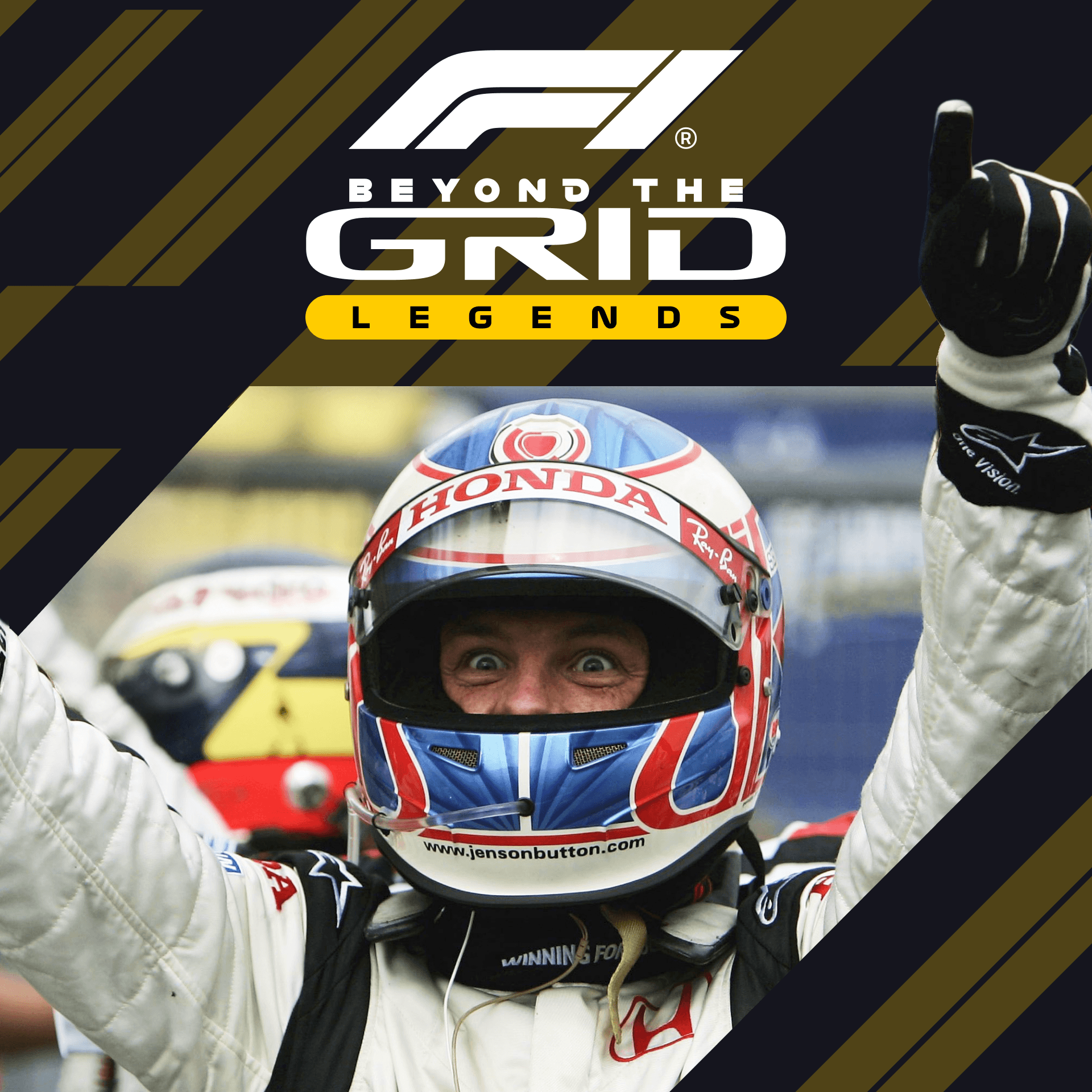
I'm Tom Clarkson and my guest this week is the 2009 world champion, Jensen Button.
We're speaking 20 years on from his first F1 race win in Hungary with Honda in 2006.
Jensen recalls his memories before, during, and after the race,
describing the emotions, the celebrations, and how that first win changed him as a racer.
That last point leads us onto a very interesting chat about when Jensen was at his best in Formula
1 and the insecurities that all drivers feel.
JB, great to have you on the show again. How are you?
Good, thank you. Yeah, it's been a few years, isn't it?
It has. Now, talking of years, we all love an anniversary, right?
It's 20 years, would you believe it, since that first win, Hungary 2006.
Look, when you think of that weekend, let's start with this. What is the overriding memory?
They have emotions. Yeah, I mean, it went from qualifying for getting a 10-place
group penalty because we had an engine failure, starting near the back.
14th with Fernando, with Michael, because they both got penalties in qualifying
for overtaking under a yellow flag. So we're all at the back and fighting our way through,
so did I think it was going to end up with a victory? No, definitely not from where we were,
but it had everything that race. A lot of action started wet, it dried out.
I made a move on Michael into turn one, which kind of was a win for me anyway,
before I actually got the victory. Any time you could put one over on Michael Schumacher
was impressive, and I enjoyed it very much. And yeah, so much emotion and relief also,
because it had been 113 races that I've had in Formula One and hadn't won yet.
Can we start with the background, right? I mean, on the subjects of not winning,
you'd come close, you had a stack of podiums, 10 in 2004 alone. Had you got to the point where
you think, is this ever going to happen? Yeah, definitely. I was at that point. 2004 was an
amazing year, as you said, 10 podiums. The first one came and then it's like, I couldn't do anything
wrong that year. I was always on the podium. Pole position in Imola, in front of Michael,
in the Ferrari, which is pretty special. But yeah, elusive win just wasn't there.
2005, obviously, we had our own issues, with missing a few races. But yeah, it was getting
a little bit painful, because the team were great. But to challenge Ferrari at that time
was really difficult. And then Renault appeared from nowhere, competitive with Fernando Alonso,
and those two were fighting, and we were like the team behind. We were the team in third in the
constructors, and it was getting a little bit frustrating. So that win kind of opened up a
bit for the whole team. From that point onwards, and to the end of the season,
I scored more points than any other driver. 35, I was going to say that.
On the topic of Ferrari, Rubens Barrichello had come to be a Honda as it was that year.
Just what did Rubens bring the team that it hadn't had before? Had it felt like a one car
team before, and suddenly it became two? It's funny, I've been asked this question many times
in terms of who's the driver that you feel was the best at engineering, and by far it was Rubens.
At working with a team, developing a car, understanding what a car is doing out on track,
and feeding that information back, but also just understanding what to do with the car,
not just letting the engineer get on with it. And that's what he was really impressive at.
And I understand why Michael wanted him as a teammate for so many years.
And I was lucky enough to have that when we started racing together, and I could really
see the skill set that he had that I never knew existed.
And a winner's mentality. I mean, did he explain why Ferrari had been so successful,
and were you able to make changes within the team?
I wouldn't say so much in winning mentality. I mean,
we all want to win. We're all doing as much as we can to win. These aren't
amateur teams going up against Ferrari. This is hundreds of people with a lot of experience in
the sport. So I think the mentality was always there to be winning. It's just we didn't quite
have the package to do that. But I think having feedback from two drivers with experience was
really important. And obviously, they're going to listen to Rubens quite a lot because he's
come from Ferrari, and he's worked alongside Michael.
Okay. So that's the background. Let's talk about the track now,
the Hungaro ring. You actually won there twice in your career.
Quirky little track feels like a sort of overgrown car track. Was it a track you liked racing on?
It was a tough track to race on. If the conditions were dry, overtaking was quite difficult.
It was like a Monaco without the barriers. So you could take more risks. You could make
mistakes and get away with it, unlike Monaco. But I really enjoyed it. It was a fun track to drive.
In mixed conditions, it was awesome, because you could put it around the outside at turn two.
Other places like turn five, you could drive around the outside in the wet of people. So
it was a real mixed up race if it rained and lots of opportunities in those conditions.
We were also on Michelin tyres at the time, and the Ferraris were on Bridgestones,
which definitely helped us in those wet conditions.
What did you need from your car to be quick? Because actually the RA106 had been a little
bit inconsistent at the opening of the 2006 season. Was it good in tight and twisty,
or did it prefer quicker corners?
Quicker corners. You needed a car that was good in quicker corners in Hungary. It sounds strange,
right? Because it looks so slow, but it's not. You're still unbelievably quick in most corners
in Budapest. The last sector especially, you needed a good front end, was never my strong
point to have a car that had too much of a pointy front end, because I didn't like oversteer that
much. But it was a car that as you added steering lock, it was like the dream, you got more front
grip. Whereas a lot of racing cars, you get to a point and it washes out. So it was a really nice
car to drive. At the last corner, I just remember being frustrating in that car, because it wasn't
quite quick enough for the aero to be working well. So you'd always just go in there and
throw in on loads of steering lock and understeer. So that's where we lost time. But most of the
track we were, we were pretty strong.
What you hit the ground running, actually. Anthony Davidson, the third driver, reserve driver,
I can't even remember, but we had the Friday drivers in those days. He was what, P2 on Friday
morning in first practice. And then you and Ruben's lock out the second row of the grid in
qualifying before the grid penalty that you mentioned. So the car felt good from the moment
you put it on track that weekend. Yeah. And when you look back now, it's hilarious,
because it was just the norm, the way the cars looked, sounded. But that V10, when I watch
videos back, just blows my mind. There's the scream of it. How does an engine produce that
noise? It was pretty phenomenal. And, you know, to have raced in that era, I feel very,
very lucky, very privileged. But yeah, from the word go, it felt good. And then it didn't,
because we had an engine failure. I remember it was after turn four, the quick left-hander,
I had to pull over to the left and smoke billowing out the back of the car. And that was it. I was
like, oh, 10 grid place penalty done. But tell us what you were thinking on race morning. You
never, did you start to believe at that point? No, no, not starting 14th. It never happened.
You know, I'd never won a race before and I'd started on pole. So no, definitely not.
You didn't even started on pole earlier in the year in Australia as well.
Yeah, yeah. And then stopped just before the line with the same issue as we had in testing
at Hungary. But no, I definitely didn't. But I knew it was going to be more interesting.
And the exciting thing for me was that we had the two championship rivals starting behind me,
or around me at that time. So I knew it was going to be a big fight through the field and it
definitely, definitely was that. You know, when I watch it back and I see the fight between
Michael and Fernando as well, it was, it was an awesome race.
Talk about the decision about what tyres to start on, because you started on inters from P14.
Your teammate Rubens is on full wets from third on the grid. The briefing before the race, I mean,
why, why so, so different?
I don't remember why Rubens was on wets. I mean, most of the time in F1, as we've experienced,
you don't ever want to be on a wet tyre. The only reason why you'd be on a wet tyre is because
it's too wet to drive on the track, you know, so you'd be behind the safety car. As soon as the
safety car comes in, you want to be on an inter because they just, they get eaten up so quickly,
a wet tyre, and the blocks move around so much. Whereas the inter-tire just, it just worked in
those conditions. It wasn't a lot of standing mortar, enough to be wet, but not rivers where
you needed a wet tyre. Quick word on the tyre wall. You already mentioned that it would, that
race weekend was, you wanted to be on the Mitchelins and not, not the Bridgestones, but
did you enjoy the tyre wall era of Formula One? I did. I did. And you know, I experienced that
later on in my career in Super GT as well. It's such a, for me, it's such an exciting part of,
of racing because it's tyre manufacturers going at it as well. And they're obviously trying to
produce not just a safe tyre like we have in Formula One now, but also they were pushing
the boundaries a lot more with trying to be better than the other tyre supplier. You know,
what we have now is great because we have the different levels of, of softness that we have.
And we can play around with them all around the world for different types of tracks. But back
then it was like, they would bring whatever they thought would work for that track. And
the lap times were extraordinary, you know. And then 2005 happened and we, well, sorry,
the year before 2005, well, we use one tyre for the whole race. And we, we did it, you know,
it was a problem if you locked up. And they were grooved. grooved and they worked.
It was just amazing. But yeah, so I really enjoyed the tyre wall. But, you know, all good things
come to an end, you know, and I, I respect the way that we have it now in Formula One as well.
What about refuelling? It was a refuelling era as well, wasn't it?
I loved that part of it, you know, because you could have different strategies. You could run
different strategies on fuel. So you could even start the race on half tanks if you wanted to,
to have a lightning first stint. And you'd never be at full tanks because you could do a three-stop
race, two-stop race, and you're never at full tanks. So if your car didn't work as a heavy car,
with the fuel moving, you'd just run a lower fuel level and just do more stops.
Also in qualifying, then, we had fuel on board, you remember? So we, it was declared after
qualifying how much fuel we had on board for the race. We were sort of guessing, weren't we? Oh,
how much? Yeah. Yeah. So it was, it was fun. I enjoyed that. And it left more, it was more
opportunity for, for people that weren't in the best car, I think.
This episode is sponsored by Saley. One of the things I love about making this show is that it
takes me all over the world to sit down with some fascinating people from Formula One. Of course,
that also means there's always another interview to prepare, more research to do,
and checking in with my family back home. And quite often, I'm doing all of that while traveling
between different countries, which means I rely a huge amount on having a solid data connection
wherever I am. But you don't have to travel as much as I do to appreciate how useful that is.
Whether you're heading away on holiday, traveling for work, or just trying to avoid
expensive roaming charges, Saley makes it easy to get online whenever you need it.
Saley is an eSIM app from the creators of NordVPN that gives you affordable mobile data in over 200
destinations. So instead of worrying about roaming charges or trying to find a local SIM card when
you arrive, you can just connect straight away. It also includes built-in security features,
like a VPN and ad blocking, which helps protect your browsing and can even reduce mobile data
usage by stopping ads from loading. What I really like is that you only need to install the eSIM
once. After that, you can travel between countries and stay connected simply by adding a new data
plan. And if you travel a lot, they also offer the Saley Ultraplan, which includes extra perks like
airport lounge access, fast track services, and priority support. So download the Saley app in
your app store, use the code GRID at checkout to get 15% off your first purchase.
This show is sponsored by LiquidIV. You might have heard me mention that I recently trained for the
London Marathon, which I'm very pleased to say I managed to finish. And congratulations to everyone
else who completed it too. LiquidIV's hydration multiplier sugar-free sachets were really helpful
during my training thanks to its optimized ratio of electrolytes, essential vitamins, and nutrients.
And now that I've got the marathon bug and we're heading into the warmer summer months,
I know staying properly hydrated is only going to become even more important if I want to keep
at it and keep my energy levels up on longer runs. And no matter what sun drenched activities get you
moving, you need to stay hydrated when things heat up. LiquidIV delivers longer lasting hydration
than water alone, and right now you can get 20% off your first order with the code GRID at checkout.
And what I really like is how convenient it is. The sachets are easy to take with you whether
that's in a gym bag, a backpack, or even your pocket. And just one stick mixed in 16oz of water
can keep you hydrated for up to four hours. I've been alternating between the orange vanilla and
white peach flavors recently, but there are loads of sugar-free options to choose from,
so why not mix it up a little? Get moving with superior hydration from LiquidIV.
Tear, pour, live more. Go to liquidIV.com and get 20% off your first purchase with the code GRID at
checkout. That's 20% off your first purchase with the code GRID at liquidIV.com.
This episode is sponsored by Indeed. There's a lot that goes on behind the scenes of this show,
booking guests across time zones, tight turnaround edits, and constant time management.
And when things get chaotic, you realise pretty quickly how important it is to have
the right person on your team. If I had to hire someone tomorrow, I wouldn't just want a good
editor. I'd want someone who understands pace in long form interviews and can work fast under
pressure. And in moments like that, you think, this is a job for sponsored jobs. Because Indeed
sponsored jobs boost your listing in search results, helping you reach the candidates with
the specific skills and experience you actually need. And it works. Sponsored jobs posted directly
on Indeed are 95% more likely to report a hire than non-sponsored jobs. That's a serious edge
when the pressure's on. Spend less time searching and more time actually interviewing candidates
who check all your boxes. Less stress, less time, more results.
When you need the right person to cut through the chaos, this is a job for Indeed sponsored jobs.
And listeners of this show will get a $75 sponsored job credit to help get your job the
premium status it deserves at Indeed.com slash podcast. Just go to Indeed.com slash podcast
right now and support our show by saying you heard about Indeed on this podcast.
Indeed.com slash podcast. Terms and conditions apply. Need to hire. This is a job for Indeed sponsored
jobs. Formula One fans know how every second counts on the track. That same intensity is
what makes Playoff Hockey so wild. NHL on TNT has the best coverage, with every shift in
game mattering, no one is just coasting. The panel is just fun to watch, especially when Paul
Bissonette is cracking jokes and Wayne Gretzky is breaking down the action. Studio coverage makes
every moment feel bigger, just like a big race weekend. Watch the Stanley Cup Playoffs on TNT,
TBS, True TV and HBO Max.
Right, back to the race. We get underway. You're immediately start flying, actually. That first
stint was great. I think you overtook Massa Fizzichella Schumacher in the space of two laps.
Yeah, it was good. So you immediately got a tune out of the car. I've asked you this before,
I'm going to ask you again. At what point in the race did you start to think something special might
be on? Definitely. I would say towards the end of that stint. I think we went to dry tires on the
first stop. It was around that time because the pace was really good on the wet on the inters.
I could see myself coming through the field and they were giving me lap times of Fernando
as well. I was like, we're quicker, we're quicker. This is great. Then when we put the dry tires on,
the pace was really strong. At that moment, I thought, yeah, I actually thought it was on
before it was on. You know what I mean? At that moment, I was like, we're going to win this. I
didn't realize the offset that we had with Fernando with pit stops. I thought it was a walk in the
park. Then I was like, oh, no, actually, Fernando's in front. Then he had his wheel nut fall off in
turn two. Life was made a lot easier for me. I didn't have to challenge him.
He's off. Fernando Alonso is off. The world championship leader has stopped and Jensen Button
not only leads, but he leads by 22 seconds. Is it too soon to start talking about the first
Grand Prix victory of Jensen Button? Do you think you had the pace to pass him if he kept going?
Passing him, I don't know. But we had the pace to catch him. But passing is another thing always
and then a fun. With the way the track was, drying track, it's always difficult to put it on the wet
patches to overtake. You've got a force and error from the guy in front.
How did your race engineer, Andrew Shovelyn, break the news that Fernando was out? Was he
very calm or was he like, hey, you're not going to believe this?
It wouldn't have been calm. It would have been unbelievably excited. When you've never achieved
something and you think you might be able to, everything changes. Even though we're British
and we don't like showing too much emotion, Shovelyn did. I really love that about him and
that's why we work so well together. It would have been proper excited, definitely.
I didn't even know that I was racing Fernando at that point. I thought I was in the lead anyway.
Let's hope the floodgates now open for Jensen Button as they did for Nigel Mansel
and for Damon Hill before him because here in his 113th Grand Prix start,
he's proved the critics wrong. They said he might never win a Grand Prix. He's done it!
Jensen Button wins the Hungarian Grand Prix. Get in there.
You crossed the line. You've won your first race.
20 years on, how vividly do you remember the emotions?
I remember the laps before the finish. Before you win your first race,
the last few laps go on forever, that's what they say. You hear different things and worry that
you're going to have a failure. For me, I didn't want it to end. It was the best feeling. Leading
a race by, I think it was 30 seconds. I asked the team, is everything okay? A couple of times
with the car, they're like, yep, just keep doing what you're doing. I loved every moment. I remember
those laps vividly because it meant so much. I was just about to achieve something that I set
out to do at eight years old. Then I caught the Honda Junior team, which was super aguri. I remember
that. On the last lap, I called up to them. I was like, this would be nice. We can cross the line
together when they're a lap down or two laps down. By the way, that would be nice for Honda,
but you couldn't keep up. You weren't slowing down. I wasn't slowing down.
At that moment, you start backing off, your concentration goes. You don't want to be
messing with that. You've got to keep focused. You might not be 100%, but it's 99%.
JB, it was an incredible podium of firsts actually. Your first win, it was the team's first win. It
was Dilla Rose's first podium. Heidfeld had given BMW Sauber their first podium as well.
Can you remember what was said? In that moment, is it just all about you?
No, there was a lot of emotion on the podium. I noticed it more from Pedro.
There's a lot of photos of us hugging, a lot, and staring into each other's eyes.
It was his first podium and it was his last in Formula One. It was his one and only. I spoke to
him yesterday about it, actually, as it's the anniversary. He was like, you don't understand
how emotional it was for me as well, being up there, giving this opportunity to go and race
from McLaren after Pampavlo was moved aside. It was a lot of emotion up there. I think for the
first win to be hangaroring with that beautiful trophy, I think that means a little bit more.
I know it's the first win, but because of the trophy and the effort and dedication that goes
into designing that trophy and building it, it means that extra bit more.
How did you celebrate?
Yeah, I had to go straight to China because I had a sponsor event in China.
Did you remember that?
Yeah, I had a couple of beers at the track, jumped on a private plane, which took us to a bigger
airport, which then I flew to China and did an event. It's not a gondola, but it was like a gondola
on the water and I was like, this is so random. It's quite random.
Yeah. And then obviously got the call from Big Boss at Honda.
You've just won our first race in 40 years. Can you come to Japan? I'm like, all right.
Here we go.
While you're in the region.
Yeah, here it goes. But I arrived in Japan and went to the Honda R&D Center. I remember walking
in and the corridor, it's a completely open plan office and the corridor is, it feels like it's
half a kilometer long. It feels like it's 500 meters long. I'm sure it's not,
but every single worker there came and stood by the middle corridor to clap me down and
it lasted like 20 minutes walking down there and it was pretty awesome. There was so much
emotion. They'd put so much into the team and it had been a long time since Honda won as a
manufacturer. So a lot of tears and that added to my emotion as well. So it was actually the
best way to kind of celebrate. And that cemented your relationship with Honda, who you're still
working with today, right? Exactly. Yeah. I've raced for Honda, obviously 2003 through to 2008,
2015, 2016 and then 17, 18, 19 in Super GT and then I raced for them in the Daytona 24 where we
got a podium. Did you approach Turkey the next race any differently? You know, they talk about the
confidence you get from your first win. Did you feel any of that? I think I was more relaxed.
I was less tense. Monkey off your back. Yeah, I think that's the feeling that you have. It's
less tense. I'm not going to win the world championship. So let's go out and do as well
as we can. I've won that race. I can take a few more risks now. And it was probably some of the
best races of my career. One, because I was so relaxed. People talk about the brawn season
being my best year and then I find it wasn't, I don't think. When were you at your best, JB?
I think 2006 was a really good year for me, the second part of the season and 2011, I would say,
in McLaren. The two years you won in Hungary? They are the two years I won in Hungary. Yes,
my 114th Grand Prix and my 200th Grand Prix, I remember. 2007 and 2008 were quite quiet years.
Difficult years. Really difficult. Remember the Earth car and things like that.
When did the foundations for 2009 start getting laid? When you look back,
did it start in 2006 with that win in Hungary? I would say maybe with Honda, but in terms of the
UK base, no. I mean, we expected so much out of 2007 and it just was a disaster. It really was.
Our junior team, Super Guru, had our 2006 car, so they were beating us. That car won a race
and we were driving something that couldn't even get into the points with.
That was a tough year and then it was more when Ross turned up at the end of 2007.
That was the moment that I was like, oh, this is going to turn around and that you felt the mood
shift. A team that had won a race suddenly was so bad in 2007, I think it needed that kickstart
again. What did Ross bring? I think just his presence, first of all, just him walking into the
room was enough. I remember it was like assembly. We had the whole factory in one room and nobody
really knew that Ross was coming and that's when it was announced and he walked down the middle
aisle and there he was at the front and he was our saviour. He was the first that was going to come
in and save us from the disastrous 2007. Javi, I'd love to know, look, can we explore this a bit
more? What did Ross bring other than his presence? Was it a confidence? direction?
Yeah, I hadn't got to that beat yet. I wasn't just his presence. That was already a kickstart.
That was a good kickstart for the team. His leadership, his understanding of how a team
needs to work together, getting rid of blame culture within a team, letting people be a bit
more free within a team and come up with crazy ideas. Sometimes they don't work, but they've
got to take risks. Otherwise, you're never going to get to the front. It was a really good atmosphere
when Ross was there. 2008 was made very difficult because we knew we were just concentrating on 2009.
2008 was kind of like, there you go. There you go. Have that. It wasn't great. It was pretty bad.
I'd sort of mentally switched off at that point because I knew the year was going to be a disaster.
I feel that Rubens probably did a better job in that situation than I did in 2008.
I was more already looking at 2009 and I was just going through the motions on race weekends because
once you'd won, it felt, what am I doing here? Fighting for 13th, 14th on the grid and it's
not what I set out to do. It was tough. I think I gave up a bit too early that season
when I look back now. Did Ross make you a better racing driver?
I think his calm attitude was great on tough days. I don't think that anyone can make you a
better racing driver. It's down to yourself to sort out your demons. I think people can listen
and I think that's what you need to do as a leader. Listen to your driver's problems,
but don't be too opinionated. As drivers, we're flawed. We are insecure and I'll go for any driver.
When I hear Lewis Hamilton on the radio last year in the Ferrari, when he asks a question,
they don't come back to him. He's like, have I done something wrong? It's like,
you're a seven-time world champion. The confidence you should have is out of this world,
but insecurities creep in. I think listening to drivers and their issues is a big thing,
I think, for leaders. Insecurities drive you on, I suppose as well, right?
Yeah. You forget what you've achieved and you just think about that last session. You're like,
I'm not good enough. I was two times Palmer teammate. It's crazy and the pressure you put
yourself under, it's enormous and that's why you see so many drivers fail in the sport,
even though they have the talent. Mentally, they're just in a really dark place and I've
heard it from many drivers and we think of it as a weakness, so we don't talk about it.
That's what amazed me with Lando, the way he's been outspoken over the last couple of years
of mental health, really, really good and I think that gives you a lot of strength.
Do you think Michael Schumacher had those insecurities?
Yes, I do. Because certainly the public persona was one of great confidence.
Of course. Yeah. When there's certain drivers, riders in MotoGP that I've thought,
he comes across as a bit arrogant, but it's not. They just don't want to let anyone in.
They know they have insecurities and they don't want to let people in, which is the biggest
issue because then you never get over those insecurities.
So, JB, your career, you experienced every emotion under the sun, didn't you, really?
Yes. Highs and lows. So, when you look at 2026, we just end on the current year,
who do you look at this year and go, they're like me. I can relate to that driver. He drives like me.
His attitude is like me. If all the ducks align, he can win the world championship,
even if he hasn't already. Who's that person? It's a difficult, difficult question to ask.
We're all built so differently and I'm not inside any of the driver's heads.
I think in my younger years, I would say probably Oscar. He's driving style.
You were chilled. JB, because I remember being at the showdown in January 2000,
it was you and Bruno Juncker. Now, I know the sort of innocence of youth,
what you don't know, but I was bowled over at Barcelona.
Just thinking, how can JB be so relaxed? His entire future rests on what we're doing now.
Oscar-esque. Go from being a kid that likes racing cars to an F1 driver. Your world changes.
Not just your career, but everything else in your world changes.
Very Oscar-esque, I think. The racing was what I was all about. I wasn't bad at doing
media and sponsor events, but it wasn't what I enjoyed. It was just the driving that I loved.
And also, in moments in my career, I wasn't there mentally. I wasn't strong enough at
certain moments. I don't want to put that on Oscar, but when you look at last year,
there were moments in time that I felt that he wasn't able to get the best out of himself,
and sometimes you do tighten up, and that was a weakness of mine. 2009, it was in plain sight,
and I don't mind talking about it because it's something that I worked on.
So, yeah, I think probably Oscar, and it's lovely to see him and his dedication and his
focus, and he just wants to go racing. Very like Max as well. No, I'm not like Max in terms of
I'm nowhere near as good as him, but also the way that he races is very different.
Do you think Max has the insecurity as well?
Yes, I still think there's an insecurity there. Maybe that applies to all professional sport.
I think it does, and it comes down to you lose more than you win. I spoke to Roger Federer last
year about sport and the mentors side of it, and he said, yeah, you got to think I'm the most
successful tennis player ever, and I lost 75% of my matches, and that's a great record.
In F1, I raced 300 Grand Prix, I won 15. 15, so I lost 285 races.
Hang on, 50 podiums or whatever it was. Yeah, yeah, but talking about victory, so
Lewis Hamilton, extraordinary what he's achieved, but he's still lost a lot more than he's won,
and that is mentally why it's tough in any sport because you lose more than you win.
JB, it's been such a joy to chat to you again and to relive that hungry race. Thank you so
much for your time. Cheers, Clown. That was a brilliant chat. Thank you, Jensen, for your time
and for your memories. From 20 years ago, you remembered so much from your first win,
and why wouldn't you? I hope everyone involved in that win, especially Andrew Shovlin,
your race engineer, will enjoy reminiscing as much as we did.
Well, that's almost it for this week. Before I go, a few parish notices for you. On the latest
episode of F1 Nation, I'm joined by Jolien Palmer and James Hinchcliffe to talk about the greatest
teammate rivalries in F1 history, and this week's F1 Explains is all about press officers
with former McLaren communications director Sophie Og. That will be on the F1 Nation feed
on Friday. Thanks very much for listening. I will, of course, be back next week with another
iconic name from the pinnacle of motorsport. F1 Beyond the Grid is produced by Formula One
and AudioBoom Studios. Until next time, keep it flat out.
About this episode
Jenson Button’s first F1 win is traced back to Hungary 2006, where an engine failure triggered a 10-place group penalty and forced him to start near the back. He describes navigating yellow-flag chaos, then capitalizing as “A lot of action started wet, it dried out.” Tire switches, pit-stop timing, and the Hungaroring’s tricky overtaking conditions helped him lead Fernando Alonso and finally take the Hungarian Grand Prix. The conversation also touches on Honda’s call after the win and the mindset shift that followed.
20 years ago, Jenson Button added his name to the illustrious list of drivers to win a Formula 1 Grand Prix, when he emerged victorious at Hungary in 2006. A moment long overdue after multiple podiums, Jenson admits he did get to a point where he thought a win might never happen. So how did he feel when he finally did cross the finish line and take the chequered flag first? Speaking to Tom Clarkson, Jenson talks through the race in great detail, before describing the emotions of that huge milestone, how he celebrated and why it changed him as a driver.
Plus, the 2009 World Champion also reflects on when he was at his best in Formula 1, which driver on the current grid he relates to the most and why drivers are more insecure than we might think.
This episode is sponsored by:
Saily - get an exclusive 15% discount on your first Saily data plans! Use code grid at checkout. Download Saily app or go to to https://saily.com/grid
Liquid I.V. - go to liquidiv.com and get 20% off your first purchase with code GRID at checkout.