VSC means “Virtual Safety Car.” It’s a rule that makes everyone slow down for a short time so the race can stay controlled, usually because of an incident on track.
This is shorthand for stopping in the pits and then rejoining the race. In Formula 1, when you come back out can decide who you’re stuck behind—or who you can pass.
A three-stop strategy means the driver plans to change tires three times during the race. It can help you go faster on the fresh tires, but it also costs time in the pits.
The Fiat 600 is a small car made by Fiat that was designed for everyday driving in tight city spaces. Because it’s compact and relatively light, it can also show up in racing events where smaller cars compete. The podcast mentions it in relation to qualifying, meaning it was one of the cars that ended up near the front or behind the pole position.
In F1, the “power unit” is the car’s whole hybrid power system, not just the engine. How aggressively it’s used can change how fast the car feels on track.
Term
audio performance adjustment
They’re talking about a change in how the car is being tuned/managed that you can sometimes detect from how it sounds and behaves. The point is whether that change actually shows up in real race pace.
Engine parity means the engines are basically matched in strength. If one team’s engine is no better than the others, then the race is more about setup, tires, and driving.
In F1, brakes are more than just stopping power—they’re tightly managed for repeated heavy braking, tire wear, and maintaining stability under deceleration. A driver’s braking consistency can strongly influence lap times, especially in braking zones and for traction on corner exit.
Ground effect is a way race cars make downforce using the air under the floor. When the rules change for ground effect, the car’s grip and handling can change a lot.
A “compliant car” is one that can flex and move around more without losing control. That helps it stay stable when braking hard or hitting uneven track.
“Dive and pitch” describe how the car moves when you brake hard. The nose can drop (dive) and the car can tilt forward or backward (pitch), which affects grip.
Engine braking is when the engine helps slow the car down when you lift off the throttle. In racing, it can change how the car turns and how stable it feels during braking and corner entry.
“Rotation into the corner” means how the car turns in and pivots at the start of a turn. The setup and tire grip determine whether that turn-in feels sharp and controlled or unstable.
Person
Freddy Versailles
Freddy Versailles is mentioned as the team boss. The host is saying he helped make sure Lewis Hamilton got the car changes he needed to drive better.
Term
false sealant
“False sealant” sounds like a technical problem that was messing with how the car behaved. The host is saying it made Hamilton’s performance not reflect what the car could really do.
Qualifying is when drivers race against the clock to decide where they start for the race. The host is saying Hamilton sometimes couldn’t advance to the next part of qualifying, which hurt his confidence.
The host is talking about confidence—how sure the driver feels in the car. If things aren’t working, confidence drops, and once the car feels right again, the driver can push harder.
“Inputs” are what the driver does with the controls, like steering and how they press the pedals. The host is saying the car responds the way Hamilton wants when he makes those control actions.
Telemetry is the car’s live data feed to the team. It helps engineers see what’s happening mechanically and dynamically, not just what the driver feels.
GPS readings are location and timing measurements from satellites. In racing, teams use them to see exactly where the car is on track and how consistent each lap is.
Concept
physiological thing
The host means the driver’s body and senses play a role in how well they perform. It’s not fully understood, so it’s hard to perfectly connect feelings to the car’s data.
The Red Bull Ring is a famous Formula 1 race track in Austria. Some drivers feel like their car suits the track better than others, so a driver’s past results there can be a clue about how comfortable they’ll be.
“Baku” refers to the Formula 1 event held in Baku, Azerbaijan, on a street circuit. Street circuits tend to punish setup mistakes and driver errors more than purpose-built tracks because of narrow margins and frequent traction changes.
“Monaco” refers to the Monaco Grand Prix, raced on a tight street circuit where low-speed traction and precise car placement matter more than outright top speed. Because overtaking is difficult, qualifying and setup consistency often have an outsized impact on results.
In racing talk, “gelled” means a driver and car setup have become well-matched—so the driver can consistently extract the performance the car is capable of. It’s less about raw speed and more about how the car behaves in the driver’s preferred way (balance, traction, steering feel).
Concept
develop this way
“Develop this way” refers to the team’s ongoing car development direction—how they interpret feedback and choose upgrades to improve performance. In F1, development is iterative: if the car’s characteristics and the driver’s needs align, the team can keep pushing in a more effective direction.
Concept
extract a lot from it
“Extract a lot from it” is F1 shorthand for getting the maximum usable performance out of the car—through setup, driving technique, and consistency. Even a strong car can be limited if the driver can’t exploit its strengths, so the phrase implies a good match between driver and machine.
“Unsuited to me” describes a mismatch between the car’s characteristics and the driver’s driving style or preferences. In F1, small differences in balance, steering response, and traction can make a car feel fundamentally wrong, so the driver may struggle until the team delivers the right changes.
“Changes made” points to the typical F1 process of bringing updates—mechanical and/or aerodynamic—to correct weaknesses the driver identifies. The key idea is that performance comes from aligning the car with what the driver needs, not just from having a fast baseline.
Pit stops are when an F1 car comes into the pits to change tires. How many times and when you do it can decide who has the fastest grip later in the race.
Degradation means the tires get worse as you drive—usually losing grip and speed. On tracks where degradation is high, newer tires can make a big difference lap to lap.
A “two-stop” strategy means you plan to pit two times during the race. Teams choose it based on how quickly the tires wear and how fast they can be on each set.
“Medium” is a tire type that’s in the middle—usually better grip than the hard tire, but not as long-lasting. Teams pick it when they want a compromise for race pace.
An undercut is a pit-stop timing move. You stop earlier, get newer tires, and drive fast enough that when the other car finally pits, you end up ahead on the track.
An appeal is when a team asks officials to reconsider a penalty they think was wrong. In F1 there’s a deadline, so teams have to move fast if they want the decision changed.
A penalty is what race officials give when someone breaks the rules. In F1 it can be served in different ways, and if it’s served at the wrong time it can hurt your position even more.
Sometimes a penalty isn’t about driving through the pits—it’s about stopping for a set time. If you don’t stop for the full required time, officials can treat it as if you didn’t serve the penalty at all.
A drive-through penalty means you have to go through the pit lane without stopping, following the pit-lane speed rules. It costs you race position, which can be brutal when cars are bunched up.
The safety car is used when the track isn’t safe, so cars slow down and follow it. Because everyone gets closer together, penalties can swing the race more than they would under normal racing.
Race penalties are punishments for breaking F1 rules. They can change where a driver finishes, and teams may try to appeal if they think the penalty was wrong.
This is about the distance officials use when calculating a speed-related rule. If the distance measurement is off, the speed calculation can be wrong too.
Average speed is the overall speed over a stretch of track. If the officials use the wrong distance, the average speed they calculate can come out wrong.
They’re talking about whether Mercedes might have a serious problem with the engine that causes the car to fail. The question is whether the team knows what’s causing it.
The “battery” in an F1 car is part of the hybrid system that stores energy. If it fails, the car can lose power and may not be able to finish the race.
McLaren is an F1 racing team. Here, they’re being mentioned as one of the teams whose car might have had the problem due to how something was installed.
After a race, the team does troubleshooting to figure out what broke and why. They inspect the car and check the systems so they can fix it for the next race.
Brackley is where Mercedes’ F1 team is based in the UK. After races, cars are sent there so the engineers can inspect them and figure out what went wrong.
They’re talking about how the damaged part was shipped. Flying it can be risky if there’s a fire hazard, so they used a slower shipping method instead.
They shipped it by boat instead of flying it. It takes longer, but it’s safer when the damaged part could be a fire risk.
LIVE
I think we can definitely say that that competition is on now that Hamilton has the car that he
wants and he's able to drive more freely again. He's found that it's all still there. You know,
the speed is still there, the natural weather, the car behaves in just how he likes it. It just takes
two evenly matched cars, doesn't it? And you've got a vintage season and it's increasingly looking
like that's what we've got. Well then Mark, off the back of another Grand Prix in Barcelona,
what were your thoughts of what you witnessed from out there in Catalonia?
Great race, wasn't it? I mean, even before the VSC came out and sort of ensured Lewis Hammond's
victory, it was shaping up into a fantastic race with Hamilton due to pit and come out,
probably behind Lando Norris, but going a lot quicker and he would have then presumably quickly
picked off Norris and he had the pace on the new tyres. He would have had the pace on the new tyres
to, in theory, got past both mercs before the end as well. So it looked as if that combination of the
Ferrari upgrade in Hamilton's form was actually together with the Ferrari strategy, a very aggressive
adventurous three-stop strategy that they committed to. It looked like that was going to win them the
race, even though Fernando Alonso did his old friends Ferrari and Lewis Hammond a favour by
just making it absolutely certain with the timing of his every time and bringing out the VSC.
So yeah, it was fascinating to see this big breakthrough for Ferrari. It was apparent in
qualifying when Hammond was vying for pole, only 600s I think it was, off pole. We haven't been
nowhere near that all season, but Ferrari, the closest it got was sort of a quarter of a second
away to date. So yeah, they brought a big upgrade. It's also the first real race where we could see
if the power units were being run more freely and if there's any outcome from the audio
performance adjustment being confirmed earlier. So Ferrari would have no motivation to hide their
performance. Yeah, so trying to unpick that from the upgrade, impossible to do, but it's certainly
it's probably some combination of those two things. And it's exciting for what it promises for the
season as well. It looks like we may have genuine proper competition between Mercedes and Ferrari,
even though Mercedes have dominated the results so far. Yeah, it's an interesting prospect,
and so Anna was a great race. So yeah, all in all very positive we gained.
Let's just stay with that for a moment because a couple of weeks ago you were saying that you
thought Ferrari might feasibly be able to sneak on in and steal the world championship from under
Mercedes and Kimi Antonetti's nose. Now a number of our viewers were telling us that we were just
being silly, but in light of what we've just seen, is the battle for 2026 really on? Yeah,
I think we can definitely say that that competition is on. The thing is those perceptions tend to be
formed by what's happening right now rather than looking at the underlying reasons for why it's
on, whether those reasons will always apply going forwards. And we had enough information
to suggest that that performance was within Ferrari with a little bit of more engine power.
And also we were speculating on that before even we knew about this, the second big upgrade of
Ferrari had made in four races, which is really big. It was pretty much nose to tail of the whole car,
and it seems to have been very, very effective. So yeah, I think that combination of aerodynamics and
whatever gains they might have made through being more free to run the engine, do its full
potential, I think is very interesting. And the ADO adjustment means that they have the opportunity
for two upgrades in the season. So you know, certainly Landon Norris was very vocal after
the race, saying if they get anywhere near engine parity, they're going to be the best,
they're going to be embarrassing us. So yeah, I think it's very much game on. And earlier assessments,
just because Mercedes had dominated so far, it was far from clear that they had everything
in their hands to be able to do that for the rest of the season. The Ferrari threat was always very
real. Yeah, it's going to have a long way to go before we discover who's going to be the world
champion in 2026. Staying with Lewis Hamilton though, I mean, it's been remarkable. He's had
victories with McLaren, victories with Mercedes, and now a victory at Ferrari. That's essentially
three different engine regulations. If you argue that the new regulations, although being the same
engine size, the way they work is very, very different. That is remarkable. Now, last week,
we were talking about him and saying that the brakes are a huge part of his success, but it
can't just be down to that. What else has been behind the transformation from the driver who
last season was very much almost a broken man? Yeah, that's pretty much what I've delved into
in the MPH column on the website, on the magazine's website. It's not just that he's got the brakes
that he wants, the dovetail properly with the way he naturally wants to drive the car. It's also
the regulation change, the previous regulations, the ground effect regulations, they just did not
suit the way he naturally drives. I think there's a misconception that a driver's level is
set. It's the same, and it's always, if you plug that driver in, this is the level of
performance you get. It's not like that at all. Beyond just how competitive the car is,
it's also about how the traits of that car dovetail with the way the driver naturally drives.
There's a big variety of driving styles, and it's not something that they choose,
it's just something that the way they are physiologically wired up, how they feel the car,
and so the way that he has always produced his lap time wasn't really the ideal way of driving a
ground effect car, and it's very, very difficult to erase that muscle memory, especially when he
had been doing it for so long as he had been doing. These regulations with the current that
are coming through this year, you've got rid of that necessity to have such a flat platform of
the car where the car has to run very, very low to the ground to really give the ultimate in grip.
That's gone now. You can have a much more compliant car, and a car that's much more tolerant
of the sort of dive and pitch you get if you want to brake as hard as Lewis likes to do.
Yeah, the regulations is one thing. The way he's finally got the brakes he wants is another thing.
The way that they've configured the whole car around what he's been asking for through our last
year in terms of especially engine braking. Previously, Ferraris had developed
a way of using a lot of engine braking to get the rotation into the corner to help him get that
rotation. Using Hamilton's driving style, it just made the whole thing unstable and stable at the rear,
so the whole car, the aerodynamics, the suspension, everything had been developed over the years
around that direction, and it's fine, it's valid, but it doesn't mean that it's going to work for
every driving style. That didn't work for Lewis's, so he's had to really, really push
team boss Freddy Versailles into giving him the car that he wants, giving him the car that he needs
to perform on his best, so that there's not this false sealant on his performance. He's able to
exploit all the things that he can do, so I think when he wasn't able to do that, of course it reduces
doubt in everybody, it reduces doubt in the team, it reduces doubt in the onlookers, to fans, to media,
and it reduces doubt into the driver as well, so that sort of compounds, and you then have
this situation where we saw at times last year, when he'd failed to get through the next stage of
qualifying, he was absolutely despondent, and even saying things on his rubbish, maybe they
should be looking at a different driver, that's how far it damaged his confidence, so when suddenly
you get all the things you've been asking for, and then he's able to drive more freely again,
he's found that it's all still there, you know, the speed is still there, the way, the natural way
that the car behaves, just how he likes it with his inputs, it's given him all the feedback he wants,
and now that he's got the brakes that he's been asking for as well, it's all come together,
and the car itself is very good, it's very competitive, but it's not only just that it's
a good car, it's a good car that is also appropriate to his driving style, so yeah,
all those things have come together, and you know, it wasn't a given that they were going to,
and I think Freddie Versailles needs to take a lot of the credit for that, because it wasn't an
easy thing, especially the change of brakes from this, we talked about last week, and he's had
to really put his neck on the line to do that, and you know, when you're putting your neck on the
line for a driver that was underperforming last year, no two is about it, there must have been some
nervousness there, and especially when you consider his own place in the team and the pressure that
he's under as a team principal, so you know, I'm sure that his bosses would have been looking on
that thing, you sure about this, or we go in the right direction here, and so this I'm sure is a
great relief, this breakthrough victory, I'm sure is a great relief for him and all concerned.
What about Fred Versailles then, because as you rightly say, he came close to losing his job last
year, that's our understanding anyway, you know, but he's managed to turn it around, what's been
behind the transformation for him, and do you think Lewis Hamilton would have gone on to have one
in Barcelona and got that podium in Monaco had Fred Versailles being sacked?
Very, very difficult, that's the last bit of that question, because maybe not, maybe not, because
there was, was Freddie was keeping the faith and making those changes that Hamilton was saying he
needed, that I think was actually crucial, so I think maybe we wouldn't have seen this
transformation from Lewis, Freddie had not been there, and I'm not sure Lewis would have wanted
to stay there if Freddie had not been there, Freddie's a very big part of Lewis being there,
and I don't think he would have been all that keen to stay on, so what was the catalyst? I think it
was just they were, the management didn't have an obvious replacement to slot in, and so they
just extended the deadline of success really, and so this will have relieved a lot of that
pressure, and especially if they have a strong season for the remainder of this year, so it
relieves a lot of the pressure on the on the team principle. In your column, your MPH column, which
you can all view and read at motorsportmagazine.com, you talk about what other drivers have been
saying, Alex Albon going into this season said that Lewis Hamilton would be very, very good in
that car, just how much do the other drivers look at the other drivers, or are they purely focused
on themselves? Yeah, I mean you are focusing on yourselves where they all have a very good
understanding of how important that dovetailing is between the car traits and the driving style,
they all understand that very well, and even though you might not have the most competitive car,
if it's doing all the things that allows you to drive to your best, you will be able to at least
exploit everything that is in that car. You can also be in a situation where you know the car is
potentially better than the lap time that you're able to do in it, because it's not allowing you
to do the things that you can do, it's placing a false ceiling on you, so it can be that, and
Carlos Sainz said after the race, he said, you know, if you go to a new team and it's a car that
you can look like you've got one arm, he said, but if you go there and the car, you do like it,
you can look like a god, but it's the same driver, your ability hasn't changed, it's just
your ability to deliver to your full potential that has changed, and this doesn't just change
from year to year in teammate to teammate, this can change from one circuit to the next,
you know, one tyre to the other tyre, or you know, one track temperature, it is just not constant,
that the driver element of the lap time, it's not, the merit of the driver is not, it's not
constant, that performance is not a constant, they're all at a very high level of course,
so there's like a minimum level that they can all reach, but the how far above that bar they can
each get is not the same, and so it's just how that car works with that driver, and yes,
that the driver can work hard and ensure that as they develop the car, it comes more towards him
and get a good rapport with his engineers, so they really understand what it is he's asking for,
or you know, they have someone in between them and the engineer who can translate what the
driver means in the engineering terms and vice versa, yes, you can start working and you get
rewarded for that hard work, but the actual physical, can this driver drive this car as
fast as that driver, that's not a constant. But if that driver performance is not a constant or
is moving, what about the driver's confidence, because most F1 drivers are pretty confident,
they're alone, you know, world champions, how can it be that a driver can lose so much confidence,
is it a factor of getting old and they're not completely, you know, immortal as we think,
as we think that they must be? Yeah, I mean, those questions start arising in your head when,
when you're not performing, I think, you know, they do create questions, and there's not a
definite advance, because it's not, it's not really a fully understood science, and then there isn't
not a perfect match up between, say, the GPS readings that the team are seeing and
the telemetry, and what the driver is feeling, and that's a very, very much far from understood
physiological thing with the driver, it's under-researched, it's not fully understood,
so it's not a science, so in that uncertainty, that's where it breeds, that's where,
why is it not happening anymore? Maybe I'm just too old, that might be one of the reasons,
maybe I'm not as good as I thought I was, or all those things, they will, they will sort of
know away at it, a competitor, and not many of them will admit to it, but Lewis Dickett last
year, several times, and he was saying after he's won in Spain, even though he's got all
his confidence back, he's saying, no, I did, did doubt myself, and he's mentioned several
times that he forgot who he was, and that sounds a bit egotistical, but it's absolutely part of
performance, that belief in yourself is part of the performance, and ego is part of that.
Yeah, yeah, and you can see that confidence does seem to breed confidence, doesn't it?
We were saying, well you were saying last week that Ferrari haven't built a car purely for Lewis
Hamilton, but the car has kind of worked towards helping him out, so they've not deliberately
done this to hamper Charles Leclerc, but he's fallen away, what could Charles Leclerc do?
Why can't he just revert back to the brakes he likes, et cetera, et cetera, so the car works
for him as he wants it? Yeah, I think he's going to have to, he's in a tricky position at the
moment, because he is going to have to start rethinking, is this the direction to follow,
is this where the performance is, the way that Lewis has taken it, or do I just keep doing what
I was doing, and just because he was on carbon industry brakes at Barcelona doesn't mean he
stays with it, I mean they still, everybody still has that choice available to them, they can use
whatever brakes they want, the choice, there's no stipulation, so yeah, I think probably he's
going to have to rethink his approach a little bit in light of how much performance Lewis is
getting from the car, and Leclerc's difficulty is only really started in Canada when you had the
under-temperature brakes and under-temperature tyres, and then it was cold there, and then you
got the low-energy Monaco, and he really got himself in a tizzy about the brakes there,
because they weren't coming up with temperature quickly enough, yeah, so that's triggered this
change to the carbon industry brakes, and Barcelona way probably didn't need to do it,
the demands of Barcelona are very, very different, and you've got these long corners where you've
got no problem getting enough energy into the front end of the car, but he'd gone that way
anyway just in his frustration, so maybe he needs a little bit of a reset. We're coming up to the
Red Bull Ring next, which has always been a very special place for him, it's one of the highlights
of his year usually in his personal performances, there's Baku, there's Monaco, he's always very
good at, it's not a great circuit for Lewis historically, it's not something he's ever
particularly gelled with, he's wouldn't there of course, he wouldn't pretty much everywhere, but
it's not, he doesn't doesn't automatically deliver a great performance there even in these best years,
so yeah, I mean it can swing again, I don't think we're looking at right this is it, this is now
Lewis's team and it's going to just develop this way and he's now the number one, I don't think
it's going to be like that at all, I think might be wrong, but I think for that to happen would
really require Charles to sort of get his head in a bit of a whirl and not be achieving his
best potential, I think his best potential is every bit as high as Hamilton's, now that Hamilton
has the car that he wants, I think it doesn't mean that the car is no good for Leclerc, I don't
think it's like that at all to think that it's a good car and I think they will both be able to
extract a lot from it. What about Lewis and his experience from last season and do you think
his experience having such a torrid time, such a you know a tough time to be informative one for
him, do you think that's helped in this year, it's made him more resilient or is it just you know
he's just Lewis Hamilton that needs to be able to deal with things?
Yeah I'm sure there were times when Lewis would have wanted to have walked away from it last year
but there was still something driving him forward and he would know that of course I'm not going
to be performing very well with a car like this because this is just everything about this car
is unsuited to me so I need to see how I can perform when I get everything I need from the car
which is why I was pushing ready for so hard to get those changes made because his point wasn't
I'm looking at this and this is wrong it wasn't like that
wasn't like some you know all-knowing god of motor racing that knows everything it was this is
what I need from the car to perform for you and if you can't give me that I can't perform for you so
you've employed me and you're spending all this money employing me I need this this and this
and because he's a seven-time world champion when he says those things it carries so much weight in
the organization you know it's not just some young driver coming in and saying I don't like this I
don't like these brakes it's you know they would still try and help that driver but it's not the
same as somebody carrying all that weight that has the authority to say that and and really
has to everybody in the organization has to take notice of it and go in that direction
that's what it is when that's how the success his previous success helps keep him on that road and
helps him achieve more success and that's got him out of that difficulty that he was in but
it that difficulty did create doubts as if we say it in everyone including himself
as mark says that it is the topic of his latest column the mph column which you can
read for yourself by going to motorsportmagazine.com before we move away from Lewis Hamilton
to the viewer questions mark was Lewis perhaps flattered a little bit by Mercedes decision
not to impose team orders or would he have won anyway um a little bit when they were dicing
before the second stops with each other and Antonelli was asked to be let through and again
after the the VSC but it didn't make any difference then but before the time yeah they
lost about a second and a half which had it not been for the VSC and you would have had
Hamilton coming back at them on new attires who knows that might have been a vital second and
a half they lost but um no i think the biggest favor Mercedes did Hamilton in that race was to
respond to his early stop the next lap because basically that put them on they decided to stay
with the two stop when Lewis was committing to a three stop and they thought i think they
had the extra performance in their car to allow them to respond and make make an early stop but
still stay on a two stop and they didn't they didn't have enough extra performance on that so
it resulted in for most of that the way it worked out for most of that race Lewis was on a better
tire than them a newer tire and on a track which has got such high degradation as much as three
tenths per lap that's a massive advantage and i think that was the biggest favor they did
and it was very difficult to call for them you know because it's at that time when Mercedes
responded to Lewis stopping on lap 10 by bringing Russell in on lap 11 um there was every reason to
think because Lewis had put on a hard tire not a medium there's every reason to think yeah Ferrari
trying to two stop here so if if we're both going to two stop we can't afford to stay out any longer
because he will undercut us if we stay out one more lap he will undercut us he'll be in front
and he'll have track position so they had to assume that that's what they were doing but
had they had the nerve they just held their nerve and said no no we'll stay two stop they
must be three stopping they they they weren't they weren't confident enough and they they
had the security or that they thought they had the security of thinking our cars slightly quicker
so we can probably get away with a slightly less than ideal strategy um but they didn't
like a car wasn't enough quicker to to overcome that if it was quicker at all we we couldn't
really tell which of those two cars was quicker because they were never on the same age of tire
when the tire digs so hard it's very difficult it's not an exact science but it's just sort of
order of magnitude and um I think the fact that they were separated by 600s and qualifying probably
tells you that there was nothing in it between the performance of the cars it was it was down to
strategy and I think that's the biggest favor that Mercedes did there. On to viewer questions then
Mark and as always I would try to get the names right but I will probably but as I always do so
bear with me I'm going to give you two questions on this one because I've got another question
coming a little bit later on so we won't get your favor. Is it one of yours? No no don't worry
we'll we'll come to your favorite in just a bit so the first question this is from
Dani Ruta I'm sure you've got that right Dani does anyone really know what mix of talents blend
together to make an F1 champion driver and to what extent they are really affected by age?
Banjo is still reckoned by many to be the greatest F1 driver that ever lived and he was 46 when he
gave an almost superhuman display of driving at the Nürburgring in 1957 could Lewis Hamilton
be about to deliver his finest performances? Yeah I think there is a bit of a misconception about
age and I think we've talked in previous podcasts about this probably the Alonso one.
Now there's no there's no particular hard evidence that your performance as a F1 driver
deteriorates significantly into your 40s and there's just not that many case studies of it
because most most people have retired by then but those that still have the motivation and desire
I think and that's the key you have the motivation and the desire and you have kept yourself on top
of the on top of the game on top of the training on top of the the latest developments in the car
so that you're not stopped and come back in and trying to restart from call. I think there's
no reason why you can't keep on delivering well into your 40s yeah maybe your late 40s and so
yeah Hamilton are all on so I think could easily have many years of success ahead of them if
if they got into the right sort of circumstances and that's easy to do and visit Hamilton
than it is for Alonso at the moment but who knows? Yeah there's only 41 there is Hamilton
isn't there anything great shape let's not forget that so great question another great question
coming up this is going to be a name that I will get wrong Mark so I apologize to our viewer and
to you Mark as I'm having to to sit through this as I as I butcher my way through the name the
question is from Juha Kavikas or Juha Kavikas why would Mercedes McLaren or Red Bull change their
driver lineup to accommodate Leclerc? Leclerc is great but so are the six drivers referred to
when it works why change it this thing applies to Russell all the top teams have enough talent
so it's more of a statement but what do you think about that? Well I think
unless unless somebody chooses to leave one of those teams I think it will stay relatively
well I think that lineup will those lineups of those four teams will just stay as they are
the the one that you'd have doubts about is Max Verstappen will he stay at Red Bull and that's
really his choice did not Red Bull is not about to fire him are they so yeah if he fancies going
to Mercedes Mercedes for sure would take him and yeah then then you have a big sort of domino
effect on the on the rest of the driver market but as for Leclerc no I think as things stand he's
his best place is at Ferrari and I think that applies to everybody else's in those places
all other than Max Verstappen he's got to decide where he sees his future but
yeah I really don't think anybody's dissatisfied with their current lineup I think everybody's
more than happy with their current lineup and I mean even if you look at is like Hadjar at Red Bull
he's meeting expectations you know these nobody seriously expect them to come in and beat Max
Verstappen they just need to keep him you know with insight and he's doing that he's he's doing a
really good job in just his second season so I think even there they wouldn't be in a hurry to
change the change either now I've got one more viewer question to come in a bit so before you
give your favorite just wait a few reminder as well if you want to stay up to date with all
things formula one all the latest news go to mostbookmagazine.com and subscribe to the F1 newsletter
or go into your inbox and like I said you can stay across all the latest developments
latest developments mark Alpine now rewind back to Monaco they got the penalties for
speeding in the pit lane it meant that Pierre Gasly didn't get his podium but that penalty
appeal has been successful can you just give us a quick recap one on the appeal process what happened
and and how they were successful yeah I mean they got their appeal in in time and they presented
evidence that wasn't apparent to the stewards when they made the the penalty so that's that's the
litmus test can you come up with some new evidence that wasn't apparent to the stewards so they measured
out the length of the pit lane and they said that it's determined that if you take this as the length
um it did not exceed 60 kilometers an hour at any point it's the length that was uh not accurate
and so that was factual and it was accepted and so the uh yeah the the the penalty was rescinded
but of course it is very complicated because everybody else that got um the penalties for the
reason um they didn't get their appeal in they didn't put appeals in um and they had they not
been penalized they would have run the races in a very different way um and Oscar Piazza for
example he did take the penalty but had they not taken the penalty you know he would have um
he would have been third and then he could have argued about it afterwards so yeah it's uh yeah
it's a really messy situation and uh that's that's just the result will probably stand now
but but it's yeah it it wasn't um it wasn't just
it's a it's a very tricky domino effect issue as you say because you know Alpine have won they've
been successful they've had it all sorted out and yeah Gazi got his lovely trophy which is which
is great because it was correct I suppose but as you say that Oscar Piastri served his penalty
but McLaren are looking to appeal I mean what are they hoping to achieve there because they
think it's so hard to say especially a circle like Monaco where your position is is your position
it's not like you can overtake all that easily around that circuit yeah I think um you know you're
gonna have to challenge the very uh system of uh of appeals and how far you're prepared to go down
that road I don't know but uh yeah McLaren is right to feel very hard done by but I think probably
everybody the the lesson to take from this is if you are sure that the penalty any penalty
any penalty that you received was unjustified and you can prove that it was as Alpine did
there then you have to go about proving it very quickly to get your appeal in on time and then
you know that then it's it's back in your hands rather than um learning about it afterwards
but as Mercedes also had this very interesting situation don't know with George Russell because
he he did serve his penalty but he served it so badly that he didn't actually serve his penalty
and then so what would they do do you think they'll just say do you know what we've all
made a mistake here let's just move on this toto wolf like to do just to kind of go ah that's too
much from me I'm I'm out from this point I think it's it's Mercedes is at a more difficult position
because yeah they didn't serve the penalty properly because the um the guy on the front left um
obviously hadn't been communicated to him to stand still for five seconds before he touched
the car so he got straight on with it and so as he got straight on with it everybody else just
got straight on with it as well so in effect he didn't take his penalty um and so yeah there's no
way around that if you don't take your penalty then you're gonna get a get a drive through
and obviously the drive through came just as the field was really packed from the safety car so he
ended up at the back yeah there's been that was you know just errors compound really and that
wouldn't that one really compounded it was a horrible moment it felt very sorry for that front
wheel uh mechanic there because you saw him he touched the the tire and the second he sort of
froze do you think oh no I shouldn't have done that but it was just that instinctive response
wasn't it now I said you've only had two questions so far because I've got another question coming
and here it is this is from Jerry Gallagher Jerry is on the topic of these appeals so Jerry says
how do you think Alpine winning their monocoe appeal will affect stewarding decisions moving
forward who do you see a scenario where everyone ignores in race penalties to argue them afterwards
or was Alpine's right to the review subtly different having shown new and relevant information
not available at the time this is a really interesting one isn't it yeah it is it is
an interesting point but it's a very would be a very risky way to run your race because he you
may you may end up getting further penalties the the the crucial point as as you point out Jerry is
is the new evidence and I think you would always be if if you'd worked out that the reason why
so many people again there's penalty was it's got to have been because the distance was wrong
that the the measured distance was wrong because if you can see that the car is not going over 60
goblers an hour then there must be something wrong with the distance and that's giving you the wrong
average speed so if you're convinced of that then you got to be pretty confident that you can
measure it yourself and then present that as the new new new evidence is always the key
you've got half a chance of getting a a penalty overturned if you can provide new evidence and
that that was potentially an easy an easy win because he if you're confident that the the
measurement was wrong then you just measure it and prove that it was wrong before I I won't
ask you for your favorite question just yet we'll do that at the end Marcus keep us tease the audience
that's keeping going but let's move on to Mercedes then Tota Wolf has been saying that you know you
can't really fight for a championship with cars not being able to make it to the end of the race
you're having these failures do they have a serious engine problem do you think of Mercedes?
I don't know if they've established a common cause so the the Russell one in Montreal was battery
wasn't it? I don't know at this moment what the exact cause of the Antonelli one was and how that
relates to those of Norris whether the Norris ones were installations on the McLaren or
to do with the the powian itself it might just be a bad run of probability but it it's certainly
not rock solid and you would be reluctant to run it any harder than you're running it if you
haven't established what it is that's that's going wrong here so yeah it's it's a it's an interesting
one given how many sensors are on an F1 car and given how the engines post race go back to Brackley
for you know servicing diagnostics the rest of it why can't they get to the bottom of what's been
going on particularly we say George at Canada why can't they work it out? I mean they can
probably see what has gone wrong not necessarily why it's gone wrong I think the battery issue in
Montreal was complicated by the fact that it because it was so badly damaged it would be a
fire risk if they air freighted it so it had to be sea freighted so it's going to take a while to
get back um yeah things like there's there are always unforeseen complications but
usually when it when the team sort of looks and forensically at what's gone wrong they can
eventually work it out but they don't necessarily want to tell the world what it was you know because
then it's it for competitive reasons so we may never know fully but we'll probably get a
fairly good steer before too much longer fair enough it's probably I probably know the answer
to this one it's probably going to be as long as a piece of string but once Mercedes do discover
the the problem how soon will it take them to get it up to scratch and to remove any issues?
It depends how fundamental it is if it's a fundamental design fault they're going to have
to sort of work around it by the in the way that they run the power unit but if it's just a
you know specification thing a material thing or you know it really depends on the nature of the
problem so there isn't a 11 answer to that they did totally dependent on
where the source of the problem is. Okay Mark so favorite question then we've had the question
from Jerry about penalties we've had the question from Danny about what makes an F1 champion and
we've had the the question from the person whose name I'm really struggling with but you have
Kivikas about driver line-ups whose question are you choosing and I know it won't be mine so that's
not giving me that option. I think the questions are also good
Brenna your question of which is the best is is maybe so maybe the best question. Do I win?
No by that rationale come on I take it to appeal. Yeah take it to appeal if you've got some new
evidence. I like the question about the age and and Fangio and you know how much more success
my Lewis I'm up in half still in yeah that's a that's a what are those fascinating what if
what if questions so yeah I always like those. Great well done and well done to everybody who
got a question in here so many questions come in Mark as always and we really do love your
questions so do keep them coming I'll tell you at the end how you can get your questions in. Finally
we've got a you know a weekend off no formula one what do the teams do in this in this this short
break? Oh the same as they always do and they're flat out with their simulations and production
and again absolutely everything on the car that they possibly can before in time for the next
race just the throughput so it's just never ends it just means that they they don't have the
interruption of of a race to slow things down yeah. Yes it's quite right but again some interesting
battles on me throughout the pack now it's really looking quite like quite a lively season so formula
one yeah all the criticism we thrown at it for the the regulations is quite a competitive season.
It is and yeah it just it just takes two evenly matched cars doesn't it and you've got a vintage
season and it's looking like increasingly looking like that's what we've got so yeah there's I think
it's going to be all sorts of swings one way or the other but yeah all the signs from Barcelona
that we now have a proper fight between two teams. Mark as always thanks very much indeed it's been
a real pleasure. Yeah thank you and thanks for the great questions as always and onwards and upwards.
So if you want to get your questions into Mark you can do so by leaving them in the comment section
at the bottom of the YouTube video or by going to motorsportmagazine.com we'll take a look at all
the questions and I'll throw two or three maybe four Mark next time. Also don't forget to like
and subscribe and also get those notifications so you never miss an episode. Now the Mon Ferrari
couldn't get the victory but they did get the victory of formula one so rather fortuitously
the latest issue fits in rather nicely. The latest issue covers 75 years of Ferrari wins Mario
Andretti, Jackie X, Nigel Mansel, Rubens Barrichello and more offer 75 reasons why we love the
Prancing Horse. We also have an exclusive interview with Jean Lacey who on the 11th of June 1995 won
a Grand Prix for the first and for him only time. That and plenty more as always in the
latest issue and you can get it in the shops or on motorsportmagazine.com. As always thanks so much
for watching, we'll see you next time.
About this episode
Barcelona becomes the backdrop for a wider Hamilton turnaround story: race control timing, tire strategy, and power-unit freedom all shifted the competitive picture. Mark Hughes ties Lewis’s resurgence to regulation changes around ground effect, plus a car setup that finally matches his braking and engine-braking style. Confidence, driver-car “dovetailing,” and leadership changes are credited for getting the right feedback and brakes. The discussion also touches on how strategy, tire freshness, and reliability logistics can swing outcomes.
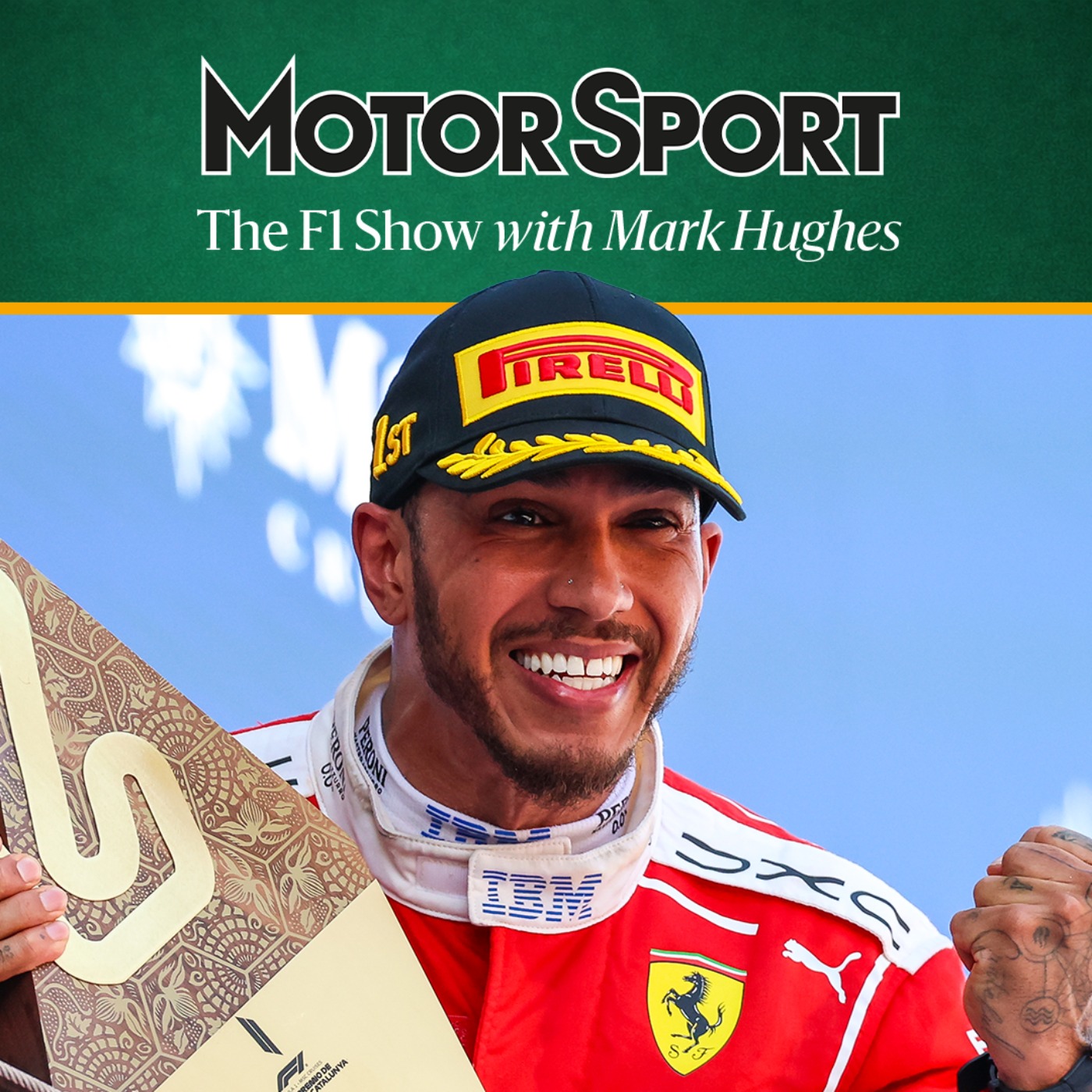
Lewis Hamilton's victory at the Barcelona-Catalunya Grand Prix marked a breakthrough for both the Briton and Ferrari, but how much of it is down to the man himself, and how much to a Formula 1 car finally built around his needs?
Mark Hughes and Bryn Lucas dig into the remarkable turnaround of both Hamilton and team principal Fred Vasseur, exploring how the new regulations, bespoke brakes and a complete rethink of Ferrari's set-up philosophy have unlocked a seven-time champion who openly admits he forgot who he was last season.
With Lando Norris warning that Ferrari could "embarrass" Mercedes if they reach engine parity, is the 2026 title fight now truly on?
They also examine the messy fallout from Monaco's pitlane penalty chaos: Alpine's successful appeal has handed Pierre Gasly back his podium, but leaves Oscar Piastri and McLaren with a grievance - and George Russell's bungled stop adds another layer of injustice to an already complicated picture.
Plus, are Mercedes hiding a serious power unit reliability problem? And with a race-free weekend ahead, what does the rest of 2026 hold for Charles Leclerc, who heads to the Red Bull Ring - historically one of his happiest hunting grounds - needing a reset?