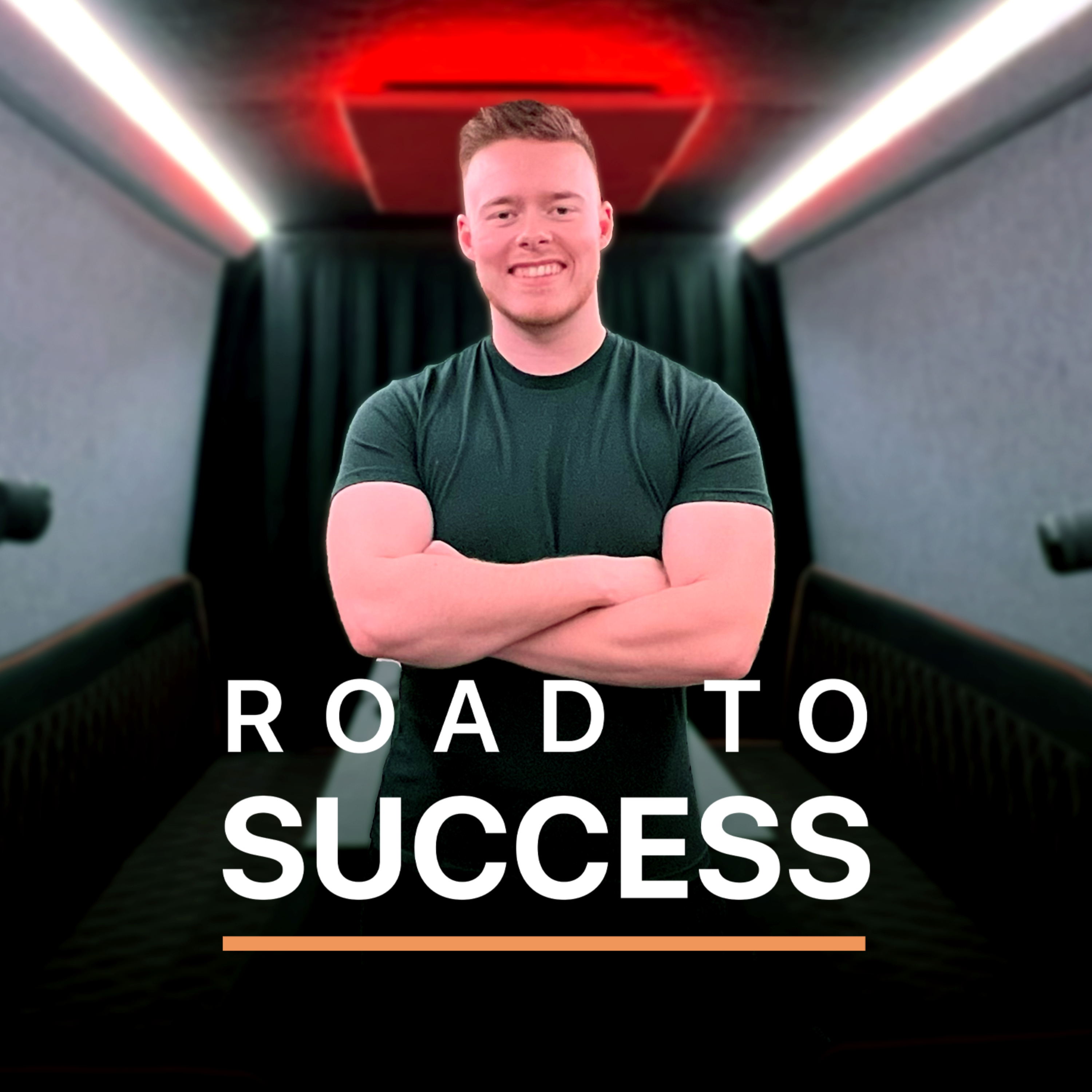
Marc Priestley, co-presenter of Wheeler Dealers, shares his journey from Formula One to automotive television. He discusses the challenges of stepping into a role previously held by Edd China, the importance of teamwork and motivation, and how lessons from F1 apply to everyday life and business. Marc reflects on the emotional transition from the high-pressure world of racing to the more relaxed environment of car restoration, while also addressing the evolving automotive landscape and the potential for sustainable fuels. His new book, 'Pit Lane Lessons,' aims to share insights from his experiences to help others succeed.
Link to Marc's book here - https://amzn.eu/d/4zaPcEn
In this episode, we sit down with Mark “Elvis” Priestley — former Formula 1 mechanic and pit crew leader for McLaren Racing, who worked alongside Lewis Hamilton during his 2008 World Championship season. Today, Elvis is the co-presenter of Wheeler Dealers, Discovery’s global hit car show watched by over 100 million people worldwide.
We dive deep into his incredible journey — from chasing his teenage dream of working in Formula 1, to handling the pressure of pit stops, the highs and heartbreaks of championship racing, and what it takes to walk away from the dream job to find a new purpose.
Don’t forget to subscribe to our channel for more exciting content about your favourite shows and celebrities. Hit the bell icon to stay updated on all our latest episodes 👍 Like, Comment, and Share this episode. Join our discussion in the comments section Check out Tweak: https://www.tweakuk.com/ 🔗 Follow Us: Instagram: @Roadtosuccessofficialpodcast @benedictfowler Contact: [email protected]
"...So, effectively, Formula One used to rock up in my little village. So, that's how I was really exposed to F1 in the beginning..."
Formula One is a type of car racing that involves fast cars racing on special tracks. It's very popular and features the best drivers and teams from around the world.
Formula One, often abbreviated as F1, is the highest class of single-seater auto racing sanctioned by the FIA. It features a series of races known as Grands Prix, held on various circuits around the world, showcasing cutting-edge technology and high-speed competition.
"...yes, me now doing Wheeler Dealers, which is this huge global car show. You know, 110 million people watched our car show last year..."
Wheeler Dealers is a TV show where people buy old cars, fix them up, and then sell them for a profit. It's popular because it shows the process of restoring cars and gives viewers tips on car buying and selling.
Wheeler Dealers is a popular television series focused on car restoration and flipping, where hosts buy, restore, and sell cars for a profit. The show has gained a large following due to its entertaining format and informative content about classic and unique vehicles.
"Yeah, you're at McLaren, you win the title with Lewis."
McLaren is a company that makes fast sports cars and is also famous for its racing team in Formula One. They have a long history of success in both areas.
McLaren is a British automotive manufacturer known for its high-performance sports cars and its Formula One racing team. The company has a rich history in motorsport and has produced several iconic road cars, including the McLaren F1 and the P1.
"...Lewis queuing behind him for a double stack. And Fernando deliberately just sat there after he changed his tires..."
A double stack is when two cars from the same team go into the pits one after the other. It helps the team save time during a race, but it can be tricky to pull off.
A double stack in Formula 1 refers to a pit stop strategy where two cars from the same team are serviced in succession without leaving the pit lane. This is done to save time and maintain track position, but it requires precise timing and coordination between the drivers and the pit crew.
"...On top of that, we had the Spygate drama going on in the background. This whole court hearing got thrown out of the Constructors' World Championship..."
Spygate was a big scandal in Formula 1 where one team was caught using secret information from another team. It caused a lot of drama and legal issues during the 2007 season.
Spygate refers to a major scandal in Formula 1 during the 2007 season involving McLaren and Ferrari. McLaren was accused of possessing confidential information from Ferrari, leading to a court case that ultimately resulted in McLaren being stripped of their Constructors' Championship points for that season.
"You've got a gearbox guy, an engine guy, the mechanics, the engineering crew."
The gearbox is the part of the car that helps it change speeds. It connects the engine to the wheels and allows the driver to go faster or slower as needed.
The gearbox is a crucial component of a car that transmits power from the engine to the wheels, allowing the driver to change speeds and manage torque effectively. In racing, the gearbox is often specially designed for quick shifts and optimal performance.
"You've got a gearbox guy, an engine guy, the mechanics, the engineering crew."
The engine is what makes the car go. It takes fuel and turns it into power to move the car forward, especially important in racing where speed is key.
The engine is the heart of the car, converting fuel into mechanical energy to propel the vehicle. In Formula One, engines are highly specialized for performance, efficiency, and reliability under extreme conditions.
Car
Porsche SP2
"It's actually him passionately talking about a VW from South America that was actually a Porsche. I think it was called the SP. The one that we just did on the recent, recent series. SP2. I knew I'd made one mistake."
The Porsche SP2 is a special sports car made by Porsche that was sold in South America. It's known for being stylish and fast, and many people find it interesting because it's not very common.
The Porsche SP2 is a limited-production sports car that was developed in collaboration with Volkswagen for the South American market. It features a unique design and is known for its performance and styling, making it a collector's item.
"I think it was called the SP. The one that we just did on the recent, recent series. SP2. I knew I'd made one mistake."
The Porsche SP1 is a car similar to the SP2, also made by Porsche for South America. It's known for its cool design and performance, making it special among car enthusiasts.
The Porsche SP1 is another model developed alongside the SP2, sharing similar design elements and performance characteristics. It was also aimed at the South American market and is recognized for its unique styling.
"...cent, recent series. The SP1. And I think that's SP2. SP2. I knew I'd made one mistake."
The Ferrari SP2 is a very special and expensive sports car made by Ferrari, known for being super fast and having a really cool design. It's one of only a few made, which makes it very rare and sought after by collectors.
The Ferrari SP2 is a limited-edition supercar that is part of Ferrari's Icona series, celebrating the brand's heritage with modern engineering. With a powerful V12 engine and a striking design, it represents the pinnacle of performance and exclusivity, making it a topic of interest among car enthusiasts.
Car
McLaren SP2
"Does it still excite you though, getting under the bonnet of an SP2 just the same? Oh yeah, because it's very different."
The McLaren SP2 is a high-end sports car made by McLaren. It's designed for speed and performance, using the latest technology to make it very fast and lightweight.
The McLaren SP2 is a limited-production supercar known for its high performance and advanced engineering, featuring a powerful engine and lightweight construction. It is part of McLaren's Ultimate Series, which focuses on cutting-edge technology and design.
"You know, what excited me about McLarens and Formula One was the, you know, cutting edge technology and engineering, which was a real passion of mine still is."
Cutting edge technology means the newest and most advanced technology available. In cars, this can include things that make them faster, safer, or more efficient.
Cutting edge technology refers to the most advanced and innovative technologies available, often used in high-performance vehicles like those in Formula One. This technology can include advancements in aerodynamics, materials, and engine performance.
"...m super excited to do an oil change on a Vauxhall Astra. But if that Vauxhall Astra has a really importa..."
The Opel Astra is a small car that's great for everyday driving and is known for being reliable. It's comfortable and has good fuel efficiency, making it a smart choice for people who need a car for work or running errands.
The Opel Astra is a compact car that has been a staple in the European automotive market for decades, known for its reliability and practicality. It offers a comfortable ride, efficient engines, and a range of features, making it a popular choice for families and commuters.
"It's not so much that I'm super excited to do an oil change on a Vauxhall Astra. But if that Vauxhall Astra has a really important story, that's what I love."
The Vauxhall Astra is a small car made by the Vauxhall company. It's known for being budget-friendly and good for everyday use.
The Vauxhall Astra is a compact car produced by the British manufacturer Vauxhall Motors. It has been popular in Europe for its practicality and affordability.
"It's not so much that I'm super excited to do an oil change on a Vauxhall Astra. But if that Vauxhall Astra has a really important story, that's what I love."
An oil change is when you replace the old oil in a car's engine with new oil. This helps keep the engine running well and can prevent damage.
An oil change is a routine maintenance procedure where the old engine oil is replaced with new oil to ensure the engine runs smoothly and efficiently. It's essential for prolonging the life of the engine.
"...I found out recently that an Audi TT, which, you know, really interesting car, particularly the early ones, was made in Hungary."
The Audi TT is a small sports car that looks cool and drives well. It was first made in the late 1990s and is loved by many car fans for its unique design and fun driving experience.
The Audi TT is a compact sports car known for its distinctive design and agile handling. It was first introduced in the late 1990s and has since become a popular choice among enthusiasts for its blend of performance and style.
"It may even be that, you know, sustainable fuels ends up powering the next generation of the current cars just with sustainable fuels."
Sustainable fuels are types of fuel that are better for the environment because they come from renewable sources, like plants or waste. They help reduce pollution compared to traditional fossil fuels.
Sustainable fuels are energy sources that can be produced with minimal environmental impact, often derived from renewable resources. They are seen as a way to reduce greenhouse gas emissions and dependence on fossil fuels in the automotive industry.
"...and look at a Lamborghini. Now, you can just drive past and it's kind of like everyday traffic to them."
Lamborghini is a famous car brand that makes very fast and stylish sports cars. They are known for their unique shapes and powerful engines.
Lamborghini is an Italian luxury sports car manufacturer known for its high-performance vehicles and distinctive designs. Models like the Aventador and Huracán are iconic in the automotive world.
"...flying thousands of people and tons of freight around the world, creating pollution."
Pollution is when harmful things are added to the environment, making it dirty or unsafe. In cars, this often comes from the exhaust fumes they produce.
Pollution refers to the introduction of harmful substances or products into the environment, which can have detrimental effects on air quality, water, and overall ecosystem health. In the context of automotive discussions, it often relates to emissions from vehicles.
"...massively reduced emissions, if not close to or even zero at some point."
Emissions are harmful gases that come from cars and planes when they burn fuel. Reducing these gases is important for keeping the air clean and fighting climate change.
Emissions refer to the pollutants released into the atmosphere as a result of burning fuels. Reducing emissions is crucial for combating climate change and improving air quality.
"...because I think something I noticed as a teenager, super passionate about cars, was the first time I'd go in like, dick-loved Ferrari, swindering and walking around the showroom, you'd see like a 430 Scuderia car growing up."
The Ferrari 430 Scuderia is a special version of the Ferrari F430 that is designed for better performance on the racetrack. It's lighter and more powerful than the standard model.
The Ferrari 430 Scuderia is a high-performance variant of the Ferrari F430, known for its lightweight construction and enhanced power, making it a favorite among enthusiasts for its track-focused capabilities.
"The reason I chose that car, because I remember the Spider versions, the 16M being in the showroom, and they've got an F1 2007 World Championship badge, on them."
The Ferrari 16M is a special version of a Ferrari sports car that was made to celebrate a racing championship. It's known for being faster and looking better than regular models.
The Ferrari 16M is a limited-edition version of the Ferrari F430 Spider, celebrating Ferrari's 2008 Formula 1 World Championship. It features enhancements in performance and styling, making it a sought-after model among collectors.
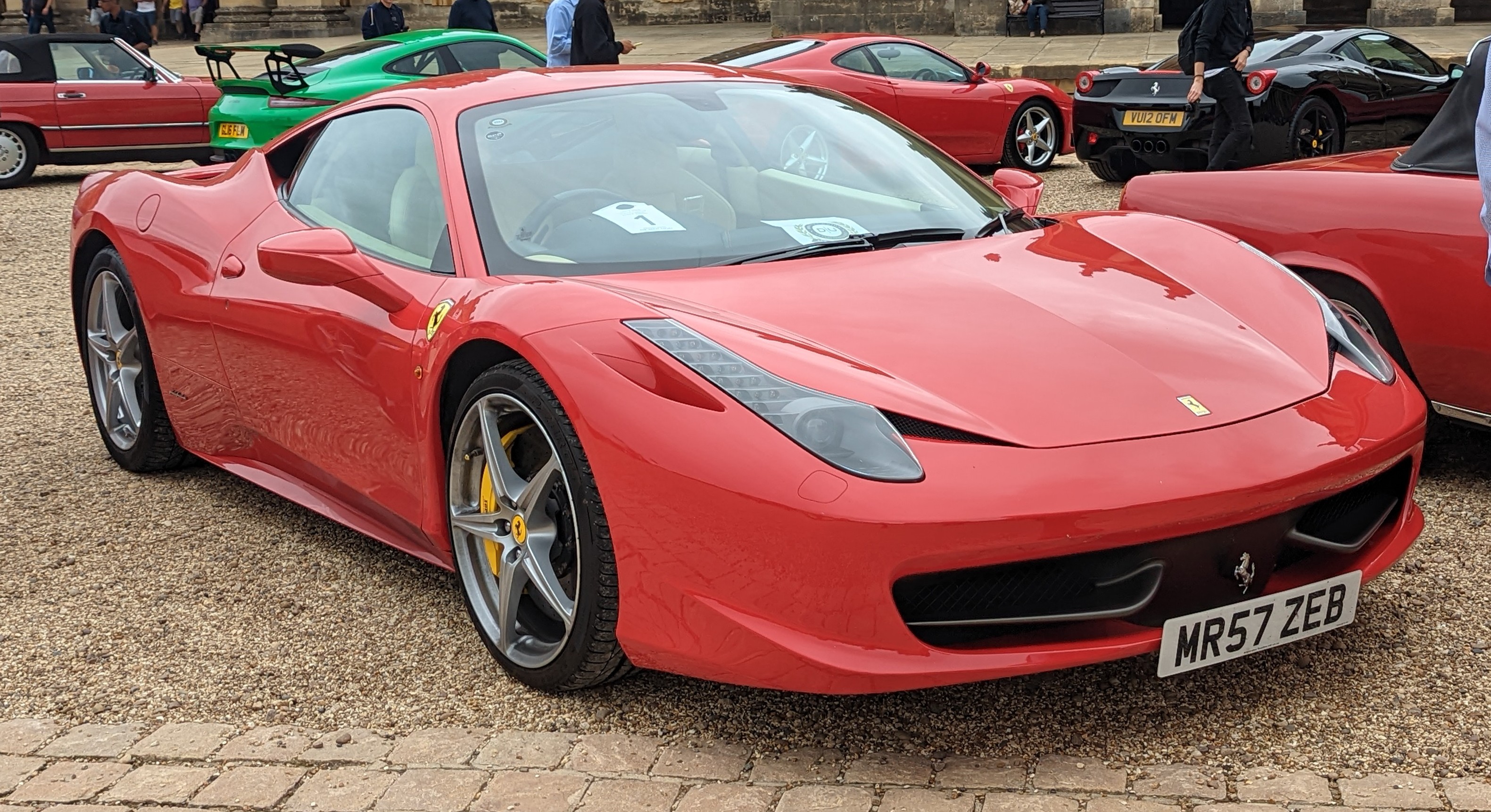
The Ferrari 458 is another fast sports car from Ferrari, made between 2009 and 2015. It's known for its powerful engine and great handling.
The Ferrari 458 is a high-performance sports car that was produced from 2009 to 2015. It features a naturally aspirated V8 engine and is praised for its handling and design.
The Ferrari 488 is a newer sports car from Ferrari, made from 2015 to 2019. It has a turbocharged engine, which helps it go faster and use fuel more efficiently.
The Ferrari 488 is a mid-engine sports car that succeeded the 458, produced from 2015 to 2019. It features a turbocharged V8 engine and advanced aerodynamics, enhancing performance and efficiency.
"...to 296 to SF90, that jump between them winning,..."
The Ferrari SF90 is a super-fast hybrid car from Ferrari, released in 2019. It uses both a gas engine and electric motors to go really fast and be more efficient.
The Ferrari SF90 is a plug-in hybrid supercar introduced in 2019. It combines a twin-turbo V8 engine with three electric motors, offering exceptional performance and advanced technology.
"...we've sort of reduced engine size and gone hybrid, was to tick the sustainability box."
A hybrid car uses both a regular engine and an electric motor to drive. This helps it use less fuel and produce less pollution than cars that only use gasoline.
A hybrid vehicle combines an internal combustion engine with an electric motor, allowing for improved fuel efficiency and reduced emissions. This technology aims to provide the benefits of both power sources while minimizing their drawbacks.
"...day's conversation must do that to at least some souls watching or listening to this because I genuinel..."
The Kia Soul is a small car that looks a bit like a box, which gives it a lot of room inside. It's popular because it's affordable and fun to drive, making it a good choice for people who want a practical car that stands out.
The Kia Soul is a compact crossover known for its distinctive boxy design and spacious interior. It has gained popularity for its practicality, affordability, and unique styling, making it a favorite among urban drivers and those looking for a versatile vehicle.
Select text to request an explanation
The holidays mean more travel, more shopping, more time online, and more personal info in more places that could expose you more to identity theft.
But Lifelock monitors millions of data points per second.
If your identity is stolen, our US-based restoration specialists will fix it, guarantee it, or your money back.
Don't face drained accounts, fraudulent loans, or financial losses alone.
Get more holiday fun and less holiday worry with Lifelock.
Save up to 40% your first year. Visit lifelock.com slash podcast. Terms apply.
Was it terrifying joining waiter dealers in 2019?
You know, there's been some controversy over the years with Ed Leving and I also see on Mike's social media how, you know, cruel people can be.
Does that freak you out?
Ma, a former Formula One mechanic and pit stop crew member for the McLaren Racing Team,
who is now co-presenter for the TV show Wheeler Dealers.
When we won the world title with Lewis, that felt like if there was ever a moment to step away, then that's what I should do.
It's all about some of these lessons that I've learned in Formula One.
Managing a budget, whether that's a financial budget, a time budget, you know, your health budget, whatever in your life, is super important.
Whoa!
The Wheeler Dealers, you know, to use that as an example, it's not about Mike or I or Ed or anyone else.
It's about the car. The car is the star of that show.
Do you think the kind of end of Wheeler Dealers would be more heartbreaking than what it was with Formula One?
I think...
Ma, you've lived for me two dream lives, ten years in the Formula One pit lane, covering my favourite sport, F1,
and another in front of the camera on Wheeler Dealers.
But in your own words, who are you and what do you do?
Well, I've also lived, you know, a couple of dream lives for me. You know, there have been dreams.
So, yeah, that dream started out when I was a teenager and something clicked in me.
I mean, I lived near to Brands Hatch, which, I mean, back in the old days, the British Grand Prix used to go to Brands Hatch.
They used to rotate with Silverstone. Only people as old as me know that.
But they used to share it. So, effectively, Formula One used to rock up in my little village.
So, that's how I was really exposed to F1 in the beginning. So, that must have lit some little fire in me.
And when I became a late teenager, I had this realisation that, you know, these people that work in this sport,
particularly the pit crew, which fascinated me, they're only people. They're just people like me.
They're not superheroes. They've got nothing special particularly.
So, there's no reason why I couldn't go and do that job.
And something clicked. So, from that point onwards, I set my whole trajectory on trying to get there.
And so, you know, as you said, that dream came true.
I got the opportunity with McLaren after working my way up through the sort of formula at the racing categories.
And I spent 10 years as part of the pit stop crew and moved up throughout the organisation to end up leading people within that team.
We won the world championships. I had an amazing time, you know.
And it was a real tough moment to quit or to leave because, you know, that was everything I dreamt about for years.
But it also comes with a huge amount of toll in that you're never at home.
You're away constantly all the way throughout the year.
Back then, we did testing as well. And so, it was relentless.
There was no such thing as a curfew or a summer break. You know, it was pretty brutal.
And I had young kids at the time and it became very, very difficult.
So, when we won the world title with Lewis, that felt like if there was ever a moment to sort of step away, then that's what I should do.
And from that point on, when I did take that big decision, it was a bit of a leap into the unknown.
I had no idea what I was going to do.
And I started writing about Formula One for magazines.
And that led to a role with the BBC as a pit lane reporter who picked up on my writing.
And it led to this sort of broadcasting arm still within Formula One.
And all of those things, and I was talking to someone about this earlier on today,
all of those things have led on to, you know, yes, me now doing Wheeler Dealers, which is this huge global car show.
You know, 110 million people watched our car show last year.
That's crazy all around the world.
I speak in front of thousands of people.
I'm a public speaker for lots of big events around the world.
I work with massive organisations.
But it's all around my love for cars and my love for Formula One.
So the point was those decisions that I made when I was 16, 17 to try and get into Formula One
are still paying off today because everything I do, including Wheeler Dealers, has come in some way from that.
So if I could take you to a year prior to making a decision that led you to here
and put the person with, say, a dream of doing those things in front of me in the van,
I put you as a 15-year-old opposite me right now and I was able to let them listen to our podcast on the iPad here
of you just reeling off everything that you've achieved.
How would that, how would that teenager react to that?
Well, that teenager a year before I sort of made the decision to chase this dream of Formula One was lost.
Like that teenager had no idea what he was going to do.
And at that point, actually, you know, I was thinking about going to college,
but really I was kind of looking for something that might look interesting because I had no real idea.
As most 15-year-olds don't at that point, right?
So I was not unusual in that regard. I just had no idea.
So actually, I went and did art.
My college choices were art, graphic design, and I think maybe media studies or something.
Nothing related to Formula One.
I was expecting engineering. I used to tinker around on this bike and used to do this with this.
No, see, that was the real moment because at that point, school and education for me just in my head,
and this isn't how it is, but how I saw it, was about sitting in a classroom learning stuff from a book
or off a, you know, off a board or whatever.
The education system was wholly detached from what I did as hobbies or for fun in my mind.
And the moment that changed everything was when I realized the hobby could be a career.
And so when you say, what would that teenager have thought?
At 15, I would have just thought you were absolutely crazy because this was not going to be a career.
At 16, and I forget exactly, but around 16, when I decided Formula One was the dream,
well, then I wouldn't have been, I'd have been very surprised as where we are today, what I'm doing now.
But I don't think I'd have been, and I don't want this to sound in any way arrogant because I wasn't, or I'm not.
But once I decided that's what I was going to do, I was relentless.
And in my mind, there was nothing going to stop me because I couldn't see any reason why I couldn't do it.
So the only thing that would have stopped me would have been me and I wasn't going to let that happen.
So I guess a year made a big difference for me in terms of what I was thinking
and how that then changed the course of my life.
There are so many years that we could also begin with as we set off into this podcast,
but I decided I'd love to properly kick off with 2008.
Yeah, you're at McLaren, you win the title with Lewis.
Can you just paint us a picture of emotions, feelings, pressure, stress,
what that year looked like with words?
Really to give you, because obviously the moment we win it, which Formula One fans I'm sure will remember,
it was the old version of the Abu Dhabi 2021.
It was the big moment in Formula One of that entire era.
And millions and millions of people watched it. It was a great moment for us, of course.
But actually, if I go back a little bit further,
2007, which Formula One fans of that era will also remember, was a catastrophe at McLaren.
We had Lewis, we had Fernando Alonso, we had a great car, a wonderful team of people,
and it all went horribly wrong in the most disastrous way, very public ways.
The two drivers fell out, as you remember, the pit lane incident in Hungary,
where Fernando came in for a pit stop in qualifying with Lewis queuing behind him for a double stack.
And Fernando deliberately just sat there after he changed his tires and wouldn't leave
so that he could hold Lewis up and therefore he missed the checkered flag.
So there was all these wars going on internally. On top of that,
we had the Spygate drama going on in the background.
This whole court hearing got thrown out of the Constructors' World Championship.
This would make a great movie, by the way, 2007.
But do you feel all that?
When your legs are focused in the garage, you're working on the car,
you're trying to make that car as good as it can possibly be. Do you feel all that noise?
Yeah, 100%.
Particularly because around the Spygate stuff, especially, we were found guilty.
The team, McLaren, of which I was a part, were guilty of industrial espionage of effectively cheating.
We got thrown out of the Constructors' World title, which we were definitely going to win that year.
And we got thrown out of it. Someone took that away from me.
I hadn't done anything wrong, but I felt I had. I felt guilty by association, right?
Because I'm part of McLaren and we were cheats in the eyes of the rules and the rule makers.
So that really hurt and it massively affected all of us.
And the reason I brought 2007 up was we got to the end of 2007, which was a utter catastrophe.
It was a horrible experience. We should have had a wonderful experience.
As I said, two great drivers, great car, winning races left, right and centre.
It should have been a dream year.
Ferrari snatched it.
Yeah, but they snatched it because we imploded.
And if you've got two halves of your own team warring against each other,
you're no longer a strong team. You're two small teams fighting.
And so we became half as powerful. We tripped over each other.
I am absolutely no doubt the reason we lost that championship, really,
was because we totally took our eye off the ball of Ferrari and everything else.
And we focused so intently on the guy on the other side of our own garage just trying to beat that guy.
So just quickly there because it's really good for people that are fans at the minute of Formula One.
We can use current as contacts to pass.
It's a little bit like what McLaren are desperately and quite pathetically trying to stop happening
between Oscar and Lando with Max behind charge.
And it sounds like maybe this is the start of what that was in 2007.
It's incredibly similar in lots of different ways, exactly right.
And lots of people have made that reference now and it's really relevant.
I guess the difference is at the moment the drivers don't hate each other within that team.
And now McLaren, it started off with Lewis and Fernando not hating each other,
but actually very quickly in the season and there's loads we could go into as to why,
but it's all in my first book. There you go. People can find the first book. It's in there.
But actually within a third of the season having gone, they fell out massively
and that's when this war began. So for three-quarters of a season or two-thirds,
we had the two halves of our team at war.
Really, there was probably no way we were going to win a championship with that going on.
But my point is in the period between 2007 and 2008,
we went into this real deep dive trying to figure out and pick apart what happened.
And not just it was obvious the two drivers started fighting, but why and where did that begin?
And if we go way, way back to before that season started,
were there any telltale signs that we could have picked up on?
And it was about learning and this is what Formula One teams are incredibly good at,
learning what you could do better next time.
And you do that when you win, but you also do it when you lose.
And that was a painful year for us and to pick it apart in that degree was really challenging and painful
because we'd all made loads of mistakes from a teamwork point of view, communication point of view.
But we did do that and we spent a number of months really, you know, forensically dissecting that.
And then we came to 2008, we put a lot of those things in practice and we won.
And I genuinely, and I mean this from the bottom of my heart,
I don't believe we'd have won in 2008 with Lewis if we hadn't gone through the disaster of 2007 the year before
because we learnt so much from that really painful defeat.
Hey everyone, if you're enjoying what we're talking about so far,
then I highly recommend liking and subscribing to the channel. You won't be disappointed.
Talk to me about everybody when you speak about a war, when you speak about two drivers at war.
You briefly touched on it there, but let's talk about the two halves of the garage
because it's made up of lots of different people.
The first person I ever had on that was related to an F1 pit garage on Road to Success was Callum Nicholas.
Of course, and he's now, you can see the same thing after all the pressure had to take a step back at the garage as well.
But when you say you're at war, was your equivalence working on that car in those roles?
Were they at war either side of the garage as well as the drivers?
Yeah, and that was really what were the effects.
So that is what happens. The drivers began this war together, so they hated each other.
Then the little teams around them, so the groups of mechanics and engineers that were on each car.
So that's how a Formula One team is divided up.
You have the wider team, but then you have little teams within that.
You have a car crew, and that's the sort of four or five mechanics on each car.
You've got a gearbox guy, an engine guy, the mechanics, the engineering crew.
There's a little crew with that driver, and that's on either side.
And then you've got the wider team that supports.
So yes, when the drivers fall out, what happens is those two crews naturally gravitate around their guy.
Because that's the bond you have, and you want to protect him.
And then the two crews fall out, and it just grows and grows and grows.
And this is symptomatic of, to fast forward a little bit, this is what I do today.
I examine teams in companies all around the world looking for signs, not just of them falling out,
but the signs that we can do better.
Signs or opportunities to improve.
And a lot of it I draw back on my Formula One experience through things like this
to understand not just the signs of where it's going wrong,
but how can you prevent all those things happening in the beginning?
When did you start looking at that situation, though, through a lens
that all of those teachings you could have learned implied to something else at some point?
Well, you're already thinking that in the garage.
Everybody obviously looks in and then looks in on you,
and you think, oh, they must have been fully focused on the car, which you would,
and everything going around.
But you also have that lens of the next 10 years, the next 20 years.
Obviously, we're not talking about then, like, everything I'm learning now,
maybe I can apply this because this goes on in other places.
Yeah, it wasn't till much later, really.
But what you do find, and this is one of the things as Formula One evolved,
and as we got into that era that we've just been discussing at the end of the 2000s,
particularly as a front-running team at McLaren,
we were exploring everything we could to try and make us as good as we could be.
And that included working with outside organisations, with other sports teams.
We brought in sports psychologists, people like nutritionists.
We were looking in tiny details to try and improve everything.
So I was very lucky that I got to spend some of my winter away trips.
We used to do team building and even sort of biometric testing.
And we'd go to the Finnish Olympic Institute for a week every single year,
work with other athletes and coaches from different disciplines, but also sports psychologists.
And I got the opportunity to work with those people, to talk to those people.
And I think one of the things that maybe set me apart from some others
is that I found that more fascinating than some people did.
Some thought it was just a bit of fluff and it wasn't required.
We all knew what we were doing, we don't need someone else to tell us.
I saw it very differently and I saw this idea that particularly around psychology
and understanding how we all think and how we operate, if we can maximise those things,
we can start to get better.
So we applied it and I was in a leadership role at the team by then.
You start applying it in the team, but also when I started thinking about leaving,
you start to wonder, how can I apply this outside?
Not necessarily with businesses at that point, but first of all,
how can I just be as good as I can be in writing articles from magazines
or reporting for the BBC as it was first of all.
But currently, you're looking back on all that with an extremely logical, critical thinker mindset,
which is what you are and you can clearly see that running through your veins.
But at the time, you mentioned that sentence there, but I was thinking about leaving.
I was thinking about leaving at the time.
Dive into that. Why? What causes someone in a championship winning team
seemingly with an amazing history and always has got a legacy to look back on?
Why do you want to leave that? Why do you want to get out of that?
Well, that thinking of leaving only really happened seriously once we won the championship.
And a lot of people said to me, why on earth would you do that?
You're at the peak of the teams at their peak.
You know, we had Lewis, we had a great car, great team.
There was no reason to suggest we wouldn't go on continually winning.
But for me, winning that world championship was a massive box tick.
It wasn't the reason I got into Formula One, but it was a lovely thing to be able to accomplish.
And it also coincided with ten years, having been at the team for ten years, pretty much.
And as you know, I also said earlier on, I had small children at the time,
but they were just young and you're away so much during this.
It's not a nine to five job. You have to commit everything.
And I didn't want to continue with the team and not be able to commit everything
because I was so involved at that point in the human performance and everything else.
I couldn't be leading a team of people and going half ass at it.
But when you decided, and this is a bit of a deeper one, to have children during that period of your life,
did you think it would be different to how you felt about it when you left?
Did you think you were Superman as you referenced earlier
and that it wouldn't matter and that you'd do it in your career first
and that were you sort of saying those things
and then maybe it was actually different once that box was ticked?
It's a tricky one because actually I've got four children with two different partners.
My first two children actually, also my first child, was born about three weeks before I got the job at McLaren.
So in that regard, I was desperately trying to get to Formula One whilst thinking about children
but we were incredibly young and I don't think I thought enough about
what Formula One would look like from a personal perspective.
It was just a dream I'd had for a few years and was desperate to get there.
So I don't think I thought about that but when I get towards the end of my later in my career,
I think yes, I think I thought my career, because it had been the entirety of my life in my mind for ten years,
nothing was going to get in the way of that.
You know, I was this machine, this train, just on a journey
but when I got to winning a world championship, you sort of feel like right,
we've reached a stop on this train line, it's an opportunity to get off
and only then really did I start to think about, well, and maybe I should have thought about earlier
but the truth is I was all in in Formula One, which is what you have to be.
Anyone who's working in this sport, particularly travelling, you've got to be all in
and so to do that you need a very understanding partner at home, very understanding children if you have them.
Friends and family need to understand you're not just doing a nine to five job Monday to Friday,
this is a life commitment you're making and it has to come first in many regards.
And they need to understand why as well, don't it?
So do you think that you can only be successful in that kind of role if your partner is someone that loves winning?
Well, I think you can only be successful in that kind of role if you have a partner who really understands why you love winning
and that I think is really important because Formula One is littered with broken marriages.
I mean, it's literally full of people, particularly the travelling section of Formula One,
people who have divorced single or because they're divorced
because it's a very, very difficult thing to manage both sides of your life
and that's really where I came to. I came to the point where I wasn't prepared to try and balance both sides.
I was happy going all in up until that, you know, to complete this dream.
I ticked the box of winning a World Title and then I felt it was only fair to give more back to my family at that point
and having won a World Title and having been to the journey that I'd been on those 10 years, this wasn't like the end.
I wasn't just going to give things up and sit at home doing nothing, twiddling my thumbs.
I realised, particularly having just won a World Title, that elevated my value in lots of people's eyes to another level.
So if I go out and start becoming a journalist, for example,
there's a bit more value in me being a world championship winning journalist at Formula One team
as opposed to just someone who works at Formula One team.
And those small differences for me were enough of a sort of view into a window into an opportunity that I could create for myself.
I think that's another little window into my mentality which definitely comes from Formula One is that
you're looking for advantages no matter how small they are everywhere and sometimes they're tiny
that most people wouldn't even notice or wouldn't give any credence to because they're so small.
But our philosophy and our mindset in Formula One, and it always has been, is any advantage, no matter how small it is, is an advantage.
So having just won a World Title, I've got an advantage.
If you saw a pie chart in front of you with your mentality, what percentage of that would be self-doubt?
Because it's not a lot.
No, and is it easy?
Does it ever creep into that circle?
Because I'm imagining as well, I'm trying to bring the human element in a little bit because you're so logical, so steam-trained, so honest.
Trying to bring that wider human element a bit to be like, OK, yes, you've won that World Championship.
Yes, you're deciding to hang up the gun for the time being and you're going to embark on something new.
But that's a really good career.
That's a really good job.
Was there any part of you that was like, I might not make as much money, show us that bit?
Yes, it was terrifying.
At that moment, particularly that moment in my career, I questioned that decision over and over again.
And even when I went to the team manager at McLaren and I went a couple of times and had lots of discussions about do I stay, do I take on it,
because they offered me another role within the factory to stay at McLaren.
And, you know, I had a number of conversations and at one point I had to go to the team manager and say, listen, I've made my decision.
I'm going to leave.
And even he was like, come back to me tomorrow and tell me you're sure.
You know, take go and sleep on it.
Come back to me.
And I did.
I had to go back tomorrow and go, yeah, I'm sure.
And I wasn't sure.
I was sure I wanted to move on and do something new.
I wanted a new adventure.
I was absolutely not sure what that was going to look like or whether it was going to work.
And so the idea of self-doubt, self-doubt is a part of anybody's life.
No one can tell you any different, but it depends on what that little pie chart is referring to because in a professional sense today,
I could take on the new project.
I could go and work with a new organization.
I could choose to write a new book on a subject I've never done anything about before.
If I decide to do it, it'll be because there won't be any self-doubt.
I will make sure that I delve deep enough into the subject I'm going to write a book on that I eradicate self-doubt.
And, you know, again, I don't want this to sound in an arrogant in any way because it's not.
It's just the way I operate is that I do scary things.
I leap into the unknown, but once I've made that commitment and that is scary.
So, you know, if that's called self-doubt, I think it's more about trepidation and fear, the fear of the unknown.
That happens all of the time. I do that.
But I tend to push through that and then I will eliminate self-doubt through research, collecting data and information.
And again, it's how we operate in Formula One.
Formula One has changed my makeup over the years.
Our earliest years are made up of building blocks.
All these little building blocks like Jenga, some of us.
No, I'm not too sure. It's like it's either a tower or it's Jenga.
But if you were to remove the block that didn't make you the way you are, that just tenacious go for it.
What block would that be?
Well, what made you that way?
Before Formula One, you mean?
Maybe from your earliest years.
Yeah, because Formula One is the block that's absolutely had the biggest impact in making me who I am.
More so than foundations from parents growing up, etc.
Well, you'd have to look at that and say, well, that's probably how and why I got to Formula One in the first place,
because we're all made up of those things.
So I'll tell you what I do know.
My family was no, there was no motor racing history.
There was, in fact, nothing related to cars or engineering.
There was none of that background.
I literally broke the mold in our family in terms of that.
But what I did find was, because my dad was a civil servant, he went to work every day in an office.
My mum was for many years staying at home as a sort of homemaker, housewife.
She was a telephonist before that.
Nothing extraordinary in any regard.
I remember one day when I was a kid in the summer holidays, having to go to work with my dad,
because we did have childcare or whatever.
And I remember this very clearly.
Going with him in the morning, quite early, he puts his grey suit on.
We go and get on a train.
We go up to London.
I'm sitting next to him.
I'm looking around me.
There's just hundreds of people in grey suits going to London.
We get off the train and we walk across, you know, Waterloo Bridge or whatever.
And we walk into this, what I saw was a really dull office, like the most,
but I couldn't imagine a more boring place.
And I realised he went to work there every day.
And obviously he found, he got something out of that and he had some sort of fulfilling job.
And for him, it worked.
For me, it just did not work.
And that day was the day I knew I did not want to work in an office wearing a grey suit.
So moments like that, sometimes you see what you don't want as opposed to what you do.
And that was a seminal moment for me where there was no way I was going to go and get a job,
which meant I had to put a suit on and sit in an office.
One of the main reasons I started Road to Success was because one of my favourite words is holistic.
Like being holistic, having multiple things going on, etc.
And when I was a kid, you'd think of like, what does my dream look like when I'm older?
And it would always revolve around not just one thing.
It would be like, okay, yeah, I want to do that, but I also want to do that and I want to do that.
And maybe I want to do them at the same time.
And because that didn't exist, you know, I'd love to go on road trips like the Top Gear Boys were doing,
but I'm very entrepreneurial and love business, so I need to own my own business.
And for me, that didn't really exist visually growing up.
The ability to, oh, hang on a second, you could probably, you know, if you set your business right,
go in one, two days a week and focus an hour a day on that one and be able to do this.
And it seems that you are that.
You also went on that path of being like, once you were coming out of Formula One,
I'm going to do this and this and this and start to overlay and overlap.
And to me, that is kind of what makes superheroes because they're able to do so many things.
Talk about when you came out of F1, you're terrified, but you're confident.
What are the things that you started doing?
Probably not even that confident, if I'm honest, because, you know, I didn't have a plan.
What I first thought was when I came out, I knew I had this really special experience.
And, you know, I was a Formula One fan like anyone else.
So you go home after leaving the team, you're suddenly watching the sport like everyone else.
And I realized I had a very different perspective, even to the commentators on TV,
certainly everyone online on Twitter or wherever else.
So I start posting things on maybe Twitter from my insider's point of view.
And I realized that has value to people because they're getting a little bit of extra access.
You will remember this is going back quite some time.
We didn't have the Netflix show that we have now. We don't have the access that Sky bring.
So I started writing articles just for an online blog was how it first started.
I set up a blog, like a WordPress blog, wrote some articles about stuff that actually, you know,
how does a freight get from one race to another?
You know, how many people does it take to package that up?
And what do the teams do when the cameras go off at the end of a race?
You know, how does pack down go?
They could be seemingly seem like really boring articles,
but actually Formula One fans were hungry for this stuff behind the scenes.
How does a strategy meeting work? How does a debrief work post race?
So I started writing the articles.
And as I said earlier, it was the it was a producer of the BBC F1 broadcast on Radio 5 Live
that sent me a message having read the articles and said, listen, this is great stuff.
I think it might really translate onto the radio.
And he said he sent me a Twitter message saying, would you like to come and have a go at being a Pitland reporter at the British Grand Prix?
And I was like, didn't even know what that was.
But I was like, yes, you know, I always say yes first and then figure it out.
So I said yes.
So I went along and I shadowed Jenny Gao, who still does it today.
She was amazing, sort of showed me the ropes.
I got thrown in at the deep end and I got given a mic pack and sent out into the paddock to interview people.
And it was the most amazing experience.
And I remember coming home on that Sunday night from Silverstone, calling my wife saying, I've just found what my next career is.
And it was that sort of seminal in that I loved.
There still was a massive fan of the sport.
I'd moved from the pit lane over to the paddock, a whole new set of people, a whole new set of opportunities, new challenges.
And I loved it.
And I realized, as I said, I had this extra value or a different value than a lot of people had because I had seen things from the inside.
And Formula One was an incredibly secretive world back then.
And I had the pass which no one else had.
So I could share a lot of that.
And that's really what, I mean, that's what everything I do today stems from.
Many of you might not know this, but away from the recordings that I do in my van studios, I've actually got a digital marketing agency.
Now, we specialize in a lot of automotive clients, but we cover everything really.
Our team is made up of PPC specialists, SEO specialists, and the most talented designers I've ever seen, which have done work like the Starnagloss website, the TWR website, and many more.
We've actually just built icon box for the Auto Alex crew as well, meaning that people that watch their channel can buy their favorite merch seamlessly and in style.
So if you're interested in starting a project and you'd love to speak to us, just tap the link below and let's hop on a call.
I think it's really important at this point, we also talk about Elvis.
Because as much as you said there, everything you do today stems from a moment.
Also, everything that you've done is also filling quite big boots.
And I actually think that strangely starts with your name.
So do you want to tell it to us before we kind of leave that Formula One world about where that came from?
It's not as good a story as most people hope actually, but it's just a tenuous link to my surname, which is Priestley.
And when I was about ten years old at school, there were quite a few marks in the class.
And so someone realized Priestley sounded a bit like Presley, and they called me Elvis.
And it's stuck ever since. And honestly, it's stuck to such a level that almost everyone in Formula One calls me Elvis.
I'm sure half of them don't even know my name's Mark.
My wife only ever calls me Elvis.
You know, that is now my name.
Apart from my mum.
You could give Dean Paul up a rank.
But you know, I've been called worse, so I'll take it.
There's obviously a hell of a lot in between Formula One and Weed Adidas by just using those as reference points.
So we were your first real experience in front of the camera to lead you to the point of being able to do something like Weed Adidas was actually then pit lane reporting.
Yeah.
Well, though, for the initial part, that was radio.
So it was just using your voice, but you are still broadcasting live to a lot of people.
So that was terrifying in the beginning.
That was a real, you know, whatever success looks right for anybody,
whatever the biggest moments you've had in your life, they probably always started with a terrifying moment.
It's going in for a job interview.
It's making the first call.
It's turning up at first date, whatever.
They're terrifying because they're it's leaping into the unknown.
For me, it was so scary realising that I was being thrown down to by James Allen in the pit lane to comment on a pit stop that was happening or whatever.
Knowing and at that point, all you can think about is all the people listening.
So it's terrifying.
Nowadays, I don't think at all about that, but it's because it's no longer unknown.
I know exactly what I'm doing.
I'm very confident in what I'm going to say.
Are you much different in front of the camera now to how you were then?
Yeah.
And so totally and it comes down to confidence.
Exactly the same.
I do a lot of public speaking now and I looked back recently at some film or some videos of God, that's the worst thing.
The first ones versus today.
You know, today, I'd love it.
I bounce out to the stage and excited.
The first ones, I was terrified for the same reasons and I'm looking at the floor, you know, lots of ums and ars.
You can reflect on it in a logical way and like come through watching those old videos and logical way and be like, yeah, I was that and I was that.
But really is the most awkward thing in the world watching back those videos.
It is.
But the way I always, you know, I'm working with a young tennis player at the moment in the same sort of regard that I work with businesses.
And what you tend to find is, as I said, the biggest successes happen after you've broken through that barrier of being terrified.
And if you never do the terrifying thing, if I never put myself in front of that microphone to throw to millions of people watching or listening or whatever,
well, then you never have the moments that we were sitting here now.
So you have to, if you want, you don't have to, by the way, that's the wrong way to phrase it.
You have to, if you want to get to somewhere remarkable in that field, you probably have to go through a really terrifying moment in the beginning.
And it's probably exactly the same when you go back to when you're a tiny baby and your mum and dad are trying to help you to walk.
You know, you're about to fall over.
Probably if you could think about it consciously back then it would have been terrifying.
They're popping you on two unbalanced feet and you're going to fall over.
It's going to hurt.
It's terrifying.
We have to go through it to be able to walk.
Was it terrifying joining Weed Adidas in 2019?
Because a bit like other experiences that you've referenced, like when you were thrown into the pit lane on camera,
you were also filling some big boots that had been there in the past and China is still loved all over the UK.
I can't never miss him on a warranty wise billboard going down the motorway.
And as well, wasn't able to stay kind of UK side wanting to be out in America.
So you had some pretty big boots to kind of fill at the point that you joined.
Yeah.
Was that terrifying?
Yeah, it was in some regards.
I mean, I just before Weed Adidas and that decision came, I'd already worked with Mike on a show called Dream Car.
So and actually just before that, I've done another show for Discovery Channel on my own.
It was called Driving Wild and it was an amazing show, similar sort of things.
You'd already been eased then.
So I've been eased in.
So I wasn't terrified in terms of my ability to hold a camera and hold an audience.
I wasn't worried about that.
But the filling the big shoes, absolutely, because Weed Adidas was a different ball game altogether because of its legacy,
because how long it's been running and how many people watch it.
And of course, you know, there's been some controversy over the years with Ed Leving and all of those moments.
I know all of those stories.
I know all about it.
And I also see on Mike's social media how, you know, cruel people can be.
Does that freak you out?
Not anymore.
No, I mean, it was a conscious thought when I was thinking about taking the decision to join because Mike called me and asked me.
And I sort of took a day or so to go and think about it.
And that was one of the sort of internal conversations I had.
Do I want to put myself through this?
But, you know, I've been, I had already quite a lot before then being in the public eye to some extent, not on that level.
But I was aware that people judge you very quickly online, particularly if you're on TV or broadcasting.
So I was conscious of it and I was aware of it and I knew that it was big shoes to fill.
But I guess it goes back to the same thing.
It was a new big challenge and I love big challenges and it was, I knew it could lead to amazing opportunities.
So in my mind, why would I not do it?
Because there is that.
Why would you not do it?
And I kind of speak broadly for the audience watching.
I try and read comments, try and understand who my audience is.
Because I can be different to a lot of my audience, but terrifying moments, scary things, jumping, all of that stuff.
It's the stuff that 99% of people struggle with is taking those decisions and actually doing the thing.
Because I want to go back to the fact that the decisions, I think we're all still aware.
Sometimes we make decisions and they don't actually work.
And I think a really good example at this point would be to talk about Top Gear and the fact that it couldn't continue.
It didn't. It fell to bits in most people's eyes as soon as the original trio left.
And even though there was glimmers of hope, like I think Chris Harris this day is just fantastic.
There was glimmers of hope with the show.
Once it lost that anchor of Clarkson and the boys, it went downhill.
Do you think Mike is that anchor for wheeler dealers?
And there's been one of the reasons that you've been able to fill the boots around him?
Yeah. Yeah. Mike is, you know, he's great. He's a great friend.
He's great to work with. He's been on this show since its inception.
It's now 23 years for anybody to continue doing the same show, even though it's had various iterations for 23 years.
Tells you he's doing something right.
And that is mostly that he's a lovely guy, but also just loves cars.
This show a little bit, I guess, less so than Top Gear. This show, sorry, more so than Top Gear.
This show is all about the car.
So whenever we feature a car on an episode, it's not about Mike or I or Ed or anyone else.
It's about the car. The car is the star of that show.
And I think with Top Gear and there's no disrespect because it worked incredibly well for them,
but they were also the stars of that show and that package worked really well.
People loved the hosts. They got behind them. They tuned in as much for them as they did whatever cars were being featured.
It was almost it was comedy at times. It was entertaining.
We're a little bit more solely focused on the car.
And I think because Mike has kept that all the way through, it's worked.
If he'd got, you know, a much bigger ego or whatever and decided it was going to be all about him,
well, maybe it wouldn't. I don't know. Maybe it would, but maybe it wouldn't.
One of my most viewed clips online of Mike might not actually be what everybody thinks straight away.
It's actually him passionately talking about a VW from South America that was actually a Porsche.
I think it was called the SP.
The one that we just did on the recent, recent series.
The SP1. And I think that's SP2.
SP2. I knew I'd made one mistake.
But that right there is an example because I remember having that conversation with him about how passionate he was about that car.
And even that clip going out right to the show, et cetera, did like 700,000 views.
I think it was on Tiktok or something.
So it kind of shows the level of interest people do have about cars that they don't know about and don't really no longer exist.
But Wheel of Deal is in it. What series now?
Twenty.
The series numbers are all over the place because they keep calling it different things, but it's 23 years.
It's been going.
And there's still stuff to find.
Yeah, I mean, we've evolved the show now.
So the latest iteration and people who are watching the current series will know this.
But we are now on the second series of the Wheel of Dealers World Tour.
So we used to have a workshop.
It was up in Bista and we were very much UK based and people will have seen those shows.
Now we don't have a UK home.
So every episode comes from a different country.
So it's more, it's a lot of traveling.
You know, I said I gave up the traveling.
It's like going back to F1, isn't it?
It is a little bit, but great fun.
And we're telling stories of cars that are either from those countries or that were special to the people from those countries that had a special home.
Then maybe they were made there.
Maybe they didn't sort of like the SP2 was made and built in Sao Paulo.
That's what the SP stands for.
Never made it out of Sao Paulo.
So they made very few numbers, never made it across the ponds, never came to Europe or America.
And so it was a very, you know, untold story.
And that's what we get the opportunity to go and do.
Someone that's worked on championship winning McLarens.
I've been so lucky enough to visit MTC and to walk down that iconic glass walkway and see all of those cars.
And they deliberately put them there, don't they?
People walk past the heritage and the heritage and the history.
Does it still excite you though, getting under the bonnet of an SP2 just the same?
Oh yeah, because it's very different.
You know, what excited me about McLarens and Formula One was the, you know, cutting edge technology and engineering,
which was a real passion of mine still is.
But I loved that.
You're always breaking new ground, coming up with new ideas.
You could have an idea on a Wednesday and it could be on the car on a Thursday.
You know, it was literally that fast paced.
So Wheel of Dealers is totally different.
But now we're into storytelling.
We're talking about telling the stories of cars.
It's not so much that I'm super excited to do an oil change on a Vauxhall Astra.
But if that Vauxhall Astra has a really important story, that's what I love.
I love getting creative with Mike and the team to tell that story, to build the episode around it.
And I hope we do a decent job of that.
And it's not all SP2s and Astra's either because you talk about the world tour.
The first time that I saw that you were on that was when you actually visited Tavares, friend of the podcast.
I think Freddie has sat in that seat opposite you more times than anyone else.
I think it's between him and Misha.
But was that going to visit people like Freddie that are doing projects?
Because the rebuilding scene across the world has just exploded.
And me and Mike always kind of joke about this when we get on.
And it's been taken in the wrong way a couple of times because we could say,
well, what was the origin of that?
Well, to me, it was Wheel of Dealers.
Was the origin of basically getting under the bonnet of a car,
rebuilding it and going through the story of it.
But what was it like to kind of head out on that world tour?
Other than the pressure of the travel, get into those garages, meet people like Freddie.
Yeah, amazing.
Amazing because if you think about the old version of the show,
as I said, it was centered around one workshop, very familiar place, familiar surroundings.
I had my own tours around me.
We had the team and everyone was just located in one place.
So in many ways, it made it easier because it was a known set of circumstances.
Yes, you're going to bring in a new car, but the ramp's the same, the environment's the same.
With this, we're literally leaping into the unknown.
It comes back to the same thing again, doesn't it?
We're doing this as we talked about earlier on.
I love that.
I love that we go places.
We don't really know what we're going to find.
And yeah, of course, we have a team.
We do our research beforehand.
We find the garages beforehand.
So we know roughly where we're going to work.
But we don't know what we're going to find when we start pulling that car apart.
We don't know what the people are going to be like when we meet them.
We uncover the stories when we're there.
And we're only there for a short period of time.
So it's a whole new way of making a TV show.
The old Wheeler dealers, if you like, we had about seven days of filming
or eight days of filming, I think, in the studio, in the workshop.
But that might be spaced over a month because, you know,
we were dipping it out of various cars because we had one workshop.
We could bring lots of cars in at once and we could cycle through them,
which meant if you needed to get a car painted, you roll one out, you roll the next one in.
We don't have that luxury now.
We're in a country for probably seven days.
So you've got to meet the people, get the stories out of them.
You've got to track down the car, the parts for the car.
And you've got to tell the story in an interesting way
and then build a car in the background and then do something with it at the end,
all in that really limited period of time.
And I love that challenge.
Have you ever not told a story that you embarked on?
Have we filmed something that's not gone out?
Not in terms of, I don't think we've ever filmed an episode and it not gone to air.
There's lots of elements of episodes that don't make it.
And that's the nature of making this type of TV.
The back catalogue of extras would be huge.
And we keep having these conversations.
I wish they would package them up and put them on YouTube or something
because there's a lot of really good stuff.
But that right there, I wish they would.
You clearly have this huge entrepreneurial flair about you.
That's why you go into businesses.
That's why you work with them.
That's why you've got your own business doing that.
However, you're one of these people as well that gets subjected to
because you love the challenge and the creativity.
You will go and work for that TV show.
You have to be comfortable with the uncomfortable
when you've got that entrepreneurial flair to go and be part of someone else's thing
and kind of abide by those rules.
Do you ever struggle with that?
As much as you love doing it and you wouldn't, you just said they won't do that
and there's different series numbers because they've done it a certain way.
Is that the bit that you struggle with the most
even though you've still got respect for it?
It drives me mad.
It drives me mad.
Because to some extent, I'm a control freak and I know that.
In many regards, it served me well.
But yeah, you're right.
This is someone else's baby.
This show effectively belongs to the Warner Brothers Discovery Network.
They own the franchise.
They've run it and operated it for years.
But I'm also not the sort of person that sort of gives up.
So, you know, just as that example of packaging things up
for a behind-the-scenes YouTube channel or whatever,
I'm still banging on at them about it.
And even just yesterday, Monday, I was doing some voiceover
and I got on the phone to the execs and I said,
look, there's a scene that never made it into that particular show
as we were recording the VO for it.
That would make a really great either social clip or, you know,
or to go in a part of a behind-the-scenes package.
So I'm still pushing for those things.
I'm not stopping, but I don't have total...
I can't do it.
I don't have control to do that because it's not my baby.
But I'm also relentless in that I think it can add value
to the people watching.
So let's keep seeing if we can push it across the line.
And it's just down to people having, you know,
the required amount of time to be able to do it.
They've obviously got other things that are more important to them.
It's important, it's quite important to me.
So I keep pushing, but I've got to find someone who can action it.
It's also going to be important to you.
And that is meeting that, getting those two to meet.
Let's just talk about some of the bits that meet in your time bubble.
Because you mentioned that you work with businesses
to basically impact them better,
and that they can make better decisions
and streamline themselves to operate better.
I know this all too well,
because I sadly made the decision to take on a lot of stuff in my life.
And it's been even at an early age
the most stressful thing that I've ever done.
But what you do notice with volume is you can get great efficiency.
When there's more volume of something,
more people, more truck managers in my sense,
or more staff,
that there is efficiencies that can kind of be made everywhere with volume.
But how do you balance the volume of your life?
Because if you're out underneath a car in Brazil or America somewhere
doing an oil change or a spark bug change,
do you then get like a phone call as part of that time
for you're dealing with something in a 50 million pound business
back in the UK about how to streamline something?
Is that how your life works?
Yeah, and it's tricky, right?
Because the filming the show is a really intense,
we've just finished filming the latest series, it was five months.
So it's pretty much all of the summer up to now, we've just finished.
That was five months of really intense travelling.
I came home for weekends, but in the week we were generally away.
Sometimes we didn't get home for weekends, but it was intense.
So it's very difficult to manage my life in the way that I normally would
when you're on the road like that.
But you sometimes have to.
It's sort of what we had to do in Formula One,
although I didn't have other businesses to manage in Formula One.
You've still got a life, it might be a family life.
They often diametrically opposed to each other.
But often time zones can work in your favour.
So I tend to get up very early in the morning and do a lot of my business stuff,
answer emails, write proposals, whatever it might be.
And when you're in another country, I actually found sometimes that was easier.
I could get up at 4am because I'd jet lag, I'd get to the gym
and then I'd sit there and work through for a couple of hours stuff
before we then started filming.
And it's just about compartmentalising.
And one of the things that Formula One taught me,
and we'll get onto it, but I've written a new book which is Out Tomorrow.
I don't know when this goes live, but it's out on 30th of October.
It's all about some of these lessons that I've learnt in Formula One.
And one of them is exactly that, managing your time
or managing your budget of anything.
And I have been well trained in this, well experienced and well versed in this.
Managing a budget, whether that's a financial budget, a time budget,
your health budget, whatever in your life, is super important.
And in Formula One, we can't be late for the start of a race.
So you have to really effectively manage your time.
And so I've had that ingrained in me for years and years and years.
And so today, you know, I can be when I need to be obsessive about it.
When I don't need to be, I won't be, but I can be if I need to be.
And that's what's happened over the last five months of me travelling.
I've had to become obsessive about blocking out time blocking sections of time
to do the other things apart from filming.
So that when I'm filming, I can be all in on that.
But maybe from 4-6 in the morning, if I've woken up with jet lag,
I can be all in on something else.
Do you like the statement,
you can keep some of the people happy some of the time,
but not all of the people happy all of the time.
Do you get on board with that?
Yeah.
Yeah, I agree.
And particularly in the sense of now working in this public facing environment,
particularly with the wheeler dealers, you know, to use that as an example,
we put a huge amount of time and energy, a lot of people do,
into constructing a show.
We go and film it, we edit it, we put the whole package together.
There is no way in the world, everyone's going to enjoy that.
So we have to be comfortable with that.
We can do our very best and we try and hit as many of the things that we know
most of our audience will like,
but you're still going to get people online going,
that was fucking terrible.
You know, that was shit.
What did you do that for?
And we have to, you just can't please everybody.
Would you, who's your brake paddle in your life?
My wife is, that sounds really, really bad, calling her the handbrake.
That's really...
My wife is very good at grounding me and keeping me, you know, down to earth.
My wife is hugely entrepreneurial herself, got her own business,
a couple of businesses now in fact.
So she's very driven in the same way, but she's also, she's not public facing
and that would be her worst nightmare.
So with me having a public facing role,
and particularly when I get stopped in the street if I'm with her,
she hates it because she just doesn't like that public attention.
She loves to just get her head down and get on with what she's got to do with her businesses.
I can help her in times.
She definitely helps me on lots of occasions as well,
but she grounds me by having that person who hates the public, the attention,
and she would never let me have an ego that would grow to a level that would become a problem.
I know she wouldn't and I'm really appreciative of that.
You know, that's part of why we work so well together in these two very different roles that we play in life.
Do you want to continue with the public facing role long into the future?
Yeah, I mean, I'm not against the public facing side of this
and actually I know that there are lots of advantages to it in terms of, you know,
as I said, there's a couple of sides to my life.
The Wheeler Dealers thing, I love doing it.
We have great fun.
I have no idea where it goes.
I mean, where the future goes with this.
Just to be comfortable with that.
Yeah, and I am.
And that's partly why I've been so focused on building up the other businesses that I have
because, you know, when I left Formula One, I didn't have a succession plan.
And okay, I created one on the fly and it sort of worked out.
But that was, as I said earlier, a pretty uncomfortable place
to be going into total unknown when you leave one thing.
I know that if Wheeler Dealers ended tomorrow,
I'm quite comfortable that I've got other things that I will go all in on and it'll be fine.
What about emotion?
Because when you left Formula One, it wasn't like heartbreaking almost.
Oh, it was.
But you were winning on a win.
You were leaving on a win.
Yeah, but then what happens is you,
what comes with winning is massive celebrations.
It's huge floods of sort of endorphins.
And, you know, it's an amazing feeling.
It's addictive.
The adrenaline rush that goes with pit stops and with spraying champagne
and winning at the track is a true addiction.
So I went from that almost cold turkey to, you know,
a month later not doing that and you watch all of your mates
head off to Australia for the first race.
That is heartbreaking.
Was that the hardest moment of your life?
It was very difficult professionally.
One of the hardest things professionally,
probably the hardest thing I've had to overcome professionally,
all up here, of course, all in my mind.
But that was a struggle for a period of time
because it's massive FOMO.
I just wanted to be there.
You know, I was obviously going to watch it.
And as soon as you watch it,
you're just seeing all your mates in that garage doing their thing.
And so I missed it massively.
So yeah, it was tough.
They say that there's something magic about just like with your mates,
three of you going off to do something or a small group of you.
Because of everybody behind the camera,
the production crews that people get so attached to as a group.
They say it's totally magical about that.
And I felt it when I've been able to go off on road trips
with my friend Chris Slickson.
We go and we film something.
We think, oh my God, you see that thing we just captured on the back drone.
That was absolutely insane.
So what I was getting at was,
do you think the kind of end of wheeler dealers at some point
would be more heartbreaking than what it was with Formula One?
I think I've got to a point where I'm really comfortable.
Mike and I, we've had these conversations actually
because we don't know, it won't just be up to us.
I mean, you know, we could either of us take the decision
that we didn't want to continue and I don't think we will.
We're already planning the next one.
But the network could decide, you know, it doesn't work financially
or, you know, they want to go in a different direction.
Anything could happen.
But I think both of us and Mike's exactly the same in that sense.
He's got his own businesses and his own interests and so have I.
So I'm well set up for this stopping.
I would miss it because it's great fun,
but it's not like when I was in Formula One, I was chasing a dream.
I'm not chasing a dream with wheeler dealers.
Wheeler dealers was something, you know, you think about TV presenters in general.
A lot of them, when they start out as a young aspiring TV presenter,
their goal or their dream is to get on telly.
It's maybe to become famous or whatever, or to be well known.
It's to be seen in front of a lot of people.
I never had that.
Wheeler dealers sort of stumbled into my life as a consequence of me doing Formula One.
And that led on to that other show Driving Wild I talked about.
And so it happened to me rather than me going to chase it.
And I think to some extent that would make it a lot easier for me to,
if it ended tomorrow, I would genuinely, from the bottom of my heart,
I would generally go, well, that was just bloody amazing.
I'm so kind of grateful for that.
I loved it.
I've met some amazing people.
I've got an amazing friend in Mike for life.
The team as well behind the scenes.
Incredible people.
And I would just be really grateful that it happened.
And then I'd move on, because I've already got these other things
that I'm equally passionate about.
So it's not, it's different in that sense,
in that I've ticked the box every one of these series we make
and every place we get to go and opportunity we have is a massive bonus.
And so I'm just riding the crest of that wave.
And so is Mike right now.
And as I said, we're planning the next one.
So anyone watching, don't be worried.
It's not coming to an abrupt end.
We're already planning the next world tour.
What does that look like to plan it?
Do you like get downs?
It heads in a room, fag butt table going there,
bottle of whiskey trying to get them.
What does it visually look like?
Well, the truth is Mike and I have been planning this for a long time.
Every time we're sat in a car filming,
which we've been doing a lot recently,
and the cameras cut while they go and reposition or do whatever,
that's what we talk about.
We talk about, well, what if we went here?
What about this car?
What about the story?
And we start Googling the story behind a, you know,
I found out recently that an Audi TT,
which, you know, really interesting car,
particularly the early ones, was made in Hungary.
So like, okay, well, that's great.
There's a reason we could go to Hungary
and we could tell that story.
So we've been building up a list,
Mike and I for a long time.
The reason I'm saying we're planning the next one now
is that we just finished making that one.
And the network have come back and said, right,
can you think about putting a schedule together
for what this might look like?
So, yeah, now we're about to start making that a bit more official.
There'll be a few group calls.
There might be, there'll be a couple of in-person meetings.
We'll have a long list of places and cars,
which will get whittled down to, it's 10 in each series.
So we have to get to a point where we nail down 10.
I'd be so annoyed.
I'd do 11.
I'd do it and I'd just be like, make it work.
Well, the trouble is we've actually pitched 20.
So we've pitched 20 to the network.
They will probably just, you know, in the case,
they might say, well, we'll do, we'll commission two series.
They probably won't do one at a time.
But the point is we've got plenty of options in the tank.
As someone that understands cars at a level so far beyond me
and most people, do you think with just what is going on
in the automotive direction of the world
that it is possible for there to be a series 50 of wheeler dealers?
Series 50.
I don't see why not.
It would change massively, wouldn't it?
Because of, like you say, the automotive world is changing.
It almost certainly wouldn't involve Mike and I.
Mike's 60 now.
But yes, why not?
And the reason I say that is because if you think about cars
moving to whether it's electric or it might be hydrogen
or whatever happens in the future,
there's definitely an inflection point where things are changing.
It may even be that, you know, sustainable fuels
ends up powering the next generation of the current cars
just with sustainable fuels.
Formula One is about to go 100% sustainable fuel next year
and they'll develop that technology.
Well, if you can run all the existing cars in the world
and keep them going with a sustainable fuel
and over time as that's developed,
the emissions come down to almost nothing.
There's no reason that can't happen.
Well, if that happens, well, then you keep the same network of cars,
petrol stations, you don't need to reinvent the world.
So there's so many potential options.
But even if it went electric fully or it went hydrogen or whatever,
the kids, the next generation of enthusiast,
technology enthusiast will just be more interested in that
as they are the old combustion engine that we are.
What's your youngest?
He's 15.
Is he excited about cars?
Do you know what? I've got four kids.
The two twins are 15.
My 15-year-old boy, this morning,
I just dropped him off for a week of work experience
at a race team over in Woking next door to McLaren.
So, yes, he's the only one out of the four
who has any interest in cars, particularly interested in racing
and wants to follow in a similar sort of path,
certainly in the motor racing sense that I did.
There's quite an interesting thing there
because I think it's a fair statement to say
less and less kids are getting excited about cars.
You even notice it.
If someone is fortunate to have a couple of crazy-looking cars,
you even notice it when you're out and about these days.
It would have seemed crazy six or seven years ago
to drive down the street and a five-year-old wouldn't turn
and look at a Lamborghini.
Now, you can just drive past
and it's kind of like everyday traffic to them.
But you made a really good point with that kind of link to racing there
that I think maybe one side of the scale has dipped a bit
in terms of interest,
but motorsport has never been so much passion for it, right?
Yeah, especially Formula One.
It's on this incredible path and still growing,
not just here but all around the world.
And what's going to happen is, and what always happens,
because it goes in cycles,
we start developing in Formula One a new technology.
So, for the next cycle of regulations,
it's going to be around sustainable fuel is one of the things.
So, you put that technology in the hands of the incredible
Formula One engineering groups,
they will start developing a rate that's astronomical,
that the real world can't even comprehend.
And so, as I said, you'll start bringing down emissions,
you'll start upping the power levels that you can extract
from that same quantitative fuel.
That's what Formula One engineers are desperately going to be trying to do.
If that happens, and it will happen,
and it will happen over the next three or four or five years,
that will filter into the road car industry
and it will transform cars.
So, I always say to people,
technology around combustion engines,
and particularly the environment and the sustainability drive,
you could say that could be the thing that,
go back five years, that could have killed Formula One.
As people have, and certainly the younger generations,
have this place more and more important on sustainability,
I always equate it to smoking.
So, young kids today, a lot of them,
look at people who smoke cigarettes,
with disdain going, what are you doing?
We all know that's going to kill you while you're smoking, right?
It's not a million miles away to think that the kids of tomorrow
could look at Formula One,
which sends cars round and round in circles,
burning gas-guzzling fuel,
flying thousands of people and tons of freight around the world,
creating pollution.
They could look at that and go,
this is not what the future should be,
losing interest.
That could have been a real existential threat for Formula One.
However, what about if Formula One turns that on its head,
and ends up creating the most powerful legacy the world's ever seen,
where they create a set of fuels,
that eradicate all of those problems,
because they'll change road cars,
or they will change aviation as well.
You'll use that same kind of fuel,
which is sustainably produced,
massively reduced emissions,
if not close to or even zero at some point.
Formula One could change the world
through something that could have been its biggest single threat,
and I love that about this sport.
You do see it trickle down,
because I think something I noticed as a teenager,
super passionate about cars,
was the first time I'd go in like,
dick-loved Ferrari,
swindering and walking around the showroom,
you'd see like a 430 Scuderia car growing up,
that was like one of my favourites.
The reason I chose that car,
because I remember the Spider versions,
the 16M being in the showroom,
and they've got an F1 2007 World Championship badge,
on them.
And if you then take that car,
if you're a true petrolhead,
and look at the Ferraris that came
in the kind of four, five years after,
there was a huge step forward,
from 430 to 458, 458 to 488,
488 to 296 to SF90,
that jump between them winning,
and what the road cars looked like,
was actually quite significant to see.
Yeah, it's huge.
And as I said,
the trouble with the road car,
the automotive industry,
and actually almost any industry
outside of competitive sport,
is it's slow.
It's slow to change,
slow to make change,
it's slow to bring about a change on the scale.
And if you put automotive brands,
the biggest car companies and said,
right, we need to achieve,
you know, this level of power
for this level of emissions, for example,
it would take them probably decades,
if that's a big step, it would take them decades.
You give that same conundrum to Formula One,
because they're in a highly competitive environment,
and that's all they exist for.
You've got the best minds in the world
with very few limitations on budget,
and importantly, you're in a competitive environment,
so solving that riddle means you win.
It happens really, really quickly,
and so I think Formula One's in this amazing place
where you've just got to give it the right questions
to answer.
Sustainable fuels, I think, is definitely one of those.
Beyond the next cycle of regulations,
which is still a sort of hybrid combustion and electric,
beyond that, we could have,
depending on how sustainable fuels have gone,
we could be back to VA engines running sustainable fuels
that give that incredible noise again,
because we've solved the sustainable fuel problem,
which was the reason, or at least part of the reason,
we've sort of reduced engine size and gone hybrid,
was to tick the sustainability box.
Well, if we do that just few fuels,
we could go back to the screaming V8.
Those things are not beyond the realms of possibility,
and it's all about putting a problem,
and this happens in all walks of life,
you put a problem into a competitive environment,
highly competitive, it will get solved quicker
than in an outside world like the automotive industry
is trying to solve problems right now.
They're not really trying to solve them
because no one's making them do it.
It's much easier for a massive automotive conglomerate
to fight back against the regulation
than it is to actually address the regulation
and solve the problem,
which is what we're seeing around things like
commitment to electrics and diesel emissions
and all these different problems that have happened.
The car companies are so big and so slow moving,
it's much more efficient for them to fight the reg
than it is to solve the problem,
and Formula One's the opposite.
You talk about solving the riddle there.
When you were writing your latest book,
which has got a lot of what you're clearly passionate about
and haven't fully, I'm getting the sense, accomplished it.
It seems like it's your mission that you're now on
to make companies more efficient
and to have your teachings and kind of apply that
to different worlds.
What's one of the most valuable chapters
or parts of that book?
That's a good question,
and just to quickly clarify,
it's not just about helping companies.
The reason I've written the book,
and it's called Pit Lane Lessons,
because everything I teach and work with companies on,
I realized is applicable to everybody.
So it's about helping everybody,
and the reason I've done that is because I know
I've lived this incredibly privileged existence
through Formula One that's changed my life
through thinking in the way that Formula One teams think,
and I know everyone can benefit from that, right?
So the book is that.
It's about, and the strap line of the book in my mind
is helping you to think like a Formula One team thinks.
So each of the chapters covers a different topic,
but the overall theme is that,
if you've got any problem in your life or a challenge,
whether it's career, relationship, family,
whatever it might be, any challenge,
think about that challenge in the way a Formula One team
would think about the same challenge,
and remember I just said to you about putting things
into a competitive environment
in this fast-paced world of Formula One.
We think differently to most people as a team.
Think about the challenges you've got.
In that sense, you'll find much quicker solutions,
much more effective and efficient solutions,
because that's what Formula One teams are optimized to do.
So there's not one chapter, I would say,
that's more important than any other.
There's chapters on teamwork,
there's chapters on dealing with failure,
the importance of celebrating success,
how to become an innovator, how to be a good leader.
There's so many chapters, and I think they're all valuable,
but the overall value of the book is that.
You'll read this book, and at the other end of it,
you'll be able to think about the challenges you face,
like a Formula One team would think about those same challenges.
Hey, everyone, if you've got this far, thank you,
and if you're interested in some of the topics we're talking about,
I highly recommend you go and buy my brand new book.
It's called Pit Lane Lessons, and if you head just down there
into the description, there'll be a link,
you can get it, it'll drop straight onto your doorstep,
and I hope it will help you to change your life.
See, the challenge I face,
you can tell me how I should start thinking about this.
The biggest challenge I face
as a multiple business owner
and also a big creative is unmotivated people.
It's the single biggest challenge I face,
and I think the biggest lesson I've learned in 2025
is a little bit of acceptance that you can't motivate everybody.
You've got to just make sure your slowest horse is moving quick enough
because everyone else is a little bit faster than that,
but I get quite negative about the state of the world
and some people we employ, and just to put that out there,
I think the majority, the bulk of my team,
are absolutely fantastic,
and I've got people like a 28-year-old co-managing director
of my biggest business, Gertwings,
who I met a year prior in my local cafe,
and she was such a hard-working bitch,
you won't mind me saying,
that I just knew that the stuff I saw her doing in the cafe,
the leadership, the hard work could be applied
as a co-MD in a business with 100 people,
and it's worked incredibly well.
It's one of the biggest risks I've ever taken.
It's worked incredibly well, but what she struggles with
and that's what I'm getting at with me
is when you have a truck manager or a site manager
or someone with a kind of lower management authority
and managing the managers that they don't seem to manage.
People are harder to deal with,
and I'd say that's the biggest thing that I overcome.
What should I be thinking?
Well, motivation is this is something I come across all of the time,
and I work with sometimes really big businesses,
but across all sectors, and what you find is
everyone's got the same challenge or challenges.
Even though they're in different worlds,
they've got exactly the same challenges,
and Formula One teams face exactly the same stuff.
So motivation is huge,
because if you can tick that box,
you've got a team driving forward at maximum power,
but everyone's motivated by different things,
and what a lot of businesses,
and I don't know the details of your situation particularly,
but what a lot of businesses do from a managerial perspective
is try and give everybody the same motivating force,
and so that could be a bonus, an end of year bonus.
It could be the sort of possibility of promotion.
It could be anything, but the reality is,
and particularly in smaller businesses
where it's easier to achieve this,
everyone's actually motivated by different things,
and the real key,
and this is how a Formula One team would look at it,
a Formula One team is probably a thousand people,
medium-sized organization,
but within that you've got smaller teams, of course.
You try and be as individually focused as you can,
and so you might find one guy who's only there for the money,
and you might go,
well, that's a terrible way to look at, you know, to come and work.
I don't want someone who's only there for the money,
but the reality is that's what most people go to work for.
They go to work Monday to Friday.
They give up their valuable time in exchange for your money.
That's the transaction.
They're just trying to get the money to pay bills,
and that money will enable them to have some options in life.
So if it's purely money, or if it's mostly money,
by all means play into that.
Offer them a bonus.
Offer them a stake in the business if they're at that level,
and that's something that can drive them forward.
So if it's related to their performance
and money's the prize,
if that's their motivation, it ticks that box.
But for other people, it's not.
For other people, it will be feeling completely fulfilled
and motivated at the end of the day.
It might be having the opportunity to lead a group of people.
It might be career progression.
They all might come with money,
but that might not be the motivating force.
So it's spending time,
and I always say the most important thing you can do,
and this doesn't just apply to business.
Same applies to your family.
If you're a parent with kids as I am, same thing.
They're all motivated by different things.
I can't apply the same rules to all of my kids
because they all want different things out of this phase of life.
Is anyone unsavable?
Well, you can only help people who want to be helped,
to some extent,
because no, particularly in business,
you haven't got forever to keep giving people opportunities and trying.
Or more money.
Or more money, yeah.
Especially in a tough industry for arguments like hospitality.
It's a bit different with digital marketing
or a bit different with something else.
But motivating a role that the industry world dictates
is almost like a minimum wage role.
It's something unbelievably challenging.
Of course, but if you're in a minimum wage,
so at the very bottom of that scale,
even another pound or another couple of quid a week
is a big deal to those people.
So the opportunity to win that bonus
by doing extraordinary work,
it's not going to cost you an absolute fortune,
but to them, in relation to their actual pay pack,
it's still reasonable.
Do you think leaders miss that
because they live in a different world?
I think leaders typically miss it
because, A, a lot of leaders are put in the position of leadership
not because they're great leaders
because they've just worked their way up.
They've been there a longer time or whatever.
That's one thing.
Because I always have the best leaders in those leadership roles.
That's a very, very common thing that happens across the world.
But I also think people feel like it's much easier
and much more time efficient
to throw out one blanket rule for everybody.
And that's what I'm talking about.
You throw out your net.
You'll catch a few people that will be motivated
by whatever you're throwing out.
You won't catch everybody.
And if I flip back to the Formula One mentality,
even if you throw that net out
and you lose 10% of your people that fall through the net,
that's 10% is massively valuable to a Formula One team.
If you're 10% down in workforce or motivation or whatever,
the team down the road that's got all of their people
pulling in the right direction
are going to win and you're not.
And so it's about looking for every single detail
that you can to maximise what you can get out of your business,
your resources, your people.
And it's a philosophy that isn't natural to most people
because they quite honestly, they can't be asked
to go into every single person
and ask them what it is and get to know them on a level
where they find out what they're motivated by.
What are you now motivated by?
My biggest motivation is genuinely the reason I wrote this book
and it is to share what I know
and what I've been lucky enough to experience
through the career that I've had with everyone else.
I know that my time through Formula One and the years since,
and I'm still working and I still commentate on the sport.
I still, as I said, speak and work with lots of businesses.
I do lots of things around Formula One.
That's changed my life.
Everything about my life, as we said at the beginning,
has changed from my mindset, my whole character, my career
and all the things that come with that have changed
because of Formula One.
I spent 10 years walking into McLaren surrounded by
the very best people in every single role in that industry.
The Adrian Newies of this world, the Ron Dennis's,
the Lewis Hamilton's and these people,
when you're there every day rubbing shoulders with them,
that rubs off on you.
So my mindset and my mentality has changed because of that.
I know that the vast majority of the world
will never get the luxury of having that experience.
And so by being able to write this book
and I've set up a new Instagram channel
that's just for this stuff,
so I'm trying to get this message out there
not for any other reason other than I know it will help people.
Well, I surely think that today's conversation
must do that to at least some souls watching or listening to this
because I genuinely think that that had more value
than most episodes that I've recorded in this van.
That was absolutely fabulous.
So Elvis, thank you so much for coming in
and filling big shoes with every other guest that sits in this van
and giving everybody that watched and listened
a lot of value from it.
I made sure that we've added a link in the description
to both of your books past and present
as well as the pinned comment on this video.
So if you guys want to go and check those out, you can.
Anything to finally say off to everybody?
Just a massive thank you to you and to everybody watching.
If you've got this far through it, then thank you.
I appreciate it.
Yeah, it's been an absolute honour, both all of my career
but also to come and have a conversation like this
where we get to dissect it.
I'm really grateful to you for coming out and doing this.
You've got a wonderful setup here.
I've seen a lot of your stuff before.
I know that it works well.
You've met some interesting people.
So I hope that I can fill those shoes along that line
and that people enjoy it.
So thank you.
Thank you so much.
It's me.
Request an explanation for:
10 cars
Scroll for more
10 cars featured
Request an Explanation
Heard something you'd like explained? We'll add it to this episode.
Sign in to request explanations for terms you heard.
Want to learn more?
Browse our glossary for plain-English explanations of automotive terms, jargon, and concepts.
See something that's not quite right? Our annotations are AI-generated and can sometimes miss the mark.
Click the flag icon on any annotation to suggest a correction.