
May 5, 2026 | Inside Ford's California Skunk Works; Chinese automakers land in Canada
About this episode
Chinese automakers are moving deeper into Canada, with Geely-owned Zeke hiring in Toronto and BYD planning as many as 20 stores with local partners. The conversation also digs into Ford’s California Skunk Works, where about 350 people are developing a secret EV platform with a startup-style, fast-moving culture. Along the way, the discussion touches on Toyota’s in-house AI push and how public dealer groups are leaning harder on used cars and trade-ins as affordability pressures reshape the market.
Automotive News Ford Reporter Michael Martinez shares an inside look at the automaker’s secretive California Skunk Works, where an isolated team is developing the automaker’s answer to Chinese EVs. Public dealership groups lean on used vehicles as affordability pressures mount. Plus, Chinese automakers including Zeekr and Chery are making serious moves to enter the Canadian market.
Protective Asset Protection
"[3.2s] Protective Asset Protection works with dealers to unlock new revenue streams [7.1s] through reliable protection products across most vehicle types."
Protective Asset Protection is a company that helps car dealers sell extra protection products. The idea is to create more income for dealers beyond just selling cars.
Protective Asset Protection is a company offering “protection products” to dealers, positioned as a way to generate additional revenue. The segment frames it as working with dealerships to sell coverage across most vehicle types.
Toyota
"[27.4s] Toyota is building its own AI, claiming it's to protect jobs, not replace them. [33.6s] And public dealership groups lean on used vehicles as affordability pressures mount. [38.9s] Plus, we get a glimpse of Ford's California Skunk Works project,"
Toyota is the carmaker in this story. They’re talking about building their own AI so they can keep control of how it’s used and protect jobs.
Toyota is discussed as building its own AI rather than partnering with major tech companies. The segment ties Toyota’s AI strategy to job protection and keeping manufacturing know-how in-house.
Ford's California Skunk Works project
"Plus, we get a glimpse of Ford's California Skunk Works project, [43.0s] where they're developing a new kind of EV. [45.9s] It's not hyperbole to say the future of Ford Motor Company rides on what Alan Clark and his team do."
“Skunk Works” is a term for a team that moves fast to build new technology. In this episode, Ford is using that kind of approach to develop a new EV.
“Skunk Works” refers to a fast, experimental development approach—typically a small, focused team working on advanced technology. Here, the segment frames Ford’s California Skunk Works as developing a new kind of EV.
EV
"Plus, we get a glimpse of Ford's California Skunk Works project, [43.0s] where they're developing a new kind of EV. [45.9s] It's not hyperbole to say the future of Ford Motor Company rides on what Alan Clark and his team do."
EV stands for electric vehicle. It’s a car that runs on electricity from a battery instead of gasoline.
EV means electric vehicle—cars powered primarily by electricity stored in a battery. In the segment, Ford’s Skunk Works project is described as developing a “new kind of EV,” implying a focus on next-generation electric tech.
Zeke
"Chinese automakers are getting serious about entering Canada. [61.2s] Zeke, a luxury brand owned by Geely, started hiring for seven senior positions in Toronto [67.2s] late last month. Everything from sales and marketing to network development and legal."
Zeke is a luxury car brand. The hosts mention it because it’s starting to set up operations in Toronto.
Zeke is described as a luxury brand that Geely owns. The segment uses Zeke’s hiring in Toronto to illustrate how Chinese automakers are preparing to enter Canada.
Geely
"Chinese automakers are getting serious about entering Canada. [61.2s] Zeke, a luxury brand owned by Geely, started hiring for seven senior positions in Toronto"
Geely is a big Chinese car company. They own the luxury brand Zeke, which is trying to grow in Canada.
Geely is a major Chinese automaker group that owns the luxury brand Zeke. In this segment, Geely is mentioned to explain who controls Zeke’s Canada expansion efforts.
Cherry
"[73.5s] Cherry's been courting dealers too. The company flew nearly two dozen Canadian dealer reps to the [79.2s] Beijing Auto Show."
Chery is a Chinese car brand. They’re trying to line up dealerships in Canada by meeting with dealer reps and bringing test cars to Toronto.
Cherry (Chery) is a Chinese automaker that’s actively courting dealers in Canada. The segment highlights Chery flying dealer reps to the Beijing Auto Show and testing vehicles in Toronto.
Beijing Auto Show
"[73.5s] Cherry's been courting dealers too. The company flew nearly two dozen Canadian dealer reps to the [79.2s] Beijing Auto Show. And a couple of Cherry's JQ E5 test vehicles have already been spotted [86.3s] in Toronto with manufacturer plates."
The Beijing Auto Show is a big car event in China. The hosts mention it because Chery brought Canadian dealer reps there to help build relationships.
The Beijing Auto Show is a major international auto event where automakers display new vehicles and technologies. In this segment, it’s used as the backdrop for Chery flying Canadian dealer reps to meet and evaluate the brand.
manufacturer plates
"[79.2s] Beijing Auto Show. And a couple of Cherry's JQ E5 test vehicles have already been spotted [86.3s] in Toronto with manufacturer plates. BYD says it'll open as many as 20 stores this year with [93.8s] local partners."
Manufacturer plates are special plates that identify a vehicle as being associated with the carmaker. In this context, it suggests the cars were official test vehicles, not regular customer cars.
Manufacturer plates are special license plates used for vehicles owned or operated by the automaker, often for testing and logistics. The segment notes Chery test vehicles in Toronto had manufacturer plates, implying they were official pre-launch test cars.
BYD
"[86.3s] in Toronto with manufacturer plates. BYD says it'll open as many as 20 stores this year with [93.8s] local partners. But don't expect cars on lots anytime soon."
BYD is a Chinese car company. They’re planning to open many stores in Canada, but the hosts say you shouldn’t expect cars on lots immediately.
BYD is a Chinese automaker mentioned as planning to open up to 20 stores in Canada with local partners. The segment uses BYD’s store rollout plan to show how quickly Chinese brands are building distribution before sales begin.
artificial intelligence
"[100.1s] late this year at earliest. Toyota is building its own artificial intelligence [105.5s] instead of partnering with tech giants like Google or Huawei. The goal? Protect jobs and [111.8s] keep manufacturing expertise in-house."
Artificial intelligence (AI) is computer software that can learn and make decisions based on data. Here, Toyota is using AI internally for training and to help evaluate future partners.
Artificial intelligence (AI) refers to software that can perform tasks that normally require human judgment, like learning patterns or generating recommendations. The segment specifically describes Toyota building its own AI and even creating an AI clone of the chairman for leadership training.
AI clone
"[124.9s] potential partners down the road. The company even created an AI clone of the chairman for [131.1s] leadership training. Toyota's comments reveal how the automaker plans to differentiate its AI"
An “AI clone” is an AI system designed to act like a real person—based on their information and style. Toyota says it made one for leadership training.
An AI clone here means an AI model trained to imitate a real person’s perspective or communication style. The segment says Toyota created an AI version of the chairman for leadership training, illustrating how automakers are using AI beyond engineering.
used vehicles
"[152.4s] but they faced stiff competition from Carvana which sold more than 187,000 vehicles, [172.0s] over 80,000 more than top-selling Lithia."
Used vehicles are cars that someone owned before and are being sold again. The hosts are saying people are turning to used cars because new cars cost too much.
“Used vehicles” are cars that have already been owned and are sold again, often as “late model” inventory. In this segment, they’re positioned as a cheaper alternative when new-car prices and financing costs keep monthly payments high.
Penske
"[158.3s] Penske, Lithia, Sonic, and AutoNation sold more used cars in the first quarter year over year, [164.8s] but they faced stiff competition from Carvana"
Penske is a big company in the car business. Here, they’re being mentioned because they sell lots of used cars.
Penske is a major automotive retail and services company that sells vehicles through dealership networks. In this segment, it’s mentioned as one of the groups moving a lot of used cars.
Lithia
"[158.3s] Penske, Lithia, Sonic, and AutoNation sold more used cars in the first quarter year over year, [164.8s] but they faced stiff competition from Carvana"
Lithia is a big dealership company. In this story, it’s included among companies that are selling more used cars to help shoppers afford vehicles.
Lithia is a large U.S. dealership group that operates many franchises and sells both new and used vehicles. The hosts cite it as part of the “public dealership groups” leaning on used-car sales.
AutoNation
"[158.3s] Penske, Lithia, Sonic, and AutoNation sold more used cars in the first quarter year over year, [164.8s] but they faced stiff competition from Carvana"
AutoNation is a big dealership business. They’re mentioned because they’re selling more used cars when new cars get too expensive.
AutoNation is a large U.S. dealership group. In the segment, it’s grouped with other public retailers that are increasing used-car volume as new-car affordability worsens.
interest rates
"[192.4s] Yeah, so the affordability crisis isn't new. Car prices are high. They're not necessarily [197.2s] going up, but they're still high and they're also not going down. Interest rates are still high."
Interest rates are the cost of borrowing money. Higher rates make car loans more expensive, so monthly payments go up.
Interest rates affect auto loan financing costs, which can raise monthly payments even if sticker prices don’t change much. The segment ties high interest rates to fewer buyers being able to afford new cars.
monthly payments
"[202.9s] Those are also not going down anytime soon. And that translates to pretty high monthly payments. [209.3s] And that's created a scenario where there's this bubble of consumers"
Monthly payments are what you pay each month to finance a car. If they’re too high, some people can’t buy a new car and look at used options instead.
Monthly payments are the recurring amount a buyer pays on an auto loan (or lease). The hosts connect higher interest rates and high prices to larger monthly payments, which pushes some shoppers toward used cars.
late model, low mileage used cars
"[227.9s] what are those buyers doing now that they've kind of been priced out? And that's turning to [233.4s] used cars, particularly late model, low mileage used cars. [238.7s] And that's something the public dealership groups really see"
This means used cars that are newer and haven’t been driven much. They cost less than brand-new cars, but they’re still in good shape, so they’re popular when new cars are too expensive.
“Late model, low mileage used cars” are relatively recent vehicles with relatively few miles, making them feel closer to new while costing less. The segment says these are the specific used-car types dealership groups are seeing strong demand for as buyers get priced out of new cars.
auctions
"[300.6s] And I assume that that forces them to figure out how they're going to source these used vehicles, [305.8s] right? Whether it's going to be auctions, whether it's going to be trade ins, [308.8s] how are they thinking about that?"
Auctions are where dealers bid to buy used cars from other sellers. The prices can swing around, so dealers watch auction costs closely when deciding how to make money.
In used-car sourcing, “auctions” are marketplaces where dealers bid on vehicles to buy inventory. Auction pricing can be less predictable than trade-ins, which is why dealers may compare auction costs versus trade-in costs when trying to protect profit margins.
volume versus margins game
"[300.6s] And I assume that that forces them to figure out how they're going to source these used vehicles, [305.8s] right? Whether it's going to be auctions, whether it's going to be trade ins, [308.8s] how are they thinking about that? Yeah, so it's a kind of a volume versus margins game."
It’s basically a trade-off: sell many cars and make a little profit on each, or sell fewer cars and make more profit on each. When used-car profits are small, the way a dealer buys cars becomes really important.
The “volume versus margins” idea is about choosing between selling lots of used cars with smaller profit per car, or selling fewer cars but aiming for higher profit per vehicle. In used-car retail, margins can be tight, so sourcing strategy (like where cars come from) matters a lot.
trade ins
"[331.9s] But you know, one thing that came up in a lot of the calls is like, [335.1s] they do make more money on trade ins than they do at the auctions, you know, because often they're [341.2s] paying very competitive prices for the trade ins."
A trade-in is when you turn in your current car to help pay for the next one. Dealers often prefer trade-ins because they may be able to get the car for a better price than buying it at an auction.
A “trade-in” is when a customer brings in their current vehicle as part of the purchase price for a new or used car. Dealers often like trade-ins because they can sometimes buy the vehicle from the customer at a favorable price compared with buying cars at auctions.
Asbury Automotive
"[369.0s] a time when, you know, used vehicle margins are not giant, you know, they've been tightening for a [375.5s] little while. And that's stabilizing. And, you know, Asbury Automotive even saw their margins go [381.5s] up a little bit in the first quarter."
Asbury Automotive is a dealership group whose reported margin changes are used as an example of how tight (but sometimes improving) used-car profitability can be. Mentioning its first-quarter results ties the discussion to real-world financial performance in the retail used-car market.
Carvana
"[405.0s] Yeah. So there's, you know, no mistaking that the used vehicle market is really competitive right [409.8s] now. And the publics know that. And, you know, one of their biggest competitors is Carvana, [415.1s] who also just reported earnings."
Carvana is a company that sells used cars, mostly through an online-first model. The episode mentions its earnings to show how tough and competitive the used-car business is right now.
Carvana is an online used-car retailer that competes directly with traditional dealership groups for used-vehicle sales. The hosts mention it reporting earnings, highlighting how major players’ financial results reflect the competitiveness of the used-car market.
Model T moment
"where a team isolated from Dearborn is building what Jim Frally calls Ford's next Model T moment."
The “Model T moment” is a comparison to the original Ford Model T, which changed how many people could afford cars. They’re saying Ford thinks it has another game-changing idea coming.
“Model T moment” is a reference to the Ford Model T’s historical impact—mass-market, transformative affordability and manufacturing. In this context, it’s used as a metaphor for Ford’s next breakthrough.
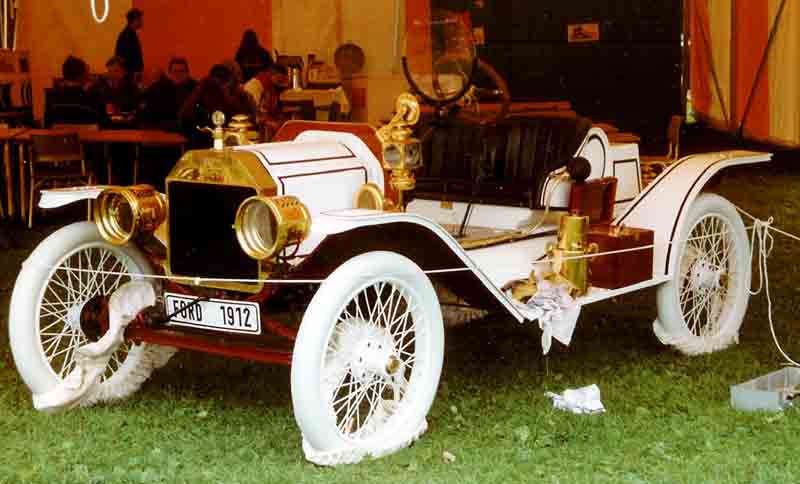
Ford Model T
"...rn is building what Jim Frally calls Ford's next Model T moment. That's next on Daily Drive. Dealerships ..."
The Ford Model T was an early Ford car that became very important in making cars more common. The podcast uses it as an example of a big “turning point” in car history. The idea is that something new could be as influential as the Model T was back then.
The Ford Model T is the famous early-1900s Ford that helped popularize mass-produced automobiles. The podcast calls it a “next Model T moment,” using it as a comparison for a major breakthrough in how cars are built and sold. That’s why it’s discussed: it represents a historical benchmark for transformative change in the auto industry.
vehicle protection plans
"For more than 60 years, protective asset protection has worked alongside dealerships across the country, delivering trusted FNI solutions like vehicle protection plans, maintenance programs, limited warranties, guaranteed asset protection, and more, helping dealerships generate revenue while helping customers protect what matters most."
Vehicle protection plans are aftermarket coverage products sold through dealerships to help pay for certain repairs or coverage beyond the factory warranty. They’re a common part of dealer “protection” revenue and can vary widely in what they cover.
FNI solutions
"For more than 60 years, protective asset protection has worked alongside dealerships across the country, delivering trusted FNI solutions like vehicle protection plans, maintenance programs, limited warranties, guaranteed asset protection, and more, helping dealerships generate revenue while helping customers protect what matters most."
“FNI” is an acronym used in dealership finance and insurance, referring to the F&I department’s products and services. In this context, it’s tied to protection and coverage offerings sold alongside vehicle sales.
limited warranties
"delivering trusted FNI solutions like vehicle protection plans, maintenance programs, limited warranties, guaranteed asset protection, and more, helping dealerships generate revenue while helping customers protect what matters most."
A limited warranty is coverage that only applies to certain things and only for a certain period. It’s not a guarantee that every problem will be covered.
A limited warranty is a warranty that covers only specific parts and/or specific time and mileage limits, rather than everything. In the dealership context, “limited warranties” are part of the broader set of protection products offered to customers.
guaranteed asset protection
"delivering trusted FNI solutions like vehicle protection plans, maintenance programs, limited warranties, guaranteed asset protection, and more, helping dealerships generate revenue while helping customers protect what matters most."
Guaranteed Asset Protection (GAP) is coverage that can pay the difference between what you owe on a financed/leased vehicle and what the vehicle is worth if it’s totaled or stolen. It’s designed to protect the “asset” value from depreciation and loss scenarios.
EV platform
"they wanted to give them the opportunity to build this vehicle and this EV platform like a startup. Fail fast, break things, fix it, try again. So you see a real difference in terms of the co-location of some of the teams, in terms of the"
An EV platform is the shared engineering “foundation” for an electric vehicle—things like the battery layout, power electronics integration, wiring architecture, and structural design. Using a common platform helps automakers develop multiple EVs more efficiently.
Fail fast, break things, fix it, try again
"they wanted to give them the opportunity to build this vehicle and this EV platform like a startup. Fail fast, break things, fix it, try again. So you see a real difference in terms of the co-location of some of the teams, in terms of the"
This is a development style where teams try ideas quickly, learn from what doesn’t work, and improve. The goal is to get to a better final result with fewer surprises later.
“Fail fast, break things, fix it, try again” is a product-development approach that encourages rapid prototyping and quick learning from mistakes. Instead of long planning cycles, teams iterate quickly to reduce the risk of building the wrong solution.
vehicle dynamics
"[726.3s] the Ford folks, they've needed the vehicle dynamics, the plant manager operation type people [733.2s] to come in and help them, but everybody who works at Ford needs to interview"
Vehicle dynamics is the engineering discipline that studies how a car behaves—handling, stability, ride/traction balance, and how the chassis responds to steering and braking. The segment says Ford needed vehicle-dynamics people to support the program as development progressed.
Tesla
"[741.9s] So we got a chance to talk with Alan Clark who Ford poached from Tesla about four years ago. [748.0s] He's in charge of this Skunk Works team and he shared some thoughts about how they are interviewing"
Tesla is mentioned because Alan Clark previously worked there. The point is that Ford hired him from a more EV-focused company to lead a new project.
Tesla is referenced as the source of Alan Clark, who was “poached” from Tesla to lead Ford’s Skunk Works team. This highlights the talent pipeline between EV-focused companies and legacy automakers.
cultural clash
"[784.7s] How is Clark managing the cultural clash between these outsiders and Ford veterans? [791.8s] Yeah, as we've seen time and time again over the past decade or so when a legacy automaker tries to"
“Cultural clash” describes friction that can happen when teams with different backgrounds, values, and working styles are forced to collaborate. Here, the outsiders from EV startups and tech companies are contrasted with Ford veterans, and the host asks how leadership manages that tension.
empathy
"[811.6s] almost as important as everything they're doing in this building is the psychology [816.6s] of how they do it and how they do it together. So he says he tries to lead with empathy. [822.2s] And you create empathy by understanding people's mindset."
In this context, “empathy” is leadership behavior used to reduce friction between groups by understanding how others think and what motivates them. The segment frames it as a practical management tool for integrating new tech talent with established employees.
face-to-face interactions
"[828.4s] interactions. He says he'll call up the Dearborn team to bring them to Long Beach, California [833.7s] to draw on whiteboards and talk and debate and yell at each other and vice versa. He brings [840.3s] his California team to Michigan to Kentucky where they will be building the first vehicle on this [846.1s] platform. and he's interesting. I thought it was a fascinating conversation. He said you never make [852.4s] more progress than when you are sitting down face-to-face as humans and it helps you understand"
“Face-to-face interactions” refers to in-person collaboration as a deliberate process choice, rather than relying solely on remote communication. The segment claims this approach improves progress and helps teams understand each other’s perspectives during development.
Dearborn team
"[828.4s] interactions. He says he'll call up the Dearborn team to bring them to Long Beach, California [833.7s] to draw on whiteboards and talk and debate and yell at each other and vice versa."
“Dearborn team” refers to Ford’s internal group based in Dearborn, Michigan, which is Ford’s historic headquarters area. The segment uses it to illustrate cross-location collaboration for the program.
Ford Motor Company
"This is their answer to the Chinese which Farley has said is an existential threat to the company. It's not hyperbole to say the future of Ford Motor Company rides on what Alan Clark and his team do and he recognizes that."
They’re talking about Ford as a company, not just a specific car. The hosts say Ford feels intense pressure from competitors, and they believe the company’s future depends on what this team builds next.
The segment is about Ford Motor Company’s competitive pressure from Chinese automakers. It frames the company’s future as depending on how Ford’s team executes its next product push.
Newtonian physics
"...they said well that's really just a reminder that the only real limit is physics. We can't do things if it doesn't physically work based on Newtonian physics so it's a cheeky little reminder to the team."
They’re using “Newtonian physics” as a reminder that real-world physical laws still apply. In other words, if something can’t work in a real, physical sense, you can’t build it just because it sounds good on paper.
Newtonian physics refers to the classical physics framework based on forces and motion. Here it’s used as a team mantra: if it doesn’t work physically, the project can’t proceed—so engineering constraints are treated as the ultimate limit.
software in-house
"I'm also interested in the fact that Ford is developing all the software in-house for the first time. What did you see in terms of how they're set up differently to make that work?"
They’re saying Ford is building its software internally. That can help the company coordinate changes faster—like when the battery design changes and the rest of the car needs to be updated to match.
“Software in-house” means the automaker develops the software internally rather than relying on external suppliers. The segment connects this to the development workflow, emphasizing tighter coordination between electronics/software and the rest of the vehicle.
co-locating everyone under one roof
"It's a simple idea but it's the idea of co-locating everyone under one roof from the start of the development to the end. You have some marketing folks there, you have engineering, design, supply chain, everybody coming together and sitting next to each other..."
They’re describing a development approach where different teams sit together in the same place. That way, if one team changes something (like the battery), other teams can quickly adjust their work too.
Co-locating teams means putting marketing, engineering, design, and supply chain people together in the same physical space during development. The goal is to reduce miscommunication so changes in one area (like battery design) can quickly propagate to software and vehicle integration.
battery team
"...so for example we talked to the battery team who said throughout this development they're changing the number of cells in the battery and that affects the size of the vehicle..."
They mention the battery team, meaning the engineers working on the car’s battery pack. Changing the battery’s internal cell count can change the battery size and how the whole car runs.
The “battery team” refers to the group responsible for battery pack design and engineering decisions. In this segment, they’re changing the number of cells, which then impacts battery size and how the vehicle operates.
number of cells in the battery
"...they're changing the number of cells in the battery and that affects the size of the vehicle, the size of the battery, how things operate so when they realize they need to change the number of cells..."
A car battery is built from smaller units called cells. If the engineers change how many cells are in the pack, the battery’s size and electrical behavior change, so the car’s electronics and software must be updated to work correctly.
A battery pack is made of multiple cells, and changing the number of cells changes the pack’s electrical characteristics and physical packaging. That can force downstream changes to the vehicle’s electronics and software calibration so everything matches the new battery configuration.
chassis dyno
"lot of testing they have a ton of different labs from battery labs to a full chassis dyno that they can run cars through in different temperatures and different grades of pavement"
A chassis dyno is like a treadmill for a car. The car’s wheels spin on rollers while sensors measure things like power and how the car behaves, so engineers can test changes in a controlled way.
A chassis dyno is a test stand that measures how a complete car performs—power, torque, and drivability—while the wheels are loaded against rollers. It lets engineers run repeatable tests without needing a road, which is useful for comparing changes like software updates or hardware tweaks.
Universal Electric Vehicle Platform
"there's no secret sauce with the UEV platform the Universal Electric Vehicle Platform that this first vehicle and others will ride on"
An electric vehicle platform is the main “build plan” for an EV—how the battery, motors, and key structure are laid out. Ford’s UEV platform is meant to be reused across several different Ford EVs so they can be developed faster.
The Universal Electric Vehicle Platform (UEV platform) is Ford’s shared electric-vehicle architecture intended to underpin multiple models. The idea is to reuse core EV design elements across different vehicles to reduce cost and speed up development.

Ford Mustang
"...y said this can be applied to F-150 or Bronco or Mustang or any other Ford product it's not just because i..."
The Ford Mustang is a sports car made by Ford. The podcast is saying Ford’s new shared electric-car design could also be used for the Mustang. That would mean an electric version could be built using the same core EV approach as other Ford vehicles.
The Ford Mustang is a performance-focused sports car known for its driving feel and strong brand identity. In the podcast, it’s referenced as another Ford product that could use the same universal electric vehicle platform being discussed. That’s notable because it suggests Ford may apply shared EV technology to a model traditionally associated with performance and styling.

Ford Bronco
"...ide on they said this can be applied to F-150 or Bronco or Mustang or any other Ford product it's not jus..."
The Ford Bronco is an SUV designed to handle rough roads and off-road driving. The podcast says Ford could use the same new electric-car platform on the Bronco as well. This would let Ford apply one EV design approach to more than one type of vehicle.
The Ford Bronco is a rugged SUV built for off-road capability and everyday driving. The podcast mentions it in the context of a universal electric vehicle platform that could be applied across multiple Ford products, including the Bronco. That matters because it points to a plan to bring shared EV engineering to different body styles and use cases.

Ford F150
"Universal Electric Vehicle Platform that this first vehicle and others will ride on they said this can be applied to F-150 or Bronco or Mustang or any other Ford product it's not just because it's an EV what we're doing you can do with your vehicle lines and sort of clean up the bureaucracy and"
The Ford F-150 is a large pickup truck made by Ford. The podcast is saying a new shared electric-car design could be used on the F-150 too. That would help Ford build electric versions using the same basic technology across different models.
The Ford F-150 is a full-size pickup truck that’s one of the most widely recognized vehicles in the U.S. In the podcast context, it’s mentioned as a potential platform application for a new universal electric vehicle architecture—meaning the same underlying EV approach could be adapted to the F-150 and other Ford models. That’s significant because it suggests a strategy to share technology across multiple vehicle lines rather than building everything from scratch.
Jim Farley
"Jim Farley was speaking on Ford's first quarter earnings call a few weeks ago and said that the true gift of this team will be how it filters down to the rest of the company"
Jim Farley is Ford’s CEO. Here, he’s talking about how Ford expects this new EV-focused team’s ideas to influence the rest of the company.
Jim Farley is Ford’s CEO, and his comments on the earnings call are used to frame how Ford expects the California team’s work to spread across the rest of the company. In this context, he’s providing corporate-level strategy rather than technical detail.
Allen Clark
"but for right now Allen Clark for one is sort of laser focused on landing the plane so to speak and making sure that they do earn their right to exist"
Allen Clark is mentioned as someone who’s more cautious about how well this new EV effort will spread through Ford. It’s basically a debate about whether the ideas will actually scale across the whole company.
Allen Clark is referenced as being more cautious than Ford leadership about whether the new team’s approach will “trickle down” broadly. The discussion uses his stance to contrast optimism versus skepticism about organizational change.
trickle down
"Well you just mentioned that that Farley seems to be pretty optimistic about what this is going how this is going to trickle down to the rest of the company"
“Trickle down” here means “spread gradually.” The question is whether what the EV team learns and builds will end up changing how the rest of Ford works.
“Trickle down” is a metaphor for how innovations or processes spread from one team or division to the rest of an organization. In this episode, it’s used to describe whether the California EV team’s methods will influence Ford company-wide.
prototype
"[1185.2s] say Jake it was cool we got a very scripted though but a quick glimpse of a prototype [1190.9s] driving behind us as we were walking from one building to the other heavily camouflaged so you [1196.2s] couldn't really see the design details but it did look like a small truck but the point is"
A prototype is an early version of a car that’s built to test ideas before the real production model exists. They’re saying they haven’t seen enough to judge the final truck yet.
A prototype is an early, not-final version of a vehicle built to validate engineering, packaging, and drivability before production. In this segment, the hosts emphasize they only got a brief look and won’t know the final outcome until launch.
heavily camouflaged
"[1185.2s] say Jake it was cool we got a very scripted though but a quick glimpse of a prototype [1190.9s] driving behind us as we were walking from one building to the other heavily camouflaged so you [1196.2s] couldn't really see the design details but it did look like a small truck"
When a car is “heavily camouflaged,” it’s covered up so people can’t easily tell what the final design will look like. The company still tests it on the road to see how it drives.
Heavily camouflaged prototypes use wrap, panels, and disguising shapes to hide the final design while still allowing engineers to test real-world driving. It’s common during early development so competitors and the public can’t easily see styling details.
vehicle number two three four five on this platform
"[1202.2s] we're not going to know if this company succeeded until the truck launches and vehicle number two [1208.4s] three four five on this platform and you got to keep in mind too that as this is Ford's answer to [1215.2s] the Chinese the Chinese aren't going to stop other automakers Tesla, Rivian, GM, Volkswagen"
Companies build several test trucks on the same underlying design so they can try different setups and improvements. The “number two, three, four, five” wording suggests multiple test versions are planned.
Automakers often build multiple test vehicles on the same platform to validate different systems and refinement stages. Numbering like “vehicle 2/3/4/5” typically indicates successive development mules or test builds rather than the final production truck.

Rivian
"[1215.2s] the Chinese the Chinese aren't going to stop other automakers Tesla, Rivian, GM, Volkswagen [1220.9s] they're not stopping either in increasing their efficiency and their speed to market so maybe"
Rivian makes electric vehicles, including trucks and SUVs. They’re mentioned as another company moving quickly with new electric models.
Rivian is an EV brand best known for electric trucks and SUVs, competing for attention in the same North American market. The segment cites Rivian alongside other automakers to highlight how quickly EV makers are pushing new products.
GM
"[1215.2s] the Chinese the Chinese aren't going to stop other automakers Tesla, Rivian, GM, Volkswagen [1220.9s] they're not stopping either in increasing their efficiency and their speed to market so maybe"
GM is a big car company. Here it’s mentioned as part of the group of automakers racing to bring new vehicles to market faster.
GM (General Motors) is a major automaker competing in both traditional and electric vehicle segments. In this segment, GM is grouped with other brands to emphasize competitive pressure to improve efficiency and launch timelines.

Volkswagen
"[1215.2s] the Chinese the Chinese aren't going to stop other automakers Tesla, Rivian, GM, Volkswagen [1220.9s] they're not stopping either in increasing their efficiency and their speed to market so maybe"
Volkswagen is a major car brand. They’re mentioning it as another automaker trying to move quickly with new vehicles.
Volkswagen is a global automaker that competes in the EV transition and broader truck/SUV market. The hosts mention it as part of the set of companies accelerating development to respond to new competition.
speed to market
"[1215.2s] the Chinese the Chinese aren't going to stop other automakers Tesla, Rivian, GM, Volkswagen [1220.9s] they're not stopping either in increasing their efficiency and their speed to market so maybe"
Speed to market means how quickly a company can get a new car from planning into showrooms. The idea is that faster launches can help them sell more before competitors catch up.
Speed to market is how quickly a company can move from development to selling a new vehicle. Automakers track it closely because faster launches can help capture demand before competitors do.

Ford Maverick
"[1238.9s] So before I let you go you said you [1238.9s] saw a heavily camouflaged model when you turned around and saw it did were you thinking more hey [1244.8s] is that a Maverick or is that a Ranger? So in the few seconds sneak peek that we got I'll say it [1250.8s] looked more Maverick size than Ranger size"
The Ford Maverick is a smaller pickup truck. Here, they’re trying to guess whether the new prototype looks more like a Maverick-sized truck than a Ranger-sized one.
Ford Maverick is Ford’s compact pickup, known for being smaller and more efficient than traditional full-size trucks. In this segment, the hosts are speculating whether the prototype is closer in size to the Maverick than to the Ranger.

Ford Ranger
"[1238.9s] So before I let you go you said you [1238.9s] saw a heavily camouflaged model when you turned around and saw it did were you thinking more hey [1244.8s] is that a Maverick or is that a Ranger? So in the few seconds sneak peek that we got I'll say it [1250.8s] looked more Maverick size than Ranger size if you're trying to give some type of bulk park comparison"
The Ford Ranger is a mid-size pickup truck. They’re using it as a comparison to figure out whether the prototype is closer in size to the Ranger or to the Maverick.
Ford Ranger is Ford’s mid-size pickup (smaller than a full-size truck, bigger than the Maverick). The hosts use it as a reference point to estimate the prototype’s size and likely class.
mid-compact
"[1262.9s] I don't know that it'll be that similar but talking size they claim it's a mid-size but [1269.7s] I'd say it's a lot smaller than today's Ranger. A mid-compact maybe new segment. There you go."
“Mid-compact” is a way of describing truck size—bigger than a compact, but smaller than a typical mid-size. They’re saying the new truck might land in a gap between existing categories.
“Mid-compact” is a market-size label used to describe a truck that sits between compact and mid-size categories. The hosts use it to suggest the prototype could create or target a new niche segment.
Request an Explanation
Heard something you'd like explained? We'll add it to this episode.
Sign in to request explanations for terms you heard.
Want to learn more?
Browse our glossary for plain-English explanations of automotive terms, jargon, and concepts.
Help improve this episode
See something that's not quite right? Our annotations are AI-generated and can sometimes miss the mark. Click the flag icon on any annotation to suggest a correction.