
Mercedes Engine Swap King Matt Kwiek
About this episode
Powertrain swaps take center stage as the hosts and Matt Kwiek dig into why older Mercedes platforms make such compelling restomods. The conversation moves from Matt’s early path—sound engineering, a 190E that broke down immediately, and learning to wrench—to the culture shock of “Restomans doing anything like this with Mercedes was not accepted.” They then get practical: ECU coding, gearbox choices, suspension bushings that affect rear steer, and why limited-slip diffs and the right clutch packages matter. Along the way, they compare Mercedes engineering philosophy to cost-cutting and talk about swap builds across multiple chassis.
Matt Kwiek is the owner of Kwiek Classics, a shop focused on updating the powertrains of chassis ('70s, '80s, '90s, '00s) Mercedes. From V8 upgrades to V12 shoehorns, it's anything but a simple process. Matt tells us how he left Apple to start wrenching.
https://www.kwiekclassics.com/
https://www.instagram.com/kwiekclassics/?hl=en
Recorded June 22, 2026
ZocDoc
Stop putting off those doctors appointments and go to https://Zocdoc.com/TIRE to find and instantly book a doctor you love today.
Factor
Head to https://Factormeals.com/tire50off and use code tire50off to get 50 percent off and free daily greens per box, with new subscription only, while supplies last until 09/27/2026. (See website for more details).
Quince
Elevate your summer wardrobe. Go to https://Quince.com/tire for free shipping on your order and 365-day returns. Now available in Canada, too
DeleteMe
Get 20% off your DeleteMe plan when you go to https://www.joindeleteme.com/tire
and use promo code TIRE at checkout.
Use Off The Record! and ALWAYS fight your tickets! For a 10% discount on your first case go to https://www.offtherecord.com/TST
Want your question answered? Want to watch the live stream, get ad-free podcasts, or exclusive podcasts? Join our Patreon: https://www.patreon.com/thesmokingtirepodcast
Instagram:
https://www.Instagram.com/thesmokingtire
https://www.Instagram.com/therealzackklapman
Enter to WIN our AMAZING 2025 Porsche 911 Turbo S!! https://www.dreamgiveaway.com/tickets/porsche?promo=SMOKINGTIRE
Promo Code Offer: Get 4X bonus tickets with any donation of $25 or more. With every donation you are helping benefit some wonderful veterans' and children's charities.
Podcast Promo Code: SMOKINGTIRE
Want your question answered? Want to watch the live stream, get ad-free podcasts, or exclusive podcasts? Join our Patreon: https://www.patreon.com/thesmokingtirepodcast
Use Off The Record! and ALWAYS fight your tickets! Enter code TST10 for a 10% discount on your first case on the Off The Record app, or go to http://www.offtherecord.com/TST.
Watch our car reviews: https://www.youtube.com/thesmokingtire
Tweet at us!
https://www.Twitter.com/thesmokingtire
https://www.Twitter.com/zackklapman
Instagram:
https://www.Instagram.com/thesmokingtire
https://www.Instagram.com/therealzackklapman
Mercedes E320
"All right, folks, on this episode of the show, I have taken a flight to Nashville, Tennessee to visit Quick Classics and talk to Matt Quick, who is doing the powertrain swap on my Mercedes E320 project."
A Mercedes E320 is an older E-Class model with a 3.2-liter engine. Here, it’s being turned into a restomod project by swapping in a different powertrain so it drives more like a newer car.
The Mercedes E320 is part of Mercedes-Benz’s E-Class lineup, and the “320” refers to a 3.2-liter engine displacement. In this episode it’s specifically being used as a project car for a powertrain swap, which is a common restomod approach for making an older Mercedes feel more modern to drive.
powertrain swap
"All right, folks, on this episode of the show, I have taken a flight to Nashville, Tennessee to visit Quick Classics and talk to Matt Quick, who is doing the powertrain swap on my Mercedes E320 project."
A powertrain swap is when someone replaces the car’s main drivetrain parts (like the engine and transmission) with a different combination. It’s a big job because everything has to be made to work together.
A powertrain swap means replacing major drivetrain components—typically the engine and transmission, sometimes including related electronics and mounts—with a different setup. It’s a major project because it requires matching parts, wiring, and driveline geometry so the car functions correctly and drives properly.
restomodding
"This is a really interesting show because I believe these Mercedes are a hidden value when it comes to restomodding a classic design to drive in the modern era."
Restomodding means taking an older classic car and upgrading it so it drives and feels more like a modern car. The goal is usually to keep the classic style, but improve the tech and driving experience.
Restomodding is the practice of updating a classic car with modern engineering, parts, and drivability improvements while keeping its original look or character. In this episode, the host frames Mercedes as a “hidden value” for restomodding because the platform can be upgraded to feel current.
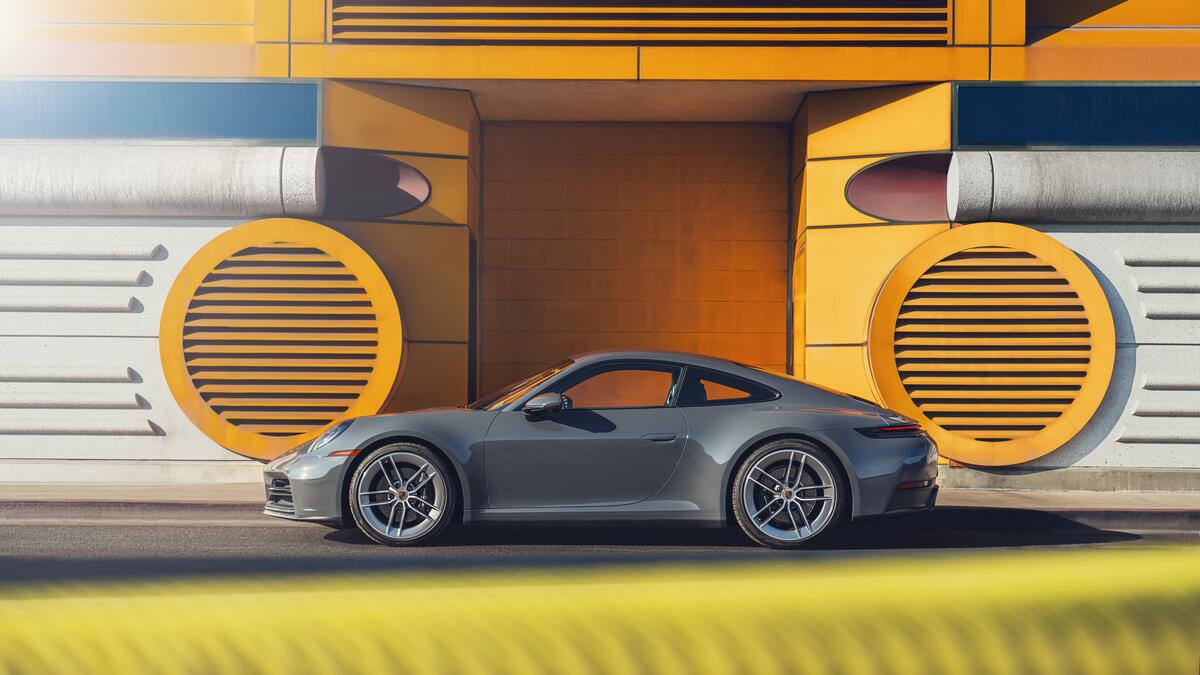
992.1 Turbo S
"Guys, the Smoking Tire is giving away a 992.1 Turbo S in partnership with Dream Giveaways. We're giving away a $275,000 car with some slick choice mods."
This is a Porsche 911 Turbo S from the early part of the 992 generation. They’re mentioning it because it’s the car being given away in the contest.
“992.1” refers to the early production run of the Porsche 911’s 992 generation, and “Turbo S” is the high-output twin-turbo version. In this episode it’s mentioned as the giveaway prize, not as a technical focus.
Liz Rosenberg
"Liz Rosenberg was huge. Do you remember? Do you ever watch Saturday Night Live?"
Liz Rosenberg is the host’s wife’s aunt, and the episode describes her as a well-known Hollywood publicist. The car story is connected to her ownership, not to car mechanics.
Liz Rosenberg is identified in the episode as the host’s wife’s aunt and a Hollywood publicist. The mention is mainly biographical context for the car’s ownership story rather than an automotive technical point.

Mercedes-Benz 190E
"...that time, right, I bought my first car. It was a 190E. It broke down the day after I bought it."
The 190E is an older Mercedes sedan that was meant to be a more affordable luxury option. In the podcast, it’s mentioned because the speaker’s first car reportedly had a breakdown right after they bought it. That’s why it comes up in a reliability or ownership context.
The Mercedes-Benz 190E is a compact luxury sedan from Mercedes’ older lineup, often remembered for being a solid entry point into the brand. In the podcast, it’s specifically tied to a personal story: the speaker bought one as their first car and it reportedly broke down the day after purchase. That makes it relevant to a discussion about real-world ownership and reliability expectations.

Mercedes-Benz Mercedes 300
"...... I used to think there was a life cycle of the Mercedes 300 class and it was like, luxury car in Paris, taxi ..."
The 300 SEL 6.3 is an older Mercedes luxury sedan with a big engine. The podcast is describing how cars like this could be used in different roles over time, such as luxury driving and taxi service. It’s brought up because it’s a memorable Mercedes model from that period.
The Mercedes-Benz 300 SEL 6.3 (W109) is a classic, high-performance luxury sedan known for its large engine and strong performance for its era. The podcast frames it as part of a “life cycle” idea—luxury car in one context and taxi use in another—highlighting how the same model could be used differently depending on time and market. It’s discussed because it’s a notable example of Mercedes’ older flagship-era engineering and versatility.

LS 400
"Exactly. Yeah. The LS 400 is the next one of that."
The Lexus LS 400 is a luxury sedan that became famous for being dependable and lasting a long time. Here, it’s mentioned as a car you still see on the road in places where older cars remain in service.
The Lexus LS 400 is a late-1980s/1990s luxury sedan known for its smooth, quiet ride and reputation for long-term durability. In this segment, the host is using it as an example of a car that’s still common in certain regions years later.
durable car
"Yeah. It's a very durable car. It cost me a goddamn fortune to keep that thing running, but it was very good."
When someone calls a car “durable,” they mean it tends to last a long time and not break down easily. It usually points to reliability over many years of driving.
“Durable” in car talk usually means the vehicle can rack up high mileage and years of use with relatively few major failures. It’s often shorthand for strong long-term reliability and the ability to keep running even when maintenance isn’t perfect.

Pontiac Catalina
"...ng at just 34 bucks, whether you're at Lake Como, Catalina, or just go into the office on a hot day. The tee..."
The Pontiac Catalina is an older American car model. The podcast brings it up as an example of a car you might drive in everyday situations. It’s known as a classic full-size Pontiac from its time period.
The Pontiac Catalina is a classic American full-size car associated with the mid-century Pontiac lineup. The podcast mentions it in a casual way alongside other places or contexts, suggesting it’s being used as an example of a car that fits a certain lifestyle or setting. It’s relevant because Catalina models are often remembered for their size and era-specific character.
manual swaps
"And what came first that or manuals? Are they just hand in hand? I mean, I've been doing manual swaps since my very first car 190."
A manual swap means converting a car to a stick shift. That usually involves installing the manual transmission and the parts that control the clutch and shifter so the car can drive like it was meant to.
A manual swap is converting a car to use a manual transmission (or installing a manual transmission into a car that didn’t originally have one). It usually requires changing the transmission, shifter linkage, clutch hydraulics (or cable), pedal box, and sometimes the ECU/engine management to make everything work correctly.

BMW E36
"This reminds me shout out to my homie fellow who I used to call the E 36 whisperer who had two E 36 chassis or excuse me, three E 36 chassis and two powertrains."
BMW E36 is a specific generation of the BMW 3 Series. It’s a common car for people who like to modify and swap parts, including for drifting.
BMW E36 is the 3 Series generation from the early-to-mid 1990s, known in enthusiast circles for being a popular platform for swaps and drifting builds. In this segment, it’s referenced as a chassis that a friend had multiple versions of, implying a swap-and-rebuild lifestyle.
standalone EFI
"2015 I put the AMG motor in it and did standalone EFI 2016 it went into the wagon."
Standalone EFI is an aftermarket computer and fuel-injection setup that controls how the engine gets fuel. It’s often used in swaps so the engine can be tuned to work correctly in the new car.
Standalone EFI (electronic fuel injection) means using an aftermarket engine management system to control fuel delivery and ignition independently of the factory ECU. This is common in engine swaps because it lets you tune the new engine’s fueling and timing for the specific wiring, sensors, and hardware in the converted car.
AMG motor
"2012 I did the first swap 2013 I did the second swap 2015 I put the AMG motor in it and did standalone EFI 2016 it went into the wagon."
“AMG motor” refers to an engine built by Mercedes-AMG, the performance division of Mercedes-Benz. Swapping in an AMG engine typically means adapting mounts, cooling, and drivetrain electronics to make the higher-performance powerplant work reliably in an older chassis.
rest them on
"Yeah. They're super strong. This is why I think you know there are so many companies that can successfully rest them on 9 11. It's it's not that that's an easy thing to do, it's it's an easy thing to kind of conceptualize and a hard thing to nail."
They’re basically saying the older Mercedes chassis is tough enough to handle big changes. That makes it a good starting point for projects where you add power or swap engines.
The speaker is talking about how older Mercedes cars are structurally strong enough to be used as a base for other projects—“resting” or building on them. The underlying idea is that the chassis can handle the stresses of swaps and higher power without turning into a fragile foundation.

Delorean DMC-12
"... yeah, it's much easier to do a 9 11 than to do a DeLorean, you know, or a Lotus or a Jeep Wrangler or a Che..."
The DeLorean DMC-12 is a sports car with a very unusual look, including stainless-steel panels and doors that open upward. It’s remembered because it stands out compared to most cars. The podcast brings it up as an example of an iconic car people talk about.
The DeLorean DMC-12 is a distinctive sports car famous for its stainless-steel body and gull-wing doors. It’s often discussed as an automotive icon because it’s unusual in design and has a strong pop-culture presence. In the podcast, it’s mentioned as one of several memorable cars people might reference when talking about specific builds or choices.

Jeep Wrangler
"But yeah, it's much easier to do a 9 11 than to do a DeLorean, you know, or a Lotus or a Jeep Wrangler or a Chevrolet or fucking Bronco or a Scout, you know, or something"
The Jeep Wrangler is a popular off-road SUV. In this quote it’s just being mentioned as another classic that’s not as straightforward to build on as the comparison cars.
The Jeep Wrangler is a rugged off-road SUV known for its body-on-frame construction and strong aftermarket support. It’s referenced here as another example of a car that’s harder to “nail” compared with the easier-to-conceptualize builds the speaker associates with older Mercedes/Porsche-style platforms.

Ford Bronco
"...otus or a Jeep Wrangler or a Chevrolet or fucking Bronco or a Scout, you know, or something where you have..."
The Bronco is an SUV made for off-road driving. It’s built with four-wheel drive and features that help it handle dirt and rough roads. It’s brought up as an example of a vehicle people choose for that kind of use.
The Ford Bronco is a body-on-frame SUV designed for off-road use, with four-wheel-drive systems and trail-focused hardware. It’s a popular choice for people who want classic SUV styling with modern capability. The podcast mentions it as one of several recognizable “off-road” or enthusiast vehicles in the same breath as other icons.
suspension
"So we're taking the golden era of Mercedes chassis engineering, where if you give the suspension and the brakes and everything a little bit of tweaking, upgrade it here and there, they drive fantastic, they'll keep up with modern cars on a track."
Suspension is what connects the wheels to the car and helps the ride feel smooth while also helping the tires stay planted. It’s a key part of how the car handles and how stable it feels.
Suspension is the system that connects the wheels to the car’s body and controls ride quality and handling. It uses components like springs, dampers, and linkages to keep the tires in contact with the road. The host mentions tweaking suspension to help older Mercedes chassis keep up on track.
brakes
"But so aside from the powertrains, not necessarily aging well, is there anything where it's like, we have to do this other thing in every car we do? I mean, we upgrade the brakes."
Brakes are what slow the car down and stop it. On a track, you have to brake hard over and over, so older brake parts may not handle it well. Upgrading brakes helps the car stop more consistently.
Brakes are the system that slows and stops the car by converting motion into heat at the friction surfaces. On track-focused builds, brake upgrades are common because repeated hard braking can overwhelm older brake components. The host explicitly says they upgrade the brakes as part of making these cars work well again.
bushings
"I need like motorsport bushings, because this car is so soft, and they don't realize that they actually have no bushings. Yeah, what they really need are just bushings. Just any any bushings will be fine."
Bushings are small parts in the suspension that cushion and locate components. If they’re worn out, the car can feel soft or sloppy. Replacing them can make the car feel much tighter without needing exotic upgrades.
Bushings are rubber (or polyurethane) mounting pieces that connect suspension/control-arm parts while allowing controlled movement. They strongly affect how the car feels—soft or vague versus tight and responsive—because they influence alignment and how forces travel through the suspension. The host argues that people misdiagnose softness as needing “motorsport bushings,” when the real fix is often simply replacing worn bushings.
spherical joints
"But like, the way they engineer poly bushings now is different from the way they engineered the original bushings, which actually were spherical joints."
Spherical joints are suspension connection points that let parts move around smoothly in different directions. The host is saying the original design used that kind of joint, so replacing it with the wrong bushing type can stop the suspension from moving the way it was meant to. When that happens, parts can get stressed and break.
Spherical joints (often called ball joints in everyday terms) are suspension connections that allow movement in multiple directions with low friction. The host contrasts these with polyurethane bushings, saying the original Mercedes setup used spherical joints, so swapping in a generic poly bushing can prevent the suspension from articulating correctly. That mismatch can cause abnormal stresses and component failure.
five link
"So if you put a standard poly bushing in the five link in the back of like a 201 or 124 or any of that, it won't articulate correctly, and you'll end up snapping the control arms."
A five-link suspension is a rear suspension design that uses multiple arms to control how the wheels move. It’s precise, so the bushings need to be matched to the design. If you use the wrong bushings, the suspension can bind and stress the arms until they break.
A “five-link” rear suspension uses five control arms/links to locate the rear axle and manage camber/toe changes as the suspension moves. Because it’s a geometry-sensitive setup, the suspension needs the correct compliance and articulation at each connection. The host says that putting a standard poly bushing into the five-link can prevent proper movement and lead to snapped control arms.
rear subframe mounts
"I use poly bushings in exactly one place. And that is the rear subframe on all of these cars, because the rear subframe mounts, the factory bushings are hydraulic."
The rear subframe is like a structural platform for the rear suspension. The rear subframe mounts are the connection points that hold it to the body, and if they’re too soft, the car can feel less stable when you add more power.
Rear subframe mounts are the bushings or brackets that attach the rear subframe to the car’s body. If those mounts use softer hydraulic-style bushings, they can allow more movement under load—something that can become noticeable when powertrain swaps add torque.
hydraulic
"because the rear subframe mounts, the factory bushings are hydraulic. And they have enough given it that when you put 400 horsepower in it, you would introduce rear steer."
In this context, “hydraulic” refers to hydraulic bushings—bushings that use fluid to provide a softer, more controlled compliance. They can absorb movement, but that same compliance can contribute to handling changes when torque increases significantly.
rear steer
"And they have enough given it that when you put 400 horsepower in it, you would introduce rear steer. So you replace those with poly, it drives a lot better."
Rear steer is when the back of the car starts “pointing” a little differently than you expect. It can happen if the suspension or mounting points move under load, especially after adding a lot more power.
Rear steer is when the rear wheels effectively change direction relative to the car’s intended path due to chassis/suspension movement. In this case, the speaker links it to softer factory hydraulic bushings allowing the rear subframe to shift under higher torque.
crossfire gearbox
"So Mercedes, a lot of people will say, Oh, we use the crossfire gearbox, but that's I've heard that before. I drove one before like that."
The “crossfire gearbox” refers to a specific Mercedes manual transmission family that people commonly associate with certain swaps. In this segment, the host clarifies it as an early six-speed Mercedes developed, and discusses its strength when paired with high power and track abuse.
early six speed
"Yeah. So that's the early six speed that Mercedes developed. And like, it's fine. It's a strong gearbox."
“Early six speed” means an older version of a six-speed manual transmission. The host is saying this early design is tough and can survive hard use.
“Early six speed” here means the first-generation Mercedes six-speed manual gearbox design the host is referring to. The key point is that it’s described as a strong transmission architecture, and the host backs that up with real-world abuse mileage.
track abuse
"I put one behind a 600 horsepower supercharged V8 and did 20,000 miles track abuse, everything. It was totally fine."
“Track abuse” means pushing the car much harder than normal driving, like on a racetrack. It’s a way to say the part was tested under tough, repeated stress.
“Track abuse” is enthusiast slang for using a car far beyond normal street driving—hard acceleration, sustained high loads, and repeated heat cycles. It’s used to emphasize that a component (here, the gearbox) survived demanding conditions.
crate
"Yeah. So a new gearbox in a crate just showing up. Yeah, I've got four of them on the shelf."
A “crate” gearbox is a transmission shipped and sold as a complete unit, typically new or remanufactured, ready to install. It’s a common way to get consistent parts for engine/transmission swap projects without hunting for a used unit.
OEM
"And then what are we using for clutches, just the same OEM stuff that would go with the C class?"
OEM parts are the same kind of parts the car was originally built with. They’re usually designed to fit and feel right, like factory equipment.
OEM means “original equipment manufacturer,” i.e., parts made to the same specifications as what the car came with from the factory. Using OEM clutches helps keep pedal feel and engagement characteristics closer to stock.
Uniclutch
"So I worked with a Uniclutch out of Australia a while back and put together a package to work with the factory flywheel so that it will hold six, 800 horsepower and still feel like factory."
Uniclutch makes upgraded clutch parts for high-power builds. In this case, they’re using it so the clutch can handle big horsepower without feeling harsh or wrong.
Uniclutch is an aftermarket clutch supplier known for custom clutch packages. Here, it’s used to build a clutch setup that can handle far more power than the stock clutch while still matching factory-like drivability.
factory flywheel
"…put together a package to work with the factory flywheel so that it will hold six, 800 horsepower and still feel like factory."
The flywheel is a heavy spinning part that helps the engine and clutch work together smoothly. Keeping the factory one means they’re not changing that part of the setup.
The flywheel is the rotating component that connects the engine to the clutch. Using the “factory flywheel” means the swap keeps the original flywheel hardware, while the clutch package is tailored to handle higher torque/power.

Mercedes-Benz CLK 430
"And I drove one, the crossfire one, there was kind of a half ass man. I drove a CLK 430, a four eye one beautiful car actually."
The Mercedes-Benz CLK 430 is a Mercedes with a V8 engine. The host is saying that when it’s set up with a manual transmission, it becomes much more fun to drive.
The Mercedes-Benz CLK 430 is a V8-powered coupe/convertible from the CLK lineup, and the speaker highlights it as a “four eye” (headlight style) example. Pairing the 4.3-liter engine with a manual is presented as especially engaging and “lovely” to drive.

Mercedes-Benz SL 55
"…and I drove a SL 55 that was kick ass like a 03 04. Good times. This really wakes up the fucking cars."
The Mercedes-Benz SL 55 is a powerful SL roadster. The host is praising an early-2000s one as especially fun and exciting to drive.
The Mercedes-Benz SL 55 is a performance-focused SL roadster known for strong power and a more driver-oriented feel. The speaker specifically calls out an early-2000s (’03/’04) example as “kick ass,” emphasizing how manual swaps or manual setups can wake up these cars.
Mercedes CLK 55
"But yeah, I mean, I wouldn't do it to one of those, but like a CLK 55, right? One of my guys picked up a nice CLK 55, 120,000 miles for six grand manual swapped it in a weekend."
The Mercedes-Benz CLK 55 is an AMG Mercedes with a strong V8 engine. In this part, they’re talking about converting one to a manual transmission so it becomes a fun daily driver. The big idea is that it can feel like it came that way from the factory.
The Mercedes CLK 55 is an AMG V8-powered coupe/sedan that’s prized for its blend of luxury and real-world performance. Here, the key point is that someone bought a CLK 55 with about 120,000 miles and did a manual swap quickly, turning it into a daily driver. The discussion frames it as a “factory-feeling” manual conversion rather than a hack job.
ECU
"What do you have to do software wise to make that setup work in an early 2000s car? So it depends."
An ECU is the car’s main computer for the engine. When you change major parts like the transmission, the ECU may need to be told what’s been changed so everything works correctly. Otherwise you can get warnings or drivability issues.
ECU stands for “engine control unit,” the computer that manages engine operation and related sensors. In an engine/transmission swap, the ECU often needs configuration so it recognizes the new setup (like a manual gearbox). This segment specifically discusses ECU generations and how easy it is to code them for a manual conversion.
check engine light
"There's a few different, right? So like there's Mercedes used one generation of ECU up to 2001, 2002, those ones are impossible to get into, but you don't really have to as long as you don't mind a check engine light."
The check engine light is a warning that the car’s computer thinks something isn’t right. With swaps, sometimes the car can still run fine even if the light stays on. The hosts are saying you might be able to live with that depending on the ECU setup.
A check engine light is the dashboard warning that the ECU has detected a fault or an out-of-range condition. In swap scenarios, some ECU coding changes can be done in a way that avoids drivability problems even if the light may still come on. The hosts mention that certain ECU generations are “impossible to get into,” but you may not need to fully access them if you can tolerate the warning.
Pentium processor
"I can just go in and tell it it's a manual. There are a few tricks. This is the AMG ones. So you just like use your old Pentium processor to log in and go click for manual."
They’re talking about using an older computer (with a Pentium-class processor) as a tool to help reprogram the car’s ECU. The idea is that you don’t need brand-new equipment to do the coding. It’s basically part of the “how you make the swap work” process.
In this context, “Pentium processor” refers to using an older PC/processor as part of the ECU coding/login process for the swap. The hosts are describing a workaround where you use existing hardware to access the ECU and configure it for a manual transmission. It’s not about the car’s engine internals—it’s about the tools used to reprogram the car’s electronics.

Mercedes-Benz AMG One
"...t's a manual. There are a few tricks. This is the AMG ones. So you just like use your old Pentium processor ..."
The AMG One is a Mercedes performance car built with a lot of advanced technology. The podcast is mentioning how its systems work and how you interact with them. It’s brought up because it’s not a normal, simple car—it’s very electronics-focused.
The Mercedes-Benz AMG One is a very advanced, high-tech performance car associated with Formula 1–style engineering concepts. The podcast mentions it in the context of a “manual” and references using an older “Pentium processor,” which points to the car’s complex electronics and control systems. It’s discussed because it’s an unusual, tech-heavy machine compared with typical road cars.
naturally aspirated
"But like it's pretty, if you know what you're doing, let's just say plug and play and not not a challenge to overcome. As long as it's naturally aspirated."
Naturally aspirated means the engine doesn’t use a turbo or supercharger to force air in. The hosts are saying the swap is easier when you’re working with a naturally aspirated engine. Forced-induction setups usually take more tuning and effort.
Naturally aspirated describes an engine that makes power without a turbocharger or supercharger, relying on atmospheric pressure and engine design. The hosts say the manual-swap setup is “pretty plug and play” as long as it’s naturally aspirated, implying forced-induction setups add complexity. That’s because supercharged/turbo engines often require more ECU calibration and supporting changes.
supercharged
"There was a bunch of people who were like, well, why didn't you get the supercharged engine? And you and Sean were kind of like, we don't really fuck with them."
A supercharged engine uses a device that pushes extra air into the engine to make more power. The hosts are saying that for these older Mercedes, you may not want to chase the supercharged version because it can be more complicated than it’s worth. They think the naturally aspirated power is enough.
Supercharged means the engine uses a supercharger to force more air into the cylinders, increasing power potential. The hosts discuss why they “don’t really fuck with” supercharged setups in this context, arguing that the extra horsepower isn’t necessary for these older, lighter Mercedes. They’re contrasting forced-induction power with what the car actually needs for a satisfying driving experience.

Honda S600
"to 90s Mercedes, it is ample. I promise you. Yeah, you don't need more than it is a lot. No, I mean, when when my car was built, it came with like 206 horsepower and the s 600 with the v 12 was like 370. Yeah, like, yeah, so we're gonna have more than that. Yeah, I didn't personally"
The Honda S600 is a small sports car made by Honda. The podcast is saying it doesn’t need to be huge or complicated to feel quick and capable. It’s being compared to other cars to show that a smaller car can still have strong performance.
The Honda S600 is a small, lightweight sports car from Honda’s earlier era, known for being compact and fun to drive. The podcast compares it to older Mercedes and mentions that it came with around 206 horsepower in the speaker’s example, emphasizing that it can feel more than adequate for its size. It’s discussed because it represents a lightweight performance approach rather than a big-engine luxury approach.

Mercedes S 600
"when when my car was built, it came with like 206 horsepower and the s 600 with the v 12 was like 370. Yeah, like, yeah, so we're gonna have more than that."
The Mercedes S 600 is a high-end Mercedes sedan that came with a very powerful V12 engine. Here, they’re using it as a reference point for how much power the car had from the factory versus what swapping an engine can add.
The Mercedes S 600 is a flagship S-Class model known for its big V12 powerplant and effortless luxury. In this segment, the host compares its factory horsepower to what can be achieved with an engine swap.
horsepower
"when when my car was built, it came with like 206 horsepower and the s 600 with the v 12 was like 370... if I could spend 18,000 bucks and have 400 horsepower or 22,000 bucks and have 500 horsepower..."
Horsepower is a number that tells you how strong the engine is. Higher horsepower usually means the car can accelerate harder, and people use it to compare stock cars to modified ones.
Horsepower is a measure of engine power output—how much work the engine can do over time. It’s commonly used to compare stock cars to modified builds, like engine swaps aiming for 400 or 500 hp.
swapping
"But I imagine if you're going to spend the money fucking swapping, a lot of people will say, if I could spend 18,000 bucks and have 400 horsepower or 22,000 bucks and have 500 horsepower, I'll just pay the difference just to say I have it."
In this context, swapping means replacing a car’s original engine with a different powertrain (often from another model) to gain power or a specific driving feel. It’s a major project because it can involve wiring, mounts, cooling, fuel, and drivetrain compatibility.

Mercedes SEC
"Well, did you see Sean's Black SEC? Yeah, yeah. Yeah. So like, I was driving that on Angeles Crest."
A Mercedes SEC is a Mercedes coupe (a two-door) from the S-Class family. They’re talking about a specific black one that’s been modified enough to spin the tires when the driver floors it.
The Mercedes SEC is a 2-door coupe version of the Mercedes S-Class, typically associated with powerful V8/V12-era engines depending on generation. In this segment, “Sean’s Black SEC” is used as an example of a swapped/modified car that can light up the tires under hard acceleration.
Angeles Crest
"Yeah, yeah. Yeah. So like, I was driving that on Angeles Crest. That's one of my that's like my loaner car when I go out there."
Angeles Crest is a famous mountain road in Southern California with lots of curves and hills. People drive it to see how a car behaves when the road gets challenging.
Angeles Crest refers to the Angeles Crest Highway area in Southern California, known for steep grades and winding roads. It’s a popular local route for testing how a car accelerates, brakes, and holds traction in real-world conditions.
Pagoda
"So that's basically the pagoda. It's just that I've been there. Yeah. Yeah, a Pagoda with an M113."
“Pagoda” is a nickname for a certain Mercedes SL model with a very distinctive roof shape. Here, they’re talking about one that’s been modified with a different engine.
“Pagoda” is an enthusiast nickname for the Mercedes-Benz W113 SL, named for its distinctive, pagoda-like roof shape. In this segment, it’s specifically tied to an engine swap using an M113.

Sunbeam Tiger
"Yeah, a Pagoda with an M113. And it is effectively a Sunbeam Tiger. We did that."
The Sunbeam Tiger is a classic British sports car that’s famous for being a fun, lightweight V8-powered machine. They’re comparing the modified Mercedes to that kind of driving character.
The Sunbeam Tiger is a classic British sports car known for its lightweight feel and (in most versions) a Ford V8 swap heritage. The host uses it as a comparison point, implying the modified Mercedes “Pagoda” ends up with a similar character—small, lively, and V8-powered.
Bring a Trailer
"it is effectively a Sunbeam Tiger. We did that. Yeah, it's it's actually going up on bring a trailer probably this week."
Bring a Trailer is a website where car enthusiasts buy and sell cars through auctions. They’re saying this build will likely be listed there soon.
Bring a Trailer is an online auction site focused on enthusiast cars. The host’s mention suggests the modified car is being sold through that community marketplace.
5.4
"It had the 5.4 six speed five link rear end. Yeah, no, I put 6000 miles on that car."
“5.4” means the engine is about 5.4 liters in size. Bigger displacement often correlates with more torque, and they’re listing the engine and drivetrain details of the build.
“5.4” here refers to a 5.4-liter engine displacement, commonly associated with Ford’s 5.4L V8 family in swap builds. It’s mentioned alongside a 6-speed and a rear-end setup, indicating the specific powertrain combination in the car.
Overcrest rally
"Okay. So they, yeah, I shipped it out to them. But before that, I took it on the Overcrest rally, I took it on breakfast club rally, I took it down to Amelia, like I just drove it everywhere."
The Overcrest rally is a car event where people drive together. They’re mentioning it to show the car was actually used on trips, not just parked.
The Overcrest rally is an enthusiast driving event referenced as part of how the host used the car. It signals the car was driven hard enough to be part of multi-car/multi-route outings rather than just stored.
Amelia
"rally, I took it on breakfast club rally, I took it down to Amelia, like I just drove it everywhere."
“Amelia” is a well-known classic car event in Florida. They’re saying they drove the car there, which is a big deal for a modified build.
“Amelia” most likely refers to Amelia Island Concours d’Elegance, a major classic-car event in Florida. The host’s mention implies the car was driven to a high-profile show, not just trailered.

Ferrari 360
"So so that was one of my employees was one of your employees. So it's not so it's not something that is just totally straightforward and people can be doing at home or is it if you are adventurous? It really comes down to whether or not you have the ability to code the ECU, right?"
The Ferrari 360 is a mid-engine Ferrari supercar. The point here is that even a serious exotic like this can be converted to a different setup if you have the right skills and parts.
The Ferrari 360 is a mid-engine V8 supercar from Ferrari, known for its compact layout and enthusiast-friendly “swap culture” compared with more modern cars. The host mentions doing a manual swap on a Ferrari 360, which highlights how some cars can be converted with the right parts and electronics work.
Mercedes star diagnostic system
"It really comes down to whether or not you have the ability to code the ECU, right? Like if you have an old school Mercedes star diagnostic system or they make cheap knockoffs nowadays that will do it like yeah you can do it."
This is Mercedes’s official diagnostic tool. It lets you talk to the car’s computer to change settings or fix problems—something that matters a lot for engine swaps.
“Mercedes star diagnostic system” refers to Mercedes-Benz’s factory diagnostic tooling (often associated with the STAR system) used to communicate with the vehicle’s ECUs for coding, troubleshooting, and parameter changes. Swap work frequently depends on having the right diagnostic interface to properly program the car.
Mercedes Crossfire
"The Crossfire one the shifter feel wasn't quite exactly what I want. That's the big thing with the Crossfire box is it does not have an internal reverse lockout. The reverse lockout is built into the shifter and those shifters are garbage."
They’re talking about a Mercedes Crossfire and how the shifter works. The problem is that reverse is controlled by the shifter on the older setup, which can make it feel wrong or unreliable. The fix is using a later transmission design where reverse lockout is handled inside the transmission.
The Mercedes Crossfire is a niche late-1990s/early-2000s coupe where the shifter feel and reverse behavior are tied to the gearbox design. In this segment, the key issue is that the older setup lacks an internal reverse lockout in the transmission, so the reverse lockout is handled by the shifter itself.
internal reverse lockout
"That's the big thing with the Crossfire box is it does not have an internal reverse lockout. The reverse lockout is built into the shifter and those shifters are garbage."
A reverse lockout is a safety/logic feature that makes sure you can’t accidentally select reverse. If it’s built into the transmission, it works more consistently than if it depends on the shifter. That’s what they mean by “internal.”
An internal reverse lockout is a transmission feature that prevents selecting reverse unless the shifter/transmission logic allows it. When it’s not internal, reverse lockout depends on the shifter mechanism, which can lead to poor feel or reliability issues. In this segment, that’s why the newer transmission design is preferred.
short shifter
"So you can get a nice aftermarket short shifter and there are companies that sell them that bolt into the older Mercedes chassis."
A short shifter is a shifter upgrade that makes the gear lever move less distance to get into each gear. That usually makes shifting feel tighter and faster. They’re saying you can add one to the older chassis when the transmission setup is right.
A short shifter is an aftermarket shifter linkage designed to reduce the lever’s travel between gears. Shorter travel can make shifting feel quicker and more precise, especially when paired with a transmission that has the correct reverse-lockout behavior. In this segment, they mention short shifters as a way to improve the older Mercedes setup.

Mercedes-Benz Eclass
"tax for doing it. So there are two the one that I say no to is the 114 115 chassis. What you're I'm not quite as nerdy as you but yeah yeah late 60s to mid 70s Mercedes E-Class. Okay the there are 300 D's or 220 D's you would know them as yeah the precursor to the 123 that"
The E-Class is a Mercedes luxury sedan that’s positioned below the top S-Class. The podcast is talking about older E-Class years and specific versions of the car. People bring it up because it’s a classic Mercedes model with different engine options.
The Mercedes-Benz E-Class is a mid-to-large luxury sedan that sits below the S-Class in the lineup. The podcast specifically references late-60s to mid-70s E-Class models and mentions engine variants like the “300” as part of a discussion about which chassis/years to consider. It’s discussed because older E-Class cars are often sought after for their classic design and Mercedes engineering.

Mercedes 300 D
"Okay the there are 300 D's or 220 D's you would know them as yeah the precursor to the 123 that everybody thinks of as the early E-Class."
They mention the Mercedes 300 D as an example of an older diesel Mercedes. Even though it shares some basics with the 107 SL, the engine bay is physically narrower, so a larger engine like a V8 won’t fit. That’s the main reason it’s hard to swap engines in these cars.
The Mercedes 300 D is a diesel model from the early “E-Class” lineage the speaker describes as a precursor to the later 123-era E-Class. The key swap-related detail is that these cars share underpinnings with the Mercedes 107 SL, but their engine-bay frame rails are narrower, preventing a V8 from fitting. That physical constraint is why certain swaps are impractical.
Mercedes 107 SL
"Those cars underneath it's the same as a 107 SL you know 72 to 89 but the frame rails in the engine bay are narrower so you can't fit a V8 in it."
The Mercedes 107 SL is an older SL model they’re using as a comparison. The point is that some older Mercedes cars share similar foundations, but the diesel cars have narrower frame rails in the engine bay. Because of that, a V8 simply won’t fit.
The Mercedes 107 SL (1972–1989) is a classic SL generation that the speaker uses as a reference point for chassis/underbody similarities. Even though the 300 D/220 D cars share the same general foundation, the engine-bay frame rails are narrower in the diesel cars, so a V8 swap isn’t physically possible without major changes. The takeaway is that fitment constraints drive swap feasibility.
common rail
"A modern a more modern diesel swap yeah or yeah you can even go up to the OM648 the common rail one from the Aunts."
Common rail is a modern way diesels inject fuel. Instead of pressurizing fuel separately for each event, it uses a shared high-pressure line (“rail”). The result is usually smoother running and better control, which is why it’s attractive for engine swaps.
Common rail is a diesel fuel-injection system where high-pressure fuel is stored in a shared “rail” and delivered to injectors as needed. The speaker mentions it in the context of modern diesel swaps, implying better drivability and efficiency compared with older diesel injection approaches. They connect it to the OM648 engine they name next.
OM648
"you can even go up to the OM648 the common rail one from the Aunts. Those are fantastic engines."
OM648 is a Mercedes diesel engine they’re recommending as a newer option for swaps. They specifically describe it as a common-rail diesel, which is a more modern injection system. Their point is that it’s a great engine to use if you’re doing a diesel swap.
OM648 is a Mercedes-Benz diesel engine (an inline-six) referenced here as a “common rail” option for modernizing a diesel swap. The speaker calls these engines “fantastic,” suggesting they’re a strong choice when you want the benefits of newer diesel technology while still staying within feasible swap packaging. It’s part of a broader discussion of diesel swap pathways.
CDI
"The CDI. Yep that's a C320 CDI. Yeah right yeah okay so all right so"
CDI is Mercedes’ name for their diesel direct-injection system. It means the diesel fuel is injected directly into the combustion chamber. Here, they’re using it to identify the type of diesel engine they’re talking about.
CDI is Mercedes-Benz’s branding for diesel direct injection. In the segment, the speaker connects CDI to a specific model/engine context (“C320 CDI”), reinforcing that the swap discussion is centered on diesel direct-injection powertrains rather than gasoline V8s. It’s essentially shorthand for a particular diesel fuel-delivery approach.
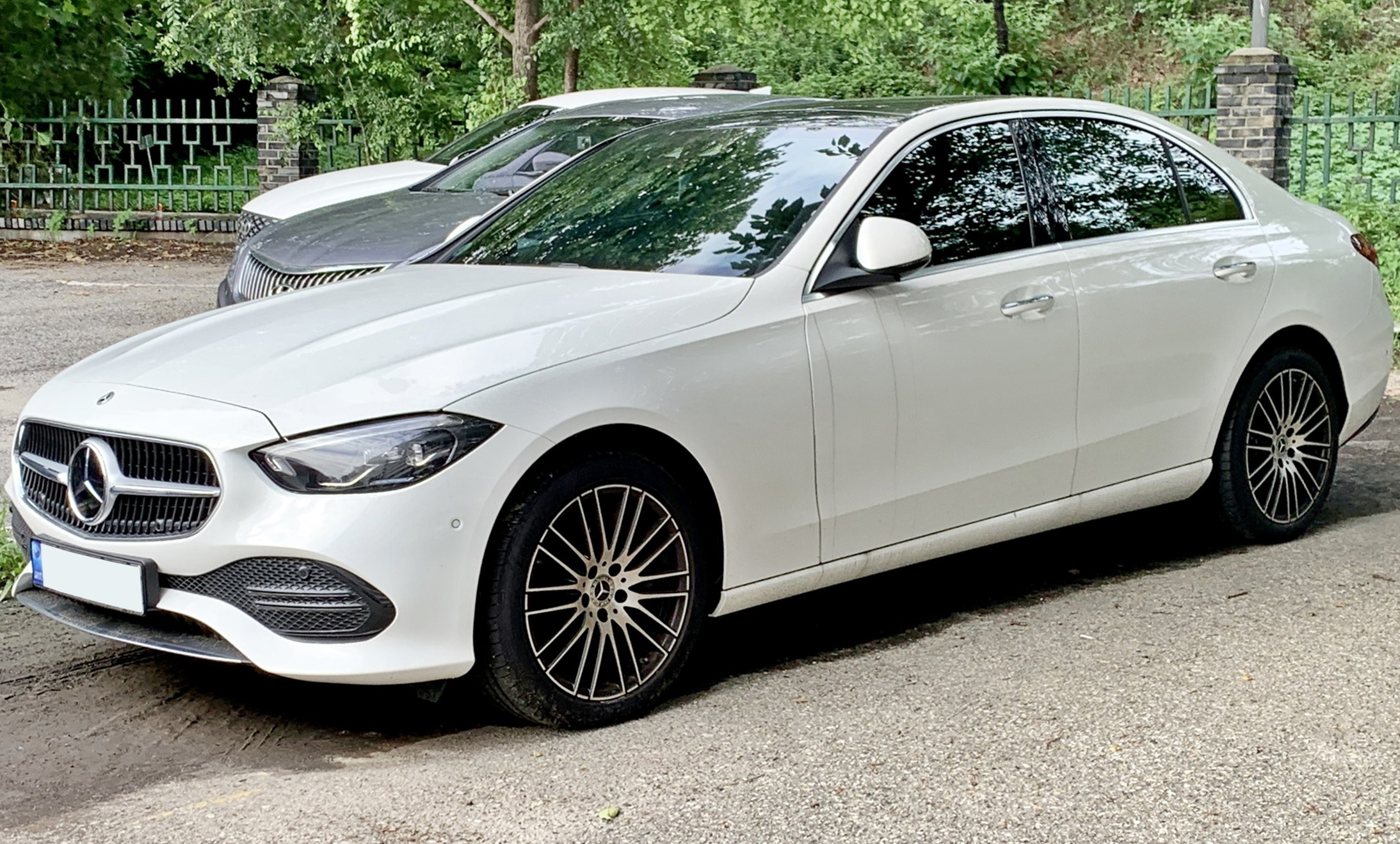
Mercedes C320 CDI
"The CDI. Yep that's a C320 CDI. Yeah right yeah okay so all right so so you you could still work with it it's just not you're not going to get the V8."
The Mercedes C320 CDI is a diesel version of the C-Class. They’re using it as an example of the kind of diesel engine they mean when they say CDI. The takeaway is that you can still build a workable swap using these diesel setups.
The Mercedes C320 CDI is a diesel-powered C-Class variant used here as an example of a CDI (diesel direct injection) engine. The speaker’s point is that these diesel engines can still be worked with in swap projects, even if the goal isn’t fitting a V8. It’s part of the “what can you do instead?” discussion for older chassis constraints.
limited slip
"What's the best thing that's kind of expensive to do while you're in there and you have to convince people to do it but that it really is important. Limited slip. Yeah because I mean we do end up probably 70% of the cars get a quay for limited slip and it just makes it that much more usable."
Limited slip is a type of rear-axle differential that helps the car put power to the wheel that has traction. Without it, one wheel can spin uselessly and the car feels less controllable.
A limited-slip differential (often shortened to LSD) helps transfer torque to the wheel with more grip when one wheel starts to slip. That makes a car more usable in real-world driving—especially on wet roads or when accelerating out of corners.

Mercedes 450 SCL 6.9
"Well yeah Mercedes put limited slips in three cars uh up until like 2000 ish. You've got the 450 SCL 6.9 you've got the 192.3 16 Cosworth and you've got uh the 500e was available with a limited slip but most of them didn't have it."
The Mercedes 450 SCL 6.9 is a classic Mercedes-Benz luxury car with a big engine. In this conversation, it’s brought up because some versions were equipped with a limited-slip differential for better traction.
The Mercedes 450 SCL 6.9 is a late-1960s/early-1970s Mercedes-Benz sedan known for its big V8 and luxury performance. The speaker mentions it as one of the Mercedes models that used a limited-slip differential up to around 2000.

Mercedes 500e
"You've got the 450 SCL 6.9 you've got the 192.3 16 Cosworth and you've got uh the 500e was available with a limited slip but most of them didn't have it."
The Mercedes 500e is a 1990s Mercedes-Benz that was tuned to feel much more powerful than a typical luxury sedan. Here it’s mentioned because some cars had a limited-slip differential for better traction.
The Mercedes 500e is a performance-oriented Mercedes-Benz sedan from the 1990s that’s famous for blending luxury with serious power. The speaker notes that some 500e versions were available with a limited-slip differential.
LSD
"Some of them have ASD which is um a hydraulically actuated limited slip. Is that brake vectoring? No it's an actual clutch style LSD that uses wheel speed sensors and then a hydraulic system to actuate it."
LSD means limited-slip differential. It’s a rear-axle mechanism that can “share” power better when one wheel loses traction, and it can use sensors and hydraulics to control how strongly it locks.
LSD stands for limited-slip differential. In this discussion, the speaker contrasts a hydraulically actuated setup (ASD) with a clutch-style LSD that uses wheel-speed sensors plus a hydraulic system to engage the locking action.
ASD
"Some of them have ASD which is um a hydraulically actuated limited slip. Is that brake vectoring? No it's an actual clutch style LSD that uses wheel speed sensors and then a hydraulic system to actuate it."
ASD is a limited-slip differential that uses hydraulics to help control how the differential locks when traction changes.
ASD here refers to a hydraulically actuated limited-slip differential. Instead of using clutch packs directly in the same way as some LSD designs, the hydraulic system helps control the locking behavior.
brake vectoring
"Some of them have ASD which is um a hydraulically actuated limited slip. Is that brake vectoring? No it's an actual clutch style LSD that uses wheel speed sensors and then a hydraulic system to actuate it."
Brake vectoring means the car uses the brakes on specific wheels to help control traction and direction. It’s different from a limited-slip differential that mechanically manages power transfer.
Brake vectoring is a traction-control strategy that uses the brakes on individual wheels to help steer the car and manage slip. The speaker is saying it’s not the same thing as the clutch-style LSD they’re describing.

Ford Mustang
"...actuate the diff to lock it up. Yeah like the new Mustang has. I have no idea about that. Yeah the current ..."
The Mustang is a performance car from Ford, usually a coupe or convertible. It’s known for having strong engines and a sporty feel. The podcast is talking about how it can manage traction, like how power is sent to the wheels.
The Ford Mustang is a long-running American sports coupe/convertible known for its performance heritage and wide range of powertrains. The podcast mentions the Mustang in the context of drivetrain behavior—specifically how a differential can be actuated or locked—suggesting a discussion about traction and mechanical features. It’s a natural topic when talking about modern performance cars and how they handle power to the wheels.
2003 G55
"Yeah. The newest vehicle I own is that 2003 G55. Yeah I roll up outside he's got a fucking manual swapped G55 which is actually pretty sweet."
This is a Mercedes-Benz G-Class G55 from 2003. It’s a tough, off-road-focused SUV, and in this story it gets a manual transmission swap so it can be driven like a stick while still working for off-roading.
The Mercedes-Benz G55 (here, a 2003 example) is a high-performance variant of the G-Class, known for its rugged, boxy off-road chassis and V8 power. In this segment, it’s notable because the host describes swapping in a manual transmission and keeping the transfer case functionality so it can be used off-road.
transfer cases
"when I pulled the engine transmission out the other engine had a manual bolted to it so it's like do the transfer cases still work and stuff."
A transfer case is the part that sends power to both the front and rear wheels on a 4x4. Here, they’re checking that it still works after the manual swap.
A transfer case is the gearbox that splits power from the transmission to the front and rear axles in a four-wheel-drive vehicle. In this swap story, the key point is whether the transfer case still works after combining components from different drivetrains.
divorce transfer case
"Well it's a divorce transfer case so yeah. Oh I just have to get along the back."
A “divorce transfer case” is a transfer case setup where it’s not packaged directly with the transmission like usual. In a swap, that can change what parts you need to connect everything correctly.
“Divorce transfer case” is an enthusiast term for a transfer case arrangement where the transfer case is separated (“divorced”) from the transmission assembly, often using a different mounting and driveline layout. In swaps, it matters because it affects how the driveshafts and linkages must be adapted to make everything fit and function.

G-Class G Wagon
"...sn't. But but now that it works you have a manual G wagon and the transfer cases work which is really cool...."
The G-Class is a Mercedes SUV designed to handle rough off-road driving. The podcast mentions a manual version and that the transfer case functions properly, which is part of how it sends power for off-road use. It’s brought up because it’s a very capable, mechanically focused SUV.
The G-Class (often called the G-Wagen) is a boxy, rugged Mercedes-Benz SUV known for its off-road durability and classic design. The podcast specifically mentions having a manual G-Class and that the transfer cases work, which highlights its mechanical, off-road-oriented nature. It’s discussed because it’s a distinctive vehicle that’s built to handle tough terrain while still being a recognizable luxury SUV.
lockers
"Yeah and you know the lockers work and everything I've put a ton of miles on it I took it up in Michigan in February and went out in the snow on the seasonal roads."
Lockers are traction helpers that lock the differential so both wheels on an axle turn together. That helps when one wheel is slipping, like in snow or mud.
Lockers are differential locking mechanisms that force a wheel pair to rotate together, improving traction when one wheel loses grip. The speaker mentions that the lockers “work,” which is important for off-roading in snow and low-traction conditions.
OM606
"Wait you put one of these Mercedes gearboxes in your truck to tow with it? With an OM606 turbo diesel. What is an OM606?"
OM606 is a Mercedes diesel engine. It’s an inline-six turbo diesel that’s known for pulling hard and lasting a long time—exactly why it’s mentioned in a towing/off-road context.
OM606 is a Mercedes-Benz inline-six turbo-diesel engine family (often associated with the late-1990s E-Class), known for its durability and strong low-end torque. In the segment, the host uses it as a reference point for what drivetrain they swapped into a truck, and then starts describing its architecture.
indirect injected
"Okay so the OM606 is a 2JZ of 99 E300 turbo diesel. Oh twin cam six cylinder indirect injected."
Indirect injection is a diesel fuel system where the fuel is sprayed into a small chamber first, then it goes into the main cylinder. The host is using it to describe how that Mercedes diesel engine burns fuel.
Indirect injection is a diesel fuel system design where fuel is injected into a pre-chamber (or similar auxiliary space) before it enters the main combustion chamber. It typically changes combustion characteristics versus modern direct injection, and it’s part of how the OM606’s diesel operation is being described.
P pump
"controlled injection pumps like a P pump for a Cummins and you can backdate it to the mechanical injection pump."
A P pump is a type of diesel fuel injection system. It controls how much fuel goes into the engine, and on certain diesel engines it’s famous for being tough and reliable.
A “P pump” refers to the Bosch inline diesel fuel injection pump design used on many Cummins engines. It meters fuel precisely for each cylinder and is known for durability, which is why people describe them as “bulletproof.”
mechanical injection pump
"controlled injection pumps like a P pump for a Cummins and you can backdate it to the mechanical injection pump."
A mechanical injection pump is an older-style diesel fuel system that uses mechanical parts to control fuel delivery. It’s often swapped in because it can be simpler and easier to troubleshoot than newer electronic systems.
A mechanical injection pump uses engine-driven mechanical linkages (rather than electronics) to meter and deliver diesel fuel. “Backdating” to it usually means converting a more modern setup to an older, simpler control strategy.

Ford F250 highboy
"Okay and they're just absolutely bulletproof. And what truck did you put that in? A 73 f250 highboy."
A Ford F-250 Highboy is a classic tall 1970s pickup. Here, it’s being used as the base truck for a diesel swap, which is why it matters to the story.
The Ford F-250 “Highboy” is a classic 1970s heavy-duty pickup known for its tall stance and off-road-friendly proportions. In this context, it’s the truck that received a Cummins-style diesel injection setup, showing how these swaps can turn an old Ford into a modern-feeling diesel workhorse.

Ford Falcon
"There are probably not many Mercedes diesel swapped Ford Falcon still running around that I did like 15 years ago."
The Ford Falcon is an older Ford model that people often modify. In this story, it’s the car that got a Mercedes diesel engine swap, which is the unusual part.
The Ford Falcon is a mid-size car platform that became a popular base for engine swaps because it’s relatively simple to modify. In the segment, the host describes swapping in a Mercedes diesel into a Falcon, which is a standout “why would you do that?” build.
Mercedes OM606
"ripped the six cylinder out, took a junkyard Mercedes OM606, bolted a dog leg five speed to it"
The Mercedes OM606 is a diesel engine from Mercedes. Swap builders like it because it’s strong and fits well into other cars, which is why it shows up in this Falcon project.
The Mercedes OM606 is a diesel engine family (a 3.0L inline-six) that’s popular with swap builders because it’s compact and robust. Here it’s used as the donor engine for a Mercedes-diesel conversion into a Ford Falcon.
dog leg five speed
"took a junkyard Mercedes OM606, bolted a dog leg five speed to it"
A “dog leg” five-speed is a manual gearbox with a shift pattern that feels more like older racing cars. The gears are arranged so the first gear is in a different spot than in a typical modern pattern.
A “dog leg” five-speed is a manual transmission layout where the shift pattern has the first gear positioned down and to the left (often with a more race-like feel). It’s commonly associated with certain older performance transmissions and is sought for the way it changes driving feel.
diesel gate
"Although I guess during this period this that would have been 2015. That would have been well 2014 was diesel gate but I thought that"
“Diesel gate” was a big scandal where some diesel cars were found to cheat emissions tests. After that, diesel engines got a lot more attention and criticism.
“Diesel gate” refers to the emissions-cheating scandal that came to light in the early 2010s, where some diesel vehicles were programmed to behave differently during testing. It changed how people viewed diesel technology and led to heavy scrutiny and regulation.
rolling coal
"But rolling coal. Yeah."
“Rolling coal” is when a diesel is modified to smoke heavily when you accelerate. People do it for the effect, but it can be rough on emissions systems and may stress the engine.
“Rolling coal” describes intentionally modifying a diesel to produce excessive black smoke under acceleration. It’s usually done by increasing fueling beyond what the engine would normally deliver, often at the expense of emissions compliance and sometimes engine longevity.
M119
"everyone in my comments it's why aren't we using the M119. I didn't see a single fucking M119 out here in your shop."
M119 is Mercedes’ internal code name for a V8 engine. People like it because it’s powerful and well-regarded, so it comes up as a “why aren’t you using this?” swap idea.
M119 is Mercedes-Benz’s internal engine designation for a V8 used in certain late-1990s performance models. The host calls it a “fantastic engine,” implying it’s a desirable swap candidate, even if this particular shop build isn’t using it.
M113
"When I first got into doing this I started with the M113 because you can bolt a manual to it."
M113 is a Mercedes V8 engine. The key point here is that it’s easier to swap into other cars with a manual transmission because it can be made to fit more directly.
The Mercedes-Benz M113 is a V8 engine family known for being relatively straightforward to adapt for swaps, including pairing with a manual transmission. In this segment, the host points out it can accept a manual “bolt-on,” which makes it a popular starting point for engine swaps.
Mercedes 500 e
"So I ripped the M119 out and I put the M156 in it... So I took that 6.2 put a manual and it put it in the 500 e."
The Mercedes 500 e is a fast older Mercedes sedan. Here it’s the car the host worked on—he removed one Mercedes V8 and installed another, then made it work with a manual.
The Mercedes-Benz 500 e is a high-performance W124-based model that’s used in this segment as the swap platform. The host describes ripping out an M119 and installing an M156, then pairing it with a manual—highlighting how drivetrain choice and packaging drive how feasible a swap is.
Mercedes 400 e
"The 400 e and 500 e have a different engine bay than your car does. Yeah. And so we would have to change the firewall."
The Mercedes 400 e is an older Mercedes sedan. The point in this segment is that its engine bay layout isn’t the same as other cars, so an engine swap may require cutting or reworking parts to make everything fit.
The Mercedes-Benz 400 e is a W124-era performance sedan that’s relevant here because its engine bay dimensions differ from the car the host is swapping into. That difference is part of why the M119 swap would require major changes like firewall and cross-member work.
M156
"I ripped the M119 out and I put the M156 in it because it feels like the spiritual successor... So I took that 6.2 put a manual and it put it in the 500 e."
M156 is a Mercedes V8 engine (AMG-built) with a 6.2-liter displacement. The host likes it because it’s a modern-feeling successor to older Mercedes V8s and it can be swapped into the 500 e with a manual.
The Mercedes-Benz M156 is an AMG-developed 6.2-liter V8 known for its quad-cam (four-cam) valvetrain layout. In this segment, the host calls it the “spiritual successor” to the earlier Mercedes V8s and describes swapping it into a 500 e with a manual transmission.
quad cam
"It's the next quad cam v8 that came out of Mercedes even though it was actually AMG."
Quad cam means the engine uses four camshafts to control the engine valves. In simple terms, it’s a more complex valve setup than a basic two-cam design.
“Quad cam” refers to a four-cam valvetrain design, typically meaning two camshafts per cylinder bank (four total) controlling the intake and exhaust valves. The host uses it to describe the M156’s valvetrain architecture and why it feels like a next-generation Mercedes V8.
revs to 7,000 rpm
"it's like man this is this is too much. I don't need something that revs to 7,000 rpm in my daily driver."
RPM is how fast the engine spins. If an engine can rev to 7,000 RPM, it tends to feel more “busy” than a lower-revving setup for everyday errands.
“RPM” (revolutions per minute) is a measure of engine speed, and “revs to 7,000 rpm” describes how high the engine can spin under load. The host contrasts that with daily-driver needs, implying that a high-revving engine can feel less relaxed in stop-and-go driving.
5 speed
"it's going to be automatic right? We have the five speed."
A “5-speed” is a gearbox with five forward gears. It’s the kind of transmission the host is considering for a more relaxed daily-driving setup.
A “5-speed” refers to a manual or automated gearbox with five forward gear ratios. Here, the host is talking about the transmission choice for a daily-driver cruiser, specifically mentioning a five-speed as part of the plan.
conductor plate
"Conductor plate right that's what always fails on those. I don't even know what a conductor plate is. [3346.8s] What is a conductor plate? So this is when they went from hydraulically controlled transmissions"
In an automatic transmission, the conductor plate is a control part that helps the transmission “decide” when to shift. It has electronics (like sensors and solenoids) that send signals. If it fails, the transmission may not know how fast the car is going and can get stuck in one gear.
A conductor plate is the electronics/control layer mounted on top of a transmission’s valve body. It carries solenoids and sensors and routes signals to control shifting. When it (or related sensor connections) fails, the transmission can lose key inputs and fall back to limited behavior.
electronically controlled transmissions
"[3351.2s] to electronically controlled transmissions. They did that by you still have a valve body but on top [3356.2s] of the valve body is a plate with solenoids and sensors and stuff on it."
These transmissions use electronics to control shifting instead of relying only on fluid pressure. They use sensors to measure things like speed. If a sensor fails, the transmission can stop shifting correctly and may lock into one gear.
Electronically controlled transmissions use sensors and solenoids managed by a transmission control unit to command shifts. The electronics depend on reliable signals like speed sensing. If sensors crack or lose signal, the transmission may not shift normally and can get stuck in a default gear.
valve body
"They did that by you still have a valve body but on top [3356.2s] of the valve body is a plate with solenoids and sensors and stuff on it."
The valve body is the part inside an automatic transmission that routes hydraulic fluid to make the transmission shift. Even when the car uses electronics, the valve body is still the hydraulic control center. Solenoids help tell it what to do.
The valve body is the hydraulic control “manifold” inside an automatic transmission that directs pressurized fluid to clutches and bands. Even in electronically controlled transmissions, the valve body still does the hydraulic work. Electronic components (like solenoids on the conductor plate) command the valve body’s fluid routing.
solenoids
"on top [3356.2s] of the valve body is a plate with solenoids and sensors and stuff on it."
Solenoids are small electrical “valves” inside the transmission. They help control the flow of transmission fluid so the car can shift gears. If the electronics that manage them fail, shifting can go wrong.
Solenoids are electrically actuated valves that open and close to control hydraulic flow inside the transmission. In electronically controlled automatics, solenoids translate electrical commands into fluid pressure changes that trigger gear shifts. If the control plate or wiring/sensors fail, solenoid control can become unreliable.
Request an Explanation
Heard something you'd like explained? We'll add it to this episode.
Sign in to request explanations for terms you heard.
Want to learn more?
Browse our glossary for plain-English explanations of automotive terms, jargon, and concepts.
Help improve this episode
See something that's not quite right? Our annotations are AI-generated and can sometimes miss the mark. Click the flag icon on any annotation to suggest a correction.
3 community members have helped improve this episode.