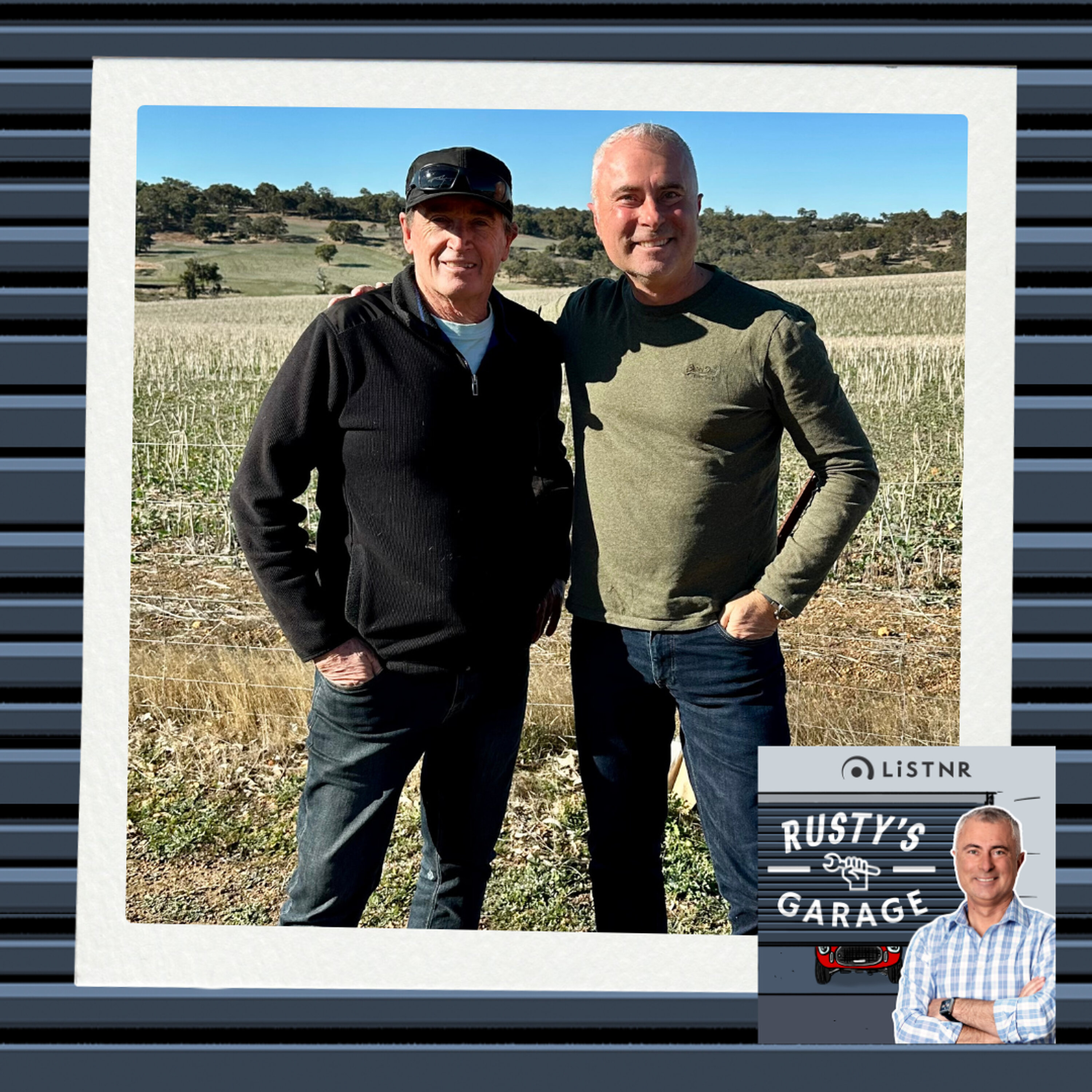
Michael Dowson | Part 2 - World class talent and two wheeling a Toyota
About this episode
Michael Dowson’s Part 2 swings from bike racing roots to two-wheeling a Toyota Corolla. The conversation revisits production endurance racing, tire-and-throttle strategy, and how riders and engineers evolve setups to cut lap times. It also tracks Dowson’s path through Yamaha and Kawasaki development work, plus his later shift into car racing via Toyota’s “star search.” Wet-weather touring-car drama, edge-of-grip driving, and the “on two wheels” Corolla photo keep the story grounded in real risk and real technique.
Conquering the Castrol 6 hour and success in the legendary Swann Series. Making his mark internationally at events like the famous Suzuka 8 hour.
Doing double duty - the Australian Motorcycle Grand Prix and the Bathurst 1000 - in the same season!
Nearly rolling a Corolla and how it became a national marketing campaign.
Going from Yamaha to Kawasaki and reflections on that move now with the benefit of time.
Quitting out of frustration in Japan but not before proving a point.
And how he quietly helped introduce Mick Doohan to some well connected types, a pivotal moment as ‘Mighty Mick’ headed for Honda and a string of 500cc World Titles.
Plus ‘Golf Buggy Derbies’ and the gripping tale of a Great White Shark!
Straight talk, some laughs and wonderful recollections from a diversely talented world class racer.
Head to Rusty's Facebook, Twitter or Instagram and give us your feedback and let us know who you want to hear from on Rusty's Garage
See omnystudio.com/listener for privacy information.
Metzler
"I think it was a Metzler, a rear tire off an RZ 350. So it was a rear tire for the RZ 350."
Metzeler is a tire brand used on motorcycles. The point here is that the right tire choice can give better grip and help the bike stay fast for the whole race.
Metzeler (spoken here as “Metzler”) is a motorcycle tire brand. This segment treats the tire as a performance component—specifically grip and how long it can last—because the team’s strategy depends on the tire doing the entire race.
throttle open
"Again, whoever's got the throttle open the longest without being in the pits or off the throttle is going to win."
“Throttle open” means keeping the gas pedal/throttle held far down. The faster you can stay on it without stopping, the more time you save in a race.
“Throttle open” refers to keeping the rider’s throttle position wide enough to maintain high engine output. In racing, the team is describing a strategy of staying on the throttle as long as possible without needing to pit, because that directly affects lap time and overall race pace.
changing geometries
"So that sort of thing, suspension abilities, changing geometries."
“Changing geometries” means adjusting how the bike is set up so it handles differently. Small setup changes can make the bike turn in better and feel more stable, especially when tires are the limiting factor.
“Changing geometries” refers to adjusting motorcycle setup angles and alignment—like steering geometry and suspension-related settings—to alter handling. Teams do this to match tire grip, track conditions, and rider preference, improving stability and turn-in across long races.
Mercedes
"And I'd got a rental car and Kevin had his Mercedes. And we both pulled up and stayed at this hotel."
Mercedes is a luxury car brand from Germany. Here, it just means Kevin had a Mercedes as their ride.
Mercedes-Benz is a German luxury car brand known for engineering-focused drivetrains and a wide range of passenger cars and performance models. In this segment, it’s mentioned as Kevin’s car during a trip to a hotel.
pits
"So we get back and I'm not a big drinker. So I'm beside myself, get up with a hangover in the morning and I'm so laying in the pits basically in amongst the bikes."
The pits are the team area at a race track where mechanics and riders hang out and get ready. It’s where bikes are lined up and worked on.
In motorsport, the pits are the working area beside the track where teams prepare bikes/cars, do quick servicing, and coordinate before and during sessions. The speaker says they’re “laying in the pits…in amongst the bikes,” which places them in the team’s active area.
Yamaha Australia
"And long behold, the main guy from Yamaha Australia come in, George Pine. George comes in and he goes, you boys, come out here, I want to talk to you."
Yamaha is a well-known motorcycle brand. “Yamaha Australia” here means the local Yamaha team/people who were involved with the event.
Yamaha is a major Japanese motorcycle and powersports manufacturer, and “Yamaha Australia” refers to its local organization/representation. The segment describes a Yamaha Australia representative (George Pine) coming into the pits to talk to the riders.
motorbike
"And straight away, we thought, oh, no, he knows we've been out with Trevor Bloody Flood. Floody must have told him. And I'm comatised in no no no way I should be riding a motorbike."
A motorbike is just a motorcycle. The speaker is saying he shouldn’t be expected to ride one while he feels awful.
A motorbike is a motorcycle—two-wheeled vehicle typically used for racing or street riding. Here it’s used in the context of the speaker realizing they “should be riding a motorbike” despite being hungover and in the pits.
Megatrack
"90 percent humidity, 40 to 45 degrees Celsius. [664.5s] Megatrack. Megatrack."
“Megatrack” sounds like the name of the race track they were talking about. It’s basically the venue label for that event.
“Megatrack” is a track-day/venue branding term used for a specific racing circuit or track configuration. In this context, it’s being used as the name of the venue where the “eight hour” event took place.
production bike
"But the first year we went, we were on a pretty much a production bike. [706.2s] It's just a road bike with the lights on it."
A “production bike” is basically a motorcycle that starts life as a normal street bike you could buy. For racing, they may tweak it, but it’s still based on the regular model.
A “production bike” means a motorcycle that’s based on a street-legal model sold to the public, rather than a purpose-built race machine. In racing, this usually implies fewer modifications and closer ties to the original road-bike design.
endurance style of racing
"Nice. So yeah, it was it was pretty damn cool to be second on the to the podium with all these people and knowing that we were on a bike that wasn't competitive was extremely valuable to us. I think from from the Japanese point of view and as and also for us, we really I think that really helped us in the future for the Japs to say, well, you know, these guys are obviously pretty good. Did you enjoy the endurance style of racing?"
Endurance racing is when you race for a long time, not just a short sprint. The trick is staying consistent and keeping the bike healthy the whole way.
Endurance racing is a format where the goal is to keep a bike running fast and reliably over a long time or distance, often with multiple riders. Strategy matters as much as outright speed—tires, fuel, mechanical stress, and consistency are key.
Toshiba
"So at that point in 86, we'd already done quite a bit of endurance racing. Kevin and I in the Toshiba year in 95, 85, we already done all the main production races in Australia."
Toshiba is a company that sponsors racing. When someone says “the Toshiba year,” they usually mean the season when Toshiba was the sponsor.
Toshiba is referenced as a sponsor tied to the speaker’s racing involvement (“the Toshiba year”). In motorsport, sponsor years often correspond to specific team partnerships and livery/branding rather than a change to the motorcycle itself.
Honda
"And that happened a lot, you know, talking to Mick Dorn in his factory years [822.5s] with the the Hondas, you know, that I think he was with Wayne Gardner"
Honda is a well-known motorcycle brand. Here it’s mentioned because the riders were working with Honda bikes and their setups in racing.
Honda is a major motorcycle manufacturer that competes heavily in racing. In this segment, the speaker references working with Hondas in the context of endurance racing and team setup compatibility.
Wayne Gardner
"with the the Hondas, you know, that I think he was with Wayne Gardner [827.8s] and they had pretty much polar opposites in regards to requirements on the bikes."
Wayne Gardner is a famous motorcycle racer from Australia. The host brings him up to describe the kind of top-level factory racing setup being discussed.
Wayne Gardner is an Australian motorcycle racer known for success in Grand Prix racing. The speaker mentions him in connection with factory Honda years, implying a high-level racing environment and team context.
endurance racing
"And I think that is a huge issue for endurance racing. [850.1s] If you've got two riders that can't ride each other's riding style or bike setup, [856.4s] you know, you can only think that that's going to harm them at some point in the race."
Endurance racing is long-duration racing where the bike and riders have to stay consistent for a long time. The point here is that if two riders don’t work well together—especially with how they set up the bike—it can cause problems later in the race.
Endurance racing is a motorsport format where riders/teams compete over long durations, requiring consistent performance and coordination. The speaker highlights that if two riders can’t match each other’s riding style or bike setup, it can hurt the team during the race.
bike setup
"And I think that is a huge issue for endurance racing. [850.1s] If you've got two riders that can't ride each other's riding style or bike setup, [856.4s] you know, you can only think that that's going to harm them at some point in the race."
Bike setup means how a rider tunes the motorcycle to feel right—like suspension and other adjustments. If two riders want different setups, the bike may not work well for both during the race.
Bike setup refers to the specific adjustments made to a motorcycle to suit a rider—such as suspension settings, ergonomics, and other tuning choices. In endurance racing, mismatched setup preferences between riders can make the bike harder to ride consistently across stints.
Kawasaki
"It's a quite a good association, quite a close association with Yamaha [872.7s] But somewhere here an opportunity emerges with Kawasaki, doesn't it? [876.1s] Can you tell me about that?"
Kawasaki is another big motorcycle brand. The speaker is saying an opportunity came up with Kawasaki after Yamaha.
Kawasaki is a motorcycle manufacturer that competes in major racing series. The speaker frames Kawasaki as the next opportunity after a close association with Yamaha, suggesting a manufacturer/team change that affects bike setup and rider compatibility.
Wayne Rainey
"But getting back to what happened with 1991. So I really thought I had a good year. But I also knew that Wayne Rainey, Kevin John Kaczynski, there was a bunch of guys that were already in the top seats for Europe."
Wayne Rainey is a famous motorcycle racer who was at the top of the sport. Here, the speaker is saying that some riders were already performing at that elite level.
Wayne Rainey is a legendary American MotoGP-era motorcycle racer, known for dominating the sport in the early 1990s. In this context, he’s referenced as one of the riders already competing at the very top level.
Kevin John Kaczynski
"So I really thought I had a good year. But I also knew that Wayne Rainey, Kevin John Kaczynski, there was a bunch of guys that were already in the top seats for Europe. And I knew that in my situation, I was going to miss out."
Kevin John Kaczynski is a motorcycle racer. The speaker brings him up to show that other riders were already getting the best opportunities in Europe.
Kevin John Kaczynski is a motorcycle racer mentioned here as part of the group already positioned for top rides in Europe. The speaker uses him to illustrate how competitive the “top seats” were at the time.
Australian Grand Prix
"had a really good year, ninth to me at the at the Australian Grand Prix. To me as a rider, it wasn't very good. I look back at it now and I think with all things looking at the past,"
The Australian Grand Prix is a big race in the MotoGP season. Where you finish can help your reputation and chances of getting picked up by better teams.
The Australian Grand Prix is a major motorcycle racing event on the MotoGP calendar (and historically also hosted other Grand Prix classes). Finishing position there matters because it’s against the same top field that influences rider rankings and team interest.
MotoGP
"it wasn't a bad result, but I wanted to be able to be for me to feel like I was going to get a chance to go to Europe. I would need to be knocking on the door of top five and being there, you know, second or two of the of the front guys to be considered from all the what normally happens with MotoGP now, even now,"
MotoGP is the highest level of professional motorcycle racing. The riders who do best get noticed by the top teams and often get better opportunities because of their results.
MotoGP is the premier class of motorcycle road racing, run by the FIM and organized around factory-backed teams and top-tier riders. Rider performance strongly affects which teams recruit you, because the best results translate into better contracts and ride opportunities.
Acosta
"And probably the best way to the guy to explain now is Acosta. Yes. Now, he's he's been a standout. He's blown all his teammates away. He's been at a different level."
Acosta is a top MotoGP rider (Pedro Acosta). The speaker is saying that when one rider is clearly better than everyone else, teams all want to sign them.
Acosta refers to Pedro Acosta, a standout MotoGP rider who has been described as outperforming his teammates and attracting major interest from multiple teams. The speaker uses him as an example of how a “standout rider” can rapidly elevate their career prospects.
Superbike
"[1218.4s] What do I want to do? [1219.1s] He said, what do you want to ride a 250? [1221.5s] Do you want to ride a 500? [1222.9s] Do you want to ride a Superbike? [1224.5s] What do you want to do?"
A superbike is a very fast, high-performance motorcycle. It’s the kind of bike you’d associate with racing and serious speed, not a casual commuter bike.
A superbike is a high-performance motorcycle class built for speed and track use. In everyday conversation, it usually means a sport-oriented bike with strong acceleration and advanced braking/suspension compared with typical street motorcycles.
Kawsaki
"So I've signed with Kawsaki. So be it or be it. Well, it was a good and a bad thing."
This is referring to Kawasaki, a motorcycle company. The rider says he signed with them and went to Japan to work with their team.
Kawsaki appears to be a transcription of Kawasaki, a major Japanese motorcycle brand. The speaker says he signed with them and then traveled to Japan with Kawasaki’s team members.
750
"So to me, it sounded like they just wanted me to be in the 750 thing because I've done good in Australia, in Japan with Yamaha three years earlier."
“750” is shorthand for a motorcycle with about a 750cc engine. In racing, that engine size puts the bike into a specific class, which changes what kind of setup and development the team focuses on.
Here, “750” refers to a 750cc motorcycle class, where the engine’s displacement is about 750 cubic centimeters. In racing, these displacement-based classes strongly affect the bike’s design, gearing, and how teams develop performance.
250 Grand Prix bike
"I think that they said, well, we'll throw the little bait out, saying there's a 250 Grand Prix bike for you to develop. But all they really after was developing their 750."
A “250 Grand Prix bike” refers to a smaller-displacement Grand Prix racing class (about 250cc). In that era, teams often recruited riders for one class but used them to develop a different class bike’s performance.
Formula One bike
"A Formula One bike was called back in those days. So I did that for two years."
He’s not talking about Formula 1 cars. “Formula One bike” here means a top racing class for motorcycles with specific rules that teams build the bike around.
In this context, “Formula One bike” is a motorcycle racing category name from that period, not the modern Formula 1 car series. It indicates a top-level, rules-defined class of bikes where development is tightly tied to the regulations.

TZR 250
"I finished for the day and he's on a TZR 250. I'm pretty sure. And he was out there amongst his group doing his qualifying for the weekend."
A TZR 250 is a Yamaha sport motorcycle. It’s built for fast riding on tracks, and here it’s the bike the rider is using during qualifying.
The Yamaha TZR 250 is a 250cc sport motorcycle known for being a high-revving, track-focused machine. In this story, it’s the bike the rider is using while qualifying and pushing hard on the circuit.
high speed left hander
"So the back straight and then you've got a high speed left hander and the back before you go into that tight stuff around the hill."
A high-speed left turn is a corner you’re supposed to go through fast. Going fast leaves less room for error, so if the bike loses grip, things can go wrong quickly.
A high-speed left hander is a left-turn corner designed to be taken quickly, with less braking and more sustained cornering forces. The description matters because it sets the risk level—at high speed, small mistakes can cause sudden loss of traction.
drifted sideways
"And he's come through this turn, lost it, drifted sideways, hit this like a berm on the outside of the track."
Drifting sideways means the bike or car is sliding sideways instead of gripping straight. It can be controlled, but it’s risky—especially on a motorcycle—because you can lose traction and crash.
Drifting sideways is a driving/riding technique where the vehicle intentionally over-rotates so the tires slide laterally while the rider tries to maintain control and direction. On a motorcycle, it’s a high-skill move because balance and traction are constantly changing.
berm
"And he's come through this turn, lost it, drifted sideways, hit this like a berm on the outside of the track."
A berm is a raised mound along the edge of a track. It’s there to manage runoff, but if you hit it at the wrong angle, it can throw the bike or car.
A berm is a raised, banked section of trackside material—often dirt, gravel, or asphalt—used to shape runoff and help manage how vehicles leave the racing line. In crashes, hitting a berm can redirect or slow the vehicle, but it can also launch it if the impact angle is wrong.
Cartwheeled through the air
"And both he and the bike of Cartwheeled through the air at pretty much whatever speed he went into the corner at before he had the brakes."
That phrase describes a crash where the bike and rider get launched and start flipping while airborne. It usually means the impact was strong enough to send them off the track.
“Cartwheeled through the air” describes an airborne, tumbling crash where the rider and bike rotate after leaving the ground. The key idea is that the impact and launch forces were large enough to make the bike leave the track and flip.
traction
"But they can play fundamentally beyond the limit [2177.7s] is what's above traction. [2182.0s] Just describe that."
Traction is how well the tires can “hold on” to the road. When you’re pushing beyond the traction limit, the tires start to slip, and it takes real skill to stay in control.
Traction is the grip force between tires and the surface that lets a vehicle accelerate, brake, and corner without slipping. The host is describing riding/handling “beyond the limit” of available traction, where control depends on skill and vehicle dynamics.
beyond the limit
"But those boys and there's a few of them that do this thing [2173.7s] that end up playing, I called it rarefied air. [2176.3s] You gave it a better description than that. [2177.7s] But they can play fundamentally beyond the limit"
“Beyond the limit” refers to operating past the point where tires can provide stable grip for the vehicle’s current speed, steering angle, and acceleration/braking forces. In motorsport terms, it often means the rider is working at the edge of tire slip and balance rather than staying comfortably within grip.
limited contact patch
"But to do it on two wheels is a completely different ballgame. [2195.0s] Limited contact patch, blah, blah, blah."
It means the tire only touches the ground in a small area. With a motorcycle, that small grip area has to do everything—so it’s easier to lose traction or stability.
A contact patch is the small area of tire rubber that touches the road. On two wheels, that patch is much smaller per tire than in a car, so grip is easier to overwhelm and balance becomes harder.
chassis engineers
"It was I'd be speaking with Jeremy Burgess and the and the chassis engineers [2317.4s] and the engine engineers just telling them what I'd like that."
Chassis engineers are the people who help design how the vehicle handles. They focus on how it feels when you turn, brake, and accelerate so the driver can control it better.
Chassis engineers work on the vehicle’s structure and handling systems—things like suspension geometry, stiffness, and how the car or bike responds to steering and braking. Their goal is to make the platform stable and predictable so riders/drivers can push harder.
engine engineers
"It was I'd be speaking with Jeremy Burgess and the and the chassis engineers [2317.4s] and the engine engineers just telling them what I'd like that."
Engine engineers work on the motor and how it delivers power. In racing, they help make the bike or car respond the way the driver wants when they accelerate.
Engine engineers tune the power unit—how it makes power and how it delivers it. In racing, that can include mapping, throttle response, and overall performance characteristics that match what the rider wants.
Australian motorcycle Grand Prix
"In describing before about contesting the Australian motorcycle Grand Prix, [2337.7s] getting the chance to do that finishing ninth and so on. [2339.9s] You have a rare statistic in that year,"
This is a major motorcycle race in Australia. Riders earn points based on where they finish, and “ninth” is a real result against other top competitors.
The Australian motorcycle Grand Prix is a MotoGP event where riders compete on race motorcycles. Finishing positions like “ninth” matter because they reflect points-scoring performance against the full field of top riders.
Australian Touring Car Championship
"You have a rare statistic in that year, [2342.1s] and that is that you got to race a car in the Australian Touring Car Championship. [2346.4s] And I think even did the Bathurst 1000 that year. Did you not?"
This is a high-level Australian race series for cars that are based on production models. Driving in it is different from motorcycle racing because the cars are heavier and handle differently.
The Australian Touring Car Championship (now known as Supercars) is a top-level racing series for production-based touring cars. Racing there is a different skill set than MotoGP because you’re dealing with heavier cars, different tire behavior, and different racecraft.
Bathurst 1000
"[2346.4s] And I think even did the Bathurst 1000 that year. Did you not? [2348.6s] Yeah. So that's amazing, mate. [2350.1s] Firstly, how did the chance to go and play on the four wheel side?"
The Bathurst 1000 is a very well-known long-distance race in Australia. It’s hard because you have to keep the car working well for a long time, not just go fast for a few laps.
The Bathurst 1000 is a famous endurance race held at Mount Panorama in Australia. It’s known for long stints, pit strategy, and the challenge of keeping a car consistent over many hours.

Toyota Corolla
"... has just handed me this awesome shot of you in a Corolla. That thing is within a whisker of rolling over."
The Toyota Corolla is a small, everyday car made for regular commuting and errands. It’s popular because it’s generally easy to live with and simple to maintain. When someone mentions a Corolla in a story, they’re usually talking about how it performed in that particular driving situation.
The Toyota Corolla is a compact, everyday passenger car known for being practical and widely used. It often comes up in conversations because it’s a common choice for daily driving, so people may discuss its real-world behavior, durability, and how it handles in everyday situations. In a podcast context, it’s also the kind of car that can be used to illustrate driving dynamics or a specific moment on the road.
on two wheels
"That thing is within a whisker of rolling over. [2368.6s] It is on two wheels. [2369.9s] Safe as a judge, mate. Safe as a judge."
“On two wheels” means the car or bike is balancing on only two tires. It’s dangerous because if the balance shifts, it can tip over quickly.
“On two wheels” describes a vehicle balancing on just two tires instead of four. It usually happens during aggressive cornering, launches, or stunts, and it’s risky because small changes in throttle, steering, or traction can trigger a rollover.
Formula Group C production cars
"[2400.7s] So they put all these people together to drive a Formula Group C production cars [2405.7s] at certain events around Australia. [2408.0s] So you'd be invited, they'd fly you in, give you a suit, you drive this car."
“Group C” is a set of racing rules for cars that are based on regular production models. Teams can modify them for racing, but they still start from a road car.
“Group C” refers to a specific Australian racing category/ruleset for production-based cars. The “production cars” wording means the cars were derived from models sold to the public, but modified to meet the category’s competition rules.
Johnny Faulkner
"[2444.1s] and they think, well, you're compatible, you're competitive, [2447.5s] will put you in the group to have a crack at driving with Johnny Faulkner. [2452.9s] In the other Toyota Corolla in the Touring Car Championship."
Johnny Faulkner is a racing driver. Here, he’s the experienced driver you’d get to race with if you were selected through the program.
Johnny Faulkner is a well-known Australian touring-car driver. In this segment, he’s the established driver the program is trying to place new talent alongside in a Toyota Corolla.
wet weekend
"And it was a wet weekend. [2502.1s] I think it was on Friday or I think it was Friday afternoon."
A “wet weekend” means the track was wet during the event. When it’s wet, cars don’t grip as well, so driving has to be smoother and more careful.
A “wet weekend” means the track conditions were damp or rainy across the event, which changes grip and braking behavior. In touring-car racing, that typically increases the importance of tire choice, line choice, and smooth throttle/brake inputs.
grid
"I think it was on Friday or I think it was Friday afternoon. [2505.3s] I was third on the grid amongst the Sierra's because it was wet."
In racing, the grid is the starting order/positioning of cars for the race. Being “third on the grid” means he started near the front, which matters even more on a wet weekend where early track position can help avoid traffic and hazards.
qualifying
"And qualifying, I think, on Saturday, [2538.1s] still wet and all the guys like to have their throttle"
Qualifying is the session where drivers set their fastest lap times to determine starting positions for the race. A wet track can make qualifying especially tricky because grip changes lap to lap, so drivers often need to balance speed with control.
brake
"still wet and all the guys like to have their throttle [2543.7s] and their brake and their clutch pedals, just shiny metal."
The brake pedal slows the car down. When the track is wet, braking has to be smoother because the tires don’t grip as well.
The brake pedal is the driver’s main control for slowing the car, especially when setting up for turns. In wet conditions, braking is often more delicate because less tire grip means the car can lock up or slide if you brake too hard.
clutch pedals
"still wet and all the guys like to have their throttle [2543.7s] and their brake and their clutch pedals, just shiny metal."
The clutch pedal is used to change gears. It helps the car shift smoothly instead of jerking when you’re driving quickly.
A clutch pedal is used to disengage the engine from the transmission so the driver can change gears smoothly. In a race car with a manual gearbox, proper clutch use helps prevent drivetrain shock and keeps acceleration consistent when you’re pushing hard.
five point harness
"And, you know, when I saw him getting in their car, [2550.9s] with the five point harness on, this is still wet, though, you're talking."
It’s a racing seatbelt with five straps that hold you in place more securely than a normal seatbelt. That extra restraint helps you stay put when the car is sliding or if something goes wrong.
A five-point harness is a multi-strap seatbelt system used in racing that secures the driver at the shoulders, hips, and between the legs. It helps keep you firmly in position during hard cornering and impacts, reducing the chance of being thrown around in a crash.
pole
"Anyway, they said, man, you qualified on pole. [2597.8s] So you're in."
Pole means you start the race from the very front. It usually comes from having the fastest time in qualifying.
Pole position is the starting spot at the front of the grid, awarded to the driver with the fastest qualifying lap. Starting from pole can be advantageous because you’re less likely to get stuck in traffic at the start and you can control the early pace.
drifting sideways
"So here I am drifting sideways through the kink full throttle."
Drifting is when a driver intentionally makes the car slide sideways while still trying to keep it under control. It’s not an accident—done right, it’s a controlled maneuver.
“Drifting” is a driving technique where the car is intentionally steered so the rear (or overall car) slides sideways while the driver maintains control and keeps speed. It’s commonly done in motorsport and requires throttle and steering coordination to keep the slide stable.
full throttle
"So here I am drifting sideways through the kink full throttle."
Full throttle means the driver is pressing the accelerator all the way down. That tells the engine to make as much power as it can.
“Full throttle” means the driver has opened the throttle to its maximum position, commanding the engine to deliver maximum power (subject to traction and engine limits). In drifting or sliding situations, full throttle can help maintain wheel speed and slide angle.
kink
"So here I am drifting sideways through the kink full throttle."
On a race track, a “kink” is a quick bend or twist. It can feel sudden, and it can make the car harder to control at speed.
A “kink” is a short, usually fast change in direction on a track—more abrupt than a sweeping corner but not a full turn. Kinks often unsettle the car’s balance, so they can be tricky during high-speed cornering.
Lakeside
"Round three of the 1989 Australian Touring Car Championship at Lakeside was originally scheduled for early April, but it was wet, as Dawson said."
Lakeside is a race track in Australia. In this episode, they’re talking about a specific 1989 touring car race there that got flooded because of heavy rain.
Lakeside refers to the Lakeside circuit used for Australian touring car racing. It’s mentioned here in the context of Round 3 of the 1989 Australian Touring Car Championship, where wet weather led to flooding and a track that became unusable.
track flooded
"So much so, the lake eventually overflowed and the track flooded,"
When the track is flooded, there’s water on the racing surface. Tires can lose grip, so cars become much harder (and riskier) to control.
A “flooded” track means standing water covers the racing surface, dramatically reducing tire grip and increasing the risk of hydroplaning. In motorsport, that can force delays, cancellations, or changes to how the race is run because cars can’t safely maintain traction.
class cars
"The Toyota team's Corollas, understandably, because they were class cars, actually qualified 24th and 25th"
“Class cars” means the cars are competing within a defined class (a ruleset) inside the overall race event. That typically affects what modifications are allowed and how cars are grouped for fair competition.
drier weather
"actually qualified 24th and 25th when they came back in drier weather a fortnight later"
If the track is wet, tires don’t grip as well. When it gets drier, cars can usually go faster because the road surface is more predictable.
In motorsport, “drier weather” signals a track-condition change that can dramatically improve grip and lap times. That’s why qualifying results can shift when sessions are re-run after rain or wet conditions.
Cams
"Thankfully, everyone was OK, but Cams launched an inquiry into the various incidents. Cams is now known as Motorsport Australia."
Cams (now Motorsport Australia) is the organization that runs and regulates racing in Australia. They investigate crashes and incidents after events.
Cams is the former name of Motorsport Australia, the governing body that oversees Australian motorsport events and safety/investigation processes. In this segment, it’s mentioned because it launched an inquiry into the incidents.
Motorsport Australia
"Thankfully, everyone was OK, but Cams launched an inquiry into the various incidents. Cams is now known as Motorsport Australia."
Motorsport Australia is the main racing authority in Australia. It’s the group that handles rules and investigations for racing events.
Motorsport Australia is the Australian motorsport governing body, responsible for sanctioning events and coordinating safety and investigations. The episode uses it to clarify what “Cams” refers to now.

Andrew Medici Sierra
"The touring car race was actually stopped because of a huge accident and fireball involving Andrew Medici Sierra, Glenn Seton, the John Lusty entry and Murray Carter were part of that story, too."
The Ford Sierra is a car model that was used in racing. In this story, Andrew Medici’s Sierra is part of a big crash and fireball incident.
The Ford Sierra is a classic European touring-car platform, and in this segment it’s specifically tied to Andrew Medici’s entry. Mentioning the Sierra here matters because it anchors the story in a particular era of touring-car racing where the Sierra was a common competitor.
fishtails
"Dawson then fishtails in the AE82 Corolla from the kink to almost the carousel at Lakeside, taking out the meter markers, as he said,"
“Fishtailing” means the back of the car starts sliding and wagging left and right. It usually happens when the tires lose grip, making the car hard to keep pointed straight.
“Fishtails” describes a loss of rear traction where the car’s rear swings side-to-side, often caused by sudden throttle/braking inputs, low grip, or poor weight balance. In race reporting, it’s a quick way to convey that the car became unstable rather than just slowing down.
Pit Lane
"which you get a glimpse of damaged back in Pit Lane on the seven broadcast."
Pit Lane is the area beside the track where teams service cars during a race. It’s referenced here because the host says viewers can see the Sierra’s damage from the broadcast angle taken in Pit Lane.
left foot braking
"And I was very much a part of left foot braking. Left foot braking was me because that allowed me to manage the car at this period beyond traction."
Left foot braking is when you brake with your left foot instead of your right. Some racers do it so they can keep the car balanced and still control the gas at the same time.
Left foot braking is a driving technique where the driver uses the left foot to press the brake pedal while the right foot manages the accelerator. It can help with smoother throttle/brake balance and keeping the car stable when you’re trying to control traction at the limit.
heel and toe
"And you got to do the old foot throttle with your right foot. Heel and toe. Heel and toe you talk about. Is that what you mean or?"
Heel-and-toe is a race driving move used when slowing down and downshifting. You brake and “tap” the gas at the same time so the engine speed matches the new gear and the car doesn’t jerk.
Heel-and-toe is a downshifting technique (typically in a manual or sequential gearbox) where the driver uses the right foot to brake while “rolling” the heel to blip the throttle with the same foot. The goal is to match engine speed to the lower gear so the car stays smooth and stable under braking.
pit in next lap
"So I come in, they give me the pit sign. [3182.1s] So right, I pit in next lap. [3184.1s] And at the end of the stat straight, when they give me the pit in sign,"
It means the team told the driver to pull into the pits on the very next lap. In endurance races, the timing of pit stops matters a lot.
“Pit in next lap” refers to the driver entering the pit lane on the following lap, based on the team’s timing and race strategy. This is common in endurance formats where stops are planned around traffic, tire life, and driver stints.
fully adjustable
"You know, they initially, when we rode and we weren't happy, it turned out just to be adjustment. The bikes were very capable, fully adjustable. And at that time, we had the full respect"
“Fully adjustable” means the bike could be tuned with settings you can change. In racing, that helps you dial in the handling so the bike feels right to the rider.
“Fully adjustable” means the motorcycle’s setup could be tuned using multiple adjustment points to change how it rides and handles. That matters in racing because small setup changes can correct issues like stability, turn-in, and rider comfort.
factory MS1 division
"And at that time, we had the full respect from the factory MS1 division boys to allow us to do any adjustments. And a thing had, like we were racing 750s in Australia"
“MS1 division” sounds like a particular racing team/category within the factory program. The point is that the factory crew allowed them to change the bike’s setup.
“MS1 division” appears to be a specific internal or series category within Yamaha’s racing structure at the time. The speaker is saying they had support from the factory team in that division to make setup changes.
two strike outboard marine engines
"Because a pretty, pretty cool bunch of stuff, including [3801.8s] was all two strike outboard marine engines."
A two-stroke engine makes power with every two piston movements, so it can feel punchy and simple. “Outboard” just means the engine is mounted on the back of the boat instead of inside it.
“Two-stroke” marine engines are combustion engines that complete a power cycle in two strokes of the piston, rather than four. “Outboard” means the engine is mounted on the back of the boat, typically as a self-contained power unit.
Suzuka
"[3818.5s] The race, the place you've talked about. [3821.9s] Suzuka and some of the special memories there."
Suzuka is a well-known race track in Japan. It hosts major motorcycle and car races, so racing there is a big deal.
Suzuka refers to the Suzuka Circuit in Japan, a famous motorsport venue known for its challenging layout and high-speed sections. It’s widely used for major motorcycle and car racing, so “special memories” there usually points to top-level competition.
Request an Explanation
Heard something you'd like explained? We'll add it to this episode.
Sign in to request explanations for terms you heard.
Want to learn more?
Browse our glossary for plain-English explanations of automotive terms, jargon, and concepts.
Help improve this episode
See something that's not quite right? Our annotations are AI-generated and can sometimes miss the mark. Click the flag icon on any annotation to suggest a correction.