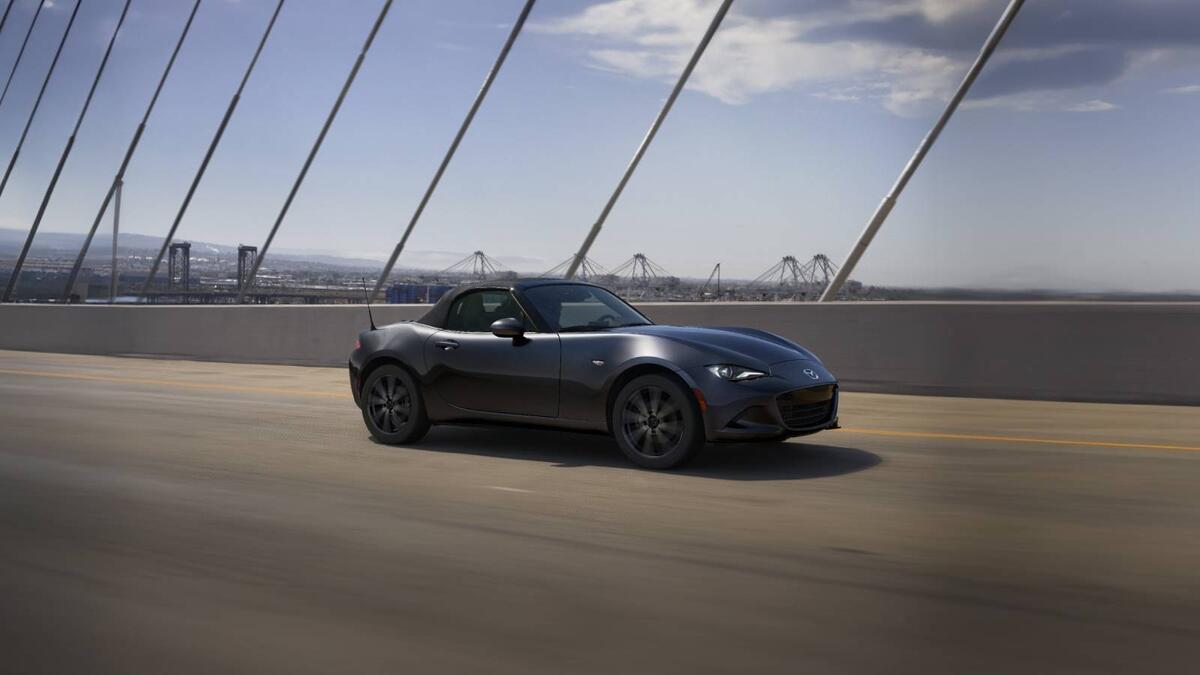
The Mazda MX-5, also known as the Miata, is a small two-seat sports car. It’s popular because it’s light and fun to drive. The podcast references the MX-5 Cup, which is a racing series that uses these cars.
The entry corner is the first part of a turn where you set up braking, turn-in, and initial steering. How you enter determines your speed and traction through the rest of the corner.
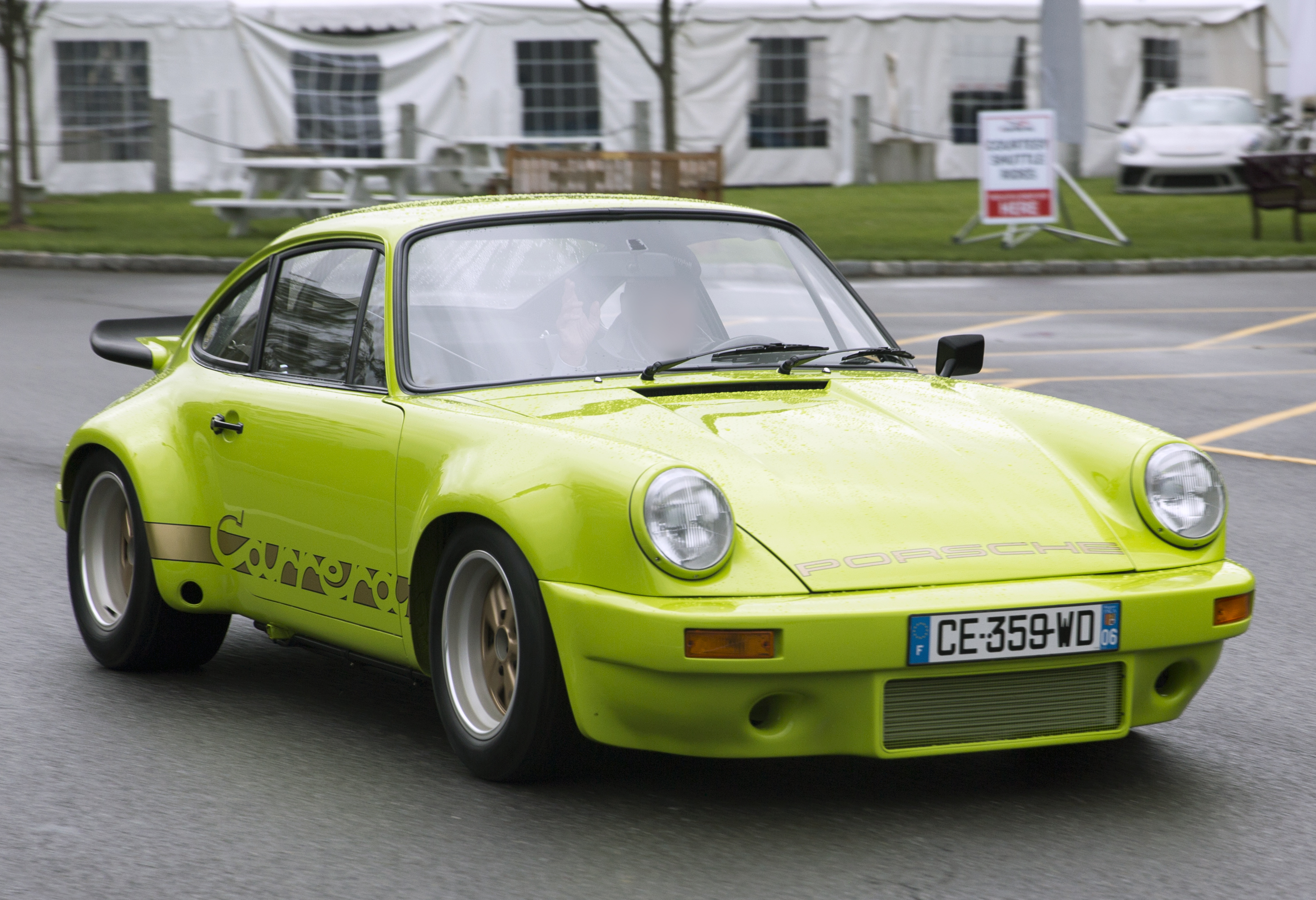
The Porsche Carrera RS is a high-performance version of the 911. It’s the kind of car people talk about when they’re discussing Porsche’s racing history. In this episode, it’s brought up alongside Porsche racing events.
Car
Porsche 963
The Porsche 963 is a purpose-built Porsche race car used in endurance racing. Here, they’re talking about whether the team had to make certain required changes to keep racing.
Concept
rule/tech updates
Race series sometimes require teams to change parts or software to match new rules. The hosts are saying a decision meant they didn’t have to do those required changes on the Porsche 963.
Aerodynamic upgrades are modifications that change how air flows around the car. The goal is usually more grip in corners and less resistance on straights.
Re-homologated means the race series re-approves the car’s setup. If the team changes parts, the organizers have to confirm those changes are still legal.
“Spares” are extra replacement parts teams keep on hand. If something breaks or wears out, they can swap it quickly.
Company
Imza Technical
Imza Technical is mentioned as the group that helps make the technical rules decisions. They’re involved in what parts and setups are allowed for racing.
BoP is a set of race rules meant to make different cars race more evenly. Race organizers may add weight or limit power so one car doesn’t automatically have an advantage.
Long Beach is the race location being used as a reference point. The hosts are saying the rules changed there first.
Term
16 kilo brick
A “brick” here is extra weight (ballast) that teams add because the rules require it. More ballast usually makes the car a bit slower and harder on tires. They’re saying one car had double the ballast of the other.
Term
8 kilo brick
The GDC car is carrying 8 kg of extra weight because of the race rules. Since it’s less weight than the other car, it may be able to accelerate and brake a little better. It also changes how the tires are used.
This is a technical breakdown after the race, put together by Michelin. They look at what the tires and cars did during the event. The hosts are pointing listeners to that analysis for more detail.
“Porsche Motorsport” is Porsche’s racing division, responsible for factory-backed competition programs and technical support. Here, the hosts say Porsche Motorsport is supporting GDC, implying additional engineering resources, development input, or logistics that can improve results. In endurance racing, manufacturer support often shows up as better setup guidance and faster iteration.
The “performance window” is basically the set of conditions where the car feels and grips the best. If updates widen that window, the car is less picky and can be made to work well on more tracks. It usually means easier setup and more consistent speed.
Rake is how much higher or lower the car sits at the front compared to the back. Changing it can change how much grip the car has, especially at speed.
It’s a stretch of races on the U.S. West Coast back-to-back. Teams plan around it because they have to travel and keep the car competitive at each track.
A “works driver” is a top driver backed directly by the car company’s own racing program. The episode is basically saying one driver isn’t as fast as the factory driver, but still did what was needed.
“GTPs” refers to a top-level prototype racing class. They’re saying the next time they’re racing against those cars, they want to confirm how much the EVO changes really matter.
“Burning” tires off means the tires wear out very quickly. That usually happens when the car is slipping too much—like spinning the wheels or sliding—so the rubber gets overheated.
“Medium” is the tire’s compound type—basically how soft or hard the rubber is. Softer tires usually grip sooner but wear quicker; harder ones last longer but may take longer to get up to temperature.
Grip means traction—how well the tires can “hold on” to the road. More grip helps the car go faster through turns and under acceleration without slipping.
“Speed advantage” means one car is going faster in a specific part of the track. Usually it’s because the tires and car setup let it keep more control at higher speed.
“Fuel strategy” is how teams decide when and how much fuel to run during pit stops to manage weight and avoid running out. In endurance racing, the timing of refueling affects lap times because more fuel means more mass, which can slow the car.
A “full fuel fill” means putting in a lot of fuel at the pit stop. That can make the car heavier at first, but it can help the team avoid extra stops later.
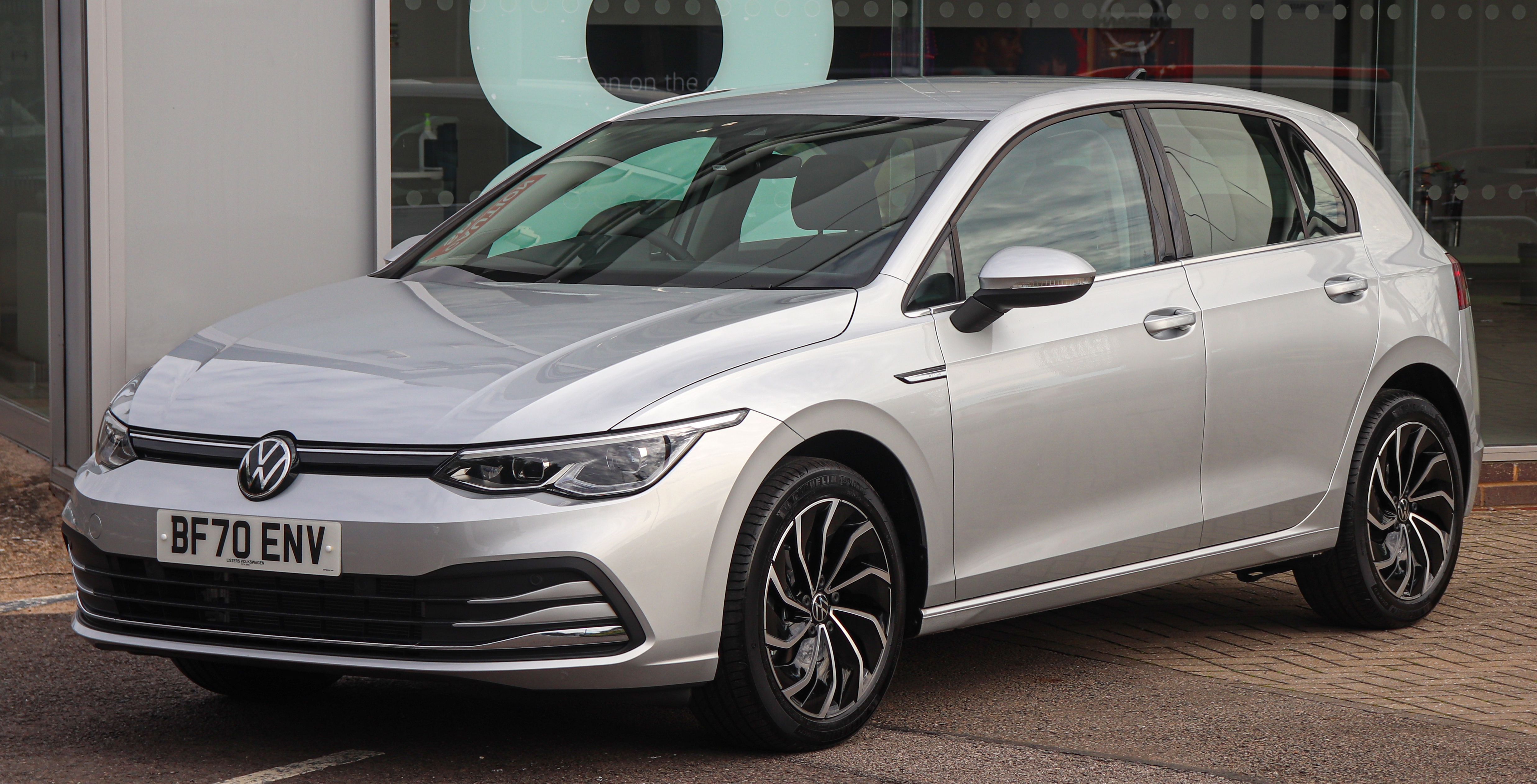
The Golf is a compact hatchback car. In this episode, it’s mentioned in a racing context with versions like “GTD Pro.” That suggests they’re talking about a specific performance setup used for competition.
A caution is when the race is slowed down because something happened on the track. Drivers and teams often change their strategy then, especially when deciding when to pit.
The effective race lead is the position that matters most for control of the race, accounting for pit stops and timing rather than just who is physically first at a given moment. In many endurance races, a team can “take the lead” by pitting at the right time and then manage the gap to stay ahead when the race resumes.
This is a race version of the Ford Mustang built for GT4 racing. GT4 cars are designed to be competitive but not as expensive as the top-tier race classes.
A “post-race penalty” is a time penalty applied after the race ends, usually after officials review incidents, rules infractions, or timing/scoring issues. A “28-second penalty” can drastically change finishing order because it’s added to the car’s race time, potentially dropping it behind others.
A safety car is a car that comes out during a race to slow everyone down when the track isn’t safe. It helps prevent more crashes until racing can start again.
A “corkscrew” is a track section made of twisting turns that can be tricky at speed. Here, it’s mentioned because the driver’s crash happened right after that part of the track.
The Honda Prelude is a sporty Honda coupe. People bring it up when they’re talking about how fast it is on a track compared to other cars. In this episode, it’s mentioned as not quite keeping up.
Super GT is a big Japanese racing series for cars based on real models. The hosts are also talking about which class (“GT 500”) and when the next race is.
The Shelby GT500 is a very powerful Ford performance car. It’s built for fast driving and is often used in racing contexts. The podcast mentions it when talking about upcoming Super GT events.
“The sharp end of the field” just means the very front of the competition—where the best drivers are battling. The point here is that the top cars are so close that tiny timing differences decide results.
In rallying, “stages” are the separate timed sections of the route. Your time on each stage adds up, so being a little faster (or slower) can change who’s leading.
A “stage commander” is an official who helps run a rally stage. They’re responsible for making sure the stage is organized and safe while the cars are competing.
The Jeep Commander is a midsize SUV made for everyday driving and rougher roads. The podcast brings it up while talking about rally events and stage work. That suggests it was used or discussed in that motorsport setting.
The World Rally Championship is the top level of rally racing worldwide. The hosts are saying modern tech and preparation have made the cars closer together, so races are decided by very small margins.
Pace notes are like a detailed game plan for the route. They tell the driver what corners and hazards are coming up and how fast to take them. Rally drivers use them so they can go quickly even on roads they don’t know well.
Tarmac rallies are rally races on paved roads. Because the surface is grippy and predictable compared to loose gravel, the tires and driving style have to be different. Teams usually prepare differently for tarmac than for gravel.
Hyundai is the car brand the team is talking about. They’re discussing how Hyundai’s rally cars and team are doing on different road surfaces. The brand’s progress is being used as a benchmark for expectations this season.
“Damage limitation” means trying to avoid making things worse when you can’t go as fast as you want. In rallying, that often means driving more carefully to prevent crashes or mechanical problems. The goal is to still finish and keep points instead of taking big risks.
Gravel rallies are driven on loose rocks instead of pavement. The tires can lose grip more easily, so drivers have to be careful with braking and steering. It often feels less predictable than tarmac, so the car and technique need to adapt.
Concept
break in the MX 5 cup schedule
This is talking about a gap between races. During that time, teams and drivers can reset and prepare better for the next round.
St. Petersburg here is where one of the races took place. Street circuits are usually narrow and bumpy, so it’s easier to make a mistake and harder to recover.
Pack racing is when lots of cars are bunched up and racing side-by-side. When you’re in a tight group, it’s easier to get caught up in other cars’ moves.
Daytona is a famous race track. Because it’s fast and cars run close together, drafting and positioning matter a lot.
Concept
P2
“P2” means finishing in second place (P = position). In race reporting, it’s a quick shorthand for where a driver placed relative to the rest of the field.
A drive-thru penalty means you have to go through the pit lane without stopping, usually at a limited speed. It makes you lose time compared to the cars around you.
A transponder is a small electronic tag used to track your lap times during a race. If it malfunctions, timing/scoring can get messed up.
Topic
middle-high
This sounds like a reference to another race track, but the exact name is unclear in the transcript. Different tracks require different driving styles.
“Diff” is short for differential, the gearbox component that allows the left and right wheels to rotate at different speeds while cornering. Race differentials are often tuned (and can be different between setups) to change traction and how the car rotates in turns.
Term
Multimatic suspension
Multimatic is a motorsport-focused brand known for designing and supplying advanced suspension systems and components. In racing contexts, “Multimatic suspension” usually implies a higher-end, track-oriented setup than what comes on a stock road car.
In racing, an engine being “sealed” means it’s locked down so teams can’t make internal changes beyond what the rules allow. Sealing helps enforce parity by preventing performance modifications that would otherwise be hard to police.
A “cup car” typically refers to a specific racing series’ homologated race car ruleset, where cars are built to a common spec within that competition. Compared with a “spec car,” the cup car often has different performance characteristics and setup allowances that change how you drive and race it.
A “spec car” is a race car built to a standardized ruleset where key components are controlled to keep competition closer. Because the hardware is more uniform, the driving challenge can shift from car-to-car differences toward mastering racecraft and tire management.
A sequential gearbox is a racing-style transmission where you shift step-by-step. It’s designed to help drivers change gears quickly and reliably during hard driving.
The BMW X5 is a larger family SUV made by BMW. It’s designed to be comfortable for daily driving, but some versions can be quick. The podcast mentions it in connection with racing activity involving an X5 entry.
Topic
X5 Cup race
They’re talking about a specific race called the X5 Cup. The main idea is how the racing works and what makes the driving challenging to watch and do.
Mid-corner speed means how fast you go while you’re in the turn. If the car doesn’t have a lot of power, you usually win time by keeping the car moving quickly through the middle of the corner.
“Floor it” means giving the engine full throttle. The speaker is saying that in this kind of racing, you can’t just mash the gas to recover from problems—you have to drive the corner correctly.
Topic
NASCAR open meal stuff
This is referring to open-wheel racing—cars where the wheels are exposed. The host is saying some drivers can switch from one kind of racing to open-wheel and still be quick.
In racing, people talk about a “ladder” where you start in smaller steps and work your way up. The point here is that this series is sometimes treated like an easy starting point, but the drivers are actually very good.
SRO GT4 is a type of sports-car racing organized by SRO. It’s meant to be a step below the biggest GT series, but it’s still competitive and requires real driving skill.
Mazda MX-5 Cup is a racing series where lots of drivers race the same basic kind of car (the Mazda MX-5). Since the cars are similar, it turns into a real test of driving skill—so it’s not “easy mode” just because it’s a feeder series.
In many racing series, you earn points based on where you finish each race. Later in the season, those points add up fast, so even a small difference in finishing position can matter a lot.
A hairpin is a very sharp, slow corner that turns the car back on itself. Drivers usually have to brake hard and be careful not to lose grip while turning.
LIVE
Thanks for downloading this podcast.
It's for personal use only and must not be broadcast, reproduced or used in any form without permission.
Tell your friends they can get their own copy wherever they get their podcasts.
The world's longest running motorsport magazine show.
Midweek motorsport.
News, features, special guests and analysis from the experts.
Formula 1, sports car and endurance racing, rallying, touring cars and bikes.
If it has wheels and an engine and they keep score, it's on midweek motorsport.
Hello everybody, it is just after 8 o'clock in the UK, that's 3 o'clock on the eastern
seaboard, 9 o'clock where I am here in the Ardennes because we are getting ready for
the spa round of the FIA world endurance championship this weekend.
And Friday and Saturday, remember the race is on Saturday.
I'll say that many times through series 21 episode number 17.
I'm slightly in the future, many of you even further in the future tuning in from Australia and New Zealand.
And on a packed four, packed short tonight Tim, I'll get my teeth in don't worry.
And on a packed short tonight Tim Grey who is up in London, we have what?
It's funny you should mention New Zealand because we're going there for our rally report later on in this hour of the show.
We have a big interview which is Justin Adaconis, I believe.
Justin Adaconis, yes, he's in school, but probably, oh you know he might be, it's still the afternoon.
Anyway, he's up in North Carolina and we'll be talking to him as the wheel and Mazda MX-5 Cup is taking a bit of a break at the moment
before we get them back at Mid-Ohio on the Inter package which is the next Mid-Ohio, the next Imsa race.
It's only a few weeks away, it's not a massive break.
They haven't raced in St. Pete's yet.
Oh that's true, yes.
We have Nick Diamond with us team by team review of the Grand Prix of Miami at the weekend.
Welcome to Miami.
I don't even need the Miami.
Oh there's lots to talk about there.
Yes, there was also a Porsche race in Miami, but not the second one.
Just the one, Mrs Wembley, not just the first one.
The second one, I think we are fairly convinced that the second one will get added to an already busy calendar at the still and six hours of the Glen, which is the weekend after Le Mans.
I was just about to say, if I was to put money on it, this would be happening at Watkins Glen.
The problem is, team, as you might well remember, and I realise we're eating into the bed here in the jungle,
the problem is that Porsches and Watkins Glen do not have the best relationship.
We've had some very, very big and destructive accidents there down through the years, but so hopefully it'll all go well with the new cars.
We've also had some races short and all cancelled due to thunderstorms as well, so maybe it's not the best place to rerun it.
Indeed, indeed so.
What else? Have we got a quiz shot?
By the way, the Pontus game show last week was brilliant. Have we got it again this week?
This week, because there's an IndyCar race on the road course at Indianapolis, we're going to be doing the answers, not Scott Dixon,
but Pontus will be back next week.
Oh, what's that? Right.
When I'll be in Germany.
Excellent.
We'll make the German pointless round, then.
Oh, OK, fine. I said Belgian this week.
See, I was not Scott Dixon this week.
All right, it is. Yes, sorry. Well, there won't be any Belgians in that, I wouldn't have thought.
But you never know. You never know.
And anything else?
No, lots of news.
Excellent. Always, always good.
And, of course, following us tonight is Historic Racing News. Tim will have more on that later in these two hours.
Very quickly, some parish notices. Hello to everybody.
Because we've gone over already.
A particular hello to our listeners in crew.
Hello, Sarah. Hello, Martin. I hope everything went OK.
With your check up today, Martin. Good luck on that.
Hello to Neil Gardner, who's been scribbling again this week.
That's what he says I see. He's creating endless art.
Brilliant stuff.
Hello to Chris Sucu, to Alex Orkin.
And Tom, Tom Marshallek. I haven't seen his name in. Is he in?
Is Jerry's he in tonight? I don't know.
I'd spectate him and got to move on, though.
Tim is shuffling his papers and looking over his spectacles at me.
At least he would be if he wore spectacles, which he doesn't.
But it is a devilware Prada 2 out at the moment.
So there's kind of a lot of looking over spectacles in this thing going on at the moment.
So let's play the jingle and get cracking.
And our top story involves two-wheeled motorsport,
which means we need to bring in our two-wheeled motorsport correspondence.
And I say good evening, Nick Damon.
Good evening, Tim. Good evening, John. Good evening.
I mean, everyone out there had listered land.
You've been on two-wheeled yourself this week, haven't you, Nick?
Yesterday? Yes.
I finally got the panning...
I've had the panning guy on the track before, but as John knows his way, it was wet.
So I finally got in the track in the dry.
Which track was this?
Well, you know how... Sorry?
Which track was this?
Snetterton. I was at Snetterton on 300.
The last time I went to Snetterton was 1997.
And it was the triangular one.
And I fell off.
Did you?
Yeah, I fell off in the wet in 1997.
It might have been GSXR 750.
Oh, dear.
This is now a very long tangent meter.
That resulted me travelling to a very bad part of Miami
to buy a new Yoshimura cam for it.
I have absolutely no idea how all that comes together.
Well, motorcycling with Nick, it's always...
Anyway, what I would say is, you know how I was so far off
what the BMW could do?
Multiply it by three, and that's how far I'm off
what the Panigale can do.
You mean in terms of the bike's potential versus your potential?
Yeah.
It's much better on the track than the BMW.
I would say the BMW possibly is as good in the road.
I've heard people say that.
But not something that I'm ever going to find out.
I'm afraid.
I think I hit 162.
Really?
Yeah, on the back straight.
How quick were you going when you were at...
Estuary, I got 165 in those.
Longer straight, though.
And a much faster entry corner.
Anyway, let's talk about the weekend.
We were at the Balaton Ring.
Well, none of us were.
But, well, super bikes were.
Yes.
It now becomes 15 in a row for Nicola Booliger.
So, it should be 16.
Would you lose a 16th one?
Oh, sorry, yes.
There was another one after that, wasn't there?
16 in a row.
Before we talk about that,
the question is...
Quite...
I'm being quite serious about this.
What do we think about the Balaton Ring?
It looks like a car track.
I mean, you might say it's no worse than...
Sir, it's Cim and Shelley,
but it does seem to have more than its fair shares of incidents,
particularly at that first corner.
Yeah, it's not going to win any awards
for the greatest track designer, is it?
No.
No.
I think it was a clean sheet of paper as well, wasn't it?
I thought there was something there already.
Yeah, there was a track there already.
I thought it was somebody who wanted to build a track-tier track.
Okay, maybe not. Anyway.
Anyway, yes. So, it's not great.
Nicola Booliger.
Yes, he's currently beating nobody
because there's nobody else there anymore
because they've either aged out or left.
Or keep falling off.
Well, no, I've aged out for Johnny Ray and...
No.
And obviously, top practice appeared.
Yeah, he's got more to cheap, eh?
And also, it's a new Ducati, which I can just point out.
The road version is very good in the tracks.
I'm sure the track version is even better on the track.
Yes, road version of bike excellent on track.
Track version even better, yes.
But I would guess rubbish on road.
It depends how you use it, doesn't it?
If it rained.
Oh, well, yes, that's a different kettle of Poisson, isn't it?
Cheese.
You've still got Alvaro Batista, though.
Alvaro's aged out as well.
Remigardner.
Never much, Cobb.
Hasn't really full... Right, sorry.
I'm going to be starting more diplomatic than Nic.
Has never really fulfilled the potential we had hoped he has.
Ike Lacona.
I.E.
Always injured.
Yes, but unfortunately, never seems to be fully fit.
Well, in fact, he's the only person who's getting it anywhere near Nic.
But then, of course, he's the teammate on the works Ducati.
So, you know.
I mean, it's anyway, to win 16 races in a row is a great achievement
because you have to get everything right.
You can't fall off.
You can't make a silly mistake.
But he is beating...
And you also can't have people riding into you,
which there was a bit of at the weekend.
Yes, that is true.
So, I'm not...
And of course, it's the old Ange, you know, who's in front of you.
It's not his fault.
It's not Nicola's fault.
Nicola's fault.
That the rest of the field is a little bit weak
than it has been recently.
Who else has a good weekend?
Not.
Lots of people.
I think we went on holidays,
depending on last weekend.
At the Balaton Circuit.
At the Balaton Ring.
No, not the Balaton Ring.
We must stop calling it that.
That was a different circuit.
It was it?
Yes.
No.
You've both gone very quiet.
It was the usual Balaton Bun fight at the start.
They put it that way.
It's up better, too.
Who are you thinking of?
Because I'm thinking...
Obviously, Lacona came second in every single race.
And there was a selection of bronze medalists,
including Miguel Oliveira.
Well, it's going to the same, Miguel Oliveira.
Let's talk about him,
because BMW have not had a great start to the season,
but he got onto the podium.
He got the podium in Portugal.
I don't know if it's home race, I think.
Yeah, it is.
You know, it's all three times in the podium,
and that one actually has the results
ping up in front of me.
It just seems...
Do you know what?
I just realised something.
You know that Nicola Bolega has won every race this year?
Yes.
Lacona's coming second every race this year.
Yes.
Sorry, with the exception of the first round,
the second, third and fourth round,
he's come second every single time.
It just seems to me that staying on
and getting points, actually, in world super bikes,
even more so than in Mortal GP,
is actually the way to get towards the top
of the championship,
because there are a lot of people
flinging themselves at the set.
Did we find out, by the way,
who was it who got run over in that first race?
Was that Oliveira?
It was, wasn't it?
Yeah, I mean, it's like...
Is he all right?
Well, he had to miss the final race, but...
Yeah.
He is into the podium first.
Well, it wasn't his fault.
No, but that just happened to him.
He wasn't his fault.
We had that massive injury in Portugal
a couple of years ago.
No.
But taken out in the past.
Mortal GP.
Petruchy had an injury
that caused him to miss the Sunday race,
as well, didn't he?
Yeah.
I mean, I think it's just...
If you know it again,
championships go through periods
where they are very strong with their riders,
and they go through periods where their riders
are not quite so strong.
It's not quite such a strong moment at the moment
for world super bikes.
OK.
Where to next, Tim?
We'll quickly do British super bikes,
as they opened up at Alton Park at the weekend.
This is going to be all you, V.
This is another very dominant performance,
because Kyle Ride won all three races.
Can I just say, though,
well done to British super bikes
for continuing the proper tradition
of having motorsport.
For those of you outside the UK,
it's a holiday weekend.
It was the early Maybank holiday.
So Monday was a day off for most people
who do normal work, obviously,
not for people who work in motorsport.
But that's always been the way.
And they did have a Sunday, Monday race weekend
rather than a Saturday Sunday or even a Saturday Monday.
The point was, there was something to watch
on the telly on Monday afternoon.
You only buy the paywall.
Yes.
That we can argue about till the cows come home,
and nothing we're going to see is going to make
a blind bit of difference on that.
But in fairness, it was good to see
that in an era where particularly football
and many other sports changed years,
Tim changed times,
you've got football matches now kicking off.
It happened half-eight on an evening
when supporters are trying to travel
from the Northeast down to London and back.
I applaud BSB for getting that on a bank holiday weekend
and on the Monday.
Well done.
Particularly at Alton Park where they're restricted
to their use of Sundays,
and I think they're only allowed half a dozen Sundays a year.
And they still use the Sunday, yes.
British GT, for example, has to race Saturday,
Monday when it has bank holiday.
We used to do that at Thruxton as well, Tim, didn't we?
No, Thruxton was a church break.
Thruxton always had a church break on a Sunday,
and Thruxton's only allowed four noisy Sundays a year,
I believe.
We absolutely did a Saturday, Monday race
when I was doing telly for Mortas or Satanta or something,
because we had the Hall of the Sunday off,
and I remember coming back to the track,
and who did we...
There must have been a Grand Prix on,
and we went to somebody's mortar home,
and I did the barbecue.
Oh, I'll tell you who's mortar home we went to.
We went to Faithless when he...
Maxi Jazz.
Maxi Jazz, yeah.
When he was driving in Porsche Carrera Cup.
Yeah, we went there, and I did the barbecue,
and we sat and watched, and of course,
it meant that on the Saturday night,
all the drivers went out night clubbing
on the Saturday night in Andover.
No, exciting.
So everybody was in the same night club,
because there was in those days only one night clubbing.
Sorry, I'd thank Chris.
I suspect that Andover's nightlife has not improved one bit.
Well, if you're in Andover, let us know.
I'd expect your tournament.
Anyway, Carla Wides won all three races at Alton Park,
and leads the championship.
And Ducati.
Of course.
Next to Ducati.
Not next to Ducati, no.
Well, so goodbye to Nick for a little while,
and bringing him back in the second hour
for his Team I Team review of the Grand Prix of Miami.
The goodness sake of the weekend hosted the first full-length
weather tech sports car championship race.
You laugh, but the first two were too long,
and the third one was too short.
So this is the correct length.
This is the Goldilocks one.
This is the Goldilocks race, yes.
We're going into a run of these between now and Watkins Glen,
which again is too long.
Before we talk about the race,
we need to cover the Crown Strike Endurance Teamwork
and Speed Award.
Yes.
And there are two to give out,
two Endurance Teamwork and Speed Awards to give out.
One for Pilot Challenge, one for the main race.
So we'll start with the Saturday race in a second.
I just want to say, though, first of all,
this is data-driven.
If you haven't listened to this before,
we have our various awards that we make during the race.
That's from the broadcast team.
This one, there's a raft of data and an algorithm
that I'm going to be absolutely honest and say,
I don't understand because I don't speak algo or rhythm.
And it basically combines values from qualifying,
from fastest laps, from pit stop times,
and an average of fast lap times, basically.
And even me saying that makes it sound far less complicated
than it is.
So, in Insert Mission and Pilot Challenge on Friday,
a very close call this one.
It often comes down to a point something of a fraction,
basically a point something of the value.
And this one was as close as I've ever seen.
In second place, and therefore an honourable mention,
goes to the number 33, Brian Herner,
Autorsport Hyundai in TCR.
They were very, very close to taking this away.
But it's the Rafa Racing Super Number 12.
That takes the trophy in Mission and Pilot Challenge.
Well done to them.
There were three very, very close calls here.
Two from the prototype.
Sorry, no, two from the GT categories.
And one from the prototype.
I'll give you the ones that were close.
The number 40 went to the Racing Cadillac.
They were close, closer still.
The number 14, Vassa Sullivan Lexus in the GTD Pro class.
But the winner is a winner.
And this is unusual.
It's not unusual, but it's not a given.
But they also won our BDO No Strategy Award.
So it's been a clean streak this week.
I think this week.
No, no, they didn't.
Sorry, my apologies.
They were right in there.
But it was the Dex Imaging Number 45 Lamborghini
in the GTD category.
The one in the Emerson Weather Tech Sports Car Championship.
So those are our two CrowdStrike Endurance Teamwork
and Speed Winners for the weekend.
A weekend that had some fantastic racing team.
What do you want to talk about here?
Well, let's start with the first ever
Privateer winner in GCP era.
Incredible.
And in some ways, given what you've just said,
that we saw history made,
I'm delighted that GDC Milamortesport
and John Church in particular
is still in the championship
because it was far from sure when we signed off
at Mortall-Pattis Le Mans
at Michelin Raceway Laguna Seca
at the end of last year
that that was going to be the case.
I had a long chat with John Church.
They were staying in the same hotel with us.
In fact, he and quite a few of his team watched.
We were gathered around my computer
watching the Thousand Care from Bathurst.
And I had a very, very long chat with him
and a number of occasions over that weekend.
There was a key decision made by Imza
that has allowed him to continue to compete.
And that is they didn't force him to do
the evil updates on his Porsche 963.
So he's running the 2025 car.
The Porsche-Pensky Motorsport teams,
the 6 and the 7 teams are running the new car.
Now, why does that make a difference?
Well, it means that John didn't have to go
and find a whole load of money
to replace parts that were perfectly serviceable
on his car because that was mainly aerodynamic
upgrades on that car.
All the cars were re-homologated again
at the end of last season.
So his baseline car is what he had at the beginning
of last year.
He didn't have to go and buy a whole load of spares.
The stuff that he had was allowed by Imza to continue.
That was a really interesting decision
by Imza and Imza Technical
in consultation with Porsche
and with Porsche-Pensky Motorsport, I'm sure.
But of course, as you know,
it is a balance of performance category.
So we saw from, where was it the first one?
Long Beach.
They split the balance of performance
on the 2025 car and the 2026 car.
And it was different again this weekend.
Quite a lot different.
10 year old child in your passenger seat difference.
Well, it was £100, 40 odd kilos at Long Beach.
32 this time, yes.
Yeah, and the works cars,
the 2026 model year cars, let's call them that,
they got a 16 kilo brick
and the GDC car got an 8 kilo brick.
So still quite a big difference.
Not as big as it was on the streets of Long Beach.
However, the difference,
and John Church admitted this to Arjuna
when he was talking to him at the end of the race
and then in Michelin Post-Race Tech,
actually we got a slightly longer interview with him.
It's really worth listening to.
It's on the archive at ImzaRigio.com.
Lauren Heinrich has come across
and brought with him some knowledge about the car.
He's also brought, I think, a little bit of technical assistance from Porsche.
It seems that Porsche Motorsport are supporting GDC
and that has undoubtedly made a difference.
Now, what's interesting to me about this, Tim,
is the difference in those two evolutions of cars,
the 25 and the 26 car,
is the idea was that the evolutions were to open up
the performance window, if you like, for the 963.
And to make it more competitive
at a greater number of tracks
and make the setup a little easier
at a greater number of tracks.
So there's a disadvantage that you've got
for the John Church car
because that's still running the slightly narrower
aerodynamic and setup window.
It's very, very sensitive to rake, the 25 car.
So getting the balance between the front ride height
and the back ride height correct
is absolutely crucial to its performance.
But they've got a year's more testing of that.
Correct.
A year's more data on that.
So it's not that much of a disadvantage.
Well, and also, Tim, there will be circuits
where the 20 to 25 car was perfectly good last year.
Well, they aren't all of a sudden going to be awful.
And I think Laguna Seca is probably one of them.
It's interesting that when they got the 40-odd kilo
as the 100 pounds,
Jonathan Dugud and the rest of the Porsche Penske team
went to Laguna Seca to test the heavier car
before Long Beach,
because it was part of the West Coast Swing, of course.
And I think the reason that they went to Long Beach
because that was a place that they felt comfortable
about how the car had been last year,
they've now got the EVO,
and the EVO is now quite a lot heavier
than they were expecting it to be.
So I think that was an interesting choice.
And when you look at it,
the last year's car was competent
and consistent and competitive,
and probably a lot of others say things,
at that track.
That all said, the JDC guys did a brilliant weekend.
They were clever.
Time and Vander Helm qualified the car.
He isn't as quick behind the wheel
as the works driver Heinrich, of course not.
He did his job.
He stayed in for longer than he needed to this time.
Remember, it was a very quick change.
Lauren got in and was the closer.
The one thing that we know about the 963
and its original form,
don't think it's changed too much in EVO,
but this is a question for our junior
to get the truth serum out next time we're on track
with the GTPs.
It was always pretty kind to its tires.
Once they got it set up,
it was awful at the start.
They were burning rear tires off for fun.
But once they got it set up,
and at circuits that they could find a set up,
it was pretty light on its tires to the point
where they were struggling getting the tires to warm up.
We have a new tire now.
It warms up faster,
and the new Michelin, particularly the medium,
is really resilient.
And on a track that is changing year on year
since the repair of what three seasons ago now,
I just think they fell into one of those happy occurrences
where everything has worked for you.
Lauren had to drive the car,
but clearly at the end of the race,
the winning of the race was because he had a car with more grip
and more performance potential at the end of the race.
Nothing to do with the fact that Lauren Heinrich's
worst finishing position,
looking to say, was first.
But not in that class.
Well, he's finished first in every class he's entered into,
in every race he's entered into.
Yes, in GTs.
You can't finish lower than that,
sorry, higher than that.
No, no, no.
He likes the track.
That is a fair point.
And that adds, I think,
that adds to that perfect storm for them,
or perfect storm for everybody else, perhaps,
that the car was already good there.
It was a known package.
The tyres that were the unknown package actually helped them.
Lauren Heinrich knows and loves the track.
He says it's his favourite track in the US.
And, you know, when you're good at a track,
it tends to be one that you feel cool at.
He had better grip and a more stable platform underneath him
at the end than the Cadillac of Earl Bamba.
And we had Bambi versus Bambi, didn't we?
Because Earl Bamba is known as Bambi.
And when Lauren Heinrich came in to the Porsche Works team,
because he was young and wide-eyed,
he got Bambi as his nickname as well from the Germans.
So we had Bambi and Killer Bambi, I think, at the weekend.
Or Bambi Killer, I'm not sure.
And, you know, a last lap pass in between,
coming out of turn four, that right-hander before you head
to turn five and up the hill.
Just grip advantage, speed advantage,
pace advantage through the centre of the corner.
And, in fact, he was past it in the lead
before the braking area at turn five.
And he brought it to him.
There was a bit of damage on the back of Earl Bamba's
wheel and Cadillac, but I don't think that affected it.
Brilliant from the team.
They got the pit stops nailed.
They got the fuel strategy,
which they went a different way from everybody else.
A lot of people short-filled early on to get track position.
They took the full fuel fill early on,
and then they took the shorter fuel fill at the end,
which, again, meant that Lauren had less fuel,
therefore less weight in the car,
and was standing still for less amount of time,
holding on to a set of tyres.
Big up for Michelin, by the way.
A lot of people doubling the tyres,
and some of them even talking about
thinking of tripling the tyres.
I don't think anybody did,
but there was talk about that during the race.
Great race, and also great race in GTD Pro.
A little bit more couldn't drive for the GTDs,
where the Dex guys absolutely nailed it
with the WTR Lamborghini.
Great fun, and I thoroughly enjoyed it.
And if that is what the rest of the 20-40 minute race
is going to be like, bring them on.
Let's move on to the Intermission Pilot Challenge.
If you take two previous champions
and put them together in your car,
you have one thing in mind,
and race victory for Turner Motorsport BMW
is probably what they wanted.
Yes.
So, Luca Mars and Dylan McAffern,
nearly a year since Will Turner's team
have won a race,
and that was their 50th GS win for BMW.
There was a lot going on there,
and in some ways it's lovely,
because Will Turner, I think, started his career
at what is now where the tech race went.
Those two guys did a cracking job.
It was another good race,
a little bit untidy at the beginning.
It was the usual two-hour race.
It wasn't an easy one.
Everybody had to fight.
Dylan started the race,
and we had a caution, didn't we?
Just about halfway, which suited a lot of people,
and they basically won it in the pits.
They got through in the pits
and never gave the effective race lead.
There was a couple of people who steered out,
but that was the turning point of the race.
They absolutely nailed that one.
Four seconds at the end of the race.
CSM in seconds.
That was Gordon Scully and Mergen Burkhardt,
and Nate Cicero and Robert Noick.
I think probably, although they were on the podium,
they might be a tad disappointed
that they were Paul's sitting team
in the McCombie-McAlea-Ford Mustang GT4.
The race was pretty much a full-hour,
caution freight to the end,
and Luca did what he needed to do.
It was really good.
TCR was another Hyundai win for Mason's VP.
It's not a track that they've been very good at.
One to finish for BHA,
Preston Brown and Danny Dupont in seconds.
After an early spin, actually, and a puncture.
They came second in the 76,
so it was the 33 that won it for Bryson Morrison,
Mason Felipe.
On the time of scoring, they were a full lap behind,
but that was more to do with where the leader in GS was
on the track.
Herner has five wins at three different tracks,
which is the first team in history to do that.
They've won at Laguna in 2020, 2021, 2022, 2023,
and now 25.
And now 26, yes.
And now 26, yes.
OK, let me give you some more numbers then.
OK.
6, 9, 37, 40, and 45.
Right.
And you're not going to give us any clues other than that.
This was the Sports Car Racer.
How did the U.S. at the weekend?
Oh, right.
If it wasn't, was it, was it IMSA?
It was IMSA, yes.
Right.
But not Laguna Seca.
Because it was going to Miami.
B-Ranvenida, Miami.
That was one of only one, rather than one of two.
Yes.
So that was effectively round three of the championship.
Round five of the championship.
Sorry, round five of the championship, yes.
As we were mentioning,
smart money is that we'll have the Michael Brace at...
Watkins Glen.
Zealand's six hours of the Glen.
Both five car numbers, 6, 9, 37, 40, and 45,
were all given a 28-second penalty post-race.
And that changed the result quite dramatically
because Callum Hedge no longer won.
And Tyler Maxson did.
Oh, wow.
So, this was...
I heard the guys talking about the race,
but I didn't...
Obviously, this is a drive-through, then.
28 seconds was on the list of the drive-through, wasn't it?
Okay, I just remembered that.
So, that revised result came
after we should have had the second race.
That didn't come out until Sunday afternoon, apparently.
Correct.
Right.
Sunday morning, but the race had been cancelled much earlier.
Right.
So, what was the actual result, then?
So, the actual result has...
Tyler Maxson is the winner.
Right.
Ahead of Paul Bacchus for Kelly Moss.
Jared Thomas was third.
Alamedney fourth.
All pros.
All pros.
So far.
Yeah.
Nikita Lastochikhin.
Yes, him was fifth.
And the top am, or pro am, sorry,
was...
Pat Rick Mulcahy.
Pat Mulcahy.
Yeah.
And then the Masters winner was Scott Blind.
So, even with his 28-second penalty,
Scott Blind kept the Masters win.
That's...
Well, that's because Marco Cironi and Chris Bellomo
were non-finishes.
Yeah.
Matt Smith did finish.
Right.
Two other cars also got 28-second time penalties.
Cast 68-74, that's Chris Bellomo and Matt Smith
for failing to serve their drive-thru penalties.
So, they got it in the race,
but didn't serve it.
Bellomo couldn't because he didn't actually do enough laps
to complete the next lap,
and therefore couldn't have gone into the pits.
So, the numbers that you gave me,
69, 37, 40 and 45...
They're the post-race drive-thru penalties.
So, that was assessed after the race on Saturday.
And they were assessed as having caused collisions.
Yes.
And okay, fine.
Okay.
Wow.
Okay.
And in Callum Hedges' case,
that was the collision that spun out Jared Thomas
about halfway through the race.
Let's quickly talk about the Mustang Challenge,
which I didn't see all of it,
but what I did see seems to be behind the safety car.
Did they do any actual racing?
It was...
The first race
was, I think, described on Sports Car 365 as incident-filled.
And actually, a very big accident,
much bigger than we realized at the time for Michael Torsi,
who was coming down the hill at Rearney,
turn nine, that down hill left under after the corkscrew.
And he went straight on, hit the wall,
and bounced about 20 feet up in the air,
did a barrel roll, landed on his wheels.
And when we saw him, he was on his wheels
with his safety net down and he stormed up.
And we thought, oh, he's just gone off.
Incredible.
Huge...
Huge incident.
That was...
There was also...
Right, on the start line, of course, there was an incident
as well.
Who was that for?
That was Joe Koenig, wasn't it?
Even before we got to the green flag,
then we had Debrae on lap seven.
So, basically, we ended up with a 14-minute shootout
at the end.
And...
And cold loft guard won it.
And he had Devin Anderson right up his tailpipes
for most of it until Devin went off a little bit.
And in the second race...
Now, that was...
mixed conditions.
So, it started wet-ish,
and it was declared a wet race,
so everybody had to come out on the Michelin Wets.
And it dried, and dried pretty quickly, actually,
and the Michelin Wets did a cracking job of staying together.
I wondered if anybody would try.
But the five...
No, wheels, five stud wheels.
So, it was Devin Anderson.
And his first career Mustang Challenge North America win.
And it was tight, but controlled, I would say.
He was about a second ahead of Sandy Sattulo
in the Wheelhouse Motorsport.
Wheelhouse really had a good weekend.
Will Lucas was third in the 34-wheelhouse car.
And in the...
I think...
I mean, Jim Farley came home in seventh in the VIP entry,
the man who heads up fourth.
And who did the...
Who won the dark horse?
Oh, Tom Tate, sorry.
Sorry, Tom.
That was another wheelhouse racing entry.
Chris Clark second for Peerley Motorsport with AEG.
And Joe Dedrick was in the...
Come on, John, get your head together.
What is Joe Dedrick drive other than the Mustang?
Anyway, he was third in that one.
And they are back at our next in the race,
which is the headline...
Yeah, it's the headline Mid-Ohio race
for the 4-0 race for Pilot Challenge, isn't it?
One more bit of sports car news to squeeze in right now.
But away from North America,
because it was...
AEG is Golden Week in Japan.
And that meant a special Super GT race at Fuji.
Yes, it always is.
This one on Monday.
And it was Tom Tate, who showed Suboi and Kenta Yamashita who won.
So they have back-to-back wins to start the Super GT season.
They started the second...
Not international coverage for that.
No, this year.
Which a lot of people are...
I mean, it took us ages to get them to understand
why when we first started doing it back in the day,
and I think it was only Nismo and Nissan being involved
with us as partners and being the builds effectively
that helped us get that on.
And I know that it's been happening in the past,
but it isn't anymore.
But the good news is sports car 365 are covering it.
And they're giving it quite a bit of page space.
I was going to say quite a few pages, but you know what I mean.
They're publishing an awful lot of stuff.
We should try and get it again.
Maybe next year.
Let's see if we can squeeze it in
to our already ridiculously busy calendar team.
Yes, that's a big one.
Is it fair to say that they knew
Honda Prelude isn't quite up to pace yet?
Yes.
I mean, obviously, this is Fuji.
It's a Toyota circuit.
You'd be very surprised if anything other than a Toyota one there.
Yeah, it was the Type R, wasn't it?
Last year.
And their best finish, I think,
was 6th in Yokohama and 5th on Monday.
Yes, 5th for the Prelude,
the Arta one, the number 16 car,
among a field of a lot of Toyotas.
Only three manufacturers have caught in a Super GT now.
Super GT, yeah, GT 500.
Next race for them, do we know when it is?
Super GT's next race, I have caught that on my car.
No, don't worry.
Well, honestly, just go on to Sportacar 365,
Jamie Klein's doing some excellent reporting on that.
And in fact, now that I've found that,
Tomohiro Onishi said that there were
variations in performance across the Honda cars
Japaning on tyre selection and track temperature.
Some of our cars had good pace at certain times,
but not enough to go on the attack against our rivals.
We are lacking in performance,
and this situation has become even clearer.
We need to analyse the data from the opening two races
so we can improve.
Because the Supang race was cancelled,
there's a long gap to the next race at Fuji in August.
There you go.
If only I'd read down quicker.
I was about to say that, yes.
They've got a big gap for now.
I mean, they would have had a big gap even with Supang,
because that wasn't until the week after the Mon anyway.
So, yes, big gap to the first and second of August.
And then once they have closed that gap,
they've got two races, two race weekends in August,
one in September.
I didn't miss it.
I enjoyed doing that.
Sam Collins and I started doing that,
and I thoroughly enjoyed that.
With absolutely nothing to go on,
we didn't even have time in English when we started off with that.
So we were literally lap charting from what we could see on the screen,
which was, we were never at the tracks, I should say.
And not as Bosch are highly involved in that.
Well, see what we can do.
See if we can maybe get some coverage of some of the bigger races.
Tim now is going to put that on his matrix
and see how many clashes there are.
It's always on my matrix.
Excellent.
Clashes not a lot.
The October one doesn't clash with anything.
September is a weekend of the Barcelona 24 hours.
Which is also something else as well.
Yes, there's Imza at Indy and the Imad Classic.
And then the ones in August, the first weekend is NLS7
and Imza Elkhart Lake.
And the mid of the month one clashes with Imza VIR.
Well, it's going to be tough, isn't it, to do that.
Where would you like to go next?
Is that the end of sports car news for now?
That's the end of sports car news for now.
Oh, wow.
I wasn't expecting that.
We've got the full music and everything.
I feel a bit of a fraud as I'm not Peter McKay,
but we are talking rally.
And this is the first opportunity we've had to speak to Hayden Padden
since he was on the podium in Croatia.
So first of all, Hayden, welcome back to midweek motorsport
and a very hearty congratulations.
What a bonkers rally that was.
Yeah, thanks very much.
Yeah, you're not wrong there.
It was an unexpected rally.
Unexpected result as well, shall we say.
So it just goes to show you got to expect unexpected sometimes.
No asterisk next to the result though.
That's a third place.
A spot on the podium for you and your co-driver, John.
When did you realise a good result was on?
Yeah, well, it wasn't obviously a traditional rally.
Like I actually expected before the rally as well
that there wouldn't be a lot of attrition
and it would be a rally that was one on speed.
I couldn't have really been more wrong to be honest
and we always had a target of keeping our nose clean
and okay, we still had a puncture and a couple of little things
but nothing too dramatic
and we're able to have a relatively clean rally.
So going into the last day, we're obviously sent in fourth.
Our teammate Terry was leading and we're quite content with that.
That was pretty much what the team had asked of us.
We just had to bring it home and get those points
and yeah, real bittersweet because obviously watching Terry go out
on the last stage was so unfortunate for the team.
I know how hard everyone is working
and every man and woman of the Hyundai Motorsport deserve that result
simply for how much sweat and tears have begun into it this year.
So while it was amazing to be on the podium,
it was not really one you could celebrate in normal fashion, shall we say.
So it's probably sinking a little bit more now
that I guess things have moved on
to think we're back on the podium eight years after the last time we were.
That's not something I had on my bingo card for this year, that's for sure.
In terms of your own and John's performance,
when we spoke to you earlier in the season
after the outing at the Monty,
you mentioned how much there was to get back into.
You've had another full rally now.
Are you and John, well, you and John gel
because that's the constant part of this.
Are you guys getting used to what you have to do now
with the new car, the new tyre rallies
that perhaps you haven't even seen before?
Yes, it is definitely starting to feel more natural,
which is probably the biggest thing,
that you feel comfortable in the environment
and just getting to even simple things
like just getting to know people on the team again,
knowing where all the switches are in the car.
The basic stuff is feeling more natural.
We don't really have a lot of testing.
We don't have any pre-event tests,
so we're pretty much jumping into the car
straight into the events.
It's tough because it's okay to get to that level
of being 90-95%, but at any world championship level,
you need to be at 100% to be on pace,
and it's those last few percent now that we need.
At the same time, when we're told in the same breath
that our job is to make sure we bring the car home
and we're the backup for one of the first two drivers,
strike problems from a manufacturer's points perspective,
so you have to drive with an element of safety involved,
which takes away a couple of those percent.
I think our next step is to try and ease it up a little bit
and try and get closer to the pace,
and that just comes with a little bit of time.
How hard is it to do that
when you're asked to be quote-unquote conservative?
How easy or difficult is it to back off enough
to give yourself some, let's call it breathing space
and not completely lose concentration?
In a rally car, I would imagine it's difficult
because there's a chance you might lose your rhythm.
You've obviously got to keep enough pace
to make everything work mechanically with the car,
the aerodynamics.
You've obviously still got to drive
at a decent enough speed to make everything work,
otherwise you can actually make it harder for yourself,
but it's probably more just about handling the pressure.
It is a little bit like walking on eggshell sometimes,
knowing that you really can't make a mistake.
You've got to keep it clean.
You obviously want to try and be as much on pace as you can
within those limits,
but I truly believe that something that,
I guess, experience brings with it,
and I guess the one benefit of being a little bit older
is how you deal with this,
and we've now been in many positions
through various rally championships
or events where you've had to manage things
to make sure you've got the desired result at the end,
whereas when you're younger,
you're sometimes too ambitious,
and I'd almost say sometimes too selfish
that you just want the best for you.
You want to be fast on every stage,
and you think every stage matters,
but being older, you're able to sort of put that in the context
and look at the big picture,
and for me this year it's about playing the team game.
That's what we'll either do,
and it's not about John and I necessarily,
it's about what we're doing to help the team.
I'm going to ask you probably a difficult question.
Two rallies in now,
and given what you've just told me,
which I think is very interesting,
do you wish that you had the knowledge you have now
when you were in WRC the first time around,
and crucially, would it have made a difference?
Honest answer, no hidden.
I think we all look back in life
and go if we knew what we knew now,
we would have been better off, don't we?
I think the reality is, you know,
given time, I think I can be as fast in the WRC
as what we were.
It is a time thing.
Right now, as it stands right now,
no, I'm probably not as quick as I was
when I was driving full time in the WRC.
I don't think I've got slower as a driver.
I just think I'm just not used to this car
and this environment and the level competition again
that you have to adjust to.
But yeah, for sure, if I had this wisdom back then,
I think we would have delivered more results.
I still feel if things carried on beyond 2018
that we could have achieved a lot more.
But hey, no regrets.
It is what it is, isn't it?
And you can only use it as a listen
to what we've done in the past and in the future.
In terms of the competitive element,
you and I talked a little bit about this before.
Before you got back into the car
when we were talking last Christmas about this,
the level of competition,
although there aren't perhaps as many rally 1 cars,
top class cars as we would like, certainly,
but the level of competition
at the sharp end of the field is extraordinary now.
I mean, I go back even before your time,
because I'm very old,
when I was watching what was then the Lombard RAC rally
and I was stage commander in Kielder in those days.
And we were seeing gaps of minutes, multiple minutes,
sometimes minutes on stages.
You just don't get that now.
It's fractions of seconds that are deciding rally sometimes, Hayden.
Yeah, I think that's just a reality
of where the sport has gone with technology
and modernizing it.
And I think that's also why we haven't seen
a lot of new drivers come in at that very top level,
because the reality is, experience is hard to replace.
You know, guys who are there driving these cars
and doing these rallies all day, every day,
for years on end, it's very hard for some to jump in,
unless you're extraordinary,
like a Calais Rovempere or Oliver Solberg,
to really make an impression.
So therefore, you know, you know,
you know, you've Sebastian SG...
Yeah, Elvin Evans, yeah, a Terese.
It's very hard to beat that level at a consistent pace,
I guess, if you like.
So you let you say that the level is so high
because it is like circuit racing now
and rally it's every corner.
It's about hitting every breaking mark, every apex.
The old days where you could...
if you lost a few seconds over a kilometer or so,
you just try to make it up the next kilometer.
But the reality is now if you lose the time,
you can't make it back up again.
Now the last time we talked we were still waiting for confirmation about the rest of your season
We know you're gonna be out at next at Japan and so great news
What do you what are your feelings about that rally? Yeah another new rally for us and another rally
We haven't done before and and again on tarmac, so
Obviously really looking forward to it. It was never a certain thing that would go to Japan
It was all relative to how the first couple rallies went
So we took the boxes there with what the team's expectations were so
Yeah excited to go to Japan
We've sort of been I guess let off the leash a little bit more and the fact that we've been told that we can push on and take a
Few more risks. I wouldn't say it's a rally that would suit my natural style
But in saying that you know any chance that we can drive a rally one car
We're obviously already preparing the pace notes and everything so yeah really looking forward to it
We're obviously gonna up the ante a little bit
Which I think will come naturally as well just with more time on the car and and our first benchmark is our teammates
Regardless of you know where where Hyundai is on tarmac rallies at the moment
You know our first target is to try and be competitive amongst our teammates and how do you feel?
How are you feeling? seeing the development of your manufacturer Hyundai?
Going through they've been up against it through the last few years
I
Won't say there's a corner being turned but I see an upturn you guys feeling an upturn and there certainly seems to be I think
most importantly there seems to be a
sense of
Optimism with within the whole group. Yeah, definitely. I think the motivation is very high
Which is got to be the first thing and people working very hard
The results haven't really showed it so far this year. Unfortunately, which is a shame for the effort that's gone in but
Yeah, there seems to be a bit of a shortage of
performance when it comes to tarmac rallies, which the team is very aware of and
You know really the tarmac rallies have been about damage limitation so far this year
Once we get Japan done then the rest of the season's only gravel
Which is quite unique really good. It's not often it happens in WIC where it's almost split into tarmac in the first half and
gravel in the second half and I
Believe the team will be much more competitive from gravel. Obviously, we'll see in Portugal this weekend
But the team is optimistic for the gravel events
Obviously Terry and Adrian are driving at a very good level and at the end of the day
Well, try to got the upper hand at the moment. Yeah, you never say never in this game
So let's just see what happens over the summer and see if we can they can claw back some back some points
That's the end of May. Isn't it that rally Thursday the 28th of May the Sunday may the 31st held in Aichi and
Gifu pre fractures
Hey, thank you. Go and get some breakfast now early morning tomorrow in New Zealand and congratulations and welcome back
to
the world rally championship podium let's hope it's
One of several this year for you and John. Well done, mate
Great. Thanks a match. Appreciate it
Head and pardon joining us from New Zealand in a special rally report here on midweek motorsport
The good news for those of you who have missed him is that Peter McGuy will be back next week
And he'll be looking at the events of this weekend on rally Portugal
Midweek motorsport
Half time and while we swap ends. Here's what's coming up
Isn't it great to have Hayden pardon back in the world rally championship?
Okay into the second half of tonight's show where we will be looking at this weekend's action from the world
Endurance championship WAC
Which is here in Belgium? Well, not here exactly because lovely though. It is
I'm not sure the carpark of my hotel here in Malmöney could quite fit all the cars
Spa Frank a shop remember it's Friday and Saturday this weekend Nick Damon will be looking back at the Miami Grand Prix with his team by team
Tim's got some more news. He promised us a game show
But next we're looking at the world of wheel and Mazda MX 5 cup here on midweek motorsport
Midweek motorsport on radio LeMond comm well
I am delighted to say that joining us on the line now from Charlotte, North Carolina
Taking a bit of an advantage of a mid-season break at the wheel and Mazda MX 5 cup third place in the standings at the moment
Justin Adakones
Justin first of all, welcome to midweek motorsport and do we do we find you fit and well this what is it for you Wednesday afternoon?
I guess it is for you. Good afternoon. Yep. Thanks for having me John. It's great to be here
I got me a good time. It's this break in the MX 5 cup schedule has been good to me
You know as much as I want to be racing. I've got other obligations. I'm finishing my school semester right now
I just finished up my first final. I got one more on Thursday, but got me a good time here
well, we wish you well in all of that and
Congratulations on a steady start a better than steady start as I said third place in the standings at the moment
Bobby Gossett leading Jared Thomas then you then Tristan Tristan McKee
in some ways probably Tristan's had
The the least up and down of the top four Gresham
I even hasn't Gresham wagged even hasn't had a perfect start
But the top three of you have all had one bad race so far. Yours was the first on the streets of St. Petersburg
Both the guys ahead of you had a fairly
disastrous second race at Daytona
But you've all bounced back pretty well that you're in third
But the 60 points 60 points is nothing in Whale and Mazda MX 5 cup and I think for you it must have been very
Confidence building after that first bad result nor result effectively in Saint-Peters to get back and and get top points in the second race
Yeah, you know, it's definitely definitely
Sucked to get that first bad result in St. Pete
I know that all the team we really frustrated with it
But we knew that we had the pace in St. Petersburg
So just kind of put our heads down and focus back up for race two. We've had a really good car this year to start
Y'all the guys have more they brought me really fast package. So Daytona was really good
Just getting that one. It's kind of it was it's always a wild card going in there Tony
You really never know what you're gonna expect. But just the coming back a
Second year, it's so much easier to kind of adapt and learn and use the draft and all that play use all your tools that you got because you
When it was a rookie last year, you know, you really don't know what's what's going on in half the time
You're trying to figure out people around you try to figure out the car
What you want out of the car and then they got to add in this whole draft and pack racing craziness
So come back to Daytona the second time was a lot easier
And I really appreciated that and I think we had a ton of speed there
You know that race one again, P2 is great race to have a little mistake at the start and
That drive-thru penalty, but it was a good rebound good points whole at the end of that one fish 10
And say Petersburg was really good. You know, we just had to we had a ton of pace that the whole weekend really be kind of
unloaded off the trailer really fast
qualifying P2
Pretty much all by myself there as well. So I'm really excited for the rest of the year, you know, I think we've got a really fast package
The car and I think if we didn't have that little transponder issue and race one, which was no fault of the team
Just one of those things that just pops up the racing that always is
But I think we would be leading I believe if I got a good result there
So I'm really excited to get to middle-high. That's another track that I really like and got a lot of time that
Actually won both the races when I ran spec mix 5 and 20 24 won both races there that weekend
So I'm really excited to get there to be good one. So you mentioned it's your second year and
How different that is in terms of how you can approach the races
You've got experience in a similar type of car. It's not the same spec MX 5 spec Miata
Is exactly what it says. Whereas and I think we try and keep saying this
But I don't think we can see it enough the wheel and master MX 5 cup car
What we used to call a global cup car and it's been improved since then
This is a proper race car now that that you are in in terms of all the racing equipment the
sequential box the different diff the
Multimatic suspension etc etc about the only thing that stock actually is the the 2.0 180 horsepower engine
Which is being sealed when it came from the factory to to the fliss brothers who put all the cars together so
First of all thinking back to last year Justin. What was it like making the jump into the cup car rather than the spec car?
Yeah, I'll be honest. I thought it would be a lot easier
Honestly, I thought uh
Not even I thought I could kind of just jump in the cup car and have the same success. I had in spec mix 5
And it's it's a really it's a real challenge
You know, I think with the Michelin slick tire that they've got it
It's a big jump from spec mix 5
I think a lot of the stuff does translate like a lot of the basic skills you learn spec mix 5 does translate
But when you get in that was my cup car and you got you know the sequential gearbox
You got the Michelin slick tire you got, you know, you look around you in the cockpit. It's just a full race car in there
It's it's completely different
And I think the main difference is just the racing
You know, you can go out you see guys that come from specific spots make me out and get in the cup car
And they'll be fast. They'll be you know top five pace of practice and then it's time to actually race and that's when the
That's when the struggles come out. That's where I struggled a lot just learning the racing
You know, I had a lot of issues if you look at my results last year. They were not
Good they're they're they're all right, but they weren't they weren't what I expected
You know, we had a you'd have a good race in the finish like fifth and one race
And then the next race I would get in and crash out or something and they're having motor issues
It was just it it was an up-and-down year
But I think mainly the hard part is just learning how to race this car
It raises so different with the open top in the draft and there's so much you have to learn with that
But the the car itself is just a whole different animal as well
But once you learn that there's a another step with the racing that you have to learn as well
And that's what you're talking about for this year presumably obviously going back to the same track so far
Daytona and St. Pete's nor barber this year
Well, we would have had barber around about this time
Last year as I seem to remember which would have been right in the middle of end of year for your studies
Remind us. What what are you? What are you studying at the moment and how far through your your course? Are you?
I'm studying finance. I'm at the University of North Carolina at Charlotte
So I'm doing finance and I'm a junior currently right and the the great thing about this school is they actually have a
Mersports engineering program. So surprisingly, I'm not doing that. I wanted to stick with the business side of it
I like I like business stuff, but the Mersports engineering side is cool. It gives me a good
It gives a good perspective because I work a lot with with those guys
I work with the formula SAE program for United Racing. So it's like I think that's called formula student in the UK
that's right, but they it's
They all the students kind of build their own race car and they and then at the end of the year
Which actually coming up in two weeks, we're gonna go out to Michigan
Michigan International Speedway and we're gonna go compete against the school. So that's gonna be really fun
I'm a I've been driving to the car for them and helping separate the business stuff
That's been a fun project that I've been doing on the side
My racing has kind of taken a lot of professional experience that I have and then translating it over to
Their their applications and that's been really fun. You know, I really enjoyed that
But yeah, I'm a I'm a junior right now. So I'm almost done
Just finishing up the spring semester here and then I'll be a senior once fall rolls around
Wish you all the best in that and I'm well done for keeping your eyes on the prize in terms of your your education
Despite your success in in motorsport. We know how
How fleeting that can be and how so much lady look can play a part of that you've mentioned Middle High or next
We know that you're good there then we know for the border CTMP one of my favorite events of the year
But to be honest when we'll amaze the MX five cup rules out whether it'll be at VIR after that
Indianapolis motor Speedway or Royal Atlanta at the end of the season
It's always one of my favorite if not my favorite event to call of the weekend
And I see you probably don't see this because you're getting ready and then racing
Pretty much everything stops at the track Justin
In in the hospitality in team catering
Everybody tries to get sitting down in front of a screen or trackside to watch it
Are you aware of how and how much entertainment you and the rest of your competitors?
Giving to first of all the whole paddock and then everybody who's watching around the world
Yeah, you know, I watch all the races back
I seal I seal the tweets and Instagram stories and everything about it
So I know how how many how much people enjoy the series. You know, it's definitely it's really cool
Honestly, it's adds to the like the coolness of all the event
Just haven't having it be so popular and so loved
On the paddock and I really don't know because I haven't been around the paddock too much
I didn't really know how much how many of the they
Professional guys like the weather tech guys follow it
But I know a lot more than the fans. It's it's very popular
And that's what I've been trying to get my name out there and try to be one of the favorites
I guess if you if you will so
It's really cool though having having all the fans show up and doing all the autograph sessions and just walking around the paddock
And people are taking pictures and I'm sounding stuff. It's it's definitely surreal, you know, I'm I'm still pretty pretty green to race cars
Generally, you know, I I only stepped in a race car two years ago
It was the first time so it's it's pretty surreal to kind of build up this fast and go from pretty much rich racing go-karts
You know, actually this isn't very known, but in 2023 I was running go-karts and I ran two races that year
I thought that was gonna be the end of my career. That's actually why I went to college. I thought I was done racing and then
It's up to the second X5 car after getting the shootout in so 2024 and then
Just built up career through there. So just get me this point where there's all the fans just watching me rate
And and all and everyone in X5 Cup race. It's it's super cool. It's actually it's so surreal to see that
I'll come back to that in a second because I think you've touched on something that's very very important with the way Mazda
structure
Miata expect Miata through the shootout into
Will and Mazda MX 5 Cup, but as for you know, what's going on in the paddock?
You probably do know that we have a long list of pro drivers who want to come and race and
Quite clearly. I mean we we have we've had Earl Bamba and said board day in the last race weekend
We've had other people from other races, but I think part of Cleveland junk team was at last season of the season before now at
Road Road America
They want to come in they don't find it easy people will say well, of course
They'll be right at the front and I always say no no no they won't
Because this is a very particular way of driving Justin, isn't it? These aren't powerful cars
You can't just floor it to get yourself out of trouble. It's all about mid-corner speed and
These guys I think I'll be honest with you
I think all those pro guys that to jump in I think they're very brave because they're putting their name and their reputation
Against you guys you guys are the specialists here
Yeah, yeah, I think that they are a very difficult car to drive honestly
I think a lot of people were surprised by that tell them that
We've had some guys jump in our cars and a mark from you know
Like NASCAR stuff and open your stuff and they get in and they expect to be fast right away
And they're really surprised when they're not just because these cars are so unique
But while they are unique they do translate a lot to other stuff as well
Like I think that's why you see a lot of guys like Conor Zillich or you know some guys like that
That they go from x5 cup and then jump in you know NASCAR open meal stuff and and they're fast
They're fast right away in that because these cars teach you so much about the basics of
Being fast really and the series itself is so competitive that I think a lot of people don't realize that for what
People do think is like a entry-level run on the sports car ladder
People in the series are very very good and a lot of the people you know
You could like Jared Thomas regression Wagner Jeremy Fletcher like these guys you could put them in any car
You put them in you know Porsche Cup car you put them in
Whatever you want really and and they'll be good and you can see that with Tyler Gonzalez Western workmen
They're going out to SRO GT4 and pretty much comedy in that right now
So it's it's really difficult
you know, I think a lot of people underestimate how how competitive the series is and I think it's really cool when these
Programmed guys come in and and they struggle but they have a lot of fun struggling with it
And that's that's the great part is that they're having fun doing it other smiles at the smiles per mile is
Something outstanding in in wheel of Mazda MX five cup you touched on the shoot it and one thing that Mazda
MX five cup down through the years
has
been well known for is in in the UK we we have a saying that that
Put your money where your mouth is and
That basically says you can talk the talk but ultimately you're going to have to put some money down at the end of the day
And Mazda down through the years have consistently done that
I think of Kent cook down through the years he's come down with some of the scholarships
You talked about the shootout there as well and the support that that comes in and as share is fond of saying
it's real cash money and
Even at the end of every race at the end of every season well over a million dollars now Mazda
Investing in this for you guys
how
How much does that?
Help you guys and and if you will does that also influence your decision you're on a great package with Imza
You've got full streaming
Plus at the end of the day if you finish in the top ten in every race you're gonna get something all right
It's I'm not saying it's gonna pay for your weekend
Justin but it you're gonna get something there's plenty of plenty places you could win a race and get nothing and at the end of the season
There's actually some quite
Significant cash money prizes. How much does that help? How much does that affect?
Your decision-making in where you go to race as a young racing driver
Yeah, it definitely helps a lot, you know, especially I don't really have a whole lot of funding back in me
You know, I'm lucky to have a little bit that can help me get to the stage my career
But I'm going forward, you know, I really don't have a whole lot of backing
So having that real cash money that she says at the end of year in every race
It really helps it gives a another incentive to do good and and just gives you that something to look like look after
You go through a race and you know, maybe you're you're looking at the long-term points
You're looking at that $250,000 in the year
You you decide to be more cautious and save, you know run third place fourth place instead of trying to crash for the lead
But yeah, that money really helps you especially paying for stuff like like tires and fuel. Yeah do the weekend
You know that that money adds up real quick. So it definitely helps
and then I think
You know haven't had that there it I was actually talking to Weston Workman this this past weekend about this
I was saying you know, I was like, I don't even know well move up like what's the whole point of moving up?
You know get paid you can get paid $250,000 right in X5 cup
Yeah, you know you move up to other stuff
You know, and it's kind of like a risk or a leap that you need to take
So it's having that that funding that's there with the real cash money. It's it's certainly a huge benefit to the series
Yeah, and I think if you ask anybody, you know up and down the order, they'll tell you that's their that's their goal
That's their their prize that they're looking for is that real cash money
I think that's a lot of the reason why
You know, there's a lot of reasons that people raising X5 cup
But I think that's a big one is having that money there that people can chase and go after and it really helps careers
You know, you look at guys like you know, Jerry Thomas with the scholarship money starting his team up with that
You know it the scars there the scholarship money and the the prize money helps helps a ton in our careers
Well, I hear what you're saying
It is not the be all and end all because you're going out there to enjoy your racing to build your career
But you know, even if you only get a thousand bucks for finishing
Eighth if you finish eighth twice you get a couple of thousand bucks over the weekend
Well, that's a couple of thousand bucks that you wouldn't get finishing eighth in other series for sure
And some of them that people would log out and think we're at a much higher level than Mazda
I actually think Mazda will a Mazda MX five cup. It's a really good race series
I think you're learning a lot and you've said something similar. I'm pleased to hear to hear your acknowledge
That as well
Um, good luck for the rest of the season. Good luck for this the se formula se as well
Well, we'll we'll try and check in with you throughout the rest of the season and and find out how you're going
Mid Ohio next you're good there
You've already had good results this season need a couple of good results to get this middle part the season off and running
Yeah, that's where it starts to get stressful is having this this middle stage to end the season
This is where the every result matters
So I'm looking forward to getting to Ohio and hopefully get super good results there
You know, hopefully another win that would be awesome. But yeah, should be it should be good weekend there
Right get back to your studies now
Thank you very much indeed for joining us race well in the rest of the season third mom for just in the
Mazda the wheel and Mazda MX five cup here on midweek motorsports series
What are we 21 episode 17 Tim Gray up in London? Where would you like to take us next?
I'm gonna tell you about what follows us
10 o'clock tonight here on our respond because it's time for the May edition of the historic racing news radio show and this month
They're looking at the life and times of Lele Lombardi
John Salton still would argue this although famous for being the world's most successful female formula one driver
There are many more strings to her bow than that
Safe a Sam talks to Paul Tarty about the cars he competes in well
I saw safe Monaco historic and I think one of these Williams. He put sideways in the wall at the
It's called the Fairmont hairpin now. I would call it those hairpin. Well, I'd call it the station hairpin
Nick Damon, what would you call it?
The hairpin by the hotels
Hairpin after after the right hander, which I nearly fell off from the moped riding back to the
Broadcast center and was cheered by about 20,000 fans
So they hadn't been let back on the track yet and I was going back as quickly as possible
So I wouldn't get swamped by the crowd
Mirable out that is Mirable high and they've got Mirable bus at the bottom
Yeah, interesting at the the I was going quite quickly and
Moped rubber and F1 rubber didn't match didn't didn't very well. Really. That's
That's yeah, that's your excuse
Good year, then
The history racing news team were at Monaco. They were yes, which is presumably where they spoke to safe a Sam
Rob Young and our new cock will be talking to them about the South African F1 specials the 1960s Jim Rolder
Debriefs the Monaco history can good remembers meeting and poor jerd looks back at why Barry Sheen was so important to British morale in
1976 that's a historic racing news radio show coming up after us at 10 tonight here on
RS1 and now
It's time. Hang on. Wait wait. I've got my finger on the me put nearly this week, right go for Nick Damon's team-by-team review
of the Miami Grand Prix
They go I was clipping I don't like the cadence effect
You don't like the cadence you don't like the cadence bringing no
It doesn't look nice in a waveform
No, but it doesn't because it's completely gone try Nick try your hurry again, and this time I'll fade in and out, okay?
Introduce him again Tim come on Nick Damon is because hang on no we've got to wait
We've got to try this because you know this season is all about getting the balance right, isn't it?
So Tim reintroduce Nick Damon's team my team review of the Miami Grand Prix
Was that better or worse that looks much better. Yes
Okay, well, I think then we shall take that to the FIA World Council, and then they can vote on it by facts. Yes, okay
We're gonna listen you have no idea of you start
with Cadillac
Guys guys guys guys just before we start can I because this this will come into it
mm-hmm
Can I talk about the penalties? No, we'll talk about them when we get to them
Well, they are the after extra time. Well, you see and there was the problem there was all right, okay?
Okay, you've said yeah, I'll take the referee's decision there from Tim Greaves as VAR both Cadillacs finish the race Nick
Thank you. Well, they don't know before actually, but yeah, it's potato Perez again
To my surprise it went slightly better than Valtteri Bottas
Any two places but quite a bit of time you know 50 seconds in the end and they are marooned at the back apart from
The obvious after Martins who are marooned on a different planet entirely that she was did actually beat them this time
So it's quite a bad sign when after Martin start beating they did produce some uprobes
Cadillac and they seem that they've moved them for but they are a little way off off the back
And it's probably unlikely that's going to change this year
You know, they're still having a lot of
Procedural errors and functional breakdowns that sort of stuff, which is teething troubles which they need to get through
But yeah, I mean it's the fair first race in America
And
They they trundle around the back and getting one's way
I just don't think it went away anyone's way
But Valtteri Bottas got a black and white flag for annoying blue flags. They got in some ones way
Yes
Let's move on to Aston Martin
Not as bad as last time there we go. Are they still Andrea Mordor though? No, they they both finished
They they are the only team to bring no upgrades whatsoever to the car
After a month off though the Honda hand apparently you managed to eliminate most of the vibrations that been
Fuzzing the hands up. So if they've made things safe to drive at least, you know, it's still particularly slow
They've made a fine to reliability
Interestingly the
In this let's blame Honda of everything
Alonso, let's slip that they want to think the thing they're working on now is the gearbox is cause this is the first time
I've had to build their own gearbox for
I think it's these 10 seasons might 15 seasons
And they obviously when they were Mercedes custom they took the gearbox as well. So they oh, yeah, it's hopefully working brilliantly
And that's what you do with Honda
In fact, they do a new I
So if you think about the major parts of the car, which are the in box and the aerodynamics, it's not going very well
Is it really?
Fernando Alonso's lap time in sprint qualifying
Where would that have put him in Formula 2 qualifying
Behind the Aston Martin development driver. I know that. Yes, correct. I'm gonna say seventh
It was a little bit further back than that. Oh, was it? Yes
It would have put him last on the grid for the Formula 2 race
not well and
Lance told in a set of time at all because the this problem with the gearbox interfere
With the down changes and also the problem with the how it affects the braking sub to the braking is linked because it's break by wire and
Regen braking everything. So yes, it's it's it's a bit of a disaster
But it the only thing you have to be honest and say it was less of a disaster this week and it has been in previous weeks
Let's move on to RB
Yeah, I mean, I've been limber had a very quiet
Weekend, you know, you do
I've been doing I think yeah, the racing balls itself wasn't
In the Mario the midfield. We haven't got to it yet, but the top 10
Positions were in both qualifying sessions were blocked out by five teams. So
Yeah, everyone else was fighting for scraps and luckily some of those teams didn't have breakdowns in the main race
Liam Lawson
Had a very eventful short race
Getting in people's ways and being told to let Max Verstappen through and which is a little bit
Though they know it was apparently a result of an off-tracking instant
They were actually as I tend to happen quite a lot during the year these races
Max happens also off the track and yet overtake happen
But racing ball decided to call and let Max through I can't think why they do that
I'm only what the link between racing doors and this was that brown doesn't like isn't it? I know and it's not
Being highlighted and then Liam Lawson of course that we then did was well
What initiate looked like he done is he completely tried to die at the insulin pair gazium punted him into the barriers upside down the barriers
It did turn out apparently and that was the reason why Liam didn't get get any sort of penalty that actually had a gearbox failure
So as he downshifted it didn't he got no engine breaking effectively. Oh, well, so
So that's why he just speared off. So yeah, so the gearbox broke as he was breaking
Hard to say quickly
And that was also very bad luck. No, yeah, definitely. No, but at least you said it broke while he was breaking and not he broke too late
No, he broke too late, which I heard several times on the commentary from Miami at the weekend and frankly, that's a sacking offense
How we move around please be there by tomorrow move on to Audi
Yeah, that's this Audi, you know
Yeah, it's not really going very well is it and the car isn't too slow and Gabriel Bortoletto
Yeah, pretty good performance to come 12 that's quite a long way away from scoring any points
But they just having all these sorts of problems
They got disqualified for an air plenum and pressure problem, which is overly ram airing it effectively
Um, Nico Hockenberg, I think caught fire. They are just having these he's out eat it. No, he was on fire
Yeah, but no, he was on fire. Um, so this is having this having a selection of very niggly engine based
Problems, which really realistically. Yeah, you might expect the engine to be a little bit down on power
But it's the first one they've done
But you didn't really expect Neuberg to come up with a one that's got all these problems because they've been used to putting racing engines into
Chassis and being very effective having a reliable for many hours all these niggly things that still happen
It's a real surprise. Well, were there any sessions any competitive sessions I not FP
Where both Audis were running at the same time
Running but not finishing. Okay
But they've not that's kind of runs most of the first four races
How do you get too much ram effect in there other than, you know sneaking a turbo?
Or a supercharger because you think about it if you have if it's if you have a larger a large opening
To us to a small throat
You make the throat smaller you increase the pressure but
um
And dry and well, yes, but and this happened
With another team as well. Surely if one car had the problem the other car would have the problem as well
That's not necessarily because there's a couple of if it's only like a a temporary over over squash
It's things like, you know
Augusta wind wind as you go in the corner more importantly, yeah, there's a different differing airflow of the driver's helmet
It's all sorts of things slightly change it now
No one in any way is is
How do you try to cheat the system? Oh, no, they just managed to get it wrong and it's the first I've ever heard that have been wrong
So it's quite it's you know, I think for a lot of it was a new way of failing
Well, it's not the first time that Audi have done that
Because in the Fuji race in the world endurance championship
That never got to race when it was rained off and we had 28
laps stints behind a safety car
They managed at one stage
To send out a car
Without the air restrictor in it and they had to bring it back in and put the air restrictor in behind the safety car
And therefore lost positions behind a race that never did a single lap of grain
That is pretty impressive. Yeah, so I that's a factoid. I've just remembered as we were talking about it there
Sorry, I've I've interjected again, which I'm not really supposed to in this part of the show
Where does a male sheep fish into it?
Ram
Ram
Haas beat Audi
Yes, they didn't really beat anything else. Did they no, um
Only bear and it's an opposite. I mean they beat the Aston Martin as well
They beat the Aston Martin. Yeah, but many of these that that
Haas didn't didn't bring many upgrades in what was the big upgrade race after a month off
Um, and the ones they did they said didn't really produce what they hoped they would do and that's kind of left them
You know a bit further back behind people and bearman was better than icon this weekend. Let's say that shall we? Yeah
They had a big gr on the engine cover as well that gr branding's getting bigger every race. It seems to me
But it's uh, not standing because we racing because obviously they can't say that anymore
Williams the next
I know who thought Williams would score points with both cars. Not Williams. I'll tell you that
Um, yeah, they mixed up ninth and tenth. They obviously, you know, again
Benefit you from fact that uh, gasoline haja didn't finish when they were
Comforty quicker than the willies, but you've got to be needed to win it
They have improved the car the 30 something kilograms overweight is now not 30 kilograms overweight
They've sorted out some of the aero. They're they're bringing up great. They were still, you know
Quite a long way off. They've got 20 seconds or 23 seconds off
Franka color pinto who was the next alpine driver, but science now bond
Um, brought home the bacon three big world championship points
Um, and they both moaned about max for stop on which is quite amusing. So, uh, yeah
It's a very positive surprisingly positive outlook for the willy and but who have still got a ton of work to do and get in that car
Um down to the weight limit and a little bit more responsive
Alpine
Well, you know, Franka color pinto who has been um under immense pressure from from everybody including the entirety of argentina
And even worse than that flabby a burritory. Um, I had a brilliant weekend
You know, we you know first to say when he's been a bit lackluster, which is a lot of last year and and beginning of this
He's been okay without being put together. We put together a really good weekend. Um maximize the points he could get in the main race
Um
Yeah, gassy maximize the points he could get in the sprint race gassy
Obviously couldn't maximize anything
Because he's punted off a track by Liam Lawson's gearbox failure. Um, but he was behind color pinto at the time
Um, yeah, he kind of rubbed mark on color pinto's car came from lewis hamilton's car
Um, when they they came together on i think turn 11 and it was very much color pinto into hamilton
um, but obviously that one no further action, but uh
Yeah, franco, you know, it's good franco showing you he has got it
The thing he needs to do now is repeat this and do this more often
And then people will go. Oh, yeah, that's pretty good franco. Yeah, we'll give you a
I think i'm right in saying
Tim but franco's not actually raced at Miami before because both his stints started after Miami, didn't they?
I believe so. Yeah, it starts after Miami. Oh good point and his um, his um,
Outpins is started to race after Miami last time. So this was his first time here. So, you know world under franco
And we move on to ferrari
Ferrari bought a huge huge update and everything was gonna be better and they were gonna be the best and they were gonna be everybody
and it faded away to nothing and
What could be more ferrari than that?
self-inflicted or or in the main race it was self-inflicted stroke inflicted by
franco color pinto problems hamilton, um a little bit off
Uh
charles all weekend
It doesn't help me have when your aero knocked out and you're losing a few tenths
So he was always destined to be the the best of the top four teams who
So that he'd be the best of the worst the top four teams. So
And that would end up this but of course he was helped by the fact that um, you know
Hadja retired and his teammate
Charlotte clear had a bit of some sort of brain fade moment on the last lap
We completely just buried the throttle and a little tire spun the car hit the wall
Um, and then uh in the tent he was trying to surely surely he was trying to outmax max from the the first
Possibly possibly uh, it could be yeah. Um, but what actually happened was of course he hit the wall, um
Broke something and then couldn't turn right
So that's why he had to keep going off the track
Any right hand corners and it that caused the ire of the stewards and you got a 20 second penalty
It's dropped him from six to eight
But interestingly he wasn't accused of driving. He was he was actually penalized for cutting the track
He wasn't penalized for driving an unsafe car
Um, and I never thought a car that can't turn right is quite unsafe, but apparently that's not one of the
American it isn't it's absolutely normal
Keep going
So basically his his the penalty was for leaving the track and gaining your advantage
What for not not just for cutting the lap then? What advantage did he gain? He was like what he made
around the corner
No, he didn't get no it's it that's
Yeah, realistically he was lucky not to get disqualified
If he'd been struggling if back with a puncture and was staying off the track to stay out of people's way
And not just parked the car
On the track on the racing line
He wouldn't have been disqualified
Yeah, but he wouldn't have got the penalty. He wouldn't be disqualified. Yes, he would
The tell you don't don't stop in a dangerous place. He was telling exactly what he'd been told
If you've got a puncture, then you should park the car at the earliest opportunity
That it's not safe to drive back to the place same as if you lose the wheel
If you if have a problem with the car and he had the problem with the car because he'd bent his steering arm
And they tell you
Stay off the racing line as much as you can. Well off the tracks off this racing line
and
Don't leave the car in a dangerous place. He brought it to the finish line
I don't think I think that uh, I think john you make a marvelous dude off you go. Well, I think I
I would I would completely disagree if I think he got he was
Lucky for he got there's a president of the beat. I know it's the last lap
I'm sure if we don't two laps together, he would have parked it. Yeah, exactly. Um, great. I agree with I'm sorry
I am being slightly facetious on but yeah, you shouldn't do that. But it's fine. Got the got penalty. So that's why
We've seen Lewis Hamilton drive with three wheels to to get to the finish line at Silverstone. Yeah, we won the race
Yeah, exactly to win a race
We had George Russell trailing a piece of body work that could have fallen off at any minute and hurt somebody
I don't think that front wing was ever going to come off
No, I don't like the reaction phase. It's quite excitingly sparky though
It was a very expensive box
Yes, but also
He finished fourth. So he uh more than paid for it
Uh, let's move on to red bull
Um, so red bull bought being the red bull brought a big upgrade which interesting was not just there
No, they they'd be completely redesigned the steering system because apparently it wasn't steering properly from day one
And this was a problem
Seriously, and this was the disadvantage
Second penalty in the first races then like Charlotte
Well, because it was by not steering properly. I mean, it wasn't giving the feel or the consistency you would expect
It could still turn right. Could it there was it and left?
Uh, I think there was some sort of obviously error in some way where it was
I don't know. Magnificent. Anyway, they've completely redesigned the steering system
That was the reason max was happy with the car wasn't the air upgrade
Which is great because they also make it a bit better and also make it a bit more competitive
It was the fact that the Ferrari 180 degree winged in there
They're all having the massive macarena wings. They wouldn't have to have to call them eyes at hajja
Um, despite the fact that car was steering properly
Um, I got not not his own fork
It's qualified from the sprint for being four millimeters too wide two millimeters two millimeters both sides
Uh on the the never check max's car. Did they?
No, they ran around we check cars if you're not the top
Couple we obviously randomly check I never understand if you check a car and it's out of spec
Why you don't immediately check the other car because these are very very long checks
And the other car's been released already. So it's like, you know, it's like drink driving
You know being you can't do some of the drink driving if you arrest them in their home and they're drinking a whiskey
You know because it's you can't prove when it was anyway
So, you know, it was it was an error by by red bull and that was fine
and hajja called sight from pit lane was coming through the field and
Made a schoolboy error despite the fact the steering was really good. You've steered the wall
broke the steering arm and crashed and we had been really interesting
They may have 22 accidents on the same lap. So only one safety car. So that was quite good
Max Verstappen was very Max Verstappen this weekend, wasn't he?
He was quick. It was quick. We didn't think he was going to be quick
He he was um, should we say
Assertive as he came through the pack or option B
aggressive or option C
Stupid it's really up to you. Which one you would think he is
One day somebody is not going to take that sort of stuff from him and it's going to be a big accident
Um, the moment all the other drivers are a bit too. Nicely. Nicely
Um, he spun it on the first lap, which was into which was absolutely an error
He was given rather too much praise by everyone. Oh, because he actually got I reckon of those 20 drivers
Every single one of them would have that car pointing in the right direction as well on that first lap
Yeah, that's what they do. They're great drivers. One thing I will say is when you
When you do as much simrace in his aid does you end up facing the wrong direction quite a lot
And you and you know how to recover
Possibly I think it's a very different thing when you're in there when you're getting the um the 3g effect and it's spinning around your eyes
It's helped but also when I've been going backwards the the luck the the thing about it was it was
He was just very very lucky not to be collected by that's true. Um, so that wasn't skill. That was luck. Um
And yeah, so he basically max, you know
Made the mistake and and he uh, then obviously that triggered his early pit stop
Which meant he looked good for a while and one driver of the day for driving to the back of the field
Um, but then obviously just once he the other stop they just cruise past him and he would have been sixth, but thanks to
um
Charles being um unable to keep the car pointing in direction
He was fifth, which is still you know, not what he should have even out the spin
But it does seem that the rebel have got the car. Why basically backwards with where it needs to be
Why didn't he get the five second penalty during the race?
Because the stewards were really really slow this weekend. They managed to mess up
um
Qualified was it spring qualified to was it qualifying to when spring qualified. Yes spring sq2
um had a driver in it. He shouldn't have been in it
And therefore a driver that should have been in it wasn't in it and it took them too long and these these are absolutes
Tim and nick. Sorry. These are absolutes if you go across the line in the wac
You lose that lap immediately and if it's at the last corner, you use the last lap as well
Um, I can't believe that formula one doesn't have the same facilities. No, they they say they've got thousands and of uh
You know uh cameras you can't appeal these these are not appealable decisions. You can't appeal track limits. You can't appeal
Pitland speed limits and you can't appeal
Pitland exit lines
So there's absolutely no need to speak to the driver at the end of the race because it's an absolute
um, and what happened was that you know, if he'd had that five second penalty
Um, either had to serve it or he already had it
It would have changed the way people around him raced and I that's fundamental. That's absolutely fundamental to the race
I'm not blaming max by the way max made the mistake. He got the five second penalty ultimately
I don't think it made any difference to his position, but it made a difference to the race
Yeah, but I have apparently they didn't have clear video pictures, which is a bit off because you didn't have
Why did you get the penalty then?
Because they had they were able to find the pictures after a certain amount of time
I don't know when the car to me either john when the car goes into the pits and they can take off the
Angles that aren't broadcast live
Yeah, you got they've got all the cameras have got all the cars have got 360 degree cameras, which you can only access afterwards
It's um
Of course gps is what triggers this in first place. Uh, let's move on to mclaren
So mclaren and prove what they proved
Prove what they have been proving the last few years. They are actually quite good upgrading things
They took a big upgrade on the car and it had an instant effect
Landon Norris and Oscar piastres were first and second in the sprint race and second and third at the main race
Norris continuing his love affair with
Miami and was significantly better than piastre this weekend, which reverses japan when piastre was sitting better than norris
um
There's kind of they probably they think they could have won the main race
It became a very traditional after all the twoing and froing in the first
20 laps became a very traditional race
The end was decided was decided by an undercut and then track position
Which um
They've been saying is the win
But obviously after the disaster the first couple of races is a you know a very strong
Move back by mclaren. They've got more upgrades next week not wait next race as well
So they are looking to to bridge that gap and I think they're probably disappointed in beating the savings
But they are actually now seeing a par
Pace-wise isn't at least in miami
And finally miss ad's
Well, I think you have to remember is is that um kimmy hands now is way too young or way too inexperienced
So you have to remember that
Because we were told that um, you know, this was classic kimmy wasn't he? um, he was
wild in the
sprint race imagine
Imagine if in a sprint race to pick up a track limits of feathers for offenses in
19 laps or something and going lost a couple of points and in the main race
Again had some problems at the start. I don't know how much is him and how much has been saved is
um, you know, he
He went wild in the first call. It's kind of like luckily came out of the way of
The celebrity spin from max Verstappen and then he drove a really good race, you know, he he basically
Just do what he needs to do is fast when he's fast
He got past running you get past and of course the team did very well with the undercut to get him head of
Norris so, you know, he's now won three races in the row from poll, which is a record. No one's everyone their first few races from poll
um in consecutive races, so he is
You know, absolutely doing the business. Yeah, George Russell had a very very subdued weekend
um, and he's now something 20 like 20 something points behind
uh, and then he will be behind him by a bit more of a happy van needs five
So, uh, sorry five second penalty for track limits. So, you know, Russell's got a lot of thinking to do
It's it's swanky put the momentum and the uh, you know, the
Really has swung
Towards the italian and from being the man that everyone thought was going to walk it easily this year
He's never fighting his hands the only plus point for him and there's two plus points from the stages
They have their big upgrade. They had no upgrades really worth mentioning here. They're their big upgrade in three weeks time and um,
It's a track that Russell really likes. He won there last year
So Kimmy and Inelie on on saturday joined a very small group of drivers who'd had three
consecutive pull positions
As their first three
As their first three and then became the only one who converted all of them
um
Pretty impressive as you said
George Russell's out of contract at the week at the end of the year
And he's gone from playing second fiddle to russle. How Russell Hammond
Lewis Hamilton for all those years
expecting to be number one and
Three races in the new season. He's already absolutely number two, isn't he?
It was no one last year in fairness to
um
I think too much. Well, he actually did not actually he did. He was pretty
I thought he was very good last year the car was
But um, yeah, I mean it's four races in he's had um
One bad racist 11 good racer in australian two racer race people is unlucky
So it's a big test isn't it coming up. Let's see what happens in Montreal is a track which he won last year
It's um, yeah, if he if he drops points
Because of himself to Antonelli, then you kind of kind of go and say this is this is only going one way
But it's also as likely that Russell could could ace the whole the whole weekend. Yep. Absolutely
uh, monreal the next
Racist in the midweek motor sports series
21 episodes 17. We've got time for a bit of sports car news before we wrap up tonight
We've got wc the weekend tip. Let's do a very quick wc
Well, in fact, I'm going to do this story first
And then we'll move on to the wc preview
Because if you remember at Long Beach
Indy car
Had little push to pass failure
Yes, where after the
restarts on lap 62
Push to pass was enabled
uh
When it shouldn't have been and 12 cars actually used their push to pass at a time when they shouldn't have done now
Now obviously Joseph Newgarden was well used to doing that because they had been doing that the previous season
Most of them, uh
It didn't have an effect because they didn't change positions
But Marcus Armstrong did change positions. He overtook Santino Ferrucci
Uh, Marcus Armstrong had used 6.3 seconds of push to pass that he shouldn't have used to make that pass on Santino Ferrucci
The
Interesting point is that Santino Ferrucci used seven seconds of push to pass on that same lap
Much not be passed
And still got passed
Yeah, uh, so
Indy car has announced a review
Uh, or the review has announced its findings
And says uh following the race Indy car officiating followed the entity in the car series push to pass rule 14.19.16
Which placed the burden of the push to pass system on the series to ensure that the software performed properly
As such all cars are competed on the streets of Long Beach were deemed legal and using push to pass software that was compliant to the rules
Yep
And aren't they going to now change the rules? Oh, sorry. Sorry
Based on the findings and the fact that Indy car officiating did not view
This as a team or driving faction. No changes are to be made to the official results
Yeah
The root cause of the software failure
Uh, is that in the moments before the four course yellow and following the lap 61 restart
Simultaneous controller area network messages were mistakenly sent from the Indy car software to the receivers on the cars
The system is designed to only send individual signals to the cars these signals provide telemetry such as ranking lap count gaps
Different to the leader and push to pass information into availability
The simultaneous nature of the signals instead of an individual signal led the push to pass system to shut down
Resulting in the cars never receiving the signal to disable DDoS. It was a DDoS
Instead the system remained available during the full course yellow and a subsequent restart
Can you imagine if that had happened in formula one? What a
People are complaining about a complicated formula one. It's can you imagine if that all went
to you as much as that in f1 with all the stuff
What ramifications there would have been and how long the series would have
How long the championship would have been in limbo at the end of the season for people being in court
However, they've written some new software. They've updated all the cars with the new software and last wednesday
April 29th during the indy 500 open test
They tested it and validated it and had zero errors even when they tried to send simultaneous messages
Good excellent
So
They've also changed the rules regarding. Yes, this so this is what on straight tracks particularly, isn't it? Yes
Anywhere that's not an oval basically. Yeah
So
Which you don't have to push to pass an oval so yeah, anyway
Placing to burden on whether or not you can use the system onto the team not onto the series
That's interesting
But they're making it available in a lot more
Places so you can now use it when there's a restart
Okay, it's all good
Um, it's a lot more complicated. Go to indycar.com to see the uh, full
They are racing this weekend, but we might not have time actually looking at the time at the moment for it
The answer's not scored Dixon because I'm hoping we do so you can be real quick
What do I need to say about what uh, how long have I got to talk about we say if you want to get the answers
Not to God Dixon. I think you've probably got six minutes
Okay, so
first way um events a couple of weeks ago
Uh, Ferrari and Toyota and for a while
At least we had Cadillac
with um
With Jota in there as well
Um, bmw had a better race as well and as we go to spar
uh, will stevens
One at spa
What two years ago now he's got uh, Norman Natto as his driving partner
Louis Delatras is backing for alex lean who still hasn't recovered from his neck issue and he'll be
uh, driving
With jack aiken
This weekend
Uh, julo barrakello is another driver that comes back. He comes back into the 23 heart of racing astin martin
So i'm just glancing through i'm probably missing lords
Uh, cobby pals was very good on his debut blake mcdonald is looking a doing his
Super sub for ben keating who we knew wouldn't be there after he's hurt his elbow
Uh, basically it'll be the usual bun fight the weather forecast who knows
Uh, Ferrari
still looks strong
Toyota with the tr or 10 now for Toyota racing
Uh, I think that was very interesting
We won't know what the bop is because right now they're not going to
Uh, give the tables out my money's on the fat
We'll see the table by the time we get limon next time after spa
And so that's about all I think we need to talk about uh, other than the fact that ferrari is still the team to beat
but
If spas being their least successful place since they came in at the gt
Uh, gtp. I said there. Sorry lmh category tell where I was working at the weekend, but wrt on home turf
uh
Drace van torsch sheldon vanded linda
Uh are back as well after their
Season opening clashing commitments. So a lot of drivers who are actually making their
Season debuts because they were elsewhere and a lot of people with things to prove and ferrari still to be chased down
There you go. That's about it. That was less than six minutes
It's a solaceo grand prix on the road course at indianapolis this weekend
Which means it's time for us to play the answers never scored dixon
Yeah, uh
Nick you can go first this week
Okay
uh, the past three
Uh
Sonsio grand prix have been won by alex pillow
Because I knew that. Yeah, it's not helping us. No
uh
He could become
The fifth driver to win four consecutive indy car races at the same track if he wins this weekend
Can you name the other four drivers to have done that nick all for me all four?
Extra I namely get that I normally get those. Yes, which track as well for a bonus point one of the ovals
Okay, I were
I
I was I was just gonna let you get to the end and let me see
That will power is incorrect. Sorry. So the new god's incorrect. Yeah
So at least current races are races of all time
Oh, there were no current races who've done it
No, um helio castra never's no
No, no
Fine. I don't know then obviously go on john. Is it four in a row you talked about four in a row. Yeah
God that's hard
Fights 14 at indianapolis, but there weren't in a row sim as with alan sir
Helios 14 but not in a row. I that I think that's a really tough question nick
I cannot
There's four of the people
It's going to be people who've never heard of isn't it?
Well, let's see if you've heard of marion dreddy alan sir jr
Alan sir jr. All right. So I said
Long beach four years in a row in 1988 and 1991
Right. Have you heard of bobby ray howl?
We have because he won four years in a row laguna sake between 1994 and 1994 which is why the street is named after him
And I should have known that because she was there. Yes
Have you heard of aj foite?
Yeah
He won four races in a row du coin
Uh in 1960 61 63 and 64 there wasn't a bay 762 so the oh, I don't think you can't that's
Well, the official indy car historians do count that
Uh nick wasn't even alive probably haven't heard of al rogers
No
Uh between 1948 and 1951
No, table which came to third second and first thank you. I was waiting for that
He won 1948 to 1951 he won four consecutive indy car races at pike's peak
Well, I should have got the bobby ray howl one alan sir. Um, I mentioned him but at the wrong track, but okay fine
All right, what's mine aj foite? He's also got five straight wins at trenton
but not in
not in
Five consecutive years because trenton had multiple races per year
right
Okay
So I think that's more important than missing a year if you have two in a year and you went to
Um
So long as you haven't somebody hasn't won the race at the track in between
In between I think that counts. Anyway, go on. What's my question?
penski
has won eight
Times on the road course at indianapolis
Can you name the three drivers?
Who've contributed to those eight wins right? I'm going to go nick here willpower
Yes
Well done
Will power more than once I would have thought five of eight in fact
Has he yes?
Wow
Simon pagino yes
He got two 2016 2019
So who is who's the third?
Who is the third? Why has there's been an indy car race? Yes
Uh
I don't know willpower simon pagino
New garden hasn't won there. I don't think
Is it is an older one?
Not that. Oh, I mean they've only been have having races here since 2015 so no one's going to be that old
I can't think of another team penski
I I think
I can only think so you think they've won eight times since 2014 2015. Yes, I have
I I honestly I don't think team penski has won
That that many times alex polos won the last three
For sure. Yes, so that takes you to 2023 2022 was colton herner
Uh, it was alex rossy, but not a not a um
Not a uh penski driver, so are you sure? Yes, okay
um
Rainer's vk won for ed carpenter in 2021. Yes
And
Then we're back into the penski. Yes, I reckoned a passion almost have won for sam schmidt as well when he was driving for sam schmidt
The first time it was there in
2014
Possibly
Um
I
Uh
Oh, I'm gonna have a wild guess and see
My carby's got ticks in because he's chip ganassi, but he's won. Um, they're
Have there been two races? Yes, there were two races in 2020 in 2023 in 20
21
Because there was the summer race as well wasn't there
No, I'm sorry. I'm still not gonna race. Yes. Not not. Um, not so in
Yes, so the actually they did the race there in july
2021 they did the race in august in 2021. That was a willpower race
um
So alexander rossi won the see that's where i'm confused alexander rossi must have won the late race
um that uh and hurt the one the mere race
um
I I I honestly don't know
Um, I I can only think of pagina and power who've won it for for penski. It was joseph newgarden
He won it in 2020
When because in 2020 they were uh
Two consecutive days on the same weekend
So it's newgarden on the saturday power on the sunday
Interesting I
Covid times 2020 in may not the july race august one in 20 well it's the later one in 2020
I thought we'll have one
And uh, sorry, uh, scott dixon won in may
power and newgarden won the other two the doubleheader
Was it not called the indian upless grand prix then?
I have no idea what it was called. They had so 20
Right
Okay, let's move on to the next question
Oh, ii, how annoying and I said it wouldn't have been newgarden. How annoying?
uh of the active
uh indy car drivers
Right three have got multiple pole positions
Can you name those three will power? Yes, he's got five
excellent
Alex below yes, he's got two well turned
Colton herford is incorrect because uh, okay
It was rosy rosin christ
Right really? Yes, I remember we got a million years pole in 2019 and 2022
Okay
We're all getting we're getting three quarters of a point there nick between us
Right come on then
How are we we're running out of time? Yes
uh
Can you name the three drivers who will race here for the very first time this weekend?
Make sure you matter. Yes
um
Specifically in indy car because they have raced in other cars
Of the rest of indy lights
I mean indy nukes
Yes, sorry, you know what I made
um
Indy nukes lakita johnson
No, he's just doing this. He's only doing indy nukes this year. Yeah. All right. So, uh, who's who else is the new drivers?
um
Dude who's not racing he's been here before
Now, I don't know. Sorry. It's denise haggle and kaya collet
Who's second one sorry kaya collet. I had a good if I thought hard I would have got denise haggle
I wouldn't have got kaya collet
It's only a third of a point there. So there we go. So, uh, everyone's got fractions. I don't know
What that adds up to uh, and I uh shaking hands across the airwaves and another
um
So close but yeah, I think I felt we were closer this year this this week you get closer to getting your correct answer between you
I threw I threw myself out. I should have just said you got it
Sigh me that's damning me fake praying. It really is it really is wait till we get pointless next week when
Tim's promised that it's going to be better next week
Pointless Germany because I'm in Germany. So
Oh god, really?
That gives us a chance to swap normies, but you know that he'll change it to australians or something
It's nice to be germans. They won't necessarily be formula one
Oh
There you go. Uh, right. That's all we've had time for tonight. Thank you very much to our guests and to
Tim and nick the responsible adult was a hewitt
No time to explain because the llama has still yet to have some belgium beer some frets and some mayonnaise
That is not on at this time of night
I mean not actually the llama may be struggling to get that stay tuned historic racing news next
This program is a radio show limited production for more subscribe to midweek motorsports
Wherever you get your podcasts
About this episode
Midweek Motorsport s21 e17 moves quickly from endurance and rally previews into a long, technical motorsport deep-dive. The hosts cover Spa, Miami, Watkins Glen and Balaton Ring, then spend plenty of time on motorcycle racing, Super GT, IMSA, IndyCar and Formula 1 strategy. Along the way they unpack penalties, balance of performance, tire behavior, setup sensitivity, and how tiny margins, weather, and pit calls can completely reshape results.
John Hindhaugh talks to Hayden Paddon after his WRC podium in Croatia; Nick Daman gives his team by team verdict of the Miami Grand Prix, plus Justin Adakonis on his Mazda season so far, and another round of The Answer’s Not Scott Dixon.