
Midweek Motorsport s21 e26
About this episode
Midweek Motorsport s21 e26 bounces from paddock talk to race-weekend specifics: endurance coverage includes “are down in Brazil for the FIA World Endurance Championship” and IMSA at “See TMP, Canadian Tire Motorsport Park,” while World Superbike at Donnington turns into a Ducati V4S/V4R hardware comparison and a scathing take on a near-win. The hosts then widen out to MotoGP/Moto2-style standings math, plus IMSA/LMP2 strategy, penalties, and BOP/points rules. Later, they dig into F1 engine allocation, upgrades, and the knock-on effects for other FIA series.

Ford F-150 Lightning
"...zone. Nick and I, like Series 1, episode 7 of the Lightning Lads back in the 1970s for every 1973."
The Ford F-150 Lightning is an electric pickup truck. Instead of using gasoline, it runs on electricity. The podcast brings it up because it’s connected to the Lightning name and has been a topic for fans over time.
The Ford F-150 Lightning is an electric version of the F-150 pickup truck, combining the familiar F-150 body style with an all-electric powertrain. The podcast reference to “Lightning Lads” and earlier episodes suggests it’s being discussed as a long-running topic or fan interest around the Lightning name and its history. It’s relevant because the Lightning is a major step in Ford’s electrified truck lineup and a frequent subject in motorsport-adjacent and enthusiast media.
World Superbike
"Let's bring in our World Superbike at Donnington. [314.1s] I have written a World Superbike bike round Donnington quite recently."
World Superbike is a major motorcycle racing championship. They’re talking about how riders did in a race weekend and how close some results were.
World Superbike refers to the WorldSBK series, a top-level motorcycle road-racing championship. The segment discusses race outcomes, including a rider finishing second by a small time margin, and frames it as a performance “failure” versus winning.
Donnington
"Let's bring in our World Superbike at Donnington. [314.1s] I have written a World Superbike bike round Donnington quite recently."
Donnington is a famous race track in the UK. The hosts are talking about what happened there during a World Superbike weekend.
Donnington (Donington Park) is a well-known UK motorsport venue used for motorcycle racing and track days. In this segment, it’s the location for World Superbike discussion and the host references recent on-track events there.
swing arm
"which is the road version of the one level down V4R, [328.9s] but it's the correct swing arm and everything else."
The swingarm is the pivoting rear suspension arm that carries the rear wheel and allows it to move up and down. In sportbikes, swingarm design affects rear wheel alignment, suspension geometry, and how the bike responds under braking and cornering.
Nicola Booliger
"Yeah, well, Nicola Booliger says it's over, isn't it, really? [362.7s] I cannot believe that Nicola Booliger could not be bothered to win a race"
Nicola Booliger is a rider being discussed in the context of a race result. The host is saying the outcome was disappointing because it was close to a win.
Nicola Booliger is mentioned as a rider whose race result is being criticized in the segment. The host focuses on the idea that the rider could have won but instead finished second by 0.3 seconds.
Ruba.IT racing Ducati
"So he's not stood anywhere but the top of the box this 2026 season. [391.9s] He's a Ruba.IT racing Ducati teammate."
“Ruba.IT racing Ducati” is the name of the racing team associated with Ducati. It tells you which team the rider is part of for that season.
“Ruba.IT racing Ducati” identifies a Ducati team affiliation in the World Superbike context. In racing, team identity matters because it ties riders to specific bikes, engineering support, and race-day setup.
Nicola Cooner
"He's a Ruba.IT racing Ducati teammate. [395.8s] Nicola Cooner went by him early on."
Nicola Cooner is mentioned as the rider who made an early pass. It’s part of the story of how the race developed.
Nicola Cooner is referenced as going by another rider early in the race. The segment uses this to set up the moment-to-moment action and the competitive flow of the race.
track day
"it's a bit pointless for a track day to be honest."
A track day is when regular enthusiasts get to use a race track. It’s more about practicing and improving than competing in a race.
A track day is an event where enthusiasts drive or ride on a circuit for practice and fun, typically with limited or no racing competition. It’s designed for learning lines, braking points, and car/bike setup rather than racing for points.
hairpin
"You're not really learning anything, going fast, brake, hairpin, up the road again."
A hairpin is a super tight corner where you basically turn around and go back the other way. It usually means you have to slow down a lot before turning in.
A hairpin is a very tight, slow corner that forces the vehicle to turn back on itself, often requiring heavy braking and low-speed cornering. On circuits, hairpins are key points where lap times can be gained or lost.
Foggy Esses
"I did like the Foggy Esses they call him now."
“Foggy Esses” refers to a specific sequence of corners nicknamed after rider Barry “Foggy” Fogarty, who was famous for his skill through that kind of flowing section. “Esses” are a set of alternating left-right bends that test balance and throttle control.
Aruba
"And Ducati and Aruba have already won the championship."
Aruba here is a sponsor name tied to a MotoGP team. It’s not the bike itself—it's part of the team branding that rides on Ducati machinery.
Aruba is a sponsor name that appears in MotoGP team branding (most commonly as part of the Aruba.it Racing Ducati team). When the hosts say “Ducati and Aruba,” they’re referring to the Ducati-backed team effort that has already secured the championship.
championship
"And Ducati and Aruba have already won the championship."
A championship is the overall season winner. Instead of just one race, riders/teams score points across many events until someone has enough to be the champion.
A championship is the season-long competition where riders and/or teams accumulate points across multiple events. The hosts’ point is that Ducati and Aruba have already reached the threshold to win the overall title.
points per event
"So they could go home and they don't forget, there's like 52 points per event, which you can win. No, sorry, 62 points per event you can win."
In racing championships, you earn points based on where you finish. The hosts are talking about how many points you can win in one race meeting, and how that makes the championship already decided.
“Points per event” refers to how many championship points riders/teams can score in a single race meeting. The hosts are using the points system to explain why Ducati and Aruba have already mathematically secured the championship.
Silverstone
"There is the restart. Silverstone next, which is that Mark..."
Silverstone is a well-known race track in the UK. It’s used for major racing events, so it’s a big deal when a season’s schedule includes it.
Silverstone is a famous motorsport circuit in the UK, best known for hosting Formula 1. In motorcycle racing, it’s also a key venue where riders’ braking, cornering lines, and traction matter a lot because of its mix of fast and medium-speed turns.
Jorge Martín
"I mean, Jorge Martín fit with the team behind him, can take the challenge to Mark, but otherwise it's not going to happen."
Jorge Martín is a professional motorcycle racer. The hosts are saying he and his team might be able to challenge the leading rider.
Jorge Martín is a top motorcycle road racer known for competing in MotoGP. In this segment, he’s discussed as a rider with a team setup that could challenge Mark, highlighting how rider-team chemistry and bike performance affect race outcomes.
Valentino
"So we've got Martin and Valentino and Casey and Danny. They've all retired since then."
Valentino here refers to Valentino Rossi, one of the most famous motorcycle racers in modern history. The speaker groups him with other elite riders from an earlier era, emphasizing how strong the competition was at the time.
Casey
"So we've got Martin and Valentino and Casey and Danny. They've all retired since then."
Casey Stoner is a well-known MotoGP champion. The host mentions him to compare the strength of past competition to the present.
“Casey” is referring to Casey Stoner, an Australian MotoGP champion known for his aggressive riding style and strong results during his peak years. The host uses him as part of a list of retired top riders to contrast with today’s competition level.
Danny
"So we've got Martin and Valentino and Casey and Danny. They've all retired since then."
The host mentions “Danny” as one of several top riders from earlier years, but the transcript doesn’t say which Danny. It’s likely another well-known MotoGP rider from that time.
“Danny” is mentioned alongside other retired elite MotoGP riders, but the transcript doesn’t provide a last name here, so the exact identity is ambiguous. The context suggests the host is referring to another top rider from the same competitive era.
Moss Corner
"I've never seen so many people up there on Moss Corner. And I think all things being considered,"
Moss Corner is a specific turn on a race track. People often pick corners like this to watch because it’s where cars do something interesting—like braking, turning, or passing.
Moss Corner is a named corner at a major endurance circuit, used by spectators as a reference point for where to watch. The mention suggests the event had strong crowd interest and good on-track action in that specific section.
LMP2
"since they've moved the race to an LMP2 headline. All right. So I had missed the 24 and 25 editions"
LMP2 is a category of race cars used in long-distance endurance events. It’s meant to be a step below the very top prototype class, so more teams can compete.
LMP2 is a prototype race class used in endurance racing. It’s designed for privateer teams and sits below the top LMP1 category (now replaced by Hypercar) in terms of performance and cost.
headline race
"showing as a top billing for at least one race out of the year. ... because obviously we have GTD headline events as well."
A headline race is the biggest featured race on a weekend. It’s the one that gets the most focus from fans, media, and usually the broadcast schedule.
A headline race is the main featured event on a race weekend, typically receiving the most attention, marketing, and broadcast focus. In IMSA-style schedules, different classes (like LMP2, GTP, or GTD) can be promoted as the weekend’s “main attraction.”
GTP
"So that, you know, GTP went to CTMP"
GTP is the top class of prototype race cars in IMSA endurance racing. It’s usually the fastest and most high-tech category compared with other prototype classes.
GTP is the top prototype class in IMSA endurance racing (the highest level of prototype competition in that series). It generally features the most advanced, fastest prototype cars compared with lower prototype classes like LMP2.
GTD
"whether it was, you know, because obviously we have GTD headline events as well."
GTD is a class for race cars that start from real production sports cars. They’re modified for racing, but they’re not the purpose-built prototype cars.
GTD is a GT (grand touring) race class in IMSA endurance racing. Cars in GTD are based on production sports cars, but heavily modified for racing, and they compete against other GT classes rather than prototypes.
Michelin pilot challenge
"We have Michelin Pilot Challenge headline event now with the four hour race at Mid-Ohio."
Michelin Pilot Challenge is a racing series in IMSA that Michelin sponsors. It’s a separate endurance championship with its own classes, often running on the same weekends as the bigger headline races.
Michelin Pilot Challenge is an IMSA endurance racing series sponsored by Michelin. It features GT and touring-car style race categories and is often used as a support series alongside the main prototype/GT headline races.
Mid-Ohio
"with the four hour race at Mid-Ohio. And it's the logistics of it."
Mid-Ohio is a race track in Ohio, USA. It’s known for a challenging layout and it hosts endurance races like the four-hour event mentioned here.
Mid-Ohio refers to Mid-Ohio Sports Car Course in Ohio, USA, a road course known for technical corners and elevation changes. It commonly hosts IMSA endurance events, including four-hour races.
splash
"At the end of the race, the P2s, pretty much everybody had to do a quick splash. At the end, 4567 seconds of fuel, which actually gave us a little more jeopardy than we were expecting."
A “splash” is a quick refueling stop in an endurance race. Teams add just enough fuel for the next part of the race so they don’t waste time in the pits.
In endurance racing, a “splash” is a short, quick fuel stop where the car takes on only enough fuel to finish the next stint. It’s used to manage strategy and minimize time lost in the pits.
fuel
"At the end, 4567 seconds of fuel, which actually gave us a little more jeopardy than we were expecting. But the lap times were incredible this weekend."
In endurance racing, fuel is a key part of the strategy. Teams have to plan how much fuel they’ll use so they know when they’ll need to pit and how risky it is to stretch stints.
In endurance racing strategy, “fuel” is not just a consumable—it’s a planning constraint that determines how long a car can run between pit stops. Teams calculate fuel usage to balance pace, pit-stop timing, and risk.
lap times
"But the lap times were incredible this weekend. That really made me sit up and take notice. Yeah, I was blown away by this because we haven't broken an LMP2 lap record..."
Lap times are how long it takes to do one full lap around the track. Faster lap times usually mean the car is running better, but endurance races also care about consistency over many laps.
Lap times are the measured time it takes a car to complete one circuit of the track. In endurance racing, lap times are used to judge pace consistency, tire/fuel management, and whether a car is faster in certain stints.
downforce
"because the cars were in completely different configurations back in the late 2018, 2019 and they had more power, there was more downforce,"
Downforce is the aerodynamic “push” that makes the car stick to the road. More downforce usually helps the car go faster through corners, but it can make the car slower on straights because of extra air resistance.
Downforce is the aerodynamic force that pushes a race car’s tires toward the track, improving grip. More downforce generally allows higher cornering speeds, but it can also increase drag and affect straight-line speed and fuel consumption.
bronze driver
"were you have the bronze driver qualify the car. [1508.8s] Usually, they're a lot slower,"
A bronze driver is a driver rating category used in endurance racing to classify competitors by experience and skill level. The idea is to balance teams by requiring certain driver types to take specific roles, like qualifying.
qualify the car
"were you have the bronze driver qualify the car. [1508.8s] Usually, they're a lot slower, [1510.3s] but it wasn't the case this weekend"
In racing, qualifying determines where the car starts on the grid. In this series, there’s a rule about which driver type has to do the qualifying run.
In endurance racing, “qualify the car” refers to the driver who sets the car’s starting position during the qualifying session. The transcript also implies a class rule where a bronze-rated driver must do the qualifying stint.
track record
"and he broke a seven-year track record, [1524.7s] not just qualifying record, [1525.9s] but actual track record in LMP2"
A track record is the best (fastest) lap time that’s ever been set at that track. Here, they’re talking about record-setting speed for LMP2 cars.
A track record is the fastest time ever recorded at a specific circuit for a defined session or category. In this context, the host is comparing qualifying and overall lap-speed benchmarks for LMP2.
Michelin tires
"Same Michelin tires, same performance parameters [1549.5s] as far as I know."
Michelin is the tire brand used in the series. If everyone uses the same tires, then differences in speed are more about the teams and car setup than tire selection.
Michelin tires are the tire brand supplied for the series. When the host says the cars had the “same Michelin tires,” they’re pointing out that tire choice wasn’t a major variable, so performance changes likely came from team development and setup.
ELMS
"And again, no offense to ELMS, [1567.7s] no offense to Asian Le Mans,"
ELMS is a European endurance racing series that follows the Le Mans style of prototype racing. The host is saying LMP2 might be even more competitive there than in other series.
ELMS refers to the European Le Mans Series, an endurance racing championship for prototype classes. The host is comparing the competitiveness of LMP2 across multiple endurance series.
Asian Le Mans
"no offense to ELMS, [1567.7s] no offense to Asian Le Mans, [1569.2s] or even after 24 hours of Le Mans."
Asian Le Mans is an endurance racing series in Asia inspired by the Le Mans format. It’s part of the host’s argument about where LMP2 racing is most competitive.
Asian Le Mans is an endurance racing series in Asia that uses Le Mans-style prototype categories. The host includes it in a comparison of how competitive LMP2 is worldwide.
24 Hours of Le Mans
"no offense to ELMS, [1567.7s] no offense to Asian Le Mans, [1569.2s] or even after 24 hours of Le Mans."
Le Mans is a famous long-distance race where cars drive for 24 hours. People use it as a reference point for how tough and competitive endurance racing is.
The 24 Hours of Le Mans is the world-famous endurance race held in France. It’s often used as a benchmark when comparing how competitive different endurance series and classes are.
Tom Dilman
"and to go to the US for Tom Dilman, in particular, who, he had a few ghosts to put to bed after last year as well."
Tom Dilman is a race driver. In this segment, they’re talking about how he bounced back after a serious problem from the previous year.
Tom Dilman is a racing driver mentioned here in connection with IMSA LMP2 competition in the US. The host credits him with overcoming a difficult prior incident and returning strongly.
CTMP
"What do you think about returning to CTMP? And he says, oh, it's just another race, just another race."
CTMP is a race track in Ontario, Canada. It’s where teams go for sports car races, and it’s known for being challenging for both cars and drivers.
CTMP is a shorthand reference to Canadian Tire Motorsport Park, a road course in Ontario, Canada. It’s a common venue for North American sports car racing and is known for its mix of fast sections and technical corners.
mechanical issue
"Obviously with the mechanical issue with the card, it sent him to the hospital with two broken vertebrae."
A mechanical issue means something went wrong with the car’s parts. In racing, that can be dangerous and can also ruin your chances because you can’t drive at full speed.
A mechanical issue is a problem with the car’s hardware—like suspension, brakes, drivetrain, or other systems—that can force a driver to slow down or stop. In endurance racing, even a small mechanical fault can quickly become a safety and performance problem.
Le Monde
"I had a first opportunity to sit down and chat with him in the crowd-strike racing by APR Algrave Pro Racing area at Le Monde."
They’re talking about where the interview happened—at an event context called “Le Monde.” It’s not describing a car; it’s the setting for meeting the driver.
Le Monde here is referenced as the event/location context for the interview. It suggests the coverage took place at a motorsport-related gathering where the team and driver were present.
crowd-strike racing by APR
"I had a first opportunity to sit down and chat with him in the crowd-strike racing by APR Algrave Pro Racing area at Le Monde."
That phrase is the name of a racing team. It’s tied to APR, a company known for performance tuning, and they’re running a car in endurance racing under that team name.
“crowd-strike racing by APR” is a racing team/entry branded around APR’s motorsport involvement. APR is known for performance tuning and motorsport programs, and this wording indicates the team is operating under that APR-backed banner.
APR Algrave Pro Racing
"I had a first opportunity to sit down and chat with him in the crowd-strike racing by APR Algrave Pro Racing area at Le Monde."
This is the name of the racing organization behind the entry they’re talking about. In racing, the team name usually tells you who’s running the car and sponsoring the effort.
APR Algrave Pro Racing appears to be the motorsport program/entry associated with APR and the Algrave Pro Racing organization. In endurance racing, these names typically reflect who is running the car and how the entry is branded.
endurance racing
"That is a young man who is taking to endurance racing as if he was born to it."
Endurance racing is long-duration racing where drivers take turns and teams plan strategy. It’s about staying fast and consistent for hours, not just one quick lap.
Endurance racing is motorsport where cars run for long durations (often hours) and typically involve driver stints, strategy, and managing wear. Success depends not just on speed, but on consistency, pit timing, and reliability over the whole race.
WEC
"he's likely going to have a factory Pujo seat in the WEC next year."
WEC is the World Endurance Championship—an international series of long races. Drivers and teams compete across the year, focusing on strategy and staying reliable for hours.
WEC stands for the World Endurance Championship, an international endurance series featuring multiple races across the year. It’s closely associated with Le Mans–style prototype and GT racing and emphasizes endurance strategy and consistency.
wingless 9x8s
"He's a driver coach of Britton Lenduris who owns one of the wingless 9x8s."
“Wingless” means the car doesn’t use the big rear wing style of downforce. It tries to push the tires onto the road using other aerodynamic surfaces, which can be faster but harder to get right.
“Wingless” refers to a race-car aero setup that minimizes or removes a traditional large wing. Instead, the car’s downforce is generated mainly by underbody and body aerodynamics (like diffusers and floor airflow), which can reduce drag but requires very precise setup.
splitter height issue
"PJ had to start at the back. They had a splitter height issue, but between him and Dan Cameron, they came back to third."
The splitter is a flat aero piece at the front of the race car. If the splitter sits too high or too low, it can break the rules or affect downforce, so the team has to deal with it quickly.
A splitter is the front aerodynamic plate that helps generate downforce by managing airflow under the car. “Splitter height issue” implies the car’s front ride height or aero ride height was outside the allowed window, which can trigger penalties or require adjustments during the event.
technical infraction
"But I think he got as high as sixth within 10 minutes of the race. He had a rapid recovery, obviously, from the technical infraction."
A technical infraction means the car didn’t meet a technical rule during inspection or measurement. The result is usually a penalty that affects where you start or how you’re scored.
A technical infraction is a rules violation related to the car’s technical compliance—things like dimensions, ride height, aerodynamics, or other measured parameters. In endurance racing, it often leads to grid penalties, time penalties, or other corrective actions.
qualifying
"There was no doing of his own in qualifying. But yeah, I think this was their breakthrough, Imsa"
Qualifying is the timed session before the race that decides where cars start. Better qualifying usually means you start closer to the front, which can help your race plan.
Qualifying is the session where drivers set their fastest lap times to determine starting positions for the race. In endurance racing, qualifying can strongly affect race strategy because track position matters.
IMSA
"But yeah, I think this was their breakthrough, Imsa, when one year ago... Ricky Taylor making his LMP2 debut in Imsa."
IMSA is a big racing organization that runs sports-car and endurance races in North America. When they say “in IMSA,” they mean that specific racing series and its rules.
IMSA refers to the International Motor Sports Association, the North American organizer behind major endurance and sports-car racing series. In this context, it’s the series where LMP2 prototypes compete.
podiums
"But you also have to sort of think of it as just collecting podiums, collecting points."
A “podium” is when a driver finishes in the top three. It matters because it usually means the team is scoring big and doing very well overall.
In racing, “podiums” means finishing in the top three positions. It’s a key performance marker because it typically comes with the most points and strong momentum for a season.
50-50
"by sort of splitting the race 50-50 between Misha and Ricky."
“50-50” means the team planned to have each driver do about half the race. In long races, that planning can matter because each driver may be better at different parts of the track or race conditions.
“50-50” here describes splitting the race time (or stints) evenly between two drivers. In endurance racing, equal or planned time splits can be used to maximize each driver’s strengths and manage fatigue and traffic.
front row
"especially if Misha was very quick this weekend. He qualified on the front row."
The front row is the very front of the starting lineup. Starting there usually helps because you’re less likely to get stuck behind slower cars early on.
The front row is the starting position group at the very front of the grid (typically the first two cars). Starting from the front row reduces traffic and can make it easier to execute a clean race strategy.
ran caution-free
"I don't think anybody could have predicted the last, I think, [1926.3s] what hour 45 ran caution-free, [1928.5s] especially after the first two yellows that were pretty quick in succession."
“Caution-free” means there weren’t yellow flags slowing everyone down. When there are no cautions, the race stays more “normal,” and strategy like pitting becomes harder to predict.
“Caution-free” means the race went without yellow flags, so cars were not slowed by full-course caution periods. That matters because cautions can bunch up the field and dramatically change pit timing and track position.

Porsche 911
"The two GTD categories are a return to form for air or racing. [1972.1s] The Porsche 911 has not been the favourite son recently. [1977.4s] Ultimately, they came home in second place on the podium"
The Porsche 911 is Porsche’s famous sports car with a distinctive layout and handling. Here, the hosts say the 911 hadn’t been doing great lately, but it still managed a strong finish in this race.
The Porsche 911 is Porsche’s iconic rear-engine sports car, known for its flat-six engine and long-running evolution. In this segment, it’s discussed as a recent underperformer before finishing strongly, showing how race strategy and conditions can swing results.
BOP
"Again, I don't know if this is a BOP thing or not, but it seems like you had to sort of think outside the box"
BOP is how race organizers try to make different cars compete more fairly. They may add weight or limit power so one brand doesn’t automatically have an advantage.
BOP (Balance of Performance) is a regulatory process used in GT racing to reduce performance gaps between different makes and models. Officials adjust things like weight, engine output, and aerodynamic restrictions so no single car dominates purely due to inherent design advantages.
think outside the box
"but it seems like you had to sort of think outside the box a little bit to try to get into positions, and that's where AO, that's what AO did"
Here it means the team had to be more creative than usual. Instead of just driving the same way everyone else does, they used different ideas to gain positions.
In this context, “think outside the box” means using unconventional strategy or setup approaches to overcome competitiveness limits—such as those created by BOP. It’s about finding extra performance or track position through creative decisions rather than relying on the car’s baseline pace alone.
Sebring
"and matching their best finish since Sebring."
Sebring is a well-known endurance race track in Florida. Doing well there is considered impressive because the track is tough and the races are long.
Sebring refers to Sebring International Raceway in Florida, a famous endurance circuit known for its rough surface and long history in sports car racing. Finishing well there is often treated as a strong indicator of a team’s endurance capability.
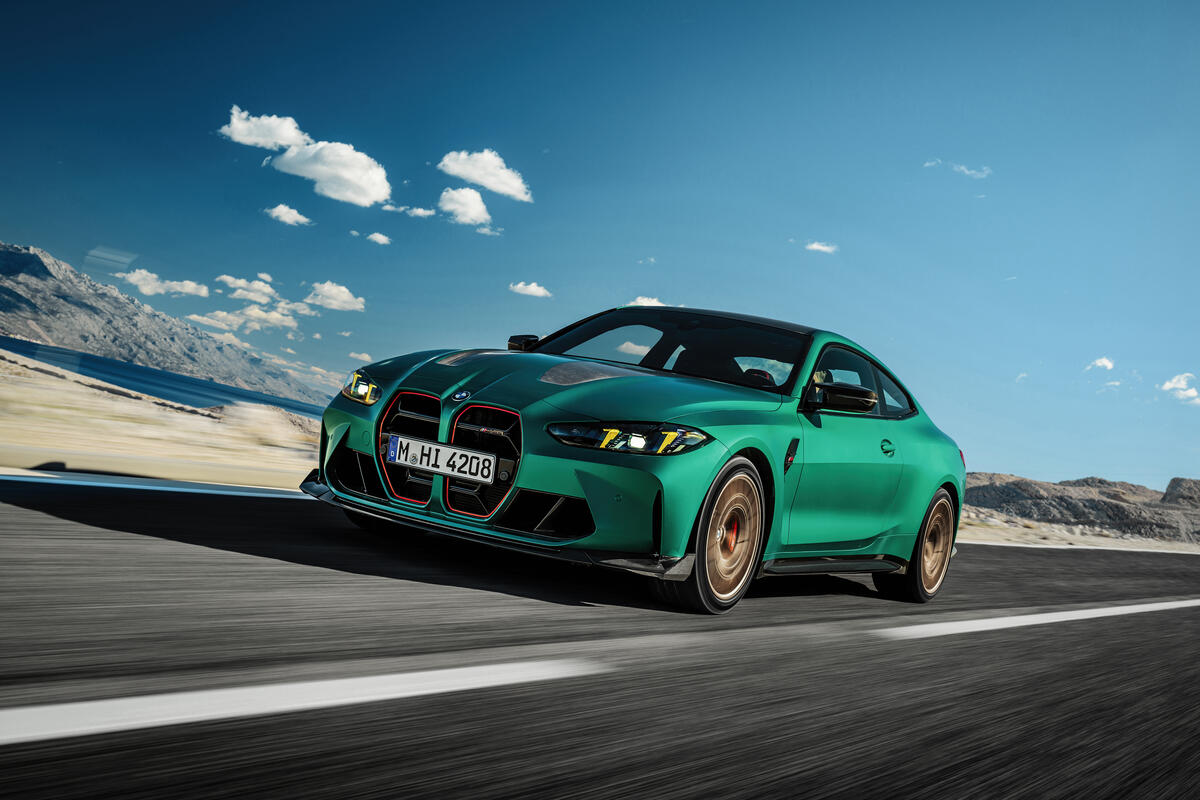
BMW M4 GT3 Evo
"Good points for Neil Verhagen and Conor de Philippe in the BMW M4 GT3 Evo for Paul Miller racing."
The BMW M4 GT3 Evo is a BMW race car made for GT3-style competitions. “Evo” means it’s an improved version of the earlier M4 GT3, designed to be faster and more competitive in races.
The BMW M4 GT3 Evo is BMW’s updated GT3-spec race car, built for customer endurance racing under the GT3 ruleset. The “Evo” version typically reflects development changes aimed at improving competitiveness—often in areas like aerodynamics, cooling, and drivability for long stints.
track position
"and the thing on the top says track position. And actually CTMP is absolutely a track position circuit."
Track position just means where you are on the race track compared to other cars. Being ahead (or in the right spot) can make it easier to avoid traffic and choose the best moments to pass.
Track position is where a car sits on the circuit relative to other cars. In racing, it often matters more than outright speed because clean air, fewer traffic conflicts, and better strategy choices can help you defend or attack.
opening stint
"particularly that opening stint where he was right on the tail of Verhagen."
An opening stint is the first “phase” of the race before the next pit stop or driver change. It matters because it sets you up for the rest of the race strategy.
An opening stint is the first segment of a multi-part race where a driver stays in the car before a driver change or pit stop. Stint timing affects tire wear, fuel strategy, and how you manage traffic.
outside pass
"He tried the outside pass at one stage at Turn 8, [2107.5s] got into the dirt, that dropped him back a little bit."
An outside pass is when you try to pass someone by going around the outside of a turn. It can work, but it’s usually harder and riskier than passing on the inside.
An outside pass is an attempt to overtake another car on the outer side of a corner or braking zone. It’s often higher risk because you may have less grip and less room if the other car holds the line.
Turn 8
"He tried the outside pass at one stage at Turn 8, [2107.5s] got into the dirt, that dropped him back a little bit."
Turn 8 is just a named corner on the track. Saying “Turn 8” helps everyone understand exactly where something happened.
Turn 8 is a specific numbered corner on the circuit layout. Corner numbers are used by teams and broadcasters to describe where incidents or overtakes happened with precision.
dirt
"got into the dirt, that dropped him back a little bit."
“Dirt” here means the car went off the racing surface onto a lower-grip area. When that happens, the tires lose grip and the car slows relative to everyone else.
In racing, “dirt” usually means the car left the paved racing line and picked up reduced-grip surface (like gravel, grass, or dirt runoff). That typically causes a sudden loss of traction and can drop the car back immediately.
middle stint
"Nikita Johnson did the middle stint. Ultimately, they end up in sixth position,"
A middle stint is the “middle part” of a race segment before the final phase. Teams use it to manage tires and strategy while keeping good position.
A middle stint is the driver’s time in the car after the opening stint and before the final stint. It’s often where teams try to balance tire/fuel management with positioning against traffic.
traffic situations
"It backfired on them, unfortunately, but it was teams thinking of different ways of just avoiding traffic situations or being right in the thick of things like Max was."
Traffic situations are when you’re stuck dealing with slower cars. Even if you’re fast, passing and maneuvering around them can slow you down.
Traffic situations are moments when faster cars encounter slower cars, forcing changes in braking points, lines, and passing attempts. Managing traffic is crucial because it can cost time even if a driver is quicker.
practice sessions
"but they were dead last in both practice sessions, [2163.6s] and they must have made miracles with that car"
Practice is when teams test and adjust the car before the important timed parts. It helps them figure out what the car does on track.
Practice sessions are untimed (or differently timed) track sessions used to dial in car setup, learn tire behavior, and prepare for qualifying and the race. A team that’s slow in practice but strong in qualifying often indicates a setup change or improved track conditions.
off-course excursions
"it seemed like something wasn't exactly right. [2184.0s] He had a couple off-course excursions. [2185.7s] That sort of thing sort of faded away,"
Off-course excursions are moments when a car leaves the intended racing line—such as going wide, hitting curbs too hard, or briefly going off track. Even if the car recovers, excursions can cost time, damage tires, and affect confidence for the rest of the stint.
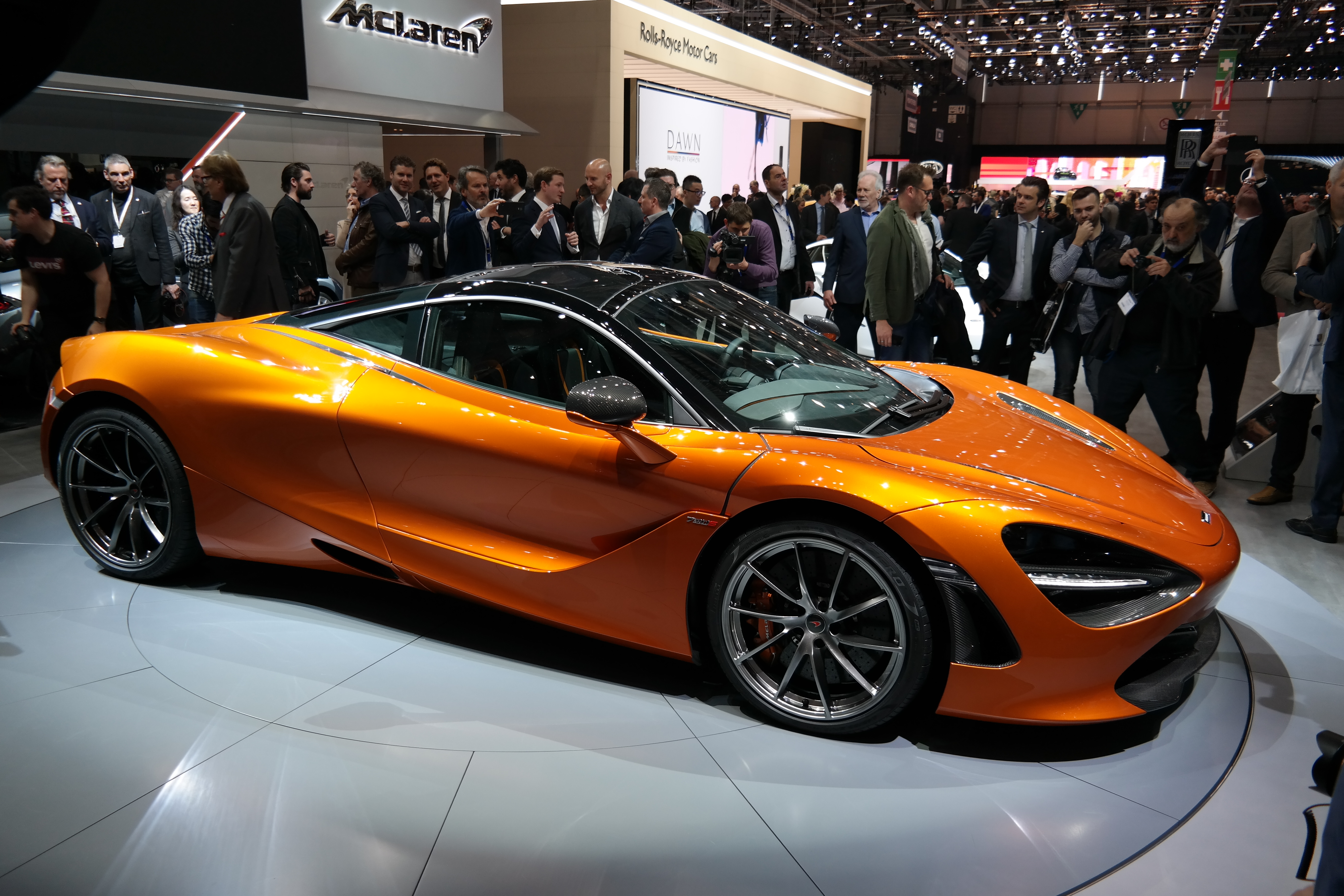
720S
"but I think that was still RLL Team McLaren's best run [2193.2s] with the 720S of the year, for sure."
The McLaren 720S is a high-performance supercar with a twin-turbo V8. Here, they’re talking about it as the specific race car that a team used and how well it performed.
The McLaren 720S is a supercar built around a lightweight carbon-fiber tub and a twin-turbo V8. In this segment it’s being discussed as the race car used by RLL Team McLaren, and the hosts are comparing its qualifying and race performance to other teams.
RLL Team McLaren
"but I think that was still RLL Team McLaren's best run [2193.2s] with the 720S of the year, for sure."
RLL Team McLaren is the racing team that runs McLaren cars in this series. They’re being praised for improving the car and getting good results.
RLL Team McLaren refers to a racing team partnership that fields McLaren cars in IMSA competition. The hosts credit this team’s development and driver execution as they discuss the car’s turnaround from practice to qualifying.
Wynward Racing
"Return to form for Wynward Racing in GTD, [2229.7s] Filales and Russell Ward."
Wynward Racing is a racing team in the GTD class. The host is saying they looked better again in this event.
Wynward Racing is a motorsport team competing in GTD. The segment frames their result as a “return to form,” implying they had been struggling and then improved their competitiveness in this race.
Rolex
"I think that's their first podium since they won at the Rolex [2254.0s] earlier in the year,"
They mean a big endurance race that’s branded “Rolex.” These races are longer and usually require different strategy than shorter races.
“Rolex” here is shorthand for the Rolex-branded endurance event they’re referencing earlier in the year. In endurance racing, these named events are major milestones and often come with different strategies than sprint-style races.
Walkins Glen weekend
"Yeah, I think the whole Walkins Glen weekend [2262.5s] was a real disappointment."
They’re talking about the whole race weekend at Watkins Glen, not just the race. That weekend includes practice and qualifying, which can strongly affect where drivers start and how the race goes.
This refers to the race weekend at Watkins Glen, a major North American road course. In motorsport, “weekend” typically includes practice, qualifying, and the race itself, and performance can vary a lot between those sessions.
Kerblis section
"More than a disappointment just after what happened [2268.3s] in qualifying with Russell [2270.0s] and going over the Kerblis section [2272.7s] that nobody had any practice with before,"
They’re talking about a particular part of the track called the Kerblis section. If nobody practiced it beforehand, it’s easier for drivers to misjudge braking or cornering there.
The “Kerblis section” is a specific track segment they’re referencing as being newly introduced or changed. The key point is that drivers didn’t get much (or any) practice there before qualifying, so it’s a high-variance area where mistakes are more likely.
Spa
"[2292.0s] BMW are on a roll, [2293.9s] winning Spa on the podium at Le Monde"
“Spa” is a famous race track in Belgium. It’s challenging and often has changing weather, so doing well there is a big deal.
“Spa” refers to Circuit de Spa-Francorchamps in Belgium, one of the most famous road courses in the world. It’s known for fast corners, elevation changes, and weather variability, which makes endurance results there especially meaningful.
B or P tables
"We don't know because there is no B or P tables being published by FIA, WEC and the ACL."
“B or P tables” are rule documents that help race organizers keep different cars on a more even footing. The host is saying they weren’t released, so nobody can tell exactly what was changed.
“B or P tables” refers to published regulatory adjustment tables used in top-level endurance/hypercar balance-of-performance (BoP) style frameworks. The host is saying those tables weren’t published, so teams and fans can’t see what specific changes were applied.
altitude
"So we don't know what changes were made at Altitude. That's the highest Altitude that they raced at."
Altitude can affect how cars run because the air is thinner at higher elevations. That can change engine power and how well the car cools, so race organizers sometimes adjust rules or settings for high-altitude tracks.
In endurance/hypercar racing, “altitude” can matter because thinner air affects engine performance, aerodynamics, and cooling. The host is referencing an “Altitude” change that they don’t fully understand because the FIA/WEC/ACL haven’t published the relevant tables.
free practice
"Just looking at some of the times from Free Practice, you had the Aston Martin Valkyrie topped the time charts in FP1, and then the Genesis in FP2,"
Free Practice is the practice time on the track before the important sessions. Teams use it to try different settings and see how fast they can go, so if a car is fastest in FP1 or FP2, it usually means it looked strong early.
Free Practice (often shortened to FP) is the on-track practice session(s) before qualifying and the race. Teams use it to test setups, learn tire/track behavior, and gauge relative pace—so “who topped the time charts” is a quick indicator of early performance.
FP1
"you had the Aston Martin Valkyrie topped the time charts in FP1, and then the Genesis in FP2,"
FP1 is the first practice session of the weekend. It’s when teams get an early read on speed and handling before the next practice and qualifying.
FP1 means “Free Practice 1,” the first practice session of the weekend. It’s commonly used as an early snapshot of pace and setup direction before later practice sessions (like FP2) and qualifying.
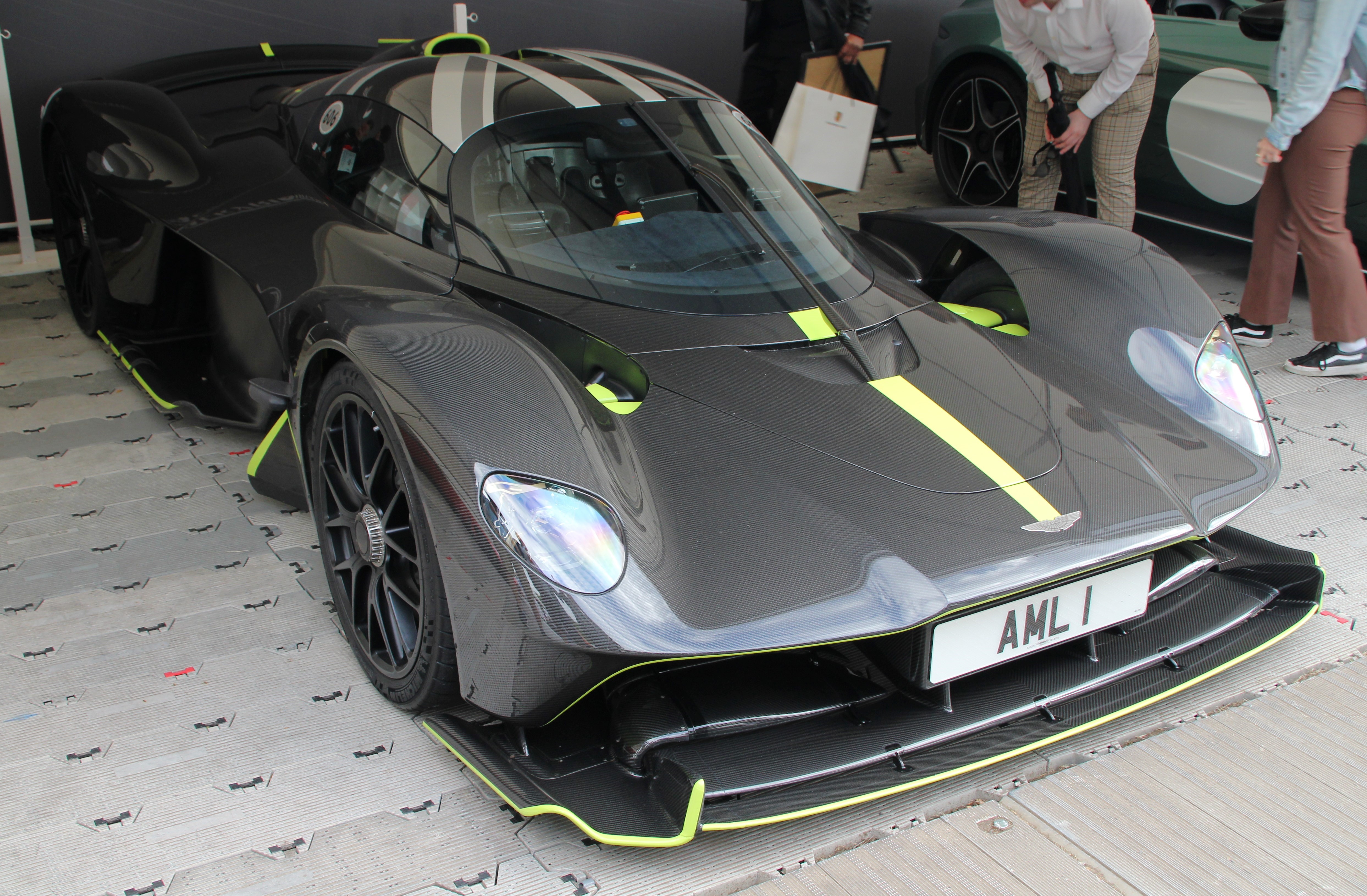
Aston Martin Valkyrie
"Just looking at some of the times from Free Practice, you had the Aston Martin Valkyrie topped the time charts in FP1, and then the Genesis in FP2,"
The Aston Martin Valkyrie is a very high-end, track-oriented super/hypercar from Aston Martin. Here, they mention it because it was the fastest car in the first practice session (FP1), which is a sign it had strong pace right away.
The Aston Martin Valkyrie is a hypercar built around a high-performance, track-focused philosophy, with a lightweight carbon-fiber structure and an aero-heavy design. In this segment, it’s used as a benchmark because it topped the time charts in FP1, showing it was immediately quick at that event.
FP2
"and then the Genesis in FP2, and I'm like, whoa, what's going on here?"
FP2 is the second practice session. If a different car is fastest in FP2 than in FP1, it often means teams improved their setup or the track conditions changed.
FP2 means “Free Practice 2,” the second practice session. Comparing FP1 vs FP2 results can reveal whether teams made meaningful setup changes or found better tire/track conditions.
homologation weight
"We know the Aston is running under homologation weight in IMSA, for instance,"
It’s the minimum weight a race car is allowed to run under the racing rules. The idea is to keep teams from making the car too light just to go faster.
Homologation weight is the minimum vehicle weight a race car must meet under the rules it was approved for. In series like IMSA, teams may run at or above that weight so the car is on a level playing field and can’t be made artificially light for performance.

Ferrari 51 Ferrari
"...oorland was in the booth for that as well for us. 51 Ferrari 2nd, it was the 12 Cadillac in 3rd. The 50 Ferrar..."
The Ferrari 512 M is a Ferrari race car from the 1970s. It was made to compete in endurance races, which are long events that test both speed and durability. The podcast mentions it because it was part of a race and is being discussed by where it finished.
The Ferrari 512 M is a race-focused Ferrari from the 1970s, built for endurance competition and powered by a V12 engine. In the podcast context, it’s referenced alongside race finishing positions, which is significant because the 512 M is closely associated with historic endurance racing and notable results. It’s discussed because the car’s identity and performance in those events are part of the episode’s motorsport recap.

Ferrari 50 Ferrari
"...1 Ferrari 2nd, it was the 12 Cadillac in 3rd. The 50 Ferrari had a not great race. Aston Martin, 6th."
The Ferrari 550 Maranello is a high-performance Ferrari sports car with a V12 engine. The podcast mentions it in the context of a race, where it’s being ranked by finishing position. That’s why it comes up—its performance in that event.
The Ferrari 550 Maranello is a V12-powered grand tourer from Ferrari, known for its classic front-engine layout and strong performance. The podcast context places it in a race result discussion, where positions and outcomes matter because the 550 is often remembered as a capable and distinctive competitor in its era. It’s mentioned because race standings and specific cars’ performances are key details in motorsport storytelling.
pit stop issues
"well, they had pit stop issues. And nowadays, you are not going to get the best result"
A pit stop is when the car comes in to get serviced, usually for tires and sometimes fuel. If there’s a problem during that stop, the car loses time and can fall behind even if it’s fast.
“Pit stop issues” refers to problems during the scheduled service stops—commonly delays from slow tire changes, refueling problems, or mistakes by the crew. In endurance racing, even small pit delays can erase on-track performance advantages.
hypercars
"It's a lot better than what it was in recent years in the hypercars."
Hypercars are the top-tier, high-performance prototype/GT-style race cars used in modern endurance series. They’re designed to be extremely fast, and their performance is often managed with rules like BOP to keep racing competitive.
FIA
"but tip of the hat to the FIA and ACO and their technical committee,"
FIA stands for the international motorsport governing body. They help set the rules and safety standards that racing series follow.
The FIA (Fédération Internationale de l’Automobile) is the main global governing body for many forms of motorsport. In endurance racing, it oversees rules and safety standards and works with series organizers and technical committees to manage technical regulations.
technical committee
"but tip of the hat to the FIA and ACO and their technical committee, because I think they are doing,"
A technical committee is a group of specialists who help write and update the engineering rules for racing. They make sure the rules are clear and that the cars stay safe.
A technical committee is the group of experts that reviews and develops the technical rules for a racing series. Their job is to interpret regulations, close loopholes, and guide changes so cars compete fairly and safely.
Barcelona
"but the last two rounds of the season will be in Europe and that looks to be Barcelona and then two weekends after that,"
Barcelona is where some racing events are held in Europe, at a well-known track in Spain. It’s a track that challenges cars with both fast sections and hard braking.
Barcelona is a major European racing venue used for motorsport events, commonly at the Circuit de Barcelona-Catalunya. In endurance racing, it’s often used to test aero balance and tire management because it has a mix of long straights and heavy braking zones.
Monza
"three weekends after that actually in Italy at Monza. Now, you mentioned something that I thought was very interesting."
Monza is a famous race track in Italy known for being very fast. Cars often need a setup that helps them reach high speeds while still braking safely for the corners.
Monza is Italy’s legendary high-speed circuit, famous for long straights and heavy braking into chicanes. For endurance racing, it strongly influences setup choices like aerodynamic drag and brake cooling because top speed and stability are critical.
prologue
"When I sat down at Imola, start of the season, at the prologue actually, and we were talking with senior officials"
A prologue is an early event at the start of the season. Teams use it to get ready—checking car setup and performance—before the real races begin.
In endurance racing, a prologue is an early-season event used to kick off the championship, often involving testing, media sessions, and/or limited race-like running. It helps teams validate setups and gather baseline performance data before the main rounds.
LMEM
"and we were talking with senior officials from FIA, WEC, LMEM,"
LMEM looks like an acronym for another motorsport organization or event. In this context, it’s being grouped with other endurance-racing bodies, but the exact meaning isn’t confirmed in the snippet.
LMEM appears to be a shorthand acronym in the transcript for an endurance-racing organization or event name, but the exact expansion isn’t clear from this excerpt. It’s mentioned alongside FIA and WEC, suggesting it’s another governing/organizing body involved in the series ecosystem.
Johnny Palmer
"I was talking with Johnny Palmer about it when I was doing FP3 with him"
Johnny Palmer is a motorsport media personality who also raced professionally. Here, he’s mentioned because the host was working with him during an F1 practice session.
Johnny Palmer is a motorsport broadcaster and former racing driver who often works as a commentator and analyst. In this segment, he’s mentioned in connection with Formula One practice work.
FP3
"I was talking with Johnny Palmer about it when I was doing FP3 with him"
FP3 stands for “Free Practice 3.” It’s one of the practice sessions teams use to try different car settings before qualifying and the race.
FP3 means “Free Practice 3,” the third on-track practice session of an F1 race weekend. Teams use it to test setups, evaluate tire behavior, and prepare for qualifying and the race.
F1 calendar rescheduling
"Because we hear from our contacts that the 26th of July is when Formula One will see what they're doing with their end of the season, and there's at least two races, possibly even three races, that they might have to reschedule."
They’re talking about how Formula One might change its late-season schedule, and how that could cause other races to move too. It’s basically a domino effect between major racing series.
The hosts discuss how Formula One’s end-of-season plans could force other series to adjust their schedules. The segment focuses on the likelihood of multiple races being rescheduled due to timing and governance meetings.
level three charging
"The U.S. right now has level three warnings [3024.1s] for most of the Middle Eastern countries."
A “level three warning” means travel is considered risky. For racing, that can make it harder for teams to go to events safely and legally.
“Level three warnings” sounds like a travel-risk alert level used by governments or agencies to indicate elevated danger. In motorsport terms, these warnings can affect whether teams and staff can safely travel and whether events can be held.
hypercar class
"And in a very pivotal time of the championship [3056.2s] where they're going to be introducing the hypercar class [3058.9s] for the first time and needing bronze drivers to fund that"
A “hypercar class” is the top tier of race cars in this endurance series. It’s a new category being introduced, so teams have to build and plan around it.
The hypercar class is a top category in modern endurance racing (associated with the WEC’s top prototype ruleset) designed for the newest generation of high-performance race cars. Introducing it “for the first time” signals a major shift in what kinds of cars teams must prepare and how they structure their driver lineups.
Orica
"where you've been talking to Remy Taffer from Orica, the technical director."
Orica is the company being discussed by the guest as a key technical player in this racing category. They’re portrayed as helping teams and manufacturers stay ready for future rules.
Orica is referenced here as the technical director’s organization involved in the racing ecosystem for the top class. The discussion frames Orica’s role as supporting manufacturers and programs through the regulatory timeline.
Remy Taffer
"where you've been talking to Remy Taffer from Orica, the technical director."
Remy Taffer is the technical director at Orica. In this clip, he’s explaining how the racing rules and deadlines could affect who gets to compete later.
Remy Taffer is identified as Orica’s technical director in this segment. He’s quoted discussing how teams must be prepared by 2027 to compete in the top class by 2030.
on the grid
"if you haven't got yourself sorted by 2027, you're not going to be on the grid for 2030."
“On the grid” means your car is officially accepted to race and gets a starting position. If you don’t meet the rules or deadlines, you may not be allowed to start.
“On the grid” means being officially entered and positioned for the race start. In motorsport, failing to meet eligibility or compliance requirements can mean you’re not allowed to start the event.
top class
"That's in regards to the top class. To the top class, yes."
“Top class” just means the highest level of racing in that series. The clip is saying the rules and deadlines are especially strict for that top tier.
“Top class” is a motorsport category label meaning the highest tier of competition within a series. The segment contrasts this with other tiers by focusing on eligibility and manufacturer commitment at the top level.
Request an Explanation
Heard something you'd like explained? We'll add it to this episode.
Sign in to request explanations for terms you heard.
Want to learn more?
Browse our glossary for plain-English explanations of automotive terms, jargon, and concepts.
Help improve this episode
See something that's not quite right? Our annotations are AI-generated and can sometimes miss the mark. Click the flag icon on any annotation to suggest a correction.