
Midweek Motorsport s21 e25
About this episode
Scott Dixon’s shock move from Ganassi to McLaren sparks debate over whether it’s truly “the biggest announcement in motorsport” or just smart timing as team dynamics shift. The hosts dig into IndyCar standings, contract speculation, and the ripple effects for other drivers, including Christian Lundgaard and Felix Rosenqvist. The show also tees up a British Grand Prix team-by-team review, a rally report, and a major Mazda MX-5 Cup interview tied to the CTMP/IMSA weekend. Expect news, previews, and plenty of lively fan chat.
British Grand Prix
"Nick Damon will be here with his team by team review of British Grand Prix."
This is a Formula 1 race in the UK. The episode says they’ll review how the teams did, which usually means talking about results and key moments from the race.
The British Grand Prix is a Formula 1 race held in the UK, typically at Silverstone. It’s a major headline event in the F1 calendar, so a “team-by-team review” is usually about how each constructor performed and why.

Mazda Mx5
"Our big interview by the way is Jonathan Applegate from Mazda as we hit the halfway point in the Mazda, the wheel of Mazda MX-5 Cup season presented by Michelin."
This is a racing series where most competitors drive the same basic kind of car: the Mazda MX-5 (Miata). Because it’s a controlled series, it’s a good place to see how well drivers and teams perform with similar machinery.
The Mazda MX-5 Cup is a one-make racing series built around the Mazda MX-5 (Miata) platform. In this context, it matters because the cars are prepared for spec racing, so driver skill and setup choices tend to stand out more than raw brand-to-brand differences.
one-make racing series
"Our big interview by the way is Jonathan Applegate from Mazda as we hit the halfway point in the Mazda, the wheel of Mazda MX-5 Cup season presented by Michelin."
In a one-make series, everyone races essentially the same car model. Since the cars are similar, it’s more about how good the drivers and teams are at tuning and racing within the rules.
A one-make racing series is a competition where most cars are based on the same model and are regulated to limit performance differences. That shifts attention toward driver talent, team strategy, and setup within the rules.
CTMP
"They'll be racing at CTMP, it is a time-out sport part of the weekend along with the other IMSA content and we'll have more"
CTMP refers to a specific race track in Canada. The hosts mention it because the Mazda MX-5 Cup cars will race there during the weekend.
CTMP is the shorthand used in North American motorsport for Canadian Tire Motorsport Park, a road course in Ontario, Canada. It’s relevant here because the MX-5 Cup season is described as racing there, tying the series to a specific track layout and weekend schedule.
Le Mans classic
"James O'Donnell listening in after what was a great trip to the Le Mans classic. I'm here indulging a cold adult beverage in the garden this evening."
“Le Mans classic” is a motorsport event for older, historic race cars. It takes place near the famous Le Mans track in France, and it’s a chance to see classic racing cars in action.
“Le Mans classic” refers to a classic-car event held around the Le Mans circuit in France. It’s known for historic race cars and period-correct machinery, so it’s a big deal for enthusiasts who want to see older cars driven hard in a motorsport setting.

Morgans
"There's a 992 and some very, very lovely Morgans in his car park at work at the moment. Kevin Payne is listening live tonight."
Morgan is a British car brand that makes small, characterful sports cars. When someone says “Morgans,” they mean one or more Morgan cars—often the classic-looking roadster type.
Morgan is a British sports-car brand known for small-batch cars with a distinctive traditional style. In enthusiast circles, “Morgans” often refers to their classic roadsters and modernized versions that keep a retro feel.
piston engine exams
"High stress studying again for his piston engine exams next week. I'll be listening on the podcast tomorrow."
A piston engine is the kind of engine that uses pistons moving up and down to make power. It’s the classic type you’ll find in most gasoline and diesel cars.
A “piston engine” is an internal-combustion engine where pistons move up and down to compress the air-fuel mixture and create power. The term matters because piston engines are different from turbine engines (like many aircraft) and from electric drivetrains.
IndyCar
"But to hype it up as the biggest thing since Nigel Mansel joined IndyCar in 1999,"
IndyCar is a major American open-wheel racing series. When drivers switch teams there, it can be a big deal because the team’s car setup and development affect results.
IndyCar is the top open-wheel racing series in the United States. Driver-team moves in IndyCar are often treated as major news because cars are developed and raced by specialized teams with distinct engineering approaches.
Nigel Mansel
"But to hype it up as the biggest thing since Nigel Mansel joined IndyCar in 1999,"
The host is comparing something to a famous IndyCar moment from 1999. The name sounds like it’s meant to be Nigel Mansell, a famous race driver who also raced in IndyCar.
Nigel Mansel is referenced as a benchmark for a major IndyCar career move in 1999. The name appears to be a transcription error for Nigel Mansell, a well-known British racing driver who did make a notable IndyCar entry around that era.
Scott Dixon
"I have to say, I thought Scott Dixon would end his career at Ganassi. I thought Scott Dixon would end his career this season."
Scott Dixon is a very successful IndyCar driver. The discussion is about whether he would stay with his team (Ganassi) or move, which matters because IndyCar teams build and tune the cars around their drivers.
Scott Dixon is a top IndyCar driver associated with Chip Ganassi Racing (Ganassi). In IndyCar, a driver’s team situation can be a big deal because it affects car development, strategy, and long-term competitiveness.
Ganassi
"But the point is, when you're no longer the best driver in your team, and he isn't, then at that point, you know, Ganassi can go, oh, is it a very great time with Scott?"
Ganassi refers to Chip Ganassi Racing, a major IndyCar team. In IndyCar, team backing and engineering support are crucial because the car’s setup and development are tightly tied to the team’s resources and the driver’s feedback.
Bruce
"I think you were saying, you know, it's all the, you know, being with Bruce, isn't it? It's Bruce's legacy."
They mention “Bruce’s legacy,” meaning a well-known person’s influence is part of the story. But this clip doesn’t say who Bruce is by full name, so it’s unclear exactly which person they mean.
“Bruce” is mentioned in the context of “Bruce’s legacy,” implying a specific person tied to the team/driver situation being discussed. The transcript doesn’t provide a last name here, so the exact identity can’t be confirmed from this segment alone.
Extreme E buggy
"Oh, it's Emma Gilmore in the Extreme E buggy. [590.5s] Correct, correct."
Extreme E is a special kind of racing that takes place in tough, remote environments. The “buggy” is the custom race car they use—built for off-road tracks and designed for that series.
Extreme E is a racing series built around off-road-style competition in remote locations, with an emphasis on sustainability. The “buggy” refers to the purpose-built off-road race car used in Extreme E, typically with a tube-frame chassis and electric powertrain components.
Emma Gilmore
"Oh, it's Emma Gilmore in the Extreme E buggy. [590.5s] Correct, correct."
Emma Gilmore is a professional race driver. Here, they’re saying she drove in Extreme E, which is a racing series with purpose-built off-road electric cars.
Emma Gilmore is a racing driver who competed in Extreme E. In this segment, she’s specifically referenced as driving an Extreme E buggy, tying her name to that electric off-road racing platform.
McLaren single seat
"So who was the last New Zealander driver in the McLaren single seat, Annick? [633.9s] I'd go with Denny Holm."
McLaren is a top racing team. “Single seat” means the open-wheel race car with one driver—like the kind used in Formula 1.
McLaren is a major motorsport team best known for Formula 1, where it fields “single-seat” cars (open-wheel cars with one driver). The hosts are debating the last New Zealander to drive for McLaren in that single-seat context.
Denny Holm
"[625.5s] So who was the last New Zealander driver in the McLaren single seat, Annick? [633.9s] I'd go with Denny Holm. [635.4s] You'd be correct."
Denny Holm is the driver they’re talking about in this trivia question. They’re saying he’s the last New Zealander to drive for McLaren in that kind of one-driver open-wheel race car.
Denny Holm is named as the last New Zealander driver associated with McLaren’s single-seat racing. The segment is a trivia-style correction, confirming the answer and framing it as a notable piece of motorsport history.
Felix Rosenquist
"Signed Felix Rosenquist. Signed Felix Rosenquist."
Felix Rosenqvist is a professional race car driver. The hosts are saying McLaren signed him, which is a big deal because it changes who will drive the team’s cars.
Felix Rosenqvist is a racing driver who competes in top open-wheel series, including IndyCar. The hosts mention him being signed, which is relevant because driver contracts and team moves can change a team’s performance and strategy.

Seagulls
"...ly, although it's actually going to be a Northern Seagulls car. Yes, but Christian Lundgard is going."
“Seagull” sounds like the name of a particular race car entry, not a normal car you’d buy from a dealership. In the podcast, it’s tied to a team called “Northern Seagulls” and a driver named Christian Lundgard. So it’s mainly being used to identify which car is being raced.
“Seagull” here appears to be a specific race car or team entry name rather than a widely recognized production model. It’s mentioned in the context of a driver (Christian Lundgard) being associated with a “Northern Seagulls” car, suggesting it’s part of a particular racing program or livery. This kind of naming is common in motorsport to identify a car’s team, sponsor, or season entry.
Christian Lundgard
"Yes, but Christian Lundgard is going. He's already said he's going."
Christian Lundgaard is a professional race driver. They’re talking about whether his contract was up and whether he could negotiate a better deal by being a free agent.
Christian Lundgaard is a racing driver discussed here in the context of IndyCar-style driver contracts. The segment focuses on his contract status and the idea that he could negotiate as a free agent after a successful season.
free agent
"And having been so successful this year, particularly Indianapolis, I suspect that Lundgard thought that being on the open market, as in what's called a free agent, he might be able to negotiate himself a better deal."
A free agent is someone who isn’t tied to one team by a contract. That usually means they can talk to other teams and try to get a better deal.
A free agent is a driver who is not currently under contract with a team, so they can negotiate with multiple teams. In motorsport, that can lead to better terms or a more competitive seat, especially after a strong season.
dry run test
"You've read that Ferrari are going to use a filming day to do a kind of a dry run test of the track."
A dry run test is like practicing ahead of time. It’s meant to see if everything works smoothly before the real thing happens.
A dry run test is a practice session done without the full competitive conditions. In motorsport, it’s often used to check logistics, track flow, and procedures before the real event.
limited in tyres
"They're limited in tyres and a couple other things, but..."
“Limited in tyres” means they don’t get unlimited tires to use. So they have to plan their running carefully to make the tires last.
“Limited in tyres” means the team has a restricted number of tire sets available for that session. That changes strategy because tire wear and grip become a resource you manage rather than something you can freely replace.
pit garages
"It does have tyre make. It does not have complete pit garages. It doesn't have gravel traps,"
Pit garages are the covered bays in the pit lane where a race team keeps the car. They let mechanics work on the car between laps in a more sheltered, organized space.
“Pit garages” are the enclosed bays in the pit lane where teams park cars for service. They’re where mechanics can work on the car safely between stints, often with equipment and space that open pit boxes don’t provide.
tyre make
"I didn't even know the entire strip of tyre act was laid. It does have tyre make. It does not have complete pit garages."
“Tyre make” just means the tire brand being used for the event. Different brands can grip and wear differently, so teams care a lot which one it is.
“Tyre make” refers to the specific tire brand used in a race or event. In many series, the tire supplier is controlled so teams can plan setups around predictable tire behavior and regulations.
gravel traps
"It doesn't have gravel traps, so let's hope they don't go off. I thought it was a strip."
Gravel traps are safety zones next to the track made of loose stones. If a car goes off, the gravel helps slow it down to reduce the chance of a crash.
“Gravel traps” are safety run-off areas filled with loose gravel designed to slow a car that leaves the track. They reduce speed more effectively than grass in many cases, but they can also damage cars and require recovery.
pit straight
"The pit straight is the industrial estate bit, and then there's a purpose-built section on some old waste ground,"
The pit straight is the straight part of the race track next to the pit lane. It’s often where cars are fastest and where teams plan pit stops.
The “pit straight” is the main straight section of a circuit where the pit lane runs alongside the track. It’s typically where cars reach high speeds and where pit stops are strategically timed.
Tilke
"Well, it was not this week. It wasn't designed by Tilke then. "
“Tilke” is shorthand for a well-known race-track designer. When people mention him, they’re usually talking about a modern, professionally engineered circuit layout.
“Tilke” refers to Hermann Tilke, a prominent German race-track designer. His circuits are known for modern safety features and carefully engineered layouts, so mentioning him signals the track’s design pedigree.
Circuit Zandvoort
"who designed Jass Marina, [1152.0s] and Circuit Zandvoort, [1154.4s] and Circuit Spa-Franc Lechon Renovations."
Circuit Zandvoort is a well-known racing track in the Netherlands. People talk about it because it has a challenging layout that affects how cars handle and how events are organized.
Circuit Zandvoort is a famous race track in Zandvoort, Netherlands, known for its fast corners and the distinctive banked section near the start/finish area. It’s a common venue for major European motorsport events and is often discussed in terms of track layout and safety/homologation requirements.
Circuit Spa-Franc Lechon Renovations
"and Circuit Zandvoort, [1154.4s] and Circuit Spa-Franc Lechon Renovations. [1157.9s] Interesting."
This is a famous race track in Belgium. The hosts are also talking about changes to the track (“renovations”), which can matter for what events can happen there.
Spa-Francorchamps (spoken here as “Spa-Franc Lechon Renovations”) is a major Belgian circuit known for elevation changes and high-speed sections. The mention of “renovations” suggests track changes that can affect event eligibility and the circuit’s homologation status for specific types of racing or filming days.
circuit homologation levels
"is that what are the rules on circuit homologation levels [1172.5s] for filming day? [1173.6s] The filming day."
Circuit homologation levels are official “approval levels” for a race track. They decide what kinds of events (or filming setups) the track is allowed to do based on safety and facility requirements.
Circuit homologation levels are official categories that determine what kinds of events a track is permitted to host, based on safety standards and facilities. Higher levels typically require stricter barriers, run-off areas, medical provisions, and other compliance items, which can affect whether filming or racing can occur under certain conditions.
filming day
"for filming day? [1173.6s] The filming day. [1174.5s] You can do it wherever you like."
A “filming day” is when a track is used for a movie/TV/commercial shoot. Even though it’s not a race, the circuit still has to meet safety rules and operating requirements.
A “filming day” at a circuit is an event-like use of the track where production crews may need to follow the same safety and operational constraints as sanctioned events. That’s why homologation rules and track eligibility can come up even when no official race is happening.
two-year-old cars
"Because, of course, they can't run. [1184.3s] They can't run the two-year-old cars there, [1187.6s] because there's a rule that stops you"
They’re talking about a rule that limits which cars are allowed to run—specifically cars that are about two years old. The idea is that certain events only allow newer (or otherwise approved) cars.
The “two-year-old cars” rule refers to regulations that restrict which car generations are allowed to run in certain contexts, often to control costs, ensure competitive parity, or manage safety/track suitability. In this segment, the hosts connect it to why older cars can’t be used at a particular track for that year’s activities.
Craventic Middle East Mission Middle East series
"Let's talk about this craventic Middle East, [2138.8s] Mission Middle East series character, [2141.0s] because they've added the Yas 12 Hours,"
This is a Middle East endurance racing series. The key point here is that the schedule is being updated with a new 12-hour race.
The Craventic Middle East Mission Middle East series is a regional endurance-racing championship structure. The hosts are focusing on how the series calendar is changing by adding the Yas 12 Hours.
Yas 12 Hours
"because they've added the Yas 12 Hours, [2146.9s] which is at Yas Marina and is on the weekend before my birthday."
This is a long-distance race called the Yas 12 Hours. It takes place at Yas Marina and is scheduled as part of a bigger Middle East racing series.
The Yas 12 Hours is an endurance-racing event held at Yas Marina. It’s part of the Craventic Middle East Mission series, and it runs on a specific weekend tied to the calendar of other regional races.
Yas Marina
"because they've added the Yas 12 Hours, [2146.9s] which is at Yas Marina and is on the weekend before my birthday."
Yas Marina is a race track in Abu Dhabi. It’s where they hold events like the Yas 12 Hours.
Yas Marina is a purpose-built motorsport circuit in Abu Dhabi, known for hosting major international racing events. It’s a common venue for endurance races and series that want a modern track with strong facilities.
Golf 12 Hours
"And conveniently, that's the weekend vacated by the no longer happening, [2157.5s] Golf 12 Hours. [2158.7s] Golf 12 Hours, yeah."
The Golf 12 Hours is another endurance race mentioned as being discontinued. The discussion suggests a different 12-hour race now fills that spot on the calendar.
The Golf 12 Hours is an endurance event referenced as no longer happening, and its absence creates a scheduling gap. The hosts say the Yas 12 Hours effectively replaces the trip that would have been made for the Golf 12 Hours.
Qatar Motor and Motorcycling Federation
"but we had a lovely chat with the president of the QMMF, [2181.3s] the Qatar Motor and Motorcycling Federation, [2185.5s] about what was going on, whether they were back home for business."
This is Qatar’s motorsport governing organization. The hosts interviewed its president to understand what was going on with racing plans.
The Qatar Motor and Motorcycling Federation (QMMF) is the governing body for motorsport activities in Qatar. In the segment, the hosts discuss a conversation with its president about what was happening with events and whether people were back home for business.
ATR of Qatar
"it says the ATR of Qatar from 11 to 12 December. And that was announced at the weekend."
This sounds like the name of an endurance race event in Qatar. They’re talking about the dates shown on the event’s official calendar.
“ATR of Qatar” appears to be a specific endurance-race event name used in the series’ calendar. The segment treats it as a dated event (“from 11 to 12 December”), implying it’s part of the same endurance racing ecosystem.
24Hseries.com
"it says the ATR of Qatar from 11 to 12 December. And that was announced at the weekend. 24Hseries.com forward slash races."
This is a racing website used to post endurance-race schedules and updates. In this segment, they’re checking what dates are listed.
24Hseries.com is the website associated with the 24H Series endurance racing platform, where schedules and race information are published. It’s mentioned here because the hosts are cross-checking race dates and calendar announcements.
Nurburgring
"Yes, it was announced at the weekend at the Nurburgring. They've managed to get their calendars not agreeing."
The Nürburgring is a well-known race track in Germany. It’s famous worldwide, and a lot of racing events and car testing happen there.
The Nürburgring is a famous motorsport venue in Germany, best known for its Nordschleife (the “North Loop”) and its role as a benchmark track for performance cars and racing teams. Many endurance events and announcements reference it because it’s a major hub for European motorsport.
Gottlieb Daimler Strasher
"There was a Gottlieb Daimler Strasher, actually just down the road from the Nurburgring."
This refers to an early automotive pioneer connected to Daimler. The host seems to be pointing out a nearby place or reference connected to that name.
Gottlieb Daimler is a historical figure associated with the early development of the Daimler company and motor vehicles. The speaker’s mention of a “Strasher” nearby the Nürburgring suggests a local landmark or reference point tied to the Daimler name.
young driver test
"More importantly, it's a young driver test on Tuesday normally. That's definitely moving supportive now, isn't it?"
In Formula 1, teams sometimes run special track sessions for younger drivers. It’s basically a chance for new talent to drive an F1 car and learn how the team operates.
A young driver test is an F1 practice session where up-and-coming drivers get track time. It’s typically scheduled around the season so teams can evaluate future talent and give rookies experience in an F1 car.
Abu Dhabi
"Formula One is not going to Abu Dhabi at the end of the season. Well, not for a young driver test."
Abu Dhabi is where Formula 1 holds its final race of the year. The hosts are talking about how the timing of other tests relates to that end-of-season event.
Abu Dhabi is the location of the season-ending Formula 1 race at Yas Marina Circuit. The hosts are discussing whether the schedule includes a young driver test at the end of the season in relation to Abu Dhabi.
Kimmy Antonelli
"What did Kimmy Antonelli do on Monday, Nick? He went to Wimbledon."
Kimmy Antonelli is a young Formula 1 driver being talked about as a future star. The hosts mention what he did on Monday as a contrast to what you’d expect around racing season.
Kimmy Antonelli is an F1 junior/young driver who has been in the spotlight as a potential future Mercedes driver. The hosts reference his off-track activities to make a joke about timing versus the racing calendar.
tyre test
"He went back to Silverstone for a Pirelli tyre test. Did he? Yeah."
A tyre test is when teams drive on track to see how tyres behave. They check things like grip and how quickly the tyres wear out.
A tyre test is track time used to evaluate tyre performance—grip, wear rate, and how the tyre heats up—before or alongside race weekends. In F1, tyre tests help teams understand which compounds and setups will work best.
Silverstone
"He went back to Silverstone for a Pirelli tyre test. Did he? Yeah. I've got round, but either Monday, Tuesday or Tuesday, Wednesday."
Silverstone is a well-known race track in the UK. Formula 1 teams use it not just for races, but also for testing things like tyres.
Silverstone is a famous Formula 1 circuit in the UK, known for high-speed corners and fast lap times. It’s also used for testing days, so you’ll often hear about teams running tyre tests there.
Pirelli
"He went back to Silverstone for a Pirelli tyre test. Did he? Yeah."
Pirelli is a tyre company that makes the tyres used in Formula 1. A “tyre test” means they’re checking how those tyres work on track.
Pirelli is a major performance tyre brand that supplies tyres for Formula 1. When the hosts mention a “Pirelli tyre test,” they’re referring to track testing of tyre compounds and behavior under race-like conditions.
3.6 flat 6
"Mind you, I was somewhat enjoying the glorious sound of a 3.6 flat 6. So you still hear a 4.1 engine over the top of that?"
A “flat-six” is an engine with six cylinders arranged in two sides that sit flat like a book. “3.6” means the engine’s displacement is 3.6 liters.
“3.6 flat 6” describes a 3.6-liter horizontally opposed six-cylinder engine (a “flat-six”). The boxer layout helps balance the engine and lowers the center of gravity, which is why it’s common in some high-performance cars and racing engines.
4.1 engine
"So you still hear a 4.1 engine over the top of that? Depends what revs you're pulling."
“4.1 engine” means the engine is roughly 4.1 liters in size. Bigger engines often sound different, and how loud it is depends a lot on engine speed.
“4.1 engine” refers to an engine with about 4.1 liters of displacement, and in this context it’s being compared to the “3.6 flat 6” sound. Larger displacement engines typically produce different acoustic character and can be louder depending on revs and exhaust setup.
revs
"So you still hear a 4.1 engine over the top of that? Depends what revs you're pulling. Not as loud as they used to play Formula 1 cars, you know, Nick?"
“Revs” means how fast the engine is spinning, measured in RPM. When the revs are higher, the engine usually sounds louder.
“Revs” is short for engine revolutions per minute (RPM). Higher revs generally mean more noise and different power delivery, which is why the hosts say loudness depends on what revs you’re pulling.
Formula 1 cars
"Not as loud as they used to play Formula 1 cars, you know, Nick? They're still very loud. Anyway, sorry about that."
Formula 1 cars are the top-level race cars in the FIA’s premier motorsport series. They’re famous for being extremely loud when they’re running at speed.
“Formula 1 cars” refers to the single-seater race cars used in the FIA Formula 1 World Championship. They’re known for very loud exhaust and high-rev operation, which is why the hosts are discussing how loud they are at the track.
Fernando Alonso
"No, I think Fernando Alonso effectively grenade the McLaren relationship."
Fernando Alonso is a famous Formula 1 driver from Spain. The hosts are talking about how his time around McLaren and his results influenced who could win championships in the late 2000s.
Fernando Alonso is a two-time Formula 1 World Champion known for winning with multiple teams. In this segment, the hosts discuss how his move/relationship with McLaren affected championship outcomes around 2007–2008.
Lewis
"And he could have easily won the championship in 2008 when Lewis won it if he'd been in the same car, even though, let's be honest,"
Lewis Hamilton is one of the most successful Formula 1 drivers of the modern era. The hosts are comparing his early-career performance to Alonso’s during the late-2000s championship fight.
Lewis refers to Lewis Hamilton, a multiple-time Formula 1 World Champion. The hosts compare Hamilton’s performance in 2007–2008 to Alonso’s, arguing Hamilton was better in 2007 even as a rookie.
rookie
"even though, let's be honest, Lewis was better than him in 2007 as a rookie. Yeah, he had some good years in Ferrari."
A “rookie” is someone in their first season. The hosts are saying Hamilton was doing extremely well even though he was still new to Formula 1 at the time.
In Formula 1, a “rookie” is a driver in their first season (or first year at that level). The hosts use it to frame Hamilton’s 2007 performance as especially impressive because he was still new to the sport’s top tier.
Vettel
"He was unlucky, but he was up against Vettel when Vettel was brilliant. He got a seven-time world champion in Hamilton."
Sebastian Vettel is a top Formula 1 driver who won multiple world championships. The hosts are saying Alonso’s results were affected because Vettel was performing at an especially high level at the time.
Sebastian Vettel is a Formula 1 World Champion known for dominant seasons. The hosts say Alonso was up against Vettel when Vettel was “brilliant,” framing Vettel as the key rival during that era.
Hamilton
"He got a seven-time world champion in Hamilton. He got a four-time world champion in Verstappen."
Hamilton is Lewis Hamilton, and the hosts are pointing out he’s a record-setting world champion. They’re using his achievements to show how tough the competition was.
Hamilton refers to Lewis Hamilton, described here as a seven-time Formula 1 World Champion. The hosts use this to illustrate the level of competition Alonso faced, including multiple championship-winning teammates/rivals.
Verstappen
"He got a seven-time world champion in Hamilton. He got a four-time world champion in Verstappen. The bits that were nibbled off the side"
Verstappen is Max Verstappen, another world-championship-winning Formula 1 driver. The hosts are using him as an example of how elite the competition was.
Verstappen refers to Max Verstappen, a multiple-time Formula 1 World Champion. The hosts mention him as another championship-winning driver Alonso had to contend with, emphasizing the strength of the grid.
Button
"The bits that were nibbled off the side were still bitten by some very good drivers, Rykanen, Button and Norris."
Button is Jenson Button, a former Formula 1 world champion. The hosts are mentioning him as part of a group of very strong drivers.
Button refers to Jenson Button, a former Formula 1 World Champion. The hosts list him among other strong drivers to argue that even when Alonso’s results are criticized, he’s still operating in a field of top-tier talent.
Norris
"The bits that were nibbled off the side were still bitten by some very good drivers, Rykanen, Button and Norris."
Norris is Lando Norris, a top current Formula 1 driver. They’re naming him to emphasize that the grid has many excellent drivers.
Norris refers to Lando Norris, a leading Formula 1 driver. The hosts include him in a list of excellent drivers to support their point about the quality of competition.
Formula One
"so other than watching IndyCar and Formula One, when I got back after the football"
Formula One is the top level of international open-wheel racing. Teams race cars around tracks worldwide and compete for a season-long championship.
Formula One (F1) is the world’s premier open-wheel racing series, run by the FIA. Races typically use purpose-built single-seaters with advanced aerodynamics and hybrid powertrains, and the championship is decided over a season of Grand Prix events.
Austin Hill
"There was some crashing, yes. Was there a fight? Austin Hill was spun hard into the wall"
Austin Hill is a race driver. In this story, he’s the one who got spun into the wall during the incident they’re talking about.
Austin Hill is a racing driver mentioned here as being spun into the wall. In this segment, he’s the driver whose incident is being discussed, and the host frames it as part of an on-track rivalry or retaliation.
spun hard into the wall
"Was there a fight? Austin Hill was spun hard into the wall by Shane Van Gisburgen."
It means the car rotated out of control and hit the wall hard. In racing, that usually happens after a big mistake or contact with another car.
“Spun hard into the wall” describes a severe loss of control where the car rotates (spins) and then impacts the barrier. In racing, this usually points to a contact or traction/handling failure that causes the car to rotate suddenly.
Shane Van Gisburgen
"Austin Hill was spun hard into the wall by Shane Van Gisburgen. Oh, Shane."
Shane Van Gisburgen is another race driver. Here, he’s blamed for spinning Austin Hill into the wall, and the hosts say it may have been intentional.
Shane Van Gisburgen is named as the driver who spun Austin Hill into the wall. The discussion also suggests his team believed the move was intentional and retaliatory based on a prior restart incident.
restart
"and a retaliatory act for what had happened two weeks ago when Hill spun Van Gisburgen into the wall on a restart."
A restart is when the race starts running at full speed again after a caution. Because everyone is close together, restarts can be chaotic and lead to crashes.
A restart is when the race resumes after a caution period (like a crash or safety car). Drivers accelerate back to racing speed and the pack is bunched up, which can make incidents—especially aggressive moves—more likely.
Brazil
"So is this somebody who is missing IMSA to go to Brazil? [3006.1s] No. Or somebody who is going to IMSA because somebody else is at Brazil?"
They’re talking about racing in Brazil. The context is a specific endurance event in São Paulo, which is why the car gets a special paint scheme.
In this segment, “Brazil” is shorthand for racing in Brazil—specifically an endurance event tied to the six hours of São Paulo. The mention sets up why the team changes the car’s appearance for that event.
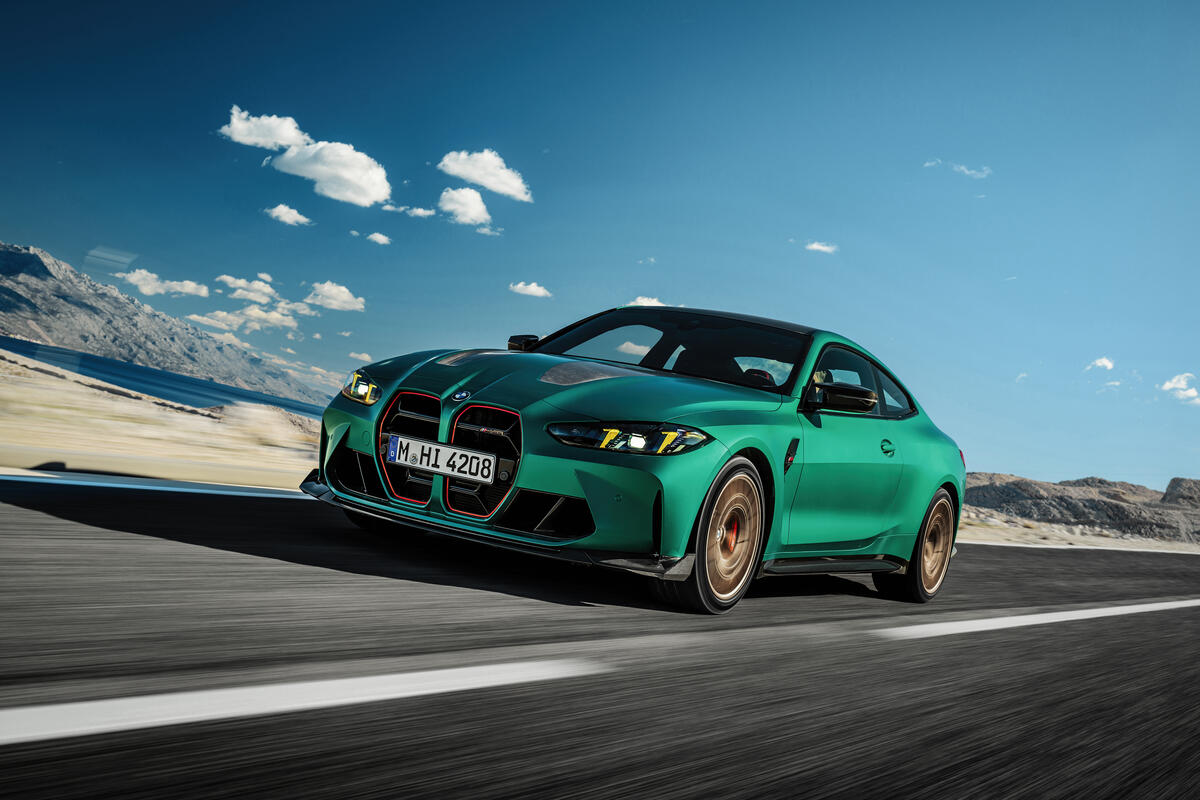
BMW M4 GT3 Evo
"It's BMW M4 GT3 Evo of Anthony McIntosh, [3036.2s] Dan Harper and Parker Thompson,"
This is a BMW race car built to compete in GT3-style racing. “GT3” is a common class for customer teams, and “Evo” means it’s an updated version of the car with improvements for racing.
The BMW M4 GT3 Evo is a GT3-spec race car based on the BMW M4 platform, built for customer endurance racing. The “Evo” update typically means a mid-cycle evolution of the package—changes aimed at improving performance, balance, and reliability for the GT3 ruleset.
six hours of São Paulo
"For the six hours of São Paulo. [3025.5s] Oh, really?"
This is a long race—six hours—in São Paulo, Brazil. Because it lasts so long, teams have to manage driving time, pit stops, and the car’s setup to keep it fast the whole way.
The “six hours of São Paulo” refers to an endurance race held in São Paulo, Brazil. Endurance events like this are long enough that teams plan driver stints, pit stops, and car setup for sustained performance.
livery
"Because he is doing a different livery for every event this year. [3049.4s] I didn't expect a Brazilian this weekend for WR2."
A livery is the car’s paint and sticker design. In racing, teams sometimes change it for different events or themes, like using a country’s colors.
A livery is the car’s visual design—paint scheme, decals, and sponsor graphics. In racing, teams often change livery by event to match themes, sponsors, or national colors, even when the underlying car is the same.
throwback liveries
"He's had some spectacular throwback liveries from BMW's archive."
A “livery” is the car’s exterior paint scheme and graphics used for racing. “Throwback liveries” are designs that deliberately reference a past era—often classic team colors or historical sponsor layouts—to create nostalgia and brand recognition.
hypercars
"Well, do you mean hypercars? Yes. This is very, very interesting. Top class prototypes is what I want to say there, Nick."
“Hypercars” here means the very fastest, top-level race cars used in endurance racing. They’re purpose-built for racing and usually represent the newest technology.
“Hypercars” refers to the top tier of modern endurance prototype racing—cars built to very high performance targets, often with hybrid or advanced aero packages. In this segment, the hosts connect “hypercars” with “top class prototypes,” implying the highest category of prototype competition.
top class prototypes
"Top class prototypes is what I want to say there, Nick. Because I want to call it hypercars."
These are the top-level race cars in endurance racing. They’re built specifically for racing rather than being normal street cars with a few changes.
“Top class prototypes” are the highest-level race cars in prototype endurance categories—cars that are not based on production models in the way GT cars are. They’re designed from the ground up for racing rules, typically emphasizing aerodynamics, efficiency, and high-speed stability.
Alpine
"The Alpine is still one of theirs, is it? Alpine."
Alpine is a car brand that races in endurance competitions. The host is noting that Alpine is still participating in the top prototype/hypercar class.
Alpine is a French automaker brand that competes in endurance racing and has fielded prototype programs. The host is saying Alpine is still one of the manufacturers involved in the top category at the moment.
Genesis
"The Genesis. Genesis."
Genesis is a luxury car brand. In this conversation they’re counting Genesis as one of the brands running in the top prototype/hypercar category.
Genesis is a luxury car brand (Hyundai Motor Group) that has moved into top-level motorsport programs. Here, it’s listed as one of the manufacturers involved in the hypercar/prototype grid discussion.
Ford
"Ford, which hasn't raced yet."
Ford is a major car company. The host is saying Ford hasn’t started racing in this specific top category yet, but is expected to.
Ford is an American automaker brand with a long motorsport history. The host says Ford “hasn't raced yet,” implying it’s expected to join the hypercar/prototype field in the future.
Acura
"The Acura, which is going to stop racing. Well, it's going to stop racing in IMSA."
Acura is Honda’s performance brand. They’re talking about Acura possibly stopping its racing program in IMSA.
Acura is Honda’s performance and luxury brand, and it has competed in endurance racing. In this segment, the host discusses Acura’s plans to stop racing in IMSA, indicating a potential withdrawal from that series’ top-level competition.
IMSA
"Well, it's going to stop racing in IMSA."
IMSA is a racing organization that runs major endurance races in North America. Saying a team will stop racing in IMSA means they’ll stop competing in that series.
IMSA stands for the International Motor Sports Association, the North American organizer behind major endurance racing series. When the host says Acura will stop racing in IMSA, they mean the brand’s participation in IMSA’s top prototype/GT racing events.
Delara
"What's BMW? BMW is a Delara, the same as the Cadillac."
This is talking about the company that builds the race-car chassis. The host is saying BMW and Cadillac are using the same chassis builder, which can mean similar underlying design.
“Delara” appears to refer to Dallara, an Italian race-car constructor known for building chassis for prototype and open-cockpit racing. The host is saying BMW is using the same Dallara as Cadillac, implying shared chassis architecture within the category.
Cadillac
"BMW is a Delara, the same as the Cadillac. Cadillac, yes."
Cadillac is a luxury car brand. In this segment it’s mentioned because it’s using the same race-car chassis builder as BMW.
Cadillac is an American luxury brand that competes in endurance racing programs. Here, it’s mentioned as sharing the same chassis constructor (“Dallara”) as BMW, suggesting overlap in technical underpinnings.
spine
"No, even if they were using the same spine, I think that would be difficult because you've got to build."
A “spine” is the main structural backbone of a race car. The hosts are saying that even sharing that backbone wouldn’t make it easy to launch brand-new cars for multiple teams all at once.
A “spine” refers to a structural backbone used in race-car design—think of it as a main load-bearing structure that other components attach to. The hosts suggest that even if multiple cars used the same spine, building and supporting four teams with brand-new cars in one year would still be difficult.
platform
"What year was that? 23? That was the first year of the platform. Alpine came in the next year, then the Genesis this year,"
In car talk, a “platform” is the shared foundation a car is built on. The hosts are saying the RXOR6 was the first year that this shared foundation was introduced.
A “platform” in motorsport/automotive usually means a shared technical base—common architecture, design rules, and major components—used to build different cars. The hosts say the RXOR6 was the first year of the platform, implying the underlying shared design started then.
Elysia
"Are they using Elysia? They're using Elysia. The... Yes, Delara."
“Elysia” is mentioned as part of what McLaren is using, but the hosts don’t explain it here. It may be the name of a component or technical package on the race car.
“Elysia” is mentioned as the thing McLaren is using, and the host later corrects/clarifies the name (“Yes, Delara”). Because the segment doesn’t define it, listeners would benefit from knowing whether Elysia is a supplier, a chassis/engineering package, or a specific technical system.
Orica
"Right. And four by... four by Orica."
Orica is a company that shows up in racing through team support and sponsorship. Here, they’re mentioned because they’re associated with one of the racing entries being counted.
Orica is an Australian company best known in motorsport for its involvement with racing teams and sponsorship. In this segment, it’s referenced as a team/entry count, implying Orica is fielding or supporting a set of cars under the discussed rules.
Multimatic
"Multimatic still... Multimatic have still only got Porsche."
Multimatic is a company that works on race cars—engineering and building them for competition. In this conversation, they’re being linked to Porsche as the only manufacturer they’re currently associated with.
Multimatic is a motorsport-focused engineering and manufacturing company that builds and supports race cars and components. The host notes Multimatic “still only got Porsche,” meaning their current program is tied to Porsche under the eligibility/rules being discussed.
P2 chassis
"They won't have to use a P2 chassis. Whatever it is. Well, it won't be a P2 chassis."
“P2 chassis” means a race-car frame that’s tied to a particular ruleset/class. The discussion here is about whether teams are required to use that kind of chassis or can build their own instead.
A “P2 chassis” refers to a specific prototype class chassis used in endurance-style racing regulations (the “P2” category). The host is discussing rule changes that affect whether teams must use a P2 chassis versus building their own chassis, and clarifying that the eligibility landscape is shifting.
P2's changing
"P2's changing. It was never a P2 chassis to start with, as we were talking about funny enough."
This means the rules for the P2 class are being updated. The host is saying that cars that previously didn’t qualify under the old interpretation can now be eligible.
“P2's changing” indicates that the regulations governing the P2 prototype category are being updated. The host connects it to eligibility for “early cars” and later confirms that the P2s are now eligible, implying a shift in which cars can compete under the current rules.
All sevens are now eligible
"Yes. All sevens are now eligible. It's incredible."
The host is saying that a certain group of race cars—referred to as “sevens”—now meets the rules to compete. It’s essentially an eligibility update: more cars can enter under the current framework.
“All sevens are now eligible” refers to a class/category of cars (commonly “seven” as shorthand for a specific prototype/entry type) becoming allowed under the updated rules. In context, it follows the statement that “The P2s are now eligible,” so it’s part of the same eligibility/rules clarification.
chassis manufacturers
"It's a very specific thing, and that's why you have people who are chassis manufacturers."
In a race car, the chassis is the main frame that holds the car together. A “chassis manufacturer” is a company that specializes in building that frame for racing teams, because it’s complicated and has to meet strict rules.
A chassis manufacturer is a specialist company that designs and builds the race car’s chassis—the main structural frame that everything else mounts to. In motorsport, this can be outsourced to dedicated firms because chassis design is highly technical and tightly integrated with aerodynamics, suspension geometry, and safety requirements.
draft regulations
"Because there's no, as far as I can see from the draft regulations, there is no mandate to only use Oracle, Delara, Multimatic, Andor, Leisure, or indeed anybody else,"
Draft regulations are the “proposed rules” for a racing series. Teams look at them early to plan their cars, but the rules might still be updated before they become final.
Draft regulations are proposed rule documents that describe how a racing series intends to govern technical areas like car construction. Teams and suppliers use them to plan designs early, but they can change before the final rules are published.
Leisure
"Oracle, Delara, Multimatic, Andor, Leisure, or indeed anybody else, ... So could we see a Leisure? You could see a Leisure?"
Leisure is mentioned as one of the companies that could build chassis work. The speaker is wondering if teams might choose companies like that again under the updated rules.
Leisure is named as a possible chassis supplier, and the speaker later asks whether a “Leisure” could be seen again under the new wrecks/chassis context. In this segment, it functions as an example of an allowed supplier rather than a single mandated one.
Andor
"Oracle, Delara, Multimatic, Andor, Leisure, or indeed anybody else,"
Andor is one of the supplier names mentioned. The speaker’s takeaway is that the rules don’t force teams to use only one chassis supplier.
Andor appears in the list of chassis-related suppliers the speaker says teams are not required to use exclusively. It’s part of the argument that multiple manufacturers can compete within the same technical rule set.
Oracle
"there is no mandate to only use Oracle, Delara, Multimatic, Andor, Leisure, or indeed anybody else,"
Oracle is being mentioned as one of the possible companies that could be involved in building a race car chassis. The speaker’s main point is that the rules don’t force teams to use only one supplier.
Oracle is mentioned here as a chassis-related supplier name in the context of motorsport teams choosing who builds the chassis. The key point for listeners is that the speaker is arguing there’s no single required supplier.
Peugeot
"because certainly Ferrari, Toyota, Peugeot won't be using a standardized chassis."
Peugeot is mentioned as another big brand that wouldn’t be forced into one standardized chassis. The speaker’s point is that teams still have room to engineer within the rules.
Peugeot is included in the list of manufacturers the speaker says won’t be using a standardized chassis. It’s used to illustrate that even with chassis rules, big teams can still pursue their own engineering approach.
Ferrari
"because certainly Ferrari, Toyota, Peugeot won't be using a standardized chassis."
Ferrari is brought up as an example of a big car maker that wouldn’t be forced into using one shared chassis. The point is that the rules don’t eliminate manufacturer-specific engineering choices.
Ferrari is cited as an example of a major manufacturer that would not necessarily rely on a standardized chassis. The speaker uses it to argue that the rules still allow manufacturers to build or source chassis in their own way.
Toyota
"because certainly Ferrari, Toyota, Peugeot won't be using a standardized chassis."
Toyota is named as another major manufacturer that wouldn’t be locked into a single shared chassis. The speaker is emphasizing that the rules focus on technical limits, not one-size-fits-all parts.
Toyota is mentioned alongside Ferrari and Peugeot as a manufacturer that would not use a standardized chassis. This supports the speaker’s claim that the mandate is about meeting technical constraints, not adopting one supplier’s chassis.
standardized chassis
"because certainly Ferrari, Toyota, Peugeot won't be using a standardized chassis."
A standardized chassis would mean most teams use the same basic chassis design. The speaker says the rules don’t appear to force everyone into that kind of shared setup.
A standardized chassis means teams would use essentially the same chassis design or supplier baseline across the grid. The speaker argues that, based on the draft regulations, there’s no mandate forcing that kind of one-design approach.
technical regulations
"The mandate is that you build your chassis within a fairly restrictive set of technical regulations."
Technical regulations are the detailed engineering rules for the race cars. They tell teams what they’re allowed to build and how, even if there’s freedom to choose suppliers.
Technical regulations are the specific engineering rules that limit what teams can build—often covering dimensions, materials, performance-related constraints, and safety requirements. Even when a series doesn’t name a single chassis supplier, these rules can still strongly shape the design choices teams make.
Lola
"You could see a Leisure? You could absolutely see a Lola."
Lola is a well-known race-car constructor name. The speaker is suggesting that a company like Lola could be making cars again if the rules allow it.
Lola is mentioned as a chassis/constructor name the speaker thinks could return under the new rules. In motorsport, Lola has historically been a prominent race-car constructor, so the name signals a potential shift in which suppliers build cars.
Dome
"We need to... A Dome. Oh, gosh."
Dome is another racing constructor name. The speaker is basically saying that companies like Dome might show up again depending on how the rules shake out.
Dome is cited as another constructor the speaker expects could appear again. The context is supplier choice for chassis under draft regulations, implying the series could see more variety in who builds the cars.
new chassis regulations
"I think they're far more likely to come back with the new chassis regulations, but they'll have to build a new chassis."
“New chassis regulations” means the racing rules are changing, and teams have to redesign the car’s main structure. It’s the kind of change that can make older designs obsolete and push teams to build something new.
“New chassis regulations” refers to updated rulebooks that force race teams to redesign the car’s core structure. In endurance racing, chassis rules can change how teams build the safety cell, mounting points, and overall architecture to keep competition fair and modernize technology.
LMDH car
"The idea with the new regulations is instead of saying, here's an LMDH car, here's an LMH car, the idea is saying"
“LMDH” is a racing class/category for certain prototype race cars. The key point here is that it’s one set of rules, and the discussion is about how the new regulations will be framed differently.
An “LMDH car” refers to a specific endurance-racing prototype category that’s designed to compete in top-level series using a standardized approach. The host contrasts it with another category (LMH), indicating these are different rule sets/technical packages teams can choose from.
Request an Explanation
Heard something you'd like explained? We'll add it to this episode.
Sign in to request explanations for terms you heard.
Want to learn more?
Browse our glossary for plain-English explanations of automotive terms, jargon, and concepts.
Help improve this episode
See something that's not quite right? Our annotations are AI-generated and can sometimes miss the mark. Click the flag icon on any annotation to suggest a correction.