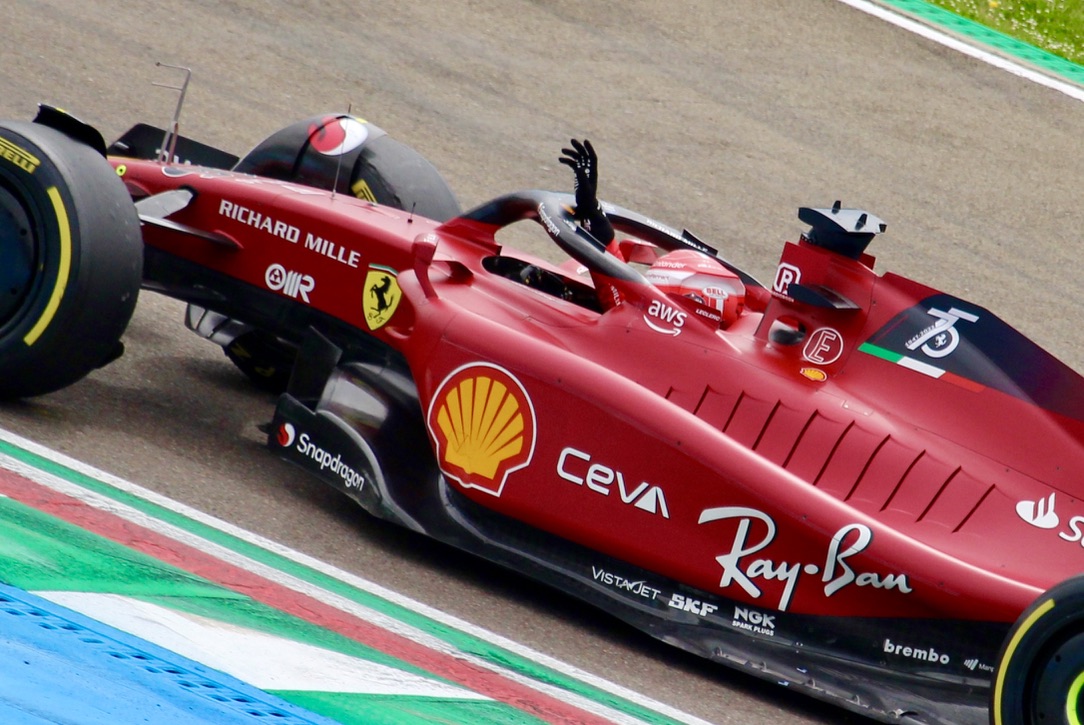
The safety car is used to slow the race down after an accident. A restart is when the race speeds back up, and that’s when drivers can get into trouble because everyone is bunched together again.
Hamilton is a famous Formula 1 driver. In this segment, they’re talking about his pit stop under the safety car and how it changed the penalty situation.
Term
engine catch-up program
This is an F1 term for a plan that helps teams that are behind catch up in engine performance. The idea is to reduce the gap so the racing stays competitive.
The formation lap is the lap right before the race where cars get ready and line up. If something goes wrong then, it can ruin your race before it even starts.
To lap someone means you’re so much faster that you pass them and they end up a full lap behind. If it’s your teammate, it shows you had a big speed advantage.
In Formula One, a drive-through penalty means the driver has to go through the pit lane and keep moving at the pit speed. It makes them lose time as punishment for breaking a rule.
An unsafe release is when a team sends a car back out after a pit stop in a way that’s not safe—like if it cuts across another car or breaks the safety rules. Race officials can penalize the driver or team for it.
The constructors championship is the team’s season-long points race. If penalties were handled differently, teams could end up losing points—or trying to game the system—rather than focusing on the driver’s result.
Term
finds
They’re talking about penalties—likely “fines,” meaning money the team/driver has to pay. The point is that these penalties can influence the championship race.
The pit lane is where the team works on the car during the race. You have to drive slowly there, and going too fast can get you penalized.
Term
lights to flag
“Lights to flag” just means the whole race from the start signal to the finish. They’re saying that in a normal Monaco race, the outcome would likely be similar even with that penalty.
George Russell is a Formula 1 race driver. In this segment, the hosts talk about how penalties and a restart hurt his race and dropped him down the order.
Fourth gear is one of the car’s gear settings. The point here is that the car seemed to be moving very slowly for the situation, and the gear choice made it look even more unusual.
Person
Anthony
“Anthony” sounds like another F1 driver, but the transcript doesn’t clearly say which one. The hosts are talking about how drivers manage gaps and positions.
Alonso is Fernando Alonso, an F1 driver. The hosts are using him as an example of a situation where slowing down led to a penalty because it caused trouble for other cars.
Hülkenberg is a Formula 1 driver. In this segment, the hosts are saying his penalty happened because of traffic and congestion, not just his own actions.
“Three wide” means three cars are trying to go side-by-side in the same spot. It’s risky because there’s less room, and it can cause crashes or traffic jams.
A 10-second penalty means the driver gets extra time added to their race result. It’s used when officials decide the driver caused a problem for others.
Toto Wolff is the top leader at Mercedes in Formula 1. When he talks about the team’s data or strategy, it usually means Mercedes is taking it seriously.
Pole position is the starting spot on the grid awarded to the fastest qualifier. In F1, starting from pole often reduces the risk of getting stuck in traffic, which is why the hosts say pole looked “comfortable” and that the driver resisted pressure at the start.
Term
P2
P2 is shorthand for starting second on the grid. They’re saying that in Monaco, starting second makes it very hard to pass for the lead right away.
Place
term one
Turn 1 is the first big corner right after the start. The hosts are saying that passing for the lead there is rare, which is why it stands out when it happens.
A yellow flag means there’s a problem on the track ahead, so drivers have to slow down and drive carefully. “Sector three” is just a named part of the circuit where the warning is active.
Car
Ferrari Leclerc
They’re talking about Charles Leclerc, who drives for Ferrari. The key point here is that he’s crashing into the wall, and they’re debating whether it’s related to the car’s braking behavior.
Here “brakes” means how the car slows down and how predictable it feels when the driver hits the pedal. If the brakes feel wrong or inconsistent, it can make the driver miss the turn-in point and end up hitting the wall.
Engine braking is when the car slows down because the engine is resisting the wheels after you lift off the gas. It can change how the car feels, especially on tricky surfaces.
A five-second penalty means the driver has to “pay” time because of a rules mistake. Here, it’s because Hamilton was too fast in the pit lane, so the race officials added that time.
A contract extension is when a driver and a team agree to keep working together for longer. It’s mentioned here as background for why the team’s choices are so important.
Term
preserve the 23
“Preserve the 23” means keep a specific lead or advantage of 23 (usually points or a gap). The hosts are saying Ferrari made a strategy call to protect that advantage.
An undercut is a pit-stop strategy where you come in earlier than the car in front. You go back out on fresh tires and try to drive fast enough to get ahead when they pit later.
Hadjar is the driver being investigated. The hosts explain that officials decided there wasn’t enough rule-breaking to add a penalty, so he keeps his podium position.
Oracle Red Bull Racing is the F1 team involved in the situation being discussed. The officials’ decision is about what that team did (or didn’t do) during the race stoppage.
Spark plugs and coils help the engine create the spark that ignites fuel. In a race stoppage, changing them can be controversial because it might be against the rules depending on what’s allowed.
In Formula 1, the “team game” refers to coordinated strategy between teammates—such as managing pace, timing pit stops, or using one car to help the other. It’s especially relevant in Monaco, where track position and timing can outweigh pure speed.
The Plymouth P15 is an older car made by Plymouth. It was built for everyday driving, not for modern racing technology. People bring it up when talking about car history and older models from that time period.
They’re talking about why it’s so tough to overtake in Monaco. The track is narrow and the straights are short, so it’s hard to build a pass. Even with extra power boosts, drivers still often can’t risk it.
“Push to pass” is a button or mode that gives a driver extra power for a short time. It’s meant to help them overtake other cars. Here, they’re saying Monaco is so tight that the extra power still doesn’t guarantee passing.
FP3 is the third practice session in an F1 weekend. Teams use it to test settings and learn how the car behaves. In this discussion, they’re saying FP3 is especially great at Monaco.
LIVE
Hello everybody and welcome back to the P1 podcast with Matt and Tommy race review time.
That's right.
We are going to get into the Monaco Grand Prix and I'm smiling because I've had a few
apparel sprinters and this might I think this is this is the first ever podcast both
of us we've both had a few apparels so we're I mean I don't know how you're feeling I
mean yeah I mean I'm very also very very very warm yes we're gonna be sat for an hour
yeah in the blazing sunshine yeah so heatstroke will hit as well and then our opinions will
be even worse but thank you everybody for tuning in this is a very interesting podcast
this has been a ridiculous weekend big shout out to Libertex who are on the rear wing right
there they have been awesome to give us such an insane level of access you know to be able
to go on the paddock funny you know the paddock passes right you know some of you might think
that we I mean I don't know why you would think this but some of you might think that
we're like we swan around the paddock thinking we own the place no what we're doing instead
is standing around waiting for drivers we're literally there like any of you might be even
though we've done this for like nine years trying to see drivers because it genuinely makes me
so happy to be able to see them and maybe say a little hello like it's I don't know it's just so
weird yeah it's true like we don't do it often enough that like we will always be the fans and
no matter what like we're there as a fan going into the paddock we still get giddy over the noise
that it makes when you get in and yeah we are still basically like a kid at Christmas when
we get to go in so exactly I'm also wearing sunglasses so thank you to all of you that
commented last time out that I should have worn sunglasses I've regretted it the entire episode
so I'm not regretting it anymore even though the sun is very hot let's get into some Monaco
Grand Prix chatter before we do quick shout out to our wonderful patrons who'll be getting extra chat
at the end of every single race review this year and what a race ish for us to talk about
not a race for us absolutely horrendous that's why we've started drinking but you know there's a
lot to talk about in a Monaco that was of course you know unfolding very Monaco like but my god
there are a lot of things to talk about in this podcast it feels like even though it was processional
for a lot of it we've got quite a few topics we certainly have I mean the whole conversation
this weekend is it's all over on the Saturday well done it's all over on lap one and nothing else
will happen but it was absolute carnage yes of course like overtaking was difficult we'll talk
about it later but it was just absolutely chaotic I will kind of caveat the fact that because we are
there in person and we were watching with not much commentary we will do our very very best
because there are a lot of penalties as you know there are lots of decisions that's been made
but I mean what a chaotic Grand Prix we expected just kind of lights to flag normal nothing happening
and at one point it generally felt like anyone could be on the podium based on all the penalties
that were going on yeah so so much to get into but the first question and the most important
question p1 patreon member just stallion how are you both feeling um look horrendous I
bet if I might if I'm actually going to go into like the feeling of seeing shall the club go into
the wall on the safety car restart horrendous awful the fact that he was on for a p3 which could
have been a p2 but then of course Hamilton pit under the safety car was able to be sort of
get that five second penalty removed which I found a lot of you which I didn't really
realize at the time because obviously when you're out of race it's a little bit different but the
fact that Hamilton had that five second penalty which meant shall the club basically had a five
second penalty which I totally get right like Ferrari were saving um the 23 and I do
get why they did it um but look we'll get into all of that a little bit later on but in terms of
just my overall feeling had shall the club crash from the lead I would I wouldn't be here right now
like I'm just saying that right it's very clear that you would be at the bar yeah yeah I'll be at
the bar or at the bottom of the ocean but right now it's a p3 it would have been a nice result
especially with the fact that we'd never know what's going to happen the championship we don't
know what's going to happen with this whole engine catch-up program the adduo or as whatever they call
it um we don't know because from what I've seen there hasn't been any results of how far teams
are behind the leading engine misaders and whether they'll be able to catch up bring upgrades so you
never know what the championship might become but to see char leclerc in the wall score no points
yeah it was devastating yeah absolutely and obviously for for me with max this was his big
opportunity to potentially win a race or get a really good result of course you know he had the
problems on the formation lap we'll talk about it later of course in the race but absolutely gutting
to you know be excited for what max can do at the start and then to see him dnf so not doing great
that side but what I would say is that for a monaco grand prix there was a lot of chaos and
you're never going to get loads of overtaking it's one of those tracks that it was still really
difficult to overtake but for a monaco grand prix it was kind of the chaos that delivered the
kind of excitement and stuff so once max was out the race once had a little time to uh to recover
a bit like you was saying like char was out of it unfortunately max is out the title maybe everyone
is out the title we'll talk about that later um but I'm I'm kind of like it just enjoyed the rest
of the the carnage one once max was out and could uh maybe uh focus less on obviously the driver
that I wanted to win but it was still obviously an absolutely gutting moment right let's get into
our most memorable moments shall we Tommy and begin with you okay so my most memorable moment
it has to be Kimmy Antonelli of course you know we have to applaud him right at the start of this
podcast what he has managed to achieve of course Kimmy has had an amazing season but he has you
know maybe made made a few mistakes here and there obviously of course been amazing to actually
get the the grand prix wins but it's not been plain sailing however this was plain sailing
it was an unbelievable performance all weekend you know race win pole position fastest lap never
looked in doubt he lapped his teammate at one point which was absolutely crazy I cannot believe
race direction I'm sorry but I cannot believe they didn't show that because it's such a
kind of pivotal and almost like such a huge narrative in the season of how Kimmy Antonelli
has stepped up this year and to see him lapped your drussel would have been you know such a huge
moment even though of course you argue it's insignificant but it's like such a statement
moment for for Kimmy and he's gone into this race where look what his teammates done yes he's had
a bit of bad luck and we'll you know we'll go into it but Kimmy has been absolutely phenomenal all
weekend the pole lap and his race pace as well we didn't see any gamesmanship from him he wasn't
backing up the pack and just accepting that he was going to win the race just because he got into
turn one first he was rapid he was just gone like see you later everyone he was faultless is the
the definitely the word to describe it because around here you know this was this was a a race
that I genuinely thought okay this Kimmy Antonelli momentum could genuinely unravel around here
because it is a terrifying circuit at this is second year in formula one he has the the pressure
of the championship on his shoulders and yes he had a healthy margin coming in here but it's early
stages right so to deliver what he did pole position in a lap where he was basically shaking
afterwards and then to deliver a faultless performance in the race as well not one start
by the way but two I was convinced that Hamilton in the far the fast starting
Ferrari as we've always spoken about surely he might well get a better start than Antonelli who's
thinking my god this is another really another start but no absolute perfection from Kimmy
Antonelli this weekend and look I'm I'm almost close to being like he's he's going to be champion
as much as we have a long way to go in this season there are very few chinks in the armor
for a Kimmy Antonelli that I believe will just get better and better he wouldn't go the other way
especially now 66 points ahead of Hamilton not Russell Lewis Hamilton is second in the
championship George Russell's a couple of points behind that it is a margin that even if you're
trying to get your first world championship you're not going to get shaky over a start now because
you know that okay if you have a little wobble and you lose a few points whoop dee do I still
have a couple of wins in the bag yeah certainly I mean this segues lovely into the first question
from one of our p1 patreon true p1 patreon member rosy rangetsu asks now we declare it championship
over I'm close I don't know maybe it's because I've had app rolls I'm not thinking straight but
like he's almost three victories clear now 66 points ahead of Hamilton but let's be real Russell is
the the biggest championship contender because of the car Hamilton had a phenomenal weekend this
weekend outperform Leclerc Leclerc was the one to make a mistake you know we'll get into that and
how the fact that it was you know he's blaming his brakes and so on and so forth but but Hamilton
was was really fast this weekend but it is Mercedes is George Russell that I only see as the person
to take on Kimmy Antonelli this year unless we get the Ferrari engine upgrades and things like that
that could happen but I am close to saying like I don't know how he's going to lose it from here
because if you think of the amount of 12 and I said this before and that was if it was first
and sixth this is first and a no point score George Russell was not scored in the last two Grand
Prix so now I'm going to do maths on the spot after having a couple of bevs what is it 25 to 18
that's seven it's going to take 101 twos of George winning every single one to take the
championship lead which we mentioned you know it's far too early but yeah exactly ten races
and that's what's amazing for for Kimmy that you know we've seen this before I will say
never say never look what Max has happened did last year he came back but this is this is a case
where Kimmy Antonelli you know there's always a chance for George Russell and it is only round six
but I think what what you're saying is absolutely spot on the fact that it's the whole situation
where in a weird way we we spoke about the kind of pressure on you know drivers that have led the
world championship in the past that maybe had never done it how do they feel and all the talk
has been the pressure of Kimmy how does he deal with the pressure but in a way like the pressure's
kind of off weirdly because he can just chill in a weird way because the Mercedes the fact that
they won here on a track that didn't suit them means they are probably going to see a case of
potentially depending on the whole engine situation but potentially going to see the fact
that Mercedes are very strong and probably the best everywhere if he can win at a track that
should be their bogey track and his teammate was absolutely nowhere he can be picking up seconds
and you know if George even wins those ten races in a row you're you're looking at Kimmy Antonelli
only needs second before losing the title and that's not going to happen you know I really
very much doubt as much as he can turn it around George Russell is probably not going to win ten
on the bounce right now so Kimmy's got a huge margin to play with and that relieves some of the
pressure that he can just drive his own race and think about the championship and sometimes
do just finish p2 and George isn't going to catch him for an extremely long time almost
when the season is over really yeah I can't believe we're in the situation it's been six rounds
like how how are we talking about a 66 point lead it's absolutely on Antonelli as well after that
first race with Russell after that first race with Russell when he was on the radio going I
like this car I like this engine you know he won pretty comfortably really he got pole position
Antonelli went in the wall in fp3 we thought ah this could be George running away with it here
and instead imagine after Australia saying oh by the way in five races time Kimmy Antonelli
we're talking about Kimmy Antonelli winning the world championship easily it could be even further
ahead with you know the sprints that he's had a bit of a wobble on and he's got a big penalty and
yeah it's crazy to to talk about that I will say about George Russell when the fact he was lapped
yeah I agree with you in the fact that the TV direction absolutely should have shown that
which they didn't I can't believe it's Monaco for crying out loud like there's nothing going on I
know that I think it was the same time as the Williams thing yeah but in a mini box my guy like
it's a it's a massive statement or a replay a replay so they could talk about this yeah but the
replay was actually George Russell coming out the pits that they showed straight after I will say
in George Russell's defense like it's not on pure pace right like it's Monaco the minute you're
behind a car that's slow Hadja was you know Hadja's got a podium as of recording at least he was
under investigation um which we will keep an eye on um but Hadja was really slow and the fact that
he got a podium was you know obviously testament to the fact that he's he kept it within the the
walls and and whatnot but in comparison to George Russell Russell's all over the pack of him um
and yeah that that was the reason I think why he got lapped you know it's not the fact that he
was genuinely a lap yeah but you can argue that that's his his it's qualifying like his own fault
I'm just saying yeah on paper when you say he was not on pace but it's because of the nature of
Monaco um so but well done to Hadja on that podium of course um question from people in
picture remember Justin should George really have been given a drive-through when his team
was the reason his penalty was served improperly unfortunately for George that is just the letter
of the law and um we've had this conversation many times about unsafe releases and things like that but
if you're going for a world championship you could it would open up such a can of worms
wouldn't it if if it was only team finds and things or even constructors points because
we've had this conversation many times about at the end of the day the drivers is where the big
kind of focus is on even if it is the you know the the team championship that they want to win
the big focus is on the drivers and if they did you know start finding things for unsafe releases
or touching the car you're just opening a huge kind of worms and it's just going to end up a
ridiculous situation where drivers would sacrifice constructors championship points and finds to
almost cheat the system because we know how Formula One teams push the boundaries of everything so
that is exactly what they do so at the end of the day George Russell uh he was going to get that
that that penalty anyway uh with it is very unfortunate but George Russell his whole race
was completely undone by the other things like speeding in the pit lane and you know he's had
so many he's had a really bad time I think in a weird way he can almost save his blushes a little
bit from the fact that he can and I don't think he will but like use it as an excuse to say like oh
I had the drive-through penalty the team touched the car realistically in a normal race where
we have a lights to flag Monaco he's finishing six anyway and nowhere near because it all went
wrong and qualified George was in trouble no matter what right yeah the eight points would
have been very helpful because if you think of it that's uh one point more than if it was a one too
so those eight points George needed but that being said as for the penalty it has to be that way
right in Formula One as you say like it would open a can of worms if there were things that the team
did which can have a competitive advantage or disadvantage they all have to be treat the same
so I'm in complete agreement as much as it you know it hurt George is the fact that
anything to do with the race it has to be a penalty that it goes to the driver it finds
me nothing to teams it's a drop in the ocean to get a 50 grand fine as we know so yeah uh sadly for
George but it's um it's just the way it has to be otherwise it would really really open and of
course he got that penalty because he had a penalty in the first place so like so so he's
still got a penalty in the first place but it's a catastrophic mistake to make of course the
Mercedes right like you wouldn't expect of all the teams for them to make the mistake right
you know Antonelli leading out in front bulletproof George Russell needs his team to lock in because
those eight points could well be crucial come the end of the season it's 68 to to Kimmy if it's
60 yes it's massive but it's a chunk away like it cannot it's it's still helpful in the campaign
when you have what are we round six now we have 22 races we have another 16 rounds to go I cannot
believe George is third in the championship like I still can't get my head around it with with how
like Dominant he was at the start of the season and yeah George's race outside of the fact that
you know the the penalty aside he's still you know had a terrible qualifying sped in the pit
lane he's saying he's not comfortable with the car almost cut the pit lane line as well which was
very marginal and almost could have picked up another penalty there so yeah people were kicking
off a lot about the starting was it starting out and also his starting procedure as well like he
almost got a penalty there so he could have easily picked up three penalties anyway and
unfortunately for George however much he will probably say like oh it's really unlucky that I've
got you know this this penalty that's there's been a safety car restart which of course kind of rub
salt in the wounds and drops him back down the order but he had an absolute shocker regardless I
think and that's something we need to talk about as well is the George Russell driving around at 50
miles an hour in Monaco and the restart because that was borderline a joke the fact that he was I
think I saw a video of him driving around in fourth gear in the first sector and there was no more
speed than that he was losing handfuls of seconds to the to the drivers ahead of course
Anthony and Hamilton and it's like I am sat there going fair enough he's trying to do you know
trying to create a gap which he can then drive into and lose less positions but at what point
especially when further back you have 23 cars going side by side into the hairpin
because of what he's caused at what point is it dangerous driving at what point is it
unnecessarily slow because I mean you said it to me during the fact when we were watching of like
ah Alonso gets a penalty for literally slowing down at Australia and George crashing when he was
nowhere near him and yet he can cause a pile up of 15 car not pile up but like you know a massive
traffic jam of 15 cars there's contact happening behind how is that not deemed as a driving
unnecessarily slowly it's so true I do wonder how much he's been saved by the fact that we have seen
and you know we saw this with the two Williams drivers and the two
v-carb drivers which concerns me greatly about Monaco and how it goes forward in the future the
fact that these teams are now doing this where they can essentially go so slowly swap around with
their teammate and then get a you know get the points finished that way because it is almost
near impossible to overtake but how slowly George went where is the limit here because we've seen
it at other tracks we've seen penalties given for driving unnecessarily slowly that is something
that has been given as a penalty before and yeah like George created such a backup you know
if we're going to give penalties out for messing around behind the safety car and not doing 10
car lengths which we'll find out of course about about other drivers with that how where do we draw
the line with backing up the pack because it created such a concertina effect at the hairpin
that we were seeing a situation where Holkenberg I mean I'm sorry his penalty was an absolute
joke and I think the fact that it was just the the nature of the bottleneck that meant that
Holkenberg had a penalty because he drove around the corner but it was all caused by the fact that
the field was being backed up like crazy and everyone's trying to go three wide into a hairpin
yeah I really did feel and not because there's an Audi car behind us I genuinely felt sorry for
Holkenberg because as you say it's the nature of the track he's he's thrown the car at the inside
because he's trying to make a move and Carlos has kind of drifted over as I guess in his right
he's allowed to as well to the racing line because the next corner is a right hander so he's drifting
over to the left to be able to you know take the cut the corner as fast as possible it just screams
racing instant to me but because of the fact that he's Carlos has hit the wall and retired
it's almost like it feels as though there's there's a pressure for the stewards to deliver
a penalty because of the fact he's out of the race and Holkenberg has kind of caused it right
he's the one that's hit Carlos but you know when you look at the racing situation when you take
into account why they're so bunched up I don't know it's not his fault he's
not even trying to move on no he's not going for an overtake so I felt really sorry for for Holkenberg
in this in this moment I really did not think he deserved a 10 second penalty no I don't either
I think that is the nature of the track and it screams consequence of the fact that Carlos was
the unlucky party and obviously feel very sorry for Carlos because he was a complete victim in
the incident but Holkenberg was just driving around the corner and it was just the fact that
everyone got bunched up. Let's go to another question Smedi L is it safe to say no more slow
starts for Mercedes look I've been saying this from day one that Ferrari starts will not last a
very long time because the other teams will figure it out and learn behold they have Mercedes are
on par with McLaren unsurprisingly because McLaren have literally the same mention as Mercedes
and Ferrari we've seen two starts today and Antonelli we've got off the line perfectly well
both times so Max sorry didn't I'm sorry Tommy to bring that up just lashing out after what you
did earlier when Leclerc went in the wall but yeah there's no more slow starts for Mercedes it seems
I think Antonelli as well from what Toto Wolfer said and we know that Toto loves Kimmy Antonelli
with all his heart so take that maybe with a pinch of salt but it's always you know there has been
moments where they've spoken about Kimmy's done the right thing they've just fed them the wrong
data and that kind of that excuse or explanation kind of matches up with what we've now seen because
Mercedes have good starts so as much as it's really painful to say the exciting moment of
our Ferrari a third and fourth on the grid what can they do has kind of dissipated now it certainly
has you know Antonelli's had an amazing you know had two great starts obviously the first one Max
didn't even get off the line so we'll never know if another car had been alongside him
what might have happened but yeah it seems like that case where Antonelli I think it was the first
maybe four races or five races he'd lost 20 positions and gained none whereas obviously that
also helps the fact is that he's always on pole position and again you know pole position looked
comfortable and you know an amazing start never really looked in in doubt for him and he resisted
that pressure because he could have well easily messed up the start when he drove such a perfect
race to have another restart where you're alongside Hamilton who of course is fast dying that's why
we're so excited for that restart and it is very difficult in Monaco to go around the outside and
be able to get a better start from P2 it's almost you know impossible but if any year it was going
to happen it would have been this year but it hasn't the fact that and credit to Alex jakes for
this the last time we've seen a pass into term one to with a change for the lead was 2002
that says it all 24 years ago for crying out loud it's just the nature of the circuit that the
p2 has the outside line it also cuts in with the barrier you don't get a good run you don't um so
it is safe to say I think that slow starts have now gone from Mercedes which is a shame because
that's something that really did open up a spectacle in a lot of the races exactly so um
sadly not we now speaking of sadly go to my most memorable moment or shall I say my most depressing
moment shall I say my most wanting to throw myself overboard moment Leclerc in the wall
yes um I didn't take any pleasure in it from you roasting me about myself and the
the thing is right I lashed out at you because you have given me like seven years of abuse when
it comes to chalet claire and you know potential and sadly not getting as many wins as I feel he
deserves so you can screw off as far as I'm concerned if it wasn't on the podcast I'd be
saying something much harsher uh yeah it's it's uh again I really can't believe it happened because
you know we were watching the race of course here on a big old screen and saw yellow flag sector three
and immediately and I'm like where can anyone go off at sector three there isn't like someone in
the wall there really isn't there's no where where you think oh run off so you think okay someone's in
the wall and then immediately after seeing Hamilton on the camera I'm like oh my god there is not
another Ferrari Leclerc's gone off and lo and behold he's in the wall so question if we have to
from Al Duckin 87 Dustin 87 was it the tarmac or chalet claire's fault or chalet claire is adamant
there is his brakes uh of course so neither so neither yeah exactly neither however I do have to
bring it up and you know at the end of the day chalet does crash far more than any other top driver
you know I have sung his praises uh many many times on this podcast even though we obviously
have a bit of banter about our drivers but and maybe it's he's pushing too hard and stuff but
everyone else was driving on that track I know he's mentioning like his brakes and things but
it still goes on his CV that he's had a monaco grand prix where he's crashed again in qualifying
he's crashed again in the race and it's not a good look and he is a fantastic driver there's
no doubt but it's another situation and of course he is absolutely adamant you know he's there in
the interview pen going I'm not taking the blame for this there's no chance the brakes were horrendous
but we have just seen charles claire as a top driver going into the wall far too many times
all right man thanks yeah yeah thanks for thanks for you know holding back and
sparing my feelings as you go into how many times he's crashed yes your qualifying was
his fault you know he's he's pushed too hard I don't know if I take solace or pain from the fact
that there are reports to suggest that he was you know somewhere near pole position at the time
as for today it I think they're going to have to deep dive this one because charles claire has had
a b in his bonnet about the brakes for the last two grand prix he's now said he's going to go to
Hamilton setup and the fact that Hamilton setup might have its own problems but he just wants
consistency with the brakes he I don't know if it's a case of because obviously this is an
instinct this is a first reaction of why have I gone into the wall it must be the brakes
you can see on the onboard the front left he picks up an insane amount of a pickup because at that
point the track is disintegrating that's why we got the red flag because the FIA were concerned that
the track wasn't fit to race so I do wonder once they have a little look at that of whether it was
you know even perhaps a mixture you know a combination of of the brakes and your cold
tires behind the safety car and and of course the the pickup as well Lance Stroll seem to believe
I'll give him that that like the fact that two drivers have gone into the wall and it's
it is very strange I have to admit and Lance Stroll he's a phenomenal talent
I will say it is an insane thing that two drivers have gone into the wall
whether you believe it their fault coincidental whatever the fact is that two drivers have
gone into the wall happens to be where the track has broken up so it is going to be very interesting
to see whether Ferrari do debrief it and go actually shall know it was the the the time
out breaking up and equally for Lance as well yeah because he said it was to do with the engine
braking but what I think it you know drivers are always looking for like validation when it comes
to I think something's wrong with the car oh my god something's happened that must be the problem
I will categorically after watching that replay say it is not Charlotte Clair's fault
he has gone into that wall about 40 miles an hour he literally looks like a passenger going into
that corner and look this might be me just being a delusional fanboy but when I watch that on board
it's not like he's made a massive mistake at 120 miles an hour he's behind the safety car he's he
knows he's not going to be shaping a move on Hamilton he's just trying to go through the corner
there is a restart fine pushing watch the on board he is a passenger for whatever reason that might
be I don't put that down to Charlotte Clair's talent I know that some people will yeah say that I
am being you know particularly biased here but I really don't care that that's where I fit that's
where I sit right that's where I sit when you when you watch the replay it's either the brakes
or the tarmac disintegrating yeah I mean it's an insane coincidence if Charlotte Clair's made
a mistake like that at a place where the track is genuinely crumbling when another guy's gone off so
yeah we'll see him I'm sure we'll we'll we'll I don't I don't know about that mate all right
mate maybe start the race um next question people on page remember Sky Sierra how do you think
charle feels about this awful weekend and Ferrari strategy to keep charle behind Hamilton's five
second penalty off the back of another contract extension charle will be in his feels right now
I actually think from where we are we might even be able to see where his balcony is so maybe we
can keep an eye um so isn't over that way I thought you said it was turn ones over oh because max
on the driver's parade pointed it out oh but then I thought you told me it was over there with no
no charle bann was over there turn one there oh anyways it's somewhere over there so maybe we can
see but um I think he'll be in his he'll be very sad and upset uh after today because this is the
big weekend this is the Ferrari opportunity in my opinion I know we go to places like Monserran
think our Ferrari might have a car there I can't see that they're low speed not
on a power track exactly so um this was the big opportunity uh it didn't pay off for him at all
as for the Hamilton five second penalty thing I know we mentioned it at the start of the podcast
but I firmly believe that Ferrari as and you know I've gone from being an insanely biased
potentially saying that wasn't charle close 40 went into the wall to saying I think Ferrari did
the right decision of doing that right Hamilton sped in the pit lane by 0.1 kilometers an hour
yes it's over and yes he deserved the penalty but Ferrari have to preserve the 23 I know
some people we start they're going well why don't they swap the cars because charle never asked for
that or why didn't charle carry on for another lap I don't know if that would have worked but
then that is picking a number one driver I genuinely yeah I genuinely do feel quite at peace
with what Ferrari did there because in the other if it was the other way around I would also be at
peace with it so yeah I think that was the correct decision for Ferrari to at that point preserve
the 23 definitely I know it's you know I understand if you're a charle claire fan that
you're annoyed by that and thinking that essentially bad by bad luck it's it's not kind of the team
screwing him in any way it's just simple bad luck that unfortunately charle close managed to get a
five second penalty when he didn't get a five second penalty because of what's happened to
Hamilton but Hamilton has earned the right to be there by beating him in qualifying being ahead
of him in the race and it's kind of similar to you know in a way like you know the undercut and
everything Hamilton's the lead driver at monaco you can't take the risk going for an extra lap
and you know charle could have got easily screwed even more by waiting another lap or staying out
or anything like that we don't know so I think it's absolutely the right decision what Ferrari
did and I think it's maybe it's just bad luck for for charle claire that he got given this this
penalty absolutely I'm keeping an eye on what's happening over on the FIA live feed because of
course had jar on the podium at the moment um let's actually speak about that now because
I have had a little quick look so there's a question from joe formula 6p will had jar get a penalty
and give oscar piastri p3 the answer is no no further action for Isaac had jar so let me read
this out um so the the problem or the investigation was around the suspension during the suspension
of the race mechanics of the oracle rebel racing team were working on car number six during the
race suspension other than as permitted under the regulations and then it was deemed no further
action and the reason was that they heard from the blah blah blah the team were reported as
attempting to change spark plugs slash coils but did not proceed with the change and the car
started in the same condition as it arrived in the pits therefore no further action is taken so
that's what the investigation was around but rebel have proved that they did not actually change
anything so yeah had jar remains on the podium okay so yeah had jar of course yes there was some
good fortune there but obviously at the end of the day you have to be in it to win it or be in it
for for p3 as it were of course you know that the driver's up ahead of him retired and that allowed
him to get the podium but you know it's still a great result and he's the one that's kind of
kept it on the track in this situation and yeah so it's a great result for had jar after
maybe a couple of bad races and of course after what happened on friday i'm sure he was very harsh
on himself you know crashing into the into the wall and he's ended up with a podium finish right
let's get into max for stappen shall we tommy the dnf yeah we do because we've already
gone into my favorite driver going into the wall so why don't we talk about max for stappen not
making it off the start line properly disaster it was an absolute disaster yet the team
knew kind of on the formation lap that he wasn't going to be able to go which i imagine was very
scary for max that he kind of pulled to the side but when you watch the on board and the speed that
the cars are coming past him thank goodness nothing bad happened because that would have been an
absolute plane crash if someone had not sighted him um but it's going for max because of course
the whole hype around the start was that max stappen always goes for it he knows it's his chance
to win the race he knows that kimmy antonnelly has a championship to think about and he would
have absolutely gone for it if he'd have been able to get a good start but instead he did a kimmy
reikinen and went home he did i think he said it was 500 meters to go home or something so he did
and i don't blame him you know just get a boat and go home uh he i saw some hilarious videos of
them doing the driver's parade and that max was essentially whilst being filmed
showing everybody where he and charlie claire live which um there you go all right he might have a
few uh unwanted visitors over the next few days but for max uh i i did think that hamilton was
going to get him at the start just purely because we had two of the slowest starters on the front row
of the grid i think you know we've we've already sort of squashed the the chat around misades and
the fact that they have figured it out but for red ball it was a bit more of a question mark i
would say um but my god i did was not expecting that to be the the sort of result max knew uh
from the formation lap really didn't he that uh he was in trouble and very vocal as max first
happen is around um the problems he was having and how upset he was because of course on the front
row of the grid great opportunity you never know what could happen in the season uh but yeah a complete
and utter disaster for red ball uh and and once again in this new area of regulations there are
just random dnf's that crop up max for stop and having a dnf landon norris having a dnf again
mclaren so yeah uh really really tough uh pill for max to swallow because that was probably his
best opportunity to win a race this year and might well end up being the only opportunity
oh please no and yeah i've i've never wanted to be more wrong with my prediction about i'm not
winning a race this year but that was such a great opportunity and unfortunately the
he got no reward for his basically unbelievable qualifying lap has to be said indeed um let's
talk about the v carbs shall we uh they ended up where did they end up tommy she didn't put the uh
the classification in you've absolutely sold me out there i think they ended up fifth and sixth
i think they did let me uh double check because last time uh we checked the classification was
all over the place because basically there were so many penalties uh up for review but of course
hadja did not end up getting any penalty in the end so it was liam lawson in a lovely p5 yeah and
limblad p6 because of course ghastly got penalty we'll talk about later in the podcast we will
indeed because a lot of you will understand why we're talking about that a little bit later
because it has something to do with predictions but but the v carbs i mean lawson was was brilliant
and we already said that in qualifying but the fact that he was able to translate that but then
you know take advantage of other drivers errors and dns and so on and so forth up in p5 but also
playing the team game as well i think i without the red flag i think i was genuinely considering
you know our v carb going to do the same strategy as what williams did in the sense of slowing down
with one of the drivers and speeding up with the other don't think that had to happen because of
the red flag but a huge amount of points for v carb and they've looked quick but this is an insane
amount an insane hall to have at this early stage in the season when they're fighting against the
other sort of midfield teams alpine hass have dropped off a little bit recently uh so yeah
they'll be they'll be very happy tonight certainly i mean v carb and racing bulls we
had this conversation about how they tend to fail to maximize a lot of their points sometimes
even when they have a quick car and that's certainly not been the case this weekend and
you know i'm i'll be honest i am very very very concerned for the future of the monaco
cramprey and maybe this is a see a kind of side note and a different question but this is the
second year in a row that both v carb and williams have done this tactic of just blocking the whole
field did did v carb do that though they did last year no no sorry this year this year because
they allowed oh sorry no that's why that's why i said that sorry of course limblad was able to
to pit under the red flag but williams did it again and teams are just going to be able to do
this of course would we have seen it happen at the end maybe for for v carb because it would have
allowed limblad to to get the result that that he needed and and swap positions but what what a you
know result for particularly you know liam lawson in a in a p five when we have this conversation
about the fact that no one in those top teams it's so hard to challenge them and and actually
just only just realized that it is one Mercedes one red bull one Ferrari and one McLaren uh
so one of each top team and that's allowed someone to be p five when normally the best
you can ever hope for is a p nine exactly so uh well done to v carb i would have been saying
well done to Sergio Perez no sadly for him he was penalized after the race a 10 second time
penalty for being out of position at the restart after the red flag which promotes Fernando Alonso
to score Aston Martin's first points of the season that which is uh yeah that is a maybe i mean
i was going to say i'm not where he wants to be i mean that is the most pathetic like yay ever
yeah exactly Alonso is getting a point where did uh Sergio Perez finish the race that is a good
question so i would love to know because of course in the battle with Bottas and our team
Perez versus team Bottas uh of course Perez unbelievable performance to get p 10 on the road
but unfortunately for him he's got that penalty and i would love to know the final classification
you're gonna have to check the classification my guy on f1.com because i don't have that because
but yeah i have the the Perez yeah penalty confirmed which is a really sad thing i mean that would
have been such a sensational moment for Cadillac and for Perez to score a point Perez has been
so clear of Bottas as we have said over the last few Grand Prix weekend so much so the Bottas you
know being kicked out the team rumours have been circulating i can only commend what Perez has done
so far uh when you compare him to to Bottas so p 15 yeah p 15 so actually i take it all back Bottas
still ahead in the standings p 13 he's been so clear of Bottas this is actually painful that
that Perez has been so so good and not been rewarded but of course yeah is absolutely
getting for him because yeah he's been so great this year and and unfortunately not got not that
reward and he would have been it sensational to get a point he was you know knocking
on the door of q2 on saturday he should have scored a point had it not been for you know
just a small minor thing which of course you know these things happen and yeah really really
sad for Perez but could welcome could welcome this year with a lot of unreliability and and so
on and so forth but still i think Cadillac can take huge just gratification from the fact that
that they were even fighting for a point in their first season in Formula one
now let's get into another question from that Callum Davis does f1 come out of this gp looking
like a great entertainment sport or a bit of a mess with all the penalties and uncertainty
you could argue that yeah like the penalty i wouldn't say the penalties are farcical at
the end of the day like it was just a very very chaotic race although the speed limiter a lot
of people were questioning whether there was actually something wrong with the speed limiter
because the amount of people that were speeding was was more than we've ever seen it's hard to know
isn't it because whether something's happened or i don't know it's it's very weird because
the fine margins in Formula one you you rarely see people speed in the pit lane normally maybe you
get one in a grand prix every now and then but there's so many people to speed in the pit lane
it does make you question is the sensor slightly moved or something like that that the drivers
were surprised because we know these drivers like it's all about fine margins they push to the wall
you know that there's that famous Senna situation where i think it was back in the 80s where he
crashed into the wall and he was adamant the barrier moved and he actually looked and saw
that the bar and it had and you do wonder is this a situation again where maybe they moved the
sensor back and people were flying into the pit lane knowing from everything in practice and
qualifying where the limit was but it changed of course it's speculation but yeah it's insane
the amount of penalties but i wouldn't say you know unless we do find out that something happened
there it's just the nature of the beast and i would say that monaco is so hard to overtake on
and almost impossible which you saw again the best race you're kind of going to get is absolute
carnage and boy was that absolute carnage you know the the the most you can really hope for
is just chaos and penalties and drama it kind of not from the overtaking and and that is what
that race delivered it did um i i well from where we were standing and look we didn't have any
commentary we were literally just watching a big old screen apparently there's a good job we didn't
have the commentary for for some of the points but um that's what people have said on social media
it's uh if people are breaking the rules they've got to be penalized it doesn't matter if there's
one or a hundred right if if they genuinely are making the the mistakes or you know going over
the white line or being at a position at the red flag whatever it might be yes that deserve a penalty
right and that's the the chaos which was quite exciting for me at least to to watch as for you
know the monaco grand prix itself we will talk about that because there's a question about it
and i think this is where more of the discussion should be and is every single year without fail
here we go again from pat we're why is monaco still on the calendar
it's it's hard to slander it with our current position right now uh the vibes are high uh
even if both of our favorite drivers are out monaco i completely understand the criticism it gets
because it is by far the least action we see around the circuit on a sunday there's no debating
that right that the overtaking opportunities are zilch none not even turn one even the tunnel we
don't see dive bombs going into the out of the tunnel anymore because they know that they're
going to rip a wheel off or smash their front wing into another car so it just means i mean
lando norris was stuck behind pierre gazley today he was so much quicker he was basically pushing him
around the circuit same with rustle and haja and yet no overtakes i don't know what the actual number
of overtakes were today but i don't remember seeing any i really don't know there really wasn't many
if any at all and even despite the the boost and the situation that we saw and and rustle and haja
for example we did not see a situation where they could pass uh you know i will say actually
maybe there were overtakes when george rustle was causing the biggest traffic jam of all time
yeah yeah yeah that that was the the case but it was quite clear that haja was completely
cooked with with that situation where rustle was all over him but unfortunately and this has just
been the case with monaco is you can just drive as slow as you want and just power out the corners
and even with now the fact that they've got this almost like indy car push to pass boost system
it's not enough because you can just cover the straights are too short you can just stick your
car in the middle of the track and you're absolutely fine and there's no way anyone's
going to risk it so rustle rustle literally went i think 45 seconds slower in the first sector
and did not get past exactly so you're absolutely fine dana ricardo is a
perfect example even though the car in 2018 when he won the race uh despite you know having
so much less power and i will say this even when i'm at home monaco is just a race where you just
have to accept that friday is epic you get the best practice sessions of the year fp3 is absolutely
awesome and qualifying delivers every single year without fail and i understand that it's
frustrating when you get to sunday but it's just a weird quirk in the season where the best
action happens the day before the race and saturday is king and i will die on the hill
that it's worth having the saturday than not having it even if the race is terrible yeah and
also we still have to have a race like there's been calls for having two qualifying sessions
time trials and it's just it's not going to happen uh yeah i don't know whether it's something i
would like to see trialed i think perhaps why not right formula one are very open to trying
sprint races and doing little different things here and there at what point do we just accept or
not we but formula one accept that that sundays at monaco are just not they just don't hit they
never have this is the problem like every classic race of monaco has been because you can't
overtake and it's just a quirk in the calendar and even when they say oh classic race of monaco
center and mantel they couldn't pass each other and and and same with jensen button and truly and
and things like that there's all these races years gone by that they they can't pass but it's just one
race a year that is so different it's all about the driver skill and today we saw how many mistakes
there were and chaos and carnage and that is just what you have to to hope for at monaco because
you're not really going to get any overtaking and it showed that it was just impossible again
indeed so monaco is still here because one there's a lot of money around as you would imagine even
though monaco themselves paid the least i think of the entire formula one calendar to be here
there's still a lot of money as you're going to imagine to 2036 i think it was around for a long
time and i'm happy to accept that and i think it's also important that formula one has another
race next weekend yes it is around Barcelona but it will have better racing than what we've seen
today so i still think monaco should be on the calendar i would like maybe to trial something
a completely crazy different format that perhaps utilizes the best parts of monaco on a sunday
why not let's try it okay let's head to biggest winner shall we it's driver or team first if it's
the first time you've listened to the v1 podcast this is where we essentially crown the person or
team that has gained the most i believe is there anyone by antonnelly really v-carb i mean v-carb
great they've got a very strong shout antonnelly in terms of gaining literally 25 points in the
standings yeah i mean from a championship perspective everything it has to be but i also
want to give v-carb a definite shout out for that yeah v-carb definitely antonnelly i do want to
give a little shout out to lewis hamilton and i think it's absolutely insane that he is second in
the world championship just mad isn't it we have to talk about that because he has stepped up this
year there was talk that he could potentially like will he flop again is his time over of course he
had a horrendous time last year and now he is looking so much better and look hamilton's done
an amazing job he's p2 in the championship but you do have to give it to antonnelly because
my word he he has got a hand on the championship and i can't believe i'm saying that after six
races but he has he certainly has uh if you saw me doing some weird hand gestures it was me telling
the captain of the super york how many minutes we probably have left to keep talking about this
because they've so very kindly made it quiet down here which we are a massive fan very very
um yeah i completely agree hamilton has been brilliant this weekend he's looked confident
he's looked happy uh and and that's the kind of momentum i think lewis can feed off so
interested to see what he can do in basalona especially with char taking his breaking set up
as well that that could be fascinating to see if you know if char does take that breaking set up
and is still behind lewis then it will be proper head scratching moment for char but yeah well done
lewis for for his weekend both in canada and also in monaco let's now go to biggest loser
driver or team i think it's george russell i think george russell absolutely is the biggest
loser what do you think oh it has to be his teammates won the race he lapped him before
obviously he got back on the lead lap but then had the penalty was collecting penalties like
crazy during that race and ended up not even scoring a point so just a disaster of a weekend
for george and you know there's going to be so much pressure on him now because this could be such
a pivotal moment in the season where where does he go from here like how does he turn this season
around because he needs to do it very very quickly certainly does george russell needs an
absolutely excellent weekend for the spanish grand prix in basalona is it the spanish grand prix
which one is the spanish grand prix now it is still uh no sorry maybe it's the spanish grand
prix i think yeah i remember but yeah it's like when you um have like a different
football game and then you have a different name for the circuit yeah because we had nerve
ring and hockenheim on the calendar once and they called nerve ring the luxenberg grand prix
which is crazy it's basalona coming up and george needs needs to take points he needs to win he
absolutely has to do anything other than win there's there's no doubt um so yeah uh sadly for george
russell definite big loser all right let's now take a look back at our predictions shall we that we
made ahead of this grand prix weekend it is currently 2016 to tom bellingham uh and it was
tommy to go first so good surprise let's let's uh let's cover mine first uh because i just want to
you know just put it in the bin ferrari uh after friday i wanted the point locked in the two points
locked in i was so smug after friday thinking i'm going to score a heap of points sadly new
estaban octon got a p nine did he yeah he did oh you make me so sick not octon congratulations
congratulations octon i i will admit that i went for this because i thought octon was a specialist
in house will be around here this is the luckiest point ever but octon grabbed a p nine got a couple
of points mainly thanks to carnage and i'll take it all day long fantastic okay uh big flop
i went for misaders and that was one of the drivers but not the other similar to good surprise i guess
so no points for me for that one either i went for franco colopinto who had an absolute shocker
he got penalties he finished 15th which was second to last on the road yep so happy about that so
another point the franco you another double you good all right so you scored two points i hope
you're happy with the money tommy we're trying to make this close to make it interesting uh poll
position i went for lewis hamilton because you blocked char leclerc and i went for char leclerc
of course which did not happen ferrari did not get that one too neither happened now our top three
for the race in third place i went for lando norris which did not happen he did not finish
i went for lewis hamilton which was of course looking like had the race gone to normal uh
hamilton of course had that five second penalty and was going to drop behind leclerc uh and i
was looking quite good for this one and it would have been a good two-pointer but no uh hamilton
got the p2 certainly and p2 i went for lewis hamilton so i got a point let's go pouring it back
and i went for char leclerc of course which did not happen he ended up in the wall
and in first position i went for char leclerc which did not happen and i went for lando norris
which when not not at all okay let's get into p what tommy where the p what was p five if you're
not sure what p what means in our predictions we have a random number generator and we have to
decide on the spot what the position is so it was p five i went for oscar piastry when oscar
piastry finished tommy very close he was fourth of course no you didn't get the two-pointer but
you were well clear of it because of course i went for george russell who was absolutely no
in it yeah he was nowhere near so i get the point for that that is really crucial for the championship
because you are going very clear if it wasn't for that now one crazy prediction i went for a
driver from the top four teams does not make it into q3 did not happen in the
slightest it certainly didn't and i went for messaidi's not on the podium and antonnelly became
one of the race indeed now our patreon prediction join the p1 patreon you get ad-free listening extra
chatter lots of stuff discord access and one thing you can do is get involved with the podcast
and get and do a patreon prediction that we select i went for oh no i've just realized that's really
annoying alexi 0302 i went for hulkenberg gets his first points of the season
which was happening sorry we're just saying hello to nuts about f1 who's
filming us um uh but yes i went for hulkenberg and oh my god he was going to score points until
he actually at the end when george russell did the blooming thing and then hulkenberg got a penalty
which i think was undeserved do i still get the point no you don't and uh i went for i believe
it was something about her just owner yes i can't read your face from fourth or lower which
would did not happen that would have been great just one from lights to flag i would have let you
have the point because it would have been charlotte claire that would have gone from fourth yeah
but sadly that did not happen family top three now this is this is very interesting so it's
currently 54 to the gallegers and we have something to talk about don't even in terms of
your predictions why don't we cover off mine first so my top three who did it i can't remember
i think it was your mum or dad i'm trying to remember okay whoever it was thank you for
submitting i it's been a very long sun ridden weekend the top three was norris george and
charl i don't know why it's norris george lando george and charl neither of that none of that
happens that's zero points tommy why don't we go into yours because that really there really is
an amazing chat that we had about this okay so i'll go from first to third because it has to be
done because we very much laughed at this prediction uh my dad went for landon orris first
incorrect uska piastri second incorrect and third he went for pierre gazley and we laughed i
remember saying to my dad we mocked him i was like why have you done this is this grace
you know grace always goes for gazley what's gone on here he had a vibe he just felt it in his
bones and gazley finished third on the road if he didn't have a penalty this would have been an
absolute generational prediction he actually wouldn't i want to say sorry to my dad immediately
i'm sorry as well because well done dad uh incredible prediction even though it's wrong
he's already messaged me asking for half a point i respect it i'd love
to do it had it come in i think it's a two pointer because it's unbelievable but look it didn't happen
and i'm absolutely good for it because it would have been so so good i can't believe he finished
third on the road and gazley another one that got kind of screwed by the this whole like
whether we know if it's a mistake from the drivers or something different because so many people
got one penalties uh you know speeding in the pit lane and gazley uh what might have been a podium
for alpine would have been utterly sensational and and pierre was brilliant all weekend long
you know what and i don't know if it's because i'm 54 ahead as the gallegers we're going to
give half a point to your dad for that oh wow we are we are and when we lose by half a point at the
season i will retract it but look i'm going to be generous for once in my life because i do think
that is a prediction of the ages from your dad okay so half a point to the belliams which means
that it's still gallegers leading but only by half a point wow actually we didn't mention who
was winning in the main predictions was it two all uh you scored oh my word you scored a couple
last one yeah i think it was two so it's still four points the gap in the main predictions
and half a point gap in the family predictions but i mean yeah well done didine that is i couldn't
believe as we thought when we were watching because it's very hard to keep up with all the
penalties especially when you're watching here we thought it was only 15 second penalty
and it was close very close seconds behind behind with only a few laps into the
safety car restart we're thinking oh my god this could actually happen but sadly not it was a
25 second penalties and gazley fell to seventh i think in the end he did yeah absolutely
going for him gutting indeed uh that is it we are going to say goodbye i don't know if that's
people are waving to us yeah no that person is waving at us that especially because i can't
tell with the eyeline if someone's waving to someone on this yeah or us uh but yes um what a
what a ridiculous weekend this this has been i hope you've enjoyed all the content that we've
created out of it big shout out once again to libertex for having us on here it's been utterly
sensational um i've actually got some kind of tan which is uh is a first for me and tommy as well
like it's uh we've been we've been living the life so a big shout out to each and every one of you
that listen and watch this podcast it's been so so fun to do this here i think you can see the energy
you can feel the energy we love what we do we wouldn't be like this if both our drives a dnf from
we're at home yeah no well you know we still enjoy what we do but maybe not to this level
and this is not the aprol spritz talking i promise it's worn off by now um so thank you to each and
every one of you for tuning in it's been awesome we'll chat a little bit extra for those of you
that are part of our p1 patreon tommy final thoughts final thoughts yeah despite uh the pain of our
drivers one unbelievable weekend it's been uh here in monaco obviously thank you all again
for the support i hope you've enjoyed everything on social media we've done our best to obviously
still deliver what we can uh with everything uh you know all being considered uh being in this
ridiculous situation um but yeah it's been an incredible weekend and uh yeah thank you all for
again for coming along on this insane journey because we are just two formula one nerds at heart
just loving what we do we certainly are we will see you literally next week for barcelona
lots of love take care adios bye
p1 is a stack production and part of the a-cast creative network
About this episode
Monaco GP race review with Matt and Tommy, starting from their fan-style paddock access and why the Principality is “so hard to overtake on and almost impossible.” The conversation centers on chaos around safety car restarts, pit-lane speeding and steward decisions, plus red-flag and track-safety issues. Kimi Antonelli’s dominant weekend (pole, fastest lap, win) reshapes the championship math, while George Russell’s penalty and restart setbacks pile on pressure heading into Barcelona.
For one final time from the superyacht, we're here to talk about another crazy Monaco race that didn't see many overtakes - but had more than enough drama to get stuck into!
Our brand new live show 'Super Podding' is coming to the UK and Amsterdam this autumn! Get your tickets here: http:/tix.to/p1live
Sign up to our Patreon for just $5 a month! You'll get access to every P1 episode ad-free, extended versions of every 2026 race review, early access to tickets & merch, and access to our Discord server where you can chat with us and other F1 fans! Click here to sign up now: http://patreon.com/mattp1tommy