
About this episode
Monaco GP race review with Matt and Tommy, starting from their fan-style paddock access and why the Principality is “so hard to overtake on and almost impossible.” The conversation centers on chaos around safety car restarts, pit-lane speeding and steward decisions, plus red-flag and track-safety issues. Kimi Antonelli’s dominant weekend (pole, fastest lap, win) reshapes the championship math, while George Russell’s penalty and restart setbacks pile on pressure heading into Barcelona.
For one final time from the superyacht, we're here to talk about another crazy Monaco race that didn't see many overtakes - but had more than enough drama to get stuck into!
Our brand new live show 'Super Podding' is coming to the UK and Amsterdam this autumn! Get your tickets here: http:/tix.to/p1live
Sign up to our Patreon for just $5 a month! You'll get access to every P1 episode ad-free, extended versions of every 2026 race review, early access to tickets & merch, and access to our Discord server where you can chat with us and other F1 fans! Click here to sign up now: http://patreon.com/mattp1tommy
Follow us on socials! You can find us on Twitter, Instagram, Twitch, YouTube and TikTok
P1 with Matt and Tommy is the world's biggest F1 podcast. Subscribe for new podcasts around every single race throughout the 2026 Formula 1 season!
Hosted on Acast. See acast.com/privacy for more information.
safety car restart
"…seeing shall the club go into the wall on the safety car restart horrendous awful…"
The safety car is used to slow the race down after an accident. A restart is when the race speeds back up, and that’s when drivers can get into trouble because everyone is bunched together again.
A safety car restart is the moment racing resumes after the Safety Car has been deployed to control the pace following an incident. The field accelerates back to racing speed, which often creates high-risk overtaking and positioning battles because gaps can be compressed.
Hamilton
"…but then of course Hamilton pit under the safety car was able to be sort of get that five second penalty removed…"
Hamilton is a famous Formula 1 driver. In this segment, they’re talking about his pit stop under the safety car and how it changed the penalty situation.
Lewis Hamilton is a top Formula 1 driver who has raced for Mercedes and is known for aggressive racecraft and strong qualifying performances. Here, he’s referenced because his pit stop timing under the Safety Car affected how a time penalty was handled.
engine catch-up program
"…especially with the fact that we'd never know what's going to happen with this whole engine catch-up program the adduo or as whatever they call"
This is an F1 term for a plan that helps teams that are behind catch up in engine performance. The idea is to reduce the gap so the racing stays competitive.
An engine catch-up program refers to a planned set of allowances or updates intended to reduce performance gaps between teams as the season progresses. In F1, these programs can affect competitiveness by changing how quickly teams can close the gap in engine performance.
Charles Leclerc
"but to see char leclerc in the wall score no points"
Charles Leclerc is a Formula 1 driver. Here they’re saying he had a bad incident at Monaco and ended up scoring no points.
Charles Leclerc is a top Formula 1 driver known for his pace and qualifying performance. In this segment, he’s referenced as being in the wall and scoring no points, which is a major swing in championship momentum.
Max
"yeah it was devastating yeah absolutely and obviously for for me with max this was his big opportunity to potentially win a race or get a really good result of course you know he had the problems on the formation lap"
Max is Max Verstappen, a top Formula 1 driver. They’re saying he had problems early and didn’t finish, which was a big disappointment.
Max refers to Max Verstappen, a leading Formula 1 driver. The hosts frame his formation-lap problems and eventual DNF as a major missed opportunity for a strong result at Monaco.
formation lap
"of course you know he had the problems on the formation lap we'll talk about it later"
The formation lap is the lap right before the race where cars get ready and line up. If something goes wrong then, it can ruin your race before it even starts.
The formation lap is the warm-up lap before the race starts, where cars line up and get up to operating temperature. Problems on the formation lap can force a driver into an early setback before the first competitive lap.
DNF
"to see him dnf so not doing great that side"
DNF stands for “did not finish.” It means the driver’s race ended early, usually because of a crash or a problem with the car.
DNF means “Did Not Finish,” used when a driver can’t complete the race due to mechanical failure or an accident. A DNF at Monaco is especially painful because the track’s chaos can quickly end a promising weekend.
Monaco Grand Prix
"but what I would say is that for a monaco grand prix there was a lot of chaos and you're never going to get loads of overtaking it's one of those tracks that it was still really difficult to overtake"
Monaco is a Formula 1 race on very tight city streets. Overtaking is hard there, so crashes and delays can strongly affect who wins.
The Monaco Grand Prix is a Formula 1 race held on the tight, slow streets of Monaco. Because the circuit is narrow with few overtaking opportunities, incidents and safety-car moments often decide the outcome more than outright speed.
Kimmy Antonelli
"okay so my most memorable moment it has to be Kimmy Antonelli of course you know we have to applaud him right at the start of this podcast what he has managed to achieve"
Kimi Antonelli is a Formula 1 driver. They’re praising his Monaco weekend—he won the race, was fastest, and even lapped his teammate.
Kimi Antonelli is a Formula 1 driver discussed here as having a standout weekend. The segment highlights his pole position, fastest lap, race win, and even lapping a teammate—presented as a big narrative step up in his season.
fastest lap
"race win pole position fastest lap"
Fastest lap means the driver made the quickest lap of the whole race. It’s a sign they had strong pace even if the race outcome is already decided.
Fastest lap is the quickest single lap time set during the race. It’s often used as a performance indicator and can also award extra points in some seasons/formats.
lapped his teammate
"he lapped his teammate at one point which was absolutely crazy"
To lap someone means you’re so much faster that you pass them and they end up a full lap behind. If it’s your teammate, it shows you had a big speed advantage.
Lapping means a faster car completes an extra circuit relative to another car, putting that car one lap down. When a driver lapps a teammate, it highlights a major pace gap within the same team.
race direction
"I cannot believe race direction I'm sorry but I cannot believe they didn't show that"
Race direction are the officials running the race. They also influence what happens around incidents and how the event is managed and shown.
Race direction is the officials who manage the event, including decisions about safety cars, flags, and what incidents get highlighted in coverage. The host criticizes them for not showing a pivotal moment that affected the season narrative.
drive-through
"question from people in picture remember Justin should George really have been given a drive-through when his team was the reason his penalty was served improperly unfortunately for George that is just the letter of the law"
In Formula One, a drive-through penalty means the driver has to go through the pit lane and keep moving at the pit speed. It makes them lose time as punishment for breaking a rule.
A drive-through penalty in Formula One requires the driver to enter the pit lane and pass through at the pit-lane speed limit without stopping. It costs time immediately, and it’s typically used for rule infringements during the race.
unsafe releases
"we've had this conversation many times about unsafe releases and things like that but [899.0s] if you're going for a world championship you could it would open up such a can of worms"
An unsafe release is when a team sends a car back out after a pit stop in a way that’s not safe—like if it cuts across another car or breaks the safety rules. Race officials can penalize the driver or team for it.
In F1, an unsafe release refers to a pit stop where the car is released back onto the track in a way that creates an unsafe situation—often because it interferes with another car or violates pit-lane/track safety rules. These incidents can trigger penalties and are heavily scrutinized because they affect race safety.
constructors championship points
"or touching the car you're just opening a huge kind of worms and it's just going to end up a ridiculous situation where drivers would sacrifice constructors championship points and finds to almost cheat the system because we know how Formula One teams push the boundaries of everything so"
The constructors championship is the team’s season-long points race. If penalties were handled differently, teams could end up losing points—or trying to game the system—rather than focusing on the driver’s result.
In F1, constructors championship points are the points scored by a team based on the finishing positions of its cars. The hosts argue that changing penalties based on team fault could let drivers effectively trade away constructors points to gain an advantage.
finds
"ridiculous situation where drivers would sacrifice constructors championship points and finds to almost cheat the system because we know how Formula One teams push the boundaries of everything so"
They’re talking about penalties—likely “fines,” meaning money the team/driver has to pay. The point is that these penalties can influence the championship race.
“Finds” here is almost certainly a transcription error for “fines,” meaning monetary penalties imposed by race officials. The discussion is about how penalties (time/position or money) can affect championship outcomes.
pit lane
"George Russell his whole race was completely undone by the other things like speeding in the pit lane and you know he's had [961.7s] so many he's had a really bad time"
The pit lane is where the team works on the car during the race. You have to drive slowly there, and going too fast can get you penalized.
The pit lane is the restricted area where F1 teams service cars during races. Drivers must follow pit-lane speed limits, and speeding there is a punishable offense that can lead to time penalties or other sanctions.
lights to flag
"or touching the car you're just opening a huge kind of worms and it's just going to end up a ridiculous situation where drivers would sacrifice constructors championship points and finds to almost cheat the system because we know how Formula One teams push the boundaries of everything so [941.6s] that is exactly what they do so at the end of the day George Russell uh he was going to get that [948.7s] that that penalty anyway uh with it is very unfortunate but George Russell his whole race [955.2s] was completely undone by the other things like speeding in the pit lane and you know he's had [961.7s] so many he's had a really bad time I think in a weird way he can almost save his blushes a little [969.8s] bit from the fact that he can and I don't think he will but like use it as an excuse to say like oh [975.9s] I had the drive-through penalty the team touched the car realistically in a normal race where [982.0s] we have a lights to flag Monaco he's finishing six anyway and nowhere near because it all went [988.0s] wrong and qualified George was in trouble no matter what right"
“Lights to flag” just means the whole race from the start signal to the finish. They’re saying that in a normal Monaco race, the outcome would likely be similar even with that penalty.
“Lights to flag” is shorthand for the start-to-finish window of an F1 race, from the race start signal to the checkered flag. The hosts are using it to contrast a normal race’s flow with Monaco’s unique demands and how penalties/time loss play out.
George Russell
"so I'm in complete agreement as much as it you know it hurt George is the fact that anything to do with the race it has to be a penalty that it goes to the driver it finds ... George Russell needs his team to lock in because those eight points could well be crucial"
George Russell is a Formula 1 race driver. In this segment, the hosts talk about how penalties and a restart hurt his race and dropped him down the order.
George Russell is a Formula 1 driver whose race incidents and penalties are central to this Monaco GP review. The hosts discuss how a penalty and a safety-car restart affected his finishing position and championship points.
Mercedes
"catastrophic mistake to make of course the Mercedes right like you wouldn't expect of all the teams for them to make the mistake right"
Mercedes is the F1 team George Russell drives for. The hosts are saying it’s surprising when a team like that makes a costly mistake.
Mercedes is the Formula 1 constructor/team referenced here, associated with George Russell’s car. The hosts point out that a mistake by Mercedes (and Russell’s situation) is especially surprising given the team’s usual competitiveness.
fourth gear
"I think I saw a video of him driving around in fourth gear in the first sector and there was no more"
Fourth gear is one of the car’s gear settings. The point here is that the car seemed to be moving very slowly for the situation, and the gear choice made it look even more unusual.
Fourth gear refers to a specific transmission ratio in the car’s gearbox. The hosts mention it to emphasize how slowly the car was moving during the Monaco restart/sector—suggesting the driver was operating in a way that looked unusually cautious or constrained by the situation.
Anthony
"Anthony and Hamilton and it's like I am sat there going fair enough he's trying to do you know trying to create a gap which he can then drive into and lose less positions"
“Anthony” sounds like another F1 driver, but the transcript doesn’t clearly say which one. The hosts are talking about how drivers manage gaps and positions.
“Anthony” is referenced alongside Hamilton as a driver ahead, but the transcript doesn’t provide enough detail to identify which Anthony is meant. The discussion is still about creating gaps and losing positions due to pace.
hairpin
"especially when further back you have 23 cars going side by side into the hairpin because of what he's caused at what point is it dangerous driving at what point is it"
A hairpin is a super tight turn. It’s the kind of corner where cars bunch up because it’s hard to pass through it.
A hairpin is a very tight, slow-speed corner that forces cars to turn sharply and often requires heavy braking. In race strategy discussions, it’s a common choke point where traffic can stack up and overtaking becomes difficult.
Alonso
"ah Alonso gets a penalty for literally slowing down at Australia and George crashing when he was nowhere near him and yet he can cause a pile up of 15 car not pile up but like you know a massive"
Alonso is Fernando Alonso, an F1 driver. The hosts are using him as an example of a situation where slowing down led to a penalty because it caused trouble for other cars.
Fernando Alonso is referenced as an example of a driver who received a penalty for slowing down in a way the hosts believe was unsafe or disruptive. The point is about how pace changes can create large traffic problems behind them.
concertina effect
"how where do we draw the line with backing up the pack because it created such a concertina effect at the hairpin that we were seeing a situation where Holkenberg I mean I'm sorry his penalty was an absolute"
A concertina effect is when cars bunch up because one car (or group) slows down. The slowdown ripples backward and makes a bigger jam behind it.
The concertina effect is when a slowdown at the front causes the cars behind to compress progressively, like a folding accordion. In racing, it can turn a small disturbance into a large traffic jam, especially at narrow corners.
Holkenberg
"that we were seeing a situation where Holkenberg I mean I'm sorry his penalty was an absolute joke and I think the fact that it was just the the nature of the bottleneck that meant that"
Hülkenberg is a Formula 1 driver. In this segment, the hosts are saying his penalty happened because of traffic and congestion, not just his own actions.
Nico Hülkenberg is a Formula 1 driver who’s being discussed here in the context of receiving a penalty. The hosts argue his penalty was heavily influenced by the bottleneck created by the backed-up field.
three wide
"the field was being backed up like crazy and everyone's trying to go three wide into a hairpin yes I really did feel and not because there's an Audi car behind us"
“Three wide” means three cars are trying to go side-by-side in the same spot. It’s risky because there’s less room, and it can cause crashes or traffic jams.
“Three wide” means three cars running side-by-side through the same section of track. It’s especially risky at narrow corners like hairpins because it increases the chance of contact and creates bottlenecks.
Audi
"into a hairpin yes I really did feel and not because there's an Audi car behind us I genuinely felt sorry for"
Audi is a car brand. In this moment it’s just mentioned as part of who was behind them on track, not as a technical topic.
Audi is mentioned as a brand in the context of “an Audi car behind us,” implying the hosts were watching a specific on-track situation. It’s not used here to explain a particular Audi model or technology.
racing line
"he's allowed to as well to the racing line because the next corner is a right hander so he's drifting [1309.3s] he's allowed to as well to the racing line"
The racing line is the best “track path” through a turn. It’s the route that helps the car go through the corner smoothly and fast.
The racing line is the ideal path through a corner that minimizes distance and helps you carry speed. Drivers may move toward or away from it depending on where they can brake, turn in, and exit cleanly.
stewards
"it's almost like it feels as though there's there's a pressure for the stewards to deliver a penalty because of the fact he's out of the race"
Stewards are the race officials who judge what happened during the race. If they think a driver broke the rules, they can give a penalty.
Stewards are the officials who review incidents and decide whether penalties are warranted. In F1, they can issue time penalties, grid penalties, or other sanctions based on rules and evidence.
10 second penalty
"I really did not think he deserved a 10 second penalty no I don't either"
A 10-second penalty means the driver gets extra time added to their race result. It’s used when officials decide the driver caused a problem for others.
A 10-second penalty is a time sanction added to a driver’s race time after an incident. It’s commonly used when stewards believe a driver’s actions caused an avoidable collision or rule breach.
slow starts
"Smedi L is it safe to say no more slow starts for Mercedes"
“Slow starts” means the car didn’t get going quickly when the race began. In racing, that can cost positions before you even reach the first corners.
“Slow starts” refers to poor performance off the line—typically slower acceleration or weaker launch compared with rivals. In F1, it can come from clutch/launch control, traction, or how well the car is set up to get traction immediately.
Toto Wolfer
"I think Antonelli as well from what Toto Wolfer said and we know that Toto loves Kimmy Antonelli"
Toto Wolff is the top leader at Mercedes in Formula 1. When he talks about the team’s data or strategy, it usually means Mercedes is taking it seriously.
Toto Wolff is Mercedes’ team principal (and a key decision-maker) in Formula 1. When he comments on performance or driver data, it often reflects how Mercedes interprets what went wrong or right.
pole position
"[1483.4s] also helps the fact is that he's always on pole position and again you know pole position looked [1490.1s] comfortable and you know an amazing start never really looked in in doubt for him"
Pole position is the starting spot on the grid awarded to the fastest qualifier. In F1, starting from pole often reduces the risk of getting stuck in traffic, which is why the hosts say pole looked “comfortable” and that the driver resisted pressure at the start.
P2
"[1513.2s] be able to get a better start from P2 it's almost you know impossible but if any year it was going [1518.9s] to happen it would have been this year"
P2 is shorthand for starting second on the grid. They’re saying that in Monaco, starting second makes it very hard to pass for the lead right away.
P2 means the car starting in second place on the grid. The hosts emphasize that in Monaco it’s “almost impossible” to overtake around the outside and gain a better start from P2 compared with starting from pole.
term one
"[1524.0s] this the last time we've seen a pass into term one to with a change for the lead was 2002 [1532.0s] that says it all 24 years ago for crying out loud"
Turn 1 is the first big corner right after the start. The hosts are saying that passing for the lead there is rare, which is why it stands out when it happens.
“Term one” here refers to Turn 1 of the Monaco circuit, the first major corner after the start. The hosts mention a past lead change at Turn 1 (2002), highlighting how crucial that corner is for early-race position changes at Monaco.
yellow flag sector three
"you know we were watching the race of course here on a big old screen and saw yellow flag sector three [1605.2s] and immediately and I'm like where can anyone go off at sector three there isn't like someone in"
A yellow flag means there’s a problem on the track ahead, so drivers have to slow down and drive carefully. “Sector three” is just a named part of the circuit where the warning is active.
A yellow flag is a race control signal that warns drivers of a hazard on track (like a crash or debris). “Sector three” means this warning applies to a specific timing/track segment, so drivers in that area must slow down and be prepared to avoid danger.
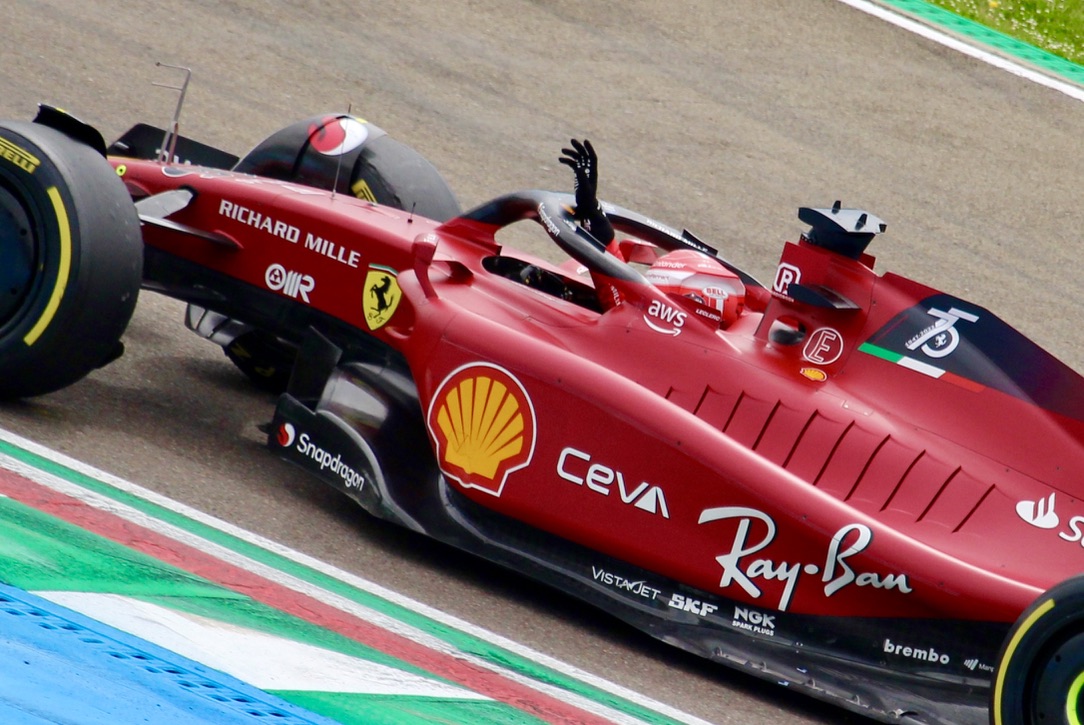
Ferrari Leclerc
"and immediately after seeing Hamilton on the camera I'm like oh my god there is not [1621.7s] another Ferrari Leclerc's gone off and lo and behold he's in the wall"
They’re talking about Charles Leclerc, who drives for Ferrari. The key point here is that he’s crashing into the wall, and they’re debating whether it’s related to the car’s braking behavior.
This refers to Charles Leclerc driving for Ferrari. In Monaco, a driver going into the wall repeatedly is often discussed in terms of braking confidence, car balance, and how hard they can push through tight corners.
brakes
"there is his brakes uh of course so neither so neither yeah exactly neither however I do have to [1649.1s] bring it up and you know at the end of the day chalet does crash far more than any other top driver"
Here “brakes” means how the car slows down and how predictable it feels when the driver hits the pedal. If the brakes feel wrong or inconsistent, it can make the driver miss the turn-in point and end up hitting the wall.
In racing context, “brakes” isn’t just the hardware—it’s the whole braking system behavior: how much stopping power you get, how consistent it feels lap to lap, and whether it matches the driver’s setup expectations. When a driver says the brakes were “horrendous,” they’re usually pointing to a mismatch between pedal feel/traction and what the car is doing under heavy braking.
red flag
"track is disintegrating that's why we got the red flag because the FIA were concerned that the track wasn't fit to race"
A red flag is the race being stopped right away. It’s used when the track or conditions aren’t safe, so everyone has to slow down and wait.
In Formula 1, a red flag means the race is stopped immediately for safety reasons. Marshals and the FIA use it when conditions—like a track surface issue—make it unsafe to continue at racing speed.
FIA
"because the FIA were concerned that the track wasn't fit to race"
The FIA is the organization that runs and regulates Formula 1. They also make the call when safety rules need to be enforced, like stopping a race.
The FIA (Fédération Internationale de l’Automobile) is the governing body that oversees Formula 1 and sets the rules and safety standards. In this context, they’re concerned the track condition isn’t safe to race.
cold tires
"combination of of the brakes and your cold tires behind the safety car"
Cold tires don’t grip as well. After slowing down behind a safety car, the tires can cool off, so the car may feel less stable when you restart.
Cold tires have lower temperature, which usually means less grip and slower response. That matters during safety-car periods and restarts because tire temperatures can drop, making traction and braking less predictable.
engine braking
"because he said it was to do with the engine braking"
Engine braking is when the car slows down because the engine is resisting the wheels after you lift off the gas. It can change how the car feels, especially on tricky surfaces.
Engine braking is the deceleration you get when you lift off the throttle and the engine resists the drivetrain’s motion. In racing, it can affect stability and how the car loads the tires, especially if the track surface is compromised.
onboard
"he has gone into that wall about 40 miles an hour he literally looks like a passenger going into that corner and look this might be me just being a delusional fanboy but when I watch that on board"
Onboard footage is a camera view from inside the car. It helps you see what the driver was doing right before something went wrong.
An onboard camera is mounted on the car to show the driver’s perspective during the run. Analysts use onboard footage to judge whether an incident came from driver input, braking, or track conditions.
five second penalty
"charle feels about this awful weekend and Ferrari strategy to keep charle behind Hamilton's five second penalty off the back of another contract extension charle will be in his feels right now ... Hamilton sped in the pit lane by 0.1 kilometers an hour"
A five-second penalty means the driver has to “pay” time because of a rules mistake. Here, it’s because Hamilton was too fast in the pit lane, so the race officials added that time.
A five-second penalty is a time penalty added to a driver’s race result for a rules infringement. In this segment, it’s tied to Lewis Hamilton’s pit-lane speeding, which is why Ferrari’s strategy and track position become a big talking point.
contract extension
"Ferrari strategy to keep charle behind Hamilton's five second penalty off the back of another contract extension charle will be in his feels right now"
A contract extension is when a driver and a team agree to keep working together for longer. It’s mentioned here as background for why the team’s choices are so important.
In Formula 1, a contract extension is when a team and driver agree to continue their relationship for additional seasons. The segment frames it as part of the context for why Ferrari’s decisions around Charles (Leclerc) and race strategy matter so much.
preserve the 23
"Ferrari have to preserve the 23 I know some people we start they're going well why don't they swap the cars because charle never asked for that"
“Preserve the 23” means keep a specific lead or advantage of 23 (usually points or a gap). The hosts are saying Ferrari made a strategy call to protect that advantage.
“Preserve the 23” refers to protecting a specific points/position advantage—here, the number 23 is treated as a target margin Ferrari needed to maintain. The idea is that Ferrari’s choice (not swapping cars or changing strategy) was meant to keep that advantage intact despite the penalty situation.
undercut
"it's kind of similar to you know in a way like you know the undercut and everything Hamilton's the lead driver at monaco you can't take the risk going for an extra lap"
An undercut is a pit-stop strategy where you come in earlier than the car in front. You go back out on fresh tires and try to drive fast enough to get ahead when they pit later.
In Formula 1, an undercut is when a driver pits earlier than the rival and uses fresh tires to build a faster lap, so they rejoin ahead when the other driver later pits. It’s especially relevant in races with safety cars or tight pit windows, because track position can matter more than outright speed.
Oscar Piastri
"there's a question from joe formula 6p will had jar get a penalty and give oscar piastri p3 the answer is no no further action for Isaac had jar"
Oscar Piastri is an F1 driver. In this part, they’re discussing whether a penalty would have changed where he finished in the race.
Oscar Piastri is an F1 driver, and the hosts mention him in the context of a potential penalty affecting race classification. They’re specifically answering whether a penalty would change his finishing position.
Hadjar
"there's a question from joe formula 6p will had jar get a penalty and give oscar piastri p3 the answer is no no further action for Isaac had jar"
Hadjar is the driver being investigated. The hosts explain that officials decided there wasn’t enough rule-breaking to add a penalty, so he keeps his podium position.
Hadjar is the driver at the center of the FIA investigation discussed here, with the hosts explaining why no further action was taken. The key point is that the stewards concluded the car’s condition wasn’t changed in a way that violated the rules.
suspension
"the problem or the investigation was around the suspension during the suspension of the race mechanics of the oracle rebel racing team were working on car number six during the race suspension"
Here, “suspension” means the race was stopped. When that happens, teams are allowed to do certain work on the car, but only within strict rules.
In this context, “suspension” refers to a race stoppage (often due to an incident) where teams can work on the car under specific rules. During a suspension, the FIA tightly controls what teams may change, to prevent unfair advantages.
Oracle Red Bull Racing
"mechanics of the oracle rebel racing team were working on car number six during the race suspension other than as permitted under the regulations"
Oracle Red Bull Racing is the F1 team involved in the situation being discussed. The officials’ decision is about what that team did (or didn’t do) during the race stoppage.
Oracle Red Bull Racing is the Formula 1 team whose mechanics were mentioned during the FIA investigation. In F1, team identity matters because the stewards’ decisions apply to specific cars and teams under the sporting regulations.
spark plugs slash coils
"the team were reported as attempting to change spark plugs slash coils but did not proceed with the change and the car started in the same condition as it arrived in the pits"
Spark plugs and coils help the engine create the spark that ignites fuel. In a race stoppage, changing them can be controversial because it might be against the rules depending on what’s allowed.
Spark plugs and ignition coils are part of the engine’s ignition system: coils generate high voltage, and spark plugs ignite the air-fuel mixture in the cylinders. Changing them during a race stoppage can be scrutinized because it may be considered an illegal advantage if not permitted by the rules.
qualifying lap
"he got no reward for his basically unbelievable qualifying lap has to be said indeed um let's talk about the v carbs shall we"
Qualifying is when drivers try to set the fastest lap before the race. Your qualifying result decides where you start on the grid for the actual race.
In Formula 1, a qualifying lap is the fastest lap a driver sets during the qualifying session, which determines the starting grid for the race. A great qualifying lap can put a driver in a better position to score points in Monaco, where overtaking is difficult.
v carbs
"let's talk about the v carbs shall we uh they ended up where did they end up tommy"
They’re talking about a specific team’s results in the Monaco GP—how well they did in qualifying and then how they scored points in the race.
This segment discusses the performance and points outcome of “v carbs” (a team reference in the episode’s Monaco GP context). The hosts focus on how the team converted qualifying pace into race results and points.
penalties
"last time uh we checked the classification was all over the place because basically there were so many penalties up for review but of course hadja did not end up getting any penalty in the end so it was liam lawson in a lovely p5"
Penalties are punishments for breaking the rules. After officials review what happened, they can add time or move a driver down the results.
Penalties are time penalties or grid/position changes applied after stewards review incidents (like unsafe driving or track limits). In Monaco, penalties can drastically reshuffle the final classification because the race is tightly packed and overtaking is limited.
DNS
"take advantage of other drivers errors and dns and so on and so forth up in p5"
DNS means a driver didn’t start the race at all. If someone doesn’t start, it changes the results and who can score points.
DNS stands for “Did Not Start,” meaning a driver was entered but did not begin the race. In race reviews, DNS results can affect who finishes where and how many points are available, especially in a tight field.
team game
"but also playing the team game as well i think i without the red flag i think i was genuinely considering"
In Formula 1, the “team game” refers to coordinated strategy between teammates—such as managing pace, timing pit stops, or using one car to help the other. It’s especially relevant in Monaco, where track position and timing can outweigh pure speed.
10 second time penalty
"he was penalized after the race a 10 second time penalty for being out of position at the restart after the red flag"
A 10-second penalty is basically a punishment that costs the driver time. Even if you cross the line first, the penalty can move you down the results.
A 10-second time penalty adds ten seconds to a driver’s race time (or is served in a way that effectively costs them track position). In a tight race, that can drop a driver out of the points or change their finishing position after the restart.
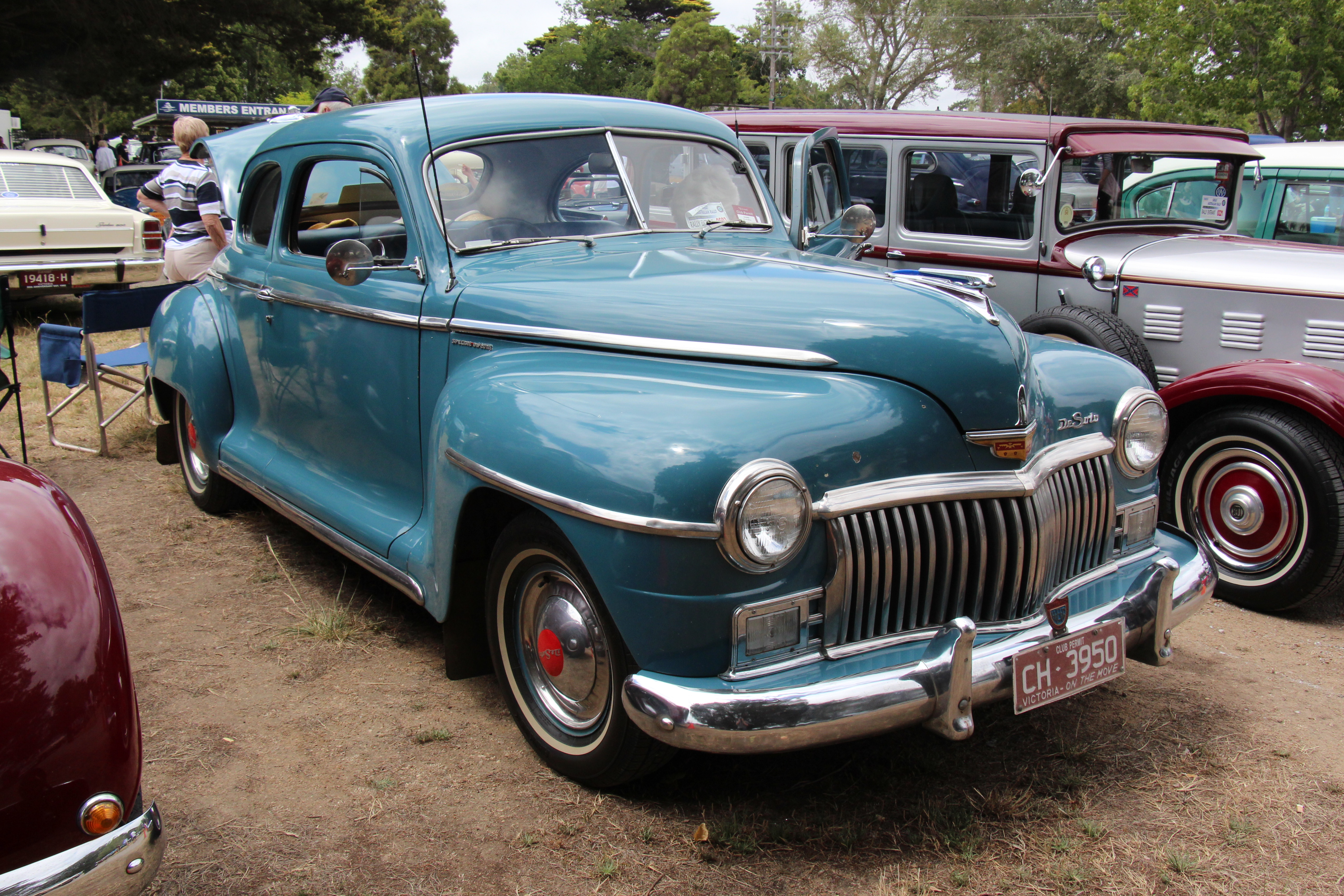
Plymouth P15
"know being kicked out the team rumours have been circulating i can only commend what Perez has done so far uh when you compare him to to Bottas so p 15 yeah p 15 so actually i take it all back Bottas still ahead in the standings p 13 he's been so clear of Bottas this is actually painful that"
The Plymouth P15 is an older car made by Plymouth. It was built for everyday driving, not for modern racing technology. People bring it up when talking about car history and older models from that time period.
The Plymouth P15 is a mid-century passenger car from Plymouth, known for being part of the brand’s postwar lineup. It’s often discussed in automotive history because it represents a common, practical style of American car from that era and helps illustrate how manufacturers built mainstream vehicles for everyday use. In a podcast context, it may be mentioned as a shorthand reference to older racing or automotive lore rather than as a modern performance machine.
Monaco overtaking difficulty
"unfortunately and this has just been the case with monaco is you can just drive as slow as you want and just power out the corners ... and even when they say oh classic race of monaco center and mantel they couldn't pass each other"
They’re talking about why it’s so tough to overtake in Monaco. The track is narrow and the straights are short, so it’s hard to build a pass. Even with extra power boosts, drivers still often can’t risk it.
The hosts discuss why Monaco races are often hard to pass: the track layout and short straights limit overtaking chances. They also argue that even modern performance aids (like push-to-pass) don’t overcome Monaco’s fundamental constraints. The segment frames this as a long-standing “quirk” of the Monaco calendar.
push to pass
"and even with now the fact that they've got this almost like indy car push to pass boost system"
“Push to pass” is a button or mode that gives a driver extra power for a short time. It’s meant to help them overtake other cars. Here, they’re saying Monaco is so tight that the extra power still doesn’t guarantee passing.
“Push to pass” is a driver-activated power boost system used in some racing series. The idea is to give the driver a temporary increase in performance to help create overtaking opportunities. In this segment, they’re saying Monaco’s layout makes even that boost hard to convert into real passing.
fp3
"friday is epic you get the best practice sessions of the year fp3 is absolutely awesome and qualifying delivers every single year without fail"
FP3 is the third practice session in an F1 weekend. Teams use it to test settings and learn how the car behaves. In this discussion, they’re saying FP3 is especially great at Monaco.
FP3 refers to Formula 1’s third free practice session during a race weekend. Teams use it to fine-tune car setup and gather performance data before qualifying. The hosts frame it as a standout part of Monaco weekend because it’s where you get the best practice sessions of the year.
Request an Explanation
Heard something you'd like explained? We'll add it to this episode.
Sign in to request explanations for terms you heard.
Want to learn more?
Browse our glossary for plain-English explanations of automotive terms, jargon, and concepts.
Help improve this episode
See something that's not quite right? Our annotations are AI-generated and can sometimes miss the mark. Click the flag icon on any annotation to suggest a correction.