
MP 1707: The Week In IndyCar July 1 2026
About this episode
IndyCar silly season is in full swing as Marshall Pruett breaks down the shocking news of Scott Dixon's move from Chip Ganassi Racing to Arrow McLaren. Pruett analyzes the fierce rivalry between Zak Brown and Chip Ganassi, exploring why Dixon decided to make this career-defining shift at age 45. The discussion also covers Christian Lundgard's future, the upcoming Honda Indy 200 at Mid-Ohio, and exciting historic cars heading to the Monterey Rolex Reunion, including Mazda's legendary 787B.
It's The Week In IndyCar Listener Q&A show, which uses listener-driven comments and questions covering a variety of topics submitted by open-wheel fans via social media.
TOPICS: Dixon, Rosenqvist, Lundgaard, McLaren, and Ganassi Silly Season!
NEW show stickers and retro racing memorabilia: ThePruettStore.com
EVERY episode is graciously supported by the Justice Brothers and TorontoMotorsports.com.
If you'd like to join the PrueDay podcast listener group, send an email to [email protected] and you'll be invited to participate in the Discord chat that takes place every day and meet up with your new family at IndyCar events.
Play on Podbean.com: https://marshallpruett.podbean.com/
Subscribe: https://marshallpruettpodcast.com/subscribe
Join our Facebook Group: https://www.facebook.com/MarshallPruettPodcast
[WTI]
Mid-Ohio Sports Car Course
"Got some Honda Indy 200 happening this weekend at Mid-Ohio. Unfortunately, we'll miss y'all."
A famous, twisty race track in Ohio that has lots of hills and turns. It is a favorite spot for IndyCar and sports car races.
A historic 2.258-mile road course located in Lexington, Ohio, featuring challenging elevation changes, high-speed sweeps, and a technical keyhole section. It has been a staple of the IndyCar calendar and sports car racing since the 1960s.
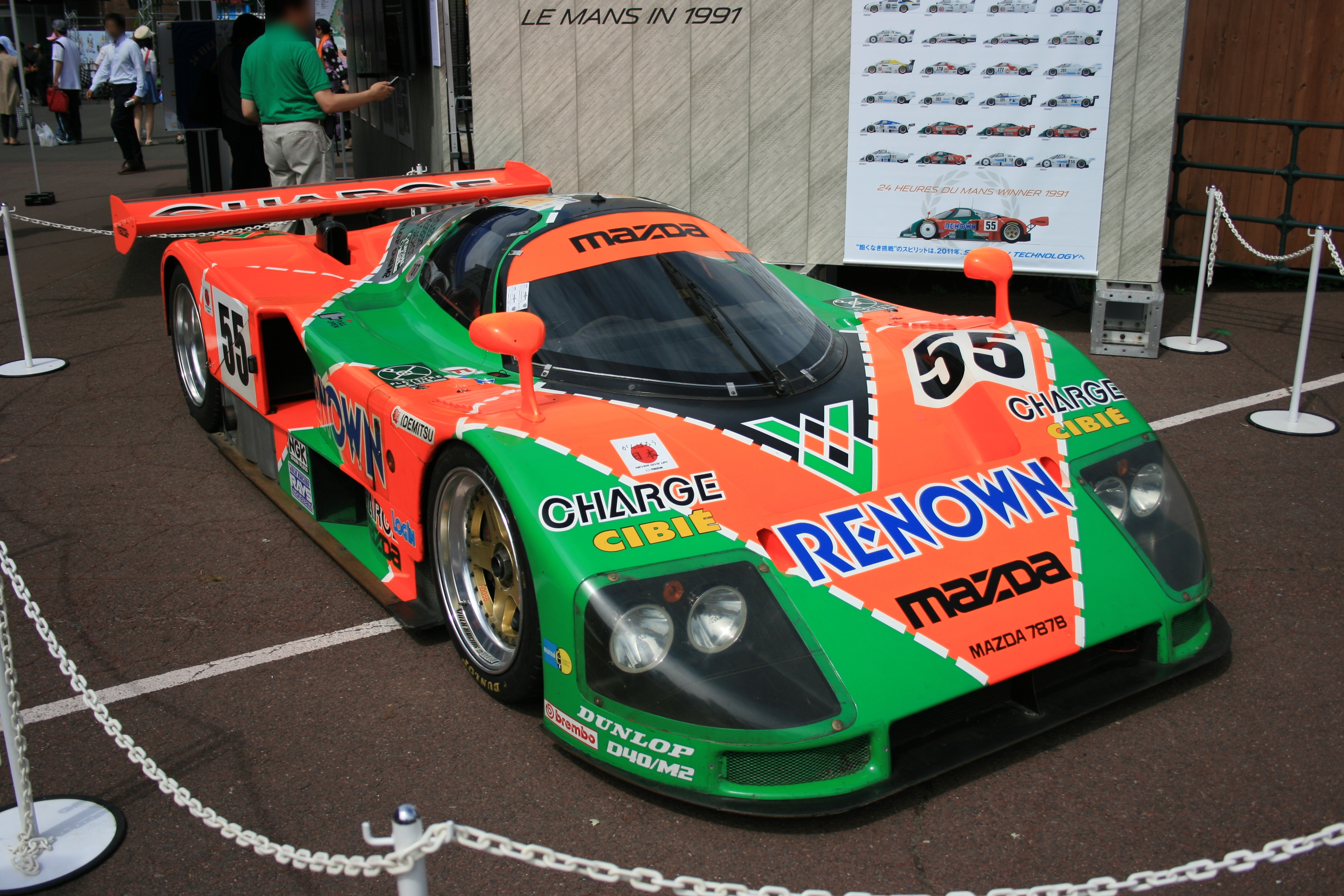
Mazda 787B
"So just yesterday, the day before that Mazda announced, they'll be bringing the actual 1991 24 hours of Le Mans winning 787B, which tends to live back at Mazda Global in Japan, but that's being sent over along with other great stuff."
A famous Japanese race car that won the prestigious 24 Hours of Le Mans race in 1991. It is beloved by car fans for its incredibly loud and unique rotary engine, which sounds like a screaming Formula 1 car.
The Mazda 787B is a Group C sports prototype racing car famous for winning the 1991 24 Hours of Le Mans. It is legendary for its unique 2.6-liter R26B four-rotor rotary engine, which produced a distinctive, high-pitched screaming exhaust note and made Mazda the first Japanese manufacturer to win the prestigious endurance race.
silly season
"Uncorked latest silly season piece that went up on racer.com. That would be this morning. And like the last one, there's just so much going on, y'all. And so no surprise, most of your questions, all compiled by our friend Jerry Sudeff, are about silly season."
A fun term used in racing to describe the time of year when drivers are switching teams, signing new contracts, and rumors are flying about who will drive where next year.
A colloquial motorsport term referring to the period late in the racing season when rumors, negotiations, and announcements regarding driver transfers and team contracts reach their peak. It often involves dramatic, unexpected roster shakeups across major teams as they prepare for the upcoming year.
Scott Dixon
"Our pal Jeremy Davis, who I often credit as being the world's number one Scott Dixon fan. Well indeed, Jeremy does need to open the show. Says brother, let's talk about the silliest of silly seasons. Says my bank account is gonna kill me this off season buying all new papaya gear of my guy Dixon."
One of the greatest race car drivers in history, originally from New Zealand. He has won the IndyCar championship six times and is famous for being incredibly calm and smart under pressure.
A legendary New Zealand racing driver who is a six-time IndyCar Series champion and the 2008 Indianapolis 500 winner. Known as 'The Iceman' for his calm demeanor and exceptional fuel-saving capabilities, he is one of the most successful drivers in American open-wheel history.
Pato O'Ward
"Lundgaard's the only one who's been on the podium for them this year four times out of 10 races, Pato is zero podiums. Christians, the only one to win again top of all their drivers in the standings. Why would they let him go?"
A young, exciting race car driver from Mexico who drives for the McLaren team in IndyCar. He is famous for his incredibly fast, aggressive driving style and is highly popular with fans.
A highly talented Mexican racing driver competing in the IndyCar Series for Arrow McLaren. He is widely recognized for his aggressive driving style, lightning-fast reflexes, and exceptional car control, making him a fan favorite and consistent championship contender.

Dallara DW12
"You sure as heck can rely on Scott Dixon who helped develop the DW 12 who helped develop everything that we've seen in Indy car for a really long time."
The standard race car body and frame that all IndyCar teams have been required to use since 2012. It was named after Dan Wheldon, a famous driver who helped test and develop it before he died in a crash.
The Dallara DW12 is the spec open-wheel chassis used in the IndyCar Series since 2012, named in honor of the late driver Dan Wheldon. It features a carbon fiber monocoque safety cell and is designed to accommodate both oval and road course aerodynamic configurations.
supercapacitor
"Wondering if any car will drop the super capacitor energy battery system for 2028. Or battery hybrid system. Says as time goes on it's clear to him that the present Indy car only system is a square peg that is not working."
A device that stores electricity, similar to a battery, but can absorb and release its energy much faster. This makes it perfect for giving race cars quick, short bursts of extra speed.
An energy storage device used in IndyCar's hybrid system instead of a traditional chemical battery. Supercapacitors can charge and discharge electrical energy much faster than standard batteries, making them ideal for rapid bursts of power, though they store less total energy.
bell housing
"There's something where they fit into the bell housing that structural bridge that sits between the back of the engine in front of the transmission. Bolts everything together."
The metal shell that connects the car's engine to its transmission. In IndyCar, this part is extra strong because it helps hold the back of the car together and houses the new hybrid electric parts.
The structural metal enclosure that bridges the rear of the engine block to the front of the transmission. In modern IndyCar designs, it serves as a critical load-bearing chassis member and houses the hybrid system's motor generator unit (MGU) and supercapacitors.
motor generator unit
"Bolts everything together. Lives in there along with a motor generator unit. That all fits in that space that packaging."
An electric motor in a hybrid race car that acts as both a generator to capture energy when the car brakes and a booster to give the car extra electric horsepower when accelerating.
A key component of a hybrid powertrain that converts mechanical energy into electrical energy during braking (regeneration) and converts electrical energy back into mechanical power to assist the engine (propulsion). In IndyCar's hybrid system, the MGU is packaged inside the bell housing.
Sonoma Raceway
"I did this. At Sonoma Raceway which was then known as Sears Point when I went through SCCA drivers school in I think it was 1990."
A famous, hilly race track in Northern California's wine country. It has lots of sharp turns and steep hills, making it very challenging for drivers.
A highly technical 2.52-mile road course located in the southern Sonoma Mountains of California, formerly known as Sears Point. It features 12 turns with dramatic elevation changes and is famous for hosting NASCAR, IndyCar, and amateur sports car events.

Datsun B210
"I have driven another race car. Before it was a Datsun B210 little sedan which way slower than the formula Ford around Sears Point."
A small, cheap, gas-saving car from the 1970s made by Nissan (under the Datsun name). Although it was built for everyday driving, some people used them as cheap starter cars for amateur racing.
The Datsun B210 is a compact, fuel-efficient economy car produced by Nissan from 1973 to 1978. While designed as a cheap commuter car during the 1970s oil crisis, its lightweight rear-wheel-drive chassis made it a popular entry-level platform for amateur road racing.
Request an Explanation
Heard something you'd like explained? We'll add it to this episode.
Sign in to request explanations for terms you heard.
Want to learn more?
Browse our glossary for plain-English explanations of automotive terms, jargon, and concepts.
Help improve this episode
See something that's not quite right? Our annotations are AI-generated and can sometimes miss the mark. Click the flag icon on any annotation to suggest a correction.
1 community members have helped improve this episode.