
About this episode
Younger gearheads are showing up everywhere—from “car shows cars and coffee races” to the driver’s seat—fueling motorsports growth. The hosts share stories of young builders coming from rebuilds, including “this is all girls,” and explain how first-car projects like a “77 firebird” and a Fox-body Mustang spark lifelong interest. They also compare old-school wrenching with today’s instant info and parts access, plus how modern racing and even supercross age limits shape early talent.
one-percenter
"busted knuckles it's always been a one-percenter and even if the broad brush group of kids you know can uber"
“One-percenter” usually means a small group of people who don’t fit the mainstream and have a strong, separate identity. Here they’re using it to say only a small number of people are truly into cars from early on.
“One-percenter” is a subculture term often used to describe a small, dedicated group that lives by its own rules and identity, especially in outlaw motorcycle culture. In the episode, they’re using it more broadly to argue that a tiny slice of people are “car people” from an early age.
young people getting into cars and racing
"we just had an episode I think it'd be fun to dive into some of that as well as just talk about right who are some of the young kids that are young kids young people that are getting into different aspects"
They’re talking about how younger people are getting into cars and racing. It’s about where that interest comes from and how it turns into real projects and hobbies.
This segment focuses on how younger people are getting involved in automotive culture—through projects like a first car and through motorsports pathways like karting and racing. The hosts connect that interest to long-term enthusiasm and mentorship within the car community.

Pontiac Firebird
"we're talking about Maddie's 77 firebird and what a cool kind of bandit tribute car that thing is for a first car"
This is a 1977 Pontiac Firebird. It’s a classic muscle car, and they’re talking about it as a tribute build—basically a car made to look and feel like the famous “Bandit” vibe from that movie.
A 1977 Pontiac Firebird is a classic American muscle car platform, and this one is being built as a tribute-style project. In the context of the episode, they’re highlighting it as a “cool kind of bandit tribute car,” meaning it’s styled/treated to evoke the look and vibe associated with the character “Bandit” from Smokey and the Bandit.
bandit tribute car
"we're talking about Maddie's 77 firebird and what a cool kind of bandit tribute car that thing is for a first car"
A “bandit tribute car” is a car that’s customized to look like it belongs to the “Bandit” character from the movie. It’s a theme build—more about the vibe and appearance than a specific factory model.
A “bandit tribute car” is a fan-style build where the owner modifies the vehicle to resemble or evoke the look of “Bandit” from Smokey and the Bandit. It’s not a factory trim—it’s more about styling cues and theme-driven changes that recreate the character’s on-screen identity.

Honda Civic
"…imagine being her boyfriend who's got a you know I hope he doesn't have a Honda Civic I'll just say that he better have a pickup truck or something cool…"
The Honda Civic is a very common, everyday compact car. Here it’s mentioned as the kind of car the speaker thinks wouldn’t match the “cool boyfriend” vibe compared to a classic muscle car.
The Honda Civic is a compact car line known for being practical, efficient, and widely available. In this segment it’s used as a contrast to the more “cool” image of a classic muscle car like a Trans Am.
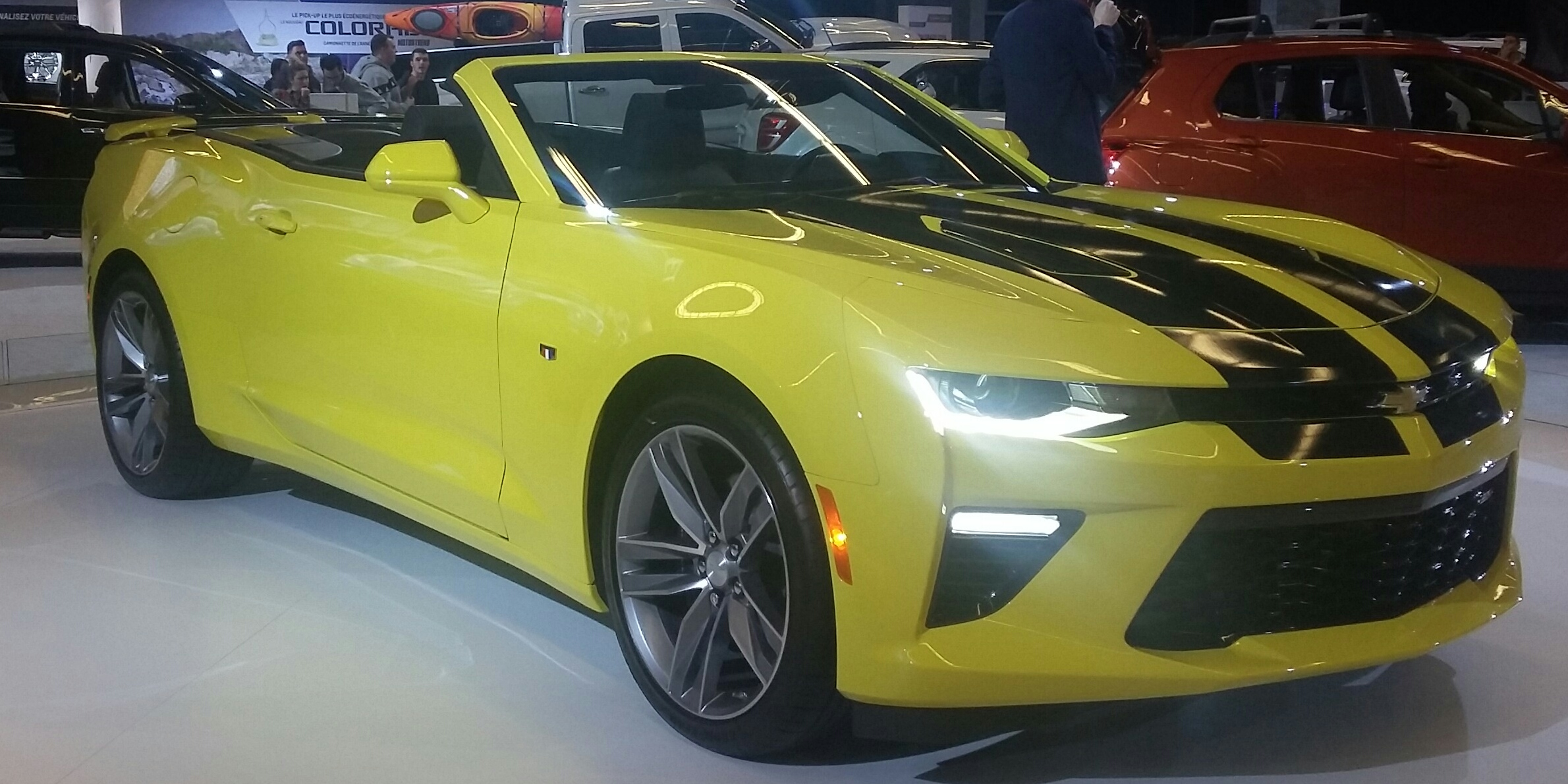
Chevrolet Camaro
"... that maybe was a year too older but had the cool Camaro hot rod or the you know the tri-five or the charg..."
The Chevrolet Camaro is a sporty American car, usually with a strong engine meant for quick driving. People talk about it a lot because it’s a popular classic car that’s easy to customize or restore. In the podcast, it’s used as an example of a “cool” car from the muscle-car era.
The Chevrolet Camaro is a classic American muscle car known for its sporty styling and V8-powered performance. In a podcast discussion like this, it’s brought up as part of the broader “hot rod” and classic-car world—especially when people compare popular models from the same era. It’s often mentioned because it’s a recognizable platform for restorations, upgrades, and custom builds.

Dodge Challenger
"…the Camaro's the challengers you know you see them rolling through the parking lot and that"
The Challenger is a muscle car from Dodge. The host is using it as another example of the kind of cool car you’d see around back then.
The Dodge Challenger is a modern and classic-era muscle car line known for its retro styling and performance focus. The speaker groups it with other “hot” cars you’d see rolling through a parking lot.
hot rod
"it's a little bit different so we may not see that farming league if you will into that hot rod but man they're out there it is evident when you go to a cars and coffee"
A hot rod is an older car that someone has modified to make it more fun to drive. It’s usually about turning a regular car into a personal project you can enjoy.
A hot rod is a modified car—typically an older model—built for driving fun, often with engine and suspension upgrades. In this segment, the hosts use it as a shorthand for the classic “modify what you can get” enthusiast culture.
cars and coffee
"but man they're out there it is evident when you go to a cars and coffee or a car show or you see you know a great place I've been lately as auctions and see what the young people are buying"
“Cars and coffee” is a casual car meetup—usually in the morning—where people bring their cars and hang out. It’s a place to see what kinds of cars people are building and buying.
“Cars and coffee” is an informal car meet where enthusiasts gather—often early in the morning—to talk about cars, show builds, and network. The hosts use it as an example of where you can see what kinds of cars younger people are into.

Chevrolet Chevelle
"and then we could go back to a lot of the muscle cars right from your Chevelle's and yeah dusters to you name it Nova's whatever you get your hands on"
They’re referencing the Chevrolet Chevelle, a famous older muscle car. The hosts are using it as an example of the kind of cars people could find and tinker with more easily back then.
The Chevrolet Chevelle is a classic American muscle car the hosts mention as part of the affordable lineup their generation could buy and modify. It’s brought up to illustrate how the “cool selection” of older muscle cars has changed over time.
muscle cars
"and then we could go back to a lot of the muscle cars right from your Chevelle's and yeah dusters"
Muscle cars are older American performance cars built for power and fast acceleration. The hosts are saying that back then, there were more of these cars available to buy and tinker with.
Muscle cars are American performance cars (especially from the 1960s–1970s) known for strong engines and straight-line speed. The hosts use the term to describe the kinds of cars their generation could buy cheaply and modify.

Dacia Duster
"...e muscle cars right from your Chevelle's and yeah dusters to you name it Nova's whatever you get your hands..."
The Dacia Duster is a small SUV meant for daily driving and light off-road use. It’s usually known for being affordable compared to many other SUVs. The podcast brings it up as an example of a car people might end up with, not just the classic performance models.
The Dacia Duster is a compact SUV built for practical, everyday use, often chosen for its value and go-anywhere attitude. In the podcast context, it’s mentioned alongside other cars people “get your hands on,” highlighting how enthusiasts and buyers can end up with a wide range of vehicles—from classic muscle cars to more modern, budget-friendly SUVs. It’s significant because it represents the mainstream side of the car world, not just the performance classics.

Chevrolet Nova
"yeah dusters to you name it Nova's whatever you get your hands on but we had a pretty good cool selection that we could go grab and modify"
They’re talking about the Chevrolet Nova, another older muscle car. The hosts are using it to show that there used to be more options that were easier to buy and work on.
The Chevrolet Nova is another classic muscle car the hosts mention as part of the affordable “grab and modify” pool. It’s used to contrast past availability with the higher prices and different choices younger buyers face now.

BMW M5
"probably have a little more money mom and dad are probably throwing down and helping him acquire their little M5 or whatever you have to pick up truck crowd"
The BMW M5 is one of BMW’s top performance sedans. It’s the kind of car that costs more than a basic enthusiast car, so the hosts are using it as an example of something kids might get help affording.
The BMW M5 is a high-performance “M” model built for fast road driving, typically with a powerful engine and a chassis tuned for confident handling. In this segment, the hosts use it as an example of a more expensive, parent-assisted purchase among younger enthusiasts.
wild builds
"but the real the real hot riders I think they're buying so many cool wild builds that people like to get their hands dirty I saw kids at this auction"
A “wild build” is a car project that’s been customized in a big, creative way. The idea is that younger people are making more unusual cars and learning by working on them.
“Wild builds” refers to highly customized, sometimes unconventional car projects that go beyond stock appearance or typical performance upgrades. The hosts connect it to younger enthusiasts “getting their hands dirty” by building unique cars rather than buying something already finished.

Oldsmobile Cutlass
"[721.1s] you know the Cutlass Supreme from the mid 70s those are turning into cool hot [725.6s] rods now"
The Cutlass Supreme is an Oldsmobile from the 1970s. People are starting to modify these cars for more power and style, not just the most famous muscle cars.
The Oldsmobile Cutlass Supreme is a 1970s GM “personal luxury”/muscle-adjacent platform that’s now being rediscovered for hot-rod builds. The host specifically calls out mid-70s examples as turning into cool hot rods.
Ram Air
"[739.4s] trans Am's the WS-6's definitely the firehawks the Ram Air cars I think or [744.7s] something to watch but you get a whole influx of new hot rods"
Ram Air is a way to get more air into the engine using the car’s speed. The faster you go, the more the system can help feed the engine.
Ram Air is an intake system concept where forward motion helps force more air into the engine. The host mentions “Ram Air cars” as part of the 90s/late-era muscle-car lineup that’s becoming a target for new hot-rod builds.

skyline
"[749.1s] I own a [749.1s] skyline and when I take that skyline out there are more kids that will bum [753.5s] rest my skyline than will my charger"
The Nissan Skyline is a famous Japanese performance car. The host is saying more younger people are drawn to it compared with his American muscle car.
A Nissan Skyline is a Japanese performance icon known for its turbocharged heritage and strong aftermarket support. In this segment, the host compares his Skyline’s appeal to a classic American muscle car, arguing the Skyline is winning with younger buyers.

charger
"[753.5s] rest my skyline than will my charger it's it's close I got a 69 charger that's a [758.6s] big crowd pleaser"
The Dodge Charger is a well-known American muscle car. The host is comparing how different age groups react to his Charger versus his Skyline.
The Dodge Charger is a classic American muscle car platform with a big, loud, crowd-pleasing reputation. The host contrasts it with his Nissan Skyline, saying both are crowd pleasers but that younger people gravitate more toward the Skyline.
take it to the next level
"[810.6s] muscle cars that are already handling and steering and braking and have power [816.4s] so it'll be interesting to see how many take it to the next level even right [822.0s] because it's already good"
“Take it to the next level” is used here as a hot-rodding concept: pushing beyond the car’s stock capabilities with upgrades. The host is setting up a comparison between older builds that had to be made fast from scratch and newer builds that can be improved further because the starting point is already strong.

88 Mustang GT
"“...I had this Mustang that I picked up it was an 88 Mustang GT so prime arrow the Fox body...”"
This is a Ford Mustang GT, which is the sportier Mustang version. The “88” refers to the model year, and that generation is famous because it’s popular to modify and there are lots of parts available.
The Ford Mustang GT is the performance-focused version of the Mustang, and the “GT” typically means a more powerful engine and sportier trim than a base model. In this story, the host specifically has an “88 Mustang GT,” which is part of the Fox-body generation known for its simple, mod-friendly layout and strong aftermarket support.
Fox body
"“...it was an 88 Mustang GT so prime arrow the Fox body with you know the rear...”"
“Fox body” is what car people call a certain generation of the Ford Mustang (roughly the late 1970s through early 1990s). It’s a recognizable Mustang style and it’s known for being popular to work on and customize.
“Fox body” is the enthusiast nickname for the 1979–1993 Ford Mustang platform. It’s a chassis/body style label that matters because it’s strongly associated with a huge aftermarket, easy upgrades, and a distinct look (like the body lines and common aero pieces).
water pump
"“...I paid 12.5 and an auction for it I put a water pump on it so I had about 13 into it...”"
The water pump moves the engine coolant around so the engine doesn’t overheat. If it fails, the engine can run too hot and get damaged.
A water pump is the component that circulates coolant through the engine to keep temperatures under control. Replacing one is a common repair on many cars because coolant flow is essential for preventing overheating.

Ford Mustang Gt
"...f but right now that kid with that car a freaking Ford Mustang GT an 88 it's black it looks good that guy's got the..."
The Ford Mustang GTD is a performance version of the Mustang, built to be more track-capable than a regular model. In the podcast, it’s brought up because the car looks great and is a serious performance machine. The “GTD” part is the name used for that higher-performance Mustang trim.
The Ford Mustang GTD is a high-performance, track-focused Mustang variant, discussed in the podcast as a standout car. In the context you provided, it’s mentioned because someone has a black Mustang GT (with the conversation emphasizing the car’s look and presence). The “GTD” name signals a more performance-oriented Mustang compared with a standard GT.
headers
"“...the chrome bumpers you know like bolt some headers on the whole thing...”"
Headers are aftermarket exhaust parts that help the engine push exhaust gases out more efficiently. People install them for better sound and sometimes better performance.
Headers are exhaust components that replace the factory exhaust manifolds and route exhaust gases through larger, more direct pipes. Enthusiasts often install them to improve exhaust flow and change the engine’s sound and response characteristics.
chrome bumpers
"“...they see us like get wide eyed the chrome bumpers you know like bolt some headers on the whole thing...”"
Chrome bumpers are bumpers with a shiny chrome finish. They’re common on older classic cars and are part of the classic look people notice right away.
Chrome bumpers are a styling choice where the bumper is finished with a shiny chrome plating. In classic American cars, chrome bumpers are a big part of the visual “period look,” and the host contrasts that with what younger people are excited about.
wheeling
"“...we went wheeling with his kid level yeah we went wheeling with his kid and his kid was so excited...”"
“Wheeling” means taking a vehicle off-road on trails with obstacles. It’s the kind of driving where you go over rough ground and rocks, usually with a 4x4.
“Wheeling” is off-road slang for driving vehicles over rough terrain, often on trails with obstacles like rocks, ruts, and steep grades. It’s commonly associated with 4x4s and emphasizes traction, ground clearance, and careful driving technique.
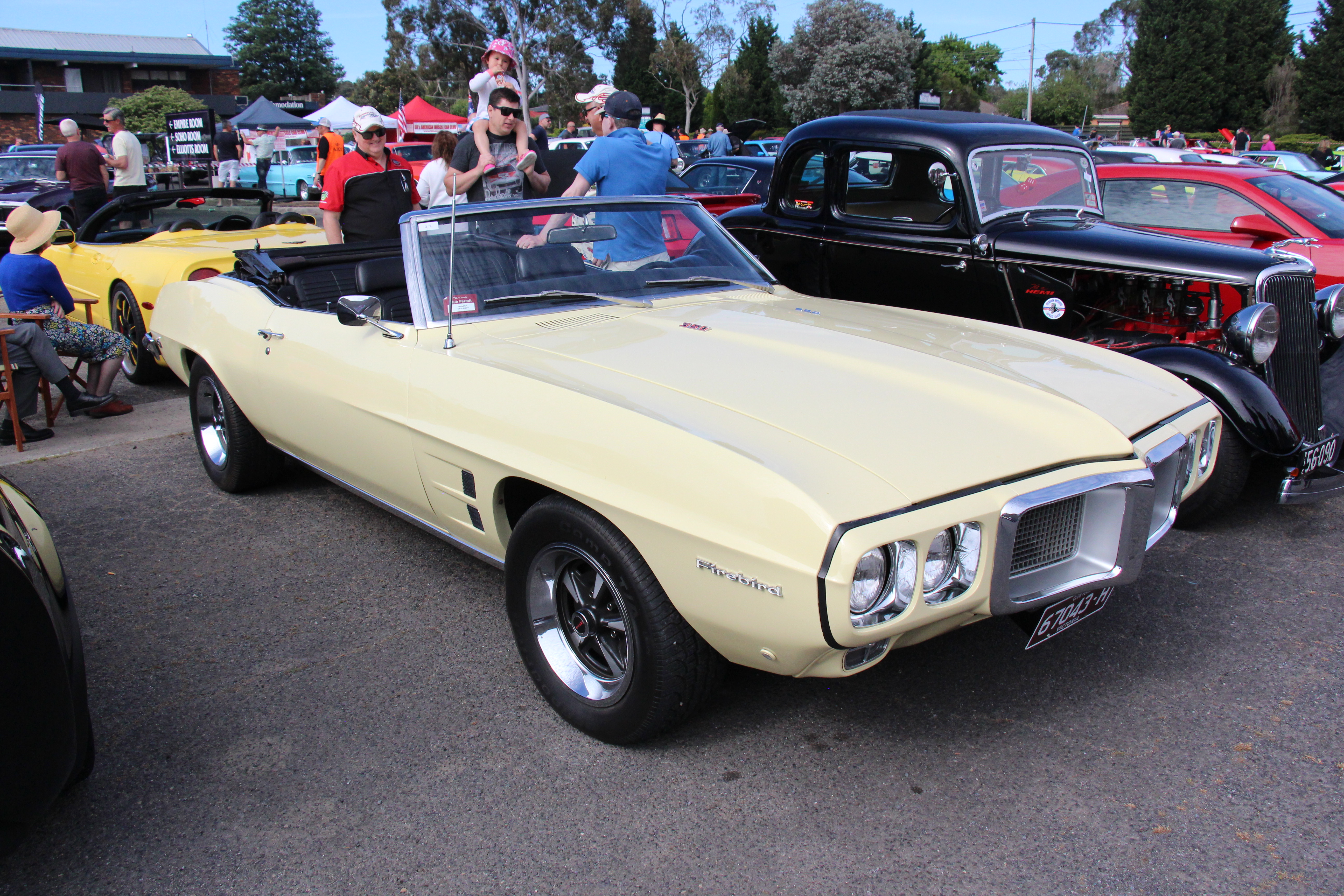
77 trans am
"where we actually got to dive into a cool 77 trans am and the way they were building it"
The Pontiac Trans Am is a famous American muscle car. Here, they’re saying this “77” build focused on making the car safer and easier to control for a young driver—like the suspension and brakes—before adding more power later.
The Pontiac Trans Am (here referenced as a “77 trans am”) is a classic American muscle car known for its V8 performance and iconic styling. In this segment, they’re talking about how a teenager-focused build prioritized upgrades like suspension, brakes, and interior rather than just raw power.
suspension
"where she needed the upgrades is where she got the upgrade suspension brakes interior"
Suspension is what helps the tires stay in contact with the road and controls how the car moves over bumps. Better suspension can make the car feel more stable and easier to control.
Suspension is the system that connects the wheels to the car and controls how the car rides and handles bumps and weight transfer. For a young-driver build, upgrading suspension can improve grip and stability even before adding more engine power.
brakes
"where she needed the upgrades is where she got the upgrade suspension brakes interior"
Brakes are how the car slows down. Upgrading brakes can help the car stop more strongly and keep stopping power when you’re driving hard repeatedly.
Brakes are the components that slow the car by converting motion into heat through friction. In performance and racing contexts, brake upgrades are often about stronger stopping power and better fade resistance during repeated hard use.
horsepower
"you kind of got to earn your horsepower you got to walk it up a little bit"
Horsepower is basically how strong the engine is. More horsepower can make a car faster, but you still need the right setup and driving experience to use it without getting into trouble.
Horsepower is a measure of engine power—how much work the engine can do over time. In performance driving, it’s often treated as the “how fast can it go” number, but the segment emphasizes that you typically need supporting upgrades and experience to use it safely.
three eighth mile circle track
"at a local you know three eighth mile circle track here just outside Denver Colorado"
A three-eighths-mile track is a small oval race track. Because it’s short, the cars are constantly turning and accelerating, so handling and control matter a lot.
A “three-eighths mile” track is a short oval where cars accelerate hard and brake less than on longer road courses. Short ovals emphasize traction, setup, and driver skill because speeds change quickly from turn to turn.
circle drags
"they do something called circle drags"
“Circle drags” is the name of the racing event they run. It’s basically a race format on an oval track where cars compete while going around in a circle.
“Circle drags” is the event format they’re describing at their local oval track—an on-track competition that blends drag-style acceleration with the constraints of a circular track. The key takeaway is that it’s a crowd-friendly way to race cars while still using the oval layout.

Yukon XL
"in a Yukon XL that slammed it and put it in the wall the other day"
The GMC Yukon XL is a big SUV. They mention it because someone brought it to a track event and had a serious crash, showing that even a normal SUV can get into trouble when driven aggressively on track.
The GMC Yukon XL is a full-size SUV with an extended wheelbase, commonly used as a family hauler. In this segment, it’s mentioned because someone drove it hard at a track event and crashed into the wall, illustrating how unforgiving track conditions can be.
Keeland Harvick
"during the circle drags this kid named Keeland Harvick who was 13 years old"
Keeland Harvick is a kid who was racing at the event. They mention he’s very young—13—and that he’s connected to a famous NASCAR driver, which is why it stands out.
Keeland Harvick is mentioned as a 13-year-old driver at the event. The segment ties him to racing culture by noting he’s the son of Kevin Harvick, highlighting how young drivers are getting track experience early.
Kevin Harvick
"this kid named Keeland Harvick who was 13 years old man uh Kevin Harvick's son"
Kevin Harvick is a well-known racing driver. In this story, they bring him up because his son is the 13-year-old kid racing at the event.
Kevin Harvick is referenced as the father of Keeland Harvick. In motorsports, Kevin Harvick is a well-known NASCAR figure, and the mention is used to emphasize the racing pedigree and early involvement.
driving pro-late models
"this was in the uh the the driving pro-late models in the"
“Pro-late models” is a type of race car class used on short tracks. They mention it to explain what kind of cars were racing at the event.
“Pro-late models” refers to a class of late-model stock cars used in regional short-track racing. The segment uses it to place the event in a specific racing category where young drivers were participating.
AMA supercross
"[1160.6s] 15 so to see that and then you know you fast forward I went to an AMA supercross the other day [1168.6s] um Hayden Deegan uh Brian Deegan's son he's you know the baddest dude on two wheels right now he"
AMA supercross is a major U.S. motorcycle racing series run under the American Motorcyclist Association (AMA). It’s known for stadium-style tracks with tight turns, jumps, and high speeds—so “being the fastest” there is a big deal.
Hayden Deegan
"[1168.6s] um Hayden Deegan uh Brian Deegan's son he's you know the baddest dude on two wheels right now he [1174.0s] just turned 20 you know for the longest time he couldn't race in the supercross because he was too"
Hayden Deegan is a motocross/supercross racer. The hosts are saying he’s been very good for a long time, and that he had to wait until he was old enough to race in supercross.
Hayden Deegan is a professional American motocross rider and the son of Brian Deegan. In this segment, the hosts highlight him as one of the top young riders in supercross, noting he previously couldn’t compete due to age restrictions.
Brian Deegan
"[1168.6s] um Hayden Deegan uh Brian Deegan's son he's you know the baddest dude on two wheels right now he [1174.0s] just turned 20 you know for the longest time he couldn't race in the supercross because he was too"
Brian Deegan is a famous motocross/supercross rider. In this conversation, he’s mentioned because his son Hayden grew up around that racing world.
Brian Deegan is a well-known motocross and supercross figure, and the father of Hayden Deegan. Here, he’s referenced to explain the “next generation” angle—kids growing up around high-level racing and training.
triple flips
"[1215.2s] the level of racing uh you know higher and higher racing building you name it I mean look at all the [1223.2s] sports outside of automobile you know you've they've been watching uh nitro circus and you know like [1231.2s] the triple flips and skateboarding and every every x games thing like they just keep pushing it"
A “triple flip” is when someone spins three full times while they’re in the air. The hosts are using it as an example of how kids are seeing bigger, crazier stunts than earlier generations.
“Triple flips” refers to performing three full rotations in the air, typically in freestyle motocross or stunt contexts. The hosts mention it to illustrate how today’s youth are exposed to more extreme tricks through events like X Games and Nitro Circus.
X Games
"[1231.2s] the triple flips and skateboarding and every every x games thing like they just keep pushing it [1237.9s] like we thought we were so cool doing an ollie in a this and that a rail slide"
X Games is a big competition for extreme sports like skateboarding and motocross tricks. The hosts are saying kids watch events like this and get inspired to attempt harder moves.
X Games is an extreme sports event series that features disciplines like skateboarding, freestyle motocross, and other stunt-based competitions. The hosts cite it as part of the media exposure that helps younger athletes push harder.
ollie
"[1237.9s] like we thought we were so cool doing an ollie in a this and that a rail slide you know all of a sudden [1243.1s] they're doing triples and whatever"
An “ollie” is a basic skateboarding trick where you jump the board up off the ground. The host is saying that what used to seem impressive is now just the starting point.
An “ollie” is a skateboarding trick where the rider pops the board upward and levels it in the air without using hands. The host mentions it to compare older “cool” tricks to the more advanced stuff kids attempt now.
rail slide
"[1237.9s] like we thought we were so cool doing an ollie in a this and that a rail slide you know all of a sudden [1243.1s] they're doing triples and whatever"
A “rail slide” is when a skateboard slides along a metal rail. The host uses it to show how skate tricks have gotten more intense over time.
A “rail slide” is a skateboarding trick where the board slides along a metal rail. It’s mentioned here as an example of earlier, simpler tricks compared to today’s more extreme “triples.”
dirt nap
"[1271.1s] he's pushed me he's like look man if you're not crashing you're not trying you know you're not [1274.7s] trying to go fast enough so push yourself harder because the only way you're gonna get faster is [1279.9s] that you know take a dirt nap every once a while"
“Dirt nap” is a funny way riders say they crashed and ended up on the ground. The point here is that taking some falls can be part of learning how to go faster safely.
“Dirt nap” is motocross slang for crashing hard enough that you end up lying on the ground in the dirt. The host uses it to make a point: pushing limits often involves falls, and that experience can make a rider faster.
Motor Trend
"…maybe there'd be a a motor trend and maybe there'd be a hot rod or a car craft…"
Motor Trend is a car magazine/website. The hosts are mentioning it as one of the few places kids used to learn about cars before the internet.
Motor Trend is an automotive media brand known for car reviews, road tests, and performance coverage. In the transcript, it’s used as an example of the limited print sources people had when they were younger.
Car Craft
"…maybe there'd be a a motor trend and maybe there'd be a hot rod or a car craft you know like that was all you got…"
Car Craft is a car magazine brand. The hosts are saying that, when they were younger, magazines like this were one of the main ways to learn about car builds.
Car Craft is an automotive media brand historically associated with muscle cars and performance builds. In the transcript, it’s grouped with other magazines as part of the limited “rack” of car knowledge available before online resources.
Chilton's
"…it was like read a Chilton's you know like just go out there pull your breaks apart and read the Chilton's…"
Chilton’s is a repair manual series for cars. It’s like a guidebook with instructions and specs so you can work on your car yourself.
Chilton’s is a well-known line of automotive repair manuals that provide step-by-step service procedures, specifications, and troubleshooting guidance. Enthusiasts often use them as a baseline reference when doing DIY repairs or upgrades.
YouTube
"…now you have right obviously the tv shows the youtube's the everybody's instas…"
YouTube is a video website where people post tutorials. In cars, it’s where you can watch step-by-step videos for repairs and upgrades.
YouTube is a video platform that has become a major source of automotive how-to content, from repairs to engine builds. The transcript highlights it as a key reason knowledge access is faster and more complete than in the magazine era.
salvaging
"…we were scrounging junkyards and salvaging stuff so we learned how to salvage some older cylinder heads…"
Salvaging means taking parts off old or damaged cars that are still usable. Then you clean them up and prepare them for your project.
Salvaging in this context means recovering usable parts from wrecked or retired vehicles, then cleaning, inspecting, and reusing them. The transcript mentions salvaging cylinder heads and doing additional work to make them suitable for a build.
junkyards
"…so many more parts right oh yeah we were scrounging junkyards and salvaging stuff…"
A junkyard is a place where old cars are taken apart for usable parts. People go there to find parts cheaply or to get rare pieces for a project car.
Junkyards are salvage yards where used parts are pulled from vehicles and sold. In enthusiast circles, they’re a common source for hard-to-find components and for learning how older parts fit and function.
cylinder heads
"…learned how to salvage some older cylinder heads that might have been a little bit better and maybe do some important polish…"
Cylinder heads are the top part of the engine where the fuel/air mixture burns. They also hold the valves, and improving them can help an engine make more power.
Cylinder heads are the engine’s top castings that contain the combustion chambers and house components like valves and spark plugs. They’re a major performance lever because changing head flow characteristics and internal geometry can significantly affect power.
dry sump relocation kit
"…i just bought an oil pump and a dry sump relocation kit for a big bike mopar from a guy in detroit for 425 bucks…"
It’s a kit that helps you set up a dry-sump oil system. Instead of relying on oil sitting in the engine pan, the system stores oil in a separate tank and pumps it around so the engine stays properly lubricated during aggressive driving.
A dry sump relocation kit is hardware used to move the oiling system components (like the oil pump and oil tank) to support a dry-sump setup. On a dry-sump system, oil is stored in a separate tank and scavenged from the engine, which helps prevent oil starvation during hard cornering and sustained high RPM.
oil pump
"…i just bought an oil pump and a dry sump relocation kit…"
The oil pump moves oil through the engine to keep parts lubricated. If you’re building for hard driving, the oil pump setup matters a lot to prevent oil starvation.
An oil pump pressurizes and circulates engine oil through the lubrication system. In high-performance or dry-sump setups, the oil pump is often part of a more controlled oiling strategy to maintain pressure and flow under extreme driving conditions.
mopar
"…i just bought an oil pump and a dry sump relocation kit for a big bike mopar…"
Mopar is a nickname for Chrysler’s cars and performance parts (think Dodge and Plymouth). The speaker is talking about building a Mopar engine and buying parts for it.
Mopar is the enthusiast nickname for Chrysler’s performance and parts ecosystem, covering brands like Dodge, Plymouth, and Chrysler. The transcript uses it to describe a “big bike Mopar” build where parts like an oil pump and dry-sump kit are being sourced.
Request an Explanation
Heard something you'd like explained? We'll add it to this episode.
Sign in to request explanations for terms you heard.
Want to learn more?
Browse our glossary for plain-English explanations of automotive terms, jargon, and concepts.
Help improve this episode
See something that's not quite right? Our annotations are AI-generated and can sometimes miss the mark. Click the flag icon on any annotation to suggest a correction.