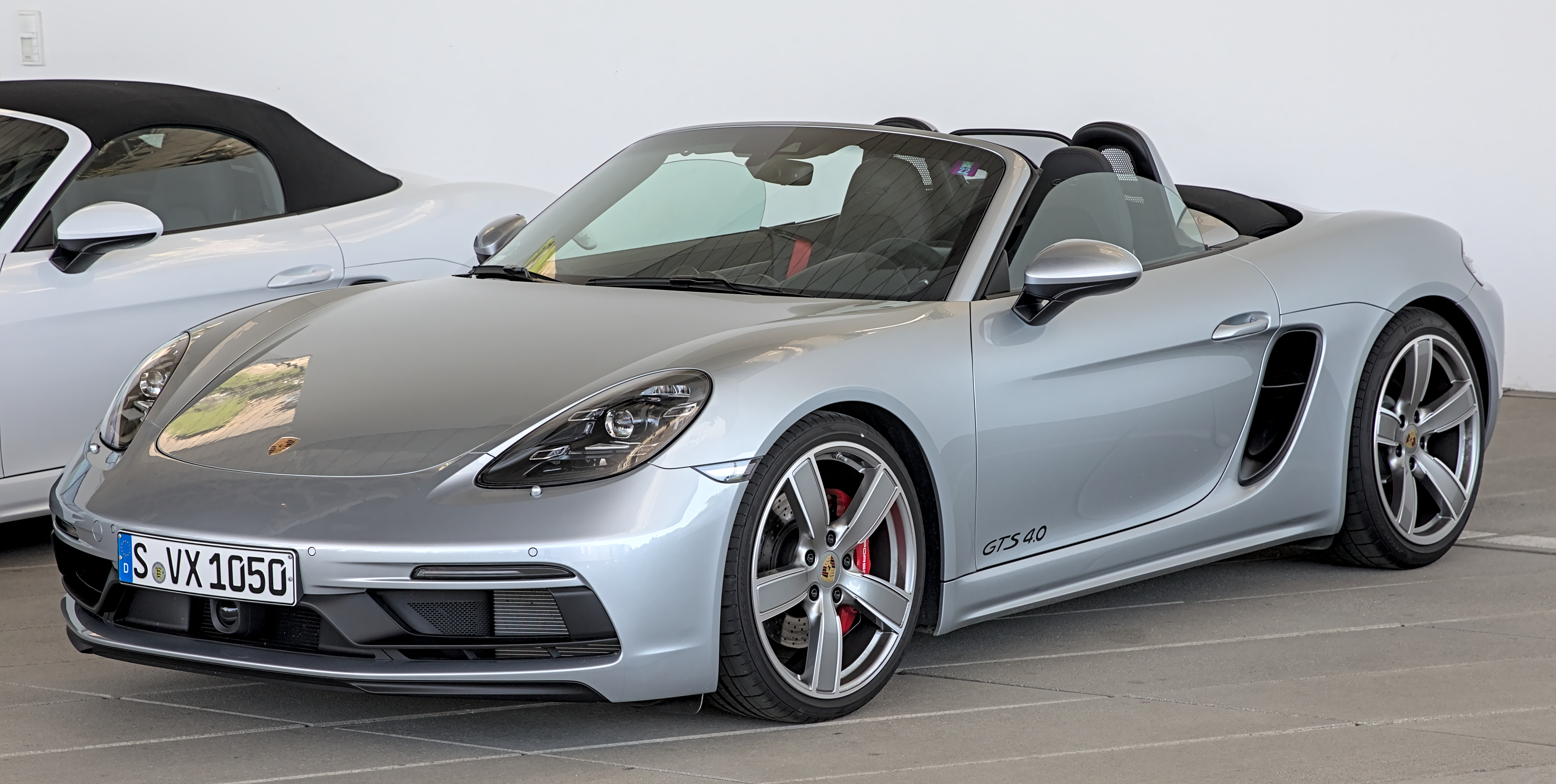
“S-C” is Porsche’s abbreviation for “Sport Cabriolet,” which denotes a convertible version of a performance model. The hosts note that this naming has been used before, and they tie it to the idea that the car is essentially a GT3 convertible. It’s a branding/trim convention that signals the body style and positioning.
Homologation is basically “approval for racing.” Racing organizations require that a certain number of street cars be built to match what teams use on track. The hosts are saying Porsche chose the manual-only setup to help meet those racing rules.
PDK is Porsche’s fast-shifting automatic transmission. Instead of a traditional torque-converter automatic, it uses two clutches to change gears quickly.
Tiptronic is Porsche’s name for an automatic transmission that lets you manually select gears (often via paddles or a gear selector). The speakers mention it as the disliked option on the “Spider RS,” implying fans wanted a manual gearbox instead.
This means a convertible that’s meant to drive hard, not just look good. They’re describing a car that can handle track use while still being open-top.
The Porsche 911 GT3 is a performance-focused 911 meant for serious driving. The point being made is that some people buy it for the image, but they’re too nervous to use it on a track.
A track day is when you drive your car on a race track (not public roads) with other drivers. It’s a way to push the car safely, but it can also make people worry about damage like rock chips.
The speaker challenges a common stereotype: that convertibles are “softer” (less focused, less performance-oriented) than coupes. They frame the convertible’s appeal as potentially changing how owners use the car—more casual cruising versus track-style ownership.
Rigidity means the car’s body doesn’t twist or bend as much when you drive. A more rigid car usually feels more precise and stable, especially when cornering.
If only a small number of cars are made or sold with a certain configuration, they can become harder to find. Hard-to-find cars often attract collectors, which can push prices up.
Carbon fiber is a lightweight composite material used to strengthen a vehicle without adding much mass. Here, the discussion highlights that reinforcement for rigidity was done using carbon fiber, balancing stiffness needs against weight concerns.
When they say “body stability is gone,” they mean the car’s structure is less stiff than before. A stiffer body helps the car feel more controlled when you drive hard, so convertibles often need extra reinforcement.
A Porsche 911 is a famous sports car model from Porsche. Some versions cost a lot more than others, so the “valuable” comment is about how rare or desirable the specific 911 is.
“Pricing on this” refers to the disclosed or discussed purchase price for the car being talked about. In car-buying conversations, this often ties into how MSRP, dealer pricing, and market demand affect what buyers actually pay.
“Similarly spec’d” means the cars have similar options and equipment. They’re trying to make a fair price comparison by not comparing a fully loaded car to a bare-bones one.
“Flipped” refers to buying a newly released, high-demand car and reselling it quickly—often at a higher price—before the market cools. The comment about not leaving dealers under a certain price suggests supply is tight and dealers (and resellers) can command higher transaction prices.
Term
T hybrid
This sounds like a hybrid version of the car. The idea is that it combines an electric component with the gas engine to change how the car feels and performs.
Turbocharging adds a device that squeezes more air into the engine. That usually helps the car make more power, but it can change how the engine feels and sounds.
A hybrid uses both a gas engine and an electric motor. The electric part can help with acceleration and efficiency, and it may become more common in performance cars.
They’re saying the car is basically a two-person setup. If you want to carry kids or passengers in the back, this won’t work because there aren’t real back seats.
The Nissan Skyline is a famous Japanese car line that people associate with performance and racing. The big news here is that Nissan is bringing the Skyline back, which matters to enthusiasts.
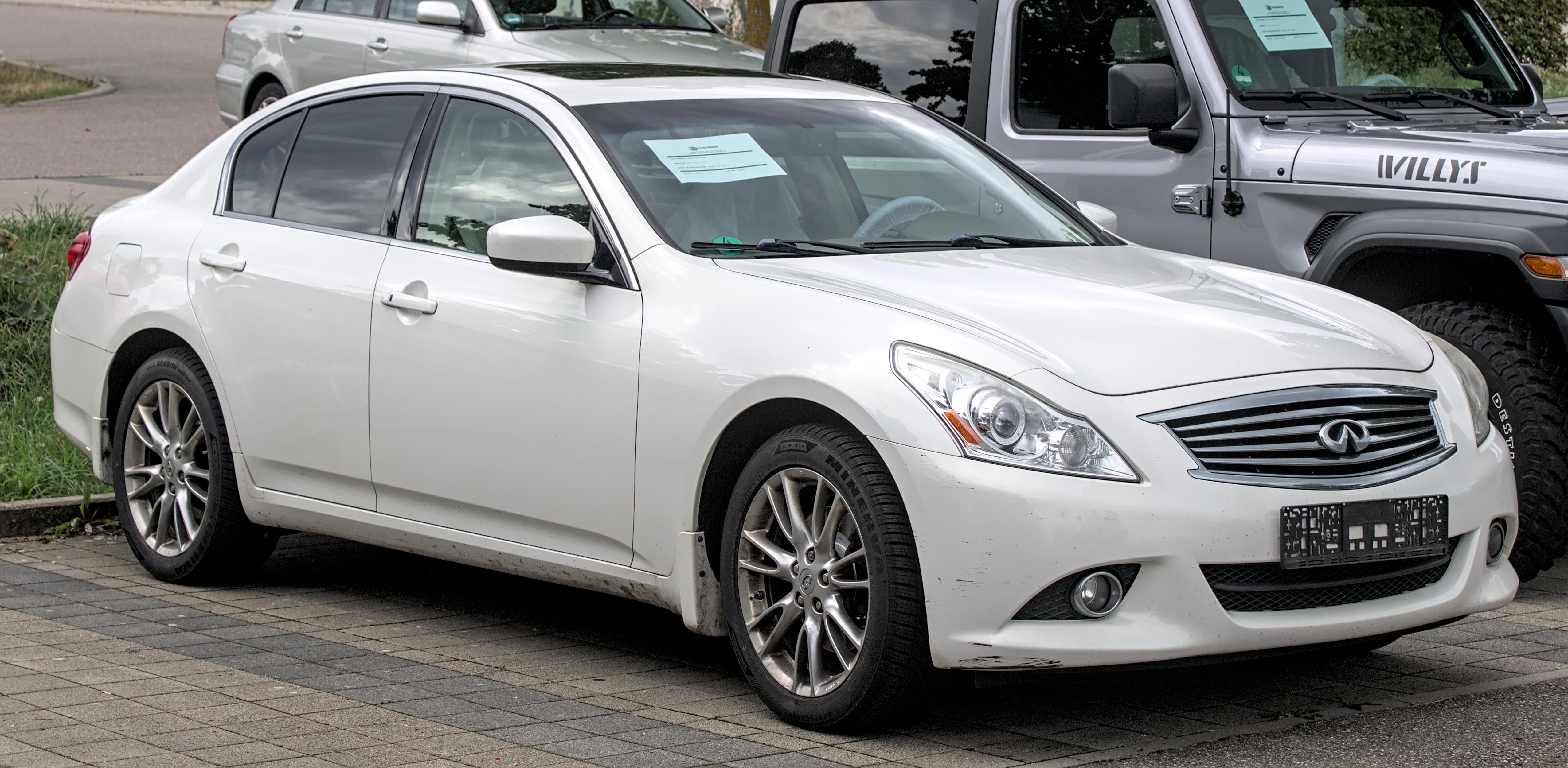
The Infiniti Q50 is a sedan sold in the U.S. The hosts are saying the returning Skyline would be called the Q50 here, so it’s basically the same idea with a different badge.
A manual transmission means you shift gears yourself using a clutch and a stick. The hosts are saying the car might be offered with a stick, which many driving fans prefer.
The Chevrolet Camaro is a sporty car from Chevrolet. It’s known for strong performance and a classic muscle-car look. The podcast mentions it because the discussion is about whether it’s still being made or replaced.
“VQ” is the name of Nissan/Infiniti’s V6 engine family. When someone says “VQ engine problems,” they mean there are known reliability issues that some VQ engines have had, depending on the exact version and year.
The Infiniti G25 is an older Infiniti sedan that was sold in the U.S. It’s part of the “G” family of cars, which later got renamed/updated into other G models and eventually the Q50.
The Infiniti G37 is a more performance-focused version of Infiniti’s G-series. It’s the kind of car people remember from the era when Infiniti offered multiple “G” models at the same time.
The Infiniti G35 is an older Infiniti sedan that many people associate with the “G” lineup. The host is using it to show how the Skyline’s U.S. identity shifted into Infiniti’s G models.
The Porsche Macan is a luxury SUV made by Porsche. It’s meant to be comfortable for daily driving but still feel sporty. The episode brings it up because it’s part of how Porsche keeps its enthusiast reputation.
“Manual advantages” just means reasons people like driving a stick shift. In this segment, the idea is that manuals make a car feel more fun and engaging, so other brands want that same appeal.
Aston Martin is cited as a brand that publicly signaled it would also pursue manual “advantages” because Porsche is doing it. This is presented as evidence of Porsche setting a trend that other luxury brands want to follow.
“Three pedals” means the car has a clutch pedal plus the usual brake and gas pedals. That’s the typical setup for a manual transmission. People who like driving usually prefer this feel over an automatic.
Tail light design is how the rear lights look—their shape and pattern. The speaker is saying they like the way these look on the car they’re discussing. It’s part of the overall styling impression.
Ferrari is referenced as a styling benchmark, with the speaker saying the Nissan’s lighting/visual cues feel “Ferrari-ish.” This is a subjective design comparison rather than a technical one. It helps listeners understand the aesthetic direction being discussed.
They bring up a 2009 Chevrolet Impala as an example of a car whose styling people might debate. It’s not the main topic—just a comparison to make a point about design opinions. The point is that styling can be divisive.
Concept
Stadia
They say “Stadia,” but it’s not clear which car they mean from this snippet alone. Since they’re talking about Nissan/Infiniti cars, it’s probably a model name they’re referencing. The app should flag this as something to confirm.
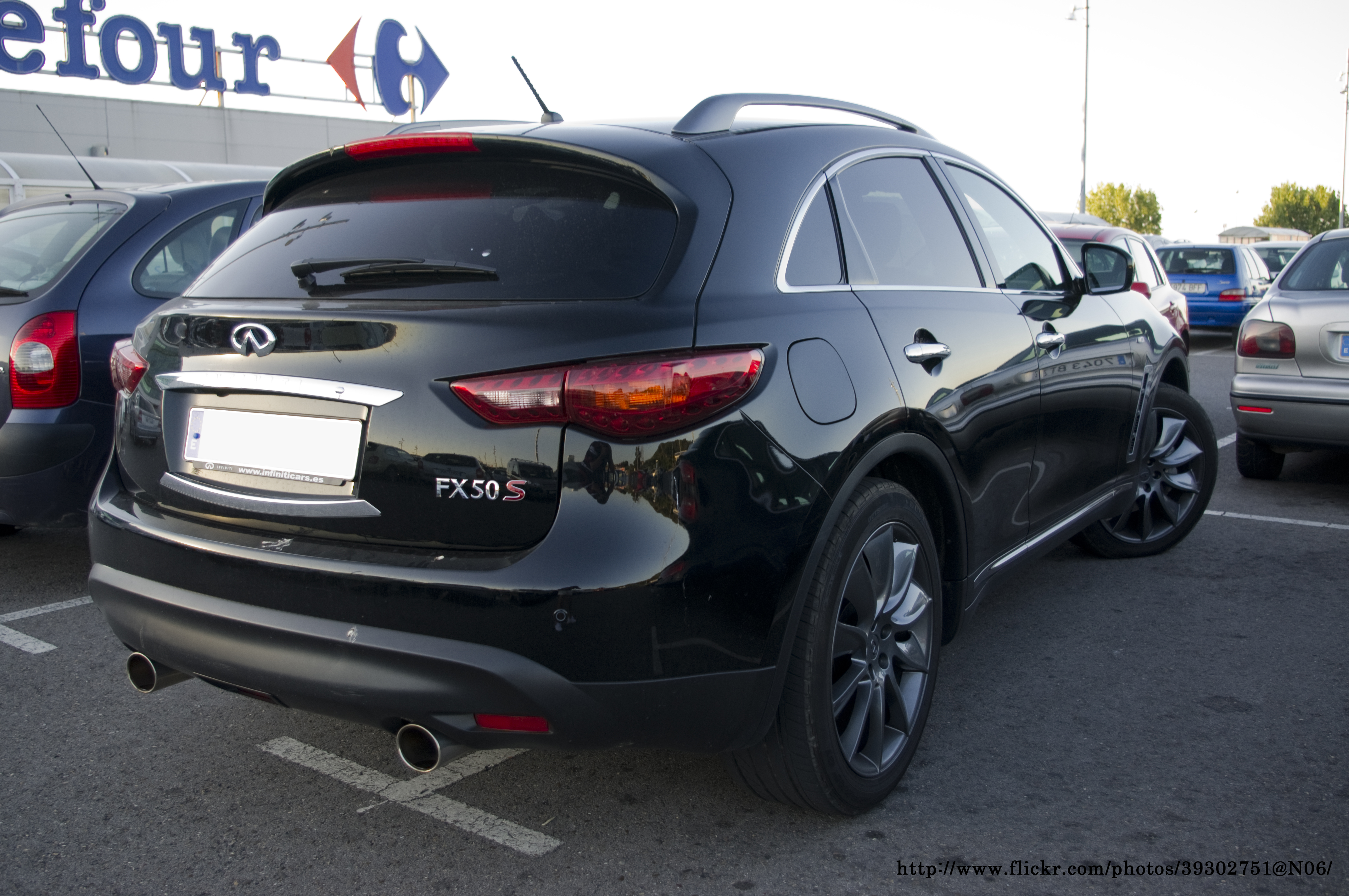
The Infiniti FX50 is a luxury SUV that’s meant to feel more powerful and sporty than a basic crossover. The host is reacting to someone mentioning it, then asking whether it was comfortable to ride in. The takeaway is that some fast cars can be less comfy than you’d expect.
A “badge job” means the car has fake or swapped badges. It’s done to make the vehicle look like a more expensive or more powerful version than it actually is.
The Nissan Xterra is a tough, off-road-oriented SUV. They’re talking about Nissan bringing it back and what kind of engines it will come with, including a hybrid option.
The Ford Bronco is an SUV designed to handle rough roads and off-road driving. It’s made by Ford. The podcast mentions it because they’re discussing which SUVs are expected to show up or change.
Concept
powertrain lineup strategy
This is about how car companies decide what engine options to sell. The hosts think Nissan is choosing a different mix of engines because they believe Toyota’s current choices aren’t selling as well.
A V6 hybrid is an SUV that uses a V6 engine plus an electric motor. The electric part helps the car be more efficient and can make it feel stronger when you accelerate.
They’re saying the new Xterra won’t be offered with a small four-cylinder engine. That matters because some people expect a bigger engine for the Xterra’s rugged, off-road personality.
“Architecture” is the car’s basic build—how it’s laid out and designed underneath. Sharing architecture with another brand can mean they use similar platforms and engineering, which can reduce development costs.
Mitsubishi is another car brand. They’re saying Nissan and Mitsubishi may be using the same underlying vehicle design, which can make cars cheaper to develop.
The Frontier is Nissan’s pickup truck. They’re explaining that Nissan sometimes updates the truck in stages—first the engine/drivetrain, then the outside shape, and sometimes the inside stays the same for a while.
“Carryover” means the company reuses parts from an older version instead of starting from scratch. It can save money and speed up the update, but it also means some things won’t feel completely new.
Pajero/Montero is a Mitsubishi SUV name used in different countries. The discussion here is about Mitsubishi possibly returning it to the U.S., which would be a big move for the brand.
Sometimes a car gets discontinued even though the kind of car it is is about to become more popular. The hosts are pointing out that the Montero left the U.S. right before the market really caught up.
The Toyota FJ Cruiser is a rugged SUV with a classic, off-road look. The hosts are basically saying that cars like this faded out, even though people were starting to want them more.
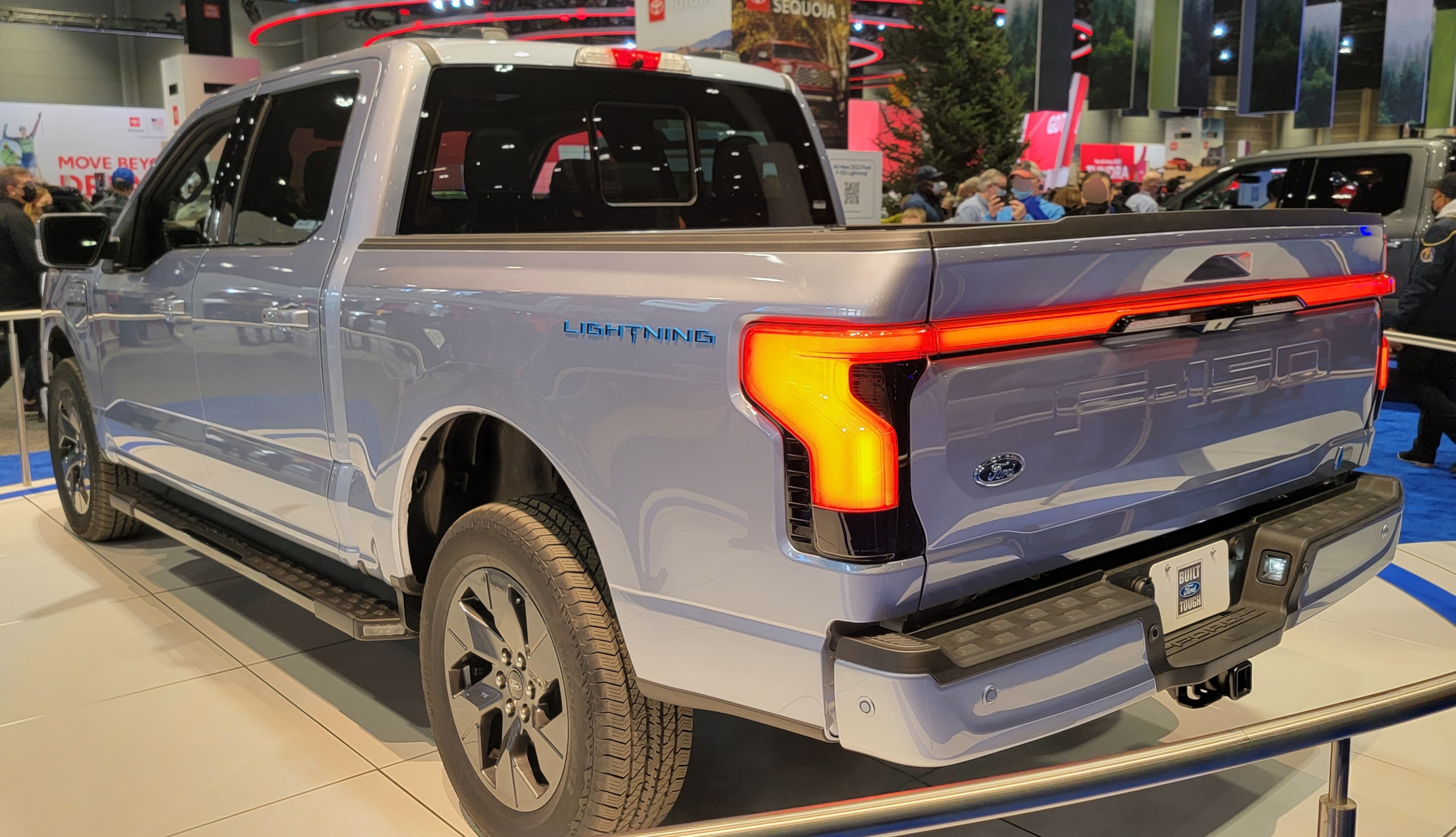
The Ford F-150 is a large pickup truck made by Ford. It’s designed for work and everyday hauling. The episode mentions it while talking about which trucks are currently being offered or discussed.
The Jeep Wrangler is a very off-road-focused SUV. It’s the kind of vehicle people buy when they want something rugged and outdoorsy, and the speaker is saying that role is filled by the Wrangler now.
Term
German engineered
They’re saying the razor blades are made with high-quality engineering, and they’re using “German engineered” as a shorthand for that. The point is that it should shave smoothly.
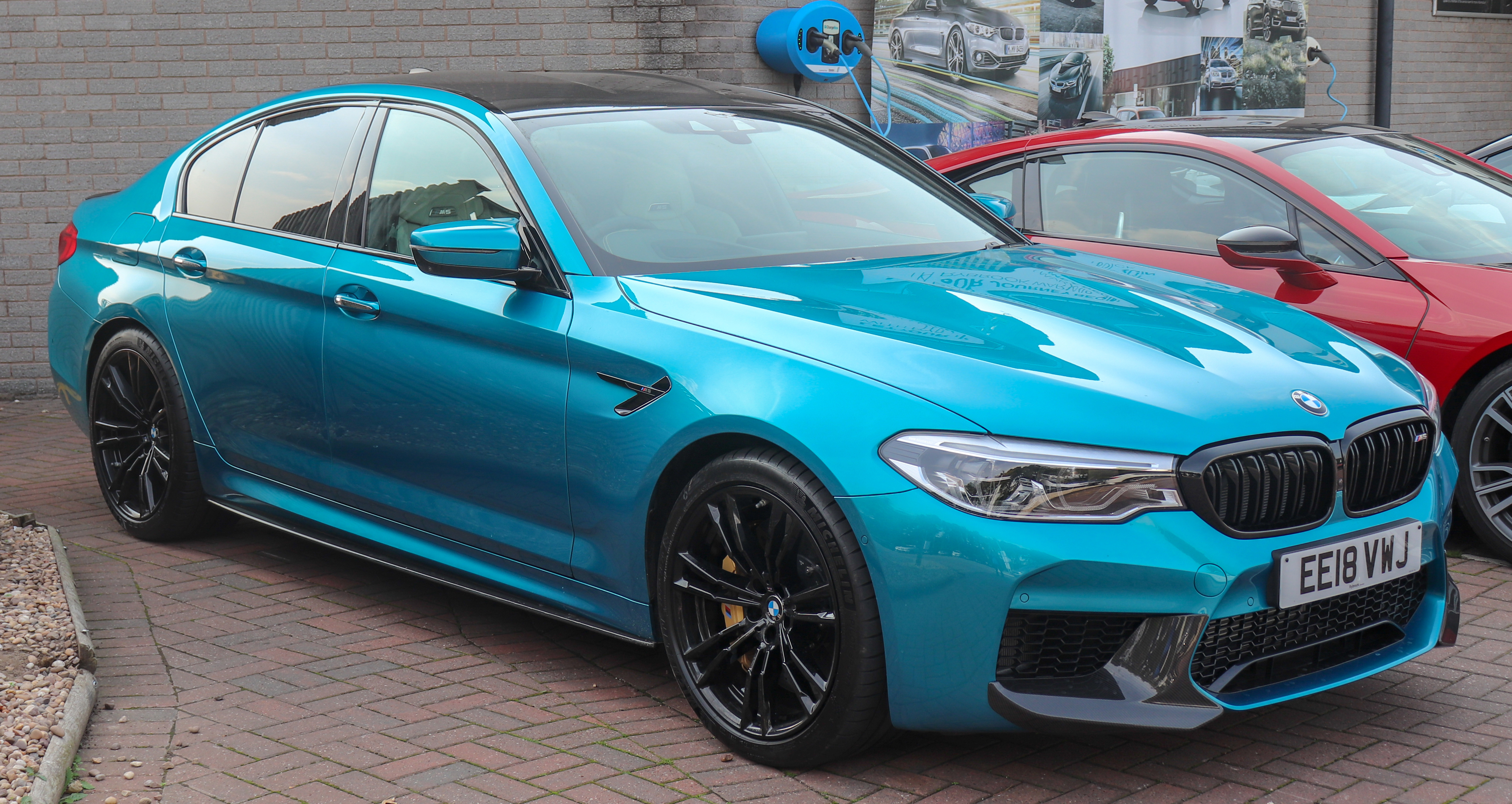
The BMW M5 is a fast, performance-focused sedan made by BMW. It’s meant to feel luxurious but still drive very aggressively. The episode mentions it because it’s a well-known enthusiast car.
Term
five blade cartridge
This is the part of the razor that you swap out, and it has five blades in it. The idea is that more blades can help you get a smoother shave.
The Nissan Juke is a small crossover SUV. They’re saying the new one looks better than the older one, and they’re also clarifying which version they mean for the U.S.
USDM stands for “U.S. Domestic Market,” meaning the specific cars and trims sold in the United States. The hosts use it to avoid confusion when other markets (Europe, Japan, etc.) got different versions or generations of the same model.
WLTP is a Europe-wide test that carmakers use to estimate how far a car can go (especially for electric cars). It’s not real-world driving, so the numbers can be a bit optimistic.
The Toyota Corolla Cross is a small SUV made by Toyota. It’s meant to be practical and easy to live with, like a regular Corolla but with more SUV-style space. The episode mentions it as an example of a common, straightforward type of car.
This is about small wheels (14-inch) and hubcaps covering them. The speaker is saying it would look cheap or generic—like something you’d see on rental cars.
A 6.7-liter V8 describes the engine’s displacement (6.7 liters total) and its cylinder layout (V8). Larger displacement V8s typically make strong low- to mid-range power, especially in performance cars like the Corvette.
LS6 is the name of the specific engine version they’re putting in the Corvette. Think of it like a model number for the motor, not just a generic “V8.”
“C8” is the newest generation of the Chevrolet Corvette they’re talking about. It’s famous because it moved the engine to the middle of the car, and people still think it’s one of the coolest performance cars out there.
A track performance package is an add-on you can buy to make the car better for driving on a race track. It usually includes upgrades that help the car handle harder and stay stable during spirited driving.
These are high-end brake rotors made from a ceramic material with carbon in it. They usually work better when you drive hard, but they cost a lot more if you need new rotors.
“Day-to-day use” refers to how performance differences show up in normal driving rather than on a track or in controlled tests. The speaker’s point is that some variants may be faster on paper, but you might not experience the gap in everyday situations.
C8 is the Corvette generation with the engine behind the driver. They’re discussing a hybrid version of the C8 and arguing that it might be the best one, even though many people don’t seem interested.
Four-wheel drive means the car can send power to all four tires. That usually helps it grip the road better, so it can accelerate more confidently, especially when traction is poor.
Car
Rolls Royce Nightingale
The Rolls-Royce Nightingale is a very rare, custom-built Rolls-Royce. It’s the kind of car only a handful of people can get because production is extremely limited.
“Coachbuilt” means the car is made with a lot of customization, especially the body and finishing. It’s usually for very limited, special-commission cars rather than mass production.
When they say it’s electric, they mean it runs on electricity from a battery instead of using gas. That changes how the car is built and can make the front end and interior layout different.
They’re comparing it to a Rolls-Royce Phantom, which is famous for being very long and very luxurious. It’s another way of saying the car is unusually big.
Think of it like building a car on a flat “base” that already has the important EV parts underneath. Then you can put different body styles on top without starting from scratch every time.
Concept
EVs give because you don't need to place an engine
Gas cars have a big engine and all the stuff around it. EVs don’t, so the car can be laid out more freely and often feels roomier or smoother inside.
This is a philosophy about what “feels luxurious” to drivers: refinement traits like smoothness, quietness, and low vibration matter as much as (or more than) raw engine character. EVs can improve cabin refinement because they can reduce vibration and noise sources compared with many ICE layouts.
They’re describing a fancy interior light setup that uses lots of tiny illuminated points—like stars—to make the cabin feel special. It’s basically a premium “mood lighting” feature.
They’re saying the light show inside the car is designed to move in a pattern that matches the idea of a bird’s song. It’s meant to feel artistic, not just functional.
“Barquetta” is a fancy word for a small, open-top sports-car style. The speaker is using it to describe a car that feels like a classic roadster, even if the roof situation is modern.
Concept
Coach Bill collection
This sounds like a collector’s group of very special cars. The host is basically wondering what other unique cars in that collection look like.
Rolls-Royce Phantom 8 is a very high-end luxury car from Rolls-Royce. The host is basically saying Rolls-Royce keeps making special, attention-grabbing versions of their top cars.
The Rolls-Royce Cullinan is Rolls-Royce’s luxury SUV. It’s known for being extremely upscale and tailored, and the speaker is grouping it with other recent Rolls-Royce hits.
Rolls-Royce Spectre is a Rolls-Royce that’s designed like a luxury grand tourer, and it’s also the brand’s electric model. The speaker is saying it’s a really good direction for Rolls-Royce.
A “one-off” is a car that’s basically built as a custom special for a specific buyer. Instead of being a regular model everyone can order, it’s made to be unique.
Car
Rolls-Royce Boat Tail
Rolls-Royce Boat Tail is a super rare, custom-style Rolls-Royce. It’s famous for its unique shape, and the speaker is saying the car being discussed feels similar in spirit.
The Porsche Boxster is a two-seat sports car with the engine in the middle. It’s known for being fun to drive and for having an open-top option. The episode mentions it because it has storage areas (trunks) that people compare to electric cars.
They’re saying the car has storage in two places—front and back. That’s useful because you can carry more stuff without everything going into the cabin.
Limited production means only a small number of cars are made. People often assume fewer cars will be more valuable later, but it doesn’t always work out.
“Appreciation” is how much a car’s value increases over time. The speakers are debating whether this particular car (and cars like it) will appreciate, noting that some models don’t rise much in value.
The Rolls-Royce Camargue is a very rare, older Rolls-Royce. Doug is basically saying that some fancy, expensive cars don’t always become great investments.
“Demand limited” means not many people were interested in buying the car when it was new. If not many buyers want it, the price can drop even if the car is rare. So rarity and popularity don’t always go together.
LIVE
This episode is brought to you by Indeed.
Stop waiting around for the perfect candidate.
Instead, use Indeed sponsored jobs to find the right people with the right skills fast.
It's a simple way to make sure your listing is the first candidate to see.
According to Indeed data, sponsored jobs have four times more applicants than non-sponsored jobs.
So go build your dream team today with Indeed.
Get a $75 sponsored job credit at Indeed.com slash podcast. Terms and conditions apply.
Hello and welcome to this car pod.
I'm Kenan. I'm Flippo.
I'm Doug. The regular crew is back and there's a lot to discuss.
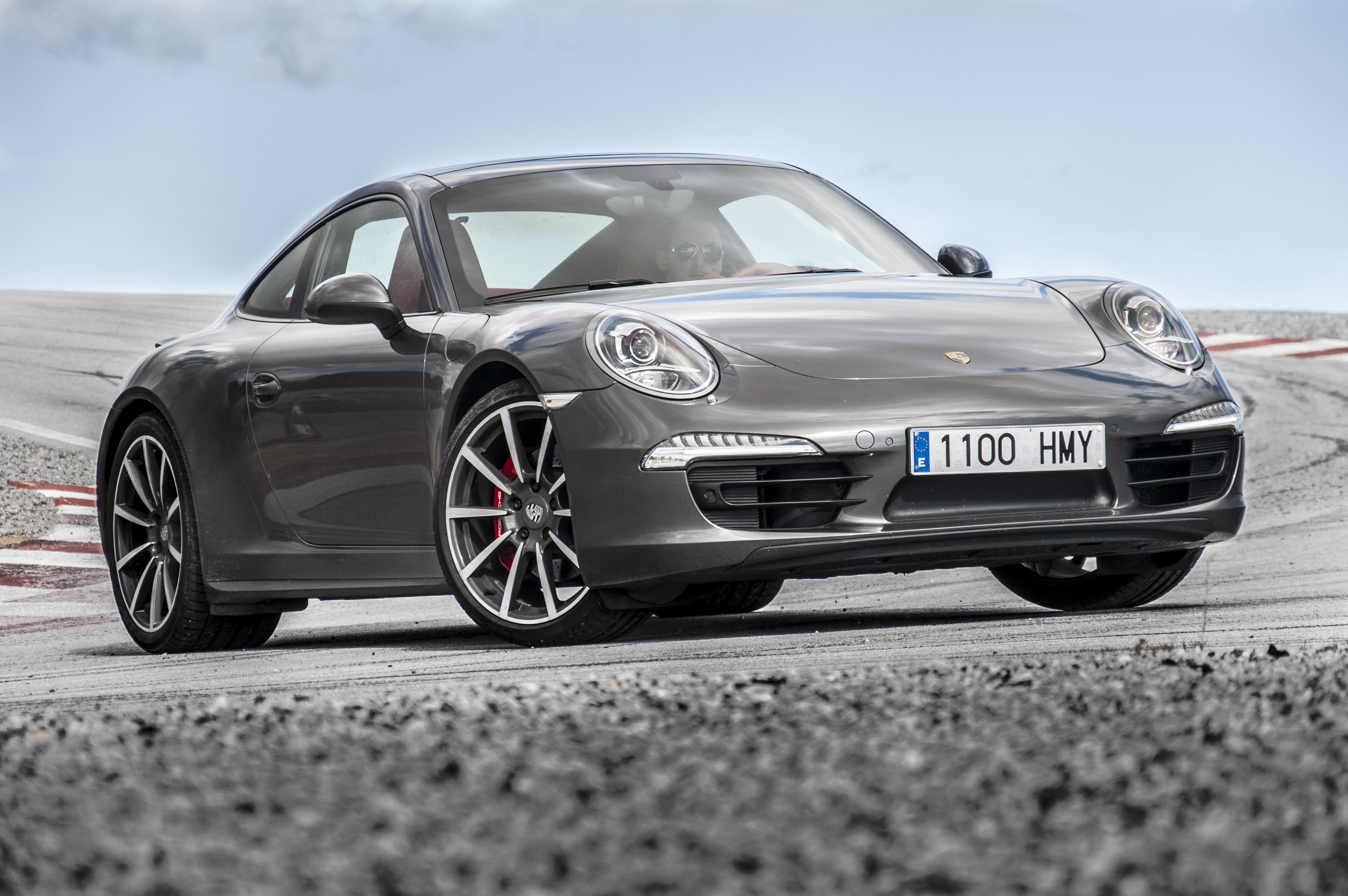
Let's start with the new GT3 convertible. Flippo, you hear about this?
Yeah, the new S-C.
Correct. Not the S-C together like the old ones.
No, that'd be weird.
It's 911 GT3-S slash C.
They have to say the slash.
So this is essentially a GT3 convertible.
S-C stands for Sport Cabriolet as it always did.
It has the same four liter from the GT3, 500 horse, 340 pound feet, something like that.
Manual only.
And what do you think?
Well, you know why it's manual only?
There's a reason.
It's not just for like driving involvement.
The reason is for homologation purposes so they could build it on the same platform.
The car had to weigh the same as the GT3 Touring.
Now, it weighs about the same as the GT3 Touring with PDK if it has manual and the top record.
But what homologation?
For like a mission, if there's some like...
Yeah, so in order to keep the NA engine and not have to redevelop the car,
that is the reason it has manual. Thank God.
Of course, we're all happy it does.
This is a big deal.
This is the first time they've done a convertible GT3.
They did, on the 991 chassis, they did the speedster, but it was a limited production car.
Presumably this will not be a limited production car.
They said it will not be.
All of the enthusiasts who complained that the Spider RS was tip-tronic only,
now we have a manual only.
Who is completely different car?
Car 4.
What do you mean?
Car 4.
No, no, no.
It's cool and southern California, we'll see a ton of them.
But like in like the road map for Porsche,
we want to target this set of enthusiasts.
Who in theory wants a very track-ready convertible?
Well, Andreas Prenger, AP, as you call him, in your Porsche community,
says that he always loved convertibles.
He had a 993 Cabriolet.
He likes the idea of being able to listen to the NA engine
and experience like the Southern, blah, blah, blah.
I don't think Porsche, Ferrari does this.
They have a convertible versions of all of their...
High performance cars.
High performance, the Pista and the Speciale and the 16M.
Since the 16M on, yeah.
And I remember when the 16M came out, I had his very question,
and then they sold them all, and now those cars sell for a million bucks.
So in a way, it makes sense.
Well, you know what I like about this is that it makes people kind of honest
with how they're using it.
A lot of people buy the GT3 because they want the hard-core track versions.
They are too afraid to go to a track day
because an errant stone chip might devalue their car.
This is kind of honest.
It's like, you're just cruising around.
Those people will still not buy this car,
though they still view themselves as like focused enthusiasts,
even though they're just laughable people driving around.
And they don't know how to drive a manual.
Yeah, well, that's true.
In a way, that's kind of an interesting component of this car
because typically the convertibles are always the softer cars.
They're more traditionally automatic, et cetera.
This one is by necessity.
You have to be like a pretty legit enthusiast.
To that end, I wonder if they will actually sell fewer of these.
The real enthusiasts are going to still buy this coupe,
which has always been the case with Boxer Cayman.
The real enthusiasts buy the Cayman because we need our rigidity
even though they can't tell.
And the people who just sort of want to look and all that
can't buy this because it has a manual.
And so it's kind of, it is going to be kind of a weird signal.
It'll be a weird signal.
I don't know what to make of it yet.
It might end up being rare and valuable, honestly.
Everyone may be.
I will say, I've watched every review of this car that's come out.
And Chris Harris set up, he drove it around Vizac and said,
I can't tell dynamically the difference between this and the coupe.
And admittedly, he was there with Vizac and Porsche,
but it's like, I believe it.
I do pretty much believe this.
They did a lot of the strengthening that was all done in carbon fiber.
So again, weight was the big concern here.
Body stability is gone.
This is exactly for you.
You have a 911 that's valuable.
You have a $100,000 911.
You live in Southern California.
You have a manual transmission.
You are literally the buyer.
I will say we do have pricing on this.
Yeah.
And if you compare it to a similarly specged GT3,
because there are some things that have come standard on the convertible.
It is what, $20,000, $30,000 cheaper than a comparable GT3 coupe.
Bargain called it.
It is kind of a bargain.
Why don't you go pick one up then, bargain boy?
I mean, it's a bargain at 300, whatever.
Isn't it 275 base?
Great.
You can't participate in that.
These are not going to leave the dealers under 400.
No.
Yeah.
They'll be flipped for a while too.
I mean, it's cool.
I think it's cool.
I think it's cool.
I really, I don't have as big a problem with it as I thought.
I would initially conceptualize like,
but then I thought more about the speedster and it's like, you know,
there's an appeal for people.
I'm a convertible guy.
This is what I would buy if I had any interest in a 992,
which I have this much.
Right.
That's a little bit.
You love the ST though.
I was driving my 993 twin turbo yesterday and I got up next to a 992.
GTS, which is like the, the one.
T hybrid.
Yeah.
T hybrid with the, with the things in the front.
Yeah.
Makes it look like fish gills and I, and I'm expecting, okay,
we had 911, you know, and I don't ever like to the new 911 people.
I never liked to participate in, but I look over ancient woman driving
this 992 GTS.
Look at her.
And it's like, yeah, good for her.
But at the same time, it's like, she didn't care at all about my car.
She had no, she had no idea why I was even looking at her.
And it's like, she maybe can't see that far.
Well, Southern California, we're, we're so biased by this, but like
Porsches are often just bought as normal cars for a lot of people here.
Like we just want like a fun sports car, but also to like a lot of rich.
Yeah, but they're rich.
So exactly.
So many.
Yeah.
It's cool.
The last point I'll make on this is like, I'm so glad that it has an NA engine.
Yeah.
AP was asked many times about this engine.
If Porsche was going to continue to do this and he said, he said, it will be more
challenging going forward, but we, there's a very good chance we figure out a way to
keep NA engines around for the GT3, which I think in a convertible, we can appreciate
the sound of it.
It makes a lot of sense to celebrate that engine.
So I will say, I drove that GTST hybrid and it was awesome.
Yeah.
So like if it comes to a point where the GT3 has to accept turbocharging and hybrids
and all that stuff, which you have to assume it will someday.
Yeah.
Porsche is the company to make it great.
I agree with that whole heartedly.
By the way, worth mentioning for all the fathers listening who want to carry their kids around.
Two seat only.
Two seat only, no back seats.
Next news story, the big one of the week.
Nissan has announced the return of the skyline folks.
This is a massive deal because Nissan previous to this was failing.
Oh, wow.
It doesn't even, it doesn't even.
What's up?
And they are no longer failing because they're bringing back the skyline and specifically
they're bringing back the R34 GTR.
Right.
And they're very clearly proud of how this one looks.
I think we have a rear picture in the next slide.
Yeah.
Yeah.
Wow.
Again, my point stands.
In the U.S., it will be coming back as an Infiniti Q50.
It's what they said it'll be called here, which makes sense.
And a couple weeks ago, they said that Infiniti would be returning with a sports, with a like
fun, fun sports sedan and even suggest that it would have a manual transmission.
We talked about this last weekend.
We expected to have the engine and transmission from the Nissan Zismo, which has a stick now.
And that's likely what this will have.
If you thought that takeovers were not going to be able to be supplied with cars, the Camaro
was gone, the charger is electric.
If you thought takeovers were going to be done in 15 years when all the cars got destroyed,
no, no, they're back.
There was news literally today of a large car show, I don't remember where, that had banned
all VQ engine problems.
Yeah.
Which is great.
You know what?
Yeah, I get it.
I get it.
Well, now they'll have to keep that going.
You know what you do with that car show?
You show up in an Infiniti G25.
Do you remember that?
Yeah, I do.
There was a period where they did a G37, but they also did a G25 with the same car.
It was like 2010 probably.
Anyway, so this is great news.
The Skyline's back.
Presumably that means a GTR will come back.
There has been talk of a GTR being a part of this.
They said, I think we are already working on the GTR.
Which is great.
The Skyline has, for those who don't know, the Skyline has historically been the Infiniti
G. Since the G came out in 03, the Skyline has been sold basically unchanged in the United
States as a regular car, the Infiniti G35, then the G37, then the Q50.
So returning it as a Q50 is not a big surprise, except the surprise that they are still investing
in sedans.
But you know, this is a cool car, a sporty sedan.
I was reading this and thinking, they're coming back with a manual transmission.
Five years ago, if you had told me Infiniti was something you're going to bring back,
I mean, I never would have guessed it.
But all these companies, I think we owe a little bit of a debt of gratitude to Porsche, which
I hate to say on this podcast.
Because Porsche has made it clear that manual transmissions is kind of a path to getting
some credibility with enthusiasts.
And Porsche almost dropped it all and instead kind of kept it going, there was that 911R
and then they came out, the manual GT3s are back and all that.
And enthusiasts have flocked to those cars.
They are on long waiting lists.
They sell enormous numbers.
They have huge secondary markets and it has kept Porsche cool.
Even if people aren't buying a manual, even if people are just buying a Macan, the brand
has in part stayed cool due to the manual.
And I have a suspicion that that itself has in part made BMW and now Infiniti and a couple
of other brands who probably would have just let it go think, hey, I mean, Aston basically
themselves announced that, hey, Porsche is doing this.
We're going to do it too for on those manual advantages.
No, absolutely.
It was all thanks to the 911R.
That was the car that was the signal that for everything you just discussed.
So thank you, Porsche.
I'm very happy.
If this does come out as a manual, that's my kind of car.
Imagine if it came out as a manual GTR, like that would be if they came back with a GTR
but it had three pedals.
Now, that's the way to enthusiast parts.
And Nissan especially realizes that because the Nismo Z when it came out was auto only
and there was a huge blowback and after a while they changed it.
Same with the Supra.
And maybe maybe we get a manual Skyline again like the R34 that Filippo cupets.
Are you worried about how it will look?
The tail light design is interesting.
I kind of like that it's like kind of Ferrari-ish with the...
Well, also, I'm sorry.
The Nissan people are going to murder you.
Are you aware of that?
Yeah, I know.
GTR.
I am familiar with styling trait.
2009 Chevy Impala.
Also that.
Yes, also that.
I'm going to tell you something.
2006 Impala.
I'm going to tell you this and I mean this with all the sincerity in my heart.
There's never been an unattractive Nissan Skyline.
And so I'm not worried about how it's going to look.
They're going to do fine.
There's never been an unattractive GTR.
There's never been an unattractive Skyline.
The Stadia, that's a different conversation.
Oh, fighting words today.
Well, it's just got a big butt.
So practical.
But the Skylines have never not looked good.
That's fair.
Also, in general, Infiniti Nissan.
Infiniti Sedans look good.
Infiniti's in general.
You know, we were up today.
We were doing something.
I can't say yet.
I don't think.
Secret.
And one of the fellows who was there at this company we were at.
So what are you driving?
And he said, I have an Infiniti FX50.
And I'm like, yeah, I hope it worked.
Was it a comfort?
No, it wasn't.
But when was the last time you were in a car conversation and someone dropped that car?
Probably in 15 years.
I went on a date with a girl a little while ago.
And that's what she had.
An FX50 or a 37?
She had a V8.
She took me out to see it.
It was pretty beat.
But yes.
Was it Emily?
It was not Emily.
Emily's still got it.
This was long ago.
Oh, this was pre-Emily.
Pre-Emily.
Pre-Emily.
Which I was surprised.
So much so that I asked to walk her to her car.
So I was like, no, it was a gentleman, but also so I could see.
I wanted to see this.
I remember when you told me that.
I was 100%.
You got to ask her to send us a picture so we can verify.
This was a long time ago.
I swear you sent it with an FX45, but I'll accept 50.
I bet it was a badge job.
I bet this girl up badged her FX37.
Definitely.
That's exactly.
That's something people do.
For sure.
Okay.
The other big Nissan story is that they're also returning with the XTERRA, which I have
been announcing on this podcast that they should have done and made a horrible mistake
by not doing.
You know, first I said that the Lincoln Bronco was coming.
Then I said that the new XTERRA was coming.
Do you have a little bit of this victory lap already months ago when they said they were
coming out with this?
I'm taking it again, baby.
What else you got for us?
What did they say about powertrains?
All right.
We know that it'll be a V6 and a V6 hybrid.
Will it be the powertrains?
No four-cylinder XTERRA.
Oh, wow.
They're like sticking the knife in Toyota.
Yeah.
They're looking at Toyota having trouble selling $80,000 four-cylinder TRD Pro 4 runners.
They're like, you know, we're going to give the people what they want.
By the way, where's the Q50?
I think we'll be coming out in 2027.
This will be second half of 2028.
Second half of 2028.
We're in the first half of 2026.
Yeah.
It's only, you know.
Okay.
Two and a half years.
Two and a half years.
But they showed a few teaser images.
It looks like it'll be very boxy and rugged looking and angular and kind of cool.
One interesting thing I read was that it's going to be on the next generation frontier architecture,
which is shared with Mitsubishi.
So the new frontier just came out, but it wasn't ever new anymore.
It wasn't ever new anymore.
Yeah.
The frontier is an interesting story where for a year they used the old body style,
but an entirely new powertrain.
And then the next year they revealed the new body style.
But even the new body, there was a lot of carryover.
The interior was carryover at this point.
What's that?
This was years ago.
It was a few years ago.
And by 28, which is now three more years in the future,
the frontier will feel even older.
And by the way, if they do come back with a fully redesigned new good frontier
and a new XTERRA, and they got a Skyline and a manual GTR, Nissan is doing it again.
Nissan might be back.
We're going to turn off the Nissan Death Walk.
And they got to come out.
Yeah, they got to come out.
By the way, we got to get there.
They're going to be like a thirsty person in the desert trying to XTERRA.
If they had an XTERRA, they could have made it through the desert.
By the way, the platform, which is shared with Mitsubishi,
Mitsubishi has also started to tease the new Pajero Montero,
which may come back to the US, which would be Mitsubishi's fundamentally reentry into the US market.
So that would be an exciting kind of byproduct.
Who said that?
That was announced that it may come back to the US?
Mitsubishi CEO has kind of started to tease it.
Mitsubishi has a CEO.
They're still around.
It's not just like group of people.
It's not just Mitsubishi Heavy Industries.
Wait, can you pull up the final Montero, please, Pajero?
Type in like 2020 Pajero.
You know about this car, Philippa?
I don't know that I do.
Have you ever seen them?
They sell them in Mexico.
Look at this.
Pull up this.
I feel like I've seen this.
Look at this.
Now, this looks in the states they sold in beginning in like 2003.
I love this gen.
But there was a next gen and they sold it.
And I remember I went to the Middle East, you know?
Yeah.
And you land there and these are everywhere and you're like, damn, really?
This is still going.
How cool.
We lost that in 2006.
It was a final year in the US.
2006 was the last year of the Montero.
That's another example of a car that died just as the market for cars like it were heating up.
Yeah.
Such a cool car.
The FJ Cruiser, the XTERRA and this all went away and said Ford and Ford Raptor and Trada
forerunner have this.
Jeep Wrangler, it's yours now.
Take the wheel.
Not that they were selling a lot of these back then anyway.
No, no.
Still, it is cool and it has 243 PS.
Before Harry's, I was throwing money away, spending way too much for blades that were dull by day three
and left my neck looking like I lost a fight with sandpaper.
Total scam.
Then I switched to Harry's Plus and honestly, the first shave, I was just annoyed.
I had waited so long.
The handle is solid metal.
Waited.
You actually feel in control.
The blades are German engineered, just like my beloved M5, honed at three different angles
so they cut cleanly without tugging and the cartridge doesn't clog up every other stroke like the drugstore stuff.
There's even aloe and vitamin E built into the strip.
My skin feels completely calm after shaving.
And the price?
Harry's owns their own factory, so there are no middlemen.
And this is their most advanced razor ever and it's still cheaper than the Gillette Fusion 5, not a close call at all.
Right now, you can grab the Harry's Plus trial set for just 10 bucks at harys.com.cars.
You get the razor, a five blade cartridge, shave gel and a travel cover.
Zero risk.
If you don't love your shave, they will make it right.
No questions asked.
Go to harys.com.cars and tell them that we sent you.
You know that moment around 5.30 when you're still in fury 39M5?
The day was a lot and Emily's already texting you what's for dinner and your brain just goes completely blank.
Yeah, that used to be every single week for me.
The grocery store run I didn't do, the fridge full of random stuff that doesn't go well together,
the default sad takeout order, every plate fixed that.
They send pre-portioned ingredients right to your door, everything you need, nothing you don't,
with a recipe card that actually makes sense.
I'm talking dinner on the table in 30 minutes and meals are so good.
Caramelized onion smash burgers, crispy buffalo ranch chicken, over 35 options a week including more veggie and global dishes than ever.
98% of customers say that the meals are delicious and I am very much in that 98%.
It's still cheaper than groceries, it's half the price of delivery and I use every plate and you should too.
Try every plate and get $2.99 per meal on your first box plus 10% off for a month.
Go to everyplate.com slash podcast and use the code CARS 299 to claim your offer.
That's CARS 299 at everyplate.com slash podcast.
$2.99 per meal on your first box plus 10% off for a month.
Ditch the dinnertime dilemmas with every plate.
The last Nissan story is that they are coming out with a new juke.
It's better looking than the last one.
Love the juke.
I love it.
I loved the last one.
The last one by the way.
It was not the one that was sold in the US, there was a generation between them.
There was, yeah, that's true.
I'm referring to USDM.
We only talk USDM on this pod unless otherwise specified.
If we're going to talk WLTP, we'll have that conversation.
I think this is like, it's funky.
It fits in the mold of the juke.
I have to say, this is one of my big things that car enthusiasts complained about the juke and that's why we have boring cars.
Car enthusiasts are like, there are so many boring cars and Nissan comes out with a juke which is cool and fun.
And they're like, that's ugly.
So then they cancel it and come out with more boring cars and that's why we have the kicks now.
But I'm driving around and the other day I saw Corolla Cross and I'm reminded, boy, that segment is boring.
At least there's some fun.
I also think now modern cars are so hideous that you can kind of do any shape you want.
And I think it works.
If I saw that driving on the road, I think that is cool and interesting.
I don't want it.
Imagine sitting on 14 inch hubcaps and they're all going to be silver in this rental cars.
That's exactly right.
I don't believe it's coming to the US.
I think it might be Europe only at the last or Europe in other markets.
Well, same platform as the leaf.
Well, it's going to be electric.
How much WLTP do you think it'll have?
Based on the leaf.
Not a ton.
WLTP for those listening is Europe's like EPA cycle for electric cars.
And it's a lie.
It's a little inflated.
No, I'm glad you say that.
Okay.
Next new story is the new Chevy Corvette Grand Sport.
This is the biggest.
We announced the Grand Sport on this podcast a couple of weeks ago.
We announced, I mean Chevy announced and then we talked about it.
New Grand Sports coming back.
They finally announced all the details.
It's going to have this new 6.7 liter V8, which is called the LS6.
Every Corvette will.
Which I did not realize.
That motor is also going into the Sting Sting, which is the base car.
It's 535 horsepower.
The current Sting Sting is 495.
By the way, the current Sting Ray, as normal people call it.
Are you aware that the current Sting Ray has a 2.9 seconds zero to 60 times?
And now we're adding 40 more horsepower?
That's nice.
How is a regular Corvette that now costs $55,000 used?
Yeah.
A 2.9 seconds zero to 60.
Dude, I'm telling you.
Because Tesla has democratized speed in every manufacturer.
To me, this is one of the single greatest comeback stories in the history of the automobile.
The C7, and I know you love it.
And I know we sell them on the site.
So I'll be charitable.
I do.
The C7 has taken the Corvette ethos and platform and existence to kind of its conclusion.
It was great, but like it was still that group of people.
The C8 has come and it's the hottest car in the market.
You realize the C8 has now been out for six years?
Six years.
It came out in the spring of 20 right before COVID.
Six years.
The C8 has been on sale.
That's crazy.
It's gone by that quickly.
Wow.
Yeah, it is proliferating.
It's still the coolest damn thing in the world.
And they're still coming out with new variants that are still tremendously exciting.
Like this is a cool car.
The other thing with the Grand Sport was that they announced pricing, which I don't have in front of me, do you?
I do.
The Grand Sport will start at $88,495.
$885 after delivery.
And there's an all-wheel drive version, which is an E-Ray Grand Sport.
And then you can also get a track-ready package on the Grand Sport.
The track performance package, which has Grand Sport specific chassis tuning, quad exhaust,
carbon ceramic brakes, carbon fiber aero, which is 109 with that package.
The Grand Sport is only 15 more than a base.
Effectively, the Grand Sport is a wide body with some other upgrades.
Kind of cool.
Our cool little stripes.
I've never.
You know who bought a C4 Grand Sport?
It's Street Speed 717.
Really?
He's doing like a nationwide road trip in a C4 Grand Sport.
Does he want to swing by?
Say hello.
He said, he said, I'm going to bring it by San Diego.
You want to review it.
And I was like, now I'm going to wait for him to show up on the site.
Probably because I'll buy it.
But I'm so jealous of him.
It's my favorite Corvette of all time.
Of all time?
Of all time.
More than the C2.
After the C2.
That's what I thought.
New Grand Sport.
You're a resident Corvette man.
You're excited about this or no?
Yeah.
What do you mean?
To me, this is the Corvette to have.
The Grand Sport always is.
The ZR1 are awesome.
But they're not practically faster than this car.
On a day to day use the car's speed basis, you will never experience the difference.
This looks like a Z06.
It has the Z06 body.
It has the cool stripes.
It's like a limited production cool car.
But you're still not in a base Corvette.
You're still in something special.
This is the one that you will end up with in 18.
No, I will end up with an X.
An X that I will drive.
Well, a hybrid.
A hybrid.
Shoots for here.
No, that's what I'm shooting for.
The hybrid, the story of the C8 that isn't told is that the best C8 that exists is the hybrids.
But no one wants any part of them.
Right.
No respect.
Agreed.
They don't get enough respect.
But they are a four wheel drive.
They launch incredibly fast.
An E-ray is like as fast as a Z06, right?
Yeah.
Yeah.
It's about, these are cool.
I'm pumped.
And it's not that expensive.
Dude, the C8, absolute killer.
It is a killer.
Moving on to something a little bit.
This is a completely different end of the automotive spectrum.
This is the Rolls Royce Nightingale.
Now, a couple of weeks ago.
This looks cool.
This looks cool.
Now, a couple of these are just a one-off.
Well, no, they're going to control 100s.
30 of them are coming to the United States.
The orders have already been fulfilled, so unfortunately you can't have one.
But this is part of the Rolls Royce coach built collection that we talked about a couple
of weeks ago.
The first one they're rolling out.
So it's, you know, based on the Spectre platform, it's going to have probably the
least the same 577 horsepower and stuff like that.
But the crazy thing to me is it's 18.9 feet long and just like the new 911 GT3 S-C,
seats two people.
Oh, it's a two-seater.
It's a two-seater.
That's 228 inches long.
That's longer than a Suburban.
Yeah.
It's electric.
It's also as long as the Phantom and it is electric.
Yes.
It's full of electric.
Yep.
I mean, I also...
This is so cool.
It is so cool.
I also want to make the point.
BMW, this is how you integrate a big grille.
The grille is three feet wide.
Is it really?
But it works perfectly.
You know, Rolls Royce is benefiting greatly from electrification because they're able
to make these different bodies of cars.
They don't have to worry about, oh, this is a completely new model, new powertrain.
We've got to go through.
They do seem like they're just sort of iterating from a design and style perspective off an
existing chassis that's going to go great for them.
Because this is based on the Spectra, I assume.
Correct.
You hit the nail exactly on the head and I would not be surprised if other luxury manufacturers
Bentley in particular copies this idea because it makes a lot of sense.
If you just have a skateboard, put whatever body you want on it.
They're actually seizing on the opportunity that EVs give because you don't need to place
an engine.
You don't need to route anything.
You just have a battery and some motors in the wheels and you're done.
Well, let's be honest.
The luxury car experience is not really dependent.
Like this true luxury car experience is not dependent on the engine.
You want smoothness, quiet and power, but actually the less vibration makes it in the cabin,
the better.
I'm reading here that Nightingale, the name of the vehicle, is named for Le Rossignol,
which means the Nightingale in French and was a house on Henry Royce's winter property
on the French Riviera.
Are you aware of that?
In addition, and this is my favorite thing, this is from the press release, there is a
lighting treatment inside the car with 10,000 illuminated stars and the dazzling of the
lighting, like the rhythm of the lighting is inspired by the rhythm of a Nightingale's
song.
They can't have the starliner because there's no fixed roof.
No roof because the stars from God.
Is this car not have any roof at all?
There's no roof that rolls up.
I haven't seen a picture with a roof on it.
It's a Barquetta.
Do you have the Rolls-Royce customer?
This is cool though.
This is damn cool.
Like I said, I really hope that more luxury manufacturers do this.
I'm curious what the other cars that will end up in this Coach Bill collection end up
looking like.
You know, this is...
I was ready to write Rolls-Off about seven years ago, maybe nine.
They keep coming out with products that just are appealing.
The Phantom 8 was cool, the Cullinan made it, continued the situation.
He doesn't think there should be a lesser Cullinan's insane.
But then they came out with Spectre, which is great.
And now they've got these one-offs that come out with every so often that all seem to look
pretty cool.
And there was the Boat Tail, which I'm obsessed with.
Boat Tail's them.
But this is sort of that.
It is very that.
This is very Villadeste.
You can see it cruising around there.
There are a lot of random rainstorms there.
Yeah, it would be hard.
It'd be hard, but I can see people wanting it.
They do have a parking garage at Villadeste, so you can park this in.
I parked in one of the parking garages.
There's three parking garages there.
Can I ask you a question?
So obviously, there's a very long vehicle with nothing.
Do you think there's a huge trunk?
Do you think that they made the trunk go all the way through to the rear of the front?
Bet not.
That'd be large.
There'd be a lot of golf clubs.
A lot of bodies.
Yeah, for just two people.
No trunk at all.
Right.
It is handy.
Actually, I wonder what's up front.
I mean, if it's electric, maybe it is like a Boxster.
There are two trunks.
Probably not, though.
Probably not.
That thing is cool.
100 units.
Do we have any idea on cost?
No, they haven't really.
They've been cagey about it, but everybody's assuming over a million, which would make it.
Over a million?
We're only building 130 of them are coming here.
I just put it into AI and they're saying six million, which seems alike a lot.
Well, AI, never wrong.
I'm ready to drop 250 on this car today.
That's great.
That's what it's going to appreciate in 10 years.
You think?
I don't know.
I don't know.
These cars don't appreciate.
Yeah.
What about if you ever seen a Rolls-Royce Camargue?
Pull that up.
You're going to need to spell that one for me there, buddy.
Rolls-Royce Camargue.
C-A-M-A-R-G-U-E.
This was the Project Nightingale of its era.
Yeah, that's it.
You ever see one of these pull-up images?
But I also haven't seen it.
I appreciate it.
Tap on that ready over there.
That one.
Yeah, that one.
This car, I'm not joking.
This was like a half-million, $600,000 car in its era.
And now, I mean, if you can find someone to buy yours, you're lucky.
At like a $9,200 used car value.
You got a point.
How many of these did they build?
Camargue was built for 11 years, and they only made 531.
Demand limited.
Massive.
Not only was it hand-built, it was built slowly.
Now, this car was designed by an Italian, and it sort of goes against my theory that
Italians designed all beautiful cars.
You know what?
But they designed so many, we can give them the Camargue.
Yeah.
Horrible name, too.
Yeah, no, it was not a good situation.
But this is cool.
And maybe it becomes like the Camargue.
But for now, I think that it is just so cool.
Wheel treatment.
Oh, love it.
All right.
Long live Roll voice.
Please.
Oh, okay.
I want to talk about this.
This is a very important new story.
Sean's all upset about it.
The Chrysler Pacifica Off-Road version.
Apparently, they debuted at SEMA a few months ago, but they just showed it again at the
New York Auto Show.
And I've always said that I want, what I want is an off-roader, but that also can carry
a lot of people.
Yeah.
Yeah.
And here this is.
And I was thinking, if they made this, this is exactly what I'm looking for, except
that it's a Stellantis product.
So what I'm hoping is, this is what I'm hoping, that they take all of the stuff and give it
to Toyota.
But then it would, would it be reliable?
No.
They don't want them to take the Pacifica part.
Oh, just the ideas.
Take all the off-road equipment and everything and bring it over to Toyota.
That's my thought of the day on this.
It may be the facelifted Pacifica, which is only facelifted in certain trims.
Will be more reliable.
Do you think it's interesting that these automakers are teasing high performance minivans and teasing
off-road minivans, but no one's, or teasing luxury minivans, but no one is really willing
to step up to the plate on these things.
They're like going a little down that road, the Sienna Woodland, but no one's really willing
to give us the Hellcat van we want.
You know what I'm saying?
Because there's.
No, I'm not.
What's the question?
I'm not sure.
I'm not surprised.
You don't think people would buy it?
I don't.
I think that I do a fair amount of engineering to fit a V8 period into a Pacifica.
No other manufacturer that sells any of these has a V8.
Well, you know, first of all, you just were noted.
All your Honda's out of a V8, Toyota's out of a V8 anymore.
That's my point.
They all tease it.
They're teasing it.
No one's teasing it, but Chrysler.
But do you think.
No, Toyota teased it off-road Sienna at SEMA a couple of years ago, like a true build.
And several of the brands have teased like performance minivans.
It does exist.
But yet, do you think they looked at the R63 and went, wow, that was a failure because
they only built 300 of them or whatever and like, okay, we're not going to do that.
But the R63, I want to get a Hellcat Pacifica that is also an off-roader.
I mean, that just sounds like-
That'd be cool.
It sounds like you just could-
And, wow, give me all that whatever.
I want it all and I want it now.
That's what it feels like.
It's like a dream, honestly.
It's like a fever.
Move on.
Are we done with news, hopefully?
No.
Oh, get out of here.
All right.
There's a Magma GV16.
All right.
Can we talk about this though?
All right.
Lucid has a new CEO.
Lucid has a new CEO, which has got to be their third CEO in 18 months.
The last one was an interim.
We're good.
His name is Sylvio Napoli.
He is currently, he is most recently in charge of the Schindler Group, which makes elevators.
Oh, yes.
Not lists.
No.
No, elevators.
Different.
Poor him.
They got different-
Yeah, but he's well known in the elevator industry for really growing and modernizing
that brand and making it quite successful.
How exciting.
What a career.
He's one of the top elevators.
I don't want to, I don't want to, I looked into this story a little before.
I don't want to toot the mansorn too much, but he debuted while working for the Schindler
Elevator Group, the elevator that opens in the front and the back, previous to this man,
Pauly or whatever.
All the elevators open front and sometimes these buildings would be like, you know what
would be nice if it could open the freight side, could open the back and all the other
elevator companies.
It's like the minivans before the 96 crisis.
They all said, it's not possible.
And then Pauly or whatever his name is, he came in and he said, we can do it.
He said, you know what?
Give them doors.
Give them doors.
And you know what else he did?
The glass elevator.
Before him, all the elevators were enclosed.
Did he do the one from Willy Wonka that flies out?
Yeah.
Well, the safety thing is just too fun for the cliff.
Can I tell you-
You're saying that they hired this guy because he has a reputation for right-sizing-
Can I tell you the actual reason they hired this guy?
Because no one in the automotive industry wants this job and they figured, hey, elevators
have wheels and pulleys and belts.
It's close enough.
No, I mean, they've been pretty upfront that he doesn't have any auto industry experience
directly.
But-
I'm sure they've been upfront about that.
But he has a strong track record in manufacturing, operational discipline, and capital allocation.
So-
No, basically, they needed somebody that they think can maybe bring some growth, but also
drive profitability in a way that they have so one problem.
Is this person going to live in California or is he going to live in Zurich?
They live in Zurich for some amount of time until they have a visa that allows them to
move to the U.S.
Unlike your bit here, none of that is made up.
That is all factually accurate.
He also gets two company cars and a million dollars in relocation expenses.
A million in reload.
And he's going to drive around in this minivan.
And with the license plate, elevator.
Elevator.
No, I mean, I'm excited for Lucid in that they absolutely need somebody to drive the
company in a way that is in any way sustainable.
Wasn't it Lucid?
Part of this is an additional infusion of capital from the Saudis, but they got to at
some point make money.
Wasn't it Lucid who we were making fun of for releasing those car, like, teasing those
new models and saying, this is for like the female-
Yes, that is him.
Okay.
That is them.
Well, this is going to go great.
All right.
I want to move on to the talk cars segment.
The talk cars segment today is sponsored by Filippo's 997 Targa.
Oh, thank you.
Yeah.
Filippo's 997 Targa.
It talks cars.
Yeah, all day.
I sat in four hours of traffic yesterday afternoon and I think great.
Yeah.
Is that part of your talk cars?
No.
Because I don't want to relive it bad enough.
At one point it was on through Cam Pendleton, but you can't.
There's no exit.
But I did have, I was in traffic so long I stopped at the rest area.
Yeah.
Leaving the rest area took an additional 30 minutes.
Well, why did you stop?
Why'd you stop?
It's insane.
Sometimes you need to use a phone.
Sitting there not doing something, you needed a break from that, so you pulled into the
rest area.
You're in traffic for a long time.
You're looking at the ocean a lot.
You could use a restroom at some point.
Also, I don't think it was slower than the other traffic, but it was fun.
Filippo, let me tell you.
We don't stop.
We don't stop.
If you're going somewhere, you go somewhere.
I agree with this wholeheartedly, especially coming back from Lausanne.
You're lucky you got to see Phil Chung last night.
I did.
You were almost missing.
Shout out Phil Chung.
I want to tell a little story here.
All right.
You ready for the story?
I love that.
You know what the story is?
No.
But you see it in the thing and you're curious.
It doesn't give me any information.
I'll tell you that.
All right.
I got a story.
Buckle up.
Last week I was in Washington, D.C., the nation's capital.
Indeed.
All right.
All the buildings are there.
They have the Lincoln Memorial and they have all that other stuff.
You see the ballroom?
No.
It's being erected.
But I've been by where the previous part was destroyed.
And now they've got a new big thing coming.
Yeah.
Anyway, I was in Washington, D.C. and my best friend lives there, my best friend, Melissa.
Shout out, Melissa.
Shout out.
And in Washington there, she drives a 2013 Kia Sportage.
And because it's a Kia, it has been attempted to be stolen several times.
And so it no longer has a driver's side door handle, which was ripped off by an attempted
thief.
The keys all had to be re-keyed then, and then there's one key for the door and one
key for the ignition, like a GM car from the 80s.
It was true, my Kia Spectre, too.
So this is, and this thing, I mean, this thing is rough.
Like it is the roughest, like it hasn't been washed in years.
One time a construction fence fell on it and then scraped down the side.
So it looks like one of the X-Men Wolverine, like, you know, grabbed down the side of it.
I mean, this is the roughest thing you're going to get.
OK.
Plastic steering wheel, backup camera, because it's required by law.
I mean, we're on that level, right?
This is like the most basic, rough car.
I have multiple friends from Melissa.
Last time I was there, I replaced her tail light bulbs.
I get in the car and it's there's a minor key oil change that says, get your next
road change in September of 25 at 104,000.
And I look and it's March 26th and it's 108,000.
And I'm like, oh, God, it's like 49 bucks to change the oil in this piece of crap.
Anyway, so I'm driving along and in their DC there and I'm going to stop light and
a guy looks over in one of your station rack and he's like, dog.
And I was thinking, Melissa and I had often
joked about, you know, because I get recognized everywhere all the time.
And especially at car, like with context clues, it's very easy to recognize.
If I had a car meet, it's done.
If I'm walking around, you know, a neighbor, maybe that stuff, if I'm driving a
2013 Kia Sportage in Washington, DC, you're probably thinking, what?
Wait a minute.
And the guy actually recognized me and he was like, I bought my station wagon
because of you.
Wow.
And he said, it's great.
And I said, I really should be driving one of those right now.
He drove off and I thought to myself, what a great experience for this guy.
He's going to wonder for the rest of his life, why Doug DeMiro is driving a Kia
Sportage with no door handle around DC.
Like a really bad example of one.
You'd always, yeah.
You'd always joked about like driving a normal, like not being recognized,
something that you blend in.
There's no car you can blend into.
I've been driving that Kia Sportage in Washington, DC with when I go to visit
her twice, two, three times a year, I go to visit her for six years and no one
has ever recognized me in the car.
And I've always joked with her about like, what if someone saw me get out of this
thing, it'd be so embarrassing.
And then this guy is there.
Anyway, the sad part of the story, there's a sad ending.
He found me on Instagram and sent me a DM and then I sent him a DM and explain.
And so now he won't go through the rest of life wondering.
He actually has the explanation.
Was his DM, why were you driving this?
He literally was like, someday I'd love to learn why.
Well, I'm glad you responded and didn't torture him because you could have just
let him, right?
I could have just been like, I don't know, I don't want to talk about it.
Testament to that Kia Sportage is reliability because that car has been
through something every time I go there.
I'm like, I want to buy you a new car.
I want to do that to you.
Like you deserve it.
I'm like ready to do it.
And, but every time I'm in it, I'm like, it's not quite bad enough.
Even though you put the club on the steering wheel, you know, that's stolen.
If you have a Kia Hyundai from that, if you have a Kia Hyundai from that era,
you have to use that stuff.
It's the base one that doesn't have the right idea.
It was never actually stolen though, right?
It was never stolen.
So she didn't need the club.
Several groups attempted and the car was in Chicago before that.
And there was a theft attempted there and now it looks so bad.
No one goes anywhere near it.
Well, you know, the thing that I'd like her to do and then I've tried to push her
to do is cover up the badges because like a soul, you know, is a Kia.
But those little crossovers, the Korean market.
No, she shouldn't do that.
Like one of the tuner kids at a Genesis coop, but like literally a piece of black
electrical tape over the badges, I think would stop any theft attempts.
Because how do you know?
You don't know, you know, you're driving around looking for a bag.
I would want it to get stolen.
I would at some point of transitions to I actively want this car to be stolen.
We would park it and she'd be like, let's put the club on.
And I'd be like, well, what if we didn't this time?
It's OK.
It's like when I used to park my Ford Focus at the edge of blocks in Baltimore,
where there were frequently accidents and just hoping that somebody would hit it
and did it ever get hit?
Sadly, no.
No, we sold that Ford Focus on Craigslist.
But we 100 percent did.
Yep. Quick thought.
You're at a hotel, airport, rental car lot, wherever,
connected to some random public Wi-Fi and you're checking your bank account.
You're booking the next flight.
You're doing the normal stuff and every bit of that is completely exposed.
Anyone on that same network can see it.
That's not paranoia.
That's just how it works.
But NordVPN fixed that with one tap.
It encrypts your connection.
So your data, passwords, bank details, all of it is completely private,
no matter what network you're on.
I also use it to watch stuff that's geoblocked.
Formula One coverage, sports streams, shows that aren't available in the US.
You can just switch your virtual location and it's there.
It's like having an invisibility cloak online.
And one account covers up to 10 devices.
The speeds are fast enough to stream without any buffering
and it costs less than a cup of coffee a month.
It's generally one of the most useful things running in the background on my phone.
To get the best discount off your NordVPN plan,
go to NordVPN.com slash Doug DeMiro.
Our link also gives you four extra months on the two year plan
and there's no risk.
Nord has a 30 day money back guarantee.
The link is in the episode description below.
Buying glasses used to feel like buying a car at a dealership.
Confusing on purpose, weirdly expensive and you leave feeling like you got played.
You'd walk into an optician, everything's behind a glass case,
nothing has a price on it and somehow even a really basic pair ends up costing you $400.
Warby Parker completely flipped that.
The first thing that got me was the virtual try on.
You can literally point your phone at your face and try on frames in real time.
It's not janky.
It actually works and even producer Sean is loving his Warby Parker sunglasses.
Look at him rocking them on his head.
Prescription glasses start at $95.
The quality is premium.
You can feel it.
They've got contacts, sunglasses, online eye exams, 300 plus stores.
If you want to see it in person and for every pair sold,
they give a pair to someone in need.
That's over 20 million pairs donated.
It's hard not to feel good about that.
Right now by one prescription pair and yet 20% off any additional prescription
pairs at warbyparker.com slash cars.
That's 20% off additional prescription pairs when you go to warbywrbyparker.com slash cars.
OK, I want to move on to Ken and start talking about the 986, please.
Yes, so I have some big news.
So recently I sold my SL 65 on the site did quite well.
And since then I've had a bunch of my friends reach out and say, you know,
congratulations, everybody's been very nice, including you guys.
But I had a couple of friends reach out and say, can you help me sell my car?
So I've decided to help my friend, Brian.
So his it's sitting behind.
Doug, he has a 986 Boxter S03 Boxter S6B manual.
It's live right now.
It's not live right now, but it will be very short.
When this, sorry, when this podcast is out, it will be live.
We're recording this today before it goes live.
Look at these pictures.
But yes, so our resident photographer Nick Stafford took these photos.
And my God, are they spectacular?
But the car is wonderful, too.
Comes with an unbelievable amount of service documentation.
Brian is so particular that his spreadsheet and documentation made me feel embarrassed.
I actually went back to my M5 and revised how I do things to make it a little bit tighter.
OK, so in other words, if you're getting a 986, this is the one.
This is kind of the one.
Yeah, it's it's lovely.
And you should go check it out on the cars and the bids there.
Kenan is is presenting a vehicle.
Yes, I am doing all the presentation on this going through my account.
It's great at presenting a vehicle.
His SL, he did an amazing job.
His Ferrari did an amazing job.
Kenan knows how to present a car for sale on cars and bids.
This is a funny.
Are you selling it under your username?
Yes, it's going under my username.
So I'm handling the whole thing.
So if you ask questions, I'm the one who's handling all of that.
Pull up that SL.
Yeah. Oh, the SL 65.
Again, Nick Stafford.
This is how you present a vehicle.
Yeah, you have to clean the license plate.
Pull up Flippo's Fiat 500.
Hey, Kenan, you want to help me sell a car?
Click on that and then pop down to the known flaws.
Oh, boy, the curb rash is just.
Well, you know, you always pick the side that has the most curb
rashes, the elite image there for Flippo.
But yeah, he did pick the side that has the least.
You know, this this list feels like a little short.
No, no, it's just very general, very general.
Yeah, the car is bad.
You know what?
We have a special caveat for really bad cars
that really underscores people need to do the due to.
I consider adding that myself because the writer didn't.
I thought about it.
So but Kenan is Kenan is boxed or as Kenan represents cars.
Well, I'm excited to see how that goes, Kenan,
and excited to see what the Kenan touch does. Me too.
And it's a lovely car.
I have a film out about it now that they're with our friends.
Sam, we compared it to the 981 Boxer Spider.
I've got one more coming out where I talk about how much it
costs to go through this because it has all to own those cars.
That'd be interesting because it has documentation
back to the very first owner.
It's got all of it.
We all agree that that 96 Boxer S is a pretty good bargain
in today's world.
If you consider it as just a fun toss it around,
kind of really do.
They are so much fun.
If you have no ego, like I think that car, like if you're
looking to spend that kind of like, you know, 20, 30 for like
a really, really perfect one, it delivers the driving
experience so well.
It's just so balanced and I love the trans.
I love the shifter.
I love the weight balance.
It's so good.
So good.
It's something for you to think about.
Yeah.
Okay.
We you want to talk about what do you got?
So it should be live right now as you guys are listening,
but we have a behind the scenes VIP experience alongside the
American Brain Tumor Association and one lap of America
Brock Yates, Tyraq, one lap of America.
I will be it's not it's not an event yet.
There's a charity auction with persons going to the ABTA
where I will be at one of the final events of one lap of
America for May and we'll get to do some parade laughs and we'll
get to do dinner.
So check it out.
Oh, yes, yes, yes.
You're doing you because then last year we helped someone from
based on their car, right?
Correct.
So last year I went on track in a mini Cooper had a little
spin, a little spin.
We all recall the spin and that he sold on the other side.
He this year is doing one lap of America again in a V 70
are baseball.
Oh, wow.
Yeah.
Wow.
That's more you.
I am and I'm joining through one of the final stages and then
we will actually so please check out the charity auction and
consider bidding and then we will actually also have a cars
and coffee alongside Tyraq after the end of one lap of
America more to come on that.
Do we know which one you're going to be at?
I would be a Blackhawk farms for that race.
Which race is it?
Where is that?
It's in Illinois, Illinois.
Wow.
Look at you.
You going Ryan Lopez?
I haven't said who I'm inviting, but you agree.
Ryan Lopez is an ancestral home.
Ryan Lopez should we go to Chicago?
Let's go.
Ryan Lopez is going with Philippa.
Thank you for putting this up.
Please do check out the charity auction obviously for great
cause and if you are in the South Bend area, come to our cars
and coffee or in the Midwest in general.
South Bend area is anywhere.
I'm sure as this gets closer, we will hype it up even more.
We're going to hype this up like crazy.
If you're in the Midwest, don't add it to your calendars yet.
We will tell you.
We will tell you when and again and again.
Okay.
Next up, we got to move on to the market report.
The market report is sponsored to you by Cars and Bids.
Cars and Bids.
It makes you remember why Facebook Marketplace is terrible.
You know, there is something to do that.
I got a Facebook Marketplace story for next week.
Yeah.
Save the net.
Smart.
Let it fester a little bit.
Okay.
Can I mention two events before we dive into actual?
Okay, fine.
All right.
Event number one, this very Saturday, tomorrow, when you're listening to this,
we will be alongside of Vance at the Vance pit stop at the Long Beach Grand Prix.
If you are signing up, make sure to use code CarsandBids underscore VIP
so that they know that we sent you.
I will be there personally.
You're going to be in Long Beach?
I will be in Long Beach for this event.
Are you bringing the pizza?
Sean and Ryan, I have tasks with bringing the pizza.
Okay.
So Sean, producer Sean and Ryan Lopez will be there.
Air conditioning, Ryan Lopez.
Punches, you're welcome.
And it's not inside the race.
Correct.
So you can attend this without actually going to the races at the deal.
Yep.
So check it out.
CarsandBids.com slash events.
You can learn more and make sure you use our code.
You're going to meet Ryan Lopez and Sean and producer Sean and producer Sean.
His first name is actually producer.
It's really weird.
What's a rather awesome.
The other thing tomorrow, people in Long Beach, if you're in LA,
you do not have anything better to do than go meet Filippo, Sean and Ryan
at this advanced pit stop, CarsandBids underscore VIP.
You're going to get pizza.
Ryan Lopez is going to bring you pizza.
He looks so enthused.
He will personally feed you a slice.
He looks pretty ill.
You're right there.
Okay.
What's our other event?
The other event is at the end of May, we are partnering with the Velocity Invitational,
which is a huge car event at Summer Raceway.
We're going to have our first ever live auction.
So we're going to be bringing a bunch of cars to Velocity.
We'll have cars there.
I will be there as a little bunch of other people from our team.
And you can bid online.
You can be there in person and check out the car and we'll help you bid there.
So to be clear, it's not you're not going to have a British auctioneer do it in person.
No, no, instead, the cars are going to be live right there.
And you're going to get up and go, oh, you're going to have it.
Have it.
So the cars will speak for themselves.
Includes an affirmative that the car will speak for themselves like that.
Filippo is what is the actual?
Yeah, we'll have an affirmative that Doug reviewed that will also be there.
And we'll have a bunch of other really cool cars.
This was the coolest thing I've ever driven in my entire life.
We should be auctioning his rides in the TZ one.
It would change people's lives.
People go in thinking, oh, I'm going to get a new car for my wife and crossover.
Rev for it.
They'll come out thinking, I need to sell my house for a TZ one.
That's what it's worth.
OK, so you can also get your own car.
Yeah, so we do sell a couple of spots left for cars to be there in person.
So there'll be a link in the description below.
If you want to learn more, submit your car for that event.
Reach out there.
This is Sonoma.
Also, come hang out.
If you use code, our code code this, when you check out for a ticket,
you can also get 10 percent off.
So I'm excited to see you there for our first ever like large event
to that includes an auction.
It's exciting. Have you ever been to Sonoma?
No. This is a great experience.
You're going to do some wine tasting.
That's what I should.
You should absolutely take some time on and do that.
The week after this event, like I will come back from this event on like Monday
and on Tuesday, I go to Italy for two weeks.
Have you ever been one?
You know what? Can I make a suggestion?
Go to Healdsburg.
You don't need to go to Italy.
Am I right? Healdsburg, shout out.
Sean is like, yeah, I love Healdsburg spent a week there one night.
All right, it's just Sean's.
He keeps interjecting, you know.
I know. I wish you all could see this.
He just keeps popping up from behind his computer.
It is like a groundhog on the ground.
So regard all that.
I'm incredibly excited about our event there.
If you have a really cool special car that you want to present alongside
the Alfa Mio TZ and a bunch of other really cool cars that we have lined up,
let us know and just will hopefully see you there if you're in the Bay Area
or if you want to travel.
OK, we got to move on now to the market.
Yeah, the market report is brought to you by Kenan's wastefulness.
Kenan uses all plastic.
I know. Do you believe you have you?
You believe this?
They're left over from the van.
Filippo uses this glass cup from a from a company that sponsored us many years ago.
Yeah, I reuse, reduce the cycle.
No, the market report.
I lost my water bottle today.
We have glass cups. Yes.
The silver one. Yes.
It's an icon of the pot. Where'd it go?
I know. I have to get another one.
The market report is actually sponsored, by the way, by Cars and Bids,
which is this great website.
What else do I say? Carsandbids.com Cars and Bids.com is an app.
It's a really good for iPhone only.
But Andrew is coming real soon.
I want to talk about Mercedes Benz Coups, which are causing me some stress.
Which one specifically?
In my in the history of life,
what happens after Mercedes Benz Coups is sold new.
Tell me. Depreciates about 80.
It depreciates to zero.
OK, what is it? What is the C 140 cost?
Nothing. Right.
Well, that seems to not be the case anymore.
Can you pull up the S 65?
Are they was hitting value?
Filippo. This. Wow.
This is a 12 year old S 65.
It's sold for seventy six thousand dollars. Wow.
I mean, that is a long mileage car. It's nice, etc.
I'm astonished at this number.
Astonished.
It's good. In addition, we just sold at AMG GT.
Now, this is the thing that's really upsetting to me.
AMG GTs, we have talked a lot on this pod.
They're getting cheaper. They're going to get cheap.
Someday, they'll be bargains in the forties.
They're not. They're just not.
This is a pretty standard.
That's a nice one. AMG GT.
It's an S. I think all the sixteenths are S's.
It's a low mile car, but otherwise it's a pretty standard early car.
Sixth, first monitor still selling for seventy.
We all hoped we watched them go like this.
And we all hoped that someday these would be thirty six.
And it's just not happening all that quickly.
I kind of get it. The AMG GT.
I was up next to one on the highway the other day.
It looks so special and exotic in a way that for fifty grand.
It's kind of a deal.
Even this one at fifty one. How many miles around this car?
This car had seventy seventy six thousand mile Montana
title car, and it still pulls over fifty.
To be fair, that's thirty grand less than a similar nine nine one coupe.
Yeah. That's a bargain for V eight.
It's it looks like a bargain. It's relatively a bargain.
But I agree. It's not that they would be twenty six.
When in my looks when I was a child growing up,
a Mercedes Benz coupe of any variety, even the convertibles, too,
honestly, S L's were cars that you knew in six years would be free to purchase.
And the world is changing.
The ground is shifting beneath our feet.
Like we sold it as L 65 for sixty thousand dollars.
You know what's that?
Honestly, we said the market.
Yeah, we did.
Like there is interest in these cars in a way that I feel like has Mercedes
Benz coupes haven't had interest in since the low grill cars of Ralph Lawrence era.
I'm serious.
I really, really, truly think that since like the opera windows and the pagodas.
Such a great example.
This era is like there's some interest in the big body
S sixty fives, the coupes, the V twelves and even the G to T.
It's so interesting because like with my car,
when I saw the people were the thing that people kept mentioning me,
it's like, I totally forgot about the S L 65.
And I think there is more of it.
There's more interest in that era of cars.
And it's like kind of I think pushing those values up a little bit.
There is. But ultimately, like like with the S sixty five,
it's like that's the same engine, but modern interior, modern.
I mean, it's just this car.
I could have appreciated more than this.
I'm shocked that it's still pulling this kind of money.
There is real interest in these cars.
And I think people are seeing what's happening to the 0506 C L sixty fives.
And they're thinking these cars deserve to stay relatively high.
But how interesting is that the C the W two twenty or whatever
the coupe version was, the C two twenty or C two twenty one or whatever it was,
those cars are really cheap, really cheap in general, aside from the C L sixty five.
But and even those aren't pricey.
They're not crazy.
But here we are in this world where Mercedes Benz Coupes are suddenly expensive.
How did this happen, Kenneth?
Because they're great cars.
It's like, I think there's a lot of fear around the maintenance
with these cars, which is not unjustified.
But I think that they also offer something that's really neat.
I mean, the sixty fives in particular, they do.
Godly power.
S sixty three of this exact car is a cheap car, which is which that is.
I just think the V I mean, the V twelve is special.
I think enthusiasts definitely seek those out.
And as for the AMG GT, it's like that car still looks like a very expensive.
What is this?
It was a two hundred.
I just looked at two hundred forty thousand dollar sticker.
This is a one twenty is sold for one twenty four months.
Half off to be fair.
It took eight years, nine years to get the half off.
That's a ten year old.
What's a ten year old seven series, like a nineteen car?
Because even a ten year old base S class, we're looking at fifteen S classes
the other day on this car, we're like twenty something.
I know, because they look good and they are special.
The AMG GT, I think, deserves the kind of price stability.
I agree. The thing about the AMG GT was even as we were talking about
oh, one day it'll be cheap, one day it'll be cheap, I'm thinking in my mind
like nine eleven's floor, this has to floor at some point.
I think it's truly a very pretty car.
It's a big V eight.
You know, it's the only deal on SLS roadsters are still a hundred.
You can buy an SLS roadster for a hundred.
Yeah, which are two forty.
Unfortunately, the roadster doesn't look nearly.
No, it doesn't.
But I'll tell you what, it drives.
It drives great, although honestly, from a pure driving perspective,
I kind of maybe prefer the AMG GT.
We sold the Rosa for eighty three.
They're cheap.
I'm telling you, what?
Where were you?
Where was I?
Where were you?
I don't want one, but where was I?
He was asleep at the wheel.
Now, another car that is doing well, something else I want to talk about.
Marker report me.
That's a special car for under a hundred thousand.
Lotus Emira.
Yes, it is.
And they are a hundred all day long.
Every SLS roadster, nice ones.
Why don't we talk about this?
Why doesn't this come up?
Lotus, you could buy a nine nine one convertible or an SLS roadster.
Yeah, you could have.
The SLS roadster, I don't want that.
The problem with the SLS roadster is it just doesn't have the special feel.
The SLR was this bespoke McLaren built really special thing.
The SLS roadster, the coupe is cool, but the roadster, like, what does it have?
It's got the six two that other AMGs have.
It's a road like that.
I think how the market quite.
I'm not saying that's how I view it, but that's how the market views it.
Do you agree?
Yes, I view them.
It's wrong.
It's not quite the same engine.
And it also has the dual clutch which is a big jump.
It absolutely.
But I agree, like the doors don't do this.
The doors don't do this.
And also when what's left after you remove the doors isn't special enough
for the market to value it at the low level.
The coupes are 200 plus, you know, same thing with the 300 SL.
That's a great tradition.
Although 300 SL roadsters, the difference there is also 100 grand,
but it's one million, two million.
I think there's more of a gap than that.
But yeah, shocked by Amira's.
But yeah, I wanted to bring this up to not coming down, not coming down.
This is another car I thought by now we would start seeing depreciate.
And we're seeing first editions.
That's not a two and a half year old car.
First editions came out in 20, there were 24 models.
They were selling when they first started showing up on our site.
They were selling for 95, 105, like in that range.
The most recent sales of these two that were six, 92, 94.
Evorins have done this too.
They've generally held value better than they should for a company
that is perpetually out of running into bankruptcy, perpetually can't make vehicles.
You know, but I don't understand why the Amira is holding so well,
considering those variables for Fisker have made those cars worth $6,100.
But yeah, it's good.
That's a big part.
It's really good.
I think that's the big I really want to drive one.
I haven't driven one.
I'm going to get a press card coming.
Yeah, they have like some update.
There's a four cylinder.
I went there. I hope you don't have the four cylinder.
Well, I did the V six already.
So we've occurred.
We've failed to sell two and one of them was a four cylinder.
This is this car is still bringing money.
Now, these are low mileage.
They're not that old yet.
Stick back in the years.
It does check back in three years.
But you got to assume these are still like these are some sense, right?
Like what's your comparison point?
If you want a small coupe, you can get it.
Well, you can't anymore, but you could get a Cayman.
You have to get a way more GTS 4.0 or a GT4 to have a flat six manual.
Yeah. Well, this is a Toyota Camry V six even better.
It's unusual, right?
Like, yeah, a Cayman.
And I don't think there's 24 Caymans are selling for ninety three five.
Twenty four Caymans with the GTS 4.0 are
think about that, though.
That's that's the best.
Right. I know.
Sort of GT4.
This has the engine from a Toyota.
And a GT4 is ninety and is manufactured by a company
that may be going out of business next week.
Is that still the V six it uses?
Because everything has been in a camera in years.
Pull it up. I think it's the same three five V six.
It's still a Toyota V six.
Supercharged three five.
They still use it in something.
They still use it in something
that has allowed the Amira to continue going.
I remember talking about this when I reviewed it.
You didn't what you didn't watch.
I did. But that was years ago.
I also watched the video and I've forgotten.
So don't don't feel bad.
You were there.
Oh, it's in the it's in the bull.
Well, Nagari, pull that up, Ken.
Bold. Well, B-O-L-W-E-L-L.
Nagari.
Well, hey, bull.
There was, by the way, some talk of the visa
is going away and that might be help.
I spelled it wrong.
That's just a bull.
No, but bold. Well, bull. Well, well, well.
I can't believe you don't know how to tell this story.
The bull.
Oh, no, it's a test time.
So, no.
Bowell, Nagari.
Sorry. Sorry.
All this thing.
How does it spell B-O-W?
B-O-L-W-E-L-L.
In the Gary, it pops right up.
Oh, yeah. After the pharmacy, health center,
and before car, and up.
It falls off the thing.
That's not even it.
It's that. This must be it.
That. Oh, sure.
This thing.
So, there you go.
So, that's why it's still in production.
They have to supply the engine to the bull, well, Nagari,
which I think we all agree is a pretty well-known vehicle.
It's built right outside of Melbourne.
And they said the Australian automotive industry was dead.
They never saw the bull, well, Nagari.
You've never seen a car like this.
No, that's a proper motor car there.
Can you say bull, well, Nagari in that accent?
Bull, well, Nagari.
There you go.
Thank you.
Appreciate that.
Pretty good at the Australian accent.
That's why they think it's acceptable.
Dengue-HL baby.
Are there any other market reports this week?
Oh, there's something I noticed.
So, recently, we sold a Hyundai Equus, which great car.
You'll forget about.
They are good cars.
Like the big body V8, like it's a good car.
So, this is, I'm going to be clear.
The Equus was the Hyundai's luxury sedan
before Genesis G90.
This was a full-size luxury sedan
intended to be a competitor like Lexus LS,
sort of on the low end of the S-Class.
This is as good of one as you're going to find.
It's not an ultimate, which is the top trim,
but it has the big V8, one owner, low mile.
Right, and this one was sold by our friend Chris Carvin.
It's a nice car.
But I was going through this,
and I was looking at the service history,
because like, you know, I think a Hyundai is going
to be pretty reliable.
Yeah.
Well, here's a service that was done for the suspension.
You'll notice front right assembly, $3,205.
Left airstrike, $2,824.
Suspension compressor, $2,315.
And a suspension valve, just a valve, $1,065.
The total for the suspension service, $10,500.
Wait, what at the car sold for?
And the car sold for 18 Gs.
Look, here's what happened.
Hyundai never thought somebody would buy that part.
They have three in the world.
Wow.
Supply on the bank.
I mean, at the end of the day,
it just proves the old adage,
an expensive car may become cheap,
but it remains when you're repairing it.
But I wouldn't even thought that this car would be so...
This is S-Class level expensive to take care of.
Warranty expired just a mere couple of years ago.
They must have been just outside of that one.
Yeah, that's so true.
And you're one owner.
Yeah, right.
Okay, that is quite interesting.
Isn't that wild?
Folks, if you're going to buy an Equus and you're not,
make sure the suspension's already been done.
But you should consider it.
You know, ironically, if we have one live right now,
buy it, pay all the money.
I mean, that suspension service would cost more than
the significant number of them that we've sold.
Boy, I still think these cars are deals,
though, even knowing that.
You could buy one for nine, do the suspension.
That's not going to break again for another 15 years.
And you drive around.
Coil spring it.
Yeah, coil spring it.
I got a coil conversion on my Equus.
Pull up the interior of one of these.
These are nice.
This is a nice place to be.
You drive around.
You feel like you are the Korean consulate in Nashville, Tennessee.
Well, my friend Ryan, we used to go to car shows.
We'd always want to sit in the Equus because it's so nice.
We refer to it as the thinking man's Mercedes.
It's like a lot of people, a lot of it is.
It's quite nice.
It's a nice place to be.
The questions this week were absolute fire.
I've never seen questions that were fire.
They were so good.
These questions make Ryan Lopez look
like his air conditioning is working.
Whoa.
Remember, you too can ask us questions.
You go to carsandbids.com, you click on the community tab,
and there's a post that says, these are questions.
Ask us questions.
And then you ask, I want to start with the best question
I've ever read on the whole pod, 140 million episodes
from Dodge caliber SRT4 fanboy, which by the way, hell yeah.
If the original Fast and Furious was made today instead of 2001,
who would you cast as the hero and villain cars?
Wow.
That's a good question.
Okay.
I need to think for a moment.
The cars, the two big hero cars from that movie
were the Dodge Charger and the Supra.
Which we have in existence today.
Yeah, so I mean the questions answered.
Four-cylinder Supra and a Dodge Charger Electric.
No problem.
The Dodge Charger's one of the, oh sure.
It was the one that crashes at the thing that blows up.
Don't forget about the Jetta GLI.
Oh yeah, there were a lot of cool cars
and we could spend a lot of time going through it.
And to be clear, the villain car was, that S2000,
like the group of black Honda's.
Like it was Honda Civics and things like that, right?
So, heroes, villains, blurry line.
Okay, so the Honda Civics to steal the TVs and stuff.
Oh yeah, I guess that was the crew we liked.
They were doing the stealing.
The S2000s weren't.
The S2000 was the crew we hated when race wars in the desert.
Okay, but the Supra still probably takes that price.
Yeah, what else is there?
Yeah.
R35, Skylin.
Are you really the R35?
I mean, it's still for sale until literally last year.
R35 GTR, why didn't they use R34s in that movie?
Just because it was not possible.
It wasn't possible yet.
There were some motor X ones, but barely.
Because it came out in 2001, I assume they filmed in 1999.
Okay, so I think the Supra was the hero car then.
The Supra to me is still like the current best JDM sports car.
I think, I can't think of a better one.
The Z is still out.
The Z looks cooler than the Supra.
Yeah, but the Supra is the Supra.
And everybody's modding those.
The culture around that car is like it was then.
Sure, it's out of the dive engine.
That BMW motor, BQM8.
Okay, the Supra's in it.
The BRZ has to find a place.
That's probably the Jedda.
The first gen BRZ, though.
Yeah.
You're now.
Looks too friendly.
Depends if they're willing to pay for product placement.
Right, right.
You don't think a GTR, R35?
R35 GTR should be in the flake, for sure.
Maybe as the villain car.
Eclipse Sport Cross.
Still available.
Still available.
Right, stillner shows up in an X-File.
Okay.
Don't you think an M2 or an M4 would make their way in there?
At this point, that probably should.
Like back in that era, those weren't common tuner cars.
But there's a lot of burbultons.
His community does that stuff.
Do the 158.
Here's the question though.
The Charger was like a 30-year-old car when that movie came out.
So, if you think back, that would be like a mid-90s car now.
That would be like the classic.
Maybe that's the R34 Skyline.
Or like a super, an old Trans-Extra and old 3000 GT.
Like that would be your classic if you were making the movie now.
Eventually, yeah.
Eventually, the cars that were in the movie, they have become the classic.
Yeah, they're the classic.
That's tough.
I've been sharing a Lexus SC400.
No, that wasn't fast enough.
No, it's like the dad's car.
It's a replacement for that Charger.
That's a car he worked on with his dad.
He wants a 1UZ.
He was working on a 1UZ with his dad.
You know what they did?
They went out to change the oil.
We're done for the year.
Air filters?
They'll have to touch it for another couple of years.
Right.
SVT Cobra?
His dad was an accountant.
We're in a cubicle.
That was just something they had to do every year.
They didn't bond over it.
I need to get up to the desk.
SVT Cobra.
This was a real car if you're looking like mid-90s.
What was?
SVT Cobra.
Yeah, the Turme Cobra.
Turme Cobra would be the Charger.
Pry.
Because in that era, that was pre-actual Charger and Challenger
coming back.
Those cars were still too new.
We were still in the Dodge Avenger era.
Turme Cobra.
The coupe, not the thing.
It's almost a little too new.
Yeah.
Like an actual SN95 Cobra, but it wasn't desirable.
Right.
A WS6.
A lot of these cars weren't.
A WS6 bird.
A WS6 bird feels like it's just not this.
We have one somewhere.
It's driving a WS6 bird.
I took that car out.
You can see it.
You can see a little bit of it.
We got a WS6 Firebird back here.
I took that car out.
I've wanted one my whole life.
Okay.
It's a long one, I assume.
I took it out to do a video with.
And most, a lot of the cars that I do videos with,
and I'm like, well, I was.
And I take the WS6, and so I'm worried.
Yeah.
Because I've wanted a WS6 my whole life.
And that era of GM is known to be trash.
Right.
Yeah.
And I take the car out and the interior is trash.
Of course.
And I get in the car and I start it up.
And I'm like, okay.
Yeah.
We're going to, and then I drove it around.
It was the greatest experience of my entire life.
I want one even more now than I did before I drove it.
The shifter is surprisingly great and like this.
The shifter is such a good.
The drive line is really good.
Like, I've, the first time I drove one was when I worked
at Exotic Auto Cardio Ship.
We had an anniversary one come in.
I know this is crazy, but it had 40 miles on it.
Yeah.
It was brand new.
And I take it for just a little rip,
because I just had to know.
Same thing.
I've always, I've always seen him growing up in the Midwest.
See the nostrils.
Unbelievable how nicely that car drives.
Like, it drives, it drives so much better than it looks.
It also drives like the muscle car I was hoping.
It would drive, like the powertrain sounds raw.
It has a raw feel to it.
And yet the, the steering's not great,
but the clutch and shifter are great.
It's still felt fast.
Modern day car fat.
Yeah, totally.
That would be the charger from fast.
I'm supportive.
I love that.
We're in agreement on this.
Legit still kind of want one.
I think we've roped.
I'm with you.
I have no, no promises.
Okay.
Next question.
Oh, by the way, before people ask, at the beginning,
he drove around in a lightning, an FFT lightning.
He'd have a Ford Maverick logo.
Yeah.
He had a Maverick Lobo.
I mean, what'd you think?
No.
It's the coolest Ford pickup.
Yeah.
But he would be in a fast truck.
And the Ford Maverick Lobo.
He'd be in a Raptor.
You know what he'd be in?
He'd be in a Rivian.
Oh my.
Do you think they would,
do you think they would talk about the fact
that it's much harder to overnight parts from Japan now?
Tariffs.
Tariffs.
Blockades.
You used to be able to overnight parts from Japan.
And now, now we can't.
Trump screwed us.
Okay.
Here's the next question from Alums.
Wait, I gotta say this.
I'm so sorry.
If you want to go look at a bunch of the cars
from the Fast & Furious movie, go to the Peterson.
Let me tell you something.
If there's something that Filippo can promote,
folks, go to the Peterson and tell everyone you meet
that Filippo sent you.
You know what?
He'll be so thrilled.
I would be.
But then go, who is Phil?
I don't know.
Okay.
This is a great question from Alums-Sprecco.
In your opinion, what is the worst car
when it comes to being the most maintenance heavy,
but simultaneously not getting any enjoyment
of ownership in return?
Because a lot of car, the maintenance heavy cars,
like the Countach, we do it because we love them
and they're really enjoyable and it's worth it.
What car is incredibly maintenance heavy,
but not enjoyable?
Fisker Oach.
Maybe.
They're reliable.
Any Fisker product.
But I was thinking about it,
and I started to think about our friend, Nick.
And he's got that P38.
And that car is bad to own and bad to own.
Now, I don't think it's the worst.
When I was thinking about it more, the XJS.
The Jaguar XJS has got to be number one.
It's incredibly difficult to own with its big old V12
and all of its issues.
It looks like a beauty.
And yet it isn't really that enjoyable to use.
It doesn't drive all that well.
You're perpetually worried that you're going to damage it
if you press the accelerator.
But the P38 of Nick's has got to be up there.
Some British cars.
I think a lot of British Leyland vehicles of this era.
Yeah.
Yeah.
I thought you were going to say the Cressor Pacifica.
No, that's actually probably also up there.
Don't you think it's one of those two where something's similar?
Yeah, it is.
I've always wanted to like these cars.
You ever driven one?
No.
Yeah, exactly.
I drove this one.
Yeah, I remember.
I don't want to say this.
Oh, no.
Oh, wow.
Porsche 928.
928.
I think it's another good example.
The early ones in particular.
Not the late ones.
The late like GTS is where I can definitely get.
Late 928s are pretty good.
Pretty balanced, especially the manual.
But there are a lot of automatics.
And there are a lot of bad ones.
Oof, yeah.
And they are hard to take care of,
is my understanding.
The engines require a lot of work.
Like diagnostic stuff is hard.
I just put all that money into my 993.
Imagine if I dumped it into a $6,200 used car.
Yeah.
I mean, yeah.
This is actually, this isn't an S with a stick.
But if you pull up.
I don't think it's an S, but.
Oh, no.
It just said.
Oh, yeah.
It wasn't real.
But there are automatics that are like a lot less desirable.
They're rare on our site.
Yeah.
We don't accept many, although we have accepted.
We've posted something to be clear.
This is one.
Yeah.
So, yeah.
That's a good one.
I think that.
This is definitely a $6,000 car.
Yeah.
I've always, again, it's another car I've wanted to like,
but I just can't bring myself to.
I do still think about getting a GTS occasionally.
GTS is cool.
I can't even tell you that's not a song.
Although I promise.
You know, one came to our cars in coffee
with a manual transmission not that long ago.
It was a crazy color combo.
It was like a green interior or something horrible.
Really?
Yeah.
Yeah.
That's a serious car.
Those cars don't come up for auction very often,
but they bring real money when they do.
They are great to drive.
Seriously great cars to drive.
But it took them that long.
A car came out like 77.
It took them like 17 years to make one
that somebody really wanted.
Right.
And even then they killed it shortly after that.
Yeah.
And then they killed it.
Yeah.
They pulled the General Motors.
Oh, man.
All right.
Hit us with another question.
You got any better ones?
I think I do have any.
No.
You think those are the ones?
Yeah.
Yeah.
I think that's pretty cool.
Okay.
Next question from Joe Silver.
Dear Doug, by the way, before we do this question,
I actually want to talk about the Fisker Oceans.
I was in New York City.
Oh, you missed a few many.
I was there in New York City.
They're all taxis.
And I rode in one.
And the woman that driving the Fisker Ocean
told me the whole story.
The company that bought them is leasing them to drivers
per week.
Sure.
I do for like a lot of rideshare rentals.
Yeah.
And I can't remember what she said.
It cost me $1,000 every two weeks or something.
A little predatory, but okay.
Well, it also allows them a lot of flexibility.
She says, like, if I don't want to drive,
I just don't rent the car for those two weeks for traveling.
But she said it's like $1,000 every two weeks,
but she said the company's already made the money back
by far.
The cars have not been that expensive to own.
They've actually been pretty good.
Customers like them.
They work as Uber Blacks.
They work for, like, black car companies.
And she says it's like a nice car and it's pretty fun.
And she showed me that she still has 500 launches left.
And I was like, do a launch.
Let's go.
Do you think they check when she returns that car?
She did tell me that it has horrible seasonality
for its range.
A lot of EVs get bad in the cold,
but she said that one goes.
She said she's seen as optimistic as like 380 miles
or 400 miles and when it's nice and down to 165 miles
on the coldest days.
It's a two-year-old car.
Yeah.
EVs like that are the perfect use case for taxis.
Yeah, because I was even at 165 miles.
She basically was like, I don't,
in Manhattan mostly.
Like you can't drive.
No matter what.
She's like, I can drive 12-hour days
and not end up driving anywhere near the range.
My recollection from when we had that very one in the office
for a while is that the big,
and from reading a lot of forums about it,
key fobs are a real problem.
Yep.
Key fobs often don't work.
And like some like on startup tech.
But if you're a taxi, you never turn the car off.
Keep in mind though also that Fisker sold not only the vehicles,
but all of the parts and the software stuff to this company.
And so I have a suspicion that this company may be hired
some people who maybe were able to work out
some of the difficulties of that stuff.
That's brilliant.
In order to try to keep these things on the road.
They still are pretty modern and they look pretty nice
and they're pretty new.
I mean, New York now has a ton of varied vehicles
because of Uber's, I mean, I wrote on a BeZ4X.
It's just all sorts of different stuff.
And this is probably the best stuff.
Also good leases.
They are really cool.
When this car came out, I was so into it
and was really hoping it would be successful.
It's nice to know they actually can be relatively reliable.
I hadn't heard that before.
I mean, you could still buy one.
I don't want one.
I did see a dog.
I did see a dog's head out the California window.
All right.
Like a one in California.
There are two by.
Ken and I live near each other.
There are two and a half.
There are some.
Next question from EVs and clutch pedals.
This one's for you, Filippo and I.
I know the answer, but I hope you know the answer.
What are the most and least luxurious luxury car brands?
We know the most, Rolls, Bentley, et cetera.
What's the least luxurious luxury car brand?
Infinity.
Ken, tell them the correct answer, please.
No, Infinity is up there.
Well, Lexus is good.
I don't know.
Have you been to Infinity?
The answer is Tesla.
You consider Tesla to be a luxury brand?
The greater culture considers Tesla to be a luxury brand.
Could they start it with the Model X?
Whether or not you or I do,
people think of Tesla.
People brag on social media about their Tesla.
And it's like, that's more common than a Honda Accord at this point.
Like they are everywhere.
That's a good point.
Ryan Lopez is literally an enthusiast.
And it's like being an enthusiast of the 2012 Honda Civic.
Those are just two.
Model, Tesla, they're killing the Model S and Model X.
So there's a signature edition.
A Model X signature edition is $160,000 car.
They'll sell nine.
But because they launch with the Acid and the X,
I think they are a luxury brand.
Even because they're futuristic.
And so people are like, oh, it's futuristic.
But we had, in the office, we had a Model Y,
base model, brand new one that I reviewed that's going to go up,
I think next month, maybe the end of this month.
That was the trashiest trash.
We all drove it.
We all agreed it was the worst car for a luxury car.
It was, the NVH was so bad.
Again, it was a base, base, base.
All right.
If you're going to take this,
I would say Maserati.
No, because that's at least luxurious-ish.
Is it?
Yeah.
They have leather on that.
The MC20 is like a pretty-
The MC20 is good.
But the Ghibli still-
It's pretty nice inside, though.
The materials feel decent enough.
It's quiet.
It's composed.
I think more than Tesla, Maserati,
like Tesla is the least luxurious luxury car brand.
It is luxurious in name alone, not in actual practice.
Agreed.
I forgot about Tesla because they're not luxury in my mind,
but they are.
In my mind, either.
But the market-
Oh, you had a Tesla?
Whoa.
And it's like any other car would be better than that.
I'll give you a second one.
You can get an Uber exit.
It will probably be a Tesla, but it's a pretty good chance.
Oldsmobile.
Oh.
How sweet.
As you know, they were pretty, a lot of luxuries.
Pull up.
Can I pull up all the details?
I only have time for one more question
with just that, because they were so fire.
We also have some gifts we have to get through.
Oh, for example, the Tornado.
I mean, that's a luxury brand.
A luxury car.
Pull up.
What is it?
Pull up that.
That allero.
That was a nice allero.
We have the intrigues.
Pull up the Sierra.
Look at this cutlass Sierra.
We all agree that Oldsmobile was the luxury brand.
The mid-law luxury brand, but the luxury brand.
Well, Buick and Oldsmobile, that's why one of them had to go.
It didn't make sense that they both.
I will happily give Buick.
Can I go back to that interior photo you were on?
And we see.
We see.
There's a third room.
Go back to the, keep going.
This one.
Apply brake to shift from park.
You got to remind the people.
It's really nostalgic, isn't it?
You got to love that level.
Apply every GM product.
But you're even just looking at that.
I know how that feels.
You can feel that thing clunk into here.
It feels good.
You can feel that thing, Clint.
You feel like you're breaking it every time.
But you know what you also know.
But it does have lurch.
You also know that the AC was cold.
Oh, very cold.
Yeah.
Every GM product.
And shot that as a blue interior, not red like they all did.
Okay. Last question.
Last question from Mac05.
Oh, from Silent Salami.
From Silent Salami.
It usually is.
When talking about car sales, you often disregard fleet sales.
Why are they not important?
A sail is still a sail, right?
Fleet sales are profitless is why I disregard them.
Almost every automaker, fleet sales are complicated.
Automakers have union contracts, labor with their factories.
And they kind of have to make a certain number of cars per year or
else they're paying people not to work more or less.
That's not, this isn't entirely hard and fast,
but it's sort of how it works.
In some cases, in order to make sure the automakers hit those
numbers and get the cars sold and get the cars built that they have to build,
they have fleet contracts and sell cars to fleets.
And they basically don't make any money from that.
And Honda has never made fleet sales.
And as a result, Honda's Accord, which is probably more popular than the Toyota
Camry or just as popular, has never even been close to the Toyota Camry,
which sells in pretty significant numbers to fleets from rental car companies.
And that's a decision Toyota goes after.
They sell those cars, I don't want to say for practice,
but they definitely do not sell them for massive profits.
That Oldsmobile Cutlass Sierra, I guarantee, was a fleet sale at one point.
That was a rental car at the Houston airport in then 1987, or whatever, in 1996.
Got that car, I can't believe it looked at that.
And so that's why we kind of disregard them.
Like it's like, okay, you sold them any cars, but fleet,
a lot of people can sell cars to fleets.
Rental car companies have significant demand for cars.
And so just being able to sell 100,000 units every year,
but you sold all of your Dodge Darts to Enterprise,
that doesn't really suggest there is consumer demand for a vehicle.
The company's not making money.
The public is not interested in the cars.
It is technically a sale.
And on the sale chart, it counts.
But that's one of the reasons why I always prefer,
when possible, to look at actual financials from automakers.
Rather than Buick just saying, we're selling more cars than ever before.
It's like, yeah, I see a lot of them with rental car plates.
We all know that the Florida sticker that says PM, we know it's a rental car.
Good old permanent.
I will also say, we care a lot, especially on this podcast,
about consumer sentiment.
Like what are people choosing to spend their money on?
How does that reflect how competitive that manufacturer's product is?
Fleet sales are wholly unrelated to that.
The Enterprise is not buying that car because consumers are, wow, what a great car.
In fact, I would argue the opposite, right?
The Enterprise cannot buy the desirable cars in that segment
because they're already sold.
They're selling them.
And so they buy the Dodge Dart or the Cobalt at the end
because those are available to them.
It's quite the opposite.
There is a little bit one exception.
You may have seen news a bunch that Lucid has an agreement
with one of the autonomous self-driving companies.
Ribbon has another one where they have some commitment.
The reason that's in the news is that that indicates that
that company can keep producing cars.
They produce so few that committing 30,000 Lucids is like, oh, wow.
They need to now build 30,000 Lucids.
And that's why it's in the news and interesting
because they're so low on the production scale.
Yeah, I guess so.
It's still, that is a worthy news story,
but I think it still indicates the same thing.
Oh, 100%.
You're not seeing Rivian's cell.
Although Rivians are Caltrans cars.
I was in D.C.
There's Rivians driving around.
It's D.C. City of D.C.
Built in America.
Why not?
Built in America.
And also there's a bunch of like AI overlap things
where they want to be partnered with the company doing it.
Built in America.
Okay, that's the end of our podcast today,
except we have one more thing to mention.
Yes, this arrived.
Someone actually reached out to me on the Instagrams
and said they were going to send this to us.
And this is what they sent.
This is from Nick.
This is a BMW clock.
This is evidently from a dealer at the time.
And it's supposed to look like a BMW gauge.
So imagine-
It does.
It looks just like your gauge.
You're selling Z8s.
Yeah.
And this is also, it's made out of metal.
And it's like-
Oh my God.
Yeah, it looks like plastic.
Like a lot of BMW metals at the time.
But it's actually made out of metal.
Does it work?
It's heavy and it's cold.
It does.
I'll put a battery in it later.
But it looks like a gauge.
I like it.
Let me see this.
Oh, please don't.
Why are you like that?
They sent it to me.
He does this.
He takes-
He plays with things that aren't toys.
But it also, for you, it says not only MPH on the gauge,
but also KPH.
Oh, it says KPH for Philippa.
For Philippa.
Because that's what he's used to as a boy growing up in Italy.
In Italy.
Definitely.
I know that they say MPH and then KM slash H.
Yeah.
Kilometers.
How are-
Okay.
I can't continue this.
But I'm very excited.
Thank you very much.
Ken, do we have anything else?
We do, actually.
We have quite a few.
These-
We have a lot of gifts.
Yes, this comes from a viewer named David.
David sent us a box.
Where's David located?
David, I met him at the Texas Hill Country Rally.
Plano, Texas.
So he sent us a bunch of cars.
These two are for you specifically.
These are hot wheel sizes.
I do Chavaux.
I don't know why I have a 2CV.
I don't know why I have a 2CV.
Let's see what else is in here.
He explicitly said every Italian car in here is for Philippa.
Oh, I said he.
Duetter.
Philippa gets a duetter.
Yeah, he gets a Giulia Ti.
Hey, the Vespa 90.
Super straight.
He gets a Mira SV.
Giulia, this is for Sean.
Hey, Doug.
Yeah, I love him, too.
Maserati, too.
But it's Italian.
So I'm really sorry.
You don't want to see it.
He wanted me to call this up for you specifically, Philippa.
Sorry, David.
I saw it.
It's so cool.
But this one's for Doug.
And I get all the German cars.
He gave all the German cars to me.
Ooh, a Chamal.
It's very nice.
Two Chamals.
Wait, I want a Chamal.
I've gotten you a Chamal before.
I've seen this Chamal before.
I think you get the Pantera.
That's Italian technically.
I'm taking the Le Mou.
I'm 40-con.
David, absolute pleasure.
Thank you for gifting our office with this.
Well, keep going through them.
They're acres of them.
Wonderful podcast.
Our third best ever.
And maybe best now that I have an LMO, too.
Goodbye, everyone.
Goodbye.
About this episode
Porsche’s new 911 GT3 Sport Cabriolet takes center stage: same 4.0L NA GT3 power, 500 hp, and—crucially—manual-only for homologation and NA preservation. The crew debates whether the manual convertible will be rare/valuable, and how it fits Porsche’s enthusiast strategy. Nissan’s “comeback” news follows: Skyline returns as an Infiniti Q50 (possibly with a manual), plus a new Xterra (V6 + hybrid, no 4-cyl) and a likely non-US electric Juke. Other highlights include the Corvette Grand Sport’s new 6.7L LS6, Rolls-Royce Nightingale’s two-seat EV barquette, and a market report on surprising value holds (AMG GT, Lotus Emira) plus fleet-sales discussion.
Welcome to THIS CAR POD! Doug DeMuro & Friends offers weekly expert insight and opinion on breaking automotive stories, the car market, and audience Q&A.
Thank you to our sponsors!
Harrys - Our listeners get the Harry’s Plus Trial Set for only $10 at https://www.Harrys.com/CARS #Harryspod
EveryPlate - Try EveryPlate and get $2.99 per meal on your first box, plus free steak for a month. Go to https://EveryPlate.com/podcast and use code 'carssteak' to claim your offer.
NordVPN - EXCLUSIVE NordVPN Deal ➼ https://nordvpn.com/dougdemuro Try it risk-free now with a 30-day money-back guarantee
Warby Parker - Right now, buy one prescription pair and get 20% off any additional prescription pairs at https://www.warbyparker.com/cars
Chapters:
00:00:00 THIS CAR POD!
00:00:13 Porsche 911 GT3 SC
00:06:01 The New Nissan Skyline
00:11:39 The New Nissan XTerra
00:17:41 The New Nissan Juke
00:19:17 Chevrolet Corvette Grand Sport
00:23:05 Rolls-Royce Nightingale
00:28:53 Chrysler Pacifica Grizzly Peak
00:31:08 Lucid's New CEO
00:34:08 Talk Cars
00:35:07 Doug's Trip To Washington D.C.
00:42:40 Kennan And The 986 Boxster
00:45:26 Filippo At One Lap Of America
00:47:15 Upcoming Events
00:51:15 Market Report
00:51:55 Mercedes-Benz Coupes
00:56:53 Lotus Emira
01:01:30 Hyundai Equus
01:03:45 Community Questions
01:04:12 If The Fast And The Furious Was Shot Today What Would The Cars Be?
01:10:38 What Is The Worst Car To Maintain And To Own?
01:16:21 What Are The Most And Least Luxurious Luxury Car Brands?
01:19:41 Why Don't You Discuss Fleet Sales?
01:23:05 Gifts From Viewers
Learn more about your ad choices. Visit megaphone.fm/adchoices