Nissan is Back! New Skyline, Xterra and Juke! GT3 Convertible Is Here! THIS CAR POD! EP107
About this episode
Porsche’s new 911 GT3 Sport Cabriolet takes center stage: same 4.0L NA GT3 power, 500 hp, and—crucially—manual-only for homologation and NA preservation. The crew debates whether the manual convertible will be rare/valuable, and how it fits Porsche’s enthusiast strategy. Nissan’s “comeback” news follows: Skyline returns as an Infiniti Q50 (possibly with a manual), plus a new Xterra (V6 + hybrid, no 4-cyl) and a likely non-US electric Juke. Other highlights include the Corvette Grand Sport’s new 6.7L LS6, Rolls-Royce Nightingale’s two-seat EV barquette, and a market report on surprising value holds (AMG GT, Lotus Emira) plus fleet-sales discussion.
S-C stands for Sport Cabriolet
"So this is essentially a GT3 convertible. S-C stands for Sport Cabriolet as it always did."
“S-C” is Porsche’s abbreviation for “Sport Cabriolet,” which denotes a convertible version of a performance model. The hosts note that this naming has been used before, and they tie it to the idea that the car is essentially a GT3 convertible. It’s a branding/trim convention that signals the body style and positioning.
homologation
"Well, you know why it's manual only? ... The reason is for homologation purposes so they could build it on the same platform."
Homologation is basically “approval for racing.” Racing organizations require that a certain number of street cars be built to match what teams use on track. The hosts are saying Porsche chose the manual-only setup to help meet those racing rules.
Homologation is the process of getting a production car approved for certain motorsport rules. In this case, the hosts say the manual-only decision is for homologation purposes, so Porsche can build it on the same platform and meet the requirements to race or qualify under a series’ rules. It’s a common reason manufacturers create special variants.
PDK
"Now, it weighs about the same as the GT3 Touring with PDK if it has manual and the top record. But what homologation?"
PDK is Porsche’s fast-shifting automatic transmission. Instead of a traditional torque-converter automatic, it uses two clutches to change gears quickly.
PDK is Porsche’s dual-clutch automatic transmission. It can shift very quickly and is often paired with Porsche performance models, which is why the speakers compare weights “with PDK” versus manual.
tip-tronic
"All of the enthusiasts who complained that the Spider RS was tip-tronic only, now we have a manual only."
Tiptronic is Porsche’s name for an automatic transmission that lets you manually select gears (often via paddles or a gear selector). The speakers mention it as the disliked option on the “Spider RS,” implying fans wanted a manual gearbox instead.
manual only
"All of the enthusiasts who complained that the Spider RS was tip-tronic only, now we have a manual only. Who is completely different car?"
“Manual only” means you can only buy it with a stick shift. The hosts are saying that’s what many enthusiasts wanted.
“Manual only” means the car is offered exclusively with a manual gearbox, with no automatic alternative. In this segment, it’s framed as a response to enthusiast complaints and as a key reason the convertible GT3 will appeal to track-focused drivers.
track-ready convertible
"we want to target this set of enthusiasts. Who in theory wants a very track-ready convertible. Well, Andreas Prenger, AP, as you call him, in your Porsche community, says that he always loved convertibles."
This means a convertible that’s meant to drive hard, not just look good. They’re describing a car that can handle track use while still being open-top.
A “track-ready convertible” is a convertible designed to perform like a sports car on a circuit, not just be a comfortable open-top cruiser. The discussion ties this to targeting enthusiasts who want open-air driving while still having serious performance and setup.

Porsche 911 GT3
"A lot of people buy the GT3 because they want the hard-core track versions. They are too afraid to go to a track day because an errant stone chip might devalue their car."
The Porsche 911 GT3 is a performance-focused 911 meant for serious driving. The point being made is that some people buy it for the image, but they’re too nervous to use it on a track.
The speaker discusses why some buyers choose the Porsche 911 GT3—specifically for its hardcore, track-oriented nature. The conversation contrasts that “track-ready” identity with the reality that many owners never actually drive it on a track day.
track day
"They are too afraid to go to a track day because an errant stone chip might devalue their car. This is kind of honest."
A track day is when you drive your car on a race track (not public roads) with other drivers. It’s a way to push the car safely, but it can also make people worry about damage like rock chips.
A “track day” is an event where regular cars are driven on a closed circuit for practice and fun, usually with open sessions and safety rules. In this segment, it’s used to highlight the difference between owning a track-focused car and actually using it as intended.
convertibles are always the softer cars
"Yeah, well, that's true. In a way, that's kind of an interesting component of this car because typically the convertibles are always the softer cars."
The speaker challenges a common stereotype: that convertibles are “softer” (less focused, less performance-oriented) than coupes. They frame the convertible’s appeal as potentially changing how owners use the car—more casual cruising versus track-style ownership.
rigidity
"The real enthusiasts buy the Cayman because we need our rigidity even though they can't tell."
Rigidity means the car’s body doesn’t twist or bend as much when you drive. A more rigid car usually feels more precise and stable, especially when cornering.
Rigidity is how resistant a car’s body is to flexing under load. Higher chassis rigidity helps maintain predictable handling and steering response, which is why enthusiasts often care about it—even if the average driver can’t easily “feel” the difference.
rare and valuable
"It might end up being rare and valuable, honestly. Everyone may be."
If only a small number of cars are made or sold with a certain configuration, they can become harder to find. Hard-to-find cars often attract collectors, which can push prices up.
This refers to how limited availability—often driven by niche specs like manual-only or low production volumes—can increase collector demand. The segment speculates that the resulting scarcity could make the car more desirable and potentially more valuable over time.
carbon fiber
"They did a lot of the strengthening that was all done in carbon fiber. So again, weight was the big concern here."
Carbon fiber is a lightweight composite material used to strengthen a vehicle without adding much mass. Here, the discussion highlights that reinforcement for rigidity was done using carbon fiber, balancing stiffness needs against weight concerns.
body stability is gone
"So again, weight was the big concern here. Body stability is gone. This is exactly for you."
When they say “body stability is gone,” they mean the car’s structure is less stiff than before. A stiffer body helps the car feel more controlled when you drive hard, so convertibles often need extra reinforcement.
“Body stability” refers to how stiff and well-supported the car’s structure is under driving loads. When a car loses rigidity—often due to removing roof structure in a convertible—handling can feel less precise, and engineers compensate with added bracing and materials.
Porsche 911
"You have a 911 that's valuable. You have a $100,000 911."
A Porsche 911 is a famous sports car model from Porsche. Some versions cost a lot more than others, so the “valuable” comment is about how rare or desirable the specific 911 is.
The Porsche 911 is the iconic rear-engine sports car line from Porsche. In this segment, they’re talking about how certain 911s can be especially valuable depending on spec and demand.
pricing on this
"I will say we do have pricing on this. Yeah. And if you compare it to a similarly specged GT3,"
“Pricing on this” refers to the disclosed or discussed purchase price for the car being talked about. In car-buying conversations, this often ties into how MSRP, dealer pricing, and market demand affect what buyers actually pay.
similarly spec'd
"And if you compare it to a similarly specged GT3, because there are some things that have come standard on the convertible."
“Similarly spec’d” means the cars have similar options and equipment. They’re trying to make a fair price comparison by not comparing a fully loaded car to a bare-bones one.
“Similarly spec’d” means two cars are compared with roughly equivalent option packages and configurations. That matters because pricing and value can swing a lot based on trim, performance equipment, and selected features.
dealer markups / "flipped" for a while
"These are not going to leave the dealers under 400. They'll be flipped for a while too."
“Flipped” refers to buying a newly released, high-demand car and reselling it quickly—often at a higher price—before the market cools. The comment about not leaving dealers under a certain price suggests supply is tight and dealers (and resellers) can command higher transaction prices.
T hybrid
"“GTS, which is like the, the one. T hybrid. Yeah.”"
This sounds like a hybrid version of the car. The idea is that it combines an electric component with the gas engine to change how the car feels and performs.
“T hybrid” appears to refer to a hybridized Porsche 911 variant or hybrid system branding. The key point is that it’s not a purely traditional powertrain—there’s an added hybrid component affecting how the car delivers power and how it’s marketed.
fish gills
"“Makes it look like fish gills and I, and I'm expecting…”"
“Fish gills” is just a descriptive nickname for the front openings on the car. The speaker is saying the new design looks like gills.
“Fish gills” is a nickname for a specific front-end design feature—typically air intakes or grille openings—that resembles gill shapes. It’s used here to describe the visual styling cues of the newer 911.
NA engine
"I'm so glad that it has an NA engine. ... we can appreciate the sound of it."
An “NA” engine doesn’t use a turbo to force air in. People often like them because they tend to sound great and feel more direct as you rev.
“NA” stands for naturally aspirated, meaning the engine makes power without a turbocharger or supercharger. The speakers are emphasizing the sound and driving feel of an NA setup for Porsche performance models like the GT3.
turbocharging
"if it comes to a point where the GT3 has to accept turbocharging and hybrids"
Turbocharging adds a device that squeezes more air into the engine. That usually helps the car make more power, but it can change how the engine feels and sounds.
Turbocharging uses a turbine-driven compressor to force more air into the engine, which can improve power and efficiency. Here, it’s brought up as a likely future direction if Porsche’s GT3 platform has to change to meet evolving requirements.
hybrids
"I drove that GTST hybrid and it was awesome. ... if it comes to a point where the GT3 has to accept turbocharging and hybrids"
A hybrid uses both a gas engine and an electric motor. The electric part can help with acceleration and efficiency, and it may become more common in performance cars.
A hybrid powertrain combines an internal combustion engine with one or more electric motors and a battery. The segment references a GTST hybrid drive and discusses whether future GT3 models might also adopt hybrid systems.
Two seat only, no back seats
"By the way, worth mentioning for all the fathers listening who want to carry their kids around. Two seat only. Two seat only, no back seats."
They’re saying the car is basically a two-person setup. If you want to carry kids or passengers in the back, this won’t work because there aren’t real back seats.
The speaker notes a strict seating layout: only two seats with no usable rear seats. This matters for practicality—cargo and passenger capacity are limited, which can affect whether the car works for family use.
Nissan Skyline
"Nissan has announced the return of the skyline folks... they're bringing back the R34 GTR."
The Nissan Skyline is a famous Japanese car line that people associate with performance and racing. The big news here is that Nissan is bringing the Skyline back, which matters to enthusiasts.
The Nissan Skyline is a long-running Japanese sports sedan/coupe line known for performance variants and motorsport heritage. In this segment, the hosts are talking about Nissan bringing the Skyline name back, which is a big deal for fans of the model’s history.
R34 GTR
"...they're bringing back the R34 GTR."
The R34 GT-R is a legendary Nissan sports car from the early 2000s. People love it because it’s fast, handles well, and has a huge fan base.
The R34 GT-R refers to the 1999–2002 Nissan Skyline GT-R (chassis code R34), one of the most iconic “Godzilla” era GT-Rs. It’s especially famous for its all-wheel-drive system, turbocharged inline-six, and strong enthusiast following.
Infiniti Q50
"In the U.S., it will be coming back as an Infiniti Q50."
The Infiniti Q50 is a sedan sold in the U.S. The hosts are saying the returning Skyline would be called the Q50 here, so it’s basically the same idea with a different badge.
The Infiniti Q50 is Infiniti’s sports sedan offering, and in this segment it’s mentioned as the U.S. nameplate for the returning Skyline. This matters because it shows how Nissan/Infiniti plans to rebrand the same underlying concept for the American market.
manual transmission
"...it would have a manual transmission... We expected to have the engine and transmission from the Nissan Zismo, which has a stick now."
A manual transmission means you shift gears yourself using a clutch and a stick. The hosts are saying the car might be offered with a stick, which many driving fans prefer.
A manual transmission (stick shift) is a gearbox where the driver selects gears using a clutch pedal and gear lever. Mentioning it here signals the new sports sedan could be offered with a more enthusiast-focused driving experience rather than only automatic gearboxes.
Chevrolet Camaro
"...ot going to be able to be supplied with cars, the Camaro was gone, the charger is electric."
The Chevrolet Camaro is a sporty car from Chevrolet. It’s known for strong performance and a classic muscle-car look. The podcast mentions it because the discussion is about whether it’s still being made or replaced.
The Chevrolet Camaro is a performance-focused American muscle car known for its sporty styling and powerful engines. In the podcast, it’s mentioned as being “gone” in favor of other electrified plans, with the Camaro not being supplied. It comes up because the conversation is about what happens to popular models when production and supply change.
VQ engine problems
"There was news literally today of a large car show, I don't remember where, that had banned all VQ engine problems."
“VQ” is the name of Nissan/Infiniti’s V6 engine family. When someone says “VQ engine problems,” they mean there are known reliability issues that some VQ engines have had, depending on the exact version and year.
“VQ” refers to Nissan/Infiniti’s V6 engine family (the VQ series). When people talk about “VQ engine problems,” they mean recurring issues that have been associated with certain VQ variants and model years, which can affect reliability and ownership costs.
Infiniti G25
"You know what you do with that car show? You show up in an Infiniti G25. Do you remember that?"
The Infiniti G25 is an older Infiniti sedan that was sold in the U.S. It’s part of the “G” family of cars, which later got renamed/updated into other G models and eventually the Q50.
The Infiniti G25 is a smaller G-series sedan that Infiniti sold in the U.S. as an entry point before the lineup shifted toward the G35/G37 and later the Q50. Mentioning it here highlights how Infiniti’s “G” naming has evolved over time while staying in the same general car family.
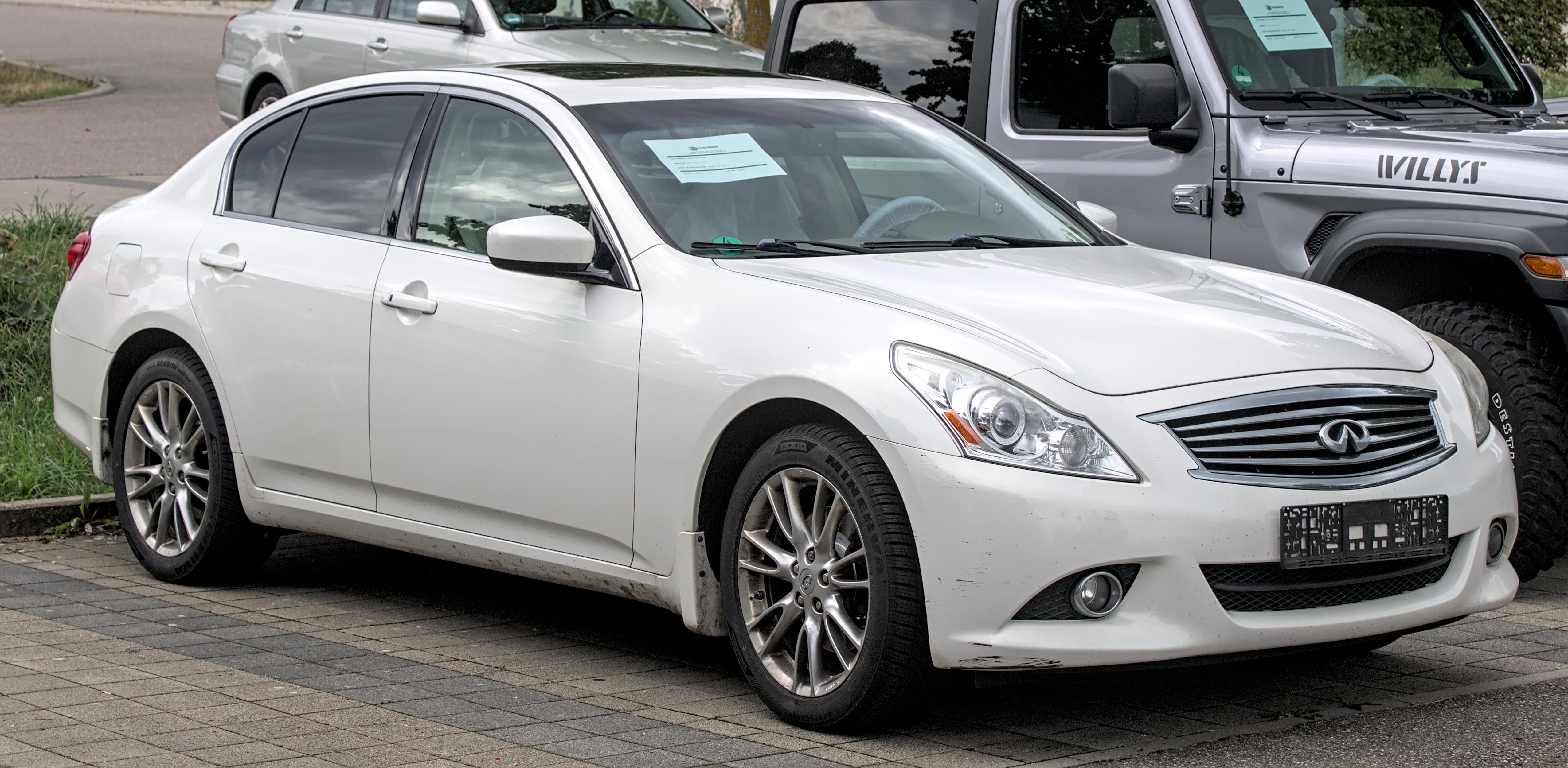
Infiniti G37
"There was a period where they did a G37, but they also did a G25 with the same car."
The Infiniti G37 is a more performance-focused version of Infiniti’s G-series. It’s the kind of car people remember from the era when Infiniti offered multiple “G” models at the same time.
The Infiniti G37 is one of the best-known members of the G-series lineup, typically paired with a V6 and offered as a practical performance-oriented sedan/coupe depending on market. The transcript uses it to explain that Infiniti ran both G25 and G37-era variants during a transition period.
Infiniti G35
"Since the G came out in 03, the Skyline has been sold basically unchanged in the United States as a regular car, the Infiniti G35, then the G37, then the Q50."
The Infiniti G35 is an older Infiniti sedan that many people associate with the “G” lineup. The host is using it to show how the Skyline’s U.S. identity shifted into Infiniti’s G models.
The Infiniti G35 is an earlier G-series sedan that served as a major U.S. model for Infiniti’s “Skyline-derived” strategy. In the segment, it’s used as part of the timeline showing how the Skyline nameplate effectively became the Infiniti G line in the U.S.
Porsche Macan
"...buying a manual, even if people are just buying a Macan, the brand has in part stayed cool due to the ma..."
The Porsche Macan is a luxury SUV made by Porsche. It’s meant to be comfortable for daily driving but still feel sporty. The episode brings it up because it’s part of how Porsche keeps its enthusiast reputation.
The Porsche Macan is a compact luxury SUV that blends everyday usability with Porsche-style performance and handling. The podcast suggests that even people who aren’t buying a manual sports car may still be buying a Macan, and that this helps keep the brand “cool.” It’s discussed because it shows how Porsche’s enthusiast image can carry into SUVs.
Aston Martin
"...a couple of other brands who probably would have just let it go think, hey, I mean, Aston basically themselves announced that, hey, Porsche is doing this."
Aston Martin is cited as a brand that publicly signaled it would also pursue manual “advantages” because Porsche is doing it. This is presented as evidence of Porsche setting a trend that other luxury brands want to follow.
manual advantages
"And I have a suspicion that that itself has in part made BMW and now Infiniti and a couple of other brands who probably would have just let it go think, hey, I mean, Aston basically themselves announced that, hey, Porsche is doing this."
“Manual advantages” just means reasons people like driving a stick shift. In this segment, the idea is that manuals make a car feel more fun and engaging, so other brands want that same appeal.
“Manual advantages” refers to the perceived benefits of manual gearboxes—like more direct driver control, a more engaging feel, and often a stronger connection between throttle input and gear selection. The transcript suggests other brands are considering manuals because Porsche proved they can boost enthusiast appeal.
three pedals
"...but it had three pedals. Now, that's the way to enthusiast parts."
“Three pedals” means the car has a clutch pedal plus the usual brake and gas pedals. That’s the typical setup for a manual transmission. People who like driving usually prefer this feel over an automatic.
“Three pedals” is shorthand for a manual transmission layout: clutch, brake, and accelerator. It’s used as a quick enthusiast signal because many drivers associate manuals with more direct control and a more engaging driving experience. The segment uses it to contrast against automatic-only versions.
tail light design
"Are you worried about how it will look? The tail light design is interesting."
Tail light design is how the rear lights look—their shape and pattern. The speaker is saying they like the way these look on the car they’re discussing. It’s part of the overall styling impression.
“Tail light design” refers to the shape, layout, and styling of the rear lighting elements. In this segment, it’s called out as a specific visual feature that the speaker finds interesting, and it’s tied to comparisons to other brands’ styling cues. Tail lights are often a major part of how a car’s identity and “face” show up at a glance.
Ferrari
"I kind of like that it's like kind of Ferrari-ish with the..."
Ferrari is referenced as a styling benchmark, with the speaker saying the Nissan’s lighting/visual cues feel “Ferrari-ish.” This is a subjective design comparison rather than a technical one. It helps listeners understand the aesthetic direction being discussed.
Chevrolet Impala
"I am familiar with styling trait. 2009 Chevy Impala. Also that."
They bring up a 2009 Chevrolet Impala as an example of a car whose styling people might debate. It’s not the main topic—just a comparison to make a point about design opinions. The point is that styling can be divisive.
The speaker uses the 2009 Chevrolet Impala as a comparison point for styling—specifically to argue that certain design traits can be polarizing. This is a “reference car” rather than a deep dive, but it helps listeners understand the tone: they’re talking about tail-light and styling opinions. It’s essentially an example of a mainstream car with distinctive styling.
Stadia
"There's never been an unattractive Skyline. The Stadia, that's a different conversation. Oh, fighting words today."
They say “Stadia,” but it’s not clear which car they mean from this snippet alone. Since they’re talking about Nissan/Infiniti cars, it’s probably a model name they’re referencing. The app should flag this as something to confirm.
“Stadia” here is likely being used as a reference to a specific model or brand name, but in this transcript segment it’s not clearly identified. Because the context is Nissan/Infiniti styling opinions, it may be a mishearing or shorthand for another vehicle. Listeners would benefit from clarification of what exact car the host means.
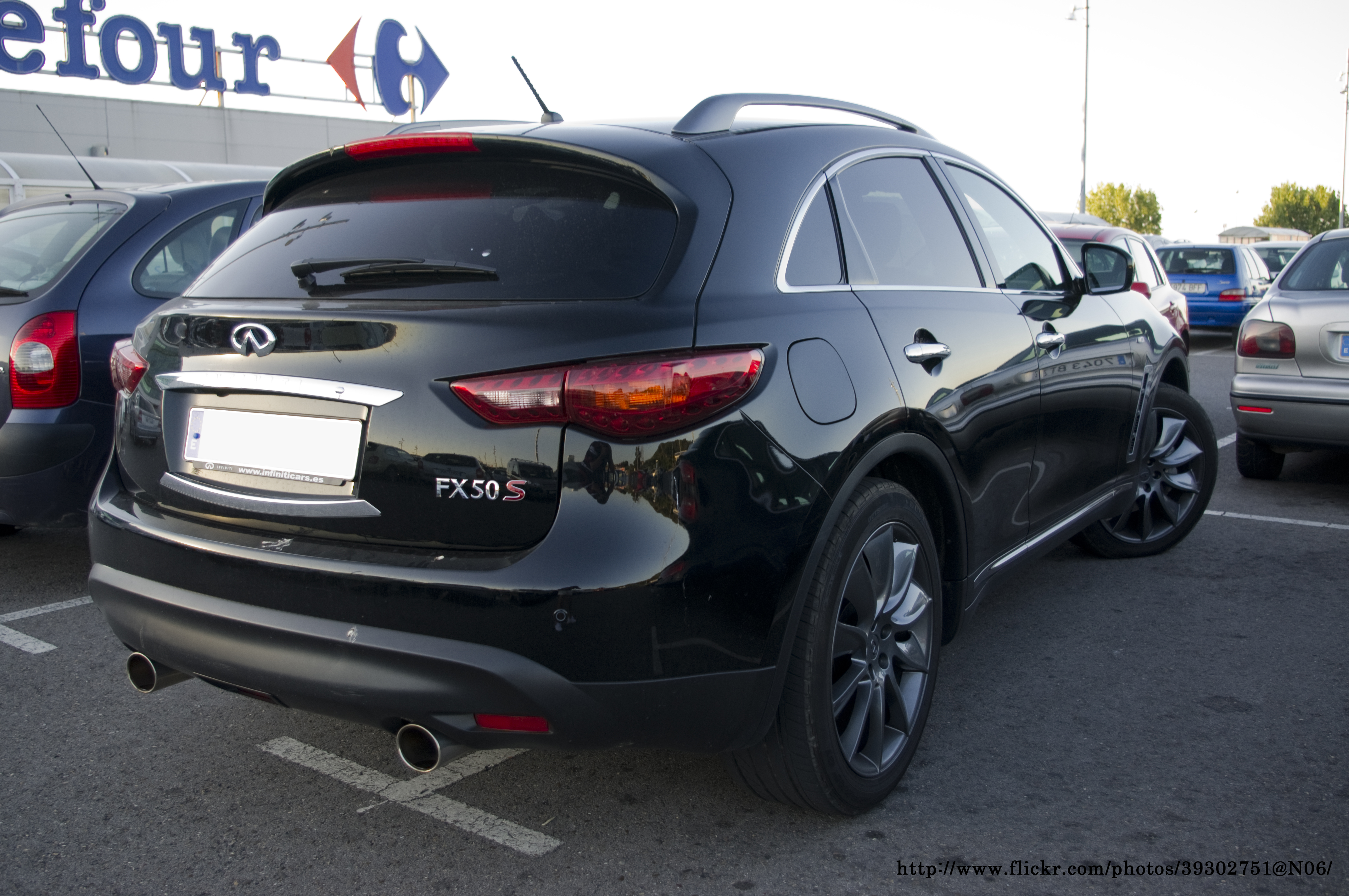
FX Infiniti Fx50
"So what are you driving? And he said, I have an Infiniti FX50. And I'm like, yeah, I hope it worked. Was it a comfort?"
The Infiniti FX50 is a luxury SUV that’s meant to feel more powerful and sporty than a basic crossover. The host is reacting to someone mentioning it, then asking whether it was comfortable to ride in. The takeaway is that some fast cars can be less comfy than you’d expect.
The Infiniti FX50 is a performance-oriented luxury SUV from Infiniti’s FX line, typically paired with a strong V8 engine and a sportier driving feel than a typical family crossover. In this segment, it’s brought up as an example of a car someone “dropped” in a conversation—then the speaker questions whether it was comfortable. That contrast highlights how “performance” doesn’t always mean “comfort.”
badge job
"I swear you sent it with an FX45, but I'll accept 50. I bet it was a badge job."
A “badge job” means the car has fake or swapped badges. It’s done to make the vehicle look like a more expensive or more powerful version than it actually is.
A “badge job” is when someone changes or swaps the car’s badges/emblems to make it look like a higher (or different) trim than it really is. In this context, the speaker suspects the car’s badging didn’t match the true model/engine.
Nissan XTerra
"Okay. The other big Nissan story is that they're also returning with the XTERRA, which I have been announcing on this podcast that they should have done... What did they say about powertrains? ... We know that it'll be a V6 and a V6 hybrid."
The Nissan Xterra is a tough, off-road-oriented SUV. They’re talking about Nissan bringing it back and what kind of engines it will come with, including a hybrid option.
The Nissan Xterra is a rugged, body-on-frame SUV that’s known for off-road capability and a truck-like feel. In this segment, the hosts discuss Nissan “returning” the Xterra and what powertrain options it will use, including a V6 and a V6 hybrid.
Ford Bronco
"...t doing. You know, first I said that the Lincoln Bronco was coming. Then I said that the new XTERRA was ..."
The Ford Bronco is an SUV designed to handle rough roads and off-road driving. It’s made by Ford. The podcast mentions it because they’re discussing which SUVs are expected to show up or change.
The Ford Bronco is a rugged SUV built for off-road capability and everyday driving. In the podcast, it’s mentioned alongside other vehicle talk, with “Lincoln Bronco” and “new XTERRA” referenced as part of a lineup discussion. It comes up because people are comparing what models are coming or being replaced.
powertrain lineup strategy
"What did they say about powertrains? ... We know that it'll be a V6 and a V6 hybrid... They're looking at Toyota having trouble selling $80,000 four-cylinder TRD Pro 4 runners. They're like, you know, we're going to give the people what they want."
This is about how car companies decide what engine options to sell. The hosts think Nissan is choosing a different mix of engines because they believe Toyota’s current choices aren’t selling as well.
“Powertrain strategy” here is about how automakers choose which engines to offer (V6, hybrid, or four-cylinder) and how that affects sales. The hosts suggest Nissan is adjusting its lineup in response to what they perceive as Toyota’s difficulty selling a particular configuration.
V6 hybrid
"What did they say about powertrains? ... We know that it'll be a V6 and a V6 hybrid."
A V6 hybrid is an SUV that uses a V6 engine plus an electric motor. The electric part helps the car be more efficient and can make it feel stronger when you accelerate.
A V6 hybrid combines a V6 engine with an electric motor and battery system to improve efficiency and provide extra torque. In hybrid setups, the electric system can assist acceleration and sometimes allow limited electric-only operation depending on design.
four-cylinder XTERRA
"Will it be the powertrains? No four-cylinder XTERRA. Oh, wow."
They’re saying the new Xterra won’t be offered with a small four-cylinder engine. That matters because some people expect a bigger engine for the Xterra’s rugged, off-road personality.
This refers to the idea that the next Nissan Xterra might not be offered with a four-cylinder engine. The hosts frame it as a major decision because many buyers associate the Xterra with larger-displacement power for towing and off-road use.
frontier architecture
"One interesting thing I read was that it's going to be on the next generation frontier architecture, which is shared with Mitsubishi."
“Architecture” is the car’s basic build—how it’s laid out and designed underneath. Sharing architecture with another brand can mean they use similar platforms and engineering, which can reduce development costs.
“Architecture” refers to the underlying vehicle platform and engineering foundation—things like mounting points, chassis layout, and how major systems are packaged. Here, they claim the new Frontier architecture is shared with Mitsubishi, and they discuss how it was introduced in stages.
Mitsubishi
"which is shared with Mitsubishi. So the new frontier just came out, but it wasn't ever new anymore."
Mitsubishi is another car brand. They’re saying Nissan and Mitsubishi may be using the same underlying vehicle design, which can make cars cheaper to develop.
Mitsubishi is an automaker that can share platforms/engineering with other brands. In this segment, the hosts say the next-generation “frontier architecture” is shared with Mitsubishi, implying common underlying design work.
Nissan Frontier
"The frontier is an interesting story where for a year they used the old body style, but an entirely new powertrain. And then the next year they revealed the new body style. But even the new body, there was a lot of carryover. The interior was carryover at this point."
The Frontier is Nissan’s pickup truck. They’re explaining that Nissan sometimes updates the truck in stages—first the engine/drivetrain, then the outside shape, and sometimes the inside stays the same for a while.
The Nissan Frontier is Nissan’s midsize pickup. Here, the speakers describe its “frontier architecture” rollout strategy—using an older body style while introducing a new powertrain, then later updating the body style, with some interior carryover.
carryover
"But even the new body, there was a lot of carryover. The interior was carryover at this point."
“Carryover” means the company reuses parts from an older version instead of starting from scratch. It can save money and speed up the update, but it also means some things won’t feel completely new.
“Carryover” means using existing components or designs from an earlier generation rather than fully redesigning everything. In this discussion, they’re saying even after the new body style, parts of the interior (and possibly other elements) were still reused.
Pajero Montero
"...the platform, which is shared with Mitsubishi, Mitsubishi has also started to tease the new Pajero Montero, which may come back to the US..."
Pajero/Montero is a Mitsubishi SUV name used in different countries. The discussion here is about Mitsubishi possibly returning it to the U.S., which would be a big move for the brand.
Pajero and Montero are names used for the same Mitsubishi SUV in different markets. The speaker is saying Mitsubishi may bring this model back to the U.S., which would effectively be a re-entry into the U.S. market with a familiar, off-road-oriented platform.
Final year / model discontinued in the U.S.
"“We lost that in 2006.” … “It was a final year in the US.” … “2006 was the last year of the Montero.”"
Sometimes a car gets discontinued even though the kind of car it is is about to become more popular. The hosts are pointing out that the Montero left the U.S. right before the market really caught up.
This segment highlights how a model can end its U.S. sales run (“final year”) even when the broader market is starting to move toward that vehicle type. It’s a reminder that timing matters: discontinuation can happen before demand fully peaks.
Ford Raptor
"...e XTERRA and this all went away and said Ford and Ford Raptor and Trada forerunner have this."
The Ford F-150 is a large pickup truck made by Ford. It’s designed for work and everyday hauling. The episode mentions it while talking about which trucks are currently being offered or discussed.
The Ford F-150 is a full-size pickup truck and one of the most widely known trucks in the market. In the podcast, it’s mentioned in a lineup context alongside other models like the Raptor and “forerunner,” suggesting discussion about which trucks are available or being emphasized. It comes up because the F-150 is often the default reference point for truck talk.
Toyota FJ Cruiser
"“Such a cool car.” … “The FJ Cruiser, the XTERRA and this all went away…”"
The Toyota FJ Cruiser is a rugged SUV with a classic, off-road look. The hosts are basically saying that cars like this faded out, even though people were starting to want them more.
The Toyota FJ Cruiser is a retro-styled off-road SUV that became popular in the U.S. for its rugged look and trail-ready attitude. Here, it’s grouped with other off-road-oriented models that “went away,” highlighting how certain niche SUVs disappeared even as demand for that style was rising.
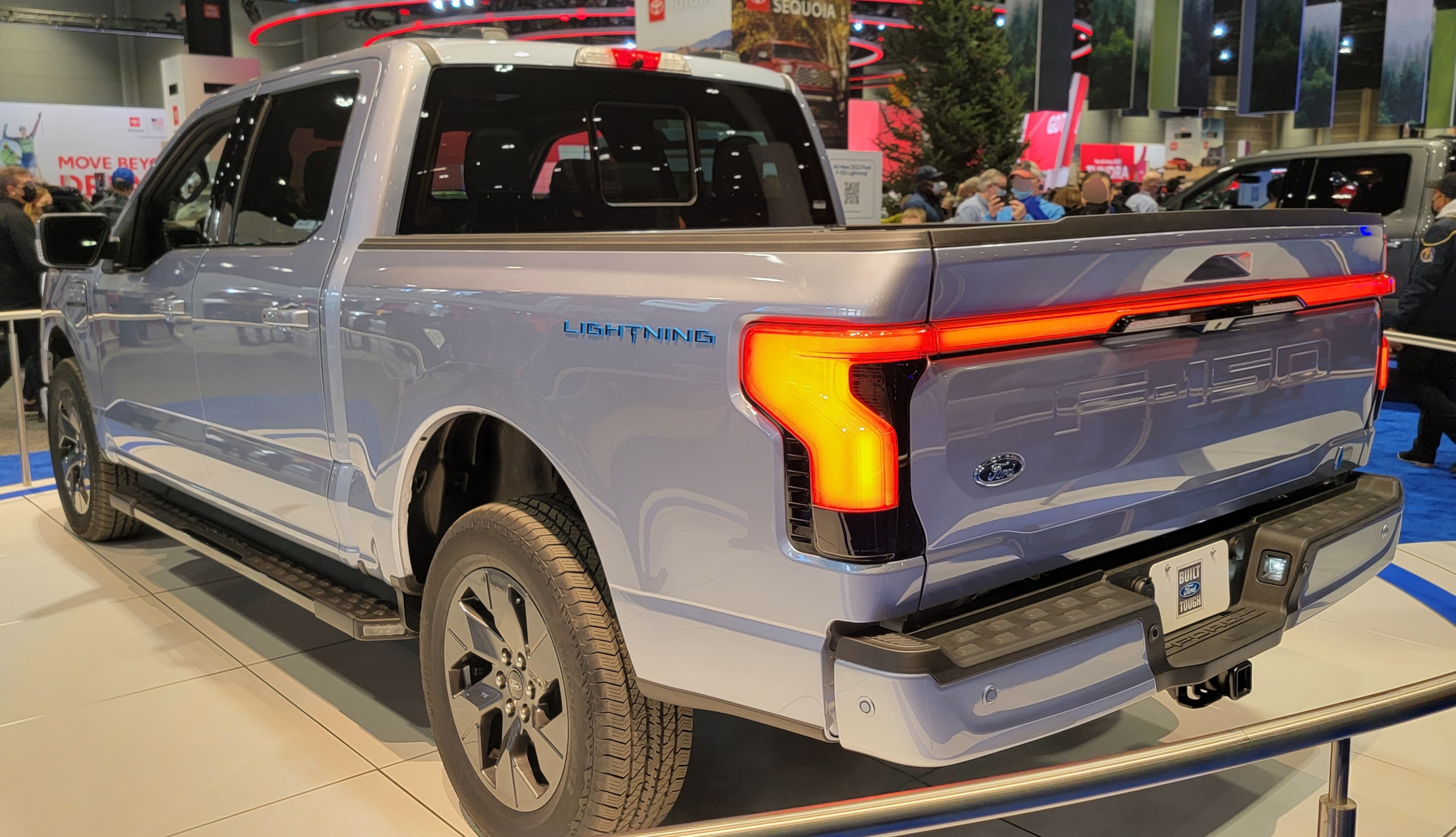
Jeep Wrangler
"“Jeep Wrangler, it's yours now.” “Take the wheel.”"
The Jeep Wrangler is a very off-road-focused SUV. It’s the kind of vehicle people buy when they want something rugged and outdoorsy, and the speaker is saying that role is filled by the Wrangler now.
The Jeep Wrangler is a long-running off-road SUV known for its removable doors and roof and its strong aftermarket support. In this segment, it’s referenced as the kind of vehicle that “has it” now—implying the rugged, go-anywhere niche that the Montero and other models used to fill.
German engineered
"The blades are German engineered, just like my beloved M5, honed at three different angles so they cut cleanly without tugging and the cartridge doesn't clog up every other stroke like the drugstore stuff."
They’re saying the razor blades are made with high-quality engineering, and they’re using “German engineered” as a shorthand for that. The point is that it should shave smoothly.
“German engineered” is a marketing phrase implying the blades are designed with German manufacturing standards and engineering expertise. In this context, it’s used to justify why the blades cut cleanly and don’t tug.
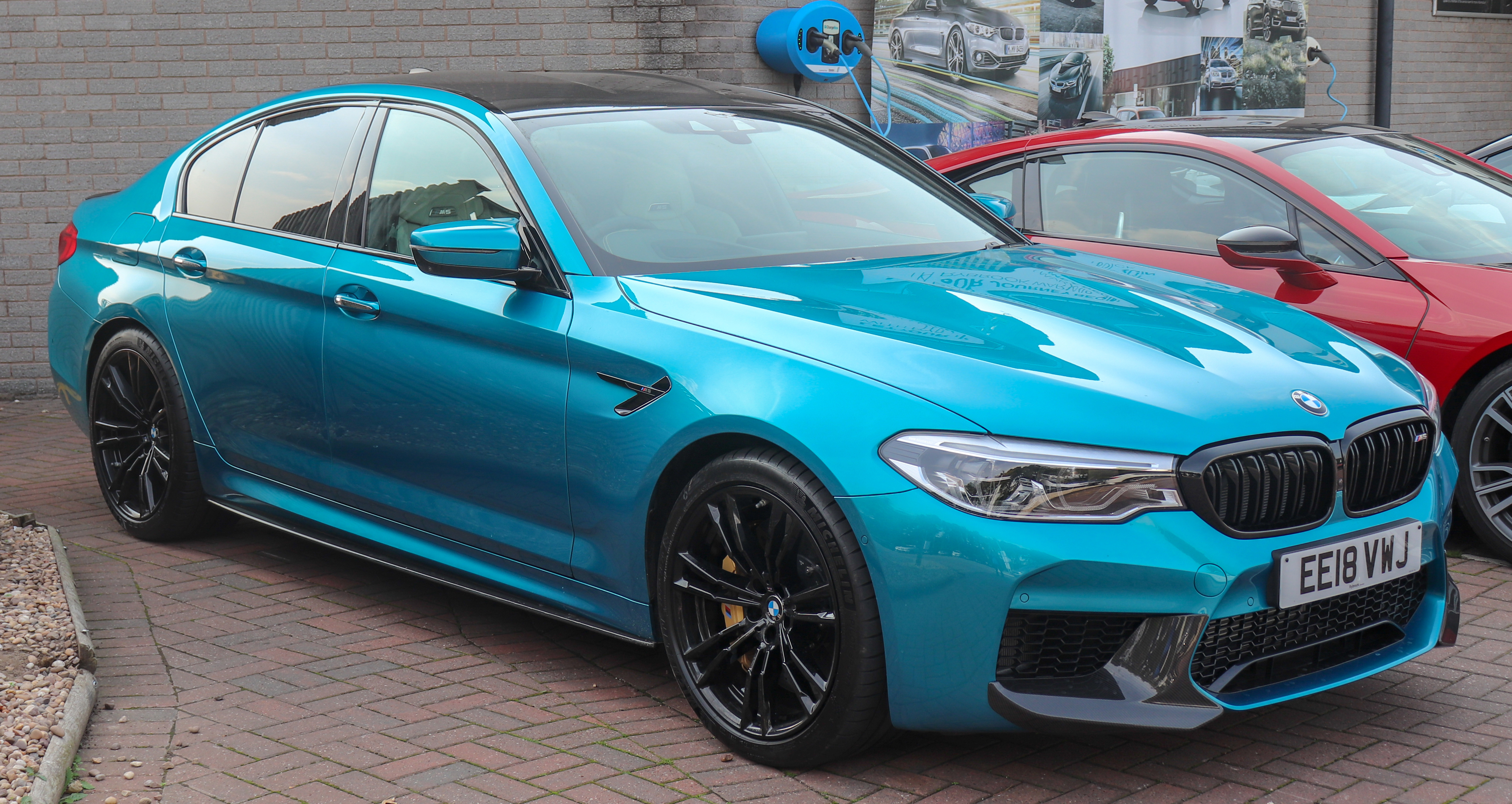
BMW M5
"...lades are German engineered, just like my beloved M5, honed at three different angles so they cut cle..."
The BMW M5 is a fast, performance-focused sedan made by BMW. It’s meant to feel luxurious but still drive very aggressively. The episode mentions it because it’s a well-known enthusiast car.
The BMW M5 is a high-performance version of the BMW 5 Series, built to combine luxury with serious speed. The podcast specifically calls out the “beloved M5” and mentions it being “honed at three different angles,” which points to a detail-focused discussion about the car’s design or engineering. It’s brought up because the M5 is a benchmark for fast, refined performance sedans.
five blade cartridge
"You get the razor, a five blade cartridge, shave gel and a travel cover."
This is the part of the razor that you swap out, and it has five blades in it. The idea is that more blades can help you get a smoother shave.
A “five blade cartridge” is a replaceable shaving head that contains multiple blades in a single unit. More blades can improve how smoothly a razor cuts hair, but the real-world feel depends on blade spacing, sharpness, and how quickly the cartridge clogs.
Nissan Juke
"The last Nissan story is that they are coming out with a new juke. It's better looking than the last one... It was not the one that was sold in the US, there was a generation between them."
The Nissan Juke is a small crossover SUV. They’re saying the new one looks better than the older one, and they’re also clarifying which version they mean for the U.S.
The Nissan Juke is a compact crossover known for its distinctive styling and small-car dimensions. In this segment, the hosts compare the new Juke to the previous one and note that the “last one” they’re referring to wasn’t the U.S.-market version.
USDM
"I'm referring to USDM. We only talk USDM on this pod unless otherwise specified."
USDM stands for “U.S. Domestic Market,” meaning the specific cars and trims sold in the United States. The hosts use it to avoid confusion when other markets (Europe, Japan, etc.) got different versions or generations of the same model.
WLTP
"If we're going to talk WLTP, we'll have that conversation... WLTP for those listening is Europe's like EPA cycle for electric cars. And it's a lie. It's a little inflated."
WLTP is a Europe-wide test that carmakers use to estimate how far a car can go (especially for electric cars). It’s not real-world driving, so the numbers can be a bit optimistic.
WLTP (Worldwide Harmonized Light Vehicle Test Procedure) is the standardized European testing method used to estimate things like range and fuel/energy consumption. It’s often used for electric cars to quote an expected driving range under controlled test conditions.
Toyota Corolla Cross
".... But I'm driving around and the other day I saw Corolla Cross and I'm reminded, boy, that segment is boring. A..."
The Toyota Corolla Cross is a small SUV made by Toyota. It’s meant to be practical and easy to live with, like a regular Corolla but with more SUV-style space. The episode mentions it as an example of a common, straightforward type of car.
The Toyota Corolla Cross is a compact crossover SUV built on the Corolla platform, aimed at buyers who want SUV space with a familiar name. The podcast calls the segment “boring” and mentions seeing a Corolla Cross, using it as an example of how common and predictable this type of vehicle can feel. It comes up because the conversation is about how certain car categories blend together in everyday life.
14 inch hubcaps
"I don't want it. Imagine sitting on 14 inch hubcaps and they're all going to be silver in this rental cars."
This is about small wheels (14-inch) and hubcaps covering them. The speaker is saying it would look cheap or generic—like something you’d see on rental cars.
“14 inch hubcaps” refers to the wheel size and the use of hubcaps (coverings over the wheel) rather than exposed wheels. The speaker is using it as a visual cue for how rental cars often look more basic or cost-cut.
6.7 liter V8
"It's going to have this new 6.7 liter V8, which is called the LS6."
A 6.7-liter V8 describes the engine’s displacement (6.7 liters total) and its cylinder layout (V8). Larger displacement V8s typically make strong low- to mid-range power, especially in performance cars like the Corvette.
LS6
"It's going to have this new 6.7 liter V8, which is called the LS6."
LS6 is the name of the specific engine version they’re putting in the Corvette. Think of it like a model number for the motor, not just a generic “V8.”
LS6 is the engine name for this new 6.7-liter V8 in the Corvette lineup discussed here. Engine codes like LS6 help distinguish specific variants with different internals and tuning, even within the same general engine family.
535 horsepower
"It's 535 horsepower. The current Sting Sting is 495."
Horsepower is basically how strong the engine is. Higher horsepower usually means quicker acceleration, especially in a performance car.
Horsepower is a measure of engine output—how much power the engine can produce. In this segment, the hosts use the 535 hp figure to frame how much stronger the new Corvette setup is compared with the previous version.
zero to 60
"Are you aware that the current Sting Ray has a 2.9 seconds zero to 60 times? And now we're adding 40 more horsepower?"
“Zero to 60” is how fast the car gets from stopped to 60 mph. It’s a simple way to compare how quick different cars feel.
Zero-to-60 time measures how quickly a car accelerates from a standstill to 60 mph. It’s a common performance benchmark because it reflects traction, gearing, and overall power delivery—not just peak horsepower.
Chevrolet Corvette C8
"The C8 has come and it's the hottest car in the market... The C8 has been on sale... That's crazy."
“C8” is the newest generation of the Chevrolet Corvette they’re talking about. It’s famous because it moved the engine to the middle of the car, and people still think it’s one of the coolest performance cars out there.
The “C8” refers to the eighth-generation Chevrolet Corvette, which is a major shift because it brought mid-engine layout to the Corvette nameplate. The hosts discuss how long it’s been on sale and why it remains highly desirable, including the constant stream of new variants.
All-wheel drive (AWD)
"And there's an all-wheel drive version, which is an E-Ray Grand Sport."
All-wheel drive means the car can send power to all four tires. That usually helps it grip better, especially when the road is slick.
All-wheel drive (AWD) sends power to all four wheels, which can improve traction—especially in low-grip conditions or during hard acceleration. In performance cars, AWD can also help reduce wheelspin and make launches more consistent.
Chevrolet Corvette E-Ray Grand Sport
"And there's an all-wheel drive version, which is an E-Ray Grand Sport."
The E-Ray is a special Corvette that uses both gas power and electric power. They mention it because it’s the all-wheel-drive Grand Sport option.
The E-Ray is a Corvette electrified variant that combines a traditional gasoline engine with an electric system for enhanced traction and performance. In this segment, it’s specifically mentioned as an all-wheel-drive version of the Grand Sport.
Track performance package
"And then you can also get a track-ready package on the Grand Sport... The track performance package, which has Grand Sport specific chassis tuning, quad exhaust,"
A track performance package is an add-on you can buy to make the car better for driving on a race track. It usually includes upgrades that help the car handle harder and stay stable during spirited driving.
A track performance package is an option bundle designed to make a car more capable on circuits, often including suspension tuning, cooling improvements, and other hardware changes. Here, it’s described as Grand Sport-specific chassis tuning plus track-focused exhaust.
carbon ceramic brakes
"carbon ceramic brakes, carbon fiber aero, which is 109 with that package. The Grand Sport is only 15 more than a base."
These are high-end brake rotors made from a ceramic material with carbon in it. They usually work better when you drive hard, but they cost a lot more if you need new rotors.
Carbon-ceramic brakes use carbon fiber reinforced ceramic rotors instead of traditional cast-iron rotors. They typically offer strong fade resistance and lower weight, but they’re expensive to replace and can require specific pads/maintenance.
day-to-day use
"On a day to day use the car's speed basis, you will never experience the difference. This looks like a Z06."
“Day-to-day use” refers to how performance differences show up in normal driving rather than on a track or in controlled tests. The speaker’s point is that some variants may be faster on paper, but you might not experience the gap in everyday situations.
C8 hybrid
"The hybrid, the story of the C8 that isn't told is that the best C8 that exists is the hybrids. But no one wants any part of them."
C8 is the Corvette generation with the engine behind the driver. They’re discussing a hybrid version of the C8 and arguing that it might be the best one, even though many people don’t seem interested.
The C8 refers to the Chevrolet Corvette generation with the mid-engine layout, and “hybrid” here points to a hybrid version of that platform. The speaker claims the best C8s are the hybrids, but also says people don’t want them—highlighting a mismatch between performance potential and buyer demand.
four wheel drive
"They don't get enough respect. But they are a four wheel drive. They launch incredibly fast."
Four-wheel drive means the car can send power to all four tires. That usually helps it grip the road better, so it can accelerate more confidently, especially when traction is poor.
Four-wheel drive (4WD) sends power to both the front and rear axles, improving traction—especially on slippery or uneven surfaces. It can also help launches feel more forceful because the car can put power down more effectively.
Rolls Royce Nightingale
"This is the Rolls Royce Nightingale. Now, a couple of weeks ago. This looks cool. This looks cool."
The Rolls-Royce Nightingale is a very rare, custom-built Rolls-Royce. It’s the kind of car only a handful of people can get because production is extremely limited.
The Rolls-Royce Nightingale is a coachbuilt, ultra-limited Rolls-Royce project—built in very small numbers and tailored to specific customer requests. The speaker is emphasizing its exclusivity and that most orders are already spoken for.
coach built collection
"But this is part of the Rolls Royce coach built collection that we talked about a couple of weeks ago. The first one they're rolling out."
“Coachbuilt” means the car is made with a lot of customization, especially the body and finishing. It’s usually for very limited, special-commission cars rather than mass production.
“Coachbuilt” refers to cars that are built with significant custom bodywork and finishing, often by specialized coachbuilders working with the automaker. A “coach built collection” implies a curated set of these bespoke, limited-run vehicles.
Suburban
"[1454.4s] That's 228 inches long. [1456.2s] That's longer than a Suburban. [1457.5s] Yeah."
They mention the Suburban because it’s a big, familiar SUV. Saying it’s longer than a Suburban is basically a “this thing is huge” comparison.
The speaker uses the Chevrolet Suburban as a familiar size reference to describe how long the electric car is. The Suburban is a full-size SUV, so comparing length helps listeners visualize the scale quickly.
electric
"[1457.5s] It's electric. [1458.6s] It's also as long as the Phantom and it is electric. [1461.2s] Yes."
When they say it’s electric, they mean it runs on electricity from a battery instead of using gas. That changes how the car is built and can make the front end and interior layout different.
The discussion is centered on an all-electric vehicle, meaning it’s powered by electric motors and a battery pack rather than a gasoline engine. That affects packaging, performance feel, and even styling choices like how much space the front end can take up.
Phantom
"[1457.8s] It's electric. [1458.6s] It's also as long as the Phantom and it is electric. [1461.2s] Yes."
They’re comparing it to a Rolls-Royce Phantom, which is famous for being very long and very luxurious. It’s another way of saying the car is unusually big.
They compare the electric car’s length to a Rolls-Royce Phantom, a flagship luxury sedan known for its long wheelbase and grand proportions. This is a “luxury size benchmark” to emphasize how stretched the new vehicle is.
grille
"[1468.1s] BMW, this is how you integrate a big grille. [1471.0s] The grille is three feet wide. [1473.3s] Is it really?"
The grille is the front “face” opening you see on the car. On gas cars it helps cooling, but on many modern cars it’s also mostly about looks.
A grille is the front opening (often with a mesh pattern) that traditionally helps with airflow to cooling systems like the radiator. In modern cars, it’s also a styling element, and the speaker is highlighting how a very large grille can still look cohesive.
skateboard platform
"Because this is based on the Spectra, I assume. Correct. You hit the nail exactly on the head... If you just have a skateboard, put whatever body you want on it."
Think of it like building a car on a flat “base” that already has the important EV parts underneath. Then you can put different body styles on top without starting from scratch every time.
A “skateboard platform” is an EV architecture where the battery and drive components are packaged into a flat base, and the body is built on top. That modular approach makes it easier for manufacturers to create different-looking cars without redesigning the whole underbody.
EVs give because you don't need to place an engine
"They're actually seizing on the opportunity that EVs give because you don't need to place an engine. You don't need to route anything. You just have a battery and some motors in the wheels and you're done."
Gas cars have a big engine and all the stuff around it. EVs don’t, so the car can be laid out more freely and often feels roomier or smoother inside.
The key EV packaging advantage is that there’s no traditional front engine bay, so designers don’t have to route an engine, exhaust, and related plumbing. That frees up space and simplifies layout, which supports flexible body styles and cabin packaging.
luxury car experience is not really dependent on the engine
"Well, let's be honest. The luxury car experience is not really dependent... Like this true luxury car experience is not dependent on the engine."
This is a philosophy about what “feels luxurious” to drivers: refinement traits like smoothness, quietness, and low vibration matter as much as (or more than) raw engine character. EVs can improve cabin refinement because they can reduce vibration and noise sources compared with many ICE layouts.
10,000 illuminated stars lighting treatment
"In addition, and this is my favorite thing, this is from the press release, there is a lighting treatment inside the car with 10,000 illuminated stars..."
They’re describing a fancy interior light setup that uses lots of tiny illuminated points—like stars—to make the cabin feel special. It’s basically a premium “mood lighting” feature.
The segment describes an interior lighting feature using “10,000 illuminated stars.” This is a common luxury-vehicle tactic: using ambient lighting and programmed light patterns to create a premium, immersive cabin atmosphere.
rhythm of the lighting is inspired by the rhythm of a Nightingale's song
"...the dazzling of the lighting, like the rhythm of the lighting is inspired by the rhythm of a Nightingale's song."
They’re saying the light show inside the car is designed to move in a pattern that matches the idea of a bird’s song. It’s meant to feel artistic, not just functional.
This is a design/branding concept: the cabin lighting animation is said to be synchronized to the “rhythm” of a nightingale’s song. It’s an example of how automakers use narrative and art-inspired cues to make technology feel emotional and premium.
Barquetta
"It's a Barquetta. Do you have the Rolls-Royce customer? This is cool though."
“Barquetta” is a fancy word for a small, open-top sports-car style. The speaker is using it to describe a car that feels like a classic roadster, even if the roof situation is modern.
A “barquetta” is a lightweight, open-top style of sports car body—historically associated with small, low, often two-seat designs. In this segment, it’s used to describe a car without a fixed roof and with a rolling/absent roof concept, tying it to that classic open-air roadster vibe.
Coach Bill collection
"I'm curious what the other cars that will end up in this Coach Bill collection end up looking like. You know, this is..."
This sounds like a collector’s group of very special cars. The host is basically wondering what other unique cars in that collection look like.
The “Coach Bill collection” appears to refer to a curated set of coachbuilt or highly bespoke vehicles, likely tied to a collector’s lineup. The host is speculating what other cars from that collection might look like, implying these are special, custom-bodied machines rather than standard production cars.
Rolls-Royce Phantom 8
"The Phantom 8 was cool, the Cullinan made it, continued the situation."
Rolls-Royce Phantom 8 is a very high-end luxury car from Rolls-Royce. The host is basically saying Rolls-Royce keeps making special, attention-grabbing versions of their top cars.
The Rolls-Royce Phantom 8 is a modern take on the Phantom nameplate, positioned as an ultra-luxury flagship. In the segment, it’s referenced as part of Rolls-Royce’s recent run of standout products that keep pushing design and tech forward.
Rolls-Royce Cullinan
"The Phantom 8 was cool, the Cullinan made it, continued the situation. He doesn't think there should be a lesser Cullinan's insane."
The Rolls-Royce Cullinan is Rolls-Royce’s luxury SUV. It’s known for being extremely upscale and tailored, and the speaker is grouping it with other recent Rolls-Royce hits.
The Rolls-Royce Cullinan is the brand’s luxury SUV, built around the same kind of bespoke, ultra-premium approach as the Phantom. Here it’s mentioned as a continuation of Rolls-Royce’s recent lineup of appealing, high-profile vehicles.
Rolls-Royce Spectre
"But then they came out with Spectre, which is great. And now they've got these one-offs that come out with every so often that all seem to look pretty cool."
Rolls-Royce Spectre is a Rolls-Royce that’s designed like a luxury grand tourer, and it’s also the brand’s electric model. The speaker is saying it’s a really good direction for Rolls-Royce.
The Rolls-Royce Spectre is the brand’s modern grand tourer and is notable for being an electric Rolls-Royce. In this segment, it’s called out as “great,” showing how the brand’s newer, more experimental products are still landing with enthusiasts.
one-offs
"And now they've got these one-offs that come out with every so often that all seem to look pretty cool."
A “one-off” is a car that’s basically built as a custom special for a specific buyer. Instead of being a regular model everyone can order, it’s made to be unique.
“One-offs” are custom, individually built vehicles—often made in very small numbers or as single commissioned cars—rather than mass-produced models. In the segment, the host is praising Rolls-Royce for periodically releasing these bespoke creations that still look exciting and premium.
Rolls-Royce Boat Tail
"And there was the Boat Tail, which I'm obsessed with. Boat Tail's them. But this is sort of that."
Rolls-Royce Boat Tail is a super rare, custom-style Rolls-Royce. It’s famous for its unique shape, and the speaker is saying the car being discussed feels similar in spirit.
The Rolls-Royce Boat Tail is an ultra-rare, coachbuilt-style Rolls-Royce with a distinctive long, low profile and bespoke bodywork. The host says they’re “obsessed” with it and connects the current car’s vibe to that same coachbuilt, one-off design philosophy.
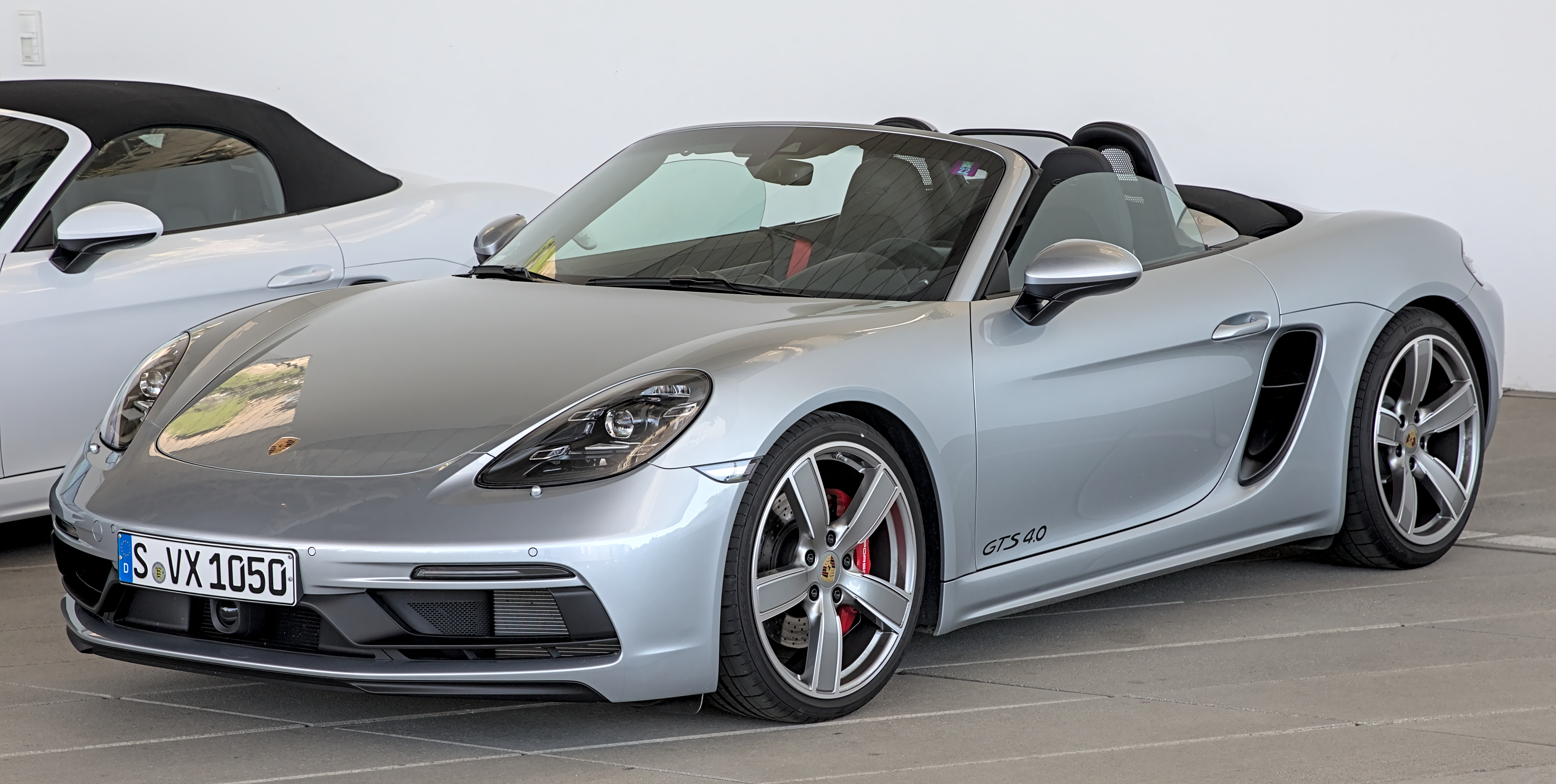
Porsche Boxster
"...nt. I mean, if it's electric, maybe it is like a Boxster. There are two trunks."
The Porsche Boxster is a two-seat sports car with the engine in the middle. It’s known for being fun to drive and for having an open-top option. The episode mentions it because it has storage areas (trunks) that people compare to electric cars.
The Porsche Boxster is a mid-engine roadster from Porsche, known for its handling balance and open-top driving. The podcast jokes about it being “like a Boxster” if something is electric, and highlights that it has “two trunks,” which is a common EV packaging advantage. It’s discussed because the Boxster’s layout and practicality details are easy to compare to other drivetrains.
two trunks
"There are two trunks. Probably not, though. Probably not."
They’re saying the car has storage in two places—front and back. That’s useful because you can carry more stuff without everything going into the cabin.
“Two trunks” usually refers to having storage in both the front and rear of the vehicle. This is common on many electric cars (front trunk/frunk plus rear trunk) and on some mid-engine layouts where the engine placement leaves room for luggage.
limited production numbers
"No, they haven't really. They've been cagey about it, but everybody's assuming over a million... We're only building 130 of them are coming here."
Limited production means only a small number of cars are made. People often assume fewer cars will be more valuable later, but it doesn’t always work out.
Limited production numbers (like building only a certain count) can affect rarity and long-term desirability. In this segment, they mention a small run and compare it to expectations about pricing and value.
car appreciation
"That's great. That's what it's going to appreciate in 10 years. You think? I don't know... These cars don't appreciate."
“Appreciation” is how much a car’s value increases over time. The speakers are debating whether this particular car (and cars like it) will appreciate, noting that some models don’t rise much in value.
Rolls-Royce Camargue
"What about if you ever seen a Rolls-Royce Camargue? Pull that up. You're going to need to spell that one for me there, buddy... Rolls-Royce Camargue... This was the Project Nightingale of its era."
The Rolls-Royce Camargue is a very rare, older Rolls-Royce. Doug is basically saying that some fancy, expensive cars don’t always become great investments.
The Rolls-Royce Camargue is a rare luxury grand tourer from Rolls-Royce. In the conversation, it’s used as an example of a car that doesn’t necessarily hold value the way people might expect.
Demand limited
"Camargue was built for 11 years, and they only made 531. Demand limited. Massive."
“Demand limited” means not many people were interested in buying the car when it was new. If not many buyers want it, the price can drop even if the car is rare. So rarity and popularity don’t always go together.
“Demand limited” means the market didn’t want enough of that car at the price it was offered, so sales stayed low. When demand is limited, even a historically expensive or special car can end up with modest used values. Rarity alone doesn’t guarantee high prices—what matters is how many buyers actually want it.
hand-built
"Not only was it hand-built, it was built slowly. Now, this car was designed by an Italian..."
“Hand-built” means the car was put together more by people than by machines. The episode is using it to explain why the car was made slowly and in small numbers. That kind of process usually makes a car harder to find today.
“Hand-built” refers to manufacturing that relies more on skilled labor and manual assembly than fully automated production. In this context, they’re saying the Camargue wasn’t just rare—it was also built slowly, which helps explain the low total output. Hand-building can also affect consistency and build quality, depending on the factory process.
Wheel treatment
"But for now, I think that it is just so cool. Wheel treatment."
“Wheel treatment” just means how the wheels are finished and styled. For example, whether they’re painted, polished, or have a certain design. Wheels can make the whole car look different, even if nothing else changes.
“Wheel treatment” is a catch-all phrase for how the wheels are styled or finished—things like color, finish (paint vs. polished), and design details. In car reviews, wheel treatment is often discussed because it can dramatically change the look of the car even if the mechanical parts are unchanged. It’s also a common area where limited editions or coachbuilt-style cars differentiate themselves.
Chrysler Pacifica
"The Chrysler Pacifica Off-Road version. Apparently, they debuted at SEMA a few months ago, but they just showed it again at the New York Auto Show."
This is a Chrysler Pacifica minivan, but with an off-road theme. The goal is to keep the space for passengers while making it more capable or at least more adventurous for rougher roads.
The Chrysler Pacifica is a minivan, and the “Off-Road” version is a concept/trim that aims to add rugged styling and off-road capability to a family hauler. In this segment, the hosts connect it to the idea of a vehicle that can go off-road while still carrying lots of people.
SEMA
"Apparently, they debuted at SEMA a few months ago, but they just showed it again at the New York Auto Show."
SEMA is a big auto show in the U.S. that’s especially focused on aftermarket upgrades and special builds. If something debuted there, it’s often a concept or a heavily modified idea.
SEMA (Specialty Equipment Market Association) is a major U.S. trade show where automakers and aftermarket companies debut performance parts, concept builds, and off-road equipment. When a vehicle “debuted at SEMA,” it often means it started as a show concept or a parts-driven build before wider exposure.
New York Auto Show
"Apparently, they debuted at SEMA a few months ago, but they just showed it again at the New York Auto Show."
The New York Auto Show is a major event where car companies show off new cars and concepts. Here, it’s mentioned to show that the same off-road idea got another big reveal later.
The New York Auto Show is a major North American auto event where manufacturers showcase new models, concepts, and technology. In this segment, it’s used to explain the timeline: the Pacifica Off-Road was shown at SEMA first, then re-presented at New York.
off-roader, but that also can carry a lot of people
"And I've always said that I want, what I want is an off-roader, but that also can carry a lot of people. Yeah. Yeah."
They’re talking about a vehicle that’s meant for rougher roads, but still has room for a bunch of passengers. It’s basically the best of both worlds: family space plus off-road vibes.
This describes the “people-mover meets off-road” concept: combining family-friendly interior space with suspension, tires, and styling cues associated with off-road use. It’s a common niche because buyers want practicality without giving up the ability to handle dirt roads, trails, or rougher conditions.
Stellantis
"And I was thinking, if they made this, this is exactly what I'm looking for, except that it's a Stellantis product. So what I'm hoping is, this is what I'm hoping, that they take all of the stuff and give it to Toyota."
Stellantis is a big car company that owns multiple brands. Here, it’s mentioned because the speaker is wondering whether the off-road idea could be transferred to another company’s engineering for better reliability.
Stellantis is the multinational automaker formed from the merger of Fiat Chrysler Automobiles (FCA) and PSA. In this segment, the speaker notes that the Pacifica is a Stellantis product, which matters because it ties into their speculation about platform/engineering sharing with other brands like Toyota.
facelifted
"It may be the facelifted Pacifica, which is only facelifted in certain trims."
A facelift is when a car gets a refresh partway through its life. Think of it as a newer-looking version with some updated features, but not a totally new car.
A “facelift” is a mid-generation update to a car, typically involving refreshed exterior styling, revised headlights/taillights, and sometimes new interior tech or trims. It’s often done without changing the underlying platform.
high performance minivans
"Do you think it's interesting that these automakers are teasing high performance minivans and teasing off-road minivans..."
This is the idea of a minivan that’s not just for hauling kids—it’s also meant to be fast and exciting to drive. The speakers are basically saying companies talk about it, but don’t really make one.
“High performance minivans” are minivans marketed with sportier powertrains, styling, and/or handling upgrades—essentially trying to combine family practicality with enthusiast-level performance. The segment questions why automakers tease the idea but don’t actually deliver a truly high-powered version.
off-road minivans
"...teasing off-road minivans, but no one's, or teasing luxury minivans..."
An off-road minivan is a minivan set up to handle worse roads than usual. It often means extra clearance and traction features, even though it’s still a minivan.
Off-road minivans are minivans configured for rougher conditions, usually via higher ride height, all-wheel drive, and appearance/traction packages. They’re a niche concept because minivans are typically optimized for comfort and efficiency rather than ground clearance and durability.
Challenger Hellcat
"...land, but no one's really willing to give us the Hellcat van we want. You know what I'm saying?"
The Challenger is a performance car model from Dodge. It’s known for being fast and having a muscle-car style. The episode mentions it as part of a joke about what kind of versions people want.
The Challenger refers to the Dodge Challenger muscle car, which is known for its performance and classic two-door design. In the podcast, it’s mentioned in a “Hellcat van” style joke about what people want from the lineup. It comes up because the Challenger name is strongly associated with high-performance versions fans talk about.
Hellcat van
"...but no one's really willing to give us the Hellcat van we want."
“Hellcat” is Dodge’s super-power engine reputation. A “Hellcat van” would be a minivan with a very powerful V8, like the kind you’d expect in a muscle car.
“Hellcat” refers to Dodge’s high-output supercharged V8 performance branding. Calling it a “Hellcat van” is shorthand for an extreme, enthusiast-level minivan powered by a supercharged V8—something the speaker says consumers want but automakers haven’t built.
V8
"I think that I do a fair amount of engineering to fit a V8 period into a Pacifica."
A V8 is a type of engine with eight cylinders. It’s usually associated with more power, and here they’re talking about whether a minivan could realistically be built with one.
A V8 is an engine configuration with eight cylinders arranged in a “V” shape, typically producing strong power and smoothness. The speaker is specifically discussing the idea of putting a V8 into a minivan platform, which would be unusual in today’s lineup.
Honda
"Well, you know, first of all, you just were noted. All your Honda's out of a V8, Toyota's out of a V8 anymore."
Honda is referenced in the context of engine lineup changes—specifically the claim that “Honda’s out of a V8 anymore.” The point is about which mainstream brands currently offer V8s and which don’t, affecting the feasibility of a V8-powered minivan.
Toyota Sienna
"No, Toyota teased it off-road Sienna at SEMA a couple of years ago, like a true build."
The Toyota Sienna is a minivan. Here they’re talking about a version that’s been shown as more off-road than you’d expect for a minivan.
The Toyota Sienna is a minivan, and in this segment it’s referenced as being teased in an off-road style at SEMA. The idea is to make a family hauler that can handle rougher terrain than a typical minivan.
Lucid
"Lucid has a new CEO. Lucid has a new CEO, which has got to be their third CEO in 18 months."
Lucid is an EV company. They’re saying Lucid has hired a new CEO, which usually means the company is changing direction or priorities.
Lucid is an electric-vehicle company, and the segment notes that it has a new CEO. CEO changes can signal shifts in strategy, product timelines, and how the company handles manufacturing and funding.
interim
"The last one was an interim. We're good."
“Interim” just means something temporary. It’s like a bridge between two bigger changes, not the final version.
An “interim” model or phase is a temporary step between major redesigns or generations. In automotive terms, it often means a stopgap update while the next full platform is developed.
minivans before the 96 crisis
"It's like the minivans before the 96 crisis. They all said, it's not possible."
They’re using a past example from minivans to explain why something seemed unlikely. It’s not a specific car detail in this segment.
This is a historical analogy comparing a past era of minivans to the current situation. The “96 crisis” reference is likely shorthand for a market or product disruption, but it isn’t specific enough here to tie to a particular automotive event or model.
attempted to be stolen
"And because it's a Kia, it has been attempted to be stolen several times. And so it no longer has a driver's side door handle, which was ripped off by an attempted thief."
They’re saying the car has been targeted by thieves more than once. That usually means the car gets damaged and the keys/locks may need to be repaired or changed.
The speaker is describing repeated theft attempts, which can lead to damage like broken locks, missing exterior hardware, and rekeying. For some models, theft attempts are driven by specific vulnerabilities in how the vehicle is secured.
driver's side door handle
"And so it no longer has a driver's side door handle, which was ripped off by an attempted thief."
The door handle is what you grab to open the door. If it gets ripped off, the door may not open normally and the lock system may need repair.
A door handle is the exterior latch control used to open the vehicle. When it’s ripped off during a theft attempt, it often indicates the thief forced entry and may also affect how the door latch and lock mechanism function.
re-keyed
"The keys all had to be re-keyed then, and then there's one key for the door and one key for the ignition, like a GM car from the 80s."
Re-keying means the lock is adjusted so the old key won’t open it anymore. It’s often done after someone tries to steal the car and messes with the locks.
“Re-keyed” means the locks are changed so the old key no longer works and a new key does. After theft damage, re-keying is a common step to restore security and prevent the damaged/compromised key from being usable.
plastic steering wheel
"OK. Plastic steering wheel, backup camera, because it's required by law. I mean, we're on that level, right?"
A plastic steering wheel is the simpler, cheaper kind of steering wheel material. It’s usually not as nice to touch as leather or padded wheels.
A plastic steering wheel is a lower-cost material choice compared with leather or other premium coverings. It often signals a more basic trim level and can feel less refined, especially on older or heavily used vehicles.
backup camera
"OK. Plastic steering wheel, backup camera, because it's required by law. I mean, we're on that level, right?"
A backup camera is a rear-view camera used when reversing to improve visibility. The speaker notes it’s “required by law,” which reflects how regulations have made this feature common even on basic vehicles.
basic, rough car
"This is like the most basic, rough car. I have multiple friends from Melissa."
The speaker is characterizing the vehicle as a “basic” and “rough” example—meaning it’s not cosmetically cared for and likely has missing or damaged components. This is a common way car people describe condition when comparing how usable or presentable a vehicle is.
oil change
"I get in the car and it's there's a minor key oil change that says, get your next road change in September of 25 at 104,000."
An oil change is when you replace the engine’s oil so the engine stays lubricated and clean. It’s a normal service you do periodically to help the car last longer.
An oil change is routine maintenance where the engine oil is drained and replaced with fresh oil (often with a new oil filter). The speaker is using it as a cost/maintenance example, including the mileage and timing they noticed on the service reminder.
service reminder / maintenance schedule
"I get in the car and it's there's a minor key oil change that says, get your next road change in September of 25 at 104,000. And I look and it's March 26th and it's 108,000."
Cars often show or print a reminder for upcoming maintenance, like when your next oil change is due. It usually uses both dates and mileage so you don’t miss it.
The speaker is referencing a maintenance reminder that lists when the next oil change is due based on time and mileage. This is a common way dealerships or service shops track “when to service,” and it can reveal whether the car is being maintained on schedule.
Kia Sportage
"I've been driving that Kia Sportage in Washington, DC... Testament to that Kia Sportage is reliability because that car has been through something every time I go there."
A Kia Sportage is a popular compact SUV. Here, the point is that the speaker has used it a lot and it’s held up well over time.
The Kia Sportage is a compact SUV from Kia. In this segment, it’s used as an example of a daily-driving vehicle that the speaker has relied on for years without being recognized, and they also call out its durability.
reliability
"Testament to that Kia Sportage is reliability because that car has been through something every time I go there."
Reliability means the car tends to work without unexpected failures. The speaker is basically saying the Sportage has been dependable for them.
Reliability is how consistently a car avoids breakdowns and major problems over time. When the speaker says the Kia Sportage is reliable, they’re describing it as dependable during repeated trips and “through something” situations.
club on the steering wheel
"Even though you put the club on the steering wheel, you know, that's stolen."
A steering-wheel club is a lock that clamps onto the wheel so a thief can’t easily drive the car away. The speaker is joking that even with that kind of lock, theft can still happen.
A steering-wheel club is an anti-theft device that physically blocks the steering wheel to deter theft. The speaker mentions it as something that’s on the wheel, and then jokes that it’s “stolen,” implying the car was targeted or the device wasn’t effective.
the club
"So she didn't need the club. Several groups attempted and the car was in Chicago before that."
“The club” refers to a steering-wheel lock, an aftermarket anti-theft device meant to deter theft by making the car harder to drive. The speaker implies it’s not necessary in their specific situation, but it’s part of the broader conversation about theft prevention.
badge cover to deter theft
"...cover up the badges because like a soul, you know, is a Kia... like literally a piece of black electrical tape over the badges, I think would stop any theft attempts."
They’re talking about hiding the brand badges on the car. The thought is that if a thief can’t quickly tell what it is, they may move on to an easier target.
The speaker suggests covering a car’s badges (like Kia/brand emblems) with tape to reduce theft attempts. The idea is that thieves often look for specific makes/models, so making the car harder to identify can lower the odds of targeting.
Kia Soul
"... her to do is cover up the badges because like a soul, you know, is a Kia. But those little crossovers..."
The Kia Soul is a compact SUV/crossover made by Kia. It has a distinctive boxy shape that makes it easy to spot. The episode mentions it as part of a discussion about small crossovers.
The Kia Soul is a compact crossover with a boxy design and a reputation for being practical and easy to recognize. The podcast plays on the idea that “a soul” is a Kia and mentions “those little crossovers,” linking it to the crossover segment. It’s discussed because the conversation is about common crossover shapes and how people identify them.
Ford Edge
"...t's like when I used to park my Ford Focus at the edge of blocks in Baltimore, where there were frequen..."
The Ford Edge is a mid-size SUV made by Ford. It’s meant for everyday driving and carrying people comfortably. The episode mentions it while talking about where certain Ford cars show up in daily life.
The Ford Edge is a mid-size crossover SUV built for everyday family use and comfort. The podcast references parking a Ford Focus “at the edge of blocks” and then mentions the Edge, suggesting a story about where cars are seen or how they’re used in daily life. It comes up because the conversation is about real-world driving and common vehicle sightings.
Ford Focus
"It's like when I used to park my Ford Focus at the edge of blocks in Baltimore, where there were frequently accidents..."
A Ford Focus is a compact car model from Ford. They’re telling a story about parking one in a risky area to make a point about what can happen in certain neighborhoods.
The speaker shares a personal anecdote about parking a Ford Focus in Baltimore where accidents were frequent. It’s used as an analogy for hoping someone would hit the car, tying back to the theft/parking-risk theme.
Craigslist
"No, we sold that Ford Focus on Craigslist. But we 100 percent did."
Craigslist is an online classifieds site where people buy and sell used cars locally. It’s often used for quick, direct sales between private parties, which can affect pricing and how much screening you need to do.
NordVPN
"But NordVPN fixed that with one tap. It encrypts your connection."
NordVPN is an app that helps protect your phone or laptop when you use Wi‑Fi. It scrambles your data so other people on the same network can’t easily see it.
NordVPN is a virtual private network (VPN) service that encrypts your internet connection. In the segment, it’s used to explain why public Wi‑Fi can expose sensitive data and how a VPN helps protect it.
money back guarantee
"Nord has a 30 day money back guarantee. The link is in the episode description below."
A money-back guarantee means if you don’t like what you bought, you can get your money back within a certain time. It’s there to make the purchase feel safer.
A money-back guarantee is a promise that you can return a purchase and get your money back within a set period. In this segment it’s mentioned as a way to reduce buyer risk compared to more traditional retail experiences.
Warby Parker
"Warby Parker completely flipped that. The first thing that got me was the virtual try on."
Warby Parker is a company that sells glasses and sunglasses. They made it easier to shop by letting you try frames virtually and by offering clearer pricing than many traditional stores.
Warby Parker is an eyewear brand known for selling prescription glasses and sunglasses largely through direct-to-consumer channels. In this segment, they’re used as an example of how they changed the buying experience with tools like a virtual try-on and transparent pricing.
virtual try on
"The first thing that got me was the virtual try on. You can literally point your phone at your face and try on frames in real time."
Virtual try-on means you can use your phone camera to see what glasses would look like on your face. It’s meant to make online shopping feel less like guessing.
A virtual try-on is a digital feature that lets you preview eyewear on your face using your phone camera. It helps reduce uncertainty when buying glasses online by showing how frames look in real time.
service documentation
"Comes with an unbelievable amount of service documentation. Brian is so particular that his spreadsheet and documentation made me feel embarrassed."
Service documentation is the paperwork trail showing maintenance and repairs performed on a car over time. For used performance cars, thorough records can reduce uncertainty about wear items, past issues, and whether maintenance was kept up. The speaker emphasizes that this car comes with an unusually large amount of documentation, which is a major selling point.
spreadsheet and documentation
"Brian is so particular that his spreadsheet and documentation made me feel embarrassed. I actually went back to my M5 and revised how I do things to make it a little bit tighter."
The seller has kept a detailed spreadsheet and paperwork showing what was done to the car. That makes it easier for a buyer to understand the car’s history. It’s basically the opposite of buying a car with no records.
A spreadsheet plus documentation is an owner’s organized record of maintenance history, often including dates, mileage, parts replaced, and receipts. This kind of meticulous tracking can make it easier to verify how the car was cared for and can increase buyer confidence. The speaker uses it as a benchmark for how thorough the seller is.
Cars and Bids
"OK, so in other words, if you're getting a 986, this is the one. This is kind of the one... you should go check it out on the cars and the bids there."
Cars and Bids is a website where people auction cars online. Instead of going to a traditional dealer, you can browse listings and bid. The host is saying this specific car is listed there, so you can see the details and pictures.
Cars and Bids is an online auction platform where enthusiasts buy and sell vehicles, often with a focus on transparency and detailed listings. The speaker directs listeners to check the car there, implying the listing and photos are a key part of the sale process. In this context, it’s part of how the car is being marketed and sold.
present a vehicle for sale
"It's great at presenting a vehicle. His SL, he did an amazing job. His Ferrari did an amazing job. Kenan knows how to present a car for sale on cars and bids."
Presenting a car for sale is how you make the listing look and read so buyers understand the car’s condition. Here they’re talking about how to show the car well and be clear about problems.
“Present a vehicle for sale” is about how a seller (or someone helping a seller) frames the listing—photos, captions, and especially how issues are described. In this segment, they’re discussing techniques like choosing what to show and how to communicate condition details.
Mercedes-Benz SL 65
"Pull up that SL. Yeah. Oh, the SL 65. Again, Nick Stafford. This is how you present a vehicle."
The Mercedes-Benz SL 65 is a luxury sports roadster. It’s the kind of car people buy for a mix of power and comfort, and here it’s being used as an example of a car listing that’s presented well.
The Mercedes-Benz SL 65 is a high-performance version of the SL roadster, known for its powerful engine and grand-touring vibe. In this segment, it’s mentioned as an example of how to present a vehicle for sale effectively.
Fiat 500
"Pull up Flippo's Fiat 500. Hey, Kenan, you want to help me sell a car?"
The Fiat 500 is a small, easy-to-drive car that’s designed for city streets. In this conversation, it’s being used as an example of how to describe a car’s condition when selling it.
The Fiat 500 is a compact city car that’s popular for its small size and distinctive styling. Here, it’s referenced in the context of creating an effective vehicle listing, including pointing out flaws.
known flaws
"Click on that and then pop down to the known flaws. Oh, boy, the curb rash is just."
“Known flaws” means the seller lists the problems they already know about. It’s basically being upfront so the buyer isn’t surprised later.
“Known flaws” refers to the specific issues a seller admits upfront in a listing—like cosmetic damage or mechanical concerns. This is a key part of transparent selling because it helps buyers judge the car’s condition and negotiate more confidently.
curb rash
"Oh, boy, the curb rash is just. Well, you know, you always pick the side that has the most curb rashes, the elite image there for Flippo."
Curb rash is damage to a wheel (usually the rim) from scraping against a curb. In a car listing, calling out curb rash helps set expectations and can reduce buyer surprises, especially when photos don’t show the issue clearly.
due to
"I consider adding that myself because the writer didn't."
The speaker is emphasizing “due diligence,” meaning you should thoroughly research a car before buying—history, condition, maintenance records, and any red flags. In the context of “really bad cars,” it’s a reminder that bad purchases often come from skipping research.
documentation back to the very first owner
"That'd be interesting because it has documentation back to the very first owner. It's got all of it."
Full service and ownership documentation—especially back to the first owner—can significantly increase buyer confidence. It helps verify maintenance history, reduce uncertainty about prior repairs, and can support a stronger valuation.
fun toss it around
"If you consider it as just a fun toss it around, kind of really do. That'd be interesting because it has documentation back to the very first owner."
“Toss it around” describes a lightweight, engaging sports-car driving style—quick steering response, predictable handling, and a chassis that feels playful at everyday speeds. The speaker contrasts this with ego/status buying, implying the car’s value is in how it drives.
Volvo V70
"We all recall the spin and that he sold on the other side. He this year is doing one lap of America again in a V 70 are baseball."
The Volvo V70 is a station wagon made by Volvo. It’s designed to be practical and comfortable, including for longer trips. The episode mentions it in a travel-style context.
The Volvo V70 is a wagon (estate) that’s known for practicality, comfort, and Volvo’s focus on safety. The podcast references a “V 70” in a “one lap of America” style story, using it as an example of a long-distance-capable vehicle. It comes up because wagons like the V70 are often associated with travel and durability.
Long Beach Grand Prix
"we will be alongside of Vance at the Vance pit stop at the Long Beach Grand Prix. If you are signing up, make sure to use code CarsandBids underscore VIP"
The Long Beach Grand Prix is a big racing weekend in Long Beach, California. It happens on a street course, so it’s a fun event to visit even if you’re not watching every race moment.
The Long Beach Grand Prix is a major motorsport event held on a street circuit in Long Beach, California. It’s known for bringing a lot of racing culture and spectators to the area, even if you’re not attending the on-track sessions.
Velocity Invitational
"The other event is at the end of May, we are partnering with the Velocity Invitational, which is a huge car event at Summer Raceway."
The Velocity Invitational is described as a major car event where the hosts partner to bring cars for an auction. It’s positioned as an in-person venue with the option to bid online, blending event culture with online marketplace behavior.
Summer Raceway
"...which is a huge car event at Summer Raceway. We're going to have our first ever live auction."
Summer Raceway is the venue for the Velocity Invitational mentioned in the segment. Track/event locations matter because they determine how cars are displayed, inspected, and how auctions or bidding logistics work.
live auction
"We're going to have our first ever live auction. So we're going to be bringing a bunch of cars to Velocity. We'll have cars there. ... And you can bid online."
A live auction is like a real-time bidding event. People can bid while the car is there, and sometimes you can also bid from home online.
A live auction is a sale where cars are offered in real time, with bids happening during the event. In this setup, you can also bid online, but the car is physically present so you can inspect it and bid with other attendees.
crossover
"People go in thinking, oh, I'm going to get a new car for my wife and crossover. [3018.0s] Rev for it."
A crossover is a type of vehicle that blends features of a passenger car with SUV-like styling and higher ride height. It’s often what people mean when they’re shopping for a “new car” that feels more versatile than a sedan.
Sonoma
"[3036.6s] This is Sonoma. [3037.7s] Also, come hang out. [3052.5s] You're going to do some wine tasting."
Sonoma refers to Sonoma, California—commonly associated with race weekends and wineries. In this segment, it’s being used as the event location, and the hosts mention wine tasting as part of the experience.
wine tasting
"No. This is a great experience. [3052.5s] You're going to do some wine tasting. [3053.5s] That's what I should."
Wine tasting is a guided sampling of different wines, typically offered at wineries or tasting rooms. It’s mentioned here as a non-car activity that complements the event experience at Sonoma.
market report
"OK, we got to move on now to the market. Yeah, the market report is brought to you by Kenan's wastefulness..."
A “market report” in a car podcast usually means a discussion of pricing trends—what certain models are selling for, how demand is shifting, and what buyers should expect. It often ties into auction results, dealer pricing, and general supply/demand.
AMG GT
"In addition, we just sold at AMG GT. Now, this is the thing that's really upsetting to me. AMG GTs, we have talked a lot on this pod. They're getting cheaper. They're going to get cheap."
The AMG GT is a Mercedes-AMG sports car. They’re talking about whether used prices are dropping fast enough to make them good deals.
The AMG GT is a Mercedes-AMG sports car known for its distinctive styling and performance-focused engineering. The hosts are discussing how AMG GT prices have been trending downward, but not as quickly as they expected—so they’re debating whether future “bargains” will actually happen.
market price trend (getting cheaper)
"AMG GTs, we have talked a lot on this pod. They're getting cheaper. They're going to get cheap. Someday, they'll be bargains in the forties. They're not. They're just not."
They’re talking about whether the car’s resale price is dropping over time. The idea is: will it become cheaper enough to feel like a deal, or is it staying expensive?
The hosts are discussing a market price trend—specifically, whether AMG GT values are declining over time. They compare expectations (“we hoped…”) versus reality (“it’s just not happening all that quickly”), which is a common way enthusiasts evaluate whether a car will become a bargain.
low mile car
"It's a low mile car, but otherwise it's a pretty standard early car. Sixth, first monitor still selling for seventy."
“Low mile” just means the car hasn’t been driven very much. People usually pay more for low-mile cars because they tend to feel less worn out.
“Low mile” refers to a vehicle with relatively few miles on the odometer compared to typical examples of the same age. In collector and enthusiast markets, low mileage often supports higher resale values because it can imply less wear and tear.
Mercedes-Benz SL
"a Mercedes Benz coupe of any variety, even the convertibles, too, honestly, S L's were cars that you knew in six years would be free to purchase."
They’re referring to the Mercedes-Benz SL, a luxury car line that includes convertibles. The point is that, in the past, these cars were expected to get cheaper and easier to buy later.
The speaker mentions “Mercedes Benz coupe… even the convertibles, too… S L’s,” which is shorthand for the Mercedes-Benz SL line. The SL is known as a luxury grand touring convertible/roadster, and the conversation uses it to talk about how certain Mercedes models were expected to become affordable over time.
market shift
"And the world is changing. The ground is shifting beneath our feet. Like we sold it as L 65 for sixty thousand dollars. You know what's that? Honestly, we said the market."
The speaker repeatedly frames the discussion as “the world is changing” and “the ground is shifting,” then ties it to how the market values certain Mercedes coupes/SL models. This is essentially a “market shift” concept: changing demand and pricing trends for specific enthusiast cars.
Mercedes-Benz Coupes
"But here we are in this world where Mercedes Benz Coupes are suddenly expensive. How did this happen, Kenneth?"
They’re discussing Mercedes-Benz two-door cars (coupés) and how their prices have jumped. The point is that people now want them more, even though some owners worry about repair costs.
The speakers are talking about Mercedes-Benz coupés and how their prices have risen. They’re contrasting “suddenly expensive” Mercedes-Benz coupés with other eras/models that are still relatively cheap.
V12
"I mean, the sixty fives in particular, they do. Godly power. S sixty three of this exact car is a cheap car, which is which that is. I just think the V I mean, the V twelve is special."
“V12” refers to an engine configuration with 12 cylinders arranged in a V shape. The speakers call the V12 “special,” implying it contributes to the car’s desirability and perceived value.
price stability
"The AMG GT, I think, deserves the kind of price stability. I agree. The thing about the AMG GT was even as we were talking about..."
Price stability means the car’s price doesn’t fall off a cliff as years go by. The hosts are saying the AMG GT tends to stay expensive because people still want it. That usually makes it a better “buy” if you care about resale value.
“Price stability” refers to how consistently a car holds its market value over time. In the segment, the hosts argue the AMG GT has better value retention than some other expensive Mercedes models, meaning it doesn’t drop as quickly. This is often influenced by demand, rarity, and how desirable the powertrain and styling are.
Mercedes-Benz SLS roadster
"You know, it's the only deal on SLS roadsters are still a hundred. You can buy an SLS roadster for a hundred... Unfortunately, the roadster doesn't look nearly... But I'll tell you what, it drives."
The SLS roadster is a Mercedes-Benz supercar with the top removed (open-air). In this conversation, they’re basically saying it can be cheaper than you’d expect, but the looks aren’t as impressive as the closed-top version. They still admit it drives well.
The Mercedes-Benz SLS roadster is the open-top version of the SLS supercar, built around a naturally aspirated V8. The speakers compare its pricing to the AMG GT and note that you can find an SLS roadster for around a certain price point. They also comment that the roadster’s styling doesn’t look as good as the coupe, even if it drives well.
V eight
"I think it's truly a very pretty car. It's a big V eight. You know, it's the only deal on SLS roadsters..."
A V8 is an engine with eight cylinders. It’s often associated with strong acceleration and a satisfying sound. When they say “big V8,” they mean it’s a serious, performance-oriented engine.
A V8 is an engine with eight cylinders arranged in a V shape. The hosts call out that the AMG GT is a “big V8,” which signals strong performance character and typically a more enthusiast-focused driving feel. Engine layout can also affect weight distribution and how the car sounds and responds.
asleep at the wheel
"He was asleep at the wheel. Now, another car that is doing well, something else I want to talk about."
“Asleep at the wheel” means the driver got too tired and started nodding off while driving. If that ever happens, it’s a serious safety risk—pull over and rest immediately.
“Asleep at the wheel” refers to a driver losing alertness to the point of dozing while driving, which is extremely dangerous. It’s often used in conversation to describe fatigue-related incidents or near-misses.
Lotus Emira
"Marker report me. That's a special car for under a hundred thousand. Lotus Emira."
The Lotus Emira is a newer Lotus sports car. The hosts are basically saying it’s a really cool, special-feeling car that you can still buy for under roughly $100k.
The Lotus Emira is Lotus’s modern sports car, positioned as a “special” alternative to more mainstream supercars. In this segment, it’s discussed as a standout option under about $100,000, emphasizing its desirability and value proposition.
McLaren SLR
"The SLR was this bespoke McLaren built really special thing. The SLS roadster, the coupe is cool, but the roadster, like, what does it have?"
The McLaren SLR is a very special, limited supercar made with Mercedes and McLaren. The hosts are using it as an example of a car that feels more unique and special than some alternatives.
The McLaren SLR is a rare, high-profile supercar that was built as a collaboration between McLaren and Mercedes-Benz. In the segment, it’s described as a “bespoke” and uniquely special car, used as a benchmark for what makes a roadster feel truly special.
market views it
"I'm not saying that's how I view it, but that's how the market views it. Do you agree? Yes, I view them."
The “market” is basically what buyers collectively decide a car is worth. If buyers think one version is more special or better, its price can stay higher even if the cars are otherwise similar.
The speaker emphasizes that pricing and desirability are driven by how the market perceives the car—especially factors like drivetrain differences, body style, and perceived “specialness.” This is a common collector-car dynamic: even if two cars are similar, small spec differences can swing value.
dual clutch
"It's not quite the same engine. And it also has the dual clutch which is a big jump."
A dual-clutch transmission shifts gears very quickly by using two clutches at once. It can make the car feel more responsive, and that can affect how desirable (and valuable) the car is.
A dual-clutch transmission (DCT) uses two separate clutches for odd/even gear sets, allowing faster gear changes than a traditional automatic. The speaker frames it as a “big jump,” implying the transmission choice meaningfully changes driving feel and market perception.
depreciate
"I wanted to bring this up to not coming down, not coming down... This is another car I thought by now we would start seeing depreciate."
Depreciation is how much your car loses value as it gets older. If a car isn’t depreciating much, it usually means people still really want it.
Depreciation is how much a car’s value drops over time. The speaker is surprised that a relatively new car isn’t depreciating as expected, which often points to strong demand, limited supply, or a desirable configuration.
first editions
"And we're seeing first editions. That's not a two and a half year old car."
A “first edition” is an early, special version of a new car, usually with limited numbers. Because fewer exist, they can hold value better than the standard version.
“First editions” typically refers to an early-production, limited-run version of a new model, often with unique styling or equipment. Limited availability can keep prices high and slow depreciation, which is why the speaker connects it to market behavior.
holding value
"They've generally held value better than they should for a company that is perpetually out of running into bankruptcy, perpetually can't make vehicles."
“Holding value” means the car doesn’t drop in price as fast as you’d expect when you go to sell it later. They’re saying some Fisker cars are keeping their resale value unusually well.
“Holding value” refers to how well a vehicle retains its resale price over time. In this segment, the speakers argue that despite Fisker’s financial instability, certain cars have maintained stronger prices than expected.
Fisker Amira
"You know, but I don't understand why the Amira is holding so well, considering those variables for Fisker have made those cars worth $6,100."
They’re talking about a specific Fisker car called the Amira. Even though Fisker has had big business problems, the Amira is still holding its value better than you might expect.
The Fisker Amira is a Fisker model that’s being discussed in terms of resale value. The speakers connect its current pricing to the company’s broader struggles and the fact that similar cars have been valued much lower.
press card
"I'm going to get a press card coming. Yeah, they have like some update."
A press card is basically a media pass. It’s how car reviewers get permission to drive a car before the public.
A “press card” is an access credential that lets journalists and media attend events or get early drives. In car coverage, it often comes with scheduled test drives, photos, and technical briefings.
V six
"Well, I did the V six already. So we've occurred. We've failed to sell two and one of them was a four cylinder."
A V6 is an engine with six cylinders arranged in a V shape. They’re comparing it to a four-cylinder, and the point is that the engine choice can change how easy the car is to sell.
“V six” refers to a V6 engine layout, where six cylinders are arranged in a V shape. The segment contrasts it with the four-cylinder, suggesting different trims/engines can influence demand and resale.
low mileage
"Now, these are low mileage. They're not that old yet."
Low mileage means fewer miles on the odometer. Cars with low mileage often cost more because they seem less used.
Low mileage means the car has been driven relatively few miles, which usually helps resale value because there’s less wear. The speakers note these cars are “not that old yet,” reinforcing why prices are staying up.
flat six manual
"You have to get a way more GTS 4.0 or a GT4 to have a flat six manual."
A flat-six is a type of engine used in some sports cars, and it can help the car feel balanced. “Manual” means you shift gears yourself, which many enthusiasts prefer for control and engagement.
A “flat-six” is an engine layout where six cylinders sit horizontally in two banks, which helps balance and lowers the center of gravity. Pairing it with a “manual” gearbox is a key enthusiast detail because it affects driving feel and how the engine’s power is delivered.
Porsche Cayman GTS 4.0
"Twenty four Caymans with the GTS 4.0 are think about that, though. That's that's the best."
The Cayman GTS 4.0 is a higher-performance version of the Porsche Cayman. It’s meant to be quicker and more track-capable than the base models, and it has a bigger flat-six engine.
The Cayman GTS 4.0 is a performance trim of the Porsche Cayman that uses a 4.0-liter flat-six engine. The discussion ties it to pricing and to how it compares with other Cayman variants like GT4.
supercharged
"It's still a Toyota V six. Supercharged three five. They still use it in something."
Supercharged means the engine has a device that forces extra air into it. That extra air can help the engine make more power.
“Supercharged” means the engine uses a forced-induction system (a supercharger) to push more air into the cylinders. More air generally allows more fuel to be burned, which can increase power compared to a naturally aspirated engine.
Hyundai Equus
"So, recently, we sold a Hyundai Equus, which great car... The Equus was the Hyundai's luxury sedan before Genesis G90."
The Hyundai Equus was Hyundai’s big, luxury car—think “top-of-the-line” comfort and power. It was meant to compete with other luxury sedans, but it came before Hyundai’s newer Genesis luxury lineup.
The Hyundai Equus was Hyundai’s flagship luxury sedan, positioned as a competitor to big-name full-size luxury cars. In this segment, the speaker describes it as having a large V8 and being a premium alternative before Hyundai’s Genesis brand took over that role.
Hyundai Genesis
"The Equus was the Hyundai's luxury sedan before Genesis G90. This was a full-size luxury sedan"
The Hyundai Genesis is a luxury sedan made by Hyundai. It’s meant to be more upscale and comfortable than regular Hyundai models. The episode mentions it as part of Hyundai’s move into full-size luxury cars.
The Hyundai Genesis is a luxury sedan line that was positioned as Hyundai’s step into higher-end comfort and features. The podcast mentions the “Equus” as the predecessor and then describes this as a “full-size luxury sedan,” referring to the Genesis era. It comes up because the conversation is about how Hyundai’s luxury offerings evolved over time.
Genesis G90
"The Equus was the Hyundai's luxury sedan before Genesis G90. This was a full-size luxury sedan intended to be a competitor like Lexus LS..."
Genesis is Hyundai’s luxury brand, and the G90 is their big flagship sedan. The speaker is saying the Equus was the earlier version of that “top luxury” idea.
The Genesis G90 is Genesis’s full-size luxury sedan, effectively taking over the role Hyundai previously filled with the Equus. The speaker uses it as a reference point for how the Equus was positioned in the luxury market.
Lexus LS
"This was a full-size luxury sedan intended to be a competitor like Lexus LS, sort of on the low end of the S-Class."
The Lexus LS is a “big luxury” sedan from Lexus. The speaker is using it as an example of the kind of car the Equus was meant to rival.
The Lexus LS is a long-running full-size luxury sedan known for comfort and refinement. Here it’s used as a benchmark for what the Hyundai Equus was trying to compete with in the luxury-sedan market.
S-Class
"This was a full-size luxury sedan intended to be a competitor like Lexus LS, sort of on the low end of the S-Class."
The Mercedes-Benz S-Class is the “top luxury” sedan from Mercedes. The speaker is saying the Equus was aiming a bit lower than that very top tier.
“S-Class” refers to the Mercedes-Benz S-Class, the brand’s flagship luxury sedan line. The speaker is describing the Equus’s market position relative to the top-tier Mercedes-Benz luxury segment.
service history
"But I was going through this, and I was looking at the service history, because like, you know, I think a Hyundai is going to be pretty reliable."
Service history is the record of maintenance and repairs a car has received over its life. It’s especially important on luxury cars because suspension and other wear items can be expensive, and the history helps you judge how well the car was cared for.
front right assembly
"Yeah. Well, here's a service that was done for the suspension. You'll notice front right assembly, $3,205."
“Front right assembly” means the parts on the front-right corner of the car (usually suspension and related hardware). A repair costing over $3,000 usually indicates something more involved than routine maintenance.
The “front right assembly” refers to the specific front-right suspension/brake-related component group that was serviced or replaced. The quoted cost suggests a major suspension repair rather than a simple wear item.
Left airstrike
"You'll notice front right assembly, $3,205. Left airstrike, $2,824."
This sounds like a left-side suspension air part being repaired or replaced. Because it’s tied to the suspension and the price is high, it likely involves the car’s air suspension system rather than a cheap routine fix.
“Left airstrike” appears to be a transcription error for a left-side air suspension component (often an air spring/strut or related air system part). Given the context (“service…for the suspension”) and the high cost, it likely points to an air-suspension repair on the left side.
suspension compressor
"Suspension compressor, $2,315. And a suspension valve, just a valve, $1,065."
Some cars use air in the suspension instead of only springs. A compressor is the pump that makes that air pressure, and when it breaks it can be a pricey repair.
A suspension compressor is part of an air-suspension system that pressurizes the air used to support the car and control ride height. If it fails, the car can ride incorrectly and the repair bill can be extremely high.
suspension valve
"And a suspension valve, just a valve, $1,065. The total for the suspension service, $10,500."
In an air-suspension system, valves control how air moves to change how the car sits. If a valve fails, you may need a costly replacement even if it’s a small part.
A suspension valve controls how air flows through the air-suspension system to adjust ride height and damping behavior. Even though it sounds simple, valves can be expensive because they’re specialized and often have limited supply.
suspension service
"The total for the suspension service, $10,500. Wait, what at the car sold for?"
They’re talking about a big suspension repair, not just a quick adjustment. When multiple parts in the suspension system need replacing, the cost can jump a lot.
“Suspension service” here refers to a major repair job on the suspension system—likely including air-suspension components like the compressor and valve. The key takeaway is how quickly labor plus rare parts can turn into a very large bill.
warranty expired
"This is S-Class level expensive to take care of. Warranty expired just a mere couple of years ago."
They’re saying the car was just past its warranty, so the repair wasn’t covered. That’s why the owner had to pay full price for the suspension work.
“Warranty expired” means the factory coverage period had ended, so repairs fall to the owner. This often matters most on expensive systems like air suspension, where parts and labor can be substantial.
coil spring
"You could buy one for nine, do the suspension. That's not going to break again for another 15 years. And you drive around. Coil spring it."
A coil spring is the part that absorbs bumps and helps the car stay level. If it’s worn or set up wrong, the ride can feel harsh or the car can sit unevenly.
A coil spring is the spring element in many suspension setups that supports the vehicle’s weight and controls how it moves over bumps. When someone says “coil spring it,” they’re talking about using coil springs (or replacing/adjusting them) to restore proper ride height and compliance.
coil conversion
"I got a coil conversion on my Equus. Pull up the interior of one of these."
A coil conversion means changing the suspension so it uses coil springs. It’s usually done to make the ride better or to fix how the car sits and handles.
A “coil conversion” is a modification where a car’s suspension is changed to use coil springs (instead of another spring type or a different configuration). People do this to improve ride quality, adjust ride height, or make the setup more serviceable.
thinking man's Mercedes
"We refer to it as the thinking man's Mercedes. It's like a lot of people, a lot of it is."
“Thinking man’s Mercedes” is a way of saying the car feels classy and comfortable like a Mercedes, but it’s not as expensive. It’s basically a compliment about the interior and overall vibe.
“Thinking man’s Mercedes” is a nickname meaning the car feels like a Mercedes in terms of comfort/quality, but is positioned as a more affordable or more “enthusiast” alternative. It’s a subjective comparison, but it signals the speaker values the cabin experience.
air conditioning is working
"These questions make Ryan Lopez look like his air conditioning is working. Whoa."
They’re joking about whether the car’s AC is blowing cold air and working correctly. It’s not really a performance or technical topic here—more of a quick comment.
“Air conditioning is working” is a quick, everyday reference to cabin climate control functioning properly. In a podcast context, it’s often used as a humorous or observational detail rather than a technical deep dive.
Fast and Furious
"If the original Fast and Furious was made today instead of 2001, who would you cast as the hero and villain cars?"
Fast and Furious is a famous movie series about car racing and heists. They’re imagining what cars would play the main roles if the first movie were remade today.
Fast and Furious is the movie franchise that popularized street-racing culture in mainstream media. In this question, the hosts are imagining how the hero and villain cars would change if the original film were made in a modern era.
hero and villain cars
"If the original Fast and Furious was made today instead of 2001, who would you cast as the hero and villain cars?"
They’re talking about which cars would be the “good guys” and which would be the “bad guys” in a movie. It’s a fun way to compare what cars people would pick for different roles.
“Hero and villain cars” is a framing device for assigning which vehicles would represent the protagonists and antagonists in a story. Here, it’s used to discuss how car choices (and modern equivalents) would shift if the original Fast & Furious were remade today.
Dodge Charger
"The cars, the two big hero cars from that movie were the Dodge Charger and the Supra."
The Dodge Charger is a famous American car, known for being powerful and having a big, aggressive look. Here, they’re saying it would be one of the main “good guy” cars in a modern remake of the movie.
The Dodge Charger is a long-running American muscle car that’s been used in a lot of pop-culture, including Fast & Furious. In this segment, it’s framed as one of the “hero” cars if the original Fast & Furious were remade today.
Volkswagen Jetta Gli
"... the thing that blows up. Don't forget about the Jetta GLI. Oh yeah, there were a lot of cool cars"
The Volkswagen Golf is a compact car made by Volkswagen. It’s usually chosen for everyday practicality. The episode mentions it while talking about Volkswagen models and their different versions.
The Volkswagen Golf is a compact car line known for being practical, widely used, and offered in many performance and trim variations. The podcast mentions the “thing that blows up” and then brings up the Jetta GLI, suggesting a broader discussion about Volkswagen models and their notable variants. It comes up because the Golf is often part of conversations about which versions are most interesting.
Volkswagen Jetta
"... the thing that blows up. Don't forget about the Jetta GLI. Oh yeah, there were a lot of cool cars"
The Volkswagen Jetta is a compact sedan made by Volkswagen. It’s usually chosen for everyday practicality. The episode mentions the Jetta GLI because it’s a sportier version of the same basic car.
The Volkswagen Jetta is a compact sedan known for being a common, practical choice in many markets. The podcast specifically calls out the Jetta GLI as a more performance-oriented version, noting that there were “a lot of cool cars.” It’s discussed because enthusiasts often focus on the sportier trims within otherwise mainstream models.
Honda S2000
"And to be clear, the villain car was, that S2000, like the group of black Honda's... The S2000 was the crew we hated when race wars in the desert."
The Honda S2000 is a fun, sporty Honda that’s famous for revving really high and feeling very responsive. Here they’re basically talking about it as the “bad guy” car in their story, not as a technical deep dive.
The Honda S2000 is a lightweight, rear-wheel-drive roadster known for its high-revving 2.0-liter engine and sharp handling. In this segment, it’s used as the “villain” car in a movie-style discussion, contrasting it with other cars in the “crew” archetypes.
Honda Civic
"like it was Honda Civics and things like that, right?... Okay, so the Honda Civics to steal the TVs and stuff."
The Honda Civic is a very common Honda compact car. In this part of the conversation, they’re using Civics as the kind of car associated with the “crew” that’s doing the stealing.
The Honda Civic is a long-running compact car line that has many performance variants and a huge enthusiast following. In this segment, “Honda Civics” are referenced as the “heroes”/crew that steals TVs, showing how common Civics are in car-pop-culture and racing narratives.
Nissan R35 Gtr
"..., it's still for sale until literally last year. R35 GTR, why didn't they use R34s in that movie? Just be..."
The Nissan GT-R (R35) is a specific generation of the GT-R sports car. It’s known for being very fast and technologically advanced for its class. The episode mentions it in a discussion about availability and which version appeared in a movie.
The Nissan GT-R (R35) is the modern-generation GT-R known for its advanced performance and long-running popularity. The podcast notes it was “still for sale until literally last year,” and asks why a movie used R34 Skylines instead of R35 GT-Rs. It comes up because the R35 is a key reference point for how people identify the GT-R era.
Toyota Supra
"The Supra to me is still like the current best JDM sports car. I think, I can't think of a better one... And everybody's modding those."
The Toyota Supra is a popular Japanese sports car. People love it so much that many owners change it with aftermarket parts, and that’s why it has a big car-culture following.
The Toyota Supra is a Japanese sports car that’s become a modern JDM icon. In this segment, the speakers compare it to the Nissan Z and talk about how owners commonly modify ("mod") Supras, which is part of its enthusiast culture.
Nissan Z
"The Z is still out. The Z looks cooler than the Supra."
The Nissan Z is a long-running sports-car nameplate known for its classic styling and rear-wheel-drive layout. Here it’s compared directly against the Supra, with the speaker arguing the Z looks cooler, while acknowledging the Supra’s strong enthusiast following.
modding
"And everybody's modding those. The culture around that car is like it was then."
"Modding" means changing your car with extra parts or tuning it for a different feel or performance. Cars that lots of people mod usually have a bigger community around them.
"Modding" refers to modifying a car with aftermarket parts or tuning changes. The speakers connect modding to community culture—when a car has lots of owners customizing it, it tends to develop a stronger enthusiast identity.
BMW motor
"Sure, it's out of the dive engine. That BMW motor, BQM8. Okay, the Supra's in it."
They’re talking about the engine. The modern Supra uses an engine design that comes from BMW, so it’s not purely Toyota in the way people sometimes assume.
This refers to the engine used in the modern Toyota Supra, which is sourced from BMW. The speaker is pointing out that the Supra isn’t just a Toyota badge—it uses a BMW-derived powerplant, which affects how it drives and how enthusiasts talk about it.
BQM8
"That BMW motor, BQM8. Okay, the Supra's in it."
"BQM8" sounds like an internal code for the engine. Car people use these codes to talk about the exact version of an engine more precisely.
"BQM8" appears to be an engine code or internal designation the speaker is using for the BMW-derived motor in the Supra. Engine codes like this are often used by enthusiasts to identify specific variants and specs without saying the full technical name.
Subaru BRZ
"The BRZ has to find a place. That's probably the Jedda. The first gen BRZ, though."
The Subaru BRZ is a compact sports coupe developed with Toyota (the twin is the Toyota 86/GT86). The speaker says the BRZ has to "find a place" in the lineup, and they specifically mention the first-generation BRZ, implying generation differences matter to how it fits the enthusiast market.
M4
"Okay. Don't you think an M2 or an M4 would make their way in there?"
The BMW M4 is BMW’s sportiest 4 Series. It’s the kind of car enthusiasts talk about when they mean “serious performance” in a modern package.
The BMW M4 is a higher-performance version of the BMW 4 Series, offered as a coupe and convertible. It’s a common “modern tuner” reference point because it’s powerful, rear-wheel drive (in most versions), and widely supported by aftermarket parts.
BMW M2
"Okay. Don't you think an M2 or an M4 would make their way in there?"
The BMW M2 is a sporty BMW made by BMW’s performance team. People like it because it’s smaller and more fun to drive than some bigger performance BMWs.
The BMW M2 is a compact performance coupe from BMW’s M division. In tuner and enthusiast circles, it’s often discussed as a modern, more accessible alternative to larger BMW M cars.
Mitsubishi 3000 GT
"Or like a super, an old Trans-Extra and old 3000 GT. Like that would be your classic if you were making the movie now. Eventually, yeah."
The Mitsubishi 3000 GT is a late-80s/90s Japanese grand touring sports car known for its advanced tech for the era. The speaker includes it in a “classic car” comparison list, implying it would be the kind of recognizable car people associate with that time period.
Lexus SC400
"I've been sharing a Lexus SC400. No, that wasn't fast enough. No, it's like the dad's car."
The Lexus SC400 is a Lexus luxury coupe. They’re talking about it as a comfortable car, but saying it didn’t meet their “fast enough” expectations.
The Lexus SC400 is a luxury coupe from Lexus, based on Toyota’s platform and known for being a comfortable, reliable grand tourer. In this segment, it’s brought up as a “dad’s car” alternative that the speaker says wasn’t fast enough for the goal.
1UZ
"It's a replacement for that Charger. That's a car he worked on with his dad. He wants a 1UZ. He was working on a 1UZ with his dad."
1UZ is a Toyota V8 engine. People swap it into other cars because it’s known for being reliable and it’s a popular engine for DIY projects.
1UZ refers to Toyota’s 1UZ-FE V8 engine family, commonly swapped into other cars because it’s smooth, durable, and has strong aftermarket and parts availability. The speaker mentions working on a 1UZ with his dad, framing it as a practical engine swap/DIY project.
change the oil
"[4084.2s] You know what they did? [4085.4s] They went out to change the oil. [4087.3s] We're done for the year."
Changing the oil is the basic service where you drain old engine oil and put in fresh oil. It helps the engine run smoothly and reduces wear. The hosts are just talking about it as something people do regularly.
“Change the oil” is routine maintenance that keeps the engine lubricated and helps remove contaminants. Oil changes are typically scheduled by mileage/time and are important for long-term engine health. In this segment, it’s part of a yearly maintenance routine.
Air filters
"[4087.3s] We're done for the year. [4088.5s] Air filters? [4089.9s] They'll have to touch it for another couple of years."
Air filters prevent dust and debris from entering the engine’s intake system. When they’re overdue, airflow can be restricted and engine performance/fuel economy can suffer. Here, the speaker treats air-filter service as part of a maintenance schedule that may be deferred.
Dodge Challenger
"...ause in that era, that was pre-actual Charger and Challenger coming back."
The Dodge Challenger is a two-door performance car. It’s known for a strong engine and a classic muscle-car look. The podcast mentions it because it was part of a period before these cars returned to the spotlight.
The Dodge Challenger is a muscle car known for its powerful engines and classic two-door styling. The podcast references it in the context of the era “pre-actual Charger and Challenger coming back,” meaning the car’s return to prominence. It’s discussed because enthusiasts track the timing and impact of these model revivals.
Dodge Avenger
"[4112.7s] Those cars were still too new. [4113.6s] We were still in the Dodge Avenger era. [4115.4s] Turme Cobra."
The Dodge Avenger is a regular, everyday Dodge sedan from that time period. Here it’s mentioned to help place when the conversation is happening—before the newer muscle-car revival. It’s not the focus of the performance talk, just the backdrop.
The Dodge Avenger is a mid-size sedan that was sold in the 1990s/2000s and is referenced here as the “era” of mainstream Dodge products. The speaker contrasts it with the earlier “Cobra” reference and the later return of the Charger/Challenger. It’s more of a timeline marker than a deep technical discussion.
Shelby Cobra
"We were still in the Dodge Avenger era. Turme Cobra. The coupe, not the thing."
The Shelby Cobra is a famous sports car known for being very fast. It’s built for performance and has a classic roadster look. The episode mentions it while talking about older car eras and names.
The Shelby Cobra is a legendary American sports car known for its powerful V8 performance and lightweight, roadster-style design. The podcast references it in a historical context—“pre-actual Charger and Challenger coming back” is nearby in the conversation—and calls out “Turme Cobra” and “the coupe, not the thing,” indicating a specific confusion or variant being discussed. It’s brought up because the Cobra is one of the most iconic names in performance car history.
SN95 Cobra
"Like an actual SN95 Cobra, but it wasn't desirable. Right."
“SN95” refers to the Ford Mustang generation from the mid-to-late 1990s into the early 2000s, and “Cobra” is the Mustang’s performance trim. The speaker is comparing the feel/appeal of another car to an “actual SN95 Cobra,” but says it “wasn’t desirable,” implying that even the Cobra—often seen as a fun performance model—didn’t meet expectations in their context.
Pontiac Firebird
"You can see a little bit of it. We got a WS6 Firebird back here. I took that car out."
The Pontiac Firebird is a classic muscle car from Pontiac. The WS6 is a more performance-focused version of the Firebird. The episode brings it up because it’s a notable, higher-performance example.
The Pontiac Firebird is a classic American muscle car that was offered in multiple performance packages. The podcast mentions a “WS6 Firebird,” which is a higher-performance variant, and says the speaker “took that car out.” It’s discussed because enthusiasts often single out specific Firebird performance trims like the WS6.
GM is known to be trash
"Because I've wanted a WS6 my whole life. Okay. It's a long one, I assume... And that era of GM is known to be trash."
This is a broad, opinionated claim about General Motors vehicles from a particular era being unreliable or poorly built. In car discussions, listeners often interpret this as a reference to known reliability issues, weak components, or inconsistent build quality. The segment frames the WS6 Firebird as part of that “era” and questions whether it will be a good ownership experience.
shifter
"[4167.5s] The shifter is surprisingly great and like this. [4169.8s] The shifter is such a good. [4170.1s] The drive line is really good."
The shifter is the lever (or buttons) you use to change gears. If it feels “great,” it usually means it’s smooth and easy to use, and the car responds the way you expect.
The shifter is the control you use to select gears in a manual or automatic transmission. When someone says the shifter feels “surprisingly great,” they’re usually talking about shift feel—how precise, smooth, or satisfying the gear selection is.
drive line
"[4169.8s] The shifter is such a good. [4170.1s] The drive line is really good. [4171.4s] Like, I've, the first time I drove one was when I worked"
The drive line is the set of parts that send power from the engine to the wheels. If it feels “really good,” the car tends to move smoothly and not feel jerky or shaky.
“Drive line” refers to the components that transmit power from the engine to the wheels, typically including the transmission, driveshaft, differential, and related linkages. Saying the drive line is “really good” usually means the car delivers power smoothly with minimal vibration or harshness.
muscle car
"It also drives like the muscle car I was hoping. It would drive, like the powertrain sounds raw."
A muscle car is a performance car style that’s built to feel fast, especially when you accelerate. If the host says it drives like a muscle car, they mean it feels punchy and exciting, not just “quick on paper.”
A “muscle car” is an American-style performance car known for strong acceleration and a focus on straight-line feel. When someone says a car “drives like the muscle car I was hoping,” they’re usually talking about throttle response, sound/feel, and overall power delivery.
modern day car fat
"It's still felt fast. Modern day car fat. Yeah, totally."
“Car fat” is slang for a car feeling heavy or bulky. Even if it’s fast, it can feel less sharp and less playful to drive.
“Car fat” is slang for a car feeling heavy, bulky, or overly massed—often translating to slower steering response and less agile dynamics. In context, it’s being used as a general critique of how modern cars can feel less nimble than expected.
Ford F-150 Lightning
"...ople ask, at the beginning, he drove around in a lightning, an FFT lightning. He'd have a Ford Maverick log..."
The Ford F-150 Lightning is an electric pickup truck. It’s built on the F-150, but it uses an electric powertrain instead of a gasoline engine. The episode mentions it because it’s an example of the electric direction in trucks.
The Ford F-150 Lightning is the electric version of the F-150 pickup, designed to bring EV power and torque to a full-size truck format. The podcast mentions “he drove around in a lightning,” referring to this electric truck, and ties it to a broader conversation about what’s replacing traditional models. It comes up because the Lightning represents a major shift in how truck buyers are being offered electrified options.
Ford Lobo
"Yeah. He had a Maverick Lobo. I mean, what'd you think?"
In this podcast, “Lobo” is mentioned as part of a playful name tied to the Ford Maverick. It sounds like a themed or nickname reference rather than a normal car model being reviewed. The episode uses it to connect to a logo or concept.
The Ford Lobo appears in the podcast as a playful or themed reference—“a Maverick Lobo”—rather than a clearly defined, standard model name in the conversation. It’s mentioned alongside the Maverick logo idea, suggesting a branding or nickname being used for a concept. It comes up because the episode is mixing car talk with themed references and jokes.
Ford Maverick Lobo
"And the Ford Maverick Lobo. [4227.1s] He'd be in a Raptor."
The Ford Maverick is a small pickup truck. “Lobo” is a special trim that usually adds a tougher look and some off-road style compared to the regular ones.
The Ford Maverick is a compact pickup, and the “Lobo” is a performance/appearance-focused trim package. It’s typically positioned as a more rugged, off-road-leaning Maverick compared with the base versions.
Raptor
"He'd be in a Raptor. [4228.2s] You know what he'd be in?"
A “Raptor” is a Ford off-road pickup. It’s built to handle dirt and rough trails better than a normal truck.
“Raptor” most commonly refers to the Ford F-150 Raptor, a high-performance off-road pickup. It’s known for upgraded suspension, off-road tires, and a powertrain tuned for rough terrain.
overnight parts from Japan
"Do you think they would, do you think they would talk about the fact that it's much harder to overnight parts from Japan now? [4236.3s] Tariffs."
They’re talking about how fast car parts can get shipped from Japan. If shipping gets more expensive or slower, it can take longer to fix cars because parts aren’t as easy to get right away.
The discussion is about supply-chain logistics—specifically how quickly parts can be shipped internationally. “Overnight parts from Japan” implies fast air freight, and the later mention of tariffs suggests those costs and delays can disrupt repairs and availability.
Tariffs
"Tariffs. [4237.0s] Tariffs. [4238.0s] Blockades."
Tariffs are extra taxes on imported products. If car parts cost more because of tariffs, repairs can get more expensive and harder to schedule.
Tariffs are taxes added to imported goods, which can raise prices and make supply chains less predictable. In automotive terms, tariffs can increase the cost of parts coming from overseas and affect how quickly they arrive.
Fast & Furious movie
"If you want to go look at a bunch of the cars from the Fast & Furious movie, go to the Peterson. [4254.1s] Let me tell you something."
Fast & Furious is a movie series famous for cars and car stunts. They’re saying there are real cars from the movie you can go see in person.
The Fast & Furious franchise is a pop-culture reference point that features lots of recognizable cars and stunts. When the hosts say to go see the cars from the movie, they’re pointing to a real-world display tied to the franchise’s automotive fanbase.
Peterson
"If you want to go look at a bunch of the cars from the Fast & Furious movie, go to the Peterson. [4254.1s] Let me tell you something."
“The Peterson” is a car museum where enthusiasts can go see vehicles up close. It’s a well-known place for car displays in Los Angeles.
“The Peterson” likely refers to the Petersen Automotive Museum, a major car museum in Los Angeles. It’s a common destination for enthusiasts to see curated collections, including vehicles tied to pop culture and automotive history.
Lamborghini Countach
"Because a lot of car, the maintenance heavy cars, like the Countach, we do it because we love them and they're really enjoyable and it's worth it."
The Lamborghini Countach is an old-school supercar that can be pricey and demanding to keep running. The point here is that some cars are annoying to maintain, but owners still do it because they’re fun to drive and own.
The Lamborghini Countach is a famous supercar known for being expensive to maintain and owning it can involve frequent, costly upkeep. In this segment, it’s used as an example of a “maintenance-heavy” car that people still tolerate because it’s genuinely enjoyable.
Jaguar XJS
"When I was thinking about it more, the XJS. The Jaguar XJS has got to be number one. It's incredibly difficult to own with its big old V12 and all of its issues."
The Jaguar XJS is a classic Jaguar that often comes with a big V12. It can look amazing, but owning one can be stressful because it may be unreliable and not as easy to drive confidently as you’d expect.
The Jaguar XJS is a grand touring coupe from Jaguar, known for its long-hood styling and, in many versions, a large V12 engine. In this segment, the host highlights how difficult it can be to own due to reliability and how it may not feel as enjoyable or confidence-inspiring to drive as it looks.
British Leyland
"Some British cars. I think a lot of British Leyland vehicles of this era."
British Leyland was a big company that made lots of British cars back in the day. The speakers are basically saying that many cars from that period can be hard to own because they’re prone to problems.
British Leyland was a major British automaker group that produced many cars in the 1960s–1980s era, including a wide range of brands and models. In the segment, it’s used as a shorthand for “British cars of that era,” which the speakers associate with ownership headaches and reliability quirks.
Porsche 928
"[4358.8s] Oh, wow. [4359.4s] Porsche 928. [4360.3s] 928. [4362.3s] The early ones in particular. [4363.8s] Not the late ones."
The Porsche 928 is a Porsche grand touring car with a V8 engine. The people talking here are saying some versions (especially later ones) are better, and that choosing a manual can make the car feel more “right” than many automatic versions.
The Porsche 928 is a front-engine grand tourer from Porsche, known for its V8 power and long-distance comfort. In this segment, the speakers discuss how early vs. late 928s differ, and they specifically call out the GTS and the availability of manual vs. automatic transmissions.
automatics
"[4367.4s] Pretty balanced, especially the manual. [4368.9s] But there are a lot of automatics. [4370.4s] And there are a lot of bad ones."
Automatics are cars where you don’t shift gears yourself. The speaker is saying that, for this model, many automatic versions aren’t great and can be harder to keep in good shape.
Automatic transmissions remove the need for manual gear selection, but they can vary widely in quality and serviceability depending on the model and specific gearbox. Here, the speaker claims there are “a lot of automatics” and that many of them are “bad,” suggesting reliability or maintenance concerns with certain automatic setups on the Porsche 928.
hard to take care of
"[4371.6s] Oof, yeah. [4372.7s] And they are hard to take care of, [4374.4s] is my understanding."
“Hard to take care of” means it’s not easy or cheap to keep running. They’re saying this car tends to need a lot of attention, especially when something goes wrong.
“Hard to take care of” is a shorthand for higher ownership friction—more frequent issues, more complex repairs, or expensive labor/parts. In context, the speaker ties this to the Porsche 928’s engine workload and the difficulty of diagnostics.
diagnostic stuff
"[4375.0s] The engines require a lot of work. [4376.5s] Like diagnostic stuff is hard. [4378.4s] I just put all that money into my 993."
“Diagnostic stuff” means figuring out what’s wrong when a car has a problem. They’re saying that on this kind of older Porsche, diagnosing the issue can be tough and costly.
“Diagnostic stuff” refers to troubleshooting and diagnostic work—often involving specialized scans, testing, and labor-intensive diagnosis. The speaker implies that on the Porsche 928, getting to the root cause can be difficult and expensive, especially compared with simpler cars.
$6,000 car
"So, yeah. That's a good one. I think that. This is definitely a $6,000 car."
They’re framing the vehicle’s value as a low-budget purchase—around $6,000. This kind of pricing often correlates with older, higher-mileage cars where condition, maintenance history, and transmission choice can matter more than brand-new features.
General Motors
"And then they killed it. They pulled the General Motors. Oh, man."
General Motors, or GM, is a big car company that makes lots of different brands. Here it sounds like they stopped a car or program the speaker was talking about.
General Motors (GM) is one of the largest U.S. automakers and has owned many brands over the years. In the context of the segment, the speaker is referencing GM as the company that “killed” the car/program.
Fisker Oceans
"I actually want to talk about the Fisker Oceans. I was in New York City... I rode in one. And the woman that driving the Fisker Ocean told me the whole story."
The Fisker Ocean is an electric SUV. Here, they’re talking about how one was used like a taxi/ride-hail car and how the driver got it through a leasing arrangement.
The Fisker Ocean is an all-electric SUV from Fisker. In this segment, the host discusses riding in one in New York City and how the cars are being used as leased vehicles for drivers.
leasing them to drivers per week
"The company that bought them is leasing them to drivers per week... I do for like a lot of rideshare rentals."
They’re talking about renting the car to drivers for a set period (like per week). That changes who pays what and can make the car’s cost feel “spiky” compared to buying it and keeping it long-term.
This describes a leasing arrangement where the vehicle is rented out to drivers on a weekly basis rather than owned outright. For EVs used in high-mileage service like taxis or rideshare, leasing can affect cost structure, maintenance expectations, and how long the vehicle is expected to stay in service.
rideshare rentals
"I do for like a lot of rideshare rentals. Yeah."
Rideshare rentals are cars that drivers rent to do Uber/Lyft-style work. Because the car is used constantly, it can wear out faster and cost more to run than a normal personal car.
“Rideshare rentals” refers to vehicles provided to drivers for ride-hailing work, often via short-term rental or lease programs. These programs are common in cities and can drive high daily mileage, which matters for wear items, tire usage, and overall operating costs.
predatory
"It cost me $1,000 every two weeks or something. A little predatory, but okay."
They’re saying the deal might be unfair or exploitative. In this context, they mean the rental/lease price felt too expensive for what the driver is getting.
“Predatory” here is a judgment about the pricing of the leasing/rental arrangement—suggesting the cost may be unusually high or structured in a way that pressures drivers. In car terms, this often comes up with short-term rental programs where fees can add up quickly.
Uber Blacks
"They work as Uber Blacks. They work for, like, black car companies."
“Uber Black” is a more premium Uber service. It usually means nicer cars and a higher level of ride quality than the basic options.
“Uber Black” is a premium ride-hailing tier where drivers use higher-end vehicles and the service is positioned as more upscale than standard rides. Fleet operators often choose cars that are comfortable, reliable, and can handle frequent use.
launch
"And she showed me that she still has 500 launches left. And I was like, do a launch."
A “launch” is basically a quick, hard start from a stop to see how fast the car accelerates. Doing it repeatedly can be tougher on the car than normal driving.
In EV and performance-car talk, a “launch” is a hard acceleration event—often from a stop—used to test how quickly the car can build speed. It can also stress tires, brakes, and drivetrain components, so it’s relevant when discussing how a car holds up in real-world use.
range seasonality
"She did tell me that it has horrible seasonality for its range. A lot of EVs get bad in the cold, but she said that one goes."
EV range can change a lot depending on the weather. In cold temperatures, the battery doesn’t work as efficiently, so you may be able to drive fewer miles than you’d expect in mild weather.
“Range seasonality” is how an EV’s real-world driving range changes with seasons, especially temperature. Cold weather reduces battery efficiency and increases energy use, so the same car can show dramatically lower range on the coldest days.
EVs get bad in the cold
"A lot of EVs get bad in the cold, but she said that one goes."
When it’s cold, EV batteries don’t perform as well. The car also uses energy to heat the cabin, so you end up driving fewer miles.
This refers to a common EV behavior: cold temperatures reduce usable battery capacity and increase power demand for heating. The result is lower range and sometimes slower performance compared with warmer conditions.
EVs like that are the perfect use case for taxis
"EVs like that are the perfect use case for taxis. Yeah, because I was even at 165 miles. She basically was like, I don't, in Manhattan mostly."
Taxis drive a lot and usually stick to certain areas. If the trips are short and predictable, an EV can make sense because you don’t have to worry about running out of battery as often.
Taxis are a high-utilization, predictable-duty vehicle: they often run in dense areas with frequent stops and starts. EVs can be a good match when routes are short enough that charging range is rarely an issue, and when the car is kept in service continuously.
key fobs
"My recollection from when we had that very one in the office for a while is that the big, and from reading a lot of forums about it, key fobs are a real problem. Yep. Key fobs often don't work."
A key fob is the little remote you use to unlock the car and often start it. If key fobs don’t work reliably, it can be annoying—or even prevent starting—so it matters a lot for daily use like taxis.
A key fob is the wireless device that lets you lock/unlock and start many modern cars. In some EVs, key fob reliability can become a real operational headache, especially if the car’s systems depend heavily on the fob for startup and authentication.
never turn the car off
"But if you're a taxi, you never turn the car off. Keep in mind though also that Fisker sold not only the vehicles, but all of the parts and the software stuff to this company."
Keeping a vehicle on (or avoiding full shutdown) can reduce the number of times systems need to re-authenticate or re-initialize—something that can matter if a car has startup-related issues. In this context, the speakers connect it to key fob reliability and startup behavior.
EVs and clutch pedals
"Next question from EVs and clutch pedals. This one's for you, Filippo and I."
They’re basically contrasting EVs with normal cars that use a clutch. In most EVs, you don’t have to press a clutch pedal to change how the car drives.
This is a comparison between electric vehicles (EVs) and traditional cars with clutch pedals. EVs typically don’t use a clutch because they don’t have a conventional engine/transmission layout like a manual gearbox; instead, they use an electric motor and an automatic-style drive unit.
Bentley
"We know the most, Rolls, Bentley, et cetera."
Bentley is a luxury automaker positioned just below (or alongside) the very top “ultra-luxury” tier, known for powerful engines, handcrafted interiors, and a grand-touring feel. It’s frequently named in discussions about the most luxurious car brands.
Infinity
"[4623.9s] Ken, tell them the correct answer, please. [4628.4s] No, Infinity is up there. [4631.6s] Well, Lexus is good."
They’re talking about Infiniti, which is Nissan’s luxury car brand. The discussion is basically about which brands people consider “luxury.”
“Infinity” is almost certainly referring to Infiniti, Nissan’s luxury brand. In the segment, the hosts debate whether Infiniti is a “luxury” brand compared with other mainstream luxury names.
Tesla
"[4634.2s] The answer is Tesla. [4636.1s] You consider Tesla to be a luxury brand? [4646.1s] People brag on social media about their Tesla."
Tesla makes electric cars, and the hosts are debating whether it should be considered “luxury.” They also mention popular Tesla models like the Model X and Model S.
Tesla is a mainstream electric-vehicle brand that the hosts argue is now widely treated as a luxury brand. They reference specific Tesla models (Model X and Model S) and discuss how common Teslas have become compared with traditional gas cars.
Tesla Model X
"[4641.5s] Could they start it with the Model X? [4642.5s] Whether or not you or I do, [4668.0s] A Model X signature edition is $160,000 car."
The Tesla Model X is Tesla’s electric SUV. In this segment they talk about a special, pricey version of it and use it to support their argument about Tesla being “luxury.”
The Tesla Model X is Tesla’s larger SUV, and the hosts mention it as an example of the brand’s “luxury” status. They also discuss a “Signature Edition” pricing point for the Model X, framing it as an expensive, limited variant.
Tesla Model S
"[4662.8s] Model, Tesla, they're killing the Model S and Model X. [4666.5s] So there's a signature edition. [4668.0s] A Model X signature edition is $160,000 car."
The Tesla Model S is Tesla’s electric sedan. They bring it up in the context of how popular Tesla models are and how much people talk about them.
The Tesla Model S is Tesla’s flagship electric sedan, and the hosts mention it alongside the Model X as part of Tesla’s lineup. They say Tesla is “killing” the Model S and Model X, implying strong sales/attention for those models.
Signature edition
"[4666.5s] So there's a signature edition. [4668.0s] A Model X signature edition is $160,000 car. [4671.5s] They'll sell nine."
A “Signature Edition” is a special trim/variant that typically adds unique styling and/or equipment and is priced above the standard model. In this segment, it’s used to illustrate how expensive and “luxury-like” certain Tesla configurations can be.
Model Y
"But we had, in the office, we had a Model Y, base model, brand new one that I reviewed that's going to go up..."
The Tesla Model Y is an electric SUV. It’s meant to feel like a nice, modern car, but the speaker says this particular one didn’t live up to the “luxury” expectations.
The Tesla Model Y is a compact electric SUV that’s often used as a benchmark for “entry-level” luxury in the EV world. In this segment, it’s described as a base model that still feels like it should be premium, but the reviewer found it disappointing.
NVH
"It was, the NVH was so bad. Again, it was a base, base, base."
NVH is basically how smooth and quiet a car feels. If NVH is bad, you hear more noise, feel more shaking, and the ride feels less refined.
NVH stands for Noise, Vibration, and Harshness—how loud, how much it vibrates, and how “rough” it feels at speed or over bumps. The speaker says the NVH was so bad that it made the car feel like a poor luxury choice, even if it’s a new “base” model.
MC20
"The MC20 is like a pretty- The MC20 is good."
The Maserati MC20 is a mid-engine supercar positioned as a modern, more “serious” Maserati. In this segment, it’s referenced as “good,” implying the interior/overall experience feels more premium than the criticized vehicle.
Maserati Ghibli
"But the Ghibli still- It's pretty nice inside, though. The materials feel decent enough. It's quiet. It's composed."
The Maserati Ghibli is a luxury sedan. The speaker says it feels nicer inside—more comfortable and more refined—than the car they’re calling out.
The Maserati Ghibli is a luxury sport sedan known for its interior feel and comfort. The speaker contrasts it with the “base” car they’re criticizing, saying the Ghibli is pretty nice inside and feels composed and quiet.
luxury car brand
"like Tesla is the least luxurious luxury car brand. It is luxurious in name alone, not in actual practice."
They’re arguing about what “luxury” really means in cars. Is it just marketing, or does the car actually feel nicer—like more comfortable and higher quality—when you drive it?
The speakers are debating what makes a car brand “luxury”—whether it’s about actual comfort/quality or just how it’s marketed. This is a consumer-experience concept: luxury can mean materials, ride refinement, features, and overall perceived value, not just the brand name.
Oldsmobile
"It will probably be a Tesla, but it's a pretty good chance. Oldsmobile. Oh. How sweet."
Oldsmobile was a car brand from the U.S. that used to make cars for people who wanted a more comfortable, nicer feel. The speakers mention it because it used to be seen as “luxury” in its own way.
Oldsmobile was a U.S. automaker brand under General Motors, known historically for comfort and “luxury” positioning in certain eras. Here it’s brought up as a contrast point in the luxury-brand discussion.
Tornado
"We also have some gifts we have to get through. Oh, for example, the Tornado. I mean, that's a luxury brand."
They mention “Tornado” like it’s a luxury brand, but they don’t explain what it is. Without more context, it’s hard to tell which car or company they mean.
“Tornado” is mentioned as a luxury brand, but the transcript doesn’t provide enough context to identify what specific automotive brand/model it refers to. It could be a nickname, a specific product name, or a mis-transcription.
Oldsmobile Cutlass
"Pull up the Sierra. Look at this cutlass Sierra. We all agree that Oldsmobile was the lux..."
The Oldsmobile Cutlass is a classic car model made by Oldsmobile. It’s known for being a mid-size vehicle from an earlier era. The episode mentions a specific Cutlass version (“Sierra”) while talking about how Oldsmobile marketed it.
The Oldsmobile Cutlass is a classic American car name associated with mid-size styling and a long production history. The podcast references a “Cutlass Sierra,” suggesting a specific Cutlass variant, and frames Oldsmobile as having a “lux” angle. It comes up because classic-car enthusiasts often discuss trim names and how brands positioned themselves.
Apply brake to shift from park
"This one. Apply brake to shift from park. You got to remind the people."
This is a safety feature on automatic cars. You have to press the brake before the shifter will move out of Park.
“Apply brake to shift from park” is a safety interlock that prevents shifting out of Park unless the brake pedal is pressed. It’s common on modern automatics to reduce the chance of accidentally moving the car.
GM
"You got to love that level. Apply every GM product."
GM stands for General Motors, the big company that owns several car brands. The hosts are basically saying the features/feelings they’re talking about apply across GM’s cars.
GM (General Motors) is the parent company behind multiple brands mentioned in this segment, like Buick and Oldsmobile. The line “Apply every GM product” suggests the hosts are thinking in terms of GM’s lineup and how its brands overlapped.
union contracts
"Almost every automaker, fleet sales are complicated. Automakers have union contracts, labor with their factories."
Union contracts are agreements that spell out how workers are paid and how the job is run. For car companies, those rules can make it harder to quickly change how many cars they build.
Union contracts are agreements between labor unions and employers that set wages, benefits, work rules, and sometimes production-related constraints. In automaking, these contracts can affect how easily manufacturers can scale production up or down to meet sales targets.
fleet sales
"In some cases, in order to make sure the automakers hit those numbers and get the cars sold and get the cars built that they have to build, they have fleet contracts and sell cars to fleets."
Fleet sales are bulk car orders from companies that buy many cars at once, like rental car agencies. Automakers may do this mainly to sell lots of cars and keep factories busy, even if they don’t make huge profit on each one.
Fleet sales are when automakers sell large quantities of vehicles to organizations like rental companies, government agencies, or businesses. The goal is volume and predictable production, not necessarily high profit per car.
Honda Accord
"And Honda has never made fleet sales. And as a result, Honda's Accord, which is probably more popular than the Toyota Camry or just as popular, has never even been close to the Toyota Camry,"
The Honda Accord is being used as an example of a popular car that Honda doesn’t push as much into rental-company bulk buying. The point is that fleet sales can make a car look more popular than it is with regular everyday buyers.
The Honda Accord is discussed here as an example of a model that Honda has not relied on for fleet sales. The speaker argues that without heavy rental/fleet volume, its sales performance looks different than models that do sell strongly to fleets.
Toyota Camry
"Honda's Accord... has never even been close to the Toyota Camry, which sells in pretty significant numbers to fleets from rental car companies."
The Toyota Camry is mentioned as a car that a lot of rental companies buy. The host’s argument is that rental/fleet buying can make a car’s sales numbers look bigger than what regular customers alone would produce.
The Toyota Camry is cited as a model that sells in significant numbers to fleets, especially from rental car companies. The speaker uses this to suggest that fleet volume can inflate apparent popularity compared to cars that sell less to rentals.
Oldsmobile Cutlass Sierra
"That Oldsmobile Cutlass Sierra, I guarantee, was a fleet sale at one point. That was a rental car at the Houston airport in then 1987, or whatever, in 1996."
The Oldsmobile Cutlass Sierra is brought up as an example of a car that ended up in rental fleets. The host is using it to show that some cars become common in everyday life because rental companies bought them in bulk.
The Oldsmobile Cutlass Sierra is used as a historical example of a car that likely had fleet sales exposure. The speaker recalls it as a rental car at an airport, illustrating how fleet channels can shape which models people remember seeing frequently.
Dodge Dart
"...but you sold all of your Dodge Darts to Enterprise, that doesn't really suggest there is consumer demand for a vehicle."
The Dodge Dart is used to illustrate a sales argument: even if a car is sold in big numbers to a rental company, that doesn’t automatically mean regular people want to buy it. It’s about separating fleet-driven sales from true consumer demand.
The Dodge Dart is referenced as an example of a model that the speaker claims was sold heavily to a fleet customer (Enterprise). The point is that selling lots of units to one large buyer doesn’t necessarily prove strong consumer demand.
sale chart
"And on the sale chart, it counts. But that's one of the reasons why I always prefer, when possible, to look at actual financials from automakers."
A “sale chart” is just a way of tracking how many cars are sold. The speaker’s point is that high numbers can sometimes come from companies buying for fleets, not from regular people wanting the car.
A “sale chart” refers to published sales-volume tracking (often by automakers, industry groups, or analysts). The speaker is cautioning that these charts can be misleading if they include vehicles sold into fleets or rentals rather than reflecting consumer demand.
rental car plates
"It's like, yeah, I see a lot of them with rental car plates. We all know that the Florida sticker that says PM, we know it's a rental car."
Rental car plates are on cars that belong to a rental company. If you see lots of them, it can mean the cars are being used by rentals more than regular buyers wanting that model.
Rental car plates are license plates used on vehicles that are owned by rental companies and circulated to customers. The speaker is using them as a clue that some “sales” volume may be driven by rentals/fleets rather than true consumer demand.
consumer sentiment
"I will also say, we care a lot, especially on this podcast, about consumer sentiment. Like what are people choosing to spend their money on?"
Consumer sentiment is basically how people feel about buying something. If people feel excited about a brand or model, that usually shows up later as stronger demand.
Consumer sentiment is how optimistic or interested people feel about buying cars and specific brands/models. In the context of automaker performance, sentiment can be a leading indicator of demand—especially when compared against sales that may be inflated by fleet or rental activity.
Enterprise
"Fleet sales are wholly unrelated to that. The Enterprise is not buying that car because consumers are, wow, what a great car."
Enterprise is a big rental-car company. The point here is that rental companies buy cars for their business needs, which doesn’t necessarily mean regular drivers love that car.
Enterprise is a major U.S. rental-car company. In the discussion, it’s used as an example of how fleet buyers (like rental companies) may purchase cars based on availability and cost rather than consumer excitement for that model.
production scale
"And that's why it's in the news and interesting because they're so low on the production scale. Yeah, I guess so. It's still, that is a worthy news story, but I think it still indicates the same thing."
“Production scale” refers to how many vehicles a manufacturer can produce over a given period. The speakers connect low production scale to why certain production commitments become newsworthy—because it indicates the company is either constrained or ramping up.
BMW gauge
"[5025.9s] This is evidently from a dealer at the time. [5030.1s] And it's supposed to look like a BMW gauge. [5032.3s] So imagine- [5032.6s] It does."
A “gauge” is the dashboard display you see in a car, like the speed and engine info. They’re saying this item is designed to look like that BMW dashboard style.
A “gauge” here refers to the instrument cluster look—speedometer/tachometer-style markings and layout—used as a visual design reference. The speaker is describing a BMW-branded clock/prop intended to mimic the look of a real BMW instrument cluster.
dealer at the time
"[5025.9s] This is evidently from a dealer at the time. [5030.1s] And it's supposed to look like a BMW gauge. [5032.3s] So imagine-"
They’re saying this came from a dealership back when those cars were being sold. That’s why it matches the BMW look from that era.
“Dealer at the time” indicates the item was provided or distributed by a dealership during that car’s sales period. This matters because dealership materials often reflect the branding and design language used for specific models.
BMW Z8
"[5032.3s] So imagine- [5032.6s] It does. [5033.2s] It looks just like your gauge. [5033.9s] You're selling Z8s."
The BMW Z8 is a special BMW roadster from the late 1990s. It’s the kind of car people talk about as a collectible or “cool classic,” and here it’s referenced while discussing a BMW-themed item from that same time period.
The BMW Z8 is a late-1990s roadster known for its classic styling and 1990s-era BMW performance. In this segment, the hosts mention “selling Z8s” in the context of a BMW-branded gauge/clock prop, tying it to the Z8’s era and market.
KPH
"But it also, for you, it says not only MPH on the gauge, but also KPH. Oh, it says KPH for Philippa."
KPH means “kilometers per hour.” It’s the metric way of measuring speed. If you’re used to metric countries, seeing KPH on the gauge can feel more natural.
KPH (kilometers per hour) is the metric speed unit used in many countries outside the U.S. The transcript connects it to the driver’s background in Italy, where metric units are standard.
MPH
"But it also, for you, it says not only MPH on the gauge, but also KPH."
MPH means “miles per hour.” It’s just a way to measure how fast the car is going. Some cars show it in more than one unit depending on the market.
MPH stands for miles per hour, a speed unit commonly used in the United States. It’s often shown on the speedometer alongside other units for international drivers.
hot wheel sizes
"These are hot wheel sizes. I do Chavaux. I don't know why I have a 2CV."
They’re talking about toy car sizes—like the kind of die-cast cars you’d see in a Hot Wheels style. It’s basically about the scale/size of the model toys.
"Hot wheel sizes" refers to the scale and format of die-cast toy cars (commonly associated with Hot Wheels). Collectors often talk about the scale and how the toy dimensions relate to the real car.
Citroen 2CV
"I do Chavaux. I don't know why I have a 2CV. I don't know why I have a 2CV."
The Citroën 2CV is a very old, unusual small car. It’s known for being simple and having a quirky, distinctive style. The episode mentions it as a car someone has for reasons that don’t feel totally practical.
The Citroën 2CV is a classic, quirky French small car known for its simple design and unusual character. The podcast says, “I don’t know why I have a 2CV,” which highlights how it’s often remembered as a lovable oddball. It comes up because classic cars like the 2CV are frequently discussed for their distinctive personality and history.
Alfa Romeo Giulia
"Philippa gets a duetter. Yeah, he gets a Giulia Ti. Hey, the Vespa 90."
The Alfa Romeo Giulia is a luxury sedan made by Alfa Romeo. It’s designed to drive more sportily than many typical sedans. The episode mentions the “Ti” version, which is a particular trim level.
The Alfa Romeo Giulia is a compact luxury sedan known for its sporty driving feel and Italian styling. In the podcast, it’s referenced as a “Giulia Ti,” which indicates a specific trim level. It comes up because the conversation is about choosing particular versions and matching them to preferences.
German cars
"[5118.9s] But this one's for Doug. [5120.5s] And I get all the German cars. [5122.1s] He gave all the German cars to me."
They’re talking about “German cars” as a category. It’s basically a way of grouping cars by where they’re from, and people often associate different countries with different driving feel and engineering styles.
The speakers are dividing cars by country of origin, specifically “German cars.” This matters in car culture because German brands are often associated with certain engineering traditions, performance tuning, and ownership expectations.
Pantera
"[5127.2s] I've seen this Chamal before. [5128.2s] I think you get the Pantera. [5129.4s] That's Italian technically."
The Lamborghini Pantera is an old-school Italian supercar. People bring it up because it’s a famous, mid-engine Lamborghini with a big V8 and a very distinctive look.
The Lamborghini Pantera is a mid-engine Italian sports car from the 1970s and early 1980s. It’s known for its sharp styling and V8 performance, and it’s a common “Italian exotic” reference point in car conversations.
Request an Explanation
Heard something you'd like explained? We'll add it to this episode.
Sign in to request explanations for terms you heard.
Want to learn more?
Browse our glossary for plain-English explanations of automotive terms, jargon, and concepts.
Help improve this episode
See something that's not quite right? Our annotations are AI-generated and can sometimes miss the mark. Click the flag icon on any annotation to suggest a correction.