
About this episode
Richard Porter and Johnny Smith field listener questions in a fast, joke-heavy Q&A spinoff. The big debate: if BTCC teams in the late 1990s must avoid certain OEMs, which manufacturer and model would they pick—leading to wild “super touring” hypotheticals like a Racing Freelander and a hair-filled Saab Cabrio. Other segments cover cars used for odd jobs (luxury cars towing caravans, a Renault Avantime as a ladder-hauler) and essentials for long road trips (water, snacks, and music—plus nostalgic CD rotation).
Jonny and Richard answer listeners’ questions about starting your own 90s BTCC team, cars being used for an out-of-character purpose, and road trip essentials.
For early, ad-free episodes and extra content go to patreon.com/smithandsniff
To buy merch and tickets to live shows go to smithandsniff.com
Hosted on Acast. See acast.com/privacy for more information.
clutch control
"I've got to get better at my clutch control. I'm usually riding it and you've already gone. Yeah, let's just crack on."
Clutch control is just how you use the clutch pedal smoothly. If you’re not good at it, the car can jerk when you start moving or when you shift.
Clutch control is how smoothly and consistently you use the clutch pedal to manage engine power to the transmission. Good clutch control helps you avoid jerky launches, reduce drivetrain shock, and improve drivability in stop-and-go traffic.
OEM
"Has asked you each to start up a BTCC team and secure a deal with a manufacturer to race in the series. Therefore, Audi, Renault, Nissan, Honda, Peugeot, Vauxhall, Volvo and forwards cannot be selected."
OEM just means the car company itself—the brand that makes the production cars. In racing, it’s the manufacturer that backs the team and provides the race program.
OEM means Original Equipment Manufacturer—here, the car brand that supplies the basis for the race program and signs the deal with the team. In touring car racing, OEM involvement often determines which manufacturers/brands are eligible to compete.
BTCC
"Alan Gao. Yes. Listen to this podcast. Hello, Alan Gao. Has asked you each to start up a BTCC team and secure a deal with a manufacturer to race in the series."
BTCC is the British Touring Car Championship, a racing series in the UK. Teams race production-based cars, and in this bit they’re talking about picking a car maker to sponsor/enter a team.
BTCC stands for British Touring Car Championship, a UK-based touring car racing series. The episode frames a hypothetical late-1990s scenario where teams must secure an OEM (car manufacturer) to compete in the series.
Volvo
"Therefore, Audi, Renault, Nissan, Honda, Peugeot, Vauxhall, Volvo and forwards cannot be selected."
Volvo is listed among the manufacturers that are already in the BTCC setup and can’t be chosen as the new OEM. The mention supports the idea that multiple brands are competing/represented in the series.
Vauxhall
"Therefore, Audi, Renault, Nissan, Honda, Peugeot, Vauxhall, Volvo and forwards cannot be selected."
Vauxhall is mentioned as already involved, so it’s not an option for the new team in this scenario. It’s part of the list of off-limits brands.
Vauxhall is named as one of the manufacturers already present and therefore not selectable in the BTCC hypothetical. In the UK touring-car context, Vauxhall is a historically relevant brand for BTCC-era racing.
Honda
"Therefore, Audi, Renault, Nissan, Honda, Peugeot, Vauxhall, Volvo and forwards cannot be selected."
Honda is one of the brands already listed as unavailable in this scenario. The hosts are basically saying you have to pick someone else.
Honda appears in the list of manufacturers that are already in the BTCC series for the hypothetical. The point is that the team must choose a different manufacturer than the ones already present.
Renault
"Therefore, Audi, Renault, Nissan, Honda, Peugeot, Vauxhall, Volvo and forwards cannot be selected."
Renault is one of the brands already in the mix, so you can’t choose it in this scenario. It’s part of the list of off-limits manufacturers.
Renault is listed among the manufacturers that are already selected/locked out for this BTCC hypothetical. The mention is mainly about manufacturer eligibility rules rather than a specific car model.
Peugeot
"Therefore, Audi, Renault, Nissan, Honda, Peugeot, Vauxhall, Volvo and forwards cannot be selected."
Peugeot is another brand on the “already in there” list, so you can’t choose it here. It’s part of the eligibility rules.
Peugeot is included among the manufacturers that can’t be selected for the new OEM deal. This helps listeners understand the constraint-based nature of the hypothetical BTCC team-building exercise.
Audi
"Therefore, Audi, Renault, Nissan, Honda, Peugeot, Vauxhall, Volvo and forwards cannot be selected."
Audi is the car brand mentioned as already involved, so the teams can’t pick it again in this game-like setup. It’s included to show which manufacturers are off-limits.
Audi is referenced as one of the manufacturers already “in there” and therefore not selectable in the hypothetical BTCC team scenario. It highlights how manufacturer participation/eligibility can shape team choices in touring-car racing.
Nissan
"Therefore, Audi, Renault, Nissan, Honda, Peugeot, Vauxhall, Volvo and forwards cannot be selected."
Nissan is mentioned as already taken in the scenario, so the team can’t pick it for their manufacturer deal. It’s included to set the rules of the game.
Nissan is named as a manufacturer that cannot be selected for the new OEM deal in the BTCC scenario. It’s part of the broader list of brands already participating/eligible in the late-1990s setup.
Ford
"Audi, Renault, Nissan, Honda, Peugeot, Vauxhall, Volvo and Ford are all in there already. So we have to pick somebody else."
Ford is also on the already-in list, so you can’t pick it for the new manufacturer deal. It’s just setting the constraints for the discussion.
Ford is mentioned as being in the list already, meaning the team must choose a different manufacturer. This is part of the late-1990s BTCC manufacturer-eligibility puzzle.
privateer
"BMW not in BTCC in 97. Maybe they maybe they're not officially were they a privateer then?"
A privateer is a racing team that competes without being the main factory-backed works team. In touring car series like the BTCC, privateer entries could still race competitive cars, but the relationship to the manufacturer (and eligibility rules) could differ from official OEM programs.
DTM
"They were deaf. Well, hang on. They were definitely doing DTM and it would have been the E36 then, wouldn't it?"
DTM is a German race series for touring cars—think production-based cars modified for racing. When people bring it up, they’re usually talking about which car models were racing at that time. Here it’s helping them figure out the right era.
DTM (Deutsche Tourenwagen Masters) is Germany’s premier touring-car racing series, known for manufacturer-backed teams and heavily regulated race cars. When someone mentions DTM in a historical context, they’re usually talking about which production-based models were eligible and campaigned during a specific era. In this segment, DTM is used to anchor the timeline for which cars would have been racing.

BMW E36
"...e definitely doing DTM and it would have been the E36 then, wouldn't it? Yeah. Yeah. Yeah."
The BMW 3 Series is a popular car line from BMW that’s meant to be comfortable for daily driving but still fun to drive. The podcast is mentioning an older version (the E36) because that generation is often linked with BMW’s racing history.
The BMW 3 Series is a long-running compact executive sports sedan/compact car line, known for balancing everyday usability with driving feel. In the context you shared, the discussion points to the E36-generation 3 Series as a notable era for BMW’s motorsport involvement, which is why it comes up in racing-related talk.

Volvo 850
"...king all the attention that Volvo got from racing 850 estate cars. Yeah."
The Volvo 850 is a family car from Volvo. The podcast mentions it because racing versions—especially the wagon/estate—helped make the 850 more famous beyond normal road use.
The Volvo 850 is a mid-size family car that became especially well known for its role in racing, including attention from motorsport events featuring 850 estate cars. That’s why it comes up in your excerpt: the podcast is highlighting how the 850 helped put Volvo in the racing spotlight.
Recaro
"For my regular 800 kilometre round trips from Sydney to my hometown and back, I had it equipped with four spotlights, Recaro driver's seat, CB radio,"
Recaro makes sporty car seats. People use them to feel more supported when driving, especially in spirited driving or long trips.
Recaro is a well-known performance seat brand, often chosen for better lateral support and a more “sport” driving position. In older cars, swapping in Recaro seats is a common upgrade for comfort and driving feel.
Pioneer head unit
"...for the tunes, I fitted a pioneer head unit from an Aussie Ford LTD, which had a cassette player and inbuilt graphic equaliser of course."
A Pioneer head unit is the main stereo in the dashboard. It controls the music and sound settings.
Pioneer is an audio electronics brand, and a “head unit” is the main in-dash stereo. The speaker is describing an aftermarket-style upgrade for better sound and features like equalization.

Audi A7 3.0-litre TDI
"I saw that the small glass fibre home on wheels was not being pulled along by a Golf or a Kashkai, but by a then-new Audi A7 3.0-litre TDI."
This is an Audi A7 with a 3.0-liter diesel engine. “TDI” means it’s a turbo-diesel, which usually gives good pulling power for long trips.
The Audi A7 is a luxury fastback (a “grand tourer” style) that was offered with a diesel engine. “3.0-litre TDI” indicates a 3.0L turbo-diesel using Volkswagen Group’s TDI system, which is known for strong low-end torque and highway efficiency.
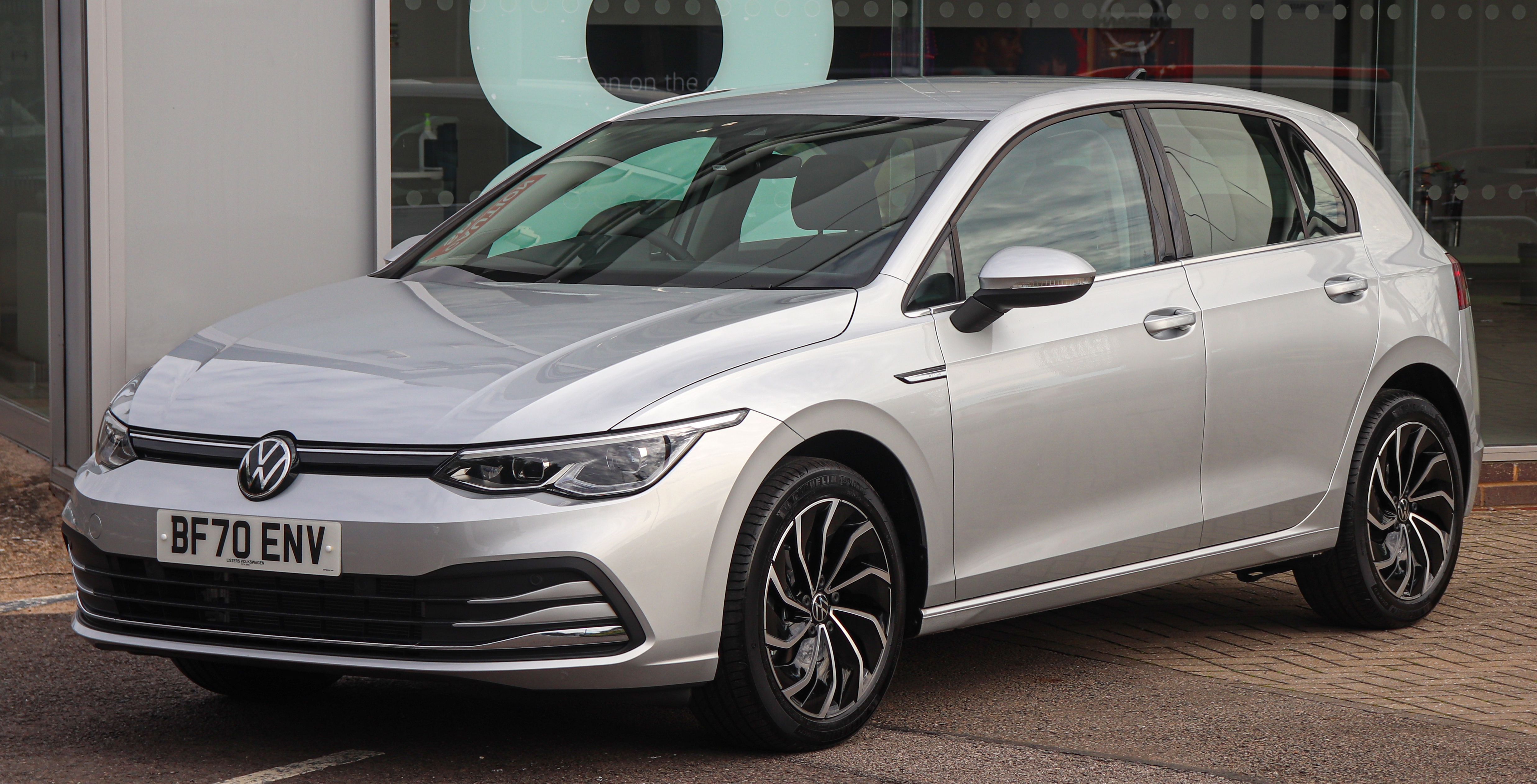
Volkswagen Golf
"I saw that the small glass fibre home on wheels was not being pulled along by a Golf or a Kashkai, but by a then-new Audi A7 3.0-litre TDI."
The Golf is a very common, practical car. The point is that it’s the kind of car people usually expect to tow a caravan.
The Volkswagen Golf is a mainstream compact hatchback that’s commonly used for everyday driving and light towing. Mentioning it here sets up the contrast: a Golf is a typical choice for hauling a caravan, while the Audi A7 is more unexpected.

Aston DBX
"So I saw one of those being towed by an Aston DBX. What? I know. And I still can't..."
The Aston Martin DBX is a fancy SUV. Here, the host points out it was towing a small trailer, which is not what you’d normally expect from a car like that.
The Aston Martin DBX is a luxury performance SUV from Aston Martin. In this segment, it’s mentioned towing a small tip trailer, which is an unusual use-case for a high-end SUV.

Renault Avantime
"But the one that really lives in the mind, and this was a while back, was I saw a Renault Avantime that was absolutely stuffed full of ladders and shit."
The Renault Avantime is a weird, uncommon Renault that looks like a cross between a family car and a coupe. The host remembers it because it was packed full of ladders, which made it stand out even more.
The Renault Avantime is a rare, quirky Renault model that blends MPV practicality with a coupe-like shape. The host’s point is that they saw one loaded up with ladders, highlighting how unexpected (and memorable) the car looked in a real-world jobsite scenario.
cult following
"They've got a very cult following, haven't they? Especially, and I know they're hard to get parts for."
A “cult following” is when a car has a loyal group of fans, even if it isn’t common. People who really like it often help each other out.
A “cult following” means a small but very dedicated group of owners/fans who keep a rare model alive. For niche cars like the Renault Avantime, this often translates into community support and shared knowledge.
Le Mans
"...towed his 9-6-2 Porsche World Endurance Championship car, a Le Mans car, down to actual Le Mans, I think it was,"
Le Mans is one of the biggest endurance races in the world, famous for running for a full 24 hours. The mention here signals this is serious race-car territory.
Le Mans is the famous French endurance race (24 Hours of Le Mans) that tests cars over a full day of racing. The episode uses it to frame the Porsche 962 as a true endurance prototype rather than a normal road car.
towing
"So towing, he said, honestly, towing wasn't a problem. And I've had confirmation from my brother that the torque of those early cars was huge."
Towing means pulling a car behind another vehicle. The speaker is saying it wasn’t too hard to do, because the car had strong low-speed power.
Towing is the act of pulling one vehicle behind another, typically using a tow bar or trailer. Here it’s discussed as a practical logistics choice versus hiring a transporter truck, and the speaker argues that towing wasn’t a big issue due to the car’s torque.
fully laden campervan
"That engine in a fully laden campervan with children, dog, bedding, tins of beans. And then a caravan, that's effing cruel."
“Fully laden” just means it’s packed with people and stuff. The more weight you add, the harder it is for the car to pull and keep going.
“Fully laden” means the vehicle is loaded with passengers and cargo to near its practical limits. Extra weight increases the demand on the engine and drivetrain, especially for older, lower-torque engines.
hydration
"Number one is hydration. So always have to have a very large bottle of water because I get slightly anxious if there isn't any."
Hydration just means drinking enough water. On a long drive, it helps you feel better and less anxious, and it can prevent you from having to stop suddenly.
Hydration is especially important on long drives because fatigue and stress can make you feel worse faster. Having water on hand helps you stay comfortable and reduces the chance you’ll need frequent unscheduled stops.
motorway
"And I remember once getting stuck in one of those traffic jams where the motorway pretty much closes with you on it."
A motorway is a big, fast highway. It’s the kind of road where you can get stuck in traffic if something slows everything down.
A motorway is a high-speed, limited-access highway designed for fast travel with controlled entry and exit. In the UK, “motorway” is often used to describe the main express routes where traffic jams can happen.
traffic jam
"And I remember once getting stuck in one of those traffic jams where the motorway pretty much closes with you on it."
A traffic jam is when cars bunch up and move very slowly or stop. It can make a trip feel a lot longer and more annoying.
A traffic jam is when vehicles slow dramatically or stop due to congestion. It’s a common real-world scenario that changes how you experience a drive—noise, stress, and even how long you’re stuck.
petrol station
"I was in a petrol station in an electric garden. I only went in to get a coffee..."
A petrol station is a place to get fuel for your car. People also stop there for coffee and snacks.
A petrol station is where drivers refuel and often buy convenience items like snacks and drinks. It’s also a typical stop point during road trips, especially when you’re planning around long stretches of driving.
CD player
"I've been touring around in my beetle this last week and that has a CD player and a non-functioning radio."
A CD player is the car’s music system that plays songs from a CD. It’s an older style of audio that doesn’t use your phone or streaming.
A CD player is an in-car audio unit that reads music from compact discs. Older cars often used CD players as a primary way to listen to music before streaming became common.
boot
"Because one of the problems in a bygone age was the six CD changer, particularly it was located in the boot because what usually happened in my experience is that you just found yourselves listening to the same six albums on rotation."
In the UK, the boot means the trunk. The speaker is saying the CD changer was often placed in the trunk area.
In British English, the boot is the trunk area where luggage is stored. The segment notes the CD changer was often located in the boot, which made it less convenient to access or manage.
Request an Explanation
Heard something you'd like explained? We'll add it to this episode.
Sign in to request explanations for terms you heard.
Want to learn more?
Browse our glossary for plain-English explanations of automotive terms, jargon, and concepts.
Help improve this episode
See something that's not quite right? Our annotations are AI-generated and can sometimes miss the mark. Click the flag icon on any annotation to suggest a correction.