Our Race Recap w/ Tommy Kendall and Mateo Siderman
About this episode
Tommy Kendall and Mateo Siderman join the hosts for a long race recap that starts at Road America in WRL and keeps circling back to the realities of endurance racing: limp mode, wastegate problems, pit stops, tire strategy, and how track layout changes affect driving. Along the way they dig into old Trans Am and IMSA machinery, compare BMWs, Corvettes, and Z-cars, and swap stories about braking feel, seat fit, and wet-weather lines. The episode closes with sponsor reads and a charity car show plug.
Matt Farah and Zack Klapman went racing and lived to tell the tale! It's a race recap with our teammates, Tommy Kendall (multi-time Trans-Am champ and overall legend) and Mateo Siderman (Super Trofeo pro with many podiums. Watch this space).
We recap the ups and downs of our weekend; talk about our speed vs the competition; the importance of seats; Mateo's hospital visit; what it's like joining a team of this caliber; our "oh sh*t" moments; learn WHAT caused our mysterious engine problem; and more.
Patreon questions include:
Proudest racing moment
You can take ANY road legal car on the track...
Which series would you want to race, of any time period?
Favorite corner?
Why did we go faster when our car broke?
Race cars that caught your childhood eye
Is the new Porsche 911 race car mid-engine?
What's happening with F1 drivers and taxes
Recorded May 7, 2026
Show Notes
Aura Frames
Exclusive $25-off Carver Mat at https://on.auraframes.com/TIRE. Promo Code TIRE
HimsFor simple, online access to personalized and affordable care for Hair Loss, ED, Weight Loss, and more, visit https://hims.com/TIRE.
TrueWerk
Upgrade to the T2 WerkPant and stay comfortable no matter what the day brings. Get 15% off your first order at https://TRUEWERK.com with code tire.
Drive Podcast
Listen to Drive with Jim Farley Season 4 at https://lnk.to/drivewithjimfarleyPS!thesmokingtire
Enter to WIN our AMAZING 2025 Porsche 911 Turbo S!! https://www.dreamgiveaway.com/tickets/porsche?promo=SMOKINGTIRE
Promo Code Offer: Get 4X bonus tickets with any donation of $25 or more. With every donation you are helping benefit some wonderful veterans' and children's charities.
Podcast Promo Code: SMOKINGTIRE
Your generous donation to Dream Giveaway goes directly to New Beginning Children's Homes, a 501(c)(3) organization (Federal ID# 27-5011514). Thanks to your donations, unrestricted grants are awarded to charities such as Mothers Against Drunk Driving (MADD), Honor Flight of West Central Florida, 4Kids, National Guard Educational Foundation, Victory Junction, Building Homes For Heroes, and Healing4Heroes
To read more about Dream Giveaway and the charities our giveaways help benefit. https://www.dreamgiveaway.com/about.
Want your question answered? Want to watch the live stream, get ad-free podcasts, or exclusive podcasts? Join our Patreon: https://www.patreon.com/thesmokingtirepodcast
Use Off The Record! and ALWAYS fight your tickets! Enter code TST10 for a 10% discount on your first case on the Off The Record app, or go to http://www.offtherecord.com/TST.
Watch our car reviews: https://www.youtube.com/thesmokingtire
Tweet at us!
https://www.Twitter.com/thesmokingtire
https://www.Twitter.com/zackklapman
Instagram:
https://www.Instagram.com/thesmokingtire
https://www.Instagram.com/therealzackklapman
limp mode
"I'm like, oh, limp mode. You know, the lap would go from 238 to like four minutes."
Limp mode is what a car does when it senses a problem. It intentionally reduces power so you can limp back to safety instead of risking more damage.
Limp mode is a protective strategy where the car limits power and sometimes changes how it shifts or controls the engine to prevent damage. It’s usually triggered by a fault the car’s computer detects, and it can dramatically slow lap times.
Nissan 300ZX non-turbo
"These, the cars back then it was a 300ZX non-turbo and there was about a lap and a half of hard braking."
The Nissan 300ZX is a well-known sports car from the Z lineup. Here they’re talking about the non-turbo version, meaning it makes power without a turbocharger’s boost.
The Nissan 300ZX is a classic Z-car sports coupe known for its strong performance and tuning community. In this segment, the host specifies the non-turbo version, which typically changes how power is delivered compared with the turbo model.
chicane
"They don't, because they run that chicane, but Laguna Sec is different, the Glen's different."
A chicane is a twisty section made of quick left-right (or right-left) turns. It’s used to slow cars down and make that part of the track safer.
A chicane is a sequence of alternating turns that forces cars to slow down and change direction quickly. Track organizers use chicanes to reduce speed in a section and manage safety and passing behavior.
reset the leaderboard
"So you have to reset the leaderboard when they change the configuration. That's right."
If the track layout changes, old lap times don’t mean the same thing anymore. So they reset the leaderboard so new records are based on the current course.
When a track’s configuration changes (for example, adding/removing sections like a chicane), lap times aren’t directly comparable. Resetting the leaderboard ensures records reflect the same course layout and rules.
fastest lap
"And remind me, because you told us at dinner and I was shocked, what was your fastest lap there ever? At Lime Rock, it was the, the fastest lap at Lime Rock"
A fastest lap is the quickest one full lap a driver completes. It’s a simple way to compare speed, but conditions and track layout can change the result.
A fastest lap is the single quickest lap time a driver records during an event. It’s often used as a headline performance metric, but it depends on track conditions and—critically—on the exact track configuration.
Chevrolet Beretta
"Was your first big win in 1990, [494.9s] you won with a Chevy Beretta? [496.5s] That was my first Trans Am win."
The Chevy Beretta is a regular street car model. In Trans Am racing, teams could race cars that looked like a Beretta but were heavily modified for competition.
The Chevrolet Beretta was a production-based coupe that, in Trans Am racing, could be adapted to meet the series rules. In this context, the speaker is describing a Trans Am car that used a Beretta body/identity while being built around a race-spec platform.
Trans Am
"[496.5s] That was my first Trans Am win. [498.4s] Wow, the Beretta, Beretta."
Trans Am is a famous American racing series. It has rules that let race teams build cars that look like certain models, but they’re designed to race.
Trans Am is a U.S. road-racing series that historically used rules allowing production-based “stock” identities while teams built purpose-built race cars. The series is known for different eras of engine formulas and homologation-style constraints that shaped what cars could compete.
splayed valve cylinder head
"We ran a V6, the Elkhart Lake race was an interesting one [513.0s] because we had a splayed valve cylinder head V6, [516.4s] four and a half liter."
This is an engine head design where the valves are set at an angle. Changing valve angles can help the engine move air and fuel more effectively, which matters for speed.
A splayed valve cylinder head is a cylinder-head design where the intake and exhaust valves are angled (“splayed”) rather than arranged in a more straight-on layout. That geometry can affect airflow, combustion efficiency, and how the engine breathes at high RPM—important in racing.
adding weight
"because we had a splayed valve cylinder head V6, [516.4s] four and a half liter. [521.1s] But as we, they started adding weight to us [522.9s] before we even won a race."
In racing, officials sometimes make a fast team carry extra weight to slow it down. Here, they’re saying the car was given extra weight even before it had proven itself with a win.
“Adding weight” refers to ballast used as a handicap in racing—teams that are expected to be strong can be required to carry extra mass. In this segment, the speaker says weight was added before they’d even won, based on perceived potential.
carburetor
"And for a third car, he was running the 18 degree with a carburetor. And he wasn't familiar with the heavy cars."
A carburetor is how an older-style engine mixes fuel with air. Getting that mix right helps the engine run smoothly and respond well.
A carburetor is a fuel-metering device that mixes fuel and air before it enters the engine. Carburetors are common on older race engines and can be tuned for throttle response and drivability, which matters when comparing cars with different induction setups.
wooden weight in braking
"And it showed up. That was wooden weight in braking. Really, the light went on for me."
He means the car felt heavy and slow to stop. When a car is lighter, it usually brakes more sharply and feels easier to control.
“Wooden weight in braking” is a driver description for how extra mass makes the car feel sluggish to slow down. Less weight typically improves braking feel and reduces the effort needed to decelerate, especially entering corners.
brake marker
"it just wasn't even funny. I'd just look at the guy next to me and say, I don't even need to check the brake marker."
A brake marker is a spot on the track where you start slowing down for a turn. If you don’t have to “check” it, it usually means the car is braking more predictably.
A brake marker is a reference point on the track used to decide when to start braking for a corner. Drivers rely on consistent markers to hit the same braking zone lap after lap, and the comment implies the lighter car made braking points easier to judge.
mothballs
"I've never driven it while I've owned it. [595.8s] So it's in mothballs and needs to get going again. [599.3s] It would need anything."
“Mothballs” just means the car has been sitting unused in storage for a while. When you bring it back, you typically have to check it carefully before driving.
“Mothballs” is a common enthusiast way to say a vehicle has been stored away for a long time and hasn’t been used. In car terms, that usually means it may need fresh fluids, inspection of rubber parts, and a careful re-start before driving again.
BBS
"So yeah, those BBS. [629.1s] Just for comparison, can we have a photo of a 1990"
BBS is a company that makes performance wheels. In this context, the speaker is saying the car has BBS wheels, which are a common upgrade for track and enthusiast builds.
BBS is a wheel brand known for lightweight, high-quality alloy wheels that are popular in motorsport and on enthusiast street cars. When someone mentions “those BBS” in a race context, they’re usually pointing out the wheel choice as part of the car’s setup and appearance.
NASCAR
"This thing is like a NASCAR in the front and a dragster in the back. Wild looking."
NASCAR is a famous American racing series. In this conversation it’s just a comparison for how the car looks, not a claim about NASCAR parts.
NASCAR is a stock-car racing series known for oval-track racing and purpose-built race cars. The host uses it as a visual comparison—saying the Beretta looks like a NASCAR up front—rather than describing NASCAR-specific engineering.
dragster
"This thing is like a NASCAR in the front and a dragster in the back. Wild looking."
A dragster is a race car built for drag racing—going fast in a straight line. Here it’s used to describe the rear shape and attitude of the car.
A dragster is a purpose-built drag-racing car optimized for straight-line acceleration, typically with a very long, low stance. The host is using “dragster” as a styling/shape comparison for the rear of the car.
livery
"And the exact same, virtually the exact same livery as the Williams of the year. ICI was a sponsor on the Williams back then"
Livery is the car’s “look”—its paint colors and sponsor stickers/graphics. The hosts are saying the race car had a very similar design to another famous car’s scheme.
Livery is the car’s paint scheme and graphics—things like colors, sponsor decals, and patterns. Here, the hosts point out that the race car’s livery matches the Williams’ livery from that year, making it look nearly identical when viewed quickly.
IMSA GTU
"I gotta say the wheels look dope. We debuted it in IMSA GTU."
IMSA is a major North American racing organization. “GTU” is the category/class that tells you what kind of race car it is and what rules it has to follow.
IMSA is the International Motor Sports Association, which organizes sports-car racing in North America. “GTU” is a racing class within IMSA for smaller, production-based grand touring cars, which determines what modifications are allowed and how cars are grouped.
Cars and Concepts
"Team was owned by Cars and Concepts, [690.2s] which was the company that was like a Roush or a ASC"
They’re talking about a company that worked on cars for a specific program. The host compares it to other shops that do special upgrades and styling packages.
Cars and Concepts is referenced as the company that owned the team in this race story. The hosts compare it to other well-known automotive modifier shops, implying it handled vehicle customization and branding packages.
Roush
"which was the company that was like a Roush or a ASC [694.3s] that did the retro fitting or the after fitting"
Roush is a well-known car shop/brand that does performance and upgrade packages. The speaker uses it as a reference to explain what kind of company Cars and Concepts is.
Roush is mentioned as a comparison point for the kind of automotive company that builds or supports performance and appearance packages. In enthusiast circles, Roush is known for aftermarket upgrades and motorsport-linked builds.
after package
"of the package, the graphics, body kit, wheels, [700.4s] I didn't realize that was like a full-on after package. [704.1s] That's funny."
They’re saying the car got a complete set of add-ons after it was originally made. Think of it like a coordinated makeover with styling and parts, not just one random upgrade.
The hosts describe a “full-on after package,” meaning a car that received a bundled set of modifications after its original build. This can include items like graphics, body kits, and wheels—essentially a coordinated makeover rather than a single part swap.
Honda Civic Si
"I can kind of see the like $45,000 Civic SI [736.8s] for the perfect one, but I don't know about the Beretta."
They mention the Honda Civic Si as a trim people often want. The idea is that the “right” version can be worth more money when you find the perfect one.
The Honda Civic Si is referenced as an example of a “perfect” version of a popular enthusiast model. The host is using it to compare how specific trims/configurations can command higher prices in the used market.
race recap
"[741.5s] But it's okay, let's go back to the actual race at hand. [746.3s] We had success with the first place trophy [749.1s] the last time we got in this car,"
They switch back to talking about the race itself and how they did. It’s basically a recap of the on-track outcome.
This segment pivots back to the actual race and their results. It’s framed around finishing success and discussing what happened on track.
pace to P2
"First race, we were on a pace to P2, car breaks P4."
P2 just means second place. “Pace to P2” means they were driving well enough that they expected to be in second.
“P2” means second place, and “pace to P2” suggests the car’s speed and race performance were strong enough to run near the front. In race recap language, it’s a shorthand for how competitive the car was relative to others.
green flag
"and Teo did what Mateo does when the green flag drops, he went forward and passed the quicker cars"
The green flag is the signal that the race is officially on and everyone can drive flat-out. When it “drops,” that’s when the real competition starts.
In racing, the green flag signals the start (or restart) of a race under full-speed conditions. Before the green flag, cars may be under caution or pace-lap rules, so the “green flag drops” moment is when racing intensity begins.
cleared the codes
"I had to pit for 10 minutes, and they cleared the codes and all that stuff. That's how we got to third"
Modern cars store error messages when something goes wrong. “Clearing the codes” means wiping those messages so the car can try again after the issue is handled.
“Codes” refers to diagnostic trouble codes stored by the car’s ECU when it detects a fault. Clearing them resets the fault memory so the car can re-check systems after repairs or a restart, which the hosts tie to getting back on track.
Chevrolet Corvette C8
"The car that ultimately passed us for the podium [807.6s] was that C8 Corvette, [809.1s] which I forget if we talked about on the show."
The Chevrolet Corvette C8 is a Corvette where the engine is placed closer to the middle of the car. That makes it handle differently than older Corvettes and makes it popular for track builds.
The Chevrolet Corvette C8 is the mid-engine Corvette generation, meaning the engine sits behind the driver instead of up front. That layout helps it feel more balanced and “track-ready,” which is why people build C8s into dedicated track cars.
TC Klein Corvette
"The TC Klein Corvette. [813.0s] Did we talk about it here? [815.6s] I don't think so."
“TC Klein Corvette” is the name people use for a particular Corvette build. The point here is that it’s a specific C8 track car, not just any Corvette.
“TC Klein Corvette” refers to a specific Corvette build associated with TC Klein. In this context, it’s notable because the hosts describe it as an impressive track-car transformation of a C8.
GM
"Like some of these guys, [819.0s] they're all sort of related to GM somehow, [822.5s] bought a shitty C8, like a beater,"
GM is General Motors, the parent company behind multiple brands, including Chevrolet. The hosts are pointing out that many of the people/builds they’re seeing are connected to GM through the Corvette platform.
track car
"[822.5s] bought a shitty C8, like a beater, [826.9s] as shitty as any C8 would be, [829.8s] and turned it into a track car."
A “track car” is a car prepared mainly for racing on a track. It’s typically set up to handle lots of hard driving repeatedly, not just normal commuting.
A “track car” is a car set up primarily for circuit driving rather than everyday street use. That usually means changes to things like cooling, tires, brakes, suspension, and sometimes interior/weight to handle repeated hard laps.
Coda
"And we talked about it because we saw the car at Coda, [834.2s] where it had a round Cadillac steering wheel on it. [837.0s] And I was very excited, because at like A,"
Coda is a race track where they saw the car. Tracks can affect how cars are built and tuned for driving hard.
Coda is the track venue where the hosts saw the car. Track venues matter because the layout and conditions influence what kinds of setups and modifications show up.
Cadillac
"And we talked about it because we saw the car at Coda, [834.2s] where it had a round Cadillac steering wheel on it. [837.0s] And I was very excited, because at like A,"
Cadillac is a GM brand. They’re saying the car has a steering wheel that looks like it came from a Cadillac, which is unusual for racing.
Cadillac is a GM brand, and the hosts mention a “Cadillac steering wheel” as a visual clue for the build. The key point is that the car is using a round steering wheel from Cadillac rather than a typical racing setup.
round steering wheel
"where it had a round Cadillac steering wheel on it. [837.0s] And I was very excited, because at like A, [839.3s] I knew that would work, and it was better."
A round steering wheel is the normal circular kind you’d see in most cars. The hosts are debating why a round one might still work well even when racers sometimes use square-ish wheels.
A round steering wheel is the traditional circular shape used in many street cars. In racing, some drivers prefer a “square” or multi-spoke design for packaging and hand position, but the hosts argue that round can still be advantageous or at least effective.
square wheel
"[844.8s] Which is hilarious, because you'd think that even in racing, [847.4s] where it's really just here to here, [848.9s] that the square wheel technically might be better,"
A “square wheel” is a steering wheel shape with flatter edges instead of being fully round. Some racers like that style, but the hosts say the round wheel is still working fine.
A “square wheel” refers to the more angular, often rectangular steering wheel designs sometimes used in motorsport. The hosts mention it as a theoretical advantage over a round wheel, but then say the round wheel is still being used successfully.
limited on power
"[854.0s] But this thing is really limited on power,"
“Limited on power” means the car doesn’t have as much engine strength as you’d want. On a track, that can make the car rely more on handling and grip than on raw speed.
“Limited on power” means the car can’t produce enough usable engine output to accelerate strongly or maintain high speed. In track terms, that often shifts the focus toward traction, braking, and cornering efficiency rather than straight-line speed.
GP1
"because of the balance of power rules for GP1. I was shocked when it was in our cars."
GP1 is a race category with rules that control things like how much power the cars are allowed to use. Those rules can force cars to behave differently than they normally would.
GP1 refers to a specific racing class or ruleset that governs what cars can do, including power/engine and throttle-related restrictions. The segment ties GP1 balance-of-power rules directly to the throttle limiter behavior they observed.
throttle limiter
"I guess they're running a two thirds throttle limiter. So even if they floor it, it only ever gives two thirds throttle."
A throttle limiter is a computer limit that prevents the car from using 100% throttle. So even if you press the pedal all the way, the engine only gets a smaller, fixed amount.
A throttle limiter is a control strategy that caps how much the engine can respond to the accelerator pedal. In this segment, they’re describing a setup where even full pedal input only allows a fixed fraction of throttle, which changes how quickly the car accelerates and how it behaves at the track.
red line
"So it can go to red line, it's just like... It takes a long time."
The red line is the top safe engine speed (RPM). You can rev near it, but if the throttle is limited, the engine may not get there as quickly.
The red line is the engine’s maximum safe RPM range. Revving up to it is possible, but with a throttle limiter the car may take longer to reach it because the engine isn’t being allowed to open fully.
kink
"Oh my goodness, that's why it was so fast through the kink, because it already had the speed going through, and it just went back to that three quarter throttle."
A kink is a tricky, quick bend on a race track. It’s the kind of corner where carrying speed through matters a lot.
A kink is a short, often fast-changing section of track that can be taken at high speed with minimal steering input. The hosts connect the car’s throttle behavior to why it was “so fast through the kink,” implying it carried speed well into and out of that section.
BOP
"It's hard to BOP that, because it will show the performance, but it's just, it's probably gonna fall off less, and so forth and so on."
BOP is how racing organizers try to make different cars compete more evenly. They adjust things on purpose so one car isn’t automatically faster just because of its design.
BOP (Balance of Performance) is a race series method for equalizing cars with different designs. It uses rules like weight, engine limits, and restrictors to reduce performance gaps so competition is closer.
LT1 motor
"Imagine limiting a fucking LT1 motor to two-thirds throttle. You do 24 hours just with a foot on the foreboard like that."
“LT1” is a name for a Chevrolet V8 engine. When people talk about limiting an LT1 in racing, they mean restricting that engine’s power to fit the rules.
An LT1 motor refers to Chevrolet’s small-block V8 engine family (the LT1 generation). In endurance racing discussions, it’s often used as shorthand for a modern, high-output V8 platform that responds well to traction and drivability tech.
two-thirds throttle
"Imagine limiting a fucking LT1 motor to two-thirds throttle. You do 24 hours just with a foot on the foreboard like that."
It means the engine is being restricted so the driver can’t access full power. In a race, that can affect speed and how the car feels for hours.
“Two-thirds throttle” describes restricting the driver’s available engine output by limiting how much the throttle can open. In racing, that kind of limit is often part of performance-balancing rules and can change how an engine behaves over long stints.
ELSD
"And it's got the traction systems, and it's got an ELSD. Like, it's got all this really good technology that helps all those tiny things a little bit."
An ELSD is a differential that can “help” the car put power down when traction changes. It’s like a smarter limited-slip setup that can react to what the tires are doing.
ELSD stands for electronically controlled limited-slip differential. It uses sensors and actuators to manage how much the differential allows wheel-speed difference, improving traction and stability—especially important in endurance racing where grip and tire wear vary over time.
breaking
"Like, it for sure can be breaking near that three marker at turn five, and it can for sure be breaking very minimally for turn one, but they didn't have the, it seemed like they didn't have the drivers in it that wanted to push the car."
They’re talking about braking—how late and how strongly the driver slows down before turning. It’s a key part of going fast through corners.
In racing talk, “breaking” is almost certainly “braking”—how late and how hard a driver slows the car before a corner. The hosts compare how much the car needs to slow down for different turns, which reflects grip, tire behavior, and driver confidence.
backed off of the corner
"And at the start, when I was kind of close to them, going into turn three, they completely backed off of the corner. They really didn't wanna scratch the car."
They mean the driver eased up instead of going for the aggressive racing line. It sounds like they were being careful to avoid scratching or damaging the car.
“Backed off of the corner” describes a driver reducing commitment—turn-in angle, throttle, or overall pace—mid-approach to avoid contact or damage. In racing, that often means the driver isn’t pushing for the fastest line, even if the car itself is capable.
tire wall
"I mean, you drag it down a tire wall. You literally, it seemed you could not kill one."
A tire wall is a safety barrier at a race track made of stacked tires. It’s meant to slow and cushion a car during a crash.
A tire wall is a track safety barrier made from stacked tires, designed to absorb impact energy and reduce the severity of crashes. The speaker mentions dragging the car down a tire wall to emphasize how violent the contact was.
fiberglass disintegrates on contact
"Maybe I need to learn more about how fiberglass disintegrates on contact. I thought it would like sort of shred."
Fiberglass is a strong but brittle material used in some car body parts. The speaker is asking how it behaves in a crash—whether it breaks into pieces right away.
Fiberglass is a composite material (glass fibers bound together with resin). In a crash, it can fracture and break apart quickly, which is why the speaker wonders whether fiberglass bodywork would “shred” when hit.
wastegate
"The wastegate coin on the turbo was worn out. The linkage from the wastegate actuator to the actual coin flapper had play in it."
A wastegate is a valve that helps control turbo boost. It keeps the turbo from making too much pressure, which protects the engine.
A wastegate is a valve on a turbocharged engine that controls how much exhaust energy is allowed to drive the turbo. By regulating boost, it helps prevent over-boost and keeps the engine within safe operating limits.
boost
"So the wastegate actuator thought it was fully closed but could get blown open by the boost. That's why it would only make three PSI and go into limp mode."
Boost is the extra pressure the turbo adds to push more air into the engine. More boost can mean more power, but it has to be controlled.
Boost is the extra air pressure a turbocharger creates in the intake manifold. Higher boost generally means more airflow and potential power, but it must be controlled to avoid engine stress.
PSI
"That's why it would only make three PSI and go into limp mode. The turbo looked relatively new."
PSI is a way to measure pressure. In turbo talk, it usually means how much extra pressure the turbo is making.
PSI (pounds per square inch) is a unit of pressure. When used with turbo cars, it typically refers to boost pressure relative to atmospheric pressure (often called “boost PSI”).
BMW motorsport turbo
"It has a proper BMW motorsport turbo on it now. So I said, was that... That wasn't something that they were gonna actually fix during the race, right?"
A “BMW motorsport turbo” is a turbo meant for racing. Racing parts are usually designed to handle harder driving and keep boost under control.
A “BMW motorsport turbo” implies a turbocharger intended for BMW’s racing program rather than a basic street-spec unit. Motorsport turbos are often built and calibrated for durability and consistent boost control under race conditions.
fueling stops
"[1521.2s] when you'd pull... [1521.9s] Every time we would change driver or fuel, [1524.2s] you'd have to turn the car off to fuel it. [1527.6s] That's a rule."
During a race, cars sometimes have to stop to add fuel. For safety, the car may need to be turned off while refueling, then restarted before you can drive hard again.
In many race formats, fueling is done during scheduled stops, and the car may need to be shut off during the refueling process for safety and procedure. That means the driver has to restart and re-establish the car’s correct operating state before accelerating back onto the track.
traction control
"and you have to do the same traction control bullshit dance [1535.4s] you do in a road car. [1536.5s] You have to do in this car, [1537.8s] except you're wearing gloves,"
Traction control helps keep the tires from spinning when you accelerate. If it turns back on at the wrong time, it can slow you down because it limits how hard you can apply power.
Traction control is a driver-assist system that reduces wheel spin by cutting engine power and/or applying brakes when it detects the tires losing grip. In racing, it can be disruptive during restarts or fast exits because it may re-engage as soon as the car is back in a condition where it thinks slip is likely.
pit outs
"So like, that was a little... [1563.9s] That's part of why my pit outs were so slow. [1566.6s] What are you about to say?"
A pit out is when the car comes out of the pits and gets back onto the race track. It’s a tricky moment because you have to get up to speed fast while also following track rules and dealing with systems that may limit acceleration.
A pit out is the moment a race car leaves the pit lane and merges back onto the track. Timing and procedure matter because you must accelerate quickly while managing traffic, track entry rules, and any driver-assist systems that may behave differently than during normal green-flag running.
pit in, out
"In lemons, we do pit in, out, [1581.6s] we do driver change and still like you get in"
In many races, teams pull the car into the pit lane for service. Then they drive back out and continue the race, which can change who’s leading based on timing.
“Pit in, out” refers to entering the pit lane during a race to service the car and then leaving the pits to rejoin the track. It’s a core part of endurance racing strategy because it affects track position and timing.
driver change
"In lemons, we do pit in, out, [1581.6s] we do driver change and still like you get in"
In longer races, teams often switch drivers partway through. The goal is to keep the driving sharp and safe when one person gets tired.
A “driver change” is when an endurance race team swaps to a different driver during a pit stop. It’s done to manage fatigue and keep lap times consistent over long stints.
fuel reset button
"But then in this car, [1589.1s] when you get in you gotta hit the fuel reset button [1591.5s] to reset the fuel counter,"
A “fuel reset button” is a cockpit control used to reset the car’s fuel-related counter or display (like a trip/consumption counter) so the team can track usage accurately. If it doesn’t work, the driver can’t reliably confirm fuel data during the stint.
fuel counter
"when you get in you gotta hit the fuel reset button [1591.5s] to reset the fuel counter, [1592.9s] which I did and it didn't work."
A fuel counter is the car’s way of tracking fuel used. In a race, that helps the team decide when to pit so you don’t run out.
A “fuel counter” is an onboard measurement used to track fuel usage over time or since the last reset. In racing, it helps with stint planning and avoiding running out of fuel.
crew chiefs
"and Zach, our crew chiefs on the radio, [1599.7s] he's like, hey man, hit the button."
The crew chief is basically the team’s lead strategist. They talk to the driver on the radio and tell them what to do during the race.
A “crew chief” is the lead team member responsible for race strategy and coordinating decisions with the driver. They communicate over the radio to direct actions during the race, like confirming procedures when something goes wrong.
keep track of time
"finally he goes, okay, that's fine, [1605.7s] just go out, we'll keep track of time. [1608.2s] So I'm worried about that."
In racing, the team constantly watches the clock and lap timing. If one display isn’t working, time helps them still manage the race plan.
“Keep track of time” in racing means monitoring elapsed time and/or lap timing to maintain the planned stint pace and pit strategy. When a dashboard function fails (like a fuel counter), time becomes a key reference for the team.
pit lane procedure
"We were supposed to do a bunch of driver change practice. We were supposed to do kind of the pit lane procedure"
In racing, the pit lane procedure is the planned checklist for how you enter the pits, what you do during the stop, and when you’re allowed to leave. It’s about doing everything in the right order and at the right time to avoid penalties and wasted seconds.
A pit lane procedure is the step-by-step routine a race team and driver follow when entering the pits and during the stop. It covers timing, communication, and when the driver is allowed to leave, so the car doesn’t violate pit rules or lose time unnecessarily.
Challenger Hellcat
"that it would benefit more. And I had a Hellcat Durango, which by the way, shout out to the homie..."
The Challenger is a muscle car from Dodge. Muscle cars are built to be very powerful, especially for quick acceleration. The podcast brings it up in the context of high-performance Dodge vehicles.
The Dodge Challenger is a muscle car known for powerful engines and a long-standing reputation for straight-line performance. The podcast mentions a “Hellcat Durango,” but the Challenger reference in the same segment points to the broader family of high-performance Dodge vehicles being discussed. It’s relevant because these cars often come up in conversations about power, acceleration, and real-world driving impressions.
Hellcat Durango
"And I had a Hellcat Durango, which by the way, shout out to the homie that used to work on the SRT experience who told me they fill those with DOT three brake fluid, by the way. So if the brakes boiled after two stops, like that's definitely why."
The Hellcat Durango is a powerful Dodge Durango with a big supercharged engine. Here they’re talking about brakes overheating during repeated stops, and how the brake fluid might be part of why it happened.
The Hellcat Durango is a high-performance version of the Dodge Durango, powered by the supercharged Hellcat V8. In this segment, it’s used as an example of a brake-fluid choice affecting brake performance during repeated hard stops.
DOT three brake fluid
"shout out to the homie that used to work on the SRT experience who told me they fill those with DOT three brake fluid, by the way. So if the brakes boiled after two stops, like that's definitely why."
DOT 3 is a type of brake fluid. Under repeated hard braking, it can overheat and boil, which makes the brakes feel weak or sketchy because the fluid can’t transfer force as well.
DOT 3 is a brake-fluid specification defined by its chemistry and performance requirements, including boiling point. If the fluid boils under heavy braking, it can create vapor bubbles that reduce braking effectiveness—often described as “brakes boiling.”
brakes boiled
"So if the brakes boiled after two stops, like that's definitely why. I was like, yup, yup."
“Brakes boiled” means the brake fluid got so hot it started boiling. That can make the brakes feel less responsive or unsafe during repeated stops.
“Brakes boiled” refers to brake fluid reaching its boiling temperature during repeated hard braking. When that happens, vapor forms in the brake lines, which can cause a spongy pedal and reduced stopping power.
sketchy brakes
"There were some sketchy brakes. So yeah, I mean, the problem didn't happen to me."
“Sketchy brakes” means the brakes didn’t feel trustworthy—like they might not stop the car as expected or felt inconsistent. That’s especially risky in a race because you need predictable braking every lap.
"Sketchy brakes" is an enthusiast way to describe braking that feels unstable or unreliable—like inconsistent pedal feel, reduced stopping power, or behavior that makes the car hard to control. In a race context, that can be caused by issues such as brake fade, air in the hydraulic system, or overheating components.
pit-lane pacing vs racing pace
"I got the, don't fucking slow down until you're like at the gate for the pit. Like you're still racing even in the,"
They’re talking about when you should slow down as you approach the pits. They compare how it works in real racing versus practice events.
This segment focuses on how drivers manage speed when transitioning from the racing line to the pit entry. The hosts compare race procedures to track-day or slower-series behavior, emphasizing when you’re expected to start slowing down.
pit entry speed rules
"I got the, don't fucking slow down until you're like at the gate for the pit. Like you're still racing even in the,"
Races often require you to slow down for the pit lane, but the rules usually say exactly when you’re allowed to start slowing. In this story, the driver says the correct timing was later than what people do on track days.
Pit entry speed rules control how and when a driver transitions from full racing pace to the slower pit lane. The key idea here is that you may stay at racing speed until a defined “gate”/point, then decelerate—unlike many slower track-day formats where you’re asked to slow down much earlier.
track day
"Cause like on a regular like track day or at fucking, [1765.8s] [1767.8s] you know, a slower series, [1767.8s] they would slow you down much, much further."
A track day is when regular drivers go to a race track to practice. The rules are usually less strict than in an actual race, so you may be told to slow down earlier.
A track day is a non-race event where drivers practice on a circuit, typically with different marshal/pace rules than competitive racing. Because track-day groups often manage traffic more conservatively, drivers may be instructed to slow down earlier than they would during a race.
speedo
"And I was like, oh, I'll have plenty of time to stop. And then I just watched the speedo going down"
The speedo is just the speed gauge on the dashboard. Here it’s used to confirm whether the car is slowing down enough at the right time.
The speedometer (speedo) is the driver-facing instrument that displays vehicle speed. In racing, drivers often reference it to judge whether they’re meeting a braking target at a specific point on track.
break point
"The uphill doesn't compress as much as I thought. That's a breaking point you have to work out."
A “break point” is the exact spot where you have to start braking so you reach the right speed by a certain place. If you wait too long, you won’t slow down enough.
In racing, a “break point” is the specific point in the lap where braking (or the decision to brake) must be executed to hit a target speed by a marker. It’s essentially a timing/energy-management threshold that depends on track elevation, grip, and how much the car can slow down.
in-lapse
"The in-lapse and the out-lapse are often, and so someone either has a better one worked out,"
An in-lap is the lap where the driver is getting the car ready for fast driving—especially getting the tires working. It’s basically the “warm-up” lap before the car is at its best.
An in-lap is the lap a driver uses to get up to speed and operating conditions (especially tire temperature) before the race’s key performance window. It’s often contrasted with the out-lap, which is the lap after a pit stop or restart when the car is again transitioning to race pace.
out-lapse
"The in-lapse and the out-lapse are often, and so someone either has a better one worked out,"
An out-lap is the lap right after you’ve changed tires or restarted. The driver is trying to get back to good grip quickly so the car can go fast.
An out-lap is the lap after a pit stop, restart, or tire change when the driver is trying to bring the car back into its optimal performance state. Like the in-lap, it’s heavily influenced by tire temperature and grip, and small differences can affect lap time and race strategy.
cold tires
"and in any car, it's leaving on new cold tires, IMSA as well."
Cold tires are tires that aren’t warmed up yet. They don’t grip as well, so the car can feel slippery until the tires heat up.
Cold tires are tires that haven’t reached their ideal temperature yet, so they provide less grip and can be more prone to sliding. Drivers manage this with driving style and timing, because tire temperature strongly affects traction and braking performance.
tire blanket
"Formula One has the tire blanket, so they're leaving on hot stuff."
A tire blanket is a heater that warms the race tires before you drive. It helps the tires grip sooner instead of needing a few laps to heat up.
A tire blanket is a heating device used to bring race tires up to temperature before the car goes out. In Formula One, this helps ensure the tires have grip immediately, which affects lap time, braking confidence, and how quickly the driver can push.
hot stuff
"Formula One has the tire blanket, so they're leaving on hot stuff."
“Hot stuff” means the tires are already very warm when you go back out. Warm tires can grip well right away, but too much heat can make them less predictable.
“Hot stuff” refers to tires that are already at high temperature when the car leaves the pits or starts a stint. Hot tires can offer immediate grip, but they can also be riskier because overheating can reduce tire life and increase the chance of losing traction.
MPH Industries Speed Gun Pro KA band
"Well, it's the MPH Industries Speed Gun Pro KA band, [1943.8s] handheld stationary radar gun."
“KA band” is the radio frequency that the speed gun uses. This MPH Industries device uses radar waves to estimate how fast a car is moving.
“KA band” refers to a specific microwave frequency range used by radar speed guns. The MPH Industries Speed Gun Pro is a handheld radar unit that measures a vehicle’s speed by tracking the Doppler shift of reflected radar waves.
radar detector
"He wants to know if we can put a radar detector in the race car."
A radar detector is a device that tries to “hear” radar from speed enforcement. It alerts the driver so they can slow down before getting caught.
A radar detector is an electronic device that listens for police radar signals so the driver can get advance warning. In motorsports talk, it’s often discussed as a way to avoid speed enforcement, even though rules may prohibit it.
jammer
"And a jammer that will send a signal of 35 or 35 by 9. [1967.2s] Putting jammers in the race car is the pro's move, right?"
A jammer is meant to mess with the radar so it can’t get a clear speed reading. Instead of warning you, it tries to block or confuse the radar.
A radar jammer is a device designed to interfere with police radar by transmitting signals intended to confuse or mask the radar’s reading. The key idea is that it targets the radar system’s ability to interpret returns, rather than just warning the driver.
radar speed enforcement on track
"Yeah, they're not looking for that on track. [1976.0s] What the fuck is this? [1978.4s] Is there a rule it says in the book, no jammers."
They’re talking about whether speed-enforcement tech (like radar) even matters during a race, and whether devices that interfere with it are allowed. In racing, the rules can be stricter than what’s technically possible.
This segment discusses the tension between on-track rules and off-track enforcement technology. Even if a device can technically interfere with radar, motorsport rulebooks may prohibit jammers/detectors, making legality and compliance part of the “engineering” problem.
Contis
"Yeah, those Contis are solid. What are the Contis? Everyone runs them, right?"
“Contis” means Continental tires. In racing, the tires wear out and lose grip, so teams have to plan when to change them.
“Contis” is a shorthand for Continental tires. In racing, tire choice and tire management are crucial because grip and wear determine lap time and how often teams must pit.
pit stop
"They're using every pit stop, they use tire. And those classes, they're doing tire changes every pit stop."
A pit stop is when the car pulls into the pits during the race for service. Often that means changing tires, and doing it more often costs more and changes the strategy.
A pit stop is when a race car enters the pit lane to service the car—most commonly to change tires. How frequently teams do pit stops directly affects race strategy and overall budget because tires and labor cost money.
Mustangs
"The Mustangs that were not really in the front. Every other stop, maybe."
“Mustangs” means Ford Mustang race cars. They’re saying those cars weren’t changing tires as often as the front runners.
“Mustangs” refers to Ford Mustang race cars. The host contrasts their pit/tire strategy with the front-running cars, saying the Mustangs were changing tires “every other stop, maybe,” implying less frequent tire servicing.
endurance racing
"So I mean, that's endurance racing, right? [2364.6s] Like, things go wrong randomly, [2365.8s] and this was our one off weekend,"
Endurance racing is about going for a long time, not just one quick sprint. Since it’s so long, the car has to stay reliable, and things can go wrong even when everyone does their best.
Endurance racing is motorsport focused on lasting a long time, often with multiple drivers and strict reliability demands. Because the event runs for hours, failures can happen even if the car is fast, making strategy and durability as important as outright speed.
practice race
"and I really hoped that we were gonna get [2380.2s] that first race podium, but the idea was, [2382.3s] the first race is our practice race. [2383.6s] We didn't even get enough practice for everybody, so..."
In some racing formats, a “practice race” is an on-track session that’s run like a race to simulate race conditions while still serving as preparation. It’s often used to shake down the car, learn traffic and pace, and set up for the actual competition.
rain driving
"then it rained, da-da-da-da. [2398.2s] So everyone's like, all right. [2398.8s] You'd be great in the rain, by the way. [2400.0s] Just didn't crash in the rain."
When it rains, the tires grip the road less. That means you usually have to be gentler with steering, braking, and throttle so you don’t slide.
Rain driving changes traction and braking behavior because tires have less grip on wet surfaces. Drivers often need smoother inputs and different line choices to avoid losing control, especially during acceleration and braking.
counter-steering
"I'm just like, whoa, whoa, it was counter-steering. [2406.9s] How fun is that thing?"
Counter-steering means you steer the wheel the opposite way of the slide. It helps the car stop spinning out and get back under control.
Counter-steering is the technique of turning the steering wheel opposite the direction the car is sliding. It’s used to regain control during oversteer or when the rear steps out, especially on low-grip surfaces like wet pavement.
rain line
"It's a motor America rain line, though. [2409.2s] It's legit, right? [2410.7s] Thank God we had talked about that on a whim."
A “rain line” is the best track path to drive on when it’s wet. It’s usually where the tires can grip the most and where water isn’t pooling.
A “rain line” is the path on a wet track that tends to produce the most tire grip, often because it avoids standing water and uses rubbered-in areas. Drivers may find it by experimenting on pace laps and comparing grip on the “rain line” versus off-line sections.
pace laps
"I do it on pace laps, is I try to plot the grip [2435.9s] with the brake pedal on the pace laps."
Pace laps are slower laps where you’re not racing yet. You use them to learn how the car and tires are behaving so you can drive faster safely.
Pace laps are slower laps done to build data and confidence before pushing hard. In this segment, the driver uses pace laps to “plot the grip” by watching how quickly the car locks up under braking.
grip
"I do it on pace laps, is I try to plot the grip [2435.9s] with the brake pedal on the pace laps. [2438.1s] And so you search around and you see how quickly it locks."
Grip is how well the tires can stick to the road. More grip means better braking and cornering; less grip means the car slides or locks up sooner.
In motorsport, grip is how much traction the tires can generate between the car and the road surface. The speaker is comparing grip on the rain line versus off-line, and using braking behavior to infer where the tires are most effective.
locks
"And so you search around and you see how quickly it locks. [2441.4s] And like it wrote America, it's dramatic"
“Locks” means the wheels stop turning while you’re braking and start sliding. On wet roads, that can happen much more easily, so it tells you how slippery the surface is.
When the speaker says the car “locks,” they’re describing wheel lock-up during braking—where tires stop rotating and slide. On wet tracks, lock-up happens sooner, so it’s a key signal for how much braking traction is available on different lines.
offline braking
"but you start seeing, okay, wow, [2450.6s] offline braking quite good, online really bad, [2453.6s] and then some of these other things,"
Offline braking means braking when you’re not on the “best” path of the track. On a wet track, that can be much less grippy, so braking can feel worse depending on where you are.
Offline braking refers to braking while you’re not on the optimal racing line, which can change available traction. The speaker contrasts offline braking being “quite good” versus online braking being “really bad,” implying the wet-track grip varies significantly across the surface.
dead pedal
"when I drove that GTP car, how much I was moving around, how much I was energy I was using to brace myself with a dead pedal and with my hand."
A dead pedal is a stationary footrest for your left foot. It helps you brace yourself so you don’t slide around when the car is turning or braking hard.
A dead pedal is the fixed footrest on the left side of the driver’s footwell. Drivers use it to brace their left foot during hard cornering or braking so they can stay planted without gripping the steering wheel or moving around in the seat.
driver seating consistency
"And it also makes you more consistent because you're not moving around in the seat."
This is about staying in the same position while driving. If the seat holds you well, you slide less and can steer and brake more the same way every time.
Driver seating consistency is the idea that if your body is held firmly by the seat and steering position, you’ll move less during cornering and braking. Less movement means you can apply inputs more the same way each lap, which improves repeatability and confidence.
seat bolstering
"If it's a sports car, a super car, and the seat bolstering's not there. Now I'm holding myself with my arms or my leg."
Seat bolstering is the extra side support on a performance seat. It helps keep you from sliding around when you’re cornering hard, so you can drive more consistently.
Seat bolstering refers to the raised side supports on a racing or performance seat. More bolstering helps hold your torso during lateral forces, reducing the need to brace with your arms or legs and improving consistency lap to lap.
Ford Ranchero
"The first time I drove this Ranchero and Lemons, the seat, we have a wide variety of people on the team, and it was like an unpadded, quirky seat, it was very open."
The Ford Ranchero is a classic American car with a pickup-bed style. Here it’s being used to show how the seat shape affects how you have to hold yourself while driving hard.
The Ford Ranchero is a classic American vehicle that blends a car’s driving feel with a pickup-style bed. In this segment, the hosts are using it as an example of how an un-supportive, quirky seat can force the driver to brace with arms and legs instead of staying planted.
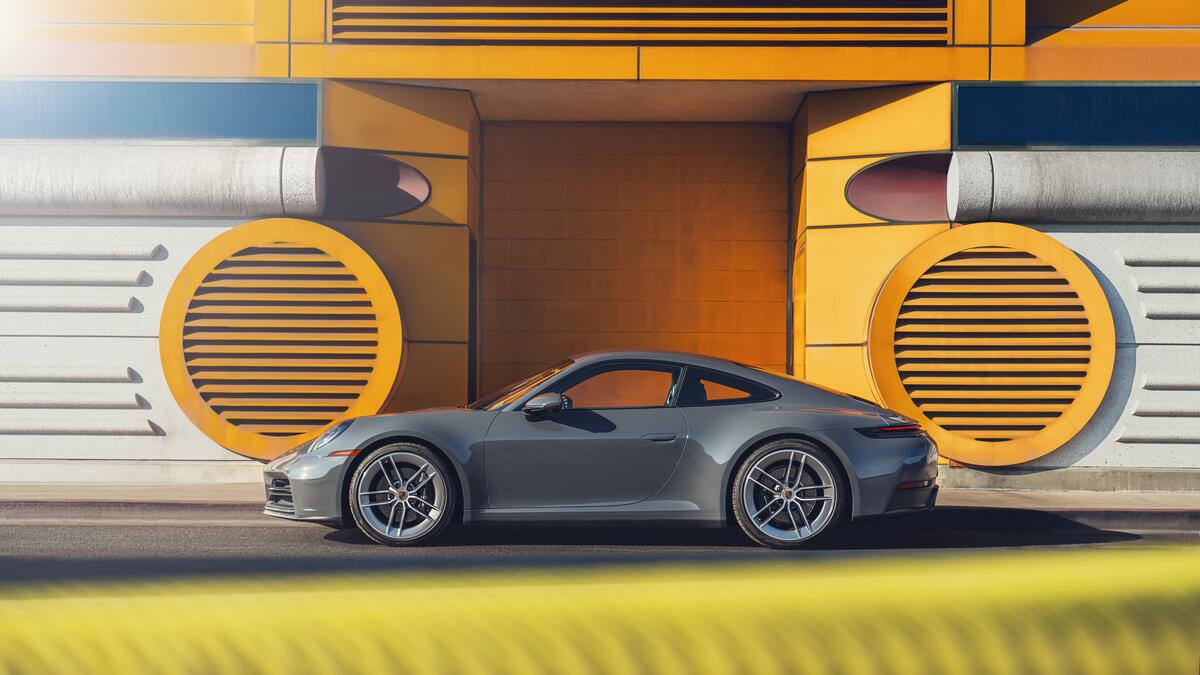
911 Porsche Gt3
"So, get there like eight in the morning... They rented out a two race cars, one was a semi-race ready Porsche GT3 RS. It had kind of everything you need except it was on the street tire and there was a license plate in the back."
The Porsche GT3 RS is a special Porsche made for track driving. Here, they say it looked and behaved like a race car, but it still had street tires and a normal license plate, so it wasn’t fully set up like a dedicated race car.
The Porsche GT3 RS is a track-focused 911 variant built for high grip and aggressive driving. In this segment, they describe it as “semi-race ready” but still running street tires and having a visible license plate, so it’s closer to a track-prepped road car than a stripped race entry.
semi-race ready
"They rented out a two race cars, one was a semi-race ready Porsche GT3 RS. It had kind of everything you need except it was on the street tire..."
“Semi-race ready” means the car is prepared for track use but not fully converted into a dedicated race car. Common examples include keeping street-legal items (like a license plate) and using street tires, while still adding track-oriented setup elements.
street tire
"It had kind of everything you need except it was on the street tire and there was a license plate in the back."
A street tire is made for everyday driving. It usually doesn’t grip as hard or handle track heat as well as tires designed specifically for racing.
A street tire is a tire designed primarily for normal road use rather than maximum track grip. Compared with track-focused tires, street tires typically have different rubber compounds and tread behavior, which can reduce ultimate cornering performance and heat management on track.
left pedal
"two laps, show them what's right and left, [3010.9s] show them how to use the left pedal. [3012.7s] And-"
On a race car, the left pedal is usually the brake. They’re talking about how to brake correctly.
In most race cars, the left pedal is the brake pedal (the right pedal is typically the accelerator). When the hosts say “use the left pedal,” they’re emphasizing braking technique rather than driving smoothly in general.
pedal box
"We switched seats and I get into the seat [3025.8s] and I'm like, man, this is not fitting right. [3027.7s] Like the pedal, sorry, the pedal box is too far away,"
The pedal box is where the pedals are mounted in the car. If it’s too far away, your legs can’t reach the pedals comfortably.
The pedal box is the structural area where the pedals are mounted and positioned relative to the driver. If it’s “too far away,” the driver can’t comfortably reach the pedals, which affects braking consistency and safety.
five point harness
"The seat belt, the actual clipping belt [3034.3s] was pressed right on my family jewels [3037.0s] and it was a six point harness. [3039.7s] So it was on both sides on the lap. [3042.9s] And then, no, it was five point harness, I guess. [3045.9s] Yeah, five point harness."
A five-point harness is a multi-strap safety belt used in racing. It holds you in place with straps over your shoulders, around your hips, and between your legs.
A five-point harness is a racing seatbelt system that uses five straps to restrain the driver: typically two over the shoulders, one between the legs, and two at the hips. It’s designed to keep the driver securely positioned under high cornering and braking forces.
six point harness
"The seat belt, the actual clipping belt [3034.3s] was pressed right on my family jewels [3037.0s] and it was a six point harness. [3039.7s] So it was on both sides on the lap."
A six-point harness is a racing safety belt with more straps than a normal seatbelt. It helps keep you firmly held in the seat during fast driving.
A six-point harness is a racing restraint system with six straps, usually adding extra hip/lap restraint compared with a five-point setup. More points can improve how the harness holds the driver’s torso during hard braking and cornering.
aero
"No, with more aero, they were still pulling. That car was pulling on the straightaway."
“Aero” means the car’s aerodynamic parts, like wings and body shapes that affect airflow. The right aero can help the car grip the road better and go faster.
“Aero” here means aerodynamic setup—bodywork and wings designed to control airflow. More aero can increase downforce and reduce drag in ways that help a race car stay planted and pull harder, especially on straights.
straightaway
"But then I saw them straight away. That car was pulling on the straightaway."
A straightaway is the straight part of the race track. It’s where cars can build speed, so it’s a good place to judge how fast the car really is.
A straightaway is the section of a track where the cars are mostly accelerating in a straight line. In race discussions, it often becomes a proxy for top speed and how well the car’s aero and power work together.
cats
"They told me that they took the cats off it. But then they have this like center exit exhaust thing."
“Cats” means the catalytic converters. They clean up exhaust gases, and removing them usually makes the car louder and changes the exhaust note.
“Cats” is shorthand for catalytic converters, emissions devices that reduce harmful exhaust gases. Removing them typically makes the exhaust louder and changes the sound/feel of the car, especially when paired with an aftermarket exhaust setup.
center exit exhaust
"They told me that they took the cats off it. But then they have this like center exit exhaust thing."
A center-exit exhaust routes exhaust gases out through the middle of the car rather than the sides. This layout is often used for styling and packaging, and it can also change how the exhaust sound projects around the cabin and track.
timing
"Well, I think they also said they were limiting the timing. So I wonder if that would send a bunch of fuel to the cat"
“Timing” is about when the engine does things like spark or fuel injection. If that timing is changed, the engine can burn fuel differently, which can affect the exhaust and emissions equipment.
In an engine, “timing” refers to when key events happen in the combustion cycle—most commonly ignition timing (spark) or injection timing (for diesels). Changing or limiting timing can reduce power and also affect how much unburned fuel reaches the exhaust system.
foul it up
"So I wonder if that would send a bunch of fuel to the cat and eventually foul it up or something."
“Foul it up” here means the catalytic converter gets contaminated—often by unburned fuel or oil—so it can’t do its job effectively. That can show up as reduced emissions performance and, in some cases, overheating or permanent damage.
BMW 335
"I think there was a BMW 335. No, I talked to that guy. He had the D badge."
A BMW 335 is a BMW 3 Series variant. The hosts are debating whether it was diesel or not, and that’s important because diesel and gas engines behave differently in the exhaust.
The BMW 335 is a 3 Series model line associated with BMW’s inline-6 era (commonly the 335i/335d depending on market and drivetrain). In this segment it’s mentioned in the context of whether the car was a diesel, which matters because diesel and gasoline engines handle fueling and exhaust differently.
diesel
"It's definitely not a diesel. But I just put it on there because it fucks with everybody. It was like it was a fast 335."
Diesel is a type of engine that runs differently than gasoline. It often sounds and behaves a bit differently, so they’re trying to figure out what kind of engine note they’re hearing.
A diesel engine uses compression ignition instead of spark plugs, and that difference shows up in how the engine sounds and how it behaves. The hosts are using “diesel” as a guess for what the car’s exhaust/engine note might be, before concluding it doesn’t quite match.
big wing
"Yeah. It was fast on the streets, but it didn't have the big wing. That was an interesting choice being out there."
A big wing is a spoiler on the back of the car that helps it stay planted at high speed. It’s usually used for better grip on track, but it can also make the car slower in a straight line because it adds drag.
A “big wing” is an aerodynamic spoiler/wing that increases downforce, helping the car stick to the road at speed. In racing, more downforce generally improves cornering grip, but it can also add drag—so choosing whether to run a large wing is a setup decision.
BMW E92
"Yeah. Yeah. That winged E92. Either way, the E92."
The BMW E92 is a specific generation/body style of BMW 3 Series coupe. Here it’s being talked about like a fast, track-prepped car—more about how it looks and goes than about everyday commuting.
The BMW E92 is the 3 Series coupe generation (the E92 body style) that’s especially known in racing and enthusiast circles. In this segment, the hosts connect the E92 to track-style aero (a “big wing”) and straight-line speed, implying a performance build rather than a stock street car.
heavy and slidey
"It was heavy and slidey. With no arrow, that thing is not easy to handle."
They’re describing how the car feels in the turns: it doesn’t feel nimble, and it tends to slip instead of gripping the road. That makes it harder to drive consistently lap after lap.
“Heavy and slidey” is driver feedback describing a car that feels sluggish to rotate and tends to lose grip progressively in corners. It usually points to handling balance issues (like insufficient traction at the tires) that make it harder to place the car precisely.
no arrow
"It was heavy and slidey. With no arrow, that thing is not easy to handle. And it's really hard to keep that thing in contention"
They’re implying the car didn’t have enough aerodynamic “push” to keep it planted. Without that grip, the car slides around more in the corners.
In racing talk, “arrow” is commonly used as shorthand for aerodynamic downforce (the “down” force that pushes the car toward the track). Less downforce typically means reduced grip and more challenging cornering behavior.
qualified super well
"I mean, they qualified super well. I don't know what was going on in qualifying."
“Qualified super well” means the car set a strong qualifying result, which determines starting position for the race. Better grid position can reduce traffic risk and make it easier to stay in contention early.
full course yellows
"We got hosed a couple of times in that first race by full course yellows that bunched up the field"
“Full course yellows” means the whole race is under caution. Everyone has to slow down, and the cars get packed together again, which can hurt or help different teams.
Full course yellows are race-control cautions where the entire track is slowed and drivers must follow the pace car/slow zone rules. They bunch the field together, which can erase gaps and dramatically change strategy and track position.
bunched up the field
"We got hosed a couple of times in that first race by full course yellows that bunched up the field"
It means the cars that were spaced out end up closer together. That can make racing more chaotic because you’re dealing with traffic and fewer clear passing lanes.
“Bunched up the field” describes what happens when cautions reduce speed across the whole circuit: cars that were separated by gaps end up closer together. That increases the chances of traffic, restarts, and position swings.
pace car
"Zach also had a real pants shitting moment where he was the fucking car behind the pace car and the entire field and bunched up behind him."
The pace car is an official car that leads the race cars during a caution. It controls the speed so everyone stays together safely until racing can resume.
The pace car is the official car that leads the field during caution periods. It sets the speed and helps keep cars bunched up safely until race control allows the restart.
rear view camera
"The rear view camera gets very busy. And then a lot of cars just pass."
The rear view camera shows what’s behind the car. During a race restart/caution when cars are close together, it can be hard to track everyone, so the camera view gets very busy.
A rear view camera in a race car provides a live image of what’s behind you, helping drivers monitor traffic during high-speed stints and chaotic caution periods. In a bunched-up field, it can quickly become “busy” as multiple cars close in and pass.
yellow flag restart
"How does a yellow flag restart? What? How does the yellow flag restart? ... you’re allowed to drive 80% pace in the full yellow."
A yellow flag restart is the procedure for returning to racing after a caution period. Different series use different rules for when passing is allowed and how drivers accelerate back to racing speed, which is why the hosts are debating how to interpret the “80% pace” instruction.
80% pace
"But then there's like the, you're allowed to drive 80% pace in the full yellow. It's like, well, which car is 80%? Are we judging this on?"
“80% pace” is a rule that tells drivers to go at a reduced speed during the caution—like 80% of the normal pace. The tricky part is figuring out what exact speed you’re supposed to base that percentage on.
“80% pace” is a caution-period speed rule expressed as a percentage of the pace car’s speed (or another reference speed defined by the series). It’s meant to keep cars moving safely while still allowing some movement toward the restart, but it can be ambiguous if drivers aren’t sure what reference they’re supposed to use.
AMG GT
"So I just stayed left and I watched, you know, AMG GT go by on the right, three Supras go by on the right."
The AMG GT is a Mercedes performance sports car. In racing, it’s the kind of car that can be very quick and confident when the track gets fast and technical.
The Mercedes-AMG GT is a grand-touring sports car from Mercedes-Benz’s performance division, AMG. In a race context, it’s known for strong straight-line speed and stability when pushed hard through corners.
Toyota Supra
"So I just stayed left and I watched, you know, AMG GT go by on the right, three Supras go by on the right."
The Toyota Supra is a well-known sports car. Here it’s being mentioned as one of the cars you’d see blasting by during the race.
The Toyota Supra is a performance sports car that’s become a staple in modern racing and enthusiast circles. In this segment, the host is describing multiple Supras running alongside other classes, highlighting how different cars can have very different pace and handling.
turn one
"All the GTO class cars just haul ass and just carry through turn one and they're gone."
“Turn one” is the first corner of a race lap, typically where the field is most bunched up and incidents are most likely. Drivers often plan their positioning here because small mistakes can lead to contact.
GTO class
"All the GTO class cars just haul ass and just carry through turn one and they're gone."
In racing, cars are grouped into classes so they compete under similar rules. The speaker is saying the GTO class cars are very quick and pull away early in the lap.
“GTO class” refers to a race class grouping cars with similar rules and performance characteristics. When the speaker says the GTO class cars “haul ass,” they’re emphasizing that those cars are fast and can quickly disappear after turn one.
Track Limits
"And Track Limits Tommy found a new way through 14, very nice. Unlike Kota, they were, there was no mention of Track Limits."
Track limits are the rules about staying within the marked racing area. If you go outside the boundary—like cutting a corner too much—you can get a warning or have your lap counted as invalid.
Track limits are the rules that restrict where tires may go on a circuit—typically preventing drivers from using runoff areas or cutting corners beyond the marked boundaries. When a driver exceeds track limits, it can trigger warnings, penalties, or lap invalidation depending on the event’s rules.
balance throttle
"And so you either needed to wait a long time or balance throttle to get around it, or turn it and go back to throttle"
Balancing throttle means modulating the accelerator to manage the car’s grip and rotation through a corner. The goal is to keep the tires loaded enough to turn without spinning or pushing wide, especially when the car’s preferred turning point is “predetermined.”
cut through a corner
"I realized that my line through turn seven is a big ol' cut compared to what everybody else. You know, there's like the curb, and then that concrete."
A “cut” means you drive a shorter route through a turn instead of staying farther out. It can help you go faster because you cover less distance, but you have to be careful not to run off the ideal path.
A “cut” is when a driver takes a shorter path through a corner by using more of the track edge (like curbing) instead of following the widest racing line. In practice, it can reduce distance and time, but it also risks running wide, upsetting the car, or violating track limits depending on the circuit rules.
racing line
"I thought that was just the way. But no, apparently it's not. Apparently that's a big cut that no one really cared about doing."
The racing line is the best “path” through a corner that helps you keep speed up. Different drivers may pick slightly different lines, and that can affect how fast they go.
The racing line is the preferred path around a corner that aims to maximize speed and minimize time. Drivers choose it based on braking points, corner entry/exit geometry, and how the car grips, so small differences—like whether you touch the curb—can change lap time.
curb
"You know, there's like the curb, and then that concrete. My right tires are like to the right of that concrete,"
A curb is the raised edge along the inside of a corner that drivers may use to tighten their line. Hitting curbs can be beneficial for shortening the path, but it can also unsettle the suspension and tires—especially if the curb is harsh or the car bottoms out.
pucker moment
"And so that is a serious pucker moment. That's the scariest throw."
In racing talk, a “pucker moment” means you suddenly feel really nervous because you’re right on the edge of something going wrong. Here, it’s when the car is very close to danger at speed.
“Pucker moment” is racing slang for an instant where you’re extremely close to losing control—often because you’re near the limit of grip or space. In this context, it describes the fear-inducing feeling of hitting a kink at speed without crashing.
pick up the throttle earlier
"I only did it a few times, but to pick up the throttle earlier, carry more speed, knowing that you had that extra margin on the outside."
This means you start pressing the gas sooner while you’re still in the cornering phase. It can make you faster, but if the tires don’t have grip yet, it can also make the car slide.
“Pick up the throttle earlier” means starting to apply power sooner as you exit or transition through a corner. Doing it earlier can help the car accelerate sooner, but it also increases the chance of slipping if traction isn’t there yet.
carry more speed
"But to pick up the throttle earlier, carry more speed, knowing that you had that extra margin on the outside."
“Carry more speed” means you go through the turn faster without having to slow down as much. It’s about keeping the car under control while staying quick.
“Carry more speed” means maintaining higher velocity through a corner rather than slowing down early. Drivers do this by hitting the right line and timing throttle so the car stays stable and doesn’t run out of grip.
use the ground up twice as fast
"Now, because it's only half grip, you use the ground up twice as fast. So if you think, I'm only going six inches over,"
It means that when traction is low, you run out of “safe room” faster—either in distance or in tire grip. So you have to be ready to react sooner because the car will start to slide quickly.
“Use the ground up twice as fast” is a driver metaphor for consuming available traction and track space quickly when grip is limited. It implies that the car reaches its traction limit sooner, so the driver has less time/distance to correct before the tires start sliding.
risk reward
"Cause again, at this point, there's no one scouting for a pro ride and so the risk reward, just don't crash the car."
“Risk reward” means deciding whether something is worth the danger. Here, the point is that if nobody is helping you by scouting, it’s not worth taking big chances.
“Risk reward” is the racing decision tradeoff between how much you stand to gain (time/position) versus how likely you are to crash. The speaker notes that without someone scouting for a pro ride, the balance shifts toward not pushing too hard.
pro driver pairing / younger pro development
"even if you're like a younger pro and a pro pro pairing, you want to get that experience pro driver to show you, hey, this is what you're capable of and this is what this car is capable of."
They’re describing a mentoring-style setup in racing. A newer driver learns by being paired with a more experienced driver who can demonstrate what the car can do.
The hosts describe a driver pairing approach where a less-experienced “younger pro” is paired with a more experienced pro driver. The idea is to accelerate learning by showing what the car and the driver are capable of in real race conditions.
single-make Carrera Cup
"Also single make Carrera Cup, I think he did a year and a half."
In a single-make race series, everyone drives the same model of car. That helps show who’s the better driver and team, because the cars are much more equal.
A single-make series is a racing championship where competitors use the same model of car (or cars built to the same spec). That makes driver skill and team setup choices stand out more than differences between brand-new machinery.
Saab 900
"...a video of like a nine year old kid landing three 900s in a row on a skateboard. And it took Tony Hawk 2..."
The Saab 900 is an older model of car made by Saab. In the podcast, it’s mentioned because of a funny video where someone uses the “900” name in a skateboard trick. It’s more of a lighthearted reference than a driving or performance topic.
The Saab 900 is a classic compact car from Saab, known for its distinctive design and long-running production history. The podcast references a video of a child landing “three 900s in a row on a skateboard,” which is a playful anecdote rather than a technical discussion. It’s mentioned because it connects the car to a memorable, viral-style moment.
NISMO Z
"I was at Sonoma yesterday on the NISMO Z launch, the manual and I can't talk about how it drives yet, but honestly you can fucking guess."
NISMO Z is a Nissan Z that’s been tuned by Nissan’s performance team (NISMO). It’s built to feel more “track-ready,” so it’s easier to drive fast and stay stable in corners.
The NISMO Z is Nissan’s performance-focused version of the Z sports coupe, tuned and developed by NISMO (Nissan’s motorsports division). In track settings like Sonoma, the big point is how the car’s chassis and drivetrain calibration are meant to help drivers stay consistent through corners and transitions.
lead follow
"they were mainly doing lead follow and Nissan was kind enough to not force me into the lead follow, but I did on the warm-up lap, I did do a lead follow and the guy over four, up over the hill and into the carousel"
Lead-follow is when an instructor drives first and you copy what they do. You’re learning where to brake and how to take the turns by following their example.
Lead-follow is a driver coaching format where one car (the lead) sets the line and pace, and the student car follows to learn braking points, corner entry, and how the car behaves at speed. It’s often used early in track sessions because it reduces guesswork while still building real driving references.
arc it in
"[4424.7s] Yeah, I mean, you definitely don't want to arc it in, [4429.1s] you want to be in tight relatively soon."
“Arc it in” means turning in gradually along a curved path. Here, the host is saying that kind of entry line makes it harder to set up the best exit.
“Arc it in” describes a driving line where you enter a corner by curving smoothly toward the apex rather than aiming for a more direct setup. The speaker’s point is that for this specific corner, arcing the entry hurts how quickly you can get the car positioned for the exit.
unweight
"you could theoretically carry a little more speed [4436.7s] over that unweight, but you want to be heading [4439.3s] for the inside shortly after that."
“Unweight” is when the car’s weight shifts so a tire has less pressure on the road. Racers use that moment to help the car rotate or stay stable through the turn.
In racing, “unweight” means reducing the load on a tire or axle as the car transitions through a corner. Less tire load can change grip and traction, so drivers time steering and throttle to keep the car stable while weight shifts.
90 degree corner
"[4456.2s] If that was a 90 degree corner, you would want to do that. [4460.2s] Because it's a 180, no matter what you do on the entry,"
A “90 degree corner” is basically a square-ish turn. The best driving line and timing are different than for corners that are closer to a half-turn.
A “90 degree corner” is a right-angle turn where the car’s direction changes roughly perpendicular to the entry direction. The driving strategy differs from wider or more complex turns because the entry-to-exit balance is more sensitive to how early you rotate the car.
180
"[4460.2s] Because it's a 180, no matter what you do on the entry, [4463.2s] it gets canceled out by halfway around the corner."
A “180” is a turn where you’re basically going back the other way. The host is saying that in that kind of corner, what you do at the start matters less than how the car is set up and rotates through the whole turn.
A “180” refers to a half-turn corner where the car must rotate and reverse direction significantly. The speaker argues that in a 180, the entry line’s effect is “canceled out” by the car’s behavior through the middle of the turn, so prioritizing entry positioning over overall rotation/exit can hurt pace.
90 degree left hand corner
"breaking into a 90 degree left hand corner, [4541.8s] but it's not nearly as interesting"
That’s a very tight turn—almost like turning a corner in a parking lot. In a race, it usually means you have to brake hard and then accelerate again as soon as you can.
A “90-degree” corner is a very tight, slow-speed turn where the car must rotate a lot to change direction. In racing, these corners heavily influence braking points and how quickly you can get back to accelerating afterward.
Road America
"as the one at Road America. [4544.5s] I like the really hard brake zones, you know, [4548.3s] and if you get, so that's something [4550.7s] that Road America has several of, you know,"
Road America is a race track. They’re talking about how its corners and braking areas affect how drivers go fast.
Road America is a well-known road course in racing circles, discussed here in terms of its braking-heavy layout and cornering flow. The hosts compare its character to other tracks by focusing on braking zones and how drivers manage speed through corners.
hard brake zones
"I like the really hard brake zones, you know, [4548.3s] and if you get, so that's something [4550.7s] that Road America has several of, you know,"
These are parts of the track where you have to slow down really aggressively for the next turn. Doing it wrong can make the car feel unstable and slow you down.
“Hard brake zones” are track sections where drivers must brake very late and very firmly to slow the car for a corner. They’re challenging because braking too much or too early can upset the car’s balance and cost time.
over slow
"and you're so focused on braking, [4561.7s] and you can over slow in a lot of places. [4564.3s] So there's just so much flow to it."
It means you slowed down too much for the turn. If you do that, you can’t get back on the gas as quickly, so you lose speed.
“Over slow” means braking too much or slowing down more than necessary for the corner. That can force the driver to wait longer before accelerating, and it often reduces corner exit speed.
floating speed
"For sure, Canada corner. [4575.4s] Like it's just all about floating speed. [4577.5s] And the more you can keep it smooth"
It’s about keeping the car’s speed smooth through the turn. Instead of slowing down a lot and then waiting, you try to stay moving so you can accelerate again quickly.
“Floating speed” is a driving approach where you keep the car moving smoothly through a corner rather than scrubbing off too much speed. The goal is to maintain momentum so the car can be back on the throttle sooner, improving lap time.
Canada corner
"For sure, Canada corner. [4575.4s] Like it's just all about floating speed. [4577.5s] And the more you can keep it smooth"
Canada corner is a specific named turn on the race track. They’re saying it rewards smooth driving and quick acceleration out of the corner.
“Canada corner” is a named corner at Road America that drivers use as a reference point for technique. In this segment, it’s highlighted as a place where maintaining smooth momentum (“floating speed”) and getting back to throttle quickly matters.
lifting and turning
"And then Billy Mitchell Ben becomes an interesting lifting and turning because in the Lambo, you really have to use the brake there. Otherwise you're just going to fly away."
It means easing off the gas while you’re steering through a turn. Drivers do this to keep the car stable and controllable as they set up for the next part of the corner.
“Lifting and turning” describes a driving technique where you reduce throttle (“lift”) while simultaneously steering through a corner. The goal is to manage the car’s balance and grip—especially when the car is sensitive to speed and brake/throttle timing at that point on track.
transmission
"Queer shift in gears. At the Mid Ohio Lemons Race, my teammate blew our transmission at the start of day two"
The transmission is the part that changes gears and sends power from the engine to the wheels. If it breaks during a race, the car can’t drive normally and the team has to stop.
A transmission is the gearbox assembly that transfers engine power to the drive wheels and selects gear ratios. In racing, a transmission failure can end a car’s run quickly because it prevents the car from effectively putting power down.
looser on entry
"but then with the older tires, it would start to get looser on entry."
When they say the car gets “looser on entry,” they mean it feels less planted right as you turn into the corner. That usually happens when the tires aren’t gripping as well at that point.
“Looser on entry” describes how the car feels less stable when you first turn in for a corner. Typically it means the tires have less grip at that moment, so the car is more likely to rotate or slide before it settles.
fourth gear
"And so for Tommy's, it was almost impossible to run in fourth gear, but you were in like kind of the mid stages"
“Fourth gear” is just one of the car’s gear ratios. Drivers pick gears to keep the engine in the right range, and worn tires can make one gear feel wrong for how the car grips.
“Fourth gear” is a specific transmission ratio the driver is using to manage engine speed and torque delivery through the corner. In endurance racing, tire wear and track conditions can make a particular gear feel workable or nearly impossible because it changes how the car loads the tires.
running in the dark
"A thing like that is whenever you do a 24 hour race, I've always found that you learn certain bits about the track running in the dark."
“Running in the dark” means racing at night. With less visibility, it’s harder to judge distances and braking points, so drivers lean more on feel and track references.
“Running in the dark” refers to driving and racing during nighttime conditions, where reduced visibility changes braking points, corner references, and tire grip feel. Drivers often rely more on trackside cues and seat-of-the-pants feedback because visual confirmation is limited.
seat tells you
"The seat tells you, if I clip this, there's a bump here, and I know I'm gonna have six inches on the exit. And then your eyes are like, yep, six inches on the exit."
They’re saying the car’s vibrations and bumps can “tell” you what’s coming. Even if you can’t see perfectly, the seat and chassis feedback helps you drive more consistently.
This describes how drivers use tactile feedback from the seat and chassis to detect bumps and load changes before they fully “see” them. In endurance racing, that kind of sensory learning helps you hit consistent lines and manage grip as conditions evolve.
wet pass
"It was wet. It was drying out... and then I passed both of them on the outside in the wet."
Passing on a wet track is harder because the tires don’t grip as well. The driver has to be extra careful with braking and steering so the car doesn’t lose control while going for the overtake.
A “wet pass” is an overtaking maneuver done when the track has reduced grip from rain or standing water. Drivers often need to brake later or earlier, choose a different line, and manage traction carefully so the car doesn’t slide while committing to the pass.
planned passes
"to put their car there was an incredibly helpful [4939.0s] bit of racecraft that resulted in like multiple planned passes. [4945.1s] That's awesome. [4945.9s] Like when someone like me like sets up planned passes"
“Planned passes” means you don’t just try to pass randomly. You pick the exact spot and timing to make the move work, based on the track and how the other car is driving.
“Planned passes” is racecraft where a driver sets up an overtake in advance—choosing the braking point, line, and timing—rather than reacting at the last second. It often relies on reading the opponent’s habits and using the track layout to create a clean opportunity.
racecraft
"to put their car there was an incredibly helpful [4939.0s] bit of racecraft that resulted in like multiple planned passes. [4945.1s] That's awesome."
Racecraft is how drivers actually race each other. It includes things like where to drive, when to brake, and how to set up a pass. It’s about outsmarting other cars, not just going fast.
Racecraft is the set of driving skills used to gain position—things like choosing lines, managing braking and throttle, and timing passes. It’s less about raw speed and more about how you interact with other cars on track.
Gordon T50
"for the afternoon, what would it be? T-50. Ooh, T-50?"
The Gordon Murray Automotive T.50 is a high-end supercar. It’s designed to be very fast and fun to drive, with an emphasis on keeping the car light. The podcast mentions it because it’s one of the cars people would pick for an exciting drive.
The Gordon Murray Automotive T.50 is a modern supercar designed with a focus on lightweight engineering and driver-focused performance. The podcast’s “T-50” mention suggests they’re discussing it as a standout choice among extreme performance cars. It’s significant because it’s built around a specific philosophy: sharp handling and high performance without unnecessary weight.
throttle, break, throttle, break
"Gierberman says Tato and Tommy is an ever faster to go throttle, break, throttle, break through bus stops or chicanes rather than doing the coast."
They’re describing a pattern of driving where you keep adjusting—speed up a bit, slow down, then speed up again—especially in tight track sections. The idea is to control the car’s balance and timing instead of just letting off and coasting.
This describes a driving rhythm where the driver repeatedly alternates between applying throttle and braking to manage speed and car balance through complex sections like bus stops or chicanes. It’s contrasted with “coasting,” which can be slower or less effective depending on traction and line.
coasting
"On the sim, I feel like the more I master coasting, the faster I get, but it seems counterintuitive. I think what you're dealing with here, this is eye work."
Coasting is when you lift off the gas and just let the car roll. They’re saying that in a simulator it can feel faster, but on track you often need to manage throttle and braking more actively to be quickest.
In racing driving, “coasting” means lifting off the throttle and not actively adding power while the car rolls toward the next braking or corner entry. The hosts discuss how, even if coasting feels like it helps on a sim, real driving often rewards staying active with throttle and braking to keep the car settled and positioned.
eye work
"I think what you're dealing with here, this is eye work. This is, you know, his eyes aren't moving. And so if your eyes aren't moving ahead and looking through it, you're going to want to break"
“Eye work” means you train your eyes to look where you’re trying to drive, not just at what’s right in front of you. They’re saying that better vision and focus can make you brake and steer more smoothly and quickly.
“Eye work” is a racing technique where you focus your gaze on where you want the car to go—through corners, braking zones, and exits—rather than staring at the car’s immediate surroundings. The hosts connect it to speed because stable, forward-looking vision helps the driver time braking and steering inputs more consistently.
bus stop
"Depending, you could theoretically have a bus stop [5046.6s] that was designed where it was fast enough through the middle [5049.1s] that you would have to dab the brakes for the second part. [5051.2s] But the ones that I know of generally, [5054.3s] you're rolling so much through, [5056.0s] it's basically like one long corner."
On some race tracks, there’s a section people call a “bus stop” because it’s like a tight, slow-ish pinch point. You have to slow down, then get back on the gas quickly so you can carry speed into the next part.
“Bus stop” is a common racing-track nickname for a tight, braking-heavy section that follows a faster approach. Drivers often need to manage speed carefully through it, then accelerate hard out to maintain momentum for the next straight.
momentum
"But the thing is, it's just trying to keep [5089.9s] that minimum speed up. [5091.0s] Like it's all about carrying the momentum [5092.5s] through those corners and not trying to make any momentum."
Momentum is basically how much “go” the car already has. In racing, you try not to slow down too much in the corners so you can keep that speed and accelerate smoothly out.
Momentum in racing is the car’s stored motion—its speed and kinetic energy—that you want to preserve through corners. Drivers aim to “carry momentum” by minimizing unnecessary slowdowns so the car can stay fast without relying on late, aggressive acceleration.
Aston Martin Lagonda
"the faster he gets. Matt Farah's million mile Lagonda. If you could try every race car"
The Aston Martin Lagonda is a luxury car made by Aston Martin. The podcast mentions a “million mile” example, meaning someone drove one for an extremely long distance. They bring it up to show that the car can last a long time with proper ownership.
The Aston Martin Lagonda is a luxury model from Aston Martin, and the podcast calls out “Matt Farah’s million mile Lagonda,” highlighting its long-term use. That kind of story is discussed because it challenges the assumption that exotic or luxury cars can’t rack up huge mileage. It’s a notable ownership anecdote focused on durability and real-world longevity.
91730
"...nteed safety. I would drive, you know, the Sonoco 91730 maybe. Can't aim cars."
The Porsche 917 is a famous race car from Porsche. The podcast mentions a specific 917 example and talks about safety, which is important in racing. It’s discussed because it’s a major part of racing history.
The Porsche 917 is a legendary race car from Porsche’s history, famous for dominating endurance racing in its era. The podcast references a specific example (“Sonoco 91730”) and talks about safety, which fits how these cars are often discussed in the context of racing heritage and engineering. It’s brought up because the 917 is one of the most iconic names in motorsport history.
Group B cars
"I would try all the Group B cars if I could have an open area to not get any trees and die."
Group B was a rally racing class (especially famous in the early-to-mid 1980s) known for extremely powerful cars and minimal restrictions. It’s worth explaining because Group B is remembered for both spectacular performance and serious safety concerns, which is why the discussion frames it around wanting an open area to avoid trees and “die.”
190 Evo IIs
"Well, the 190 Evo IIs are like slow. They're actually, they're great chassis and stuff, but they're like 225 horsepower."
The Mercedes-Benz 190 Evo II was a special race-focused version of the 190 made for Group B rallying. Even though it’s not described as super powerful, it’s known for being a great-handling car that you have to drive precisely.
The Mercedes-Benz 190 Evo II is a Group B-era homologation special built for rallying, famous for its lightweight body and race-bred engineering. The speaker calls out that it’s “like 225 horsepower,” which explains why it relies heavily on chassis behavior and driver technique rather than sheer power.
GTP
"So, you know, Group B, GTP, the era I drove. I'm really stoked that I got to drive that era car."
GTP is a type of race category for prototype sports cars, used in endurance racing. It’s basically a “top-level race car” class, not a normal production-car category.
GTP usually refers to the IMSA GTP (Grand Touring Prototype) class, a top-level prototype sports-car category used in endurance racing. The speaker groups it with Group B as “the era I drove,” implying a period of high-performance race machinery with different rules and car types than modern GT racing.
historic Monaco
"Yeah, I mean, they just had the historic Monaco. And Adrian Fernandez is driving and the Euros, when they have a vintage race, you see the Goodwood, they go hard."
Monaco Historic is a race event at the Circuit de Monaco for older cars. Monaco is a very tight, unforgiving track, so crashes can be especially serious—even with vintage race cars.
The Monaco Historic is a vintage-racing event held at the Circuit de Monaco, featuring older race cars on the famous street circuit. The speaker references a “huge crash” there, highlighting how even historic cars can be risky because they may lack modern safety systems and braking/handling consistency.
Goodwood
"And Adrian Fernandez is driving and the Euros, when they have a vintage race, you see the Goodwood, they go hard."
Goodwood is a famous UK motorsport venue that hosts lots of historic racing events. The hosts are using it as an example of how intense vintage racing can be.
Goodwood refers to the Goodwood events in the UK, where vintage and historic racing is a major draw. In the segment, it’s used as an example of how vintage races “go hard,” implying aggressive driving and high risk.
water-cooled brake calipers
"Clayton Cunningham designed water-cooled brake calipers. Oh, wow. They were a water-cooled and a brake caliper in that car."
Water-cooled brake calipers are brakes with extra cooling built in. Instead of relying only on airflow, they use water to keep the brakes from overheating during repeated hard braking.
Water-cooled brake calipers use a liquid cooling circuit to pull heat out of the braking system. The goal is to reduce brake fade during repeated hard stops, which helps maintain consistent braking performance in endurance or track racing.
brake caliper cooling circuit
"Was there actually like a water pump and a radiator? Holy shit, that's nuts. Yeah. That seems like more trouble than it's worth,"
A brake cooling circuit is the system that carries cooling fluid through the brake area. It usually means extra parts to move and cool the fluid, which can be more complicated than normal brakes.
A brake caliper cooling circuit is the plumbing and heat-transfer setup that moves coolant (like water) through or around the caliper. It typically implies additional components such as a radiator and pump, and it can add complexity and potential failure points compared with air-cooled brakes.
Jim Russell series
"Steve Millan and Johnny, I started racing in the Jim Russell series with Johnny O'Connell. We both went on to do stuff."
The Jim Russell series is a racing program where drivers start out and gain experience. The hosts mention it because it helped launch their careers.
The Jim Russell series refers to a motorsport ladder/program associated with Jim Russell, commonly used as a stepping-stone for drivers into higher-level racing. It’s mentioned here because the host and Johnny O’Connell both started there before moving on to other racing opportunities.
Mazda Rx7
"So, but yeah, I mean, and I drove for Clayton Cunningham, [5401.9s] the RX-7 that I drove at the very start of my IMSA career"
The Mazda RX-7 is a race car that’s special because it uses a rotary engine, not the usual piston engine. That rotary design helped it become a popular choice in racing series like IMSA.
The Mazda RX-7 is a famous IMSA-era sports car known for its rotary engine (a Wankel design) rather than a conventional piston engine. In racing, it’s valued for how well it responds and how competitive it can be when developed for series rules.
Ford Cougar
"..., that's that whole era of car. You had the Roush Cougars, you had the Audi's, the Mustangs, what else?"
The Ford Cougar is a car model that shows up in the podcast as part of an older era of performance cars. The discussion is mainly about what kinds of cars were popular around the same time. It’s mentioned alongside other performance models to set the scene.
The Ford Cougar is referenced as part of an era of performance cars and racing culture, with the podcast listing other models from that same timeframe. In this context, it’s less about a specific technical spec and more about identifying the “whole era of car” and the lineup of notable performance choices. That makes it a historical reference point in the conversation.
Ferrari F40
"There was an F40 that John O'Lacy drove during that era. [5420.8s] The F40 race car was sick."
The Ferrari F40 is one of the most famous Ferraris ever made. In this conversation, they’re saying someone drove an F40 as a race car back in that time period.
The Ferrari F40 is a legendary 1980s supercar built around a lightweight, performance-first philosophy. Here it’s specifically mentioned as a race car driven during that era, highlighting its status as a track-capable icon.
transaxle
"So, and then partway through this season, [5439.6s] we developed a car that actually had a transaxle."
A transaxle is basically the transmission and the final drive packaged together. Race teams use it to help the car’s balance and drivetrain layout work better.
A transaxle is a combined transmission-and-axle unit, typically packaging the gearbox with the final drive. In race cars, using a transaxle can help with weight distribution and drivetrain efficiency, especially when the engine and transmission are separated by design.
hybrid tube frame
"It had a hybrid tube frame, [5444.7s] but it had bonded carbon panels to the tube frame"
A hybrid tube frame is a race-car-style chassis made from metal tubes, but built in combination with other materials or methods. The goal is usually to make the car strong and stiff without adding too much weight.
A hybrid tube frame uses a tubular chassis structure (often for strength and mounting points) combined with other materials or construction methods. In racing, this can be a way to balance stiffness, weight, and packaging while still meeting safety and rule requirements.
bonded carbon panels
"but it had bonded carbon panels to the tube frame [5447.6s] to stiffen it up."
Bonded carbon panels are carbon-fiber parts glued onto the car’s structure. Using carbon and adhesive can make the car lighter and stiffer than using traditional metal panels.
Bonded carbon panels are carbon-fiber body or structural panels attached using adhesive rather than only mechanical fasteners. In a race chassis, bonding carbon panels to a frame can increase stiffness and reduce weight compared with heavier metal panels.
carbon rib
"they actually ran a carbon kind of rib [5454.2s] under my legs that tied the bottom together"
A carbon rib is a stiffening piece made from carbon fiber. In this case, it’s placed under the driver to help strengthen the structure where the driver sits.
A carbon rib is a reinforcing structural piece made from carbon fiber, used to add stiffness and support to a panel or chassis area. Here it’s described as running under the driver’s legs to tie the bottom together, which is a packaging-driven stiffness solution.
mid-engine
"I heard that the 911 cup cars are actually mid-engine for better performance, but they wanted to keep the 911 body versus using a Cayman body."
Mid-engine means the engine is placed closer to the middle of the car. That can help the car feel more balanced when you turn.
Mid-engine means the engine is mounted near the center of the car, typically behind the front axle and ahead of the rear axle. That layout can improve balance and turn-in because the car’s weight distribution is more centered than in a front-engine design.
Porsche 911
"... the ruby, one in the star says, I heard that the 911 cup cars are actually mid-engine for better perfo..."
The Porsche 911 is a famous sports car model from Porsche. The podcast is talking about “Cup” race versions of the 911 and how they’re built for racing. They’re discussing where the engine is placed because that can change how the car handles.
The Porsche 911 is an iconic sports car known for its distinctive shape and rear-engine layout, with a long history of racing and performance variants. The podcast mentions “911 cup cars” and suggests a discussion about their configuration for better performance. That’s significant because Cup cars are purpose-built for racing, and their design choices affect speed, balance, and safety.
GT4 architecture
"Is it true they actually moved the engine position forward, or they used GT4 architecture for the 911 race cars?"
GT4 architecture means the basic engineering “starting point” used for GT4 race cars. The question here is whether the 911 race car was built using that same kind of race-car design foundation.
GT4 architecture refers to the underlying design approach used for GT4-spec race cars, which are built to be competitive under GT4 rules while remaining closer to production-based components. In this context, the speaker is asking whether the 911 race cars used that kind of platform/engineering basis.
GT3 engine position
"The cup cars are the same as the GT3 engine position? I believe so."
In GT3 racing, the engine’s location matters for how the car handles. They’re talking about whether these “cup cars” have the same engine placement as GT3 cars, and how changing the rear axle position can change the balance.
“GT3 engine position” refers to where the engine sits in GT3-spec race cars, which affects balance and handling. The hosts debate whether the “cup cars” match the GT3 layout, and they discuss how moving the rear axle can make the car feel more “mid-engine” even if it’s still rear-engine.
rear-engine
"but it's not actually mid-engine. It's rear-engine. Yes."
“Rear-engine” means the engine is mostly at the back of the car. They’re saying the car isn’t truly mid-engine—it’s still a rear-engine layout.
Rear-engine describes cars where the engine sits primarily over or behind the rear axle. The hosts use this to correct the earlier “mid-engine” idea, saying the current setup is still rear-engine even if the rear axle is moved to change the car’s balance.
Porsche 911 GT4
"Although the next, I've been told the next 911 GT4, the GT4 car is a 911 now, the new one. It's not going to be a Cayman. It's going to be a 911 GT4, with a narrower body, then a smaller wing, and stuff like that."
The Porsche 911 GT4 is a race-bred version of the 911 made for track use. Here, they’re saying the next GT4 is going to be based on the 911 platform, not the Cayman, and it’ll have aero and body changes to fit the rules.
The Porsche 911 GT4 is a track-focused version of the 911, built around Porsche’s rear-engine layout. In this segment, they discuss how the next GT4 is expected to be a 911-based car (not a Cayman), with changes like a narrower body and a smaller rear wing to match the intended GT4 formula.
Porsche Cayman
"It's not going to be a Cayman. It's going to be a 911 GT4, with a narrower body, then a smaller wing, and stuff like that. Yeah, because they don't have a, they've discontinued the gas Cayman for the time being."
The Porsche Cayman is Porsche’s mid-engine sports car. They’re saying the GT4 program is moving away from the Cayman and toward a 911-based car, and they also mention the gas Cayman being discontinued temporarily.
The Porsche Cayman is Porsche’s mid-engine sports car platform (distinct from the 911’s rear-engine layout). In this segment, they’re contrasting the GT4 car being moved to a 911-based setup rather than using a Cayman, and they mention discontinuing the gas Cayman for the time being.
spec racing
"You guys have both raced in spec races, and I've not raced in any. So, you've raced in spec Boxster."
Spec racing is when the rules keep race cars similar, so nobody can just outspend everyone to go faster. That usually makes the racing closer and helps control costs.
Spec racing is a format where cars are built to a common ruleset that limits modifications, so teams can’t easily buy outright speed with expensive parts. The result is tighter competition and a lower cost-per-race compared with open-ended “unlimited” builds.
Porsche Boxster
"So, you've raced in spec Boxster. And spec Miata. And spec Miata."
A “spec Boxster” is a Porsche Boxster that’s modified under strict rules so most cars are similar. That makes racing more about the driver and less about who spent the most money.
“Spec Boxster” refers to a Porsche Boxster prepared to a ruleset that limits modifications so cars race more evenly. The point is to reduce performance differences so driver skill and setup choices matter more than expensive upgrades.
Mazda MX-5 / Miata
"So, you've raced in spec Boxster. And spec Miata. And spec Miata."
The Mazda MX-5 Miata is a small two-seat sports car. “Spec Miata” means the cars are raced with limited changes, so the competition is more about setup and driving. The podcast mentions it because it’s a popular format for racing these cars.
The Mazda MX-5 Miata is a lightweight, affordable roadster known for responsive handling and a huge grassroots racing and tuning community. The podcast mentions “spec Miata” and compares it to “spec Boxster,” which indicates they’re talking about controlled, rules-based racing where driver skill and setup matter. It’s a common topic because spec racing highlights how well the car performs when modifications are limited.
seat time
"as an entry-level way to get as much seat time and as many reps for as cost-effectively as possible."
Seat time is how long you get to drive the car on track. More seat time generally helps you learn faster and get better at racing.
Seat time is the amount of time a driver spends in the car on track. In racing, more seat time usually means more learning opportunities—car feel, braking points, and consistency—especially when you’re doing many events.
cost per mile
"I mean, basically you want even competition and cost per mile in terms of best."
Cost per mile is a simple way to measure how expensive it is to drive on track. You take the total cost and divide by how many miles you drove.
Cost per mile is a way to compare racing programs by dividing total expenses by track distance driven. It’s a practical metric for “value,” because it accounts for how much driving you actually get for the money.
Legends cars
"Legends, legends cars. You buy a brand new legends car, $25,000. It's some of the most competitive racing there is as long as it's in your region."
Legends cars are race cars built to be very similar to each other, so the driver matters more than the budget. They’re usually raced in regional series, so the level of competition depends on your local scene.
Legends cars are a spec-racing series format where competitors race identical or tightly regulated cars, emphasizing driver skill over expensive engineering. They’re often run regionally, which is why the competitiveness can vary by where you race.
10 tenths
"We drove it at 10 tenths. Oh, wow. It fucking ripped, dude."
“10 tenths” means you’re driving as hard as the car will safely allow—basically at the limit. It’s a way racers say they’re not holding anything back.
“10 tenths” is racing slang meaning you’re driving at the absolute limit of grip and control—full throttle on the inputs, with minimal margin for error. It’s commonly used to describe how hard someone is pushing on track.
sequential gearbox
"motorcycle engine, fan in the gears, sequential gearbox would be a thrill. Road America would be the wrong place."
A sequential gearbox is a transmission where you shift one gear at a time in order. It’s popular in racing because it can make shifting quicker and more repeatable.
A sequential gearbox lets you shift only in order (up or down one gear at a time), rather than using an H-pattern. In racing, it usually enables faster, more consistent shifts and helps drivers keep the car in the power band.
one-to-one steering
"It has like go-kart, one-to-one steering. That shit is mad twitchy. Great fun."
“One-to-one steering” means turning the steering wheel translates almost directly into turning the front wheels. The upside is responsiveness, and the downside is it can feel twitchy because it reacts quickly to small inputs.
“One-to-one steering” means the steering wheel rotation is directly proportional to the front wheels’ angle, typically with little or no steering ratio reduction. That makes the car feel very immediate and can increase twitchiness because small steering inputs create big wheel movements.
twitchy
"It has like go-kart, one-to-one steering. That shit is mad twitchy. Great fun."
In driving talk, “twitchy” describes a car that responds too quickly or too sensitively to steering/throttle/brake inputs. It often shows up when steering ratio is quick, tires are grippy, or the chassis is set up to be very responsive.
NASA
"And NASA has a pretty good field with the E30 spec series. ... I mean, NASA's spec E30's there."
Here, “NASA” isn’t space—it’s a U.S. racing organization that puts on car events. They run amateur racing series, including spec-style classes.
In this context, “NASA” refers to the National Auto Sport Association, a U.S. motorsports organization that runs amateur road racing and time-attack-style events. They’re known for supporting spec classes like the BMW E30 series mentioned here.
spec series
"And NASA has a pretty good field with the E30 spec series. ... I mean, NASA's spec E30's there."
A “spec series” is a racing class where the rules keep the cars similar. Because fewer parts are allowed to be different, the racing depends more on skill and fine-tuning within the rules.
A “spec series” is a motorsport category where most performance parts are standardized or heavily restricted by rules. That reduces the advantage of expensive engineering and shifts competition toward driver skill and allowed setup changes.
Laguna
"Fun way you podiumed last weekend in fucking Laguna and Super Trefeo."
“Laguna” is short for Laguna Seca, a well-known race track in California. They’re saying the guest got a podium there.
Laguna refers to Laguna Seca, the famous road course in California that hosts many racing events. In this segment, it’s where the guest “podiumed last weekend.”
Super Trefeo
"Fun way you podiumed last weekend in fucking Laguna and Super Trefeo."
“Super Trefeo” sounds like the name of a particular race event/series. They’re listing it as another competition where the guest did well.
“Super Trefeo” appears to be the name of a specific racing event or series the hosts are referencing. It’s mentioned alongside Laguna as another place where the guest had podium success.
fast lap
"[5774.5s] What is a fast lap in a Super Trefeo at Laguna? [5778.6s] So the fastest lap I was able to get down to"
A fast lap is the quickest one lap a driver can do. It’s a simple way to compare speed between drivers and cars.
A fast lap is the single quickest lap time a driver records during a race weekend (or session). It’s often used as a quick snapshot of pace and how well the car and driver are working together on that track.
Lap record
"[5792.8s] First time ever there. [5794.0s] Lap record for Super Trefeo. [5795.5s] What?"
A lap record means the best (fastest) lap time ever done in that class on that track. It’s like a “highest score” for one lap.
A lap record is the fastest lap time ever achieved in that specific car class/session at that track. When they say it’s a lap record for Super Trefeo, they mean the teammate set the best benchmark in that category at Laguna Seca.
Tri-Motor Hybrid
"[5803.3s] Do they have fans attached to that car? [5804.8s] Not, no fans, but Tri-Motor Hybrid. [5808.6s] Yeah, unbelievable."
“Tri-Motor Hybrid” means the car uses three electric motors along with a gas engine. The electric motors help the car accelerate strongly and smoothly.
A “Tri-Motor Hybrid” uses three electric motors as part of a hybrid powertrain, typically working alongside an internal-combustion engine. In racing, multiple motors can improve acceleration and traction by delivering torque quickly and precisely.
wang
"[5809.2s] 13-ohr horsepower and a lot of wang. [5811.8s] Big wang. [5812.8s] Yeah, we got Minimo-ero."
“Wang” is slang for a big spoiler/wing on a race car. The wing pushes the car down onto the track so it can turn faster.
In car talk, “wang” is slang for a large aerodynamic wing. More wing area usually increases downforce, which helps the tires grip the road better in corners—often improving lap times.
horsepower
"[5808.6s] Yeah, unbelievable. [5809.2s] 13-ohr horsepower and a lot of wang. [5811.8s] Big wang."
Horsepower is a way to measure how strong the engine is. More horsepower usually helps the car go faster, but it’s not the only factor.
Horsepower is a measure of engine power—how much work the powertrain can do over time. Higher horsepower generally helps a car accelerate harder and maintain speed, though actual performance also depends on gearing, traction, and aerodynamics.
Minimo-ero
"[5811.8s] Big wang. [5812.8s] Yeah, we got Minimo-ero. [5814.3s] Yeah, no that's, I mean, to be running that kind of number"
“Minimo-ero” sounds like a nickname for the car’s aero setup. Since they’re talking right after about a big wing, it probably means how the car is shaped to stick to the track.
“Minimo-ero” appears to be a slang/mis-transcription reference to aerodynamic “minimizer”/“minimum” aero or a specific aero feature name. Based on the surrounding context (“a lot of wang”), it likely refers to how the car’s aero package is set up to generate downforce and stability.
slicks
"in a rear-wheel drive Lamborghini, albeit on slicks, is fucking."
Slicks are race tires with no tread. They grip the track really well when the pavement is dry, but they don’t work well in the rain and wear out faster.
Slicks are race tires with no tread pattern. They provide maximum contact patch and grip on dry track surfaces, but they’re unsafe on wet roads and generally wear quickly.
GTD
"Which is faster than, what was the GTD? So the GTDs are running 19s. Oh, they are."
GTD is a racing class designation (commonly used in IMSA-style sports car racing) for production-based race cars. The hosts compare lap-time pace within the GTD field, including who was fastest in testing.
19s
"So the GTDs are running 19s. Oh, they are."
“19s” is shorthand for laps that are taking around 19 seconds. It’s basically a quick way to say how fast the cars are.
“19s” refers to lap times in the 19-second range. In racing talk, it’s a shorthand for how quickly cars are completing a lap on track.
Golf Gtds
"Which is faster than, what was the GTD? So the GTDs are running 19s. Oh, they are."
The Golf is a compact car model. In the podcast, they’re talking about “GTD” race versions and that they’re using 19-inch wheels. Wheel size can change how the car rides and grips on track.
The Volkswagen Golf is a compact car that also has a strong motorsport presence in various racing classes. The podcast references “GTDs” running “19s,” which points to wheel size used on those cars in a specific racing context. It’s discussed because race setups like wheel size can affect tire choice, gearing feel, and overall performance.
Corkscrew
"But I passed that guy going into the Corkscrew. Amazing."
The Corkscrew is a well-known corner at Laguna Seca. It’s tricky because the track changes height and direction quickly, so it tests how well the car stays stable and grips the road.
The Corkscrew is a famous high-speed corner at WeatherTech Raceway Laguna Seca. It’s known for its dramatic elevation change and the “corkscrew” kink that tests braking stability and traction.
Super Trofeo
"I was up there as part of the Rooting Contingent for Super Trofeo. And it's a fun, Sergio ran into this big Airbnb."
Super Trofeo is a Lamborghini racing series where teams race similar cars. They were there cheering for that Lamborghini racing event.
Super Trofeo is Lamborghini’s one-make racing series. The hosts’ “Rooting Contingent for Super Trofeo” indicates they were supporting Lamborghini customer racing teams during the event.
Request an Explanation
Heard something you'd like explained? We'll add it to this episode.
Sign in to request explanations for terms you heard.
Want to learn more?
Browse our glossary for plain-English explanations of automotive terms, jargon, and concepts.
Help improve this episode
See something that's not quite right? Our annotations are AI-generated and can sometimes miss the mark. Click the flag icon on any annotation to suggest a correction.