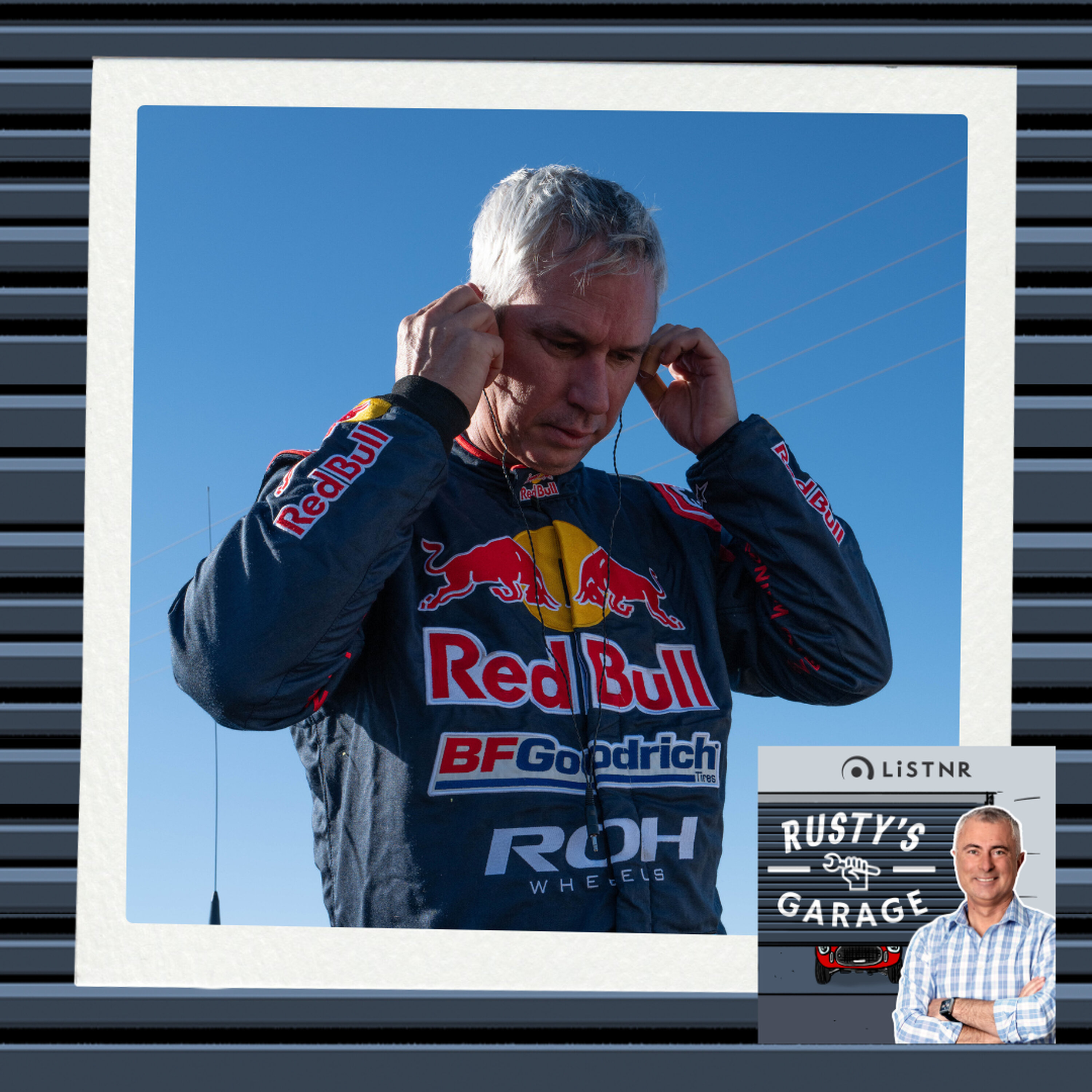
Paul Wheel shares his gripping journey through off-road racing, recounting the heartbreak of narrowly missing victory at the Baja 1000 alongside Toby Price. He reflects on the challenges faced by Team Australia, including a devastating fuel mishap and the loss of a trophy truck to fire. The conversation delves into his family's deep-rooted connection to motorsport, the evolution of PWR Performance, and the lessons learned from both triumphs and setbacks. With a mix of humor and sincerity, Paul provides insights into the grit required to compete at the highest levels of racing.
Weely joins the pod for a Feature Ep as he and Toby Price try to process losing the famed Baja 1000 in Mexico in recent weeks almost within sight of the finish!
A tear away on two-wheels as a youngster and how he came to an ‘arrangement’ with the Police. Riding with Jeremy McGrath and how leaving school at a young age didn’t hold him back. Plus the family love of Off Road racing and the determination his Dad Kees has shown fighting back from a recent stroke. And keep an ear out for Paul’s Dakar plan….a bud you may not have heard about until now. The Weel’s aren’t often in the media spotlight but it’s quite the story and Paul’s keen to share more of it. Enjoy this rare convo with the racer turned businessman at the cutting edge of competition cooling. Head to Rusty's Facebook, Twitter or Instagram and give us your feedback and let us know who you want to hear from on Rusty's Garage
""a stunning latest generation off‑road trophy truck that he'll compete in in 2026.""
An off‑road trophy truck is a special kind of race car built to drive over rough desert terrain. It has big tires, strong body parts, and a suspension that can handle jumps and bumps.
An off‑road trophy truck is a high‑performance, purpose‑built vehicle designed for extreme desert racing events such as the Baja 1000 and Dakar Rally. They feature large, low‑profile tires, a reinforced chassis, and powerful off‑road capable suspensions.
""I was there taking in the bucket list event with the team from BF Goodrich.""
BF Goodrich makes tires that are used on race trucks and cars, especially for tough off‑road events. They’re known for strong, durable tires.
BF Goodrich is a tire manufacturer known for producing high‑performance off‑road and racing tires. Their products are commonly used in desert races like the Baja 1000.
"a privateer, co-driving for one of the gun teams during that golden era for the sport, establishing their own two-car holding team with some star drivers of the day"
A privateer is a racer or team that runs on their own money and support, not backed by a car company.
In motorsport, a privateer is an individual or team that competes without direct factory support, relying on their own resources and sponsorships.
"a privateer, co-driving for one of the gun teams during that golden era for the sport, establishing their own two-car holding team with some star drivers of the day"
Co-driving means two drivers take turns driving the same car during a long race, so they can rest and keep going.
Co-driving refers to the role of a second driver who shares driving duties in endurance races, often switching during pit stops.
"a privateer, co-driving for one of the gun teams during that golden era for the sport, establishing their own two-car holding team with some star drivers of the day"
Gun teams are racing groups that have a set lineup of drivers and staff, working together to compete in races.
Gun teams are organized racing groups that compete in events like the Australian Touring Car Championship, often with a structured hierarchy of drivers and support staff.
"[257.0s] And he's remarkable of how he can drive an off‑road car so precisely, and I think that comes back from the motorcycle background,
[269.0s] and especially with the Dakar and Fink and his motorcrossed background."
The Dakar Rally is a famous off‑road race that goes through tough terrain like deserts and mountains. It tests how well drivers can handle rough roads and long distances.
The Dakar Rally is a long-distance off‑road endurance race that began in 1978, originally running from Paris to Dakar. It is known for its extreme terrain and high level of challenge for both drivers and vehicles.
"So with these fuel systems, it's not like a supercar fuel system where it's gravity fed and..."
Think of it as the car’s plumbing for fuel—where the gas is stored and sent to the engine.
A fuel system is the collection of components that store, deliver, and manage gasoline or diesel to an engine. It includes fuel tanks, pumps, filters, and lines.
"So with these fuel systems, it's not like a supercar fuel system where it's gravity fed and..."
Instead of a pump, the fuel just flows down because of gravity—like pouring water from a bottle.
A gravity-fed fuel system uses the force of gravity to move fuel from the tank to the engine, without a pump. It’s common in older or very lightweight cars.
"And he was actually supposed to go many years ago now and go and race Dakar in one of the support trucks for Fink Want who ran the VW team."
Volkswagen, or VW, is a German company that makes many kinds of cars and trucks. They’re known for reliable vehicles like the Golf.
Volkswagen is a German automobile manufacturer known for producing a wide range of vehicles, from compact cars like the Golf to larger SUVs and commercial trucks.
"And so the big support trucks at UC, you know, bouncing around with three or four people in them."
Support trucks are big vehicles that help the racing cars. They bring spare parts, fuel, and people who fix the cars if something breaks.
Support trucks are large vehicles that accompany race teams during events like the Dakar Rally. They carry spare parts, fuel, crew members, and equipment needed to keep the race cars running.
"[1132.0s] We'll put a deal together for the Ford Raptor."
The Ford Raptor is a special version of the F‑Series pickup truck that’s made for off‑road adventures. It has a big engine and stronger suspension so it can handle rough terrain better than a regular truck.
The Ford Raptor is a high‑performance off‑road pickup truck built by Ford Motor Company, known for its powerful engine and aggressive suspension tuning.
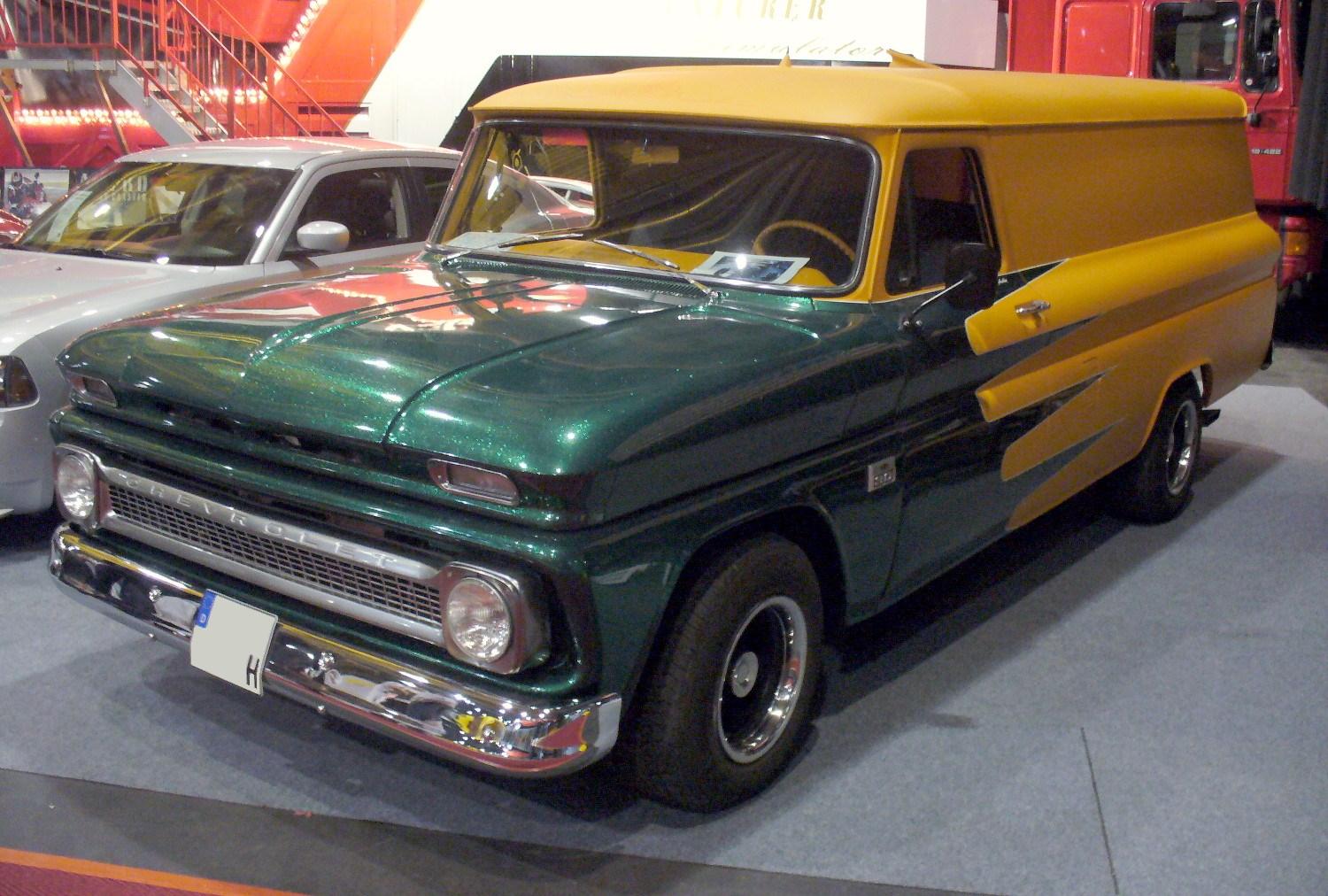
"And it was a 1927 Chevy U, which was the first police car in, some of you know, in Concurry or somewhere like that."
The Chevy U was a small police car made by Chevrolet in the 1920s. It was used to patrol cities because it was light and easy to drive.
The Chevy U was a compact police car produced by Chevrolet in the late 1920s. It featured a small, lightweight chassis and was used primarily for patrol duties in urban areas.
"[1404.0s] ... KJ radiators was, you know, a OE replacement, you know,"
OE replacement means buying a part that comes from the same company that made the original part for the car, so it should fit and work just like the old one.
OE replacement refers to parts that are manufactured by the original equipment manufacturer, matching the specifications of the parts originally installed in the vehicle.
"No, the chain was actually from 98, I crashed at the Melbourne Grand Prix. And I had a chain on and the seatbelts were over the chain when I hit the wall."
A chain is a series of linked metal pieces that help move the bike or car. It’s like a belt but stronger, and it needs to be kept tight and oiled so it doesn’t break.
The drive chain is the metal link that transmits power from the engine’s crankshaft to the rear wheel on motorcycles and many cars. It must be properly tensioned and lubricated to prevent failure during high‑speed operation.
"Anyway, we won't go there on that one, but, you know, we had a lot of fun racing bikes, and I was fortunate enough to go and race in America as well."
Motocross is a type of motorcycle racing that happens on rough, muddy tracks with big jumps. Riders have to be very good at controlling their bikes and staying balanced.
Motocross is off‑road motorcycle racing on dirt tracks with jumps and obstacles. It emphasizes rider skill, bike handling, and endurance.
"might have been in the Australian Safari
and something goes wrong, unfortunately, for the pair of you"
The Australian Safari is a kind of SUV that was made in Australia. It’s known for being able to drive on rough roads and having plenty of room inside.
The Holden Australian Safari is a mid-size SUV produced by the Australian automaker Holden from 1994 to 2005. It was popular in Australia and New Zealand for its off-road capability and spacious interior.
Formula One is the top level of car racing, with very fast cars that race on special tracks around the world.
Formula One (F1) is the highest class of single-seat, open-wheel racing sanctioned by the FIA. Races are held on circuits worldwide and feature cutting‑edge technology.
"[2174.0s] obviously go around and it sits in the Cypods [2177.0s] back in 2009, 2010 around that era."
Cypods are the side parts of a race car that help keep it cool and make it go faster by controlling how air moves around the car.
Cypods refers to the aerodynamic sidepods used in racing cars, particularly in Formula One. These pods house radiators and cooling ducts while shaping airflow around the vehicle to improve performance.
Renault is a car company from France that makes many different cars. They also help racing teams by giving them parts.
Renault is a French automobile manufacturer known for producing a wide range of vehicles, from compact cars to larger family models. The company has a long history in motorsport and has supplied parts for racing teams.
"we don't want you to supply Ferrari, McLaren and Mercedes"
Ferrari makes very fast, expensive cars that are famous for racing and looking cool.
Ferrari is an Italian luxury sports car manufacturer known for its high-performance racing and road cars.
Select text to request an explanation
A list-knife production. I'm automotive commentator and journalist Greg Rust and this is Rusty's garage. For this episode, I'm in the studio and my guest is beaming in from home before jetting out to the United States.
To kind of indulge in two forms of horsepower, one involves real horses with his daughter showing the kind of talent that could take her all the way to the Olympic Games, more on that a bit later. The other horsepower is from a stunning latest generation off-road trophy truck that he'll compete in in 2026.
The poor wheel and Dakar legend Toby Price were actually on course to win the legendary Baja 1000 in Mexico just a couple of weeks ago, but had the kind of retirement that's hard to put into words.
I was there taking in the bucket list event with the team from BF Goodrich. It went from the buzz of a couple of Aussies who kind of crept up on it, challenging some big-name competitors in this sport who've been entrenched in it for decades.
It looked like Team Australia were going to win, only to see it slip from their grasp cruelly. The pair of one shorter iterations of the Baja event, they've also endured the other end of the spectrum watching their million-dollar trophy truck burn to the ground when it caught fire miles from any help to extinguish it.
As you'll have heard from the chats that I've had with Toby Price in our library, Toby's not a quitter, neither is Paul.
This is the first time that we've had Paul on, though, to tell his story, and it's a good one. From two wheels to off-road and safari, as well as racing Supercar says,
a privateer, co-driving for one of the gun teams during that golden era for the sport, establishing their own two-car holding team with some star drivers of the day, including Jason Bright and Greg Murphy, and the frightening crash that ended that chapter.
He is lucky to be here to tell that story.
You'll also learn a bit more about the incredible success story of PWR performance, too, making world-class cooling solutions for the very highest levels of motorsport in all sorts of different forms, and from a facility on the Gold Coast, not Europe, how it all started, some of the big outfits that they have paired with and going all the way to a public listing on the Australian Stock Exchange.
And keep an ear out, too, for a Dakar plan that isn't widely known. Hope you enjoy getting to know Paul Wheel a little bit better.
Hello, Paul Wheel, how are you?
Oh, good things, mate. Good to see you again.
The nice to see you again, too. I think last time we caught up, we were having tacos in Ensenada on what was, for me at least, a bucket list trip of a lifetime to see the Baha 1000, one of the kind of all-time great motorsport events, but it was a heart breaker for you, mate.
Wasn't it tell us in the aftermath of all of that, how you've debriefed it and dealt with it and so on?
Yeah, it was a bit of a tough one. It started off very good. I saw a couple of Aussies with going into a tunnel, but I told them that I'll go wave to them, but I didn't realize that the pre-running speed and the race car speed was a little bit different.
I didn't really, and the tunnel was very narrow, so I couldn't take my hand off the wheels to wave because I was too frightened. I was going to hit the tunnel.
It's like we distracted you, mate.
No, no, it was quite funny. So yeah, no, it started off very, very well. Our plan works very well. Toby qualified the car, so he had to start the car on the race.
And we've done our driver change about mile 80, which we plan to, and we kept with the top two. We caught back up.
I think at one point were eight seconds off the lead after doing the driver change. So, yeah, which is great. It's a such a long race.
And then we gave the car back to Toby. And Toby just does what Toby does, big right foot.
And he's remarkable of how he can drive an off-road car so precisely, and I think that comes back from the motorcycle background,
and especially with the Dakar and Fink and his motorcrossed background.
And yeah, unfortunately, we ran out of fuel 20 miles or 25 miles ago.
And Rusty, it was just a human error. On the back of the trucks is that you have an in and an out.
So you have your in and a breather out. And the guy who was stabbing the truck with the fuel actually stabbed it upside down.
So with these fuel systems, it's not like a supercar fuel system where it's gravity fed and, you know, it takes certain amount of seconds where, you know, you've got to have that will fill a tank in 40 seconds or whatever it may be.
We try to fill these tanks as quickly as we can. So they're pressurized. And the fuel blew out of the top hose.
So the guy thought that he had filled the tank. But what it was was the pressure, the air in the system blew the fuel up and out and bubbled out.
So we only got half a tank full. And then it was just a, you know, comedy of areas, really.
Yeah, I've cruised you didn't get the right numbers from the guy who was feeling and then miss a text and, you know,
have ended the day we ran out of fuel with 30 miles ago, letting the race.
You know, Bryce men's is had a issue. We were already past them. They had two bolts holding the front death in.
So we're already past them. They were an issue. And we had another fuel stop up our sleeve if we needed to there. But we didn't think we needed to.
So, yeah, we were 30 gallon short and, yeah, heartbreak happened watching it, mate, watching the vision that I've seen pop up where Toby's, you know,
out the window to fans on the side of the track there, you know, gasoline, a gasoline, you know, any kind of help that they could, they could get.
And you'd crept up on it the pair of you team Australia was in a great place to win, you know, the long iteration, the famous long iteration,
the Baja 1000 mate and to go so close and to miss it like that must have been gut wrenching.
Yeah, it was pretty gut wrenching real. It's, you know, now we can sort of see the funny side of it.
Obviously, there's been a lot of stuff on social media. We've, we've asked Tony, you know, a drum of BP ratio behind the car.
So, you can see the funny side of it now, you know, obviously the first couple weeks of we didn't see any funny side of it.
It was, you know, one of those things and at the end of the day, it was a human error.
We all make mistakes in life and any motorsport that happens or, as we know, as we've seen, you know, you've been, you've been around
commentating motorsport for a long time and you see stuff that, you know, that people would do and you just go, you know, can't believe someone done that.
And it was just a human error. And I, you know, I've been around motorsport my whole life and, you know, we've, we've burnt race cars down to the ground,
we've come close to winning Bethos, you know, 1,000 and our, our great mate Greg Murphy and Marcus Ambrose, the very famous, you know, stash on the mountain there.
And all that sort of stuff. So, you know, we've been, you know, been through all this sort of stuff before.
And, you know, the biggest disappointment is that, you know, we're so close and all the human error.
And the plan just worked, like our plan worked, we had everything, you know, there.
And I think the biggest thing for us is that, you know, because we put so much into it, because we're such a small team, you know, we're, you know, like 4,000,
we have 13 people, you know, compared to I Bryce Mendez or the Millions, where they have, you know, 100 odd people.
You know, so I compared about where, for what we're doing coming from this side, the side of the world, we hop in the truck, we do 25 miles each at a shake down.
Toby goes out and usually qualifies, you know, in the top three, if not first.
And then, you know, we go and race these guys who are, you know, we're racing them in their backyard who have been doing it for generations.
You know, you look at Luke McMillian and that there's a book that McMillians have actually written about their generation of racing for history of their racing, which is, you know, about that thick of a book.
So, you know, you're racing against people that have been racing Baha for, you know, 20, 30 years.
And it's, you know, a generational thing where, you know, the kids are being down there and now, you know, they're racing and they're winning the races and all that sort of stuff.
So, you know, I think, yeah, you know, the disappointment is still always going to be there because there's one that got away, you know.
Our, basically, our third year in, you know, if we had across the finish line, it would have been, it would have been amazing because you go back to guys like Bryce Menzies, you know, until came 13 or 14 years to win the Baha 1000.
I'd look at it Paul, exactly as you've just described.
It's a relatively recent introduction for you guys compared to some of the names that you just rattled off in the incredible history of the event.
And the countryside is incredible, the logistical effort to get all the way around the different parts of the Baha Peninsula to service you guys, as you go there.
There's kind of nothing quite like it. On the one hand, you've had success and a win in a shorter iteration of that event.
And then you've had this, very sadly, this human error incidents now around refueling.
And the other tough one made is the trophy truck burning to the ground.
I'm a huge believer, Paul, that people come back stronger from this stuff.
You can't go through all these sorts of things. It's great. You've tasted a little bit of success there already.
But I feel like in that small window, you've already as team Australia made the right impression on some season people for both the highs and lows.
Does that make sense? Yeah, exactly. I think if you touch on the car burning down, that was our first year, that was our second race that we race there.
And I think a lot of them thought that these Aussies are going to piss off and go back home.
And you look at it as in the Australian way of the grit and everything like that.
Well, two days later, we had a workshop and we went and bought another car.
Toby tells me you bought it mid-air, mate.
Pretty much, pretty much mid-air.
I had to get the permission off of Emma and my wife, which there wasn't much permission.
She was, yeah, I got home and I was in tears.
And then she goes, oh, you must be so upset because you know, you could have burnt to death and because my race soup was burnt and all that sort of stuff.
And I said, oh, no, I'm upset because I haven't got a race car.
And she goes, well, go and buy it.
And so I ran, ran Andy McMillan straight back up and paid for it the next day.
And that was the thing was where they thought they were just going to piss off and go back home.
And that's not us.
We don't give up on things very easily.
You always get these challenges in life.
And the big thing for me is I have great support obviously from Emma and my wife.
And also my dad keys.
So it's great support from both people, but also from Toby and the group around us.
And you know, as you would have seen there, Russy is funny.
A lot of our guys that are there, we're sort of like people from Melbourne who moved to Queensland, they call Mexicans.
And you look at the makeup of our team.
We've probably got six or seven Australians who come to every race.
You know, we've got a couple of Americans and then we got three or four Mexicans.
So we're, you know, we're like a bit to the dog really.
And we're fighting against these teams as a spending, you know, three, four, you know,
I hear numbers of $7 million US a year to do four races.
And we're punching way above, you know, where we should be.
And, you know, and I believe everyone is, you know, always worried about us, you know, where we are.
And what we're doing and everywhere at every race, we're a great threat.
Yeah, that's great that you're in this psyche like that mate.
I want to come to the fact that you have fundamentally, I guess, in a family love kind of come full circle in off road.
It's a generational love of the sport.
Firstly, you brought up your dad.
And I know you've talked a little bit about this in a social post recently.
It's fantastic that he was with you at Baha.
How is he going? He's had a bit of a health challenge in the last year or two. Has any mate?
Oh, yeah, he has always made for you a little bit, a little bit choked up.
Talked about it.
That's okay.
Yeah, he had a stroke five months ago.
And, you know, for a guy who, you think that unstoppable,
and who basically works 24 hours a day, really.
And to see someone go through that is, you know, pretty hard.
And especially someone you, you're actually really, really love.
And, you know, he's quite remarkable in really because, you know, he, you know,
five months ago, he was in a hospital bed going to move.
And, yeah, he was in Baha after doing basically around the world trip with PWR.
So, you know, he went to England, Holland, Teenianapolis to see the show.
And then flew to Baha for the week.
So, he's quite a remarkable guy, quite inspirational of, you know, how he goes about things.
And he's probably, you know, one of the biggest driving forces behind, you know, what we've done in life.
So, it may come back to, I think, you know, early life for you is around warnable.
As I reflected on there, he sort of had a deep rooted love, your dad, of off-road racing basically has an argument I can recall.
Yeah.
Seeing him at places like Fink, it may have even been the Australian Safari.
If memory serves me well and so on.
Yeah, exactly. Australian Safari.
He won the Australian Safari a couple of times.
Yeah, grew up in warnable.
We had a wrecking yard in warnable.
And that's where the radiator business sort of basically started was from the wrecking yard.
But yeah, like he, he's racing inside of things was, yeah, it was off-road racing.
He tried Speedway at one stage.
I mean, I exports the dance or something like that.
He wasn't a very good Speedway racer, apparently.
So, I think he had more fights and broke more bones in the Speedway car than he ever did in anything else.
But yeah, one of the Australian Safari.
And he was actually supposed to go many years ago now and go and race Dakar in one of the support trucks for Fink Want who ran the VW team.
He runs a mini, factory mini team at the moment.
And so the big support trucks at UC, you know, bouncing around with three or four people in them.
He was supposed to go and do that.
So, but he got sick prior to Dakar.
So he couldn't go and do it.
But yeah, hopefully one day he'll be able to get over here to Dakar.
I was lucky enough to go this year and go and watch Toby.
Even though there wasn't the best finish to V race that he had.
But, you know, it's one of those events that is, I suppose, on everyone's bucket list of trying to do and that.
And we come very close to putting a deal together this year for V race, but we couldn't get it done.
So, yeah, it's definitely you and Toby to go and do it.
Well, for Toby, Toby will obviously Toby's doing the thing with Toyota.
With Toyota.
Yes, over there.
And then we'll very close with Amos.
We'll put a deal together for the Ford Raptor.
And so, anyway, we'll have another crack.
Yeah, not in, not in 26, but probably in 27 on trying to put a deal together.
Oh, no.
And hopefully we'll be able to do it.
Right now, watch this space.
They tell me your nickname when you're a kid was, was it Skeeter?
Is that right?
Yeah.
And you're a bit of a tear away on a P.W.
That your dad bought you at about age four.
Is this true?
It actually started two wheels for you, didn't it?
Yes, it did.
It was, it was going back to Rio.
And I think I was about three or four.
And anyway, so I used to race down up and down the service road next to the highway.
They're even waterable.
And the local placement would get on the, you know, come by and get on the microphone
and tell me to get off the road and all that sort of stuff.
So it was quite a, you know, who made him had a, I don't know, the local placement's name.
But me and him had a quite a lot of relationship.
Yeah, a little bit of a game going on there.
And so anyway, that was interesting.
But that's basically where, you know, the love of motorsport started with,
with motorcycle racing.
So, you know, we're from there and then when we ended up moving to Queensland,
I had a friend at school who used to race flight track.
So that's, that's how I got into two racing bikes.
Amazing.
So I mean, there's a bit of a memory here around Reedy Creek on the goal coast.
And also it was a, at two, we were four.
I like it may have been whatever for you.
I'm assuming at this phase of your life, whether you were pursuing a flat track motocross,
something along those lines.
That was clearly what Europe says, but I wasn't.
Oh, yeah, exactly.
And yeah, Reedy Creek.
And we go back to, you know, you go back to Reedy Creek days.
And one of our, well, one of your all good friends and one of my friends,
Lee Diffie, who, who now is, you know, the voice of NASCAR.
Okay.
Whatever else is a voice of over over in America for, for NBC.
And who's done very, very well was, it was funny because my first motocross race at Reedy Creek
was the first time that he was doing a announcing at Reedy Creek.
So, so anyway, that's my claim to fame or bar.
I know Lee Diffie and, and that's how our relationship based started.
Nice.
Can I come just back to your little moment with the police as you grow up a bit here?
I'm told keys may have brought you, was it an ex police car or something or other one of your first sets of wheels?
Just fill that story in for us.
I don't know if I've got that quite right.
Yeah, you actually do.
I was, I think I was about 17 or 18 and just got my license.
Anyway, I kept on going to him, oh, yep, only on his Chevy U.
Don't, I want a Chevy U, you know.
Anyway, it was, it was when, when we had KJ radio as a work rumb and then,
anyway, so he goes to me, hey, coming up the front, I've got your present.
And I'm like, okay, okay, you know, he goes, I've got that Chevy U for you.
And I'm like, oh yeah, run out the front.
And it was a 1927 Chevy U, which was the first police car in,
some of you know, in Concurry or somewhere like that.
And basically I just shook my head and walked back inside.
And I said, mate, you're a dickhead.
I said, I'm thinking like, you know, like a current model, Chevy U.
Anyway, we've still got it.
He's still got it.
He's still got it in his car collection.
So he thought it was very funny about one.
Okay.
So in moving forward in your life here with some two-wheel stuff that you've touched on
and now we're starting to get into radiator territory here and what ultimately
become a world leading cooling company.
Can I start with KJ?
Because I reckon I came to Grumb and there early in my time in supercars to do a yarn.
Yeah.
I was even at that stage just with KJ.
It was blown away by what you guys were doing.
For whatever reason, Paul, I walked into the story thinking this would be a little corner
radiator place kind of thing.
And even at that stage, you know, your dad was clearly sort of thinking big around this stuff, mate, wasn't he?
Yeah, pretty much so.
Yeah, as you said, you know, KJ radiators was, you know, a OE replacement, you know,
corner store of radiator shops where you had a radiator that went bad or whatever,
you'd take it to the radiator shop and they fix it.
And they fix it and way they go.
So at the time, KJ was doing copper and brass radiators for majority of the cars in Australia
had copper and brass radiators.
And then back into the mid to like 90s,
a lot of the manufacturers started to bring out, you know, I think it was like 98% of car manufacturers
would bring out aluminum radiators with plastic tanks.
And so to keep up with the technology because we're the only one of the only,
well, there's two companies in Australia that were aftermarket, you know, companies.
Not OE companies.
And so one of the first ones that we, myself and KJ went to America and went and bought
an aluminum furnace and to be able to actually bake, you know, aluminum radiators and bought
all the equipment and everything like that to be able to make.
So one of the first, you know, aftermarket companies in Australia to be able to do that,
especially for the radiator shops and all that sort of stuff where, you know,
everything had to either be bought by, you know, you know, from the OE manufacturer
from Ford or Holden or Toyota or whoever it may be.
So we're one of the first to actually put an aluminum furnace in.
So, you know, that then led into, you know, PWR sort of being born out of that,
which was, which was, you know, interest in time.
I can hear it in your voice there just around your knowledge,
your connection with it and so on.
Were you sort of hands on, maybe you were still at high school learning about this stuff
with your dad and maybe some of the staff around the workings of radiators and so on?
Did it start like that?
So I used to, you know, my father was a bit of a hard taskmaster really.
I keep, you know, he left school when he was 14, went into an apprenticeship as a mechanic
and soon as he finished that, he went and fibbed a little bit on his application.
He went to Voganville sort of goldmine and told him about he was a diesel mechanic
when he was just a normal car mechanic.
And so it's sort of, it's funny, I left school early.
Yeah, I was never into school whatsoever.
I left school at the end of year nine and my kids now, my girls now always hanging on me
but I left school at the end of year nine and so they say,
why can't I leave school at the end of year nine?
I said, well, because you need a better education than your father got.
But I was always, you know, after school, you know, typical, you know, after school sort of thing,
you'd be there at the factory, you'd, you know, be sweeping floors, all that sort of stuff.
And you'd learn, you know, the biggest thing was always learn from a bottom up, you know.
And so you'd learn how to make the radiators and make everything.
And that was, that was one of the biggest, you know, biggest, probably biggest benefits of,
with us for what we did in the future with PWR was that we actually knew exactly every part of, you know,
how from start to finish up, how to make a radiator and how to do it.
And it was probably one of the biggest benefits that we, that we had, especially leading into the future,
you know, further down the track when we were going to, you know, more potential stuff of, you know, formal one and,
and that type of thing.
So, you know, knowing, knowing how to, you know, do everything from the start of it.
And when we first put it, put in the, the furnace, the aluminium furnace and, you know,
how to operate everything, you know, we knew basically every part of that business, we knew how to operate.
Didn't make a difference, it was, you know, what sort of machine it was or, or, you know,
whatever it was, you know, you could teach someone how to operate it.
You know, you know, basically had done my apprenticeship of, I call it apprenticeship of life there,
from early age.
And, and I, and I think that's probably one of the reasons why I was so successful in what we did.
It served you well, mate, right the way through and you clearly have a thirst, a love for it.
Before we move into the advent of PWR and, and, and a bit of a focus on the four wheel chapter of your career,
can we wrap up the two wheel stuff?
Because it was some moments that stand out that were tough as well.
I think for memory, you showed me or spoke to me one time about a neck injury with the chain
and something like that from the motor cross-dice, is that right?
No, the chain was actually from 98, I crashed at the Melbourne Grand Prix.
And I had a chain on and the seatbelts were over the chain when I hit the wall.
Obviously, I went forward and the chain went back and, you know, cut into my neck and,
and I've actually still got scars around around here.
But, you know, the motor cross-dice, I broke both my wrists at the same time.
So when you're 15, having two broken wrists, as a young, young man is probably the wrong,
wrong time of having two broken wrists.
Anyway, we won't go there on that one, but, you know, we had a lot of fun racing bikes,
and I was fortunate enough to go and race in America as well.
We spent three months a year racing there.
I was fortunate enough to, one day I was actually wearing Marietta,
and which is Southern California.
And we found this supercross track out in the middle of nowhere.
And so, we were riding around this supercross track,
and the next minute this guy comes down on a Honda,
with a number one blue plate on the front with a yellow number one on there,
you know, with the camel supercross, you know, on the top of the plate.
And this guy thinks he's Jeremy McGrath,
and then he takes his helmet off, and it's Jeremy McGrath.
And he goes, oh, I need to slip down the road.
I don't even know if his supercross track was here.
I could either bike, so I thought I'd come down and have a look.
And got talking to him, where are you?
We're from Australia, you know, blah, blah, blah.
You're talking to him, talking away.
And got to go and ride a session with one of the most successful supercross riders of all time,
when I was like 14, you know, so it's just remarkable.
Some of the things that you get to see and you get to experience,
you know, is remarkable.
And, you know, that was from, you know, the motorcross days,
and we had good times, we had, you know, bad times, we had sad times,
over, especially over there in America,
we lost a guy called Joel Elliott, who rode for us,
who passed away, why over there, racing.
And so that wasn't a very good time.
He was a kid from Curry Curry, you know, Chad Reed area.
And he was probably at the time, you know, he was a guy before Chad,
who probably would have made it to where Chad made it,
which was very disappointing, who we supported.
So, you know, over the years, you know,
if you've been through a teenager over the years,
we've got to, you know, experience highs and lows
and see all that sort of stuff.
And I think nowadays, you know, you look at where these teenagers are,
you know, they are on the street causing trouble
and stuff like that at nighttime.
And no, I'm just, you know, thankful that we were able
to be in a position where, you know, we had this sport
that we loved and, you know, had parents that were very supportive
of being able to do that sport,
so that we weren't in those sort of situations.
Back in, you know, saying this as our same fact,
we're all now rusty, you know, we're, you know,
it's a fair bit different now.
Yeah, absolutely.
And it's great, as you say,
a very good distraction, that stuff.
Great for family and things like that family unity,
I think, motorsports.
So, you mean, you raise a really good point there.
Let's come back to the advance of PWR.
You can join the dots here for me if I don't quite get this right.
So, I think the memory of you and your dad,
your dad might have been navigating, you might have been driving,
might have been in the Australian Safari
and something goes wrong, unfortunately, for the pair of you
and you have basically about eight hours on the sidelines.
And during that period is kind of when you white-papered
the whole idea of what became PWR, didn't you?
Yeah, I started, I started a little bit before that,
you are correct about, we had eight hours on the sidelines track
on the safari, we decided that we weren't going to change a part
the night before we had changed it the next day,
which was silly mistake.
Anyway, that part broke.
Before that, when we put the aluminium furnace in,
I was doing a apprenticeship as a toolmaker
there at K&J Radiators.
And he said to me, he said,
oh, why don't you go to TAFE and learn how to weld aluminium?
And I said, boy, he goes, well, you know,
always race car guys here in Australia,
you know, they're getting radiators from America or Europe
or wherever.
And what did you start a business where we make radiators here
and we can fold up the tanks
and if you know how to weld aluminium,
you can weld the tanks on and start your own business.
So we basically started that way
and then there was one, yes, one safari where,
yeah, broke down on the sideline track
and we'll see there, basically on top of the roof of the car
and told him about, you know,
hey, I think that, yeah, we were already started,
you know, obviously we started supplying radiators
so, you know, with the VA supercars
and we supplied the whole field basically
and we've got that.
And he goes, I think we're good enough
to take on the rest of the world.
So that was, yeah, sort of 2008, 2009.
And we sort of, yeah, we went, you know,
he flew to North Carolina with a radiator and his arm.
Lee Diffie gave us an induction to Jack Roush
and so basically that was, you know,
our first, you know, an induction of exporting radios
overseas to, you know, race teams.
And so we've been, I think it was,
we've been like three or four months,
we took off the NASCAR field off the current supplier
and then we thought, well,
maybe we should have a crack at Formula One.
We had a trade show in England
and guy called Andy Burton at the time who worked for us
and his only just left the company.
So he worked for us very, very far while.
He basically tackled Pat Simmons
who at the time was the Renault head designer.
And Pat Simmons said, okay, well, I'll give you opportunity.
He said, I've had plenty of people tell me
if they can make, you know, these radios.
And all this was stuff.
So he gave us the drawings.
And the thing is, you know,
with an NASCAR radiator,
it's quite simple.
It's square.
A Formula One radiator isn't square
and it's shaped to, you know,
obviously go around and it sits in the Cypods
back in 2009, 2010 around that era.
They were, you know, quite simple
compared to what they are now.
The fins and the trooper inclined,
they're twisted, they're, you know,
a different shape all the way through.
They're pieces of art, Paul, aren't they?
They are all art pieces of art
and so we looked at this radiator
and we're like, how the hell are we going to make this?
And Australian whale of, you know,
knocked me up and we said,
yep, we're going to have, you know,
we're going to make it.
And we ended up making it.
It took us, it took us about probably two or three weeks
to be able to make about five guys
coming up with ideas of how to make it.
And the funny thing was,
was that at the time,
Renault supplied Red Bull for me one.
And so Renault didn't actually test the radiator
and so Red Bull actually tested the radiator
and we get a phone call from Red Bull
and they said, hey, we just tested the radiator.
I can't remember what circa it was
and they said it gave us point two of a second advantage
over what we currently use
because, you know,
the obviously blew the side pods and everything
like that, you know,
blew the flow through the side pods and everything.
They said, yeah, point two of a second advantage
and you're on the car for next year.
You can formula one.
Yeah.
Informer wise, massive.
And he said, oh, you're on the car for next year
and we said, well,
hang on one second.
Like, this thing took us like three months to make
or whatever it was.
And we're like,
one car of next year,
how many sets of radiators do you use?
And they go, I pretty much set every race
plus an oil cooler
and we're like, yeah, no, we can't do that.
And they go, well,
you really got no choice.
We want years to be on the car.
You've got to be on the car.
And so we said, all right, well, let's do it.
And we ended up doing it
and making all our own nights
and a lot of tired people
making radiators and oil coolers for Red Bull.
And that was the first year
that they had this new young guy come up
from Toyota Rossi,
which was Sebastian Betel.
And basically,
that was the first year
when he won the World Championship.
And we ended up doing a deal with Red Bull
which was they come to us in Melbourne.
And they said, hey,
we don't want you to supply
Ferrari, McLaren and Mercedes.
And we said, well,
you can't really tell us who to supply,
not to supply.
And they said, well,
we can if we give you a check.
And so they paid us for three years
not to supply those three teams.
Which was perfect.
We thought that was fantastic.
But you know, they said,
you can supply every hour,
whoever else there is,
you can supply,
but just not those three teams.
And so that was sort of our first
frame into Formula One.
You know, the technology
that we have now compared to
what we had, you know, back in 2008-19
and it is amazing how advanced
it is.
I still get blown away every time.
You know, I'm not involved day-to-day
into the business anymore.
It's still obviously very involved anyway.
As Kees is,
he was a CEO and now he's a chairman.
And, you know,
we are still keeping touch
with a lot of great people there.
We've had people who have worked for us
for, you know,
23 and 28 years
and stuff like that.
Like the average, I think the average person
of PWRs worked for us for over 10 years.
So it shows how much of a great company
it is that it got built up to be.
And, you know,
now I think they're almost up to about
450 people worldwide.
So it's remarkable
of something that you started,
that, you know,
I never thought that, you know,
who would buy radiators or fast, you know.
That was my thing to Kees, you know.
Why would I, you know,
go and learn how to
weld a nighttime?
Who would buy radiators or fast?
That was my biggest thing to him
and he reminds me that every now and then.
And I said,
yeah, you were right.
I hate to admit it,
like we always do.
But, you know, he was very visionary
fellow he was
and he was and still is.
That's the end of part one of my podcast
with off-roader,
businessman and former Supercar's race
of Paul Wheel,
despite just missing out on the win
in the famous Baja 1000 in recent weeks,
which would probably leave most
of us not wanting to talk to anyone
as you tried to process it,
Wheelie is eyes forward
and he's up for a chat today
as you can probably tell.
We are only at the halfway mark
of this combo.
There is a part two
all loaded up in our library
whenever you are ready
from Supercars
to riding with Darrell Beatty
in some iconic parts of Australia
during the pandemic.
The new machine that he and Toby
have on the way
for next year's off-road season
in the US and Mexico
plus the next generation wheel
taking aim
at the Olympic Games.
Request an explanation for:
2 cars
2 cars featured
Request an Explanation
Heard something you'd like explained? We'll add it to this episode.
Sign in to request explanations for terms you heard.
Want to learn more?
Browse our glossary for plain-English explanations of automotive terms, jargon, and concepts.
See something that's not quite right? Our annotations are AI-generated and can sometimes miss the mark.
Click the flag icon on any annotation to suggest a correction.