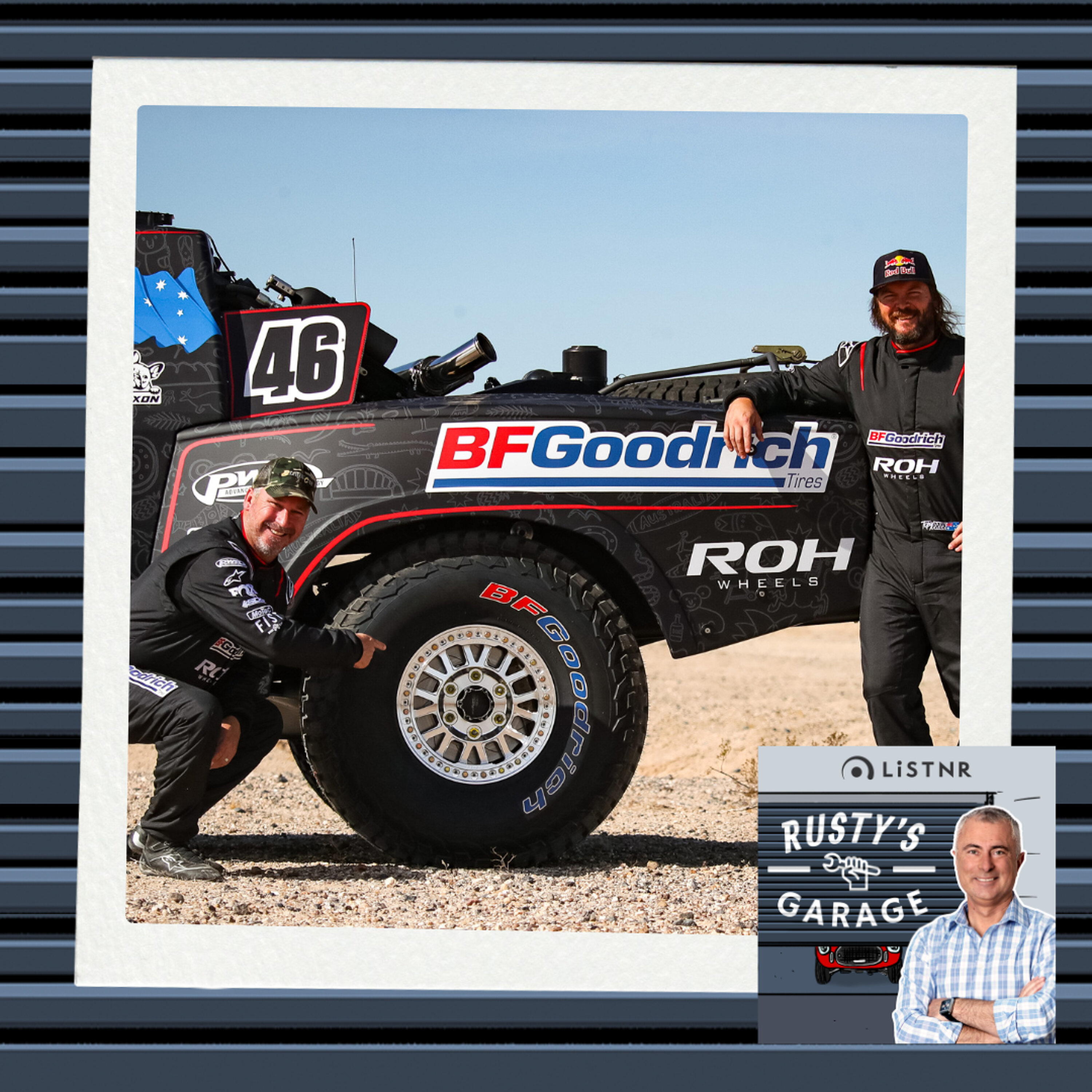
Paul Weel shares gripping stories from his racing career, including a harrowing crash at Bathurst and the growth of his company, PWR. He discusses the challenges of starting a business during the global financial crisis and the evolution of technology in motorsport, particularly with electric vehicles. Weel also reflects on his transition from supercars to stadium truck racing and his future plans, including a new truck for the Baja 1000. The episode highlights his resilience and passion for motorsport, as well as his family's support in pursuing their dreams.
Making ‘Play of the Day’ after a clash with Dick Johnson and running their own privateer Supercars team on the Gold Coast.
Co driving for the Stone Brothers and Marcos Ambrose and acquiring Team Brock.
The crash at Bathurst that ended his Supercars career and why he’s lucky to be alive!
The new gen Trophy Truck on the way for he and Toby Price amid the unfinished business they have at Baja.
Establishing PWR and the how the GFC very nearly ended it all.
Coming to the attention of F1 teams and the intros to North American Motorsport thanks to a good friend of the pod, Leigh Diffey.
Plus the next generation Weel taking aim at the Olympic Games after growing up with the family’s ‘no risk, no fun’ policy.
The idea for this ep came about after Rusty’s recent Baja 1000 bucket list adventure with the team from BFGoodrich tyres. Head to Rusty's Facebook, Twitter or Instagram and give us your feedback and let us know who you want to hear from on Rusty's Garage
"It's Rusty here all set for part two of my feature app with Paul Wheel, lots of good chat to come in this one on. Supercars, a brutal crash at Bathurst, stadium truck racing and a whole lot more."
Supercars are fancy, fast cars that race in special competitions. They’re usually very expensive and only a few people own them.
Supercars refer to high-performance, exotic sports cars that often compete in professional racing series such as the Supercars Championship. They are known for their powerful engines, advanced aerodynamics, and limited production numbers.
"It's Rusty here all set for part two of my feature app with Paul Wheel, lots of good chat to come in this one on. Supercars, a brutal crash at Bathurst, stadium truck racing and a whole lot more."
Bathurst is a popular racing track in Australia where cars race on a very twisty and steep course, famous for its big races.
Mount Panorama Circuit, commonly known as Bathurst, is a famous motor racing track in New South Wales, Australia, renowned for its challenging layout and the iconic Bathurst 1000 race.
"It's Rusty here all set for part two of my feature app with Paul Wheel, lots of good chat to come in this one on. Supercars, a brutal crash at Bathurst, stadium truck racing and a whole lot more."
Stadium truck racing is a type of race where big trucks drive around a small track, sometimes jumping over bumps and turning fast.
Stadium truck racing is a motorsport where modified trucks race on short, indoor tracks or small outdoor circuits, often featuring jumps and tight turns.
""Yeah, so it's funny, you know, I was actually at a dinner last night and, you know, people were talking about, you know, the electric vehicles and all that sort of stuff.""
Electric vehicles run on electricity stored in batteries, so they don’t use gasoline and produce fewer emissions.
Electric vehicles (EVs) are cars powered primarily by electric motors and rechargeable battery packs instead of internal combustion engines.
""And, you know, electric vehicles actually take more cooling than a naturally aspirated car does.""
A naturally aspirated car pulls air into its engine without extra equipment like a turbo, making it simpler but usually less powerful than turbocharged engines.
A naturally aspirated car uses atmospheric pressure to fill the engine’s cylinders, as opposed to forced induction methods like turbocharging or supercharging.
"And we do a lot of battery cooling, especially for Formula One. And so, you know, we basically, now we supply every Formula One team on the grid."
Formula One is a top-level car racing series where teams build very fast, special cars that compete on tracks worldwide.
Formula One (F1) is the highest class of single-seat, open-wheel racing sanctioned by the FIA. It features cutting‑edge technology and attracts teams from around the world.
"But it was basically a radiator without fins in it."
Usually radiators have many small metal fins to help cool things. This one uses a different design that doesn’t have those fins.
A radiator without fins is a heat‑exchange component that uses alternative geometries, like extruded tubes, to dissipate heat without traditional finned surfaces.
"So, and we could turn, there was a extruded tube that we could, that we could turn braze together into a header plate with a water comes through, well, to tank on it."
It’s a metal tube that was made by pushing melted metal through a shape‑shaping tool, giving it a special design for moving liquid.
An extruded tube is a metal pipe produced by forcing molten material through a die, creating complex cross‑sections for efficient fluid flow.
"So, okay. And right at the time because when Honda first started with Formula One, they used to go through a lot of battery coolers because they had a lot of battery problems with their technology on their sort of thing."
Battery coolers are like fans or chillers that keep the batteries in a car from getting too hot, which helps them work better.
A battery cooler is a device that removes heat from electric vehicle batteries to maintain optimal operating temperatures and prevent overheating.
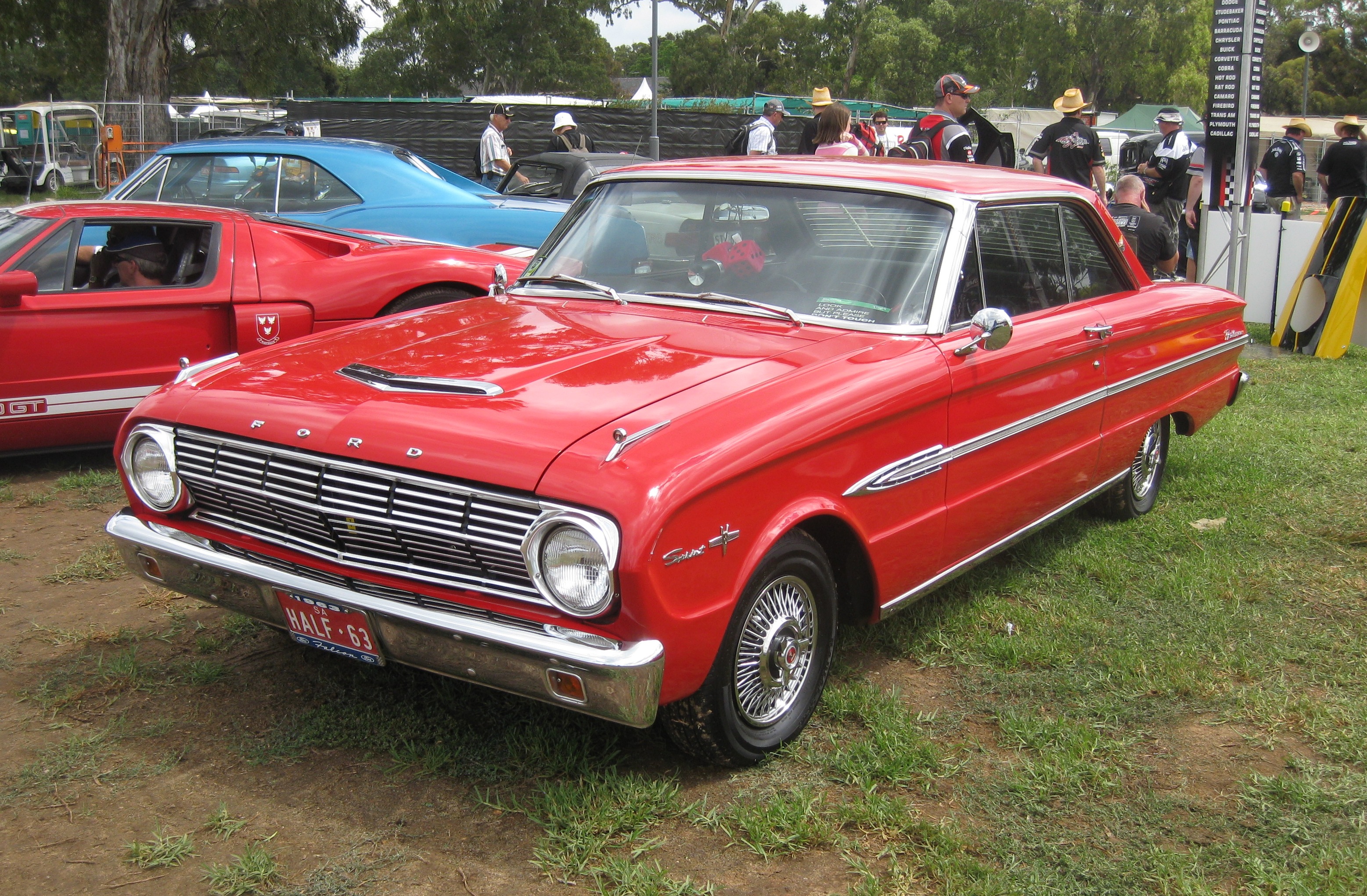
"I got to come to what was a home workshop back in the day. There was a Ford Falcon in there that ran white green and maybe a bit of yellow paint scheme."
The Ford Falcon is a type of car that was made in Australia and used in races. It’s like a big family car but faster.
The Ford Falcon is a mid-size sedan produced by the Australian automaker Ford Australia from 1960 to 2013. It was popular in racing and touring car competitions.
"And, um, basically, it was awesome because it was, it was motor cross with a roll cage around you."
Motor cross is a type of racing on dirt tracks where drivers race modified cars. It’s popular because it’s fun and doesn’t need a lot of fancy parts.
Motor cross is a form of off‑road racing that takes place on dirt or gravel tracks, often featuring modified street cars with added safety features like roll cages. It’s a grassroots motorsport that emphasizes driver skill over high-tech equipment.
"And, um, basically, it was awesome because it was, it was motor cross with a roll cage around you."
A roll cage is a metal structure inside a car that keeps people safe if the car flips over or crashes.
A roll cage is a framework of metal bars installed inside a vehicle to protect occupants in the event of a rollover or collision. It’s common in racing and off‑road vehicles.
"[839.1s] …we swapped, um, you know, 2003, we swapped a Holden and, um, it was actually the stage…"
Holden is a car brand from Australia that made many popular cars, especially for racing. Think of it as the Australian version of a big car company.
Holden is an Australian automobile manufacturer that produced a range of cars from the 1940s until its closure in 2020. It was known for models like the Commodore and the Monaro, which were popular in touring car racing.
"...it's got a bigger fuel cell. ... So we got it right now. The current truck has about 105 gallons of fuel to be able to go in there."
A fuel cell makes electricity by mixing hydrogen and oxygen, like a battery that keeps recharging itself. It’s used in some race cars to give them extra power without adding a lot of weight.
A fuel cell is an electrochemical device that generates electricity by combining hydrogen with oxygen, producing water as the only emission. In racing, it can provide a lightweight and high‑power energy source for long endurance events.
"...This hasn't around about 140 gallons. So we can do something like a sample EPA 250, which is a 250 mile race without having to do a tire or fuel stop."
The EPA 250 is a long race that goes for 250 miles. Cars have to finish it without stopping to refuel, so they need to be very efficient and reliable.
The EPA 250 is a 250‑mile endurance race organized by the Environmental Protection Agency, testing vehicles’ fuel efficiency and durability over a long distance without refueling stops.
"...who builds, you know, trophy trucks, Mason of the best, best in the business."
A trophy truck is a big, powerful off‑road race car that can go over rough dirt and sand. It’s built to be very tough and fast for long desert races.
A trophy truck is a high‑performance off‑road racing vehicle built for extreme endurance events like the Baja 1000. They feature large suspension travel, powerful V8 engines, and specialized tires for rough terrain.
"I'm told you were reaching for a brake pedal that wasn't often there on your side of the car."
The brake pedal is the foot control you press to slow down or stop a car. It’s usually on the left side for right‑hand drive cars.
The brake pedal is the foot lever that, when depressed, activates the car’s braking system to slow or stop the vehicle.
Select text to request an explanation
Starting a business can be overwhelming. You're juggling multiple roles, designer, marketer, logistics manager, all while bringing your vision to life. But for millions of businesses, Shopify is the ultimate partner. Shopify is the commerce platform behind millions of businesses around the world, and 10% of all e-commerce in the US, from household names like Mattel and Jim Shark to brands just getting started. Built a stunning online store with Shopify's ready-to-use templates. Boost content with AI-powered product descriptions.
Page headlines and enhanced photography. Marketing is easy with built-in tools for email and social media campaigns. Plus, Shopify simplifies everything from inventory to shipping and returns. If you're ready to sell, you're ready for Shopify. Turn your big business idea into,
with Shopify on your side. Sign up for your $1 per month trial today at Shopify.com-try. Go to Shopify.com-try.
A automotive commentator and journalist Greg Rustin, this is Rusty's Garage.
It's Rusty here all set for part two of my feature app with Paul Wheel, lots of good chat to come in this one on. Supercars, a brutal crash at Bathurst, stadium truck racing and a whole lot more.
If you've somehow arrived here and not given part one, listen, jump back to the library and check it out first. The post-event debrief after a soul-destroying finish to the Baja 1000 recently when he and Toby Price were on course to win the off-road classic.
To an emotional moment on his dad's keys as he rebounds from a health scare and starting out the competitive racing journey on two wheels plus a little known plan in the coming years to take on Dakar.
Let's get back to the convo now.
You take quite an interest in the numbers side. I know you're quite clever in that regard.
What it has become is a great Australian business success story to think that we are supplying to Formula One and to all these other, not just NASCAR that you've talked about either in the intros that Lee did and the work that he did with you in those early days and so on.
I mean, the supply that you do to so many different forms of motorsport and that it is a cutting edge, very tech savvy, always evolving product that's been built with aerodynamics in mind and all sorts of things like that.
The company has had the likes of Roland Dane in a significant position for a time there on the board and so on.
And you look Paul at its net result now, but when a company goes through big growth like that, it invariably has heard also along the way you've talked about trying to figure a production line to cope with the demands of Formula One and how many they needed and so on for these almost bespoke things.
And in the midst of this growth comes along a thing called the GFC, the global financial crisis. How did that impact you guys?
Yeah, at the time, the impact is a fair bit because we were building a factory up at Yellar and the bank at the time we've banged with like 20 years since we moved to Queensland and we had the same bank manager and he actually got moved on.
And so at the time he was going, yep, he's more money, he's more money, we need more money to do this or we need more money to do that.
And we're building this factory so that we could take on the rest of the world, basically that was the reason why.
And anyway, so we had this new banker come in who was from credit and you always got to go up for guys from credit because they're the box tickers and the banks, I say.
And basically goes, I know you're over your limit, you've got to give us, I think some of you are in the region of five or six million dollars back or else we're going to foreclose on you.
And they're going to foreclose on you?
Yeah, foreclose on us and basically if we couldn't pay the money back, we're going to basically bankrupt us.
And so which would a room, the room of the business.
So keys and I quickly went and put our houses on the markets.
Emma was pregnant. She was eight months pregnant.
We, we've Abbey and so yeah, we decided, you know, we pulled the, you know, both places at both our houses on the markets and all that sort of stuff.
And so they both sold very quickly, but it was, it was a timing that was, was amazing was that we had, we still had the race team building in Melbourne that we remember super cars out of which is the old Gibson motorsport building, which is, which was now, you know,
unfortunately, you know, with Gary passing away, Gary Rogers, Roger, Gary Rogers bought both sides of the building when we ended up selling them.
And so, yeah, so we had a, we had a loan through the CBA, Commonwealth Bank.
And the guy in Queensland rang this out of a blue and said, hey, your loans up for renewal. Do you want to renew it?
And is there anything else I can actually do for you guys.
And so he come down and he was into manufacturing and, you know, we, we showed him around, you know, and told him a whole story and what our, what our plan was and what, what, what we thought from the future and where we could go and everything like that.
And he said, yep, no problem, I'll back years. And so we just found the right person, the right time.
It was more luck than anything, but, you know, we already sold everything that we had to keep the company afloat.
And, and everything over and, you know, I've ended the end of the day. It worked out very well for us.
Sure did. It evolved too. Paul, many talked about oil coolers there before and so on. And with all the battery tech that's around now as well, I would imagine the cooling leans into that space too.
Yeah, so it's funny, you know, I was actually at a dinner last night and, you know, people were talking about, you know, the electric vehicles and all that sort of stuff.
And, you know, electric vehicles actually take more cooling than a naturally aspirated car does.
So, you know, not many people realize that, so we're especially with the battery cooling.
And we do a lot of battery cooling, especially for Formula One. And so, you know, we basically, now we supply every Formula One team on the grid.
And yeah, I'm not quite sure exactly if it's every single thing or in their cars that we supply or not, but we do supply every Formula One team.
But we've done a lot of stuff with Honda when they come into the sport with Formula One. They designed this battery that they couldn't work out how to cool.
And so, we come up with a design that was, you know, very expensive, of course, to be able to be able to do.
But, you know, basically, it was a, well, I say it was expensive or it was expensive for what we sold it to and for.
But it was basically a radiator without fins in it.
So, and we could turn, there was a extruded tube that we could, that we could turn braze together into a header plate with a water comes through, well, to tank on it.
And then have another tank over the top. And we could turn the water around because it had four extrusion parts through the tube.
And so, we just put a little turn plate in the end of the tube and they would glue the battery and the, and the cool together.
So, it's sort of sat like that.
So, okay. And right at the time because when Honda first started with Formula One, they used to go through a lot of battery coolers because they had a lot of battery problems with their technology on their sort of thing.
So, so it was a grad of the time. But yeah, it's, it's interesting. We, we've knew the new technology of of, you know, you know, I call the hybrids and, and, you know, battery sort of, you know, cars, I mean, you got, you know, you go to different, you know, different countries.
You got trucks now. You got, you know, aerospace, stuff. There's a lot of, you know, pretty much everything around the world, you know, needs cooling.
So, you know, in that way.
Cool. This stuff all into links in some ways. I want to devil about your own kind of four wheel career for a moment.
It's sort of all right for a second pool if we can. I got to come to what was a home workshop back in the day. There was a Ford Falcon in there that ran white green and maybe a bit of yellow paint scheme.
You were training with Guy Andrews back in the day as well. You, you had a decent crack made in super cars, didn't you?
It was funny. It was, it was actually, I, I've done after I finished racing motor, motor cross and super cross.
I went and raced, um, stadium off road. Yes. And, um, so they were the cars that were from the Mickey Thompson series from America.
So when that series went faster, deeper strains went over and bought all these cars and, um, I can't remember the promoter wasn't Phil Christiansen.
He was a super cross promoter. There was another, yeah, yeah, promoter. And, um, and anyway.
So we went and started racing that was only 17. I don't even think I had my license or anything like that.
And, um, basically, it was awesome because it was, it was motor cross with a roll cage around you.
So, you know, didn't make a difference. What you hit, really, um, to a point, um, that, um, yeah.
So I, I started off racing that and it was, um, after the first race that we, we raced, I had a guy from Yokohama.
Um, guy called Alan Bradshaw, who, who was an off road guy for them and, and come up to us and said, hey, because we had no sponsors or anything.
Oh, we want to sponsor you and do this and do that. And at the end of that season, he said, yeah, I think you should, you guys should go and race super cars and, um, yeah, never race to go car, never raced on tarmac, anything like that.
And so we went and bought, um, Steve Aurey's Ford, um, um, super car. And, um, yeah, not knowing what we're doing or anything like that.
We knew a few people who've been in super cars, hired them. And, um, I think the first time I drove a super car was, um, down around the cul-de-sac at K&J radiators.
Um, and just to make sure that I could change the gears before we went to a lakeside for a, for a club day or whatever it was.
Um, so, you know, my learning curve was very, very steep. Um, you know, there was a, um, that was back in 97, 897 and then 98.
Um, it was my first year, um, racing, um, in the, um, in the super car series. Um, and I think, you know, there's a very famous moment, um, on TV of, uh, Dick,
Dick Johnson taking me out at, um, lakeside when he was lapping me and, um, you know, me waving him to go down the inside and took me out.
And, um, he was leading the race and I think it was the last race that he was actually leading before he retired. And, um, he, um, yeah, obviously took me out and John Bell beating.
And, um, anyways, that was, um, yeah, that was, uh, probably a famous moment back then.
I think it made play of the day on channel 10 if I seemed to recall my, so I got, yes, got replayed a little bit.
You had quite a chapter there with super cars and it probably, and you, you can fill in the blanks here for me.
It probably helped in parallel with the growth of ultimately what PWR has gone on to, to become in a performance sense and in a global sense.
Was it something that you wanted to do just purely from a competition sense as Paul Will, or you saw it as a business vehicle in the same breath?
Um, well, it started out as a competition thing. Um, really, um, mostly, you know, it was, it was one of those things of, you know, we've been around racing about whole life.
Um, and it was, you know, really the next step in, in motorsport. And it was a pinnacle of motorsport and still he's pinnacle of motorsport in Australia.
Um, and, you know, we ran as a privateer up until, um, 2003, uh, end of 2002, we swapped, um, you know, 2003, we swapped a Holden and, um, it was actually the stage of where, um, the story was that where TWR was had too many drivers.
So, you know, they had Mark Skathen, um, Jason Bryant and Todd Keller and Rick and Murth and, um, and everything about that.
And then also they had, still had Peter Brock in the background and Brocky was, you know, we all know, you know, the history of Peter and how great he was as a, as a driver and, and what he achieved.
And, um, and TWR was, you know, owned all those teams and it was back in the day of where you couldn't, you know, any own certain amount of teams.
And so, we had a couple of licenses and they needed a spot for Jason Bryant to go to, um, because there was too much of a clash there with, with Skathie.
Um, and, um, so, well, fortunate enough to be able to do a deal with him and, um, we ended up owning Team Brock.
Um, we were, and, and that, so, um, which we only ran the team Brock thing for a year, um, under, under as team Brock.
And so, was Jason Bryant myself.
And, um, and it was, it was a little bit weird because in 2002, I drove with Marcus Ambrose at the Bathurst 1000.
Um, and, um, and I know that stage already knew that we were, you know, we'll move into, to Holden.
And, um, so it was a little bit weird of, you know, driving, driving with one of the best forward teams that there was Stonebrothers and, um, and not driving my own car with my own team.
And, um, and then moving, basically moving, you know, straight away to, to Holden.
And we, you know, it was, uh, their super cars biggest thing was that, um, we weren't allowed to, uh, you know, cross data and, you know, all this sort of stuff and interlinked us.
And they put so many restrictions on us at the time.
Um, that made a very difficult for us to actually, you know, we weren't allowed a test.
We weren't allowed to do anything, you know, really at the time.
And I think the first year was, um, you know, I think, uh, Jason basically finished second in the championship.
And, um, and, and so that was, um, that was quite a good time of, um, you know, going to, to Holden.
And over the years, we, you know, we sort of stepped away from, from the HSV sort of things and, and sort of took our own route.
But we're fortunate enough to have, um, great drivers as in, you know, you know, got to work with Jason Bright.
Um, you know, your good mate, um, Greg Murphy.
No, if it was very, very good, very, very passionate as we know, um, you know, he, you know, I told a lots of bathists, very much.
But, um, you know, he spent about five minutes, I think, in one, I don't know what he was doing.
Um, but, uh, but, you know, those sort of guys, you know, Cameron McComber, Paul Dumbrell.
And, and, and I think, you know, the thing was, super cars helped us, um, as a company to be able to do.
You know, try different things, try new technology, try R&D, everything, or everything of that.
We've, we've the radiators and with all the coolers.
And, um, and I think it, you know, played a big part of, um, you know, especially in Australia, of getting our brand out there.
Um, you know, in front of people.
Um, so that definitely did play a big part.
You're career mate. I mean, you over a hundred starts a decade long in super cars, probably one of the moments.
And I know you've opened up about this in the last year or two that immediately comes to people's minds.
I think is O8 and that crash at Baffis, which you described.
I think there's something that you were pretty fortunate to survive.
May just share what unfolded that day and the way you dealt with it.
Yeah, it was, it was, uh, yeah, two, yeah.
I had, um, I was actually co-driving for, yeah, our own team.
We had, uh, Andrew Thompson, who was a young guy who, who was driving for us.
And, um, it was just, it was a practice session.
And, you know, I was, I was actually a little bit quicker than, than Andrew was.
And so we were tossing up weather to have me qualify for car or have him qualify for car.
And so I went out of the star of a session, just to see, see sort of, you know, um, what sort of, you know, lap time we could do and what the car had.
And made a, made a, you know, a mistake over the, over the top there.
Or, you know, with the, with the graces, um, there where we dropped down over the great and actually, you know, scraped wall.
And had too much steering angle on.
And, um, when I bounced off the wall, spun backwards and, um, spun across the track.
And, uh, and it was always, it was always in my back of my mind because we lost a great friend in 2006 with Mark Porter there.
You know, in a similar spot, who, who crashed and got hit by another car and it got killed.
And, um, it was always in my mind that, um, you know, if I was in that situation,
that I'd start the car and try to, you know, move it no matter what.
But, you know, you know, when, when that happens, you don't even think about that.
Um, and then so I sat there, you know, I was talking to the guys on the radio.
And then, um, Chris, Peter thought that he was going to be a world champion and, and set the world alive.
And, um, basically sent a punch me.
Um, you know, probably if you had it got me two inches to the right, further to the driver side door, it probably wouldn't be here.
Um, you know, I had, uh, yeah, you know, split my spleen in half, um, fractured my L1 to L5, um, punctured my lung, um, and everything like that.
And, you know, it's, uh, it was one of one of those things very, very fortunate.
Um, to be able to, I didn't walk away, I got, um, stretched away, but, um, very fortunate.
And, um, and, and it was funny because, well, funny now, I'll give back.
But it was funny because, you know, I don't remember, I remember going into the ambulance at the top of the hill.
And I don't remember actually, um, hoping out of the ambulance in the medical center.
So, I remember everything else except for that part.
And my wife usually, my good friend Tim May, he lives in Orange.
So my wife usually flies to Orange and, and that, and goes out for lunch on the, on the Friday, um, with his wife.
And, um, anyway, they had the TV on and, but I'll walk him, look, but it was on mute, no walking pass and, and everything like that.
And anyway, they're trying to get ready and, and his phone starts blowing up.
And, um, and they go, oh, he pulls out a bad, bad accident and all that sort of stuff.
And she goes, oh, well, he'll be right.
But I'll just take him to hospital or something.
I don't want to hear.
Or, you know, probably bring him to Orange or you'll be in hospital at Bathurst or whatever week, we're getting ready to go to lunch.
And, uh, anyway, Tim said, oh, I don't, oh, it might have been Darryl with Tim.
One of the two Darryl Beatty goes, uh, no, I think you need to get your, your ass here right now.
This is, um, pretty serious.
And, um, this is one of those times.
You know, when you're, you know, like every time at Bathurst, you get checked at every checkpoint for a pass.
And, anyway, they never got checked for a pass.
So whatsoever, just drive straight through and no passes, drive straight through.
And, um, and because of all, we're waiting for her.
So they could put me in the helicopter and fly me to Sydney.
And, um, and so anyway, so it was a little bit more serious than, um, yeah, going to Orange, um,
base hospital, just for a, just for a checkup.
Um, so they've, yeah, flew me to Sydney and, um, I'm strapped in.
Um, you know, I'm, I'm on the bottom of the, well, not on the bottom of the helicopter, but strapped in and sat, you know, on the floor of the helicopter.
And looking at the roof and she's going, oh, you should have a look at this view over the blue mountains.
This is beautiful.
She shut up.
I said, oh, I can see as a roof.
I can't even move my head.
And, uh, and then so they fly, fly me into Westmead.
And, um, anyway, she's there and she goes, oh, it goes to the pilots and the doctor who is with me, goes, oh, hang on.
Can we just take a selfie up on the roof of the helicopter?
And I'm like, oh, God, this is unbelievable.
And, um, so we get into the emergency and, um, and so they go over everything and check everything.
And this guy sticks his, um, his finger up in the bottom to see if I had, yeah, the, you know, there's obviously something up there that has a reflex.
That gives you a reflex to, you know, tell, tell something, you know.
And I said, well, well, mate, what are you doing there?
I said, we haven't even changed names.
It's not even the first day.
We haven't had a beer or anything.
Like, what are you doing?
Anyway, and so that was, um, that was interesting.
And, um, where Westmead hospital on on Friday night in Sydney is very interesting with the police and everything like that.
And, um, it was about three days in the physio coming to me and goes, hey, you've got to, you know, get up and start walking around and all that sort of stuff.
And I said, mate, I can't, I can't get up.
I go, you know, and, um, anyway, so he helps me up and I go, you know, you got to take a step and, you know, start screaming like a, like a, you know, baby.
And, um, and then he goes back to the, I was in my neuro and spinal board.
And he goes back to the doctor on, on call and they relook at the X-rays and they missed in emergency.
They missed all the fractures that I had in my back.
So, um, so yeah, it was, uh, it was quite, it was quite interesting one, that one.
Um, and, but, you know, quite fortunate.
You know, getting hit at, you know, probably 180 Ks, you know, close to 200 Ks.
And, uh, and, you know, we, you know, you look back at the photos and you look back at the photos of the car.
And the roll cage had split, um, behind the driver's seat and actually had started to come up, um, into the driver's seat and punch of the back of the driver's seat.
So, you know, we're quite fortunate because if that had gone through, probably would have come out through my chest somewhere.
And, you know, we would have been on a whole lot of different, uh, you know, there might have been a different story.
So, um, that sort of ended the, um, the, the, the V8 supercar career of, uh, you know, it was only driving part time there because, because I was working full time with PWR.
So, yeah, that's what the end of that.
The, the great thing is, though, mate, you've been able to get back behind the wheel, which I think is tremendous.
I mean, the doctors could very easily have just said to you, no, stop, no more.
You dabble, again, I think if I've got the timeline right here, again, in stadium trucks, there's a little bit of success in that, too, mate, isn't there?
Yeah, double again in the stadium truck stuff, uh, with the Robbie Gordon thing, um, and, and, and, um, so, yeah, double with that a little bit.
Um, I think you've probably played and made another play of the day again there in Darwin when I, um, went off the, um, went off a jump sideways and rolled six times and, um, I went back on those wheels and drove it back to the pits.
Um, just because I didn't want to get out and fall either because I was too dizzy.
Um, and, um, eyes were rolling around my head.
Um, and, so, um, so I drove it back to the pits, but, um, yeah, we won a couple of races there. We had some fun there.
Um, yeah, sort of got to know, um, sort of on new Toby, um, before that, I went, um, met Toby in 17, 2017, I think.
And, um, but yeah, it got to race again to Toby and Robbie Gordon and, you know, we do, we've, um, we've called Morris doing it.
And, and we had had some great fun doing that sort of stuff. Um, it wasn't very nice on the body. Um, I can give you the hot tip. It wasn't very nice on the body whatsoever.
Um, doing doing that. But, um, yeah, we won some races and we had some success there and, and, uh, had some fun. And, you know, it was a shame to see, um, that, uh, yeah.
That series then keep on going here and, you know, in Australia with the, with the supercar rounds because, yeah, I think some, add some rounds.
There was more people watching the starting trucks and then the supercars.
And, Doug, here we have the Lemo Imu in its natural habitat helping people customize their car insurance and save hundreds.
With Liberty Mutual. Fascinating. It's accompanied by his natural ally, Doug.
Uh, Lemo, is that guy with the binoculars watching us? Cut the camera. They see us only pay for what you need at Liberty Mutual.com.
Liberty Liberty Liberty Liberty Liberty Liberty Liberty.
Savings very underwritten by Liberty Mutual Insurance Company and affiliates excludes Massachusetts.
Come to Baja for us. So, we've talked about this year. Let's talk about next year you have a new truck coming.
The events of recent weeks with the refueling drama and going so damn close to winning the Baja 1000 has not in any way dampened or tempered your commitment.
The peer review to this. There's a new gen truck, I think, in the pipeline. What can you tell us about that truck technically?
What it will be like. And then secondly, when you get your hands on it so you can start the prep for next year.
Uh, yeah. So basically, what we, what we had done was we, there's only two, two new gen, gen two mason forward drives getting made.
And we're able to, for a guy called Jesse Jones who actually gave Toby his first star in a trophy truck in America.
Helped us out and he had one on, he had one ordered. And so we bought that off him.
We've had some holdups. Unfortunately, we, you know, mason has, we've been able to get the machining done and, and programming and everything about that.
It's a totally new designer truck, where we can change, you know, cambercaster. We've got a lot more flexibility of, of been able to change a lot of different stuff compared to the first generation truck.
Still forward drive. We can run a bigger, big engine in there, which we run a Toyota engine, which is made by Joe Gibbs.
So the NASCAR team made that engine. So we're, we're running, you know, around about, you know, 1150 horsepower.
So just a few ponies under the hood.
And, and that, so we're sort of being delayed until about Christmas time. So we're hoping to be able to start testing.
You know, if a start a start next year, it's got a bigger fuel cell.
So if you put up enough fuel in it, it should be able to finish your race.
But we've got a bigger fuel cell. So we got it right now. The current truck has about 105 gallons of fuel to be able to go in there.
This hasn't around about 140 gallons. So we can do something like a sample EPA 250, which is a 250 mile race without having to do a tire or fuel stop.
So it gives us a greater bandage. The thing that, you know, for me was the biggest, the thing was, you know, the development side of things and being involved with the manufacturer.
To actually develop some ink different and some ink knew was exciting.
You know, we don't know we were taking a gamble of, you know, we don't know how good this truck is going to be.
But if anyone out of anyone, you know, in America, who builds, you know, trophy trucks, Mason of the best, best in the business.
And, you know, I believe in those guys, they prep our race car for us as well.
So I believe that, you know, they're the best. And I think that, you know, they are going to be able to, you know, you know, pull some ink off straight out the box.
That's going to be very competitive. And we'll step up the game game even more.
You know, as, as we're seeing these races, you know, we, we've finished second twice this year at the 400 and 500.
We lost the 500 by 35 seconds, you know, say 500 miles, you know, and first and second, we covered by 35 seconds.
So it just shows how close the race is getting the game and the level is stepping up.
You know, there's a team called Concrete Motorsport, they've got four forward drives.
So, you know, so that they can pre-run in the forward drives and they're in, you know, they got, you know, two, one spare race car.
And, and, and they're racing a forward drive.
So it just shows how the, you know, competition level is just going up and up and up like in every sport, you know, it doesn't make a difference if it's super cars or if it's,
well, super cars probably would have been restricted now compared to, compared to what it used to be.
But, you know, you look at Formula One and everything of that, the, you know, level of technology is just always growing.
And, you know, it's coming into all, into all the road world, which is, is for me, is exciting.
They're an amazing piece of machinery more than a million bucks worth and super cool to watch from the side of the road.
I want a bouncer of few things to finish years and we'll go kind of quick fire here, Paul, with your answers.
Alright, so firstly, true or false?
When you call time on the super cars or ten top chapter of your career, you get a gig with Thomas Mazeera doing some driver training at Porsche's.
How was the white knuckle fever and all that? How long did you last?
I think I lasted about 12 months because it was very scary sitting in the passenger seat, especially with some of these special people who buy Porsche's.
It was a lot of fun, but it was a passenger seat definitely not my side.
I'm told you were reaching for a brake pedal that wasn't often there on your side of the car.
Let's come to your good mate, Timmy Lay.
He is a great supporter and as you're going through your recovery from a life threatening basically crash, he was your wheelchair man for a little bit.
Is he a terrible assistant in that regard?
He is a terrible assistant and especially while a terrible assistant, a terrible friend at the time.
Whatever button he could push on the bed to do whatever it'd done, what does this button do?
What does this button do? Push and then I had to go to the toilet and so obviously when you got your hospital gown on,
the little rear end is showing and pushing, he was trying to push the wheelchair and take photos of me half my ass and at the same time to be able to show everyone.
What a champion, what a champion. Did true or false, your wife hit a record amount of potholes on the way back to the goal cause from West Mead.
Yes, she did, she hit every single pothole on the way back from the goal coast and because we tried to, we said to him, can we fly helicopter back?
No, plane low, no, and I'm like, I've got a good drive and every pothole.
The Formula One connection with PWR has meant that you've had the opportunity along the way to meet some star started operators in that field.
I think is a true color science might have driven you in the boat at Monaco to the track one day he was your show for Fundamentally. Is this true?
Yes, Monaco in 2013.
Big massive fanboy moment and Emma's going like, who's this I'll do?
And I'm like, this color science is a two time world rally champion and color science junior was actually on the boat as well.
And it wasn't in Formula One yet and had massive fanboy, fanboy moment.
And one of the best best experiences I've ever actually had and it was with Red Bull was kindly enough to invite us over there back in 2013.
But yeah, he was he was a great show.
I love it. Lunch with Mark Weber and Sebastian Vettel, I think too, which is pretty special, mate.
Toby Price says, how expensive is it to take a piss at the borderline?
It is very expensive. It wasn't me who was taking the piss or someone in my truck, which was a marketing guy.
And I think it cost us about $300. I did tell the policeman to take him to jail first.
And that because they go, oh, you got to come with us. You got to go to jail.
The very corrupt over there. And I said to him, I said, mate, I can't control what this guy does out of my car.
And he's in your car. I said, well, he's outside of my car, we ain't not inside of my car, we ain't.
So I said, he's not my problem. I said, take him to jail. I don't care.
And he goes around to Maddie and goes, oh, your friend, your friend don't like you. He said, take you to jail.
And I cost us $300. So it's a very expensive piss.
To the finish, you get to with your crazy mates, enjoy a bit of two wheels again.
He's stopped doing them nowadays, but our BD ran some fantastic outback dirt bike tours across the Simpson desert
and all these wonderful places. And if memory serves you and Wheelie and others went to the very top mate.
You went to Cape York, is that right?
I went to Cape York and then I'm in through COVID, he couldn't get a lead rider.
So I went and done three tours with him up there in Cape York.
And I had the last tour we done, we had Troy Bayless and some of the guys from Jucati and been the lead rider.
So every day was a race with those guys. And especially with Troy and I was just like, my boys, I'm not fit enough.
Back then I was like, I'm not fit enough to do this every single day.
And it's my third week in a row, give me a break.
Great fun. Got to see stuff that you never would see going across riverbeds, carrying bikes.
Across because the water was so high, crocodile, all that sort of stuff, it was amazing.
Crazy.
To finish, the girls have a passion for a different kind of horse power. And you are about to go and join them, aren't you?
Yes, I am. My oldest order is a very good dress hard rider and very, very, very proud of her.
She was the youngest at 13 to be representing Australia at the International Dress Arch event as a official Australian team and done very well.
And so we're going to Florida. We'll be Emma, my wife and Abby already in Florida now.
And the youngest Miller and I actually leave tomorrow morning.
So we're in Florida up until April, which is great for two reasons, great for Abby to be able to follow a passion.
And hopefully, hopefully make it to the Olympics and make it as a professional sport, you know, as a professional.
And that's her goal, and which I think she will be able to do and achieve.
And on the second hand, the second thing I've been over there helps us, you know, with the rating side and R&D testing of this new car.
But, you know, the horses has been a passion of Emma's, you know, ever since she was a kid.
And I believe that at the end of the day, it doesn't make any difference if it's for recreational or fun or whatever professional wise.
You know, you should always follow your dream of what you want to do and what you're passionate about.
And that's one of our motto of what we do with our family is no risk, no fun.
And, you know, we definitely take all the risks in what we do, doesn't make any difference if it's in business or in sport, in motor sport horses and everything like that.
So, you know, it will be a very good learning experience for her for Abby.
And hopefully it's a Kickstarter for her to, you know, follow on to go higher places in the sport.
And her ultimate goal is to represent Australia.
And most of the competition to most of all the good riders are in Germany.
And you know, one of the goals is to be, you know, based as a professional out of Germany.
So, you know, if we can contribute and help her to be able to achieve that, you know, it will be a great goal.
Great stuff, mate.
Hey, nice to chat with you about that.
And nice to see that you're supporting her in her own endeavours.
Great to reflect a bit on your own career.
You talked about no risk before.
There's been some risks taken along the way in a business sense that have paid big dividends.
You've proven, mate, the kind of hands-on learning, even though you left school at year 9 has still served you immensely well.
And you've continued to play in the motor sport arena in an area that is deeply loved by your family.
Give your dad our best mate.
Tell him to keep powering.
Merry Christmas and thank you very much for coming on the pod today.
No problem, mate.
Thank you very much.
And saying to you, Rusty, and it was great to see you in Mexico
and have you experience what we get to do for four times a year of how mad that place is
and how passionate the people are down there.
And yeah, Merry Christmas to you and to your family.
And if thanks for having me, it has been a pleasure.
Thank you for having me there.
It opened my eyes immensely to that event.
And I've got a little bit of an understanding now of why you and Toby love it so much.
So to conclude, mate, you've gone ultra close with that 1,000.
Go and win it next year.
We wish you all the very best.
Yeah, mate.
That'll be the goal.
That's what we said on the, I think the Wednesday night when we done the interview,
that will go in this race and we come down close.
So definitely next year or next year one isn't going to get away from us.
So we'll be trying our best to win everything we can.
Request an explanation for:
1 cars
1 cars featured
Request an Explanation
Heard something you'd like explained? We'll add it to this episode.
Sign in to request explanations for terms you heard.
Want to learn more?
Browse our glossary for plain-English explanations of automotive terms, jargon, and concepts.
See something that's not quite right? Our annotations are AI-generated and can sometimes miss the mark.
Click the flag icon on any annotation to suggest a correction.