Peter Egan, a beloved automotive and motorcycle journalist, shares his journey from writing about cars and motorcycles to becoming a prominent figure in the automotive world. He discusses his early experiences, including his first published story about a motorcycle trip, and his transition to writing for major magazines like Road & Track and Cycle World. Egan recounts memorable adventures, including road trips in various classic cars, encounters with iconic figures like Enzo Ferrari, and the joy of restoring vehicles. His storytelling captures the essence of automotive culture and the connections forged through shared passions.
We're giving Alex and the guys the week off for the first time since restarting the BaT podcast in January 2024. This week, we serve you a reheated and much-better-sounding version of Alex's February 2024 interview with the one-and-only, the legendary, the beloved, Peter Egan—he of Side Glances in Road & Track, of countless harebrained-slash-inspirational road trips, of April Fools road tests, and of so much more. This is the man that so many of us at BaT and beyond like to think we've fashioned ourselves after; a modest and humble writer who, perhaps unknowingly, has played a formative role in our addictions to the great machinery of the world, the call of the open road, and the treasures to be found when these things are combined.
Peter sat down with Alex over a year ago in his erstwhile stomping grounds of coastal Orange County, California, to discuss his career and the cars, bikes, planes, people, and places it was formed around. They cover his entry into journalism via Cycle World; the power of an interesting car, or a Piper Cub, to make friends out of strangers in faraway lands; the social advantages of touring the country in someone else's Ferrari; a memorable hometown show with Chuck Berry and Billy Peek, caught on happenstance; getting a glimpse of the Old Man at Fiorano; the art of (somewhat) feigning ignorance; getting locked into the Morgan factory at Malvern; sharing the last Everest flight of the season with Neil Sedaka, and only Neil Sedaka; whether Egan's next project will be a 76-year-old British sports car or a 27-year-old Italian superbike; and how Barb has stuck with him come fire and come rain (yes, Barb really is that great).
Links for titles/listings discussed in this episode:
The Ex-Peter Egan 1967 Jaguar XKE Coupe that was auctioned in 2019 with 335 comments—including one from the man himself, which gathered quite possibly the most thumbs-up a single comment has ever received on BaT
"...we're getting a lot of emission controls and fuel injection systems that didn't work..."
Fuel injection systems are parts of a car that send fuel to the engine. They help the engine run better and use less gas compared to older systems.
Fuel injection systems are responsible for delivering fuel to the engine in a precise manner, replacing older carburetor systems. They help improve fuel efficiency and reduce emissions.
"...we're getting a lot of emission controls and fuel injection systems that didn't work..."
Emission controls are parts of cars that help reduce pollution. They were introduced to make cars cleaner and better for the environment.
Emission controls are systems and technologies designed to reduce the amount of harmful pollutants produced by vehicles. They became more prevalent in the late 20th century as regulations tightened to improve air quality.
"...I started out with a a bugeye sprite and raced in Asia production for three years and then I..."
The Bugeye Sprite is a small sports car from the 1950s with unique round headlights. It's known for being fun to drive and is often used in racing.
The Austin Healey Bugeye Sprite is a small, lightweight sports car produced in the 1950s, known for its distinctive 'bug-eye' headlights and fun driving experience. It became popular in racing and among enthusiasts for its agility and simplicity.
"...and then I switched to Formula 4. got a Lola 204. But um I loved racing..."
Formula 4 is a type of car racing for beginners. It helps new drivers learn the skills they need to move up to faster and more competitive racing.
Formula 4 is a category of single-seater auto racing that serves as an entry-level series for drivers aspiring to compete in higher levels of motorsport. It emphasizes driver skill and is often used as a stepping stone to more advanced racing series.
"...switched to Formula 4. got a Lola 204. But um I loved racing..."
The Lola 204 is a type of racing car used in Formula Ford races. It's designed to be light and fast, making it a good choice for new racers.
The Lola 204 is a racing car designed for Formula Ford, known for its lightweight construction and competitive performance in entry-level racing series. It was popular in the 1970s for drivers looking to advance their racing careers.
"I decided to try motorcycle racing because that had always been another interest of mine... I went racing with that."
The Honda 400F is a type of motorcycle that is known for being light and fast. It's popular among motorcycle fans for its good handling and dependability.
The Honda 400F is a classic motorcycle known for its lightweight design and sporty performance. It was part of Honda's CB series and is appreciated by enthusiasts for its handling and reliability.
"gave me was a road test on the new Corvette which was in 1983. It was a new 84 Corvette, I believe. But all of a sudden, I said, 'Wow.' You know, the Corvette had been going downhill for a number every year."
The Chevrolet Corvette is a well-known sports car that has been around for many years. The 1984 version had some important upgrades that made it more powerful.
The Chevrolet Corvette is a sports car that has been in production since 1953. The 1984 model marked a significant update with improvements in performance and design.
"Yeah. Yeah, it was a Crossfire. Yeah. I made a joke about that in the road test. You remember what the joke was? Yeah. Well, I said uh I said Chevrolet calls this the Crossfire ignition system. And I said to some of us, "That sounds like a malfunction.""
The Chrysler Crossfire is a sporty car made by Chrysler. It has a distinctive look and was built using parts from another car, which helped it perform well.
The Chrysler Crossfire is a sports car that was produced from 2003 to 2008. It was known for its unique styling and was based on the Mercedes-Benz SLK platform, which contributed to its performance and handling characteristics.
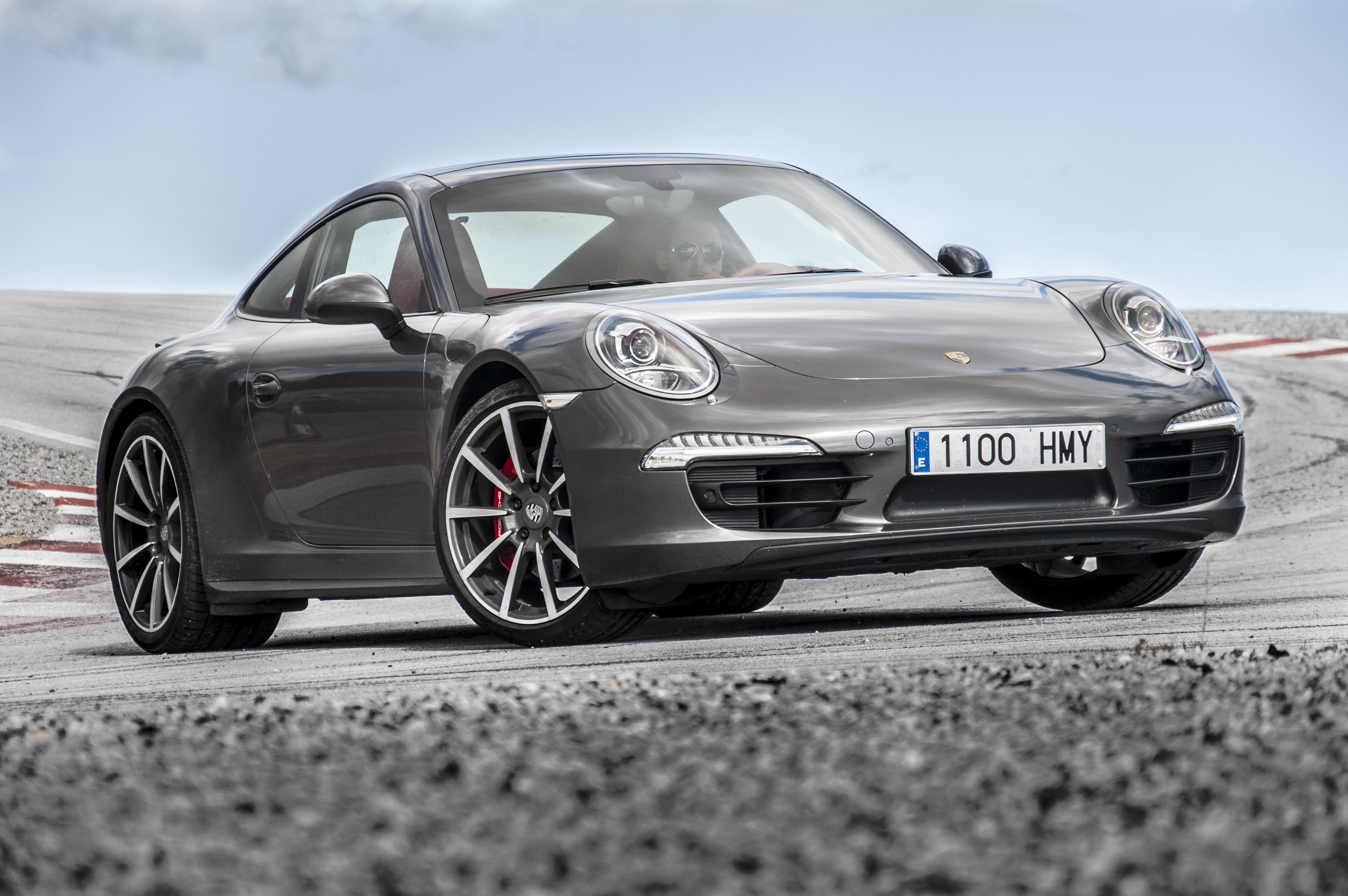
"Some of the cars I love, Peter, the 3.2 two Carrera"
The Porsche 3.2 Carrera is a sports car made by Porsche in the 1980s. It's famous for its powerful engine and sleek look, making it a favorite among car enthusiasts.
The Porsche 3.2 Carrera is a model from the 911 series produced in the 1980s. It features a 3.2-liter flat-six engine and is known for its performance and classic design.
"911 and the 308 Ferrari. I really like that era. Yeah, I did too."
The Ferrari 308 is a classic sports car that was popular in the late 1970s and 1980s. It's known for its stylish look and fast performance.
The Ferrari 308 is a mid-engine sports car produced from the 1970s to the 1980s, known for its sleek design and performance. It gained fame through its appearance in the television show 'Magnum, P.I.'
"they suddenly need somebody to go and test a 308 Quattro Valvallet. So, I got chosen. I went over and drov..."
The Audi Quattro is a sporty car that can drive on all four wheels, which helps it go fast and handle well, especially on tricky roads. It became famous in car racing and is known for its advanced technology.
The Audi Quattro is a groundbreaking all-wheel-drive sports car that debuted in the early 1980s, known for its performance in rally racing and its innovative technology. It played a significant role in establishing Audi as a leader in automotive engineering.
"...test the new Tessterosa and we had Paul Frer and Phil Hill both over there and we were at the..."
The Ferrari Testarossa is a famous sports car from the 1980s and 1990s. It has a unique look with side vents and is known for being very fast and powerful.
The Ferrari Testarossa is a mid-engine sports car produced by Ferrari from 1984 to 1996. It is known for its distinctive side strakes and powerful flat-12 engine, making it a symbol of 1980s automotive design and performance.
The BMW Isetta is a small car from the 1950s that looks very different from regular cars. It has a round shape and a door that opens from the front, making it easy to park in tight spaces.
The BMW Isetta is a microcar produced in the 1950s, known for its distinctive bubble shape and front-opening door. It was designed to be an economical vehicle for urban driving and became iconic for its unique design and compact size.
"...she had a 63 Cadillac that she wanted to get out of the garage. It hadn't run for several years. I bought it and fixed it up..."
The 1963 Cadillac is a luxury car from Cadillac, famous for its stylish design and comfort. Many people love classic Cadillacs for their unique look and history.
The 1963 Cadillac is part of the Cadillac brand, known for its luxury vehicles. This model is recognized for its classic design and is often sought after by collectors.
"...went through the water pump and hoses and you know all the usual things and got that working."
A water pump helps keep the engine cool by moving a special liquid called coolant around the engine. If it stops working, the engine can overheat.
The water pump is a crucial component in a vehicle's cooling system, responsible for circulating coolant throughout the engine to maintain optimal operating temperatures.
"...went through the water pump and hoses and you know all the usual things and got that working."
Hoses are rubber tubes in a car that carry liquids like coolant or oil to different parts of the engine. They help keep everything running smoothly.
Hoses in a vehicle are flexible tubes that transport fluids, such as coolant, oil, or fuel, between various components of the engine and other systems.
"...I bought one back. I had a 356 Porsche that I bought and I fixed the car up and..."
The Porsche 356 is an older sports car made by Porsche. It is famous for being fun to drive and has a classic design that many people love.
The Porsche 356 is a classic sports car produced by Porsche from 1948 to 1965. It is known for its lightweight design and excellent handling, making it a favorite among enthusiasts.
"...I drove a Model A Ford across the country once and I discovered that at least at that time,..."
The Ford Model A is a classic car that was made a long time ago. It was popular because it was cheap and worked well for many people.
The Ford Model A was a popular car produced by Ford Motor Company in the late 1920s and early 1930s. It was known for its affordability and reliability, making it a favorite among American families.
"and they all say, "I learn to drive on a Model A Ford, they always use the word on, as though it's stil..."
The Ford Model T is one of the first cars that many people could actually afford, made a long time ago from 1908 to 1927. It changed how cars were made and helped more people get around.
The Ford Model T, produced from 1908 to 1927, is often regarded as the first affordable automobile, revolutionizing transportation and manufacturing. Its significance lies in its mass production techniques, which made cars accessible to the general public.
"...our co-founder founder of our company Randy Nonberg. He has a 56 Chrysler 300 red..."
The Chrysler 300 is a luxury car that Chrysler made, and the 1956 version is especially known for its stylish design and strong performance. It's a classic car that many people admire today.
The Chrysler 300 is a full-size luxury car that was first introduced in 1955. The 1956 model is known for its powerful engine and distinctive styling, making it a classic American car.
"And of course it it's the last year that has real tail fins. They're fairly subdued, but it's still got these long fins."
Tail fins are the pointed extensions at the back of some cars, especially popular in the 1950s and 60s. They made cars look more stylish and modern at the time.
Tail fins are a design feature that extends upward from the rear of a vehicle, commonly associated with American cars from the late 1940s to the early 1960s. They were often used to give cars a more dynamic and futuristic appearance.
"...lly more reliable than GG. An MGTC is more like a gypsy M. Yeah, it it is it is more like a gypsy M. Yeah..."
The Maruti Suzuki Gypsy is a small SUV that people in India have loved for many years because it can handle rough roads and is easy to drive. It’s known for being tough and reliable.
The Maruti Suzuki Gypsy is a compact SUV that has been popular in India since the 1980s, known for its ruggedness and off-road capabilities. It is often discussed for its reliability and simplicity, making it a favorite among adventure enthusiasts.
"...d I'd love to ask you about that. That was your E type Jaguar. And I know you had a great adventure with"
The Jaguar F-Type Coupe is a fancy sports car that looks really cool and goes very fast. It’s known for being luxurious and is loved by people who enjoy driving high-performance cars.
The Jaguar F-Type Coupe is a modern sports car that combines luxury with high performance, known for its sleek design and powerful engine options. It is often discussed for its driving dynamics and status as a symbol of British automotive excellence.
"...I like the coupe better. Yeah. I I that's a hard decision for me with Eypes because the..."
A coupe is a type of car that usually has two doors and a sporty look. It's designed to be stylish rather than very practical for carrying lots of people or cargo.
A coupe is a car body style typically characterized by a fixed roof, two doors, and a sporty design. Coupes often prioritize style and performance over practicality.
"...that car I think was auctioned on Bring a Trailer in about 2019 or 2020. How did you find out that it was on our website for sale?"
Bring a Trailer is a website where people can buy and sell cars through auctions. It's popular for classic and unique cars, and many car lovers use it to find special vehicles.
Bring a Trailer is an online auction platform that specializes in classic and enthusiast cars. It allows sellers to list their vehicles and buyers to bid on them, often attracting a community of car enthusiasts.
"I had the cylinder head done in California by a business called Straight Six and they did a nice job on the cylinder head..."
The cylinder head is the part of the engine that sits on top of the main engine block. It contains important parts like the valves and spark plugs that help the engine run.
The cylinder head is a crucial component of an internal combustion engine, located on top of the engine block. It houses the combustion chambers, valves, and spark plugs, playing a vital role in the engine's performance and efficiency.
"I had the cylinder head done in California by a business called Straight Six and they did a nice job on the cylinder head..."
Straight Six is a company that works on car engines, especially those with six cylinders in a straight line. They help improve engine performance by fixing or upgrading parts like the cylinder head.
Straight Six is a business that specializes in engine work, particularly for vehicles with inline-six engines. They are known for their expertise in cylinder head work and other engine modifications.
"...I walked into my workshop and I had the engine was sitting over there on an engine stand and the chassis was up on jack stands..."
An engine stand is a tool that helps you hold an engine while you work on it. It makes it easier to fix or change parts of the engine without it being in the car.
An engine stand is a device used to securely hold an engine in place while it is being worked on. This allows for easier access to the engine for repairs or modifications.
"...the chassis was up on jack stands and I had taken the front subframe off..."
Jack stands are tools that hold a car up safely after you've lifted it with a jack. They keep the car from falling while you work on it.
Jack stands are safety devices used to support a vehicle after it has been lifted by a jack. They provide stability and prevent the vehicle from falling while work is being done underneath it.
"...I had taken the front subframe off and over in the other corner is a pile of suspension parts..."
A subframe is a part of a car that holds the suspension and sometimes the engine. It helps the car stay stable and handle better while driving.
A subframe is a structural component of a vehicle that supports the suspension and sometimes the engine. It helps to distribute loads and improve handling characteristics.
"...and over in the other corner is a pile of suspension parts from the front end of the car..."
Suspension parts are the pieces that help a car's wheels move up and down smoothly. They make the ride comfortable and help the car handle well on the road.
Suspension parts are components of a vehicle's suspension system, which connects the vehicle to its wheels and allows for smooth handling and ride comfort. This includes items like shocks, struts, and control arms.
"...view of the rear end of a Jaguar, it looks like a satellite shot of China. If every single person were a"
The Hyundai Satellite is a car that was made in the 1990s and isn’t very famous. It was designed to be affordable and was sold mainly in Asia.
The Hyundai Satellite is a lesser-known model that was produced in the 1990s, primarily aimed at the Asian markets. While not as widely recognized as other Hyundai models, it represents the brand's efforts to expand its lineup during that period.
"it yet. I The last one I did was a Morgan Plus4. I remember reading about I remember reading abou..."
The Morgan Plus 4 is a classic British sports car that looks old-fashioned and is made by hand. People who love cars enjoy it because it’s light and fun to drive.
The Morgan Plus 4 is a classic British sports car that has been in production since the 1950s, known for its handcrafted design and vintage charm. It appeals to enthusiasts who appreciate traditional craftsmanship and the driving experience of a lightweight roadster.
"...ery helpful and I'm sure friendly. You're a brand ambassador for them, Peter. Yeah, I guess"
The Hindustan Ambassador is an old car from India that many people recognize because it has been around since 1958. It’s known for being roomy and has a special place in Indian history.
The Hindustan Ambassador is a classic Indian car that has been in production since 1958, known for its spacious interior and distinctive design. It has served as a symbol of Indian automotive history and is often discussed for its cultural significance.
"...m, you've heard of Tom Carter who's written Yeah. Cobra in the bar and all. He he took he went with his c..."
The Shelby Cobra is a classic sports car that was made in the 1960s and is famous for being very fast and exciting to drive. It was created by a man named Carroll Shelby and is loved by car enthusiasts for its unique style and performance.
The Shelby Cobra is a high-performance sports car that was produced in the 1960s, known for its lightweight design and powerful V8 engine. It was developed by Carroll Shelby and has become a classic in the automotive world, often discussed for its racing pedigree and iconic status.
"some kind if I went. Maybe you need a Daytona Coupe. Well, exactly. True. Yeah. But Barb and I ..."
The Chrysler Daytona is a sporty car from the 1980s that looks fast and was designed to be fun to drive. It’s remembered for its cool shape and performance on the road.
The Chrysler Daytona is a sporty coupe that gained popularity in the 1980s, known for its aerodynamic design and performance capabilities. It is often discussed for its role in the American automotive landscape during that era, particularly in motorsports.
"the way through South America down to Tiara del Fuego and back with his with his wife. That's a heck of..."
The Renault Fuego is a stylish car from the 1980s that looks sporty and fun to drive. It’s not very common today, but car lovers appreciate its unique design.
The Renault Fuego is a sporty coupe produced in the 1980s, known for its distinctive styling and performance. It represents a unique chapter in Renault's history and is often discussed among enthusiasts for its design and driving experience.
"Catmandeue and see the Himalayas and maybe see Everest. And so Chris and I thought that'd be a great ide..."
The Ford Everest is a big SUV that can handle rough roads and is great for family trips or adventures. It’s built to be tough and is good for driving in different conditions.
The Ford Everest is a midsize SUV designed for both on-road comfort and off-road capability, often praised for its ruggedness and versatility. It is particularly popular in markets where adventure and outdoor activities are common.
"...econds to go through the cones in the air and the Mustang just blew them away.""
The Ford Mustang is a famous sports car from America that people love for its speed and cool looks. It’s been around since the 1960s and is often talked about because it represents fun driving and adventure.
The Ford Mustang is an iconic American muscle car known for its powerful performance and distinctive styling. First introduced in 1964, it has become a symbol of freedom and the open road, often celebrated for its speed and agility in various automotive discussions.
Select text to request an explanation
[Music]
The Bring a Trailer
podcast. Welcome back to the Bring a
Trailer podcast everybody. This is Alex
and I am thrilled to say that today we
are joined by Peter Egan, longtime
automotive and motorcycle journalist,
acclaimed or maybe even beloved writer
about car, automotive and motorcycle
life. We all love Peter's side glances
columns from Road and Track and of
course Peter has been on many amazing
automotive adventures as well. We're
going to talk about all of that today.
Peter, thank you so much for doing this.
Nice to be here. Good to be in
California again. We haven't been back
for about a year, even though the
weather is maybe not so it's raining a
little bit right now, but it'll go away.
Either you brought the bad weather or I
did, Peter. I always do. Was famous for
it when we came back here to Road and
Track or Cycle World. It would
inevitably rain the day I got back as we
were leaving for a photo shoot or
something. Well, maybe we could talk
about that a little bit. I was going to
ask you what came first, your love of
pros and writing or your love of
vehicles. Maybe you could tell our
listeners, I know a lot of our community
loves your work and probably knows quite
a bit about you, but maybe you could
talk a little bit about how you first
started writing about cars and
motorcycles. What was the first gig and
how did you secure that? Well, I never
put it together that I could write about
cars and motorcycles. They were my hobby
and passion and I was always trying to
write short stories and that kind of
thing. And after I sent in two novels
that got rejected and a number of
feature stories about different things
and short stories, a friend of mine
said, "Why don't you write about
something you're interested in, like
motorcycles or cars?" And I said, "Yeah,
that's a good idea." And I said, "But I
can't see getting published. You know,
being in Wisconsin, I don't know if any
of the big magazines would publish a
story that you just send in." And he
said, "Well, people have done that
before." He said, "The editor at Cycle
magazine got in there. You know, one of
the guys on the staff by sending a
feature story and they liked it and they
hired him." I said, "Never occurred to
me that could be done." And so I I
worked on a story about a trip that Barb
and I had made with the Norton Commando
and it broke down in Missoula, Montana.
We took the rest of the trip by bus and
train, but so it was uh it was a you
know, a little more interesting trip
than it would have been just buzzing out
west and back. But that sounds like a
Peter Egan classic. you and Barb on a on
an adventure right there for your very
first story. Yeah. Yeah. So, I wrote a
story about that and I sent it to one
motorcycle magazine that was a little
bit smaller and and printed more feature
stories, uh, travel stories, and they
rejected it. They said, "It reads okay,
but we need really spectacular pictures
to print it." And I didn't really, I
just had snapshots of the trip. And, uh,
so I was very depressed because I had
spent about six months honing this
story, you know, trying to get it as
good as I could. And uh a friend of mine
said, "Well, aren't there any other
magazines?" And I said, "Where's Cycle
and Cycle World?" But they're much
larger and they don't do very many
travel stories. And I said, "Well, what
kind of hurt to send it in?" Sitting in
a drawer, you know. So I sent it to
Cycle World. I said, "They occasionally
do this kind of thing." And were they
out here already? Yeah, they were in
Newport Beach. Yeah. So I sent it in and
they liked it. Alan Girdler sent me a
real nice note and said, "We love the
story. If you have anything else, send
it to us." And I did that for three more
years and then hit them up for a job
eventually. By the way, I wouldn't mind
working at a motorcycle magazine. Heck
no. Yeah. Uh, were you consciously
modeling yourself after any writers or
types of stories that you read before or
were you just really just trying to kind
of write about the excitement of being
out on an adventure on the road? Yeah, I
I don't think so. I It's hard to It's
hard to tell who you're influenced by. I
do a lot of reading, so you know, I was
probably reading a John Fowls book at
the time, so it sounded more like him.
what whatever his style was. But I I
think you tend to absorb a little bit of
everything you read and as long as you
steal from the best. Yeah, that's that's
that's all the great say. You have to
steal from the best. And did you were
you consciously thinking about writing
about stories in cars too or were you
just gleeful to have a motorcycle job
and that's what you were going to write
about? Well, I really in the late 70s
when I did this, it wasn't a very good
era for cars. I had worked eight years
as a foreign car mechanic and I really
didn't like where cars were going. We're
getting a lot of emission controls and
fuel injection systems that didn't work
very well and the cars were getting
slower and less interesting right around
the late '7s. And so I had shifted my
interest really. I was racing cars all
through the 70s. I started out with a a
bugeye sprite and raced in Asia
production for three years and then I
switched to Formula 4. got a Lola 204.
But um I loved racing, but I lost
interest in contemporary sports cars. I
like the older cars and I decided to try
motorcycle racing. So I built a a uh I
didn't really build it. It was a box
stock Honda 400F. I decided to try
motorcycle racing because that had
always been another interest of mine and
I've always liked motorcycles and had
owned a bunch of them. And so I I went
racing with that. So when I went to
Cycle World, I was really involved with
motorcycles and I'd been there for three
years when John Dinkl at Road and Track
came downstairs in the same building.
They were both owned by CBS magazines
and offered me a job. And I didn't know
what to say. I said, "I never thought of
working for a car magazine." So I went
and talked to Alan Girdler, who was the
editor at Cycle World. And I said,
"Funny thing happened. John Dickle just
offered me a job upstairs in Road and
Track." And he said, "Well, if I were
you, I'd take it." He said, "Because I'm
leaving in a couple months and we don't
know who the next editor is going to be
or what direction the magazine is going
to go." And he said, "You like car,
you've raced cars and bikes and you love
both of them, so why not open up that
window of writing?" So on his advice, I
took the job with Road and Track. He
went upstairs. Yeah. And of course, some
people said, "Oh, that'll be that's a
good move." move. And other people at
Cycle World said, I think John Rich, who
was a real hardcore motorcycle racer,
just shook his head and he said, "What
could you possibly say about cars other
than that they're useful for picking up
motorcycle parts on a rainy day?" Was
there a So, it sounds like there was
some of an upstairs downstairs rivalry
there in the uh not too much. I think a
few of the people at Road and Track had
ridden motorcycles and were interested.
Tony Hog and Henry Manny both who were
Tony Hog had been the editor at one
point that was still there doing guest
writing and so on. And Henry Manny III
was a big motorcycle buff. He had on Max
Norton that he had just bought. And so
they would come down, they like to talk
about motorcycles more than cars. So
they would come down to my office and
talk. And they noticed I had pictures of
my race cars on the wall and so on. And
so I think they told John Dinkl there's
a guy downstairs who does both bikes and
cars and I think that helps that I knew
those two. And you continued working for
for both. Isn't that right Peter? Yes.
Initially I didn't do anything. I went
to road and track and it was a full-time
thing. And then after I'd been there for
probably two years, David Edwards became
the next editor at Cycle World. He
became a good friend and he came up and
asked if I would be interested in
writing a monthly column. So then Arb
and I stayed in California for 10 years
and and we moved back to Wisconsin in
1990 and I asked both magazines if I
could possibly work from home and
continue both columns and do a feature
story for each magazine approximately
every month. So I worked out a contract
with both magazines. That's what we all
came to love. What was the uh first
assignment road and track? Do you
remember? Yeah. The first thing they
gave me was a road test on the new
Corvette which was in 1983. It was a new
84 Corvette, I believe. But all of a
sudden, I said, "Wow." You know, the
Corvette had been going downhill for a
number every year. It had less
horsepower and and and all of a sudden
it was a big increase in power. They had
a new engine, you know, new fuel system.
Oh, is that Crossfire or something?
Yeah. Yeah, it was a Crossfire. Yeah. I
made a joke about that in the road test.
You remember what the joke was? Yeah.
Well, I said uh I said Chevrolet calls
this the Crossfire ignition system. And
I said to some of us, "That sounds like
a malfunction." I said, "Stand back,
kid. That car is about to
crossfire." Yeah. Yeah. But anyway, it
was good timing because cars were really
getting better right then. All of a
sudden, Detroit was sort of taking a
hard swallow and saying, "Okay, instead
of complaining, we've got to make these
cars better and faster." And the
Europeans were too. They were saying,
"We got to sell cars in the American
market, so we have to figure out what
they want and make it work." Some of the
cars I love, Peter, the 3.2 two Carrera
911 and the 308 Ferrari. I really like
that era. Yeah, I did too. Is there
anything particularly memorable from
that era that you remember driving or
that you still think about today? Well,
it was a chance for me to drive a lot of
cars that I couldn't possibly afford.
Jonathan Thompson was usually sent to
Italy to do Ferrari tests. He was a real
expert and had written books on Ferrari
and he was not available for some reason
one month and they asked me if I could
they suddenly need somebody to go and
test a 308 Quattro Valvallet. So, I got
chosen. I went over and drove it and
wrote the road test. And when the next
one showed up, they said, "Well, you did
the last one. You know, you do the Ue."
So, pretty soon I was going to Italy
about once a year and driving a car,
usually a Ferrari. Now, you're the
Ferrari guy. Yeah. All of a sudden, I'm
the Even though I'm an English car buff,
all of a sudden, I'm the Ferrari guy.
And I had to learn a lot more. Some
parallels in reliability there, maybe.
Yeah. Yeah. So, but it was very
interest. I actually took an Italian
course uh at night just so I could learn
to speak a little bit. It was
embarrassing to get over there and
hardly be able to say hello or you know
how much does it cost. You and I were
talking before we started recording how
you one time saw Enzo Ferrari. Was that
in this era when you were over there
driving? That was just a little bit
later. We went over to test the new
Tessterosa and we had Paul Frer and Phil
Hill both over there and we were at the
Fiorano test track and Enzo Ferrari had
it's almost like a cottage. It was a
two-story old-fashioned house that was
only 100 yards from the track and that
was his private retreat and office. And
we were finished testing for the day and
we were getting ready to pack up and and
go back to the hotel and somebody said,
"Oh, look. It's the old man. And we
looked up the street and there was Enzo
coming out of the house and a a
chauffeer pulled up with a Fiat sedan
and Enzo got in the Fiat. And of course
he had his sunglasses on. He looked at
the sky for a minute and got in the car
and uh and drove away. It was something
like see royalty, right? Everyone Yeah,
that's the only time I've ever seen him.
It was he was I think he was when was
that? He died about a year later. Late
80s, mid to late 80s something. It was
late 80s. I think he died in ' 88 or 87
88 somewhere right in there. But it was
it was probably a year before he passed
away. And throughout that era, Peter,
you were also still doing uh what I
think of as the kind of famous Peter
Egan adventure. You're driving cars all
over the country. You're with your buddy
Chris B. You're building uh Westfield
Lotus 11 replicas here at the at the
Road and Track office. So, as you went
about planning what kind of work you
were doing, what was the split between,
"Hey, Peter, go drive this new car. or
we're going to do a road test and you
pick out an exciting adventure or a
journey that you want to do and write
about. It was a little of everything. I
was expected to do some kind of a story
for road and track approximately once a
month. Sometimes if it was a a big story
that involved a long trip, you know, I'd
skip a month, but I did a little of
everything. Some road tests where I knew
about the car. Uh we did a lot of
comparison tests. When I first came to
Rodent Track, John Lamb, who had been
there a long time, said, "If you ever
get assigned a comparison test, really
mess it up because they're really hard
to do and nobody wants to do them. And
if you do a bad enough job, they won't
ask you." Yeah. And I said, "I don't
think that's really a way to ingratiate
myself with the editor of Roden Trackers
to do a really bad job." H. So anyway,
when it turned out I could crank those
out in reasonable amount of time, I
started getting a lot of comparison
tests to write. So there's a lot of
detail work in that. You have to keep a
lot of notes and get everybody's
impressions and look at the the spec
sheets and so it's a lot of tabulating
things and and you're wrangling all the
other editors too a little bit, right?
Yeah. Yeah. So I I did a lot of that,
but I a lot of the travel stories I did
for both Cycle World and Road and Trek,
when I look back on them now, they seem
to be driven by two different things. It
was either someplace I really wanted to
go like uh you know through the
Mississippi Delta and it was finding the
right car motorcycle that fit the mood
of that trip. So I'd always wanted to
see I'm a blues fan. Was that the
Isetta? What did you take down? Oh yeah.
Well, we took the Isetta. We were
originally planning to take the Isetta
to Road Atlanta and I think there was
some which was a frequent destination
for you. Yeah, I went down there. I went
down there. I usually covered the
runoffs at Road Atlanta every year for
road and track. I did the race coverage.
So, we were planning to drive the Isetta
down there and then something came up.
We had to It wasn't quite ready. We had
to fix something that didn't work on the
car. And so, Chris said, "Well, we're
never going to make it to Road Atlanta
in time. Where else can we go?" And I
said, "Let's see what would be a good
drive from here. Let's go to Memphis."
Chris had never been there. And we
decided to drive down the Great River
Road and stay off Main Highways with an
Ietta. You don't want to get on the
interstate. They're only about 20
horsepower or something. Yeah, probably
less than that. They I think it would go
about 35 miles an hour, something like
that. Maybe a little faster. How did you
There's no room for baggage, right? Is
there not much. There's some room right
behind the two seats. Uh it's probably
about the same amount of room you get an
MG or something with stuff
luggage behind the seats, but we we got
everything in there. I had a camera bag
at my feet and a small, you know,
overnight bag to take some other stuff,
clothes and shaving gear along. So part
of it was finding a a trip that I'd
always wanted to do and the other part
was thinking about what kind of
motorcycle or car was appropriate. Like
one trip I I'd always wanted to go down
to the Mississippi Delta and drive
through it. And I just happened to come
upon a neighbor who had her mother had
died and she had a 63 Cadillac that she
wanted to get out of the garage. It
hadn't run for several years. I bought
it and fixed it up and went through the
water pump and hoses and you know all
the usual things and got that working.
It was a really actually quite a lovely
car. It was a big That's a little
different for you, Peter. You're not
usually Yeah. No, no, but it seemed like
a Cadillac was the right thing. I wanted
a I was also going to meet friends in
New Orleans who were going to the New
Orleans Jazz and Heritage Music
Festival. So I thought this this would
be the ideal car to drive through you
know blues land a mig Cadillac a coffee
colored Cadillac like Shuck Berries and
so I you know I took that car on that
trip. Do you miss any of these cars? You
know so many of these the MGTC or or a
lot of these these cars and these
adventures you went on. Are there any of
them that you think about often or
fondly and you wish you still had them
or had an opportunity to take on another
long road trip? Yeah, actually most of
them. I I always joke that if I if I won
the U Power Ball sweep stakes tomorrow,
I would probably just spend the rest of
my life tracking down all those old cars
and putting them in I'd build a great
big museum building, just put them in
there so I could, you know, go out with
a drink in my hand at night and walk and
look at the cars and because there was a
lot of uh there were a lot of nice cars
there, but when you are making a huge
amount of money, you sometimes you have
to move on to the next thing and you
want to try something else and it you
just can't have six cars sitting around.
Fair. So, uh, so I would usually sell
one to to get to try something new after
a couple years. Some of our listeners
are probably screaming, "Of course you
can have six. You could have 60." Oh,
yeah. I could easily do that if I have a
little more room. Have you ever
encountered any of the cars that have
any of those cars that you had history
with? Have you ever re-encountered any
of them? Have you ever come across one
of those again? Or has anybody ever
reached out who owned one down the line?
I bought one back. I had a 356 Porsche
that I bought and I fixed the car up and
I took it on a trip out to upstate New
York. I went to the East Coast first of
all and picked up my friend Mike Kachini
and then we we drove up to Woodstock,
New York and we found Big Pink, the
house that the band lived in and we
found the spot where Bob Dylan had his
motorcycle accident and Mason and we
went to the old Woodstock festival
grounds and saw where the stage had
been. And I always wanted to go there
and uh of course Woodstock took place
while I was in Vietnam. I was in the
army. So I thought it would be fun to go
there. And the theme of the story was I
was getting to Woodstock about 300 years
late, but I was I was finally getting
there with a 60s car. And so I sold that
car eventually to a friend. Was it a B
or a C? What what was it was a B. So I
sold that car to a friend in California.
And then after a couple of years he quit
driving. He was having some health
problems and asked if I wanted to buy it
back. So, I flew to California one time,
drove the car all the way back to
Wisconsin, and I had planned to do a
story on that trip. I had planned an
extensive trip with it, and I went with
a doctor friend who I thought he was all
set to go for a one week or 8 day trip.
And when we left San Francisco, where I
got the car back in Napa Valley,
actually, he said, "Oh, by the way, I
got to be home on Wednesday. I've got to
I've got surgery to do." And I said,
"Home on Wednesday? We'll have to drive
day and night." He said, 'Well, I got to
get home. I got to do surgery. I said,
'Well, there goes the car story. So, we
just we just enjoyed the trip instead of
taking notes and pictures and Well,
that's fun, but yeah, the way I I try to
model my trips after yours, the way uh
that you have always kind of meandered,
taken the the the road less traveled and
the way you write about small Americana
towns, right, and diners. That's the
best way to travel across the country.
As far as I'm concerned, it's a fun way
to see the country. The other thing
about it is if you have an odd or
interesting car, you meet a lot of
people who wouldn't you would never talk
to if you were just driving a modern
sedan, but they will follow you out of a
restaurant or come down across the
street to look at the car and then you
get talking to them and you find out
they are car buffs and they have a
collection of something and you got to
come back to our house and see this and
it's there's nothing like an interesting
car to make introductions with people in
a state where you don't live in in a
town where you've never been. on the
airplane on the way down. I was
rereading your story where you drove a
246 Ferrari through a terrible winter
storm and ran it off the road and got an
alignment halfway across the many of the
anecdotes you told in that story were
the gas station mechanics who uh warmed
up as soon as they knew it wasn't your
personal Ferrari. Talk about it. People
are I've discovered over the years
people admire Ferraris from a distance,
but they almost hesitate to come up and
talk to you. And as soon as they find
out it's not your car, every once in a
while somebody'd say, "Nice car." or
something like that, and I'd say, "Yeah,
I wish it were mine." "Oh, it's not
yours." And then they come over. Yeah.
Yeah. Well, how'd you get it? Well,
we're doing a magazine story. And then
they were even more interested. That
helps a lot. But I I drove a Model A
Ford across the country once and I
discovered that at least at that time,
this was 30 years ago, every town you go
into across the West and the Midwest,
all of the older people learn to drive
and they all say, "I learn to drive on a
Model A Ford, they always use the word
on, as though it's still a a wagon or
something." Yeah, but if you pull up in
a town of 2,000 people in Kansas for
lunch and eat at a restaurant, half the
people will come out on the street when
you leave to look at the car and talk
about Model A Fords or they want to sit
in it. So, you end up talking to a dozen
people who would just be anonymous if
you just stopped in there. And there's
something about a car like that that has
kind of a universal appeal. People don't
think you're a jerk in a Model A. our
co-founder founder of our company Randy
Nonberg. He has a 56 Creser 300 red and
that engenders the same kind of
excitement. You know what I mean? Even
if people don't care about cars, they're
excited to see a big 50s car with
driving around. You know what I mean?
Whereas if you're in a Ferrari or you're
a jerk like me who drives a new bright
colored Porsche, that's a little bit
less approachable. So yeah. Yeah, I know
what you mean. I I had good luck with
that 63 Cadillac. I bet going down to
the Delta and I had to drive it right
down through the middle of the French
Quarter in New Orleans to find our
hotel. And of course it it's the last
year that has real tail fins. They're
fairly subdued, but it's still got these
long fins. And when I was driving down
the street, people were almost
applauding. You know, I'd hear clapping
and say, "Great car for the, you know,
the music festival. Perfect." And I also
was on another trip. Uh, it was on a
motorcycle trip actually the first one I
made down there with by 400F. I went
looking for Chuck Barry's house in he's
just outside of St. Louis in Wville. He
lived where he would have been born. No,
he wasn't born. He was born in St.
Louis. I grew up in St. Louis, but when
he got successful, he bought a several
acres and built a nice house in a
compound near Wentzville, Missouri, west
of St. Louis. But I I went out there and
I had to ask some local people where
Chuck Barry lived. and I went out to his
house and uh there's a long driveway and
a gate and there's a stone monument
there that says Chuck Barry. So I
thought, well, I I don't want to ride my
motorcycle up his long driveway to this
house. There are several buildings. He's
got a studio there and and so on. And I
had heard that he had weekend festivals,
rock almost Woodstock like rock
festivals there. Locals or people would
come in? People from all over just he'd
have local bands come out and play. It
was a small, you know, like a small time
Woodstock thingers. So I thought, well,
I'm here on the weekend. Maybe I'll go
see if he's having one of those. So I
walked up the driveway and a very nice
blonde woman came out of the house
looking concerned. And I I later
realized watching the movie Hail Hale
Rock and Roll that is his secretary. But
she came out and said, "What are you
doing here?" And I said, "Well, I'm a
big Chuck Barry fan." and I heard that
he had festivals, little gatherings here
on the weekend and I was wondering if
he's doing anything this weekend. And
she said, "No, no, we stopped doing
that. They got out of hand." And so she
said, "But you're in luck. Chuck just
came back from a tour and he's playing
tonight at the Rainbow Club in St.
Louis." And so I found a motel near the
Rainbow Club and walked down there and
he started at 8 and played till about
3:00 in the morning. the huge local just
all local people, local following. It
was just a small bar. I got there early
and sat at the bar. I was trying to get
a good spot to see the stage and I sat
next to a guy who was a steel worker
from St. Louis. And he said, "Well, you
came on the right night." And I said,
"Why is that?" And he said, "Well, Billy
Peak is here and he's he's almost as
good as Chuck." And I said, "Who's Billy
Peak?" and he said he's Rod Stewart's
lead guitar player and he just came off
touring and he was fantastic. He came
out and he was he really was almost as
good as Chuck and they loved playing
together. So they they played everything
blues and I've seen Chuck Barry a number
of times and he usually does a fairly
quick show and and hits the road and
this one just went on and on and and he
would walk out in the parking lot
between sets and sit on the hood of
somebody's car and have a Coke, you
know, he didn't drink and sit around
talk to everybody and I thought this is
amazing. I just happen to be in in here
on a night when he's home and playing.
But these are the kinds of experiences
you have when you travel or move around
or I mean the way you move around the
country, Peter, the way you always do
these these trips, it opens you up to
these kinds of possibilities, right?
These things that can happen. It helps
to know a little bit about where you're
going and then ask questions of people
who are local. And the best thing to do
is not pretend that you know a lot about
it. It's almost better. Figning
ignorance has never been hard on my
part. But but sometimes you can be a
little more ignorant than you actually
are just to see what people say and find
out where things are happening. And it's
it's a little friendlier than saying,
you know, I'm a huge Chuck Barry fan.
Where is he? You know, but anyway, uh
when I left that place, by the way,
Chuck Barry came up the driveway driving
a coffee colored Cadillac. Oh, no.
Almost exactly the color of the one that
I had. So I I felt that that was the
right card here to go down to Mount
Appo. You, as I recall, used a similar
figning ignorance technique when you and
Barb flew around the country in your
Piper Cub where you were kind of helped
along by strangers and people who you
encountered at small, you know,
airports, right? So, you kind of
technique there for that. Well, the
Piper Cub is the model A forward of of
airplanes. A lot of people have called
it the MGTC of airplanes, but it's it's
actually more reliable than GG. An MGTC
is more like a gypsy M. Yeah, it it is
it is more like a gypsy M. Yeah, it's
it's uh everybody loves a Piper Cub.
Anybody who spends any time around
airports, so when they see you fly in,
they immediately want to know where
you've flown from. And was yours yellow
the classic? Yeah, it was the classic
yellow with a lightning bolt. And when
they find out you're flying cross
country, you know, you're in Louisiana
and you've flown from California. You
know, they then they really kick into
gear. The same thing happened to us
about three different places in Texas.
We'd land at a small airport in Texas
and people would say where, you know,
where are you all from? And we'd tell
them, oh, oh, you got to put your cub in
my hanger for the week, you know, for
the night. And then, uh, you gota, I'll
take you downtown. We got a great
steakhouse. So, people immediately
become friendly when they hear you're
far from home and you have that
airplane. Surely is like a lot of the
old cars. It it just brings that out.
This was pilot community or this was uh
mostly pilot community. Yeah. Yeah.
People at airports, they just they
they'll walk they might see a Cessna 150
land and just say there's a Cessna, but
if you land in a yellow cub, they'll
walk over and see what you're doing and
where you came from cuz it's not they
know it's not from that airport. I don't
know if these exist anymore really, but
when my dad when I was a kid, anytime
we'd go to some small town, he'd always
want to know if there was a local
airport, he'd always ask like to go see
whatever was happening at a little small
uncontrolled strip. And there used to be
these little I don't even know if they
count as FBOs, but there used to always
one little house and it was usually the
caretaker of the airport. Yeah. And
sometimes let you borrow their pickup
truck to go into town and you know they
usually just kind of lived there and
they were always an interesting
character and always had interesting
things to say. Yeah. Barb and I ran into
a we landed in an airport in it was in
Arizona and there was a woman running
the airport and we asked if there was
any kind of cab service or anything to
get into town and she just said, "Oh,
I've got a an old Chevy parked out in
back and that's just that's the laner
car. Just take it and just fill it up
with tossed you the keys." Yeah, I just
tossed us the keys. And so all of a
sudden we weren't walking anymore
hitchhiking. We could actually drive all
over town and look for a restaurant.
Like what a luxury. Yeah, it was really
nice. Another thing, Peter, that I think
you're um beloved for is your
chronicling and documenting of your
numerous restoration projects over the
years. One of which ended up on Bring a
Trailer. And I'd love to ask you about
that. That was your E type Jaguar. And I
know you had a great adventure with
Barb. And for listeners, just so you
know, Barb is here in the room with us.
So, I don't want I keep talking about
her and I'm looking at her as I'm
speaking. So, uh thanks for putting up
with all this, Barb. She's heard all
this stuff. But I haven't driven her out
yet. She's still in the room. She's put
up with it for decades. Peter and Fova,
people like me nerding out about it. Uh,
so impatient. She's even got a smile on
her face. I can't believe it. Are there
any of those project cars that you wish
you had back or are there ones that are
more memorable than others? Uh, all of
us who read Side Glances loved hearing
you chronicle these various projects.
Which of those kind of stick out in your
mind and are the most memorable to you?
Well, the E type of course is a is it's
such a beautiful car that uh I would I
would like to have one just to have one
if if I were Eric Clapton, you know, and
had a a huge garage and and so could
just write out the check, I'd probably
get another one of those cars. And it
was a series one or It was a series one.
It was a 67. Oh, 42, but the last year
of the covered headlights and the three
carbs. Kind of what you want. That's my
Yeah. The coupe guy, too. I like the
coupe better. Yeah. I I that's a hard
decision for me with Eypes because the
open two-seater is beautiful and it's a
it's a convertible uh which is a
wonderful thing, but the coupe is so
beautiful that it's like to get one you
have to give up a lot of the other one.
It was really hard to decide and I was
really of the opinion that I should just
get the next one that came along that
looked good and I could afford and
that's that's what happened. Well, and
then with the coupe, you have the
ability to, if I recall correctly, you
drove that one to Canada, isn't that
right? that you went on a big adventure
with Barb and that car, too. Yeah, we we
were trying to figure out where to go
with a car and we looked at maps of the
US and I said, "Well, we always go west
or we go east or we go down to the Delta
or to New Orleans, but we never go
north." And I said, "Let's look at a map
of Canada and see how far north you can
drive in Ontario before you run out of
road. Let's go as far north as you can
drive straight north here in Canada and
then stop when the road ends." And so
that's what we did. And we ended up a
little fishing town called Pickle Lake,
Ontario versus a lake there. And they
had a marina that was full of airplanes,
deavlin beavers, and other planes on
pontoons that they use. There's quite a
business in taking people fishing uh you
know into the into the lakes going
farther into Canada. So you basically
went to where the pavement stopped.
Yeah, we did. We did. And we said, "Does
anybody ever drive farther north in
this?" And they the people of the town
said, "Well, yes, when the lake freezes,
you can drive to the other side across
the lake and and follow a gravel road
quite a bit farther north." And of
course, that's maybe not ideal for
detail. No. No. But the the great thing
was on that trip we uh we went to Pickle
Lake and then we got pulled over by a a
Canadian. I don't know what group he was
with, but he was a cop, a Canadian cop.
and uh we weren't driving very fast or
anything. And but he wanted to know
where we're going and what we're doing
with that car way up here. And and I
said, "Why are you stopping us really?"
And he said, "Well, the Russians are
buying cars like this. You've got US
plates. People steal them in the US.
They load them on airplanes in remote
Canadian places." And Whoa. Yeah. And
I'd never heard that. And then he kind
of smiled. But really, I just had a look
at the scar. He said, "This is the first
one I've ever seen on the road." and on
the road and you know between Pickle
Lake and wherever. That's a pretty
thinly ve Yeah. Yeah. He was very he was
very nice and so we had a lot of fun
talking to him. That's fantastic. So
that car I think was auctioned on Bring
a Trailer in about 2019 or 2020. How did
you find out that it was on our website
for sale? Was that the guy you had sold
it to who was selling it on? The guy I
sold it to lived up in Minnesota
actually right on the edge of the uh
Boundary Waters, not far from the
Canadian Boundary Waters. and he had it
for a number of years and then he sold
it and I'd lost track of it then and all
of a sudden somebody a couple people
called me and said I think that's your
car on bring a trailer you know so I I
had to look and oh sure enough that's it
well it was submitted to us as Peter
Egan's
car well that was my own car I I did
most of the work on that car uh I farmed
a few things out I had the cylinder head
done in California by a business called
Straight Six and they did a nice job on
the cylinder head and my friend Steve
Stravelson who's a real good engine
builder, helped me put the engine.
Usually I do my whole engine if I other
than a valve job. But I was so busy
working on the chassis of the car. It's
a very extensive project when you
disassemble an E type. It's got got a
lot of parts. Getting parts from XK's
Unlimited out here in California. Yeah.
Oh, yeah. I got a lot Joseph Len. He
just showed one of his uh his kind of
lightweight Eype race car replica. He
just sold that on Bring Trailer. Yeah, I
got a lot of parts from him. I took the
whole car apart, but at one point I
remember I walked into my workshop and I
had the engine was sitting over there on
a engine stand and the chassis was up on
jack stands and I had taken the front
subframe off and over in the other
corner is a pile of suspension parts
from the front end of the car and then
the hood is against the wall and I was a
little tired one night and I came up
with what I called the E type prayer.
says, "Oh, God, just lift the roof off
my garage and vacuum this thing out of
here so I don't have to put it back
together." I Okay, I can't think that
way. I've got to get to work. So then I,
you know, I I I got everything done. But
it was it's a big job. It's a lot of
parts in an E type. Was that the most
complex one you did, you think? Out of
all? I think I would have to say yes.
And luckily, I didn't have to take the
rear suspension or the rear end apart.
That's an extremely complicated. Well,
they they come you can put them in a hot
rod. You can take that whole rear
subframe out, right? the the suspension
and the differential all comes out in
one chunk, I think. Right. Yeah. Yeah. I
think I said in the story that uh if you
see an exploded view of the rear end of
a Jaguar, it looks like a satellite shot
of China. If every single person were a
car part or holding up a car, you know,
totally. Yeah, I've got four shot. I
mean, they're great looking. They to go
to the back of the 32 Ford, right? No
thank you, Peter. You're braver than I
am on that front. Yeah, it was it was a
fun project, but it was a lot of work.
Are you working on anything now? Have
you given all that up? Are you still
restoring? No. No. I I've this winter,
for some reason, I haven't picked up on
it yet. I The last one I did was a
Morgan Plus4. I remember reading about I
remember reading about the the Jaguar,
both those. Yeah, I spent three years
working on the Morgan. I had a new frame
and a new body shell, but everything
else needed to be done, wiring. And I
think I recall you writing something
about how never again a Morgan and then
you found yourself sucked back in. Yeah.
Well, I have to say that that's that
might be the restoration I enjoyed doing
the most because it's the car is really
handbuilt and nothing in a way it's
frustrating because nothing matches up.
You know, the the holes in the fenders
aren't drilled in the same places and it
feels like it was built by hand by like
somebody else had built the car, it
would be slightly different, which it
was, right? I mean, they're still I
Yeah, I think so. Is it Malvin? Yeah,
Malvin Links. Malvin Links. I went there
when I was a kid with my dad. Same
place. They've been building them
forever. I think they still make the
three-wheelers there, don't they don't?
Yeah. Yeah, they do. Barb and I went
there. We did a trip to England. What
was it, Barb? Seven or eight years ago.
It's almost like a pilgrimage, right?
Yeah. We did a hiking tour of the
Cotswalls and then we I had a rental car
and after we finished that, we had a few
days before we had to fly home. So, I
said, "Let's drive to Malver. They call
it Maliver in England. I shouldn't
mispronounce it." We drove to Malver and
when we got there, they were just closed
for the night. it was locked up and so
we waited for the next morning. I guess
it was a Friday night or Friday
afternoon. We finally went to the
factory and uh the gates were open and
we there was parking across the street
from the factory gate. So I just parked
on the street by a rental car and I
walked in and nobody was nobody told me
to get out and we just wandered around
watching people work at these various
buildings and I asked somebody I said I
heard that there's a visitor center here
and they said oh yeah just go down to
the end of this row buildings up that
hill and that's that nice new building
up on the hill is the visitor center. So
we walked down there and then we walked
up to the visitor center and when we got
there it was closed. So, we said, "Well,
I suppose we better head back." And as
we walked back through the factory, I
realized that all the doors that had
been open were closed, and there were no
cars parked there anymore. And we got to
the front gate and it was locked. It had
a big chain and a huge padlock on it.
You're locked in? Yeah, we were locked
into the Morgan factory. And I said,
"Well, when I was Maybe they wanted you
to get you on the assembly line and
start cranking out some some Morgans."
Peter, I said when I was 16, this would
have been a dream come true, but now I
don't want to sleep all weekend. I was
very, it was getting very cold out late
in the afternoon. And I said, "This
isn't really a good place to be for the
weekend." And so I said, "Let's just
walk. There's got to be a guard here
somewhere." And we walk around, shout,
"Hello, and there's nobody there."
Finally, I said, "Let's go. There was
another gate that was open up by the
visitor center. Let's go back there."
And that was locked, too. and we're
standing there scratching our heads at a
a local man walked by carrying a
suitcase. And we said, 'Excuse me, I
think we're locked in the Morgan
factory. Uh, our phones don't work here.
Could you call somebody or call the
police? And he says, "Oh god, I'm late
for a train. I've better catch a train
to London." He said, "Uh, but I'll help
you." He said, "Uh, hm, let's see who
can we call and get you out of here." He
I said, "Is it possible to get over the
fence anywhere?" He says, "No, the fence
is about 20 ft high with concertina wire
all along the end. you can't don't even
try to get over the fence. Nobody does
it. And uh he said, "Oh, wait. I bet if
you took everything out of your pockets,
you could slither under the gate right
there where that manhole cover is." And
I looked at it and I thought, "Yeah,
maybe." So we did that. And And that's
how you guys Yeah. how we got out. Yeah.
We take all the, you know, pens and
billfolds and everything and just uh you
could just get your chin under the Yeah.
Like spelunkers. Oh, it's a good thing.
Good thing we hadn't eaten anymore on
the trip and Yeah. We just finished
walking. The pilgrimage turned out to be
a little bit of a nightmare now. Yeah.
But it was a fascinating factory to see
and a lot of people of course when they
heard we were going to the Morgan
factory very helpful and I'm sure
friendly. You're a brand ambassador for
them, Peter. Yeah, I guess
so. I guess do you uh you still have
that car? It's a plus4. It's a plus4. I
think it was a 65 plus4 64 now. I can't
remember. But I I sold it to my friend
Jeff Craig who was a huge Morgan buff.
He actually went with me to Colorado
when we picked up the parts and the
frame and all the stuff. It was an
uncompleted project that had been left
in the back of a restoration shop and
the restoration shop wanted to get it
out of there. They said that the owner
had disappeared during the meltdown. He
was a realtor who lost everything
including his own for that to happen
with Morgan Projects. Was that Yeah. So
they they sold it for a very reasonable
price the whole thing. But I, you know,
there was huge number of boxes of parts
and engine parts. And so I, Jeff Craig
helped me. He lived in Pittsburgh and
went to school in Superior, Wisconsin.
Went to college there. And he drove his
Morgan back and forth from Pittsburgh to
Wisconsin for Christmas, Easter,
beginning of the school year, vacation,
all year round. Yeah. He has all his
winter stories driving his his Morgan.
So he was once I got the car built, he
kept saying over and over again, "If you
ever sell that car, if you ever sell
that car and finally I decided he should
have it and I should move on to to
another project, but I haven't yet." So
I'm looking around. Hopefully he uh
offers to sell it back to you and
doesn't put it on Bring a Trailer when
the tide. Well, I don't know. I I I
don't think I want to buy it back. The
gun is probably expensive enough that
right now it's not rife. I've I had five
good years with the car. And you always
seem like you're moving forward. You're
moving on. Yeah. I mean, I would do
another Morgan. What about a plus eight?
Have you ever d a plus eight's always
exciting? I've never I've never driven a
plus eight. I've I'm told by Morgan
buffs that that's really the ideal
Morgan. It's It's got all of the charm
of the older ones and it's really fast.
Yeah, it's the old Buick 215, right?
Over 35 or whatever the push. Well, hope
you get into another Morgan Peter or at
least something that makes you happy.
What about adventures not yet taken? Are
there any of those uh kind of brewing in
the back of your brain? places you'd
like to go or or roads you'd like to
travel that you haven't done yet? No,
right now I've cut way back on
motorcycle travel because I'm having
some upper back pain when I ride for
more than a couple of hours. So, I think
my long-distance touring days on
motorcycles are over. But Barbara said
you're still riding every day. Oh, yeah.
I do. I do. I've got friends. We go
riding out in the hill country of
Wisconsin every day almost. And I ride
into town and back. I use a motorcycle
all summer, but I I don't think I can
ride for eight hours. Or before the CO
epidemic hit, I was planning a possible
trip to Alaska with a dual sport bike
where I do some off-road riding on the
Alan Highway is what it's called. Yeah.
Yeah. And uh then COVID hit and the
border was closed and hotels were closed
and restaurants and so on. And now I
don't feel like I could make that ride
four years ago. It sound like a good
idea now. I'm 76, so it doesn't sound
like quite as good an idea as it did a
few years ago. The Alcan is an enticing
one to me. We actually have a Bring a
Trailer user. I wish I could remember
his name. He bought a Ferrari 308 GTS, a
target on bring a trailer and he drove
it to the top of Alaska. Wow. He put
like dirt tires a dead horse all is it
gnome what? All the way all the way up
to where it's just oil workers. Yeah.
Yeah. Way to the top. Uh, and he
Instagrammed a lot of it and so it was
available a relatively young guy and
I've been fantasizing about that trip
ever since. That's maybe extreme even
for you, Peter. Yeah. Well, you know
Tom, you've heard of Tom Carter who's
written Yeah. Cobra in the bar and all.
He he took he went with his cobra club
and took a trip to Alaska a couple years
ago and we got a picture of his cobra
with the top half eaten by grizzly bear.
So, I'd probably take a hard top and
some kind if I went. Maybe you need a
Daytona Coupe. Well, exactly. True.
Yeah. But Barb and I took a uh a voyage,
a cruise ship up the inside passage and
went to Whittier, Alaska, which is right
near Anchorage, and then took a train
and a bus up through Denali and went to
Fairbanks. And I really fell in love
with Alaska. There's just no place like
this. You get out and Does that mean you
went through all those inland islands
where Juno is the handle? Yeah. Okay.
Yeah. We stopped at Ketchacan and a
number of other, you know, the Glacier
Park area. And so it was a beautiful
trip and I said, I've got to come back
here again and I I still haven't made
tough if you like wheeled vehicles. I
think probably easier with a beaver on
floats or a or a yacht of some kind. So
you've also done adventures in many
other countries. I know you gosh, you
drove through the Himalayas, isn't that
right? Yeah. You've obviously been to
Europe many times and and I think in
Africa you drove a Where did you drive
the Dovo? Where? That was in That was
across the United States. That was
across the United States. My friend
Chris, my neighbor Chris BB bought a
douchebo truckette from his brother who
owned it. His brother had drove it all
the way through South America down to
Tiara del Fuego and back with his with
his wife. That's a heck of a dream. He
was young. Yeah. And so Chris bought
that car from him and we both flew out
there and drove it back to Wisconsin.
Chris still has the car. That was a fun
trip. We went through southern Canada
and then across heart of highway 2
across the northern part of the US. I
love traveling the United States. I
often say maybe because I'm not as
adventurous as you or other people that
the American West is wide open and I
could feel like I could spend the rest
of my my life just driving the American
West. Which of those international trips
that you were on is is the most
memorable or maybe was uh more harrowing
than you expected it to be? Well, it's
the trip in India was very interesting
because when I worked as a foreign car
mechanic during the 70s, we had a
mechanic who worked at the shop named
Kurit Singh and he was a very well
educated seek from India and he loved
cars and he had come to America and gone
through a Fiat school. So he was our
Fiat mechanic and uh he worked right
next to me and we got to be good friends
and at one point he moved back to India
and he started his own foreign car
specialists in India got really big.
He's got about 300 employees. It's a
huge working on Fiats in No, he's India
has very few cars at least when we were
there that were not built in India.
Okay. They had essentially two cars.
They had a Hindustan Ambassador that
they made in India which was a copy of
an older Austin sedan from the late 50s
and then they had I can't remember what
the other car was called but it was
essentially a Triumph sedan. So Kuret
said I can get us a Hindustan ambassador
and have my guys rebuild it. And he said
we could drive it from New Delhi to
Catmandeue and see the Himalayas and
maybe see Everest. And so Chris and I
thought that'd be a great idea. So we
flew it to New Delhi and then we drove
it across up through northern India into
Nepal and across Nepal to Catmandeue.
Kurid and his friend Pamjet Singh who
was a fighter pilot in the Indian Air
Force. They took a plane back from
Catmandeue to New Delhi and Chris and I
drove just the two of us drove back down
the King's Highway into India and then
drove across northern India with the car
and that was quite an adventure. How did
the ambassador hold up at high altitude?
It it ran well. The Catmand do is not
that high. While we were there, we took
an Everest flight. They've got a nice
airport there. And we got the last
Everest flight of the season. We didn't
realize how late it was in the year for
those trips. But, uh, we flew around
Mount Everest, and it was clear enough
weather that the clouds were starting to
move in, but we got some good pictures
of it. Do you remember what the airplane
was, Peter? It was, uh, it was about a
12 passenger beach. I can't remember
what model it was, but it was a modern
airplane. We were waiting to get in the
airplane and a man walked in dressed in
almost safari gear. He had a nice canvas
vest on and pants with big pockets. And
Chris said, "Look at this guy. He looks
like he just walked through a jungle
store and bought all the right stuff
for." And then Chris looked at him for a
while and he I know that guy from
somewhere. He says, "He was a rock and
roll guy in the ' 60s. He's one of those
old late 50s, early 60s rock idols." I
said, "Yeah, he does look familiar." And
so when we got in the airplane, the guy
was real friendly and he sat right in
front of us and he turned around and
said, "Where are you guys from?" And we
told him and Chris said, "I think I know
you from your songs." And he said, "Neil
Sedaka." Huh. This of course is Neil
Sedaka. He just couldn't think of his
name. Amazing. Yeah. And like I like
that he went through the catalog and had
all the Yeah. Well, he had he had, you
know, uh just the usual tourist, plenty
of pockets to carry chef. And so he was
the only other person on the last
Everest flight. Then we drove back and
it was a challenge driving back because
Chris got pretty sick on the food. Uh
meditation in India can not be good in
some places. Kurret says it's a lot
better now than it was then. Yeah. So
yeah, you said India's come a long way
and always an amazing Peter you get
adventure. I I love the Sodaka story.
We're getting up on an hour here. Peter
and I on so many questions. Is it okay
if we do just a quick lightning round?
Oh, a couple things. I'm going on too
long with all this. Okay. No, no, not at
all. This is what people want. Give them
what they want. Peter, we're talking
airplanes, though. And I did not want to
leave without asking you about the P-51
that you wrote in. Let's assassin
against the Messer Schmidt. That's one
of my all-time Oh, right. You know, the
comic road tests I think everyone loves.
There's a Goodyear blimp one as I
recall. And, you know, you participated
in quite a few of those kind of novelty
road tests. Yeah, I got I rode a lot of
them in the years that I was at Road and
Track full-time. We did a sedan chair
and we did the B-51 versus the Mets.
Yeah. We pretended that we had captured
I I wrote in a World War II jargon. I
remember that's why I like it. Yeah. I
said, "We've just captured a Metser
Schmidt. The old man wants us to compare
it with a P-51 and see if see what we're
up against." Yeah. And so we said,
"Well, look, the P-51 has 1,800
horsepower on combat boost, and the the
Metrashmid has 3.6 horsep, you know, and
so on." We made all these comparisons. I
said, "The Metsmid took, I don't know,
20 seconds to go through the cones in
the air and the Mustang just blew them
away."
And so we I had fun with that. It was a
I love those pieces. And I think a lot
of people remember them fondly, too. And
one of my favorite things about Run
Track, other than Side Glances, was the
big full page technical spec blueprint
that they would do for every car that
you guys would road test. And on the
novelty ones, it would be the Goodyear
blimp on there or the Queeny or whatever
it was or the P1. And I loved those. And
yeah, they're they were fun to do. It's
fun to think what the next odd thing. I
did the Goodyear blimp one. The Goodear
Blimp. Didn't Didn't somebody even put
the little one wheeled out and try
to I I was on that ride. It was fun. I'd
never been on a blimp before. I also did
a hot air balloon, the Pontiac
excitement hot air balloon. That was
that was exciting. It was fun. Quite a
few aviation themed Yeah. Well, the
aviation airplanes along with
motorcycles and cars and sailboats to
some extent or my other devices. Oh
gosh, we didn't even launch into
sailboats yet, but we could go there.
Probably would hold. I'm going to guess.
Oh yeah. Absolutely. Got to be. Got to
be. Let's see. There were one or two
other ones that I wanted to ask you
about. I think this was one of your
trips down to Road Atlanta, but the MGTC
has always been one of my favorite cars.
It's, you know, in many ways almost the
prototype of the modern sports car. And
as I recall, you did do a big journey in
one of those, didn't you? And maybe also
with Chris, maybe. Yeah. The the car
belonged to Chris's brother, Joe, and uh
he had done a beautiful restoration on
it years ago, and he had it in high
school and got t-boned at an
intersection and rebuilt the whole car,
but he did a beautiful he's a real
craftsman like all the BB family and did
a beautiful job on it. So, we we
borrowed that from him and we drove it
to Road Atlanta and camped most of the
way down and had a great time with it.
You know, it's not a boulevard cruiser
or a uh or an interstate cruiser. We
took back rooms, which we usually do
anyway, and it was a lot of fun. They're
such a stylish, they have such presence
when you're around them. I imagine
that's another car that people want to
stop and talk about when you're at a Oh,
yeah. Absolutely. And a lot of people
know what it is. It's surprising how
many people in small towns say, "Oh,
nice TC." I mean, they know exactly what
it is. And I think that's one of my
favorite cars of all time. I think these
smell good. I mean, they when you get up
close to them, the hot oil and the
leather, I mean, they Yeah. They aren't
really they don't do anything wonderful
all by you know any single thing they
don't shift they shift pretty well but
uh they aren't real fast and the
steering you can fix the steering and
make a little getter but they can stand
a little improvement but they're so
beautiful I think if I were to restore
one more car I think I still have it in
me to get a TC I've almost bought one a
couple of times as a project car would
you do anything to hop many years ago
this is before I worked for Bring a
trailer when I was just a fan Randy
featured a car. It was actually in St.
Louis Abyispo where I grew up. And it
had a supercharger on the Xag and I
think a T5, you know, 5-speed and a and
I thought, you know, just a little bit
more horsepower, you know, 75 horsepower
probably would be plenty with that
supercharger and then a 5-speed and that
you'd probably make pretty good uh time
cross country in something like that.
Yeah, I drove one with a supercharger. I
I actually looked at uh Al Moss who used
to own Moss Motors, lived in Arizona in
Sedona, and he was a friend of ours cuz
he was a sports car buff, too. A lot of
great cars hiding out in Sedona. Yeah.
Yeah. So, we went over to his place and
and he said he was going to sell it and
so I took it for a ride. I'm trying to
remember the name of the supercharger.
Might have been a Judson was on it. It
was definitely faster, but I'm not sure
that a supercharger is that good for a
TC crankish. I probably know I thought
really might take a real
long having looked at a few TD and TCTF
crankshafts. Uh I'm not sure I want to
burden them with a lot of extra power
for a real long time. They they had
their problems. In the early SECA days,
didn't people put uh little V860
flatheads in those? That would be
another interesting swap in those. Now
I'm just opining on interesting motors
to put into a TC. I think Alan Gerther,
who's the old editor of Cycle World,
actually did a Volvo engine in one and
and raced it in some mixed class. You
know, it didn't fit in any. The brakes
aren't up for any of this. No, no, no.
The brakes the brakes are I think you
could you could update one. But at this
point, to me, mostly it's just an
aesthetic. So, a piece of art almost and
a and a piece of wonderful nostalgia. I
I think I would never get tired of
looking at one in the garage and taking
it for short drives. And agreed, just
being in it. It's a charming car. I
thought since you're such a kind of
icon, uh, I might end by asking you what
the last great thing you drove or rode
was. What was the last thing that you
drove, rode, or sailed or flew that
really impressed you? What's the bike
that you're riding around every day?
What are what are you riding on every
day? Oh, right now I've got a Triumph
T120. It's a 1200cc, you know, modern
Triumph Bonavville. That's a triple.
It's a twin. It looks like an old
Bonavville, but it's water and it's I
love that bike. I've got a bike from
India, a Royal Enfield, right? They're
new there, right? Oh, yeah. You can get
it with a sidec car, too, can't you?
When you I think you can. I don't think
the company sells them with a sidec car,
but uh I've got a Himalayan, which is a
not very fast, but really enjoyable back
road bike for me. And uh I've also had a
a Royal Enfield 650 Twin, which I liked
a lot. I sold it to a friend of mine
when I got the Triumph. If there's a
project in the future right now, a
friend of mine has a Ducatti 900 Super
Sport, about a 96 or 97 SP, and I've had
a couple of those in the past, and
that's a bike I really loved. If I think
about a project, he's got one that's
been sitting for a number of years. So,
I I can imagine it would be kind of
interesting to redo the whole thing, put
new belts in and check the valves and uh
you know, go through it and just as a
project and then have a a Ducati. What a
beautiful motorcycle. Yeah, they are.
I've had a number of Ducatis over the
years and they're really one of my
favorite. That's a pretty serious
machine, too, isn't it? Oh, yeah.
They're they're quick. I had a 996
Ducati for quite a while that I used as
a track bike for doing track days in
Elcart Lake and other places. That was a
wonderful bike, too. So, and I've been
to the Ducati factory. It's not that far
from the Ferrari factory. You can go to
both museums in the same day here in
Italy. And that's a good trail. There's
an adventure for you. Yeah. Well, Peter,
uh, thank you so much for doing this. I
know there were quite a few logistics
involved and you and Barb have been very
charitable with your time. So, well, you
you have you did all the logistics on
this. Yeah, it's really an honor to do
this. Didn't go too much into that
auction for your E type when it was on
Bring a Trailer, but you know, everyone
was kind of hoping you would pop up and
when you did, there's almost I looked
this morning, there's almost 190 thumbs
up on your first comment you left on
Bring a Trailer, which I'm sure is the
most popular comment we've ever had on
our website in millions of comments. So
you are beloved by our community of
hundreds of thousands of members. So
they will be really excited to Oh, thank
you. But as I told you earlier, it's
it's the E type that did that. Everybody
loves that car. Oh, an E type. Yeah. The
me. Well, maybe it's uh people love
Peter Egan. People love the E type or
when the two come together. It's like
driving one into town. People say, "Oh,
look at that.
Sad guy." Yeah. Well, really appreciate
it, Peter. It's been a pleasure. So,
thank you for doing this and we will uh
hopefully be able to connect again
sometime and and maybe we could do this
again if Barb will permit it. Oh, yes. I
think I think she will. Yeah. Well,
thank you so much. She's put up with a
lot. Uh she sure has. I I didn't uh you
know, the the long-suffering Barb, I
didn't know if that was an appropriate
thing to bring up or not, but uh what an
amazing partner to have on all these
adventures over the decades. Right. I
know. She stayed with me on our third
date when my Triumph TR3 caught on fire.
We were on our way to a formal dance and
I I honked the horn and the whole wiring
harness went up and smoked. We had to
take a cab the rest
of and she she also rode in the rain
back from her home in northern Wisconsin
down to the University of Wisconsin
after Easter and uh put up with it and
never batted an eye. Been on the side of
the road a few times. Barv. Yeah, she
has. Well, thank you both very much for
your time. Really appreciate it and hope
everyone enjoyed this episode. If you
have any feedback or any questions or
anything you'd like to see us do in a
future episode, please don't hesitate to
reach out at
podcasttraer.com and we will see you
next time.
[Music]
Request an explanation for:
22 cars
Scroll for more
22 cars featured
Request an Explanation
Heard something you'd like explained? We'll add it to this episode.
Sign in to request explanations for terms you heard.
Want to learn more?
Browse our glossary for plain-English explanations of automotive terms, jargon, and concepts.
See something that's not quite right? Our annotations are AI-generated and can sometimes miss the mark.
Click the flag icon on any annotation to suggest a correction.