
Peter Vardy sells final dealerships, Vertu profits dip, and EV consideration hits record high – with Danny Bond, episode 258
About this episode
Dealership consolidation and EV buyer intent take center stage as the hosts recap Peter Vardy’s exit—selling the last retail sites to Van Mosel and moving his “car money” to Itochu—then dig into Vertu Motors’ results, where “revenue was up 1.5 to 4.83 billion pounds but profits were down.” EV consideration is rising fast, with Kazoo data suggesting “next car so 24 percent of buyers are expecting their next car to be an ev,” while dealer margins are squeezed by ZEV policy, cyber fallout, and shifting used values.
Peter Vardy sells last remaining dealerships to Dutch dealer group Van Mossel
Peter Vardy’s CarMoney eyes expansion after sale to Japanese trading group ITOCHU
Vertu profits drop despite strong used car and aftersales performance
EV consideration hits record high as nearly one in four expect to make switch
Video: Used EV market rose in April as high petrol prices pushed buyers to electric
Lotus scales back pure-electric future – and announces new hybrid V8 supercar

Volvo 850 T5R
"basically, I bought a Volvo 850 T5R from auction late January, [116.6s] and I broke every single rule going, despite the fact that the number of buyer's guides"
This is a Volvo 850, but the “T5R” version is the faster, turbocharged one. It’s the kind of older car that can be fun, but it also means you should be extra careful when buying it used.
The Volvo 850 T5R is a performance-oriented variant of the Volvo 850, using Volvo’s turbocharged T5 engine. The “T5R” trim is known for being a more aggressive, enthusiast-focused take on the 850 platform, which is why it’s a popular target for used-car buyers who want something more than a basic 850.
buying a used car at auction
"and I broke every single rule going, despite the fact that the number of buyer's guides [121.6s] and how-to guides that I've written over the years of how to buy a used car, [125.7s] particularly at auction, I broke all of the rules."
Auctions can be risky because you may not know the car’s full history. If you don’t check carefully, you can end up overpaying or buying a car with hidden problems.
Buying a used car at auction changes the risk profile versus buying from a dealer or with a pre-purchase inspection. Auction purchases often mean less information about the car’s history, so buyers can end up paying too much or discovering problems after the fact.

Mazda Cx5
"The golden age of petrol SUVs. [240.2s] What? What was it? [243.1s] Master CX-5. [244.8s] Oh, okay, right, now all is revealed, yeah, fair enough."
The Mazda CX-5 is a popular small SUV from Mazda. Here, it’s mentioned as the specific SUV they drove on a launch event.
The Mazda CX-5 is a compact crossover SUV known for being practical, efficient, and relatively driver-focused for its class. In this segment, the hosts use it as the specific example of a “golden age of petrol SUVs” launch experience.
leasing
"people going social media with a little bit like a leasing company would say, we can get this car at this price"
Leasing means you pay to use a car for a fixed time instead of owning it from day one. You usually return it at the end, unless you choose to buy it.
Leasing is a way to use a car without buying it outright. Instead of paying the full purchase price, you pay periodic payments for the right to drive the car for a set term, and you typically return it or buy it at the end.
finance brokers
"answering phone calls, getting clients requirements, working with finance brokers and just placing them."
A finance broker helps you get the money to buy or lease a car. They connect you with lenders and handle parts of the process so it’s easier to get approved.
A finance broker helps arrange car finance by matching customers with lenders or finance products. In dealership contexts, brokers can streamline paperwork and shopping around for approval and rates.
EV
"loads of JLI stuff, which was brave for the first year doing lots of evokes and things like that."
EV stands for electric vehicle. It’s a car that runs on electricity stored in a battery instead of using petrol.
EV means electric vehicle—cars powered by electric motors and batteries rather than gasoline engines. When dealers “stock EVs,” they’re preparing inventory for customers specifically looking for battery-electric cars.
DPF issues
"The problem was is I was sourcing lots of evokes for probably recruiters that didn't do that many miles, [594.6s] so it wore DPF issues and stuff."
DPF is a filter on many diesel cars that catches soot. If it gets clogged or can’t clean itself, the car can start acting up and you may see warning lights.
DPF stands for diesel particulate filter. It traps soot from diesel engines, and “DPF issues” usually means the filter clogs or fails to regenerate properly, which can trigger warning lights and reduced performance.
residuals
"Then because we was doing the finance led stuff, I was seeing the residuals were really strong on Mercedes, so we had two years of just doing out and out Mercedes Benz..."
In car deals, “residuals” are what the car is expected to be worth later on. If that expected value is high, the monthly cost can be lower; if it’s low, the monthly cost goes up.
In car finance, “residuals” are the predicted value of a vehicle at the end of the agreement. Higher residuals can lower the monthly payment, while low residuals make the same deal more expensive for customers.

Mercedes-Benz A-Class
"so we had two years of just doing out and out Mercedes Benz, A-classes, E-classes, CLA's, JLA's, JLI's, that sort of stuff."
The Mercedes-Benz A-Class is a smaller Mercedes that many people buy as a daily car. Here it’s brought up because the dealer’s finance deals worked better when the car’s expected future value was strong.
The Mercedes-Benz A-Class is a compact premium hatchback/sedan line that’s commonly used in dealership finance because it’s high-volume and has strong demand. In this segment, it’s mentioned as part of the Mercedes-Benz models the speaker focused on when residual values were favorable.

Mercedes-Benz E-Class
"so we had two years of just doing out and out Mercedes Benz, A-classes, E-classes, CLA's, JLA's, JLI's, that sort of stuff."
The Mercedes-Benz E-Class is a bigger, more “executive” Mercedes than the A-Class. In this story, it matters because the expected resale value used in financing got worse, changing monthly payments.
The Mercedes-Benz E-Class is a mid-size executive sedan/wagon line that tends to be popular with buyers who want a more comfortable, long-distance car. The speaker ties it to finance strategy, noting that residual values for the E-Class dropped when the finance company changed its stance.
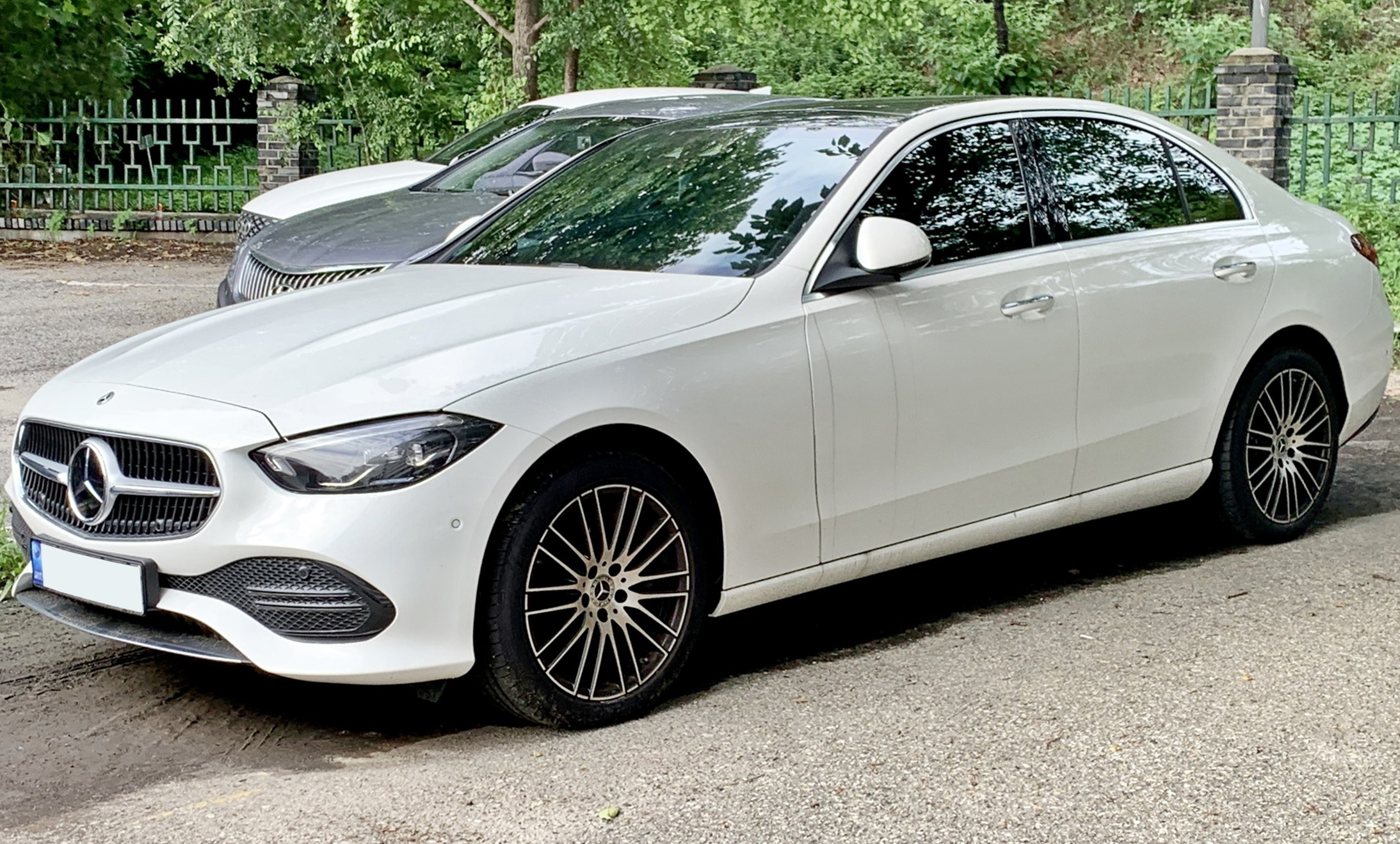
Mercedes-Benz Cclass
"Benz, A-classes, E-classes, CLA's, JLA's, JLI's, that sort of stuff. For whatever reason, one day, the finance company has decided that they didn't like the E-class anymore, didn't like the C-class anymore, they didn't like the JLI, so the residuals got so low on them that that kind of monthly"
The Mercedes-Benz C-Class is a smaller luxury car designed for comfort and everyday driving. Dealers and lenders pay attention to it because the price to finance it and its resale value can change over time. The podcast mentions it as part of a set of cars the finance company became less interested in.
The Mercedes-Benz C-Class is a compact luxury sedan (and related body styles depending on market) positioned below the E-Class in Mercedes’ lineup. It’s frequently discussed in retail and financing because lender appetite and used-car values can shift by model. In the podcast, it’s grouped with other Mercedes models as something the finance company reportedly stopped wanting.

Tesla Model Y
"then the last quarter of last year, I sold a couple of Tesla Model Ys and I [640.0s] thought, this is easy, this feels too easy... [656.5s] and it's working really well."
The Tesla Model Y is an all-electric SUV/crossover. Here it’s the example of an EV the dealer found easier to sell and service because there were fewer problems after delivery.
The Tesla Model Y is an all-electric compact crossover that’s become a high-volume EV choice in many markets. The speaker describes selling Tesla Model Ys as a turning point because they experienced fewer customer issues and lower “prep bills,” making the business feel easier to run.
pivot to all EV
"it's probably 35 [648.3s] Teslas sat out there at the moment, so it's just made a pivot now to pretty much all EV [656.5s] and it's working really well."
A “pivot” means changing what you focus on. In this case, the dealer shifted from selling mostly non-EVs to focusing on electric cars because it was working better for their business.
“Pivot to all EV” here means changing the dealership’s core inventory and sales focus from internal-combustion vehicles (and diesel issues like DPF problems) to battery-electric vehicles. The speaker credits the shift with lower reconditioning costs and fewer customer follow-ups.
used car market
"whereas now not only are there [1023.9s] you know worldwide economic reasons for growing interest in EVs but there are more EVs [1031.1s] being pumped into the used car market and more customers are actually seeing them as a viable [1035.9s] alternative to a petrol car"
The used car market is where people sell and buy cars that aren’t new. The hosts are saying more electric cars are now showing up there, which changes how dealers price them and how buyers view them.
The used car market is the resale channel where dealers buy and sell pre-owned vehicles. This segment emphasizes that more EVs are entering that market, which can change pricing, availability, and dealer risk compared with earlier EV adoption cycles.

Tesla Model 3S
"...sla situation where you know used values of Tesla Model 3s and Model Ys pretty much halved overnight didn't ..."
The Tesla Model S is an electric car that runs on batteries instead of gasoline. The episode mentions it because the prices people pay for used Teslas can change quickly. That matters because it affects how much the car is worth later and what financing looks like.
The Tesla Model S is a full-size electric sedan known for performance and long-distance capability. It’s brought up in the context of used values dropping sharply, which is a major topic for buyers, dealers, and lenders when market expectations change. The podcast references Tesla’s used-value behavior as part of a broader “used values halved overnight” type discussion.
part exchange
"I know where my part exchange is at when I look at my part exchanges it's three litre diesel, two litre diesel"
Part exchange is when you trade in your old car at the dealership and use it to reduce the price of the new one. They’re saying they can see what kinds of trade-ins they’re getting.
Part exchange is the process where a dealer takes your current vehicle as credit toward the purchase of another car. Here, the host is tracking their part-exchange inventory by fuel type and engine size (e.g., “three litre diesel” and “two litre diesel”).
EV consideration
"it's just made people think about EVs again but I don't think that when diesel prices come down that they're going to stop thinking about it"
This means how many people are actually thinking about buying an EV. The host is saying the interest is sticking even if diesel gets cheaper.
“EV consideration” refers to how likely shoppers are to seriously think about buying an electric vehicle, not just briefly notice them. The host ties it to current events and says even if diesel prices fall, people may have already started evaluating EVs.
fuel saving calculator
"because I think that they've they'll have already started to look like Tesla have got a they've got a fuel saving calculator on their website we're going to well me first I'm going to develop something similar"
It’s a tool that estimates how much cheaper (or more expensive) an EV could be to run compared with a petrol or diesel car. The idea is to help sales staff explain the cost difference using your own situation.
A fuel saving calculator estimates how much money a driver could save by switching from a fuel-powered car to an EV. In the segment, the host says Tesla already uses one on its website, and they plan to build a more detailed version that compares the specific car someone drives.
Octopus Energy
"just cross comparison explaining about octopus energy on a night and"
Octopus Energy is an electricity company. They’re brought up because the price of electricity at night can affect how cheap it is to charge an EV.
Octopus Energy is an electricity supplier that’s known in the UK for EV-friendly tariffs and pricing plans. The host mentions using Octopus Energy “on a night” as part of EV cost comparisons, implying off-peak charging rates can materially change running costs.
in-house warranty claims
"lent on doing everything possible not to pay on warranty on their own in-house warranty claims [1206.9s] that the warrant is expired too quickly"
Some dealers offer their own warranty instead of using the car maker’s warranty. A warranty claim is when you ask them to pay for a repair because the car broke down while covered.
An in-house warranty is coverage that a dealer or company administers themselves rather than through a manufacturer. “Warranty claims” are the requests to pay for repairs under that coverage, and disputes often come down to whether the failure is covered and whether the warranty is still active.
heating modules
"run where I sold two of us a certain type of car lost £7,000 on them and that was because [1220.4s] both of the heating modules failed and it main dealer only part and they won't cover it"
A heating module is part of the car that helps make and control the heat for the cabin. If it fails, fixing it can be expensive—especially if warranty coverage doesn’t apply.
A heating module is a component assembly responsible for producing and regulating cabin heat (often tied into the vehicle’s HVAC system). If heating modules fail and the dealer can’t get coverage from the manufacturer or main dealer, it can become a major cost item.
proxy
"when I'm at BCA when I'm looking at my proxy like I never [1302.5s] bid live in the hall"
A proxy bid is when you set a maximum bid ahead of time and the auction system bids for you. That way you don’t have to be there bidding in real time.
In auctions, a “proxy” is a pre-set bid placed on your behalf, so you don’t have to bid live during the event. The speaker mentions checking their proxy at BCA and choosing not to bid live, which affects how they control (or fail to control) final purchase prices.
paint bills are just astronomical
"that's the reason for getting [1344.5s] this new place was my my paint bills are just astronomical at the moment because the Tesla [1350.7s] anybody who knows Tesla is the paint quality on the Tesla"
“Paint bills” means how much money the dealer spends repainting cars to get them ready to sell. They’re saying Tesla cars can require more work, so the repainting costs add up fast.
“Paint bills” refers to the cost of refinishing and repainting vehicles as part of dealer reconditioning. The speaker links the high cost to Tesla’s paint quality and notes that having their own full prep/conditioning process helps manage these expenses.
auction prices
"built would it be sustainable if the if the auction prices keep going the same way I don't know"
Dealers sometimes buy cars at auctions where people bid against each other. The “auction price” is the final amount the car sells for, and it affects whether the dealer can make money.
In dealer auctions, cars are sold to the highest bidder, and the final bid level is what people mean by “auction prices.” For dealers, auction prices directly affect how much they can pay for inventory and still make a profit after reconditioning and selling costs.
BCA
"um but yeah the more people are just starting to see the definitely seeing the Tesla book especially [1377.0s] on BCA ... ... at least I can't as much as yeah I pay a bit more with BCA ... I know that if I win 10 cars that day chances are I'm going to have 10 cars with me in the next four to five days"
BCA is a company that runs car auctions for dealers. Dealers use it to buy cars, and the timing of paperwork and delivery affects when the cars can be put into stock.
BCA is a UK vehicle auction company that helps dealers buy and sell cars through auction channels. In this segment, the host compares BCA’s process and timing to other auction/remarketing routes, emphasizing predictability of getting cars into stock after winning bids.
motorways and car wow
"customers saying motorway have offered me this and I have that problem all the time but from buying [1402.0s] from motorway I'll be honest I don't buy as much as I should do because I can't control ... [1446.4s] the issue with motorways and car wows is it's plagued by dealers that are offering 1100 pound over what they're willing to pay"
Motorway and Carwow are websites that help people get offers for their car. Dealers can end up bidding for cars, and that can make pricing and timing harder to manage.
“Motorway” and “Carwow” are online platforms where consumers can request offers and dealers can compete for vehicles. The speaker describes how these platforms can create pricing pressure (dealers offering more than they’re willing to pay) and also how it can be harder for dealers to control inventory timing compared with auction-based buying.
stock
"from buying [1402.0s] from motorway I'll be honest I don't buy as much as I should do because I can't control when I'm going to have a car in stock because I can hit the and say I've won that car"
“Stock” here just means the cars the dealer has ready to sell. If it’s hard to control when cars arrive, it’s harder to plan sales.
In dealer language, “stock” means the cars a dealer currently has available to sell. The speaker’s point is that auction platforms can make it easier to predict when won cars will arrive, which helps manage how much inventory is on hand.
documents
"it took 13 days to get in because they were uploading the documents and then there were then it had to be on their terms"
“Documents” means the paperwork needed to legally move a car from the seller to the dealer. If that paperwork takes time, the car can’t arrive quickly.
“Documents” refers to the paperwork required to transfer a vehicle through auction channels (e.g., ownership/registration-related paperwork). The speaker highlights that delays in uploading or processing documents can slow down when a dealer actually receives the car.
social media
"So moving on to social media because of course we had you on our our panel as a social media guru really obviously you said you [1498.1s] you started off selling cars pretty much entirely on social media"
Social media is the online platforms people use to post and interact. In car selling, dealers use it to find customers and promote cars.
“Social media” is being used here as a sales and marketing channel for car dealers—how they attract leads and build trust with buyers. The segment frames it as a shift from traditional selling to online audience-building.
"I think most people would be [1503.3s] surprised to hear LinkedIn really yeah but how about now"
LinkedIn is a website/app mainly used for professional networking. The host is saying it can even be used to find car buyers or leads, which surprises people.
LinkedIn is a professional networking platform, and the speaker notes it as an unexpected place to start selling cars. The implication is that dealer marketing can target business-minded audiences, not just typical consumer car platforms.
Vertu
"and adjusted profit before tax fell from 29.3 million to 24.5 million so tough times but you ... outlook does look quite good the first two months of the next financial year are starting to look better for virtue"
Vertu is a car dealership group. The episode uses its results to show how EV rules and supply problems can impact dealer profits.
Vertu is the dealer group being discussed, and the hosts reference its financial results and how EV policy and manufacturer disruptions affect its business. The episode frames Vertu as a bellwether for the broader UK motor trade.
ZEV mandate
"11 element has been um of course the the zev mandate you know the the car manufacturers who are slashing um new electric car prices um which is in turn makes it difficult for for the for the car dealers concerned ... Robert Forrester ... about the zev mandate he says the zev mandate is distorting volumes margins and channel mix for new car and commercial vehicles"
A ZEV mandate is a rule that pushes car companies to sell more zero-emission vehicles, usually electric cars. For car dealers, that can change what cars they can get, how many people want them, and how much profit they make.
A ZEV mandate is a government policy that requires automakers (and sometimes sellers) to sell a minimum share of zero-emission vehicles, typically battery-electric vehicles. In dealer terms, it can reshape what inventory is available, how demand is distributed, and how pricing and margins work across new cars and commercial vehicles.
JLR
"also virtue you know was a was a big um partner to JLR and of course JLR had its big cyber attack um September October last year and virtue took a big hit from that particularly from surface revenues"
JLR is Jaguar Land Rover. The episode says JLR had a cyber attack, and that kind of disruption can affect how cars get built and delivered to dealers.
JLR (Jaguar Land Rover) is the automaker referenced here as having suffered a major cyber attack. For a dealer group, disruptions at the manufacturer level can affect ordering, deliveries, and revenue streams, even if the company is insured.
cyber attack
"yeah I mean the cyber attack one yes I've forgotten about the cyber attack one is interesting and it's with with JLR but of course they were insured for quite a substantial amount"
A cyber attack is when hackers disrupt a company’s computer systems. If that happens to a carmaker, it can slow down orders and deliveries, which can hurt dealer sales.
A cyber attack is an intrusion or disruption of computer systems, which can halt or degrade operations like ordering, production planning, and logistics. In automotive retail, that can quickly translate into lost sales and revenue even when physical inventory exists.
channel mix
"he says the zev mandate is distorting volumes margins and channel mix for new car and commercial vehicles alongside elevated discounting"
Channel mix means where sales come from—like individual customers versus business/fleet buyers, or different selling routes. If that balance changes, a dealer’s profits can change too.
Channel mix refers to how sales are split across different routes to market—such as retail vs fleet, or different dealer and online pathways. When policy or pricing changes, the mix can shift, which affects dealer revenue stability and profitability even if total demand doesn’t move much.
non-bev supply constraints
"he says the zev mandate is distorting volumes margins and channel mix for new car and commercial vehicles alongside elevated discounting and potential non-bev supply constraints"
Non-BEV supply constraints refers to shortages or limited availability of vehicles that are not battery-electric vehicles (BEVs). If manufacturers prioritize BEVs or face production/logistics issues, dealers may struggle to source enough non-electric inventory, affecting overall sales mix and profitability.
elevated discounting
"he says the zev mandate is distorting volumes margins and channel mix for new car and commercial vehicles alongside elevated discounting and potential non-bev supply constraints"
Discounting is when dealers sell cars for less than usual using deals or incentives. If discounts get bigger, dealers often make less profit on each car.
Discounting is when sellers reduce the price (often via promotions, incentives, or negotiated deals) to move inventory. Elevated discounting typically compresses margins for dealers and can also signal weaker demand or increased competition, especially during EV price cuts.

Porsche 959
"...e out i haven't i i've not had enough coffee it's 959 54 in the morning it's not kicked in yet but i wa..."
The Porsche 959 is a very old, very special sports car made by Porsche. It’s known for being rare and for having advanced technology when it was built. The podcast mentions it by name as a standout model.
The Porsche 959 is a legendary high-performance sports car from the 1980s, famous for advanced engineering and technology for its era. It’s the kind of car that shows up in enthusiast conversations because it’s rare and historically significant. In the podcast snippet, it’s referenced directly as “959,” indicating the host is talking about that specific model.
ICE car
"of course naturally that's dropped the number of people considering an ice car down from 47 percent to 45"
“ICE car” means a regular gas or diesel car (not electric). They’re comparing how many people are thinking about those versus electric cars.
“ICE car” is shorthand for an internal combustion engine vehicle—typically a petrol or diesel car. The hosts use it to contrast with electric vehicles when discussing how buyer preferences are shifting.
leapfrog from petrol to electric
"kazoo worked out that quite a lot of people are um intend to sort of leapfrog um from petrol to electric whereas you know up until now it's been very much a ... baby steps towards pure electric whether that's a mild hybrid or a full plug-in hybrid"
They mean some buyers are skipping the in-between options and going straight from a gas car to an electric car. Instead of starting with a hybrid first, they’re jumping to full EVs.
“Leapfrog” here means skipping the usual step-by-step electrification path and going straight from petrol to a fully electric car. The hosts contrast this with “baby steps” like mild hybrids or plug-in hybrids, which are intermediate stages on the way to EVs.
plug-in hybrid
"whether that's a mild hybrid or a full plug-in hybrid"
A plug-in hybrid can run on electricity, but it also has a gas engine as backup. You can charge it from a plug, and it can cover some trips without using petrol.
A plug-in hybrid (PHEV) combines a conventional engine with a larger battery that can be charged from an external power source. That lets it run on electricity for shorter trips, while the engine provides longer-range capability when the battery is depleted.
mild hybrid
"whether that's a mild hybrid or a full plug-in hybrid"
A mild hybrid is a car that has a small electric assist, but it still mainly runs on petrol. It’s not usually something you can drive like an EV for long stretches.
A mild hybrid uses a small electric motor to assist the engine, but it typically can’t drive the car purely on electricity for long distances. It’s often positioned as a stepping stone toward full electrification because it improves efficiency without requiring a large battery or frequent charging.
home wall box
"prize parity um and you've got the you know you've got a home wall box you know you've got the right lifestyle for an e v what you know the the the risk of switching to an e v just suddenly gets a lot"
A home wall box is a special charger you mount at home for an electric car. It makes charging easier and usually quicker than using a normal plug.
A home wall box is a dedicated EV charging unit installed at a home, typically connected to the home’s electrical system. It’s meant to charge the car more conveniently and often faster than plugging into a standard outlet.
insurers
"what's letting evs down in the cheaper end of the market is the insurers are still putting quite a high cost of my no recent look at my my son's learning to drive at the moment"
Insurers are the companies that sell car insurance. The point here is that EVs can cost a lot more to insure, which discourages buyers.
Insurers are the companies that set insurance premiums and decide coverage terms for vehicles. The hosts are pointing out that insurance costs can be a major barrier to EV adoption, particularly in the cheaper market segment.
charging
"hopefully if the insurers one day kind of you know take the foot off the gas in terms of the charging so much for it it might open that market up to even the first time buyer"
Charging is how you refill an electric car’s battery by plugging it in. If it becomes less expensive or less of a hassle, more people may consider buying an EV.
Charging refers to replenishing an EV’s battery by plugging it into a charger. The discussion implies that if charging costs or charging-related burdens ease (e.g., insurer pricing or charging expenses), EVs could become more attractive to first-time buyers.
hybrids
"with evs and hybrids um it's lotus actually some news from lotus this week where they are scaling back"
Hybrids are cars that use two power sources—an electric motor and a gasoline engine. They’re often used as a middle step between gas cars and fully electric cars.
Hybrids are vehicles that use both an internal-combustion engine and an electric motor/battery system. In this episode, hybrids are mentioned alongside EVs as part of the broader transition strategy and market reality.
pure electric future
"smelt the coffee a little bit really and has realized that that a very aggressive push to wards a pure electric future perhaps isn't quite right considering um you know where the market is"
A “pure electric future” means a company wants to sell only electric cars. The point here is that the market may not be ready for that shift yet, depending on price and demand.
A “pure electric future” means a strategy where a brand focuses on producing only battery-electric vehicles rather than offering hybrids or internal-combustion models. The hosts argue that this approach may be misaligned with current market conditions, especially at higher price points.
Geely
"they are owned by geely and in china at the moment there there's a big push on on hybrid technology"
Geely is mentioned as the parent company of Lotus, which frames why Lotus’s strategy is changing. The segment suggests Geely’s influence and experience in China’s market could be driving Lotus’s shift in direction.
hybrid technology
"there there's a big push on on hybrid technology which is why in the uk we are starting to get quite a few uh chinese plug-in hybrids appear"
Hybrid technology means the car uses two kinds of power—usually gas and electricity. The discussion is about how that trend is affecting what’s being sold in different markets.
Hybrid technology refers to powertrains that use more than one energy source—typically a combustion engine plus an electric motor. In the context here, it’s tied to China’s current push, which is influencing what kinds of vehicles are showing up in the UK.

Lotus Esprit
"...ation that it's going to be the the return of the esprit um and uh yeah it's just it's quite interesting i..."
The Lotus Esprit is a sports car made by Lotus, known for being fun to drive. The podcast mentions it in connection with a possible “return” of the Esprit name. That kind of talk matters because it can signal new interest and new models coming to market.
The Lotus Esprit is a sports car associated with Lotus’ reputation for lightweight, driver-focused performance. In the podcast context, the host discusses “the return of the esprit,” suggesting a conversation about bringing the model name back. That makes it relevant to dealer and market talk because brand revivals can affect demand, pricing, and buyer expectations.
embrace heritage
"with the whole type 01 um announcement it's this kind of desire to sort of go back to basics and sort of embrace heritage"
“Embrace heritage” is a strategy where a brand leans on its historical identity—design cues, driving feel, and core engineering values—to guide new products. In this segment, it’s used to explain why Jaguar and Lotus are being discussed as trying to “go back to basics” rather than fully abandoning what made them distinctive.

Porsche 911
"you'd sit in it and it was 9 11 ish in its interior put it that way and the way that it drove and and so on even though it's an SUV"
The Porsche 911 is Porsche’s most famous sports car. Here, the speaker means the vehicle still felt like a 911 in how it looks inside and how it drives, even though it’s an SUV.
Porsche 911 is the iconic rear-engine sports car line from Porsche, known for its distinctive driving feel and layout. In the segment, the speaker uses “911-ish” to describe how the interior and dynamics of a particular Porsche-like SUV still felt like a 911.
Jaguar
"because at least Jags are big and luxurious and whatever and sticking a enormous battery under the floor and it'll still be big and luxurious and quiet and fast and all"
Jaguar is being used as a comparison point. The speaker says Jaguar can put a big battery under the car’s floor and still keep the car feeling luxurious and quick, while they’re less sure Lotus can do the same for a sports-car brand.
Jaguar is referenced in the context of EV packaging—specifically the idea of fitting a large battery “under the floor.” The speaker contrasts Jaguar’s ability to stay “big and luxurious and quiet and fast” with their doubts about whether Lotus can make EVs work for its sports-car identity.

Lotus Evora
"the lease went off sale you know cars like the Evora and what have you disappeared as well so it was a very sudden shift towards electric"
The Lotus Evora is a sports car made by Lotus, designed to feel agile and fun to drive. In this discussion, it’s mentioned as one of the cars that went away when Lotus shifted quickly toward electric models.
The Lotus Evora is a mid-engine sports car from Lotus, built around lightweight handling and driver-focused performance. The speaker says it “disappeared” during Lotus’s rapid pivot toward electric vehicles, framing it as a shift away from traditional sports-car priorities.
private equity
"it strikes me a little bit as like when uh what's the word private equity buys a buys a brand like a fashion brand or something like a luxury brand and then you find suddenly it's all not quite as nice"
Private equity is when investment firms buy a business and try to change it quickly to make it more profitable. The speaker is using it as a metaphor for how a brand can lose its “feel” after that kind of ownership change.
Private equity refers to investment firms that buy companies (or brands) and often push rapid changes to improve financial results. The speaker uses it as an analogy for how a brand can lose its original character after being acquired or restructured.
Request an Explanation
Heard something you'd like explained? We'll add it to this episode.
Sign in to request explanations for terms you heard.
Want to learn more?
Browse our glossary for plain-English explanations of automotive terms, jargon, and concepts.
Help improve this episode
See something that's not quite right? Our annotations are AI-generated and can sometimes miss the mark. Click the flag icon on any annotation to suggest a correction.