
Porsche 1-2 at Sebring, Factory Team Beef, and the 911 Joyride That Ended in Handcuffs
About this episode
P-Car Talk starts with heartbreaking news: Arnaj Motorsports lost its Porsche-focused shop to a fire, destroying tools and equipment but thankfully injuring nobody. The hosts urge listeners to support the team via GoFundMe. Racing coverage follows with Porsche’s 1-2 at Sebring in GTP, then turns to controversy over teammate position swaps and missing radio orders that sparked post-race tension. The discussion expands to Manti’s strong Sebring win, rule changes affecting other teams, and broader gripes about traffic and penalties in endurance racing. Finally, they share cautionary advice on car transport—brokered, poorly communicated, and sometimes downright criminal “joyrides”—and recommend driving cars home when possible.
A shop burned down. There's beef inside Porsche's factory team. And a transporter got arrested for joyriding someone's brand new 911.
This week on P-car Talk, Mike and Aaron open with some real news from the South Florida car community — Arnage Motorsports, owned by their close friends Cory and George, lost their entire shop in a fire. GoFundMe link is in the description. These are good people and the community needs to show up for them.
Then they break down Porsche's Sebring sweep — first, second in GTP, Manthey wins its class. Great weekend on paper. But there's post-race drama between the number 6 and number 7 cars that makes the press conference worth watching. Team orders, a lead change that wasn't authorized, and two teammates who are very publicly not on the same page.
And then the one you'll be talking about: a Florida transporter decided a new customer's 911 was his personal weekend car. He got caught. He got arrested. But it opens up the entire conversation about how broken the car shipping industry really is — and whether driving the car home yourself is always the right call.
GoFundMe for Arnage Motorsports: https://gofund.me/d87d9f93a
Follow us: @pcartalk | pcartalk.com | Patreon.com/pcartalk
Kimchi Crew: Steve, Leslie, Chris, Ken, Aaron, Sean, and Nik
Arnaj Motorsports
"Our really, really good friends, Cory and George, that own Arnaj Motorsports, unfortunately had a shop fire a few weeks ago. Thank God no one was injured."
They’re talking about a specific car shop called Arnaj Motorsports. It’s the place where the hosts’ friends work on cars, especially Porsche-related work.
Arnaj Motorsports is mentioned as the shop owned by Cory and George. The episode frames them as a Porsche-focused specialist, so listeners may want to know this is a real-world performance/repair shop being affected by the fire.
Porsche-specific work
"Now, they work on other brands too, but they're mainly Porsche-centric. And they lost their entire shop. They lost all of their tools."
The hosts emphasize that Arnaj Motorsports does Porsche-specific work, meaning they specialize in the engineering, parts, and procedures unique to Porsche models. This is a key distinction versus a general repair shop, especially for older or more complex cars.
GoFundMe
"Yeah, put it in there. There's a GoFundMe in there. We've already donated, but anything helps."
GoFundMe is a website where people donate money to help someone in need. Here, it’s being used to help a racing-related business recover after a serious setback.
A GoFundMe is a crowdfunding platform where people contribute money directly to support individuals or organizations. In motorsports, these campaigns often help cover immediate losses like damaged equipment, inventory, or lost revenue after an incident.
team orders
"So like that's team rules. [293.8s] If you're not familiar with racing, but that's how it should be because they let them go around."
“Team orders” are instructions from a team to drivers about positions, pacing, or when to yield/push. They’re common in multi-car entries to manage points, protect a lead, or avoid internal battles.
race control
"So he gave it up and from what we understand from race control, I guess, [317.8s] like from the commentators, they could hear some of that banter."
Race control is the group of officials running the race. They watch everything and tell teams what to do when rules or safety require it.
In motorsport, “race control” is the officials who monitor the race and manage communications, rules, and on-track incidents. They can issue instructions to teams/drivers and explain what happened based on timing and radio/track observations.
new tires
"One of them didn't have new tires at that time because there was several cautions. [382.2s] Yeah. [382.6s] Like in this one."
New tires mean the car has fresh rubber. Fresh tires usually grip better, so the car can go faster and handle more confidently.
“New tires” refers to fresh tires installed during a pit stop, typically to restore grip and improve lap times. In endurance racing, whether a car gets new tires (and when) can be the difference between holding position and falling behind.
endurance race
"It doesn't matter if they're teammates at the end of the race, though, on an endurance race at a minimum, there should at least been a call to the crew."
Endurance races are long races where you have to think about the whole event, not just one lap. Since drivers and teams are working together for hours, how you pass and how you communicate matters a lot.
An endurance race is a long-duration event where cars and drivers must manage pace, tires, fuel, and strategy over many hours. Because multiple drivers share the car, passing rules and communication with the crew are especially important to avoid unsafe or team-conflict situations.
Formula One
"Necessarily not just drive around, you know, even in Formula One, if there's bad blood, somebody's going to say, Hey, I can pass him. Can I pass him?"
Formula One is the highest level of open-wheel racing. When cars are close, teams often try to control when someone can pass so the race stays organized.
Formula One (F1) is the top tier of open-wheel racing, and it’s known for tight competition where passing attempts are constantly negotiated. Even when drivers are close, teams manage strategy and track position through radio instructions and timing decisions.
comms
"You know, you know, usually like we've heard that if you follow F1 or any, there's a lot of comms going on. Usually they're like, No, hold position. We're going to let him stay out front."
“Comms” means the radio messages between the driver and the team. Those messages can tell a driver to hold their spot or let someone pass, which changes how the race plays out.
“Comms” refers to driver-team communication, typically via radio. In racing, comms can include instructions like holding position or letting a car stay out front, and the lack or presence of comms can strongly affect on-track behavior.
yellow flagged
"And I feel like that it yellow flagged right after that Nasser pass. Yeah. So it didn't really matter anyways, except it just pissed people off."
A “yellow flag” is a caution condition where drivers must slow down because there’s a hazard on track (like debris or an incident). In endurance racing, yellow flags can bunch cars back up and change track position, often triggering frustration when it disrupts a driver’s momentum.
1-2 finish / battling for one and two
"[680.0s] Can't be two number ones. ... [716.7s] But if in another similar situation, if they run the map the rest of the year and they're they're battling one and two [722.1s] ..."
“One and two” means first and second place. If both teammates are fighting for those spots, it can get tense because they’re both trying to win.
“One and two” refers to the top two positions in a race—often a manufacturer’s or team’s goal when multiple cars are competing. The transcript frames it as a scenario where teammates are both in contention, increasing the chance of conflict.
livery
"What do you think about that livery they did? I thought it was pretty cool."
A “livery” is the car’s design—its colors and decals. Racing teams change it for different events or to mark something special.
A “livery” is the car’s paint scheme and graphics package used for a specific team, sponsor, or event. In racing, liveries can signal factory support, special celebrations, or the final season of a program.
liveries
"[860.5s] Now it could call be BS. [862.7s] They could just be running liveries or run liveries. [864.6s] I mean, it was the 20 year anniversary."
A livery is the car’s design—its colors and decals. Race teams may use special designs for big events, and fans sometimes read too much into those changes.
A “livery” is the paint scheme and graphics a race team uses on its car. Teams sometimes change or run specific liveries for anniversaries or branding, which can create speculation about whether a car is being retired or replaced.
Daytona
"Right. So like, I think they got a feel for Daytona."
Daytona refers to Daytona International Speedway, a major U.S. road course/oval venue where endurance and sports car racing events are held. Track characteristics (high speeds, banking, and traffic) heavily influence car setup and tire/strategy choices.
Sebring
"And they took the data that they had on the car and clearly they applied it in a good way because they won Sebring. Yeah. And it wasn't some fluke when like that car looks strong the entire 12 hours."
Sebring is a famous long-distance race where cars have to keep going for about 12 hours. If a team wins, it usually means they were fast and dependable the whole time.
Sebring refers to the 12 Hours of Sebring, a major endurance race in Florida. Winning it is a strong indicator of a team’s reliability, strategy, and overall pace over a full day of racing.
Nürburgring 24-hour
"And I mean, what they have the most Nürburgring 24-hour Nürburgrings out of out of any team. Right."
The Nürburgring 24-hour is a long endurance race held at the Nürburgring track. Finishing well (or winning) takes a lot of reliability and smart driving.
The Nürburgring 24 Hours is a grueling endurance race at the Nürburgring in Germany. It’s known for its mix of speed and complexity, so repeated success is a strong sign of a team’s engineering and durability.
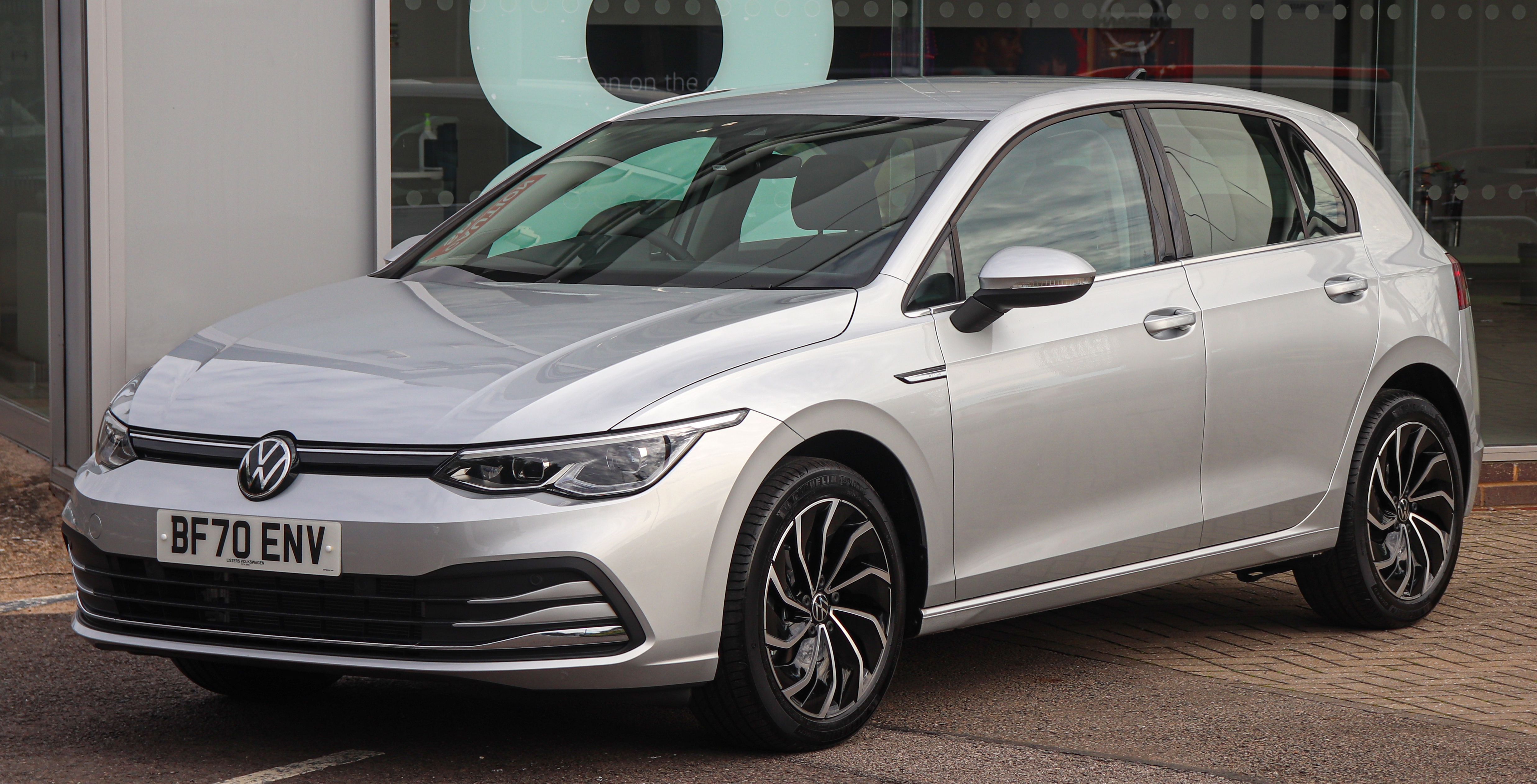
Golf Gtd
"...ere was a rule change, unfortunately, for the the GTD or the GTR Mustang that hurt it because in the o..."
The Golf is a compact car model from Volkswagen. It’s designed for everyday driving and is popular because it’s easy to live with. In the podcast, it’s mentioned as part of a discussion that includes racing or competition rules.
The Golf refers to the Volkswagen Golf, a compact car line known for being practical, efficient, and widely used as a daily driver. It often comes up in automotive discussions because it has many trims and powertrain options, and it’s a common platform for performance and enthusiast builds. In the podcast context, it’s mentioned alongside rule-change talk, suggesting it may be part of a broader motorsport or competition conversation.

Ford Mustang
"...change, unfortunately, for the the GTD or the GTR Mustang that hurt it because in the offseason,"
The Ford Mustang is a sporty car made by Ford. It’s popular for fast driving and racing, and different versions can be affected by racing rules. That’s why you might hear it discussed when rules change for certain Mustang models.
The Ford Mustang is a performance-focused American sports coupe that’s known for its powerful engines and strong motorsport heritage. In a racing context, it can be discussed in relation to specific trims or rule changes that affect how competitive it is during a season. That’s why it may come up when people talk about what adjustments “hurt” or reshaped certain Mustang variants.
nighttime cool air turbos
"I always worry about nighttime cool air turbos."
At night the air is cooler, and cooler air can help turbo engines make more power. That’s why the speaker is thinking about how nighttime conditions affect performance.
Cooler nighttime air can increase turbocharged engine performance because denser air improves charge mass and can raise effective power. Teams often anticipate these conditions when setting boost targets, fueling, and engine calibration.
white flag
"And then I mean, that was, I think that happened during the white flag, right? So then he had to run three quarters."
The white flag means there’s only one lap left. Everyone knows the race is almost over, so drivers start making their final moves.
The “white flag” is shown to indicate the final lap of a race. Drivers often change strategy at this point—defending harder, managing traffic, and pushing for position.
traffic
"And I don't know if it's been passed. I felt like there was a ton of traffic this year. Searing always has that though."
Traffic means other cars are in the way on the track. It can slow you down or make it harder to pass, even if you’re faster.
“Traffic” in racing means slower cars on the track that affect racing lines and passing opportunities. In endurance and sprint races alike, traffic can decide outcomes by forcing drivers to lift, wait, or take suboptimal lines.
apex
"...you you cut them off or you you took their apex away when they had when it was their apex and you literally put them in the tire wall."
The apex is the best point to hit in a turn. If someone “takes your apex,” they’re interfering with your planned path through the corner, which can cause a crash.
The “apex” is the point on a corner where the driver aims to pass closest to the inside. Taking away someone’s apex is a common description of an unsafe or unfair move because it removes the other driver’s planned racing line and can force contact.
DNF
"And then if the car gets DNF because of the accident, so bad. I think no matter what you're qualifying is on the next race that you"
DNF means the car didn’t finish the race. If the crash is bad enough that the car can’t continue, that outcome should matter in how penalties are handled.
DNF means “Did Not Finish,” used when a car cannot complete the race due to damage or mechanical failure. The speaker suggests that if the at-fault car ends up with a DNF from the incident, the penalty/handling should be even stricter or at least not be softened.
Rackfest
"Yeah. Rackfest. It's just and honestly, like, I know there needs to be a place for them to do that stuff, but it just I know for a fact, just because we've talked to"
“Rackfest” appears to be a slang term for a period or pattern of heavy incidents/crashes (“wreck fest”) within a racing program. In this context, it’s used to explain why an LMP3 program was removed—too many cars getting damaged.
safety car
"Like why there's a safety car. You just see a state trooper like walking the line. Yeah. Yeah. Yeah."
A “safety car” is deployed in motorsport to control the pace of the field after an incident. It helps keep drivers safe while marshals clear debris or recover cars, and it can significantly affect race strategy and positions.
black flag
"...events where you're like trying to score points for a season, you get a black flagged for that crap. So yes, those guys are amateurs."
In racing, a black flag is a warning from officials. It usually means something is wrong—either with the car or with what the driver is doing—and the driver may have to pull into the pits.
A black flag is a race control signal telling a driver that their car has a serious issue or that they’ve violated race rules. Depending on the series, the driver may be required to pit immediately or face penalties.
sponsorships
"...or they go get sponsorships so they can play, but they're not like the other guys."
Sponsorship is when a company pays to support a team or driver. In return, the team/driver helps promote that company.
Sponsorships are financial or in-kind support from companies in exchange for branding and marketing exposure. In racing, sponsorship can be crucial for securing seats, covering team costs, and enabling participation in series.
transport it
"So this is interesting. So this is this topic is regarding transport, meaning like you buy a vehicle. It doesn't have to be new. Could be whatever. Other side of the country. You transport it."
They’re talking about shipping a car to you after you buy it. That can be done by a truck, and how it’s shipped can affect the chance of damage and the price.
The discussion is about vehicle transport—moving a car from one location to another after purchase, often across state lines. This can involve enclosed or open carriers, and the logistics matter because they affect risk of damage and overall cost.
car transport subcontracting (subletting)
"just select the car now gets even deeper because there's no rules to this. Now there's bigger firms that other people sub sublet underneath that... So we secure the contract and then that means we sell that contract to another sublet"
Sometimes the company you book with hires other companies to do the driving. If that happens, the original company may not be the one actually responsible for your car during transport.
The speaker describes how car transport contracts can be secured by one company and then subcontracted to other carriers. That means the company you think is handling your car may not actually be responsible once the job is passed along.
18 wheelers
"we own, let's say we're a big operation and we own 30 18 wheelers. We own a couple of trailers and people work for us."
“18 wheelers” are big trucks that haul cargo over long distances. For car shipping, they’re often used to move cars on trailers.
“18 wheelers” is a common nickname for large semi-trucks used to haul freight, including car carriers. In car transport, these are typically paired with enclosed or open trailers depending on the service level.
trailers
"We own a couple of trailers and people work for us. Okay, great."
A trailer is what the truck pulls to carry the car. Different trailers protect the car differently from rain, snow, and road grime.
Trailers are the hauling units behind trucks that carry the vehicle being transported. For car shipping, the trailer type (open vs enclosed) affects protection from weather and road debris.
shit communication
"They all had the same thing they had in common is it was shit communication. And I learned all of that, what I just shared through the process of being in that"
The core issue described is poor communication during the vehicle transport process—updates, confirmations, and status tracking. In practice, this can cause missed pickup windows, uncertainty about who has the car, and delays that ripple into delivery schedules.
daily driver
"But if it's a daily driver type of car, dude, my personal recommendation, take the time off work."
A daily driver is the car you use all the time, not just on weekends. People talk about it because they want it to be dependable and not get messed up before you even start using it.
A “daily driver” is a vehicle you plan to use regularly for everyday commuting and errands. In car-buying discussions, it usually implies you care about reliability and avoiding unnecessary risk like long-distance transport damage.
credentials/bonding/registration for carriers
"[2862.6s] This is actually important and I almost forgot this part. [2865.9s] When they go to pick your car up, it's actually on the dealership [2869.7s] or if if you're transporting from a private party, they don't [2875.2s] know any better. [2875.7s] So it's not really their responsibility, but there's credentials [2879.5s] that are associated with whoever the carrier is on the car,"
The speaker highlights that legitimate commercial vehicle transporters should have proper credentials—such as being bonded, registered, and having the required licensing/authority to tow or transport commercially. These requirements help ensure the carrier is legally allowed to operate and can be held accountable if something goes wrong.
Request an Explanation
Heard something you'd like explained? We'll add it to this episode.
Sign in to request explanations for terms you heard.
Want to learn more?
Browse our glossary for plain-English explanations of automotive terms, jargon, and concepts.
Help improve this episode
See something that's not quite right? Our annotations are AI-generated and can sometimes miss the mark. Click the flag icon on any annotation to suggest a correction.