
Porsche Trims the Fat, Goodwood Comes to America, and 911 Alternatives on a Budget
About this episode
P-Car Talk Podcast tackles Porsche’s lineup trimming—calling the Taycan “on the chopping block” and debating how far 911 and 718 variants get streamlined. The hosts connect these moves to pricing, allocations, and “funneling” buyers, then pivot to what people can buy instead of a 911 when prices climb. They also cover Goodwood Festival of Speed coming to the US, focusing on the hill-climb core and the logistics of making it work stateside.
Porsche Trims the Lineup, and We Called It
Porsche is streamlining, and the rumor mill says the Taycan, Cayenne Coupe, and possibly the 718 Boxster and Cayman are all on the chopping block, with the 911 lineup likely losing some variants too. Nobody is going to shed a tear over the Taycan, and the Cayenne Coupe will get a few mourners at best, but losing the 718s would sting for a lot of enthusiasts. The funniest part is that we have been saying Porsche needed to do exactly this for a while now, both recently and way back, so either they are finally listening or somebody at Weissach has really good podcast recommendations.
Goodwood Is Coming to America
Goodwood Festival of Speed just wrapped and it remains the single best car event either of us has ever been to, hands down. The big news out of this year's event is that Goodwood is officially bringing the festival to the US, though details on location and format are still under wraps. Given how protective Goodwood is of its brand and how much work they have put into building that reputation, there is no chance they phone in the US version. Our money is on a West Coast location, and the hill climb has to be part of it, because without that centerpiece it just is not Goodwood anymore.
What Else Gets You Close to a 911?
With 911 pricing where it is now, we went down the rabbit hole of what else out there gets you in the neighborhood without the Porsche premium. Nothing replicates the rear-engine layout or that specific balance, but a few cars get close in spirit. The S2000 AP1 is a blast, 2,800 pounds, high-revving, gutless on torque but rewarding on balance with true 50/50 weight distribution, though clean examples are climbing in price fast. The GT350 is the consolation prize with more muscle, 526 horsepower at 8,250 rpm out of that flat-plane V8, but it is a heavier car at 3,750 pounds with a 54/46 split, so stick to the later models since the early ones had documented engine issues. Then there is the F87 M2, 3,450 pounds, 365 horsepower with real tuning headroom since it is turbocharged, 51.9/48.1 balance, sitting in that 35-50k range. And we had to talk about the clown shoe, the BMW M Coupe, which barely counts as a real production run but has earned full cult status anyway.
Grab a drink, settle in, and we will see you next time. Full event calendar is always up at pcartalk.com, and if you want more, find us at Patreon.com/pcartalk and @pcartalk.
Kimchi Crew: Steve, Leslie, Chris, Ken, Aaron, Matthew, Sean, and Nik.
trimming their lineup
"Porsche has actually made the announcement that they are going to be trimming their lineup... It was just saying this is what we're looking at trimming."
“Trimming their lineup” just means Porsche is planning to sell fewer different models. In this case, they’re talking about removing at least the Taycan from the lineup.
“Trimming their lineup” means a manufacturer plans to reduce the number of models it sells—often by discontinuing certain cars or scaling back availability. Here, Porsche is described as announcing it will trim models, with the Taycan specifically mentioned as likely being removed.

Taycan
"On the chopping block to no surprise, and I think no one will miss, the Taycan is going to be going eventually, so that's going to be out of the trimmed market."
The Porsche Taycan is Porsche’s electric car. The hosts are saying Porsche may remove it from the lineup, so it might not be sold anymore (or not as widely).
The Porsche Taycan is Porsche’s all-electric performance sedan, and it’s a key model in the brand’s EV lineup. In this segment, the hosts say Porsche is planning to trim its lineup and that the Taycan is “on the chopping block,” meaning it could be discontinued or reduced in availability.
drivetrain
"So drive train, all that stuff's the same, but another body mold. So that one, a little surprising, because I would say that they sold,"
Your car’s “drive train” is everything that sends engine power to the wheels. Here, they’re saying the Coupe uses the same basic power-delivery setup as the regular model, just with a different body.
“Drive train” is the set of components that deliver power from the engine to the wheels, typically including the transmission, driveshafts, differential(s), and final drive. In this context, the hosts are saying the mechanical power-delivery hardware is largely shared even if the body is new.

718 Cayman
"So next on the big one, 718 Boxter and 718 Cayman. Officially."
The Porsche 718 Cayman is Porsche’s mid-engine sports coupe. The hosts are talking about whether Porsche will keep it in the lineup, which is important because it’s one of Porsche’s main “enthusiast” models.
The Porsche 718 Cayman is a mid-engine sports coupe, known for its compact balance and driver-focused handling. In this segment, it’s mentioned alongside the Boxster as part of Porsche’s potential trim/lineup changes, which affects how the 718 range will be offered going forward.
Targa
"I immediately started thinking like Targa. Targa is probably gone. Think about low sales. Yeah."
Targa is Porsche’s “open-air but still protected” roof style. It usually lets you remove part of the roof to feel more like a convertible, but it keeps a strong safety structure around you.
Targa is a Porsche body style that blends coupe structure with an open-air experience—typically featuring a removable roof section and a fixed roll bar/upper structure. The hosts are implying the Targa variant may be discontinued due to low sales.
718 Boxster
"but the biggest one I am still shocked by is the 718 Boxster and the 718 Cayman."
The Porsche 718 Boxster is a Porsche roadster with the engine mounted behind you (mid-engine). It’s built to feel sharp and balanced when you drive it, and it’s part of Porsche’s 718 model line.
The Porsche 718 Boxster is a mid-engine Porsche roadster known for its compact layout and handling-focused driving feel. In recent generations, the “718” line has been associated with turbocharged flat-four engines rather than the older naturally aspirated setup.
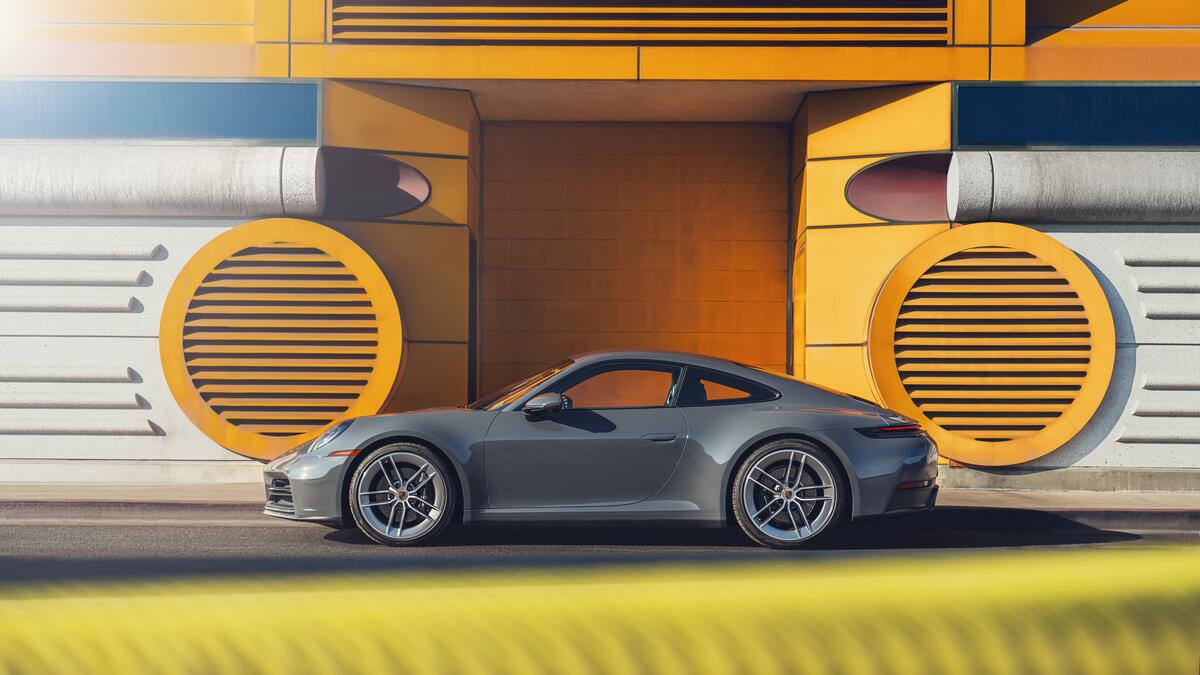
911
"if you don't even sell the chassis anymore, so you want to funnel all those people into a 911, so you're telling me the guy used to be really jazzed up about a GT4 or 4 RS."
The 911 is Porsche’s most famous model line. Here, the host is saying Porsche may be trying to steer people toward the 911 when other special versions aren’t available, but that could make some buyers leave the brand.
The Porsche 911 is the brand’s core sports-car platform, and in this segment it’s described as the “funnel” destination for customers when other limited trims (like GT4/RS variants) aren’t being produced or sold in the same way. The host is arguing that restricting supply of niche models can push buyers away rather than keep them within Porsche.

GT3
"His only option now is 3 RS or GT3."
The GT3 is Porsche’s track-focused 911. The host is saying that when certain other Porsche track models aren’t available, buyers end up choosing GT3 instead.
Porsche GT3 refers to the 911 GT3 track-focused model line, typically built for circuit use with a performance-oriented suspension and aerodynamics. In this segment, it’s presented as an alternative “option” when other niche GT4/RS variants aren’t available.
Lotus
"Just go buy a Lotus or something else like that."
Lotus is a sports-car brand that’s famous for making cars that feel light and nimble. The point here is that some Porsche buyers might switch to a different brand like Lotus if Porsche can’t satisfy their specific model preferences.
Lotus is a British sports-car brand known for lightweight, handling-focused cars rather than Porsche-style broad lineup coverage. The host mentions it as a likely alternative brand for customers who might leave Porsche if their preferred niche models aren’t offered.
DIA
"Well, they have a DIA. I mean, that's a DIA art subculture for a lot of people that they're not going to move off of trading to a different brand."
“DIA” sounds like an acronym for a specific Porsche-related community or culture. The host is basically saying that some people won’t switch brands easily because they’re part of that scene.
“DIA” is mentioned as an acronym tied to a Porsche art/subculture, implying a customer community or dealer/brand ecosystem that keeps buyers loyal. Because the transcript doesn’t spell it out, listeners may need context to understand what “DIA” specifically stands for here.

BMW M6
"...nster variant. There wasn't like a, oh, we got an M6. We've got an M, you know, we had an M3 and an M5..."
The BMW M6 is a performance BMW model that’s larger than some other M cars. It’s meant to be quick and sporty, but in a bigger body style. The podcast mentions it while talking about which M models BMW had at the time.
The BMW M6 is a higher-performance BMW coupe/gran turismo model within the M lineup, positioned above the M3/M5 in size and role. The podcast references it while listing which M models were available, noting “we got an M6” as part of that lineup history. It’s discussed because it represents BMW’s larger, more powerful performance direction.

BMW M5
"...M6. We've got an M, you know, we had an M3 and an M5. We didn't have an M8."
The BMW M5 is a high-performance version of a BMW sedan. It’s designed to be quick and sporty while still having normal car practicality like four doors. The podcast mentions it when listing which performance models BMW made.
The BMW M5 is BMW’s performance sedan, built to deliver strong acceleration and handling while still being a practical four-door car. In the podcast, it’s referenced in the same “which M models we had” discussion as the M3, showing how BMW’s lineup has shifted. It’s a common topic because it represents the brand’s idea of a high-performance daily driver.

E63 AMG
"All right, we got an E63 AMG or E55."
The Mercedes-AMG E63 is a fast version of the Mercedes E-Class made by AMG. It’s the kind of car people call a “super sedan” because it’s both comfortable and very quick.
Mercedes-AMG E63 is the high-performance version of the Mercedes-Benz E-Class, tuned by AMG. It’s part of the “super sedan” tradition—fast, powerful cars aimed at buyers who want luxury plus performance.

BMW E63
"So then AMG, same situation. All right, we got an E63 AMG or E55. I guess it would have been at that ti..."
The BMW 6 Series is a BMW model line that usually comes as a larger, more upscale coupe or convertible. The podcast mentions it when talking about performance versions and what was available. It’s basically the “bigger BMW” category they’re referring to.
The BMW 6 Series is a BMW model line that typically covers larger, more upscale coupe and convertible body styles. In the podcast, it’s mentioned in the context of performance variants and how different performance models were offered around that time. It’s discussed because it’s the platform family for certain performance-focused BMW models.

Mercedes-Benz E55 AMG
"..., same situation. All right, we got an E63 AMG or E55. I guess it would have been at that time."
The Mercedes-Benz E55 AMG is a faster, sportier version of the Mercedes E-Class. It’s made by AMG, which is Mercedes’ performance division. The podcast brings it up while listing which performance sedans were around.
The Mercedes-Benz E55 AMG is a performance-oriented version of the E-Class, built by AMG for stronger power and sportier driving characteristics. The podcast mentions it as part of a lineup of performance models available at the time (alongside E63/E55 references). It’s discussed because it’s a recognizable example of a high-performance luxury sedan.

SL55
"They're making an SL55 if you need a two door variant."
The SL55 is a fast AMG version of Mercedes’ SL roadster. It’s meant for people who want a two-door luxury sports car that’s also very quick.
Mercedes-AMG SL55 is a performance version of the SL roadster, tuned by AMG. The SL is a two-door grand touring-style car, and the SL55 represents the AMG “top trim” approach for that body style.

S5
"Okay, so at that time, what does Audi provide? S5, I think around that time. Junk, like if we're being honest, they're much better now."
The Audi S5 is a sportier version of Audi’s A5 family. The hosts are using it as an example of what Audi had available compared to Porsche.
The Audi S5 is a performance-oriented version of the A5 line, typically tuned for stronger acceleration and a sportier driving feel than the base models. Here it’s mentioned as what Audi offered “around that time,” in contrast to Porsche’s lineup strategy.
Autobahn bomber
"Yeah, more of a Autobahn bomber, highway cruiser, big power, heavy cars, not really nimble, not known for that."
“Autobahn bomber” means a car that’s meant to go very fast on highways, especially long straight stretches. It’s usually more about stability and power than tight handling.
“Autobahn bomber” is a slang term for a car that’s built to cruise fast and straight at high speeds—comfortable, powerful, and stable—more than it’s built to be nimble or playful in corners. It’s being used here to describe a style of luxury performance that prioritizes speed and power over agility.
M Coupe
"But that was when they just did wild stuff, right? They did an M coupe. They did an M Roadster."
“M” is BMW’s performance sub-brand (BMW M), and “M coupe” refers to a BMW M-branded two-door coupe model. The host is listing BMW’s M models as examples of the division being serious about cars rather than just selling volume.

MGF M Roadster
"They did an M coupe. They did an M Roadster. Their end division was serious about cars as opp..."
The MGF is a small sports car made by MG. The podcast mentions it as part of MG’s effort to make more serious sports cars, including roadster and coupe-style versions. It’s basically a model from MG’s sports-car lineup.
The MGF is a British sports car model that was produced by MG, and the podcast mentions it in the context of MG’s “end division” being serious about cars. The reference to “They did an M coupe. They did an M Roadster” suggests the MGF/related M models were part of MG’s sports-car push. It’s discussed because it represents a specific era of MG’s performance-focused lineup.
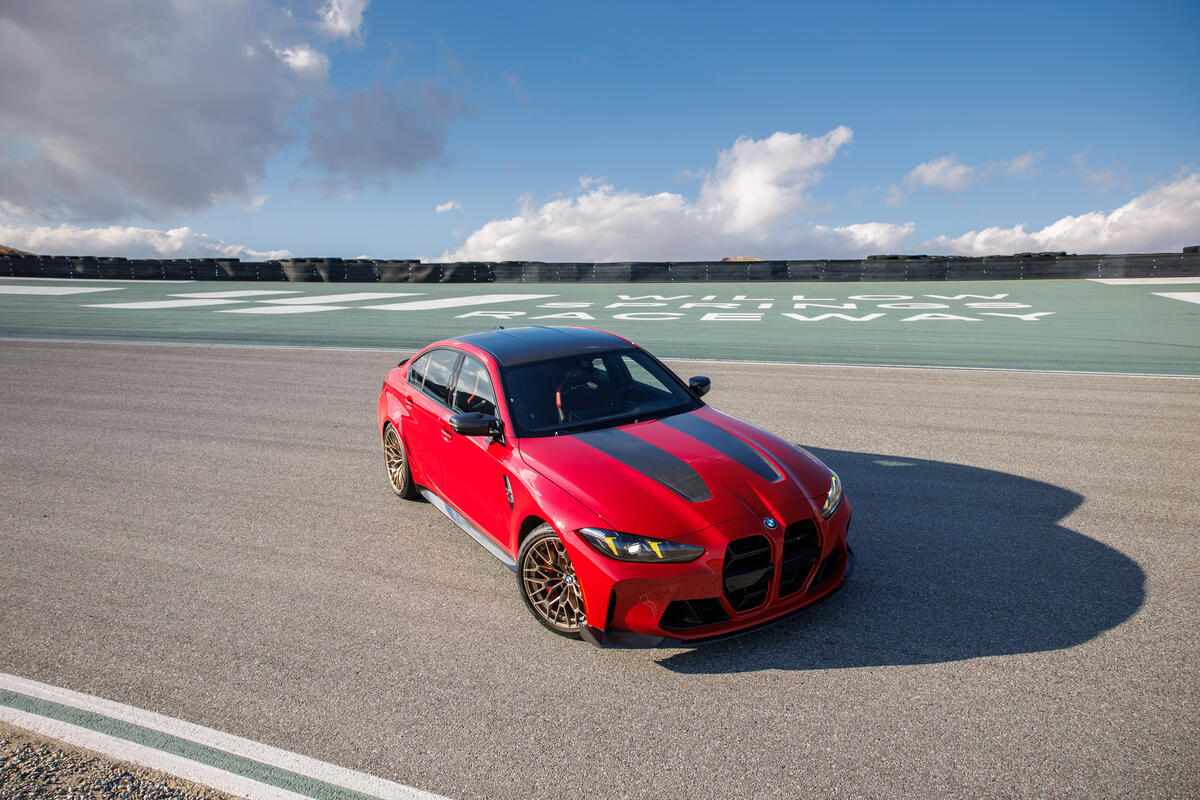
E46 M3s
"And there was no shortage of them. However, they still sold a lot of the three series. They sold even more of those, right? Yes, because of that. But the difference is that those cars were a lot more affordable. So when you shrink your brand like Porsche, let's just paint on saying, OK, Carrera S is now entry level."
The BMW E46 M3 is a famous BMW performance car from the late 1990s/early 2000s. The point here is that lots of them were made, so they were easier to find and buy than some other special models.
The BMW E46 M3 is a celebrated enthusiast car built around BMW’s high-revving inline-six and a driver-focused chassis. It’s being used here as an example of a high-volume, widely available performance model—“thousands” of them—without a shortage in the market.

BMW E46
"...se cars did well. And they made lots of them, the E46 M3s. I mean, like, thousands and of them, right?"
The BMW 3 Series is a common BMW model line that people buy as a regular car, not just a sports car. Over the years, BMW also made performance versions of it. The podcast mentions it because the performance versions—like the E46 M3—were made in very large numbers.
The BMW 3 Series is BMW’s core compact executive sedan/coupe platform, and it has been produced in huge numbers over many generations. The podcast specifically references the E46 M3, emphasizing how many were built, which speaks to the model’s popularity and influence. It’s discussed because the 3 Series is the foundation for BMW’s most famous performance variants.
gap car
"Got to have a gap car, man. There has to be a gap car in there."
A “gap car” is a model that sits between cheaper and more expensive cars. It helps people move up gradually instead of jumping straight to the top model.
A “gap car” is an in-between model that fills a pricing/positioning hole between two more distinct products. In this discussion, it’s about having a step that keeps customers moving up the Porsche lineup instead of getting priced out.

Porsche Cayman
"Their goal was to, hey, let's get you in a Cayman, like a brand new Cayman S."
The Cayman S is a Porsche sports car that’s usually less expensive than a 911. The point here is that Porsche wants you to start with a Cayman S and then upgrade later to a 911.
The Porsche Cayman S is Porsche’s mid-engine sports coupe that sits below the 911 in the lineup. The hosts describe it as an “in-the-door” car—something buyers can purchase new, enjoy for a few years, and then trade up into a 911.
resale value
"they have good resale value. You drive that for a few years and you work hard at your company..."
Resale value is what your car is worth when you sell it. If it holds value well, it’s easier to trade it in later and move to a more expensive Porsche.
Resale value is how much a car is worth when you sell it later. The hosts point out Porsche’s “good resale value” as part of why the upgrade path works—owners can trade in a relatively valuable car to help finance the next step up.
work their way up the ladder
"You drive that for a few years and you work hard at your company, stack some more money up... Bring that car back to us and trade it in and we'll get you into a 911 and move and move up that train."
This is the idea that you start with a cheaper Porsche first, then later upgrade to a more expensive one. The hosts are describing it like a step-by-step path through the lineup.
“Work their way up the ladder” describes a brand funnel where customers start with a more affordable model and later upgrade to higher-end models. Here, Porsche is portrayed as using trade-ins and resale value to keep buyers inside the brand as their budgets grow.

Cayenne
"I want to buy a Cayenne and work my way up."
The Porsche Cayenne is Porsche’s SUV. It’s a practical daily driver, but it’s still meant to feel fun to drive—so the host is saying it can be a first step before moving to more hardcore Porsche cars.
The Porsche Cayenne is Porsche’s SUV, known for bringing Porsche-style driving dynamics to a family-friendly body. In this segment, the host frames it as a “work up” path—starting with a Cayenne and moving toward more enthusiast-focused Porsche models.

Panamera
"It's like, I have a Porsche and it's like, oh, what do you have? It's like, I have a Panamera. It's like, stop talking to me."
The Porsche Panamera is Porsche’s four-door performance sedan. The host brings it up to make a point: some people brag about owning a Porsche model, but they may not actually be into the brand the way enthusiasts are.
The Porsche Panamera is Porsche’s four-door sedan (a “grand tourer” style car) built around performance and comfort. Here, the host uses it as an example of someone who identifies as a Porsche owner, but the conversation is really about how “badge” ownership can be mistaken for true enthusiast credibility.
soul of the company
"But yeah, not only that, but they're not experiencing what you would probably consider the soul of the company and, you know, that sort of thing. There's no race. What?"
The host is talking about what makes a brand feel special to real fans—like the racing heritage and the enthusiast culture. Their argument is that some people just own the car, but don’t really connect with what the brand stands for.
The host is referring to the idea that Porsche’s “soul” is tied to its enthusiast heritage—especially racing and the brand’s performance identity. The point is that simply owning a Porsche badge (or a Cayenne/Panamera) doesn’t necessarily mean you experience the brand the way motorsport-focused fans do.
hybrid system
"“...the hybrid system has some type of lineage back to the hybrid car.”"
A hybrid system is a setup that uses both a gas engine and an electric motor. The idea is to get better efficiency and sometimes extra punch, and the host is saying Porsche’s approach has roots in earlier hybrid work.
A hybrid system combines an internal-combustion engine with an electric motor and battery to improve efficiency and/or performance. The host mentions “lineage” to suggest Porsche’s hybrid tech is derived from earlier hybrid development rather than being a one-off experiment.
Lamborghini Huracán
"“...here's a great exercise... since this car is being compared to it... The Huracan, right? They're saying the three RS...”"
The Lamborghini Huracán is Lamborghini’s more accessible supercar compared to their most extreme models. The hosts are using it as the comparison point for where Porsche’s RS cars sit in the lineup.
The Lamborghini Huracán is Lamborghini’s mainstream supercar platform, positioned below the brand’s absolute top models. Here, the host frames it as the “entry level” Lamborghini that the Porsche 911 RS models are being compared against.

Lamborghini Huracan
"... compared to it and has been for a long time. The Huracan, right? They're saying the three RS and they have..."
The Lamborghini Huracan is a Lamborghini sports car. The podcast mentions it while talking about different high-performance versions and comparisons. It’s brought up because it’s one of Lamborghini’s main performance models.
The Lamborghini Huracan is a modern Lamborghini sports car known for its performance and for being a central model in the brand’s lineup. The podcast references “three RS” and compares it to the Huracan, indicating discussion around different high-performance variants and how they stack up. It’s discussed because the Huracan is a major reference point for Lamborghini’s performance offerings.
Porsche 911 GT2 RS
"“...basically you're not buying the big dog. Like basically you're not buying a GT2 RS.”"
The Porsche 911 GT2 RS is one of the most extreme versions of the 911. In the conversation, it’s used to mean the top, most hardcore option—basically not the one most people are shopping for.
The Porsche 911 GT2 RS is a track-focused, high-performance 911 variant known for extreme power and minimal “comfort” features compared with regular 911s. The host uses it as a reference point for the “big dog” tier—meaning the most hardcore, expensive end of the lineup.
clout chasers
"Because there is a lot of clout chasers who buy those cars and like, [1134.1s] Oh, I got some special color and I have this the boards and I have this deviated stitching and all."
“Clout chasers” means people who buy things to look impressive to others. Here, it’s about buying the car for image instead of how it actually drives.
“Clout chasers” is a social-media slang term meaning people who buy products mainly to signal status. In the episode, it’s used to describe buyers who want the RS look and options rather than caring about the driving experience.
PTS
"Because everybody's chasing PTS, right? [1160.5s] Like everybody's chasing this."
PTS is Porsche’s special custom paint option. The host is saying some people want it mainly for the look and bragging rights, not because it changes the driving feel.
PTS usually refers to Porsche Tequipment Spezialfarben, Porsche’s custom paint program. The speaker implies that buyers chase special options like PTS for status, but those choices don’t fundamentally change how the car drives.

Lamborghini Gallardo
"That vehicle alone changed them. Yeah, they sold some Gallardo's. They did pretty good with that entry level."
The Lamborghini Gallardo is a Lamborghini sports car. In the podcast, it’s described as a more accessible model that helped the company sell more cars. That’s why it comes up as an important turning point.
The Lamborghini Gallardo is a well-known Lamborghini model that helped broaden the brand’s reach with an “entry level” position in the lineup. The podcast notes that the Gallardo “changed them” and that they sold a number of them, emphasizing its role in Lamborghini’s growth. It’s discussed because it’s a key model in the brand’s modern history.
first to market
"They were trying to be first to market with all their stuff and it bit them on the ass."
“First to market” just means being the first company to sell something new. With cars, being first can be risky if the technology isn’t fully sorted yet.
“First to market” means launching a product before competitors. In cars, it’s often used when a brand tries to be the earliest with a new technology or model line, which can backfire if the engineering, supply chain, or regulations aren’t fully ready.
EV
"Like they've never made an electric car they don't know."
An electric car runs mainly on electricity stored in a battery. Instead of a gas engine, it uses an electric motor to move the car.
An electric car is a vehicle powered primarily by an electric motor(s) and a battery, rather than a gasoline engine. The discussion here is about Porsche’s experience (or lack of it) with electrification and how that affects product execution.
Nurburgr electric car fastest time
"Oh we're going to do a Nurburgr electric car fastest time."
The Nürburgring is a well-known race track in Germany that car companies use to compare how fast their cars are. “Fastest time” means they’re trying to set the quickest lap.
The Nürburgring is a famous German racing circuit used as a benchmark for performance cars. When someone says “fastest time,” they’re referring to a lap-time challenge meant to prove the car’s speed and development progress.
24 hour endurance
"We're going to do 24 hour endurance."
“24 hour endurance” is racing for a full day to see if the car can keep going without breaking. It tests reliability and how well the car handles long, hard use.
“24 hour endurance” refers to long-duration racing where the goal is to keep a car running reliably for an entire day. It’s a credibility test for durability, cooling, brakes, tires, and overall system robustness under sustained stress.
Nurburgring
"All that crowd. [1883.3s] You think those people care about Nurburgring times? [1886.2s] Probably not."
The Nürburgring is a major race track in Germany. Car fans use lap times there as a way to compare how fast and how good different cars are.
The Nürburgring is a famous motorsport venue in Germany, best known to enthusiasts for its Nordschleife (the long “North Loop”). Many performance cars are judged by how fast they can lap there, so “Nürburgring times” are shorthand for real-world track capability.
allocations
"So I'm going to make people buy this to get allocations. That's how we're going to sell these cars. ... Like that's how you get allocations."
“Allocations” means the limited number of cars the company is willing to sell to each dealer or customer. If a model is hard to get, you may need to buy something else first to be considered. That’s why the hosts talk about it like a controlled process.
In the car business, “allocations” are the limited production slots a manufacturer assigns to dealers or customers. When a model is in high demand, Porsche (and other brands) may restrict supply and distribute cars via allocations, which can make buyers feel pressured to purchase specific trims. This segment describes allocations as the mechanism behind the sales strategy.
strong arming your clients
"So now you're strong arming your clients that we've talked about before which is a shit move. The loyal clients."
“Strong arming your clients” is a metaphor for using pressure tactics to steer buyers toward certain purchases. In this context, the hosts argue that Porsche is pressuring “loyal clients” to buy a specific high-demand model or trim in order to secure allocations for other cars. It’s not a technical automotive term, but it describes a sales practice related to allocation control.

Porsche Macan
"... what the fuck are we doing here man. One another Macan. No."
The Porsche Macan is a smaller Porsche SUV with a focus on sporty driving. It’s not a sports car like a 911, but it’s meant to feel more performance-oriented than a typical SUV. The podcast mentions it because it keeps coming up in their discussion.
The Porsche Macan is a compact luxury performance SUV built to deliver Porsche-like driving characteristics in a smaller SUV format. The podcast’s “one another Macan” remark suggests frustration or repetition around the model’s presence in the conversation. It’s discussed because the Macan is a major volume model in Porsche’s lineup.

Boxster
"Anyways it's just a. You know I've never you've owned at least a Boxster. I haven't owned either one of these cars."
The Porsche Boxster is a mid-engine roadster built around a compact, sporty driving feel. Here it’s mentioned as a prior ownership reference, contrasting with the speaker’s lack of ownership of the Macan and Boxster specifically.
Goodwood Festival of Speed
"Some more big news goodwood festival speed that just finished up very cool stuff there. I would say the biggest takeaway from that is they made an announcement that they're going to be coming to the US."
Goodwood Festival of Speed is a big car event in the UK. Cars and drivers show off on a hill-climb course, and it’s also a place where manufacturers reveal new models.
Goodwood Festival of Speed is a major motorsport and car culture event held at Goodwood in the UK. It’s known for showcasing new cars, motorsport history, and lots of on-track action, including a famous hill-climb format.
hill climb event
"My theory behind this obviously wherever this lands the goodwood festival speed if you're not familiar with it the core of what that is it's a hill climb event."
A hill climb event is a race where cars go up a steep course as fast as they can. Drivers are timed, and handling and grip are especially important because the road is challenging.
A hill climb event is a motorsport format where cars race up an uphill course against the clock, rather than around a closed circuit. Because the course is steep and often has tight corners, traction, braking stability, and power delivery matter a lot.
Pikes Peak
"...my first thought was by speak I don't know where else they're going to be doing it... But Pike speak doesn't offer that either though..."
“Pike speak” sounds like “Pikes Peak,” a famous mountain in Colorado. There’s a well-known hill climb race there, so it makes sense they’d mention it as a US option.
“Pike speak” appears to be a mis-transcription of “Pikes Peak,” the famous mountain in Colorado associated with the Pikes Peak International Hill Climb. It’s a real-world hill climb venue, which is why it comes up in a discussion about where a hill-climb-style event could happen in the US.
track
"they'll probably have to do a track. They'll have to pick a track that allows them to build a hill climb at the track."
Here, “track” means the racing venue itself. They’re saying they’ll need a place that can safely host a hill climb built right into the event.
In this context, a track means a dedicated racing circuit or venue where organizers can build a hill climb as part of the event. Selecting the right track is about having enough space, safety barriers, and access to support temporary construction.
paddocks
"And then that way they can still, because how it works at Goodwood is they have all the paddocks, they have all the"
Paddocks are the team areas at a race where cars are parked and worked on. It’s where teams set up, do quick repairs, and get ready for the next run.
Paddocks are the fenced-off areas at a race event where teams park, service cars, and prepare for runs. They’re part of the event’s logistics—where you’ll find garages, tool access, and team operations between track sessions.
corkscrew
"They just cut out the last or like from a cork screw back to, I don't know which turn it is, back to the straight."
“Corkscrew” is the name of a well-known twisty section on a race track. It’s the kind of corner sequence that’s hard to get right and can strongly affect how fast a car can go through the lap.
“Corkscrew” refers to a specific high-speed sequence of turns on a famous road course, where the car changes direction in a dramatic, corkscrew-like arc. In track discussions, naming it usually implies a recognizable braking/turn-in challenge that affects lap time and car setup.
flint walls
"The issue with it, it just wouldn't do the same thing because they have a flint wall there. They have a lot more stuff going on."
A “flint wall” is a wall/barrier made from a particular material. On a race track, the kind of barrier and where it’s placed can affect how drivers brake and turn because it changes the environment around the track.
A “flint wall” is a specific type of barrier/wall material or construction referenced as part of the course environment. In motorsport context, barrier type and placement can change how drivers approach corners (confidence, braking reference points, and perceived risk).
Willow Springs
"It's going to be at Willow Springs. ... Because have you seen what Willow Springs looks like, dude? ... It's like a damn desert."
Willow Springs is a race track in California where people go to drive and race cars. The hosts are debating whether it makes sense to turn it into a bigger event destination, since it’s in a pretty remote desert area.
Willow Springs is a motorsports venue in California known for hosting track days and racing events. In this segment, the hosts discuss whether a new event/venue plan would work there, based on the track’s remote, desert-like surroundings and limited “extra” attractions beyond track running.
variants
"I'm not going to talk about how much each variant's gone up that everybody already knows that."
Here, “variants” just means different versions of the same car model. For example, different trim levels or performance versions of a Porsche 911.
In this context, “variants” means different versions of the same Porsche 911 model line—typically different trims and performance packages. The hosts are talking about how pricing changes across those versions.
PDK
"they're not going to buy a 13-year-old Crera S PDK because that is not, for them is not sexy, right?"
PDK is Porsche’s special automatic transmission. It shifts very fast because it’s designed to switch gears quickly. The hosts mention it while talking about whether people would pay a lot for an older Porsche.
PDK is Porsche’s dual-clutch transmission. It uses two clutches to pre-select the next gear, which helps it shift quickly and smoothly compared with a traditional automatic. In the segment, it’s part of why a 2013 911 Carrera S might not feel “sexy” to some buyers at an $80,000 price point.
naturally aspirated
"Yeah, 400 horsepower, flat six. Naturally aspirated."
Naturally aspirated means the engine isn’t boosted by a turbo or supercharger. It breathes on its own, which often makes the power delivery feel smoother and more direct. They mention it to describe the specific Porsche they’re using as a benchmark.
Naturally aspirated means the engine makes power without a turbocharger or supercharger, relying on atmospheric pressure and engine design. Compared with forced induction, it typically delivers power more linearly and can feel more immediate at lower engine speeds. The hosts use it to characterize the 991.1 Carrera S they’re comparing against other cars.
flat six
"Yes, there's turbo variants, but at its core, [2794.2s] flat six, [2799.2s] the NA rear engine, that's what is a pure 9-Eleven."
A “flat six” is an engine where the cylinders sit flat, in two sides. Porsche uses this layout in the 911, and it helps give the car its classic character.
A “flat six” is an engine with six cylinders arranged horizontally in two banks of three, like a boxer layout. In the Porsche 911, this design is strongly associated with the car’s rear-engine heritage and its distinctive mechanical feel.
rear engine
"Yes, there's turbo variants, but at its core, flat six, [2799.2s] the NA rear engine, that's what is a pure 9-Eleven. [2804.8s] That's what a real 9-Eleven is."
“NA” means naturally aspirated—no turbo. “Rear engine” means the engine is in the back of the car, which changes how the car feels to drive.
“NA” stands for naturally aspirated, meaning the engine makes power without a turbocharger or supercharger. “Rear engine” specifies the engine is mounted at the back of the car, which affects weight distribution and handling behavior.
400 horsepower
"However, [2821.0s] 400 horsepower car weighs 3,100 pounds. [2825.0s] That's pretty stout."
Horsepower is how much power the engine can make. They’re using “400 horsepower” to say the car still feels strong, even if it looks subtle.
Horsepower is a measure of engine power output. The speaker pairs “400 horsepower” with vehicle weight to argue the car has a strong power-to-mass feel, even if it doesn’t look flashy.
2,100 pounds
"However, [2821.0s] 400 horsepower car weighs 3,100 pounds. [2825.0s] That's pretty stout."
Weight matters because it affects how fast a car can accelerate and how it feels in corners. They’re saying the car isn’t light, but it’s still got enough power to feel solid.
Vehicle weight is a key factor in how a car accelerates, brakes, and handles. The speaker uses “3,100 pounds” to support the point that the car’s performance isn’t just marketing—it has real mass and power to match.

Honda S2000
"...me candidates. Number one, it comes to mind is an S2000. Natural."
The Honda S2000 is a small two-seat sports car. It’s known for an engine that revs very high and makes the car feel lively. The podcast mentions it because it’s often considered one of the best choices in its class.
The Honda S2000 is a two-seat sports car known for its high-revving engine and sharp, responsive feel. In the podcast, it’s brought up as a top candidate, suggesting it’s considered a standout sports car option. It’s discussed because the S2000 has a strong enthusiast reputation tied to how it drives.
engine placement
"We're never going to find engine placement the same. So they hear me out."
Engine placement means where the engine is located in the car. That location changes how the car feels when you turn and accelerate, because it shifts where the weight sits.
Engine placement is where the engine sits in the car (front, mid, or rear) and how that layout affects balance and handling. Porsche 911s are known for a rear-engine layout, so comparing “engine placement” is really about comparing weight distribution and how the car behaves.
inline four
"Granted, it's down two cylinders. It's only a four. It's an inline four."
An inline four is an engine with four cylinders lined up in a row. It’s a basic engine layout, and here it’s being used to compare against the Porsche 911’s different engine design.
An inline four is an engine with four cylinders arranged in a single row. It’s a common layout for smaller-displacement engines, and in this discussion it’s contrasted with the Porsche 911’s typical flat-six configuration.
high-revving motor
"However, it's a high-revving motor. The 911s are high-revving motors. So they share that in common."
A high-revving engine is designed to run at higher RPMs. The point is that it can feel lively and responsive as you rev it out, even if it doesn’t make the same peak power.
A high-revving motor is an engine tuned to spin to higher RPMs, often with a powerband that comes alive as revs rise. In the segment, the host argues that even with less power, the engine character can feel similar to a Porsche 911’s tendency to rev.
5050 weight distribution
"50-50 weight distribution on this car, though. Better than a Porsche. So it wins in that category."
50-50 weight distribution means the car has about equal weight on the front and back wheels. That balance can help the car handle more predictably when you steer.
50-50 weight distribution means the car’s weight is split evenly between the front and rear axles. This balance can improve turn-in and overall handling consistency, and the host claims it’s better than a Porsche in that category.
gutless down low
"Now, it's gutless down low just like a 911."
“Gutless down low” means the car feels weak when you’re driving at low RPMs. It may not pull hard until you rev it higher.
“Gutless down low” is enthusiast slang for weak acceleration at low engine RPMs (the bottom of the rev range). The host is saying the alternative car’s torque delivery is similar to a 911’s character—less immediate punch until you get into the revs.
AP1, AP2
"Yeah. [3008.7s] There's a couple of different models. [3011.4s] AP1, AP2."
AP1 and AP2 are shorthand fans use for two different generations of the Honda S2000. They help people talk about which version they mean, since the car changed over time.
AP1 and AP2 are internal generation codes for the first- and second-generation Honda S2000. They’re used by enthusiasts to distinguish changes in engine output, chassis tuning, and other details between model years.
collector-grade
"I mean, you can go deep if you're going for collector grade. [3020.4s] You can go deep. [3022.1s] But I was trying to keep it at 60,000, 70,000 miles."
“Collector grade” means the car is in top condition and cared for like a collectible. Those cars usually cost more than a normal “daily driver” example.
“Collector grade” describes a condition and presentation level aimed at collectors—typically low wear, strong originality, and careful maintenance. It often costs more than a driver-quality example because collectors pay for provenance and originality.
convertible
"But as long as you don't mind a convertible, [3027.9s] I think that would be the only thing that I would say out of that. [3029.9s] My only con would be if you're okay with a convertible."
A convertible is a car where the roof can fold down so you can drive with open air. It usually has extra parts compared to a normal roof, and that can matter for maintenance.
A convertible is a car with a roof that can be opened, typically using a folding soft top or retractable hard top. Converting to open-air use can affect structural rigidity and adds complexity compared with a fixed-roof coupe.
shifter feel
"It's supposed to be some of the best, you know, best shifter feel ever, ever made because it's directly connected to."
“Shifter feel” is how the gear lever feels when you move it—how smooth it is, how much effort it takes, and how accurately it lands in gear. Better shifter feel usually makes driving more satisfying.
“Shifter feel” describes how a manual transmission’s gear lever responds—things like resistance, smoothness, and how precisely it guides you into each gear. Enthusiasts often treat it as a key part of a car’s driving “connection,” not just an on/off mechanical function.
engine issues
"And yeah, going into like, you know, some of them can have some engine issues if they're not looked after properly and things like that."
“Engine issues” means problems that can happen inside the engine, like it running poorly or needing repairs sooner than expected. The point here is that maintenance matters a lot to avoid those problems.
“Engine issues” refers to known or recurring problems that can affect engine health and reliability if the car isn’t maintained properly. In this segment, the hosts are cautioning that some cars in this enthusiast category can develop engine problems when neglected.
Garrett Turbo
"you know, the biggest Garrett turbo on there or Jackson Racing Supercharger"
A Garrett turbo is a performance part that forces more air into the engine. A “bigger” one usually makes more power, but it can feel different because it may take longer to build boost.
A Garrett turbocharger is a turbo system made by Garrett (a major turbo supplier). When someone says “biggest Garrett turbo,” they mean a larger turbo that can move more air for higher boost and power, but it can also change drivability and spool-up.
Jackson Racing Supercharger kit
"you know, the biggest Garrett turbo on there or Jackson Racing Supercharger"
Jackson Racing makes supercharger kits. A supercharger pushes extra air into the engine so it can make more power.
Jackson Racing is an aftermarket performance brand known for supercharger kits. A “Jackson Racing Supercharger” refers to a belt-driven forced-induction setup that increases intake air pressure for more power.
coilovers
"Would it just be like coilovers? [3125.4s] OEM plus, man, coilovers, probably bushings, you know, control arms,"
Coilovers are suspension parts that let you change how low the car sits. They also help you tune the ride and handling.
Coilovers are adjustable suspension units that combine a coil spring and shock absorber in one package. Enthusiasts use them to lower the car and fine-tune ride height and handling characteristics.
OEM plus
"OEM plus, man, coilovers, probably bushings, you know, control arms,"
“OEM plus” means modifying a car but keeping it feeling like a well-sorted factory car. The goal is usually better performance without going overboard.
“OEM plus” means upgrading a car in a way that stays close to the factory feel—typically using quality aftermarket parts that improve performance or drivability without turning the car into an extreme track-only build. It’s a philosophy of tasteful, balanced modifications.
control arms
"OEM plus, man, coilovers, probably bushings, you know, control arms,"
Control arms are parts that connect the wheel to the car’s suspension. They help keep the wheel positioned correctly, which affects steering and grip.
Control arms are suspension links that locate the wheel and help control its motion over bumps and during cornering. They’re a common upgrade point because different bushings or aftermarket arms can improve alignment stability and handling feel.
bushings
"OEM plus, man, coilovers, probably bushings, you know, control arms,"
Bushings are small parts that help suspension components move smoothly. Upgrading them can make the car feel more precise and less “loose.”
Bushings are rubber or polyurethane components that connect suspension parts and allow controlled movement while filtering vibration. Upgrading bushings can tighten steering response and reduce unwanted play, especially when paired with other suspension changes.
chunky rubber
"TEs where I could put chunky rubber on it."
“Chunky rubber” means thicker, grippier tires. Wider tires usually give the car more traction.
“Chunky rubber” is enthusiast slang for wider, stickier tires with more sidewall and tread. The idea is to increase grip so the car can put power down and handle better.
super quiet exhaust
"Probably super quiet exhaust that I went aftermarket."
That means an exhaust system designed to be much quieter than a loud performance setup. It’s often chosen for comfort and less annoying noise.
A “super quiet exhaust” refers to an aftermarket exhaust setup tuned for low noise rather than maximum sound. Enthusiasts may choose it to keep the car comfortable and reduce drone while still gaining some performance or styling.
16 inch wheel
"16 inch wheel. [3142.3s] Yeah."
A 16-inch wheel is just the size of the rim. The rim size changes how the tire sits and can affect ride comfort and grip.
A “16 inch wheel” is a wheel size measured by diameter. Wheel diameter affects tire sidewall height and ride/handling feel—often smaller wheels with taller sidewalls can feel more compliant.
top down
"I mean, how you could daily that car, you know, and not, and not worry about it and have top down if you like that."
“Top down” just means the car is being driven like a convertible, with the roof open. It usually makes the ride louder and more airy.
“Top down” refers to driving with the convertible roof lowered. On convertibles, this changes cabin noise, airflow, and sometimes how the car feels dynamically compared with the fixed-roof version.

Honda NSX
"... it was a gap car because they weren't making the NSX when they were making that. Yeah, it was very, I ..."
The Honda NSX is a sports car made by Honda. It’s known for having the engine in the middle of the car. The podcast mentions it because there were times when it wasn’t being produced while other models were.
The Honda NSX is a mid-engine sports car that’s known for its engineering-focused approach and its place as a “gap” model during certain production periods. The podcast notes it wasn’t being made while another car was being produced, which is why it’s described as a gap car. It’s discussed because the NSX’s production history and role in the lineup are part of its story.
manual only
"“Manual only. Yeah.”"
“Manual only” means the car comes with a stick shift and not an automatic. That makes shopping easier because you don’t have to compare different transmission options.
“Manual only” means the car is offered only with a manual gearbox, not an automatic or dual-clutch transmission. For shoppers, it simplifies the search because there’s no decision about which transmission type to buy.
AP one
"“There's a little bit of variance between AP one, AP two, but I think this is a safe place to land.”"
AP1 and AP2 are shorthand used by S2000 fans to mean different versions/years of the car. The host is saying there are differences, but one of them is generally the safer bet.
“AP1” and “AP2” are internal Honda S2000 generation codes used by enthusiasts to distinguish early vs later versions. The host says there’s some variance between AP1 and AP2, but implies one is a safer choice to target.
AP two
"“There's a little bit of variance between AP one, AP two, but I think this is a safe place to land.”"
AP2 is the label people use for the later version of the S2000. The host mentions it because different versions can feel or behave a bit differently, so buyers should know which one they’re getting.
“AP2” is the later S2000 internal code (paired with AP1 for the earlier version), and it’s used to discuss differences in parts and characteristics between the two. In this segment, it’s referenced as part of the decision-making process when choosing which S2000 to buy.
clapped out
"“...especially if you get one that's not clapped out and that's not hot boyed out.”"
“Clapped out” is enthusiast slang meaning a car is worn out, neglected, and often mechanically or cosmetically degraded. The host uses it as a warning to avoid buying an S2000 that’s been abused or poorly maintained.
hot boyed out
"“...especially if you get one that's not clapped out and that's not hot boyed out.”"
“Hot boyed out” is slang for a car that’s been modified a lot, usually for looks or hype. The host’s point is that those cars can be less reliable or less well cared for than a stock or properly maintained one.
“Hot boyed out” is slang for a car that’s been heavily modified in a flashy or aggressive way—often with questionable quality or reliability. The host implies that, for longevity, you should avoid an S2000 that’s been “hot boyed out” rather than kept in good condition.
depreciation
"they're, they're past the point of depreciation. If anything, they're going to be on what we talk about with Porsches before"
Depreciation is how the value of a car goes down as it gets older. The host is saying some Porsches have already “lost most of their value,” so they may hold money better than you’d expect.
Depreciation is how much a car’s value drops over time after you buy it. In this segment, the host argues that certain Porsches are “past the point of depreciation,” meaning their value doesn’t fall as much anymore and may even rise if demand stays strong.

Ford Gt350
"This is the thick girl of the bunch. I put GT 350 in there. Not the R, just the 350 because the R is like expensive."
crankshaft issues
"So, you know, you can get a 350 for less than a lot less than 80. But don't get an early one because they have crankshaft issues. I think, I think LZ burnt one down."
The crankshaft is a key moving part inside the engine. The host is warning that some early versions of this car had engine problems tied to the crankshaft, so you should avoid the earliest years.
Crankshaft issues refer to problems with the crankshaft, the rotating shaft that converts piston motion into usable engine power. In this segment, the host warns that early GT 350s can have crankshaft-related failures, so buying later examples is safer.
flat plane V8
"So if you don't know a little bit of background on it, [3374.2s] high revving flat plane V8 revs to 8250."
This is a type of V8 engine where the crankshaft is shaped in a way that helps the engine rev quickly and smoothly. In simple terms: it’s built to feel more “high-RPM” and responsive.
A flat-plane V8 is a V8 engine design that uses a crankshaft layout intended to improve throttle response and high-RPM smoothness. It typically revs more freely than a cross-plane V8, which is why it’s often associated with performance engines that like to spin.

Ford Mustang
"...ty good. Yeah, they think they're better than the Mustang people, but they do the same crap. Anyways, so fa..."
The Ford Mustang is a popular American sports car. It’s known for being powerful and for having lots of different versions. The podcast mentions it because it’s a major reference point when people talk about performance cars.
The Ford Mustang is a long-running American muscle car known for its strong performance options and wide aftermarket support. The podcast references it in a comparison-like way, suggesting some people talk about Mustang owners or Mustang culture while making similar points about other cars. It comes up because it’s one of the most recognizable performance cars in the market.
high-revving V12
"So it depends on what you like, right? Like if you like a high-revving V8, it's a unique car. I mean, I don't ever see them doing that again."
A “high-revving V8” means a V8 engine that likes to spin fast. In this conversation, they’re saying that kind of engine character is special and might be hard to find again.
A “high-revving V8” describes a V8 engine tuned to spin to relatively high RPMs, usually to make power higher in the rev range and feel more exciting as you accelerate. The host uses it to frame what kind of driving experience they personally prefer.
blip on the radar
"They hadn't done him one prior to that. It'll be it'll be another like it'll blip on the 20 years. Yeah, it'll be a blip on something. Yeah. Blip on the radar of like, man, remember when Ford made this?"
“Blip on the radar” just means something that people notice for a short time, then forget about. Here they’re implying a car/idea might be remembered briefly, not for years.
“Blip on the radar” is a metaphor for a short-lived or niche moment of attention rather than a long-term mainstream trend. In automotive talk, it often means a model or idea that gets remembered briefly before the market moves on.
carbon fiber wheels
"It has carbon fiber wheels optioned. [3727.5s] It has a little bit more carbon, you know, splitter, tail."
These are wheels made from carbon fiber, a very light material. Lighter wheels can help the car respond quicker, especially when you’re driving hard.
Carbon fiber wheels are wheel rims made from carbon-fiber composite. They’re lighter than many conventional wheels, which can improve acceleration feel and reduce unsprung weight, and they’re also a common “track-ready” styling/option on performance cars.
splitter
"It has a little bit more carbon, you know, splitter, tail. [3732.2s] Just a little bit more race ready."
A splitter is a piece on the front of the car that helps the airflow. It’s there to help the car feel more planted when you’re going fast.
A splitter is an aerodynamic front (or sometimes rear) extension that sticks out to manage airflow under and around the car. On performance trims, it helps increase downforce and stability at speed by shaping how air flows near the ground.
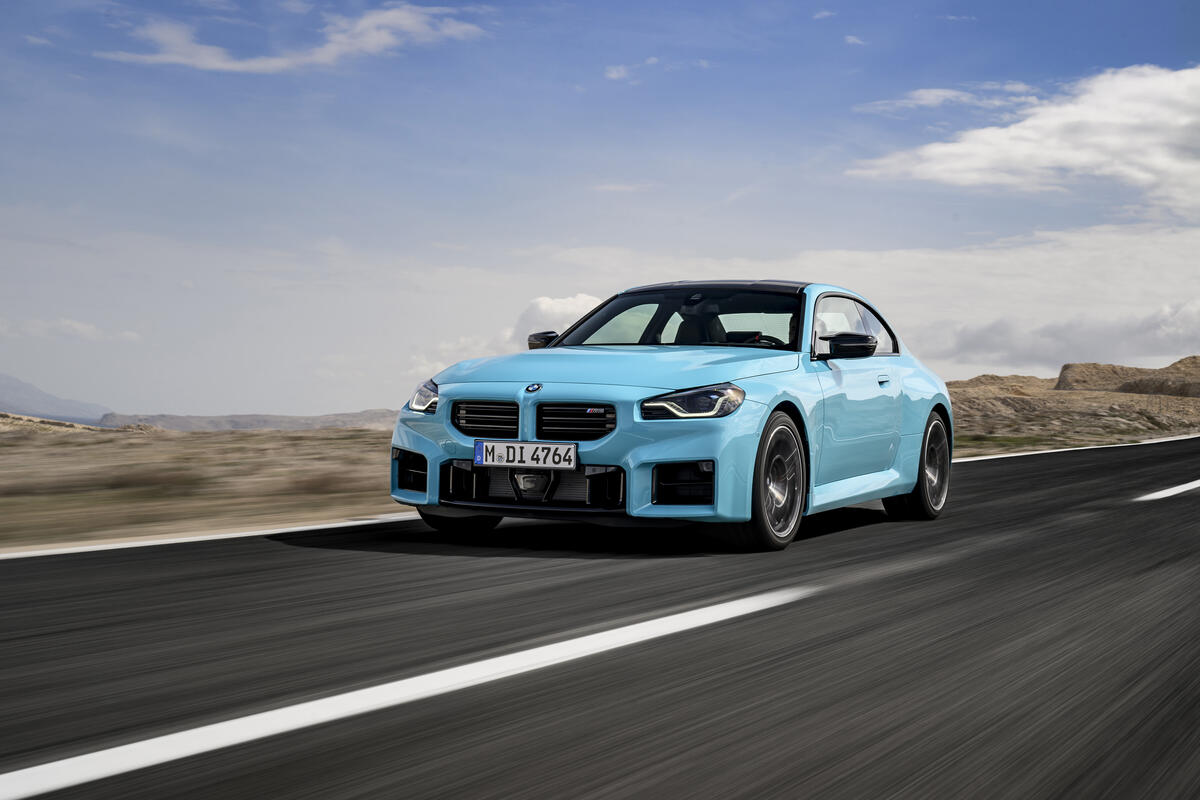
M2
"So this one is a little so this is a European one. [3763.5s] So the M2 and I'm not talking about the current M2. [3766.5s] I'm talking about the F87, the gen that was just outgoing compared to the new one."
The BMW M2 (F87) is a small, sporty BMW with a turbocharged six-cylinder engine. The host is saying it can be a cheaper way to get similar thrills without paying Porsche prices.
The BMW M2 (F87) is a compact performance coupe built around a turbocharged inline-six, designed to deliver “small car, big punch” handling and acceleration. In this segment, the host frames it as a budget-friendly alternative to higher-priced Porsche performance models, while noting it responds well to tuning.
inline six turbo
"But I picked this one because I feel like it's again, it's a little down on power to inline six turbo, 365 out of the box, but these things receive tuned very well."
That means the engine has six cylinders in a line, and it uses a turbocharger to make more power. Turbos help the engine feel stronger, especially when you accelerate.
An inline-six turbo is an engine configuration where six cylinders are arranged in a straight line (“inline six”) and forced induction is provided by a turbocharger. This setup is often chosen for smooth power delivery and strong torque compared with naturally aspirated engines of similar size.
chill tune
"these things receive tuned very well. [3806.6s] So like you could you can do a chill tune and still get 100 horsepower on this car."
A “chill tune” is a software update for the engine that adds some power but keeps things gentle. It’s meant to feel smooth day-to-day rather than harsh or extreme.
A “chill tune” is an aftermarket engine calibration that’s intentionally conservative compared to aggressive performance tunes. The goal is usually to add power while keeping drivability smooth and reducing stress compared with maximum-boost, race-oriented settings.
curb weight
"So like you could you can do a chill tune and still get 100 horsepower on this car. [3811.5s] Curb weight on this car, lighter than the Mustang, obviously heavier than the Porsche"
Curb weight is basically how much the car weighs when it’s ready to drive, without people or extra stuff. Lighter curb weight usually helps the car feel quicker.
Curb weight is the weight of a vehicle as it sits ready to drive, typically including standard fluids and a full set of standard equipment, but not passengers or cargo. It’s a key factor in how quickly a car accelerates and how it feels in handling.
Request an Explanation
Heard something you'd like explained? We'll add it to this episode.
Sign in to request explanations for terms you heard.
Want to learn more?
Browse our glossary for plain-English explanations of automotive terms, jargon, and concepts.
Help improve this episode
See something that's not quite right? Our annotations are AI-generated and can sometimes miss the mark. Click the flag icon on any annotation to suggest a correction.