
About this episode
A Q&A session built around a wild eBay story: a friend nearly bought a Channel Tunnel boring machine after a joke bid accidentally became the winning bid. The hosts riff on the pre-smartphone “Wild West” of early eBay—trusting listings, waiting for updates, and getting bizarre results. The question sparks more tales: buying a box of Afrocombs for a pound, James May selling an opened/part-smoked pack of cigarettes for a surprising sum, and transporting odd purchases like a Pacman arcade and even a table tennis table using small trucks.
In this week’s On The Other Side Of Things question answering show, Jonny and Richard address stupid things bought from eBay, van or estate, and automotive slovenliness.
For early, ad-free episodes and extra content go to patreon.com/smithandsniff
To buy merch and tickets to live shows go to smithandsniff.com
Hosted on Acast. See acast.com/privacy for more information.

Chevrolet Nova
"...tations, you pair of mischievously inverted voxel nova hazard warning switches. This is an excellent ref..."
The Chevrolet Nova is an older-style American car model. The podcast mentions it in connection with a specific interior part, like the hazard warning switches. That kind of detail usually comes up when someone is working on, restoring, or describing a particular car.
The Chevrolet Nova is a classic American compact car nameplate that’s often associated with older models and enthusiast culture. The podcast’s mention is more about a playful, specific detail (“hazard warning switches”), which suggests the Nova is being discussed in a hands-on or restoration/parts context. It’s significant because the Nova is a recognizable platform for customization and collecting.
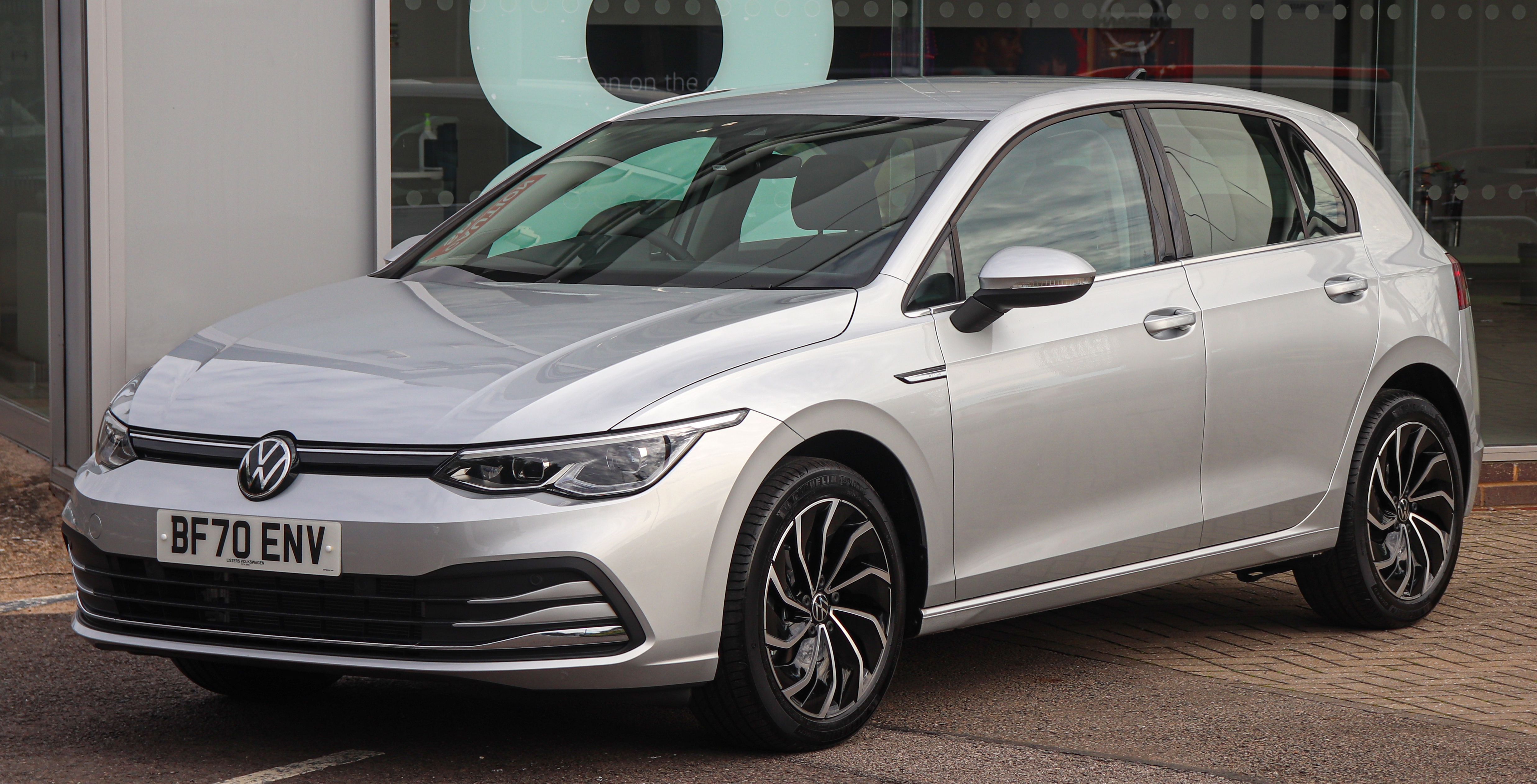
Volkswagen Golf
"...And the only car I had that was on the road was a golf cabriolet. So I picked it up in a golf cabriolet ..."
The Volkswagen Golf is a small car meant for daily driving. A Golf Cabriolet is the same basic car, but with a roof that can open so you can drive with the top down. It’s mentioned because it’s a popular, practical model and the convertible version is a fun twist.
The Volkswagen Golf is a compact, everyday hatchback that’s known for being practical and easy to live with. In the podcast, the speaker specifically mentions a Golf Cabriolet, which is the open-top version that keeps the Golf’s general layout while adding a convertible roof. It’s the kind of car people discuss because it’s common, versatile, and has a long production history.

Suzuki Swift
"I'm 27. I'm a keen enthusiast of my Mark II Suzuki Swift Spo... W..."
The Suzuki Swift 5-door is a small hatchback with extra doors for easier access to the back seats. The podcast mentions it because the speaker likes the Swift and enjoys driving it. It’s a practical car that’s also meant to feel lively to drive.
The Suzuki Swift 5-door is a compact hatchback known for being light, practical, and fun to drive. The podcast references the speaker’s enthusiasm for a Mark II Swift, and the “5 doors” version is the everyday family-friendly layout. It’s often discussed because it’s an accessible car for people who like driving dynamics without moving up to a larger or more expensive vehicle.

Ford Focus
"I'm having thoughts of either going for a focus-slash-lay-on estate to retain some handling fun whilst having more space"
The Ford Focus is a popular small Ford car. Here, the host is talking about the estate (wagon) version because it has more space but should still drive like a normal car.
The Ford Focus is a compact car line from Ford, and the speaker is considering the Focus estate variant for extra cargo space. It’s often chosen because it can still feel “car-like” to drive compared with larger family cars or vans.
estate
"I'm having thoughts of either going for a focus-slash-lay-on estate to retain some handling fun whilst having more space"
An estate car is like a regular car, but with a bigger back for luggage. It usually has more room than a hatchback, while still driving like a normal car.
An estate car (often called a wagon) is a passenger car with a longer rear cargo area and a tailgate. It’s designed to carry more stuff than a hatchback or sedan while keeping car-like driving dynamics.

Volkswagen Caddy
"or going the whole hog and getting a Blingo-slash-caddy-slash-transit-connect to be converted into a mini-home-from-home."
The Volkswagen Caddy is a small van. People often convert it for camping because it has space for a bed and storage, like a tiny home.
The Volkswagen Caddy is a small commercial van that’s commonly used for light work and can be converted into a camper-style vehicle. The speaker is considering it as a “mini-home-from-home” alternative to an estate car.
ST-Line
"Probably post-2010, ST-Line or FR, preferably, and no one-litre EcoBooms"
ST-Line is a Ford trim that usually makes the car look and feel more sporty. It’s more about styling and extra kit than turning it into a track-focused car.
ST-Line is a trim level used by Ford that typically adds sportier styling and equipment (like bodywork and interior accents) rather than being a full performance model. It’s a way to get a more aggressive look and some added features without stepping up to the top performance variants.
FR
"Probably post-2010, ST-Line or FR, preferably, and no one-litre EcoBooms"
FR here means a particular trim level that’s meant to be a bit more sporty than the standard version. It’s basically choosing a “nicer spec” rather than a totally different model.
FR is a performance-oriented trim designation used by some European car brands (commonly associated with Renault’s “F” and “R” styling/performance packages). In this context, the speaker is treating FR as an equipment/trim choice for a post-2010 estate, aiming for a more engaging driving feel than basic trims.
one-litre EcoBooms
"Probably post-2010, ST-Line or FR, preferably, and no one-litre EcoBooms, meaning that my £5,000 budget would probably only stretch"
This is the host’s way of saying they don’t want the smallest, economy-focused turbo engines. They’re worried those engines won’t feel as good or may not be as durable as bigger options.
“One-litre EcoBooms” is the speaker’s shorthand for small-displacement, efficiency-focused turbo engines (often marketed as eco-friendly). The concern is that these tiny turbo motors can feel less satisfying or may come with downsides compared with larger engines.
sanitising
"and a bit ghetto, and probably in need of welding slash sanitising."
Sanitising means thoroughly cleaning and treating the van’s interior so it’s not gross or smelly. It’s especially important if the van has been used hard before you convert it.
Sanitising here likely means cleaning and treating the interior to remove smells, contaminants, or residue—especially important if a van has been used for work or has lingering odors. For conversions, it’s part of making the space livable.
welding
"and a bit ghetto, and probably in need of welding slash sanitising."
Here, welding means fixing damaged metal, often from rust. It’s something you might need before you can safely turn a used van into a camper.
Welding in a van context usually refers to repairing structural metal—commonly rusted floor pans, sills, or body seams. It’s a major part of making an older commercial van safe and solid before or during a conversion.

Skoda Octavia
"lacking the charm of the swift. Maybe an Octavia VRS or a Focus ST would tick all the racier spec ..."
The Skoda Octavia is a car that’s built to be practical, with room for passengers and luggage. In the podcast, the Octavia VRS is mentioned as the more performance-oriented version. That means it’s meant to feel more sporty than the regular models.
The Skoda Octavia is a practical compact-to-mid-size car that’s known for offering lots of space and value. The podcast mentions the Octavia VRS as a “racier spec” option, implying a performance-focused version aimed at more enthusiastic driving. It comes up because it can be both usable day-to-day and more exciting than the standard trims.

Octavia VRS
"Maybe an Octavia VRS or a Focus ST would tick all the racier spec pickle."
The Škoda Octavia VRS is a sportier version of the Octavia. It’s meant to feel more exciting to drive than a regular family estate.
The Škoda Octavia VRS is a performance-focused trim of the Octavia, typically tuned for sharper handling and more driver-oriented power than the standard models. The host is using it as an example of an estate-style car that could satisfy “racier” tastes.
Focus ST
"Maybe an Octavia VRS or a Focus ST would tick all the racier spec pickle."
The Ford Focus ST is the sportier version of the Focus. It’s designed to be more fun and responsive than the regular model.
The Ford Focus ST is a hot-hatch variant built for more enthusiastic driving than a normal Focus. Here it’s mentioned alongside the Octavia VRS as a way to get a “racier” feel without giving up too much practicality.

E-class Merc
"And if you do that, there's not that many cars which drive sportily. They'll be very, very plush. Like an E-class Merc, for example, I would get an E-class"
The Mercedes-Benz E-Class is a comfortable, more luxurious car. In this conversation, it’s being used to illustrate that estates often prioritize comfort over sporty driving.
The Mercedes-Benz E-Class is a mid-size luxury sedan/wagon lineup, known for comfort and a more “grown-up” driving feel. The host uses it as an example of how estate cars often end up being plush rather than sporty.
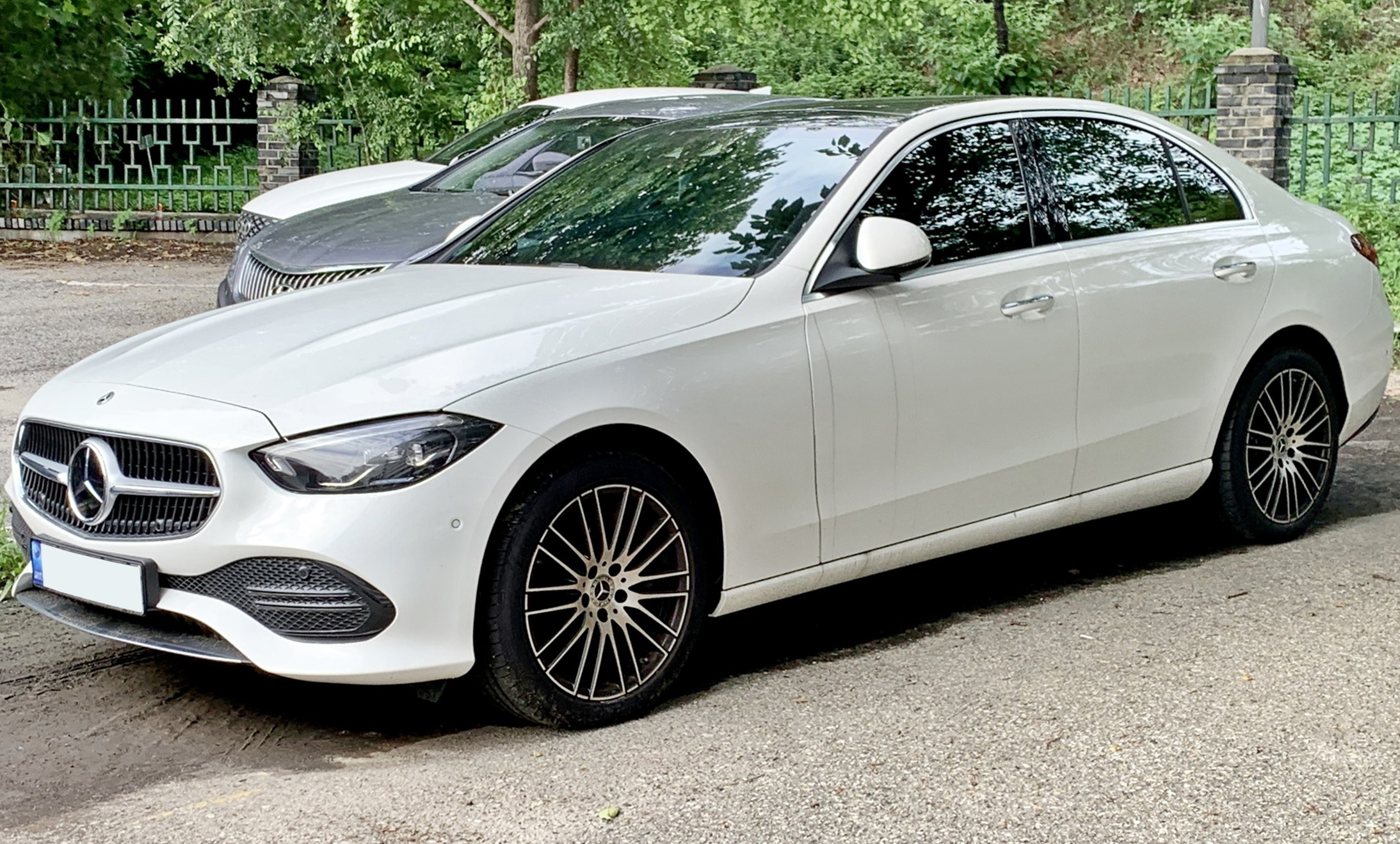
C-class Mercedes estate
"Like an E-class Merc, for example, I would get an E-class or even a C-class Mercedes estate."
The Mercedes-Benz C-Class is a smaller Mercedes than the E-Class, and it can come as a wagon/estate. The speaker is mentioning it as a possible compromise between practicality and driving feel.
The Mercedes-Benz C-Class is a smaller luxury model line compared with the E-Class, and it’s also offered as an estate/wagon. The host suggests it as another option if you want an estate car but still hope for some driving appeal.

Transit Connect
"But the thing about utilitarian vans, I mean, and the Transit Connect drives brilliantly well as an example."
The Ford Transit Connect is a small work van. The speaker is saying that even though it’s a practical van, it can still drive really well.
The Ford Transit Connect is a compact commercial van known for being relatively easy to drive compared with bigger vans. The host uses it as an example of a utilitarian vehicle that “drives brilliantly,” implying it can still feel good day-to-day.
utilitarian vans
"But the thing about utilitarian vans, I mean, and the Transit Connect drives brilliantly well as an example."
“Utilitarian vans” are work vans meant mainly for practicality and carrying things. The speaker is saying that even these can still be fun or pleasant to drive, using the Transit Connect as the example.
“Utilitarian vans” refers to work-focused vehicles optimized for practicality—cargo space, durability, and straightforward usability—rather than driving feel. The host contrasts that expectation with the Ford Transit Connect, claiming it still drives well.
Bollinger multispass
"And I've just found on eBay, a dented, only slightly dented, [985.2s] Bollinger multispass with optional micro camper conversion. [989.9s] Oh, great."
Bollinger makes a van-based vehicle called the “multispass.” Here, they’re talking about one that’s been converted into a small camper, so it can be used for trips and camping, not just commuting.
Bollinger is the maker behind the “multispass,” a niche van-based vehicle concept that’s often discussed as a do-it-all platform. In this segment, they’re specifically talking about a “micro camper conversion,” meaning the van is modified for small-scale camping use.
micro camper conversion
"And I've just found on eBay, a dented, only slightly dented, [985.2s] Bollinger multispass with optional micro camper conversion. [989.9s] Oh, great."
A micro camper conversion is when a van gets modified to work like a tiny camper. It usually adds just the basics—enough to sleep and live out of it—without turning it into a big expensive RV.
A micro camper conversion is a small, lightweight setup added to a van so it can function as a basic camper. It typically focuses on essentials (like sleeping space and minimal amenities) rather than a full RV build, which keeps cost and complexity lower.
van life
"Your money goes a long way in micro MPVs because they're not sexy [998.9s] and lots of people, unless it's got van life written all over it, [1003.1s] or I don't know, adventure before dementia."
“Van life” means using a van as your home while traveling. People who are into it usually want the van set up so they can live in it on trips.
“Van life” is the lifestyle of living on the road using a van as a home base. In the segment, it’s used as a shorthand for people who want a van specifically for travel and self-contained living.
micro MPVs
"Your money goes a long way in micro MPVs because they're not sexy [998.9s] and lots of people, unless it's got van life written all over it, [1003.1s] or I don't know, adventure before dementia."
Micro MPVs are small, practical vehicles that can do a lot of jobs. In this discussion, they’re basically saying these smaller van-type MPVs can be good value because they don’t look exciting to everyone.
Micro MPVs are very small multi-purpose vehicles—typically van-like—aimed at practical everyday use rather than sporty styling. The hosts connect the term to pricing/value, noting that these vehicles can be cheaper because they’re not considered “sexy.”
condition wise
"So all I would say is when looking for one of those types of vehicles, [1013.2s] as I think you probably have to view them carefully, condition wise. [1019.8s] Because they will have got a lot of them will have got used hard,"
“Condition wise” just means you should judge how good the vehicle is overall. The hosts are saying these vans often get a lot of use, so you should check them closely before buying.
“Condition wise” means evaluating the vehicle’s overall state—bodywork, mechanical health, and wear—before buying. Here, the point is that these vans get used hard because they’re so useful, so you need to inspect carefully.
engines are quite small
"And I think insurance wise, they tend to be all right [1035.4s] because the engines are quite small."
They’re saying the insurance tends to be okay because these vans usually have smaller engines. In general, smaller engines can mean cheaper costs and less risk, which can help with insurance.
The hosts suggest that these van-based vehicles tend to have smaller engines, which can influence insurance costs. Smaller engines are often associated with lower repair costs and less risk than higher-output powertrains.
micro camper option
"So the micro camper option is basically a perfectly sized, made to measure wooden frame that goes into the back, that is your bed."
A micro camper option is a small, space-saving camper build for a van. It usually adds a simple bed setup and some storage without turning the whole van into a big RV.
A micro camper option is a compact camper conversion package that adds a small, efficient sleeping setup rather than a full RV-style interior. Here it’s described as a sized wooden frame that becomes the bed platform and creates usable storage underneath.
made to measure wooden frame
"So the micro camper option is basically a perfectly sized, made to measure wooden frame that goes into the back, that is your bed."
This is a custom-built wooden platform that fits the van’s back area. It becomes the bed base and leaves room underneath for storage.
A made-to-measure wooden frame is a custom-fit structure built to match the van’s interior dimensions. In this setup, it forms the bed base and stands up to create storage space underneath.
storage underneath
"You have storage underneath, which I guess Hector could use for storing things that won't go. It is flat as well."
Because the bed is raised on a frame, you can store things underneath it. It’s how van campers fit more stuff in small spaces.
Storage underneath refers to the usable volume created by elevating the bed platform on a frame. It’s a common van-camper design trick to maximize space by tucking gear below the sleeping area.
modular kits
"what's really good about the modular kits that he sells is they're they're reversible."
Modular kits are camper parts that can be added and taken out. The point here is that you can remove the camper setup later without making permanent changes.
Modular kits are camper conversion components designed to be installed and removed in sections rather than permanently built in. The host highlights that these kits are reversible, letting the van switch between camper and non-camper use.
reversible
"what's really good about the modular kits that he sells is they're they're reversible. So you can like lease a brand new van..."
Reversible means you can remove the camper parts later. That way you don’t have to permanently modify the van.
In this context, reversible means the camper conversion can be taken out later, returning the van to a more original state. The host contrasts this with permanent installs that require drilling holes.
rails
"fit all this stuff in on rails and and then remove it all three years later without having had to drill massive holes..."
Rails are like mounting tracks inside the van. Camper parts can attach to them, so you can install and remove the setup more easily.
Rails are mounting tracks used to attach camper components securely without permanent drilling. The host describes fitting the modular kit “on rails,” which supports the reversible installation approach.
drill massive holes
"remove it all three years later without having had to drill massive holes and stuff like that."
Some camper conversions require drilling big holes into the van. The modular approach described here tries to avoid that so you can remove the camper later.
Drilling massive holes refers to permanent body modifications that can be required for traditional camper builds. The host is using it as a contrast point: reversible modular kits aim to avoid that kind of irreversible work.

Peugeot 405
"...ys, hello, you pair of moderately damaged Peugeot 405 wheel trims. While walking my dog lately, I've no..."
The Peugeot 405 is an older car model, usually a sedan. The podcast mentions it because the speaker noticed or dealt with parts like wheel trims. That kind of detail usually points to maintaining an older car.
The Peugeot 405 is an older family sedan that’s known for being a common sight on the roads in past decades. The podcast mention is tied to “wheel trims,” suggesting the speaker is dealing with small cosmetic or parts issues on a 405. It’s discussed because these older cars can be maintained and kept running, even if they’re now more niche.
white grease
"It'll need a bit of white grease or silicon spray because like I said, it's just a dry joint."
White grease is a type of lubricant you can put on moving parts. The idea here is to help the mechanism move smoothly and not stick up after it gets dirty.
White grease is a thick, tacky lubricant often used on metal-to-metal or hinge-like joints to reduce friction and help resist moisture and corrosion. In this context, it’s suggested to keep the flap mechanism moving freely.
silicon spray
"It'll need a bit of white grease or silicon spray because like I said, it's just a dry joint."
Silicone spray is a lubricant you spray onto parts to help them move freely. Here it’s suggested as an easy way to stop a mechanism from sticking.
Silicone spray is a lubricant/protectant that can help free up sticky mechanisms and provide a thin protective film against moisture. It’s commonly used for light-duty moving parts like latch linkages and seals.
dry joint
"It'll need a bit of white grease or silicon spray because like I said, it's just a dry joint."
A “dry joint” is just a moving connection that doesn’t have enough lubricant. When it’s dry, it can start to stick—especially after dirt and salt get into it.
A “dry joint” means a hinge or linkage point that lacks lubrication, so friction increases and movement becomes sticky or inconsistent. In car mechanisms, this often shows up after exposure to road grime and salt.
solenoid activated fuel filler flaps
"And that's why those solenoid activated fuel filler flaps jam because nobody lubes them. Oh, yes."
A fuel filler flap is the little door over the gas cap. On some cars it’s opened/closed by an electric “push” mechanism, and if it gets dirty and isn’t lubricated, it can get stuck—especially after winter road salt.
Some cars use a solenoid (an electrically controlled actuator) to automatically open and close the fuel filler flap. If the flap’s hinges and latch points aren’t lubricated, salt and dirt can make the mechanism sticky, leading to jamming instead of smooth retraction.
reversing camera
"the reversing camera is hidden under there because and I don't know if they jam open"
A reversing camera is a small camera at the back of the car that shows what’s behind you when you’re reversing. Some cars hide it behind a cover so it’s protected when you’re not using it.
A reversing camera is a rear-view camera used when backing up to help the driver see obstacles and pedestrians. Some cars hide it behind a moving cover (like a badge) so it stays protected and less visible when not in use.
badge
"until it hits the speed where the badge closes again to hide the camera because you'll see it driving off."
Here, “badge” means the brand logo on the back of the car. The speaker says it can move to cover the rear camera when you’re done reversing.
In this context, the “badge” is the brand emblem on the car’s rear that doubles as a cover for the hidden reversing camera. The speaker describes the badge moving to hide the camera again once the car reaches a certain speed.
Algal cars
"One of them is is is Algal cars. We've talked about Algal cars before."
“Algal cars” means cars that get a green, slimy-looking growth on the outside. The host is saying it shouldn’t be left to get that bad and that regular cleaning can prevent it.
“Algal cars” refers to cars that have developed heavy green growth—typically algae or similar biological film—on their exterior surfaces. The speaker argues it’s avoidable with regular cleaning, especially in conditions where winter grime and moisture can promote buildup.
aerodynamic mistake
"[1540.2s] Cars, it's basically an aerodynamic mistake. [1546.7s] And what's wrong with putting a shade on the inside"
They’re saying the sunshade can mess with how air flows around the car. That can make the car less efficient and potentially louder at speed.
In this context, the host is criticizing a child sunshade as an aerodynamic problem. Anything that sticks out into the airflow can increase drag, which makes the car work harder and can add noise.
drag
"[1550.8s] so that it isn't just out in the elements the whole time, [1553.5s] flapping, causing drag and being annoying. [1556.5s] And at the end of the day, most cars now at the back have tinted windows,"
Drag is the air “pushing back” against the car. If something flaps in the wind, it can create more drag and make the car feel less efficient or louder.
Drag is the resistance a vehicle experiences as it moves through air. A loose or flapping sunshade can increase drag by disturbing airflow, which can reduce efficiency and increase wind noise.
tinted windows
"[1556.5s] And at the end of the day, most cars now at the back have tinted windows, [1559.4s] even if you don't want them, they come as standard with tinted windows [1562.0s] and everyone drives around with the air conditioning on."
Tinted windows use darker glass or a film to reduce how much sunlight enters the cabin. The host is arguing that if cars already have tinted rear glass, an extra sunshade is less necessary.
air conditioning
"[1562.0s] and everyone drives around with the air conditioning on. [1563.8s] So do you actually need this? [1565.6s] I just don't think you do."
Air conditioning is what cools the inside of the car. They’re saying that since cars already cool the cabin, you may not need a separate sunshade.
Air conditioning (A/C) cools the cabin by removing heat and humidity from the air. The host mentions it to argue that modern cars already manage heat, reducing the need for extra sun protection.
baby on board plaques
"But it's in the room one on one for me with a baby on board plaques. Ah, yes."
These are little signs you put in the car window to tell other people (and emergency responders) that there’s a baby inside. The idea is to make it easier to respond quickly if there’s an accident.
“Baby on board” plaques are small window signs placed on the outside of a car to warn other drivers that a child is inside. The host notes their original purpose was to help emergency services quickly identify the presence of a baby after a serious crash.
JDM cars
"I share a dislike with our friends at Topdud Centre of those plastic aero things over the over the side windows that you often see on JDM cars."
JDM means “Japanese cars for the Japanese market.” The host is saying these window add-ons are a common look on cars that come from that scene.
JDM stands for “Japanese Domestic Market,” meaning cars and parts originally made for sale in Japan. The host mentions window deflectors that are often seen on JDM cars, highlighting a style/parts culture associated with Japanese imports.
plastic aero things over the side windows
"I share a dislike with our friends at Topdud Centre of those plastic aero things over the over the side windows that you often see on JDM cars."
They mean the little plastic pieces people stick on the side windows. They can look sporty and also help keep rain out when you crack the window.
This phrase refers to aftermarket window deflectors/visor-like add-ons mounted over the side windows. They’re often used for styling and for practical reasons like reducing rain intrusion when the window is slightly open.
rain gutter
"Ah, yes. Oh, the rain the rain gutter. Yeah, I was just thinking they look smoking with the window down a bit."
They’re talking about the little trim around the window that helps keep rain from getting in. It’s related to those window add-ons people use so you can crack the window without letting in as much water.
A “rain gutter” in this context refers to the small exterior trim along the window area that helps manage water runoff. The host is using it to describe the window-mounted deflectors that are common on some JDM cars, which can reduce rain entering the cabin when the window is cracked.
wind deflectors
"And I saw it had those wind deflectors on it. [1701.6s] It means it's like, oh, they don't look right."
Wind deflectors are little pieces you stick on near the window. They help smooth the airflow when you crack the window open, but they also change how the car looks, so some people think they look cool and others think they look cheap.
Wind deflectors are small add-on panels mounted at the edge of a car’s window (often at the front of the side glass). They’re meant to reduce wind buffeting when the window is cracked open, but they also change the car’s visual “profile,” which is why people either love or dislike the look.
four by four
"It's also not a four by four car. [1737.1s] If it was on a Mitsubishi Pajero, you'd go, yeah."
“Four by four” means the car can drive all four wheels, usually for better traction off-road or in bad weather. The host is saying the accessory looks more believable on a real 4x4.
“Four by four” is a common way to refer to a 4x4 vehicle—typically one with four-wheel drive (all four wheels can receive power). The speaker contrasts a non-4x4 car with a 4x4 SUV (like the Pajero) to argue that certain accessories look more appropriate on off-road-oriented cars.

Mitsubishi Pajero
"It's also not a four by four car. [1737.1s] If it was on a Mitsubishi Pajero, you'd go, yeah."
The Mitsubishi Pajero is a rugged SUV that’s associated with off-roading. The speaker is basically saying that if wind deflectors are on a Pajero, they fit the car’s intended image better than on other vehicles.
The Mitsubishi Pajero is a Japanese SUV known for off-road ability and a body-on-frame style heritage. In the segment, the speaker uses it as an example of a vehicle where wind deflectors (and the overall “off-road” look) make more sense visually.
body shop
"And you sort of go, well, now they maybe have been to a body shop and the body shop's gone. Yeah, that would be 1200 quid to sort that."
A body shop is a garage that fixes accident damage and makes the car look good again. They can repair dents, replace damaged parts, and repaint panels.
A body shop is a repair facility focused on collision damage and cosmetic restoration. They handle tasks like replacing or repairing panels, fixing dents, and repainting so the car looks right again.
Gaff
"And you know, money's tight and I'm just not going to do it. I'll just get some more Gaff on it. That's understandable."
“Gaff” is gaffer tape—strong tape people use as a quick temporary fix. If a car looks held together with it, it usually means the damage hasn’t been properly repaired yet.
“Gaff” here refers to gaffer tape, a strong, cloth-backed tape often used as a temporary fix. In car contexts, people may use it to hold damaged trim or panels in place until they can repair it properly.
door seals
"But these are things like the boot badge and the door seals. We sort of go, I think you could sort that."
Door seals are the rubber strips around the edges of the doors. They help keep rain and wind out and reduce rattles and noise.
Door seals are the rubber or trim gaskets around a car’s doors that help keep water, wind noise, and dust out. If they’re missing or worn, the car can feel less solid and may leak or rattle.
scored wheels
"rather than a four year old Audi that's like dragging its bumper on the ground, [1850.7s] tripping over its own chin and it's got like scored wheels"
“Scored wheels” means the rims have scratches or damage on them. It usually happens when a wheel hits a curb or gets scraped, and it makes the car look neglected.
“Scored wheels” means the wheel surfaces have visible scratches or gouges, often from curb contact or careless driving/parking. It’s a visual cue that the car hasn’t been handled carefully, even if it’s relatively new.
permanent marker
"And it's also been blacked out in all of the wrong places. [1869.8s] There's a bit that someone's gone around it with a with a permanent marker."
Permanent marker is ink that’s meant to be difficult to wash off. If someone draws on a car with it, it can be really hard to clean away and makes the car look trashed.
“Permanent marker” refers to marker ink that’s designed to be hard to remove, which in cars typically means it’s been used to deface trim, panels, or glass. It’s mentioned as a sign of poor care and vandalism/neglect.
Request an Explanation
Heard something you'd like explained? We'll add it to this episode.
Sign in to request explanations for terms you heard.
Want to learn more?
Browse our glossary for plain-English explanations of automotive terms, jargon, and concepts.
Help improve this episode
See something that's not quite right? Our annotations are AI-generated and can sometimes miss the mark. Click the flag icon on any annotation to suggest a correction.