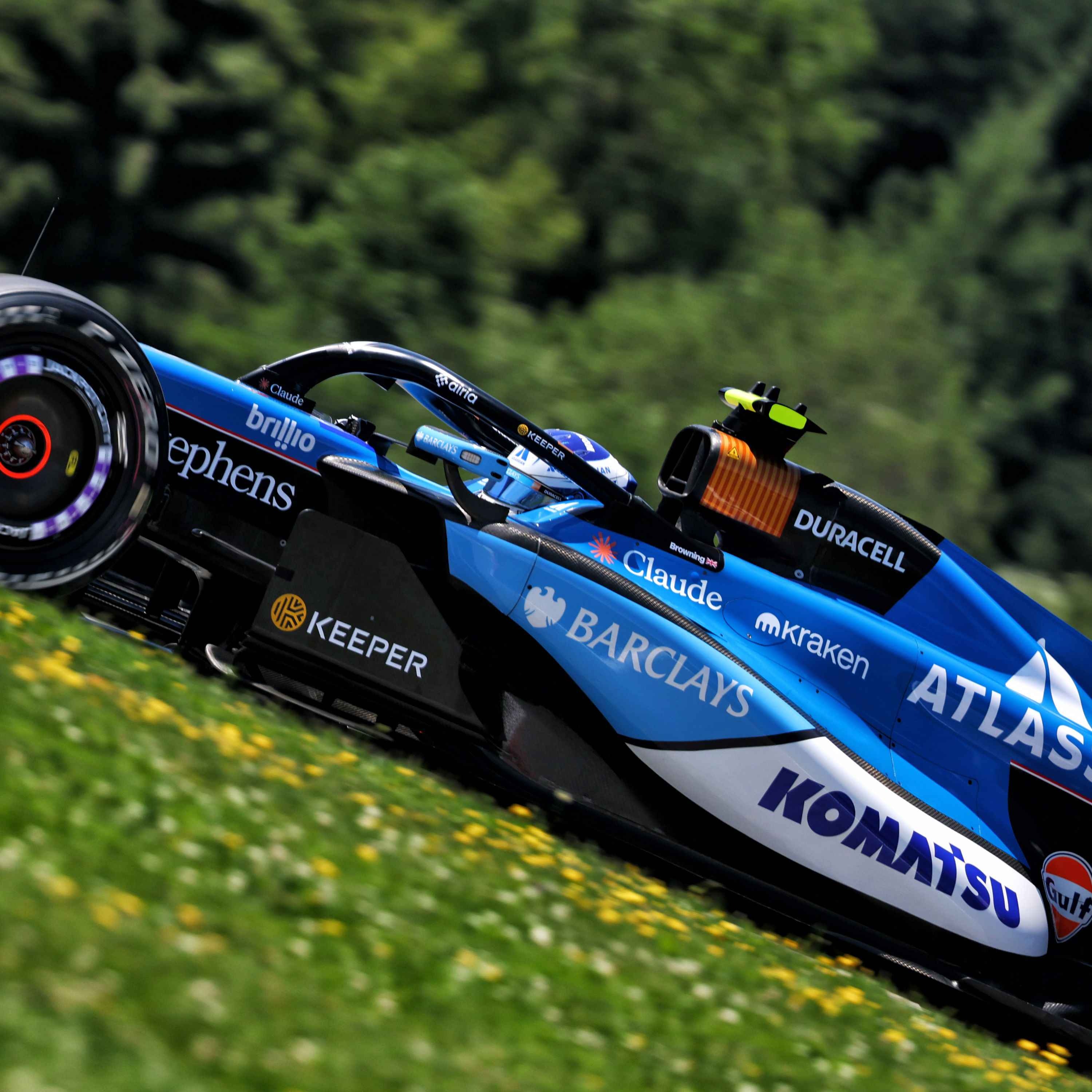
Atlassian is a company name attached to the Williams F1 team as part of sponsorship. The episode uses that to talk about how F1 teams make money beyond racing.
Doralton Capital is an investment company. The episode brings it up because the host is talking about how investors think about buying and growing an F1 team.
The “Netflix effect” means that when Netflix shows a sport to a huge audience, more people get interested. In F1’s case, that extra attention can increase fan growth and make teams more valuable.
“Valuation” here means how much money investors think an F1 team is worth. They’re discussing how that number can rise over time as the team and the sport become more valuable.
“Drive to Survive” is the Netflix F1 documentary series. The guest is saying it helped bring in new viewers by making the sport easier to follow and more entertaining.
“Institutional investments” means big-money investments from professional organizations, not just individuals. The guest is saying both big institutions and wealthy families are looking at F1.
A “stable asset class” means investors see it as a relatively dependable kind of investment. The guest is saying some investors view sports like F1 as something that can keep growing rather than collapsing in value.
“Scarcity” here means there aren’t many sports that are as globally visible as Formula One. The guest is saying that because F1 is rare at that scale, investors want in.
A “private equity shop” is a type of investment company that buys businesses with the goal of making them more valuable. The guest is saying their background was in that style of investing before F1.
A “venture business” usually means investing in newer companies that could grow fast. The guest mentions it to describe how they met James Matthews and worked on deals together.
James Matthews is the person who introduced the deal to the investors. In this episode, he’s important because he helped bring them into the F1 team investment.
“One times revenues” means the price was about equal to the team’s yearly income. The guest is using it to show that F1 looked cheaper than other sports investments during that period.
A “B team” model is when a smaller team depends on support from a bigger partner—like getting parts and technical help—so it doesn’t have to pay for everything itself.
Due diligence is the careful research you do before making a big purchase. It’s how buyers try to confirm what they’re getting and spot risks—here, they couldn’t do the usual on-site checks because of COVID.
The cost cap is a rule that limits how much F1 teams can spend. It matters because it changes how teams like Williams can plan their budgets and compete, since richer teams can’t simply spend unlimited money to pull ahead.
The Concorde Agreement is the big multi-year deal that sets the rules for how F1 teams and the sport’s management work together. It’s where major money rules—like the cost cap—get formalized.
A condition precedent is a “must happen first” requirement. In this deal, the cost cap was treated like the key prerequisite before they would go through with the investment.
Capex (capital expenditures) refers to money spent on long-term assets—like equipment, facilities, and major development investments. In F1 budgeting, it’s one of the categories teams must manage under the cost cap.
Trade-offs are the compromises you have to make when you can’t fund everything. The example is deciding whether to spend on internal systems or on upgrades for the race car.
Sunk investment means money that’s already been spent and can’t be undone. The point here is that teams can’t easily “reset” what they built before the rules changed.
Concept
new regulation set
A new regulation set means the sport changes the rules for the cars. That can change which teams are competitive and how close the field becomes.
Silverstone is a famous race track in the UK where Formula 1 events are held. When the team is there, it’s a busy time for both racing and business meetings.
Cadillac is mentioned as another car brand getting involved with F1 teams. The discussion is about how these manufacturer partnerships can provide extra support.
Red Bull is mentioned as a likely example of a team with a strong backing relationship. The host is using it to illustrate how some teams have big support behind them.
Mercedes is a major F1 engine and technology supplier. The host is saying Williams has worked with them before, and that support included engines that helped the team.
A concord agreement is the big multi-year contract that sets how Formula 1 teams share money and follow the sport’s structure. Saying “for the length of” it means aiming to be at the top over several years.
An engine programme is the team’s long-term plan for its engine/power unit—whether it’s developed in-house or sourced from a partner. The discussion is whether Williams needs its own plan to compete at the top.
A works programme means doing more of the development work directly with manufacturer support, rather than just using supplied parts. The question is whether Williams needs that kind of deeper involvement to win.
A customer team is a team that buys or receives key parts from a bigger manufacturer instead of building everything themselves. The discussion is whether that approach could still be enough to win titles.
James Vowles is the team principal mentioned as coming from Mercedes and leading Williams in the present. In F1, the team principal role is central to setting strategy, managing technical direction, and driving organizational change.
A wind tunnel is a testing setup that lets engineers study how air flows around a car. In racing, better aerodynamic testing helps teams make faster, more stable cars.
“Culture change” means changing how a team works together—how decisions get made and how people follow processes. In racing, that can affect how quickly the team improves and fixes problems.
It means changing the team’s routines and tools—how they plan work, track progress, and make engineering decisions. Those improvements can be real even if they don’t show up immediately in race results.
Person
JB
“JB” is referenced as a person giving an opinion about joining the team in 2020. The transcript doesn’t provide a full name in this segment, so the annotation focuses on the identity as a named individual rather than a specific automotive role.
BMW is mentioned as another big company that left Formula 1 during the 2008 downturn. The takeaway is that big money backing can vanish when times get hard.
Toyota is mentioned as a large auto company that left Formula 1 during a tough economic period. It shows that even big brands can step away if it doesn’t make financial sense.
Peter Kenyon is a person brought in to help the team, and he previously worked in football. Here, he’s being credited with improving the team’s business side.
James Vowell is quoted as saying the team had a great off season. That sets up the question of whether business improvements show up in race performance.
Partnership agreements are long-term business deals between a team and companies that support it. In F1, better results can help teams negotiate bigger sponsorship deals.
McLaren is brought up as an example of a team that does a great job with the business and fan experience side. The speaker says Williams wants to learn from that.
It’s a comparison to a game where you “manage” a team by picking what seems best. The point here is that real F1 decisions should be grounded in data and expert input, not just game-like guessing.
The “grid” is where the cars and drivers line up around race time. It’s basically the paddock/starting area where you see everyone regularly.
Concept
JV
“JV” means a joint venture—two groups working together under one shared plan. Here, it’s describing how partners collaborate to analyze options and decide what to do next.
A gearbox is the part that helps the engine deliver power to the wheels efficiently. It changes gears so the car can accelerate and keep the engine in the right operating range.
In F1, “silly season” is the time when teams and drivers are negotiating contracts, so you hear a lot of rumors. It’s basically the off-season chatter period when nothing is fully confirmed yet.
LIVE
Are we at the Williams Experience Centre for the latest the race business in conversation with?
And today's conversation is with Matthew Savage, who is the chairman of Doralton Capital and of the Atlassian Williams Formula One team.
We're going to talk everything including valuations of Formula One teams, the new commercial business and of course we'll have to talk about the Netflix effect
a'r bwysig fyddwch i'r ddobiwn c Orderau Carlos ac oedd rhywun mor iawn.
Arnyn nhw hwn yn dŵwn ein gwaith yang interesting, sy'n ymlaen i fynd ddim yn eich ownership
ac yn ei wneud hynny'n gwybeth i ymddangos eich gyda ni'r e bunsur yn ag angen y F1.
Matthew, y cangal rwyf yn amlwg yn iawn i'r wyf â'r Y Center o William.
William's Heritage Centre, you bought Williams for around $200 million, Forbes has the valuation now about $2.5 billion, most investment companies, most private equity probably would have taken some money off the table now, you're on record saying you're not for sale.
Absolutely, that's correct and you know this has always been a long term investment for us, we recognised it would be a long road, I've been quite pleasantly surprised by the valuation increase over the last five years but the truth is we want to be in it to win it, so our goal is to bring the team further up the grid and so it was always a 10 to 20 to 30 year investment horizon for us and we're still on that pathway.
That's an amazing level of commitment that you've got to this racing team, we're in a very strange situation in Formula One, there's lots of people interested in buying into Formula One and I'm sure you've had lots of interest, I heard you say that you're getting two phone calls a week of people that are interested in buying the business.
It's something like that Darren in one form or another and it's great that people are interested in the sport, I think it reflects a lot of things, what the sport has done itself, what the Liberty folks have been able to do in growing it, things like Drive to Survive and then what the team itself has done over the last five years in terms of pulling itself out of the abyss.
We're certainly going to talk about all those subjects, who are those people that are phoning you, what sort of investors are looking at Formula One right now?
I think it's right across the board from institutional investments and investors to high net worth families, we have the odd conversation with automotive companies along the way, so I think sport as a whole is a hot investment area and people continue to raise money, the financial institutional investors are raising money and they're looking for ways to invest it.
Your background, which we can dig into in a moment, is in the investment space, not in the Formula One space. Why is it that sport suddenly is the place to be? Why is there a lot of money rushing towards sport?
I think it's seen as content, it is content, at one sense it's a competition but we're also an entertainment show in more ways than one and I think it's also seen as a stable asset class that will keep on growing.
I think in particular with Formula One there's a lot of scarcity around it and very few sports if any have the same global platform as we do here in Formula One, maybe football does or soccer to the Americans out there.
You certainly know a lot about Formula One now, you've got a knowledge about sport but when you started here, if I look at the investment thesis of yourself and your business, it wasn't about buying sports franchises was it? What's the background, what's the history of the investment business and how did you end up here?
That's a great question. We started out really as a normal private equity shop, we also have a venture business and that's how we met James Matthews so we were co-investing with him in some venture type things. James in the middle of, when would it be, 2000 I guess was when COVID hit?
Yes. James Matthews bore the deal to us. We had been looking at various sports franchises, NFL, MLB, what have you. I think the investment industry had picked up on the fact that these were interesting stable assets, valuations, it's almost to say have never gone down in the sports space and so we were intrigued.
When this opportunity came through, we really wanted to jump on it because one, there wasn't a lot of competition for it in the middle of COVID. We also saw that valuations were around one times revenues at the time for Formula One teams.
I think this was where living in the United States was maybe a help because NBA teams, NFL teams were going for I think at the time 7, 8, 9, 10 times revenues and I just looked at this and I thought look, there's only 10 teams at the time. NFL is 30.
It's a global sport, it's a great global sport. These teams are going to go for more. Middle of COVID, no one wanted to take risk. You could see drive to survive coming through and I think again being in the US, my kids were watching it, their friends were watching it and it was a real aha moment.
I knew that Formula One had tried to break into the US and it had never really happened but suddenly you could see that groundswell building which maybe if you were here in the UK or in Europe where Formula One is more to the forefront you wouldn't have seen it in quite the same way.
We thought we'd take a shot. We thought valuations would increase but going into it we always had the notion and it sounds great that we bought the team for $200 million. We've obviously invested a whole bunch of money behind that.
Our return isn't quite what you might think.
Great headline for the start of this conversation.
Absolutely of course. What we said to ourselves was there are two business models at the time. One was to go all in and we spend behind the valuation increases or if valuations stall out at some point you take on more of a Haas model as they were at the time which is more of that sort of B team taking a lot of kit from a manufacturer and so on.
Those were the two paths that we had in mind when we sat out.
I've got about ten questions off of what you just said. There was a lot to unpack especially on the Haas side of things for our audience who would be very interested in that type of detailed model.
But what I'm interested in not being an investment expert, I've got this view and I'm sure a lot of our listeners and viewers would have the same view that private equity, the investment industry have this long term view.
You're looking at things you're considering. You've got spreadsheets that would tell you what's working and what's not working.
On this one, a guy phoned you up that you were working with. You had a bit of a gut feel. Your kids were watching Drive Survive and you bought a Formula One team.
Yeah, pretty much. I was bought in Covid too. No, not quite.
No, we did all of the above. We were running our spreadsheets. What was interesting though at the time was traditionally in an acquisition, you can do a whole bunch of due diligence, you send in an army of accountants, lawyers, so on and so on.
We couldn't access the site. We couldn't come on site here. Everybody was working from home pretty much except for a few people that were required to manufacture parts and what have you.
So we couldn't do the traditional due diligence piece. We did map this out in a bunch of scenarios and forecasts and did our usual valuation runs and what have you.
What I have to tell you, it was somewhat daunting and we were taking some risk that we might not in another deal. But at the back of my mind was this is such a great franchise. This is such a great name that we want to take the plunge.
That's despite. This was the most stark fact at the back of my mind. I think 154 teams have folded over the 70 odd years of Formula One. So we didn't want to be one of those.
That is a brilliant statistic.
It's a sobering statistic as well.
Absolutely is that. And Williams had their troubles, of course, and I guess the reason the team was up for sale and Claire was on record at the time saying COVID hit and they needed to race to keep going and obviously there was no racing.
So was this a bit of a fire sale that you were involved in and you said there wasn't that many other people involved. Was it a difficult bidding process or did you very quickly become the primary bidders?
It was a competitive process, but I think it was tricky for Claire and the family and everything sort of hit very quickly. If you remember COVID, everybody was in Australia, couldn't race, had to come home if you could.
I think Williams lost their main sponsor at the time, Rocket, immediately and I think they were up against the wall. So it was a forced sale.
I think at the end of the day there were maybe us and a couple of other people that were interested. We stepped up and moved quickly because time was off the essence.
But there was another piece to it which was from a timing perspective we needed to be certain, reasonably certain that the cost cap would go into effect because we would not have done this without.
I think that's a really important point, the fact that the cost cap has completely changed the economics of the sport, hasn't it?
And if I recall correctly, you announced that you'd bought Williams three days after the cost cap was finalised in the Concorde agreement. So if that hadn't happened, you don't buy Williams?
Probably not. I mean, we knew it was coming of course because during due diligence we were talking to Claire on the team here and knew how close it was. But no, that was a condition precedent effectively for us doing this or making this investment.
And just for those that might not understand the economics of that, just explain a little bit about what the cost cap means to a business model like someone at Williams that isn't the Ferrari, the red ball that have got funding from elsewhere within the group.
Absolutely. So I think back in the day, and these are going to be rough estimates and guestimates from what I hear around the place, I think Mercedes Ferrari Red Bull were spending, let's say, £700 million a year.
I think if you maybe go further back before the 2008 crisis or just before, people were probably spending about a billion a year, something like that.
At the time we bought Williams, I think...
To race two little cars.
To race two little cars.
Yes, insane numbers, isn't it?
Absolutely. And sell a lot of other cars elsewhere, of course.
But for Williams at the time, I think our revenues were £150 million. So let's say they spent everything they earned. So you multiply a deficit, let's call it, just to make the maths easy, let's call it a £500 million deficit over 10 years.
That's $5 billion less that you've had to invest in people, machinery, process systems and what have you.
So, you know, almost impossible to catch up. So the cost cap coming in at least made it equal among all the teams in terms of how much you could spend annually on people, on systems, on capex and upgrades.
Of course, it's a double-edged sword, too. And I think it's only just starting to sort of unwind in a sense because all the big teams, of course, went and bought any piece of kit they'd ever want ahead of cost cap.
They had spent all that extra money on process and systems. Those were still there. And so playing catch up is actually hard when you have to do it all within the cost cap system.
So, for example, we're still making trade-offs between, you know, do we put in a new accounting system or parts of an accounting system, or do we put an upgrade on the car?
So one of the reasons you bought Williams now is actually working against you. It's seemingly unfair. As you say, you've got that historic sunk investment that's sat elsewhere, you can't then catch up.
Well, I wouldn't call it unfair because we knew what it was going in. And I think it is working in the sense. I go back to last season. I mean, this season we've started off afresh.
But last season, I think we were all within a second of each other. And I thought it was a brilliant season. I mean, of course, we came fifth, so it would.
But I thought that was what the cost cap delivered. I mean, obviously we've spread out with the new regulation set. But my hope is that in four years' time we're back to win a second of each other.
And I think the cost cap does enable that. Whether we can truly shake up the order, we'll see.
Back to 2020. How were those discussions with the Williams family? It must have been quite emotional for them. The business has been in existence all these years. We see the heritage round us here of that team.
Suddenly they've got to try and keep the team going. You're one of the options there. How were those discussions between Claire and Frank and the rest of the family?
Well, I think, you know, I'm not in the picture as to how they were internally within their family. But, you know, we've done a lot of work with other family businesses, and it's always difficult, right?
I mean, especially if the family's been in the business for almost, I mean, it's almost 50 years on back then, 45 years. But it's a very difficult step for anyone to take.
And not just for the family itself, so for the employees too, there's a cultural change that's likely to happen. But I think we had very straightforward discussions with Claire.
I think, you know, we were very clear from the start that we wanted to keep the Williams name. There are some out there, actually it's interesting, we've been approached by some people that would like to buy it and change the name, which is quite amazing to me.
But our key message to Claire was we will keep your name on the car for the long term. We believe in the brand and the history, and we want to amplify it and take you back up the grid.
So I hope Claire thinks that she found a good home for the business. And, you know, we're still in touch with Claire and have a good relationship.
And, you know, she was in our motor home over the last couple of days at Silverstone. And, you know, it's great that we're still in touch.
And I understand you gave her the option of staying on within the business and she turned that down.
We gave her the option to stay on and work with us. When we closed the deal, we did not know which way she wanted to go. You know, we value her input.
You know, I think at the time, Frank was not well. I mean, he'd been declining. In fact, one of my regrets is that I was not able to talk to him.
And to this day, I don't know if he ever knew that the team was sold. Maybe that's for the best, actually.
And I think Claire, post-transaction, you know, decided she wanted to take care of her father, which I absolutely respect.
And so I think, you know, she stepped down and we sort of went on our way.
It seems like you genuinely take that responsibility of keeping the family name and the family business, if you like, intact in that way quite seriously.
I think it's important. You know, I think all sports teams have a brand of feel, if you like, and not just sports teams, obviously, other things in business and a way of doing business.
And it's interesting. I was reflecting on this over the weekend. I think we're now the only team that does not have a car company relationship.
Haas has now picked up Toyota. Obviously Cadillac has come in.
Okay, three in my head.
Red Bull would be the obvious and VCar, but they're in a different business selling caffeinated lemonade in a way.
And so I think that's why I like to keep focusing back on being a family business.
That doesn't mean we take it easy or slouches. Quite the opposite.
We have to probably work harder than anybody else because all those other guys have a little extra help in the back room.
Yes. You said you've been approached by car companies.
Is there not a temptation to obviously not be bought out by the car company?
You've made it clear you're not selling, but have an association with the car company. Would that help?
I think it could. It's been discussed. We have to, part of my job with JV and James Matthews, we have to think about where the sport is going and what's best for Williams in the long run.
Having said that, we've had a great relationship with Mercedes and they've provided a lot of support to the team and have made some great engines in the past.
But we have to be open to all options. Who knows at some point maybe we'll team up with someone.
You're on record as saying your objective is to win championships for the length of a concord agreement, which is an amazing statement, so that could be maybe five years worth of championships.
What an ambition that is. Could you do that as a customer team then while we're talking about the manufacturers or does Williams need to have a works programme, an engine programme of your own?
That's a really good question. It was interesting to us to see Zach do what he did and McLaren do what they did over the last two years.
I think there may be some repercussions of that going on right now.
So it's not impossible to win by being a customer team. I think it's harder, but that still doesn't mean the objective is not to go out and win a whole swing of championships.
We'll try to figure out exactly what we need to do that.
You mentioned the great relationship with Mercedes. James Vowles, your current team principal, came from Mercedes.
There was a gap between you taking over and him becoming team principal. We can't talk about that in detail due to some ongoing court cases.
Do you see that as a loss two and a half years, the fact that you didn't make much progress in that time, that you could be further forward now if you hadn't had some of the issues and the difficulties in that two and a half years?
Well, I don't know that that's the case necessarily. We actually did make a lot of progress. It was maybe not that apparent, but we were starting from such a low base.
I mean, we completely retooled the wind tunnel, for example, and I think today we probably have a world class wind tunnel that's very close to what Mercedes have.
So there are a lot of things happening in the background. I do think, and I have this from a personal experience of my banking days, that the first management team in after taking over family business, it can be very, very difficult.
You're dealing with culture change, a lot of process and systems change, and yes, Williams are world champions multiple times, but that was 30 years ago.
My math is right. The long time ago in the world has changed. For example, one of my clients in my early days of banking was Hansen Trust.
We probably need to be of a certain age to remember that name, but when they made acquisitions, for example, they used to send one team in for three to six months to do all the difficult things to begin with.
And it's almost a good cop, bad cop thing, and they brought the good guys in after the fact to take the business forward.
But it's also the case that, it was interesting, JB told me the other day that he would not have taken the job in 2000.
2020?
Oh, 2020. Keep saying 2000, but 2020.
It seems like that long ago, by the seams of it.
No, no, but so you know, you can tell by what his comment, from his comment, that we must have done something in two years, otherwise he would not have joined us.
And why was he the right person for you to take on at that time, and how did you find him?
At the time, we had, I think, a list of about 20 people that we were talking to.
We thought JB brought a knowledge of what it takes to be a winning team, how to build a championship team.
We liked the fact that he had been part of the transformation if you go back from BAR, through Honda, through Braun, through Mercedes.
I mean, even the early days of Mercedes weren't that great for them, I understand.
And so it's not, you know, you maybe think of him coming in from a world championship team that had always been, you know, top notch, but he's seen transformation.
I think the other piece that we liked in him was, you know, I think he has that appreciation for the information technology space.
And I think he's probably first team principal that has a computing degree in his quiver.
I mean, a lot of mechanical engineers, I mean, and Toto may be more from the finance side.
But we liked the fact that JB had that in him and a sense of how to use some of those tools and where those tools might be going.
That's very interesting. The senior management team here actually has got a massively different background, hasn't it?
Yourself, I understand, physics degree from Oxford.
That's right, yes. And once in a while I use it, but the folks here are way beyond my knowledge these days.
Well, you said you hope your maths are right. I'm pretty sure that they're spot on.
I'm Paul Tenorio. I cover soccer for the Athletic.
And I'm Amy Lawrence. I cover football for the Athletic.
Whatever you call it, the biggest competition in the sport is happening right now.
And the Athletic's World Cup coverage has everything you need to follow the tournament.
We've got more than 70 obsessive reporters on the ground.
If you're eager to know more about the teams, the matches, all the stories on and off the pitch, we've got you sorted.
Throughout the tournament you have free access to all the coverage in our app.
Download the Athletic app and see you there.
Tom, when you came in, it seems that you just said that it wasn't quite what you expected it to be.
So you couldn't come and do the full due diligence. The sales process was rushed.
What was the biggest surprises that you found?
There's this talk of building cars off of spreadsheets and that sort of thing.
And obviously James has got a very different view, as you say, with his background and the systems and everything else that he's bought in.
Was that the biggest shock in terms of walking in the door?
I think there were maybe two elements. One was that some of the basic processes and systems that we're still dealing with actually.
And I'll come back to that in a second.
So there's that, so proper accounting systems.
And at the beginning the team couldn't tell me what a car cost.
Right.
So it's hard to make decisions about do you build this component, that component,
because you try to figure out what does it cost, what's the benefit on the track,
and maybe what's the financial payoff down the road.
I think we also had to completely rebuild the marketing and partnership business from the ground up.
And that's something we've now done through Peter Kenyon.
So I think it's probably those two elements.
And I think a piece of that was we didn't, or I didn't fully appreciate,
I mean a Formula One team is actually multiple businesses.
Yes, it's the racing team and an engineering R&D business.
But the hospitality piece is actually quite important.
And when you think about I think something like two thirds of revenues these days for most teams is going to come from partnerships.
So are we actually an entertainment and hospitality and marketing business with a race team at Ashtra?
I know we're a race team and it all goes back to performance, but that was a piece I didn't fully appreciate.
And I didn't fully appreciate how competitive that part was,
because we're actually competing not just with the other Formula One teams,
we're competing with Man United, Chelsea, the Yankees, Golden State, Dallas Cowboys,
Rail Madrid, it's a global sports arena that we're trying to fight our way through when it comes to punishment.
And to extend the point I made about the different backgrounds that your management team got,
Peter Kenyon obviously came from football and we spoke to him recently and as a founder of the media company I said,
are you a racing team that's got a media arm or are you a media company that happens to race?
So you've sort of addressed that, but they are multiple businesses aren't they?
No, they really are and it takes all of the above to make it tick and at the end of the day I do come back to,
it needs to make financial sense, it needs to be financially sustainable.
I think the reason that we had 154 teams go under over the years is because we never got to that point.
It was a lot of private individuals throwing some money in for a while,
big car companies, you go back to 2008 and we get a downturn and on the Toyota and BMW were just gone.
So it has to make financial sense at the end of the day and I think that loops back to cost cap,
it loops back to growing the sport and making it a bigger pie and I think we're getting to that point now where it is much more sustainable.
Peter Kenyon's come in, got a football background, him and his team including James Bauer who do a fantastic job.
James Vowell said that they had an amazing off season this year.
Does the on track performance reflect the off track performance?
It seems that you are fantastically successful off track with the commercial department that you've built.
Is there a correlation between the two things?
In some ways yes, even though a lot of the nuts and bolts are independent, their operators are somewhat independent businesses.
Performance on track leads to larger and longer partnership agreements.
So if you're in the top three or Mercedes right now, you're structuring five year plus deals at top dollar.
And look at the job that Zach's done at McLaren, it's fantastic.
We aspire to that and so we do need to bring performance along.
But I do also think there's another piece we can control within the partnerships team which is how we entertain people,
how we build out our space at races, how we make our drivers accessible and Alex and Carlos lean in very much which is great.
And what sort of experience we give to people because when you look at a lot of our partners across Formula One,
again they have choice, it can be another sports team, it could be Wimbledon, the Masters
and a lot of people have experienced top notch hospitality and so actually one of my challenges to the team
has been yes we want to win championships on the track but I've challenged them to be world champions at hospitality
as another goal and thinking those terms.
As part of my research for this discussion I spoke to one of your sponsors and asked about that relationship,
why did they choose Williams and would they consider another team and their answer was
we would never sign with another Formula One team, this is about relationships and the journey we're on.
Is that something you've instilled in that team?
Well I think it's all of us, I mean it's not just me but it goes through JV, Peter Canyon
and everybody throughout Williams and it's a bit of, it loops back a little bit to maybe that family feel if you like.
I don't want to lose the competitive edge either, don't get me wrong on that but I think when we want to,
what we try to do is engage with people as people, bring them into our family, bring them into the team
and it's great to hear that they feel that they're part of this, living and dying as well from race to race
or from lap to lap and quality to quality or what have you but I think that's a great way to engage with our partners.
That's the revenue side, on the cost side James Bowser said he's never bought you an investment proposal,
you said no to and I think within a week he bought a number to you of needing to invest $12 million in a new simulator
and you said yes straight away, is it a blank checkbook within the constraints of the cost cap
or is there a limit to what money you can put in?
There is a limit, one of the things that is important, what JV missed out in that is he showed a cost benefit
and a return and so on so it's not just about sowing money away
and in fact that's one of the things we've tried to instill in the team is to really think about
if I go and spend this money what do I get for it and it's not just that piece and again within the cost cap
and actually this is another piece within sport, you're making trade offs all the time
like we said do I have an accounting system or an upgrade, how many upgrades
or do I invest in R&D for next year or is there something I might need three years out
and if you can't figure out the return on each of those pieces how do you make the decision, gut feel
I'd be the wrong guide, maybe JV has a sense but no in that case the return was there
we needed a new simulator, we thought the payoff would come, simulator will last us for years
and so we went and did it, there are things we haven't done
I'm reminded and this is just to tell a story of when I first came over when we bought the team
Clare had left and so I was sitting here leading the team in some ways
and the culture was very much one of you, the staff would come to the most senior person
and so I think Simon Roberts came up and said well should we go and get the McLaren gearbox
with 3000000 pounds and I was like well why are you asking me four weeks into this
and I sort of threw it back to him and said well what's the payoff, what are the options
how much lap time do we save and so on but I think it was a piece of the culture
that at the time is very much just go to the most senior person, present them with something
there wasn't that much analysis behind it, that's something we very much tried to rectify
I've seen you quoted saying it felt like you were playing fantasy F1 manager
I never want to be doing that but no, we've all been around this sport now for probably longer than me
but sometimes it's a little bit of an outer body experience
and you are in situations where you have to make these decisions
and you're like it's a bit like the game isn't it but I think you need to remind yourself
oh I try to remind myself that I have incredible individuals here right across the board
whether it's PK on the marketing side or JV and the team on the engineering side
they're the experts, they've seen it, I don't want to be in the mode of myself picking a driver
or what have you making those sort of, making static decisions
Very different from the old days right when Frank was around
that was very important to him and Patrick which drivers were in the car specifically
No absolutely and I think
So when does that decision making happen then? I mean obviously you've got James Matthews
you've got great experience in motorsport as well as on the finance side
you've got JV, you've got Peter, when that sort of question comes up
trying to get Carlos Sainz, how does that conversation happen, who's involved, who makes the final decision?
So we have analytics on all the drivers out there like every team
and we also have a view, JV knows a lot of them because he's dealt with them over the years either
through his Mercedes days elsewhere or just chatting to them on the grid
so we do have an internal ranking system
we obviously have to look at the cost piece as well
what difference it would make for us at the time
but effectively JV and the team will run the analysis
and come to us with options and a recommendation
looping back to that gearbox example
that's what I'd like the team to be able to do is to come to me with a recommendation
saying this is what we want to do and why
and then at the board level we can make a final decision
and that's not to say that we haven't seen some of the conversations
or been part of some of the conversations along the way
typically we are
and as you know these things silly season evolves
you actually have to stay on top of a lot of the rumours and what have you
maybe ignore half of them and just need to know which ones
but that's how we do it
and these days it's not just rumours about the drivers and where they're moving
it's about who's buying which team
which seems to be the new silly season
we spoke to Carlos in Cannes
first of all a Formula One team attending the Cannes Lions event
is also completely different than we would expect in 2019
and before that
I pointed out to Carlos that he's got more Instagram followers than Williams
and more impact that had on contract negotiations
does that ever come into the conversation
the fact that you've got a fast driver
but this one's going to get you more commercial benefit than that one over there
is that something that's in the mix
it could come into it
in the sense that we have to think about the impact across the whole picture
I think in terms of Carlos he's quick
so it didn't really
I mean that was a bonus not a decision point
I think our philosophy would be to find the quickest driver
and then let us take care
the old Williams way
it was the way that Frank and Ash would have done it
absolutely
but I come back to
we were talking around
is it a marketing business with a race team
at the core we need to perform
so I want to invest in performance first
and yes we'll do all the great hospitality things as well
but no I want a quick driver at the end of the day
we can't ignore what you mentioned right at the beginning
which is the Netflix effect if we will
you said it was part of the decision making process
are you surprised at the impact that Liberty has had on the sport
the way it's grown so quickly
you saw growth I think you already said that
but are you surprised at how it's grown
and what would you put that down to
where do you put the growth down to
is it specifically the Netflix effect
or are there a multitude of other reasons for it
I think there's a multitude of other reasons
I mean in many situations right
it's not just one particular factor
I think it's right across the board in terms of
you know if you think about when we bought the team right
I mean we were still racing without people at track
and you know I think they had owned the business
for what two or three years before that
but I think it was post COVID that things really took off
Netflix I think it tuned people to it
but then Liberty created a race experience
and it sort of played into that global experiences
like the whole concerts thing
that's I think taken off even more post COVID
you know and they put on a great show over the weekend
because I mean you know all the concerts that we have
and I mean for anybody that was trying to get out of Silverstone
on Friday night I feel for you
but you know just attracting people
I think we had what 570,000 people over the weekend
564,000 I believe is the official number
I mean amazing
The biggest Grand Prix attendance ever
Right
15% up on Montmarchie which was a Silverstone record
Crazy right it's fantastic
and you know you look around Silverstone
it's not just go to the race watch cars go around
there's a lot of other things going on
you know Austin's probably going to be 450,000
across the weekend I would guess
and again it's the same model
you know and that's sort of Liberty's doing
right and in part they've built up on these elements
I think Costco was Liberty
and you know go back to you know we were racing within a second
last year
you know that's part of their impact
you know I think the teams have up their game as well
I think you know it's great
you know we've invested right we've raised the budget
you know it's great to see Haas teaming up with Toyota
they'll sort of change their business model sum I think
it's going to make it a more competitive league
and I still go back to and again this is sort of my US piece
you know if we can sort of create something
where like the NFL on any given Sunday
one team can beat another
that would be fantastic
a little bit harder given that it's an R&D race
and I hope we keep that
I don't want to go to a spec car series
but if we can get close to that kind of environment
where you know any one of ten teams could get into QC
any one team can score a point on a given weekend
that would be fantastic
and I think Liberty has that vision in mind as well
I think you're right
I think Liberty have done a huge amount more than
signing up to a TV show that happened to be very successful
that was part of hundreds of things that they've done
I say to people that weren't involved in the sport in 2019
you wouldn't believe the changes that have happened
and you came in just as those changes were happened
and you can see the growth that's there
how much more growth is there in the sport
and where is it, is it geographically elsewhere outside of the US
we've seen a lot of the growth in the US
or where else do you see that there's upside still
I think there's still a lot to shoot for
I think there's more growth in the US
I think that we haven't perhaps done as good a job in Asia as we could
I think and look I sort of in part go across the commercial universe
although it's interesting and JB had a number that I think 80% of all partners
in Formula One are now American based
maybe that's because that's where the tech and the money is
but I think we could do more in Asia, Africa
so I think there's more to shoot for
and it's one of those things where I think
only 1% of people ever go to a race
so what more can we do besides the pure races
how can we engage
some of the things we're doing for example
you touched on going into Audria and not Aud
but different realms
I think we had a car at the anime show in LA over the weekend
we've got some cool Marvel comics out
with JB, Carlos and Alex
so we're trying to take it in a lot of different directions
and engage with people in different universes
if I'd have said to my 2019 year old self
that Williams will be doing a deal with Marvel
and Drives will be racing round Silverstone in Lego cars
and I'd tell myself to shut up
it has changed dramatically
do you think there's space for a fourth American race?
great question
the easy answer is yes
but where does that cannibalise
and I think that this is a
the Liberty team are running those metrics
and they have better data to make those sorts of decisions
I do worry about oversupply in the US
the truth is I wouldn't do this
I think 24 is a good limit
in terms of number of races
but you could probably add another eight races around the world
including one in America
in terms of the actual interest
that's out there among promoters
so yes I think we could
but would it be better to add a race
I think we're adding Thailand
do you add South Korea
do you add something in Africa
be great to go back
there might be other places I'd go first
but at the end of the day
I trust the Liberty team to work through that equation
in terms of what's best for the sport
and the bottom line
in which we also share
would it be more beneficial then
to have an American driver on the grid
would that benefit the sport?
I think it can
but at the end of the day
I think people look for performance as well
so I know we had Logan driving for us
it didn't quite work out
we hoped it would
I think if you had a successful American driver
it would be a great thing
and that's not to put Logan down
I think we made it
we didn't prepare him well enough
for Formula One, we rushed him
and I think it was not helpful for him
but if I talk to my friends
and my kids and their friends about F1
they know who Carlos is
they know who Lewis is, Max
and they have their preferences
among the driver universe
and I think that plays more than anything
so I think an American driver would be a bonus
but they have to perform
We've talked about the upside
I think everybody in the sport sees upside
we're all going after it in our own ways
Where do you see the risks?
What are the potential stuff we could trip up on here?
I think
the things at the back of my mind
that I worry about would be a recession
a sharp global recession
and it could come from a couple of places
but let's say this AI spending lets up
and the stock market crashes
you've got a lot of the partnership universe
related to the AI build out
and AI development and technology and so on
that are using Formula One as a platform
for their activations and so on
I think another piece would be
if we get a big recession
if the car companies really suffer
I think that's a really difficult market right now
margins are thin
we've seen how the dollars
that people have been writing off
$10-20 billion on their EV
R&D programmes
and I think the lesson is there in terms of
2008
those three large companies
that were spending $1 billion each or more
at the time
just cut it like a marketing budget done
The good thing is we're so much
less reliant now on the car companies
Mercedes owns a third of the team
that's got Mercedes on the side
Audi owns somewhere around 50% of theirs
we're not reliant on that
there are these other businesses yourself
the fizzy drinks company as you say
that prop up the sport now
so maybe that's less of a risk
they're more macro aren't they
what about Formula One itself
where do you see that we could trip over ourselves as a sport
I'm not so worried about
internally I mean yes there's a debate going on about engines
and so on I think it's great to see that we're making some tweaks
for next year and the year after
I don't think we got it quite right
this year
but we'll get there
so I think it's like a team
you try some things
maybe it works maybe it doesn't
and then you figure out what does work
and you run with that
so I'm not too
worried about that piece
I think one thing that we talk about internally
is how do we keep all fans engaged
so to go to a race
is pretty expensive
and I'd like to remind myself
that I think the bleachers seats
at Yankee Stadium are still 20 bucks
per game
certainly not that at Silverstone
no that's right
so how do we engage with fans
and make the sport more accessible
and what is the answer to that
part of that is our pop-ups for example
we had a pop-up on Pig Dilley Circus
anybody could stop by
we had some great simulators downstairs
race people and so on
we've also had and this is one of my
one of the things I've really enjoyed seeing take off
a schools program
where any school in the country could come
and visit Grove
we'll actually send the bus to bring them here
pay for it
we set up a STEM program in-house
actually upstairs above the museum
and I think last year we had something
like 15,000 kids come through
we're actually evolving that
next year I think into a US setting
we're trying to work out how we can go
meet people and engage with people in the field
if you like as opposed to having
people come here in part
because we're going to need the space for people
unfortunately here at Grove
as we grow
but we're constantly looking
for how do you reach out to people
so the Marvel deal is one
some of the things we're doing around anime
would be another
it's sort of these touch points in other areas
to try to make things
a little more accessible
I think it's great we focus
I even asked a question about
is there a need for an American driver
we focus on those access to the sport
via American, via drivers
but as you say
we're not focusing on
where do we find the next engineer
where do we find the next tire girl
where do we find the next PR guy
and it sounds like you're doing an amazing job there
somehow I haven't even looked at my notes yet
and we're up to our time limit
so back to the beginning
where do you think
valuations of F1 teams can go
you talked about revenue
multiples earlier on
NBA and NFL are at somewhere like 12
I guess the current
Formula One valuations
are around 7 to 8
is that the amount of headroom
that Formula One still got?
I think that's right
I think I'd see us in that 10 to 12
maybe 12 sort of range
at some point
I think when you look at it
it's a global sport
the supply of teams is much less
and just little things
we all get to go racing
at the same time
all of us together
and the way I see
these events now
and this is an American perspective
each race is almost like the Super Bowl
of motorsports
in that particular country
and that's special
that means everybody wants to go
you get the three day weekend
it's not just go to a ball game
sit next to someone, have a beer or what have you
and go home
so the sorts of engagements that we can provide
are very different
so I think
I'd put Formula One
and we talk about
it being part of the five top sports
no disrespect to the other sports
but I'd see NFL
NBA
EPL football generally
Formula One and perhaps oddly enough
Indian cricket
as the top five global sports
in sort of viewership
and what have you
and so that's the kind of playing field
that we're on
so yes I see us being
valued at 10-12 times
at some point in the future
You've been here six years
if we sat here again in six years time
what's the thing that
other people might not see that
you think is going to happen in Formula One
that might surprise people?
I find it hard just to pick one thing
that people haven't talked about
or thought about
I think you'll just see the continued growth
I think you'll see the expansion
into
and like I said into Asia Africa
I think it will just develop further
along those lines
so in terms of anything that
no one's thought of I can't think of
one particular thing but
I think the growth is there
I think maybe if I touch back
on the crossover again
we've seen the movie
I thought it was fantastic
I think the new one
will be coming out in due course
I just think you'll see the crossover
into the general
like these different universes
we'll just continue
I think we'll be part of the fabric
of the general entertainment world
In six years time
how many championships might Williams have won?
Great question, two
There we are
You heard it here first
Matthew, thank you very much
Thank you
About this episode
Matthew Savage, chairman of Doralton Capital and Williams F1’s investment lead, explains how Williams was bought for about $200M during COVID and is now valued around $2.5B. He argues the rise is tied to F1 becoming a global entertainment/content product (Netflix’s Drive to Survive, Liberty’s growth) plus scarcity and “stable asset” appeal. Savage details the COVID-era acquisition, the importance of the cost cap as a condition precedent, and why the cost cap reshaped team economics—forcing trade-offs between upgrades and infrastructure while making historic “sunk” spending hard to catch up on.
In the latest exclusive 'In Conversation With...' interview from The Race Business, The Race co-founder Darren Cox sits down with Matthew Savage, Chairman of Dorilton Capital, to uncover the business strategy behind transforming the legendary Williams F1 team. From the $200 million acquisition in 2020 to a staggering $2.5 billion valuation today, Savage explains how a long-term investment horizon, the impact of the cost cap, and the "Netflix" effect turned the team’s fortunes around.
We dive deep into the reality of private equity in Formula 1. Why are institutional investors and high-net-worth families rushing into the sport? Is F1 the new NFL? Savage discusses the challenges of transforming a 50-year-old family business, the "siloed" nature of modern F1 teams - acting as media, hospitality, and engineering entities simultaneously - and why he continues to reject multiple buy-out offers every single week.
Beyond the financials, we explore the team’s bold ambition to win two championships within the next six years, the importance of retaining the Williams heritage, and the role of team principal James Vowles in navigating the team’s technical and cultural evolution. Whether you’re an F1 superfan or a business strategist, this conversation reveals what it truly takes to build a contender in the most competitive sport on Earth.