
Reaction to Monaco GP practice
About this episode
Monaco practice day gets a vivid reaction from Matt and Tommy: watching F1 action “with a Formula 1 car on a super yacht,” then breaking down the on-track chaos. Isaac Hadjar’s FP1 crash is traced to grip and the rear “stepped out,” while Monaco’s tight pit lane and cramped garages make everything feel intense. Ferrari’s pace dominates (including a “Ferrari 1-2”), Verstappen’s P3 sparks hope, and the hosts zero in on qualifying, track position, and undercut timing for Sunday.
Join us LIVE ON A SUPERYACHT IN MONACO HARBOUR as we react to the early running from the top teams and tell you a bit more about our amazing weekend.
Our brand new live show 'Super Podding' is coming to the UK and Amsterdam this autumn! Get your tickets here: http:/tix.to/p1live
Sign up to our Patreon for just $5 a month! You'll get access to every P1 episode ad-free, extended versions of every 2026 race review, early access to tickets & merch, and access to our Discord server where you can chat with us and other F1 fans! Click here to sign up now: http://patreon.com/mattp1tommy
Follow us on socials! You can find us on Twitter, Instagram, Twitch, YouTube and TikTok
P1 with Matt and Tommy is the world's biggest F1 podcast. Subscribe for new podcasts around every single race throughout the 2026 Formula 1 season!
Hosted on Acast. See acast.com/privacy for more information.
Audi garage
"We were lucky enough to watch a bit of practice as well from the Audi garage, which was amazing, like a viewing platform."
In F1, each team has a garage area where they work on the car. When they say “Audi garage,” they mean they watched from an Audi-related team area during the race weekend.
In Formula 1, teams have dedicated garages/pit areas where they work on the car between sessions. Mentioning the “Audi garage” signals the speaker was watching from a team hospitality area associated with Audi’s presence at the event.
free practice one
"So let's begin with free practice one. I'm really happy to talk about Friday running at Monaco... The big story is, I suppose, from free practice one was a crash for Isaac Hadjar..."
“Free practice one” is the first practice session of the F1 weekend. Teams use it to try things and learn about the car and track—this is also where the big crash happened.
“Free practice one” (often called FP1) is the first on-track session of an F1 weekend where teams test setups and gather data. It’s where the hosts say the main incident—a crash—happened for Isaac Hadjar.
Isaac Hadjar
"The big story is, I suppose, from free practice one was a crash for Isaac Hadjar who went into the wall in the final sector... I know he was very happy in free practice two to be back up and running."
Isaac Hadjar is an F1 driver. In this Monaco practice session, he crashed into the wall, then later got back out and was running again.
Isaac Hadjar is a Formula 1 driver who was involved in a crash during Monaco free practice. The hosts describe how he went into the wall in the final sector, then notes he returned in free practice two.
right-left chicane
"who went into the wall in the final sector, the notorious famous right-left chicane where you have the slow-mo's of the one millimeter away from the wall,"
A “right-left chicane” is a tight section where the track turns right and then immediately turns left. At Monaco it’s especially risky because the walls are very close, so mistakes can send you into the barrier.
A “right-left chicane” is a sequence of tight turns that forces the car to change direction quickly (right then left). Monaco’s layout makes these chicanes extremely punishing because the car is close to the barriers, so small errors can lead to contact.
free practice two
"I know he was very happy in free practice two to be back up and running. But another mistake for Hadjar this year..."
“Free practice two” is the second practice session in the F1 weekend schedule. It’s where drivers can try again—here, Hadjar was back running after his earlier crash.
“Free practice two” (FP2) is the second practice session of the F1 weekend, typically held later than FP1. The hosts mention it because Hadjar was able to get back up and running after his earlier crash.
hard tyres
"This was, of course, on the hard tyres, struggling with just general grip. It felt like the rear just stepped out for Hadjar and into the wall he went."
“Hard tyres” are a tougher tire choice in F1. They usually last longer, but they don’t grip as well—so the car can feel less stable, especially if the track isn’t cooperating.
In F1, “hard tyres” are the harder compound option, generally designed to last longer but provide less grip than softer compounds. The hosts connect this to lower grip and the car losing traction, contributing to Hadjar’s rear stepping out.
rear just stepped out
"This was, of course, on the hard tyres, struggling with just general grip. It felt like the rear just stepped out for Hadjar and into the wall he went."
“Rear stepped out” means the back of the car lost traction and slid outward. When that happens at Monaco, it can be very hard to save before you hit the wall.
“Rear just stepped out” describes oversteer behavior where the rear of the car loses grip and moves outward before the driver can correct it. The hosts imply that reduced grip from the hard tyres and Monaco’s tight final sector made that loss of traction more likely.
Charlotte Leclerc
"which is what we've seen from Max Verstappen and Charlotte Leclerc."
Charlotte Leclerc is mentioned as another person who’s experienced a similar crash pattern. The takeaway is that Monaco is so tight that mistakes happen even to very skilled people.
Charlotte Leclerc is referenced here alongside Max Verstappen as another example of someone who has had a Monaco-style crash into the barrier after clipping the inside wall. The point is that even top drivers/figures can get caught out in practice at Monaco’s tight, unforgiving circuit.
Red Bull
"Thankfully, it's only practice because had that been FP3, I think Red Bull would be sweating a little bit because of how much we've seen people miss qualifying before for an FP3 crash."
Red Bull is an F1 racing team. The hosts are saying that if something goes wrong in practice, the team gets nervous because it can hurt their chances in qualifying.
Red Bull is the Formula 1 team referenced here as the one that would be “sweating” if an FP3 crash happened. In F1, teams rely on practice sessions to gather data and prepare the car, so a crash can threaten qualifying readiness.
team radio
"...have the headphones and just listen to the team radio constantly, it's things like that that I'm just like,..."
Team radio is the live communication between the driver and the team during the race. The team tells the driver what’s happening and what to do next.
Team radio is the live audio link between the driver and the pit wall/engineers during a session. It’s used to relay lap timing, traffic instructions, tire/brake status, and strategy calls in real time.
hot lap
"...constant talking about who was on a hot lap, who was on a cool lap, what's basically going on out on track."
A hot lap is the driver’s fastest timed lap. It’s when the team wants the driver to push hard for the best lap time.
A hot lap is a driver’s fastest timed run, usually done when the car is set up for peak performance and the driver is pushing for the best possible sector and lap times. In F1, teams coordinate when a driver should go out to maximize tire and track conditions.
cool lap
"...constant talking about who was on a hot lap, who was on a cool lap, what's basically going on out on track."
A cool lap is a slower lap after a fast one. It helps the tires and brakes cool down so the car is ready for the next attempt.
A cool lap is a slower, non-pushing lap used to manage tires and brakes after a hot lap. Teams often use cool laps to bring temperatures down and to position the car for the next timed attempt or to avoid unnecessary wear.
in-laps and out-laps
"...you think that the push laps would be the ones that were stressful. Is the in-laps and out-laps where they're just constantly being told, gap to this person."
In-laps and out-laps are the laps around the pit stop cycle. They’re used to get the car ready—especially warming tires—before the next fast lap.
In-laps and out-laps are the laps a car does when entering or leaving the pit lane for a stint. In-laps are typically used to get the car back into the correct tire/brake operating window, while out-laps are used to warm tires and prepare for the next push lap.
Monaco pit lane
"And of course, Monaco of all places is even more extreme. And Monaco pit lane is something quite incredible to witness because it is crazy."
Monaco pit lane is the pit area at the Monaco Grand Prix track. It’s famous for being very tight and intense, so watching cars in and out is especially dramatic.
Monaco pit lane is the pit area at the Circuit de Monaco, known for being unusually tight and visually exposed compared with most F1 venues. The narrow streets and close barriers make pit-lane operations and timing especially intense and easy to misjudge.
lockups
"But it wasn't like a completely faultless session for Charles. There were lockups. There were things where in those initial moments, I was thinking,"
“Lockups” means the brakes are so strong that the wheels stop turning for a moment. When that happens, the tires lose grip, and the car can become harder to control.
In Formula 1, “lockups” usually means the wheels briefly stop rotating while braking, losing traction. That can make the car harder to steer and can indicate the driver is pushing the brakes too hard or the tires aren’t providing enough grip.
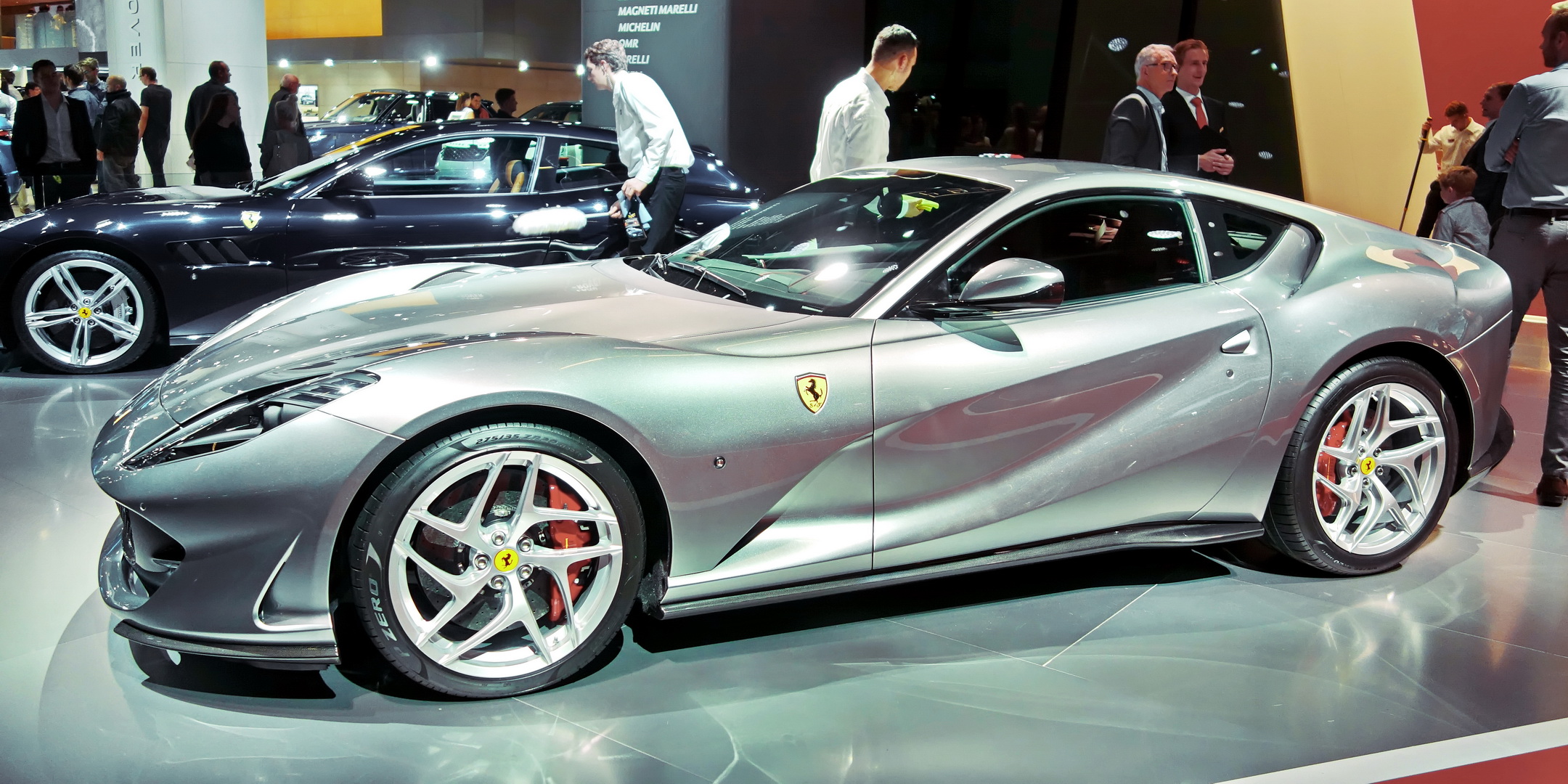
Ferrari 12
"It is in fact a Ferrari 12 for both of the sessions today. Just take a screenshot of my very happy face."
They’re talking about Ferrari’s F1 car with the number 12. In Formula 1, each driver’s car has a number, so it’s an easy way to say “the car Leclerc is driving.”
“Ferrari 12” is a shorthand reference to Ferrari’s Formula 1 car number 12, driven by Charles Leclerc in this Monaco weekend context. In F1, the car number is how fans quickly identify which driver’s car you’re talking about on track and in timing screens.
P3
"but Max Verstappen coming out of nowhere for P3 and giving you a little bit of hope as well."
“P3” just means third place. It’s where the car ranked in speed for that session—third-fastest overall.
“P3” means third place in a session’s classification. In practice and qualifying, P3 indicates the car was the third-fastest overall at the end of that session, which can be a strong hint about race pace.
Hungaro ring
"It's never been one of his specialist circuits, not like a Canada, China, Hungaro ring, where he's absolutely brilliant around."
“Hungaro ring” is a race track in Hungary where F1 cars go. The hosts are using it as an example of a circuit where Hamilton tends to do especially well compared with Monaco.
“Hungaro ring” refers to the Hungaroring circuit in Hungary, a track that’s often cited as suiting certain drivers’ styles. It’s mentioned here as a contrast to Monaco, implying Hamilton performs better at some circuits than others.
Charles Pace
"Like he is on Charles Pace and that's been a big surprise because we know that Charles is a specialist around Monaco and Hamilton's really taking the fight to him."
This sounds like a mis-heard name for Charles Leclerc. They’re saying Leclerc is usually very good at Monaco, so it’s surprising Hamilton is challenging him.
“Charles Pace” appears to be a transcription error for Charles Leclerc, Ferrari’s Monaco specialist. The point being made is that Leclerc is usually strong at Monaco, so it’s notable that Hamilton is “taking the fight” to him this weekend.
Charles Leclerc
"I think, look, at the end of the day, Charles has always been fantastic at qualifying. That's been his big strong point. But we know that it's not always as the case now..."
Charles Leclerc is one of Ferrari’s top Formula 1 drivers. The hosts are talking about how well he usually qualifies, and how Monaco can be tricky—so his results can depend on avoiding mistakes.
Charles Leclerc is a Ferrari driver known for being especially strong in qualifying, where single-lap pace matters most. In this segment, the hosts discuss how his performance can swing between qualifying and race pace, and they reference his Monaco history and mistakes.
super clipping
"But we know that it's not always as the case now and they're very different cars to drive. Thankfully, we're seeing them push here. We're not going to have the problems with super clipping."
“Super clipping” refers to an extreme aerodynamic behavior where a car’s setup or conditions cause the car to become overly unstable or to lose efficiency in certain speed ranges. The hosts mention it as a problem they expect not to appear here, implying the cars should remain more predictable.
drag
"We're not going to have the problems with super clipping. You know, we're not seeing any of the drag, the straight mode or anything like that. So we're going to see them going flat out."
Drag is air resistance that makes a car slow down as it goes faster. If drag is lower than expected, the car can go quicker on the straights.
Drag is the aerodynamic resistance that slows a car down as speed increases, and it strongly affects top speed and efficiency. The hosts mention not seeing “drag” or related issues, suggesting the cars should be able to reach very high speeds on Monaco’s straights.
straight mode
"You know, we're not seeing any of the drag, the straight mode or anything like that. So we're going to see them going flat out. But Hamilton does look confident..."
“Straight mode” is a race setting that’s meant to help the car go faster on straight sections. The hosts are implying the cars don’t need to rely on that special setup here.
“Straight mode” refers to an F1 car’s selectable settings optimized for maximum speed on straights, typically changing aerodynamic balance and/or throttle and traction behavior. The hosts are saying they’re not seeing the need for that kind of mode, implying the cars should be fast without special handling compromises.
Hamilton
"But Hamilton does look confident and I think he absolutely can do it. It's going to be fascinating to watch and it's really good if Ferrari are in fact clear and fastest. It's going to be fascinating if we have the two of them fighting..."
Hamilton is a famous Formula 1 driver who’s won multiple championships. In this part, the hosts think he looks confident and could realistically win the race at Monaco.
Lewis Hamilton is a multi-time Formula 1 World Champion, and the hosts here focus on his qualifying and race-winning potential. They also mention how his confidence and pace can translate into a strong weekend outcome at Monaco.
pole position
"Of course, I went for Hamilton pole position in predictions because you blocked Charles and I was like, rather than going for a Norris, I think Hamilton especially after Canada..."
Pole position means starting first on the grid. At Monaco, that’s a big deal because it’s hard to pass once the race starts.
Pole position is the first starting spot on the grid, awarded to the driver who qualifies fastest. The hosts discuss predicting pole for Hamilton, which matters at Monaco because overtaking is difficult.
Q3
"But it will either be P1 or he will start 10th because he'll crash in Q3. I think it's as simple as that because we've seen it before, right?"
Q3 is the last and most important part of F1 qualifying. If a driver has an accident in Q3, they can miss out on setting a fast lap and end up starting much farther back.
Q3 is the final segment of Formula 1 qualifying, where the fastest drivers fight for pole position. The hosts suggest Leclerc could start 10th if he crashes in Q3, which would prevent him from setting a top qualifying time.
Monaco curse
"We've literally seen Charles Leclerc mistakes around his alley and that's where the Monaco curse came from until he, of course, won in 2024 and lifted that."
The “Monaco curse” is a nickname for a driver having bad luck or making mistakes at Monaco again and again. The hosts say Leclerc used to struggle there, but winning in 2024 is seen as ending that streak.
The “Monaco curse” is a fan shorthand for the idea that a driver repeatedly suffers bad luck or mistakes at Monaco, often due to the circuit’s narrow streets and high penalty for errors. Here, the hosts connect it to Leclerc’s past mistakes and note that he won in 2024, which they frame as breaking the pattern.
1-2
"Surely even Ferrari can't mess this up, right? And if it's a 1-2 in quality, do you guys think Fred will tell them to hold position and secure the 1-2? So if Ferrari lock out the 1-2 in qualifying..."
A “1-2” means the same team takes the top two spots—first and second. It’s a great result, but turning it into a race finish can be tricky, especially at Monaco.
A “1-2” is when one team finishes first and second in the race (or, in this context, locks out the top two in qualifying). Teams aim for it because it maximizes points and demonstrates dominance, but it can be difficult to convert from qualifying to the race at Monaco.
undercut
"they're going to have to potentially, depending on the strategy, of course, one of them is going to be open to an undercut at the very least. And that will most likely be Hamilton, right?"
An undercut is when one driver pits earlier than another to get fresh tires and run faster. The goal is to come out ahead after the stops, even if you couldn’t pass easily on the track.
An “undercut” is a pit-stop strategy where a driver pits earlier than a rival, aiming to come out ahead. Because fresh tires can be faster, the undercut can convert track position into a change of position without needing to overtake on-track.
track position
"It's always track position. Charles Leclerc will come into the pits first if he is the one on pole and leading into turn one, same with Lewis, right?"
“Track position” just means who is ahead on the track. In racing, being ahead can be a big deal because it’s harder to pass and easier to manage your tires and speed.
“Track position” is where a car sits relative to others on the circuit, especially before and after pit stops. In F1, track position often matters more than raw speed because clean air and fewer cars in front make it easier to control pace and defend.
turn one
"because they will both know that that is the opportunity. But I think they are two experienced and sensible enough drivers to know that, you know, like Lewis Hamilton, you know, one of the best of all time, you know, statistical go, like he's not the kind of driver that would put a stupid dive bomb on his own teammate at Monaco. Clip this, clip this when they go into the wall at turn one."
“Turn one” is the first major corner right after the race begins. It’s often where drivers fight for position, so it can be the most chaotic part of the race.
Turn one is being treated as the race’s critical early bottleneck where the first big positioning battles happen. The hosts connect it to the risk of aggressive moves and potential contact right after the start.
dive bomb
"Clip this, clip this when they go into the wall at turn one. [..] like he's not the kind of driver that would put a stupid dive bomb on his own teammate at Monaco. [..] a dive bomb."
A “dive bomb” in Formula 1 is an ultra-aggressive braking move where a driver brakes very late to force the car into the corner. It’s risky because it can cause contact, especially on narrow tracks like Monaco where there’s little room for error.
Max Verstappen
"And he's not going to do anything crazy like we may be see from a certain guy called Max Verstappen who's got who if he's in that situation, he's probably thinking, this might be the only race I'm going to win at Red Bull this year."
Max Verstappen is a very aggressive Formula 1 driver. In this discussion, they’re using him as an example of someone who might try a very daring move instead of playing it safe.
Max Verstappen is a top Formula 1 driver famous for bold, high-risk overtakes and aggressive race strategy. The hosts mention him as the type of driver who might “go for it” with a dive bomb if the situation allows it.
pit stop
"because to get the first pit stop even if they risk it all and go incredibly early [929.1s] is whether Ferrari will allow them to do it and they probably won't."
A pit stop is when the race car comes into the pits to change tires (and sometimes do quick service). Teams time it carefully because when you stop can affect who is in front on the track afterward.
A pit stop is when an F1 car enters the pit lane to change tires and/or make adjustments during the race. Strategy around pit stops—like going early or staying out longer—can determine track position and who ends up leading after the stop.
McLaren
"I think McLaren did it last year, you know, in certain moments that we were questioning, [939.0s] but it would just cause so many issues if, you know,"
McLaren is another Formula 1 team. The hosts are saying McLaren has tried this kind of strategy before, but it can cause problems depending on the race situation.
McLaren is a Formula 1 team referenced as having used a similar pit-stop strategy “last year.” The point is that even if another team has tried it before, it can still create complications depending on who is in second and how the pass-through affects track position.
relinquish the position
"Are they then going to just relinquish the position? [949.9s] I don't think so, right?"
“Relinquish the position” means giving back a place you just gained. In racing, that can happen if the tires or timing aren’t good enough to keep the lead after a pass.
“Relinquish the position” means giving up a gained place—often because team strategy or race circumstances make holding it difficult. In F1, this can happen if a driver passes during a pit-stop window but then can’t defend due to tire or fuel timing.
strategy unfold
"That's one of the big talking points and question marks around Sunday at Monaco [965.1s] is how does the strategy unfold?"
“How the strategy unfolds” means the plan the teams execute during the race—when they pit and how they react to other cars. It’s basically the race chess game that decides who ends up winning.
In F1, “how the strategy unfolds” refers to the sequence of race decisions—especially tire timing and pit-stop order—that determine who gains or loses position. It’s not just about speed; it’s about managing track position and timing relative to rivals.
hold position
"So, I don't think that Fred will tell them to hold position [971.6s] and you brought up an interesting point which I think is going to be so fascinating to see how it unfolds."
“Hold position” is when the team tells a driver to stay where they are instead of trying to gain places. It’s often to protect their advantage or avoid making things worse after a pit stop.
“Hold position” is team orders telling a driver not to attack or not to change the running order, usually to protect track position after a pit stop. In practice, it can mean avoiding passing attempts that would cost time or create unsafe gaps.
Mercedes
"but this might well be one of his only chances in his career to get another win. [988.4s] Like, if we're talking about, yeah, well, yeah, unless you go somewhere else, [991.6s] I don't think he's going to go back to Mercedes."
Mercedes is a Formula 1 team. The host is basically saying Hamilton likely won’t return to Mercedes, and that this race could be his best shot at a win with Ferrari.
Mercedes is the Formula 1 constructor being referenced when the host says they don’t think Hamilton will “go back to Mercedes.” This frames the discussion around Hamilton’s realistic chances and where his next win could come from.
reliability issue
"People on pitch remember Matthew Cole 04. [1033.3s] How unlucky has Lando been this season? [1036.2s] Seems like he has a reliability issue every weekend."
A reliability issue is when the race car has a problem that keeps it from working properly. If it happens often, the driver loses practice time and can’t race as strongly as the car’s speed might suggest.
In Formula 1, a reliability issue means the car has a mechanical or systems problem that prevents it from running as intended—often causing delays, reduced performance, or retirement. When it happens repeatedly, it can erase the team’s speed advantage because the driver can’t complete enough laps to build race strategy.
FP3
"Obviously, we still yet to see them going for it in FP3"
FP3 is the third practice session on an F1 weekend. It’s when teams test and adjust their cars before the important sessions like qualifying and the race.
FP3 means “Free Practice 3,” the third practice session of an F1 weekend. Teams use it to fine-tune setup and gather data before qualifying and the race, so pace in FP3 often hints at how competitive a team will be later.
compression ratio
"I know there's the talk of like the loophole closing about the compression ratio and stuff, which, let's be honest, doesn't really matter here."
Compression ratio is how much an engine squeezes the air-fuel mixture inside the cylinder. Higher or lower squeezing can change how much power the engine makes. The hosts are saying that, for this race, that rule talk probably won’t explain what we’re seeing.
Compression ratio is the ratio of the volume in a cylinder when the piston is at its lowest point versus highest point. In racing rule discussions, changes or “loophole closing” around compression ratio can affect how teams design engines for power and efficiency. The hosts suggest it won’t be the main factor in this specific Monaco outcome.
track dependent
"But this is track dependent. You know, they spoke to George Russell after the session..."
“Track dependent” means the car’s results depend on the specific race track. Some tracks favor certain strengths, like acceleration or grip, while others don’t. The hosts are saying Mercedes’ performance here doesn’t necessarily predict the next races.
“Track dependent” means a car’s performance varies significantly from circuit to circuit. In F1, different layouts change how much traction, braking stability, aerodynamics, and power delivery matter. The hosts use this to argue Mercedes’ competitiveness can’t be judged from one session alone.
George Russell
"You know, they spoke to George Russell after the session and he was like, we knew this was going to happen."
George Russell is a Formula 1 driver who races for Mercedes. The hosts are referencing what he said after the session to explain why Mercedes struggled in practice. It’s basically an insider “we expected this” moment.
George Russell is a Mercedes Formula 1 driver, and the hosts cite his post-session assessment. They use his quote to support the idea that Mercedes’ practice performance was predictable given the circuit’s characteristics. This frames the discussion as driver-informed rather than pure speculation.
Strait of China
"George Russell was like a second clear down the Strait of China and things like that. And they were so strong there."
They’re talking about a particular part of the circuit where the cars run fast. The point is that Mercedes was very strong in that kind of section, so the hosts think the car’s strengths show up differently depending on where you are on the track.
The “Strait of China” is referenced as a specific high-speed location/section where Mercedes showed strong pace. In F1 commentary, naming a track feature like this highlights where power and aerodynamic efficiency translate into lap-time advantage. The hosts contrast that strength with why Mercedes might struggle elsewhere.
pecking order
"It's not just suddenly because the pecking order is like flipped on its head."
“Pecking order” just means which teams are usually faster than others. If it’s “flipped,” it means the usual favorites aren’t looking as dominant this time.
In Formula 1, the “pecking order” is the relative ranking of teams based on current performance—who is fastest, who is next, and so on. When the host says it’s “flipped on its head,” they mean the usual hierarchy of teams has changed for this weekend.
lock out the second row of the grid
"You know, they could easily lock out the second row of the grid if they have a decent qualifying."
It means the team qualifies both of its cars in the same starting row near the front. That’s a big deal because it usually gives them an easier path at the start.
To “lock out the second row of the grid” means two cars from the same team qualify in both spots of that row (typically positions 3 and 4). It’s a strong indicator of one-lap pace and track position advantage heading into the race.
qualifying
"You know, they could easily lock out the second row of the grid if they have a decent qualifying."
Qualifying is the timed session that decides where each car starts in the race. In Monaco, starting position matters a lot because passing is hard.
“Qualifying” is the session where teams set their fastest laps to determine the starting order for the race. In Monaco, qualifying is especially influential because overtaking is difficult on the tight street circuit.
anomaly
"Like, I think this is very much just an anomaly."
An “anomaly” means something that seems out of the ordinary. They’re basically saying this might be a weird weekend rather than a permanent change in who’s best.
An “anomaly” here means an unexpected result that doesn’t reflect the teams’ true underlying performance. The host is suggesting Monaco practice looks unusual, but the normal hierarchy may reassert itself later.
survive, Monaco
"And just survive, Monaco. I genuinely believe that's the kind of thinking here because the wind doesn't look like it's on the cards."
It means “don’t wreck it—just finish.” Monaco is so tight and hard to pass that making it to the end without damage is a big win.
“Survive, Monaco” reflects a common F1 mindset for the Monaco Grand Prix: finishing safely is often the priority because the circuit is narrow, slow, and unforgiving. Crashes or damage can quickly end a car’s chances, so avoiding mistakes is crucial.
Hülkenberg
"Hülkenberg, I've put him in my F1 fantasy team because he is such a steal."
Hülkenberg is a Formula 1 race driver. The hosts are talking about him as a good pick for fantasy because they think he might finally score points in Monaco.
Nico Hülkenberg is a Formula 1 driver known for being a consistent midfield performer. In this segment, the hosts discuss him as a “steal” for F1 fantasy and speculate he could score in Monaco.
speed trap
"Looking at how well they've done in things like the speed trap, I kind of thought that maybe their car is going to be suited to something like a Monza"
A speed trap is a measured section on the circuit where cars’ top speed is recorded. It’s often used to gauge straight-line performance and aerodynamic efficiency, which can hint at how well a car might do on tracks with long straights.
Monza
"I kind of thought that maybe their car is going to be suited to something like a Monza and they could be like a bit of a specialist around power circuits and high-speed circuits."
Monza is a fast Formula 1 track with long straights. The hosts mention it to compare how a car that’s good at top speed might do on a different kind of circuit than Monaco.
Monza is a high-speed circuit in Italy known for long straights and heavy emphasis on straight-line efficiency. The hosts use it as a contrast to Monaco, implying Audi’s strengths (like speed-trap performance) might suit tracks where top speed matters more.
midfield
"but actually they've been looking really quick and probably the best of the midfield so far."
“Midfield” means the teams that are not battling for the win every race, but are still competitive. The hosts are saying Audi looks like the strongest of that group in practice.
In F1, “midfield” is the group of teams/drivers that are generally competitive but not consistently fighting for the podium. The hosts say Audi has looked like the best of the midfield so far in practice, meaning they’re outperforming other non-front-running cars.
Bortoletto
"Maybe Hülkenberg and Bortoletto need to agree to hold hands and to turn one... we're speaking to Gaby Bortoletto tomorrow"
Bortoletto is a Formula 1 driver the hosts are talking about. They’re also saying they’ll interview Gaby Bortoletto later, and they discuss his role in the Monaco practice situation.
Gaby Bortoletto is referenced as a driver the hosts plan to speak with. In this segment, they connect him to the Monaco practice discussion and suggest he and Hülkenberg could coordinate around the start/turn one.
Request an Explanation
Heard something you'd like explained? We'll add it to this episode.
Sign in to request explanations for terms you heard.
Want to learn more?
Browse our glossary for plain-English explanations of automotive terms, jargon, and concepts.
Help improve this episode
See something that's not quite right? Our annotations are AI-generated and can sometimes miss the mark. Click the flag icon on any annotation to suggest a correction.