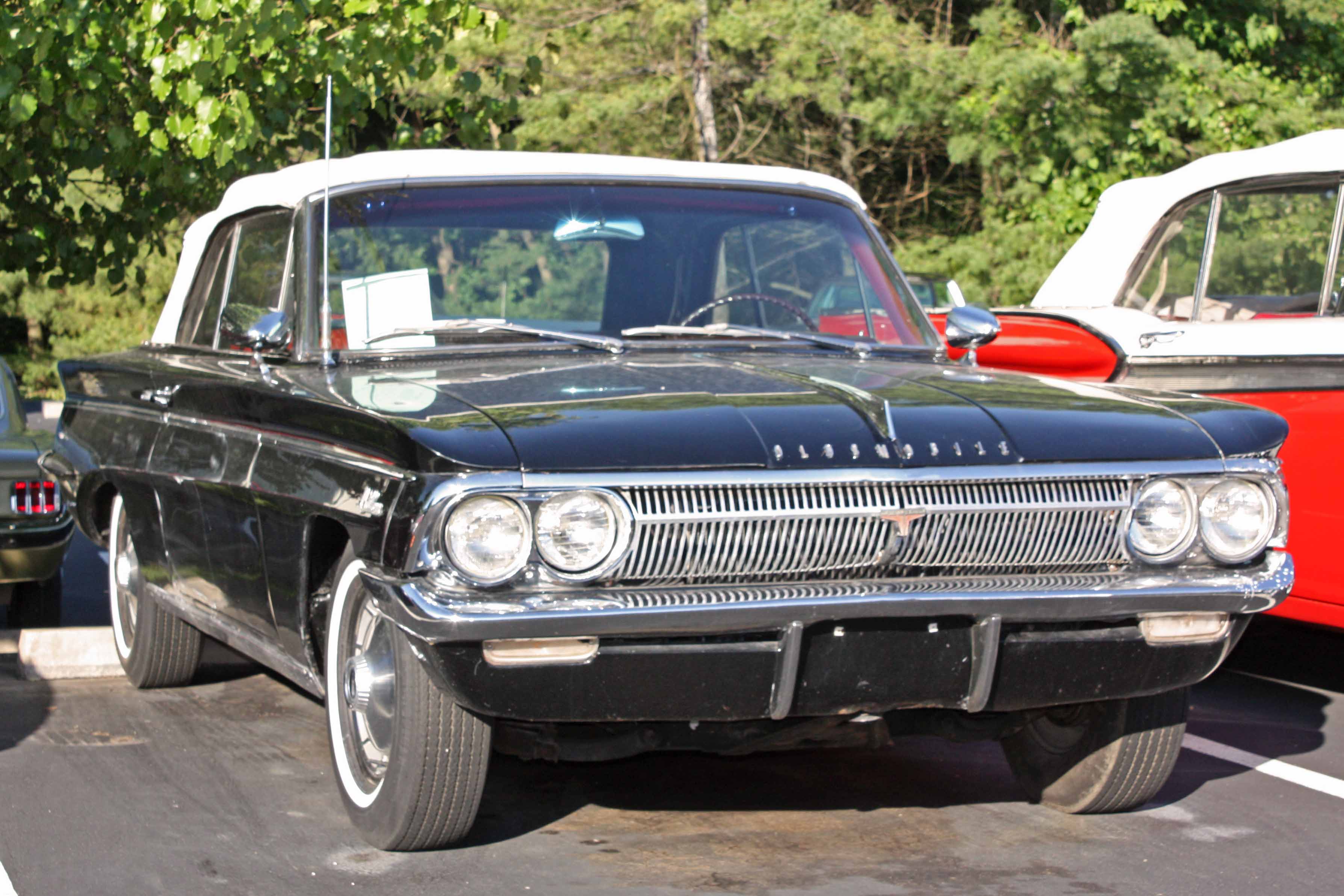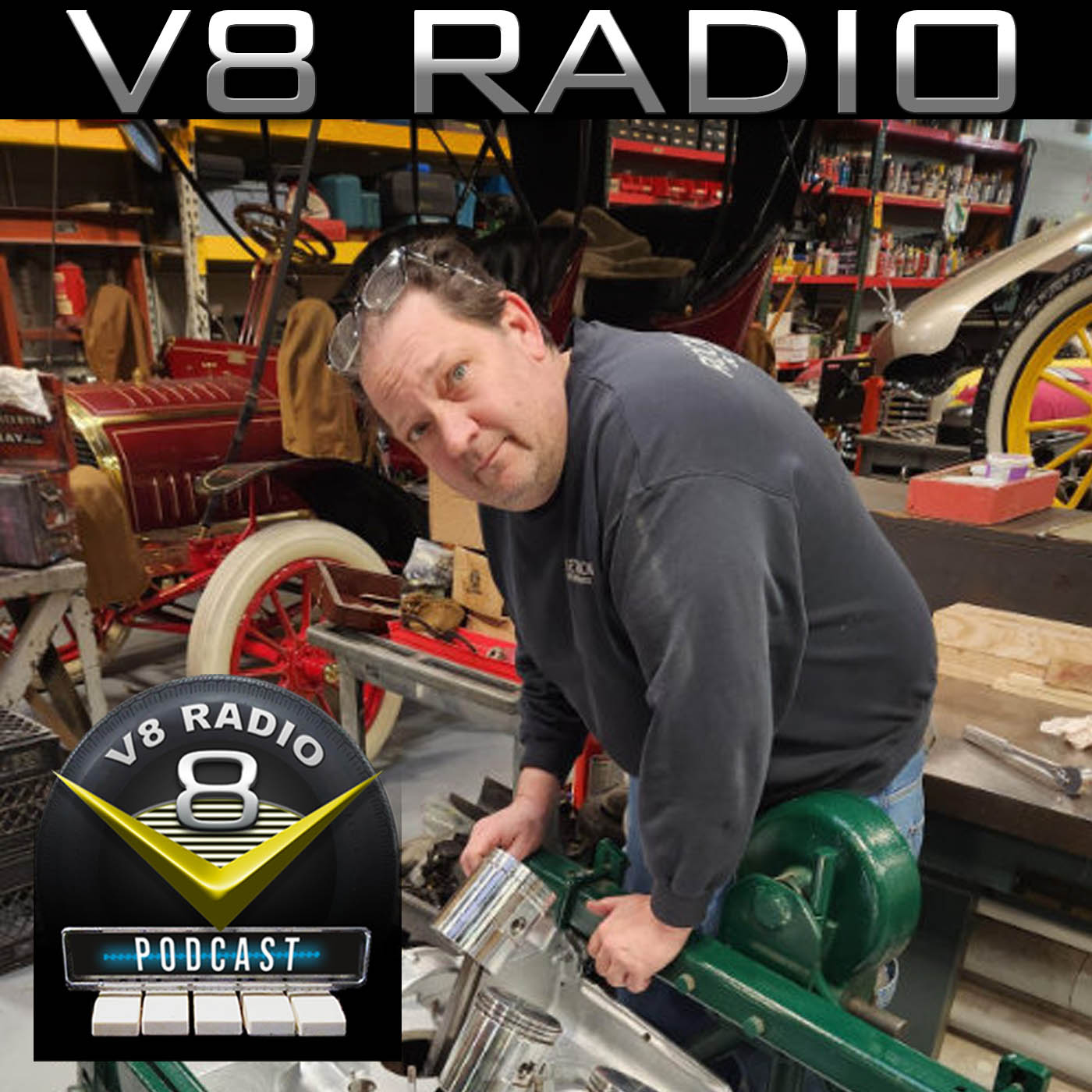
Mike Pistello, a restorer and machinist, shares his extensive experience in keeping vintage cars from the brass era alive. The discussion dives into the challenges of restoring early automobiles, including the use of modern technology like 3D printing and CNC machining to recreate parts that no longer exist. Pistello emphasizes the ingenuity of early automotive engineering and the importance of reliability in these vintage vehicles. The episode also features engaging trivia questions and insights into the automotive community, making it a fascinating listen for those interested in automotive history and restoration.
When 1910 Meets 2026: Racing Internals in Brass Era Beasts! 🏁📜
The latest V8 Radio Podcast is LIVE! Kevin and Q-Ball are joined by the master of the "unobtainium," Mike Pestello from Coachcraft and Precision Services. If you think restoring a muscle car is tough, try building parts for a 1907 Packard from a single photograph! 🤯
Mike takes us deep into the world of Brass Era restoration, where 100-year-old engines get treated to modern 4340 billet cranks, racing pistons, and serious compression bumps. We’re talking about pre-WWI cars completing 4,000-mile endurance runs without a support vehicle!
In this episode, we cover:
🔧 Reverse Engineering History: How 3D scanning and printing are saving cars built before the Titanic sank.
🏎️ The "Sleeper" Century: Hiding modern racing engine technology inside 120-year-old engine blocks.
🧟 The Zinc Pest Nightmare: Why "New Old Stock" might actually mean "crumbles in your hand."
📉 Dyno-ing the Ancients: Building a custom dyno because modern ones can't handle engines that max out at 2,000 RPM!
🏆 PRI Show Recap: Highlights from the Performance Racing Industry show and the emotional Hall of Fame inductions.
😂 Funny Moment: Don't miss the trivia segment where Kevin and Mike Pestello accidentally share a brain cell! They both gave the exact same answer to two completely different trivia questions. Great minds think alike... or maybe they've just been around too many exhaust fumes? 💨🤔
"It was before that. So I know that bus has a name, but I don't know what the hell the na..."
The Volkswagen Bus is a unique and roomy vehicle that started being made in the late 1940s. It became very popular in the 1960s, especially with people who wanted to travel and have fun. Many people love this bus because it's different and can be used for many purposes.
The Volkswagen Bus, also known as the VW Type 2, was first produced in the late 1940s and became an iconic symbol of the counterculture movement in the 1960s. Its spacious interior and unique design made it a favorite for families and travelers alike. The VW Bus is celebrated for its versatility and has a dedicated following among enthusiasts.
"...I've always liked the flexible brand Art Deco buses from the 30s and 40s. That stuff's cool, but the name of the GM one escapes me."
Art Deco buses are a type of bus that looks very stylish and decorative, popular in the 1920s and 1930s. They have unique shapes and colors that make them stand out.
Art Deco buses refer to a style of bus design that emerged in the 1920s and 1930s, characterized by bold geometric shapes, vibrant colors, and decorative elements. These buses were often used for public transportation and were notable for their aesthetic appeal as well as their functionality.
"...and that was at the origins of the Detroit diesel, by the way."
Detroit Diesel makes engines that run on diesel fuel. They have been around since the 1930s and are known for making strong and dependable engines for vehicles like buses and trucks.
Detroit Diesel is a manufacturer of diesel engines that has been a significant player in the automotive and transportation industries. Founded in the 1930s, they are known for producing reliable and powerful diesel engines used in various applications, including buses and trucks.
"...the Olds Tornado and the Cadillac El Dorado. That's all I got."
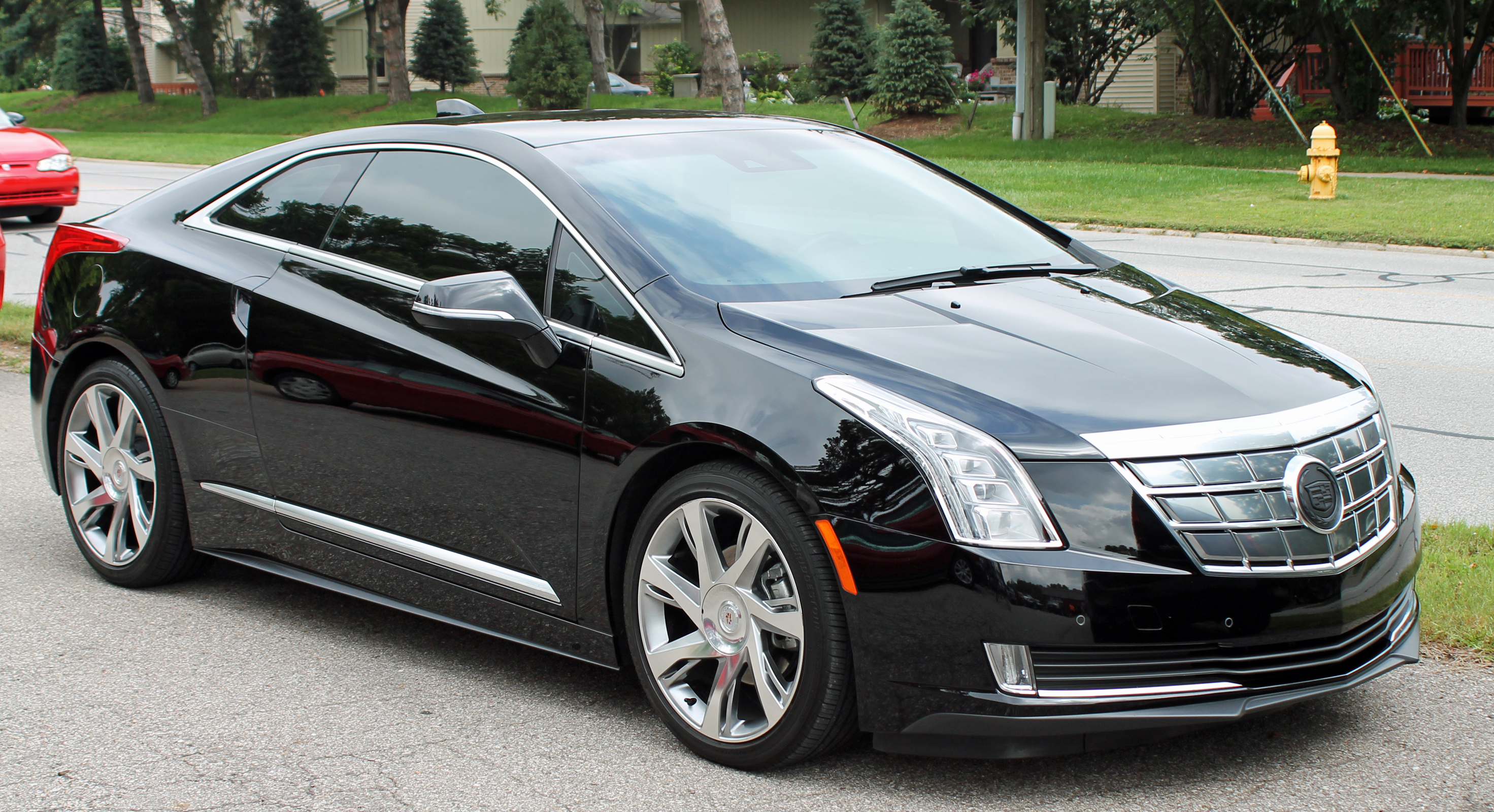
The Cadillac Eldorado is a luxury car made by Cadillac, known for being very stylish and comfortable. It was one of the top models for Cadillac and was produced for many years, offering lots of features and a smooth ride.
The Cadillac Eldorado is a luxury car that was produced by Cadillac from 1953 to 2002. It is known for its distinctive styling and was one of Cadillac's flagship models, often featuring advanced technology and luxurious amenities.
"...they inspired the Olds Tornado and the Cadillac El Dorado. That's all I got."
The Oldsmobile Tornado is a car that was made by the Oldsmobile brand. It was known for its stylish design and was one of the first cars to have the engine in the front while the wheels were driven from the front, which was different from most cars back then.
The Oldsmobile Tornado was a personal luxury car produced by Oldsmobile from 1966 to 1992. It was notable for being one of the first mass-produced cars to feature front-wheel drive and a unique design that set it apart from other vehicles of its time.
The Buick Electra is a large car made by the Buick brand. It was popular for its comfortable and roomy design, making it a good choice for families or those who wanted a smooth ride.
The Buick Electra was a full-size car produced by Buick from the 1950s to the 1990s. It was known for its spacious interior and comfortable ride, often appealing to buyers looking for luxury and performance in a larger vehicle.
"1989 Lincoln Town Car.
Kevin out of the gate with that.
Lincoln Town Car."
The Lincoln Town Car is a big, comfortable car made for luxury driving. The 1989 version is known for having a lot of space inside and a very smooth ride.
The Lincoln Town Car is a full-size luxury sedan that was produced by Lincoln, a division of Ford. The 1989 model is part of the fifth generation, known for its spacious interior and smooth ride.
"...in that vein, here we go. Um, you guys are all familiar with the GMA body platform. Of course your Pontiac Tempest lamins, GTO, Olds, Cutlass, Holiday, F85, 442, Chevelle."
The GMA body platform is a type of car design used by General Motors for several models during the 1960s and 1970s. It helped them make different cars using similar parts and designs.
The GMA body platform refers to a specific automotive platform used by General Motors for various mid-size cars in the 1960s and early 1970s. This platform was shared among several models, allowing for design and engineering efficiencies.
"...your Pontiac Tempest lamins, GTO, Olds, Cutlass, Holiday, F85, 442, Chevelle. From Chevrolet, Buick, Skylark, yadda yadda yadda."
The Pontiac GTO is a famous muscle car made by Pontiac from the 1960s to the early 1970s. It was known for being fast and powerful, making it very popular among car enthusiasts.
The Pontiac GTO is a classic American muscle car that was produced from 1964 to 1974. It is often credited with starting the muscle car trend and is known for its powerful V8 engine and performance-oriented design.
"...GTO, Olds, Cutlass, Holiday, F85, 442, Chevelle. From Chevrolet, Buick, Skylark, yadda yadda yadda."
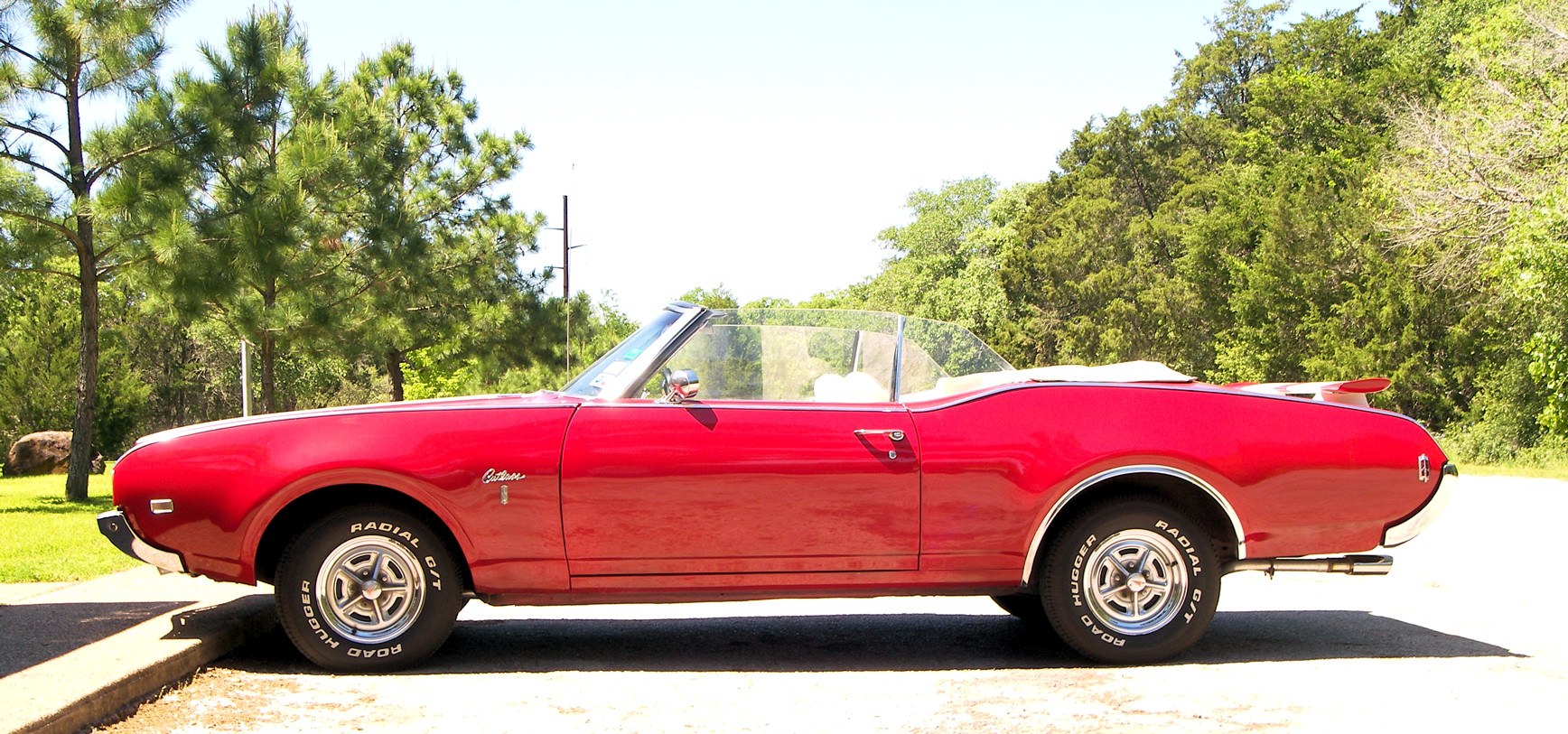
The Oldsmobile Cutlass is a car that was made by Oldsmobile for many years, from the 1960s to the late 1990s. It was popular for being comfortable and came in different styles.
The Oldsmobile Cutlass is a nameplate that was used for several models produced by Oldsmobile from 1961 to 1999. It was one of the best-selling cars in the United States during its production run, known for its comfortable ride and variety of body styles.
"...iday, F85, 442, Chevelle. From Chevrolet, Buick, Skylark, yadda yadda yadda. Between 1964 and 1972, in th..."
The Buick Skylark is a car that was made between 1961 and 1998, and it was known for being stylish and fun to drive. It was especially popular during the 1960s and 70s when many cars had powerful engines. People like to talk about it because it represents a cool time in American car history.
The Buick Skylark is a mid-size car that was produced from 1961 to 1998, known for its stylish design and performance options. It became popular in the 1960s and 1970s as part of the muscle car era, offering powerful engines and sporty features. The Skylark is often discussed for its classic appeal and as a representative of American automotive history.
"Well, how about the Comfortron option? What was the Comfortron option, Mike? Um, I believe it was like, uh, it was air conditioning."
Comfortron is a name for a type of air conditioning system in cars that lets you change the temperature on both the driver's and passenger's sides. It makes the ride more comfortable for everyone.
Comfortron was a term used by some automakers to describe an advanced climate control system that allowed for adjustable air conditioning settings. It typically included features like dual zone climate control, enhancing passenger comfort.
"So the first iteration like dual zone climate control? Correct."
Dual zone climate control means that the driver and passenger can have different temperatures in their areas of the car. It's like having two separate air conditioning systems for each side.
Dual zone climate control allows the driver and passenger to set different temperature preferences in the vehicle. This feature enhances comfort by accommodating individual temperature preferences for both sides of the cabin.
"I'm going to say it was the Autronic Eye for delayed headlights or automatic reduction of high beams to low beams when traffic was oncoming. All right. The Autronic Eye."
The Autronic Eye is a system that helps drivers by automatically changing their car's headlights from bright to dim when another car is coming. This way, it keeps everyone safer on the road at night.
The Autronic Eye is an early automotive technology that automatically adjusted a vehicle's headlights from high beam to low beam when it detected oncoming traffic. This innovation aimed to enhance safety by preventing blinding other drivers at night.
"He's got a 67 Camaro with a 327 and a power glide and a bench seat and a column shift, which is pretty killer."
The 327 engine is a type of V8 engine made by Chevrolet. It's known for being powerful and was used in many classic cars.
The 327 engine is a small-block V8 engine produced by Chevrolet, known for its balance of power and efficiency. It was popular in various Chevrolet models during the 1960s.
"He's got a 67 Camaro with a 327 and a power glide and a bench seat and a column shift, which is pretty killer."
The Chevrolet Camaro is a famous sports car that was first made in 1967. It's known for its powerful engines and stylish design.
The Chevrolet Camaro is a classic American muscle car that debuted in 1966. The 1967 model is particularly sought after for its iconic styling and performance options.
"He's got a 67 Camaro with a 327 and a power glide and a bench seat and a column shift, which is pretty killer."
Powerglide is a type of automatic transmission used in some older cars. It has two speeds and is known for being reliable.
Powerglide is a two-speed automatic transmission developed by General Motors, widely used in Chevrolet vehicles from the 1950s through the 1970s. It's known for its simplicity and durability.
Car
Pontiac Torino
"...hen John Fallon, who's a gentleman with a 69 Ford Torino GT, and he's an army vet. He listens to the show ..."
"John Fallon, who's a gentleman with a 69 Ford Torino GT, and he's an army vet."
The Ford Torino GT is a classic car made by Ford in 1969. It's known for being a powerful and stylish muscle car.
The Ford Torino GT is a performance-oriented version of the Torino, produced in the late 1960s and early 1970s. The 1969 model is known for its muscle car characteristics and sporty design.
"The cars here generally come to us as complete basket cases. Even if they are running and driving, they've been through so many iterations of people repairing them that we often have to start over."
A 'basket case' car is one that is in really bad shape and needs a lot of work to fix it up. It's often taken apart or missing important parts, so it's a big project to restore.
A 'basket case' in automotive terms refers to a vehicle that is in such poor condition that it requires extensive restoration or rebuilding. Often, these cars are disassembled or missing key components, making them challenging projects for restorers.
"So we have to reverse engineer. Nowadays, we have the opportunity to use 3d scanning, solid modeling and computers, 3d printing and metal, 3d 3d machining."
Reverse engineering means taking something apart to see how it works. In cars, this helps people figure out how to fix or recreate parts that aren't made anymore.
Reverse engineering in automotive contexts involves taking apart a vehicle or its components to understand how they work, often to recreate or improve upon them. This process is essential for restoring classic cars where original parts may no longer be available.
"Nowadays, we have the opportunity to use 3d scanning, solid modeling and computers, 3d printing and metal, 3d 3d machining."
3D printing is a way to make things by building them up layer by layer from a computer design. It's useful for making special car parts that you can't buy in stores anymore.
3D printing is a manufacturing process that creates three-dimensional objects from a digital file by layering materials. In automotive restoration, it allows for the creation of custom parts that may be difficult or impossible to find.
"...the weekend of the muscle car and Corbett Nationals because your shop's not far from Chicago..."
Muscle cars are fast cars that were made in America, especially popular in the 1960s and 70s. They usually have big engines and a sporty look.
Muscle cars are high-performance vehicles, typically American, characterized by powerful engines and aggressive styling. They became popular in the 1960s and 1970s, often designed for speed and performance on the road.
"...appreciate those more and more because these oftentimes were not mass produced. This is like before Henry Ford assembly line stuff..."
Brass era cars are old cars made before the 1920s. They often have shiny brass parts and were usually made by hand instead of being mass-produced in factories.
Brass era cars refer to vehicles produced from the late 1890s to the early 1910s, characterized by their brass fittings and often handcrafted construction. This period predates mass production techniques popularized by manufacturers like Henry Ford.
"...you guys actually hot rod these things under the surface a little bit. Yes. So something that and I was never exposed to this either..."
A hot rod is an old car that has been changed to go faster and look cooler. People often modify them to improve their performance and style.
A hot rod is a modified car, typically an older model, that has been enhanced for increased performance, speed, and style. Modifications can include upgrades to the engine, suspension, and bodywork.
"...even if you had a support vehicle, what are you going to do go down to your local parts store..."
'Support vehicles' are extra cars that help out during a trip. They carry tools and spare parts in case something goes wrong with the main car.
'Support vehicles' are additional vehicles that accompany a main vehicle during a journey, providing assistance such as carrying spare parts, tools, and supplies. They are especially useful in long-distance or challenging trips.
"...the way that I thought it should be done was well, let's take our racing knowledge and put it inside of a brass era engine, which is what we've done."
A 'brass era engine' is an engine from the very early days of cars, when they were first being made, usually before 1915. They were simpler and often had parts made of brass.
The term 'brass era engine' refers to early automotive engines produced during the Brass Era of automobiles, which lasted from the late 1890s to about 1915. These engines were characterized by their simple design and often used brass components.
"we have to build a new crankshaft for these engines and they get done out of 4340 billet, just like you would build a racing crankshaft out of..."
The crankshaft is a part of the engine that helps turn the energy from the fuel into motion. It's made from strong materials, especially in racing engines, to handle the power.
A crankshaft is a key component in an engine that converts the linear motion of the pistons into rotational motion, which ultimately powers the vehicle. In high-performance applications, crankshafts are often made from high-strength materials to withstand greater forces.
"...because I remember talking to a friend of mine when I lived in California who used to work in a shop that had restored a Mercedes 540K. And, you know, super high dollar car."
The Mercedes 540K is an old luxury car from the 1930s that is very valuable today. It's famous for being stylish and powerful, making it a favorite among car collectors.
The Mercedes 540K is a classic luxury car produced in the 1930s, known for its powerful engine and elegant design. It is highly sought after by collectors and can fetch very high prices at auctions.
"...n there and how did it do? We had a 1910 Packard Model 30, which is an engine that we had built from scratc..."
The Tesla Model 3 is a modern electric car that came out in 2017. It's popular because it can go a long distance on a single charge and has cool technology features. Many people like it because it helps the environment by not using gasoline.
The Tesla Model 3 is an all-electric sedan that was introduced in 2017 and has become one of the best-selling electric vehicles worldwide. It is known for its impressive range, advanced technology, and performance, making it a popular choice for those looking to transition to electric driving. The Model 3 represents Tesla's mission to accelerate the world's transition to sustainable energy.
"We had a 1910 Packard Model 30, which is an engine that we had built from scratch. New cylinders, new crankshaft, new rods, new pistons, valves."
The Packard Model 30 is an old luxury car made by the Packard company in 1910. It's famous for being well-built and powerful for its time.
The Packard Model 30 is a classic car produced by Packard in 1910, known for its luxury and engineering excellence. It features a powerful engine and was part of Packard's early lineup, which established the brand's reputation in the automotive industry.
"Okay. And you put him in front of a Model T and he is lost. And it's an odd thing to see hap..."
The Ford Model T is an early car that was made a long time ago, between 1908 and 1927. It was important because it was one of the first cars that many people could afford, which changed how people traveled. This car is often talked about because it helped start the car industry as we know it today.
The Ford Model T, produced from 1908 to 1927, is often regarded as the first affordable automobile, making car ownership accessible to the general public. Its assembly line production revolutionized manufacturing and significantly impacted the automotive industry. The Model T is significant not only for its historical value but also for its role in shaping modern transportation.
"...We've won Pebble Beach several times. Amelia Island, a lot of the major concours we've done well at, including completing the tours and road rallies that are required at a lot of these concours to place."
Pebble Beach is a famous car show where really nice old cars are displayed and judged. Winning there is a big deal for car enthusiasts and collectors.
Pebble Beach is one of the most prestigious automotive events in the world, where classic and vintage cars are showcased and judged. Winning at Pebble Beach is a significant achievement that reflects the quality and craftsmanship of the vehicle.
"...otors tie-in was that that was the first year the Vista cruiser also built a wagon. That is correct."
The Oldsmobile Vista Cruiser is a type of family car called a station wagon that was made from 1964 to 1977. It had a special design with a glass roof in the back, which made it stand out. People remember it fondly because it was great for families and had a unique look.
The Oldsmobile Vista Cruiser is a station wagon that was produced from 1964 to 1977, known for its distinctive design featuring a glass roof over the rear seating area. It was popular for its spacious interior and family-friendly features, making it a favorite among consumers during its production years. The Vista Cruiser is often discussed for its nostalgic appeal and unique styling.
"... in 1996 on the Buick Roadmaster and the Cadillac Fleetwood. Oh, that was the last vinyl roof was a 96."
The Cadillac Fleetwood is a fancy car that was made for many years, especially known for being luxurious and comfortable. The last version was made in 1996, and it had a special roof made of vinyl. People talk about it because it shows how luxury cars used to be made.
The Cadillac Fleetwood is a luxury vehicle that was produced from the 1930s until the late 1990s, known for its elegant design and high-end features. The 1996 model is particularly notable as it marked the end of an era, being one of the last cars to feature a vinyl roof. The Fleetwood represents Cadillac's commitment to luxury and comfort in the automotive market.
"... factory fitted sunroof came in 1996 on the Buick Roadmaster and the Cadillac Fleetwood. Oh, that was the las..."
Select text to request an explanation
All right, ladies and gentlemen, automotive enthusiast friends, no matter where you are
on the big spinning apple we call planet Earth, you've done it once again.
You allowed your index finger to push go on yet another-
Kevin, another grand deli-quint episode of V8 Radio.
Grand deli-quint episode.
Ooh, that's exciting.
Yeah, I didn't even make that up.
That's like three words in one.
Right.
Yeah, that means grand to be extravagant in language, style, or manner.
Wow, which applies to our guest, who we'll announce in just a minute.
This is the V8 Radio podcast, I'm your host, Kevin Oste, joined as always by our esteemed
co-host, Mr. Mike Q-Ball-Clark, and our very special guest, Mr. Mike Pistello.
Welcome, Mike and Mike and Q and Mike.
It's Mike and Mike in the morning.
Thanks for having me, guys.
You know, we've been trying to put this together for about two years now, and it's finally
come together, so it should be a lot of fun.
We've been trying to put this together for two years just today.
Yeah.
Yes, you're right about that, too.
A couple internet-based technical difficulties, but we made it through all that.
So before we get into our guest, Mike, and his whole story, for those loyal listeners,
which I guess could be you, Mr. Pistello, you know that at the beginning of every episode
of V8 Radio, we do an automotive-based trivia question, and then we let everybody marinate
on the answers until the end when we reveal them to much fanfare and excitement and over-blowing
adjectives.
So because we're gracious hosts, Mr. Mike, we'll let you go first.
Have you prepared a trivia question?
Yes, I have.
This is kind of a two-parter.
Oh, great.
We're done on this one.
I'm already good.
This trivia question is brought to you by the letter F, by the way.
What GMC bus, built in the 40s, inspired two cars that were introduced in 1964?
Holy cats.
Q, this was all you.
Yeah.
Yeah, that's great.
All right.
So what GMC bus, built in the 40s, inspired, did you say two?
Two.
Two different GM marks.
Two different GM marks, meaning models?
No, no, like brands.
Brands.
In the 60s.
Introduced in 1964.
Now the two-parter is.
Oh, that wasn't the two parts?
Well, we're going to go into sub-A.
Oh, Christ.
I didn't study.
All right, sub-A.
So the two marks shared some platform.
That's kind of the hint, and then we'll leave it at that.
Can I go first?
Yes, please.
All right, so if you want the name of the bus, right, was that the first?
Okay, so I know there was the, what was it, the forward look?
Bus was the later one.
It was before that.
So I know that bus has a name, but I don't know what the hell the name of the bus is.
So I'm already deficient there.
But I'm going to guess that it influenced the Chevrolet and GMC pickup trucks of 64.
Oh, Lord.
Final answer.
That's my final answer, because I don't know the name of the bus.
You know, because eventually they had the fishbowl, which I think was the, I think that was the forward look or the future look, something.
Not a huge bus guy, but they are kind of cool.
When I lived in LA, and even in 2000 and 2001, they were still driving those old crown school buses that had the torpedo back on them.
And I think those were from the 40s.
It was crazy.
Oh, yeah.
And then, of course, I've always liked the flexible brand Art Deco buses from the 30s and 40s.
That stuff's cool, but the name of the GM one escapes me.
And that was at the origins of the Detroit diesel, by the way.
Um, you know, I don't know that for sure, but there was an excellent video done a couple of weeks ago by our friend, Brian Lones, about this very subject.
Oh, that's where you got this room.
Uh, part of it.
I got 12 loans.
Remind me to thank Brian proper for that one.
Right.
So that's my final answer.
I hope I bought Q ball enough time to make something up there.
Oh, Lord.
I mean, that was going to be my answer.
I guess I have to come up with something else.
Geez.
Um, okay.
What GMC, what GMC bus or GM bus built in the 40s.
Oh my Lord.
All right, Mike.
Great question.
This is, yeah, this is supposed to be a fun segment.
Not something that's going to age me.
Right out of the box.
Yeah.
Um, yeah.
I mean, he just came out of the bus swing and he's like, wait, make me wait for two years, fella.
I'll show you what's what.
Make you sit at the back of the bus.
Yeah.
Pretty much.
Okay.
I mean, I don't know squat about GM buses.
The only bus I can think of that.
That's a different one.
You're referring to the squatting bus squatting bus.
Yeah.
The air bag equipped for easier access.
Famous on the service of the 90s.
Bus line.
Is that related to the short bus?
Because that's what I'm on right now, Mike.
All right.
The only GM bus I can think of is that, that what a future liner bus that GM made.
Um, but of course I don't know if that was even in the 40s.
That was, that was a kind of an art deco 30s thing.
But that's, I, that's all I can think of is that, that GM future liner.
Um, and what cars they inspired, what marks they inspired.
Um, Jesus Louise.
Oh, golly.
I'll say they inspired the Olds Tornado and the Cadillac El Dorado.
That's all I got.
I got, jeez, God, Mike.
I thought we were friends.
All right.
Well, good question.
Yeah.
Great question.
Okay.
Well, um, moving on from that, uh, you got one.
Of course I got one, um, used all my brain power on this last one.
So I'll have to be thankful I wrote it down.
Okay.
Boys, what was the last year, last, um, year making model where a factory fitted vinyl
roof was offered.
Hmm.
And again, cause I'm a gracious host.
Yeah.
Mikey P. You can go first on this one.
Uh, I would have to say 1987.
Okay.
You gave me a year.
And model sir.
Hmm.
General Motors full size.
Hmm.
Uh, Buick Electra also bill 98.
Hmm.
They have like a, uh, like a, like a land our roof.
I think we'll go with that.
Okay.
Final answer.
Final answer, sir.
All right, sir.
Duly noted.
1989 Lincoln Town Car.
Kevin out of the gate with that.
Lincoln Town Car.
Final answer.
Yeah.
I think 90 was the first year for the Arrow version of that.
So I believe it was 89.
Okay.
All right.
Duly noted sir.
Great question.
Yeah.
Wow.
Good one.
Man.
Yeah.
That one came out quick.
All right.
Mr. Kevin.
We need to be, we need to be joining like a society of really boring people.
We're all excited about these.
Welcome to the boring question society.
Yeah.
Well, and in that vein, here we go.
Um, you guys are all familiar with the GMA body platform.
Of course your Pontiac Tempest lamins, GTO, Olds, Cutlass, Holiday, F85, 442, Chevelle.
From Chevrolet, Buick, Skylark, yadda yadda yadda.
Between 1964 and 1972, in the A body platform, what could you get from Olds and Buick that
you could not buy from Pontiac and Chevy?
All right.
Mike, since we're gracious hosts, we're going to let you tackle this one first.
Well, how about the Comfortron option?
What?
What was the Comfortron option, Mike?
Um, I believe it was like, uh, it was air conditioning.
You could adjust from the driver's side to the passenger side.
Oh my.
So the first iteration like dual zone climate control?
Correct.
Interesting.
Can you call that one again?
Comfortron.
I think that was the proper name for it.
It had a dial and a dash with temperature settings on it.
Hmm.
That's pretty cool.
Again, that was going to be my answer, but I'll have to go ahead and find another one.
Hey, sweetie, can you add a few digits to the Comfortron?
Yeah.
I'm a little chilly.
From my side.
All right, Comfortron, that's your final answer.
All right, Comfortron.
Q, you say.
Q says, so what from Olds and Buick you could get from 64 to 72, but not the other makes of a body?
Correct.
All right.
Olds and Buick.
That says luxury to me.
Higher end.
Surprised that Cadillac is not in that group, but they didn't have it.
They don't have anybody.
Okay.
I'm going to say 64 to 72, Olds and Buick, you could get the...
And by the way, there's probably more than one answer to this.
But because this has no prize money, there's one specific thing I'm going for.
Okay.
I'm going to say it was the Autronic Eye for delayed headlights or automatic reduction of high beams to low beams when traffic was oncoming.
All right.
The Autronic Eye.
Autronic Eye.
Finally.
Apparently that's been disconnected on most modern cars today.
Right?
Yeah, yeah, for sure.
All right.
Well, then we will find out the answer to these riveting tribute questions at the end of the show, which is like rapidly approaching because that was a long stretch of tributaries.
So good stuff.
Yeah, great stuff.
Today, there's no longer low and high beams. It's the same bulb. It just has a shade that, you know, just kind of blocks the projection between the entire road and the entire road and everything in the sky.
Nice.
And it's cool. I mean, we always complain like when you're driving that your lights aren't bright enough. And then when you're driving towards somebody, everybody's complaining how bright the lights are these days.
Right.
I for one appreciate it. But anyway, let's get back to our esteemed guest, Mr. Mike Pastello. So Mike, you've been doing the car thing a long time and in a lot of different capacities.
Racing, restoring, machining, designing. It's pretty cool that you decided to join us. So thanks and welcome.
Oh, well, like again, thanks for having me.
Always a pleasure to do stuff with you guys.
Well, we appreciate that. And Kelly says hi, by the way.
Thank you.
And not to put yet another speed bump in this episode before we get into Mike, we do have a couple of listeners shout outs and I thought of this because Mike is also a listener.
So there's another Mike guy named Mike Davis, who sent us some very high praise and nice compliments about our show.
He's got a 67 Camaro with a 327 and a power glide and a bench seat and a column shift, which is pretty killer. Yeah.
And he listens to thank you for that.
And then John Fallon, who's a gentleman with a 69 Ford Torino GT, and he's an army vet. He listens to the show and he's actually talking about sending us his car to V8 speed and rest.
Killer. Yeah.
All because of your trivia question responses, Mike.
Yeah.
Yeah.
So getting back to that, your day job today, Mike, is one of the most interesting of all of us in the in the auto enthusiast world.
So you work at a shop that the term restoration shop really doesn't do it justice. Why don't you tell me a little bit about it?
Well, we specialize in early automobile, like 1899 to 1930.
The cars here generally come to us as complete basket cases.
Even if they are running and driving, they've been through so many iterations of people repairing them that we often have to start over.
So consequently, it takes a whole army of specialists to bring that to a level that you can be proud of.
So that's what we do there. We have a coach shop that builds bodies. We have a machine shop that builds engines, transmissions, differentials, all kinds of other mechanical pieces, suspension components, wheel hubs, you name it.
I think the word build is not doing what you do justice because you you actually create parts that don't exist anymore.
Yeah, most of things.
About 80% of the stuff that we do there is built from scratch.
So we have to reverse engineer. Nowadays, we have the opportunity to use 3d scanning, solid modeling and computers, 3d printing and metal, 3d 3d machining.
And also all the old world techniques of machining and tool and die work also apply here. So I use almost all of it on a daily basis.
Many times, the only thing that we have to work off of is a photograph, like a photograph that you might find at a garage sale that somebody's going to sell some old postcards or whatnot.
A lot of times that's what we get to work with. So it's a, it's a challenge, but it's something that I'm always up for. And it's, I've been a tool and die maker for 38 years.
And being able to put those two things together, the car thing and the tool and die thing together has really been a neat ride.
Yeah, it's incredible. And you guys have been fortunate, or we've been fortunate enough to attend your open house event the weekend of the muscle car and Corbett Nationals because your shop's not far from Chicago and from the muscle car and Corbett Nationals show.
And we've talked about this a little bit on this podcast before, but part of the building is kind of a show storage room, I'll say. It's very nicely finished and finished cars are there parked in a big circle around the perimeter and in the middle.
And you've got a vintage full length bar and tables to sit at. So there's an entertaining area. And then, you know, you got your office space, but then the rest of the buildings have the upholstery shop and in the other departments you're talking about the parts development.
And to go through that and see cars that are brass era, which I was never really into it just, you know, wasn't my thing. And as I do more with this stuff, I appreciate those more and more because these oftentimes were not mass produced.
This is like before Henry Ford assembly line stuff. Yes, it is. And these are literally handcrafted the first time. And then you guys, like you said, are trying to recreate these parts and seeing the methodology that you use.
But not only that, when they're done, they run they drive the owners use them and you guys actually hot rod these things under the surface a little bit.
Yes. So something that and I was never exposed to this either I come from the racing industry. So I was never exposed to the brass car thing I knew what it was but, and I appreciated it because they were, you know, it's a neat car how could you not like it.
When I came to work here to at the current shop.
When it was new, they're going through creeks and and and washed out river beds and dirt trails.
We have one tour that we participated in that goes through all the national parks on the west side of the country. And when you get done, it's 4000 miles.
That you've done in a pre 1915 car with no support vehicles.
Holy cow.
Yeah.
And even if you had a support vehicle, what are you going to do go down to your local parts store and, and, you know, get a cylinder casing for, you know, whatever.
Right. So that was part of the challenge when I came to work there was we needed to get some reliability.
And the way that I thought it should be done was well, let's take our racing knowledge and put it inside of a brass era engine, which is what we've done.
We've used many of our, our partners to help us with the engineering side of this and, well, you guys use the same partners that I do so you know what kind of product you get from that.
We developed some machining techniques that helps in in longevity and making power.
And we've used modern materials.
So a lot of times we have to build a new crankshaft for these engines and they get done out of 4340 billet, just like you would build a racing crankshaft out of and it's built by the same people.
Same with connecting rods.
Bolts and fasteners and all that thing on the inside are usually ARP.
And after your introduction last week at PRI, we will probably be using some of the the new company, Kevin Feeney.
So that's that's that's what we have done super finishing, which is a polishing that's done with several different types of stones and walnut shells to give almost a plated appearance.
And it what it does is it it really knocks down the friction coefficient in parts that rub together like gear sets and various items inside of an engine.
Most of these engines are gear driven.
We have to redo the gear drives, which entails building gears out of modern materials and then a super finish.
We are in the process of figuring out how much power it's worth.
We just finished building a dyno to test these vintage engines.
Most of the engines now are going to get tested before they go in the car, which is, which is really a necessary thing.
There's so much time invested in these that you really can't put it in a car and test it.
It's not really a good idea.
Not that we have a lot of trouble, but you never know what you're going to run across.
Well, and that's true with any any restoration or modification you want to if you can if you can make sure that engine runs on a stand and doesn't leak and does what it's supposed to do, throw it in and not worry about it is what you want.
So dealing with all this stuff, I think our society is very forward forward looking and I think we have an attitude that anything new is better than old as a society.
But you come across designs and execution on hundred hundred and twenty year old engines now.
What are your thoughts on the the ingenuity of some of our forefathers on this stuff?
Well, I can tell you that and you guys have heard this before.
There is nothing new.
The guys that did this.
Now, you got to think about this.
This is before people even knew how to make a screw thread.
You could you could you could do it, but they weren't standardized.
Everything was a clean sheet of paper.
It was done without a computer calculator slide rule.
None of that existed.
And from that, from brilliant minds or maybe crackpots, I haven't decided which.
We got rack and pinion steering.
We got hardened materials.
We got standardized screw threads.
We got a general track with of a car that's still used today.
Roller lifters is a big one.
Roller lifters were used as far back as 1900.
Wow.
Wow.
That's crazy.
Yeah.
Yeah.
Well, that's a couple years after they took all the zinc out of the oil and everything
was taken a dive, right?
Yeah.
Yeah.
Yeah.
They had problems with oil.
I think they were still using whale lard.
You know, and you know, that's another thing that that many people don't realize that
if you're if you're any any type of mechanical person.
Oil and gasoline was not the same as it is today.
So when you're when you're restoring these cars that throws in a whole nother set of problems.
Carburetion and how an engine oils these engines most of the time were oiled without a pump.
They were they were oiled with a drip feeder that is regulated through a screw type like
a needle in seat.
And then the oil goes to all of the specific areas in the engine.
Main bearings, they'll actually oil the piston skirt, which we don't have to do anymore.
But that stuff was all done mechanically without a pump.
And all of that stuff, when you look at it, the quality of the manufacturing and the engineering
process is really something that I don't think you can find today.
I think that this is my opinion and I might make some people mad, but the computer aided
design world of today, unfortunately, has taken out some of the forward thinking where
one design is a new design is reiterated from another.
So there's consequently, there's very little brand new innovation.
Interesting.
So when you look at some of this stuff, and again, the machinery is the same is the same way.
There was no CNC.
In fact, at the turn of the century, there was no bridge port, which people are used to hearing that term bridge port mill.
Machining was done on large, horizontal milling machines and lathe's and it was all done by hand.
And when we put a cylinder block through an inspection, we have a coordinate measuring machine at the shop that can
measure back four decimal places.
That stuff is nearly perfect.
Really?
Yes.
The tolerances and ability to retain its squareness and all the things that you need to make an engine run efficiently
is really close to perfect.
And it's mind blowing to see that that was done in many cases 125 years ago.
Well, I've seen it at your shop and looking at other things, like the watchmaking world and the clocks and other things that
required high precision back in those days.
And my armchair view is that things like wars and mass production took a lot of that level out of stuff.
In order to make a thousand of these things a day, we're going to have to figure out a way to make them faster,
which means make them simpler, which means take out a lot of the things that are very specialized and very cool.
And also the sense of the artistic sense is disappearing.
And when you look at architecture, nobody's building anything with gargoyles on the corners anymore.
In fact, the latest trend, you look at all the fast food restaurants and they're all gray boxes.
It just keeps getting simpler and simpler and simpler to where everything's going to be gray and a square,
as opposed to ornate with scrolls and a visual element, even on a part that you're not going to see every day.
But how many of those engines or exhaust systems have an artistic flair in them as well?
Oh, they all do.
And most of the engines that we work on, which is where the term brass era comes from,
is much of the outside that in modern times is cast from aluminum or plastic was done out of solid brass.
And then in many cases was polished to a high luster, depending on how good of a chauffeur you had.
You have to remember a car cost anywhere from $3,500 to $6,000 at the turn of the century.
That's a lot of money.
So I think if you're going to spend $6,000 on a car, the customer is going to demand perfection.
That's fair.
So that's where you get, you know, when you look at a Packard today, a vintage Packard, before they were gobbled up by Studebaker and disbanded,
was really a super high quality, forward thinking automobile company.
They were always on the cutting edge because, well, there was no edge.
You just kept, you know, you had a constant clean sheet of paper.
But a brand new Packard in 1910 was $5,200.
Wow.
That's incredible.
That's like aircraft prices today.
Yeah.
Well, and that's also the era.
When you look at, if you're going to buy a Duesenberg, you basically bought the engine, driveline, and chassis from Duesenberg,
and then you often had to commission a coach builder for the rest of it, right?
Yes.
That's another part of the business that we're in.
But there were several coach builders in the United States.
Many were famous.
I can't think of all the names off the top of my head.
But one that was more production-orientated, but still, well, two of them, was the Murphy Body Company and the Briggs Body Company.
They were both coach builders.
They did a lot of work with Ford, Briggs especially, later in the 20s and 30s.
But that's what you did.
You bought a chassis, and you went to a coach builder, and you picked out what you wanted to have for a body style.
And in some cases, the more affluent customer would have two bodies built, one for summer and one for cooler driving.
A lot of people didn't drive their cars in the winter then, but we've seen several cars that had bodies that were built for colder weather driving,
and then in the summer, they would change to a sporty roadster body.
Wow, so an open and closed.
Yep.
That is insane.
That is insane.
I had never heard that, yeah.
That would be a good trivia question, Mike.
Oh, man.
So today, you know, what's the approach when somebody brings you a basket of deteriorated remnants of something?
Where do you even start?
What's step one?
Well, we like to gather up as much research as we can.
And nowadays, many of these cars have a provenance.
So they've had famous owners.
They've had a line of history that can be traced.
So through several resources, we can sometimes come up with photographs, drawings from the factory, drawings from the coach builder,
photographs of the car in period.
Sometimes the customer helps us out with that.
And then the next step is to, well, we lay all the pieces out on the table like you would if you were building a big giant model car.
And we see how things go together, how the systems worked, because everybody had a different idea.
And there was running changes that went on sometimes by the month.
So you might be working on a 1910 car, but it's early in the run.
And then you work on that same model car in the same year, and there's several subtle differences that need to be attended to.
We run across that quite often.
But that's our step one, is we're going to lay it out on a table, on a floor, and we're going to see what's there, what's missing, what's no good, what we can use.
And we come up with a plan of how we're going to reproduce the parts that we need to reproduce.
Are we going to machine it? Are we going to 3D print it? Are we going to cast it?
And if we're going to cast it, do we have to find some patterns or do we have to make some patterns?
There's a community of people out there that have a lot of the stuff that we need.
We just bought some patterns for a couple of engine jobs that we're going to get into this winter.
Something that they're going to go to the foundry and get modified to use at their foundry, but we have a good base to work off of.
So sometimes we have to start from scratch with that stuff, and sometimes we can find something that's usable.
But that's step one.
Some of the brands that we've been talking about have been American based.
Do you do cars from around the world or mostly US?
Yeah, mostly we do the US brands, but we do work with some of the more famous European brands.
Alpha, Maserati, Sunbeam is another one that we do fair amount of stuff with.
Renault was another one that we just finished a Renault that belonged to John Astor.
John Jacob Astor, he died on the Titanic.
He was portrayed in the movie.
So we ended up through a broker, recommissioning this car.
This car is unrestored.
I think you guys saw that car possibly when you were there last time.
Yeah, I think so.
It's a Renault limousine that was coach built here in the States, which we believe is the only custom-bodied United States coach built Renault in the world.
At that time, Renaults were not imported to the United States because of JJ Astor's provenance.
He was able to get one.
But he bought this car for his summer cottage and had it custom-bodied.
It's a limousine.
He bought that car brand new in 1910.
And when he died in 1912, the car sat in his carriage house and remained there until 1938.
It passed through several owners and never got touched.
Somebody tried to recommission it at some point between 1938 and when we got it, but were unsuccessful.
We went through the car.
The broker wanted to show it at Pebble Beach this year.
And we ended up having to do a complete engine overhaul, which included a whole bunch of pieces on the inside, pistons and rings and valves.
Those carburetors had an adjustable venturi.
I had to reproduce that.
We did that in a milling machine.
We 3D milled the contour for the venturi and made all that work again.
So like the overall length of the venturi was adjustable or?
The shape of the bowl.
Oh.
Yeah.
Wow.
That was an interesting job.
You had the original one to pattern off of.
I did not.
You did not.
Oh, interesting.
We had found an old owner's manual cut away mechanical drawing of the venturi.
I scanned that drawing and put it into a CAD program and I built a computer model off of that cut away drawing.
And then we programmed the mill to make the venturi.
That's incredible.
My goodness.
Yeah, that's cool when you can do that sometimes with parts that are circular in nature.
You can take a flat 2D diagram and spin it in the design software.
Correct.
And turn a thing that looks like the letter Y into a trumpet.
And flesh it out a little bit.
But it takes the thought to do that in the ability.
It's a brilliant way to approach that and having the dimensions or at least the relativity to the other parts.
I mean, sometimes you can probably reverse dimension things.
Well, that's how we do that.
In this particular case, the venturi is a slip fit into the carburetor body.
So you had the carburetor body.
Yes.
Somebody put the wrong venturi in it at some point.
Well, I would have dinged him at the car show for sure then.
Yeah.
I mean, I just would have probably thrown him out completely.
Yeah.
Yeah.
You horses ass.
Get that out of here.
Get that piece of crap out of here.
Now, I think we're at an interesting time because I remember talking to a friend of mine when I lived in California who used to work in a shop that had restored a Mercedes 540K.
And, you know, super high dollar car.
And he had done this in the mid 90s.
And the mid 90s was a time frame where there was still, you know, some enthusiasm for the cars for sure.
But basically none of the resources that you're talking about had been developed yet.
So in those days, the time distance between when that car was new and, you know, say 1935 or something.
I don't even know when the 540K was done somewhere around there.
Yeah, it's about that time.
Yeah.
Between then and say 1991.
All right.
That's a long time for parts to be used up, disappear and not be available.
And so I remember him telling me that through two months of research, he was able to end up talking to a guy who worked at Mercedes Benz when those cars were built.
And in 91 or so, the guy was like 90 years old in Germany and knew of two unused carburetors for that car.
And in order to get his hand on one, he had to promise this guy that he would buy one, I think he paid 10 grand for the carburetor.
But his promise to him was to disassemble it and have it all reproduced and send him back his original.
Oh, man.
Because the guy wanted to keep two of them.
He was in his 90s.
And so that's what he did.
He ended up reverse engineering it and molding it and casting the throttle body and making all the parts.
Whereas today, you could scan that and you could CAD massage it and you could quote unquote spit it out on a 3D print or in a CNC type machine to be able to make that.
But I think most people didn't have the resources to spend that kind of money or do that kind of stuff.
So to me, it's kind of fun that the parts kind of dry up in that time period, but then are reignited recently the capability to make all this stuff.
Yeah.
Yeah.
It's not as easy as it's made out to be, but the equipment is there to do it.
There's a lot of steps involved, but you're right.
You used to have to source original parts and a lot of people had that stuff locked up in a basement someplace.
And there was not too many people even back then that could do a job that that's a big job.
It has become a little bit easier because of the equipment that's been introduced.
There's still a lot of steps involved and it's still expensive to run that equipment.
I think the beauty of it versus what was done in the 90s is that we're able to choose from the old material that was used in the turn of the century up into the 30s.
Time is not good to it.
Even if it's brand new, there's different properties of metals that deteriorate with time just similar to rust.
It's not rust.
It's something else, but it's a corrosion nonetheless.
And when you get an NOS part sometimes from 1934, it's also unusable.
So when you reproduce it, we get to choose from a lot of modern materials, bronzes and hybrid tool steels and hybrid stainless and titanium.
And there's a whole bunch of stuff that we're able to choose from that, at least from where I'm sitting, it's going to last at least another 100 years, probably and beyond.
That's cool. So what you're getting from that unusable NOS part is you're pretty much getting all the dimensions and all the ins and outs of it and all the intricacies so you can reproduce that.
Yeah, you're getting all the numbers and so forth that all the critical fittings and all that stuff of a component.
Very good.
Yeah, NOS being new old stock, now we're talking about NUS, which is not usable stock.
But I've seen it, you know, sometimes it's interesting sometimes when certain metals corrode, they expand or they flake, you know, and they do weird stuff.
So I think one of the best examples was when, what was it in Oklahoma?
Was it Tulsa where they buried that 57 Plymouth in the time capsule and took it out and had nothing but rust and dust?
Yeah.
Just because it's new doesn't mean it's usable.
Yeah, exactly. And what you're describing is it's called zinc rot or zinc pest.
Because zinc is generally, it's mostly referred to as pot metal and it was commonly used in automobile parts for a long, long time.
It rots, it flakes apart, it actually, it grows to the point of it'll see so hard inside of a bore that you have to cut it out.
Wow.
Oh, man.
And carburetor ventures were commonly made out of out of this kind of zinc, carburetor's bodies were made out of zinc.
We run across plenty of carburetors that are no longer usable because they're infested with zinc pest.
So those carburetors generally get, you know, either we find another one that's usable or it gets remade out of a modern material.
So before when you were saying applying some modern race type technology to, you know, these vintage engine designs, what are we talking about?
The whole internal rotating assembly, pistons, rings, rods, crankshaft, internal fasteners, valves, springs, retainers, locks, all made from brand new modern material that's found in a racing engine.
Stainless valves, 4340 billet for crankshafts and rods, aluminum forged pistons that are also lightened, much like a racing engine would be.
So you're changing the design as well.
Yes, we're usually moving the compression ratio up.
They run better that way.
Believe it or not, the gasoline that we're given today, although they don't work all that well in a muscle car era car, the 87 octane works really well in a brass car.
So when you, when you move up even half a point from the four to one, five to one that they are stock, it really helps.
Four to one.
My Lord, man.
Yeah.
Well, you got to remember now, some of these engines are the cubic inches in some cases is well over 500.
And there was no self starter.
So before the four to one compression is the guy cranking that thing by hand out in front of the car.
He's really happy.
It's four to one.
I bet.
I bet.
Is there any way to throw a, you know, an ignition retard or anything on those today to help that?
Well, they are manually, the timing is manually controlled on those engines.
And we leave that.
Yep.
We leave that alone.
The ignition systems are are really good for for what they are.
You have a, an essence of distributor with a battery to start the engine.
And then it's switched over to magneto.
So it has a dual ignition system.
Most, most brass era cars have a dual ignition system.
The mag is just about un, you know, you can't beat a magneto.
Yeah.
And then other things.
So if you're changing the compression ratio, perhaps you are changing the piston shape.
Are you doing stuff with, with quench area and, you know, flame kernel design inside the cylinder head and that far?
No, no, not that far.
We're just moving the wrist pin compression height up and down.
We might add some height to the, to a dome.
The brass era engine generally is what's known as a T head design.
So the valve is upside down and off to the side.
It is not in the combustion chamber.
But what we have done with that is we went to, it's a stainless racing type valve and it's given a three angle valve job, which they never had.
They're going to breathe bad no matter what.
So any little bit that you can do to help it really makes a big difference.
Do you dino these engines or the cars as a whole?
We dino the engine.
We just ran our first engine.
We built a dino over the last part of the summer into the fall.
We built a dino because, well, a typical super flow V8 dino has a transducer that's set up for a V8 engine for the harmonics of the V8 engine.
That doesn't work with an inline four cylinder inline six cylinder.
And also the load characteristic in a modern dino doesn't work for us.
So we ended up having to build a dino from scratch.
So that's what we did.
It's up and running.
Our first job just came off of it last week and it shows a lot of promise.
Did you 3D print that dino?
No.
Yeah, he downloaded it from Thingiverse, I think.
So let's talk about what you had on there.
What engine was on there and how did it do?
We had a 1910 Packard Model 30, which is an engine that we had built from scratch.
New cylinders, new crankshaft, new rods, new pistons, valves.
The whole thing topped the bottom.
We are in the process of figuring out how to measure the horsepower.
We haven't quite perfected that yet.
So any number that I give you right now would probably be complete BS.
So I'm not going to even give you a number.
We're able to run the engine under load and we're able to get readings to come back.
I have a math formula.
I have to figure out to create the table.
I got a pretty good idea how to figure it out.
The load center is based on a test unit for outboard engines using a hydraulic pump.
Okay.
Yeah, the hydraulic pump is the water break, if you will.
That's the part that puts resistance on the engine to load it down.
And in a typical dino, you're able to measure the resistance and then do the math backwards
and say this much resistance measured equates to this much power produced against it.
Correct.
Yeah.
Yeah, that's how we, that's how we're going to end up doing that.
I just have to, I got to finalize my math and prove it out.
The next time that you come to visit us, I should be able to give you a table
of what one of those old engines actually makes for power.
We're very curious.
Well, because they were advertising power ratings back then.
Yes.
But the horsepower ratings were calculated differently then.
And I believe that stayed the same all the way up until the 60s.
They did.
It was actually, 1971 was the first year that they went to SAE net and said it grows.
And there were several things in play at the same time.
And one was the gas crunch.
The other was the early emissions controls that were coming in and the,
and the phasing out of let it gasoline all hit at the same time.
And the main difference was a gross horsepower rating was the engine on a test facility,
dino, if you will, with no accessories attached to it outside of what it needed to run.
Right.
And then the net rating was as installed in the vehicle.
So you had your alternator, your air compressor, your AC, your water pump,
all that stuff, belts, and similar exhaust.
And this is where, it's kind of funny.
Mopar was the last holdout.
All of your Ford's and GM's lost compression between 1970 and 71
because they were chasing this new emissions, this California emissions thing.
And so that, that was a power hit.
So, you know, a 70 Cheval SS 454 versus a 71 was a big drop off because of the compression ratio change,
plus the fact that in 71 they had to rate them differently with all the junk on them on the front.
So they took another hit and that's why you see this big step down.
But I remember seeing, you know, ads from the 30s and 40s in old National Geographic magazines
where they would talk about, you know, like a 40 horsepower or a 62 horsepower, you know, Cadillac or something.
And I always wondered, like, were they dinoing those or were they doing a performance calculation,
you know, like NHRA style where this is the weight of the car and this is how fast it went,
so this is how much it must make.
You know, I don't know.
They actually were dynoed. Cadillac and Osobil did that very early on.
A lot of their stuff was developed on a dynamometer.
How they got to the calculation, I don't know because at the turn of the century for the stuff that we work on,
when somebody says 30 horsepower, they actually mean 30 horsepower.
Somebody came up with some kind of general, well, I have this horse and he can pull this much weight
and then they just multiplied it and that's where the term comes from.
I think that formula still is, it's the ability to lift, I think it's 540 pounds, one inch in one second.
Okay.
It's one horsepower. I think that's what it was.
And then a pound feet of torque, of course, is measuring it at the end of a foot long rotational extension.
Yes.
Yeah.
So, I don't know where that, I think it's 540 and I don't know where that number came from
because horses are pretty fricking strong, you know?
I mean, if you put 500 horses together, you can move a library, you know?
Yeah.
More than a, so, it is all interesting.
And I remember the Edelbrock facility in Torrance had a heath and Freud dyno that was designed to dyno locomotives.
And so they basically had no horsepower cap on what they could measure.
I think that thing was good for 6,000 or 7,000 horsepower they could measure.
But it was also tricky on the other end, you know, where you guys would be, you know, because you probably couldn't even rotate the thing with something that was not of that power.
So when you were talking before about having to create a dyno that worked in the realm of that engine, you know, typically today you jump on engine power on YouTube and you watch these guys do a dyno pull.
They're not even measuring anything till 3,500, 4,000 RPM.
I would be running over to crankshaft with our stuff.
So what do those things spin too, like that one that you tested?
Well, the end of the earth is about 2,000.
No kidding.
Yeah, 2,500.
But also describe to me that that bore and stroke ratio and like what's spinning around in there because that's a different deal.
Well, and a lot of times you're looking at generally between four to six inches of stroke and four and a half to five and a half inch bore.
It's like throwing sledgehammers in there.
Yeah, really.
The bob weight is excessive.
Yeah.
That makes sense.
That's crazy stuff.
What's also cool is that you guys are busy.
I mean, there's still people out there that are into this stuff.
We have currently, we have 14 engine jobs on the list of things to do.
Man.
Yeah, it's a little much.
I'm not going to lie.
But I don't know, I get up in the morning and love the challenge of the unknown, I guess you call it.
What am I going to have to design today?
How should I fix this problem?
Yeah, every day is different.
That's for sure.
That's really cool.
And it's funny like knowing you and having been to that shop and seeing what you guys are capable of.
And then I walked through our shop where somebody's building something and maybe it's something simple like putting tubular control arms on a chivalre or something.
And for whatever reason, unfortunately, a lot of lower arms don't fit smoothly into the chassis of GMA bodies just because of the way the car twisted over time.
I'm aware of that problem.
Yeah, the part was made, whatever.
And I remember talking to a young kind of apprentice technician we had and he's like, yeah, I'm stuck.
What happened?
I can't get this arm to fit in the frame.
And I'm thinking back to whatever problem that Mike Pastello is trying to solve right now.
And I think this is all relative friends.
Yeah, right.
Yeah, come send him up by us for a week and we'll change his mind about what he can and can't tackle.
You know, that might be something.
He's probably just dropped.
Well, but I mean, that could be kind of a neat course.
The whole world seems to be revolving around coaches and programs and mindset change stuff.
You know, you could take some pretty high level executives and run them through your place for a few days and have them walk out with a whole new appreciation and a mental approach on how to solve something.
Well, yeah, and what's funny about it is that this is technology that's 125 years old.
And you put somebody in front of that car that is a whiz bang with getting a copo to run eight sixties.
Okay.
And you put him in front of a Model T and he is lost.
And it's an odd thing to see happen, but that's a that's a common thing.
We have a lot of visitors in our shop and and many of them are extremely skilled people in the industry.
And they just look at that and shake their head.
Yeah, well, and we see that all the time too in social media.
It's always fun.
You know, one of the things we try to do and especially with involvement through SEMA and whatnot is get more people excited about this stuff.
And so I'm going to, you know, like all of us in a million different Facebook groups and recently I saw one.
I'm in a group of Dodge Van owners.
And this some guy in Europe had bought like a 77 Dodge Van.
And he's a younger guy and English is in his first language and he's trying to get this thing to run right.
And I'm hitting the translate button on his question and he's asking, where's the port to connect his laptop?
You just couldn't find it.
It's because it's not there, pal.
Well, you can put it in a cigarette lighter.
I don't know what you're going to get out of it.
But yeah, right.
Yeah, for sure.
Well, this is really fascinating stuff.
So, you know, here's another thing and you got to set me straight.
It seems to me because you guys don't do a lot of advertising, a lot of marketing.
So is this place kind of off the grid, you know, word of mouth only?
Or do you guys throw the name out there?
You know, can somebody call or find out more?
How do you guys handle that?
It is not mainstream, if you will.
We do, we don't advertise because we never have, we haven't had to do that.
It's been word of mouth through the, through the community.
Many brass era car owners are into other types of cars.
So, and we are too.
When I went to work at this shop, I had no idea that someday as a diehard drag racer,
circle track racer would end up owning a poor sports car.
There's a lot of things that cross in this world.
Which is good.
Yeah.
So, consequently, a guy that has a 1964 Maserati has a 1907 Packard.
And we'll see him at a Concord event and he'll say,
hey, I got some big problems with my Packard.
Can I ship it down there?
And then we work something out and then we go from there.
That's usually how we get a client.
So, if you were to want to contact us, quite honestly, I wouldn't even know how you would do that.
And that's why I asked because, you know, it's kind of a Batcave in some way,
but you connect with your people organically through the projects and that's what works.
So, I guess people are just going to have to take our word for it that, you know, it exists and it's cool and it's neat.
And if you know anybody with a brass era car, give them a secret handshake and they might know it.
Yeah, right.
The name of our company is Coachcraft and Precision Services.
Elk Grove Village, Illinois, just outside of Chicago.
We do have a website, but I don't know what the web address is.
You might be able to search that.
I don't even have a phone.
That's great.
You're all brass era, Mike.
Yeah, that's it.
Yeah.
Well, it's actually quite liberating to not have the phone ringing in the shop when you're trying to do some stuff.
And one of the big things that you guys have met our staff, our staff is their second to none.
The boss handpicked us over time for all the different disciplines that are necessary to do the job.
We don't have much turnover and the guys there are really, really into their job.
I have never worked with a better group of guys than this one and I've been around a long time.
So because of that, you get the results that we have gotten in the past 10 years that we've been in that shop now.
We've won Pebble Beach several times.
Amelia Island, a lot of the major concours we've done well at, including completing the tours and road rallies that are required at a lot of these concours to place.
You can really wreck your bid for winning Pebble Beach if you can't complete the tour.
So that's what we strive to do is that the car has to be, it has to drive and run better than it did when it was new.
That's our goal and we generally get there.
So we found your website, cpsrestaurations.com.
That is correct.
And if you go there, you'll see under the team, you can actually click on the picture of Mike Pistello.
And here he is bending over an engine that looks like it's spitting its pistons out at you.
And you got this look on your face like, get that camera out of here.
I'm busy.
I've got parts to create.
That's right.
This engine ain't going to create itself.
Awesome.
Well, listen, buddy, we could do this for another 10 hours, but people are starting to, you can hear them pounding on their radio saying they want the answers to our riveting trivia questions.
Oh, I understand.
I actually, I want them to.
All three of them.
Okay.
Well, because you went first, why don't you reveal how wrong Q and I were.
Okay.
The GMC bus that was created in 1948 was the scenic cruiser.
The scenic cruiser.
Nice.
Yeah.
So not the future liner.
The future liner was done as those were support vehicles for the parade of progress.
Yeah.
Yeah.
And I knew that was wrong, but the only thing that was coming to mind.
And of course the scenic cruiser had glass in the, in the roof sections that you could look out over the regular side windows.
That was also used by Greyhound, right?
Well, Greyhound was the customer.
Yeah.
So the scenic cruiser was a, was a bus that GMC built for Greyhound.
Yeah.
And then the, in 1964, the General Motors tie-in was that that was the first year the Vista cruiser also built a wagon.
That is correct.
And also the Buick Sport wagon.
That's correct.
Had the exposed glass as well.
Yes.
That's a great question.
Now I own one of those cars, so that story is, that story is pretty cool to me.
Yeah.
You have a 72 Vista cruiser, right?
I have a 72 Vista cruiser that has been a race car that's run the NHRA and IHRA since 1989.
Well, that is a tremendous question.
Mike, I'm going to jump ahead of you and throw mine out there real fast.
So my question was regarding GMA bodies from 64 to 72, what could you get from Oldson Buick and not Pontiac or Chevy?
And Mike, you went with the higher, higher, you know, luxury line.
So maybe the Autronic Eye for the automatic high beams.
Right.
Mike Pistello said the Comfortron AC climate control, early dual zone climate control.
Comfortron possibly, Autronic Eye possibly too.
The answer I was looking for though, believe it or not, was the Vista cruiser wagon and the Buick Sport wagon.
Come on.
Because only Buick and Oldson Buick had the glass roof option in their wagons.
Yes.
Yes.
So Mike and I have the same answer.
Yeah.
So our trivia question has two different ways.
Yeah.
I'm not kidding you.
I had that thought pass through my mind, but I'm like, I don't think you'll get that.
I could think of only the Vista cruiser for the Oldsmobile.
Yeah.
Bless America.
Great question.
Both of you knuckleheads.
That is crazy.
Well, it's part of the sickness.
Yeah.
Yeah.
That's funny.
That's great.
Okay.
Okay.
Jumping ahead here.
So I asked you guys, what was the year making model of the last factory fitted vinyl roof on a car?
And Mike, you said full size GM 87, maybe Electro or Olds 98.
Yeah.
And Kevin said immediately 89 Lincoln town car.
Unfortunately, both of those are not correct.
The last factory fitted sunroof came in 1996 on the Buick Roadmaster and the Cadillac Fleetwood.
Oh, that was the last vinyl roof was a 96.
Yeah.
The last factory vinyl roof.
You could get dealer vinyl roofs dealer installed on like the 98 town car, but that was not a factory vinyl roof,
which was the same platform as the Olds custom cruiser wagon.
Yes.
Which didn't, it also resurrected the glass.
Yeah.
There was a, for a short period of time, you could get a glass roof car.
So that's our theme for today, kids.
So in a roundabout sort of way, we're on the same page.
Yeah.
How weird is that?
Yeah.
What page was that?
I don't know.
The one that got torn out.
Yeah.
A lot of people have a fascination with glass roof cars these days, I guess.
Yeah.
For sure.
Well, I just knew that, you know, you have your Vista cruiser wagon and I was trying to think of some way to,
what does Mike not know about his car was my machine?
Well, that was one of them.
Yeah.
That was cool.
All right.
Great questions all around.
Yeah.
And a fun episode.
I appreciate not only joining us today, but extending the hospitality to our team to come visit your shop.
Those few times we've done that and hang out.
And then it's fun.
The Chicago area events, you know, we generally bump into Mike somewhere and most recently at the PRI show in Indy.
Yeah.
Which is, I'll tell you, well, for you guys is even more busy, but between,
between SEMA, McCacken and PRI, it's the busiest part of the year.
It's really, it's a whirlwind.
Yep.
When I got home from Indy last week, it's like, well, I need to sit down for a while and not get up.
Right.
We all kind of feel that way.
So how was the PRI show for you?
This year, it was the most busy that I have been in a long time, making contacts with our vendors.
And you introduced me to Kevin Feeney, which I really appreciate.
I think we're going to do some business together.
I had to talk with your wife a little bit about some business things that she seems to always help me with.
Oh, good.
And, you know, the whole thing of PRI is, you know, for the last five years, I'll say anyways, there is an energy in that building that lasts all week.
I don't know what it is, but the teams making their announcements for 26 and all the people are really looking forward to next season,
including the vendors and the manufacturers.
And there just seems to be an excitement in the air there.
And it's just a really, it's been a pleasant experience.
You know, in years past, it's been a little stuffy, very business-like, and that's fine too.
But the last five years has really been kind of a different environment in the building.
I'll agree with that.
PRI is one of my favorite things to attend.
It's a great show.
Right before the PRI show, on the CEMA HRA Hammer Down podcast, I had PRI President Mike Goode as a guest,
and we talked about all kinds of stuff that, you know, people might not be aware of that they can do or see,
or, you know, PRI's position in the industry and kind of what they're all about.
And that was really cool to have that inside info, as I recommend you listen to that, the Hammer Down podcast.
But were you at the breakfast this year?
No, I have never, and I guess it's because I just hate getting up at five o'clock in the morning to go to breakfast,
but I have been wanting to go to that for quite some time, but I did not attend.
So you need to put that on the list.
And really, if you get there at seven, you're okay, you know, unless you're driving down that same morning from Chicago.
But this year, I mean, I don't know how many people are there, 3,500, 4,000.
I mean, there's a lot of people in the breakfast, and it's a great presentation.
And this was year two for the PRI Hall of Fame, which my question is, what took them so long, first of all?
Last year, for year one, they inducted Steve Lewis, who was the founder of PRI, and also Iski, you know, at Iskandarian, makes perfect sense.
This year, our good friend Scooter Brothers went in.
Scooter, of course, was the guy that, you know, founded RHS, Racing Head Service,
and is, you know, credited of having the first crate engine program, basically, for performance engines, those RHS Magnum engines,
and then went on to found Comp Cams, and did tremendous work there, and a lot of work with PRI and with SEMA,
and now he's at the helm of Driven Racing Oil. Scooter's a great guy.
John Kilroy went in. He was editor of the PRI Magazine for many years.
And then, of course, our good friend, the recently departed Chris Raschke, went in to the PRI Hall of Fame,
and his wife Connie was there to accept that award.
And it was all the feels, man. It was tough, because Chris was a great friend of mine, and, you know, you knew him as well,
and just a guy who was everywhere in the industry, he was at every racetrack, he seemed to visit every shop,
and treated everybody wonderfully. He's the last guy to have called me every year on my birthday.
My own family doesn't do that.
So that was, you know, you went from that.
Immediately following that presentation was a half an hour chat, sit down with Mario Andretti,
and got to hear some wonderful stories on stage, and that kind of sets the tone for the whole week.
You know, you come out of that breakfast, and everyone's like, yeah, let's do this, let's go,
and there's that energy you're talking about, and it's like, it's three days of high intensity
that don't seem to be enough, but at the end of the day of the third day, it's like, you don't have any more to give.
I mean, you got to kind of leave, because there's so much going on.
Yeah, and then we went down to the Indianapolis Motor Speedway Museum.
I have a deep infatuation with IndyCar Racing, and the new museum is absolutely spectacular.
I wasn't sure how I was going to like that, because I'm a traditionalist, but what a really outstanding presentation.
So that's another thing that you might want to put on your list the next time you're visiting.
Heck yeah, we'll definitely do that.
All right, well, this was a lot of fun.
We're going to have to have you back, and, you know, maybe we'll talk about some of the other stuff, you know,
drag racing and engine building and that kind of stuff next time, because we didn't touch any of that, which is cool.
But again, we really appreciate you taking the time.
If you enjoyed the show, and I can't imagine why you wouldn't, hit that subscribe button.
And, you know, like magic, here comes the next episode, right?
Beamed right into your device.
When you least expect it, you know, I imagine people just stare at their phone waiting for that little thing to pop up going, hey, new VA radio.
Do you do that?
Ding!
Nobody does that.
But you can start.
Got to start by subscribing.
So that's about all I got.
Thanks for joining us for Mr. Mike Pastello and Mike Kewbaugh-Clark.
I'm Kevin Oste, reminding you to keep the shiny side up.
Thanks for listening, and we will chat with you next time on VA Radio.
Request an explanation for:
18 cars
Scroll for more
18 cars featured
Request an Explanation
Heard something you'd like explained? We'll add it to this episode.
Sign in to request explanations for terms you heard.
Want to learn more?
Browse our glossary for plain-English explanations of automotive terms, jargon, and concepts.
See something that's not quite right? Our annotations are AI-generated and can sometimes miss the mark.
Click the flag icon on any annotation to suggest a correction.