Engaging banter between hosts Kevin and Mike kicks off with a humorous exploration of the term 'state-of-the-art.' The episode features a lively automotive trivia segment, where they challenge each other with questions about tires and car features, like the 'opera window.' Listeners get a glimpse into the bustling V8 Speed and Resto shop, with updates on various classic car projects, including a 66 Chevelle and multiple 79 Trans Ams. The camaraderie and shared experiences in the automotive community shine through, making for an entertaining listen.
Hang on for another episode of the V8 Radio Podcast, where hosts Kevin Oeste and Mike "Q-Ball" Clarke crank up the fun from the heart of V8 Speed & Resto Shop . This episode dives into automotive trivia that'll test your tire knowledge, shares heartwarming tales of loyal customers and multi-car builds, and geeks out on how AI is revolutionizing shop ops and engine tuning. From winter garage gratitude to dream car hunts and EGR valve epiphanies, it's another fun ride packed with laughs, tips, and that unmistakable V8 vibe. Whether you're wrenching on your own project or just daydreaming about spring cruises, this one's got the spark to keep your cylinders firing!
Topics Covered:
Automotive Trivia Showdown
Winter Shop Vibes: Reflections on brutal Midwest cold, indoor car storage, and a 360° tour of in-progress builds like a '66 Chevelle SS, '79 Broncos, and multiple Trans Ams from repeat customers.
Customer Connections: Celebrating multi-car owners (up to three per client!), Firebird Fest shoutouts, and tips on scoping out rides like a '71 Riviera or '87 Fiero.
Dream Car Hunting: Partnering with Zach Straits' Dream Car Connection for concierge car-finding services, plus stories of cross-country inspections with Hot Rod Magazine alums.
Industry Insider Scoop: Hosts' roles in SEMA and the Hot Rod Industry Alliance (HRA), including new member spotlights and the value of trade associations for hot rodders.
AI Revolution in the Garage: From custom shop software automating work orders to tuning EFI data logs, EGR valve deep dives, and brainstorming fuel-efficient mods on a '62 Galaxie.
Personal Project Pit Stops: Mike's GTO engine rebuild with Edelbrock upgrades, torque converter woes on a Suburban, and fluid-change hacks; Kevin's O2 sensor saga and dyno dreams.
Engine Shop Spotlights: Excitement over YouTube mini-videos on honing, balancing, and more, with fan polls demanding even bigger engine content.
Shop Growth & Team Wins: Adding project managers and HR pros to handle 45+ cars, plus shoutouts to staff like Ethan Hahn for killer machining vids.
Trans Am is a type of high-performance car from Pontiac, often associated with racing. It's known for being powerful and sporty.
Trans Am refers to a performance package and racing series associated with the Pontiac brand, particularly known for its muscle cars. The name is often used in automotive circles to denote high-performance variants of certain models.
Time Attack is a type of racing where drivers try to complete a lap as quickly as possible. It's all about speed and getting the best time on the track.
Time Attack is a motorsport format where drivers compete to set the fastest lap time on a closed circuit. It emphasizes speed and precision, often with modified cars designed for optimal performance on the track.
Radial tires are made with layers of fabric that go out from the center, which helps them grip the road better and last longer than older types of tires.
Radial tires are a type of tire construction where the tire's cords run radially from the center, providing better flexibility and performance compared to bias-ply tires.
"So it could be referring to some interesting part of the tires construction, you know, like the old Firestone 721."
Tire construction is about how tires are made, including what materials are used. This can change how well a tire works on the road.
Tire construction refers to the way a tire is built, including the materials and methods used, which can affect performance, durability, and handling characteristics.
Firestone is a brand that makes tires for many types of vehicles, including cars and trucks. They have been around for a long time and are well-respected in the industry.
Firestone is another prominent tire manufacturer known for producing a wide range of tires for cars, trucks, and motorsports.
"...uld get her on the phone and, uh, ever seen us in aria? Well, ask her what an opera window is."
The Tata Motors Aria is a large vehicle made for families and carrying lots of stuff. It's designed to be comfortable and practical, but it's not as well-known as some other cars.
The Tata Motors Aria is a multi-purpose vehicle that was produced by Tata Motors, known for its spaciousness and versatility. Although it didn't gain significant popularity in many markets, it represents Tata's efforts to enter the SUV segment with a focus on comfort and utility.
"...I saw the, uh, 79 Bronco and, and that customer, we actually have two Broncos from him in the shop right now..."
The Ford Bronco is a tough SUV that was designed for off-road driving. The 1979 version is one of the earlier models and is popular among collectors.
The Ford Bronco is a classic SUV known for its off-road capabilities and rugged design. The 1979 model is part of the first generation of Broncos, which were produced from 1966 to 1977, with the last model year being 1996 before a long hiatus.
"And then I turned and I see a, a 79 Transam that just arrived and it's the third Transam from this particular customer."
The Pontiac Trans Am is a sporty car that was popular in the late 1970s. The 1979 model is part of a series known for its cool looks and strong performance.
The Pontiac Trans Am is a performance version of the Pontiac Firebird, known for its distinctive styling and powerful engines. The 1979 model year is part of the second generation of Trans Ams, which were popular in the late 1970s and early 1980s.
"...kes the trip to see us and he's involved with the Firebird Fest event as a, uh, a participant every year."
The Pontiac Firebird is a classic car that was made from the late 1960s to the early 2000s. It's known for its sporty design and powerful engine, and many people enjoy restoring and showing them off at events.
The Pontiac Firebird is a classic American muscle car that was produced from 1967 to 2002, known for its distinctive styling and performance capabilities. It gained popularity through its appearances in movies and TV shows, making it a beloved vehicle among car collectors and enthusiasts.
"and that guy also, we do a 68 Camaro that we've worked on for him."
The 1968 Chevrolet Camaro is a classic car that is known for being fast and stylish. It was made to compete with other popular cars like the Ford Mustang.
The 1968 Chevrolet Camaro is a classic American muscle car known for its performance and distinctive styling. It was introduced to compete with the Ford Mustang and has since become a symbol of American automotive culture.
"...and he said, Hey, I'm looking at buying a Fiero. Yeah."
The Pontiac Fiero is a small sports car that was made in the 1980s. It's special because the engine is located in the middle of the car, which helps with handling and performance.
The Pontiac Fiero is a mid-engine sports car produced by Pontiac from 1984 to 1988. It was known for its unique design and was one of the first mass-produced mid-engine cars in the United States.
"...than before than the ones with the chivette. I was going to say better than a chivette. Yeah. Better than a chivette. Absolutely. Out handles the vet."
The Chevrolet Chevette is a small car that was made by Chevrolet. It was not known for being very fast or sporty compared to other cars, like the Corvette.
The Chevrolet Chevette was a subcompact car produced by Chevrolet from the late 1970s to the early 1980s. It is often compared unfavorably to other vehicles due to its lower performance and handling characteristics.
"...we have a 69 Corvette Roadster in the shop. That's the second car we've done for that gentleman."
The Chevrolet Corvette Roadster is a famous sports car from the 1960s. The 1969 version is especially popular among car enthusiasts for its speed and unique look.
The Chevrolet Corvette Roadster is a classic American sports car known for its performance and distinctive design. The 1969 model is part of the third generation of Corvettes, which are highly sought after by collectors.
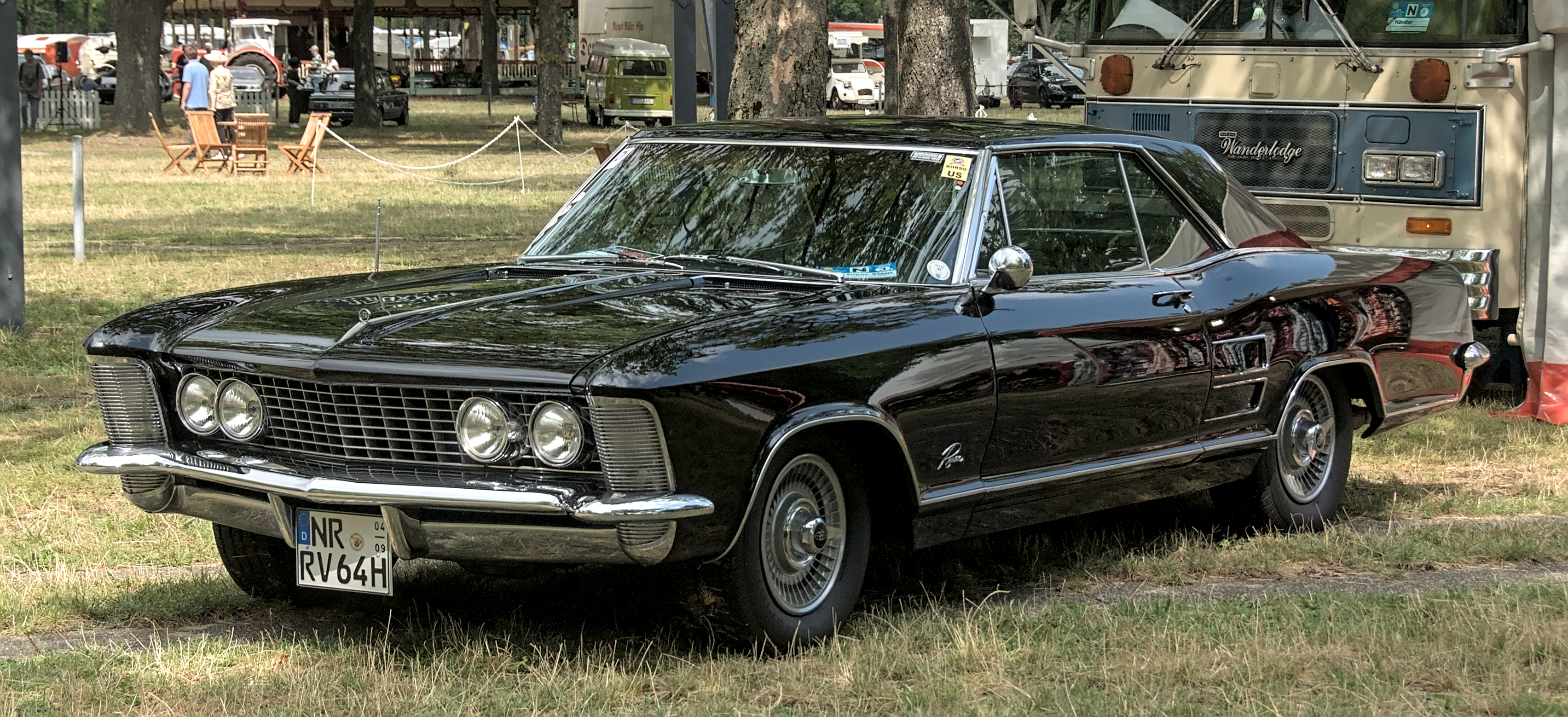
"...a guy who had a 73 Riviera many, many years ago and he's looking for a 71."
The Buick Riviera is a stylish car that was made by Buick. The 1973 model is known for its luxury features and unique look.
The Buick Riviera is a luxury car produced by Buick, known for its elegant design and performance. The 1973 model is part of the first generation of Rivieras, which were characterized by their distinctive styling and powerful engines.
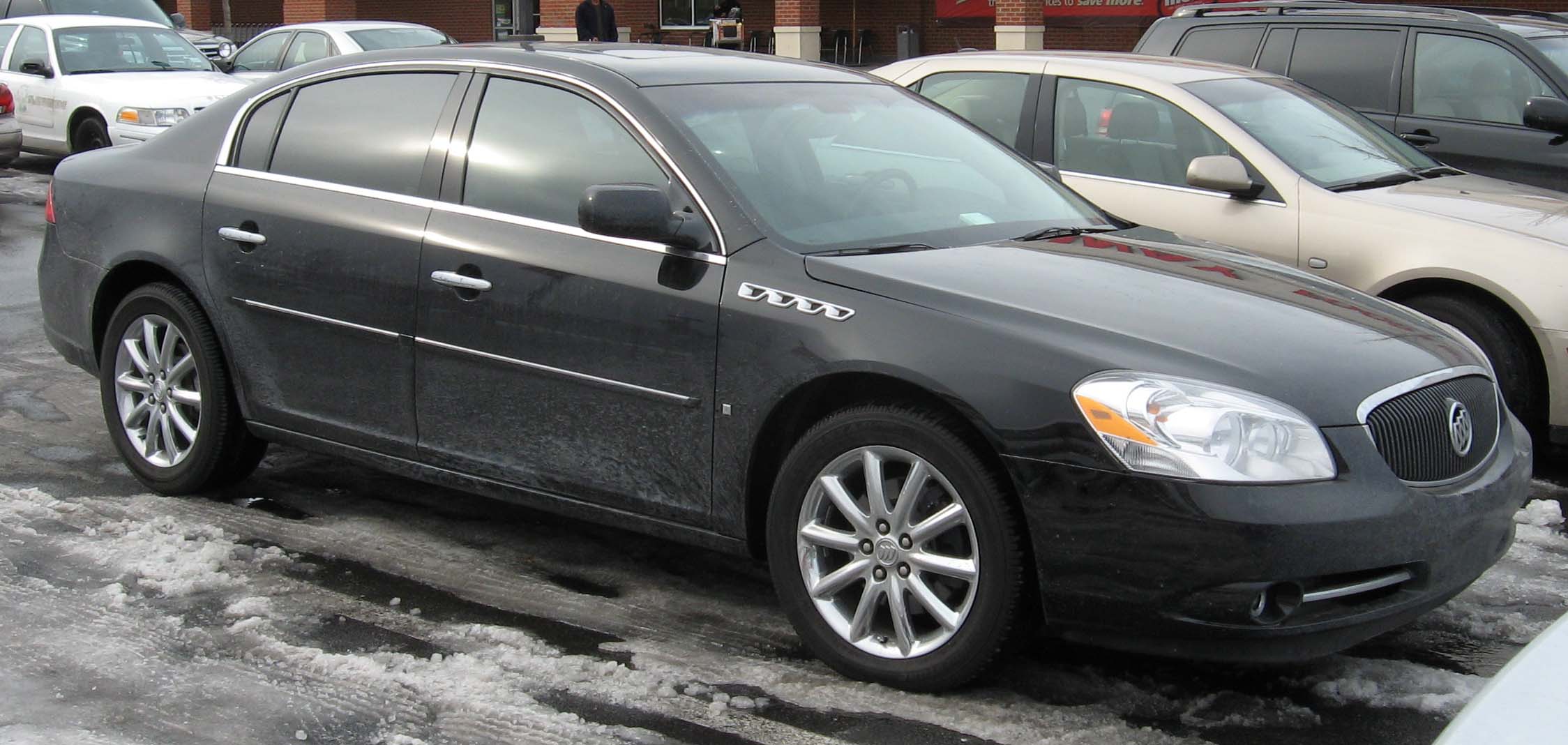
"Oh, right. Uh, it's, uh, Lucerne blue, right? And the owner, it's a four speed ca..."
The Buick Lucerne is a big car that was made in the 2000s, known for being comfortable and nice to drive. It's a good choice for people who want a smooth ride and plenty of space.
The Buick Lucerne is a full-size sedan that was produced from 2006 to 2011, known for its comfortable ride and upscale features. It represents Buick's commitment to providing a smooth and luxurious driving experience, appealing to those seeking a reliable and spacious car.
"In fact, he built that 61 Starliner for George Poteet a few years ago."
The Ford Starliner is a classic car from 1961, recognized for its stylish design. It was part of Ford's Galaxie series and is appreciated by car enthusiasts for its appearance and performance.
The Ford Starliner is a full-size car produced by Ford in 1961, known for its distinctive styling and design. It was part of the Ford Galaxie line and was popular for its sleek look and performance.
"He drove the Jezebel land speed track truck at Bonneville."
The Bonneville Salt Flats is a flat area in Utah where people race cars to see how fast they can go. It's famous for being a great place to set speed records.
The Bonneville Salt Flats is a unique location in Utah known for its flat, hard surface, making it ideal for land speed racing. It hosts numerous events where vehicles attempt to break speed records.
"And in SEMA and in the HRA in particular, a company joins. It's not an individual."
SEMA is a group that helps businesses in the car parts and accessories industry. They have a big show every year where companies display new products for cars.
SEMA stands for the Specialty Equipment Market Association, which is a trade organization that represents the automotive aftermarket industry. It hosts an annual trade show in Las Vegas that showcases the latest automotive products and innovations.
"If you're in the Hot Rod World, you can join the Hot Rod Industry Alliance."
HRA is a group that focuses on hot rods, which are modified cars that are made for speed and style. They help businesses and enthusiasts in this area.
HRA refers to the Hot Rod Industry Alliance, which is a council within SEMA focused on the hot rod segment of the automotive industry. It aims to promote and support the hot rod community and businesses involved in it.
"If you're in the Restoration World, you can join the ARMO side, which is the Automotive Restoration Market Organization."
ARMO is a group that helps people and businesses who restore old cars. They provide support and resources for those interested in fixing up classic vehicles.
ARMO stands for the Automotive Restoration Market Organization, which is another council within SEMA that focuses on the restoration of classic and vintage vehicles. It provides resources and support for businesses and enthusiasts in the restoration market.
"...I'm going to upload the data logs from my EFI system on my Galaxy into some AI tools and we're going to figure out some tuning stuff just based on that."
EFI stands for Electronic Fuel Injection. It's a system that helps cars use fuel more efficiently by controlling how much fuel goes into the engine electronically.
An EFI system, or Electronic Fuel Injection system, is a technology used in modern vehicles to deliver fuel to the engine in a precise manner. It replaces traditional carburetors and allows for better fuel efficiency and performance.
"...ing to do a Borgus and steering box on on that 66 Chevelle, for example, it's something that's happening rig..."
The Chevrolet Chevelle is a car that was made in the 1960s and 70s, known for being powerful and stylish. Many people love these cars because they are fun to drive and have a classic look.
The Chevrolet Chevelle is a mid-sized car that was produced from 1964 to 1977, often celebrated for its performance versions, particularly the SS models. It represents the muscle car era of the 1960s and 70s, making it a popular choice among collectors and enthusiasts.
"...o for you. So right now as we talk, I have my 62 Galaxy disabled here in my garage, my own little winter ..."
The Ford Galaxy is a big car that was made from the late 1950s to the mid-1970s. It's known for having a lot of room inside, making it a good choice for families.
The Ford Galaxy is a full-size car that was produced from 1959 to 1975, known for its spacious interior and family-friendly design. It was popular during its time for offering comfort and performance, making it a staple in the American automotive market.
"...it's a fuel injected 351 Windsor with a roller cam hydraulic comp roller cam..."
The 351 Windsor is a type of V8 engine made by Ford that is known for being strong and reliable. It's been used in many Ford cars and trucks.
The 351 Windsor is a V8 engine produced by Ford, known for its durability and performance. It was widely used in various Ford vehicles during the late 1960s through the early 1990s.
"...one of them is it's a fuel injected 351 Windsor with a roller cam hydraulic comp roller cam..."
Fuel injection is a way of getting fuel into the engine that helps it run better and use less gas compared to older methods.
Fuel injection is a system for introducing fuel into an engine's combustion chamber. It provides better fuel efficiency and performance compared to carburetors by precisely controlling the amount of fuel delivered based on engine needs.
"So right now as we talk, I have my 62 Galaxy disabled here in my garage, my own little winter project that I had to scale back my project because I don't have the time to do all the things I wanted to do to it. But one of them is it's a fuel injected 351 Windsor with a roller cam hydraulic comp roller cam and Ford GT 40 X heads and blah, blah, blah. And it's got an EGR valve. And when the motor first went in the car, we use an EGR delete basically because it's not emissions required on a 62 Ford transplant crate motor."
The Ford GT40 is a famous racing car from the 1960s that was built to compete in long-distance races. It's known for its speed and unique shape, and many car fans admire it for its racing success.
The Ford GT40 is a legendary sports car that was designed for endurance racing in the 1960s, famously winning the 24 Hours of Le Mans multiple times. Its sleek design and powerful performance have made it a significant part of automotive history and a sought-after collector's item.
"You know, I don't I don't have catalytic converters or any of that stuff. So you can do whatever I want basically."
Catalytic converters help clean up the exhaust gases from your car, making them less harmful to the environment before they leave the tailpipe.
Catalytic converters are devices in the exhaust system of a vehicle that convert harmful gases into less harmful emissions before they exit the exhaust. They play a crucial role in reducing pollution from vehicles.
"And back then, I thought I'm just going to delete this thing. And so EGR by definition, the exhaust gas recirculation concept puts exhaust into the combustion chamber, right?"
EGR is a system that takes some of the exhaust gases from your car and sends them back into the engine to help reduce pollution. It helps the engine run cleaner.
EGR stands for Exhaust Gas Recirculation, a system that reduces nitrogen oxide emissions by recirculating a portion of the engine's exhaust back to the combustion chamber. This process helps lower combustion temperatures and reduces pollutants.
"...with a less volatile combustion charge, it reduces the temperature of the combustion chamber, which reduces tailpipe emissions. That's why they did it."
The combustion chamber is where the engine burns fuel to create power. How it's designed and how hot it gets can change how well the engine works and how much pollution it makes.
The combustion chamber is the area in an engine where fuel and air mix and ignite to produce power. Its design and temperature can significantly affect engine performance and emissions.
"...my car is running is actually for a Ford for a 92 Mustang with a 50302. Oh, gotcha."
The Ford Mustang is a famous sports car that started being made in the 1960s. It's loved for its speed and cool look, making it a popular choice for car enthusiasts.
The Ford Mustang is an iconic American muscle car that debuted in 1964 and has become a symbol of freedom and performance. Known for its powerful engines and sporty design, the Mustang has a rich history in automotive culture and is often discussed for its impact on the car industry and its loyal fan base.
"...on my last trip, you know, drive my 2011 suburban. And I noticed that while driving on the expressway..."
The Chevrolet Suburban is a large SUV that can carry many passengers and cargo. The 2011 version is known for being roomy and good for towing things like trailers.
The Chevrolet Suburban is a full-size SUV known for its spacious interior and towing capacity. The 2011 model is part of the eleventh generation, which offers various features and options for families and utility use.
"...I noticed that while driving on the expressway, my torque converter was locking and unlocking on its own. And I did a little research on that..."
A torque converter is a part in automatic cars that helps the engine work with the transmission. It makes it easier for the car to start moving and helps with smooth driving.
A torque converter is a type of fluid coupling that allows the engine to spin independently of the transmission. It helps to multiply engine torque and is essential for automatic transmissions, enabling smooth acceleration and deceleration.
"...that's pretty common issue with the 6L80 transmission, which is what that suburban is equipped with. And so I've got to deal with that..."
The 6L80 transmission is a type of automatic transmission used in some GM vehicles. It has six gears, which helps the car drive smoothly and efficiently.
The 6L80 is a six-speed automatic transmission developed by General Motors. It is commonly used in a variety of GM vehicles, including trucks and SUVs, and is known for its durability and performance.
"...we're all looking forward to the day we can turn the key on the GTO again. Yes. Have it come roaring back."
The Pontiac GTO is a famous muscle car from the 1960s, known for being fast and powerful. It's a car that many enthusiasts love to restore and drive.
The Pontiac GTO is a classic American muscle car that gained popularity in the 1960s and is often credited with starting the muscle car trend. It is known for its powerful V8 engine and performance-oriented design.
Select text to request an explanation
Well, hey there Automotive Enthusiast friends, all around the planet Earth, yeah, it happened
once again.
As much as you resisted, you pushed play on yet another...
Kevin, another state-of-the-art episode of V8 Radio.
State of the art, absolutely.
This is the V8 Radio Podcast, I'm your host, Kevin Oste, joined as always by our esteemed
co-host, Mr. Mike Q. Ball Clark, who's living in the state of the art.
I am living in the state of the art within my own mind.
Nice, yeah, so this state-of-the-art routine comes from the question that Kelly had the
other night, saying, what the heck does state-of-the-art mean?
That's right.
I said, you know what, that would be a great, overselling adjective.
Yeah, yeah.
And I forgot what the definition was that we came up with.
Oh, that, I think the term originated in the 20s, I believe, and it was meant to denote
the pinnacle of the science of that particular, of any particular discipline.
So it's the pinnacle of that, so...
So you thought of this?
That's right.
That's what this is, dude.
All right, that's like state-of-the-art, but we lost the F.
Yeah.
Well, you know what also is state-of-the-art is the status of our Automotive Trivia question
contest that we put out absolutely every episode, in which we kind of entertain ourselves with
silly random automotive trivia questions in the beginning of the show and reveal the
riveting answers at the end as a way to coerce our listeners into sticking around, right?
Because I'm assuming they don't know how to use Fast Forward?
No.
That's just me.
That's disabled.
So you have to listen all the way through.
Yeah, we added some code to the Spotify player.
That doesn't work on yours.
You must listen.
You cannot turn away.
No.
But why would you want to anyway?
Yeah, exactly, exactly.
Do you happen to have a trivia question prepared?
That's funny.
I happen to have one.
Okay, here we go.
Kevin, what does the TA in BF Goodridge's TA radio stand for?
Oh, that's a great one.
Ooh.
Yeah, yeah, yeah.
So, you know, TA, of course, has several different acronyms throughout the world in automotive.
Normally, think of Trans Am.
Yeah, one would.
Yeah.
Today, you might think of Time Attack.
Wow.
That is a brilliant question.
Ooh, look at me.
I thought about it like 7.30 this morning.
Oh, well, which means basically nothing to our listeners because they can do this whenever
they want.
Correct.
So two hours before we recorded, I realized, holy cats, I don't have a trivia question.
Let's figure something out.
Um, I would love to say the T stands for track of some sort, even though those tires were
not marketed as a track tire, those were street performance tires, raised white letter.
And give me again the specific name of the tire that you are asking about.
BF Goodridge TA radio.
Okay, so we are talking about the radials.
Yes.
So it could be referring to some interesting part of the tires construction, you know,
like the old Firestone 721.
I remember that.
The seven cords of steel wrapped around two surrounded by one or so.
Yes.
Yes.
Those were the tires that were originally on our van that we bought in 1984, the first
one.
Is that right?
Um, TA.
This is great, man.
It's not track alternative or anything like that.
Total automotive, you know, something silly.
I'm going to straight up admit I don't remember.
But did you see what I did there by saying, I don't remember, I'm insinuating I once knew.
Yes.
Yeah.
I don't think that did not get by me.
I might never have known this.
See, I did it again.
I said I might.
Might.
I'm going to bite the bullet and say, I have no idea how about that.
Come and clean.
Uh, so a wag on that would be touring action.
Ooh, I like that.
Touring action.
I mean, if that's a great guess, that's phenomenal.
I like that.
Maybe that's what it should have been if it's not.
Maybe.
If it, if it isn't, it should be.
How about that?
Yeah.
There you go.
You got half a win right there.
See.
What do you got for me?
Okay.
And our listener.
Uh, yes, absolutely.
Well, this, this is a two-parter, but it's not really a big two-parter.
It's an easy two-parter.
What is an opera window and how did it get its name?
Ooh, and how did it get its name?
Are you typing this into Google right now or what?
No, I'm just typing it on my notes.
So I can just, uh, you know, I'm not typing it into Google.
What did T a radio stand for?
Okay.
So the opera window is, um, for the first part is that small round window like that's embedded
in the C pillar of the C area of a vehicle, just a small window to look at.
So it's not like a, a full-size window that rolls down.
It's fixed in place and it's just, just around window in the, in the rear area of the roof
area in the car.
Um, but how did it get its name?
Ooh boy.
That is, that is a good one.
Um, it got its name, Kevin.
Because the shape of the window is round like you would see on a, on a dash.
Yes.
It was very swoopy.
Um, but it is the same shape as opera glasses, the same round.
Oh, oh.
Boom, bam, pow, sir.
All right.
That's, that's impressive.
So what are opera, opera glasses?
They're like small little binoculars that you kind of hold up, you know.
Yeah.
That's our third part of the question.
Yeah, right.
Well, I, uh, you know, spend a lot of time at the opera.
Yeah.
Uh, and sometimes I even bring my glasses.
So that means if you break your opera window, you need to put in new opera glass?
Yes.
Yes, you do.
And it's going to cost you.
Well, everything operatic does.
Yes.
Right.
Exactly.
Yes.
For sure.
All right.
Final answer.
Yes, sir.
All right.
We will find out.
Another piece of trivia.
I have a cousin who's a professional opera singer.
Several of them actually.
Thanks.
Um, yeah.
Uh, Michaela Oste, even though she pronounces it, uh, O-S-T-A, the journal.
Oh, pronunciation.
And she's currently touring, touring Europe.
Um, she sang with the likes of Placido Domingo and all kinds of big time.
Nice.
For, she's for real.
She's the famous one.
All right.
Right on.
So, uh, we could get her on the phone and, uh, ever seen us in aria?
Well, ask her what an opera window is.
Yeah, there it is.
There it is.
Yeah.
Well, the answers to these will be revealed at the end of the show.
So that's super fascinating.
So, uh, it's, uh, it's still cold here.
Um, I was visiting Southern, sunny Southern California, um, on my TV screen, watching
the live coverage of the donut derelicts, uh, car show this morning in Huntington Beach
and reflecting on the fact that I'm not there.
No.
It's been, uh, in the cold of the Midwest, but, uh, thankful to have heat in the garage.
First time I've actually done anything in the garage in a while.
It's been, it's been cold.
Yeah.
It's been kind of a brutal winter, man, not liking this at all.
Yeah.
And you could tell, like, uh, I have to express some gratitude to our, our team members at
the V8 Speed and Resto shop and also to our customers.
You know, this time of year is when a lot of people like to have things done to their
cars to get them prepared for springtime for the summer cruising season.
And which is wonderful.
You know, and we, we promote that, you know, we're here to do those kind of things.
Um, but our policy in our business is every car lives inside.
We don't store them outside.
They don't get rained on.
They don't get snowed on.
And, uh, somebody wants to ask, like, well, I drove past your shop and there were seven
cars out in front.
Well, yeah.
When it's a nice day, you know, we'll move them outside so we can work more effectively.
And it's also nice for people to see.
It's like a car show out there every day.
So, uh, when it's zero or sub zero outside, the cars don't go outside.
So it gets a little tight inside, um, especially with a large variety and volume of vehicles.
And, uh, after the, you know, a month or two of that, you start to hear the grumblings
about how, you know, the mechanics want to blow the wall out and, you know, double the
sides of the place and they're tripping over each other.
And it's like, no, there's light at the end of the tunnel.
So spring's coming.
It is.
It won't last forever.
No.
So thank you for that.
But it was pretty cool to see.
And, uh, just kind of standing in our front mechanic shop.
That's another part of our, our shop is that we span across six buildings, seven buildings.
Yeah, there's, there's a couple.
Right.
There's the body shop, the warehouse, the back fab shop, the front mechanic shop and
the engine shop.
So that's in the upholstery shops of six.
And when I was in the front mechanic shop, I was just standing there doing a 360 look
around and seeing, you know, a visual inventory and an appreciation of what the team is working
on.
And it dawned on me, uh, again, in this moment of gratitude, the, the number of repeat and
multiple car customers that we have just in shop right now.
For sure.
Uh, we're working on a 66 Cheval SS 396 car, uh, for a local friend of ours.
And I think we've done a little work on another car that he had or a truck, but this particular Cheval,
we've been the caretaker since 2018, 17, 18, something like that.
Yeah.
Yeah.
So that's, that's a, that's a single car, but repeat, you know, long-term relationship guy,
which is really cool.
Uh, but then as I turned, I saw the, uh, 79 Bronco and, and that customer, we actually
have two Broncos from him in the shop right now.
Yes, we do.
The 66 and the, and the 79 doing the 79, we did a full custom engine build in our, our
engine shop and some other stuff.
And the 66 got some sorting out from its previous restoration, I guess is the best way to describe
that one.
Yeah.
And needed a little bit of, a little bit of love.
So we gave it that we're giving it.
So that was, that was two at a time.
And then I turned and I see a, a 79 Transam that just arrived and it's the third Transam
from this particular customer.
Wow.
Um, that just showed up.
So, and his are all 79s.
Yeah.
He likes the 79s, doesn't he?
Yeah.
He's, he's trying to build the rainbow, which is pretty cool.
Yeah, that's true.
He is.
Cause he's got a black one, a blue one, and now that's yellow one.
Yeah.
And it's yellow with the black, um, anniversary TA graphics package, basically.
Yeah.
I don't normally dig yellow cars, but this one actually looks pretty cool.
Like something when I looked at it.
Oh yeah.
This one's not bad.
All right.
We'll, we'll accept it.
Well, of course we'll accept it.
Uh, but he's an interesting guy cause, um, he's not exactly local.
It takes him a while to, he's close enough to be able to drive to our shop,
but it's, it's a, it's a trip for him.
You know, he could certainly go down the street somewhere if he wanted to.
Um, but he, we appreciate that.
He makes the trip to see us and he's involved with the Firebird Fest event as
a, uh, a participant every year.
Cool.
Yeah.
And so we have a lot of goodwill with the Firebird Fest guys.
We've had cars, you know, and, and certainly customers, uh, that, that
participate in that.
And, and I've been to pieces of that event along the way.
And that's coming up again this spring as well.
Yeah.
Firebird Fest, which, uh, happens in downtown Waterloo, Illinois.
Uh, so it, it has in the past.
It's a multi-city thing over a whole weekend.
Oh, okay.
And, uh, uh, the town of Waterloo where I actually live is, is, has been a stop.
Um, and I think that's happening again because there's a really nice little town
square and it's, it's cool.
So anyway, he's a, uh, a three car customer.
We really appreciate that.
Um, and then as I continue to turn, I see, uh, we have two remaining vehicles of
three from another customer in house right now that, uh, you know, Studebaker,
we're doing some paint on and wrapping up that old Zabella sedan delivery,
some seating details.
And, and he also had a Buick station wagon we were working on.
There's three there.
Um, and I, I know that there's, uh, there's others.
We had another Transam that just left and that guy also, we do a 68 Camaro that
we've worked on for him.
I mean, so it's like you can measure businesses in many different ways and,
and the car world in particular is really all about stories and relationships.
And, you know, to me, the, the, the definite proof is if somebody's going to bring you
another one, you have a, you have a good relationship with them.
Absolutely.
That was really, uh, really great to see.
Very humbling and very, uh, nice.
Um, so kudos to the, to the team for helping keep those relationships happy and,
and, uh, also to our customers for entrusting us with these very important vehicles.
So.
Yeah.
Right on.
It is, it is neat to see that.
I like when, you know, we, we get word from a customer says, Hey, I got another one
for you.
Like, all right, let's do this.
Let's make it happen.
All right.
So he knows what we're all about.
We know what they're all about.
And, you know, it just, it just works and it works well.
Um, I forgot to mention.
So we have a, an 84 trans and we're building for a gentleman and that's the third car that
we've worked on for him.
Um, and this is a full build.
The last one, uh, we, we did, uh, some upgrades and the first one was just kind of get the
toes wet and do a little once over of a 68 firebird, make sure it ran right.
And then we did a bigger project and then this one's a big project.
Uh, and then while, while we have his Transam, he called and he said, Hey, I'm looking at
buying a Fiero.
Yeah.
That's right.
And so you're going to go check that car out.
Check that car out.
Yeah.
It's about 45 minutes from, uh, from, from my house.
So I'm going to call them up and, uh, arrange to go take a look at it and, you know, get
my hands on it and take it for a spin and, uh, make sure it's all that it, it, uh, is
described to be.
You better have your, uh, opera glasses on that.
I will have my opera glasses and my microscope and all in my magnifying glass.
Everything.
Yeah.
Well, you, you enjoy doing that.
Yeah.
Yeah.
That's fun.
I mean, heck yeah, that's cool.
Get to go out and look at cool cars and drive them around.
Absolutely.
Sign me up.
Got to talk to our buddies, Paul and, uh, and Chris Ron over at the Southern German are
two Fiero, uh, previous owners and for sure get the low down and what to look for.
Yeah.
I think the one he's looking at is a 87 and I believe that's the, I think, is that
the last year?
88 I think was last year and they had that lowest front suspension.
They finally upgraded everything is supposed to handle much better than before than the
ones with the chivette.
I was going to say better than a chivette.
Yeah.
Better than a chivette.
Absolutely.
Out handles the vet.
Yes.
Yes.
Yes.
Yes.
Which vet?
Well, we won't talk about that.
Yeah.
Again, reminds me, we have a 69 Corvette Roadster in the shop.
That's the second car we've done for that gentleman.
We also did an oldsmobile.
Oh, yeah, we sure did.
Yeah.
We built that engine for him too.
Yeah.
And that oldsmobile.
Um, interestingly, you know, talking about, um, scoping out cars for customers.
You know, we have a lot of people that come to us and say, Hey, uh, we had one last night,
as a matter of fact, a guy who had a 73 Riviera many, many years ago and he's looking for
a 71.
He wants to find a car and he came to us to help him find one.
And this is something that we, uh, we do periodically.
Um, I'm not, we're not necessarily a car finding service.
Although we've provided that service before, uh, cause, you know, as you know, it, it definitely
takes time and in the beginning I was all about it.
I'm like, Oh man, yeah, I'll find whatever you want.
And I'm fortunate to have connections around the country that can look at stuff.
And a case study there was, um, the 72 Firebird Formula 455 car, the HO car.
Oh, right.
Uh, it's, uh, Lucerne blue, right?
And the owner, it's a four speed car and the owner is a local friend of ours and he came
to me before he had the car and he said, you know, I bought one of those new back in 72
and I had to sell it and I want another one.
Can you help me find one?
And he actually stumbled across an ad and brought it to us saying, I think I found a
car, but it's in California.
So, um, because of, you know, being in this stuff for so long, um, I had a friend of mine
go look at it for him in Los Angeles and, and it was kind of cool because, you know,
we, we paid my buddy a few bucks for his time and then he sent in a report and some photographs
and the, the gentleman ended up buying the car.
But he said, wow, your friend really did a good job of taking pictures and writing up
that, that car.
And I said, well, I, I would hope so.
He's a former editor of hot rod magazine.
It was Rob Kanan.
You know, so.
Oh, right on.
Yeah.
Yeah.
So having these type of, you know, resources at our disposal when we can use them, we do.
But there have been other individuals who were like, Hey, I'm looking for X and then I
go down the rabbit hole to try to find the car and it's either I found you a good one
and we go to act on it and it's sold or it's not the right color or it's too expensive
or there's something, you know, whatever.
And I got to the point where I'm like, for this one dude, I think I sent him 50 cars
over the course of six months.
Geez.
And yeah.
And then I'm starting to realize, I'm not getting my own stuff done.
And, and it's funny because you, you want to help people out.
But at the end of the day, I wasn't getting any kind of compensation out of this for my
time outside of the fact that, well, if you find something that needs something, you know,
maybe I'll have you guys do, you know, the work on it or whatever.
And he ended up buying a car that needed nothing.
Oh, great.
So it's like, okay, thanks.
You know, thanks.
Bye.
Right.
And, and so I started to realize that I can't do as good a service as somebody who does
this.
Right.
To focus on it all the time and really deliver that value, especially because I'm pulled in
many different directions and then our own internal customers and our team suffers and
all that.
So bring this up because we recently kind of partnered up with a good friend of ours, Mr.
Zack Straitz and Zack started a business.
He's a lifetime car guy who actually worked in a different industry, worked in the building
materials industry, but retired and started a business called Dream Car Connection.
And one of the things he does is find cars for people.
And Zack isn't just a guy with an internet connection.
He's done a lot of restoration.
In fact, he built that 61 Starliner for George Poteet a few years ago.
That was my pick at the McCacken show.
Oh my gosh.
The car is beautiful.
It's amazing.
So he knows his way around cars and has built them and knows people.
He's got a, he drove the Jezebel land speed track truck at Bonneville.
That's a good Bonneville up to speed podcast episode where he was a guest telling that
story how he's a couple of hundreds of a second away from getting his red hat.
Oh man.
Yeah.
It's funny.
So when he retired and started his Dream Car Connection, he's like, you know, one of the
things I'm doing is finding cars for people.
And then he's also being a concierge lining up lining up people who need work done with
shops and using his relationships to go, you know what, you'd be perfect for this shop
or you'd be a good match for that one.
Right.
Right.
So it's a pretty cool deal.
So this past week, we just released Zach searching out a handful of cars.
So I'm happy about that because I know he's going to, he's going to bring good things
to the table and help people get behind the wheel of stuff they really want.
And I'm always glad that it's, so again, people can call me and then I can refer him.
And it's still a connection there, but it's less of an internal resource strain on us.
For sure.
Yeah.
I had the good fortune to get to know him a little bit at the Muscle Con Corbett Nationals
a couple of years ago and just a super, super nice guy.
I mean, salt of the earth kind of guy.
He's really, really nice.
He is.
He is.
And in fact, he and I were chatting at this past Muscle Con Corbett Nationals about his
new venture.
And I said, you know, you should probably join SEMA and the Hot Rod Industry Alliance
because it's a great way to be part of the industry and advocate for it and help other
businesses be successful.
And actually over the summer, I think I told him that.
Well, at the McCacken show, he told me he joined and I was like, oh, cool.
And in SEMA and in the HRA in particular, a company joins.
It's not an individual.
Okay.
And if you're a company, you can join and you can be part of one of the councils of SEMA.
So if you're in the Hot Rod World, you can join the Hot Rod Industry Alliance.
If you're in the Restoration World, you can join the ARMO side, which is the Automotive
Restoration Market Organization.
So in our case, I'm very active in HRA as the representative of our company.
I'm actually the chair-elect of HRA for the next round.
And that's kind of how Kelly grew up through the ranks of SEMA.
She was on the HRA select committee and had to abdicate her position when she became a
member of the board of directors of SEMA.
So conveniently, I was able to ride her coattails right in.
Very nice.
I say that, but that's not entirely true.
She was in charge of doing membership and education, but my involvement is communication
and kind of a different wing.
But you can't have two select committee members from the same company on one of the SEMA councils.
So recently, what you can have is a volunteer member at large, which is where we recruited you,
Mr. Kubal Clark.
So congrats being part of the SEMA Hot Rod Industry Alliance.
So I'm on the select committee and chair-elect.
You are technically a member at large, but you'll be helping out in the communications task force,
which is cool.
The reason why I bring this up is Zack has just gotten in with SEMA and the HRA as well.
So he's going whole hog and jumping into the industry side with all feet forward.
And we were looking, somebody, another individual had left the HRA.
He actually almost changed industries in his career path.
And you have to work in the automotive industry specific to be a member.
So he left the vacancy and we were having a meeting and someone's like,
do you know anybody that we could look at?
And I said, you know, you might want to talk to Zack.
And what I did not know was that Zack Straits was very involved with the building association,
home builders association, I believe, which is a parallel universe to SEMA,
but for building houses as opposed to cars.
So he fully understands how a trade association works, why it's there,
what their missions are, advocacy and all that stuff.
So it was really unnatural.
So it's pretty exciting to see somebody who is starting a second career in automotive
and just hammer down just all the way in right away.
So happy to work with him and happy for him.
Yeah, he's going to be great.
I mean, he's already, he's already halfway there.
The fact that he understands what a trade association is all about,
he's going to be able to do good things right away.
So we're happy about that.
Reminds me of another guy who started a second career in the automotive side
who we're happy about.
Again, who's the Mike Q-Ball Clark?
Hey, how about that?
Yeah.
It took a while, but I finally got here.
Hey, we're happy you're here.
Thank you.
Even though some days I know they can be a little bit of a challenge.
A little bit.
Yeah, there are challenges, but that's what keeps it from being dull.
It's definitely not dull.
No, no, no, absolutely not.
And there's passion there.
And, you know, it's overcoming issues and, you know, solving problems.
And that's part of the fun of it all.
And I love to solve problems and help with things.
So it's been a phenomenal fit so far.
So I'm really happy to be here.
Thanks again.
No, that's awesome.
And we're happy that you are here.
And I think since our last podcast, we've also added a gentleman named Matt,
who's a full legit project manager.
And as we look back at the arc of our growth over the years at V8 Speed,
you know, it was Kelly and I who started the company and then her brother
and her family as, you know, kind of volunteers.
And then we added a person here and there as we needed.
And, you know, today we're in our 22nd year and, you know, there's 30 people on staff
or whatever it is and, you know, all these cars and stuff.
And I've said this before, you know, that what got you here won't get you there.
And it's a different style to run a business or a shop at a different scale
than it was back then.
So growing pains are a good way to look at it.
Just, you know, you start to reveal situations that your previous structure wasn't equipped to handle.
Well, yeah.
And when it's just you two and, you know, and John, it's, you know,
it's all three of you having to do everything.
And as you grow, it's just that becomes impossible.
You know, you need a real accountant.
You need a real HR person.
You know, you need a real administrative team alongside with all of the,
all the skilled trades that you have to employ as well.
I mean, it's, it gets to the point where, you know, it's a legit real business.
Not that it wasn't before, but you have all those other facets that you have to satisfy
and you need people for that in order to run efficiently.
As you grow, you got to add those things.
It's almost funny when you say things like that because we do have a professional train dedicated
to HR person in the desk now.
And she's, she's doing great, Julie.
And then Diane, our accountant is phenomenal.
She really is.
And so there's this dichotomy between the technicians that are doing the work on
building the cool cars and the administrative side.
And I remember being in a smaller business or a smaller shop and being,
you know, quote unquote on the floor doing, doing the work, you know,
thinking that I couldn't stand corporations and all the bureaucracy and the red tape.
Right.
And all the nonsense and the people in the front office and all that stuff,
they don't know what they're doing.
But then you get to a point like you're saying where it's like,
well, I can't expect one of our mechanics to do the taxes or the health benefits
or the even the daily time tracking for payroll for all this stuff.
And when you multiply about how many cars we got going on,
what are we at 45 in the house?
There are a lot.
So each one has a list of parts that need to be identified and ordered and paid for
and, you know, invoiced and collected on and all that stuff.
Who's going to do that?
Right.
So that's where you get the right office staff to handle all that so that the technicians
can be the technicians.
And in our case, it's taken a long time to find the right people,
not only as, you know, in the workshop sides, but in the office sides,
because if you have somebody who doesn't understand what your business is
and doesn't know cars or doesn't know craftsman type work
or the personalities that do this kind of work,
that's when you get that disconnect of everybody in the front office or a bunch of idiots.
Right.
In our case, everybody, you know, as I look at things,
we've got some super sharp people that, you know, were properly vetted and interviewed
and demonstrated the characteristics and the capabilities that we needed
with the passion of what we do.
And, you know, so Diane used to be, our accountant used to be an accountant
at another shop, another restoration shop.
She knows this business.
Right.
And Matt, our project manager, also has a bunch of cars he's working on in his own time.
And he brings a great variety of skills, not only in project management,
but also as a CAD designer and a product development and he prints stuff and makes things.
And, you know, so he's excited to get into that.
But when you look at every single car as a multiple stack of projects, you know,
dictating and not dictating, but plotting the course of what technicians doing,
what part of that, what department is doing, what part of that,
how do the pieces go from one department to another timely, without any downtime in between
when, you know, if the paint shop is jammed right now,
but we have some brackets that need to be painted, how do we work that in?
And just the interdepartmental logistics and communication is a huge task.
And it was far beyond the old days where I knew, you know,
when we were probably up to about seven or eight cars,
I knew right away what color you were supposed to paint the knobs on the dash
because I had talked to the customer or I had done the plan.
Right.
But when it's not me on the phone with the customer every day like Joe, our sales guy,
I can't make that decision anymore.
So then it becomes how do we get the information to everybody, you know,
so that everybody knows what the vision is and everybody knows what they're supposed to be doing
and then also when and with what and in what order.
It's like, okay, yeah, we need some help with this.
So we've tried a couple of different strategies over the years
and I think right now between bringing Matt on as a true trained project manager
who's got experience in industrial and construction and things like that,
coupled with some software updates that I'm working on
that connect the team and make our workload visible to everybody.
Things are really going forward.
I mean, it's exciting.
They are just in this last few months, the improvements that you've made
primarily on our software package that we use has been nothing short of phenomenal.
It's just changed the whole game, the way we get that information to the right people at the right time.
I'm really excited about it.
I appreciate that and it's basically for me the day I got home from the SEMA show in November
outside of maybe three days.
I've worked on this every day since and here we are in the beginning of February
and basically what I'm talking about is we have a pretty robust software platform
that allows us to communicate with customers and to each other and keep notes on the cars and files
and all that kind of jazz, but it recently expanded capabilities to be able to automate procedures
and tasks and assign things and calendar stuff and send alerts and just do a lot more.
So I've been crafting a custom application designed specifically for a restoration shop
and there's things out there that you can subscribe to, various software packages
that we looked at that were like if the point of entry is like write the check and you're going tomorrow, I'm in.
But none of those existed.
And for the past 20 years I've been envisioning a system that could do this.
Funny thing is what I was envisioning was more for just being able to design a car
and then get the parts load figured out and kind of the process a little bit
and it didn't really have much to do with realizing how many people would be involved
once you get to a certain size because I never anticipated being the size.
That's just we're fortunate the demand has sustained it.
So today this application, it's a suite of applications that I'm kind of writing.
A skeleton in my closet is I've been kind of a programming geek since, I mean honestly literally since the very early 80s.
You took your cobalt class.
Yes.
No, long before that.
I mean I was fortunate that in 1977, fall of 77 is when I went to kindergarten.
Nice.
Right about that time period, my school district bought an Apple II.
This is not an Apple II plus, it wasn't an Apple II E, it wasn't an Apple II C or a G, this was an Apple II.
Nice.
And they had two of them sitting down in the library and as kids we could go down there and play Oregon Trail.
Heck yeah.
Remember and Odell Lake was the other one, you know, this little game.
But over the course of my grade school years, I'm talking third grade,
I'm learning how to write simple programs in basic, in Apple basic.
And that grew into when I was in junior high, advanced basic.
And then in high school I took cobalt as you mentioned and Pascal and I learned some Fortran and a lot of these programming languages.
And by the time I got out of high school, I wanted these machines to do stuff that they couldn't do yet and I was frustrated.
Because this was the very early dawn of digital video and audio and a lot of creative graphic type applications.
And I was very fortunate that my high school had a radio and television station so we had a local access TV station in the school.
And I remember in 1989, 1988, the school board approved a purchase and we bought a legit Silicon Graphics graphic station for the high schools TV station.
Oh my, nice.
It was probably a $20,000 PC based Silicon Graphics machine.
Wow.
Silicon Graphics SGI was kind of a partner to Lucasfilm.
I mean SGI was the film grade graphics company that was doing special effects and movies.
And so we weren't doing that kind of stuff because we were high school idiots but it now and it's funny to think back.
Now the Silicon Graphics computer, I remember vividly, it had a color palette of like 32,000 colors that you could create with.
Whereas at that point, you know, most PCs were 32, you know, or 128.
And there was another platform called the Amiga that was actually a Commodore product that could produce 4,096 colors on screen.
And everyone's like, oh my gosh, it's photo realistic, you know, it's like a 220 by 200 little thing.
Right.
So anyway, I had a lot of experience doing that stuff and I was trying to figure this out where this kind of came from in my world.
And as you said, solving problems to me has always been kind of fun.
And I'm not saying I'm a math guy or I'm the world's greatest problem solver, but the same way when you analyze a car and you're like, okay, it's stumbling.
So what is it?
Is it air?
Is it fuel?
Is it spark?
And doing the analytics of how to figure out where the problem is in the combustion chamber or is it a plug wire?
You can't overlook the obvious or is it a whole design flaw?
I mean, what's going on here?
That translates to me into software, into programming.
But the world passed me by and I got out of it because I wasn't having any fun.
I couldn't do the things that I was envisioning.
Not that I'm some great visionary, but I'm like, you know, by now we should be able to have these wonderful photographs and images on screen that move around and couldn't do it.
So time goes by and today, thanks to some of our AI tools and technology, you don't have to be a programmer anymore to be able to develop software because you can ask an AI thing to write the code for you.
Isn't that outrageous?
It is.
That is crazy that you can do that.
And so this is where I'm at today developing this app to run our shop is using code bits that, you know, a thing that knows what it's doing is writing.
I just, you got to know what you want it to do.
And that's kind of where I come in with this.
So it's been a project for sure.
It has been, but it's been a cool project and it's going to really pay off for the shop in general.
Yeah, and for the customers too.
For sure.
Thank you for taking the reins on that.
Well, and the other fun thing is, you know, we see in social media, you know, and everywhere else, these uses of AI on the consumer level, you know, hey, look, I made a picture of me flying a kite or whatever.
The latest one is you ask chat GPT to make a picture of you based on what it knows about you. Have you seen these?
I have not.
So it creates a cartoon of you and then it's got like, you might be holding a flag that says GTO and then, you know, have a picture of your car in the background.
It just kind of takes these things and makes this little composite thing.
And to the to the masses, hey, this is fun.
To me, I don't really care.
Interestingly, I did that with the GROC platform.
I said, write a or draw a picture of me based on what you know.
And it drew two of them and one was a programmer and a white lab coat and the other was a doctor.
I'm like, what?
Nice.
I love it.
Yeah, but to me, the real uses are far or we're not we're nowhere near, you know, getting into what this stuff can do.
And I've been applying this stuff to cars now in many ways, not just on a graphic side or hey, what does this look like with green interior versus red or whatever, certainly doing that.
But I'm very excited because I'm going to upload the data logs from my EFI system on my Galaxy into some AI tools and we're going to figure out some tuning stuff just based on that.
Have it analyze our timing curves and the knock sensors and the fuel curves and power poles and and you can you can define the engine.
Tell it what cam you have and it knows, you know, tell what cylinder heads or compression ratio and and really say I got this engine and this is the data log of how it runs.
Let's talk about a solution to make either more power, make it smoothers or a way to make it run, you know, better.
Are we over cammed?
You know, what's going on here and tap into the the resources of AI, which really are just a culmination of a zillion people that have provided this data before and now it pulls it together.
So that part's fun too.
That is fun.
It's it's been a real game changer AI just I use it.
If I'm trying to if I'm in a in a spreadsheet and I need a particular formula and I'm not quite getting it, I can I can ask AI, I can say hey, I need a formula based on these columns and I needed to do this when this is triggered and it'll write a formula.
Sometimes it's not quite right and you go back to it.
No, it's not quite right.
It's not working for me.
And it says, Oh, I'm so sorry.
And it's like you another one.
And after some trial and error, it you get it and you're not spending hours upon hours trying to figure out where the initial formula that you tried to write is going wrong.
So it's a big time saver and it saves, you know, quite a bit of frustration.
Yeah, yeah, but there's untold fun things that we can do with cars with AI that were we're not even scratch the surface on.
And one thing that's pretty cool too is, again, using the software that I'm working on as we create a work order for particular, you know, product install, right?
So maybe we're going to do a Borgus and steering box on on that 66 Chevelle, for example, it's something that's happening right now.
In the past, it was either I knew how to do that as a technician, or you would tell the technician, Hey, make sure, you know, you don't turn the input on the box before you put it in because they set it straight from the factory, you know, just a tid bit of knowledge that needs to be shared somehow.
But today, the software will automatically run the Borgus and part number and generate the bullet points that somebody needs to know, not rewriting the instruction manual by any stretch, but just the hey, keep an eye out for these things too.
And also suggest like additional expectations like, and by the way, when you're done, make sure you retorque that pinion nut and get the thing on the alignment rack and double check your fittings after 100 miles of usage or whatever.
And that was all generated by AI. That wasn't somebody telling somebody that.
So now it just frees up resources to where the person doing the work or putting the part on or installing it can get that much more support without anybody doing any extra generation of work to do it.
I mean, it's crazy.
That is, it is unbelievable. All the things you can do for you. I mean, it's really limited to your imagination. I mean, the sky's the limit as far as what it can do for you.
So right now as we talk, I have my 62 Galaxy disabled here in my garage, my own little winter project that I had to scale back my project because I don't have the time to do all the things I wanted to do to it.
But one of them is it's a fuel injected 351 Windsor with a roller cam hydraulic comp roller cam and Ford GT 40 X heads and blah, blah, blah.
And it's got an EGR valve. And when the motor first went in the car, we use an EGR delete basically because it's not emissions required on a 62 Ford transplant crate motor.
You know, I don't I don't have catalytic converters or any of that stuff. So you can do whatever I want basically.
And back then, I thought I'm just going to delete this thing. And so EGR by definition, the exhaust gas recirculation concept puts exhaust into the combustion chamber, right?
So my thinking was, well, that's dumb.
Right? Why? Why the hell would you do that?
So if you block it off, then the exhaust gas goes out the pipes and it's gone, you know, right?
So over time, I actually was having a conversation with some AI things about do I do I want to re enable that? And do I want to use it?
And so a few years ago, not not using AI, but a few years ago, I wanted to see that. Do I have all the parts on the system to actually make it work?
And on this is I've got an metal block upper and lower intake and it has an EGR passage through it and the throttle body and the EGR valves there.
And so in my fuel injection software, it's a Ford ECM, you can disable the EGR by changing the type because there was a couple of different styles of EGR systems.
And if you select this, you tell the car a lie and say, well, it actually is this style and not that style. It'll disable it.
You know, so I re enabled it and then drove it for a couple years and tried to figure out to make any difference.
And when I recently took the throttle body off and the EGR space are off and I see that the whole thing is full of soot inside.
It's just black. So there's my evidence that the exhaust gas is going through and how that system works is there's a passage in the cylinder head that feeds inside the intake,
which goes alongside, basically underneath the air intake tube and then bleeds into the throttle body, which then sucks it back down into the intake and burns it again.
I see.
So why, again, do you do this? And so I understood kind of how it worked, but I never really got why.
So through AI, it explained to me and you can say, I don't get it. Tell me again, and it'll continue to refine its explanation.
But really, it only works under high load part throttle cruising situations.
So when you floor it, the EGR valve is not open and you're not getting exhaust in your intake.
When it's idling, the valve is not open and you do not get exhaust in your intake.
But when you're doing 65 or just, you know, 55, 60 down the highway and you're at a very part throttle, that valve gets a vacuum signal and the computer opens the valve and it allows for a little of the exhaust to get mixed in with the air intake.
And by doing that, and this was the interesting way that it described it to me, exhaust is already burnt gas. It does not ignite. It's inert. It does not burn.
Okay.
So it displaces the oxygen that your engine would be burning. And by reducing the amount of oxygen, it reduces the size of your combustion at that point.
So it makes it less powerful, which technically makes the engine a smaller displacement.
Because if you, it's a 351, 351 cubic inches, but if you take two or for around numbers 10% of the available air away, essentially it took 35 cubic inches out of the engine.
So that also the computer then compensates by changing timing and fuel to fuel an engine that's 35 cubic inches smaller.
So it increases your fuel mileage.
It increases fuel mileage. And then with a less volatile combustion charge, it reduces the temperature of the combustion chamber, which reduces tailpipe emissions.
That's why they did it. By cooling the combustion chamber, they reduce exhaust gas emissions.
And to me, yeah, sure, you know, that's a great byproduct.
But the thought of saying, you know, today we have all these displacement on demand systems and variable valve timing that try to make that engine smaller as it goes down the road.
Well, an EGR does the same thing, but without anything really mechanical or hydraulic, you know, you don't have lifters failing and, you know,
all these things that plague the LT motors and LS motors.
And we're tanking Chrysler hemmies and stuff because it's very complicated and over time they would wear out.
So I thought, well, that's actually kind of cool, right?
So I have the software to be able to see what the timing curve is and see what it's going to do when the EGR opens and how that tune changes.
So I'm going to put it all back together because I verified it works because it's sooty in there.
I'm going to clean it up, put gaskets back in it, go drive the car, data log, and then with the assistance of some probably GROC, the AI tool,
we'll have a chat without bothering anybody and burning anybody else's time, just kind of my own as an enthusiast to say,
well, what about this? What does this mean? Why does it do this at this RPM? Should I change this?
You know, because the EGR timing and fuel map that my car is running is actually for a Ford for a 92 Mustang with a 50302.
Oh, gotcha.
And I've got a 351 with different heads and different pistons and headers and all that stuff.
So at the end of the day, maybe I see a couple three mile per gallon fuel increase on the highway.
That'd be pretty cool.
That would be pretty cool.
Changing anything else, you know?
Yeah, I know we don't build these cars for their mileage capabilities, but it is nice to know when you can get a little bit of economy out of it
and you can get a few miles out of a tank and not have to gas up every time you go somewhere.
Yeah, I'll take it all day long. And especially if it has the side benefit of cooling that combustion chamber,
that's less stress on the internal parts.
And, you know, as Trevor, our, you know, lead technician always says,
when they design this stuff, you know, they had a room full of engineers that had far more experience and knowledge than I do.
And I just went and unplugged the thing.
Maybe if we get it working as designed, there's benefits there, right?
Good to be.
That'll be a nice, interesting project.
Interested to see how that really pans out for you.
Well, and part of the thing that triggered it is my fuel economy was tanking.
And I was having a hard time figuring it out.
And again, I didn't build this car for fuel economy, but I did build it for long distance road trips.
Yeah.
And the less I pour in the tank, you know, the more I can pour in my bourbon glass at the end of the day.
Amen, brother.
You got to have your priorities straight.
So when this car first came together, it was consistently doing 21, 22 on the highway.
Dang.
Yeah, it's overdrive fuel injection, all the promises of, you know, modern convenience life.
But today it's down in like the 15, 16 range.
I mean, it lost a lot.
So one thing that dawned on me, and we've talked about this concept before, is how fast time flies.
In my mind, I just put this thing together, but in reality, it's now been 25 years.
Good heavens.
And I never changed the action sensor.
Oh, well, I think you're almost due.
Yes.
So the O2s that feed back to the fuel injection are probably three inches thick and crap, you know.
Yeah.
So that's probably a big part of my fuel economy tanking.
It probably is.
I'm running the exact same cap and rotor.
I have the exact same MSD superconductor plug wires that have been on the entire time.
And, you know, they just don't make things to last anymore.
Bye, golly.
Yeah.
Only 25 years.
I didn't really notice any performance complaints outside of, you know, fuel economy might be falling off.
So I recently pulled the cap and the rotor and the rotor was all gunked up with stuff,
but a little bit of sandpaper and it was just like new again, you know, put it back together.
And the plug wires, I remember about, I'm going to say, you know, six months ago, but probably five years ago.
I put an oh meter on them and measured resistance on them and they're all just fine to put them back on, you know, whatever.
It didn't need them.
But now I've got a brand new set going to, you know, make them all cut to length with the MSD crimp and cut plier tools.
And I've got another set of plugs and I got a good cap and rotor and I've got O2 sensors and then coupled with this EGR thing.
I mean, I'm excited about how it's going to run.
Good deal.
Me too.
It'll be fun.
I'm excited about how my car is going to run whenever I get that stinking engine back together.
Well, that was my next question.
You fell right into the.
Yeah, right in your trap, right in your lead in.
So as it is now, the block is at our shop.
Correct.
And it has been measured and decided that I can sleeve it.
I have a sleeve that's, it's out there.
But it's, you know, it's been hot tanked and sonic checked and magna fluxed and everything else is fine.
I just have not moved forward.
I need to buy, you know, pistons for it and, you know, all the bearings and all the things so that I can.
So the short block can get put back together.
I just haven't done that yet.
So on my last trip, this is kind of going to put me behind a little bit, but on my last trip, you know, drive my 2011 suburban.
And I noticed that while driving on the expressway, my torque converter was locking and unlocking on its own.
And I did a little research on that.
And that's pretty, I guess a pretty common issue with the 6L80 transmission, which is what that suburban is equipped with.
And so I've got to deal with that.
So I'm going to maybe attempt to first a fluid flush, see if that eliminates it.
If not, then I'll be looking at something a little more expensive.
So that is a 6L in that one, huh?
Yes, it is.
Yeah.
That's cool.
Yeah.
It's cool until you look at the rebuild prices on those.
How about just a straight up swap?
Yeah, I was looking at that as well.
A takeout.
Yeah, you still have to, still need a shop to, you know, remove it and replace it and then, you know, recalibrate everything.
So there's all that.
It's just a matter of the logistics of it all and the timing and all that.
So it's just, I got to, you know, get it all figured out.
Like I said, I just noticed it on this last trip, which was just, you know, last week.
And it was doing on the way down and on the way up, or the way back, rather.
So what are they, is it just a solenoid?
I mean, you're talking about a full rebuild, but is it a fixable?
My research said it could just be the torque converter clutch is worn out or it could be a solenoid going bad or, you know, could be just bad fluid causing it.
So I was going to try to replace the fluid to see if that, if that alleviates it.
Yeah, for sure.
Just try that first and then, you know, hopefully that doesn't dislodge any other kind of gunk and it, you know, completely grenade the transmission.
But, you know, if it's got to go, it's got to go.
Yeah.
Yeah.
Yeah.
If that's the end, it's funny because the, the 4R70W four speed auto and my Galaxy is a lockup converter.
And the strategy on that from Ford is as soon as you get off the throttle, it unlocks.
So it's locking and unlocking all the time.
Mine, mine is at steady throttle down the expressway.
It would lock and unlock and it shouldn't do that.
It's not supposed to do that.
No, that's not supposed to happen.
Yeah.
This might be a good opportunity to get yourself one of these little vacuum ball things and suck the fluid out the stick and just change it in your driveway without dumping the trans pan.
Now you're talking, man.
Yeah.
I bought one and I bought one somewhere part store, I think.
I think I bought it at O'Reilly's and it comes with a tube and you just jam it down the trans dipstick and start pumping.
And it'll suck it all out the top and you won't disturb your filter or any other gunk that's in there.
Because, you know, normally you want to say, sure, take the pan down and clean it all out and change the filter.
But in your case, you might want to creep up on this one.
Maybe.
Yeah.
That's a great idea.
I wasn't looking forward to getting that up in the air and taking the pan down and then, because I don't have a flushing machine.
So, you know, you just do it so many quarts at a time and, you know, drain it, put the pan back on, seal it, run it, you know, do it like three or four times before you finally have all the fluid changed out.
Yeah.
So the other thing that's kind of interesting is I don't think the GM transmissions have these.
I think the Ford, some of the Fords do and some other cars actually have a drain plug in the converter.
Oh, no kidding.
Yeah.
So, like, again, on this, I got this Ford on my mind, but there's an access hole in the trans case where it used to be an inspection cover, you know, for the whole torque converter.
This one doesn't have an inspection cover per se, but it's got a hole and you pop a plastic plug out and you hand crank the engine over until you can see in there where the plug is and then you just run a socket up inside of it and you can just drain it that way.
Ooh, I like that idea.
And you can also do that with a rechargeable drill, I think you could just reach in there and create my own plug and install a hole.
There you go.
Yeah.
Sounds brilliant.
Transmission tuning tips with Kev.
Let's do this.
Drill it before you fill it.
Set it and forget it.
Yeah, right.
Clap on, clap off.
Yeah, exactly.
All the marketing tips.
Clap on, clap off, clapped out.
Clapped out, yes.
There it is.
There it is.
Oh, brother.
Well, hopefully it's a fluid and your six-speed is happy again for a while.
That would be good.
Have you changed fluid on that before?
I have not.
I sucked about transmission fluid changing.
Oh, yes.
That would be that, hopefully, is your problem.
Yes, for sure.
That is a problem.
I hope it is the problem.
Well, yeah, well, hopefully, you know, when we finish up this podcast, I think the pump I have is a power-built brand or something like that.
It's a part-store tool company, you know, and it holds, I don't know, a gallon and a half or something.
I use it all the time.
Oil changes and trans-fluid changes.
What I really use it for the most, honestly, is coolant.
Oh, okay.
So, like, I had a thermostat problem that I think we talked about this before.
I overfilled the radiator and, you know, radiators have a line.
They used to have a line from the factory on the side that said this is full.
And full was like two inches down and everybody overfills them today.
Sure.
And then coolant expands, overpowers the cap, spills everywhere.
And I didn't know exactly where the line was.
I wasn't thinking about it and I overfilled it and I thought I was getting a bunch of bad caps.
Well, I think the cap was actually okay.
It was just overfilled.
But I use that little device, just drop the hose down in the radiator, you know, remove a couple inches of fluid.
You don't have to take any hose clamps off or nothing, you know, just nice and easy.
One thing I did have to do on another car was changing oil on.
And the tube wouldn't go down below the level of the fluid in the pan.
Interesting.
Okay, so the tube wouldn't reach all the way down.
The bottom.
And I thought about it and I made a grommet, like a stopper,
like a, remember in your high school chemistry class,
you had a rubber stopper in a beaker tube or a test tube,
with a hole in it that you could put another glass tube in and it would seal it.
Yes.
So this is what I did is I made a, I took a couple pieces of hose that I had in the garage
and took the pump tube and sealed it to the dipstick tube
and then created enough suction in the whole system to where it pulled out.
Oh, wow.
Without having to submerge the pickup tube in the fluid.
Oh, interesting.
So you might find if you jam it down in there and you're pumping on this thing and nothing's coming out,
that might be the situation.
That's a good tip.
Appreciate that.
See, there's value in this show.
Look at that.
Helping you live a better life.
Brother.
Well, at any rate, we're all looking forward to the day we can turn the key on the GTO again.
Yes.
Have it come roaring back.
So how much different is the personality going to be with 2.0 on this engine?
What do you mean?
Am I going to beat the heck out of this?
No, no, no, no, no.
No, no, no.
As far as the engine itself, you're changing anything else?
Oh, yeah.
I'm going to...
Because you're doing a different compression ratio, right?
Yeah, I'm going to put a set of Edelbrock heads on it.
Keeping the same cam, probably an Edelbrock intake.
So I'll definitely have a lot of weight off the front end
and it should have much better airflow and better compression ratio.
So it should up the power slightly.
Yeah, it will, for sure.
Better than slightly.
So looking forward to that.
Yeah, so if it's got to come apart and it got to redo it,
I mean, the one cast iron head is damaged already.
One of the valve, when the valve dropped, it damaged the seat and all that
and did some damage to the combustion chamber.
So rather than just source another set of cast iron heads,
or one head that I have to have machined and rebuilt,
I might as well just get something better,
that's going to flow better right out of the box.
And I don't want to do all that kind of port work
or any of that nonsense to make something cast iron flow better.
Yeah, and then we'll make sure that Carrie and Ethan at the machine shop,
at our engine shop examine those heads before they go on.
For sure.
Not saying anything disparaging against any manufacturer or part or whatever,
but we do see often that even a brand new set of cylinder heads
might benefit from a valve job touch up or a thing here and there.
Just to make sure everything is...
Well, just even shipping can cause some damage.
I mean, we just took, we had to buy a single head, a single aluminum head
and it came in and the box was pretty chewed up
and there was damage done to the ceiling surface on the head.
So we had to send it back and we have another one on the way.
Yeah.
It happens.
How about the, we're getting some videos out from the engine shop.
We are.
Fun stuff, yeah.
Ethan, our boy Ethan Han, he's a superstar now.
He is.
Super smart guy.
And Ethan has a great mannerism to be able to share information
and dictate what's happening.
And so we published a couple of videos.
You can find them on our VATV YouTube channel or on the Facebooks or whatever.
But the first one was just doing a hone operation on a big block Chevy
and he explains where he was at in the process and run the machine
and just a short little video.
And the next video was another short of balancing the crank on that same engine,
which was killer.
And so the response just from an entertainment standpoint has been real strong.
People really like these videos.
It was funny.
We got two comments on YouTube like right away.
And the first one was, yeah, I need a much longer episode of this.
Good.
And the second one was, I love these mini episodes.
One is I need more.
And the other one, this is bite size.
It's just enough.
Well, Ben, our marketing manager is smart enough to have this strategy
where these mini single topic episodes of here's a hone, here's a crank balance.
And the next one might be, you know, surfacing or whatever.
They can stand alone, but then he can also string them all together
and make a long form overall engine build, you know.
So I ran a poll on YouTube because you can do this.
YouTube also has a kind of a Facebook style feed, if you will,
where anybody who's got a channel can make a post.
And it doesn't have to be a video, but you can run a poll.
So I ran a poll saying, Hey, what kind of content do you want to see from our channel?
And the options were bodywork and paint, metal fabrication, upholstery or engine machining.
And at last glance, we had, I think about a hundred people that voted.
And it was 52% engine work, engine machine work.
And then the other three categories were only added up to the other 48.
So there'll be more.
Good deal.
I like when those pop up in my feed.
That's pretty cool.
I need to shoot cue balls to goat motor going together.
Oh man.
I am looking forward to when that is back together and it can go on the run stand
and then ultimately go on our engine dyno when that is all set and ready to go.
It's getting closer.
Yeah, we're real, real close to getting that up fully operational.
So I think by the time I'm done dragging my heels and actually, you know,
get some parts in and have those boys put that together, we should be ready to go on that.
Yeah.
Yeah, we've been running all the engines on stands.
The dyno, this was not a new purchase for us.
It was installed in a previous shop.
And so there's been just some discrepancies on how to kind of re-engineer it to work in our facility.
So it's getting there.
Exciting stuff.
It is.
It's good to have cool things happening for springtime.
And I got my fingers crossed that you'll be able to change it,
get transfluid and get back on the GTO project.
And we got to plan our spring road trip.
I missed it last year, so can't miss it again.
I mean, ideally, I'd love to have this engine all done by the time the power tour comes around this June.
But that seems to be coming up rather quickly.
So you got to get on it.
I got to get on it.
You are right about that, my man.
Get your fluid change this afternoon.
Get that out of the way, right?
Well, I told my wife, you know, we're recording today.
She's like, that's great.
Can we do something afterwards?
I'm like, of course we can.
Yeah, we can change the transmission fluid of the truck.
It's going to be awesome.
You are going to love it, honey.
You can make some guacamole or something and change the radio station.
Chips and salsa?
It's going to be phenomenal.
Hand me a flashlight.
But you know what?
That is fun.
And even if, you know, I talk to people all the time, I'm fortunate that, you know, my wife, Kelly, can work on stuff.
And in fact, today, I think she was actually going to the shop to tear apart that 84 Trans Am.
Oh, no kidding.
Yeah.
Because she just kind of uses that as therapy to take things apart and work on cars.
And we had spent many, many, many, many, many nights working on the galaxy, both of us with wrenches.
And I talked to people who were like, yeah, my wife wants nothing to do with this.
You know, she's not a car person, doesn't care.
And Kelly pointed out, she's like, well, she doesn't have to work on the car to be able to work together.
You know, it could be the tool thing.
It could be doing something of her own in the same room to where if you need a hand, you can reach out or you can at least converse and talk while, you know, she's doing something online.
Or in your case, you know, it's a little early for her to be working on her gardening bench.
Yep.
But just kind of staying in connection and sharing that space together, even if she's not helping you work on the car.
Yeah.
And if for whatever reason you can't have that, you can always have the V8 radio podcast to be your garage companion.
That's right, to give you more bad ideas.
Man, we almost need a disclaimer, I think.
Don't try this at home, kids.
This is not legal advice.
This is entertainment purposes only.
Well, speaking of entertainment purposes, everybody's holding their breath because they want to know the answers to the riveting trivia questions.
So what do we got?
They do want to know.
Okay, so I asked you, what does the TA and BF Goodridge TA radio stand for?
No, that was today.
Yeah.
That was today.
Okay.
And you kind of tapped ants around a little bit.
You said like track action.
And then you finally said, I have no idea.
I'm going to wag this one and call it touring action.
And the actual answer is traction advantage.
Ah, man.
You were so close when you said like track action acting.
I'm like, oh my gosh.
He might just luck his way into it.
Okay, so no offense to anybody at BF Goodridge.
The reason why I didn't think of that is I never really considered those tires to be a traction advantage.
Oh my goodness.
In fact, the big let down and the tires are tough, man, because to me, you know, the classic raise white letter of the 60s, the small block letters.
Yes.
Um, was like kind of the pinnacle, but you can't get a decent tire in that style anymore.
So then it became some of the, and, you know, Goodyear and Firestone, of course, were like, those are the OE raise white letter tires on cars.
Firestone wide ovals and, you know, Goodyear, polyglass, you know, and all those.
But then in the 70s, you started to see, you know, the other companies doing them, the generals and, and of course, the BF Goodridge and some of the other, you know, Mickey Thompson and the pro track and all those kind of cool stuff.
But when I was in my, you know, in the 80s, I'm starting to, you know, be able to drive and get into cars more.
It was like BFG radio TAs everywhere.
It was like, that was like the tire.
And the let down was they don't make smoke when you do burnouts, unless you really burn them good, you know.
So yeah, it was like, so here you got the cool tires on the cool car.
And, you know, what's the next coolest thing to do is go smoke.
Right.
And they didn't smoke that well, which kind of brings me to today where, you know, our
friends at the cocker cocker tire are doing an actual high performance raised white letter tire that is a modern size and footprint, but has the cool look.
They brought back the pro track name, which is cool.
So yeah, I didn't associate traction advantage with those, but good to know.
Okay, good to know.
It's a traction advantage over no tires.
Yeah.
For sure.
For sure.
Or let me say this over a bias ply 100%.
Yes.
So yes.
Yeah, that's true.
Because it was what they were angling for.
It was a radio.
Yeah.
Yeah.
Makes sense.
Makes sense.
I have them on my on my riff today.
So I mean, I'm not knocking.
There you go.
All right.
So I had asked you what is an opera window and how did it get its name.
And you said a small round window embedded in the C pillar fixed.
It does not roll down just a round window to look out what I said.
And part two is the shape of the window is round like opera glasses.
And that's that's the name.
We're beautiful and it's very concise.
Thank you.
Right to it.
So the correct answer as far as I know, there's another disclaimer.
Opera windows.
Small side windows in cars are called opera windows because they originated from these
small windows in horse drawn horse drawn carriages.
Parentheses opera coaches designed for passengers wearing top hats to see out while maintaining
privacy.
Interesting.
A style later adopted for luxury cars in the 70s to evoke exclusivity and tradition often
placed in the C pillar.
Okay.
So if you swap opera glasses for opera coach.
Yeah.
I'm right there.
So you won.
Congratulations.
Stop yourself.
Yay.
Yeah.
Yeah.
How about that?
New year.
New win.
Right on.
Because C pillar small little fixed window.
I mean, you got that part a hundred percent right.
Yeah.
That part was that was the easy part.
So I'll take at the worst.
I'll take the 50% win on that.
Well, yeah.
And you asked me what TA and I came up with two words that started with T and an A.
Yeah, you did.
So you win.
Look at that.
We're both winners.
Yardly market down.
Yeah.
Definitely not a winner.
All right.
Well, the real winners are everybody who got to enjoy this day and listening to this podcast.
We're the winners for being able to do this.
This is fun.
We appreciate it.
If you enjoy listening to this show and, you know, why wouldn't you feel free to smash
that subscribe button.
I learned that term the other day.
Yeah.
I did a stubborn German podcast with our friends at Chris and Jared Shassan at stubborn German
brewing company.
And Chris was reminded by his wife, Tammy, that he's supposed to say smash that subscribe
button.
So we'll see if it works.
There you go.
Smash it up.
And the next episode will beam right into your inbox for more mediocre advice and quasi
interesting stories.
Way to sell it, baby.
Yeah.
No.
I mean, hey, I had fun.
So I hope you did too.
So for Mr. Mike, Q ball Clark, again, anything else for us to end on a high note here, bud?
Well, with all this, all this snow still out here, don't eat yellow snow.
How about that?
There you go.
Sage advice.
And I will remind you to keep it under 100 and the shiny side up and all that good stuff.
And we will talk to you next time on the V8 radio podcast.
Request an explanation for:
17 cars
Scroll for more
17 cars featured
Request an Explanation
Heard something you'd like explained? We'll add it to this episode.
Sign in to request explanations for terms you heard.
Want to learn more?
Browse our glossary for plain-English explanations of automotive terms, jargon, and concepts.
See something that's not quite right? Our annotations are AI-generated and can sometimes miss the mark.
Click the flag icon on any annotation to suggest a correction.