Bill Goldberg and BMX expert Brad Fanshawe dive into the restoration of Bill's childhood BMX bike, exploring the sentimental value and challenges of restoring vintage BMX gear. Brad shares his rich BMX racing and industry background, highlighting the parallels between restoring bikes and classic cars. They discuss preserving originality versus full restoration, sourcing rare parts, and the importance of maintaining authentic details like original stickers and brakes. The episode also touches on BMX history, museum exhibits, and the emotional connection to childhood vehicles.
"And the first thing that I thought about, hey, man, I got to restore this thing, right, just like a car. But when you're going through that restoration process, if you do not know what to restore and what not to restore because of value and because of this and that, I'm like shooting blanks, right? So first and foremost, I'd love to completely blow the thing apart because it won't take but like 20 minutes. I'd love to blast everything and make it all look new. But the reality is when you do that with a car, you devalue it, you know, there's so many things to take into consideration."
Restoration means fixing up a car or bike to look and work like it did when it was new. You have to be careful not to change too much or it might lose its special value.
Restoration is the process of returning a vehicle or bike to its original condition, often to preserve its value and historical accuracy. It involves careful decisions about what parts to repair, replace, or keep original to avoid devaluation.
"I'd love to blast everything and make it all look new. But the reality is when you do that with a car, you devalue it, you know, there's so many things to take into consideration."
Devaluation means the vehicle or bike becomes worth less money, usually because it was changed or fixed in a way that collectors don't like.
Devaluation refers to the loss of a vehicle's or bike's market value, often caused by improper restoration or modifications that reduce its originality or desirability to collectors.
"So I wanted to reach out to you, Brad, because of your quite obvious background in the BMX and I'm ready to blow this thing apart. I'm ready to make it, you know, what it needs to be made. Although with your asking your opinion, do I just leave it the way it is, right? And so hence you being on the show today. There we go. Brad, tell us about your BMX. My background? Yeah, your background there. And then we'll get into Bill's bike too. Well, I was living in San Diego during the real, the uprising of BMX, the very first part. I mean, I raced all the great historic tracks like Rancho San Diego. I raced side hacks with Scott Brihop, who is the godfather of BMX. The guy who started the first organized races. And I raced with guys like Eddie King and all kinds of people that are now the heroes,"
BMX is a type of bike racing where people race on special dirt tracks with jumps. It started a long time ago and has famous riders and races.
BMX (Bicycle Motocross) is a cycling sport involving racing on dirt tracks with jumps and tight turns. It originated in the 1970s and has a rich history with organized races and notable riders.
""That's a mongoose. That's a mongoose. Hell yeah.""
Mongoose is a company that makes bikes, especially BMX bikes used for racing and tricks. They are popular because their bikes are strong and good for riding fast or doing stunts.
Mongoose is a well-known brand specializing in BMX and mountain bikes, popular among BMX racers and enthusiasts for their durable and performance-oriented bicycles.
Red line forks are the front part of a BMX bike made by a company called Redline. They help hold the front wheel and make the bike easier to control.
Redline forks refer to the front suspension or rigid forks made by Redline, a brand known for BMX components that enhance bike handling and durability.
"But we have teamed up with the museum in Nebraska, which is a huge automotive museum, the American Museum of Speed. And any car guy needs to go to the American Museum of Speed."
The American Museum of Speed is a big place where you can see lots of cool old cars and learn about car history. It's like a museum for car fans.
The American Museum of Speed is a large automotive museum located in Nebraska, dedicated to preserving and showcasing the history of automobiles, racing, and automotive culture. It features extensive exhibits including classic cars, race cars, and related memorabilia.
""There's nothing being remanufactured for the most part. So you have to find new old stock or restore the existing parts, right?""
New old stock means old parts that were made a long time ago but never used. They are like brand new old parts that fit perfectly on old cars.
New old stock (NOS) refers to original parts that were manufactured long ago but never used or installed. These parts are often highly sought after for restoration because they maintain originality.
""it's not like taking it, you know, taking a car to a concor where you want it that barn find, you know?""
A barn find is an old car that someone finds after it was left alone for a long time, usually in a barn or garage. These cars are often dusty but original and can be very special.
A barn find is a term used to describe a classic or vintage vehicle discovered after being stored and forgotten for many years, often in a barn or similar location. These finds are usually in original, unrestored condition.
""We can tell by the way it has the brake tab down on the bottom for a coaster brake, which was the pre-freewheel setup.""
A coaster brake is a brake on some bikes that works when you pedal backwards. It helps you stop without using hand brakes.
A coaster brake is a type of bicycle brake integrated into the rear hub that activates when the rider pedals backward. It was common before freewheel systems became widespread.
"So, is that some- Diacomp brakes on there, which are error-correct. Is that some store or do I replace them? Well, I would restore them because Diacomps are, you know, they're the right brakes for the era."
Diacomp brakes are special brakes used on some older bikes. People like to keep them when fixing up bikes to keep them looking and working like they originally did.
Diacomp brakes are a specific type of bicycle brake popular in the 1980s, known for their distinctive design and performance. They are often sought after for restoration projects to maintain authenticity.
"...ng to try to get them back. So one of them was a Pantera GTS, which he fully restored. He had to sell."
The Pantera is a fast sports car made in the 1970s. It has an engine placed in the middle and is known for looking cool and going fast.
The De Tomaso Pantera is a mid-engine sports car produced in the 1970s, combining Italian design with American V8 power. It is well-regarded for its performance and distinctive style, and restored examples are prized by collectors.
"... excited about, that he showed me is he bought a Porsche 930 and he bought a Ferrari 512. But the era that Sa..."
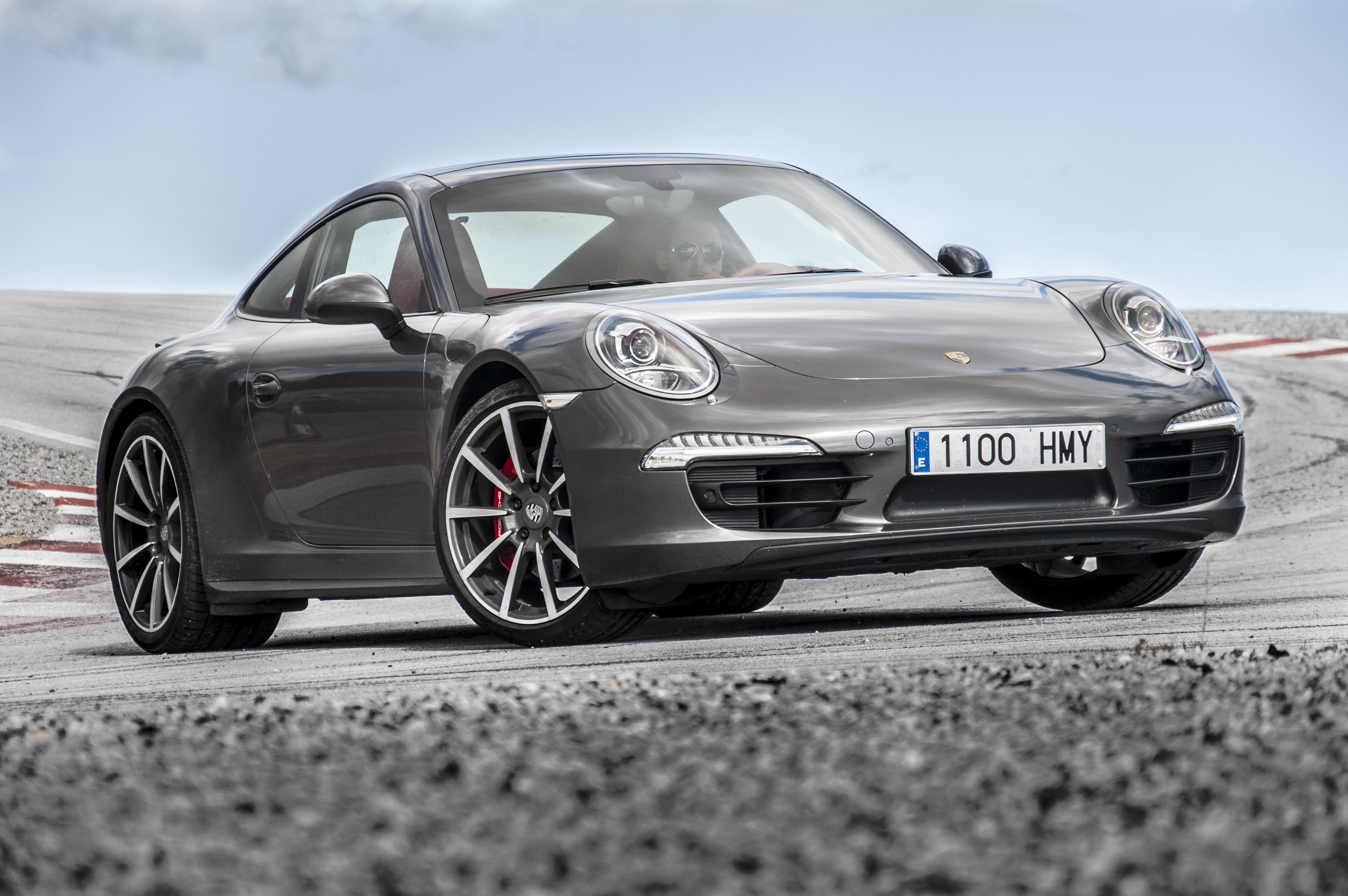
The Porsche 911 is a famous sports car that has been made for many years. The 930 is a version with a turbo engine that makes it go faster.
The Porsche 911 is a legendary sports car known for its rear-engine layout and distinctive design, with a history spanning over six decades. The 930 refers to the turbocharged version produced in the late 1970s and 1980s, celebrated for its performance and driving excitement.
"...wed me is he bought a Porsche 930 and he bought a Ferrari 512. But the era that Sammy Hagar's car is, right?"
The Ferrari 512 M is a fast sports car made by Ferrari with a big V12 engine in the middle. It was made to be better and faster than earlier models.
The Ferrari 512 M is an evolution of the Ferrari 512 BB, produced in the late 1970s and early 1980s, featuring improved performance and aerodynamics. It is a classic mid-engine V12 grand tourer that represents Ferrari's commitment to high-performance road cars during that era.
"You know, I think, so David Lee, he's the Ferrari collector that just spent the 38 million dollars on that 250 GTO."
The Ferrari 250 GTO is a very old and special Ferrari car that is very rare and expensive. It was used for racing and is now worth a lot of money.
The Ferrari 250 GTO is a highly coveted classic grand tourer produced by Ferrari in the early 1960s. It is famous for its racing success, rarity, and multi-million dollar auction prices, making it one of the most valuable cars in the world.
"I think if I remember correctly, he has like a Resto Mod Dino with like a more modern Ferrari engine in it."
A restomod is when someone fixes up an old car but adds new parts to make it work better and be more reliable, while still keeping it looking like the old car.
A restomod is a classic car that has been restored and modified with modern parts and technology, such as updated engines or electronics, to improve performance and reliability while maintaining the original style.
Pebble Beach is a famous car show where people bring very special and old cars to show and admire. It happens every year in California.
Pebble Beach refers to the Pebble Beach Concours d'Elegance, an annual prestigious car show held in California showcasing rare and classic automobiles, often attracting collectors and enthusiasts worldwide.
"And it's kind of like going, hey, I'm going to do a Dino, but it needs to have like an F40 engine or something in it,"
The Ferrari F40 is a very fast and special Ferrari car made in the late 1980s. It is light and powerful, and many people think it's one of the best Ferraris ever made.
The Ferrari F40 is a legendary supercar produced by Ferrari from 1987 to 1992, known for its lightweight construction, twin-turbocharged V8 engine, and raw driving experience. It was built to celebrate Ferrari's 40th anniversary.
"And he did one of those things or like a 288 GTO engine."
The Ferrari 288 GTO is a rare and very fast Ferrari from the 1980s. It was made for racing and has a powerful engine with two turbochargers.
The Ferrari 288 GTO is a limited-production supercar from the mid-1980s, designed for Group B racing homologation. It features a twin-turbocharged V8 engine and is considered a predecessor to the F40.
"...ht your attention? And then she goes, that black Ferrari Dino right over there. And he's like, good eye, good ..."
The Ferrari Dino 208 GT4 is a sports car made by Ferrari in the 1970s. It has a small engine and seats four people, which is different from most Ferraris that usually seat two.
The Ferrari Dino 208 GT4 is a mid-engine V8 sports car produced in the 1970s, notable for being the first Ferrari with a V8 engine and a 2+2 seating layout. It represents a unique chapter in Ferrari's history, blending performance with a more practical design compared to their typical two-seat models.
The 1969 Baldwin-Motion Chevelle is a very fast and special American muscle car from 1969. It was made stronger and faster by a company called Baldwin-Motion.
The 1969 Baldwin-Motion Chevelle is a high-performance muscle car modified by Baldwin-Motion, known for its powerful engine upgrades and racing heritage. It is a sought-after classic American muscle car.
"...ut that's a good collection because you mentioned BMW M1. That's a cool car. I mean, in race trim, obviou..."
The BMW M1 is a special sports car made by BMW a long time ago. It has its engine placed in the middle of the car, which helps it go fast and handle well.
The BMW M1 (E26) is a rare and iconic mid-engine sports car produced between 1978 and 1981, known for its distinctive design and racing pedigree. It was BMW's first and only mid-engine car of its era, making it highly collectible and significant in automotive history.
"what the guy told me, what the auction specialist told me. He's like, so now what am I? I'm just crazy overpaying it."
An auction specialist is a person who helps people buy or sell expensive cars at auctions. They give advice about prices and how to bid.
An auction specialist is a professional who assists buyers and sellers during high-value auctions, providing expertise on pricing, provenance, and bidding strategies to help clients make informed decisions.
"Yeah, yeah, they're super. They're super. Yeah, listen, McLaren F1 was not even getting that story."
The McLaren F1 is a very special and fast car made in the 1990s. It is famous for being one of the best cars ever and is very expensive to buy today.
The McLaren F1 is a legendary supercar produced by McLaren in the 1990s, known for its innovative design, central driving position, and record-setting performance. It is highly sought after by collectors and often commands multi-million dollar prices at auctions.
"we bought the 935, the Paul Newman 935. Adam was there on the other side of the room."
The Porsche 935 is a special racing car made by Porsche in the 1970s. It looks very different from regular cars and was built to race on tracks.
The Porsche 935 is a race car based on the Porsche 911 Turbo, built for Group 5 racing in the late 1970s. It is famous for its distinctive aerodynamic bodywork and racing success, making it a prized collector's car today.
"Yeah. The experience we just had on bring a trailer was a little more calming because, you know, that clock resets every two minutes."
Bring a Trailer is a website where people can buy and sell special cars by bidding online. The bidding time resets if someone bids near the end, so it feels less rushed.
Bring a Trailer is an online auction platform specializing in classic, collector, and enthusiast vehicles. It features timed auctions with a bidding clock that resets with each new bid, creating a calmer bidding environment compared to live auctions.
""...I'm going to jump into an interview that with, with my friend Tom Catooso at SEMA. He's going to talk a little bit about exhibitors at SEMA and if you want to be an exhibitor..." through "...just to remind people, give them a little background about what your role is at SEMA. So SEMA for people that may not know""
SEMA is a big yearly event where companies show off new car parts and custom cars. It's like a huge car show for people who work in the car business.
SEMA (Specialty Equipment Market Association) is an annual trade show focused on automotive specialty products, aftermarket parts, and custom vehicles. It is a major industry event where exhibitors showcase new products and innovations.
"So the small company is really the heartbeat of what we do in the aftermarket because it really is constantly changing."
Aftermarket means parts and accessories made by companies other than the car maker. People use these to fix or improve their cars.
The aftermarket refers to the market for vehicle parts, accessories, and upgrades produced by companies other than the original vehicle manufacturer. It includes replacement parts, performance enhancements, and customization options.
"Let's talk about what it takes to become an exhibitor. We'll start there and then we'll talk about how to sort of maximize once you're there. But what's the process of applying or becoming an exhibitor?"
An exhibitor is someone who shows their products at a car show or event. They set up booths to share what they sell or make.
An exhibitor is a company or individual that participates in a trade show or event to showcase their products or services. In automotive events, exhibitors often display parts, tools, or vehicles to attract customers and industry attention.
"The CMA Show as an example has 12 different sections and it can range from wheels and tires to tools and equipment to racing performance and everything in between."
Racing performance means making a car faster and better for racing by adding special parts or tuning it.
Racing performance refers to parts and modifications designed to enhance a vehicle's speed, handling, and durability in competitive motorsports.
"The CMA Show as an example has 12 different sections and it can range from wheels and tires to tools and equipment to racing performance and everything in between."
Wheels are the round metal parts your tires go on, and tires are the rubber parts that touch the road. People often upgrade these to make their cars look or drive better.
Wheels and tires are fundamental components of a vehicle's contact with the road. Aftermarket wheels and tires can improve performance, aesthetics, and handling characteristics.
""Now you mentioned the new product showcase and I've been talking about this for years, how I'm kind of a new product showcase super fan...""
At the SEMA show, the new product showcase is where companies show their newest car parts and gadgets to everyone. It's like a spotlight for cool new stuff.
The new product showcase is a segment of the SEMA show where companies present their latest automotive products and innovations. It highlights emerging trends and technologies in the aftermarket industry.
"...a new supercharger for a certain company, right? Corvette CA eat from pro charger. Here you go. Check it ou..."
The Chevrolet Corvette is a fast sports car made in the United States. People often upgrade parts like the engine to make it go even faster.
The Chevrolet Corvette is an iconic American sports car known for its performance and value. The mention of a new supercharger highlights aftermarket enhancements that can significantly boost the car's power output, making it popular among enthusiasts who seek more speed and performance.
"Friday is a hybrid day that's business to business and business to consumer. But what it gives us is it gives us really unique thing that most trade shows don't have."
Some shows are for businesses to talk and sell to each other, and some are for businesses to sell directly to people who buy stuff. SEMA Fest does both at the same time.
B2B trade shows focus on transactions and networking between businesses, while B2C events are aimed at selling products directly to consumers. SEMA Fest combines both, allowing manufacturers, distributors, and end users to interact.
"And that's all converging on the SEMA show and the PRI show in December in one place for one week."
PRI is a big event where people who work with race cars and racing parts come together to show and sell their stuff.
The Performance Racing Industry (PRI) Show is an annual trade event focused on racing products and motorsports industry professionals. It complements the SEMA Show by focusing on racing components and technology.
"We really try to move you around from music performance to some automotive activation, you know, drifting or that type of thing. And it is just a fun event."
Automotive activation means fun car activities at events, like watching cars slide around corners (drifting) or other cool driving shows that people can watch and enjoy.
Automotive activation refers to interactive automotive-related experiences at events, such as drifting demonstrations or other driving activities designed to engage attendees and showcase vehicles or products.
Select text to request an explanation
A quick shout out to FanDuel.
If you're watching the NBA this week, it's the perfect time to jump in, whether you're
picking a side, a same game parley, or riding a player prop.
It's a super easy to use all in one app.
Download the FanDuel app today, must be 21 and over and present in select states.
Gambling problem, call 1-800-Gambler.
I'm Matt, the moderator, D'Andre here with Bill Goldberg, and our friend Brad Fanshawe,
my co-host from Shift and Steer.
He's on the show today because we've got a very, very important two-wheel topic today.
Goldberg's BMX bikes and Brad's got some history in BMX.
We want to get into that as well.
A little update on my journey with BioPro, you know, I'm on it about six or seven weeks
now.
BioPro, you guys have heard us talking about it.
BioPro is the 100% drug-free hormone health formula that helps guys over 40 get leaner,
tighter, stronger, naturally.
I've been taking it for a while.
It took a couple of weeks to kind of kick in, and now I'm really kind of loving it.
So I'm-
You're here.
Yeah?
You've gained-
You can tell.
I'm still Matt.
Yeah, you can tell.
You can tell for sure.
It's definitely worth checking out.
I don't need to explain the science behind it because they're much better out at than
I am, but it has been helping me in my workouts, definitely getting more reps in and just kind
of inching my way up without overdoing it so I'm not hurting myself.
And I feel 100% way better, way better.
So we have an offer, BioProteinTech.com slash CarCast, get $100 off your first offer.
There's no commitment, no guarantee.
There's no-
Sorry, it's 100% no commitment guarantee.
So you can cancel at any time, whatever you'd like, but it's definitely worth trying.
BioProteinTech.com slash CarCast.
So we touched last week about Bill's BMX bike, but not just any BMX bike.
It's the very first bike you ever had.
And we're talking about it.
It's such an influence over all of us, the bikes that we had back in the day.
And Brad went on to have sort of a professional career, if you will, in BMX.
But Bill, tell us quickly about your bike and how that came to be, and then we'll get
into Brad's story.
Well, we always look back on our childhood, and it'd be nice to have something tangible
to help in kickstarting the memories that we had.
And I had absolutely nothing.
I mean, you got a couple of trinkets as babies that you keep throughout the years.
But I don't really have anything.
I don't have my first car.
I don't have anything tangible.
And then six years ago, I get a phone call from one of my brother's best friends who
still lives in my hometown.
And ironically, somehow, when we escaped Oklahoma back in the day, he ended up with
my frickin BMX bike.
And I had no recollection of what I had done with it.
Fast forward to him.
He reached out.
He sent it to me.
And yeah, you got it.
This is my childhood.
There it is.
Right.
So it's kind of like, you know, to me, it's an unbelievable trinket that stirs many a
memory, you know, to me when I was a kid.
And quite obviously, as we discussed, you know, for a short period of time, this was
the first, I want to say vehicle.
This is the first thing that I was able to grab and call my own, be able to customize
it, be able to put my own, you know, swing it on it.
And it's really frickin cool.
And when I'm sitting here trying to delve into the automotive world and restoring
cars and updating everything that I've got, I got this thing in my hands.
And the first thing that I thought about, hey, man, I got to restore this thing,
right, just like a car.
But when you're going through that restoration process, if you do not know
what to restore and what not to restore because of value and because of this and
that, I'm like shooting blanks, right?
So first and foremost, I'd love to completely blow the thing apart because it
won't take but like 20 minutes.
I'd love to blast everything and make it all look new.
But the reality is when you do that with a car, you devalue it, you know, there's
so many things to take into consideration.
So I wanted to reach out to you, Brad, because of your quite obvious background
in the BMX and I'm ready to blow this thing apart.
I'm ready to make it, you know, what it needs to be made.
Although with your asking your opinion, do I just leave it the way it is, right?
And so hence you being on the show today.
There we go.
Brad, tell us about your BMX.
My background?
Yeah, your background there.
And then we'll get into Bill's bike too.
Well, I was living in San Diego during the real, the uprising of BMX, the very first part.
I mean, I raced all the great historic tracks like Rancho San Diego.
I raced side hacks with Scott Brihop, who is the godfather of BMX.
The guy who started the first organized races.
And I raced with guys like Eddie King and all kinds of people that are now the heroes,
the Stu Thompson's and the Jeff Botimas, and they're all buddies of mine.
And then one day my dad came home and he said, hey, we're moving to Omaha, Nebraska.
And I went, what?
I went from surfing and skateboarding and racing BMX.
The pick and core.
We're moving to Nebraska in February, man.
Yeah.
So I didn't let that deter me.
My dad was great.
Him and a buddy of mine, Tim Lulethorpe's dad, helped us start the first BMX track in the Midwest.
And I went on to race Pro BMX for a number of years and then took my career into the business side
and ended up being the vice president.
I started out as a magazine editor and then went on to be the vice president of operations
for the American Bicycle Association.
And in later years, I consulted them on getting BMX into the Olympics.
And so I've kept with it.
Right now, I sit on the horizontal photo.
Look at this young buck.
And Bill, you will see that kindred spirits.
That's a mongoose.
That's a mongoose.
Hell yeah.
Yeah, I got red line forks.
And I even got blue or a rail rims on it.
You know, I mean, like yours has blue rims.
Yeah.
Really, really close.
But that's what's so cool about the BMX bikes.
See, you went with mongoose forks.
I went with red line forks.
I had one piece cranks and a quick change sprocket.
You went with three piece cranks, aluminum cranks.
And that was the whole customizing of what you could do,
what you could afford, what you wanted, and the colors you wanted.
And nowadays, getting into the restoration part of things,
we all go with cars that we wanted when we grew up or had when we grew up.
BMX bikes are no different than that.
And I sit on the board of directors for the Nebraska BMX Hall of Fame,
which I'm proud to say I'm an inducted member in.
But we have teamed up with the museum in Nebraska,
which is a huge automotive museum, the American Museum of Speed.
And any car guy needs to go to the American Museum of Speed.
It's 250,000 square feet of awe.
And they put in a 2,000 square foot BMX section.
It got so much response.
It is now 8,000 square feet, and they're going to expand it again.
And my buddy, Steve Strope, who's a car builder that I've known forever.
Do we know Steve?
Yeah. Steve is a huge BMX guy, and we talk about it all the time.
And we all got together and got some of bikes, some of my bikes in there,
some of Steve's bikes in there, and a bunch of our buddies in there.
So if you're into BMX, you can go there and see just about every kind of BMX bike there.
So that's kind of my in a nutshell.
And ironically, in Tulsa, they have a BMX museum, and they asked to put my bike in there.
Do I put it in there, or do I restore it, and keep here so that I can still touch my
childhood in a way, shape, or form?
So I got all these questions, and again, it's exactly like prepping to restore a car.
I think one of the, Brad, you can shed some light on this.
I think one of the issues is, unlike the automotive space, there's not a lot of restoration parts.
There's nothing being remanufactured for the most part.
So you have to find new old stock or restore the existing parts, right?
Is that kind of?
Yeah, we're seeing more and more, you know, pro nicks coming back with a legacy series
and things like that.
But what I think with Bill's bike, seeing the photos, you know, it's pretty rusty,
it's pretty corroded, and it's not like taking it, you know, taking a car to a concor where you
want it that barn find, you know?
And I think for you especially, you want to remember it how it was.
That's an early Mongoose frame.
We can tell by the way it has the brake tab down on the bottom for a coaster brake,
which was the pre-freewheel setup.
Got it.
And so you want to, you know, maintain that, you know, because it's an early bike.
But in your case, that thing, I would get it stripped and refinished, you know, new chrome.
Now, what's great is there is a company that makes all reproduction stickers for that bike
still.
So you can get all the reproduction stickers.
You can get those forks re-chromed, have it all redone.
Those rims could be re-trued.
And now it's a little hard for me to tell Bill.
Are those aluminum anodized or are those the steel with paint?
They're aluminum anodized.
So those I would, the same thing.
You can have those straightened out.
You can have them re-anodized and do the hubs.
So everything looks brand new.
And that is, you know, at this point for you, that's a piece of wall art that, like you said,
brings back those days.
And if you can dig out a photo, I have my very first Schwinn with MotoMag on the front,
and a 120 gauge on the back.
And I restored that.
And I've got it hanging on a wall with a photo of me racing it.
And that's, if you got a photo of you sitting on it, you know, it's like, it's so cool to have that.
And what you may want to do is, you know, the USA BMX Museum in Tulsa, as you said,
it is the National Museum.
And that's where they do the National Hall of Fame every year and things like that.
Really reputable.
They're the ones I used to work for years and years ago.
It used to be called ABA BMX.
Now it's USA BMX.
That would be a great place to put it on temporary loan.
You know, let other people share in the Bill Goldberg-ness.
And then you could get it back and have it, you know, in your collection so you could enjoy it.
But that is an easy restore.
It really is.
It's, you called it.
You can blow it apart easy.
Some of the, I mean, one of the things that STEM that Matt has us looking at right there,
I would not touch that.
I would go, that's what I, that's the first thing that I found out, you know,
when I reached out information-wise is definitely don't touch that.
Because it's got the original sticker still on it, which that one you can't get in repo.
And, you know, it's so cool.
Those are very hard to find like that.
So, you know, but everything else, what kind of grips does that have on it, Bill?
Are those old, I can't see what this logo is here.
They look like maybe ory grips or something like that.
But it looks like a mushroom on the end of it.
It says swoosh.
Not familiar with that.
But what's so cool about it is they look like they're in pretty good shape.
So, if you can save them and-
That's what I was thinking too.
Put them back on.
Yeah, I'd say these.
Now, Brad, my question first and foremost are the brakes.
Right.
So, is that some-
Diacomp brakes on there, which are error-correct.
Is that some store or do I replace them?
Well, I would restore them because Diacomps are, you know, they're the right brakes for the era.
And they are really, I mean, I'll be honest with you, I would just clean those up,
put new cables on them, because they look like-
Needs a brake pad, needs pads in front.
I've got the pads.
The pads and just, you know, cleaning them up with new cables and stuff like that,
because they look really good.
And those are kind of difficult.
They're not just anodized.
They were like a, almost like a clear powder coat with a tint to it type of a deal.
And you don't want to over restore things just like a car, you know.
So, you don't want to use any sort of like metal, polish, or chemical on that.
You just start with just the soap or water and let it retain its patina.
Yes, on that part.
I would say the same thing.
If you redo the frame, the forks and stuff, and like if you keep the neck, you clean it up,
you might be able to clean this up without damaging the sticker.
But if you can get the grips off, soap and water, right, let them sit.
And then if you can get the grips back on, it brings some of that patina back into it.
And I'm kind of on the fence.
I kind of like the little bit worn seat, the saddle.
Like I would take that off, clean it and put it back on like a little bit.
Oh, I'm a hundred percent.
A hundred percent.
That's an arrow seat.
That's a pretty rare seat.
So, I would stick with that definitely.
That and I'll be perfectly honest with you.
And, you know, it's a family show, but the one thing that I remember about them,
I'm just, you know where I'm going.
It's a nutbuster.
I took that over a fucking creek.
Pardon my French.
And the when I landed, I was, I looked like Superman.
The only thing between myself and that bike was my unit.
And that I remember.
I mean, I don't remember any other instances of me taking it out and having fun with my
with my buddies because there wasn't anything memorable except that.
So things I remember were that my knees on the stem and my shins when the pedal came around.
A hundred percent.
Yeah.
But so restoring things like the hubs and the neck and stuff.
Now, this isn't really a bike that's going to be ridden.
It's a show bike at this point.
But when you get into there, if any of the bearings can the bearings be replaced?
Does the neck wobble?
So if you take it apart, there are bearings you can put into those existing hubs.
You'd have to just kind of size them out and find some sources for it.
In fact, I have a guy up in Nebraska that he actually does.
We do a podcast called the Super Rad BMX podcast.
And and Tim is known for restoring bikes and he does.
He sits on the board with me for the Nebraska BMX Hall of Fame.
But he's really good at wheels.
So like he's a guy that you could literally take the wheels off, send them to him.
He could source some some, you know, tires that are the right era.
He could redo the rims, reach through them, take them apart, put them back together.
And, you know, the hubs may only need to be rebuilt.
They don't, you know, the wear is not as much like is the rim because of the brakes.
I really think that bike is clean it up, restore it as far as the chrome on the forks
and the and the frame.
But the rest of it looks like it's, it's clean it up and put it back together
with some good bearings and true in the wheels and stuff.
Maybe anodize the hoop so that they look new, put some tires on it.
And other than that, there's no reason to go trying to over restore it.
It's just like a car.
You want to make it look like it, it maybe just came off the racetrack after one or two races.
Yeah.
The last thing I want to do is make it look brand new by any stretch.
You know, because then it would take away, you know, my memory of it.
Yeah.
Except from the first day that I bought it because I destroyed this bike.
But sounds like it destroyed you.
Unfortunately, I had a kid who did that much damage, but Brad, I can't thank you enough, man.
It's one of those things where if you've never done it, you don't know where to start.
You kind of think you know where to start because, you know, I'm a car guy.
But, you know, hey, this, this gives me an agenda.
And so it'll be a part this afternoon.
So, but, but you have, because you have the space there and you know that,
so you've gone down this road on some of your cars, that replacement parts aren't really
much of an option if you have to.
Yes.
So when you take that car, when you take that bike apart, like it's got to be laid out.
It's got to be labeled and sort of organized.
And it's going to be a little bit fragile, you know, like when you're taking things
like the seat off.
And I think there's some ways to, to get those grips off.
Obviously getting them back on is easier than getting them off because it's probably
going to sit there for a while.
I mean, if you salvage the grips, that'd be great.
If you.
Oh, I will.
A good air gun underneath those will blow them up like a balloon a little bit,
get some air under them and get them off.
That's probably what I, where I would start is the air compressor, but with the, with the thin
wand on it and just, just, just start hitting it around, peeking around the edges and just
starting to break it loose with some air.
And then.
Let's open water prior to that, wouldn't you?
Yeah, if you can, you know, sometimes they're stuck after all these years.
So you want to kind of get something that's not going to rip them, you know, before you
start doing that.
So the air is sometimes safe that way.
But yeah, and anything, you know, you can resource me, reach out to me with any questions.
Or like I said, if you want somebody that can restore any of these individual parts or
something like that, I can, I can put you in the right direction there.
I'm definitely going to hand the wheels over.
Other than that, I think it's, I think it's easily attainable.
Yeah, I think when you get the frame and the forks down to their bare pieces,
you know, check with like Clint at CGC, you know, because I'm sure he knows a lot about
blasting it and the right pressure and material or dipping it.
And then maybe even getting the chrome done or where you get that done.
You know, thousand percent.
He's my go to with all of it.
He does all the coatings.
He does all the, you know, the Saracote coatings,
chromes, anodized, all that stuff.
He does it on the cars.
He does it on weapons.
He does it all, you know, so he's, he's going to be the guy to go for.
And if there's any cracks or anything in the frame, right?
Like, because you're not going to ride it, you might be able to just leave it or repair it.
And, and he may be able to just hit like a little bit of weld if it needs it, right?
And, you know, so I think he's your, your guy for sure.
And I know he comes by and hangs out with Roger and hits the gym with you guys and stuff as well.
So he's going to be there.
So when he comes by, we're like, Hey, here's the next project, Clint.
Check it out. Have you done a bike?
I already put him on it, believe he's fishing for the next two days.
And so by the time he gets back, like I said, it'll all be laid out, labeled,
photographed and ready to run.
Yeah. And Bill, I, I just bought a, an Arab Mungoose frame so I could replicate
my bike from back then.
So when I get that done, we'll have to have a match race.
Oh yeah. I'll get it.
I'll have Wanda jump on the bike.
I'll get on that little thing.
It'll kill me, man, but thank you again, Brad.
No problem, man.
It's awesome. You got another project, right?
So before we take a break and let you guys go,
the, the Porsche that you sold on, bring a trailer.
The, I spoke to the, to the buyer and he, Patrick, he was a really nice guy.
And I know he wanted to come out and visit and grab the car.
Uh, he came out. How'd it go?
Well, he said he would have gone to 300 on it.
So it kind of pissed me off.
But how do we know that?
We kind of had a positive experience.
I'll tell you what, you never know what you're going to get when you have somebody out there
that purchases a vehicle from you.
And in, in doing my due diligence, going back and forth, thanks to you,
turned out to be a wonderful experience, man.
He and his wife stopped by and we threw in, you know, a trip to Goldberg's garage.
And so we gave him a little tour.
Now I'll be perfectly honest, compared to his 150 cars,
I don't know how impressed a human being can be by seeing a garage,
you know, that's got 35 cars in it, but he had a great time.
His wife obviously went over to the barn with Wanda and, you know,
took some photos over there, but he was, he was enthralled with the car.
And I got to say, he was so appreciative of the cleanliness of this vehicle.
And it made me feel good because I literally spent 100 hours under this damn thing for two months.
And at the end of the day, when you hand something off,
especially a high ticket item like that, it's got your name on it and your reputation.
And it's a small world in the car world.
And, you know, bad shit can be thrown around quickly.
But the fact is, is that I have a lot of pride in something that's got my name on it.
So I wanted it to be in the best condition humanly possible.
And the one thing that I, I mean, I learned to shitload through that auction about these porches,
right? Yeah.
But the one thing that I really learned that was the biggest saving grace to me
is that I thought I was going to have to drop that transmission
because of the chattering in it.
But it's just the way these cars are.
And that was the first thing that I disclosed to Patrick when he came here.
And he just started laughing and he's like, that's, that's what they do.
And I'm like, oh, God, thank God that, you know, I didn't have to pull the,
I was prepared to buy a new transmission for him.
I mean, I was, but, you know, I showed him the two blemishes on the paint.
He doesn't care.
He wants to drive that thing.
This dude's got eight, nine thirties, right?
So I mean, this is a car that comparatively,
even though that was its predecessor, I mean, I mean, it's a refined version.
But to me, I mean, I'd love to have a nine 30 instead.
So he wants, he bought this car to drive and he was ecstatic at its condition.
I mean, the thing, truly, you don't want to oversell when you're doing,
bring a trailer or anything else.
But I under, undersold the car as far as descriptions concerned,
because truly, as he said, this car, this car is almost perfect.
Now it does have its, you know, little blemishes, but comparatively,
you know, to what's out there, this, this car was top notch.
And it was nice to see that he felt that same way because he's an expert.
This guy's got more Porsches and, you know, and Carter's got pills.
So I was very appreciative of what I was able to do.
And again, on the podcast, I got to exclaim that I could not have done that without you.
I really appreciate that.
Yeah, and it was fun to do.
So I'm happy to, happy to do it.
It was a great looking car.
Yeah.
What a good looking car.
So it's, it's funny that you've got a little bit of tears.
I funny you mentioned some of those cars and Brad and I were talking about
Ferraris and stuff on the shift in steer with, with Aaron Hagar.
I just got together with a friend of mine that
he was up in the Palisades and during the fires and lost his house and lost some of his cars.
And so he moved closer to me temporarily.
He's got a little house down in this area.
And he's been slowly trying to get some of his other cars.
He had the ones at his house he lost, but he had a big car collection.
So years ago, I sold a number of his cars so he can buy a house, right?
And then he goes, once that's done, I'm going to try to get them back.
So one of them was a Pantera GTS, which he fully restored.
He had to sell.
He loved it.
And then he just bought it back from the guy we sold it to.
And which is good.
But two things he bought recently that he was very, very excited about,
that he showed me is he bought a Porsche 930 and he bought a Ferrari 512.
But the era that Sammy Hagar's car is, right?
He's got the red one.
You know, Sammy's got the black one.
He bought because we were just talking about it.
Brad going like, I love that body style.
The boxer 12 cylinder, like that's that's a cool car.
So he's got, yeah, he's got those.
He got his Pantera back and and then the other one is his Viper.
He's got he had a Gen 1 Viper, which is like the hand built ones, right?
And they're just so crazy nuts, like a little fragile.
But just just talk about analog cars, like all the cars he's got,
his Ferrari, his 930, his Viper.
He's like, he's like, I've had McLaren's.
I've had modern day Porsches.
He's like, there's something about those very analog cars that he really,
really likes.
So I'm glad he's just trying to get those back.
Well, I took Patrick, as I said, I took Patrick to my buddy Martin Peaks collection
down the street.
Okay.
I told you about the BMWs he had.
Yeah.
He had a black tan interior Dino, which is still one of the most beautiful cars in the world.
Yes.
That car is way too small for you.
Oh my God, is that car small?
It's smaller than the Cobra, for God's sake.
But I mean, it was just it was a really neat experience.
Just, you know, there's another car guy in the fold.
That's a cool car.
And actually a Dino black with tan is a little more rare than you would think.
You know, I think, so David Lee, he's the Ferrari collector that just spent the 38 million dollars
on that 250 GTO.
I think if I remember correctly, he has like a Resto Mod Dino with like a more modern Ferrari
engine in it.
And it was at Pebble years ago.
That one's black.
And it's kind of like going, hey, I'm going to do a Dino, but it needs to have like an F40
engine or something in it, you know, and he did one of those things or like a 288 GTO engine.
Like he did something that was just a little bit more modern in terms of I forgot what it was.
I'd have to look that up because I don't want to, you know, sort of misrepresent his story.
But I remember seeing it there, hearing about the car and seeing it.
And as Adam and I were walking around with our friend, Ali, she's done a bunch of TV stuff with
us. She was on, she co-hosted some of the stuff like going racing with Adam Corolla,
she did with me and Adam.
And she was out there with us for a little bit.
And Adam said, he goes, so, Ali, what car on the lawn of Pebble Beach caught your attention?
And then she goes, that black Ferrari Dino right over there.
And he's like, good eye, good eye. I like where your head's at. Yeah.
We can talk about Ferraris and Pebble Beach and all that stuff. Oh, we want.
And I can talk about Martin's collection, all I want.
But American Muscle, still to me, if there was one car, he had an M1, he's got a 2000 mile
Kuntas, he's got a Testerosa with 5000, the one car that I could pick out of his entire place.
See something that's not quite right? Our annotations are AI-generated and can sometimes miss the mark.
Click the flag icon on any annotation to suggest a correction.