
Rivian
Rivian is a newer electric-vehicle company. They make EVs that are meant to work for daily driving but also for outdoor adventures, and the episode talks about how hard it is to grow a car company.
EV
EV means electric vehicle. Instead of using gasoline, the car runs on electricity from a battery.
adventure vehicle
An “adventure vehicle” is a car meant for trips outside the city—like road trips and getting to outdoor places—while still being usable day to day.
cash burn
Cash burn means how fast a company is spending money. If a company isn’t making enough profit yet, it has to keep using cash to keep going.
recall
A recall is when a car company says, “We need to fix something on these cars.” It’s usually because of a safety issue or a problem that could affect how the car works.
slow ramp on service departments
This means how quickly the company can set up places and people to fix and maintain the cars. If that grows slowly, owners may have trouble getting service when they need it.
pricing spectrum
A pricing spectrum just means the prices go from lower to higher across the lineup. The point here is that Rivian’s cars cost a lot compared with many other EVs.
compact crossover SUV market
This phrase means the popular category of smaller SUVs that most people shop for. The host is saying the Rivian R2 is aimed at that big, competitive group of buyers.

Tesla Model Y
The Tesla Model Y is a very popular electric SUV. The episode compares it to the Rivian R2 to show they’re targeting the same general size and buyer interest.

Toyota RAV4
The Toyota RAV4 is a very popular compact SUV. In this segment, it’s mentioned mainly to help you picture the Rivian R2’s size by comparing their lengths.
mass market arena
“Mass market” just means selling to a lot of regular customers, not only car enthusiasts. The host is saying Rivian is trying to compete in the biggest, most competitive part of the market.
lifted
“Lifted” here means the car sits higher than stock. That helps it handle bumps and uneven ground without hitting the bottom.
rally spec
“Rally spec” means a car is set up for rally-style stages—typically with changes aimed at durability and traction on loose surfaces. In practice, that often includes things like increased ride height, stronger suspension components, and tires suited to dirt or gravel.
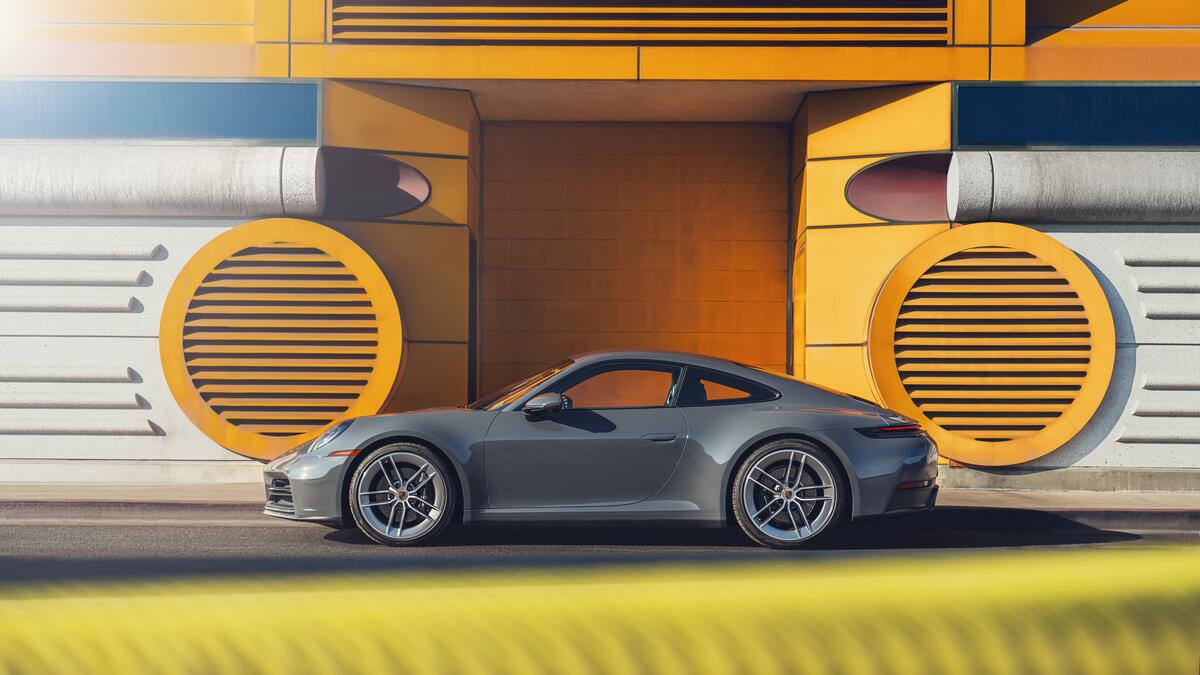
Porsche 911 (993)
The Porsche 911 (993) is a specific generation of the 911. It’s especially loved because it was the last air-cooled 911, and people think it’s a great mix of classic feel and everyday usability.
Turbo
“Turbo” means the engine uses a turbocharger to make more power. It pushes extra air into the engine so it can burn more fuel and accelerate harder.
4S
“4S” is a Porsche trim designation that typically indicates all-wheel drive (four-wheel drive) combined with a sportier specification than the base model. In this segment, it’s used as a choice for a Porsche 911 (993) variant.
2S
“2S” is a Porsche badge for a specific trim. It usually means a simpler setup than the “4S” version, while still being a sporty choice.
gross profit margin
Gross profit margin is a way to measure how much money is left after paying the direct costs to build and deliver the product. Higher margin usually means the product is making money more easily.
chips
“Chips” are the computer parts inside the car that run the AI and driving software. If those chips are expensive or in short supply, they can make the car cost more to build.
profitability
Profitability means the company expects to make real money from selling the cars. They’re talking about when R2 will start showing that profit, not just when it launches.

Volvo EX60
The Volvo EX60 is an upcoming electric Volvo. They bring it up because Volvo is claiming their EV can make profit right away when it starts selling.
vertically integrate
Vertically integrate means the company makes more of the stuff itself instead of buying it from other companies. In Rivian’s case, that includes software and key electrical/drivetrain parts, so they can improve the product and lower costs when they sell a lot of cars.
power electronics
Power electronics are the EV’s electrical “control hardware.” They take electricity from the battery and convert/control it so the motors can use it efficiently.
drive line
Drive line is the “power path” from the battery to the wheels. It includes the motor and the electrical parts that make the motor work.
inverters
An inverter is a device that changes battery electricity into the type of electricity the motor needs. Without it, the motor can’t run the way an EV motor is designed to.
direct to consumer
Direct to consumer means the company sells the car to you directly, not through a traditional dealership network. It can give the company more control, but it also means they have to run their own sales and service setup.
R2
R2 is Rivian’s next car. The idea here is that Rivian spent a lot of money preparing for the higher sales volume that R2 is expected to bring.
preloading
Preloading means spending ahead of time. Rivian invested early so it would be ready to handle the bigger sales volume expected from R2.
pull forward investment
Pull forward investment means they’re choosing to spend sooner rather than later. The idea is to get the support systems ready ahead of time for when more cars are being produced.
service infrastructure
Service infrastructure refers to the physical and operational setup needed to maintain and repair vehicles—like service centers, staffing, tools, and logistics. For an EV maker, it’s often planned alongside vehicle production so customers can get support without long delays.
distribution network
A distribution network is how the company gets cars (and sometimes parts) from where they’re made to where customers can receive them. It’s basically the delivery and logistics setup.
autonomy
Autonomy here means technology that helps the car drive. It can include features that assist with steering, speed, and other tasks—depending on how advanced the system is.
software
Software is the car’s computer programs. It controls features and behavior, and in modern EVs it can often be updated to add or improve functions.
make or break product
“Make or break” means the product is so important that it could decide whether the company does well or struggles. Here, they’re saying R2 is that crucial.
reservations
Reservations are like an early sign-up showing you want to buy the car when it’s available. Companies track them to estimate how many customers they can expect.
ramping production
Ramping production means the factory is gradually increasing how many cars it can build. Even if lots of people want the car, the company can’t deliver them all at once until production is up to speed.
backlog
A backlog means there are more people waiting for cars than the factory can build right now. It’s basically the “waiting list” created by limited production early on.
roll out the volume, deliver vehicles
This refers to the operational plan for scaling from initial launch builds to higher-volume production while still delivering cars in a controlled, predictable way. It’s essentially launch logistics: deciding how to allocate limited early capacity across customers.
single launch edition
A single launch edition means the company starts by selling one specific version of the car. That makes it easier to build and deliver cars early, before offering lots of different options.
lead times
Lead time is how long you have to wait. Here it means the time between asking for service and actually getting the parts or repair done.
non-critical items
“Non-critical items” are issues that don’t prevent the vehicle from being driven safely or normally. The speaker contrasts these with critical problems, explaining that even when the car is still operable, customers can wait weeks if parts or service capacity aren’t ready.
launching R2
R2 is Rivian’s upcoming vehicle. The speaker is saying that before it launches, Rivian needs enough service locations and support so repairs don’t take forever.
service location
A service location is the specific shop or facility where a vehicle is taken for maintenance or repairs. The discussion contrasts different service outcomes depending on where the work is performed, highlighting how service execution can vary.
loaner car
A loaner car is a temporary car you can use while your own car is being repaired. It helps you keep driving instead of being stuck without a vehicle.
mobile service
Mobile service means the repair team comes to you. Instead of you driving the car to a shop, they show up at your house (or wherever you are) and handle the fix there.
charging anxiety
Charging anxiety is the worry about whether you’ll be able to charge your EV when you stop. Even if the car can go far, it’s still stressful if chargers are broken or full.
range anxiety
Range anxiety is the fear that your electric car won’t have enough battery to get to the next charger. Here, they’re saying the bigger problem is whether chargers are actually working when you need them.
EPA rated
“EPA rated” is an official way the government estimates how far an electric car can go on a full charge. Your actual range can be less or more depending on how you drive and the weather.
uptime
Uptime here means how often charging stations are actually working. If you pull up and the charger is broken, it doesn’t matter what the car’s range is.
RAN network
RAN network means Rivian’s network of charging stations. They’re saying Rivian is still adding new charging locations steadily, not stopping to focus elsewhere.
RAD wrap
A “wrap” is a sticker-like covering that goes over the outside of a car. Here, the RAD wrap is basically a way to show that a specific team or project (RAD) is involved with R2.
trade-offs and compromises
When building a car, you can’t usually maximize everything at once. If you spend more on one part, you often have to save money or accept limits somewhere else.
vehicle feels really cohesive
“Cohesive” means the car feels like everything matches—like the design and parts all work together. The goal is that cost-saving choices don’t make the car feel mismatched.
price point
A “price point” is the price the company is aiming to sell the car for. If the car has to cost a certain amount, that limits what expensive parts or features you can afford.
allocate the bill of materials
The “bill of materials” is basically the cost breakdown of all the parts that go into the car. “Allocating” it means deciding where the money goes—like spending more on the structure versus spending more on the interior.
dynamically
Here, “dynamically” means the car can change what it’s doing as conditions change. Instead of one fixed driving mode, it can adapt on the fly for street driving versus off-road driving.
tri-motor
“Tri-motor” means the car has three electric motors. That can help it put power down better and feel more responsive, but it usually costs more to build than a simpler setup.
dual motor
“Dual motor” means there are two electric motors. Usually one handles the front wheels and one handles the rear, which helps the car manage grip and acceleration.
single motor
“Single motor” means the EV has one electric motor. It’s usually simpler and cheaper, but it may not give the same level of control as setups with two or three motors.
performance sub-brand
A performance sub-brand is a separate label a car company uses for its more performance-oriented models. Instead of treating every vehicle the same, they group the “more aggressive” ones together so it’s easier to understand what they’re aiming for. In this segment, that label is what becomes “RAD.”
track is wider
“Track” means how far apart the wheels are on the same side-to-side axle. Making it wider usually helps the car feel more stable when turning, because it has a broader stance. That’s one reason performance and rally-style vehicles often look wider.
vehicle's sitting a little higher
“Sitting a little higher” refers to increased ride height (ground clearance and/or suspension geometry). Raising the vehicle can improve off-road and rally-style capability by giving more clearance over obstacles and changing how the suspension works under load.
wheels are... larger in diameter
Bigger wheels usually mean the tires are sized differently. That can change how the car grips the road and how it rides over bumps. Performance and rally-style setups often use larger wheels to help with stability and traction.

Bmws M
BMW has a special performance department called M. It makes the faster, sportier versions of BMW cars with better tuning for driving hard.
Mercedes AMG
AMG is Mercedes’ performance label. Cars with AMG badges are tuned to be quicker and more fun to drive than regular Mercedes models.
Skunk work programs
A “skunk works” program is like a small group inside a company that’s allowed to move fast and try unusual ideas. In cars, it often means developing something new before it becomes a regular model.
Skunkworks team
A “Skunkworks team” is a special team formed to chase a tough goal quickly. It usually has more freedom to try aggressive ideas—like making a car more extreme and performance-focused.

R3X
R3X sounds like a more exciting, niche Rivian electric vehicle that people want to see next. The host suggests it’ll come later because Rivian needs the more affordable, higher-selling models first.
mass market cars
In this context, “mass market cars” means cars meant to be sold to a lot of people at a lower cost. The host is saying Rivian needs those big-selling models to make money before it can afford to build the smaller, more special ones.
R3
R3 is another Rivian electric vehicle platform. In this conversation, they’re basically saying R2 and R3 are the main platform names, while the “S” and “T” naming shows up on a different platform (R1).
quad motor setup
A quad motor setup means there are four electric motors working together. More motors can help the car put power to the wheels more intelligently, which can improve grip and acceleration.

R1S
R1S is one of Rivian’s R1 versions. In this segment, they’re using R1S and R1T to explain how Rivian names different versions of the same underlying platform.

Rivian R1T
The Rivian R1T is an all-electric pickup truck. It uses a battery and electric motors instead of a gas engine. The podcast is clarifying that the R1T is one of Rivian’s main early models, separate from the R1S SUV.

Ford Maverick
The Ford Maverick is a smaller pickup truck from Ford. The hosts mention it because it sells a lot and represents the kind of compact pickup Rivian wants to compete with.

Rampage Ram Rampage
Rampage is being talked about as a pickup truck model. The podcast compares it to another small pickup to explain who it’s meant to compete with. The focus is on selling a lot of them, not just being a rare or specialty vehicle.
Rivian R1
Rivian’s R1 is the earlier, bigger electric vehicle lineup. The point being made is that R1 is too large to go after the same buyer segment as the smaller R2.

R2T
R2T is the rumored/desired idea of an R2 pickup truck version. The host is saying fans want one, but Rivian’s current plan is organized around R1 and R2 rather than an R2 pickup.

R2S
R2S is mentioned as a version that doesn’t exist in Rivian’s current R2 lineup. The host says that’s on purpose, because it affects what kind of vehicles Rivian will build and sell.
platform
A “platform” is the shared base design a company reuses across multiple cars. It lets the automaker make different models without starting from zero every time.
portfolio
In this context, “portfolio” just means the lineup of products a company plans to sell. Here, it’s about which vehicles Rivian will focus on next.
electric pickup
An electric pickup is a truck that runs on electricity instead of gas. They’re asking whether there’s enough demand for a smaller version of that kind of truck.
electrified products
“Electrified products” just means vehicles that use electricity in how they drive. In this conversation, it’s about which types of cars still don’t have good electric choices yet.
true mid-sized SUV
A “true mid-sized SUV” means the normal SUV size in between small crossovers and big full-size SUVs. The point here is that the market has lots of crossover options, but fewer vehicles that feel like a real mid-sized SUV.
adventure-oriented crossovers
This means a crossover SUV that’s set up for “go do stuff” trips—like dirt roads and rougher paths—not just city driving. Think of it as the kind of vehicle you’d take on adventures, with extra toughness and capability.
R4
R4 is a later Rivian vehicle idea they’re not ready to detail yet. They’re basically saying it could be different types of vehicles, and they’re still figuring out what shape it will take.
brush guards
Brush guards are protective front-end bars (often steel or heavy-duty metal) designed to shield lights and the grille from impacts with branches or low obstacles. They’re commonly associated with off-road or adventure-focused builds.
winches
A winch is a powered tool that winds a cable in and out. Off-road, it can help pull a stuck vehicle out or pull something heavy to safety.
patent the idea
They’re talking about protecting a new idea legally. A company can patent something even if it decides not to sell it right away, so others can’t copy it.
incompressible metal
They’re saying the winch hardware is made of rigid metal that doesn’t crumple easily. That can make crashes and pedestrian safety harder to manage, because the car’s front needs to behave in a specific way.
crash and pedestrian protection
This is about how the car is designed to protect people in a crash—both the occupants and pedestrians outside the car. If you add hardware to the front, it can change how the front end behaves, so the safety design has to be reworked.
OEM
OEM means the company that originally makes the car. They’re saying it’s harder for the car maker to add accessories themselves because everything has to still meet safety rules.
components that are, that screw together
This is talking about headlights that are made in pieces. If one part fails, you can unbolt it and replace just that part instead of replacing the whole headlight.
repairability
Repairability means how easy it is to fix the car after something breaks or gets damaged. The speaker is saying they want parts to be easier to replace without huge labor costs.
manufactability
Manufactability is about whether a car design is easy to build in large numbers. In this clip, it’s connected to keeping repairs manageable and not overly expensive.
safety cell
The safety cell is the part of the car that’s meant to protect people in a crash. It’s built to stay strong, while other parts of the car crumple to help slow you down.
absorb energy
In a crash, the car has energy from moving. Crash parts are designed to crumple so they soak up that energy instead of sending it all into the people.
high-pressure die castings
High-pressure die castings are metal parts made by pouring molten metal into a mold and squeezing it in under pressure. The point is you can make bigger parts that replace several smaller ones.
stamped parts
Stamped parts are made from sheet metal that gets pressed into shape using a tool. Cars often use lots of these smaller pieces, which then have to be assembled together.
five-star
A “five-star” safety rating means the car scored at the very top level in crash testing. The host is saying the vehicle is being designed to achieve that highest safety tier.
one-piece body side
This means the car’s side panel is made as one big piece. If you damage part of it, the shop may have to repair a larger section (and sometimes cut and weld) instead of swapping just the damaged piece.
service parts for collision centers
This is about the replacement parts that body shops can buy to fix crash damage. The point here is that Rivian can supply smaller sections of the panel, so the shop doesn’t always have to replace the whole side of the car.
ravine collision centers
The host is joking about random body shops that don’t really know the car. If they don’t understand the vehicle, they may guess high repair costs, and insurance can end up approving them.
collision repair
Collision repair is what a body shop does to fix a car after it gets damaged in an accident. Depending on what was hit, it can mean replacing parts and doing a lot of labor, which is why it can cost a lot.
panels
Panels are the outer parts of the car’s body. If they get damaged, body shops can often replace specific panels instead of doing a bigger repair to the whole car.
structural
Structural means the car’s main strength parts—what keeps it rigid and helps protect you in a crash. If those are damaged, repairs are usually more complicated and costly than fixing just the outer body pieces.
Apple CarPlay
Apple CarPlay is a smartphone-integration system that mirrors select iPhone apps onto the car’s infotainment screen. It’s commonly used for navigation, music, calls, and messages, and it affects how drivers interact with the vehicle’s interface.
Halo wheels
“Halo wheels” is Rivian’s steering-wheel control setup. They’re talking about adding physical-feeling controls (so it feels more tactile) based on what drivers said they wanted.
haptic wheels
Haptic wheels create a “click” feeling using the car’s electronics, not by using real mechanical notches. That way, the steering-wheel controls can feel physical even though the behavior is controlled by software.
torque rise and torque fall
This is how the car’s pulling force (torque) ramps up and then eases back. The goal is to make the car feel smooth and predictable when you accelerate or change load.
haptic clicks
Haptic clicks are the “touch feedback” you feel, usually through vibration. It’s how the car can make a screen control feel like a real button.
multi-touch screen
A multi-touch screen can recognize more than one finger at once. That lets you use gestures—like zooming in or swiping—to control the car’s interface.
PCBA
PCBA is the car’s electronics board—the part with the circuits and components soldered onto it. It’s basically the “brains and wiring” for that feature.
motor driver
A motor driver is the electronics that control the motor’s power. It helps the motor vibrate in a controlled way instead of just turning on/off.
cooling systems
Cooling systems are what keep electronics from getting too hot. That helps the device work reliably over time.
self driving mode
“Self driving mode” means the car is doing more of the driving for you. Even then, the driver typically needs ways to adjust things like speed, which is why the controls matter.
voice
In-car voice control is the use of spoken commands to operate functions like climate and garage access. The speaker argues voice will take time for consumers to adopt, but R2 is designed to make it more natural by interpreting commands conversationally on-board.
cloud
“The cloud” here means internet servers that can do computing for the car. The advantage of doing it onboard is that the car can understand you without relying as much on the internet.
mass market realm
“Mass market realm” means Rivian is aiming for a lot more customers, not just a small group of enthusiasts. It usually comes with a focus on making the cars more affordable and easier to buy in larger numbers.
sum of its parts
This phrase means the car feels better as a whole than you’d expect just by looking at its individual pieces. It’s about how everything is put together to work smoothly, not just about having good parts.
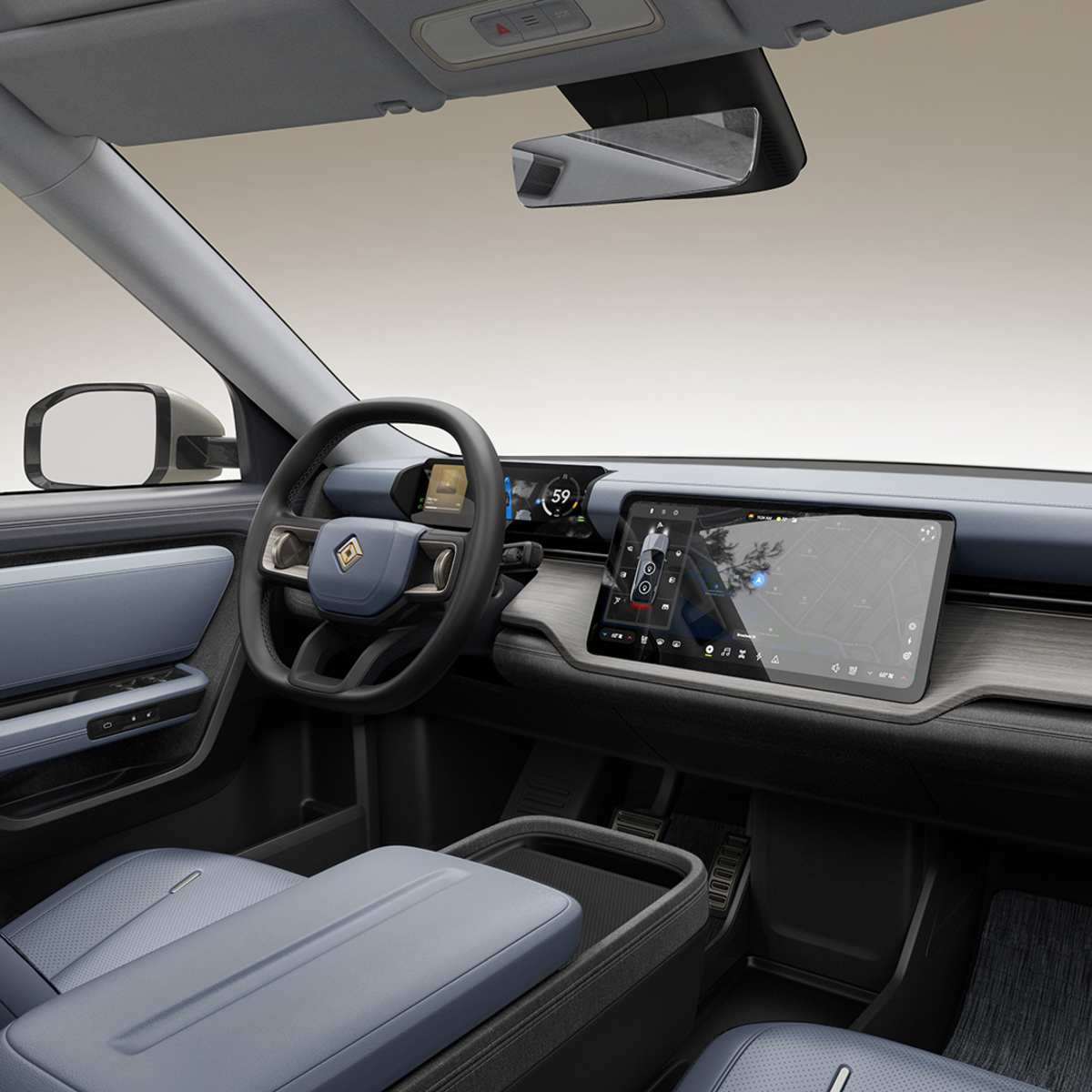
Rivian R2
The Rivian R2 is an electric SUV that Rivian is trying to make cheaper than their bigger models, but still feel like a high-end car. The discussion here is basically about how they managed to keep the price down without making it feel cheap.
zero to 60
“Zero to 60” is how fast a car can go from standing still to 60 mph. It’s a quick way to compare how punchy different cars feel in a straight line.
the 993 turbo
The “993 Turbo” is a Porsche 911 Turbo from a specific older generation. They’re using it as a reference point to show how quick the acceleration feels.
front trunk
A front trunk (frunk) is a storage compartment in the front of the car. On many electric cars, it exists because there’s no big engine taking up that space.
50 to 80
50 to 80 is a test of how quickly a car speeds up when you’re already going. It’s meant to show how strong the car feels for passing or merging, not just launching from a stop.
stability
In this context, “stability” refers to the car’s traction-control and stability-control systems that help keep the vehicle from sliding or spinning when grip is limited. The host is saying the R2 can be adjusted to feel more playful while still managing control.
embargo
In car reviews, an embargo is a rule that says you can’t publish certain details until a specific date/time. The host is saying that deadline has passed.
zero to 30
“Zero to 30” is a short acceleration test measuring how quickly a car goes from a standstill to 30 mph. The host is using it to explain why many EVs feel especially impressive at low speeds, even if they don’t stay as strong at higher speeds.

Chevy Bolt
The Chevy Bolt is an electric car. The host is joking that it can feel almost as quick as a Corvette in the first short burst from a stop.

Chevrolet Corvette
The Chevrolet Corvette is a fast sports car made by Chevrolet. People often talk about how quickly it can speed up, measured in seconds from a stop. The podcast is comparing how it performs after the car gets past the initial launch.
diminishing returns
“Diminishing returns” means the car’s acceleration feels great at first, but the benefit doesn’t keep getting bigger as you speed up. In other words, the car may feel less impressive once you’re already moving faster.

Lucid Air
The Lucid Air is a fast electric sedan. The point of mentioning it here is that it can keep accelerating strongly even after you’re already going at highway speeds.
hang the tail out
“Hang the tail out” means the back of the car slides outward a bit while you’re turning. It’s basically a controlled skid/oversteer, and the host says it’s possible when stability control is reduced.
tossable
“Tossable” is a compliment meaning the car feels nimble and easy to steer quickly. It suggests the car responds readily when you change direction.