
Rivian bet the company on R2. RJ Scaringe told us almost everything
About this episode
Rivian’s rise is framed as a rapid reset of EV benchmarks, followed by the R2 reveal: a compact crossover aimed at mainstream buyers, priced around $45,000–$60,000 and sized like a RAV4/Model Y. RJ Scaringe explains why Rivian “bet the company” on R2, including a plan to vertically integrate, build direct-to-consumer infrastructure, and reach a profit trajectory by Q4. The conversation also covers reservations-to-delivery forecasting, service scaling, and charging-network uptime—plus how RAD turns “adventure” into a performance-and-design philosophy.
Rivian
"Today's topic is Rivian, and I'll be joined by a special guest... RJ Skeringe... Today we have another special episode for you... Rivian, by many accounts, has become the darling of the automotive industry."
Rivian is a newer electric-vehicle company. They make EVs that are meant to work for daily driving but also for outdoor adventures, and the episode talks about how hard it is to grow a car company.
Rivian is a startup automaker known for building electric vehicles aimed at both everyday use and outdoor “adventure” lifestyles. In this episode, the hosts frame Rivian’s rapid rise from a niche brand to a mainstream contender, and they discuss the business pressures that come with scaling EV production.
EV
"It helped open an entirely new segment of what an EV is and or can be, a true adventure vehicle that doubles as a daily driver."
EV means electric vehicle. Instead of using gasoline, the car runs on electricity from a battery.
EV stands for electric vehicle, meaning the car is powered primarily by one or more electric motors instead of a gasoline engine. The episode uses EV to describe Rivian’s effort to redefine what an electric vehicle can be.
adventure vehicle
"It helped open an entirely new segment of what an EV is and or can be, a true adventure vehicle that doubles as a daily driver."
An “adventure vehicle” is a car meant for trips outside the city—like road trips and getting to outdoor places—while still being usable day to day.
“Adventure vehicle” is a positioning concept: a vehicle marketed as capable for outdoor trips (rough roads, long-distance travel, gear-carrying) while still being comfortable enough for everyday driving. The hosts use it to describe Rivian’s attempt to broaden what buyers expect from an EV.
cash burn
"But startup life is hard, and even as a darling Rivian hasn't had it easy. The cash burn could induce heartburn to even the strongest of stomachs."
Cash burn means how fast a company is spending money. If a company isn’t making enough profit yet, it has to keep using cash to keep going.
“Cash burn” is how quickly a company spends cash to operate and grow before it becomes consistently profitable. For EV startups like Rivian, heavy spending on vehicles, factories, and staffing can mean cash burn stays high for years.
recall
"A recall here, slow ramp on service departments there, and the fact that, to date, the automaker's vehicles sit at the upper end of the pricing spectrum..."
A recall is when a car company says, “We need to fix something on these cars.” It’s usually because of a safety issue or a problem that could affect how the car works.
A recall is when a manufacturer asks owners to bring vehicles in for a fix because of a safety or compliance problem. In the EV world, recalls can involve software updates, hardware repairs, or both, and they can be costly during scaling.
slow ramp on service departments
"A recall here, slow ramp on service departments there, and the fact that, to date, the automaker's vehicles sit at the upper end of the pricing spectrum..."
This means how quickly the company can set up places and people to fix and maintain the cars. If that grows slowly, owners may have trouble getting service when they need it.
“Service department ramp” refers to how quickly a company builds the ability to maintain and repair vehicles—staffing, training, parts supply, and facilities. EV startups often struggle here because they’re growing faster than their service network.
pricing spectrum
"A recall here, slow ramp on service departments there, and the fact that, to date, the automaker's vehicles sit at the upper end of the pricing spectrum, with base prices starting at over $70,000..."
A pricing spectrum just means the prices go from lower to higher across the lineup. The point here is that Rivian’s cars cost a lot compared with many other EVs.
A “pricing spectrum” is the range of prices a product line covers. Here, it’s used to highlight that Rivian vehicles are positioned at the high end of the market, which affects adoption and sales volume.
compact crossover SUV market
"but that changed yesterday with the launch of the R2, [120.8s] which cost between $45,000 and $60,000, while hitting at the absolute heart [125.5s] of the compact crossover SUV market at 186 inches long."
This phrase means the popular category of smaller SUVs that most people shop for. The host is saying the Rivian R2 is aimed at that big, competitive group of buyers.
“Compact crossover SUV market” refers to the mainstream segment of smaller, higher-riding SUVs that blend passenger-car comfort with SUV styling and packaging. In this segment, it’s used to position the Rivian R2 against the most competitive, high-volume buyers and models.

Tesla Model Y
"That's the size of a Toyota RAV4 and a Tesla Model Y. [133.3s] The former is one of the best-selling vehicles, [135.0s] period, while the latter is one of the best-selling EVs by the widest of margins."
The Tesla Model Y is a very popular electric SUV. The episode compares it to the Rivian R2 to show they’re targeting the same general size and buyer interest.
The Tesla Model Y is a highly popular electric compact crossover SUV. The host uses it as a direct size and market benchmark for the Rivian R2, noting both are around 186 inches long and emphasizing the Model Y’s strong EV sales position.

Toyota RAV4
"That's the size of a Toyota RAV4 and a Tesla Model Y. [133.3s] The former is one of the best-selling vehicles, [135.0s] period, while the latter is one of the best-selling EVs by the widest of margins."
The Toyota RAV4 is a very popular compact SUV. In this segment, it’s mentioned mainly to help you picture the Rivian R2’s size by comparing their lengths.
The Toyota RAV4 is a mainstream compact crossover SUV and one of the best-selling vehicles in its class. Here it’s used as a benchmark for size, since the Rivian R2 is described as being about 186 inches long—similar to the RAV4’s footprint.
mass market arena
"So today is behind the scenes on Rivian, going into the mass market arena, [158.7s] what that looks like, how it plays out, and dressing how the automaker aims to tackle it all."
“Mass market” just means selling to a lot of regular customers, not only car enthusiasts. The host is saying Rivian is trying to compete in the biggest, most competitive part of the market.
“Mass market” describes selling to the broad mainstream of car buyers rather than a niche audience. The “arena” framing here emphasizes that Rivian is moving from a more limited, enthusiast-focused presence into a highly competitive volume segment where pricing, availability, and brand familiarity matter a lot.
lifted
"If I remember correctly, one of your favorite cars is a Porsche 911 from the 80s rally spec, lifted and all that stuff for dirt roads."
“Lifted” here means the car sits higher than stock. That helps it handle bumps and uneven ground without hitting the bottom.
In this context, “lifted” means the car’s ride height is increased so it can clear obstacles and maintain suspension travel on uneven dirt roads. It’s a common rally/off-road modification because it reduces the chance of scraping the underbody.
rally spec
"If I remember correctly, one of your favorite cars is a Porsche 911 from the 80s rally spec, lifted and all that stuff for dirt roads."
“Rally spec” means a car is set up for rally-style stages—typically with changes aimed at durability and traction on loose surfaces. In practice, that often includes things like increased ride height, stronger suspension components, and tires suited to dirt or gravel.
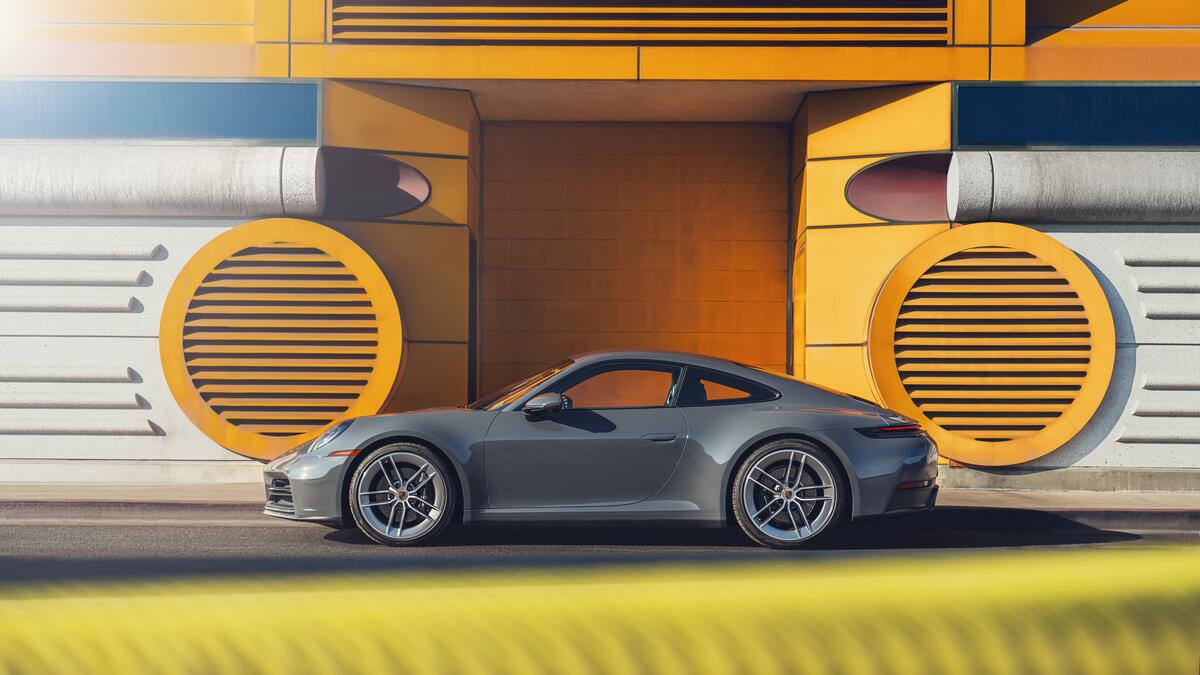
Porsche 911 (993)
"But I did pick a 911. I'd probably pick a 993. 993?"
The Porsche 911 (993) is a specific generation of the 911. It’s especially loved because it was the last air-cooled 911, and people think it’s a great mix of classic feel and everyday usability.
Porsche 911 (993) refers to the final air-cooled generation of the 911, produced in the mid-to-late 1990s. Enthusiasts often single out the 993 because it combines classic 911 character with more modern refinement, and it’s a popular choice for “rally spec” style builds.
Turbo
"I would go Carrot 4S or Turbo. Okay. Or Carrot 2S is pretty cool as well."
“Turbo” means the engine uses a turbocharger to make more power. It pushes extra air into the engine so it can burn more fuel and accelerate harder.
“Turbo” refers to a turbocharger, which forces extra air into the engine to increase power output. On a Porsche 911 (including the 993), the Turbo model is especially known for using turbocharging to deliver strong acceleration and performance.
4S
"I would go Carrot 4S or Turbo. Okay. Or Carrot 2S is pretty cool as well."
“4S” is a Porsche trim designation that typically indicates all-wheel drive (four-wheel drive) combined with a sportier specification than the base model. In this segment, it’s used as a choice for a Porsche 911 (993) variant.
2S
"Okay. Or Carrot 2S is pretty cool as well. I mean, they're all great."
“2S” is a Porsche badge for a specific trim. It usually means a simpler setup than the “4S” version, while still being a sporty choice.
“2S” is used here as a Porsche trim-style designation, contrasting with the “4S” choice. It generally implies a less complex drivetrain setup than the all-wheel-drive “4S” variant, while still being a sport-focused spec.
gross profit margin
"Right now, last year, you guys made gross profit margin on the actual R1s you were making."
Gross profit margin is a way to measure how much money is left after paying the direct costs to build and deliver the product. Higher margin usually means the product is making money more easily.
Gross profit margin is a financial metric: the percentage of revenue left after subtracting the direct costs of making the product. In an automaker context, it’s often used to judge whether a vehicle line is economically viable as production scales.
chips
"But obviously you’re not negative because you’re spending all the money on autonomy [273.4s] and chips and all the other stuff."
“Chips” are the computer parts inside the car that run the AI and driving software. If those chips are expensive or in short supply, they can make the car cost more to build.
“Chips” here means the specialized semiconductors used for vehicle computing—especially for AI workloads like perception and planning. EVs and autonomy systems rely on these compute platforms, and their cost can materially affect vehicle gross margins during development and early production.
profitability
"Talking about R2's profitability in the sense of when do we get to profitability on the actual car? ... R2 gets to profitability very quickly. ... by Q4."
Profitability means the company expects to make real money from selling the cars. They’re talking about when R2 will start showing that profit, not just when it launches.
Profitability here is the point at which the company expects the vehicle business to generate net profit from selling cars, not just revenue. The segment focuses on timing—when R2’s profit trajectory will “start to shine through” by Q4—so listeners can understand the business milestone behind the product launch.

Volvo EX60
"Volvo CEO just told me a couple of months ago, [285.5s] the EX60 that’s coming out right now... it’s profitable on day one car one."
The Volvo EX60 is an upcoming electric Volvo. They bring it up because Volvo is claiming their EV can make profit right away when it starts selling.
The Volvo EX60 is an upcoming Volvo electric vehicle used here as a benchmark for EV profitability timing. The speaker claims it’s profitable “on day one,” meaning the company expects the first units sold to generate profit immediately rather than requiring long ramp-up periods.
vertically integrate
"And on the product side, we've taken the decision to vertically integrate in almost all technically important areas. [341.3s] in almost all technically important areas."
Vertically integrate means the company makes more of the stuff itself instead of buying it from other companies. In Rivian’s case, that includes software and key electrical/drivetrain parts, so they can improve the product and lower costs when they sell a lot of cars.
To vertically integrate means a company brings multiple stages of production and supply in-house instead of relying on outside vendors. Here, Rivian says it vertically integrated software, electronics, high-voltage systems, and key drivetrain components to control performance and reduce costs at scale.
power electronics
"So software, electronics, all the high voltage systems. [346.9s] So that's power electronics, the motors, everything associated with the drive line."
Power electronics are the EV’s electrical “control hardware.” They take electricity from the battery and convert/control it so the motors can use it efficiently.
Power electronics are the electronic components that manage and convert electricity in an electric vehicle. In an EV drivetrain, they help control how battery power is turned into the right form for the motors, affecting efficiency, responsiveness, and thermal behavior.
drive line
"So that's power electronics, the motors, everything associated with the drive line. [351.6s] So gearbox, inverters."
Drive line is the “power path” from the battery to the wheels. It includes the motor and the electrical parts that make the motor work.
Drive line is the vehicle’s power-transfer system—everything that takes energy from the power source and delivers it to the wheels. In EVs, that typically includes the motors plus the electronics that control them (like inverters and other high-voltage components).
inverters
"So gearbox, inverters. [353.7s] And we've done that because we want to make both really capable products, but we also wanted to have a structural cost advantage as we got to scale."
An inverter is a device that changes battery electricity into the type of electricity the motor needs. Without it, the motor can’t run the way an EV motor is designed to.
An inverter converts DC electricity from the battery into AC electricity for the electric motors. It’s a core part of an EV drivetrain because it directly influences motor control, efficiency, and how smoothly the vehicle responds to throttle demands.
direct to consumer
"So in addition to the product, we also vertically integrated on the rest of the business. [365.1s] So we're a direct to consumer. [366.1s] We build our own distribution network."
Direct to consumer means the company sells the car to you directly, not through a traditional dealership network. It can give the company more control, but it also means they have to run their own sales and service setup.
Direct to consumer (DTC) means the automaker sells cars straight to customers rather than through independent dealerships. This can improve control over pricing, sales experience, and service operations, but it also requires building and funding sales and service infrastructure.
R2
"And all that investment was happening over the last few years as we built up to get ready for R2. [387.4s] And what I think missed is that that investment was like, think of it as like a preloading, anticipating the volume that comes with R2."
R2 is Rivian’s next car. The idea here is that Rivian spent a lot of money preparing for the higher sales volume that R2 is expected to bring.
R2 is Rivian’s next-generation vehicle program, positioned as the volume model that justifies the company’s big upfront buildout. In this segment, RJ Scaringe frames R2 volume as what makes the earlier investments in manufacturing, software, and distribution pay off.
preloading
"And what I think missed is that that investment was like, [390.6s] think of it as like a preloading, anticipating the volume that comes with R2. [394.8s] And so the volume of R2 is what ultimately allows everything that we've done to make"
Preloading means spending ahead of time. Rivian invested early so it would be ready to handle the bigger sales volume expected from R2.
Preloading here is a metaphor for making large upfront investments before the expected volume arrives. The idea is that Rivian built distribution and infrastructure in advance so that when R2 ramps up, the company can handle the increased number of cars and customers.
pull forward investment
"This pull forward investment in service infrastructure and distribution network. And as you said, autonomy, electronics, software."
Pull forward investment means they’re choosing to spend sooner rather than later. The idea is to get the support systems ready ahead of time for when more cars are being produced.
Pull forward investment means spending money earlier than originally planned to prepare for future demand. Here, it’s described as being directed toward service and distribution so the company can support scale when vehicles ramp up.
service infrastructure
"This pull forward investment in service infrastructure and distribution network. And as you said, autonomy, electronics, software."
Service infrastructure refers to the physical and operational setup needed to maintain and repair vehicles—like service centers, staffing, tools, and logistics. For an EV maker, it’s often planned alongside vehicle production so customers can get support without long delays.
distribution network
"This pull forward investment in service infrastructure and distribution network. And as you said, autonomy, electronics, software."
A distribution network is how the company gets cars (and sometimes parts) from where they’re made to where customers can receive them. It’s basically the delivery and logistics setup.
A distribution network is the logistics system used to move products from factories to customers or dealers—covering transportation, warehousing, and delivery operations. In the context of EVs, it affects how quickly vehicles reach buyers and how efficiently parts and service can be supported.
autonomy
"And as you said, autonomy, electronics, software. And so R2's scale is, people say this is a make or break product."
Autonomy here means technology that helps the car drive. It can include features that assist with steering, speed, and other tasks—depending on how advanced the system is.
Autonomy in automotive context refers to driver-assistance systems that can take over some driving tasks, ranging from lane-keeping to more advanced automated driving features. The segment groups autonomy with electronics and software, implying it’s part of the product strategy for R2.
software
"And as you said, autonomy, electronics, software. And so R2's scale is, people say this is a make or break product."
Software is the car’s computer programs. It controls features and behavior, and in modern EVs it can often be updated to add or improve functions.
Software here means the vehicle’s digital systems—control logic, user interfaces, and feature software that can be updated over time. The segment treats software as a core pillar alongside autonomy and electronics, suggesting it’s central to how R2 will function and evolve.
make or break product
"And so R2's scale is, people say this is a make or break product. It's the product the whole business has been designed around."
“Make or break” means the product is so important that it could decide whether the company does well or struggles. Here, they’re saying R2 is that crucial.
“Make or break product” is a business concept meaning the success or failure of that single product will determine the company’s overall outcome. In this segment, it’s used to emphasize that R2’s scale and volume are critical to Rivian’s future.
reservations
"We've heard various numbers, some confirmations, but how many R2 reservations do we have today?"
Reservations are like an early sign-up showing you want to buy the car when it’s available. Companies track them to estimate how many customers they can expect.
Reservations are customer sign-ups that indicate interest in a vehicle before it’s delivered. For EV startups, reservation counts are often used as a leading indicator of demand and can influence production planning and financing.
ramping production
"So when we say we start deliveries next week, there's many, many thousands of people that would like to be among the first. And there is no practical or realistic way to do that because we're ramping production. And so we've learned some things because on R1, we had not as big of a challenge,"
Ramping production means the factory is gradually increasing how many cars it can build. Even if lots of people want the car, the company can’t deliver them all at once until production is up to speed.
Ramping production is the staged process of increasing factory output from early builds to higher volume. For a new EV like R2, ramping production is what limits how quickly the company can turn reservations into real deliveries.
backlog
"but a similar challenge where there was a lot of backlog or excitement around the brand and around the product. And so here we've put together a very intentional and thoughtful way to decide how we"
A backlog means there are more people waiting for cars than the factory can build right now. It’s basically the “waiting list” created by limited production early on.
A backlog is the accumulation of orders or requests that can’t be fulfilled immediately due to limited production capacity. In new-vehicle launches, backlog is common when demand is high but manufacturing is still ramping.
roll out the volume, deliver vehicles
"And so here we've put together a very intentional and thoughtful way to decide how we roll out the volume, deliver vehicles. We've simplified what we're launching with where we have a single launch edition."
This refers to the operational plan for scaling from initial launch builds to higher-volume production while still delivering cars in a controlled, predictable way. It’s essentially launch logistics: deciding how to allocate limited early capacity across customers.
single launch edition
"We've simplified what we're launching with where we have a single launch edition. But nonetheless, when there's any kind of line, whether it's at a restaurant or whether it's at a launch of a piece of electronics"
A single launch edition means the company starts by selling one specific version of the car. That makes it easier to build and deliver cars early, before offering lots of different options.
A single launch edition is a limited initial configuration of a new model offered at the start of sales. Using one launch spec can simplify production planning and reduce complexity when ramping volume for early deliveries.
lead times
"there were lead times for non-critical items. [742.0s] Let's say something that was broken,"
Lead time is how long you have to wait. Here it means the time between asking for service and actually getting the parts or repair done.
“Lead times” are the waiting periods between when a repair is requested and when the needed work or parts are available. In this segment, the host describes long lead times for non-critical items, which can delay even simple fixes.
non-critical items
"there were lead times for non-critical items. [742.0s] Let's say something that was broken,"
“Non-critical items” are issues that don’t prevent the vehicle from being driven safely or normally. The speaker contrasts these with critical problems, explaining that even when the car is still operable, customers can wait weeks if parts or service capacity aren’t ready.
launching R2
"But it's taken us some time, but a key goal for launching R2 [774.8s] is to have our service network ready,"
R2 is Rivian’s upcoming vehicle. The speaker is saying that before it launches, Rivian needs enough service locations and support so repairs don’t take forever.
“R2” is Rivian’s next-generation vehicle program, and the speaker frames it as a launch that depends heavily on having the service network ready. The key point is that scaling service capacity is a major gating factor for customer experience when a new model goes on sale.
service location
"And then you'll see somebody come back on and say, well, I went to that same service location. It worked out much, much better."
A service location is the specific shop or facility where a vehicle is taken for maintenance or repairs. The discussion contrasts different service outcomes depending on where the work is performed, highlighting how service execution can vary.
loaner car
"Right now, for the most part, historically, if you have an R1 and it has service, for the most part, you get a loaner car. That's a pretty premium perk for usually a premium brand here in America."
A loaner car is a temporary car you can use while your own car is being repaired. It helps you keep driving instead of being stuck without a vehicle.
A loaner car is a temporary replacement vehicle provided to a customer while their car is in the shop for service or repairs. In the context of Rivian’s service experience, it’s being discussed as a “premium perk” that reduces inconvenience during downtime.
mobile service
"And so what mobile service is for those that haven't experienced it, you're car sitting in your driveway, it has an issue, you flag a ticket or you said like to have it worked on."
Mobile service means the repair team comes to you. Instead of you driving the car to a shop, they show up at your house (or wherever you are) and handle the fix there.
Mobile service is a maintenance model where a technician comes to the customer’s location instead of requiring the vehicle to be dropped at a dealership or service center. In this case, Rivian aims to make mobile service a large share of its service work so owners can get repairs without arranging a loaner or being present.
charging anxiety
"So with R2, and as we're going to our mass market, people obviously have charging anxiety."
Charging anxiety is the worry about whether you’ll be able to charge your EV when you stop. Even if the car can go far, it’s still stressful if chargers are broken or full.
Charging anxiety is the stress of finding a charger, waiting for it, or dealing with chargers that are unavailable or out of service. The segment connects it directly to network reliability—if stations break, range alone doesn’t solve the problem.
range anxiety
"people obviously have charging anxiety. I wouldn't even call it range anxiety."
Range anxiety is the fear that your electric car won’t have enough battery to get to the next charger. Here, they’re saying the bigger problem is whether chargers are actually working when you need them.
Range anxiety is the worry that an electric vehicle won’t have enough battery to reach the next charging stop. The hosts argue that for R2, it’s less about raw range and more about whether charging is available and working when you arrive.
EPA rated
"These cars have over 300 miles of range, EPA rated."
“EPA rated” is an official way the government estimates how far an electric car can go on a full charge. Your actual range can be less or more depending on how you drive and the weather.
“EPA rated” refers to the U.S. Environmental Protection Agency’s standardized testing method for estimating an electric vehicle’s range. Because the test is controlled, real-world range can vary with speed, temperature, and driving style.
uptime
"and you're right behind in terms of uptime, not even 9%. Like that uptime is the key here, right? You can as many charges as you want. But if you pull up and it's broken, it doesn't matter."
Uptime here means how often charging stations are actually working. If you pull up and the charger is broken, it doesn’t matter what the car’s range is.
In charging networks, uptime is the percentage of time chargers are operational and available for use. The hosts emphasize that uptime matters more than theoretical “how many charges you can do,” because a broken station defeats the plan.
RAN network
"How quickly are we building out the RAN network? Are we still focusing on that? Have we shifted resources away from that as we're going to autonomy and R2 launch?"
RAN network means Rivian’s network of charging stations. They’re saying Rivian is still adding new charging locations steadily, not stopping to focus elsewhere.
RAN network refers to Rivian’s charging network build-out (the locations and chargers that support road trips). The discussion highlights how the company is scaling it “linearly” by adding new RAN locations at a steady rate.
RAD wrap
"Yesterday on the drive for R2, I saw and RAD wrapped R2. It didn't look different, but it had a RAD wrap."
A “wrap” is a sticker-like covering that goes over the outside of a car. Here, the RAD wrap is basically a way to show that a specific team or project (RAD) is involved with R2.
A “wrap” is a vinyl (or similar) exterior covering applied over the vehicle’s body. In this context, the “RAD wrap” is used as a visible indicator that Rivian has a dedicated RAD department working on R2-related development.
trade-offs and compromises
"RAD is, it's a, one of the most enjoyable parts of developing a car, especially something like the R2 is you have all these trade-offs and compromises you have to make."
When building a car, you can’t usually maximize everything at once. If you spend more on one part, you often have to save money or accept limits somewhere else.
“Trade-offs and compromises” describes how engineering decisions force you to prioritize one goal over another. For a vehicle like Rivian’s R2, improving one area (like materials or features) can require reducing spending or capability elsewhere to keep the overall design balanced and cohesive.
vehicle feels really cohesive
"And I think the magic is when you can balance those trade-offs really beautifully, such that the vehicle feels really cohesive."
“Cohesive” means the car feels like everything matches—like the design and parts all work together. The goal is that cost-saving choices don’t make the car feel mismatched.
“Cohesive” here means the car’s design and engineering choices work together so it feels consistent in how it drives, fits, and functions. The host’s point is that even when compromises are made for cost, the end result should still feel like one unified vehicle rather than a collection of trade-offs.
price point
"But what that means is there's certain parts of the vehicle where for, to hit a price point, you have to decide, like you can only spend so many dollars."
A “price point” is the price the company is aiming to sell the car for. If the car has to cost a certain amount, that limits what expensive parts or features you can afford.
A “price point” is the target retail price level the automaker is trying to reach. Hitting that target constrains how much money can be spent on components, which is why the host talks about deciding where to put the budget across the vehicle.
allocate the bill of materials
"And so where do you allocate the bill of materials? Do you put it into, you know, if you, if you put it all into the chassis, that means you're going to suffer in other areas."
The “bill of materials” is basically the cost breakdown of all the parts that go into the car. “Allocating” it means deciding where the money goes—like spending more on the structure versus spending more on the interior.
“Bill of materials” (BOM) is the list of all the parts and materials needed to build a vehicle, along with their costs. “Allocating the bill of materials” means deciding how to distribute that total cost across major areas (like chassis vs. interior) to meet the target price while preserving the car’s overall feel.
dynamically
"So like, could we turn the dial to 11 and improve the performance of the vehicle dynamically? ... thinking about it on-road, off-road, dynamically thinking about it in terms of its, even some of the things that..."
Here, “dynamically” means the car can change what it’s doing as conditions change. Instead of one fixed driving mode, it can adapt on the fly for street driving versus off-road driving.
“Dynamically” in this context means the vehicle can adjust its behavior in real time rather than staying fixed in one driving setup. The speaker ties it to improving performance and adapting across on-road and off-road conditions, implying software-controlled changes to how the car responds.
tri-motor
"One of the things that the R3 and the R2 debut had was a tri-motor model. And I will note that on the spec sheet"
“Tri-motor” means the car has three electric motors. That can help it put power down better and feel more responsive, but it usually costs more to build than a simpler setup.
A tri-motor setup means the vehicle uses three electric motors to drive the wheels. More motors can improve traction and allow more precise torque distribution, but it also adds complexity and cost compared with single- or dual-motor variants.
dual motor
"And I will note that on the spec sheet that I have sitting on my computer, ...there is, there's a dual motor and a single motor."
“Dual motor” means there are two electric motors. Usually one handles the front wheels and one handles the rear, which helps the car manage grip and acceleration.
A dual-motor configuration uses two electric motors, typically to drive the front and rear axles independently. Compared with tri-motor, it can simplify packaging and reduce cost while still enabling strong traction control and torque vectoring behavior.
single motor
"And I will note that on the spec sheet that I have sitting on my computer, ...there is, there's a dual motor and a single motor."
“Single motor” means the EV has one electric motor. It’s usually simpler and cheaper, but it may not give the same level of control as setups with two or three motors.
A single-motor EV uses one electric motor to propel the vehicle, often driving one axle. This is generally the simplest and cheapest configuration, but it may limit the level of independent front/rear control compared with dual- or tri-motor systems.
performance sub-brand
"And we, we just hadn't, when we launched, ... realized we want to create a performance sub-brand as a way to categorize these vehicles."
A performance sub-brand is a separate label a car company uses for its more performance-oriented models. Instead of treating every vehicle the same, they group the “more aggressive” ones together so it’s easier to understand what they’re aiming for. In this segment, that label is what becomes “RAD.”
A performance sub-brand is a marketing and product-organization strategy where a company groups vehicles with shared performance-focused design and engineering goals under a distinct label. Here, Rivian is describing how it wanted to create a way to categorize vehicles like R3X so listeners can immediately understand the intent behind the design choices.
track is wider
"And so if you look at that, the track is wider, the vehicle's sitting a little higher, the wheels are, you know, these are, they're, they're both larger in diameter,"
“Track” means how far apart the wheels are on the same side-to-side axle. Making it wider usually helps the car feel more stable when turning, because it has a broader stance. That’s one reason performance and rally-style vehicles often look wider.
“Track” is the distance between the left and right wheels on the same axle. A wider track generally improves lateral stability and helps the vehicle feel more planted during cornering, which fits the segment’s rally/motorsports theme for R3X/RAD.
vehicle's sitting a little higher
"And so if you look at that, the track is wider, the vehicle's sitting a little higher, the wheels are, you know, these are, they're, they're both larger in diameter,"
“Sitting a little higher” refers to increased ride height (ground clearance and/or suspension geometry). Raising the vehicle can improve off-road and rally-style capability by giving more clearance over obstacles and changing how the suspension works under load.
wheels are... larger in diameter
"the vehicle's sitting a little higher, the wheels are, you know, these are, they're, they're both larger in diameter, larger in diameter and wider."
Bigger wheels usually mean the tires are sized differently. That can change how the car grips the road and how it rides over bumps. Performance and rally-style setups often use larger wheels to help with stability and traction.
Larger wheel diameter changes the vehicle’s stance and can affect ride/handling characteristics through tire sidewall height and overall rolling circumference. In performance or rally-inspired builds, bigger wheels are often paired with wider tires to support grip and stability.

Bmws M
"you know, growing up seeing like BMW's M division [1455.8s] or Mercedes AMG or, you know, the GT side of Porsche,"
BMW has a special performance department called M. It makes the faster, sportier versions of BMW cars with better tuning for driving hard.
BMW’s M division (BMW M) is the automaker’s performance arm, known for building higher-output, track-focused versions of BMW models. When people say “M,” they’re usually referring to specific engineering and tuning aimed at sharper handling and stronger acceleration than the standard trims.
Mercedes AMG
"or Mercedes AMG or, you know, the GT side of Porsche, [1459.9s] like GT2's, GT3's like, you see, you see these things"
AMG is Mercedes’ performance label. Cars with AMG badges are tuned to be quicker and more fun to drive than regular Mercedes models.
AMG is Mercedes-Benz’s performance brand, used on models engineered for higher power and more aggressive driving dynamics than the base versions. It’s associated with specific engine and chassis tuning philosophies that prioritize responsiveness and speed.
Skunk work programs
"Skunk work programs. [1472.8s] And they are. [1473.8s] And they're like, like the combination of a few people"
A “skunk works” program is like a small group inside a company that’s allowed to move fast and try unusual ideas. In cars, it often means developing something new before it becomes a regular model.
“Skunk works” programs are small, high-autonomy teams tasked with developing new ideas quickly—often outside normal corporate processes. In car engineering, this usually means experimenting with bold concepts (like new powertrain or chassis approaches) before they’re rolled into production.
Skunkworks team
"to have a product portfolio that we're thinking about [1503.6s] that's going to capture that, like assigning a Skunkworks team [1507.9s] whose objective is to make these cars more extreme is really cool."
A “Skunkworks team” is a special team formed to chase a tough goal quickly. It usually has more freedom to try aggressive ideas—like making a car more extreme and performance-focused.
A “Skunkworks team” is an internal, mission-focused group set up to push a project toward a specific goal with more freedom than typical product teams. Here, it’s described as being tasked with making the cars “more extreme,” implying a more experimental, performance-first development approach.

R3X
"the number of people online, the number of people that talk to me and they're like, when's an R3X coming? When am I going to get an R3X?"
R3X sounds like a more exciting, niche Rivian electric vehicle that people want to see next. The host suggests it’ll come later because Rivian needs the more affordable, higher-selling models first.
R3X is being discussed as a future, lower-volume “fun, cool stuff” Rivian model that enthusiasts are asking about. The host’s point is that it likely can’t arrive first because Rivian needs the higher-volume R2/R3 products to generate profits and fund it.
mass market cars
"Because obviously, mass market cars, R2, R3, these cars that get you to scale, like we were talking about earlier, these cars that get you to mass market, lower price points."
In this context, “mass market cars” means cars meant to be sold to a lot of people at a lower cost. The host is saying Rivian needs those big-selling models to make money before it can afford to build the smaller, more special ones.
“Mass market cars” here means vehicles designed for high-volume sales at lower price points. The host uses this to explain a product strategy: build the scalable, profitable models first, then use that success to fund lower-volume, more experimental vehicles.
R3
"And there's of course R1, don't forget, we also have R1... So speaking about R2... R1 is R1S and R1T. R2 has R2 and today we have R3, which is R3 and there was R3X..."
R3 is another Rivian electric vehicle platform. In this conversation, they’re basically saying R2 and R3 are the main platform names, while the “S” and “T” naming shows up on a different platform (R1).
R3 is Rivian’s electric vehicle platform mentioned alongside R2 as part of the company’s broader product portfolio. The speaker contrasts R3 with R1 variants and clarifies that R2 and R3 are platform names without the extra “S” or “T” suffixes used on R1 models.
quad motor setup
"R1 has a lot of great, like with the quad motor setup, there's a lot of things we can push further on R1."
A quad motor setup means there are four electric motors working together. More motors can help the car put power to the wheels more intelligently, which can improve grip and acceleration.
A quad motor setup means the vehicle uses four electric motors, typically one per wheel or in a way that allows very fine control of torque at each axle/wheel. That can improve acceleration and traction because the vehicle can distribute power precisely depending on grip and driving conditions.

R1S
"Speaking about R2... R1 is R1S and R1T."
R1S is one of Rivian’s R1 versions. In this segment, they’re using R1S and R1T to explain how Rivian names different versions of the same underlying platform.
R1S is Rivian’s R1-platform model variant referenced here as one of the two main R1 derivatives. The speaker uses it to explain naming structure: R1 is split into R1S and R1T, while R2 and R3 don’t use those “S” and “T” suffixes.

Rivian R1T
"but I'm glad you brought up R1, R1 is R1S and R1T. R2 has R2 and today we have R3,"
The Rivian R1T is an all-electric pickup truck. It uses a battery and electric motors instead of a gas engine. The podcast is clarifying that the R1T is one of Rivian’s main early models, separate from the R1S SUV.
The Rivian R1T is an all-electric pickup truck, part of Rivian’s early lineup alongside the R1S SUV. The podcast references the naming and lineup—R1S and R1T—highlighting that they’re different body styles built on the same general family. It comes up because it’s a key model that helped define Rivian’s identity as an EV maker.

Ford Maverick
"I mean, Ford Maverick sells in big volume, right? We're about to have a ram rampage, which can compete against a Ford Maverick in terms of that compact size."
The Ford Maverick is a smaller pickup truck from Ford. The hosts mention it because it sells a lot and represents the kind of compact pickup Rivian wants to compete with.
The Ford Maverick is a compact pickup truck known for being relatively affordable and high-volume compared with larger trucks. In this segment, it’s used as a benchmark for the kind of compact-size market Rivian’s R2 is aiming at.

Rampage Ram Rampage
"...sells in big volume, right? We're about to have a ram rampage, which can compete against a Ford Maverick"
Rampage is being talked about as a pickup truck model. The podcast compares it to another small pickup to explain who it’s meant to compete with. The focus is on selling a lot of them, not just being a rare or specialty vehicle.
Rampage is referenced as a vehicle model that’s expected to compete in the small-volume pickup segment, with the podcast comparing it to a Ford Maverick. In this context, it’s being discussed as a practical, high-demand type of truck rather than a niche performance machine. The key point is market positioning—how it’s meant to sell in meaningful numbers and attract buyers looking for an affordable pickup.
Rivian R1
"R1 is not a small vehicle, just the same reason that you're not hitting the same market with R1S that you might hit with an R2."
Rivian’s R1 is the earlier, bigger electric vehicle lineup. The point being made is that R1 is too large to go after the same buyer segment as the smaller R2.
Rivian R1 is the company’s first-generation electric vehicle platform, positioned as a larger, more premium vehicle family than its upcoming R2. Here, the host contrasts R1’s size and market positioning with what R2 could target.

R2T
"There are a lot of people that online that have chatted like, man, an R2T would be awesome. And but it's set up right now where it's an R1 or R2."
R2T is the rumored/desired idea of an R2 pickup truck version. The host is saying fans want one, but Rivian’s current plan is organized around R1 and R2 rather than an R2 pickup.
R2T is the name listeners are discussing as a possible Rivian R2 pickup variant. The host notes that people want it, but that the current lineup setup is “an R1 or R2,” implying Rivian has not committed to an R2 pickup (or at least not in the way fans expect).

R2S
"There's no R2S, right? That's obviously a purposeful decision."
R2S is mentioned as a version that doesn’t exist in Rivian’s current R2 lineup. The host says that’s on purpose, because it affects what kind of vehicles Rivian will build and sell.
R2S is referenced as a hypothetical or non-existent Rivian variant within the R2 lineup. The host says there’s “no R2S,” calling it a purposeful decision—meaning Rivian is intentionally limiting which body styles it offers under the R2 umbrella.
platform
"I would just say the platform's [1644.2s] capable of doing a lot. [1645.8s] The real challenge we have"
A “platform” is the shared base design a company reuses across multiple cars. It lets the automaker make different models without starting from zero every time.
In automotive product planning, a “platform” is the shared set of engineering foundations—like the vehicle architecture and major systems—that multiple models can reuse. The segment uses it to explain how Rivian can build different vehicles (R2, R3, and variants) while reducing complexity and cost versus designing each car independently.
portfolio
"And that led to the portfolio [1669.0s] that we've talked about publicly. [1670.1s] So R2 and R3."
In this context, “portfolio” just means the lineup of products a company plans to sell. Here, it’s about which vehicles Rivian will focus on next.
A “portfolio” here means the set of products a company plans to offer—multiple models and variants rather than a single vehicle. The host connects the portfolio choice to how Rivian decides what to build next to maximize value and excitement around the company.
electric pickup
"Do you see a market, viable market, for a smaller than R1 electric pickup? Because we don't have a smaller than R1 electric pickup right now at the market."
An electric pickup is a truck that runs on electricity instead of gas. They’re asking whether there’s enough demand for a smaller version of that kind of truck.
An electric pickup is a truck where propulsion is fully electric rather than gasoline or diesel. The speaker is using it as a market-gap question—whether there’s demand for a smaller electric pickup than Rivian’s R1.
electrified products
"I think in the world of electrified products, there's a lot of different segments that just have not been addressed yet."
“Electrified products” just means vehicles that use electricity in how they drive. In this conversation, it’s about which types of cars still don’t have good electric choices yet.
“Electrified products” is a broad way to describe vehicles and powertrains that use electricity to move the car—ranging from full battery-electric to other electrified setups. Here, it frames the discussion as a look at which vehicle categories still lack good options for consumers.
true mid-sized SUV
"The first, like that really hasn't been addressed is the true mid-sized SUV. Like we don't have a great mid-sized SUV that consumers can buy today."
A “true mid-sized SUV” means the normal SUV size in between small crossovers and big full-size SUVs. The point here is that the market has lots of crossover options, but fewer vehicles that feel like a real mid-sized SUV.
A “true mid-sized SUV” refers to a conventional SUV size category (bigger than compact crossovers, smaller than full-size SUVs) with SUV packaging and driving characteristics. The speaker argues that consumers can buy mid-sized crossovers, but not enough options that are genuinely mid-sized SUVs.
adventure-oriented crossovers
"and like the idea of adventure-oriented crossovers, [1741.4s] I think there's a big opportunity"
This means a crossover SUV that’s set up for “go do stuff” trips—like dirt roads and rougher paths—not just city driving. Think of it as the kind of vehicle you’d take on adventures, with extra toughness and capability.
“Adventure-oriented crossovers” is a marketing/vehicle-design concept: a crossover SUV tuned for weekend off-road-ish use (rough roads, dirt trails) rather than just commuting. It usually implies higher ride height, protective underbody/trim, and features that make it easier to go farther from paved roads.
R4
"There's R4. [1744.8s] So we also recognize is on the platform, [1746.9s] there's going to be things that come beyond R2 and R3 [1749.5s] that we also have to make a trade-off"
R4 is a later Rivian vehicle idea they’re not ready to detail yet. They’re basically saying it could be different types of vehicles, and they’re still figuring out what shape it will take.
R4 is Rivian’s further-out product/program name in the same platform family. The host is asking what body style it might become (pickup vs other forms), highlighting that Rivian is still deciding the exact “form factor” for the next step.
brush guards
"there were earlier patents for like R1 [1776.7s] or whatever with like brush guards and winches"
Brush guards are protective front-end bars (often steel or heavy-duty metal) designed to shield lights and the grille from impacts with branches or low obstacles. They’re commonly associated with off-road or adventure-focused builds.
winches
"there were earlier patents for like R1 [1776.7s] or whatever with like brush guards and winches"
A winch is a powered tool that winds a cable in and out. Off-road, it can help pull a stuck vehicle out or pull something heavy to safety.
A winch is a motorized cable-reeling device used to pull a vehicle out of trouble or to move objects. On off-road vehicles, winches are often paired with a front mounting point and are part of recovery capability.
patent the idea
"Or is just like, we got a patent this because we came up with an idea, but. A little bit of both. And sometimes we develop something when we decide not to launch it, but we still patent the idea."
They’re talking about protecting a new idea legally. A company can patent something even if it decides not to sell it right away, so others can’t copy it.
Patenting an idea means securing legal protection for a specific invention or method, even if the company doesn’t immediately build or sell it. In automotive product planning, this can be used to protect future accessory or hardware concepts while the company decides whether to launch them.
incompressible metal
"It is a bit challenging though, because it's a, it really impacts the, from a regulatory point of view, it's, you know, it's a challenge to put a big chunk of like incompressible metal on the front of the car."
They’re saying the winch hardware is made of rigid metal that doesn’t crumple easily. That can make crashes and pedestrian safety harder to manage, because the car’s front needs to behave in a specific way.
“Incompressible metal” refers to rigid structural materials that don’t deform much under impact. When such mass is added to the front of a vehicle, it can change how the car absorbs crashes and how it protects pedestrians, which is why it’s a regulatory and engineering challenge.
crash and pedestrian protection
"it's, you know, it's a challenge to put a big chunk of like incompressible metal on the front of the car. So it affects crash and pedestrian protection."
This is about how the car is designed to protect people in a crash—both the occupants and pedestrians outside the car. If you add hardware to the front, it can change how the front end behaves, so the safety design has to be reworked.
Crash and pedestrian protection are safety design goals that affect how a vehicle’s front end deforms and how it reduces injury risk to people outside the car. Adding heavy or rigid components (like a winch) to the front can force redesigns to keep the vehicle compliant with safety regulations.
OEM
"Because we create our own accessories when we are the OEM, it is a bit more challenging, but we've, we've thought about it a lot."
OEM means the company that originally makes the car. They’re saying it’s harder for the car maker to add accessories themselves because everything has to still meet safety rules.
OEM means “original equipment manufacturer,” the company that builds the vehicle as it’s sold. The segment contrasts OEM accessory development (Rivian creating its own accessories) with third-party work, noting it’s more challenging for the OEM to integrate accessories while meeting regulations.
components that are, that screw together
"Mercedes just announced new headlights that are going to be components that are, that screw together, that actually screw together and you can take them apart"
This is talking about headlights that are made in pieces. If one part fails, you can unbolt it and replace just that part instead of replacing the whole headlight.
Screw-together (modular) lighting design means the headlight/tail-light assembly is built from multiple parts that can be separated. That modularity can reduce repair cost because you can replace only the failed component instead of replacing the entire light unit.
repairability
"How do we address repairability in this era with vehicles that are frankly really complicated, but they have to be really complicated to be this capable and full of tech? I mean, that was a big driver of R2. We designed for manufactability. We also designed for repairability and cost for repair."
Repairability means how easy it is to fix the car after something breaks or gets damaged. The speaker is saying they want parts to be easier to replace without huge labor costs.
Repairability is how easily a vehicle can be fixed when parts break, wear out, or get damaged. In this discussion, it’s broken into two practical angles: repairs for failures/wear and repairs for damage from real-world use.
manufactability
"I mean, that was a big driver of R2. We designed for manufactability. We also designed for repairability and cost for repair."
Manufactability is about whether a car design is easy to build in large numbers. In this clip, it’s connected to keeping repairs manageable and not overly expensive.
Manufactability is how practical a design is to build at scale—how easily it can be assembled efficiently and consistently. Scaringe ties it to repairability, implying the same design choices that make production easier can also help keep repair steps and costs under control.
safety cell
"So safety, you want things to crush around the safety cell. Yeah, like think of like if you run into a brick wall,"
The safety cell is the part of the car that’s meant to protect people in a crash. It’s built to stay strong, while other parts of the car crumple to help slow you down.
In crash engineering, the safety cell is the passenger compartment structure designed to stay intact and protect occupants. The surrounding body structure is engineered to deform in a controlled way so the cabin doesn’t collapse into the occupants.
absorb energy
"You actually want it to collapse and absorb energy. And so by virtue of that, you're absorbing energy"
In a crash, the car has energy from moving. Crash parts are designed to crumple so they soak up that energy instead of sending it all into the people.
“Absorb energy” refers to how crash structures convert the car’s kinetic energy into deformation work (crumpling). By collapsing in a controlled manner, the vehicle reduces the forces transmitted to occupants.
high-pressure die castings
"you want to have a smaller number of parts. And so the best example of this is the use of very large, high-pressure die castings to replace assemblages of stamped parts."
High-pressure die castings are metal parts made by pouring molten metal into a mold and squeezing it in under pressure. The point is you can make bigger parts that replace several smaller ones.
High-pressure die castings are metal parts made by forcing molten metal into a precision mold under high pressure. They can replace multiple smaller stamped components with fewer, larger cast pieces, improving manufacturing efficiency and part alignment.
stamped parts
"high-pressure die castings to replace assemblages of stamped parts. The benefit as you have less parts have to go together."
Stamped parts are made from sheet metal that gets pressed into shape using a tool. Cars often use lots of these smaller pieces, which then have to be assembled together.
Stamped parts are sheet-metal components formed by pressing metal into a die (a shaped tool). They’re common in car bodies because they’re relatively cheap and scalable, but they often require many separate pieces to assemble.
five-star
"We've said the car has to be a five-star. So we're targeting for this to be one of the safest vehicles on the road."
A “five-star” safety rating means the car scored at the very top level in crash testing. The host is saying the vehicle is being designed to achieve that highest safety tier.
A “five-star” rating refers to a top-tier vehicle safety score from crash-testing programs (commonly associated with U.S. NHTSA-style star ratings). The host is using it as a benchmark for how safe the vehicle must be in real-world crash scenarios.
one-piece body side
"On R1, we used a one-piece body side. And so that means if you damage the rear fender, the repair operation, depending on the level of damage, you can either do body work or you have to cut out a portion of the panel"
This means the car’s side panel is made as one big piece. If you damage part of it, the shop may have to repair a larger section (and sometimes cut and weld) instead of swapping just the damaged piece.
A “one-piece body side” is a body panel design where the outer side structure is manufactured as a single integrated piece. In a collision, that can change repair strategy—sometimes requiring cutting and re-welding larger sections rather than replacing only a small panel.
service parts for collision centers
"And we actually, as part of our service parts for collision centers, we have subsets of the full panel. So we don't have to replace the full body side."
This is about the replacement parts that body shops can buy to fix crash damage. The point here is that Rivian can supply smaller sections of the panel, so the shop doesn’t always have to replace the whole side of the car.
“Service parts for collision centers” refers to how automakers package and supply replacement components specifically for body-shop repairs. In this case, Rivian provides “subsets” of the full panel so collision shops can replace only the damaged portion instead of the entire body side.
ravine collision centers
"And one of the challenges on collision is you don't go to ravine collision centers. This is actually used third parties. And so third parties, the reason you saw some of these really high numbers is we're like, a ravine? What's a ravine?"
The host is joking about random body shops that don’t really know the car. If they don’t understand the vehicle, they may guess high repair costs, and insurance can end up approving them.
“Ravine collision centers” is a humorous way to describe unfamiliar or less-experienced repair shops that don’t know the vehicle well. The host’s point is that unfamiliarity can lead to inflated repair estimates that the insurance process may still approve.
collision repair
"And there's no collision repair that should cost tens of thousands of dollars. [2070.1s] These are like very unique anomalies that are a specific,"
Collision repair is what a body shop does to fix a car after it gets damaged in an accident. Depending on what was hit, it can mean replacing parts and doing a lot of labor, which is why it can cost a lot.
Collision repair is the process of restoring a vehicle after damage from a crash or impact. It can be expensive because it may involve replacing panels, repairing structural components, and refinishing surfaces to match the original condition.
panels
"But on R2, the way we've broken up the body in terms of panels [2090.8s] has been very intentional for the types of collision."
Panels are the outer parts of the car’s body. If they get damaged, body shops can often replace specific panels instead of doing a bigger repair to the whole car.
In collision repair context, panels are the replaceable outer body sections (like bumper covers and side pieces) that can be removed and swapped when damaged. The segment emphasizes that Rivian R2 uses an intentional panel layout so different collision types map to more appropriate repair actions.
structural
"But also recognizing that when damage does happen, [2128.3s] we've sort of partitioned the vehicle in a way"
Structural means the car’s main strength parts—what keeps it rigid and helps protect you in a crash. If those are damaged, repairs are usually more complicated and costly than fixing just the outer body pieces.
Structural refers to the parts of a vehicle that provide the main strength and crash protection. In collision-repair discussions, structural damage is typically more serious and more expensive to repair than damage limited to outer cosmetic panels.
Apple CarPlay
"your chief software officer has been very clear about Apple CarPlay. [2146.5s] We've been very clear about new Rivian OS 2.0,"
Apple CarPlay is a smartphone-integration system that mirrors select iPhone apps onto the car’s infotainment screen. It’s commonly used for navigation, music, calls, and messages, and it affects how drivers interact with the vehicle’s interface.
Halo wheels
"But now we have Halo wheels, right? [2162.0s] And a bunch of your team was talking to me about, [2164.2s] that was driven by consumer feedback."
“Halo wheels” is Rivian’s steering-wheel control setup. They’re talking about adding physical-feeling controls (so it feels more tactile) based on what drivers said they wanted.
“Halo wheels” refers to Rivian’s steering-wheel control design that uses integrated tactile feedback features. The segment ties it directly to engineering work and consumer feedback, implying the wheel’s feel and button/knob layout are part of the driving interface.
haptic wheels
"Yeah, the haptic wheels that are on the steering wheel, [2179.3s] that was a very large engineering effort [2182.2s] because when you're rotating those,"
Haptic wheels create a “click” feeling using the car’s electronics, not by using real mechanical notches. That way, the steering-wheel controls can feel physical even though the behavior is controlled by software.
Haptic wheels use haptic feedback—vibration or force sensations—to simulate a “click” or detent feel when you rotate or press controls. In this segment, the host emphasizes that the click sensation is created by software (not physical indents), so the wheel can feel tactile while still being electronically controlled.
torque rise and torque fall
"What it is is it's a little motor, [2197.7s] that's creating that torque rise and torque fall. [2200.8s] Similar to an iPhone,"
This is how the car’s pulling force (torque) ramps up and then eases back. The goal is to make the car feel smooth and predictable when you accelerate or change load.
“Torque rise and torque fall” describes how an electric motor’s twisting force ramps up and then tapers off during a driving event. In practice, it’s about shaping the torque curve so the vehicle feels responsive at the start and smooth as conditions change.
haptic clicks
"So while they have all the haptic clicks, [2210.8s] when you go to a different screen, [2212.4s] the wheels update"
Haptic clicks are the “touch feedback” you feel, usually through vibration. It’s how the car can make a screen control feel like a real button.
“Haptic clicks” are tactile feedback sensations—like small vibrations or resistance—used to simulate the feel of physical buttons or switches. In EVs, this is often paired with software so the same control can feel different depending on the screen or mode.
multi-touch screen
"That's entirely possible. [2224.4s] And so that was one of the reasons we initially were so [2227.9s] philosophically aligned with using a multi-touch screen"
A multi-touch screen can recognize more than one finger at once. That lets you use gestures—like zooming in or swiping—to control the car’s interface.
A “multi-touch screen” is a display that can detect input from more than one finger at a time. In vehicles, that matters because it enables gestures (like pinch/zoom or multi-finger swipes) that make navigation and controls faster to use.
PCBA
"[2243.9s] It was like a whole inside that wheel. [2245.9s] There's a PCBA, there's a motor, there's a motor driver, [2249.1s] there's like cooling systems."
PCBA is the car’s electronics board—the part with the circuits and components soldered onto it. It’s basically the “brains and wiring” for that feature.
PCBA stands for “Printed Circuit Board Assembly,” the populated circuit board that holds and connects the electronics. When the host says the wheel has a PCBA, they’re describing the core electronic hardware that runs the haptics and control logic.
motor driver
"[2245.9s] There's a PCBA, there's a motor, there's a motor driver, [2249.1s] there's like cooling systems. "
A motor driver is the electronics that control the motor’s power. It helps the motor vibrate in a controlled way instead of just turning on/off.
A “motor driver” is the electronic controller that powers and regulates a motor—controlling things like current and timing. In a haptic wheel, the motor driver is what makes the vibration feel precise and repeatable.
cooling systems
"[2247.9s] there's a motor driver, [2249.1s] there's like cooling systems. "
Cooling systems are what keep electronics from getting too hot. That helps the device work reliably over time.
“Cooling systems” refers to hardware that removes heat from electronics and motors. In compact modules like a haptic wheel, cooling helps prevent overheating that could degrade performance or shorten component life.
self driving mode
"a little knob rotating up and down on the speed when you're in self driving mode."
“Self driving mode” means the car is doing more of the driving for you. Even then, the driver typically needs ways to adjust things like speed, which is why the controls matter.
“Self driving mode” refers to an automated driving state where the vehicle handles steering, acceleration, and/or braking to some degree. The segment connects this mode to how controls are designed—like a physical knob for speed adjustments—so the driver can still intervene or fine-tune behavior.
voice
"we also see voice starting to play a role. ... if you say, open my garage or I'm hot, the vehicle can interpret that in a very conversational way to respond."
In-car voice control is the use of spoken commands to operate functions like climate and garage access. The speaker argues voice will take time for consumers to adopt, but R2 is designed to make it more natural by interpreting commands conversationally on-board.
cloud
"and so we don't have to go up to the cloud for voice."
“The cloud” here means internet servers that can do computing for the car. The advantage of doing it onboard is that the car can understand you without relying as much on the internet.
In this context, “the cloud” means remote servers on the internet used to process data like speech recognition. The speaker highlights that R2 can run large models onboard, reducing the need to send voice processing to the cloud.
mass market realm
"And so that's the beginning of us moving into this mass market realm and then the things that can come off those platforms."
“Mass market realm” means Rivian is aiming for a lot more customers, not just a small group of enthusiasts. It usually comes with a focus on making the cars more affordable and easier to buy in larger numbers.
“Mass market realm” means moving from a niche, early-adopter audience into mainstream, higher-volume sales. In EV terms, it usually implies designing vehicles and platforms to hit more widely affordable pricing and scale production.
sum of its parts
"because this feels greater than the sum of its parts [2448.1s] is what I like."
This phrase means the car feels better as a whole than you’d expect just by looking at its individual pieces. It’s about how everything is put together to work smoothly, not just about having good parts.
“Greater than the sum of its parts” is a way of saying the car’s overall experience can exceed what you’d predict from individual components alone. In automotive terms, it points to integration—how powertrain, software, chassis tuning, and packaging work together to create a cohesive feel.
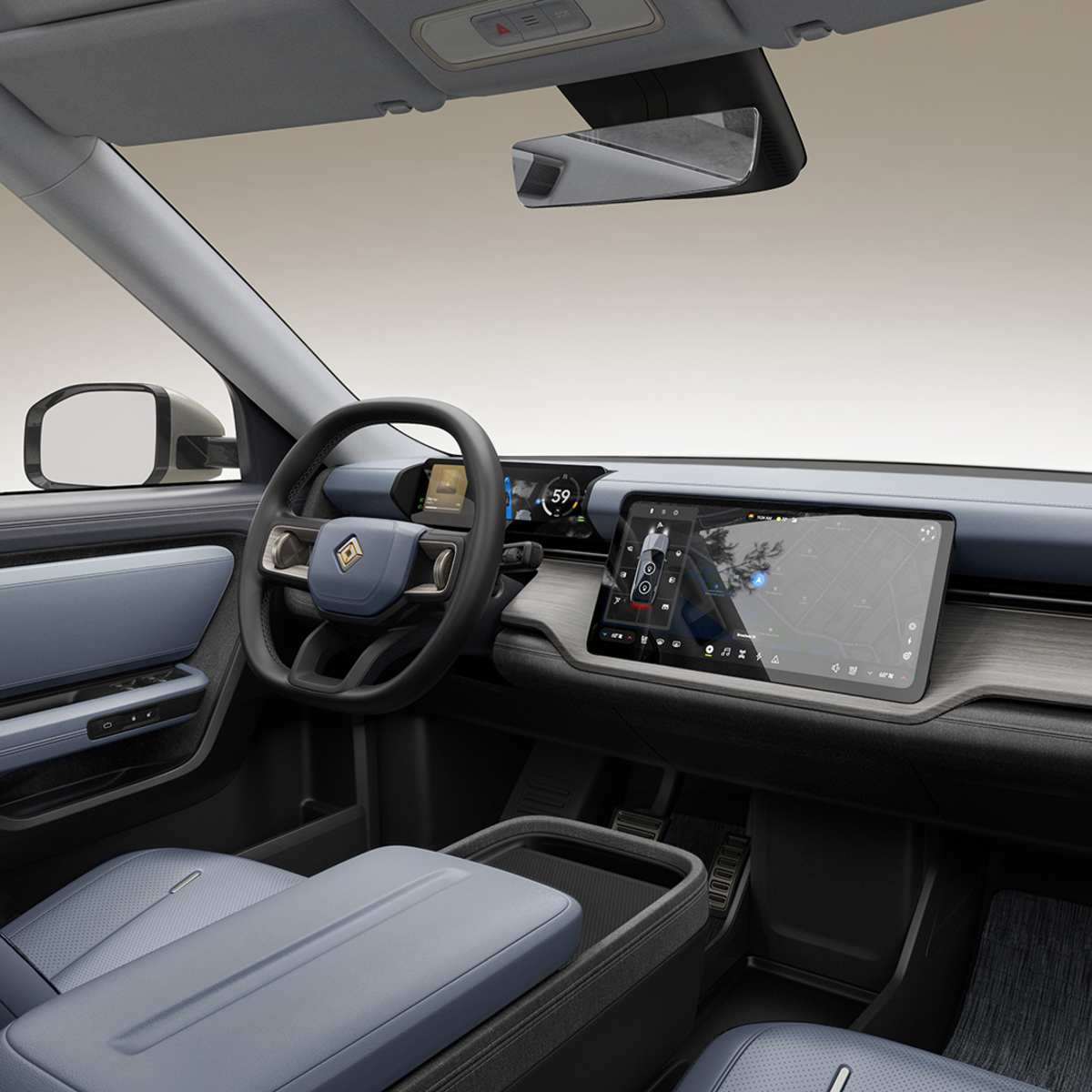
Rivian R2
"The R2, it feels more than it costs [2457.6s] and that's the thing that bewilders me. [2459.9s] Yeah, that was the goal."
The Rivian R2 is an electric SUV that Rivian is trying to make cheaper than their bigger models, but still feel like a high-end car. The discussion here is basically about how they managed to keep the price down without making it feel cheap.
The Rivian R2 is the company’s smaller, lower-cost electric SUV positioned to deliver “more than it costs” value versus typical EV pricing. In this segment, the hosts connect that idea to how Rivian engineered the R2 to feel expensive while targeting a lower price point.
zero to 60
"and getting so excited to see a car that broke the four second mark, zero to 60."
“Zero to 60” is how fast a car can go from standing still to 60 mph. It’s a quick way to compare how punchy different cars feel in a straight line.
Zero-to-60 mph (often written as “0–60”) is a common acceleration benchmark measuring how quickly a car reaches 60 mph from a standstill. It’s a simple way to compare straight-line launch performance between cars.
the 993 turbo
"that the start of this, like the 993 turbo when it hit 3.6 seconds, it was like, oh my gosh, that is so fast."
The “993 Turbo” is a Porsche 911 Turbo from a specific older generation. They’re using it as a reference point to show how quick the acceleration feels.
“993 Turbo” refers to the Porsche 911 Turbo from the 993 generation. The host uses its sub-4-second zero-to-60 time as a benchmark for how fast the new Rivian R2 feels when it hits similar acceleration figures.
front trunk
"it can go off road, it's got a front trunk, it's got all this capability."
A front trunk (frunk) is a storage compartment in the front of the car. On many electric cars, it exists because there’s no big engine taking up that space.
A front trunk (“frunk”) is storage space in the front of a vehicle. EVs often have a frunk because they don’t need space for a traditional engine up front, allowing extra usable cargo area.
50 to 80
"It's like the 50 to 80 or the 60 to 90, it's so quick at higher speed."
50 to 80 is a test of how quickly a car speeds up when you’re already going. It’s meant to show how strong the car feels for passing or merging, not just launching from a stop.
50–80 mph (and similar “roll” acceleration tests) measure how quickly a car gains speed while already moving, rather than from a dead stop. This can better reflect real passing/merging performance and power delivery at higher speeds.
stability
"but if you want to drive it quickly and reduce stability, you can, you can let it slide around a little bit."
In this context, “stability” refers to the car’s traction-control and stability-control systems that help keep the vehicle from sliding or spinning when grip is limited. The host is saying the R2 can be adjusted to feel more playful while still managing control.
embargo
"I mean, we're not in an embargo anymore. So I will say as someone who doesn't work for Rivian,"
In car reviews, an embargo is a rule that says you can’t publish certain details until a specific date/time. The host is saying that deadline has passed.
An “embargo” in auto media is an agreement that restricts when journalists can publish reviews or performance details. The host says they’re past that restriction, implying they can now share more specific information.
zero to 30
"the zero to 30 is the party trick, right? [2544.0s] There was the joke that like there were Chevy Bolts"
“Zero to 30” is a short acceleration test measuring how quickly a car goes from a standstill to 30 mph. The host is using it to explain why many EVs feel especially impressive at low speeds, even if they don’t stay as strong at higher speeds.

Chevy Bolt
"There was the joke that like there were Chevy Bolts [2545.7s] that could do zero to 30 as quick as Corvette, right?"
The Chevy Bolt is an electric car. The host is joking that it can feel almost as quick as a Corvette in the first short burst from a stop.
The Chevrolet Bolt is an EV known for being a practical, lower-cost option with surprisingly quick short sprints. The host references it in a joke about EVs matching a Corvette’s 0–30 mph acceleration, highlighting how EV torque makes low-speed launches feel dramatic.

Chevrolet Corvette
"... Chevy Bolts that could do zero to 30 as quick as Corvette, right? But then after you hit 30 and really 60,"
The Chevrolet Corvette is a fast sports car made by Chevrolet. People often talk about how quickly it can speed up, measured in seconds from a stop. The podcast is comparing how it performs after the car gets past the initial launch.
The Chevrolet Corvette is a performance sports car from Chevrolet, built to deliver strong acceleration and high-speed capability. The podcast mentions it in the context of acceleration timing—especially how it performs after the initial launch. That kind of discussion is common because real-world performance depends heavily on how the car behaves past the first few seconds.
diminishing returns
"But then after you hit 30 and really 60, [2550.9s] speed in a lot of these cars drop off, right? [2553.4s] It's diminishing returns."
“Diminishing returns” means the car’s acceleration feels great at first, but the benefit doesn’t keep getting bigger as you speed up. In other words, the car may feel less impressive once you’re already moving faster.
“Diminishing returns” here means the acceleration advantage of an EV tends to be strongest at low speeds, then becomes less dramatic as you go faster. The host argues that after a certain point (around 30 mph and especially toward 60+), many EVs feel less “quick” than their launch.

Lucid Air
"But unless you're getting something like a Rivian R1 [2557.6s] or a Lucid Air or whatever, that 60 to 100 or whatever,"
The Lucid Air is a fast electric sedan. The point of mentioning it here is that it can keep accelerating strongly even after you’re already going at highway speeds.
The Lucid Air is a high-performance electric sedan from Lucid, built to deliver strong acceleration and sustained speed pull. Here it’s mentioned alongside the Rivian R1 as an EV that remains quick in the 60–100 mph range, unlike many EVs that feel less impressive after the initial sprint.
hang the tail out
"You can absolutely hang the tail out. [2578.8s] Not that you should do that on public roads, [2580.3s] but it is controllable."
“Hang the tail out” means the back of the car slides outward a bit while you’re turning. It’s basically a controlled skid/oversteer, and the host says it’s possible when stability control is reduced.
“Hang the tail out” describes a driving state where the rear of the car steps outward relative to the front, often during oversteer. It’s typically something stability control would normally prevent or correct, which is why the host ties it to reduced stability control.
tossable
"It is fun. It is tossable. [2584.9s] It's a really complete package."
“Tossable” is a compliment meaning the car feels nimble and easy to steer quickly. It suggests the car responds readily when you change direction.
“Tossable” is enthusiast slang for a car that feels easy to change direction—quick to rotate and responsive in transitions. The host uses it as part of a subjective assessment of how the vehicle behaves when pushed, especially with stability control reduced.
Request an Explanation
Heard something you'd like explained? We'll add it to this episode.
Sign in to request explanations for terms you heard.
Want to learn more?
Browse our glossary for plain-English explanations of automotive terms, jargon, and concepts.
Help improve this episode
See something that's not quite right? Our annotations are AI-generated and can sometimes miss the mark. Click the flag icon on any annotation to suggest a correction.