
Stellantis Has Big Plans. Tim Kuniskis Told Us Almost Everything
About this episode
Tim Kuniskis and the Drivecast dig into Stellantis’ turnaround: why EV execution stumbled (“dead on arrival”), how performance brands like SRT were “mothballed,” and what leadership changes are meant to fix. The conversation then zooms into Hellcat and Viper heritage—down to drag-strip suspension tricks and long-term “halo” strategy. From multi-energy platform packaging to Jeep and Ram lineup differentiation, the episode connects product plans, powertrain choices, and naming (SRT, GLH, Hornet) to how brands grow and stay relevant.
Stellantis
"Today's topic is Stellantis, and I'll be joined by a special guest that to any enthusiast needs no introduction... Tim and I sat down while in Detroit together to discuss the turnaround plans for the Automotive Goliath. Stellantis has been rocked."
Stellantis is a big car company that makes lots of brands. The episode is about how they’re planning to turn things around after some problems, especially with EVs.
Stellantis is a major global automaker formed from the merger of Fiat Chrysler Automobiles (FCA) and PSA Group. In this episode, the hosts frame it as an “automotive goliath” that’s trying to recover after missteps in both traditional performance and EV execution.

Challenger Hellcats
"no introduction. He's known as the father of the Hellcats, but his official titles include Ram CEO, Head of..."
The Challenger is a muscle car model known for strong performance versions. The podcast is bringing it up because it’s connected to “Hellcat” performance history. It’s being referenced as part of that story.
The Challenger is the Dodge muscle-car nameplate referenced in the episode without specifying the full “Dodge” label. It’s widely known for performance-focused versions and a design that emphasizes classic muscle-car proportions. Here, it’s mentioned in a personal context tied to “Hellcats,” indicating the discussion is about the Challenger’s performance heritage.
Tim Kaniscus
"Naturally, it's Tim Kaniscus. Tim and I sat down while in Detroit together to discuss the turnaround plans for the Automotive Goliath."
Tim Kaniscus is a top executive at Stellantis. In this episode, he’s the guest who helps explain what Stellantis is doing to fix its problems and where performance brands fit in.
Tim Kaniscus is an executive at Stellantis with leadership roles tied to Ram and SRT. The episode positions him as a key insider for understanding Stellantis’ turnaround strategy, especially around performance brands like SRT and the Hellcat era.
hemi
"The automaker built its current foundation upon loud noises and fast times at the drag strip all while making loud boom-boom noises thanks to the hemi and legendary Hellcat VA powertrain."
A “hemi” is a type of engine design where the inside of the combustion chamber is shaped like a half-sphere. It’s often linked with powerful V8 engines and the classic American muscle-car sound.
“Hemi” refers to a hemispherical combustion-chamber engine design, associated with Chrysler’s performance V8s. The shape helps airflow and combustion efficiency, which is why “hemi” became shorthand for loud, high-output muscle-car power.
VA powertrain
"The automaker built its current foundation upon loud noises and fast times at the drag strip all while making loud boom-boom noises thanks to the hemi and legendary Hellcat VA powertrain."
A “powertrain” is everything that makes the car move—engine and the parts that transfer power to the wheels. “VA” in this context is referring to the specific Hellcat V8 setup they’re talking about.
“VA powertrain” is shorthand here for the Hellcat’s V8 engine family and the complete driveline that delivers its performance. In enthusiast talk, “powertrain” means the engine plus the components that send power to the wheels (like the transmission and drivetrain).
D-O-A
"It was late to the electric game. Many of its EVs didn't even launch and were just D-O-A from the get-go."
“D-O-A” is slang for something that’s basically a failure from the start. The host is saying some of Stellantis’ EVs didn’t really get going when they launched.
“D-O-A” means “dead on arrival,” used to describe products that fail immediately after launch. Here it’s applied to some Stellantis EVs that reportedly didn’t even make it to a successful market debut.

Chrysler 300
"...nd things just looked bleak again. Seriously, the 300 died and somehow Chrysler is a brand that has one..."
The Chrysler 300 is a large sedan that was sold as a big, traditional-style car. The podcast is saying it was discontinued. It’s being used to explain why Chrysler’s lineup has been struggling.
The Chrysler 300 is a full-size sedan known for its large, traditional American styling and availability of stronger engine options in certain years. It’s referenced in the episode as having “died,” which points to its discontinuation and the brand’s lineup challenges afterward. The discussion uses it as an example of why Chrysler’s product situation can feel bleak.

Chrysler Pacifica
"Seriously, the 300 died and somehow Chrysler is a brand that has one vehicle, the Pacifica minivan."
The Chrysler Pacifica is a minivan—basically a family-focused vehicle with lots of space. The host is pointing out that Chrysler’s lineup has become very limited, with the Pacifica as the main (or only) model mentioned.
The Chrysler Pacifica is a minivan designed around family practicality, comfort, and packaging. In this episode, it’s mentioned as the lone remaining vehicle in Chrysler’s lineup, underscoring how narrow the brand’s current product coverage is.
Mopar
"But there's a vocal and passionate community that rallies around Mopar and these iconic brands."
Mopar is the name fans use for the Dodge/Chrysler/Jeep performance and parts world. When people say “Mopar,” they usually mean factory-style upgrades and that muscle-car enthusiast vibe.
Mopar is the Chrysler Group umbrella name for parts, accessories, and performance branding tied to the Stellantis-era Dodge/Chrysler/Jeep family. In enthusiast circles, “Mopar” also signals a specific culture around muscle-car-era performance and factory-backed upgrades.
Ram trucks
"Ram trucks have the nicest interior of any full-size truck money buys today."
Ram trucks are Stellantis’s big pickup trucks. The point here is that the speaker thinks Ram’s inside-the-cabin experience is better than what you typically get from other full-size trucks.
Ram trucks are Stellantis’s full-size pickup line, and the speaker highlights their interior as a key differentiator. In the full-size truck market, cabin quality and materials are a major reason buyers choose one brand over another.
Hellcats
"The Hellcats? Well, they roared their way into the history books."
“Hellcats” are Dodge’s high-power performance cars. They’re famous for being fast and for helping define the modern muscle-car era.
“Hellcats” refers to Dodge’s high-performance Hellcat models, known for their very powerful engines and muscle-car heritage. The speaker frames them as historically important because they “roared” into the performance spotlight and became part of the modern muscle-car story.

Durango
"And that's before dressing the Durango that seemingly will live forever but gives buyers the fantastic tow rating and a V8 in a segment where none of that can be had elsewhere."
The Durango is a Dodge SUV with three rows. The speaker is saying it offers a V8 and strong towing, which is unusual compared with many other SUVs in the same class.
The Dodge Durango is a three-row SUV, and the speaker specifically calls out a V8 offering and a “tow rating” as its standout strengths. In a segment where many competitors have moved away from V8s, that combination is a major selling point for buyers who want SUV practicality plus muscle.
Antonio Filosa
"Last year, Stellantis appointed a new CEO, Antonio Filosa. The man seems ready to globalize, modernize and turn around Stellantis and a year and"
Antonio Filosa is the CEO Stellantis hired. The host is saying his job is to help modernize the company and steer it back in a better direction.
Antonio Filosa is identified as Stellantis’s newly appointed CEO in the segment. The speaker ties his leadership to goals like “globalize” and “modernize,” and to efforts aimed at turning the company around.
Hellcat powertrain
"not to mention the return of the Rumblebee with the Hellcat powertrain."
A powertrain is the car’s main “go” system—engine and the parts that send power to the wheels. “Hellcat powertrain” means it’s using the same kind of high-performance setup that Hellcat cars are known for.
A powertrain is the set of components that generate and deliver power—typically the engine plus transmission and related drivetrain parts. Saying “Hellcat powertrain” means the performance hardware associated with Dodge’s Hellcat lineup is being used in the returning Rumblebee.
front shocks
"I remember talking about you drilling holes in the front shocks with your dad before a drag strip race and then the oil would leak out and then the front end would lift..."
Front shocks are what help the wheels move smoothly and keep the car from bouncing. Changing them can make the car behave differently when you accelerate or hit bumps.
Front shocks are the suspension dampers that control how the front wheels move over bumps and during weight transfer. Modifying them (like drilling holes, as described) changes damping behavior, which can affect ride height, stability, and traction during launches.
drag strip race
"I remember talking about you drilling holes in the front shocks with your dad before a drag strip race and then the oil would leak out and then the front end would lift..."
A drag strip race is a straight-line competition focused on acceleration and traction from a standing start. Because it’s straight-line, setup choices often target weight transfer and tire grip rather than cornering performance.
sway bar
"We used to get to the strip and disconnect the end links on our sway bar for the weight transfer and then obviously switch to...it's kind of funny."
A sway bar helps keep the car from leaning too much in turns. If you disconnect it, the car can roll more, which can change how it feels and how the tires load up.
A sway bar (anti-roll bar) links the left and right suspension to reduce body roll during cornering. Disconnecting the end links softens that roll control, which can change how the car transfers weight and grips during acceleration or turning.
weight transfer
"We used to get to the strip and disconnect the end links on our sway bar for the weight transfer and then obviously switch to...it's kind of funny."
Weight transfer is how the car’s weight shifts when you accelerate, brake, or turn. That shift affects which tires get more grip.
Weight transfer is the shift of vehicle load from one axle or side of the car to another as the car accelerates, brakes, or turns. On a drag strip, reducing roll control can help manage how load moves to the tires that need traction.
end links
"We used to get to the strip and disconnect the end links on our sway bar for the weight transfer and then obviously switch to...it's kind of funny."
End links are the parts that connect the sway bar to the suspension. If you disconnect them, the sway bar can’t control body lean as much.
End links are the small connecting links that attach the sway bar to the suspension components. Disconnecting them effectively reduces the sway bar’s ability to resist roll, which can alter traction and handling balance.
slicks
"We would switch to slicks, but we would bring all this stuff in the trunk of our cars and back then the trunks weren't all lined the way they are today."
Slicks are drag-race tires with little to no tread, designed to maximize rubber-to-road contact for straight-line launches. They’re typically used only at the track because they don’t work well in rain and can wear quickly on the street.
quarter panel
"So if you took a tight turn, all the stuff in your trunk would slide to one side and just put a huge dent in your quarter panel."
The quarter panel is the metal panel around the rear wheel area. If something slides in the trunk, it can hit that panel and cause a dent.
The quarter panel is the body panel over the rear wheel (and extending toward the rear). It’s a common place to see dents from loose items shifting in the trunk, because it’s close to the trunk opening and can take impact.
18 Demon
"So if you think about when we launched the 18 Demon, you're like, where did this idea of this foam insert in the crate come from that fits inside the trunk to hold everything"
The “Demon” is a super-quick drag version of the Dodge Challenger. Here, they’re talking about a packaging idea that came from lessons learned with that car—specifically, keeping things from shifting around in the trunk during moving.
The Dodge Challenger SRT Demon (often discussed as the “Demon”) is a high-performance drag-focused muscle car known for extreme acceleration hardware and special launch features. In this segment, the hosts mention the “18 Demon” as a reference point for how a foam insert was developed to prevent parts from moving during transport.
foam insert in the crate
"where did this idea of this foam insert in the crate come from that fits inside the trunk to hold everything"
They’re talking about protective packing foam used during shipping. The goal is to keep things from sliding around so they don’t scratch or dent the car.
A foam insert in a shipping crate is protective packaging that immobilizes parts or accessories during transport. In this context, it’s designed to fit in the trunk area so items don’t shift and damage the body.
duct tail
"but there's some viper-esque things to it with the duct tail and the pinched rear end and the rear window."
A “duct tail” is a rear design feature that looks like it’s meant to move air. It can help cool components or improve airflow, not just look aggressive.
A “duct tail” refers to a rear decklid/taillight area shaped to channel airflow, often with vents or openings that look like ducts. It’s usually tied to aerodynamic cooling or airflow management rather than just styling.
exhaust pipes
"Can we speak at all to what my, there's definitely exhaust pipes on that car that I saw today. Can we speak at all to what might power that car? So, there's definitely exhaust pipes."
Exhaust pipes are where the engine’s fumes exit the car. If you can clearly see them, it usually means the car has a traditional combustion engine.
Exhaust pipes are part of the exhaust system that routes spent gases from the engine to the tail end. Their presence (and layout) can hint at whether a car uses a conventional internal-combustion powertrain versus an alternative like a fully electric layout.
combustion engine
"So it is a combustion engine in it. I will tell you that it is not the hard points of a charger."
A combustion engine is the classic type of car engine that burns fuel to make power. It’s different from an all-electric motor that runs only on a battery.
A combustion engine is an engine that makes power by burning fuel inside the engine (typically gasoline or diesel) to create expanding gases that push pistons. In this segment, the host is contrasting it with an electric-only setup and implying the discussed vehicle can be built with a traditional powertrain.
hard points
"I will tell you that it is not the hard points of a charger. Not the hard points of a charger. You couldn't get a charger with those proportions in that stance..."
“Hard points” are the fixed spots in the car’s structure where important parts have to go. If the design respects the real hard points, it’s more likely the car can actually be built that way.
In vehicle design, “hard points” are fixed reference locations that determine where major components must sit—like mounting points, structural attachment locations, and key packaging constraints. When the host says the proportions are based on real hard points, they mean the design is production-intent, not just a styling exercise.
battery is encapsulated in the bottom of the car
"You couldn't get a charger with those proportions in that stance because of the multi-energy design of where the battery is encapsulated in the bottom of the car without cheating."
This means the battery is placed low in the car, usually under the floor, and protected by a strong cover. Putting it low helps the car feel more stable and keeps the design from looking like it was forced.
Encapsulating the battery in the floor is a common electric-vehicle packaging strategy: the battery pack sits low in the chassis, protected by a structural enclosure. This lowers the center of gravity and helps the car keep stable proportions and handling without “cheating” the design.
multi-energy design
"You couldn't get a charger with those proportions in that stance because of the multi-energy design of where the battery is encapsulated in the bottom of the car without cheating."
“Multi-energy” means the car is designed to work with different kinds of power, not just one. In practice, it’s about building the car so it can be configured with different powertrain options.
“Multi-energy” here refers to a vehicle architecture intended to support more than one type of energy/power source—such as combining traditional combustion power with electrification. The key point is that the packaging is designed to accommodate different powertrains without forcing the body shape to change dramatically.
concept car
"It's not, it's not a concept car. It's a, we could actually do this exactly the way you saw it."
A concept car is usually a one-off or limited show vehicle meant to show what a future car could look like. Here, the speaker is saying this one is meant to be buildable, not just a display.
A concept car is a show vehicle built to preview styling or technology ideas, often not intended for immediate production. The host explicitly says the car they’re discussing is not a concept car, meaning the proportions and packaging are production-feasible.
T6
"So there could be another engine coming that nobody's aware of that would be the perfect engine for that. And whenever I bring that up, people automatically say, oh, well, then it's going to be a T6. No, doesn't, doesn't mean that at all."
They mention “T6” as something people assume the next engine will be. The speaker’s point is that the guess is wrong, but they don’t explain what T6 specifically refers to in this clip.
“T6” is referenced as a likely guess people make about the future powertrain, but the speaker says it doesn’t necessarily follow. In Stellantis context, T6 is typically used as an internal shorthand for a specific engine/family or platform-related designation, but the transcript doesn’t provide enough detail to confirm exactly which one is meant here.
sunk investments
"So SRT only works if SRT can take sunk investments from around the globe and leverage those. Because if you try to make high performance slash halo cars and you try to make them bespoke, it will never pay back."
“Sunk investments” are costs that have already been spent and can’t be recovered, so the smart move is to reuse what’s already been developed. The speaker argues that SRT-style high-performance programs only make financial sense when they leverage these existing platforms, components, and engineering efforts.
halo cars
"Because if you try to make high performance slash halo cars and you try to make them bespoke, it will never pay back."
A “halo car” is a top, attention-grabbing performance model that helps a brand look impressive. It may not sell in huge numbers, but it’s meant to show off what the company can do—so it needs a cost strategy that doesn’t require totally custom everything.
A “halo car” is a flagship performance model used to showcase a brand’s engineering and design, even if it isn’t the highest-volume seller. The speaker contrasts halo cars built with shared, reusable engineering versus “bespoke” one-offs that are too expensive to recoup.
bespoke
"Because if you try to make high performance slash halo cars and you try to make them bespoke, it will never pay back."
Here, “bespoke” means making a car in a very custom, tailored way instead of using shared parts. The claim is that if you do that for expensive performance cars, the costs are so high that the project may never make money back.
In this context, “bespoke” means building cars with highly custom, one-off engineering rather than using shared parts and platforms. The speaker’s point is that fully bespoke high-performance cars are unlikely to be profitable because development costs don’t get spread out.
hybrid V8
"Could a hybrid V8 work in a platform like that? Yeah, it could."
A “hybrid V8” is a car that uses a big V8 engine plus an electric motor. The question here is whether that combo could work in a new car platform—basically, whether the car can physically and electronically fit both systems together.
A “hybrid V8” combines a V8 gasoline engine with an electric motor and battery system. The segment is discussing whether that kind of powertrain could fit into a future platform, implying packaging and integration challenges as well as potential performance benefits.
platform
"Could a hybrid V8 work in a platform like that? Yeah, it could. A car like that, though, it's not, it's not a car that you buy today..."
A “platform” is the car’s shared foundation—its basic structure and layout that different models can build on. The point is whether the same foundation could support a hybrid V8 setup across multiple cars.
A “platform” is the shared underlying architecture (engineering base) that multiple vehicles can use, including mounting points, structural design, and often powertrain packaging. The speaker is asking whether a hybrid V8 could be engineered into that shared base rather than being limited to a single model.
hybridization
"So the idea for hybridization, sure, you can do it. But let's say you put, you know, e-motors in it and, you know, lithium ion batteries."
Hybridization means the car uses both a gas engine and an electric motor. The electric part can help the car move, especially in stop-and-go or low-speed driving.
Hybridization is the process of combining an internal-combustion power source with an electric drive (or electric assist) in the same vehicle. The point is usually to improve efficiency and/or performance by letting the car use electric power in certain situations.
lithium ion batteries
"But let's say you put, you know, e-motors in it and, you know, lithium ion batteries."
Lithium-ion batteries are the rechargeable battery packs that store electricity for the car. They’re what power the electric motor in many hybrids and EVs.
Lithium-ion batteries are rechargeable energy-storage packs commonly used in hybrids and EVs. Their chemistry and battery-management systems determine how long the pack lasts and how safely it can be charged and discharged.
e-motors
"But let's say you put, you know, e-motors in it and, you know, lithium ion batteries."
E-motors are the electric motors that help move the car. They can provide power quickly when you press the accelerator.
E-motors are electric motors used to propel a vehicle or assist the engine. In modern hybrids and EVs, the motor is controlled electronically to provide smooth torque delivery.
future-proofed
"So my goal is to have something that would be timeless and somewhat future-proofed."
“Future-proofed” means the car is designed to still make sense later, even as technology and rules change. The idea is to avoid buying something that becomes outdated quickly.
“Future-proofed” in automotive talk usually means designing a vehicle so its core tech and platform remain usable and relevant as regulations, charging ecosystems, and software evolve. The speaker is arguing that certain electrification choices may age poorly if the tech ecosystem changes.
portfolio
"I was going to ask you about viper today and whether it made sense in the portfolio."
Here “portfolio” just means the company’s lineup of cars—what models they decide to sell. They’re asking whether the Viper belonged in that lineup.
In this context, “portfolio” means the set of vehicles a company chooses to offer and support—its lineup strategy. The speaker is asking whether the Viper made sense as part of that broader product plan.

C8
"Because I think about C8 all the time. I am incredibly impressed with the engineering of that car. ... But there's some things that were in that car ..."
“C8” is the newest Corvette generation (Chevrolet Corvette C8). It’s special because the engine is in the middle of the car, which helps handling, and the speaker says the engineering is really impressive.
“C8” is the Chevrolet Corvette C8, notable for moving the Corvette to a mid-engine layout (engine behind the driver, ahead of the rear axle). The speaker praises the C8’s engineering and also discusses whether Stellantis should build a competitor, arguing that the C8 already exists and sells well.

Charger and Challenger
"I told you a long time ago that when we were doing the Charger and Challenger, as much as we respect Mustang and Camaro, we weren't trying to build a Mustang competitor because they already exist."
They’re talking about Dodge’s Charger and Challenger, two well-known muscle cars. The point is that the company wasn’t trying to copy what Ford and Chevrolet were already doing.
The “Charger and Challenger” are Dodge’s two major muscle-car nameplates, used here to explain Stellantis’ product strategy. The speaker says they weren’t trying to build a Mustang/Camaro competitor when developing those cars because the competition already existed.

Ford Mustang
"...the Charger and Challenger, as much as we respect Mustang and Camaro, we weren't trying to build a Mustang ..."
The Ford Mustang is a sporty car that’s known for its performance and classic styling. It’s one of the most famous cars in its category. The podcast is referencing it to explain what Dodge’s Charger and Challenger were aiming for instead.
The Ford Mustang is a long-running American “pony car” that helped define the modern muscle/track-inspired market. It’s frequently referenced as a key benchmark for design and performance in the segment. Here, it’s mentioned as a comparison point while discussing what Dodge was (and wasn’t) trying to build with the Charger and Challenger.
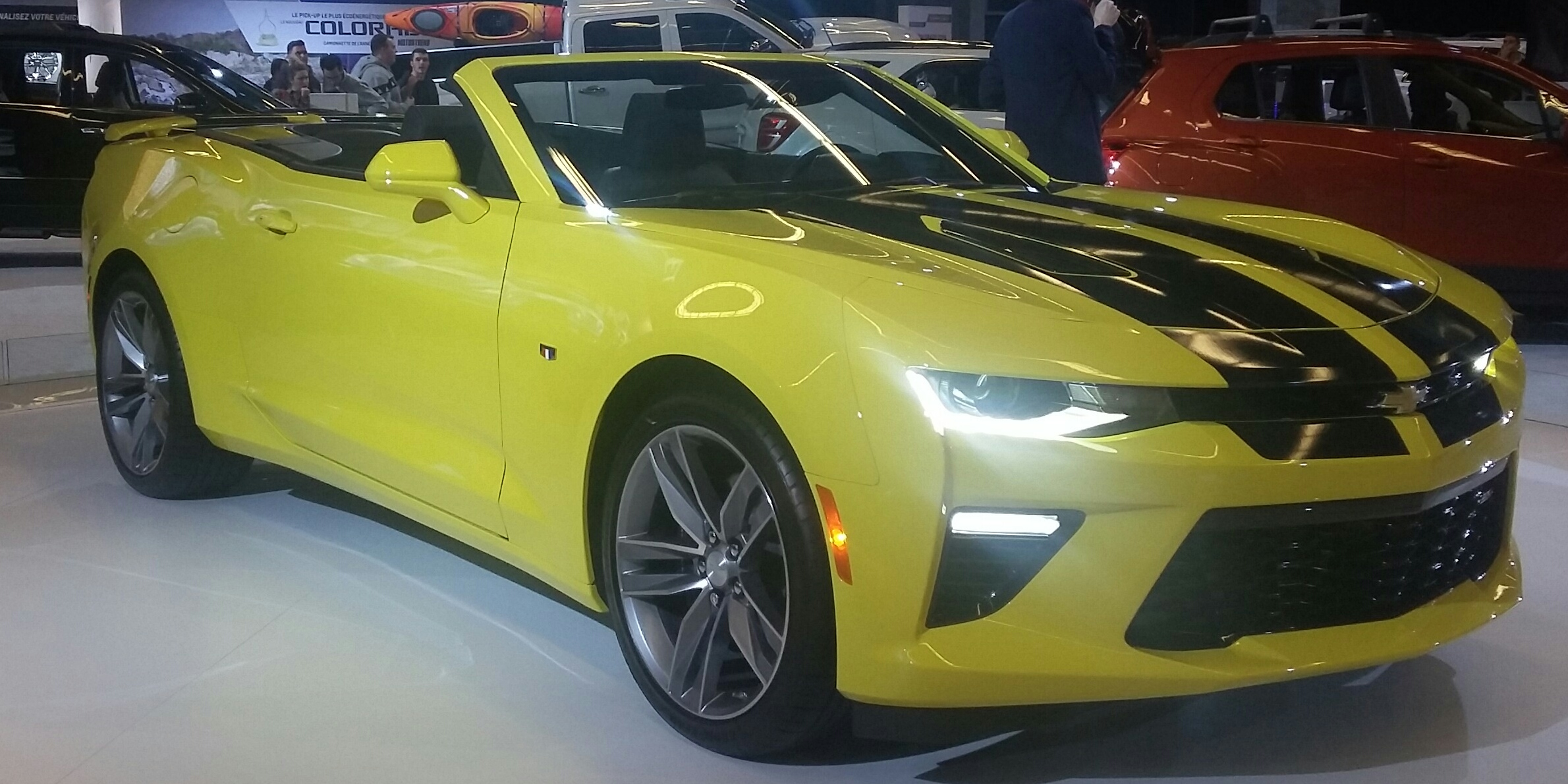
Chevrolet Camaro
"...and Challenger, as much as we respect Mustang and Camaro, we weren't trying to build a Mustang and Camaro ..."
The Chevrolet Camaro is a sporty car made for drivers who want power and a fun look. It’s a well-known competitor in the same general category as other muscle/pony cars. The podcast mentions it to clarify what Dodge wasn’t trying to copy with the Charger and Challenger.
The Chevrolet Camaro is a sporty pony car known for its performance options and distinctive design. It’s commonly discussed alongside the Mustang and other muscle cars because it represents a major part of that market. In this episode, it’s brought up as a comparison point while explaining Dodge’s intent with the Charger and Challenger.
range
"They sell, you know, 25,000, 30,000. I question the range. I question the 65,000 up to 250,000."
They’re talking about “range,” meaning how far the car can go before you have to stop for fuel (or charge). Even though they question it, they admit the car still sells well.
“Range” here means how far a car can travel before needing to refuel or recharge. The speaker questions the Corvette C8’s range and then notes that, despite that concern, the car is still selling in high numbers.
hypermuscle car
"I'm very, very clearly defining this as a hypermuscle car. You did say that. It's a different thing."
“Hypermuscle car” is a fan way of saying a super-strong muscle car—something that feels like a hypercar but still has that classic muscle-car attitude. They’re basically saying it’s a different kind of car than a traditional Viper.
“Hypermuscle car” is a enthusiast term for a muscle car that’s been pushed into hypercar-level performance and technology while still keeping the big, aggressive muscle-car identity. The hosts contrast it with a “Viper as a Viper,” arguing the category is different rather than just another sports car.

Gen 5 Viper
"The Viper, the Gen 5 Viper was one of the most beautiful cars ever. I loved that car."
The Dodge Viper is a hardcore American sports car. “Gen 5” means the newest version of the Viper, and the point here is that it was both fun to drive and surprisingly strong on a racetrack.
The Dodge Viper (Gen 5) is the final-generation Viper, known for its raw, analog feel and big V10 muscle-car character. In this segment, the hosts highlight how it was exceptionally capable on track while still being a traditional, driver-focused car.
manual transmission
"I mean, it was an analog car with a manual transmission and it could hold its own against anything in the world."
A manual transmission is the kind where you choose each gear yourself. You use a clutch pedal to switch gears, which usually makes the car feel more connected to the driver.
A manual transmission is a gearbox where the driver selects gears using a clutch pedal and gear lever. The hosts use it to emphasize the Gen 5 Viper’s “analog” character—more direct driver control than most modern automated transmissions.
ejection mitigation
"There's things wrong with it, right? I mean, when they came out with the new rule for ejection mitigation, we had to discontinue the car because you would have to put airbags right over your, you know, as a driver, right over your ear."
Ejection mitigation is about crash safety rules that try to keep people from being thrown out of the car. In this case, the rule required airbags in a spot that didn’t work with how the Viper’s driver area was designed.
Ejection mitigation refers to safety rules and systems designed to reduce the chance that occupants are thrown out during a crash. Here, the discussion is about a new rule that effectively forced changes to the Viper’s packaging—specifically requiring airbags positioned near the driver’s head—which made the car impractical to keep selling.
airbags
"when they came out with the new rule for ejection mitigation, we had to discontinue the car because you would have to put airbags right over your, you know, as a driver, right over your ear."
Airbags are safety cushions that pop out during a crash. They’re meant to protect your head and upper body, but the placement matters a lot for how a car’s interior is designed.
Airbags are inflatable safety cushions that deploy rapidly in a crash to reduce head and chest injuries. The hosts are specifically talking about the packaging challenge of placing airbags in a position that meets the new ejection-mitigation requirements.
dual clutch
"it would have needed to become [708.5s] an automatic or a dual clutch or something like that."
A dual-clutch transmission is a type of automatic that shifts gears very fast. It uses two clutches so the next gear is ready ahead of time, which makes the car feel smoother and quicker.
A dual-clutch transmission (DCT) uses two separate clutches—one for odd gears and one for even gears. That lets it shift very quickly with minimal interruption to power, which is why people often pair it with modern drivability and performance goals.

Jeep Gladiator
"Let's talk about Scrambler. [719.1s] You guys showed a 392-powered Gladiator today. [721.9s] We talked about Wrangler Refresh and Gladiator Refresh and all these things."
The Jeep Gladiator is a pickup truck, and “392” points to a big V8 engine. A 392-powered Gladiator is basically a Gladiator with a stronger, more performance-focused engine than the usual options.
The Jeep Gladiator is a midsize pickup, and the “392” refers to the 6.4-liter V8 used in certain Jeep performance trims. A 392-powered Gladiator is notable because it pairs pickup practicality with a high-output V8 that’s typically associated with muscle-car-style performance.
rear seats swiveling
"We talked about the rear seats swiveling in the Scrambler. [728.2s] How, talk to me about how the rear seats will will be able to face forward [731.8s] and back or not at the same time, of course."
Rear-seat swiveling means the back seats can turn around. Instead of only facing forward, they can be rotated to face the other way for a more social or flexible cabin setup.
Rear-seat swiveling is a cabin packaging feature where the rear bench can rotate to face forward or backward. It changes how the vehicle can be used—more like a lounge for passengers—without requiring a separate vehicle layout.
belt line
"and you see a very military side profile [783.8s] and you see a very low belt line and a high greenhouse, right? [788.3s] Where the glass is versus where the body is. [790.3s] And you see almost equal proportions between the side of the body and the glass."
The belt line is a line on the side of the car that helps define where the body shape “steps” up toward the windows. If designers raise it, the windows can look like they take up less of the car’s height, which changes the overall look.
The belt line is the character line that runs along the side of the body, roughly marking the boundary between the upper body and the lower body. Raising the belt line typically makes the cabin glass area look smaller and can change how the car’s stance reads visually.
greenhouse
"and you see a very military side profile [783.8s] and you see a very low belt line and a high greenhouse, right? [788.3s] Where the glass is versus where the body is. [790.3s] And you see almost equal proportions between the side of the body and the glass."
The greenhouse is the part of the car that’s mostly glass around the cabin. If it’s “high,” it means the windows take up more of the car’s height, which makes the whole shape look different.
In car design, the “greenhouse” is the glass area of the cabin—windshield, side windows, and rear glass—framed by the body. A “high greenhouse” means more of the car’s height is taken up by windows, which affects the vehicle’s visual proportions and perceived purpose.
ingress egress
"you open the front door, you can get into the front seat, but you also have pretty easy ingress egress to the back seat"
“Ingress/egress” just means getting in and getting out. They’re saying the back seat is easier to reach than you’d expect for a similar-looking vehicle.
“Ingress/egress” is automotive shorthand for how easily people can get into and out of the vehicle. The speaker is using it to describe improved rear-seat access without needing to open the door wide or awkwardly climb in.
camper cap
"If you were thinking about a pickup truck, you know that the camper cap, the cap can then come off like an old K5 Blazer."
A “camper cap” is a removable top section. They’re saying this piece can come off so the vehicle can be reconfigured—like changing how much open space you have and how the rear seats work.
A “camper cap” is a removable upper section (often over the rear/cargo area) that can be taken off to transform the vehicle’s usable space. In this segment, it’s described as coming off like an older K5 Blazer, enabling different seating/cargo configurations.

K5 Blazer
"the camper cap, the cap can then come off like an old K5 Blazer."
The K5 Blazer is a classic Chevrolet SUV. They’re comparing the removable “cap” on this vehicle to how older Blazers could have the top/cap come off, so you can change the vehicle’s setup.
The K5 Blazer (Chevrolet) is a classic full-size SUV known for its removable roof/cap-style configuration. Here, the host compares a “camper cap” that can come off to the way the K5 Blazer’s top/cap could be removed, emphasizing modularity for cargo and rear-seat use.
removable
"But since the top comes off, we've enabled the rear seats to be removable and flippable so that you can make them facing backwards."
“Removable” means the rear seats are designed to be taken out. That lets you change the vehicle from carrying people to carrying stuff more easily.
“Removable” here refers to the rear seats being designed to come out, not just fold. That’s a packaging feature: it lets the vehicle switch between passenger use and cargo use without needing to live with a fixed seat layout.
flippable
"rear seats to be removable and flippable so that you can make them facing backwards."
“Flippable” means the seats can be turned around. They’re saying the back seats can face backward so the cabin feels more like a hangout space.
“Flippable” describes seats that can rotate/flip to change their facing direction. The speaker says the rear seats can be flipped to face backward, effectively turning the cabin into a more lounge-like arrangement when the roof/top is removed.
step on the side
"That's why we put the step on the side. So you can literally walk up to the side of the thing"
The side step is a built-in step on the outside of the vehicle. It’s there so you can climb into the back seat more easily, especially when you’re not opening the door.
A side step is a body-mounted assist feature that helps people climb into the rear seating area without opening the door. The speaker ties it to the vehicle’s removable-top concept, emphasizing quick “walk up and get in” access.
Swiss Army knife
"So it's longer because the bed, the bed and gladiator is a short bed. [923.0s] Yeah, you literally end up with a Swiss Army knife. [926.1s] It's it's a super cool concept."
“Swiss Army knife” is a metaphor for a vehicle that can switch between multiple functions. Here it describes a concept with transformable seating that turns the cabin into a flat, bed-like cargo area—essentially combining passenger and utility roles in one layout.
Easter Jeep Safari
"We have been doing Moab concepts for Easter Jeep Safari for I. [943.4s] I don't even know how many years and I don't even know how many millions"
Easter Jeep Safari is a yearly Jeep off-road event in Moab where Jeep brings out special concept trucks and ideas. They’re saying they build these concepts there, learn from them, and then use what they learn in regular cars.
Easter Jeep Safari is an annual off-road event in Moab, Utah, where Jeep showcases concept vehicles and accessories. In this segment, the hosts describe building “Moab concepts” for Easter Jeep Safari and then transferring lessons learned into production cars.
Moab concepts
"We have been doing Moab concepts for Easter Jeep Safari for I. [943.4s] I don't even know how many years and I don't even know how many millions"
“Moab concepts” are special Jeep prototype ideas built for off-roading in Moab. Jeep uses them to try out features and then brings the best ideas into regular cars.
“Moab concepts” refers to Jeep’s concept vehicles tailored for off-road use in Moab. The idea is to build wild, enthusiast-focused prototypes, learn from how they work in real conditions, and then apply those lessons to production models.

Jeep Wrangler
"I got a question about Jeep just pivoting here completely. [976.7s] Jeep Wrangler, you guys obviously have leaned in."
The Jeep Wrangler is a popular off-road Jeep. It’s built to handle rough trails, and in this discussion they’re saying Jeep is using concept ideas and applying them to the Wrangler.
The Jeep Wrangler is a rugged off-road SUV known for its removable doors and roof and its trail-focused design. In this segment, it’s referenced as the platform Jeep has “leaned in” on, implying the brand is applying concept-car ideas to a current Wrangler rather than only building show vehicles.
legendary off-road and legendary lifestyle
"We consider Jeep to be two cars and you may say, oh, you got five, you got six, you got seven. In the plan, you got eight, but no, we consider it to be two cars. We consider it to be legendary off-road and legendary lifestyle."
This is Jeep’s internal brand-positioning framework: it splits the lineup into an “off-road” family (centered on Wrangler variants) and a “lifestyle” family (other Jeep models). The idea is to keep Jeep identity consistent while matching each model’s engineering and marketing to different buyer expectations.
Wrangler Unlimited
"The off-road is what we call the family of Wranglers. You got a Wrangler, you got a Wrangler Unlimited, the four door, you got a Wrangler Gladiator, and someday you'll have a Wrangler Scrambler."
Wrangler Unlimited is the longer version of the Jeep Wrangler. It keeps the Wrangler’s off-road focus, but with more room for passengers and gear.
Jeep Wrangler Unlimited is the longer-wheelbase version of the Wrangler, trading some of the shortest-trail proportions for more rear-seat and cargo space. In the segment, it’s grouped into Jeep’s “legendary off-road” family along with other Wrangler variants.

Jeep Cherokee
"...ll of the other ones, the Recon, the Compass, the Cherokee. They still have to be Jeeps, but they don't need..."
The Jeep Cherokee is an SUV meant for regular daily driving. It’s part of Jeep’s lineup, so it carries the Jeep name and styling. The podcast is discussing how Jeep wants it to feel like a Jeep without every version needing the same level of off-road focus.
The Jeep Cherokee is a smaller SUV in Jeep’s lineup, positioned for everyday driving while still carrying Jeep branding. It’s mentioned in the context of how Jeep wants these models to remain “Jeep” without necessarily needing the same kind of capability focus across every variant. In the episode, it’s grouped with other models like the Compass and Recon in that discussion.

Jeep Recon
"...yle line would then be all of the other ones, the Recon, the Compass, the Cherokee. They still have to be..."
The Jeep Recon is a Jeep SUV model name mentioned in the podcast. The discussion is about how Jeep wants these models to still feel like Jeep cars. It’s being talked about as part of a wider lineup strategy.
The Jeep Recon is a Jeep model name referenced as part of the brand’s expanding lineup. In the episode, it’s grouped with other Jeep models like the Compass and Cherokee in a discussion about what makes them “Jeep” and how they don’t all need identical requirements. That makes it relevant to how Jeep is planning product roles across different sizes.

Jeep Compass
"...uld then be all of the other ones, the Recon, the Compass, the Cherokee. They still have to be Jeeps, but t..."
The Jeep Compass is a smaller SUV made for everyday driving. It’s part of Jeep’s lineup, so it’s meant to feel like a Jeep. The podcast groups it with other Jeep models while discussing how they want each one to fit a role.
The Jeep Compass is a compact SUV that sits lower in size than Jeep’s larger models. In the episode, it’s mentioned alongside other models like the Recon and Cherokee as part of a broader strategy for keeping the “Jeep” identity while not every model needing the same requirements. That context makes it relevant to how Jeep is positioning its smaller lineup.
trail rated 12
"They still have to be Jeeps, but they don't need to be trail rated 12, like a Wrangler."
“Trail Rated” is Jeep’s way of saying a vehicle is built for off-road trails. When they say “trail rated 12,” they mean a very high level of trail capability—something they don’t require for every Jeep model.
“Trail Rated” is Jeep’s branding system for off-road capability, with higher numbers indicating more demanding capability. The speaker contrasts Wrangler’s Trail Rated requirement with other Jeeps that should be capable but don’t need the same level of trail hardware or certification.

Dodge Spirit
"... That's the whole point. It's an enabling of that spirit of, I love the outdoors, idea of being able to do..."
The Dodge Spirit is mentioned as a vehicle name connected to an outdoor lifestyle. The podcast is describing it as something that supports the idea of enjoying the outdoors. It’s less about specs here and more about what the name stands for.
The Dodge Spirit is referenced as an idea tied to “spirit” and outdoor enjoyment—suggesting a nameplate or concept connected to a lifestyle-focused vehicle. In the episode, it’s framed as enabling that “spirit of” loving the outdoors. That’s why it comes up: it’s about what the name and vehicle are meant to represent.
off-road trim
"every manufacturer has an off-road trim now, and most of them really have no off-road capability. It's stickers and, you know, knobbier tires and things like that. There's no real capability."
An “off-road trim” is when a normal SUV gets styling meant to look tough. The point here is that some of these packages don’t actually make the car better at off-roading—just different-looking tires and badges.
“Off-road trim” is a marketing package on a regular SUV or crossover that’s meant to look rugged. In the transcript, the host criticizes many off-road trims as being mostly cosmetic—like knobbier tires—without the real mechanical capability needed for off-roading.
knobbier tires
"It's stickers and, you know, knobbier tires and things like that. There's no real capability."
Knobbier tires have deeper, more aggressive tread meant for dirt and rough ground. But the host is saying that just changing the tires doesn’t automatically make the whole vehicle truly capable off-road.
“Knobbier tires” means tires with more aggressive tread blocks designed to grip on dirt, mud, or loose surfaces. The host’s point is that tire tread alone doesn’t guarantee off-road capability if the rest of the drivetrain and suspension aren’t built for it.

Bronco
"Do you feel that Bronco sales have put in any way the heat on the Wrangler or not in the low? Of course, we were there all by ourselves forever."
They’re talking about the Ford Bronco as a rival off-road SUV. The question is whether people buying Broncos are also buying fewer Jeep Wranglers.
The Ford Bronco is being discussed as a sales competitor in the off-road SUV space. The hosts connect Bronco sales to whether they “put heat” on the Jeep Wrangler, implying cross-shopping between the two models.
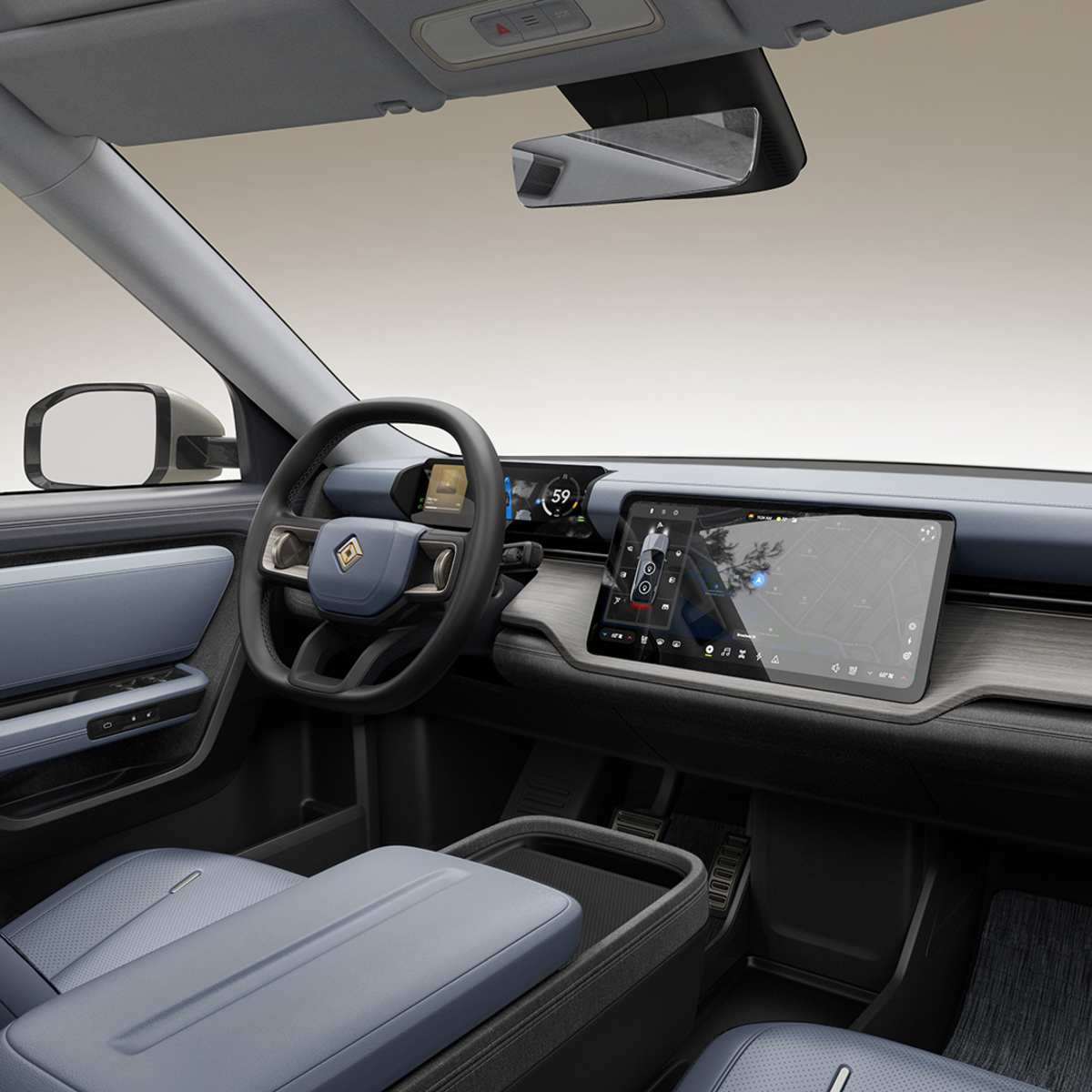
R2
"What do you think about Rivian? And I asked that because before it's when you're selling 40,000 vehicles and they're all 80 to $130,000, it's a whole different segment, right? And really, they were much larger. But now, all of a sudden, they've got R2. It went into production. They're about to start deliveries"
R2 is Rivian’s upcoming electric vehicle. They’re saying it’s going to be priced more like the mainstream SUVs, so it could compete with more traditional models.
R2 refers to Rivian’s next-generation electric vehicle platform/model that the company is bringing into production. The hosts use it to explain how Rivian is moving into a more mainstream price band, which changes who it competes against.
powertrains
"What do you say you have dreams of other, you have interest in other powertrains for that vehicle?"
Powertrain is just a fancy way to say “what kind of drivetrain/engine setup the car uses.” Here they’re talking about offering different kinds of setups, not only hybrids.
Powertrain is the full set of components that make the car move—typically the engine, transmission, and the drive system (including electric motors in hybrids). The speaker is asking about expanding beyond hybrid to other powertrain types for the Cherokee.
traditional ice
"What, Cherokee? Yeah, a traditional ice. Got it."
ICE means the normal gas engine most cars use. They’re basically saying they might offer the Cherokee with a more traditional gas setup instead of only a hybrid.
ICE stands for internal combustion engine—i.e., a conventional gas (or diesel) engine that powers the car primarily through combustion. The speaker contrasts this with hybrid-only availability for the Cherokee.
recover the cost
"You have this technology and it's all a matter of can you recover the cost and then more than the cost? Because if all you're going to do is recover the cost, what's the point, right?"
They’re talking about whether the extra cost of a technology can be paid back through sales and profit. If it doesn’t, then it’s not worth limiting the car to a smaller buyer group.
The speaker is describing a product economics idea: whether the added cost of a technology (like hybridization) can be “recovered” through pricing, volume, or margins. If the strategy only breaks even, they argue it doesn’t justify shrinking the addressable market.
mild hybrid
"Then we take the mild hybrid off. The customers applaud taking the mild hybrid off and we now have a tailwind of profitability in that car."
A mild-hybrid is a car that has a small electric assist, but it usually still relies on the gas engine for driving. In this episode, they’re saying removing that system can make the car cheaper or easier to sell in certain higher-priced versions.
A mild-hybrid system adds an electric motor and battery to assist the engine, but it can’t usually drive the car purely on electricity. The speaker’s point is that deleting the mild-hybrid hardware can reduce complexity/cost and free up pricing and trim options—while still meeting customer expectations.

Chevrolet Express
"...ustomer though. It allows me to go deeper into my express trims. I can get deeper into my black expresses w..."
The Chevrolet Express is a large van that can be used to carry people or cargo. It’s often used for work or business needs. The podcast is mentioning that there are different trim levels, including higher-end “Express” versions.
The Chevrolet Express is a full-size van used for people and cargo, commonly seen in commercial and fleet applications. It’s discussed in the episode in terms of trim levels and how customers can choose deeper “Express” configurations. That makes it relevant to buyers who care about options and equipment packages.
EV
"Next year, Bev first launched with EV because it's an ice engine. We saw it today..."
EV stands for electric vehicle. It means the car mainly runs on electricity from a battery, not a gas engine.
EV means electric vehicle—cars that are powered primarily by an electric motor using energy stored in a battery. The speaker contrasts EV-first plans with the possibility of an ICE engine variant, arguing that the powertrain choice will influence market potential.
eREV
"It's still a large and it was originally going to have, it's capable of an eREV. I know that system for that, the Wagoneer S and that platform was capable of an eREV..."
eREV is an electric car that can go longer because it has a backup system that helps recharge the battery while you drive. You still get the electric driving feel, but the car can keep going farther than a battery-only EV.
eREV (extended-range electric vehicle) is a powertrain where the car drives like an EV, but it includes a generator (often an engine) to recharge the battery and extend range. The speaker says the Wagoneer S platform was capable of eREV and that the same system could potentially fit the Recon/Recon Hellcat variant.

Ram Charger
"“Okay. Let's move on to Ram Charger. Ram Charger, we saw today… It's going to be a different vehicle than a Wagoneer based on a Wagoneer.”"
Ram Charger is a Ram SUV that’s meant to feel different from the Jeep Wagoneer. The big idea here is that it should be more “truck-like,” including a stronger focus on towing and (they say) a V8 engine.
The Ram Charger is a new Ram-branded SUV concept/vehicle that’s positioned as a sibling to the Wagoneer family. In this segment, the host frames it as a more truck-focused alternative—especially with a rumored V8 and a towing-oriented mission—so it differentiates from the more lifestyle-leaning Wagoneer.

Wagoneer
"“It's going to be a different vehicle than a Wagoneer based on a Wagoneer… Wagoneers have lifestyles.”"
The Wagoneer is a Jeep SUV that the hosts use as the reference point. They’re saying the Ram Charger will be built off that general idea, but aimed at people who want a more truck-focused, towing-capable feel.
The Wagoneer is a Jeep-branded large SUV that’s used here as the baseline for what the Ram Charger will be based on. The host contrasts their intended buyer appeal: Wagoneer is described as more “lifestyle,” while the Ram Charger is expected to lean more toward truck duties like towing.
V8
"“I did hear a thing that today that was going to separate it as far as engines. I heard that's going to be V8.”"
A V8 is a type of engine with eight cylinders. The host is saying the Ram Charger is expected to use a V8, which usually supports stronger pulling power for towing.
A V8 is an engine with eight cylinders arranged in a “V” shape. In this segment, the host says the Ram Charger will be separated from the Wagoneer by having a V8, tying it to a towing-focused, more truck-like character.
towing
"“I heard that's going to be V8. It's going to have a towing focus all the, like more truck-y things than a Wagoneer…”"
Towing means pulling something behind the vehicle, like a trailer. The hosts are saying the Ram Charger is meant to be better at that kind of work than the Wagoneer.
Towing refers to how well a vehicle can pull a trailer, which typically drives design choices like engine torque, cooling capacity, and drivetrain calibration. Here, the host uses towing as a key differentiator: the Ram Charger is expected to be more truck-oriented than the Wagoneer.
showroom differentiation strategy
"“So our whole intent was, look at what the other guys are doing with multiple versions in different showrooms… They needed to look, feel and act different.”"
They’re talking about how car companies try to avoid confusing shoppers when they sell similar vehicles. The idea is to make each model feel distinct so different people choose the one that matches them.
The hosts discuss how automakers differentiate closely related vehicles by placing them in the same showroom and making them look, feel, and act different. The segment compares Stellantis’ approach to how Ford, GM, and others use multiple brands/showrooms to target different buyers.

Jeep Grand Wagoneer
"...ooms. We have a Wagoneer. We had a Wagoneer and a Grand Wagoneer. Now we have just a Grand Wagoneer in one showroo..."
The Jeep Grand Wagoneer is a large SUV meant to feel more premium and comfortable than a basic off-road Jeep. It’s designed for people who want space and nicer features. The podcast is talking about which Wagoneer models are currently offered.
The Jeep Grand Wagoneer is a large, upscale SUV positioned for comfort and premium features, with a nameplate that signals a more premium take on Jeep’s big-vehicle lineup. In the episode, it’s mentioned in relation to showroom availability—specifically that the lineup now includes the Grand Wagoneer. This makes it relevant to discussions about what Jeep is currently selling and how it’s evolving.
architecture
"Our intent is to leave the powertrains as is on the Jeep, as is in the architecture. That doesn't mean that we won't have multiple versions, different power levels, but the architecture and then the architecture of the Ram would be more V8 based."
Architecture is the car’s underlying design—its main layout and how the big parts fit together. They’re saying Jeep and Ram will keep their own underlying design, even if they offer different versions.
In automotive engineering, architecture refers to the underlying platform layout—how the vehicle is designed structurally and how major systems are packaged. Here, the hosts say they’ll keep the Jeep architecture and Ram architecture, meaning the fundamental engineering “bones” stay consistent even if there are different power levels.
SRT
"Because as soon as you water that down, as soon as you bastardize that name, it doesn't give you the halo that it's intended to give you. It doesn't give you that brand billy. That, by the way, that's why it's not a brand. That's why it's not called the SRT brand."
SRT is a performance badge that Stellantis uses on certain Dodge/Jeep/Ram models. The idea is that it should feel special and consistent, so people associate it with fast, aggressive versions of those cars.
SRT is Stellantis’ performance sub-brand used on models like Dodge, Jeep, and Ram to signal a more aggressive, track-capable tuning and hardware package. In this segment, Tim Kuniskis frames SRT as a “halo” name meant to amplify the parent brand and then influence mainstream sales through aspirational appeal.
penistars
"The reality is we sold 50% pentastars. It works. It absolutely works... Now, we violate that on a regular basis and build some of them with penistars."
“Pentastar” is the name people use for a certain V6 engine family. Here, they’re saying some cars get that V6 when V8s aren’t available, even though the plan is to use V8s.
“Pentastars” is a shorthand reference to Chrysler/Fiat’s Pentastar V6 engine family. In this segment, Kuniskis contrasts Pentastar-equipped builds with V8 plans, explaining why they sometimes “violate” a V8-only strategy due to V8 supply constraints.

Jeep Grand Cherokee
"...y, but it was months ago, about a V8 returning to Grand Cherokee. And it was basically said, like, hold tight. Lik..."
The Jeep Grand Cherokee is a family-sized SUV that can be equipped for stronger performance. Some versions have a V8 engine, which is a bigger, more powerful engine type. The podcast is talking about the idea of a V8 coming back to the Grand Cherokee.
The Jeep Grand Cherokee is a midsize SUV that’s known for offering both comfort and serious capability, including V8 options in some configurations. It often comes up when Jeep changes or updates powertrains. In this episode, the host references a “V8 returning” and suggests people should “hold tight,” implying an upcoming update.
tow rating
"we towed our Grand Cherokee, and the reason we had the 5.7 is because you had bigger brakes, tow rating."
Tow rating is how much weight the manufacturer says you can safely tow. It depends on more than just the engine—brakes and other systems have to be able to handle the load.
Tow rating is the manufacturer’s maximum recommended towing capacity, typically tied to the engine’s torque, cooling capacity, drivetrain strength, and braking performance. Kuniskis connects the 5.7 V8 choice to tow rating and “bigger brakes,” emphasizing that towing capability isn’t just about horsepower.
bigger brakes
"the reason we had the 5.7 is because you had bigger brakes, tow rating."
“Bigger brakes” means the car uses stronger braking parts. When you tow heavy loads, you need brakes that can stop repeatedly without overheating.
“Bigger brakes” means using larger brake components (often larger rotors and/or calipers) to improve stopping power and heat handling. In towing-focused setups, brake capacity matters because repeated braking under load can overheat smaller systems.
Turbo 6
"Does the Turbo 6 make sense in the Grand Cherokee? Oh, sure it would. It would be great. It will fit."
A “Turbo 6” is a six-cylinder engine with a turbocharger. They’re discussing whether that would be a good match for the Grand Cherokee’s style and driving feel.
“Turbo 6” refers to a turbocharged six-cylinder engine. The speaker is considering whether that kind of engine would make sense in the Grand Cherokee—because it could deliver performance while still fitting a more refined vehicle experience.
GLH
"We're probably going to call it the Hornet and the GLH will be the top version of it... we had every intention to make a GLH version of the original Hornet."
GLH is a name they use for the top, performance version of the Hornet. They’re saying the new Hornet could get a GLH model at the top of the lineup.
GLH is a performance trim designation associated with the original Hornet GLH concept. In this segment, the speaker says the new Hornet will likely have a top “GLH” version, positioning it as the most performance-oriented variant.

Dodge Hornet
"...saw it today. We're probably going to call it the Hornet and the GLH will be the top version of it. We jus..."
The Dodge Hornet is a car name the podcast says they’re probably going to use. They also mention a “GLH” as the top version, meaning there may be a more performance-focused trim. The discussion here is mainly about how the lineup will be named and organized.
The Dodge Hornet is a Dodge model name referenced as something they’re likely to call the car being discussed. The episode also mentions “GLH” as a top version, implying a performance-oriented variant strategy. It’s brought up because the naming and lineup hierarchy are part of how Dodge positions the model.
hatchback
"Today we turned- It's a hatchback. It's not a crossover too, because I heard some people calling it a crossover."
A hatchback is a car where the back opens like a door to reach the cargo area. The host is saying this new car is a hatchback, not a crossover.
A hatchback is a body style where the rear cargo area is accessed via a door that swings upward, typically combining the trunk and passenger compartment. The speaker emphasizes it’s a hatchback (not a crossover), which matters because it changes how the car is packaged and marketed.
Request an Explanation
Heard something you'd like explained? We'll add it to this episode.
Sign in to request explanations for terms you heard.
Want to learn more?
Browse our glossary for plain-English explanations of automotive terms, jargon, and concepts.
Help improve this episode
See something that's not quite right? Our annotations are AI-generated and can sometimes miss the mark. Click the flag icon on any annotation to suggest a correction.