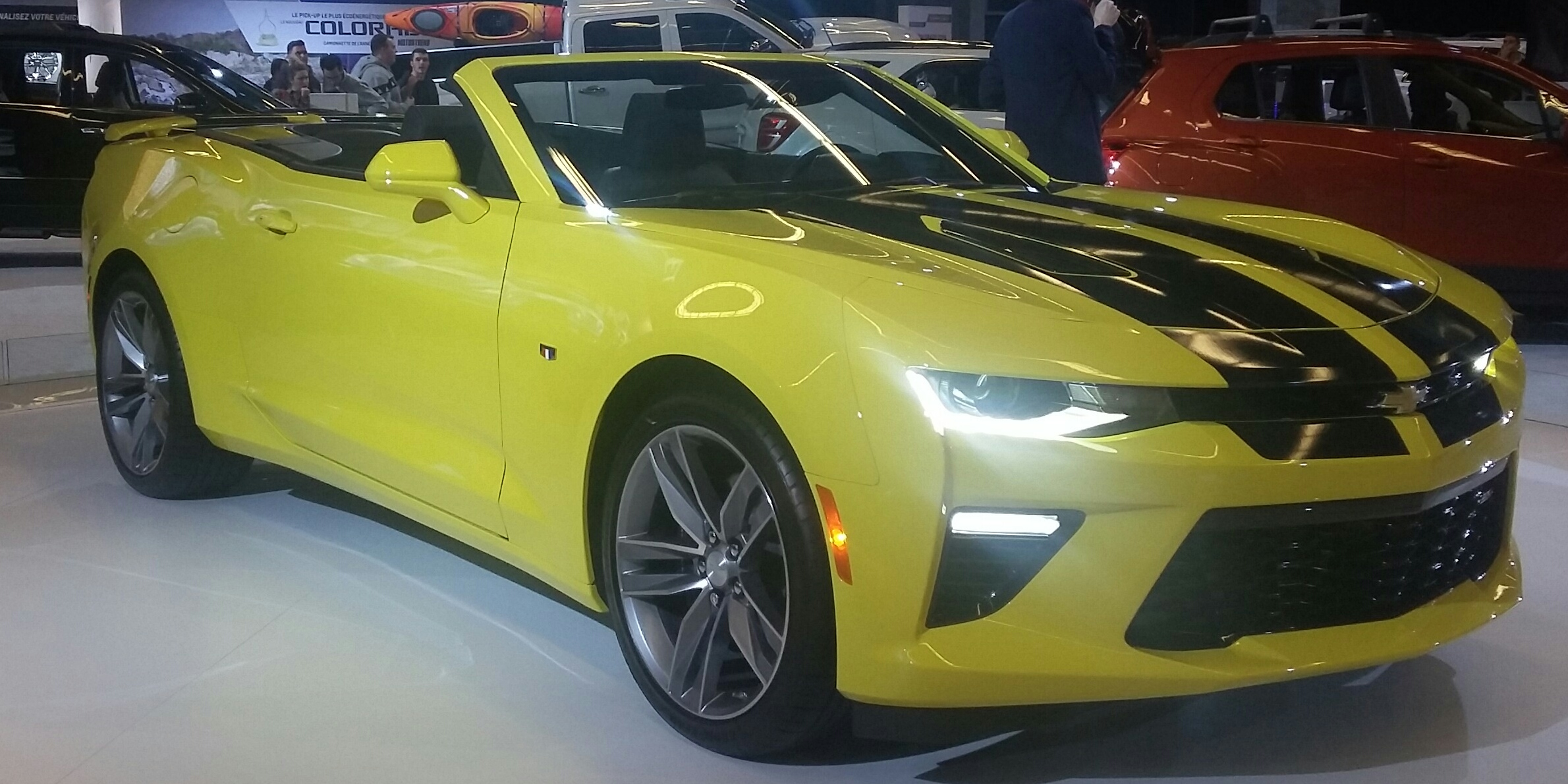
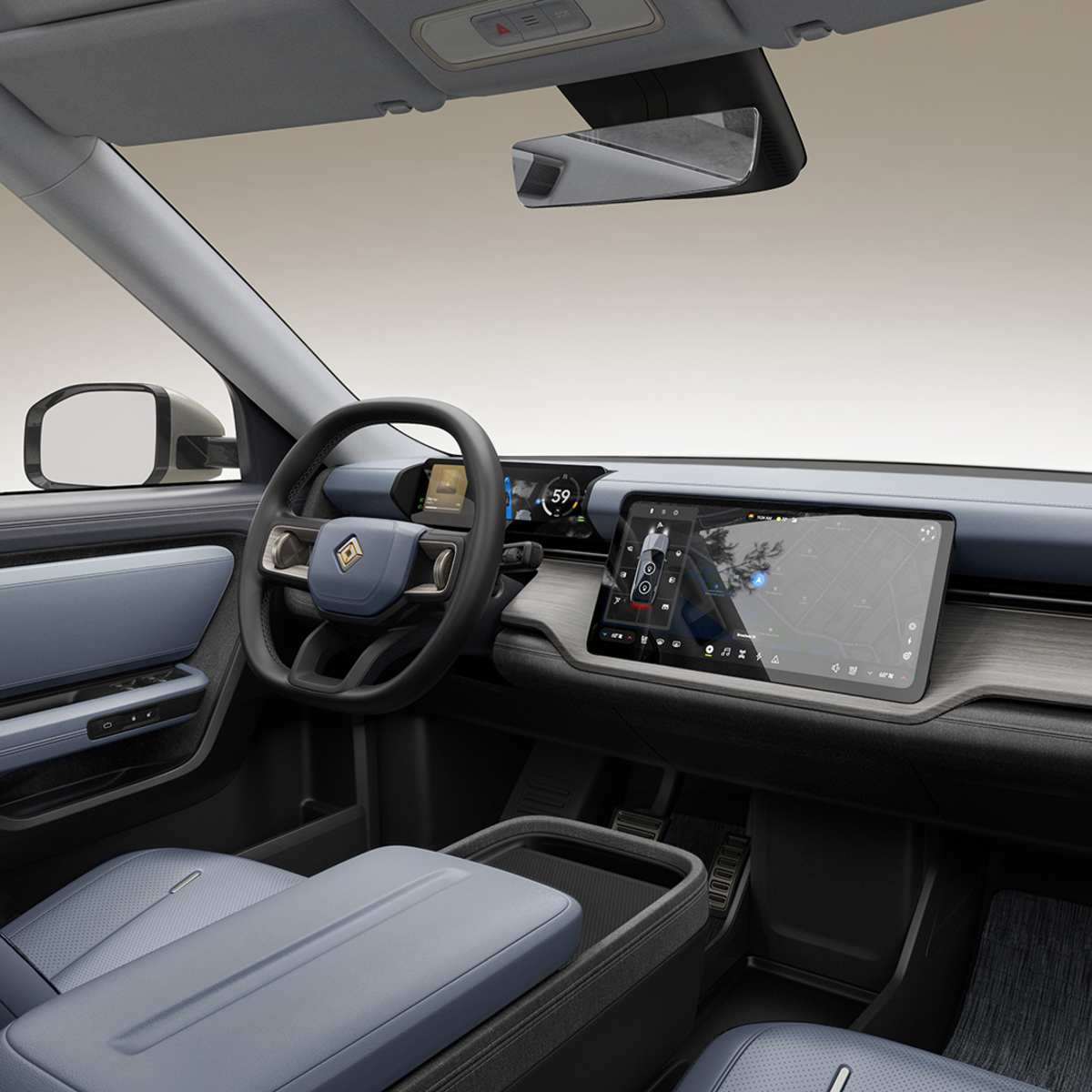
Stellantis is a big car company that makes lots of brands. The episode is about how they’re planning to turn things around after some problems, especially with EVs.
The Challenger is a muscle car model known for strong performance versions. The podcast is bringing it up because it’s connected to “Hellcat” performance history. It’s being referenced as part of that story.
Tim Kaniscus is a top executive at Stellantis. In this episode, he’s the guest who helps explain what Stellantis is doing to fix its problems and where performance brands fit in.
A “hemi” is a type of engine design where the inside of the combustion chamber is shaped like a half-sphere. It’s often linked with powerful V8 engines and the classic American muscle-car sound.
Term
VA powertrain
A “powertrain” is everything that makes the car move—engine and the parts that transfer power to the wheels. “VA” in this context is referring to the specific Hellcat V8 setup they’re talking about.
“D-O-A” is slang for something that’s basically a failure from the start. The host is saying some of Stellantis’ EVs didn’t really get going when they launched.
The Chrysler 300 is a large sedan that was sold as a big, traditional-style car. The podcast is saying it was discontinued. It’s being used to explain why Chrysler’s lineup has been struggling.
The Chrysler Pacifica is a minivan—basically a family-focused vehicle with lots of space. The host is pointing out that Chrysler’s lineup has become very limited, with the Pacifica as the main (or only) model mentioned.
Mopar is the name fans use for the Dodge/Chrysler/Jeep performance and parts world. When people say “Mopar,” they usually mean factory-style upgrades and that muscle-car enthusiast vibe.
Car
Ram trucks
Ram trucks are Stellantis’s big pickup trucks. The point here is that the speaker thinks Ram’s inside-the-cabin experience is better than what you typically get from other full-size trucks.
The Durango is a Dodge SUV with three rows. The speaker is saying it offers a V8 and strong towing, which is unusual compared with many other SUVs in the same class.
A powertrain is the car’s main “go” system—engine and the parts that send power to the wheels. “Hellcat powertrain” means it’s using the same kind of high-performance setup that Hellcat cars are known for.
Front shocks are what help the wheels move smoothly and keep the car from bouncing. Changing them can make the car behave differently when you accelerate or hit bumps.
A drag strip race is a straight-line competition focused on acceleration and traction from a standing start. Because it’s straight-line, setup choices often target weight transfer and tire grip rather than cornering performance.
A sway bar helps keep the car from leaning too much in turns. If you disconnect it, the car can roll more, which can change how it feels and how the tires load up.
Slicks are drag-race tires with little to no tread, designed to maximize rubber-to-road contact for straight-line launches. They’re typically used only at the track because they don’t work well in rain and can wear quickly on the street.
The “Demon” is a super-quick drag version of the Dodge Challenger. Here, they’re talking about a packaging idea that came from lessons learned with that car—specifically, keeping things from shifting around in the trunk during moving.
They’re talking about protective packing foam used during shipping. The goal is to keep things from sliding around so they don’t scratch or dent the car.
A “duct tail” is a rear design feature that looks like it’s meant to move air. It can help cool components or improve airflow, not just look aggressive.
A combustion engine is the classic type of car engine that burns fuel to make power. It’s different from an all-electric motor that runs only on a battery.
“Hard points” are the fixed spots in the car’s structure where important parts have to go. If the design respects the real hard points, it’s more likely the car can actually be built that way.
This means the battery is placed low in the car, usually under the floor, and protected by a strong cover. Putting it low helps the car feel more stable and keeps the design from looking like it was forced.
“Multi-energy” means the car is designed to work with different kinds of power, not just one. In practice, it’s about building the car so it can be configured with different powertrain options.
A concept car is usually a one-off or limited show vehicle meant to show what a future car could look like. Here, the speaker is saying this one is meant to be buildable, not just a display.
Term
T6
They mention “T6” as something people assume the next engine will be. The speaker’s point is that the guess is wrong, but they don’t explain what T6 specifically refers to in this clip.
“Sunk investments” are costs that have already been spent and can’t be recovered, so the smart move is to reuse what’s already been developed. The speaker argues that SRT-style high-performance programs only make financial sense when they leverage these existing platforms, components, and engineering efforts.
A “halo car” is a top, attention-grabbing performance model that helps a brand look impressive. It may not sell in huge numbers, but it’s meant to show off what the company can do—so it needs a cost strategy that doesn’t require totally custom everything.
Here, “bespoke” means making a car in a very custom, tailored way instead of using shared parts. The claim is that if you do that for expensive performance cars, the costs are so high that the project may never make money back.
A “hybrid V8” is a car that uses a big V8 engine plus an electric motor. The question here is whether that combo could work in a new car platform—basically, whether the car can physically and electronically fit both systems together.
A “platform” is the car’s shared foundation—its basic structure and layout that different models can build on. The point is whether the same foundation could support a hybrid V8 setup across multiple cars.
Hybridization means the car uses both a gas engine and an electric motor. The electric part can help the car move, especially in stop-and-go or low-speed driving.
Lithium-ion batteries are the rechargeable battery packs that store electricity for the car. They’re what power the electric motor in many hybrids and EVs.
“Future-proofed” means the car is designed to still make sense later, even as technology and rules change. The idea is to avoid buying something that becomes outdated quickly.
“C8” is the newest Corvette generation (Chevrolet Corvette C8). It’s special because the engine is in the middle of the car, which helps handling, and the speaker says the engineering is really impressive.
They’re talking about Dodge’s Charger and Challenger, two well-known muscle cars. The point is that the company wasn’t trying to copy what Ford and Chevrolet were already doing.
The Ford Mustang is a sporty car that’s known for its performance and classic styling. It’s one of the most famous cars in its category. The podcast is referencing it to explain what Dodge’s Charger and Challenger were aiming for instead.
The Chevrolet Camaro is a sporty car made for drivers who want power and a fun look. It’s a well-known competitor in the same general category as other muscle/pony cars. The podcast mentions it to clarify what Dodge wasn’t trying to copy with the Charger and Challenger.
They’re talking about “range,” meaning how far the car can go before you have to stop for fuel (or charge). Even though they question it, they admit the car still sells well.
“Hypermuscle car” is a fan way of saying a super-strong muscle car—something that feels like a hypercar but still has that classic muscle-car attitude. They’re basically saying it’s a different kind of car than a traditional Viper.
The Dodge Viper is a hardcore American sports car. “Gen 5” means the newest version of the Viper, and the point here is that it was both fun to drive and surprisingly strong on a racetrack.
A manual transmission is the kind where you choose each gear yourself. You use a clutch pedal to switch gears, which usually makes the car feel more connected to the driver.
Ejection mitigation is about crash safety rules that try to keep people from being thrown out of the car. In this case, the rule required airbags in a spot that didn’t work with how the Viper’s driver area was designed.
Airbags are safety cushions that pop out during a crash. They’re meant to protect your head and upper body, but the placement matters a lot for how a car’s interior is designed.
A dual-clutch transmission is a type of automatic that shifts gears very fast. It uses two clutches so the next gear is ready ahead of time, which makes the car feel smoother and quicker.
The Jeep Gladiator is a pickup truck, and “392” points to a big V8 engine. A 392-powered Gladiator is basically a Gladiator with a stronger, more performance-focused engine than the usual options.
Rear-seat swiveling means the back seats can turn around. Instead of only facing forward, they can be rotated to face the other way for a more social or flexible cabin setup.
The belt line is a line on the side of the car that helps define where the body shape “steps” up toward the windows. If designers raise it, the windows can look like they take up less of the car’s height, which changes the overall look.
The greenhouse is the part of the car that’s mostly glass around the cabin. If it’s “high,” it means the windows take up more of the car’s height, which makes the whole shape look different.
“Ingress/egress” just means getting in and getting out. They’re saying the back seat is easier to reach than you’d expect for a similar-looking vehicle.
A “camper cap” is a removable top section. They’re saying this piece can come off so the vehicle can be reconfigured—like changing how much open space you have and how the rear seats work.
Car
K5 Blazer
The K5 Blazer is a classic Chevrolet SUV. They’re comparing the removable “cap” on this vehicle to how older Blazers could have the top/cap come off, so you can change the vehicle’s setup.
The side step is a built-in step on the outside of the vehicle. It’s there so you can climb into the back seat more easily, especially when you’re not opening the door.
“Swiss Army knife” is a metaphor for a vehicle that can switch between multiple functions. Here it describes a concept with transformable seating that turns the cabin into a flat, bed-like cargo area—essentially combining passenger and utility roles in one layout.
Easter Jeep Safari is a yearly Jeep off-road event in Moab where Jeep brings out special concept trucks and ideas. They’re saying they build these concepts there, learn from them, and then use what they learn in regular cars.
“Moab concepts” are special Jeep prototype ideas built for off-roading in Moab. Jeep uses them to try out features and then brings the best ideas into regular cars.
The Jeep Wrangler is a popular off-road Jeep. It’s built to handle rough trails, and in this discussion they’re saying Jeep is using concept ideas and applying them to the Wrangler.
This is Jeep’s internal brand-positioning framework: it splits the lineup into an “off-road” family (centered on Wrangler variants) and a “lifestyle” family (other Jeep models). The idea is to keep Jeep identity consistent while matching each model’s engineering and marketing to different buyer expectations.
The Jeep Cherokee is an SUV meant for regular daily driving. It’s part of Jeep’s lineup, so it carries the Jeep name and styling. The podcast is discussing how Jeep wants it to feel like a Jeep without every version needing the same level of off-road focus.
The Jeep Recon is a Jeep SUV model name mentioned in the podcast. The discussion is about how Jeep wants these models to still feel like Jeep cars. It’s being talked about as part of a wider lineup strategy.
The Jeep Compass is a smaller SUV made for everyday driving. It’s part of Jeep’s lineup, so it’s meant to feel like a Jeep. The podcast groups it with other Jeep models while discussing how they want each one to fit a role.
Term
trail rated 12
“Trail Rated” is Jeep’s way of saying a vehicle is built for off-road trails. When they say “trail rated 12,” they mean a very high level of trail capability—something they don’t require for every Jeep model.
The Dodge Spirit is mentioned as a vehicle name connected to an outdoor lifestyle. The podcast is describing it as something that supports the idea of enjoying the outdoors. It’s less about specs here and more about what the name stands for.
An “off-road trim” is when a normal SUV gets styling meant to look tough. The point here is that some of these packages don’t actually make the car better at off-roading—just different-looking tires and badges.
Knobbier tires have deeper, more aggressive tread meant for dirt and rough ground. But the host is saying that just changing the tires doesn’t automatically make the whole vehicle truly capable off-road.
R2 is Rivian’s upcoming electric vehicle. They’re saying it’s going to be priced more like the mainstream SUVs, so it could compete with more traditional models.
Powertrain is just a fancy way to say “what kind of drivetrain/engine setup the car uses.” Here they’re talking about offering different kinds of setups, not only hybrids.
ICE means the normal gas engine most cars use. They’re basically saying they might offer the Cherokee with a more traditional gas setup instead of only a hybrid.
They’re talking about whether the extra cost of a technology can be paid back through sales and profit. If it doesn’t, then it’s not worth limiting the car to a smaller buyer group.
A mild-hybrid is a car that has a small electric assist, but it usually still relies on the gas engine for driving. In this episode, they’re saying removing that system can make the car cheaper or easier to sell in certain higher-priced versions.
The Chevrolet Express is a large van that can be used to carry people or cargo. It’s often used for work or business needs. The podcast is mentioning that there are different trim levels, including higher-end “Express” versions.
eREV is an electric car that can go longer because it has a backup system that helps recharge the battery while you drive. You still get the electric driving feel, but the car can keep going farther than a battery-only EV.
Car
Ram Charger
Ram Charger is a Ram SUV that’s meant to feel different from the Jeep Wagoneer. The big idea here is that it should be more “truck-like,” including a stronger focus on towing and (they say) a V8 engine.
The Wagoneer is a Jeep SUV that the hosts use as the reference point. They’re saying the Ram Charger will be built off that general idea, but aimed at people who want a more truck-focused, towing-capable feel.
A V8 is a type of engine with eight cylinders. The host is saying the Ram Charger is expected to use a V8, which usually supports stronger pulling power for towing.
Towing means pulling something behind the vehicle, like a trailer. The hosts are saying the Ram Charger is meant to be better at that kind of work than the Wagoneer.
They’re talking about how car companies try to avoid confusing shoppers when they sell similar vehicles. The idea is to make each model feel distinct so different people choose the one that matches them.
The Jeep Grand Wagoneer is a large SUV meant to feel more premium and comfortable than a basic off-road Jeep. It’s designed for people who want space and nicer features. The podcast is talking about which Wagoneer models are currently offered.
Architecture is the car’s underlying design—its main layout and how the big parts fit together. They’re saying Jeep and Ram will keep their own underlying design, even if they offer different versions.
SRT is a performance badge that Stellantis uses on certain Dodge/Jeep/Ram models. The idea is that it should feel special and consistent, so people associate it with fast, aggressive versions of those cars.
“Pentastar” is the name people use for a certain V6 engine family. Here, they’re saying some cars get that V6 when V8s aren’t available, even though the plan is to use V8s.
The Jeep Grand Cherokee is a family-sized SUV that can be equipped for stronger performance. Some versions have a V8 engine, which is a bigger, more powerful engine type. The podcast is talking about the idea of a V8 coming back to the Grand Cherokee.
Tow rating is how much weight the manufacturer says you can safely tow. It depends on more than just the engine—brakes and other systems have to be able to handle the load.
A “Turbo 6” is a six-cylinder engine with a turbocharger. They’re discussing whether that would be a good match for the Grand Cherokee’s style and driving feel.
The Dodge Hornet is a car name the podcast says they’re probably going to use. They also mention a “GLH” as the top version, meaning there may be a more performance-focused trim. The discussion here is mainly about how the lineup will be named and organized.
A hatchback is a car where the back opens like a door to reach the cargo area. The host is saying this new car is a hatchback, not a crossover.
LIVE
Hello, everyone, and welcome to The DriveCast.
I'm Joel Fetter, Director of Content and Product at The Drive, and The DriveCast is
our weekly podcast giving you an inside behind-the-scenes look at the biggest stories, controversies,
and people shaping the automotive industry.
Today, we have a special episode for you.
I promised you on episode one that this wouldn't just be another automotive podcast.
And to date, we've delivered on all the promises.
Today, we're doubling down on sharing our inside access with you.
Today's topic is Stellantis, and I'll be joined by a special guest that to any enthusiast needs
no introduction.
He's known as the father of the Hellcats, but his official titles include Ram CEO,
Head of American Brands for Stellantis, and Head of SRT.
Naturally, it's Tim Kaniscus.
Tim and I sat down while in Detroit together to discuss the turnaround plans for the Automotive Goliath.
Stellantis has been rocked.
The automaker built its current foundation upon loud noises and fast times at the drag
strip all while making loud boom-boom noises thanks to the hemi and legendary Hellcat VA
powertrain.
Then, the party ended.
It was late to the electric game.
Many of its EVs didn't even launch and were just D-O-A from the get-go.
SRT was mothballed and things just looked bleak again.
Seriously, the 300 died and somehow Chrysler is a brand that has one vehicle, the Pacifica
minivan.
That's it.
But there's a vocal and passionate community that rallies around Mopar and these iconic
brands.
The heritage is definitely a thing, but so too is the modern-day image it has built for
itself.
Ram trucks have the nicest interior of any full-size truck money buys today.
The Hellcats?
Well, they roared their way into the history books.
And that's before dressing the Durango that seemingly will live forever but gives buyers
the fantastic tow rating and a V8 in a segment where none of that can be had elsewhere.
Stellantis says there's hope and even a plan.
Last year, Stellantis appointed a new CEO, Antonio Filosa.
The man seems ready to globalize, modernize and turn around Stellantis and a year and
a half ago, Tim Kaniscus came out of retirement and took the reins for Ram, Stellantis brands
in North America and even brought back SRT last summer.
If nothing else, the man knows passion and passion sells.
Or at a minimum it gets people in a showroom, right?
You all read about the Copperhead and Scrambler on the drive, not to mention the return of
the Rumblebee with the Hellcat powertrain.
You can also bet exactly why these things are coming and or just returned.
Here to dissect all of it with me and give us some deeper insights from Detroit is Kaniscus
himself.
So today it's behind the scenes on Stellantis' turnaround plan and what comes next.
By the way, if you like what we're doing here, do us a favor and hit us with a five-star
review on Spotify or Apple Podcasts.
It really does help get the drive cast in front of more people.
Okay, let's go.
Alright, so today we're here in Michigan, Detroit and we're with Tim Kaniscus, father
of the Hellcats, also head of the American Brands, CEO of Ram.
He's in charge of SRT.
You're the man with the purse strings and the keys for a lot of things and you're a
philosis right hand for America, yeah?
No, you're giving me way too much credit there.
I am an employee that works for Antonio and I have the honor to do a lot of cool stuff.
I would agree with the honor to do cool stuff.
Honestly, we've had a long history and a long relationships from the Hellcats being birthed
to the Hellcats dying, coming back, to all those things, but I mean I remember
stories of you being with your dad, I mean you're a car guy, car guy.
You grew up on the strip with your dad.
I remember talking about you drilling holes in the front shocks with your dad before a
drag strip race and then the oil would leak out and then the front end would lift and
something like that.
Do you remember the story?
You're close.
My dad wasn't really that involved in it, but most of the story is right.
We used to get to the strip and disconnect the end links on our sway bar for the weight
transfer and then obviously switch to...it's kind of funny.
We would switch to slicks, but we would bring all this stuff in the trunk of our cars and
back then the trunks weren't all lined the way they are today.
So if you took a tight turn, all the stuff in your trunk would slide to one side and
just put a huge dent in your quarter panel.
So if you think about when we launched the 18 Demon, you're like, where did this idea
of this foam insert in the crate come from that fits inside the trunk to hold everything
for moving around?
It was live and learn from the 17-year-old Tim, popping holes in quarter panels from
shit rolling around in the back of the car.
That's where it came from.
I still remember this interview from almost a decade ago.
So you're a car guy as car guy and today we saw a ton of new product, a ton of new product
that is planned to be here in the next four-ish years by 2030.
A huge amount of money being spent, a huge investment in capital in terms of technology
and cars.
Obviously, in terms of enthusiast stuff, we saw some pretty cool stuff.
I'd love to talk to you first and foremost about the copperhead, obviously.
I saw it.
You looked at me when I saw it.
My eyes kind of lit up.
It's really cool.
It looks cool.
And I've already described on the site, you know, it definitely looks like hard points
of a charger, but there's some viper-esque things to it with the duct tail and the pinched
rear end and the rear window.
It looks front-engined.
Can we speak at all to what my, there's definitely exhaust pipes on that car that I saw today.
Can we speak at all to what might power that car?
So, there's definitely exhaust pipes.
So it is a combustion engine in it.
I will tell you that it is not the hard points of a charger.
Not the hard points of a charger.
You couldn't get a charger with those proportions in that stance because of the multi-energy
design of where the battery is encapsulated in the bottom of the car without cheating.
I mean, you know, just for like a show car or whatever, but that car's not cheated.
Those are real hard points, real production-intent proportions.
That's not, I'm not giving you some exclusive saying, hey, we're absolutely building this
car and it's coming then.
I'm just telling you that it's not cheated.
It's not, it's not a concept car.
It's a, we could actually do this exactly the way you saw it.
It would have a combustion engine.
Don't really know what it would be yet at this point.
We have some ideas and some things that we're kicking around.
It could be something that you're not aware of.
It could be something that doesn't exist today.
It's very easy to look at the current portfolio and say, okay, it's a Hemi.
It's a this.
It's a that.
But this is a car that's committed to be here between now and 2030.
So there could be another engine coming that nobody's aware of that would be the perfect
engine for that.
And whenever I bring that up, people automatically say, oh, well, then it's going to be a T6.
No, doesn't, doesn't mean that at all.
But we are toying around with some new technology that you will see this summer.
We plan to have an engineering innovation day right before roadkill nights, a full day
of some of the really cool tech stuff that we're working on.
Not a new car, but really cool tech stuff that you'll see filter into some of that sheet
metal that you saw today.
And that and that when you come to that day, then the light bulb will go off and you'll
be like, okay, I got it.
So are the hard points of that car unrelated to anything?
I'm not going to give you that much of a clue, but there are some synergies built into that
car.
So SRT only works if SRT can take sunk investments from around the globe and leverage those.
Because if you try to make high performance slash halo cars and you try to make them bespoke,
it will never pay back.
I mean, it's, it's like racing for the sake of racing.
I mean, it's ego.
You have to take investments that are already sunk and then leverage those.
So, so there's stuff in that car that are production intent and other things that will
leverage very heavily.
And the power train sounds like just hasn't, we haven't formally gotten to the point where
we might all get the hints for that yet.
Well, we know exactly what we want it to be, but we're not ready to share it yet.
Could a hybrid V8 work in a platform like that?
Yeah, it could.
A car like that, though, it's not, it's not a car that you buy today that you're going
to drive for, you know, three years, four years, five years, and then trade into something
else. A car like that is generally a keeper car, you know, collector's car.
And not, I don't mean maybe a collector's car, maybe not a collector's car, but definitely
a keeper's car. You know, you buy a car like that, you know, like buying a really special
watch. And you may sell it later, but your intent is, I want to keep this forever.
I want to give this to my kids or whatever, you know, if you get, if you get the equation
right, that's what it should be, right?
That's the only way it builds a halo.
It's close enough to be accessible, but far enough that you got to make a bad decision
to get it. And that's what makes it desirable, right?
And my job is to entice people to make bad decisions.
So the idea for hybridization, sure, you can do it.
But let's say you put, you know, e-motors in it and, you know, lithium ion batteries.
What will that be in 30 years?
It'll be an e-track.
You're like, Hey, I got this DVD.
Where can I play it?
Right. No, you can't.
So my goal is to have something that would be timeless and
somewhat future-proofed.
So Helifant would not be future-proofed.
I gave you a huge clue and you could take it however you want.
And I'll bet you when you come to Roadkill Knights, you'd be like, I got it.
It was interesting. Before I saw Copperhead today, one of the questions I wanted to ask you today
was about SRT and whether a viper in the world has a place.
And the reason I wanted to ask that is because now we're running around in a world
where we have CA Corvettes that cost $220,000 and they have Bugatti levels of power.
That whole different timeline than when the viper existed and died, right?
And so I think it's a good idea to do that, right?
I was going to ask you about viper today and whether it made sense in the portfolio.
I suppose we could still address it, but...
No, I mean, I love that question.
Thank you. Because I think about C8 all the time.
I am incredibly impressed with the engineering of that car.
There's some things I don't like, of course, you know, and I'm biased, obviously.
But there's some things that were in that car and I've had a chance to meet Taj
and talk to him about the car in the past.
And it's an impressive car and the engineering is highly impressive.
I told you a long time ago that when we were doing the Charger and Challenger,
as much as we respect Mustang and Camaro, we weren't trying to build a Mustang
and Camaro competitor because they already exist.
We're not with this car trying to build a C8 competitor.
Absolutely not. Why would I?
It exists. They do really well with it.
They sell, you know, 25,000, 30,000.
I question the range.
I question the 65,000 up to 250,000.
But you know what? They're getting away with it.
So good for them.
I don't want to follow that, though.
I don't want to chase that.
They're a sports car.
I'm very, very clearly defining this as a hypermuscle car.
You did say that.
It's a different thing.
And a Viper as a Viper is itself.
The Viper is a sports car.
This is a hypermuscle car.
Does a Viper make sense anymore or that air is probably gone?
The Viper, the Gen 5 Viper was one of the most beautiful cars ever.
I loved that car.
The track capability of that car was absolutely astounding.
If you think about what it was, I mean, it was an analog car
with a manual transmission and it could hold its own against anything in the world.
Technology doesn't matter.
I mean, it was just that good.
But it had its downsides.
I mean, let's be honest, I own one, so I'm allowed to bash it.
If you don't own one, you can't because we'll fight.
But if you own one, you can bash it.
There's things wrong with it, right?
I mean, when they came out with the new rule for ejection mitigation,
we had to discontinue the car because you would have to put airbags
right over your, you know, as a driver, right over your ear.
And you sat in the car, that'd be impossible.
It's right next to your head.
Yeah, you couldn't do it. It's impossible.
So, you know, we had to get rid of the car.
And honestly, in today's day and age, it would have needed to become
an automatic or a dual clutch or something like that.
It reached the end of its life cycle.
As much as it pains me to say that, it reached the end of its life cycle.
Fair enough.
Let's talk about Scrambler.
You guys showed a 392-powered Gladiator today.
We talked about Wrangler Refresh and Gladiator Refresh and all these things.
We talked about the rear seats swiveling in the Scrambler.
How, talk to me about how the rear seats will will be able to face forward
and back or not at the same time, of course.
But how does that work?
So really well done.
We did not show you a 392 Gladiator today.
Ralph was doing a walk around and Ralph transitioned from the Wrangler
to the, I was standing right there.
He transitioned from the Wrangler 392 to the Gladiator.
And he said with the 392, it was not disclosed.
It was not written. anywhere.
Did he just say it?
I don't know. Was it a mistake?
I don't know. But we did not announce a 392 Gladiator today.
So I heard 382 Gladiator.
But let's go back to Scrambler rear seats.
Scrambler. Now, Scrambler is freaking cool.
Because if you look, nobody can see it.
We're not going to show pictures of it.
But what's exciting about Scrambler is if you can, if you can just close your eyes
for a second and envision a Gladiator and you envision the Gladiator
and you see a very military side profile
and you see a very low belt line and a high greenhouse, right?
Where the glass is versus where the body is.
And you see almost equal proportions between the side of the body and the glass.
That's awesome. That's very purposeful.
That's very military.
As soon as you see it, you may not even be able to articulate it,
but it just says purposeful that was designed for that.
On the Scrambler, we went in the other direction.
On the Scrambler, we said we want to have something that conveys
muscularity at the same time, fun, not that military purpose built thing.
Because we've been doing that forever.
We have that.
So why add another one of those if you already have that?
I mean, how many different flavors of the ice cream can you make?
So we said, OK, here's what we're going to do in this one
is we're going to make the sides much more muscular instead of purposeful.
And we're going to raise the belt line significantly to lower the greenhouse.
What happens with that?
When you do that, the visual side proportions change dramatically
and you see a completely different car.
Even though underneath that, it is still a four door Wrangler,
but the proportions change.
Now, what that enables you to do when you do that is we take the front door
and instead of having four doors, you make the front door significantly larger,
just like you would do with a two door charger and a four door charger.
Right. So the front door then becomes significantly larger.
You open the front door, you can get into the front seat,
but you also have pretty easy ingress egress to the back seat,
just like you would in the old days to a regular two door car.
But the back, I'll call it the back cap, if you want.
If you were thinking about a pickup truck, you know that the camper cap,
the cap can then come off like an old K5 Blazer.
That can come off and you have the seats in the back
that sit at the normal position of the front seats.
So while you're in the thing, while you're in the in the vehicle,
it almost seems like you're an affordable Wrangler.
But since the top comes off, we've enabled the rear seats to be removable
and flippable so that you can make them facing backwards.
That's why we put the step on the side.
So you can literally walk up to the side of the thing,
don't open the door, step on the step, jump in the back and sit in the seat.
That's cool, but that's not really what the total purpose was.
What the total purpose was is when you take the top off
and you have that seat back there, you can then fold that seat backwards flat.
And it makes a bed floor like a truck.
When you do that in the top saw, you actually have a bigger bed back there
than a gladiator.
So it's longer because the bed, the bed and gladiator is a short bed.
Yeah, you literally end up with a Swiss Army knife.
It's it's a super cool concept.
And I think someone was telling me that this was like a something along the lines
of a love love letter to enthusiasts.
I think was the line that was used today for this thing.
Is that how you describe this?
We have been doing Moab concepts for Easter Jeep Safari for I.
I don't even know how many years and I don't even know how many millions
of dollars we spend on these things.
And we come up with all these amazing things and we learn a lot.
And we take some of that learning and we put it into our current cars.
What we haven't done, though, is take all of those ideas that people say,
instead of saying, oh, they like this, this and this and putting on a current car.
We said, well, why don't we just take all the stuff that they like and make an actual car?
So that car is kind of the silly putty match up of a lot of the things
that people said that they liked. Got it.
I got a question about Jeep just pivoting here completely.
Jeep Wrangler, you guys obviously have leaned in.
We talked a little today.
Ralph talked about the designs and the 12 months of Jeep
with different drops every month and that some of those, if they're very popular,
they will go to production and others will be like, we'll do a bachelor and we'll be done.
Last year, there was a minute, minute where Bronco is nipping
at the heels of Wrangler and then Wrangler pulled ahead and Wrangler sold out from Bronco.
And then this year, we started off strong again with Bronco and Wrangler going head to head.
I'm curious for Jeep, who do you see as a holistic brand for Jeep?
Not just Wrangler, but I was mentioning the Bronco rivalry, but as a brand,
who do you see as the main competitor for the brand of Jeep?
Because it's a very unique brand and today I heard we may have lost our way,
we're refocusing, we're doubling down, we own this segment.
As a message, I heard a lot of them clear.
We consider Jeep to be two cars and you may say, oh, you got five, you got six,
you got seven. In the plan, you got eight, but no, we consider it to be two cars.
We consider it to be legendary off-road and legendary lifestyle.
The off-road is what we call the family of Wranglers. You got a Wrangler,
you got a Wrangler Unlimited, the four door, you got a Wrangler Gladiator,
and someday you'll have a Wrangler Scrambler. That is our legendary off-road line.
And then the lifestyle line would then be all of the other ones, the Recon, the Compass, the Cherokee.
They still have to be Jeeps, but they don't need to be trail rated 12, like a Wrangler.
They still need to be extremely capable, but a little bit different than what we're doing with
the Wrangler. The reason that we do that, and the reason that we're very focused on that,
is that we say, I don't care what your research says about Jeep buyers, 100% of Jeep buyers
take their vehicle off-road. And when I say that, every journalist looks at me and they're like,
that's crazy, I seen the data, no, no, no, they don't do that. Nobody with a wagon here goes
offline, blah, blah, blah, right? Yeah, 100% of them, though, think they can. That's the whole point.
It's an enabling of that spirit of, I love the outdoors, idea of being able to do this,
whether I actually do it or not. So who is the main competitor? I don't actually see a main
competitor, but I see a lot of people trying to go into that same space. Probably,
it's probably, every manufacturer has an off-road trim now, and most of them really have no off-road
capability. It's stickers and, you know, knobbier tires and things like that. There's no real
capability. If I look at somebody who, I would say, I think did a good job carving out their
niche and really going after it effectively, Subaru. I would agree with that. I mean,
Subaru definitely is carved on a niche and the cars are far more capable than most people to your
point might need in reality. Do you feel that Bronco sales have put in any way the heat on the
Wrangler or not in the low? Of course, we were there all by ourselves forever. And some people,
you know, bought Wranglers over and again. And in a lot of cases,
it's not your primary transportation. In a lot of cases, it's people's secondary cars and things
like that. So they want to try something new. Now, there have been people that have gone and bought
Broncos and come back. There's been people that bought Wranglers and left and still drive a Bronco.
I mean, that's good. It's actually good. I know it sounds crazy for me to say that.
Competition is good because look what it's doing to us. 12 for 12. We're looking at
Wrangler. It's putting the heat under us to innovate even more. And the only one that's
going to win is a consumer. I would agree with that statement. What do you think about Rivian?
And I asked that because before it's when you're selling 40,000 vehicles and they're all 80 to
$130,000, it's a whole different segment, right? And really, they were much larger. But now,
all of a sudden, they've got R2. It went into production. They're about to start deliveries
and they're at the heart of the market at 45 to 65,000. But the average is actually price hovering
around 48, 49. It sounds like it means the size of a Cherokee, right? And that's a huge segment.
It's the most important segment in America, arguably in terms of volume. Do you guys see
them as a competitor against Cherokee? I don't see their financials, right? So,
I don't know how profitable they are at that price point. But we'll see. Is it a competitor for
Cherokee? I don't know. Everything's a competitor for a Cherokee. That's a bloodbath segment.
There's so many competitors in there. It's so price sensitive. We only have a hybrid.
We have aspirations to have something other than a hybrid at some point,
because most other people do. Most other people don't have a hybrid only. But we led with that
today with the gas prices. Thank God we did. So, it looks like we were smart on that one.
The day we launched it, I don't know that we were feeling that way, but $5 a gallon will make
it feel like having a hybrid is a good deal. Pretty damn smart. I take that back. Actually,
I was responsible for that. I took, yeah, it was my idea.
No, no, no, no. You're just one of the guys that works for Pelosi. I heard earlier you're in the
podcast. What do you say you have dreams of other, you have interest in other powertrains
for that vehicle? Can you spend on that? What, Cherokee? Yeah, a traditional ice.
Got it. I didn't know if we're going to have like some health care.
You have this technology and it's all a matter of can you recover the cost
and then more than the cost? Because if all you're going to do is recover the cost,
what's the point, right? You're putting yourself into a smaller margin. Well, you're
putting yourself into a smaller part of the market for no gain. If you're going to put yourself
into a smaller part of the market and you can get a game, then great. It was a smart decision
that you made. It's no different than Hemi. When we launched the Rumblebee, I made the joke,
because I didn't want to overtly say, hey, we dropped the mild hybrid on the Hemi because
a lot of people would take that as a very negative comment. So, I said, hey, it's only got one
battery. It's very much if you know you know. Because if you didn't know what I was talking
about, you probably would have been insulted by me saying, hey, we removed the hybrid. But if you
knew what I was talking about, you're like, hell yeah, that's a good idea. But think about what
that enables. When we brought the Hemi back, we put it into the light duty truck. We already had
the T6 there. We put the Hemi in it and we charged $1,200 for the Hemi. Then we take the mild hybrid
off. The customers, this is the exact opposite what I was just talking about, Cherokee. We take
the mild hybrid off. The customers applaud taking the mild hybrid off and we now have a tailwind
of profitability in that car. What does that do? If I say, oh, that's great for our bottom line as
a company, the people listening in this podcast are like, who cares? I don't care. I'll tell you
what it does for the customer though. It allows me to go deeper into my express trims. I can get
deeper into my black expresses with Hemi's in them and things like that. So now I can sell you
a $50,000 net of incentive black express truck with a Hemi without the mild hybrid system
and the customer's going to get a huge gain. That's what it does.
See, I thought you were going to try and tell me that's how you get a copper head out the door
faster, but what do I know? So Recon today, we heard that there's going to get an ice engine.
Actually, I heard it multiple times. Next year, Bev first launched with EV because it's an ice
engine. We saw it today, which I know people can't see what we're talking about, but spoiler,
it looks like the Recon with a little more open grill. Well, I mean, why would you change it?
It looks like the Recon. I think the Recon is a home run design. Hopefully you never play this
back to me after we launch it and you go, look, it didn't work. I think it will. I think it's a
home run design, but by being battery electric only with the shift right now that's going on
with consumers, that's going to limit the potential of it. For sure. I still think it's going to do
well as a battery electric, all things being considered, but as an ice, I think that seems
to home run. What engine will be put into that or what kind of engine will fit in that even?
Well, we make cars here so we can make anything fit in it, but we haven't disclosed yet what could
So Hellcat Recon. Got it. That's the SRT version, right?
It's still a large and it was originally going to have, it's capable of an eREV. I know that
that system for that, the Wagoneer S and that platform was capable of an eREV when it is least
announced. So we know Pennistar will fit in it, but I wasn't sure if you wanted to do a Pennistar
or if it'd be smarter to do a hybrid from a Cherokee. I don't know, making things up.
We'll see. We'll see. Okay. Let's move on to Ram Charger. Ram Charger, we saw today. You and I
talked about this extensively. It's going to be a different vehicle than a Wagoneer based on a
Wagoneer. You loved it, didn't you? I think it's going to sell well. I think it's going to sell well.
You're hedging there. It's freaking cool. Come on, admit it. It looks cool. It looks like you
think it looks like. It looks like a Wagoneer with the Ram design. It looks like what you think.
I actually didn't see the interior. We were moving real fast today and Copperhead kind of
got me distracted, like if I'm honest about it. Scrambler, Copperhead. But my question is,
I did hear a thing that today that was going to separate it as far as engines. I heard that's
going to be V8. It's going to have a towing focus all the, like more truck-y things than a Wagoneer,
right? Wagoneers have lifestyles. If you look at that space, that is a, it's a very good space
in our industry. And if you look at it, Ford goes in with two entries, Ford and Lincoln,
two different showrooms. GM goes after it with a Chevy, with a GMC and a Cadillac,
three different showrooms. We have a Wagoneer. We had a Wagoneer and a Grand Wagoneer. Now we
have just a Grand Wagoneer in one showroom. When we bring in a second vehicle, it's going to be in
the same showroom. So our whole intent was, look at what the other guys are doing with multiple
versions in different showrooms and see how much we can differentiate these two sitting next to
each other. So it's not like, hey, that one's got a Jeep badge on it and that one's got a Ram badge
on it. They needed to look, feel and act different. And I know nobody can see this. It's listening to
this. But I think when you see them, and we purposely parked them side by side, when you see
them side by side, they look different. There's going to be people that are going to look at the
Jeep and go, oh, hell yeah, that's the one I want. I don't want that other one. And there's going to
be people that look at the Ram and say, hell yeah, I want that one, not the other one. I liken it
exactly to Charger and 300 when we had them in the showroom together. They were the same car,
let's be honest. They were different buyers. They were absolutely different buyers. And that's
exactly what we're trying to do with this. We want one to be very focused on who a Ram customer is
and one very focused on who a Jeep customer is. And powertrain matters. Our intent is to leave
the powertrains as is on the Jeep, as is in the architecture. That doesn't mean that we won't have
multiple versions, different power levels, but the architecture and then the architecture of
the Ram would be more V8 based. Sure. And I'm glad this is a powertrain edition. It's like,
you know me, you get it. So the slide deck today, which is live for anyone that wants to see it,
we've got photos of it on the website already because we've written seven articles already,
probably more by the time this goes. There's SRT versions coming in this. And to your point
earlier, SRT's got to be sunk cost. It has to be cars that you already have hardpoints,
exist, et cetera. And you mentioned to me earlier today in the design dome,
SRT is not a standalone brand today. It is products based on products. And both the
Grand Wagoneer and the Ram Charger on that slide deck today had the little flag indicating
they're getting SRT things. And then you're going to say, but that one's a V8 and that one's not.
That's not what I was going to say, but feel free to keep going down that path. You want to keep
going down that path? No, go on yours. Go on yours. I like yours. You might forget about mine.
I don't think I'll forget about yours. I don't forget easily. But what I was going to say is that
we already know that both these are based on the DT. They're based on the Ram. And we also know
all the instances just launched one day ago. I don't know what day it is anymore. The rumble
bee. We've got 57 we've got 64 and a 62 super, like all these engines fit
in these. So how do you differentiate SRT versions of those sitting across the lot from each other
in terms of powertrain? Because the design is easy, like they look different. And B,
do they need to be or is the design enough? Does that make sense?
It's not enough because we have very specific rules for SRT and what they have to be for the
powertrain, for the interior, for the suspension, for the user experience. Everything about SRT
is very much a gating process. And what we do is, are you going to build a Pacifica SRT? No,
because it cannot fulfill the promises of SRT, right? So we look at all the products in the
portfolio or parts of products in the portfolio, we say, can this actually deliver on an SRT?
Because as soon as you water that down, as soon as you bastardize that name, it doesn't give you
the halo that it's intended to give you. It doesn't give you that brand billy. That, by the way,
that's why it's not a brand. That's why it's not called the SRT brand. It's a Dodge SRT,
a Ram SRT, or a Jeep SRT. It takes what the Jeep brand is, the Dodge brand or the Ram brand,
and amplifies it to an extreme level. Because as you know, you saw a million times on Dodge,
that halo then trickles down. All we ever used to talk about was SRTs, Hellcats, demons, red eyes,
all this stuff. The reality is we sold 50% pentastars. It works. It absolutely works.
If you're very careful, and it delivers on those pillars of the SRT brand. Now, what I didn't tell
you was I said it has to be very mission specific on the powertrain, but I didn't say that SRT
equals V8. I didn't say that. know. But you were kind of implying that. Like,
how do you make a T6 based architecture and SRT and a V8 based architecture and SRT? And I will
tell you that you need to hold that thought until roadkill nights on our engineering day,
and we're going to show you something that's really freaking cool.
Okay. So, going down the SRT thing again, I don't remember who it was anymore, honestly,
but it was months ago, about a V8 returning to Grand Cherokee. And it was basically said,
like, hold tight. Like, and the path I went down was because, and I don't mean supercharged or
anything like that for trackhawk. I mean, a 5.7. It doesn't make sense.
No, it doesn't make sense. So, the reason I asked, because, you know, we towed our Grand Cherokee,
and the reason we had the 5.7 is because you had bigger brakes, tow rating.
It doesn't make sense. I'm in one showroom with four different brands brand
identities. We have a V8 only strategy on Durango. Now, we violate that on a regular basis and build
some of them with penistars. And we do that because we generally run out of V8s. But our strategy is,
once we get enough V8s, the Durango will be V8. It will be 5.7, 6.4, 6.2. No V6. Period. Once we have
availability of that. And those things are working. They're selling. They're turning. The strategy is
great. We just run out of V8s and we put the penistar center. Then you look over at the Grand
Cherokee and you say, okay, why don't you just put a V8 in that? No, no, we have to be focused on. We
have four different brand personalities. We have four different brand, you know, customers that we're
trying to attract. The Grand Cherokee should not be the same as the Durango. The V8 Hemi,
the Hemi 5.7 V8 should not be in a very highly refined vehicle like the Grand Cherokee.
Can I do more with it than I have today? Absolutely, I can. And will we? Absolutely,
we will. But it doesn't make sense to do a 5.7 hand. Does the Turbo 6 make sense in the Grand
Cherokee? Oh, sure it would. It would be great. It will fit. I'm not saying that we're doing it,
but it would be great. Would you do it? I would love to do it. It doesn't mean I'm gonna,
but I would love to. There's a whole bunch of things I'd like to do that I'm not going to do.
GLH. We saw it today. We're probably going to call it the Hornet and the GLH will be the top
version of it. We just screwed up on that little sign that we put there and on the slides we just
called it GLH. Just got it. We were running fast. It will probably be called the Hornet.
And people say, well, but the other Hornet wasn't really, you know, that performance base and yada,
yada, yada, all the things that whoever's listening, this is going to then scream it, you know,
whatever they're listening to this on. But that's okay. That doesn't mean there's anything wrong
with the name. I think the name's good. I think the name makes sense. And we could still have a
GLH on top because we had every intention to make a GLH version of the original Hornet,
which ran out of time. So the new Hornet, it's going to be based on-
I said probably, I didn't say it for sure. New potential Hornet that will birth the GLH,
call it whatever you want to call it. Today we turned-
It's a hatchback. It's not a crossover too, because I heard some people calling it a crossover.
It's a hatchback. Somebody told me it's a hot hatch. I think this Ralph called it a fat hot
hatch. I like that. It's a fat hot hatch. Yeah, it's a fat hatch. I like it. I don't think he called
it a fat hatch. I think he called it a fat hot hatch. But it is white. It looks bad ass. But
somebody called it a crossover and I was like, come on, stop. It's a fat hatch. The fat hatch,
he says it's not based on a Stella 1 and can fit anything all the way up to a hurricane,
or it's a multi-energy platform. So it can fit electric and fit everything like that.
Hurricane- Remember old school when he blacks out doing the debate? I think Ralph was blacking
out, man. He was on a roll today. Yeah? Yeah. Just in the moment? Yeah, he was in the moment.
Does a hurricane fit under that? Or did it look like a hurricane if it's under that?
Hey, man, I don't want to question the guys designing cars. How are you going to make a front
wheel drive hurricane? The thing would have to be 120 inches wide. Well, you do have a
hurricane turbo four. You have a mini hurricane. It's like a little tornado. Okay. All right.
You're right. You're right. You win. All right. All right. Checkmate. You win. It's like a little
tornado. Checkmate. You win. All right. Okay. So turbo six won't fit under that basically.
No. Okay. Just checking. Even in a GLH. It's just straight six. I'm well aware.
So no outcast. It's this long. If the people could see me, I'm holding the
hands as wide as my shoulder. It's like he's going fishing. It was this long. Yeah. The fish was
this big. And then I add a transmission. Then I add an axle. And then I add hubs and knuckles.
I mean, my God, there's going to be like a three-wheeler with two wheels in the front. It's
going to be like, what are those little can-am things? It's going to be one of those things.
It does look cool. I will tell you. It looks cool. Talk to me about the Chrysler,
the Aero. Where are those going to be built? Because Christ, Ralph made an interesting comment
today. He was like, this is the epitome of utilization of a global footprint. These are
Fiat's that we have the lighting signature, but it costs low investment and it gets us
into that price point of $25,000 to $35,000, which was an interesting comment. Where are
they going to be built for us? I don't think we disclosed where they're going to be built.
I mean, it would take you about three seconds with Google and AI to figure out where we'd
make them for Fiat. But while I know where ours is going to be built, I don't know.
You can Google that and find out where we build the Fiat's. But the cars themselves,
it's kind of funny. It kind of goes back to the comment that Liam was making. How can Tim have
two sides of his brain? I'm pumped about these little Chryslers. I mean, I'm seriously pumped
about these Chryslers because we really don't have anything in our showroom today that is a
sub $40,000 car. And I'm not saying that I want a bunch of sub $40,000 cars because of the price
point. I want them because they attract a buyer that will grow in our showroom. And when I have
four brands that I want to feed for the future, if I have a vehicle that I can sell for $25,000,
I can attract customers that don't even walk into our door today. I can put them in that car.
It's a fantastic car. And maybe 34 years later, they'll grow into something else.
You see it today. Like a Pacifica.
Yeah. Well, I can't believe you just said that because you freaking read my mind.
If you look at what's going on with Hyundai and Toyota Minivans,
where are they growing their customers into Hyundai and Toyota Minivans? They're growing them from
Civics and Corollas and Camrys. And then all of a sudden they have the third child and bam,
where are they going? Are they going to immediately go to the Chrysler showroom? No,
they're going to go to the showroom that they're comfortable with that they've been in for the
last three car purchases. So you want to groom all these people to get into a Pacifica?
Absolutely. Not for a Pacifica. Into anything. Into anything.
What about the other Pacifica variants that we were talking about today?
Yep. I said that we were going to, we were working on other variants. That's all I said.
Can we do a Grizzly with 31-inch tires?
Yeah, that's a Grizzly school.
It is cool.
It is cool. I like the Grizzly. I'm not saying I'm doing it, but I can say I like it.
And I winked when I said that.
You know, a couple more questions and then we'll end because I want to be respectful of your time.
I know you're blowing up a meeting for me right now, which is lovely. But this is more fun,
I'm sure. The GLH.
But it actually is.
I know it is. I'm a fun guy. This is fun.
The GLH.
And humbles too.
Sometimes. We are confirming it's gas.
Yeah.
It'll be basically a four cylinder turbo four and the GLH version of a Hornet or whatever
we're going to call it, the SRT version, we'll get a turbo four of this little pocket rocket.
Internal combustion, little pocket rocket, yes.
Turbo four?
Internal combustion, little pocket rocket.
Fair enough.
By the way, the Neon SRT-4 was...
It was badass.
Love that car.
All right, last question. Talk to me about SRT as a whole.
Yep.
I mean, I know we talked about Pacifica and we were joking about it, but like,
we saw a lot of products that are going to SRT.
What are these pillars that... What does it have to be to be an SRT?
The easiest way to think about it is you have to be able to deliver a product.
Whatever the donor vehicle is, you have to be able to take that donor vehicle,
SRT is it, and it generates a... Or you come out with a vehicle then that actually helps
sell the other vehicles. Let me explain that.
So if you take a car, a water bottle, and you say, I'm going to take a water bottle and I'm
going to make it an SRT, and when I get done with the water bottle, I make it something
that no longer looks like a water bottle, no longer feels like a water bottle,
and doesn't help me sell other water bottles, it doesn't make sense.
In other words, I wouldn't take a Hornet with a small internal combustion engine and say,
you know what, I'm going to take that and I'm going to make it rear wheel drive,
and I'm going to put a V10 in it, and it's going to be awesome.
I'm related.
It's totally awesome, but it doesn't help me. It doesn't do anything.
It doesn't sell other Hornets.
It has to trickle down. If it doesn't trickle down, it's not going to work.
An SRT Pacifica will not trickle down.
You have a contractor, and I asked him once, can I do this?
And his response was, very quick, for money, I can do anything.
And for money, I do think you can build... Didn't Ralph Gilles build a 5.7-powered dodge caravan
or Christ of Town Country? It was like a one-off car. I think it got sold.
He took a Pacifica.
I think he put a V8 in it.
He slammed it and he put... It was something crazy, like 22.
It was badass. I mean, it looked so cool.
I thought he put a V8 in it.
You know, he didn't change the powertrain. No.
Must be one of those industry rumors.
Yes, Urban Legend.
Urban Legend.
There was a press conference we did one time years ago, and somebody stood up,
and this was a weird press conference. There was media there and consumers.
And a consumer stood up and said, I really want a Pacifica SRT, or no, a Hellcat.
I really want a Pacifica Hellcat. Would you do it?
And I said, of course I'm going to do it. Absolutely.
It's breaking news. Obviously, it was joking, right?
Someone ran a story in this.
Oh, my God. It became a thing for months. And everyone was around.
It still comes up to this day.
It's funny.
So you want to say that you didn't build an SRT Hellcat Pacifica?
Okay, just checking.
We're not going to do an SRT Pacifica.
What a way to really just put a bummer on the ending.
Can we put a twist on the ending from that?
Oh, no. Yeah. Let me twist it for you.
We announced today that we're going to bring eight SRT products over four years
across three different brands and go back in history.
That is the most aggressive SRT product plant in the history of going all the way back to 1989
when we launched the concept car of the first Viper before it was even called SRT.
This is the most aggressive product plant ever.
So if you're an enthusiast and you're listening to this podcast, that's a takeaway,
is we have, you know, endorsement from the company to use SRT to build our other brands.
Father the Hellcat is going to give you what you want is what I just heard.
Got it.
Whatever your definition of whatever you want, sure.
Thank you for your time.
Thank you.
That's it for this week's episode of The Drive Cast.
Thanks to Salantis for opening its doors to Tim for his time and insights.
Thanks to our editor Tyler Mark.
And thank you for listening.
We'll be back next Wednesday.
Be sure to check out TheDrive.com for our full coverage of all of this stuff from Salantis.
Subscribe to one of our fine newsletters.
They are free, by the way.
Follow us on Instagram, Facebook, and TikTok.
And of course, subscribe to us on YouTube, where we've got a lot of cool videos coming up.
We'll see you next week.
Bye, everyone.
About this episode
Tim Kuniskis and the Drivecast dig into Stellantis’ turnaround: why EV execution stumbled (“dead on arrival”), how performance brands like SRT were “mothballed,” and what leadership changes are meant to fix. The conversation then zooms into Hellcat and Viper heritage—down to drag-strip suspension tricks and long-term “halo” strategy. From multi-energy platform packaging to Jeep and Ram lineup differentiation, the episode connects product plans, powertrain choices, and naming (SRT, GLH, Hornet) to how brands grow and stay relevant.
Stellantis has been rocked. The automaker built its current foundation upon loud noises and fast times at the drag strip all while making loud boom boom noises thanks to the Hemi and a legendary Hellcat V8 powertrain. Then the party ended. It was late to the electric game, many of its EVs didn’t even launch and were just DOA from the get go, SRT was mothballed, and things just looked bleak, again.
Stellantis says there’s hope, and even a plan.
This week, The Drive's Director of Content and Product, Joel Feder, is joined by The Father of the Hellcats, but his official titles include Ram CEO, Head of American Brands for Stellantis, and Head of SRT, Tim Kuniskis.
From Cooperhead and Scrambler to the the return of the Rumble Bee with a Hellcat powertrain and the Ramcharger nameplate, Kuniskis dissects it all with Feder.
So, today, it’s behind-the-scenes on Stellantis' turnaround plan and what comes next.
Stories mentioned in today's episode:
Stellantis Announces Huge Turnaround Plan, 60 new Vehicles and 50 Refreshes by 2030
2027 Ram SRT Rumble Bee Revealed as a Shorty Street Truck With 777-HP V8
Dodge Has a New Completely Unhinged Halo Car Coming and It’s Not Called the Viper
Jeep Is Building a Wrangler Scrambler SRT With Removable Roof, Backward-Facing Rear Seats and Probably a V8
Stellantis Promises Dodge Dealers New Small SUV, Refreshed Durango, and More SRT
Can Chrysler Be More Than a Minivan Brand? It’s Betting Three New SUVs Under $40,000 Can Prove It
Ram Is Bringing Back the Dakota and a New Compact Truck Both Under $40,000
Stellantis Is Launching 9 New Vehicles Under $40,000
Ramcharger SUV Name ‘A Pretty Obvious Guess’ Says Ram CEO
The New Dodge Charger SRT Has a Wing Straight Out of the Superbird Era and It Looks Ready to Fly
00:00 Intro
04:59 Copperhead
09:21 Viper
11:57 Scrambler
16:13 Jeep
22:33 Recon
23:49 Ramcharger
26:52 SRT
30:37 GLH/Hornet
33:01 Chrysler
Learn more about your ad choices. Visit megaphone.fm/adchoices