
About this episode
Rob King, owner of Escargo, talks Porsche roots, shop life, and a lifetime of racing and wild builds. He explains how a 356 Speedster and later a 68 911 L sparked his obsession, then details his path from Volkswagen work to running his own Porsche-focused shop. Highlights include GT2 RS modifications, the “Roomba” street build, and the story behind “Rumba,” plus racing tales from Daytona/Sebring and speed runs at Pikes Peak-style events. He also shares his connection to Singer—helping with early exhaust and prototype work—and why his shop is full of Pixar “Cars” memorabilia.
Rob King is the owner and founder of S-Car-Go Racing, a well-known Porsche shop and tuning specialist. His company has built several notable cars that have been featured in various automotive publications. Before starting his own shop, he worked as a factory-authorize Porsche mechanic for 18 years.
In this episode we talk about:
-How he got interested in Porsches.
-A few of the builds he has done.
-Some of the racing he was involved in.
-Early help he provided Singer Vehicle Design.
Send questions and suggestions to [email protected]
https://www.circuitsixfour.com/
https://www.instagram.com/circuit6four/https://mail.google.com/mail/u/0/#inbox
Circuit64
"Porsche Pattern is sponsored by Circuit64. Circuit64 creates authentic automotive apparel made for like-minded automotive enthusiasts."
Circuit64 is a company that makes car-themed clothing for enthusiasts. Since they sponsor the show, it’s a hint about the kind of fans listening.
Circuit64 is an automotive apparel brand. In the context of the podcast, it’s the sponsor, and the mention signals the show’s audience: enthusiasts who want Porsche- and motorsport-inspired clothing.
traction
"[169.5s] like it's so going so fast that the tires are having problems [175.9s] keeping traction. So it's like coming at me and it's kind of like moving as it's coming at me, [181.0s] like moving around on the road because like you've seen some of these rallies where they come out of the corner and they just hit it"
Traction is how well the tires can “grab” the road. If there isn’t enough grip, the car can start to slide or bounce around instead of staying stable.
Traction is the grip between the tires and the road. When a car is moving too fast for the available grip, the tires can’t maintain traction, leading to skipping, sliding, and unpredictable movement—especially noticeable in rally-style driving.
rallies
"[181.0s] like moving around on the road because like you've seen some of these rallies where they come out of the corner and they just hit it and like they kind of skip around on the road a little bit."
Rallies are race events where cars drive fast over changing road surfaces. The comparison is about how a car can bounce or wiggle when it loses tire grip.
Rallies are motorsport events where cars race on public roads or closed-off stages, often with varying surfaces and grip levels. The transcript compares the car’s behavior to rally cars that can “skip” or move around when they hit power mid-corner and traction breaks.

singer
"[204.5s] And then when I first moved to California, I went by his shop and he had a singer in there. So he [209.1s] was one of the first guys that was kind of helping build the singer or not build, I guess, but like [215.3s] helping him out."
“Singer” here means a special Porsche build shop that takes classic Porsches and upgrades them with modern engineering. The point is that the speaker saw one in person, not just in magazines.
“Singer” refers to Singer Vehicle Design, a company known for high-end Porsche restomods—modernized versions built around classic 911s. The speaker’s “green prototype” reference matches Singer’s early publicity and builds.
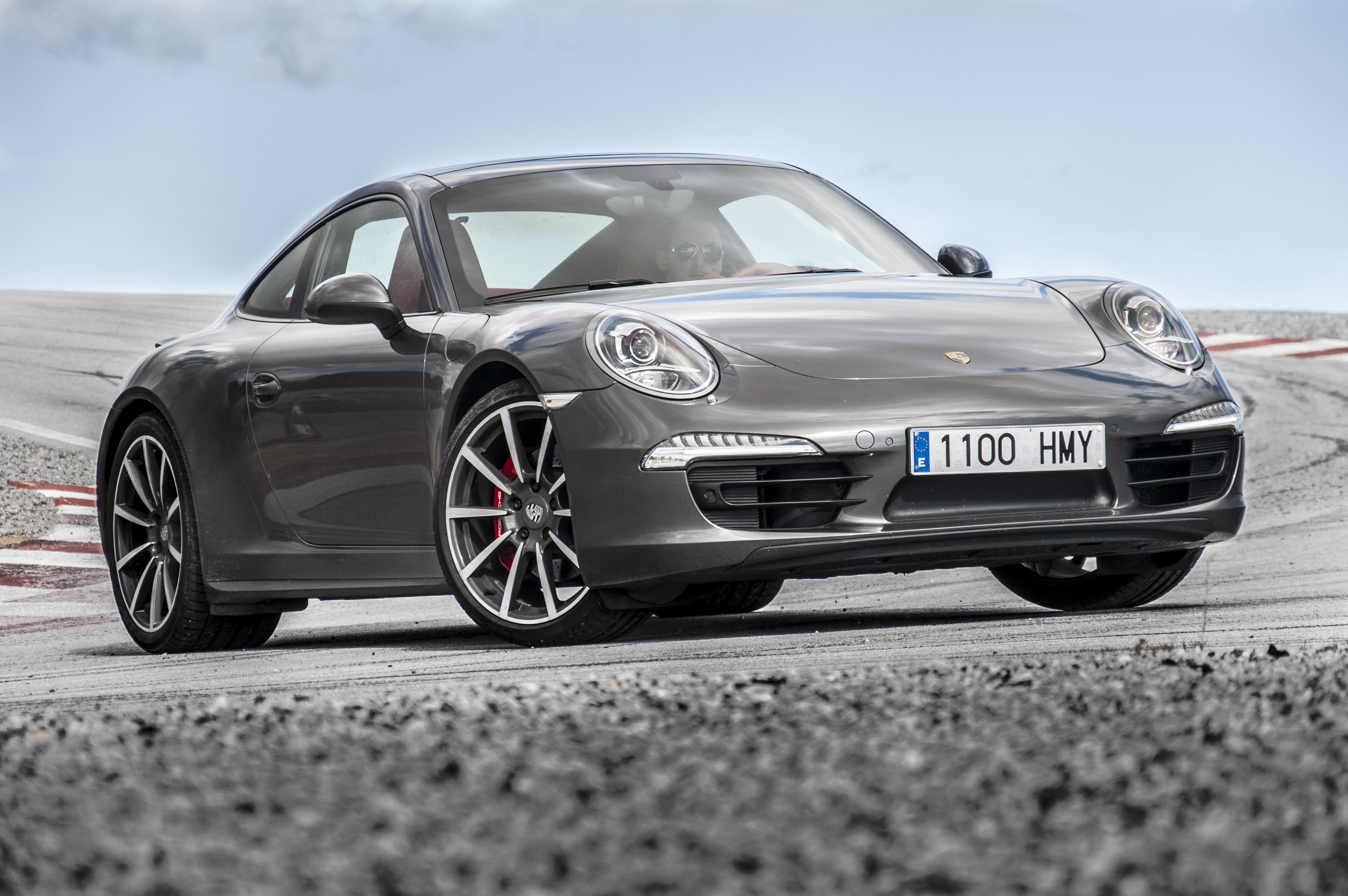
Porsche
"[248.8s] My 11s. Yes, car goes. What attracted you to Porsche? Porsche. My dad bought his first Porsche [258.2s] when I was like 10 years old."
Porsche is the car brand they’re talking about. The whole conversation is basically about how they got interested in Porsche cars.
Porsche is the German sports-car brand the episode is centered on, and the speaker’s personal story ties directly to the brand’s early influence. The transcript uses “Porsche” as the anchor for why they got into cars and what models they started with.

Porsche 356 Speedster
"[292.4s] So first ride in a Porsche. Probably your dad's was nine years old. What kind of what kind of car was it? [299.2s] This is a 356 Speedster. Oh, that's cool."
The Porsche 356 Speedster is an old-school Porsche from the 1950s/60s era. People love it because it’s light, fun to drive, and it’s a classic collector car.
The Porsche 356 Speedster is an early Porsche roadster based on the original 356 platform. It’s known for its lightweight, open-top style and is a highly collectible classic today.
Audi
"Volkswagen Audi Porsche 18 years. I worked for this. It was Leon C. Felton Volkswagen."
Audi is another German car brand mentioned alongside Volkswagen and Porsche. It’s relevant because it shows the speaker’s background across similar European cars before focusing on Porsche.
Audi is grouped with Volkswagen and Porsche as part of the speaker’s 18-year work history. Audi matters here because it’s part of the same broader German automotive ecosystem, and many skills transfer across brands (diagnostics, drivetrain knowledge, shop workflow).

Porsche 18
"...ng for Volkswagen when I was 15. Volkswagen Audi Porsche 18 years. I worked for this. It was Leon C. Felton V..."
The Porsche 918 Spyder is a very expensive, very fast supercar made by Porsche. It uses a mix of electric power and gasoline power. The podcast mentions it because it’s part of the speaker’s Porsche-related background.
The Porsche 918 Spyder is a high-performance plug-in hybrid supercar built to deliver extreme speed while using both electric and gasoline power. In your podcast context, it’s referenced alongside the speaker’s work history connected to Volkswagen/Audi/Porsche, which is why it likely comes up in a discussion of Porsche’s engineering and technology. It’s a notable car because it represents Porsche’s modern approach to performance and electrification.
Porsche 911 GT2 RS
"In your opinion, what is the most exciting car you have dealt with? We just had a GT2 RS in 2019. Yeah, I was here when it was here. We modified it."
The Porsche 911 GT2 RS is one of Porsche’s most hardcore track-focused 911s. It’s the kind of car that usually gets special upgrades and careful tuning, not just basic maintenance.
The Porsche 911 GT2 RS is a high-performance 911 variant built for track use, known for extreme power and minimal weight. In this segment, the shop had one in 2019 and even modified it, which is a big deal because GT2 RS parts and setup are specialized.
shifter broke
"[493.7s] We took that in 2000 to Elkhart Lake. We're out of America. [500.9s] And a shifter broke. So we didn't qualify. We started fast. And we won the race. [507.8s] Then we got it. It was a per workers choice. You got the plaque on the wall. Workers choice."
The shifter is what you use to select gears. If it breaks during a race weekend, you can’t shift properly, which can ruin qualifying or the race.
A broken shifter is a drivetrain control failure that can prevent qualifying or even make the car undrivable in racing. In a race context, it often points to linkage, shift mechanism, or internal transmission shift components.
workers choice
"[507.8s] Then we got it. It was a per workers choice. You got the plaque on the wall. Workers choice. [513.6s] So it means all the workers that worked the track voted our cars the coolest car on the track. [519.6s] What series was it in? It was sports club racing."
“Workers choice” means the people running the event voted for the car they liked most. It’s more about real-world impressions than formal judging.
“Workers choice” is an award voted on by the people working the event (track staff/crew), rather than a judging panel. It’s a good signal of what experienced insiders think looks and performs well.
sports club racing
"[513.6s] So it means all the workers that worked the track voted our cars the coolest car on the track. [519.6s] What series was it in? It was sports club racing. We did a lot of AMSA racing."
Sports club racing is organized racing by local clubs. People race cars in different classes, usually based on how the cars are set up.
Sports club racing is amateur-to-semi-competitive racing organized by clubs, often with classes based on car specs and modifications. It’s a common entry point for enthusiasts who want track time and competition without the full cost and structure of pro series.
12 hours of Sebring
"[529.3s] with TRG Racist Group, Kevin Buckler. Okay. I worked with them for 10 years crewing a car. [536.9s] We did 24 hours of Daytona, 12 hours of Sebring. We were on the road every weekend. [543.3s] Yeah. So how did that build come about? Van's analysis? Yeah."
The 12 Hours of Sebring is a long endurance race. Teams have to keep the car healthy and make smart pit decisions for half a day.
The 12 Hours of Sebring is another iconic endurance race, held at Sebring International Raceway. Like Daytona, it’s a test of durability and consistency, often with frequent pit stops and careful mechanical management.
24 hours of Daytona
"[529.3s] with TRG Racist Group, Kevin Buckler. Okay. I worked with them for 10 years crewing a car. [536.9s] We did 24 hours of Daytona, 12 hours of Sebring. We were on the road every weekend. [543.3s] Yeah. So how did that build come about? Van's analysis? Yeah."
The 24 Hours of Daytona is an endurance race where teams drive for a full day. The goal is to keep the car running and manage strategy over many hours.
The 24 Hours of Daytona is a famous endurance race at Daytona International Speedway, where teams race for a full day. Endurance events stress reliability, driver stints, pit strategy, and component durability.
hood scoop
"[557.5s] And then we just got we'd do something really cool. Put some really wide band night three body [562.5s] work on it. Had a hood scoop. And Dave Taylor was working with me. He did a lot of the build on it. [569.8s] He did the motor transmission. That's what I usually do."
A hood scoop is an opening on the hood that helps bring air in. On performance cars, it can help cooling or engine breathing.
A hood scoop is an intake feature on the hood that can feed air to the engine or improve airflow to a cooling system. On track cars, it’s often used to support higher-performance setups and can also be part of a race-inspired aesthetic.
motor transmission
"[562.5s] work on it. Had a hood scoop. And Dave Taylor was working with me. He did a lot of the build on it. [569.8s] He did the motor transmission. That's what I usually do. [573.6s] That was a wild car. Do you have a name for it?"
They worked on the engine and the gearbox. That’s important because the car needs to make power and shift reliably, especially on track.
“Motor transmission” here refers to work on both the engine (“motor”) and the gearbox (“transmission”). In a build context, that usually means matching power delivery to gearing and ensuring the drivetrain can handle track use.
GT2
"Right now I just want to modify my GT2, get it up to about 854. That'll be my next step on that. I need to fix it. This is not another power order. Yeah, I didn't know the GT2 was yours until last time I came here."
A “GT2” is a Porsche 911 built for track performance. People often modify them to make more power and improve how they drive on track.
“GT2” refers to Porsche’s 911 GT2 line, a track-focused model known for high power and strong factory racing heritage. In this segment, the host discusses modifying a GT2 and targeting a specific performance goal, which is a common enthusiast approach for these cars.
Do their research. Go to a good shop.
"Advice for someone that wants to modify their car. Do their research. Go to a good shop. I know what they're doing."
This is practical advice for performance modification: research the right approach and use a shop that understands the specific platform. For track-oriented cars like a Porsche GT2, the “right shop” matters because tuning, cooling, and reliability all have to work together.
tire separated
"And that 50 miles into the race, a tire separated at 192 miles an hour coming over a hill crest. It took about a half a mile to get the car under control, but I never went off the road."
A tire separation means the tire’s internal structure fails, causing the tread/sidewall to detach or come apart. At high speed this can be extremely dangerous, and the speaker’s description highlights why tire condition and inspection are critical for track use.
telemetry
"Maybe a quarter mile. When I was doing 192 miles an hour, we had full telemetry in the car. It shows that I was reaching speeds of 202 miles an hour on the straights."
Telemetry is like the car’s built-in data logging. It records what the car is doing so you can analyze speed and behavior later.
Telemetry is live or recorded vehicle data (like speed, acceleration, and sensor readings) used to understand performance and diagnose issues. Here, the speaker says they had full telemetry during a high-speed incident, which helps quantify what happened and how the car behaved.
quarter mile
"That was a little bit of a hint. Yeah. I started out with a Volkswagen Doom Buggy with about 200 horse. It did 1105s of a quarter mile. So I used to drag race it."
The quarter mile is a common drag-racing distance used to compare acceleration and performance. The speaker mentions their earlier car’s quarter-mile time as part of their drag-racing background, which frames how they measure speed and power.
autocross
"So I used to drag race it. And I used to autocross the Porsche Cup all the time. That was a lot of fun."
Autocross is a motorsport where drivers navigate a timed course with tight turns, usually on a closed lot or track. It’s a great way to learn car control and setup because small changes in tires, alignment, and suspension can show up quickly in lap times.
NASA
"I started road racing when I can't remember what year it was. Started with NASA and ended up instructing for NASA for about 10 years, 30 years ago."
NASA is a motorsports organization that runs track events and driver programs in the U.S. The speaker mentions starting road racing with NASA and later instructing for NASA, which indicates structured coaching and event participation rather than casual track days.
SCCA racing school
"I went to SCCA racing school. Back then it was true weekend. I finished the top of my class out of what? 150 students. I was number one, which was pretty good."
SCCA (Sports Car Club of America) runs driver schools and licensing programs. The speaker’s “top of my class” result highlights how these schools are used to build fundamentals and earn the credentials needed for more serious racing.
Thunder Hill
"We're going to Wisconsin. We're going to Vegas. We're going to Thunder Hill. We're going to SCCA."
Thunderhill is a race track where cars go around a course at speed. It’s the kind of track racers talk about when they’re describing where they competed.
Thunderhill is a well-known road course in Northern California used for club and professional racing. Mentioning it helps place the racing scene and the kind of track driving involved.
setup was lower than everybody's
"My setup was lower than everybody's. We won the race. And everybody thought it was a fluke."
A “setup” is how the car is adjusted for the track. Lowering the car can change how it grips and handles, so other teams may copy it if it gives an advantage.
“Setup” refers to the car’s track configuration—things like ride height, suspension settings, and alignment choices. A lower setup can change handling balance and tire behavior, which is why competitors may copy it if it works.
first race in that car
"The best series was that. The car was just built. It was the first race in that car."
“First race in that car” means they hadn’t really proven it yet in competition. It’s exciting, but it also means you can’t fully predict how it’ll behave.
Racing a car for the first time after building it is a major milestone because unknown issues can show up under real track loads. It also means the team’s setup and reliability are being proven immediately.
4.1 liter
"It's a 4.1 liter, making close to 450 horse. How much does it weigh?"
“4.1 liter” is the engine size—how much space the cylinders have. Bigger engines can make strong power, but the exact result depends on the whole setup.
“4.1 liter” refers to engine displacement, meaning the total volume of all cylinders combined. Larger displacement often helps make more torque, though actual output depends heavily on the engine’s design and tuning.
2,100 pounds
"How much does it weigh? I think it's 2,100 pounds. It's about 2,200 pounds."
That’s how heavy the car is. A lighter car usually feels faster because it’s easier to accelerate.
This is curb weight (or close to it), which strongly affects performance. Even with similar horsepower, a lighter car will generally feel quicker because it has less mass to accelerate.
exhaust
"We built the exhaust on the first two singers. We were helping them out with a strain to a few things out on the car."
The exhaust is the system that carries gases out of the engine. Changing or building it can change how the car sounds and how it breathes.
An exhaust system routes engine gases out of the car and can strongly affect sound, backpressure, and sometimes performance. Here, the shop built the exhaust for the first two cars, suggesting fabrication and tuning work.
prototype-to-first-car development
"Basically, we worked on the prototype car and then the first car. They actually don't sell. The green one? Was that the prototype?"
It sounds like they made a trial version first, then used what they learned to build the first “real” finished car.
This describes a common development workflow: build a prototype, test it, then build the first real/finished car based on what was learned. The speaker references prototype color/fitment work and then moving to the first completed build.
suspension
"Then he took down the part and built the white one. So it was a green one of the white. Then I helped him out with the suspension on it. Straightened out a few things on it."
Suspension is what connects the wheels to the car and controls how it rides and handles bumps. Adjusting it can make the car feel more stable and predictable.
Suspension components control ride quality, handling, and wheel alignment under load. The speaker says they helped with suspension on the car and straightened out issues, which implies setup/fabrication and correcting handling problems.
Road America
"But I've driven around Road America. I was pretty cool."
Road America is a well-known race track in the U.S. Drivers like it because it has lots of different corners and feels very “real” compared to smaller tracks. If someone’s driven there, it usually means they’ve done serious track time.
Road America is a famous road course in the U.S. (in Wisconsin) known for its long, flowing corners and elevation changes. It’s a common benchmark track for sports cars and racing drivers.
Daytona track
"And I've been around Daytona track. That's pretty crazy."
Daytona is one of the biggest and most famous racing venues in the U.S. It’s known for very fast racing, so driving there is a big deal for a track enthusiast.
“Daytona” refers to the Daytona International Speedway area, a major U.S. motorsports venue. Depending on context, it can involve high-speed oval racing or infield road-course configurations.
Request an Explanation
Heard something you'd like explained? We'll add it to this episode.
Sign in to request explanations for terms you heard.
Want to learn more?
Browse our glossary for plain-English explanations of automotive terms, jargon, and concepts.
Help improve this episode
See something that's not quite right? Our annotations are AI-generated and can sometimes miss the mark. Click the flag icon on any annotation to suggest a correction.