
Ron Ananian, The Car Doctor - Classic Car Doctor - October 3, 2015 - Hour 1 - The Yukon That Only Failed on the Bumps
About this episode
Ron Ananian kicks off by calling out Volkswagen’s emissions-software behavior, then pivots to a shop story: a 2003 GMC Yukon that “only failed on the bumps.” He traces the intermittent door-lock and dashboard flicker to a communication fault (U1360) caused by an interrupted data bus and a severely degraded ground wire—“Ground 103”—that flexes on rough roads. Afterward, he answers DIY questions on coolant, transmission fluid, fuel/carbons cleaning, and storage/condensation, plus driveline vibration and tire choices.
Ron Ananian, The Car Doctor, opens the hour with the story of a 2003 GMC Yukon that only acted up when it hit bumps in the road, proving once again that some of the toughest vehicle problems aren't found in a service manual. From there, Ron answers questions on coolant replacement for a 2011 Toyota RAV4, tracks down a troublesome shimmy on a 2008 Toyota FJ Cruiser, discusses a Cadillac fuel injection concern from the email bag, and offers advice on bumper paint repairs for a 2003 Pontiac. The hour wraps up with questions about engine oil for a Honda Pilot and an email discussing the pros and cons of winter tires.
Whether it's an intermittent electrical problem, routine maintenance, or preparing your vehicle for changing seasons, Ron explains it all in a way every driver can understand.
Car Advice Done Right.
- Grab your Car Doctor gear – T-shirts & more at CarDoctorShow.com
-
Follow the wrench – Instagram @ronananian for shop life & behind-the-scenes
-
Watch & learn – Auto repair tips & videos on our YouTube Channel
-
Got a car question? Call the Car Doctor Hotline 24/7 – (855) 560-9900
-
Join the conversation LIVE – Saturdays 2–4 PM Eastern
See omnystudio.com/listener for privacy information.

2003 GMC Yukon
"My Monday morning with this week at the shop at Ariotomotiva two thousand and three GMC Yukon sort of like a Chevy suburban, that type of thing, and the complaint was when you hit a bump, the vehicle's door locks would cycle, Sometimes the dashboard lights would flicker on and off various ones, and sometimes, in worst case scenario, the vehicle would shut off but always restart."
This is a 2003 GMC Yukon, a big SUV related to the Chevrolet Suburban. The interesting part here is that hitting a bump causes weird electrical behavior—locks and lights act up, and the vehicle can even shut off briefly and then restart.
The 2003 GMC Yukon is a full-size SUV closely related to the Chevrolet Suburban platform. In this episode, it’s notable because a bump triggers electrical issues like door locks cycling, dashboard lights flickering, and even the engine shutting off before restarting.

Chevrolet Suburban
"...thousand and three GMC Yukon sort of like a Chevy suburban, that type of thing, and the complaint was when y..."
The Chevrolet Suburban is a large SUV made to carry lots of passengers and luggage. People also use it for towing and long trips. It’s often discussed because it’s common, so mechanics hear the same types of problems from different owners.
The Chevrolet Suburban is a full-size SUV built for hauling people and cargo, typically with a long-wheelbase layout and strong towing capability. It often comes up in discussions because it’s a common family and work vehicle, so owners frequently report recurring wear items and maintenance concerns. In a “Car Doctor” style conversation, it’s the kind of vehicle where specific complaints can point to predictable maintenance needs.
communication fault code
"It scanned it for codes, multiple codes, different areas, [177.7s] things that made sense but didn't make but some things that really stood out, one of which was a communication fault."
A communication fault code is the car’s way of saying its computers aren’t communicating properly. Cars have a network that lets different modules “talk” to each other, and this code points to a problem on that network.
A communication fault code means the vehicle’s electronic modules aren’t talking to each other correctly. Modern cars use a shared network (often called a data bus) so sensors, computers, and body modules can exchange messages.
U thirteen sixty
"It had a U thirteen sixty I believe it was, which is a communication fault code. Somewhere inside the vehicle, [191.7s] its data bus was being interrupted for some reason, but nothing that pointed me towards this or that it was just I knew it had a communication fault, which I could have told you."
“U1360” is a code that usually points to a problem with the car’s internal communication network. If that network connection gets interrupted—like when you hit a bump—it can make different systems act up or reset.
“U1360” (spoken as “U thirteen sixty”) is a U-code that indicates a network communication problem between modules. The host ties it to the idea that the data bus is being interrupted, which can cause symptoms like flickering lights and modules cycling when the wiring connection is disturbed.
data bus
"Somewhere inside the vehicle, [191.7s] its data bus was being interrupted for some reason, but nothing that pointed me towards this or that it was just I knew it had a communication fault, which I could have told you."
A data bus is the car’s internal “message system” that lets different computers share information. If it gets interrupted, the computers can’t talk normally, and that can cause lights, locks, or even the vehicle to behave strangely.
A data bus is the vehicle’s internal wiring/network that carries messages between electronic control modules. If the data bus is interrupted (for example, by a loose connector or damaged wiring), modules can lose communication and may enter fault or shutdown/restart behavior.
wiring harness
"a quick scan under the dashboard, a quick look under the dashboard, if you will, showed me nothing looked like a wiring harness that as it was an installed in two thousand and three, back when this."
A wiring harness is the car’s main bundle of wires that carries electricity and signals. If a wire inside it gets damaged, the car can act like it has electrical problems even if other parts are fine.
A wiring harness is the bundled set of wires and connectors that distributes power and signals throughout the vehicle. When a harness wire degrades (like breaking down from many strands to one), it can cause intermittent communication faults or shutdowns because the electrical signal can’t carry reliably.
ground problems
"I found more than a few that talked about various ground problems on this particular generation GM vehicle, two of which are at the back of the intake manifold in exactly the one spot that you can never really see them."
A car’s electrical system needs a solid “return path” for electricity to work. If the ground connection is bad, the car can get confused and shut down or throw strange electrical problems.
In automotive diagnostics, “ground” refers to the electrical return path that completes circuits. Ground problems can cause weird faults like communication errors, intermittent shutdowns, or sensors/radios acting up because the car can’t reliably reference the same electrical baseline.
intake manifold
"two of which are at the back of the intake manifold in exactly the one spot that you can never really see them."
The intake manifold is part of the engine that channels air into the cylinders. If a wiring/ground problem is hidden near it, it can be tough to reach and easy to miss.
The intake manifold is the ducting that routes air (and often fuel/air mixture depending on the engine design) from the throttle/intake system into the engine’s cylinders. Ground points located “at the back of the intake manifold” are hard to access, which can make the fault difficult to diagnose.
Murphy's law
"Sort of thinking in the back of my mind, if it's hard to get to, and if it's in the world possible place to be repaired, that's probably what's wrong, because that's how Murphy's law always works, and something I'm gonna catch up to Murphy."
It’s the idea that the problem is usually in the annoying, hard-to-get-to place. In car repair, that often means the fault is hiding where you can’t easily see it.
In diagnostics, “Murphy’s law” is a shorthand for the idea that the hardest-to-reach or least-obvious location is often where the real problem is. The host uses it to explain why he focused on hidden ground points that were difficult to see or repair.
ground one O three, G one O three
"I started looking and testing grounds as best I could, even the ones I couldn't see ground one O three, G one O three. I shall forever remember that in my mind's eye."
Cars have multiple grounding points, and each one can be labeled in the wiring diagram. “Ground 103” means a particular spot where the car’s electrical system is supposed to connect to the metal body/engine.
“Ground 103” (G103) is a specific labeled chassis/engine ground point used in wiring diagrams. Mechanics test these named grounds because a failure at one exact location can create a repeatable set of electrical symptoms on that vehicle generation.
bell housing area
"I laid across the top of the motor and reached way down in the back of the bell housing area at the top of the intake and just found the wire that came down from the wiring harness."
The bell housing is the area where the engine connects to the transmission. If a wire is routed near there, it can be hard to see and reach during repairs.
The bell housing is the housing between the engine and the transmission that contains the connection area (like the clutch/torque converter depending on drivetrain). Reaching into the “bell housing area” suggests the mechanic was working around the engine-to-transmission wiring/connection space where certain harness wires and grounds can be routed.
PCM
"the main ground for the vehicle computer for the PCM YEP. And every time that PCM would turn on and off because when it lost G one O three"
The PCM is the car’s main computer for the powertrain—things like the engine and how the drivetrain runs. If it loses a key electrical connection, it can restart or shut off and cause strange dashboard/electrical symptoms.
PCM stands for powertrain control module, the car’s main computer for engine and transmission-related functions. When the PCM loses a critical ground, it can reset or shut down, which can trigger odd behavior across the vehicle’s electronics.
vehicle computer
"the main ground for the vehicle computer for the PCM YEP. And every time that PCM would turn on and off"
Modern cars have computers that control different systems. In this story, the computer is the PCM, and when its electrical connection is bad, it can make multiple systems behave incorrectly.
“Vehicle computer” refers to the electronic control units that manage vehicle functions. In this segment, the speaker ties the vehicle computer’s failures specifically to the PCM losing ground, which then causes cascading electronic glitches.
General Motors
"G one O three on a General Motors truck of that vintage is the main ground for the vehicle computer for the PCM"
General Motors is the car company. Here, the speaker is saying this wiring/ground problem happened on a GM truck from that era.
General Motors (GM) is the automaker whose truck platform the speaker says had the ground-related PCM fault. The point is that this kind of intermittent “ground” issue can be tied to specific GM wiring design choices on older vehicles.
bumpy road
"because when it lost G one O three on a bumpy road and that wire flexed enough that it was working itself back and forth, and the electronics couldn't carry the load"
Some car problems only show up when you hit bumps. The bumps shake the wiring, and if a connection is loose, it can lose contact briefly and make the car’s computer act up.
A “bumpy road” can create intermittent electrical faults by flexing wiring and connectors. Here, the speaker describes a ground wire that flexes enough to break contact intermittently, causing the PCM to cycle and the vehicle to do unpredictable things.
wiring loop
"they don't think about things moving and sagging and changing as vehicles ages roll on. I put a loop of wire in it so as the engine was going down the road with the vehicle"
Wires can break if they’re pulled tight every time the engine moves. Adding a little slack (a loop) lets the wire flex safely instead of snapping under constant strain.
A “wiring loop” is extra slack engineered into a harness so the wire can move with the engine and chassis without being constantly tensioned. The speaker argues that adding a loop prevents the new wire from breaking because it reduces stress as the engine shifts and twists while driving.
Powerframe grid technology and batteries
"We are going to be talking to the folks from Powerframe talking about Powerframe grid technology and batteries."
They’re about to talk about Powerframe’s battery-related technology. It’s more about energy storage than a specific car repair in this moment.
This segment is a discussion topic about Powerframe’s grid technology and batteries. It’s positioned as a future conversation in the next hour rather than a deep dive into a specific car system.
General Tire
"I want to talk about some changes entire technology a little bit later on down around the bottom of the hour from the folks at General Tire."
General Tire is a tire brand/company. The host says they’ll discuss tire technology later, but this excerpt doesn’t get into the details yet.
General Tire is mentioned as the source of a later segment about “entire technology” in the bottom of the hour. This excerpt doesn’t provide technical details, but it signals a tire-technology discussion coming up.
super long life pink Toyota coolant
"At the timeframe we're on a twenty eleven Toyota, you should be replacing coolant that has super long life pink Toyota coolant in it, which is is considered five year coolant, So twenty eleven through twenty sixteen model year."
“Super long life” coolant refers to an extended-life antifreeze formulation designed to last about five years under normal conditions. The host is specifically recommending replacement timing for 2011–2016 Toyota model years when that pink extended-life coolant is in the system.
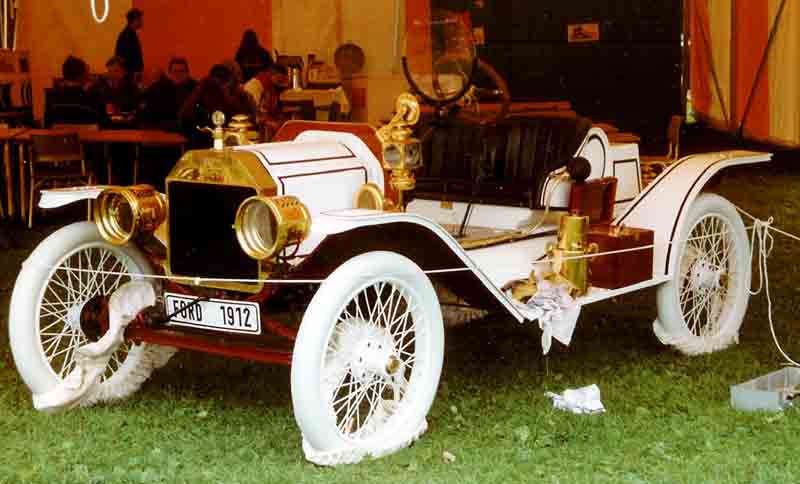
Ford At Model
"... twenty sixteen model year. Because I always look at model years depending upon when the vehicle was made. Y..."
coolant exchanger
"But keep [687.9s] in mind, without a coolant exchanger, you're never going to get everything out of the engine block. So an exchanger [693.4s] is in your best benefit."
A coolant exchanger is a machine that helps swap out old coolant for new coolant more thoroughly. If you only drain the radiator, some old coolant can stay inside the engine where you can’t easily reach it.
A coolant exchanger is a service tool that replaces old coolant with new coolant more completely than a simple drain-and-refill. Without one, a lot of old coolant can remain trapped in the engine block and cooling passages.
motor Medic
"all right, because if you're a do it yourself and you want to do it yourself, I can tell you about motor Medic, which is a new carbon cleaning product out on the market in the last couple of months. It's available at O'Reilly Autoparts and it [716.0s] flat out works."
Motor Medic is a specific cleaning product brand the host recommends. He says it’s meant to clean parts of the fuel and intake system, and you can buy it at O’Reilly Auto Parts.
Motor Medic is the brand of a fuel-system cleaning product the host recommends for DIY use. He claims it can clean both the fuel and intake portions of the system and is sold through O’Reilly Auto Parts.
O'Reilly Autoparts
"It's available at O'Reilly Autoparts and it [716.0s] flat out works."
O’Reilly Auto Parts is a store chain the host mentions for buying the cleaning product he recommends. It’s basically the “where you can get it” detail.
O’Reilly Auto Parts is the retailer the host names as a place to buy the Motor Medic cleaning product. This is relevant because it’s part of the “where to get it” guidance for the recommended fuel-system cleaner.
fuel system cleaning kit
"It's a professional fuel gray or it's [720.6s] a professional grade fuel system cleaning kit that you to do what yourself or can use. The neat thing about [727.4s] it is it cleans both the fuel and the intake side of the system."
A fuel system cleaning kit is a product you use to clean gunk and buildup in the fuel system. The host says it can also help clean the intake side so the engine can breathe and burn fuel more cleanly.
A fuel system cleaning kit is an aftermarket product used to remove deposits from parts of the fuel delivery system. In this segment, it’s described as cleaning both the fuel side and the intake side so it can reach areas like the intake manifold and valves.
tranny fluid
"I have a two thousand and nine Toyota Corolla okay, Greg Lamota in Mota and have never changed the tranny fluid in. It's got one hundred and twenty on it"
“Tranny fluid” is the fluid that keeps the transmission working smoothly. Like engine oil, it can wear out over time, so changing it can help the transmission last longer.
“Tranny fluid” is the transmission fluid that lubricates internal transmission parts and helps the transmission operate smoothly. Over time it can degrade, so the host argues that it’s still worth doing a draining-and-filling service rather than assuming it never needs attention.

two thousand and nine Toyota Corolla
"I have a two thousand and nine Toyota Corolla okay, Greg Lamota in Mota and have never changed the tranny fluid in. It's got one hundred and twenty on it runs great, bought it new on the stick."
This is a 2009 Toyota Corolla, and they’re talking about the transmission fluid. The host says that even if the car is marketed as “never needing fluid changes,” it still helps to change it on a schedule.
A 2009 Toyota Corolla is a mainstream compact car that uses an automatic transmission in many trims, and the discussion here is specifically about transmission fluid service. The key point is that the owner never changed the transmission fluid, and the host explains why that “lifetime fluid” idea may not be realistic.
Toyota WWS World Service Fluid
"Well, the problem is that's probably Toyota WWS World Service Fluid, and you know, they kind of got everybody buying into the fact that you never have to change fluid."
Toyota WS (World Service) Fluid is a specific transmission fluid formulation Toyota used in some models, often tied to the marketing message that it’s not necessary to change. The host counters that, in practice, it’s still a fluid with a service life and can be refreshed with a proper draining-and-filling procedure.
simple draining fill
"But in reality, it's a simple draining fill. And even on the."
A draining-and-filling service means you remove the old transmission fluid and add new fluid back in. It’s a straightforward maintenance step, not a complicated procedure.
A “draining fill” is a transmission service where you drain out some of the old fluid and refill with new fluid, rather than doing a full flush. The host frames it as the practical way to refresh fluid even when the car is marketed as having “lifetime” fluid.
dipstickless vehicle
"And even on the. Ones where it's a dipstickless vehicle, yours is not. You said you had a dipstick."
Some cars don’t have a dipstick to check transmission fluid. The host says that doesn’t automatically mean you can’t service it—you just have to use the proper method to check and fill.
A “dipstickless vehicle” is one where the transmission fluid level can’t be checked with a traditional dipstick. The host notes that even without a dipstick, the fluid service is still doable, and in this case the owner has a dipstick, making it easier to verify the level.
original equipment Toyota
"so I would change the fluid and make sure you're using original equipment Toyota or when you're out at your local O'Reilly see what they have as the equivalent to the Toyota WS fluid, and you know that'll work just fine."
This means using the exact type of fluid the car manufacturer recommends. Using the right fluid helps the transmission work the way it was designed to.
“Original equipment Toyota” means using the manufacturer-specified fluid (or an equivalent that meets the same specification) for the transmission. The host recommends sticking to Toyota’s fluid or a correct equivalent so the fluid’s properties match what the transmission was designed to use.
RAF four
"But I would change the fluid and that and by the way, as long as we're talking about it, going back to the RAF four, if you haven't changed the fluid in that, I would consider replacing that as well, simply because all fluids."
They’re talking about a Toyota RAV4 and the idea that its fluids shouldn’t be ignored forever. The host says fluids wear out over time, so changing them can prevent problems later.
“RAF four” is almost certainly the Toyota RAV4, and the host is saying that if you haven’t changed its fluids, you should consider replacing them too. The underlying concept is that fluids have a finite service life, even if marketing implies they last forever.
finite life
"Do have a finite life. Nothing lasts forever, much as marketing departments in car manufacturer wants you to believe."
Fluids don’t stay good forever. Heat and normal use slowly break them down, so eventually they need to be changed to keep things working right.
The host’s “finite life” point is that automotive fluids degrade with heat, time, and use rather than lasting indefinitely. Even if a manufacturer markets a fluid as “lifetime,” the practical reality is that refreshing it can help maintain transmission performance and longevity.

two thousand and eight Toyota FJ Cruiser
"So? I have a two thousand and eight FJ Cruiser [864.6s] with about one hundred and twelve thousand miles on it automatic right, It's been modified quite a bit. But I [873.2s] noticed I bought it last year, and I noticed between thirty five and forty five miles per hour when I'm in drive, it starts to shake"
A 2008 Toyota FJ Cruiser is a rugged SUV designed for off-road use. Here, the problem happens mainly when the truck is in “Drive” at low speed, where it starts shaking and chugging—so it’s likely related to how the drivetrain is set up under that load.
The Toyota FJ Cruiser (2008) is a body-on-frame SUV built around a rugged, off-road-focused layout and a strong low-speed drivability reputation. In this episode, the owner describes a shaking/chugging behavior specifically in Drive at low speeds, which points to a driveline or gearing/load issue rather than a general engine problem.
automatic
"with about one hundred and twelve thousand miles on it automatic right, It's been modified quite a bit. But I [873.2s] noticed I bought it last year"
“Automatic” means the car shifts gears on its own. Since the shaking happens in Drive, it suggests the issue may be tied to how the automatic transmission is behaving at that particular speed/load.
An automatic transmission changes gears by itself using hydraulic pressure and electronic controls, instead of a driver operating a clutch and shifter. In this case, the shaking only occurring in Drive helps narrow the diagnosis toward how the automatic is selecting gears or how the drivetrain is loaded at that speed.
lifted
"But my first [929.4s] question has to be you said it's modified. It's modified. [932.6s] How is it lifted? Is it bigger tires? Is is [936.6s] anything modified suspension or drive train wise"
A “lifted” truck means it’s been raised higher than the factory height. That can change how the drivetrain and suspension work together, and if it’s not set up correctly, it can lead to shaking or rough behavior.
A “lifted” vehicle has been raised higher than stock, usually with suspension lift components and often larger tires. Lifting changes driveline geometry and effective gearing, which can cause drivability issues like vibration or shudder if the rest of the setup (tires, gearing, angles) isn’t matched.
pinion
"The one concern about a lifted vehicle, and it may or may not be the case with you, but I just want to mention it is how. [957.4s] Did they lift it? Did they change pinion and to"
The pinion is part of the rear axle’s gear set that helps send power to the wheels. If you put bigger tires on a lifted truck but don’t adjust the axle gearing, the truck can feel like it’s struggling or shaking at certain speeds.
The pinion is the small gear in the differential that meshes with the ring gear to transmit power to the axle. When a vehicle is lifted and/or fitted with larger tires, the effective gearing changes; if the differential gear ratio isn’t adjusted accordingly, you can get symptoms like shuddering, lugging, or vibration under certain speeds and throttle/load conditions.
differentials
"[960.4s] the differentials? [962.0s] Is it?"
A differential is a part in the drivetrain that helps the wheels spin at different speeds, especially when you’re turning. If something is vibrating, mechanics may check whether the differential and related parts are aligned correctly.
A differential is the drivetrain component that lets the wheels on an axle rotate at different speeds, which is crucial when turning. In a vibration/angle discussion, people often suspect the differential’s mounting position or how it aligns with the driveshaft.
drive shaft
"In other words, if the rear end is the opinion of the rear end is horizontal, and they lifted it, they actually pushed the differential down or pulled it up too far, and now the drive shaft comes. [986.7s] In at an odd angle."
The driveshaft is the rotating shaft that sends power from the transmission to the axle. If it’s tilted at the wrong angle, it can shake or vibrate while you drive.
The driveshaft (drive shaft) transfers torque from the transmission to the rear axle in many rear-wheel-drive and four-wheel-drive layouts. If the rear differential or axle is shifted, the driveshaft can run at an “odd angle,” which can cause vibration.
coasting
"First question I've got is when this does this, Let's let's pick a number, thirty five miles an hour. When [1007.2s] this does this at thirty five miles an hour, is it there only when you're stepping on the gas or will it do it while you're coasting as well? [1016.6s] If I'm just kind of proved, like keeping my foot on the gas but not not pressing it harder or not coming off all the."
Coasting means you’re not pressing the gas, so the engine isn’t pushing the drivetrain as hard. Mechanics use that difference to figure out whether the vibration happens only under load or even when you’re just rolling.
In driveline diagnostics, “coasting” refers to driving without applying fuel (lift-off) so engine torque is reduced or removed. Comparing vibration behavior under throttle vs coasting helps determine whether the issue is related to torque load or driveline geometry.
four wheel drive
"like you're pushing the rear one way or the other in terms of where it's a position wise. This is [1049.6s] a four wheel drive vehicle, obviously, correct, right right? [1054.5s] I wonder that."
Four-wheel drive means power goes to all four wheels, not just the rear. Because there are more drivetrain parts involved, vibrations can be tied to specific driving conditions like speed, gear, or throttle.
Four-wheel drive (4WD) sends power to both the front and rear axles, typically using a transfer case and additional driveline components. That extra driveline complexity can make vibration diagnosis depend on which gear/speed/load condition is triggering it.
transfer case
"Is there a flange on the output shaft of the transfer case? And what I'm getting to is, I wonder if you could drive this vehicle without the rear drive shaft in it..."
In a 4x4 truck, the transfer case is a special gearbox that decides how power gets sent to the front and rear wheels. It can also provide a lower gear for tough terrain.
A transfer case is the gearbox in many 4x4 vehicles that splits engine power between the front and rear axles. It’s what enables low-range gearing and, depending on the drivetrain design, can route power to different wheels.
output shaft
"Is there a flange on the output shaft of the transfer case? And what I'm getting to is, I wonder if you could drive this vehicle without the rear drive shaft in it..."
The output shaft is the part of a drivetrain component that sends rotational power out to the next stage—here, from the transfer case toward the driveshaft. If something is wrong at or near the output, it can prevent power from reaching the wheels correctly.
drive shift
"in other words, drive it off the front shift. I wonder if you could, and I would do some research in that direction to see if you can."
This sounds like the host means the driveshaft—the part that sends power to the axle. They’re talking about removing it to test whether the issue goes away.
“Drive shift” here appears to be a mis-transcription for “driveshaft,” the rotating shaft that carries torque from the transfer case to an axle. The context is about removing the shaft to see if the problem changes.
tires balanced
"Because you know, we could have the conversation about are the tires balanced? Is there a bent drive shift in the truck?"
Balancing means adding small weights so the tire and wheel spin evenly. If they’re not balanced, you can feel shaking or vibration while driving.
Tire balancing is the process of matching weights to the tire/wheel so the assembly rotates smoothly. If tires aren’t balanced, they can cause vibration that may be mistaken for drivetrain or suspension problems.
rim bent
"Is there a bent drive shift in the truck? Is there a rim bent? But I'm sure you know what You're no dummy."
If the wheel rim is bent, the tire may wobble as it spins. That wobble can cause vibration while driving.
A bent wheel rim can cause vibration and uneven tire wear because the tire can’t rotate concentrically. It’s a common cause of shaking that can be confused with driveshaft or suspension issues.
suspension
"then I start looking at suspension and how that rearpinion is facing."
Suspension is what connects the wheels to the body and helps the truck ride smoothly. It also affects how the wheels and axles sit, which can change how drivetrain parts behave.
Suspension is the system of links, springs, and dampers that controls how a vehicle rides and how its wheels stay aligned with the road. When diagnosing driveline issues, suspension condition can matter because it affects axle angles and how components load under movement.

Cadillac SRX
"Francis, and I'll tell you what, absolutely, as a matter of fact, your Cadillac late model that it is the SRX that has GDI, that has gasoline direct injection fuel injection on it, and the motor Medic kit works very well on that..."
The Cadillac SRX mentioned here uses a fuel system called gasoline direct injection (GDI). That system can cause carbon to build up on the intake valves, so a cleaner product is used to help reduce that buildup.
The Cadillac SRX is a late-model Cadillac crossover that, in this context, is described as using GDI (gasoline direct injection). GDI sprays fuel directly into the combustion chamber, which can lead to carbon deposits on intake valves—so fuel-system cleaners are marketed to target that buildup.
GDI
"your Cadillac late model that it is the SRX that has GDI, that has gasoline direct injection fuel injection on it, and the motor Medic kit works very well on that..."
GDI stands for gasoline direct injection. It puts fuel straight into the engine, and that can allow carbon to build up on the intake valves, which is why cleaners are sometimes recommended.
GDI (gasoline direct injection) is a fuel-injection system that sprays gasoline directly into the engine’s cylinders instead of into the intake tract. Because fuel doesn’t wash over the intake valves like it does in older port-injection designs, carbon deposits can build up on the intake valves over time.
gasoline direct injection
"your Cadillac late model that it is the SRX that has GDI, that has gasoline direct injection fuel injection on it, and the motor Medic kit works very well on that..."
Gasoline direct injection means the engine sprays fuel directly where it burns. Since it doesn’t “wash” the intake valves the same way, carbon can build up there, and cleaners may help.
Gasoline direct injection describes an engine design where fuel is injected directly into the combustion chamber. This can change how carbon forms, especially on intake valves, which is why some fuel-system cleaners are specifically marketed as being effective for GDI engines.
intake valve
"because it gives it the ability because of the cleaner that it attacks the carbon deposits that are more prone to build up on the intake valve..."
The intake valve is the part that lets air (and fuel, depending on the system) into the engine. Some engines can get carbon buildup on it, and that’s what certain cleaners are trying to reduce.
An intake valve is the engine’s valve that opens to let the air-fuel mixture enter the cylinder. In GDI engines, carbon deposits can be more likely to accumulate on intake valves, which is why certain cleaners are advertised as attacking those deposits.
carbon deposits
"because it gives it the ability because of the cleaner that it attacks the carbon deposits that are more prone to build up on the intake valve..."
Carbon deposits are gunk that forms from burning fuel. In some engines, it can collect on the intake valves, and cleaners are used to help remove it.
Carbon deposits are soot-like buildup that forms inside engines from combustion byproducts. In GDI engines, carbon can accumulate on intake valves, which can affect airflow and drivability—so cleaners are marketed to dissolve or loosen that buildup.
bubbles
"When I it start, I noticed that they were like bubbles coming up from underneath the paint infections."
Paint bubbles usually mean something went wrong before the paint was applied—like moisture or dirt left under the paint. That prevents the paint from sticking, so it starts to lift and bubble.
Paint bubbling typically indicates trapped moisture, contamination, or poor surface preparation that prevents the paint from bonding correctly. In bodywork, bubbling can also appear when the underlying surface wasn’t properly cleaned, sanded, or primed before the topcoat was applied.
surface wasn't prepped properly
"Yeah, I disagree. I think he's I think he's trying to duck the bullet Marene from my seat here, and from your description, I think that the surface wasn't prepped properly and the paint is just lifting."
Proper paint preparation includes cleaning, sanding/scuffing, and applying the correct primer so the new paint can chemically and mechanically bond. If the surface isn’t prepped correctly, the paint can lift or peel because adhesion is weak.
belt shifted
"…somebody will bring the a tire that we sold them a year ago and they'll say, gee, you know this tire went bad. I don't understand why the belt shifted and so on."
Inside a tire there are strong layers (belts) that keep it shaped correctly. If those layers move out of place, the tire can wear unevenly or fail sooner. The mechanic is saying you can often trace the problem to a specific kind of damage.
“Belt shifted” refers to internal tire construction belts moving out of their intended position. Those belts help keep the tire’s shape and tread uniform, so a shift can lead to abnormal wear, vibration, or premature failure. In the context of the story, it’s used to explain why a tire can “go bad” even if it was sold only a year earlier.
cord was damaged
"You will see where the cord was damaged from either a pothole or a curb or something. There's always there's always a mark."
Tires have internal reinforcement strands (cord) that help them stay strong. If those strands get damaged from hitting something like a pothole or curb, the tire can start failing. The point here is that the damage usually leaves a clue you can inspect.
The “cord” is part of the tire’s internal reinforcement structure. When the cord is damaged—often from impacts like potholes or curbs—it can create a visible failure point and lead to issues like bulges or separation. The host emphasizes that you can usually find a physical “mark” that matches the damage source.
pothole
"You will see where the cord was damaged from either a pothole or a curb or something. There's always there's always a mark."
A pothole is a hole in the road. Hitting it can jolt your tire hard enough to damage it internally, not just on the surface. That’s why mechanics look for impact clues after a tire problem.
A pothole is a road surface defect that can create a sharp, high-impact hit to a tire or wheel. That kind of impact can damage internal tire components (like belts or cord) even if the outside looks only mildly affected. The host uses potholes as a common cause of “where the mark” comes from.
pain to adhere
"…is the old bumper weathered or damage somehow? That it's preventing or making it difficult for the pain to adhere…"
Paint has to stick to the surface to last. If the bumper is worn or damaged, the new paint might not bond well and could peel, forcing the job to be redone. That’s why he suggests checking whether replacing the bumper would help.
“Paint to adhere” means the paint needs a surface that bonds properly so it doesn’t peel or fail prematurely. If the old bumper is weathered or damaged, the paint may not stick well, leading to a redo. The host’s advice is to consider replacing the bumper if surface condition will compromise adhesion.
aftermarket
"I can almost guarantee if they can't get a new one out of General Motors, the aftermarket somewhere will have one in terms of one of the off shoot body suppliers that are out there."
The aftermarket is the market for replacement parts made by companies other than the car’s original maker. If the original part is unavailable or expensive, aftermarket options can still get the car repaired.
The “aftermarket” is the network of companies that make replacement parts not supplied by the original automaker. When a new factory part is hard to find, aftermarket suppliers (including body-part specialists) can often provide compatible replacements.
non original equipment parts
"More than a few repairs being done in body shops right now as we speak are using non original equipment parts because insurance companies like that. It saves them money in the long. Run and helps them put cars back on the road that they're required to repair."
These are replacement parts made by other companies, not the same brand that built your car originally. They’re often cheaper, so repair shops and insurance companies may choose them to keep repair costs down.
“Non original equipment parts” are aftermarket replacement parts that aren’t made by the vehicle’s original manufacturer. Body shops and insurers may use them to reduce cost while still repairing the car to be road-legal and cosmetically correct.
insurance companies
"More than a few repairs being done in body shops right now as we speak are using non original equipment parts because insurance companies like that. It saves them money in the long. Run..."
Insurance companies help pay for repairs after crashes, and they can affect what parts the shop is allowed to use. Because they want to control costs, they may push for cheaper replacement parts.
In collision repair, insurance companies often influence which parts get used and how repairs are approved. Their cost-control incentives can lead to selecting aftermarket or non-original parts instead of factory replacements.

two thousand and five Dodge Durango
"I have a two thousand and five Dodge Durango in the shop right now. Sad story in a way, the engine failed on it back in May, and there was a warranty on it..."
This is a 2005 Dodge Durango SUV. The host is describing a case where the engine failed and the shop had to wait on parts before the SUV could be put back on the road.
A 2005 Dodge Durango is a mid-size SUV from Dodge that uses a conventional drivetrain layout with an engine and transmission. In this story, the key issue is that the engine failed and the repair required additional parts to make the vehicle drivable again.
ground wire
"They pinched the ground wire between the engine and the transmission and the ground wire at the back of the firewall sticking out through the hole in the bell housing."
A ground wire is the electrical connection that helps the car’s electronics work properly. If it gets pinched or placed wrong, the car can have weird electrical problems until it’s fixed.
A ground wire provides an electrical path back to the vehicle’s chassis/negative side, which is essential for sensors, modules, and lighting to work correctly. If a ground wire is pinched or misrouted, it can cause intermittent faults or prevent systems from functioning reliably.
shift cable
"The car needs two major parts in order. To make it driveable again, and neither one is related to the workmanship or the lack of workmanship on the engine repair one. It needs a shift cable, the column shifter."
The shift cable is the cable that carries your gear-shift movement from the shifter to the transmission. If it breaks, you can’t shift gears the normal way, so the car may be stuck until it’s replaced.
A shift cable is the linkage that connects the driver’s column shifter to the transmission’s internal shift mechanism. If the shift cable breaks, the driver may not be able to select gears normally, which is why the Durango can’t be made fully drivable.
column shifter
"It needs a shift cable, the column shifter. The shift cable itself is broken and the owner has been shifting it with a pair of ice scripts..."
A column shifter is the gear lever that sits on the steering column. It’s the part you move to choose gears, and on some cars it works through a cable to the transmission.
A column shifter is a gear selector mounted on the steering column rather than on the center console. In vehicles that use a shift cable, the column shifter’s movement is transmitted to the transmission through that cable.
back order
"The shift cable is on national back order from Chrysler. There is demand for eighty three."
A back order means the part isn’t available right now, so the shop has to wait for it to be made or delivered. That waiting can keep the car out of service until the part arrives.
A back order means the part is not currently available for immediate sale and must be produced or shipped later. This episode uses it to explain why the Durango can’t be finished: the shift cable is on national back order from Chrysler.
Chrysler
"The shift cable is on national back order from Chrysler. There is demand for eighty three."
Chrysler is the car company behind the parts being waited on. In this story, the shift cable is delayed because Chrysler doesn’t have enough of them available right now.
Chrysler is the automaker responsible for the parts supply chain referenced here. The host says the shift cable is on national back order from Chrysler, highlighting how OEM (original equipment manufacturer) inventory affects repair timelines.
EVAPP
"[1643.4s] The gas tank has [1646.4s] a leak in it. [1647.7s] It has an EVAPP. [1648.6s] Fault code diagnosed that and when I looked at it..."
EVAP is the system that keeps fuel vapors from escaping into the air. When the scan shows an EVAP-related fault, it usually means something in the tank/lines/valves isn’t sealed or working right.
EVAP (evaporative emissions) systems route fuel vapors from the gas tank to be burned in the engine instead of venting to the atmosphere. EVAPP here refers to an EVAP-related fault/monitoring code that points to a problem in that vapor-control system, often involving the tank, lines, or valves.
fuel treatment
"Yeah? A good question. I leave it half full and I put fuel treatment in it, okay, and then when I get back into town, I fill it up with premium, right, and then usually drive about half a tank."
Fuel treatment is a chemical additive you add to gas to help it last longer without going bad. It’s meant to prevent problems that can happen when gas sits for weeks or months.
Fuel treatment is an additive you put into gasoline to help it stay stable during storage and reduce issues like oxidation and gum formation. In this context, it’s being used to keep the fuel from degrading while the car sits or is only driven intermittently.
premium
"A good question. I leave it half full and I put fuel treatment in it, okay, and then when I get back into town, I fill it up with premium, right, and then usually drive about half a tank. Right."
Premium is gas with a higher octane rating. Octane helps the fuel resist knocking in engines that need it, so it can run more smoothly and safely.
Premium refers to higher-octane gasoline. Higher octane helps prevent knock (detonation) in engines that are designed to use it, and it’s often recommended when an engine’s tune or compression makes lower-octane fuel less suitable.
gasoline loses its pop
"Right. You know, keep in mind that gasoline loses its pop and starts to I don't the words not dis delayed, it starts to break down and separate intodividual components, where I'm told after thirty to forty five days now they say, yet is just really horrible compared to what it used to be."
“Gasoline loses its pop” is a colloquial way of describing fuel degradation over time. As gasoline ages, its components can separate and change behavior, which can make starting, running, and fuel system cleanliness worse—especially after weeks or months of storage.
moisture
"But going back to the oil question, moisture is going to be your culprit here. That's gonna be your big enemy. You know, if you're back there every three months and you're driving it, I'm sort of a fanatic."
Moisture means water getting into the engine or oil. When a car sits, water can build up and cause rust or other damage, so it’s something you want to prevent.
Moisture is water contamination, and it can be a major problem for stored vehicles because it promotes corrosion and can lead to water collecting in places like the crankcase. Here, the host points to moisture as the main enemy when the car isn’t used regularly.
water laying up there
"But I pulled the valve covers off to do something this spring, and there was water laying up there that had just condensed inside the covers. And that's a fairly heated, fairly constant environment."
He’s talking about water that condensed inside the engine’s top area under the valve covers. That kind of water buildup can be harmful because it can mix with oil and lead to rust.
“Water laying up there” describes condensed water that collects under the valve covers. Condensation can happen when temperatures cycle, and it’s especially concerning because it can mix with oil and accelerate corrosion inside the engine.
valve covers
"But I pulled the valve covers off to do something this spring, and there was water laying up there that had just condensed inside the covers. And that's a fairly heated, fairly constant environment."
Valve covers are the top covers on the engine that help keep oil in and protect the moving parts above the cylinders. Taking them off lets you check whether moisture or buildup has formed.
Valve covers are the housings on top of an engine that protect the valvetrain and seal in oil. Removing them lets you inspect for issues like condensation or sludge, which can indicate moisture problems when a car sits.
fuel system cleaner
"And think about that fuel system, think about adding some good fuel system cleaner to that while you drive it with the. Premium fuel in there. And I think you'll be all right, Rob."
Fuel system cleaner is a product you add to gas to help remove gunk inside the fuel system. It can help keep fuel delivery components from getting clogged with deposits.
Fuel system cleaner is an additive designed to clean deposits in parts of the fuel system, such as injectors and intake passages. The host suggests adding it while driving on premium fuel to help keep the system cleaner over time.
tread cushioning system
"All right, it's got twenty five percent better tread life, it's got a tread cushioning system which provides a quieter ride, and it's just it's made better."
A tread cushioning system is a tire design meant to make the ride smoother and quieter. It helps absorb bumps so you don’t feel and hear every rough patch as much.
A tread cushioning system is a tire design feature intended to reduce road noise and soften harsh impacts. In this segment, it’s cited as part of why the newer HTS sixty tire should provide a quieter ride.
tread life
"All right, it's got twenty five percent better tread life, it's got a tread cushioning system which provides a quieter ride, and it's just it's made better."
Tread life means how long the tire’s usable surface lasts before it wears out. Longer tread life usually means you replace the tire less often.
Tread life is how long a tire’s tread compound and grooves are expected to last before wearing down. Here, the host claims the HTS sixty has “twenty five percent better tread life,” implying longer-lasting grip and usability.

Honda Pilot
"And it'll fit that Honda of yours. You said, Honda Pilot. [2125.4s] It'll fit that Hond of yours, just flat out perfect."
The Honda Pilot is a family SUV. Here, they’re talking about putting the right winter tires on it so it drives well in cold weather and on rough roads.
The Honda Pilot is a midsize SUV from Honda, known for family-friendly space and comfort. In this segment, it’s mentioned as the specific vehicle Chris wants to prepare for winter, so the tire choice matters for grip and ride quality.
Request an Explanation
Heard something you'd like explained? We'll add it to this episode.
Sign in to request explanations for terms you heard.
Want to learn more?
Browse our glossary for plain-English explanations of automotive terms, jargon, and concepts.
Help improve this episode
See something that's not quite right? Our annotations are AI-generated and can sometimes miss the mark. Click the flag icon on any annotation to suggest a correction.