
Mark Mills from the Manhattan Institute joins Ron Ananian to discuss the current state and future of electric vehicles (EVs). The conversation delves into the economic implications of EV adoption, including the high costs of production, the environmental impact of battery manufacturing, and the geopolitical issues surrounding mineral sourcing. Mills critiques the narrative that EVs are a panacea for climate change, emphasizing the complexities of emissions and the challenges of charging infrastructure. The episode also touches on the safety concerns at charging stations and the broader implications of transitioning to an electric vehicle economy.
From Thanksgiving 2022, Ron revisits a candid conversation with Mark Mills of the Manhattan Institute, examining the electric-vehicle market at a pivotal moment. What unfolds is a revealing discussion about both the promise that fueled the EV push and the practical challenges that have since reshaped the conversation—costs, infrastructure, resources, and consumer expectations. With the benefit of hindsight, this look back highlights where the optimism was justified, where reality intervened, and why the EV story is far more complicated than the headlines ever suggested.
"I read about this guy who bought a 2020 Porsche Cayman that was well loved."
The Porsche Cayman is a sports car known for its great handling and performance. The 2020 version is one of the latest models and is loved by many car fans for its design and speed.
The Porsche Cayman is a mid-engine sports car that offers a balance of performance and handling. The 2020 model features a sleek design and powerful engine options, making it a popular choice among driving enthusiasts.
"From Toyota's to Aston Martin's, eBay has thousands of cars and the largest online selection of vehicle parts and accessories."
eBay is a website where you can buy and sell almost anything, including cars and car parts. Many people use it to find specific items they can't find in stores.
eBay is an online marketplace where users can buy and sell a wide variety of items, including cars and automotive parts. It has become a popular platform for car enthusiasts looking for rare parts or vehicles.
"eBay has thousands of cars and the largest online selection of vehicle parts and accessories."
Vehicle parts and accessories are the different pieces that make up a car or things you can add to it, like new tires or custom seat covers. They help keep the car running well or make it look nicer.
Vehicle parts and accessories refer to the various components and add-ons that can be used to repair, enhance, or customize a car. This includes everything from engines and brakes to floor mats and seat covers.
"What I would think about doing is, and not to do Loctite, I wouldn't use Loctite in this case."
Loctite is a type of glue that helps keep screws and bolts from coming loose. It's often used in cars to make sure parts stay secure.
Loctite is a brand of adhesives and sealants, commonly used in automotive applications to secure bolts and prevent loosening due to vibration. It's particularly known for its thread-locking compounds.
"But how about a dab of liquid Teflon? White liquid Teflon."
Liquid Teflon is a kind of sealant that helps prevent leaks in pipes and other parts. It makes surfaces slippery so they don't stick together.
Liquid Teflon is a type of sealant that can be used to create a barrier against leaks and is often used in plumbing and automotive applications. It provides a slippery surface that helps prevent sticking and wear.
"the company which is the largest automaker in North America outlined the plan to achieve this goal to investors at a Splash event in Manhattan. GM said it will sell one million EVs annually starting in 2025."
GM stands for General Motors, a big car company in the U.S. They are planning to make and sell a lot of electric cars in the coming years.
GM, or General Motors, is the largest automaker in North America and has plans to increase its electric vehicle (EV) production significantly. They aim to sell one million EVs annually starting in 2025.
"GM said it will sell one million EVs annually starting in 2025. Well, they might, they might even have a hard time manufacturing a million a million a year, but never mind selling them."
EVs are electric vehicles, which means they run on electricity instead of gas. Many car companies are starting to make more electric cars to help the environment.
EVs, or electric vehicles, are cars powered entirely by electricity rather than gasoline or diesel. The shift towards EVs is a significant trend in the automotive industry as manufacturers aim to reduce emissions and reliance on fossil fuels.
"And now, you know, silly me, I thought that politicians gave us subsidies to reduce the cost of the car. We're going to buy it more expensive."
Subsidies are like financial help from the government to make things cheaper for people. For cars, this means the government might give money to help lower the price of electric vehicles so more people can afford them.
Subsidies are financial support provided by the government to help reduce the cost of goods or services. In the automotive context, they are often used to promote the development and purchase of electric vehicles by lowering their prices for consumers.
"But no, apparently, General Motors is telling us, thank you very much. We'll take that money. It'll make it possible for us and their words to raise the price of the car because we're losing money."
General Motors is a major car company in the United States that makes many well-known car brands, including Chevrolet and Cadillac. They have been around for a long time and are one of the biggest car manufacturers globally.
General Motors (GM) is an American multinational corporation that designs, manufactures, markets, and distributes vehicles and vehicle parts. It is one of the largest automakers in the world and has been a significant player in the automotive industry for over a century.
"Where is it written that we have to underwrite the creation or the marketing of the electric vehicle as the American public or, you know, the world?"
An electric vehicle is a car that runs on electricity instead of gasoline. They are considered better for the environment because they produce less pollution than regular cars.
An electric vehicle (EV) is a type of vehicle that is powered entirely or partially by electricity, using electric motors instead of traditional internal combustion engines. They are often promoted for their lower environmental impact compared to gasoline or diesel vehicles.
"If the CO2 question is not to use an indelicate word, the question of whether it does dramatically reduce CO2 emissions is sort of a fraudulent claim."
CO2 emissions are gases released into the air that can harm the environment. This part of the discussion talks about how making electric car batteries can create a lot of these gases even before the car is used.
CO2 emissions refer to the release of carbon dioxide gas into the atmosphere, which is a significant contributor to climate change. The discussion here highlights concerns about the overall environmental impact of electric vehicles compared to traditional combustion engines, particularly in terms of emissions produced during battery manufacturing.
"Battery, remind your listeners who, you know, forgotten this from our year ago discussion. The electric car battery weighs about 1,000 pounds."
An electric car battery is what powers electric cars. It's heavy and needs a lot of materials to make, which can have an environmental impact before the car is even used.
An electric car battery stores energy for electric vehicles, enabling them to run without a traditional internal combustion engine. These batteries are typically large and heavy, often weighing around 1,000 pounds, and are made from various metals and materials that require significant energy and resources to produce.
"So much so that, and Volkswagen has put their own study on this, that their website, God bless them for being honest, so much so that in the calculation Volkswagen did for Europe..."
Volkswagen is a well-known car company that makes many types of vehicles, including electric ones. They conducted a study about how their electric cars compare to diesel cars in terms of emissions.
Volkswagen is a major German automotive manufacturer known for producing a wide range of vehicles, including electric cars. The mention of their study indicates their efforts to assess the environmental impact of their electric vehicles compared to traditional diesel models.
"...you're admitting more CO2 than if you just drove the diesel SUV that it kind of replaced."
A diesel SUV is a type of vehicle that runs on diesel fuel, which can be more efficient than regular gasoline. This part of the conversation compares how much pollution electric cars make versus diesel SUVs.
A diesel SUV is a sport utility vehicle powered by a diesel engine, known for its fuel efficiency and torque. The discussion contrasts the emissions of electric vehicles with those of diesel SUVs, suggesting that in some cases, the electric vehicle may produce more CO2 emissions during its lifecycle.
"So after this guy gets a great deal on his dream car, he rebuilds the whole thing with all these parts he found on eBay."
To rebuild a car means to fix it up, often by replacing old parts or making repairs so that it runs well again. It's like giving the car a new life.
Rebuilding a car typically involves restoring or replacing various components to bring the vehicle back to a functional or improved state. This can include mechanical, electrical, and aesthetic work.
"You're ready to go daily driver, your next Resto mod, Hello Lotus Elon, and the parts to finish it."
A restomod is when someone takes an old car, fixes it up, and adds new parts to make it better to drive. It's a way to have a classic car that feels more modern and comfortable.
A restomod is a classic car that has been restored and modified with modern components for improved performance and comfort. This trend allows enthusiasts to enjoy the vintage look while benefiting from contemporary technology.
"... behaviors. The New York Times, Washington Post, New Yorker, we'll call them normally liberal, politically l..."
The Chrysler New Yorker is a large, fancy car that was made a long time ago, known for being comfortable and stylish. It was popular among people who wanted a luxury vehicle, and it's often talked about because it represents a certain era of American cars. Many people appreciate it as a classic car today.
The Chrysler New Yorker was a full-size luxury car produced by Chrysler from the 1940s until the early 1990s. It is significant for its role in American automotive history, representing luxury and comfort during its time, and is often discussed in the context of classic cars and their cultural impact. The New Yorker is remembered for its spacious interiors and advanced features for its era.
"Performance brakes, suspension, body panels, the works, guaranteed to fit."
Suspension is the system in a car that helps it ride smoothly and stay stable on the road. It includes parts that absorb bumps and keep the tires in contact with the ground.
The suspension system of a vehicle is responsible for supporting the weight of the car, absorbing shocks from the road, and maintaining tire contact with the road surface. Upgraded suspension components can enhance handling and ride quality.
"Performance brakes, suspension, body panels, the works, guaranteed to fit."
Performance brakes are special brakes that help a car stop faster and work better, especially when driving fast or on a race track. They are stronger than regular brakes.
Performance brakes are upgraded braking systems designed to provide better stopping power, heat dissipation, and overall performance compared to standard brakes. They are often used in racing and high-performance vehicles.
"But I want to hit the point of charging stations. You testified this year in front of Congress."
Charging stations are places where you can plug in and charge your electric car. Just like gas stations for regular cars, these stations help keep electric cars powered up.
Charging stations are locations equipped with electric vehicle (EV) chargers that allow drivers to recharge their vehicles. They are essential for the widespread adoption of electric vehicles, as they provide the necessary infrastructure for recharging away from home.
"It charges overnight on a regular 220 outlet. You know, six to eight hours depends on the car and the battery size."
A 220 outlet is a special type of electrical socket that can charge electric cars faster than regular ones. It's similar to the outlets used for heavy appliances like dryers.
A 220 outlet is a type of electrical outlet that provides higher voltage than standard 110 outlets, allowing for faster charging of electric vehicles. This is commonly used for larger appliances and can significantly reduce charging time for EVs compared to standard outlets.
"But let's just say six hours. The superchargers, which we hear a lot about with what you put in the filling station, because you can't sit there for six hours, are extremely high volts."
Superchargers are special charging stations for electric cars that can fill up the battery much quicker than regular home chargers. They're often located along highways so you can charge your car while on a long trip.
Superchargers are high-voltage charging stations designed for electric vehicles, allowing them to charge much faster than standard home outlets. They are typically found along highways and can provide a significant charge in a short amount of time, making long-distance travel more feasible for EV owners.
"You know, 300,000 volts, 400,000 volts, some are six or 800,000 volt chargers."
Voltage is like the pressure of electricity. Higher voltage means electricity can flow faster, which helps charge electric cars more quickly.
Voltage is a measure of the electric potential difference between two points. In the context of electric vehicle chargers, higher voltage can lead to faster charging times for the vehicle's battery.
"But as you know, if anybody who's got a gasoline station knows, get your watch out and try how long it takes to fill your gas tank up."
Charging time is how long it takes to fill up the battery of an electric car. Some chargers can do it quickly, while others take longer, just like filling a gas tank.
Charging time refers to the duration it takes to recharge an electric vehicle's battery. This can vary based on the charger's power output and the vehicle's battery capacity.
"But as you know, if anybody who's got a gasoline station knows, get your watch out and try how long it takes to fill your gas tank up."
A gasoline station is where you go to buy fuel for cars that run on gas. You fill up your tank there, just like you would fill a water bottle.
A gasoline station, also known as a gas station, is a facility that sells fuel and lubricants for motor vehicles. It typically has pumps for dispensing gasoline and may also offer convenience store items.
"If you're not driving a tandem double, you know, F-150, but, you know, it's five minutes, four minutes till a gas tank up..."
A tandem double is a big truck that pulls two trailers at once. It's used for carrying a lot of stuff, like goods or materials, on the road.
A tandem double refers to a type of truck configuration where two trailers are towed by a single truck. This setup is often used for transporting large loads efficiently.
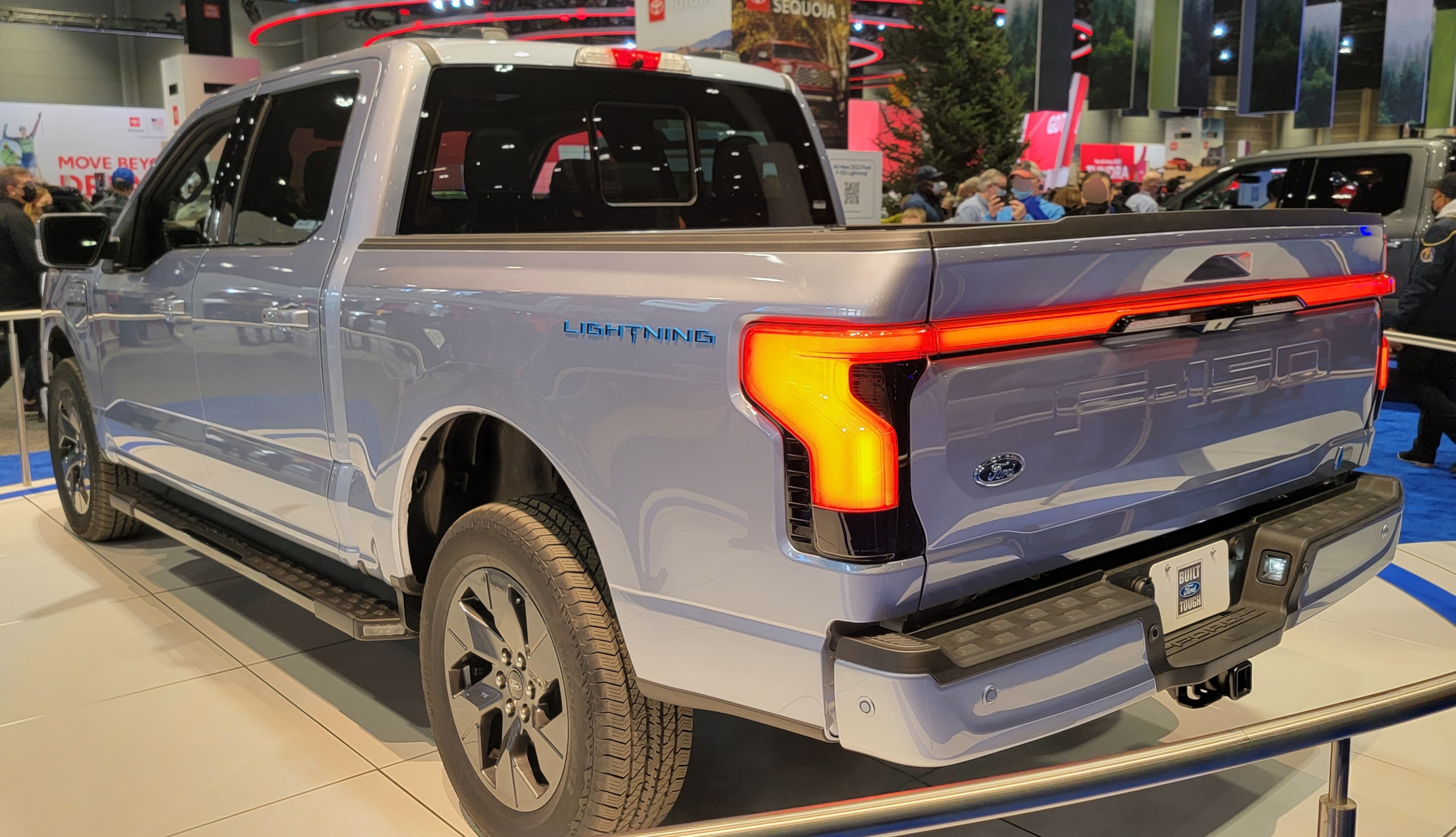
"how long it takes to fill your gas tank up. If you're not driving a tandem double, you know, F-150, but, you know, it's five minutes, four minutes till a gas tank up, beginning and end, and six minutes maybe."
The Ford F-150 is a big truck that many people use for work or to carry things around. It's popular because it's strong and can tow heavy loads, making it useful for lots of different jobs. People often talk about it when discussing how long it takes to fill up the gas tank or how it performs on the road.
The Ford F-150 is a full-size pickup truck that has been one of the best-selling vehicles in the United States for decades. Known for its durability, towing capacity, and versatility, it is often used for both work and personal purposes. Its significance in automotive discussions often revolves around its performance, fuel efficiency, and the practicality it offers to drivers.
Select text to request an explanation
This is an iHeart podcast.
Guaranteed human.
The worst part about loving cars might just be buying them
and all the parts.
But on eBay, behind every car and part
is a story waiting to be shared.
I read about this guy who bought a 2020 Porsche Cayman
that was well loved.
I mean, there are plenty of Caymans in great condition
on eBay, but this one needed some work.
This guy buys it and rebuilds the whole thing
all with parts he found on eBay.
And now that nearly scrapped Cayman
is out tearing up the track.
From Toyota's to Aston Martin's,
eBay has thousands of cars and the largest online selection
of vehicle parts and accessories.
eBay, things, people, love.
Save on appliances at the Home Depot with up to $1,000 off
plus up to an extra $500 off select appliances
like Whirlpool that can keep up with your busy routine.
The Home Depot has Whirlpool laundry appliances
with fan fresh.
This feature fans and tumbles your laundry after it's done
to help keep your clothes fresh
until you're ready to grab them.
Shop now and get up to $1,000 off
plus free delivery on select appliances at the Home Depot.
How doers get more done?
Free delivery on appliance purchases of $999 or more
offer valid January 8th through the 28th
US only C-store online for details.
Support for the show comes from Public,
the investing platform for those who take it seriously.
On Public, you can build a multi-asset portfolio
of stocks, bonds, options, crypto,
and now generated assets,
which allow you to turn any idea
into an investable index with AI.
It all starts with your prompt
from renewable energy companies
with high free cash flow to semiconductor suppliers
growing revenue over 20% year over year.
You can literally type any prompt and put the AI to work.
It screens thousands of stocks,
builds a one of a kind index
and lets you back test it against the S&P 500.
Then you can invest in a few clicks.
Generated assets are like EFTs with infinite possibilities,
completely customizable and based on your thesis,
not someone else's.
Go to public.com slash podcast
and earn an uncapped 1% bonus
when you transfer your portfolio.
That's public.com slash podcast.
Paid for by Public Investing, Brokerage Services
by Open to the Public Investing Inc.
Member Fianna Rae SIPC.
Advisory Services by Public Advisors LLC.
SEC registered advisor.
Generated assets is an interactive analysis tool.
Output is for informational purposes only
and is not investment recommendation or advice.
Complete disclosures available at public.com slash disclosures.
Ready to change your life for just $2 a day?
Orange Theory Fitness delivers one hour workouts
that combine strength and cardio
to help you burn fat, build muscle and feel unstoppable.
Right now get a full month of unlimited classes
for just $62.
Don't wait, this offer ends soon.
Visit orangetheory.com or your local studio
and start your transformation today.
Offer ends January 31st, 2026.
New members only.
Premier membership, performance monitor
and monthly billing required.
Discount applies to first month only.
Other terms apply.
See studio for details.
Ron Ananian.
Got a new car in the driveway.
Do you like it?
Do you enjoy driving it?
Is it everything to you?
You know, is it, oh my gosh, I sit in this car.
I'm gonna keep this car forever.
I love it so much.
I'm really gonna keep this one a long time.
Not gonna happen.
My baby drove a brand new Cadillac.
I said my baby drove a brand new Cadillac.
The car doctor.
What I would think about doing is, and not to do Loctite,
I wouldn't use Loctite in this case.
No, no, I don't want to do that.
But how about a dab of liquid Teflon?
White liquid Teflon.
Welcome to the radio home of Ron Ananian.
The car doctor.
Since 1991, this is where car owners the world overturned to.
For their definitive opinion on automotive repair,
if your mechanic's giving you a busy signal,
pick up the phone and call in.
The garage doors are open.
But I am here to take your calls at 8555609900.
And now, here's Ronnie.
Did you have a good week?
I did.
I had a great week.
Great week of fixing cars, eating turkey, talking to Tom.
That's sort of like the same thing, Turkey-Turkey.
No, I won't pick on Tom today.
I love Tom too much.
Tom's the best.
I always say, Tom could get me on the air with a juice can
and a string in the middle of the Sahara Desert.
And then he'd cut the cord so I couldn't talk or you couldn't hear me.
But either way, we need Tom.
I was going to say, just don't forget.
I control your microphone.
That's right.
Tom is the master of the microphone.
So we have to be nice to Tom.
So do you have a nice turkey day, Tom?
Yeah, I could barely fit down the stairs to get down here to do the show.
But yeah.
So you got to be careful.
But that's this time of year, right?
The holidays.
So I thought this week, this hour would be a good time to catch up.
Our next guest really needs no introduction.
We've had Mark Mills here before.
And he's just so much fun to listen to.
And it's just, here's a guy who just makes so much sense about the EV future.
And I can't say enough about him with enough accolades either.
We'd spend the hour just talking about that.
So let's not waste any time.
Let's bring a board.
Mark Mills, the Manhattan Institute, our favorite physicist.
How are you today, Mark?
That's a rousing introduction.
Thank you.
You're very welcome.
You're truly gracious, but thank you.
Listen, I sit and I, every once in a while, you seem to be, well, not every once in a while,
but I notice you seem to be getting interviewed more and more.
I've seen some of the stuff with John Stossel of late.
I've seen some of the other things that you're doing.
And more and more people are starting to quote you.
And it gives me hope.
Are they starting to wake up?
Here we are a year later.
We originally talked a year ago.
And the EV future that's being predicted and planned and sold to us just keeps on rolling down the road.
How different is it than a year ago, Mark?
It's going to keep rolling.
A lot of money.
A lot of money here.
A lot of dreams and aspirations.
But as I've said before, and we all know, there's going to be lots more electric vehicles in the near future.
And there should be.
There should be lots more.
That's not what I'm disputing, obviously.
And when I talk and write about this stuff, it's the claim that EVs are going to take over the entire automotive market and quickly.
And they're going to get cheaper.
And they're inherently better.
And the whole narrative, which is very different than...
It's a great option.
It's a great model for a car.
A lot of people will find it extremely useful.
But it's not going to do the things that everybody's sort of claiming in the general...
I guess you could call it mania to think that the electric vehicle is the equivalent of the invention of the car in the first place.
Going from the horse and buggy to the auto age, we're transforming the very basis of transportation.
And as you know, I use the ham-handed analogy that an EV is the equivalent in the late 19th century of saying that you've discovered a new way to feed a horse.
And so your horse and buggy is going to be superior to the other guy's horse and buggy.
They're both horses.
And changing what we feed a car is meaningful.
Absolutely meaningful.
But it's not a revolution from a viewpoint of our economy.
And it's probably not going to work out quite the way people imagined, either economically or geopolitically.
But that's what I've been writing about a lot and talking about, because I think it's important.
I think we're making some very big mistakes and some very bad capital allocations that will be expensive.
In fact, since we live now in an age of inflation, we weren't in the age of inflation a year ago.
People didn't think we'd ever see inflation again.
I could say if we were talking economics, since an EV costs more than a regular car.
And we know that because it's still a case by a lot.
And since the EV does the same thing as a regular car, this is the very definition of inflation.
You spend the more to get the same output, the same thing, the same product, the same model driving.
That's inflationary.
So subsidizing EVs is fueling inflation, frankly.
Interesting.
You know, it is a matter of economics, right?
General Motors this week came out.
There was an article about them that they claim they're going to stop burning cash on electric vehicles by 2025.
I'll take that bet.
Take the bet.
That's not very far away.
You know, listen, I just report the news.
I don't make it up.
I just, you know, I read that.
Two and a half years.
Yeah, I said how, you know, and the article goes on to say,
the company which is the largest automaker in North America outlined the plan to achieve this goal to investors at a Splash event in Manhattan.
GM said it will sell one million EVs annually starting in 2025.
Well, they might, they might even have a hard time manufacturing a million a million a year, but never mind selling them.
So you gotta have willing buyers when to buy them.
But I read the same article.
It's fascinating that the two things that they said they're going to, that are going to happen to allow them to not lose money.
Note, note here that they're admitting they're losing money today.
Right.
They're willing to selling EVs.
So there's, there's an important admission there.
So not only are the EVs more expensive than their foreign inflationary, but the companies that make them are losing money.
So this is a, here's a, here's a formula for an industrialization of an economy.
Let's make things more expensive.
They're important.
And let's have a company to make them lose money.
Good plan.
It makes, it makes no sense.
And yet, you know, it's sort of like we're designing submarines with screen doors and saying, yeah, you'll just get a little wet.
You know, there's, there's no logic here.
Well, you read between the lines other than the fact they're admitting they're losing money now is they're pointing out that they expect electric vehicles and batteries to get cheaper very soon.
That's, that's a discussion to have.
That's an expectation which is profoundly wishful thinking, but that's something that is a little more subtle.
But the second part that they said was that they were particularly happy about the subsidies that the government is now going to give currency of taxpayers, but subsidies.
And now, you know, silly me, I thought that politicians gave us subsidies to reduce the cost of the car.
We're going to buy it more expensive.
But no, apparently, General Motors is telling us, thank you very much.
We'll take that money.
It'll make it possible for us and their words to raise the price of the car because we're losing money.
The whole, the whole logic of subsidies was supposed to be to make the cars cheaper, not the hand money to General Motors.
But isn't the point of all this, well, okay, let's, let's back up a second.
General Motors is losing money.
Where is it written that we have to underwrite the creation or the marketing of the electric vehicle as the American public or, you know, the world?
I mean, aren't we pouring money down a dry well as the expression used to be?
We are.
Well, we all know what the approximate claim here is, the reason for all this.
And it's the claim that electric vehicles are, quote, zero emissions vehicles.
And by emissions, they don't mean nitrogen oxides and carbon monoxide.
And so if they mean carbon dioxide, that's the principal motivation.
In fact, the entire motivation behind the subsidies and the mandates and, you know, that California is saying you can't buy internal combustion engines.
It's all about carbon dioxide.
That's what they mean by a zero emissions vehicle.
So since that's the, the animating purpose of the mandates and the subsidies, it would seem to me it would be useful to ask if that's true.
I mean, set aside the obvious that when you plug in an EV, you have to charge it with something and that does involve burning fuel somewhere in America, almost everywhere in this country.
But set that aside because it doesn't have a tailpipe.
If the CO2 question is not to use an indelicate word, the question of whether it does dramatically reduce CO2 emissions is sort of a fraudulent claim.
It's a fraudulent claim because the magnitude of materials and energy needed to mine all the metals needed to make these batteries.
Battery, remind your listeners who, you know, forgotten this from our year ago discussion.
The electric car battery weighs about 1,000 pounds.
You have to dig up, you dig up about 500,000 pounds of rock and earth per car battery to make the metals and metals you need for that battery, which involves lots of big machinery burning lots of fuel and lots of chemicals that burn lots of fuel.
A lot of processes that burn lots of fuel to make carbon dioxide.
So when the electric car shows up on your driveway before you plugged it in the first time, driven at one mile, it's already emitted a lot of CO2 just somewhere else upstream.
So much so that, and Volkswagen has put their own study on this, that their website, God bless them for being honest, so much so that in the calculation Volkswagen did for Europe, for the first 60,000 miles you drive, you know, Volkswagen electric vehicle, you're admitting more CO2
than if you just drove the diesel SUV that it kind of replaced.
Wow.
That doesn't make it zero emissions.
And they do say if you drive it another 30,000 miles, 40,000, it will result in a net reduction of CO2 emissions, but not talking zero.
We're talking a reduction of, you know, 20, 30%, maybe 40%.
Some numbers, depending on how you charge it, but not zero and it's more expensive.
It's just not cheaper.
Right.
So where does that, let's do this, let's pull over, take a pause.
You know, my question was going to be, are EVs greener?
And I think you've got us in the middle of it.
So we'll pick it up on the other side.
I'm here with Mark Mills of the Manhattan Institute.
We're talking EVs today.
I'm Ron Anany and the car doctor.
We'll both be back right after this.
Don't go away.
Lately, car buying has become a pretty dull experience, but on eBay behind every car in part is a story waiting to be shared.
Like this guy I read about who bought a 2020 Porsche Cayman GT4 on eBay.
It was well loved.
I mean, there are plenty of Caymans in great condition on eBay, but this one needed some work.
That's just the start of the story.
So after this guy gets a great deal on his dream car, he rebuilds the whole thing with all these parts he found on eBay.
Performance breaks, suspension, body panels, the works guaranteed to fit.
Next thing you know, this nearly scrapped Cayman was out there on the track as a full blown race car.
You're ready to go daily driver, your next Resto mod, Hello Lotus Elon, and the parts to finish it.
eBay has thousands of cars and is the largest online selection of vehicle parts and accessories.
eBay.
Things.
People.
Love.
Support for the show comes from Public, the investing platform for those who take it seriously.
On public, you can build a multi asset portfolio of stocks, bonds, options, crypto, and now generated assets,
which allow you to turn any idea into an investable index with AI.
It all starts with your prompt from renewable energy companies with high free cash flow to semiconductor suppliers growing revenue over 20% year over year.
You can literally type any prompt and put the AI to work.
It screens thousands of stocks, builds a one of a kind index and lets you back test it against the S&P 500.
Then you can invest in a few clicks.
Generated assets are like EFTs with infinite possibilities, completely customizable and based on your thesis, not someone else's.
Go to public.com slash podcast and earn an uncapped 1% bonus when you transfer your portfolio.
That's public.com slash podcast paid for by public investing brokerage services by open to the public investing Inc.
Member FIONRA SIPC, advisory services by public advisors LLC, SEC registered advisor.
Generated assets is an interactive analysis tool.
Output is for informational purposes only and is not investment recommendation or advice.
Complete disclosures available at public.com slash disclosures.
Ready to change your life for just $2 a day?
Orange Theory Fitness delivers one hour workouts that combine strength and cardio to help you burn fat, build muscle, and feel unstoppable.
Right now, get a full month of unlimited classes for just $62.
Don't wait. This offer ends soon.
Visit orangetheory.com or your local studio and start your transformation today.
Offer ends January 31st, 2026.
New members only.
Premier membership, performance monitor and monthly billing required.
Discount applies to first month only.
Other terms apply.
See studio for details.
Tired of juggling dozens of supplements?
IM8 is different.
Co-founded by David Beckham and developed with experts from Mayo Clinic and NASA.
It's an all-in-one daily drink that replaces 16 supplements in one scoop.
World number one tennis player, Irina Sebelenko trusts it.
In a clinical study, 95% reported a noticeable boost in daily energy and 85% experienced better digestion.
Real energy isn't forced.
It's balanced.
Visit im8health.com slash iHeart and use code iHeart for 10% off plus a free welcome kit.
That's im8health.com slash iHeart. Code iHeart.
Welcome back.
We're here with Mark Mills of the Manhattan Institute talking EVs this hour.
Mark, so, are EVs greener?
The answer has to be no.
Well, they're greener in some respects.
It just depends on how, you know, life is complicated.
This is very annoying.
Everybody wants a simple answer.
But EVs don't have a tailpipe.
We know this.
It's not complicated.
So that has some benefits.
If you're in a dense urban area, it is a significant benefit to shifting emissions to areas remote where there's congestion.
And it'd be nice to have zero emissions there, nitrogen oxides in particular, you know, and carbon monoxide.
That would be nice.
And I think there's an extraordinarily good case for EVs in dense urban course, frankly.
The distances aren't long.
There's all kinds of benefits.
So, yes, that's good.
But then if the question is different, do they have zero emissions?
Well, no.
Of course they don't.
They're just emitting stuff elsewhere at a different time.
Somewhere in the life cycle.
Also, look, the battery charging, which has been talked about a lot of facts, is important.
So if you charge your car at certain times of the day in certain parts of the country or the world, you could be charging your battery with hydropower, zero emissions.
You could be charging with nuclear power, depending on where you live, time of day.
You could be charging with coal power.
If you're in China, where it's two-thirds of its grid's coal fired, and you would charge at night, it's essentially all coal.
It's a coal car.
If you charge it in, I don't know, let's say the northeast in the middle of the day, it's probably going to be natural gas on a cloudy day because of the gas turbines.
So knowing the emissions that are associated with your particular driving behavior is very complicated and not obvious.
With a gasoline car, the emissions from a gasoline car, give or take a little bit, are exactly the same whenever you run it, wherever you drive it, whenever you fuel it, whatever part of the planet you're on.
The emissions are just almost without exception, identical, no matter where you are, what you're doing.
So we know exactly what they are.
The electric vehicle, we don't know.
And if we wanted to say, look, we don't even want you to charge your car with a low or zero emissions electricity.
Okay, fair enough.
So I could use GPS locators.
I could use the software and the internet and the car and make it so that you would not be able to charge your car when it's not permitted because you'd be charging with coal or natural gas or with oil or with milk because you don't want whatever.
This would be a very inconvenient car, but you could, through that methodology, guarantee that the vehicles are being least charged with low emission or zero emission electricity.
But this is the polar opposite of a general utility useful vehicle if I'm constrained about when I can fuel it.
And of course, as a practical matter, what everybody does is they do average calculations.
They look at the average electricity, the average kilowatt hour in the United States or in Europe, and say, if you use the average kilowatt hour, then the average emissions associated with the grid.
Okay.
In America, that means, on average, two-thirds of the electricity going to the cars and burning coal and natural gas.
Roughly what it is, about two-thirds.
And on average.
So you're burning coal and natural gas.
In Germany right now, it's more than two-thirds because they've increased the coal burn courtesy of Mr. Putin.
And they burn lots of natural gas, especially at night.
So these things are important.
It's disingenuous to say there's zero emissions.
And I think it's a little bit of a bait and switch to tell consumers that you have a low emission vehicle, but we're going to tell you when you're allowed to charge.
Right.
And never mind the obvious shade in Troy that when, you know, within a few days of Governor Newsom saying he was going to ban internal combustion engines,
I think what, two days later, he had to tell people today, right in a very time, that they couldn't charge your electric cars because there was a power shortage from the heat wave in the summer.
Well, okay, that's shade in Troy.
But it's also a reality that storing electricity and charging cars is going to be much more complicated than storing gasoline and tanks in the ground and filling up, you know, regular cars.
Well, yeah.
It's difficult.
And then when does, you know, when does the insanity stop?
I mean, when do we stop and look at this and go, okay, we're predicting we're going to do this by 2035.
We're going to do this by 2025.
We're going to, you know, I asked an electric vehicle owner the other day.
I asked him, do you really think you're contributing to a cleaner environment?
They said, absolutely.
And my question to them was, where do you think the electricity comes from?
And she pointed to the wall.
She says, it comes out of that outlet.
Yeah, but that has to come from somewhere.
Yeah, it comes from the electric company.
They don't think beyond.
I think there are a certain constituency of people who don't think beyond the hapless person you've talked to.
And then there are people who do think beyond it and say, oh, no, I'm promoting wind and solar and I'm going to make a choice to buy more, you know, wind-powered electricity.
You know, I have the option.
So people who think beyond it are saying those things.
Okay, fair enough.
Except my point is that the bigger issue on the fuel cycle, the whole supply chain is that we know where gasoline comes from.
You know, drill oil, drill a hole in the ground, get oil, you refine it.
We know a lot about the environmental impacts of that and we regulate them, measure them, monitor them.
You know, with great precision what those environmental costs are.
But the battery, to make the battery, we have to mine gigatons of rock around the planet to make all these batteries.
And it's all over the place.
We don't know exactly where.
Sometimes it's in the Democratic Republic of Congo.
Now, there's an oxymoron for you, title for country.
It's in China.
It's in Argentina and Chile.
Some in my homeland, Canada, mine stuff up.
We don't mine stuff as much anymore in America because we don't like mining, I guess.
But the mining activities are hidden.
We don't think about them, but it's just like a gasoline car.
You have to drill stuff, get oil, refine it to get gasoline.
You have to drill and dig holes in the ground, dig machines.
You take the rocks, crush them with big machines.
Refine the rocks to the chemicals that dissolve the rocks to chemically separate the minerals.
Then you make a mineral compound, you know, lithium carbonate,
and lithium-acid chemicals to put in the batteries.
Then you make pure copper, and manganese, and nickel.
And you assemble a half ton fuel tank to make a battery with all those chemicals
and all the chemical and environmental activities.
And all that has to come from mining.
And there's a mining issue we're going to talk about when we get back.
I'm Ron Anning, the car doctor here with Mark Mills.
We'll both return right after this. Don't go away.
Lately, car buying has become a pretty dull experience.
But on eBay, behind every car and part is a story waiting to be shared.
Like this guy I read about who bought a 2020 Porsche Cayman GT4 on eBay.
It was well-loved.
I mean, there are plenty of Caymans in great condition on eBay,
but this one needed some work.
That's just the start of the story.
So after this guy gets a great deal on his dream car,
he rebuilds the whole thing with all these parts he found on eBay.
Performance brakes, suspension, body panels, the works.
Guaranteed to fit.
Next thing you know, this nearly scrapped Cayman was out there on the track
as a full-blown race car.
You're ready to go daily driver, your next resto mod,
Hello Lotus Elon, and the parts to finish it.
eBay has thousands of cars and is the largest online selection
of vehicle parts and accessories.
eBay, things, people, love.
Generated assets is an interactive analysis tool.
Output is for informational purposes only and is not investment recommendation or advice.
Complete disclosures available at public.com slash disclosures.
Ready to change your life for just $2 a day?
Orange Theory Fitness delivers one-hour workouts that combine strength and cardio
to help you burn fat, build muscle, and feel unstoppable.
Right now, get a full month of unlimited classes for just $62.
Don't wait. This offer ends soon.
Visit orangetheory.com or your local studio and start your transformation today.
Offer ends January 31st, 2026.
New members only.
Premier membership, performance monitor, and monthly billing required.
Discount applies to first month only.
Other terms apply. See studio for details.
Tired of juggling dozens of supplements?
IM8 is different.
Co-founded by David Beckham and developed with experts from Mayo Clinic and NASA,
it's an all-in-one daily drink that replaces 16 supplements in one scoop.
World number one tennis player, Irina Sebelenko trusts it.
In a clinical study, 95% reported a noticeable boost in daily energy
and 85% experienced better digestion.
Real energy isn't forced. It's balanced.
Visit im8health.com slash iHeart and use code iHeart for 10% off plus a free welcome kit.
That's im8health.com slash iHeart. Code iHeart.
Welcome back.
We're on The Car Doctor here with Mark Mills, the Manhattan Institute, talking EVs this hour.
Mark, we were talking about how the batteries get made
and the mining operations and where the materials come from
and the hours and how much rock and so on and so forth.
But there's something else to the mining issue.
The New York Times ran an article June of this year
that talked about the fact that a lot of the mines, well, they're not here, right?
Because you can't set up these mines here in America.
So, you know, for regulations and protection to the environment, as I understand it,
correct me if I'm wrong.
And a lot of the mines are everywhere else
and they're in some not-so-nice places in the way that they recruit their workers, right?
Yeah.
Yeah, you're absolutely right.
There's three problems, but they begin with the simple fact
that the United States depends on imports for 100% of about a dozen key minerals
and we import more than half of another dozen or so.
So, we are big importers already.
And of the refined metals and minerals, the refined uniform useful for batteries
or frankly useful for solar power, but let's just talk about collected cars.
The refining of these metals and minerals is utterly dominated by China.
China's got a marketplace dominance in refining battery metals and materials
that's roughly double OPEC dominance in oil markets.
So, that's sort of a non-trivial geopolitical issue, I would say.
One can have different opinions about importing stuff,
but building battery factors here doesn't change the fact that we're importing materials
to make the batteries from, which is this administration has tried to say
they're going to fix that by providing incentives for the U.S. to do more of this.
Let's assume the incentives work and they might over time.
We have to change regulations to your point like it easier to open minds.
This administration has done the opposite.
In fact, this year, they've canceled permits for three new mines,
nickel and copper mines in the United States,
that I've already gone through permitting process and we're preparing to expand or open.
They just cancel them outright.
At the same time that we're going to demand that there are more electric vehicles
which require more of exactly the same metals.
And these are common metals, by the way. We're not talking about exotic stuff.
Then you have the other problem you put your finger on is,
we'll call it transparency or equivalency in both environmental and labor law behaviors.
The New York Times, Washington Post, New Yorker,
we'll call them normally liberal, politically liberal outlets.
I'm saying this because it's not a political issue.
The fact is that mines in other countries don't follow our labor laws or procedures.
And in fact, cobalt mines in the Democratic Republic of Congo
notoriously use child labor. In fact, some estimates, according to the ULN,
some estimates a third of the labor, a quarter of a third of the labor are from children.
Mining by hand, carrying around rocks and stuff in mines.
We would find that repugnant here.
Most people would, and once they learn about it, say,
well, let's not use cop cobalt and you can make batteries with little or no cobalt.
Instead, you have to use other metals, like nickel or other metals,
but you always have to use lithium.
In every one of these cases, you're in countries where we have minimal control or none.
And maybe more importantly, we have very little visibility of what's really going on.
Sometimes reporters will go and find out and they'll act shocked.
But it's profoundly not to naive to think that if we discover we don't like that,
that we could change those facts in timeframes that are meaningful.
It will take a decade to two decades to open sufficient amount of new mining
and refining capacity in the United States to replace what we're going to be importing
to build the kinds of battery factories that are now being imagined.
So we're rushing to fund huge battery factories that will import billions of dollars of materials
and export jobs to make those materials.
And if we're concerned about the environment, export the environmental challenges
associated with getting those materials.
So what you're telling us is we're becoming more energy dependent on a foreign nation all over again.
Instead of it being in the Middle East and Saudi Arabia and so forth, we're now going to China.
China is going to hold our energy strings, so to speak.
Well, that's exactly right.
So we have, even though there's been a lot of rhetoric about the self-declared obsession
of this administration to get rid of American oil and gas production,
we still produce the largest share of the world's oil and gas.
And we still are a big producer.
Well, less than we were pre-lockdowns, we're still the big kahuna.
And we could be much bigger and we export oil and natural gas and refined products.
But yes, on the battery mineral stuff we're a net importer.
We will be for a long time.
And China made a very deliberate decision.
It wasn't done secret for the last couple decades to become the OPEC of the battery minerals.
And they succeeded.
From their perspective, that's a pretty good trade because they're very dependent on imports of natural gas and gasoline and oil.
And they will be for a long time.
It turns out, here's the real thing.
It turns out it's obviously a lot harder to produce sufficient quantities of oil and natural gas
than it is to produce sufficient quantities of minerals to make batteries
because they've chosen the easier task.
But we've made it hard here by virtue of the regulatory environment that exists.
So are we America, the United States?
Are we the ones making the big push for EVs and the rest of the world is kind of watching?
I mean, is the same amount of effort being applied in Europe and China, you know, around the world?
Or, you know, who's the leader in the EV attempt?
Well, we're not the first.
I think there's now 10 countries, Germany and France and a bunch of others,
a proclaim that they're going to ban the sale of internal combustion engines by 2030 or 2035 or some date.
China's not doing that, by the way.
China's doing quite the opposite.
They're increasing the use of regular cars and EVs, increasing the use of coal.
They're doing everything.
Basically, they're using both for transportation and for energy production.
That'll add all the above.
They're doing everything.
So we're not alone in the pursuit of the mania.
But I guess that's what area we could be a leader in if we really wanted to be a leader, something like that.
But it won't end well, because it's not going to lead to all the cars being converted.
It'll lead to very expensive automobiles and very expensive used cars,
because people will be stuck when they're used cars and very expensive maintenance.
You won't have the option of switching out,
because if we ban the sale of an internal combustion engine, you'll have to keep your old one for a long time.
So we get paid again.
Tell you what, Mark, let's pull over.
When we come back, I want to talk about, well, charging stations.
I read a recent article about the security concerns for women at charging stations.
If you have some thoughts on that, I'd like you to speak to that.
Just in general, the future of charging stations, where we are now and where you think will be in five years
in terms of how fast and how much and accessibility.
So sit tight.
We're here with Mark Mills of the Manhattan Institute talking EVs.
I'm Ron Anani and the car doctor.
We'll both be back right after this.
Don't go away.
Lately, car buying has become a pretty dull experience.
But on eBay, behind every car and part is a story waiting to be shared.
Like this guy I read about who bought a 2020 Porsche Cayman GT4 on eBay.
It was well loved.
I mean, there are plenty of Caymans in great condition on eBay, but this one needed some work.
That's just the start of the story.
So after this guy gets a great deal on his dream car,
he rebuilds the whole thing with all these parts he found on eBay.
Performance brakes, suspension, body panels, the works, guaranteed to fit.
Next thing you know, this nearly scrapped Cayman was out there on the track as a full blown race car.
You're ready to go daily driver, your next resto mod, hello Lotus Elon, and the parts to finish it.
eBay has thousands of cars and is the largest online selection of vehicle parts and accessories.
eBay, things, people, love.
It screens thousands of stocks, builds a one of a kind index, and lets you back test it against the S&P 500.
Then you can invest in a few clicks.
Generated assets are like EFTs with infinite possibilities.
Completely customizable and based on your thesis, not someone else's.
Go to public.com slash podcast and earn an uncapped 1% bonus when you transfer your portfolio.
That's public.com slash podcast, paid for by public investing, brokerage services by open to the public investing Inc.
Member FINRA SIPC, advisory services by public advisors LLC, SEC registered advisor.
Generated assets is an interactive analysis tool.
Output is for informational purposes only and is not investment recommendation or advice.
Complete disclosures available at public.com slash disclosures.
Ready to change your life for just $2 a day?
Orange Theory Fitness delivers one hour workouts that combine strength and cardio to help you burn fat, build muscle, and feel unstoppable.
Right now get a full month of unlimited classes for just $62.
Don't wait. This offer ends soon.
Visit orangetheory.com or your local studio and start your transformation today.
Offer ends January 31st, 2026.
New members only.
Premier membership, performance monitor and monthly billing required.
Discount applies to first month only.
Other terms apply.
See studio for details.
Tired of juggling dozens of supplements?
IM8 is different.
Co-founded by David Beckham and developed with experts from Mayo Clinic and NASA.
It's an all-in-one daily drink that replaces 16 supplements in one scoop.
World number one tennis player, Irina Sebelenko trusts it.
In a clinical study, 95% reported a noticeable boost in daily energy and 85% experienced better digestion.
Real energy isn't forced.
It's balanced.
Visit im8health.com slash iHeart and use code iHeart for 10% off plus a free welcome kit.
That's im8health.com slash iHeart. Code iHeart.
Welcome back.
It's an electric hour here on The Car Doctor.
We're talking EVs with Mark Mills of the Manhattan Institute.
Mark.
An electrified hour.
There you go.
We could talk about EVs for there's just so many angles and so many things to discuss.
But I want to hit the point of charging stations.
You testified this year in front of Congress.
They had asked you some questions about charging station issues and out in the sticks as we refer to it sometimes in remote areas.
But now there's an obvious safety and security concern of charging stations.
For women.
Now that's starting to poke its head up and obviously a woman pulls into a charging place 11 o'clock at night.
She has to sit there.
How long to charge that vehicle on average?
Half hour?
40 minutes?
Yeah.
Half hour, 40 minutes.
So this is the essence of the challenge with the current technology.
It's not like we can't find something magical someday in the future.
But the reality is we're going to be building and selling what we know how to build today.
So as you know, if you charge your car at home in your garage, which is perfectly fine for people with garages,
it's just a big piece of population.
It's just not the majority.
It charges overnight on a regular 220 outlet.
You know, six to eight hours depends on the car and the battery size.
That kind of thing.
Maybe 10 hours sometimes.
But let's just say six hours.
The superchargers, which we hear a lot about with what you put in the filling station,
because you can't sit there for six hours, are extremely high volts.
It's very powerful.
You know, 300,000 volts, 400,000 volts, some are six or 800,000 volt chargers.
And they can charge the battery faster, 30 or 40 minutes.
But as you know, if anybody who's got a gasoline station knows, get your watch out and try
how long it takes to fill your gas tank up.
If you're not driving a tandem double, you know, F-150, but, you know, it's five minutes,
four minutes till a gas tank up, beginning and end, and six minutes maybe.
So you're now talking about a nearly a tenfold increase.
You're there for half an hour.
That has a set of implications, which are pretty important.
Non-trivial are the hazards or risks associated with people by themselves standing there for
half an hour.
Not for five minutes.
You know, you become a target.
This has already become an issue.
I guess you've got to make sure you go to an EV filling station where there's lots of
people, regardless of security.
I don't know.
But that's an important social safety issue.
The other problem, though, that's ignored is in economic parlance, people use the word
utility function.
You know, that's just a fancy way of saying convenient.
But you want the same convenience, the same utility function.
When you go to a gas station, you generally don't have to wait a long time.
You're not in a long line, typically absent episodic crises, you know, evacuations and
stuff.
You don't wait that long.
The longer you might wait, typically, a few minutes, if at all, because there's enough
gas pumps.
Each person takes four or five minutes.
They're gone.
If you've got each person taking 30 minutes, you can do the math here.
It's not complicated.
You need, let's say, six or seven times more pumps, like the pumps in this case, than you
had gasoline pumps, to have the same convenience to everybody at the same peak times.
So now, I've got to build gasoline stations that have enough room for six times the quantity
of pumping locations, pretty much impossible in urban areas.
Maybe in a farm country, sure you can do that, but it takes land, takes space.
And each supercharger costs two to three times more than the capital cost of a gasoline pump,
you know, electrically driven mechanical pumps.
So, you're now doing a capital expenditure at somebody's expense, that's not just six
times more, it's 12 times more.
And on top of that, what I'm putting in each of those superchargers is, you know, half
a megawatt of power, it's astonishing amount of power, you know, then I put 2,000 of those
in one location, like a mini steel mill worth of electric demand, that requires a massive
expensive upgrade to the local electric utility distribution look, which, you know, somebody's
going to pay for that, you know, rate payers, somebody's got to pay for it.
And if I put that charging station out in a remote part of the country, I now have to
get that electricity to that remote part of the country because that's where the land
is, where the charging station to exist.
Sure.
I mean, it's, again, all these things are not impossible to do.
They just cost money and take time.
And they don't add, they don't add any convenience, actually, or taking convenience away.
My point in my testimony before the House was, they were talking about trying to electrify
rural transportation, and my observation was the obvious.
Well, they have the land there for huge refueling stations, but to your point, you have long
distances, you have to upgrade all the transmission distribution systems.
And again, you know, you're going to go to town, you live in a rural area, and you've
got to charge up.
You're going to be waiting a half an hour, not five minutes, to refuel your vehicle.
Now, there are some promising developments where you can imagine charging even faster,
maybe getting it down to 15 minutes.
I'll tell you what, hold that thought, Mark.
Let me pull over, take this pause.
When you come back, I'll let you do that for the wrap up and get ready.
I want to give a shameless plug for your book when we come back to as well.
I'm just warning you so that, you know, get your thoughts in order.
We'll have a couple of minutes.
I'm Ron and Annie and the car doctor here with Mark Mills will both return right after
this.
Don't go away.
Lately, car buying has become a pretty dull experience.
But on eBay, behind every car and part is a story waiting to be shared.
Like this guy I read about who bought a 2020 Porsche Cayman GT for on eBay.
It was well loved.
I mean, there are plenty of Caymans in great condition on eBay, but this one needed some
work.
That's just the start of the story.
So after this guy gets a great deal on his dream car, he rebuilds the whole thing with
all these parts he found on eBay.
Performance brakes, suspension, body panels, the works, guaranteed to fit.
Next thing you know, this nearly scrapped Cayman was out there on the track as a full
blown race car.
You're ready to go daily driver.
Your next resto mod.
Hello Lotus Elon and the parts to finish it.
eBay has thousands of cars and is the largest online selection of vehicle parts and accessories.
eBay.
Things.
People.
Love.
Public.com slash podcast and earn an uncapped 1% bonus when you transfer your portfolio.
That's public.com slash podcast paid for by public investing brokerage services by open
to the public investing Inc.
Member Fianna Ray SIPC advisory services by public advisors LLC SCC registered advisor
generated assets is an interactive analysis tool output is for informational purposes
only and is not investment recommendation or advice complete disclosures available at
public.com slash disclosures.
Ready to change your life for just $2 a day?
Orange Theory Fitness delivers one hour workouts that combine strength and cardio to help you
burn fat, build muscle and feel unstoppable.
Right now get a full month of unlimited classes for just $62.
Don't wait.
This offer ends soon.
Visit orange theory.com or your local studio and start your transformation today.
Offer ends January 31st, 2026.
New members only premier membership performance monitor and monthly billing required.
Discount applies to first month only.
Other terms apply.
See studio for details.
Tired of juggling dozens of supplements.
I am eight is different co-founded by David Beckham and developed with experts from Mayo
Clinic and NASA.
It's an all-in-one daily drink that replaces 16 supplements in one scoop.
World number one tennis player arena.
Sebelanka trusts it in a clinical study.
95% reported and noticeable boost in daily energy and 85% experienced better digestion.
Real energy isn't forced.
It's balanced.
Visit im8health.com slash iHeart and use code iHeart for 10% off plus a free welcome kit.
That's im8health.com slash iHeart code iHeart.
Hey, we're back running the car doctor with Mark Mills of Manhattan Institute.
Mark, let me lay it on you like this and in a minute and a half or less, I'll make it
as crazy as in all EV future.
Is there a bright spot in the road ahead and it's not an EV on fire?
Is there hope for any of this that this will actually work?
It'll work.
We're not going to have as many EVs as people think there'll be on the road.
There'll be lots.
There'll be 100 million, 200 million in the world.
We've only got 14 or 15 million today.
It's a big deal.
It's a lot.
There's a billion five vehicles in the world.
It's not going to change the world.
It's going to be exciting and probably the winner in the end.
It's probably going to still be Elon Musk because he's locked up the supply chains with everybody
else has been gathering around.
It's very smart.
Good for him.
Even if all the world were electric, we still have all those other issues to really deal
with.
Let's talk.
If the world gets 500 million EVs, it would only eliminate 10% of world's oil demand.
There you go.
With that, we'd still have the carbon dioxide, the greenhouse gas emissions issue.
So the insanity continues.
Tell us about the book real quick.
Mark, The Cloud Revolution.
You wrote this, this book.
It talks about the convergence of technologies over the next 10 or 15 years and the book sales
going well.
Yeah, they're going well.
There's stuff about EVs and that, but I'm much more interested in things like advanced
materials for biocomputing and our healthcare medical diagnostics about the cloud.
That's why it's called The Cloud Revolution and the advance of software and AI for manufacturing
processes.
And maybe the part of the book I enjoyed writing the most is about robots, the advance of true
robot mobility, anthropomorphic robots.
Even Elon Musk, God bless him, is answering the fray to make robots that'll be assistance
for human beings.
And as he pointed out, and I wrote in my book, these are amplifiers for human labor and human
wealth and well-being.
It's exciting.
My book's very optimistic.
I'm stubbornly optimistic.
We'll get through our political travails and we'll bloom again.
The subtitle is The Roaring 2020 and I still mean it.
Just keep it up a year or two to get rolling.
Right.
It's just going to be a while.
On the books available, we'll Amazon and Barnes & Noble, correct?
All the usual places.
Gotcha.
Hey, Mark.
Thank you very much, man.
I always appreciate you're spending so much time.
You're very generous and you have yourself a good holiday season.
Our best to you and yours.
And we'll talk to you again in the new year and we'll kind of take it from there.
I'm Ron Anani in the car doctor.
I wish all of you a good turkey day weekend.
If that's possible, recover.
We got work next week until then.
Good mechanics aren't expensive.
They're priceless.
See ya.
If you're a maintenance supervisor for a commercial property, you've had to deal with everything
from leaky faucets to flickering light bulbs, but nothing's worse than that ancient boiler
that's lived in the building since the day it was built.
50 years ago, it's enough to make anyone lose their cool.
That's where Grainger comes in.
With industrial-grade products and dependable fast delivery, Grainger can help with any
challenge from worn-out components to everyday necessities.
Call clickgrainger.com or just stop by.
Grainger for the ones who get it done.
You know, Donald, I just want to scream out into this canyon and tell the whole world,
T-Mobile's got home internet.
Do it, Zach.
T-Mobile's got home internet.
Let me try.
T-Mobile's got home internet.
How much is it?
Just 35 bucks a month.
And it's guaranteed for five years.
I'm switching.
T-Mobile's got home internet.
Just 35 bucks a month with auto-pay and any voicing.
And it's guaranteed for five years.
Access of these supplies.
See T-Mobile.com slash ISP for details and exclusions.
It's football season and now you can get anything you need for game day delivered with Uber Eats.
Well, almost, almost anything.
You can't get a running back.
But baby back ribs?
Yes.
Uber Eats, official on-demand food delivery partner of the NFL.
For the first time ever, a truly beautiful medical breakthrough promises physical perfection.
One shot makes you hot, but with terrifying consequences.
In the new original series, FX is the beauty.
The glamorous world of supermodels turns deadly as mysterious deaths draw in FBI agents
and a shadowy billionaire who will stop at nothing to protect his empire.
From executive producer Ryan Murphy,
FX is the beauty premiers January 21st on FX, Hulu and Hulu on Disney Plus for bundle subscribers.
Request an explanation for:
3 cars
3 cars featured
Request an Explanation
Heard something you'd like explained? We'll add it to this episode.
Sign in to request explanations for terms you heard.
Want to learn more?
Browse our glossary for plain-English explanations of automotive terms, jargon, and concepts.
See something that's not quite right? Our annotations are AI-generated and can sometimes miss the mark.
Click the flag icon on any annotation to suggest a correction.