Ron Ananian tackles listener questions about car maintenance, focusing on battery longevity and the impact of cold weather on vehicle performance. He emphasizes the importance of replacing batteries every four to five years, especially given the increased electrical demands of modern vehicles. The discussion also touches on fuel additives and the reliability of different brands. Additionally, Ron shares insights on new technologies like start-stop systems and continuously variable transmissions (CVTs), highlighting potential maintenance issues that may arise with these innovations.
Cold weather exposes weak links in today’s vehicles, and this hour of Ron Ananian, The Car Doctor breaks them down. Ron explains why modern car batteries should be replaced every 4–5 years—even if they still test good—and why where you buy a battery matters as much as the warranty.
He also dives into start-stop systems and CVT transmissions, explaining how they work, why oil and fluid maintenance is more critical than ever, and what drivers should realistically expect for longevity.
Plus, real-world winter diagnostics, including a no-heat-at-idle problem, air-bound cooling systems, and how to diagnose issues step-by-step without guessing. Practical advice, shop-floor experience, and straight talk for anyone keeping a car past the warranty.
"...if I'm going to do that, is going to cost me instead of $139, about $250."
An AGM battery is a special kind of car battery that lasts longer and is better at handling tough conditions. It's different from regular batteries and is often used in cars that need more power.
An AGM (Absorbent Glass Mat) battery is a type of lead-acid battery that is designed to be more durable and resistant to vibration, making it suitable for various automotive applications. They have a longer lifespan and can handle deep discharges better than traditional flooded batteries.
"...Hey, you know, Micah, listen, your battery passed its load test. Here it is, four years old, it passed the load test. But I'm also going to tell you, but when we get to year five, it's gone..."
A load test checks if your car battery is still good by seeing how it performs under pressure. It helps you know if the battery can start your car and power its electronics.
A load test is a procedure used to determine the health of a car battery by applying a load to it and measuring its voltage response. This helps to assess whether the battery can still hold a charge and deliver sufficient power for starting the vehicle and running electrical systems.
"...as the alternator is charging and running electrical systems and components. And there's there's any excess..."
The alternator is a part of the car that makes electricity when the engine is on, helping to keep the battery charged and power things like lights and radio.
An alternator is a crucial component in a vehicle's electrical system that generates electricity to power the car's electrical systems and recharge the battery while the engine is running.
"Now, if this was a Honda, a Honda Group 51 battery, and, you know, when we say group size, it's the physical dimension of the battery, it's not necessarily an indication of electrical energy."
Group 51 batteries are a standard size used in many cars, including some Honda models. Knowing the size helps you find the right replacement battery for your vehicle.
A Group 51 battery refers to a specific size and type of automotive battery, defined by its physical dimensions rather than its electrical capacity. This classification helps ensure that the battery fits properly in the vehicle's battery compartment.
Car
Honda That Honda
"...an indication of electrical energy. But it seems that Honda Group 51s still lead the industry as the most com..."
The Honda That's is a small car made by Honda, mainly sold in Japan. It's designed to be practical and save on fuel, making it a good choice for city driving. People might talk about it because of its interesting shape and how well it uses space.
The Honda That's is a compact car produced by Honda, primarily for the Japanese market. Known for its unique design and practicality, it has gained a niche following due to its efficient use of space and fuel economy. It may be discussed in the context of innovative automotive engineering and compact vehicle design.
"...I bought a six pack of Berryman's B12, which I use every, every four, every three months, four times a year. Am I still okay with that?"
Berryman is a brand that makes products to help keep your car's engine running smoothly. One of their products, B12, is used to clean the fuel system.
Berryman is a company known for producing automotive maintenance products, including fuel additives. Their B12 fuel additive is popular for cleaning fuel systems and improving engine performance.
"...And that's why we in the shop, we switched to CRC just because we can't, for whatever reason, in the last eight, nine months, we've lost our source for Berryman..."
CRC is a brand that also makes products for cars, like cleaners and additives. People might use them when other brands are hard to find.
CRC is another company that produces automotive maintenance products, including fuel additives and cleaners. They are often used as alternatives to other brands when supply issues arise.
"...I mean starters and alternators. The car quest advanced line of rotating electrical has been great. And, you know, there's a reason why I changed...."
A starter is a part that helps start the engine of the car. When you turn the key, the starter makes the engine begin running.
A starter is an electric motor that initiates the engine's operation by turning the engine over when the ignition is engaged. It's essential for starting the vehicle.
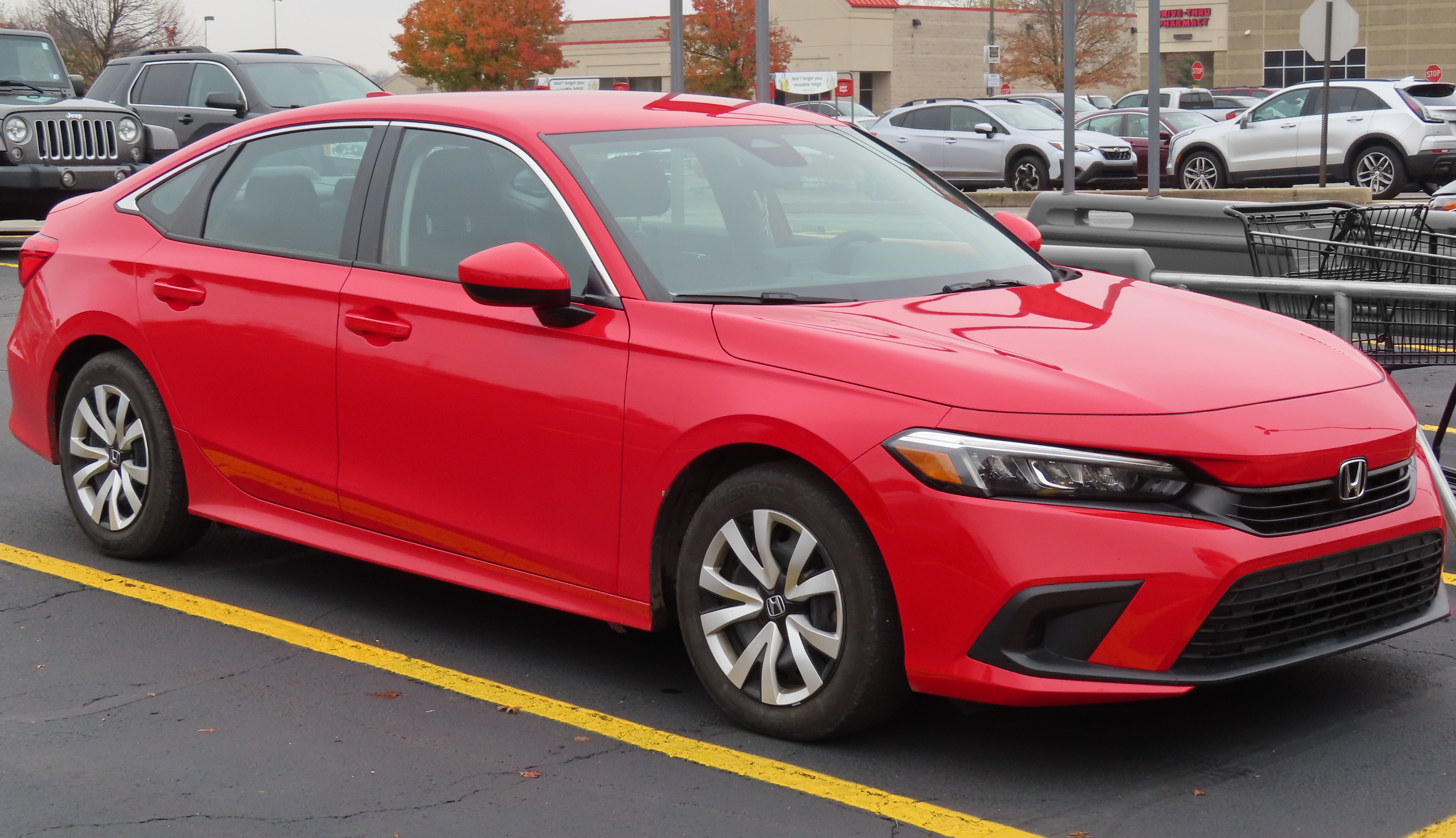
"...over to Tim in Pennsylvania, 23 Honda Civic. Tim, welcome to the car doctor, sir. How can I help?"
The Honda Civic is a small car that many people like because it is reliable and good on gas. It's a great option for everyday driving.
The Honda Civic is a compact car known for its reliability, fuel efficiency, and sporty design. It's a popular choice among drivers looking for a practical yet fun vehicle.
"...a question about some of the new technology like CVTs, you know, the transmissions..."
CVT means Continuously Variable Transmission. It's a special kind of automatic transmission that helps the car use fuel more efficiently and drive smoothly.
CVT stands for Continuously Variable Transmission, which is a type of automatic transmission that can change seamlessly through a continuous range of gear ratios. This allows for smoother acceleration and better fuel efficiency compared to traditional automatic transmissions.
"...this system that shuts the engine off, you know, when you're sitting at a stop sign or in a red light..."
A start-stop system is a feature in some cars that turns off the engine when you're not moving, like at a red light, and starts it again when you want to go. It helps save gas.
A start-stop system automatically turns off the engine when the vehicle is stationary, such as at a stoplight, and restarts it when the driver releases the brake. This technology helps improve fuel efficiency and reduce emissions.
"...issues with start, stop in areas that they really weren't expecting primarily on a lot of vehicles with variable valve timing. Now watch this..."
Variable valve timing is a technology in engines that helps them run better and use less fuel by changing when the valves open and close. It makes the car more efficient at different speeds.
Variable valve timing (VVT) is a technology used in internal combustion engines to optimize performance and efficiency by adjusting the timing of the valve openings and closings. This allows the engine to perform better at different RPMs and improves fuel economy.
"timing will alter camshaft, crankshaft relationship, right? If we think of a bicycle sprocket, if we put the pedals at a horizontal position..."
The camshaft is a part of the engine that helps open and close the valves, allowing air and fuel in and exhaust out. It plays a key role in how well the engine runs.
The camshaft is a crucial engine component that controls the opening and closing of the engine's valves. It is responsible for regulating the timing of the engine's intake and exhaust cycles, which directly affects engine performance.
"that would vary cam timing, VVT, right? So they vary valve timing by using oil, oil pressure and an actuator and a control solenoid..."
VVT stands for Variable Valve Timing, which is a system that changes when the engine's valves open and close. This helps the engine perform better and use fuel more efficiently.
Variable Valve Timing (VVT) is a technology used in internal combustion engines to optimize performance, fuel efficiency, and emissions by adjusting the timing of the valve openings and closings. This allows for better engine response and efficiency across different RPM ranges.
"it was the belt pulley drive system Arctic Cat, I think was the first CVT snowmobile ..."
Arctic Cat is a brand that makes snowmobiles and other outdoor vehicles. They were among the first to use CVT technology in their snowmobiles back in the 1970s.
Arctic Cat is a manufacturer known for producing snowmobiles and all-terrain vehicles. They were one of the first companies to implement CVT technology in their snowmobiles during the 1970s.
"That's got to say something, right? Actually, actually, I take that back. We had one Subaru we had to do just one, but that still says something, right?"
Subaru is a car brand from Japan that makes vehicles known for their ability to handle tough weather and terrain. They are popular among people who enjoy outdoor activities.
Subaru is a Japanese automotive manufacturer known for its all-wheel-drive vehicles and boxer engines. It has a reputation for producing reliable and versatile cars, often favored by outdoor enthusiasts.
"...a lot of the four cylinder Civics, a lot of the four cylinder Hondas are the 18s, the 19s are going through head gasket issues."
A head gasket is a part of the engine that helps keep everything sealed tight. If it fails, it can cause big problems like overheating or mixing oil and coolant.
The head gasket is a critical component in an engine that seals the cylinder head to the engine block. It prevents coolant and engine oil from mixing and maintains compression within the engine. Failures can lead to serious engine problems.
"...the amount of head gasket material there has shrunk. So, they get hit with boost from the turbo..."
A turbocharger is a device that helps an engine get more air, which makes it more powerful. When it adds extra air pressure, it's called 'boost', which can help the engine perform better.
Boost from the turbo refers to the increased air pressure created by a turbocharger, which forces more air into the engine's combustion chamber. This allows for more fuel to be burned, resulting in increased power output.
"Okay, 2010 Ford Fusion, FCE, Front One Drive, the Flex Fuel. I had recently hit it, well, not recently, this summer I had an animal."
The Ford Fusion is a type of car made by Ford. It's designed to be comfortable and efficient, which means it can save on gas, especially if you get the hybrid version.
The Ford Fusion is a mid-size car that was produced by Ford. It is known for its comfortable ride and good fuel efficiency, especially in its hybrid and Flex Fuel variants.
"I ripped out the condenser, ripped out the transmission and broke the transmission bracket..."
The transmission is what helps your car change gears and move. If it breaks, your car might not go anywhere.
The transmission is a vital component that transfers power from the engine to the wheels, allowing the vehicle to move. It can be automatic or manual, affecting how the car drives.
"I ripped out the condenser, ripped out the transmission and broke the transmission bracket..."
The condenser helps cool the air that comes out of your car's air conditioning. If it's not working, the AC won't blow cold air.
The condenser is a crucial component in the vehicle's air conditioning system. It cools and condenses refrigerant vapor into liquid, allowing the AC system to function properly.
"...when I left the car overheated and recently overheated was because they didn't..."
Overheating happens when your engine gets too hot, which can cause serious problems. It's usually because there's not enough coolant or something is broken.
Overheating occurs when the engine temperature exceeds safe limits, often due to a lack of coolant or a malfunctioning cooling system. It can lead to severe engine damage.
"...we're going to assume that we've got good coolant flow through the system. Right. So, you know, you, you feel, hoses, the hoses all feel equally warm..."
Coolant is a special liquid that helps keep your car's engine from getting too hot. It moves heat away from the engine to keep it running smoothly.
Coolant is a fluid used in engines to transfer heat away from the engine and maintain optimal operating temperatures. It prevents overheating and protects against corrosion.
"...Every car, laws of physics don't change. It gets up to 180, 185 degrees and the stat opens or 190 degrees and the stat opens..."
Engine temperature is how hot the engine gets when the car is running. It's important for the engine to stay at the right temperature to work well.
Engine temperature is the heat level of the engine during operation. Maintaining the correct engine temperature is vital for performance and longevity.
"...that's an indication of airbound. Sure, that's an indication of airbound because the system's got air in it and you're squeezing some coolant..."
Airbound means there are air bubbles in the car's cooling system, which can stop the coolant from flowing properly. This can cause the engine to overheat or not cool down as it should.
Airbound refers to a condition in a cooling system where air pockets form, preventing proper circulation of coolant. This can lead to overheating or inadequate cooling of the engine.
"...the water pump spins slower and then all of a sudden you get to the point where you're back at idle and now it's cold again."
The water pump is a part of the car that moves coolant around the engine to keep it from getting too hot. It helps the engine stay at the right temperature while driving.
The water pump is a crucial component of the engine's cooling system that circulates coolant through the engine and radiator. It helps maintain the engine's operating temperature by ensuring proper coolant flow.
Select text to request an explanation
This is an iHeart podcast, Guaranteed Human.
Hey, we got a lot going on this hour. Welcome aboard. We're here to answer your car questions,
of course, 855-560-9900. I am Ron Anini and the car doctor here in present. Yes, sir.
And I'm ready to go. Let's get over to the phones. Micah up in Maine. How are you, Micah?
I got to get the weather report. What's it like in Maine today?
Oh, we're in a heat wave right now. It hit 20 degrees. Everything's going great.
Oh, boy. No, it sounds like a day at the shore. So what's going on, buddy? Did you have a good
new year and all? Had a great new year. Things are going really well. And you know, with the cold
weather, what do you do? You cook. Minestrone soup last week, spaghetti sauce this week. You know,
it's just going great. Well, technically, it's gravy, right? It's not really...
That's true. I get yelled at by all my Italian friends. It's not really sauce. It's gravy.
So, but in any event, how can I help you today? I'm calling about batteries. And I know that one
of the things that you say, and you know, I follow your advice completely and totally,
is that batteries are a maintenance item and you should replace them about every five years.
And I put it on my calendar. And I'm due for a new battery next month,
which would be tomorrow. It's been five years since I put in the last battery.
And the battery that I have, I got it at Sam's Club. It's Duracell. It's got a three-year
unconditional warranty. It's doing just fine. But I just want to make sure that it's okay to...
I should be replacing it. That it's okay to replace it with the same thing because
an AGM battery, if I'm going to do that, is going to cost me instead of $139, about $250.
The one that I has been doing fine, it's a size 25. I'm not sure if there's anything else I should
be looking at or be concerned about or if I need to replace it at all. You hit all the points,
Micah. It's like we talked beforehand, which we didn't. I always tell everybody,
look at warranty. What's the ease of exchange? How easily can I get a replacement should I need it?
Now, having said that, yes, every five years at a maximum, I like to change batteries.
I don't even like to test a battery after it's four, four and a half years old. I feel like
what's the point? Hey, you know, Micah, listen, your battery passed its load test. Here it is,
four years old, it passed the load test. But I'm also going to tell you, but when we get to year
five, it's gone. And the reason is obviously because of the amount of electronics on cars today.
It's constantly working the battery as part of the whole electrical system because the
battery, you know, a battery is not just there to start the car. Obviously, it's its main point.
It provides the electrical energy to engage the starter, but it's also there as an electrical
reservoir as the alternator is charging and running electrical systems and components.
And there's there's any excess. I always tell everybody, think of the battery
as the spillover tank, right? It's where all the extra electrical energy goes. And,
you know, that's passing through the battery that will shorten the life cycle of the battery that
will have an effect on durability and dependability. When a battery goes dead,
and you guys have heard me say this now for a while, when a battery goes dead on a guy,
man, ego comes out. I can walk 400 miles in my sandals in the rain across glass and, you know,
I'll be okay. You know, the fact is, though, it's a problem, right? Because it's all kinds of
it's all kinds of challenges in trying to get a jumpstart today and trying to get a replacement
battery on the road. If a woman has a dead battery, it can be a life and death situation.
And I say that very seriously. And regardless of what you are, I'm still going to tell you
every four to five years, I'm thinking batteries, man, five years at the top.
Now, if this was a Honda, a Honda Group 51 battery, and, you know, when we say group size,
it's the physical dimension of the battery, it's not necessarily an indication of electrical energy.
But it seems that Honda Group 51s still lead the industry as the most common to fail battery,
typically in the three to four year range. And, you know, again, everything starts with a battery
and that's no pun. And it really kind of comes back to that. What would I do to you in terms of
what would I do for your question, Micah? I would do exactly what you're doing. You found somebody
that's selling a battery that warranties, no questions asked, three years. It meets your price
point. You've purchased it already. You've got history. I know of no reason not to use that to
go and venture with somebody else unless you were moving, you know, unless Price Club, Sam's Club,
whatever it is, closed down and you couldn't get it from there anymore. Because just as important
as what you buy, it's who you buy it from, right? And, you know, will they, will they, will they
take care of you? And I know you're like that. You're, you're, you're just like me in a lot of
aspects in the sense that we want a relationship with that person or that place that we know we're
going to get taken care of, but we're not going to take, be taken advantage of. And that's really
the key. But you're doing and saying and hitting all the right points, Micah. Change the battery,
get it from Sam's Club. You'll be fine. Well, that's what I plan on doing. And I got another quick
question for you if you have a moment. Sure. I use, you last hour, you talked about a fuel tank
additive and you, you've mentioned one that I don't use because I bought a six pack of
Berryman's B12, which I use every, every four, every three months, four times a year.
Am I still okay with that? Yeah, you're still okay with that. I think, I think Berryman makes a
good product too. I'm seeing some distribution issues, right? I'm seeing some distribution
issues with Berryman. I don't think it's as readily available as it once was,
so it's a whole lot easier. And that's why we in the shop, we switched to CRC just because we can't,
for whatever reason, in the last eight, nine months, we've lost our source for Berryman and we
haven't been able to maintain it or find it again. And a lot of that comes down to that.
You know, would I use one over the other? I'd have to read the specs on the back of the box.
You know, always remember what I tell you when it comes to fuel system cleaners,
they're only as good as the engineering they put into it yesterday as they got ready for
the engine that's coming tomorrow. So they've always got to evolve. They've always got to change.
And I'm always looking at that. I do that a little differently. When it comes to fuel system
cleaners, I go with the one that Ron and Anion tells me to use. Well, well, and know that the
one Ron and Anion tells you to use, I've done the research. So, you know, it's also coming back to
that. You know, I'm pretty set in my ways in all honesty. And I think you know that about me as
most of you guys do. I tend to look at certain products and say, it's working. Why change it?
If you want me to change it, you've got to give me a reason. I'm like that with products, with parts
at the shop, with tools at the shop. I mean, here, I'll tell you a story. Okay. I'll tell you a
quick story before we go to break. Then so alternators, right? And I promised I would never
tell this story. So, I'm breaking a promise, but that's okay. I think it's justified here.
Then so alternators, in the last two years, we had several problems with then so alternators,
putting them on cars, start the car up. The first one within five minutes, the alternator
locked up, didn't work, fell off, had to put another alternator on. Okay. The second one lasted
maybe two and a half minutes. The third one started the car up, the alternator locked up
instantly. Then so never really got back to me. These weren't easy jobs. These were alternators
where we had to take radiators out and fender liners out, and they were a couple hours of labor.
And I've tried not to tell this story on here, but I think it's appropriate here.
I switched from Denso. We're not doing Denso anymore. They made me go look for another brand.
Right? Real world decision in the shop, right on the front line. The first time we had the problem,
we went with an alternator out of advanced auto parts. And their car quest line of rotating
electrical has always been good. Right? It isn't as easily available or wasn't at the time,
but I had a heart to heart talk after the third episode with the manager at the local advance,
and he's increased the coverage. And now he handles all my rotating electrical. By that,
I mean starters and alternators. The car quest advanced line of rotating electrical has been
great. And, you know, there's a reason why I changed. I changed because I had specific problems
that weren't addressed. You're going to buy that battery from Sam's Club because why? You've had
a great experience there, right? And not only that, you know, it varies from place to place.
You know, I bought things at Sam's Club, at Costco, Price Clubs, whatever. But I happen to
know that the people that work in the auto department, the tires and battery place at
this particular Sam's Club, they do good work. And so I can trust them to install it appropriately.
And you can't always find that at the big stores like that.
You know, real, real quick, I've got like a minute and a half before Tom will yell at me.
We needed to fix a snow blower at the shop. And we needed to get the pull start recoil.
We ordered the pull start recoil from a company called RCPW Sohars out of Ohio.
I've been dealing with them for the better part of 20, almost 25 years. They've been
nothing short of phenomenal each and every time. Well, this time there was a problem.
The part showed up and it was wrong in the box. And they were like, yes, send it back and we'll
get you another one. But you're going to have to go through ordering. And one thing led to another.
I finally found the right guy, Kurt, out in the warehouse. Kurt understood what was going on.
Right away, he jumped on it with Jennifer. And between the two of them,
they solved my problem. They recognize the value of a customer as much of the company does.
They recognize the value of a customer. They made sure I got taken care of. And the problem is
solved. You know, a lot of what we do in our interactions as human beings, we just want to
cheat anybody. I just want what I'm entitled to. You're the same way. And I think the majority
of people are the same way. The ones that are looking to gouge, you know what? You recognize
them easily in this day and age. And you know, to stay away. Absolutely. You treat people with
courtesy and typically you get courtesy back. You get courtesy back. Micah, you be well.
Go get your battery and you have a great time. Enjoy the rest of the weekend. I'm Ron Anini
and the car doctor. I'll be back right after this.
Hey, let's keep it moving along. Got a lot of calls to finish up the hour. Let's go over to Tim
in Pennsylvania, 23 Honda Civic. Tim, welcome to the car doctor, sir. How can I help?
A question about some of the new technology like CVTs, you know, the transmissions
and this system that shuts the engine off, you know, when you're sitting at a stop sign or in a
red light, right? Just curious if you know what your experience is as far as maintenance issues
with that. So let's talk about the second part of that first start, stop. It's only come out in
the last, oh, I don't know, eight to 10 months. The industry is seeing more issues with start,
stop in areas that they really weren't expecting primarily on a lot of vehicles with variable
valve timing. Now watch this. It's really kind of strange how we got here. So variable valve
timing will alter camshaft, crankshaft relationship, right? If we think of a bicycle sprocket, if we
put the pedals at a horizontal position and we put a red dot at the top of each sprocket,
rotate it around once, if the ratio is the same, the red dot's going to come back up top again and
again and again. Okay. If we wanted to get more power and advance the sprocket, because advancing
the cam sprocket gave us a little bit more of a fuel charge into the cylinder early or
change the position of the bicycle pedal so we could get up the hill easier, that would vary
cam timing, VVT, right? So they vary valve timing by using oil, oil pressure and an actuator and
a control solenoid or a control device. They're finding that on start, stop vehicles when oil
changes aren't done either proper viscosity, proper oil, enough oil that that sudden shock of on, off,
on, off, on, off, bangs that VVT actuator, that sprocket a little hard and over time,
they're seeing failures sooner than expected. So the moral to the story is start, stop is here.
I don't necessarily agree with it. I understand what they're trying to do, but if I've got a
vehicle with start, stop, I'm really going to stay on top of my oil changes. Okay. And I'm going to,
if anything, you know, synthetic oil, good filter, every five to six, it's still, it still
pays a big dividend. And when I say five to six, I mean every five to six months, every five to
6,000 miles, Tim. All right. You know, I still stand by my, my often quoted phrase about cars
are like kids when they're young and new, they can fall down the stairs, head over heels, they
pop up, they're great. When they get to middle age and they get past 50, yeah, not so much. So
that oil change you do now helps get you longevity later on. That's the oil change part of the
question or the start, stop part of your question. CVT, that CVT, that constant variable transmission,
which is a belt driven dual pulley, alternating diameter to create and make the transmission
go type of transmission, right? CVTs were used back in the 70s. Did you know that?
I did not. Do you know what they first appeared on? This will really cook you.
All right. CVTs were originally on snowmobiles. It was, it was the idea that it was a snowmobile,
it was the belt pulley drive system Arctic cat, I think was the first CVT snowmobile
way back in the 70s. Don't ask me why I remember that. But the point being that the,
the concept of a CVT is not really new. It's just been expanded now to include automotive.
We typically do, you know, on West Prospect Street, I'm going to talk about it from the shop,
right? So we typically do CVT fluid service around the 50,000 mile mark.
And the funny thing is, and I'm thinking about this, we've never changed the CVT trans.
That's got to say something, right? Actually, actually, I take that back. We had one Subaru
we had to do just one, but that still says something, right? So, you know, that fluid
maintenance you do really comes back to promote longevity. Do I think you can drive a CVT transmission
vehicle and never have to put a trans in it? I think that's probably unrealistic.
I think cars now have become a cost per mile kind of operation, right? And, you know,
you've got to set some sort of goal and standard that 23 Honda. Honda's not what it once was,
still a good car. You know, a lot of the four cylinder Civics, a lot of the four cylinder
Hondas are the 18s, the 19s are going through head gasket issues. They get to the 50,000 mile
mark and there seems to be an abundance of head gasket failures on these cars. And, you know,
one of the reasons I'm reading is because now everything, the engines are smaller.
And on the uncertain Honda's four cylinders, the distance between cylinders is so tight.
The amount of head gasket material there has shrunk. So, they get hit with boost from the turbo
and over a repeated time, you know, constant pressure, constant pressure, constant pressure,
we've got issues where we get a head gasket failure. What am I telling you? Change your fluids,
good quality stuff. If enough is good, more is better and too much is just enough. Fair?
Fair enough. All right, kiddo. On a fight? Yes, sir.
Do you have time for just a personal experience? I'll tell you what, if you can. I've got about
a minute. So, let me say it like this. I do, but I'm going to hold you. I'll tell you what,
start to tell the story and I'll cut you short where I have to and I'll hold you to the other
side of the brake. Go ahead. Okay, Pennsylvania, we have to get to annual inspections, safety
inspections. I had a regular mechanic I'd go to and he's so busy, he kind of peers through the
wheels to check the brake linings and things like that, you know, brake pads and I didn't feel,
you know, real good about that. Second vehicle needs inspected. I go to a local guy here,
a young guy, of course, everybody's young at my age, mid-40s. He pulled two wheels,
did a really good inspection, put the wheels back on, torqued them down and he charged me less money
and I said, no, that's too much work for 65 bucks. So, I gave him 80. And you know what?
That's a good way to look at it. It's like when I go to the diner, I always tip more than what's
normally expected, just because I get good service and I applaud you for recognizing that, Tim. And
you know what? You're going to build a relationship with this guy and you're going to go back to him
over and over again and you're going to get value for what you spend. You're doing a great job.
I'm Ron Anani in the car doctor. I'll be back right after this.
Ron will keep you rolling right. Yeah, he's a car doctor. Car or not. Car or not.
They're getting a little morbid tabernacle choir-ish, aren't they? They really are, but again.
Well, they are, but you know, they had to work off all that energy because they've been using
the grill and heating up burgers and all that stuff right now. I understand that, but you know,
it sounds like I expect to see Belushi and Akroy dancing down the aisle. Let's go to Derek in
West Virginia. Derek, welcome to the car doctor, sir. How can I help? Hello, how are you doing?
Yes, sir. Tell me the story. Okay, 2010 Ford Fusion, FCE, Front One Drive, the Flex Fuel.
I had recently hit it, well, not recently, this summer I had an animal. I thought it was a skunk
and a panda dog, excuse the language. So what happened was is that the,
I ripped out the condenser, ripped out the transmission and broke the transmission bracket
and bent some framing underneath there. So I went to a radiator shop. Remember that. So I went to
a radiator shop and I had to fix it. Okay. Okay. So when I left the car overheated and
recently overheated was because they didn't, they didn't, after it did a one recycle,
they didn't put the water, they didn't top it off. So it, it vaporized, overheated, car shut down.
And this winter storm hit and I've been noticing a decline in heat in my vehicle at idle. Now
it's blowing straight cold air. So the reservoir tank was, so I filled it up. I got a little bit
more heat out of it. I was squeezing the radiator hose, tapping on the thermostat and
called the radiator shop and they, I mean, I, I was a mechanic in the army. I'm disabled veteran
and I know that most issues that happen with a vehicle is pretty simple. So I'm stumped on this
one. All right. So let's, let's, let's, let's, let's back up a second. So is this overheating at
idle or it has no heat at idle? No, no heat at idle. It is not overheating. There's nothing wrong
with, um, overheating. None of that. Okay. So it's, it's not that the engine's overheating.
You have no heat output at idle. At idle. Whenever I step on the gas for about 2,500
RPMs for a couple of minutes, yes, I'll get screaming hot. Okay. Heat. When I take off,
I'll drive. And the cooling, and the cooling system is obviously full.
Yeah. All right. So in my mind, if it was like here in the, uh, well, that's what I'm thinking.
I'm thinking there. I'm thinking, I'm thinking it's, I'm thinking, I'm thinking you're either air
bound. Here, let's, let's back up a second. All right. Um, we're going to make some assumptions
which we both know as mechanics is a dangerous thing. Right. We're, we're, we're going to assume
the, we're going to assume the thermostat is operating properly. Right. Okay. We're going to
assume that we've got good coolant flow through the system. Right. So, you know, you, you feel,
you feel hoses, the hoses all feel equally warm. Some hoses feel hotter than the other.
When you feel those hoses is at least one of the radiator hoses, upper or lower,
more or less uncomfortable to hold when the vehicle's completely warmed up. Nope.
Not at all. You know, that's, that's, that's an issue. All right. Every car,
laws of physics don't change. It gets up to 180, 185 degrees and the stat opens or 190 degrees and
the stat opens, depending upon which way coolant flow goes. Right. Logic would dictate that
we should have, we should have one hose, kind of uncomfortable to hold. That's,
that's always been my barometer. Let me ask you this. Did they by chance put a thermostat in
this car when they did whatever cooling system work they did to it? No, they didn't. Okay.
Could the, so here, let's do this. Let's talk about, let's find what's good.
By chance, would you have a basic scan tool?
No. Okay. No, I haven't run it yet. I work night shift and I don't have it like a whole
lot of time. Right. I get it. So, so I want to look and see what temperature is the engine running
at. It's the first thought I got. I don't think that's all of your problem, but I just want to
dash indicator. The, that's the temperature gauge. There's nothing fluctuating there.
Okay. Is it, is it in the same, is it in the same position it always is?
It always is, even at idle, idle as opposed to, you know what? It seems kind of weird that it's
kind of low because I have a remote start and I start it. Well, what's, what seems kind of low
temperature? The temperature does like a, it'll be parked and
idling for 15 minutes and the temperature is not up there. Right. Until I take off the temperature
is right because there's more heat load on an engine to move the vehicle down through
the medium of air. Right. So I'm back to my original, I'm back to my, well, I'm back to my
original statement. I want to know that the thermostat is working properly. I want to know that
this is allowing the engine to come up to minimum temperature. All right. I don't think that's,
I don't think that's, well, I don't think that that's causing your cold air problem coming out
of the heater duct. Right. But the fact that we've got cooler than normal heater hoses by feel
and the gauge seems low tells me that is a potential problem. Right.
Yeah, agreed. Yeah. So I want, I want, I want to verify temperature. I don't want to just look
for what's bad. I want to look for what's good. You know, my mantra. Okay. If I can prove that
the thermostat is, is, is operating at spec. All right. Then I'm starting to think I've got,
the system is more air bound than not. All right. The fact that the accident happened back.
Well, the fact that the accident happened back in, you said in the summer,
which was seven months ago. And the problem has been continuing all along.
Yes. So now I'm going to think, am I air bound? Do you have an incline? So here's,
well, hang on a second here, Derek. Do you have an incline around the house?
No. An uphill, an uphill point. Is there a way you could park this car? Is there a way you could
park this car or someplace you could park this vehicle uphill overnight and leave the radiator
cap off, the expansion tank cap off, fill the bottle, fill the bottle. Do you recommend
doing that? It's negative three degrees outside. Well, yeah, it's going to be tough. I mean,
you're going to have to get the vehicle up to temp. Well, seeing now I'm back to that,
is the vehicle up to temp such that the thermostat actually opens and, and, and all the components,
you know, gain access because what I'm trying to do is burp air, right?
That's, that's, now explain to me again, where you're saying you've ever been in a house with
baseboard heating? Yes. Okay. Have you ever had a baseboard heating system where it's air bound?
Either the little, either little, either little pressure bleeders don't dump off because they're
clogged from calcium or there's something missing or something wrong. The system gets air bound and
it doesn't circulate, right? So if by, if by some miracle your vehicle has been air bound since
August or whenever you hit what you hit, I just want to verify, can I get air out of this?
All right. I mean, listen, go ahead and incline. Well, give it, give it a bit of an incline.
Doesn't take much an eight, 10 degree, an eight, 10 degree incline on a warm engine.
I'm careful how I take the radiator cap off so I don't get scolded. I'm going to let it sit 20
minutes and I'm going to let it sit with the cap off overnight. And I'm going to put a magic
marker on mark on the side of the bottle. And if the mark is here and all of a sudden I come out
the next morning and it dropped an inch or more, I'm going to add more coolant, drive it again,
and I'm going to continue to do that and see if I can cycle all of it out. Now there's going to be
a certain amount of loss or I'm saying a change in height of the bottle. Just because as it goes
from hot to cold, there's a certain amount of expansion and contraction. I just want to make
sure I've got air out of this because that heater core in that car sits down low. If you look where
the hoses go, it kind of goes down low behind the engine and it's real easy for these things to get
airbound. But I still want to know, I still want to know that that engine comes up to temp. Go
ahead real quick. So here's, here's another thing is that whenever I step whenever I pull off the
accelerator, it starts getting cold. I can be driving all day long. I can be driving here to
California and back and if I'm stepping off the gas, if I'm pulling off the gas, it starts getting
colder. Right, because, because, well, yeah, that's an indication of airbound. Sure,
that's an indication of airbound because the system's got air in it and you're squeezing some coolant
where it's not trying to go. It's as it's fighting the air pocket and as you back off the accelerator,
the water pump spins slower and then all of a sudden you get to the point where you're back
at idle and now it's cold again. But do those things. Do it like that. You give me a call back
next week. I'm happy to help you brother. But let's take this one step at a time. If you can get
a scan tool on this and give me an actual temp reading, I'd like to know that as well. 855-560-9900.
We're back right after this.
Keith, Louisiana. Keith, you're still there, sir.
Yes, sir, I'm here. We're rolling along this hour. How can I help? What's going on?
Okay, I was speaking to a guy prior that accepted my call. I have a 2002's over the car,
but it's a good car. Alexis, let's fold the rear with the 3-UZ engine. And I've been
owning it for about eight years now. Right, this is the 8 cylinder, right, Keith?
Yeah, V8. Smooth engine. And I tore it down and I did the timing belt, water,
pump, et cetera. And I put a new crank seal. I said timing where everything came out perfect.
But it's been about 6,000 miles. And I noticed I'm seeing a little dampness around the crankshaft.
You know, right behind the harmonic balancer. So the question becomes,
is it the seal or is it the, you know, that crank seal goes into, I'm trying to think of
how to describe it like an aluminum cover that's part of the front of the engine.
Correct? Am I thinking of this correctly? There's a cover assembly there.
Is it the seal or is it that gasket? How many miles are on this?
124. Yeah, that's young. I would, I'll tell you what,
before I tore this down, I would add a fluorescent dye to the oil. Run it.
Okay. Okay. And, you know, wipe away what you've got there. Run it to the point.
You're familiar with fluorescent dye method using a black light to look to see that you've got
an oil stain or a dye stain where your leak is. Correct.
Right. And then I would take it apart and look to see, is it, is it the seal?
Is it the gasket behind in that flange housing? When you pulled the seal,
tell me how you pulled the seal. I'm not picking on you. I'm just curious how you did it.
I pulled the seal and to be honest with you, I was amazed how easy the seal came out.
You know, I didn't have to pry on it or pull on it. I just basically,
just a little tap and it came out and the seal, I used a piece of PVC
same size and inserted the new crank seal. Okay. So you're the OEM seal.
All right. When you, when you put that seal in, you know, the garter spring on the back?
Right. Did you pack that seal with wheel bearing grease?
No, I didn't. So you just put it in the garter, you know, is it,
you know, because you have to think to yourself, could the garter spring have popped off? Although,
although you would think it would leak before 6,000 miles, right?
Right. And it's not super bad. You know, I'm always checking my vehicle. You know, I love
little cars. Yeah. And I, I get it. And you know what it, you know what it is? I might
can go 500 miles and it'll be a little damn nice, you know, around the crank seal cover.
Right. You know, the plastic cover and I just noticed, well, some people may not
worry about it, but it's just me. Yeah. You know, we want to know because if it's getting on the
belt over time, it's going to hurt the belt. So, you know, when you pulled that seal out,
how did you get the seal out? I used from the center of the seal out with a little tool with a
hook and I pulled it out and it came out real easy. All right. It wasn't like that, you know,
it came out super easy. All right. I'll tell you what, Keith, sit tight. Let me pull over,
take a pause when we come back. We'll finish up. I'm Ron Ananey in the car doctor. We'll return
right after this. Let's get back to Keith in Louisiana. Keith, you're still there.
Yes, sir. Take your index finger, right? Point it, point it straight up. You with me?
Yes. Bend the tip so it's a hook. Okay. I got a tool in my toolbox. It's like that,
but it's very tiny and what I would do is I would sneak it under the seal and that's how I would
pull out seals. This is when I first started working in the business and then every once in a while,
I always got nervous because you started to look at it and you said, is that hard metal surface
going against the crank or the cam or whatever you're pulling the seal out from, could you scratch
it and put a little scratch mark on it? Right. And you know what? I made sure I didn't do that.
Okay. So as a suggestion, what you may want to consider, and this takes a steady hand,
but in the last 30 years, I've resorted to where I will take a small drill, drill a tiny hole,
put a sheet metal screw in there and that gives me a wedge point and I'll pop the seal out by
placing the tip of the small pry bar against and pop it out. That being said, just to pass along
that tip, right? The fact that the seal popped out, how did the new seal go in? Was it snug?
Yes. Okay. You know, usually I don't have to, I can't recall too many times where I've had to
use a piece of PVC or a driver to, usually I can kind of just get the seal up onto the crank or the
cam and then just gently massage it in and, you know, push it in. Right. Right. You know, and I've
just seen a video, not to cut you off, I've just seen a video where I get a two and three-quart
and it sits perfect on the seal without damaging it. You know, if you think you've got an issue with
that aluminum housing, right, where it's stretched or oversized slightly, you know, I wouldn't be
akin to putting a real thin bead of, I mean, thin bead of little RTV there to seal it, dry it out
real good in the housing and push it on and let it get hard. But first thing I would do before I do
anything is add a dye. Where's the leak coming from? And then when you take it apart, you'll know.
Keep me posted, Keith. Till the next time I'm on a nanny in the car doctor. Good mechanics aren't
expensive. They're priceless. See ya.
Request an explanation for:
3 cars
3 cars featured
Request an Explanation
Heard something you'd like explained? We'll add it to this episode.
Sign in to request explanations for terms you heard.
Want to learn more?
Browse our glossary for plain-English explanations of automotive terms, jargon, and concepts.
See something that's not quite right? Our annotations are AI-generated and can sometimes miss the mark.
Click the flag icon on any annotation to suggest a correction.