A road test is when a mechanic drives the car to check how it behaves. It can reveal problems that you can’t see just by looking at the car in the shop.
A wheel bearing helps the wheel rotate smoothly. If it’s going bad, the car may feel rough or pull, and it can also cause extra strain that wastes fuel.
“Brakes pull” means when you brake, the car tends to drift to one side. If one side is dragging more than the other, it can make the car work harder and burn more gas.
The check engine light is a warning that something may be wrong with the engine or emissions system. But not every problem will turn it on—some issues are more mechanical than electronic.
Restricted airflow means the engine isn’t getting enough air. If the air filter or intake is clogged, the car can use more fuel to do the same work.
Term
adaptive transmission
An adaptive transmission is a gearbox that learns how you’re driving and changes its shifting strategy. If the car isn’t maintained well, the computer may not shift as efficiently, which can waste fuel.
Cylinder deactivation is when the engine turns off some cylinders to save gas when you don’t need full power. If the car isn’t running right, that fuel-saving strategy may not work as well.
Start-stop systems turn the engine off at red lights and restart it when you go. If the battery or related systems aren’t in good shape, the car may waste fuel instead of saving it.
RPM band is the “engine speed zone” the car is running in. If the car stays in a less efficient zone (higher RPM), it can shift differently and burn more gas.
Charging strategy is how the car decides how hard to charge the battery. If the car is charging differently than it should, it can affect how efficiently the engine runs.
The throttle body controls how much air gets into the engine. If it’s dirty, the car may not measure airflow correctly, so it can add extra fuel and waste gas.
The oxygen sensor tells the car whether the exhaust is “too rich” or “too lean.” If it’s not reading correctly, the car can waste fuel trying to correct the mixture.
Fault codes are error messages stored by the car’s computer. Sometimes the car adjusts things (like fuel trim) before it decides the problem is bad enough to turn on the check engine light.
Fuel trim is the car’s way of fine-tuning how much gas it injects. If it has to keep adjusting a lot, something may be off, and the car may burn more fuel than it should.
The Chevrolet Suburban is a large family SUV. It’s popular when you need space, and here they’re talking about buying a newer one and choosing the right engine.
A branded title means the government record for the car has a special label about its past. It usually signals the car had a serious issue, and that can make it harder to sell or finance later.
They’re talking about a basic used-car red flag: if a car costs way less than similar ones, there’s usually a reason. The caller wants to figure out what that reason might be before buying.
Active Fuel Management is a feature that can turn off some cylinders when you don’t need full power, to save gas. If your truck doesn’t have it, it tends to run all cylinders more of the time.
An engine swap means putting a different engine into the same vehicle. It often takes extra work—like updating computer settings and fuel parts—so everything works together.
The car’s computer controls how the engine runs. If you change the engine, the computer often has to be updated so the new engine gets the correct settings.
Term
direct swap as far as block size
They’re saying the new engine is physically similar enough to fit without major fabrication. But you still might need to update parts like the computer and fuel system.
Concept
custom swaps
Custom swaps are non-standard engine installations where shops engineer the fitment and integration work beyond a simple bolt-in replacement. This can involve custom wiring, calibration, and fuel/air system adjustments to make the swap run correctly.
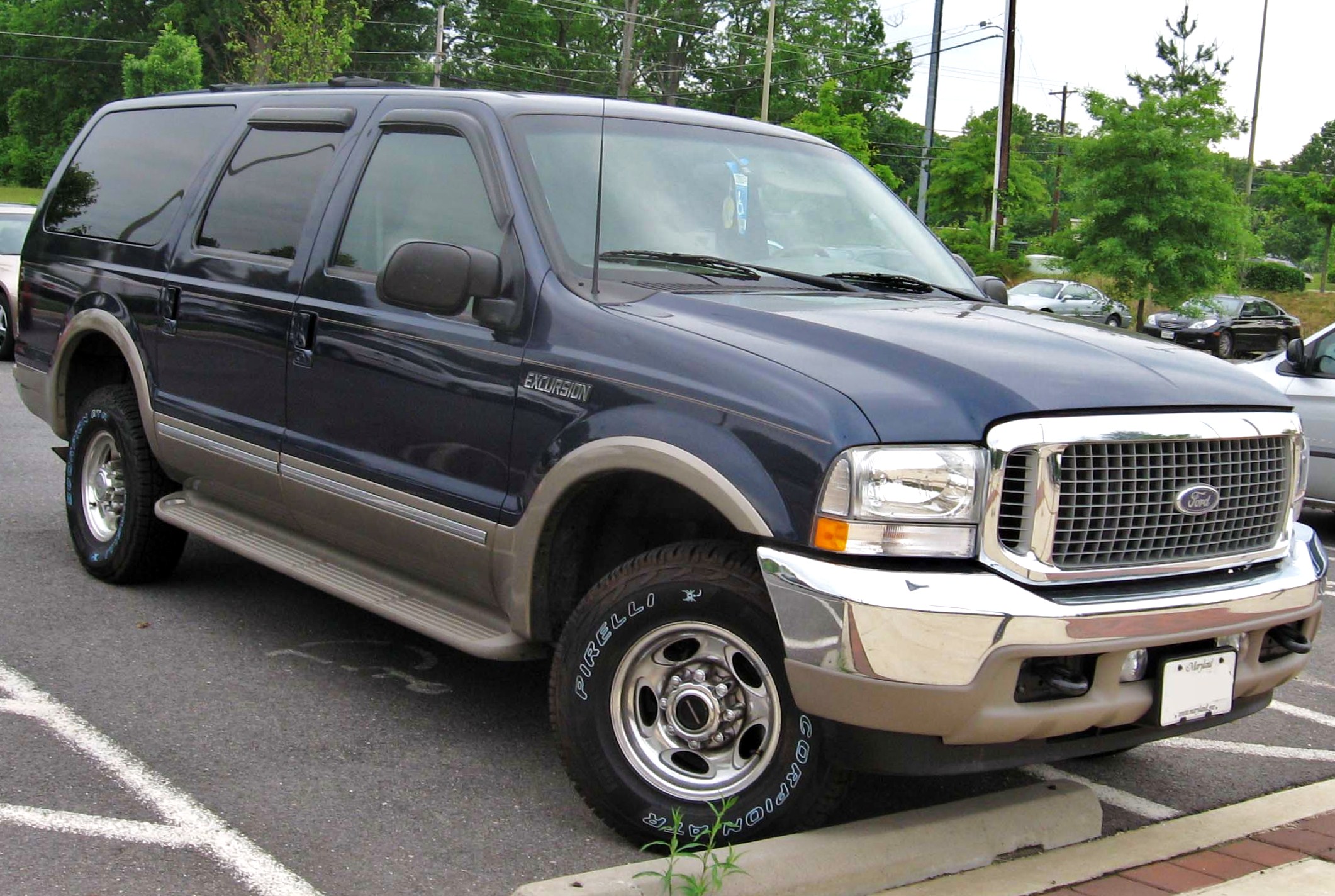
The Ford Excursion is a very large SUV that’s built to handle heavy use, like towing and carrying many people. The podcast notes that these are now quite old, so they may need more maintenance than newer cars. When you’re considering one, it’s important to check the condition of major parts that wear out with age.
A Lemon Law car is one that had serious problems and couldn’t be fixed properly after multiple attempts. The speaker is saying that kind of history makes it harder to trust the car even after repairs.
An “engine replacement” means the manufacturer or shop swapped in a different engine rather than repairing the original. In this segment, it’s listed as one of several major failures, supporting the claim that the vehicle had repeated issues.
Term
lower oil pan replacement
The oil pan is where the engine oil sits. Replacing the lower oil pan usually means there was a leak or damage, and the speaker is using it as evidence of repeated problems.
Mileage just means how many miles are on the car. When you’re buying after repairs, it matters because it can show whether the problem came back after the fix.
A pre-purchase inspection is when a mechanic checks a car before you buy it. It helps confirm the car was really fixed and can reveal problems that aren’t obvious during a quick look.
Concept
repair history
Repair history is the record of how many times a vehicle has been serviced for problems, especially repeated repairs for the same issue. Multiple repairs in a short period can suggest the underlying cause wasn’t fully resolved, even if each repair came with some form of guarantee.
This test pressurizes the engine’s coolant system to see if anything is leaking. It can help find problems like a failing seal that lets coolant or gases where they shouldn’t be.
The fuel rail is the part that holds pressurized fuel and feeds it to the fuel injectors. If there’s a leak there, the engine can run poorly or misfire.
Coils help create the spark that lights the fuel in each cylinder. If a coil is bad, that cylinder can misfire, and swapping coils can show whether the problem follows the coil.
On some engines, cylinders are split into two sides. Those sides are called banks, and seeing whether a problem is on one side or both helps diagnose where it’s coming from.
The timing chain controls when the engine’s valves open and close. If it jumps, the timing gets out of sync, and the engine can run very badly or not run at all.
Vacuum is a kind of suction inside the engine’s intake system. If it’s not right, the engine may not be getting the correct airflow, which can lead to running problems.
The Ford Escape is a compact SUV—basically a smaller family car with more space than a sedan. They’re talking about whether to buy another one or switch to something similar.
Oil temperature tells you how hot the engine oil is. If it runs too hot, it can mean the engine is working harder than it should or something isn’t right.
Term
knobs and whistles and buttons
They’re talking about how modern cars can have lots of controls and alerts. The point is that it can feel overwhelming compared with older cars.
Vapor lock happens when fuel gets so hot that it turns into gas in the fuel line. If that happens, the engine may not get the fuel it needs, so it can run poorly or stall until things cool off.
A carburetor is an older-style device that mixes fuel and air so the engine can burn it. If fuel delivery is interrupted, the engine won’t run correctly.
A flathead is an older engine design where the valves sit in the engine block. It’s a vintage engine style, and in this story it’s part of why the fuel system could overheat.
A V8 is an engine with eight cylinders. The speaker is comparing V8s to six-cylinder engines and saying they had different experiences with starting and fuel heating.
An oil change is when you replace the engine’s oil. Fresh oil helps the engine stay clean and run cooler, so doing it too late can be worse for the engine.
Transmission fluid is the fluid that helps the car’s transmission shift smoothly. Ron is describing a maintenance habit involving adding fluid to help keep things cleaner.
Term
quart
A quart is a measurement of liquid volume. Ron is talking about how much transmission fluid he’s adding.
A fuel system cleaning kit is a product you use to clean the parts that deliver fuel to the engine. If those parts get dirty, the engine may burn fuel less efficiently, so cleaning can help.
A flooded battery is a common type of car battery that uses liquid acid inside. Different flooded-battery designs can charge a little differently, which can change how the car’s charging system behaves.
An AGM battery is a sealed type of car battery that uses special material to hold the battery fluid. Because it charges differently than a flooded battery, the car may need to manage it differently.
The battery management system is the car’s control system that keeps track of the battery and decides how to charge it. If you change the battery type, the car may charge it differently, which can influence how much fuel the car uses.
LIVE
You're listening to Roninanyan, the Car Doctor, nationally recognized auto expert trusted by Mechanics, Weekend wrenchers and vehicle owners alike.
Ron brings over forty years of hands on experience and deep industry insight to help you understand your vehicle. Join
the Conversation live every Saturday from two to four pm Eastern by calling eight five to five five six zero nine nine zero zero. That's eight five to five five
six zero ninety nine hundred, your direct line to honest answers and practical advice. Looking for more, visit car doctorshow
dot com for past episodes, repair tips, and Ron's latest insights, and be sure to subscribe to the Car Doctor YouTube channel for exclusive videos, real repair footage and more. Now
start your engines. The Car Doctor is in the garage
and ready to take your call.
Hey, let's get this hour going. Roninane and the Car
Doctor here at your service. Car Advice Done wright eight
five five five six so nine nine zero zeros the phone number to call if you've got a question problem, A noise, a smell of vibration, a dashboard light blinking at you like a Christmas tree. Gone bed can you
say that. As we head into summer, you give me
a call, we'll talk about it. You know, I was
standing at the gas pump this week and I caught myself to yeah, because I do that. I still get
out of the car and pump my own gas. And
I know you can't do that in Jersey. Don't tell
anybody you know what it's at. Bad habit I got
into as a kid from misspent youth, and I caught myself doing something I haven't done in a while. I'm
watching the numbers, not the gallons, the dollars. And you
guys know what I mean. Right, you're all there, We're
all there. I was at the deli today and listening
to the stories, and you know it's hard. You go
to the supermarket, everything is ten bucks. You go to
the gas station, gas is five six bucks a gallon.
That little display on the gas pump spins upward faster than your brain can process at fifty bucks, sixty bucks, seventy five bucks, and you're still not full. It's one
hundred and twenty eight dollars the other day to fill the suburb. I you know, I don't drive it a lot,
and thank God, but Holy smokes, and I realized Memorial Days right around the corner, right, some are driving seasons about to come upon us, and you know what, here we go again. And that's what I started thinking about it.
Fuel prices are quietly becoming a story again here in America.
You know, it's not screaming in the headlines yet. Yeah,
you hear about it gases up and you know we're not panic buying toilet paper yet, but enough where everybody's noticing.
And honestly, you can always tellhen fuel prices rise because suddenly everybody becomes a fuel economy expert, which I've experienced, which I kind of love because I sort of stay quiet in the room and I listen to everybody tell everybody else how they can save gas. You know, the
guy at the diner the other night was telling his that I'm listening in the booth behind me, and the guy at the diner is saying, only by gas after sunset.
And you know, you listen to the neighbors. They're talking
to each other walking by the house and turn the air condition off. Don't drive with air conditioning on, which
I'm thinking, it's April. How bad do you need the
air conditioning? Anyway. You know, somebody online tells you to
drive with one sneaker off because it reduces vehicle weight.
Then there's the old timer who says put a closed pin on the fuel line. I'll come back to that later.
I'll tell you that answered later. Here's the thing. People
focus on fuel prices when you should be focusing and this is key on fuel waste. The repair shop sees
something every week. Most drivers don't notice cars slowly become inefficient.
There's a reason we as a repair shop, we road test every oil change. I don't know a lot of
shops that do that. You know, the cars aren't broken,
they're not dead, they're not sitting on the side of the road with smoke pouring out. They're just inefficient. You know,
we had a vehicle in the shop this week, a late model SUV Nicer vehicle. Customers said to me, hey, Ron,
the brakes don't feel right. The truck feels heavy. As
a matter of fact, if you go out to my Instagram Roninian or the car Doctor Facebook account, you'll see we told you the story about the twenty twenty Don DOLLI with the bad wheel bearing. But there was more
to it than the wheel bearing, it's what caused the wheel bearing failure. But his description came back to me
was break's pull and heavy. It didn't feel right. No
check engine light, no warning message, no drama, just he knew his truck after six years. It didn't feel right.
And honestly, that sensation of how the vehicle feels is how that fuel economy problem starts. All the tires were
low by ten pounds. That was eight ten pounds. The
air filter looked like it had been vacuuming out of the Mahabi desert. And he's a landscaper, so of course
he's in a harsh environment. But still the oil change
was a little overdue, and the one front brake caliber was hanging up just enough to create drag. Now it
finally got to the point where that hung brake caliper actually boiled the grease out of the wheel bearing. The
wheelbaring started to make noise, and then it's not the caliper got so bad that the truck started to pull to the left. In the time it took for that
to happen, that vehicle, in my mind, knowing you know, regular driving fifteen to eighteen thousand miles a year, he probably lost three to five miles per gallon without even realizing it, because it's like driving with the brake on.
And you see, that's the scary part. And that's what
you don't know. You don't know what you don't know.
Steve ethid Gevopus always says fuel economy drops slowly, you don't notice it overnight. It's like gaining weight. You ever
notice how you take your jacket off in the spring and you put it back on in the fall, and somehow it shrunk in the closet. You know, how does
that occur? Well, listen, there's no magic pill in the closet.
I used to blame my wife. I'd say, what are
you doing to me? She goes, no, it's not me, honey,
it's too much pasta. Yeah, it's like gaining weight. You
know what. You don't wake up on Tuesday morning and go, wow,
where did thirty pounds come from? Cars work the same way.
Half a mile per gallon here, one mile per gallon there, a little less rolling resistance, a little bit of brake drag, a little restricted airflow, and the next thing you know, the vehicles drinking fuel like it owns the oil company.
Modern cars as good as they are are really sensitive to maintenance. Years ago, I think cars tolerated neglect a
little bit better, sparkplugs a little warned, still ran tires, low, still drove. Okay, Today everything is calculated and accounted for.
Everything is related to the computer, fuel terms, air flow, load calculations, adaptive transmission, shifting service to translately, cylinder deactivation, battery charging management, start stop systems. These vehicles today are
trying to squeeze every possible drop of fuel efficiency out of every mile traveled, which means maintenance slips, fuel economy suffers.
Bigger problems happen, fuel economy really suffers. And here's where
you guys need to rethink how you look at maintenance, because the cheapest repair isn't always doing nothing. Sometimes doing
nothing is the most expensive. And I say this all
the time. You've got to think about this, right. A
car is a system. Everything affects everything else. Low tire
pressure changes rolling resistance, dragging breaks changes transmission behavior. Let's
think about that a minute. If the brakes are dragging
and we're making the vehicle work harder, doesn't it take more oumphat of the engine? An rpm point, a shift point,
an RPM band, and it's going to affect how the trans shifts. A weak battery affects charging strategy. Charging strategy
effects fuel economy. A dirty throttle body affects airflow calculation.
A lazy eye exygen sensor can make little changes to fuel trim right fuel trim fault codes. To get technical
for a second, if the vehicle is expecting fuel trim, that constant ongoing adjustment to fuel injection to compensate for varying loads on the engine. That constant change of fuel trimp.
If zero to twenty five percent doesn't set a fault code, but thirty percent does, and your vehicle is always running at twenty nine percent. No check engine light, but boy,
it's sure is working harder, and fuel trimp sure is cockie.
And before you guys all say, hey, Ron, you're trying to sell me maintenance. No, I'm not trying to sell
you maintenance. I'm really not. I'm trying to save you money.
I'm trying to get you to think outside the box.
Because if fuel prices stay worthy, think they're gonna stay this summer, fuel economy becomes real money again, that's lost money you're throwing out the window. You gotta do the math.
If you drive, I don't know, fifteen thousand miles a year and your vehicle drops from twenty five miles per gallon to twenty, you're buying about one hundred and fifty extra gallons of fuel every year at four fifty a gallon, that's seven hundred bucks. Seven hundred bucks because the vehicle
wasn't operating efficiently. And that's not politics, that's not opinion.
That's math. And what they say in that movie Hidden Figures, right,
math never lies. I think one of the biggest mistakes
everybody makes is waiting for the check engine light to come on before you pay attention. Cars whisper, then they scream.
That's why I scan cars with no warning light. It's
part of a physical Tell me what's good. I'll tell
you what's bad. I'll leave it here. Okay, own, And
by the way, no, you know what I'm gonna make you come back. I'm gonna leave it here. Take the pause.
When I come back, I'll tell you why they used to put clothes lines on fuel clothes pins on fuel lines. Actually,
I should make at the question this hour if anybody knows the answer to that. Tom scratching his head and
that takes a lot, so I'll be back right after this.
I'm ronning Anie in the car. Doctor, don't go anywhere. Hey,
let's go to John Wisconsin. Open up the phone lines
at eight five five five six zero nine nine zero zero John. How can I help ron Annie in at
your service?
I'm looking at getting a newer suburban. Not quite sure
what I want, what motor I want the five three six two. I have looked at a Durham Ax already,
so kind of come to the conclusion that twenty three twenty four with the Durhamax, it seems like a pretty solid buy. Just wondering what your opinion is, what's kind.
What's what's what's my budget? Hundred grand?
I'd like No, I'd like to spend about sixty.
Okay, can you buy? Can you buy a twenty four
suburban with a Dourmax in it for sixty.
I can buy one that's got a branded title with seventeen thousand miles on. I'm just that one kind of
scares me and it's not quite sure.
But yeah, because that seems cheap, doesn't it?
Yeah?
Yeah, I like it.
Well, But before we fall in love with cheap. Let's
let's let's let's kick this around. You know, can you
find another twenty four suburban with a Duramax for sixty thousand if everything else is eighty? Why is that one
so cheap? That would bother me?
Yeah? I have seen them around sixty five thousand and
sixty eight thousand.
With that mile with that lower mileage.
Oh, with a lot more miles right right, six miles.
So when we're when we're having this conversation, John, if we're sitting at if we're sitting at the counter and just having a few adult beverages and kind of kicking it around, I always say apples to apples, not apples to oranges. Right, So, you know, I think the five three, Well,
let me ask you this question. Are you towing with
this suburban?
No?
Not really?
No, you know, I mean I've got an Z four suburban with a five to three. It's got no active
fuel management, it's a basic truck. At that point, I
love it. It's great. I wish it had a bigger
engine in it. I you know, I keep thinking the
day comes when the five to three finally dies, which I don't know if it ever will, you know, I might I might swap in a six six because a six point six Leader would fit right in. You know,
with some modification. I'd have to just you know, change
the computer and upgrade the injectors and things like that.
But it's a direct swap as far as block size.
So that being said, you know, the biggest engine you can get in a production suburban at this point is six point two Leaders. There are shops out there that
do custom swaps. Do you have a current suburban?
I have? Is I o one my own right now?
Right? Is it a rust bucket?
I kind of went through it all at one point.
It's getting a little russ on it again.
Okay, so you know, because then the other option is depending upon and listen, I think a suburban's a great vehicle.
It's it's but I get it. It's it's a matter
of dollars.
Uh.
If you ask me what else would I want to buy?
I would There probably isn't a lot. There's not a
lot of things to do what a suburban can do.
Hold the you know, the size of the family, seven eight passengers, toe with it. You could live out of
the thing. You could float it across the ocean just
about Uh. They tend to do everything. I've driven the
Ford what was it, the Ford Expedition, Eh, I thought, Yeah, I wasn't impressed by the last expedition I drove. You know,
when the excursions are so old now they're what they're twenty five years old when the last excursion was made, so they're all they're all rust buckets and gone too.
You know.
I always played with the idea of if I could find an older suburban and swap a six six and it's something a little little newer with more parts availability.
But you know, I never got that opportunity. I'm a tinkerer,
as you can tell. You know, I like, I have
no problem with the Duramax. Have you owned diesels before?
Yeah, yeah, diesel.
Yeah, because as long as you're versed in diesel, and you know, you get the difference, and you know, it's just a little bit more maintenance and obviously a little bit more expense if something breaks, you've got to be a little more particular. I think diesels are a little
less forgiving for the person that's not doing maintenance. So
if you're a diesel person, you understand that, and yeah, I have no problem with that. I would be cautious
of that. You know, why is that twenty four coming
so cheap? Buying it from a dealer, buying it from
an individual a used car lot or what.
It's a branded vehicle. So a comeback on the Lemon
lock and it actually I got the list of stuff that went wrong with this thing, and it was an engine replacement at sixty nine miles, we got a lower oil pan replacement at ten thousand miles, we got a fuel pain filler at eleven thousand miles, we got a couple of censors at fourteen and fifteen thousand miles, and the last one it just shows a wire to wire repair.
I'm not quite sure what that was, but it went back after that.
So it's a Lemon Law vehicle. Yeah, so you have
no idea what's really wrong with her? Even if it's fixed.
Well, no, it's it came back from you know, the Chevy.
However they do with their plan to whoever fixed it fixed it, So then that should be good to go.
Now, Okay, Well, if they're going to give you a guarantee.
It'd be it'd be warranteed till thirty six thousands, another year and a half.
And if it's if it's three repairs and it's not.
Is it covered again under Lemon law.
No Lemon lag or one time deal.
Yeah, it's a big risk, isn't it.
Yeah, it's scary, all right.
I think that's a big risk. You know how many
miles are on the other ones.
Around? I give this team some like fifty to seventy thousand.
Right, you know, I'd rather buy the fifty thousand mile version as long as I could see maintenance records and get a general feeling of proof that it was done. Right.
I mean, listen, it sounds like you're happy with the Dormax diesel, and I don't argue that, all right, So don't misunderstanding my hesitancy is are you buying are you buying a headache that the factory says it is fixed when the factory was supposed to fix it right in the first place. I'd be curious to see after the
last repair if it came in at seven thousand miles or whatever the mileage is. Now I forgot what you said,
fifteen thousand miles, And you know, does it does it have sixteen thousand miles on it? Now that they drive
it for a thousand miles and put some miles on it to prove that the repair fixed it or is there more wrong with it? Because my concern is and
I'm cynical obviously, because this is what I do for a living, and I fix a lot of headaches and problems.
There was four repairs of some degree done to this vehicle in the last twenty thousand miles. Right, yeah, you know, Hey,
your vehicles fixed. Hey, your vehicles fixed. Hey, your vehicles fixed,
you know, And and I gave everybody. Everybody's got their
hand in the pot. So how good was the repair?
Did anybody drive it? I would be concerned about that,
you know, if they wanted to sell it to you for you know, if they wanted to take ten grand off for aggravation and potential. All right, maybe for fifty
I'll think about it, because it can be fixed. It's
just to what degrees the problem. But I'd rather buy
something with a little more miles on it. At least
then I know what's there works, and you can catch up on whatever maintenance. But you've got to see that
maintenance was done. I hope I helped John. I hope
I didn't confuse you. But yes, Chevy suburban great vehicle diesel. Fine,
just make sure you're buying a good one. That's my concern. Hey,
five five, five, six nine nine zero zero, run an any of the car doctor coming back right after.
This from the city street to the urban rule tonight.
If you Ronny head help, Ronald will keep you all right. Yeah,
he's a car doctor.
Car advisdor. Hey, let's get over to Greg and Wisconsin. Greg,
how can I help?
Hi?
Ron Us kicking my call very well.
Afternoon. I called uh back in Valentine's Day and we
talked about my son in law Zo nine Morano and I had a zero three oh six which morphed into a P zero three hundred, and you gave me some advice and we got the car fixed, and I just wanted to report back kind of kind of what happened.
You had suggested to take into a pressure test cooling system overnight and then take a borscope and check the cylinders out. At that Yeah, at that point we had
one three and five on the six cylinder was we're misfiring, and so did that and kind of the interesting thing there there was no coolant in any of the cylinders, but one three and five were like immaculately clean. You
could see the cross hatch and everything and just beautiful.
And then two four and six that we're working, we're kind of dirty. So that was interesting, and we uh
you suggested check vacuum. Vacuum was low at about twelve.
And also we did a fuel press sure test, uh just static without it running, and fuel pressure was good.
And we actually pulled the fuel rail and the injectors out and just made sure that nothing was leaking out of them, and that was all good. So then the
last thing you had suggested was because we had my son in law had new cats put on by yeah that the cats were said that there were bad cats, and so you'd suggest to just just because they were just put on, take them off and see how see if we have something plug. So he did that and
that came up negative. So we still had the misfire.
And then when I went to uh check the check the missfires quite accidentally, I think it was a good thing.
We put the one three and five coils and two four and six, and when we went and read misfires this time, now they were on two fore and six and I'm like, oh my words, you gotta be kidding me.
So they said, well, let's let's switch them back one more time, and we left the plugs where they were, switched the coils back one three and five for two, four and six, and they followed back over to one three and five and we changed the coils and boom, we're good to go. It's just amazing.
Yeah that is because I've I've got to tell you, I've never seen three on the same bank go bad.
Yeah, yeah it was. It was me, but thankfully for
your advice and all the you know, tell me what's good, and I'll tell you what's that and diagnosed, diagnosed, diagnose.
We got to the bottom of it right well, because it didn't make sense that the chain had jumped. I've
never seen one of those jump a chain and just affect one side. If it jumps the chain, it's usually both. Yeah, okay,
And and at that point, yeah, it could have been a bad news cat well almost but not really. But
something was affecting vacuum on both banks, so you know, but the fact that both all I'm sorry that all three coils went bad. Yeah, brother, that is a sign
from God. He's trying to tell you something. So that's
that's that's unique. So and I've got to ask, I'm
sure you replaced all six coils? Were they were? They
all original?
They're all they're all original. And no, because he actually
because he's just wants to get rid of the car.
God actually went We went to a we went to a salvage yard. They had one. They had one car
there that we could pull from put them twitched. And
they only had three end Uh. Of course the easy
ones were already gone. The back ones. We had to
get them out right, and uh so we changed them, and like I think three days later he called me and said, hey, I got a three or four. So
so one of those coils went bats. Then I went
to a different a different yard and got three more from a little bit who we're wanting, right, and we're good to go.
So good, I'm glad. I'm where I worked out. Yeah,
tell me what's good. I'll tell you what's bad. To
me is a mantra. It's just it's just my way
of thinking. We're actually I was talking to on a
sort of a different but same note. We was talking
to my web guys, and we're going to change the T shirts store around a little bit. We're gonna go
up with some sayings and that's going to be on the back of one of the T shirts. Tell me
what's good, I'll tell you what's bad, because it's words to live by, it really is. It's it's it's just important.
You know.
We throw, we throw tons and tons of parts of cars.
But what fixes it? So well, good, I'm glad it
worked out for you, Greg, good job.
Yeah, so thank you very much.
Very welcome, sir. Listen, you have a great rest of
the day. All right, thank you you too. You're very welcome.
Thank you. Bye bye. Let's go to Michael and Virginia. Michael,
what's going on? How can I help?
Well, thank you so much for taking the cause. I
loved your show over the years, and thanks to you, I have a four Escape twenty ten with a three.
Leader square body.
Yeah yeah great, yeah, love the cars.
Yeah.
How many?
How many miles did you get on yours?
Well, it's two hundred and thirty five right now, my wife's daily driver.
Yep. Yeah.
Listen, Tom tom Ray would tell you that's just that's just Novice territory. Tom put four hundred thousand miles. I
think on one of those it was just yeah, they just go forever. So so what's what's the question? Is
the time to replace it with something else? It is?
And I've listened to your show, and I get more confused every year about what maybe to think about, you know, something similar in size and uh, with good acceleration. That's
that's sort of the criteria.
But my wife, why do we go buy Why don't we go buy another escape?
I don't think they sit his high, now do they?
She's well, she likes to sit up, hie.
She loves you know, before we assume and negotiate with ourselves.
Let's go, let's go sit in a few all right, right, I tell her to do that. Yeah, so yeah, I understand.
I get it.
But you know what it's it's you know, because I'm gonna tell you it's it's going to be an escape.
It's going to be if she wants something that side, it's going to be an escape. It's going to be
a REP four. It's going to be a Honda Pilot,
I believe is the model. You know, some of the
Mazdas are nice, really, yes, I'd consider some of the Masas.
There's a lot of Ford influence at Mazda. You see
The thing is, she's coming out of a twenty ten going into a newer vehicle. And even if you tell
me she's going to go into a CPO, are you going to go into like a two three year old car or brandy new car?
Michael, probably something within less than two years, right.
So it's a it's a fifteen year change in technology, sure, right.
So so how high or low she sits in the car maybe the last thing on the list, right that, Yeah, it's it's because the amount of technology. Good lord, what
did I drive the other day? Somebody brought in somebody
brought in a late model something, oh, a twenty twenty three Lincoln whatever. It was big, you know, heads up display,
you know, spentometer, oil temperature, everything displayed out over the front of the hood. There were so many knobs and
whistles and buttons in this car. I felt like strapping
on a helmet and I was going to get lunch from the deck of an aircraft carrier. You know. It's
it's yeah, it can be a little overwhelming. So she's
got to go in that thing and take it for a ride, and you know, and she's got to drive it at night time, and she's got it. When she
gets like one, I like, okay, then she's got to go back and drive it in the dark too. Cars
change personality in the dark, they really do. It's a
different animal. Can you find all the controls and buttons
and handles and levers and everything you want to get to just as well in the dark as you can in the daylight.
So you know, some hold up on reliability you feel.
I think some of the Ford product that the ten speed truck trans is eh. I think they've gotten the
hang of it now. I don't know that I would
buy an older one for the moment, but I think they're coming around the bend as far as quality. But
I think a lot of the car companies have their issues. Listen,
I don't think and they're good, but I think Honda, Toyota, GM, and FOURD are real close on all counts. They all
have their issues, you know. I still think it takes
common sense to take care of them. And I think
that's the biggest factor. I see a lot of people
just playing flat out abusing cars. It's interesting to go
for a ride with people. They want to rotest their
car and show me what's wrong with it. And I've
seen people just drive cars like if it was a horse, that would have thrown them off the saddle. So you know,
how you treat it affects how long it lasts. All right, kiddo,
I gotta go them up against the clock. Thanks for
the call, Michael. You're very welcome. Good luck to you.
When your wife buys something, let us know what she gets.
And like I said, I would go look at one of those three or four vehicles to pick from, but I think an escape, she's probably gonna like I'm running ady in the car doctor, I'm back right after this. Hey,
welcome back. We're on the car doctor. Let's go to
Ron and Iowa. Ron has some ideas on the clothes pin. Ron,
what's going on? Yeah, yes, sir, yes, sir.
I think you're going back to the back to the forties early fifties on Forge with their flatthead vights because the steel pump was up on the back end of the engine driven by a little push rod, and between that steel pump and the carburetor that seemed to develop vapor lock on the v eights. So they'd put post
bends on there to help steady the temperature of that gas line. I think to get rid of those air
bubbles vapor lock, that would cost to not run right.
That's you know, and that's the theory that's exactly right now.
I will say this. I remember it as a kid
seeing cars pulled over on the side of the road and they were, you know, my dad would being the mechanic, he'd want to get out and help, and I'd walk up to the car and I'd see clothes pins on the fuel line. And I often thought about that in
later years, and I often wondered, because would to me, as an insulator, would won't carry heat the way like I would put a metal clothes line or I'm sorry, metal clothes pin. I could see that dissipating the heat.
But to me, a would close pin, would you think it would hold the heat in? So did the did
the cars start after a while because it had just cool because they were sitting there with the hood up, or did the clothes pin actually do the trick? I
often wondered that, and I still don't have an answer to it. But yeah, that was the theory that it
was preventing vapor lock. As far as you know, we're
dating ourselves round. Nobody remembers this nobody remembers carburetors anymore.
You know.
Well, I just celebrated my eighty eight birthday, so I go back a day or two.
Yeah, God bless you. Oh what kind of card you
learn to drive?
On?
Ford?
What year?
It was a fifty one Ford sixth cylinder? We never
had vights. We always had our six cylinders because if
my dad never cared for the V eights, he always liked the Ford six cylinders better than the V eights, So we always had once. That started in the wintertime too, so.
It was a big deal when V eights came out then.
Well, of course Fords had those V eights. You go
way back in the thirties to the forties. Yeah, yeah,
And I worked at a Ford gridge up in Northwood, Iowa.
When I first got I had a business degree. That's
how I ended up in that gridge. But I ended
up going back once in a while because we were small gridge and helping the mechanics, and we had two old timers back there and they they went way back and they taught me a lot on mechanics, and that's how I ended up becoming a mechanic later on in life.
Yeah, is that what you did. Is that what you
did for your career?
I did for the most part of it. Yeah, yeah, well, well,
wes parts manager and worked in parts department for a while, but when a dealership changed hands, I agreed to disagree and I went to work for a shop text everything from weed whackers to fire trucks and the American La France ladder trucks and everything else. We worked on everything
but the park department stuff here in Peter Falls.
Yeah.
Yeah.
Do you think cars have changed a little bit?
Oh? I know they have. I've got a twenty seventeen
transit that's just been a dynamite piece of machinery for me, and it's and I take care of it like you say, you don't, You don't go these ten thousand mile oil changes.
I do them sooner than that. And I actually, uh uh,
it holds seven courts of oil, and I actually have been adding for the last quart of quart of transmission fluid to clean it out to help help keep the oil cleaner.
Yes, yes, sir, Yeah, that's another old school trick.
Yep, yep, yeah.
Back when when the fifty eight boards came out with the three fifties or three uh three fifty two's and three thirties, three thirties.
Oh yeah, those are the things that we did back then. Yep,
you're right, Ron, Ron listen. I'm sorry, babe, I'm up
against the clock. I got to cut you short. I
appreciate your calling in and God bless you. Happy birthday
once again, and they were happy to have you. I'm
running any in the car. Doctor. We're back right after this. Hey,
let's wind it up this hour. You know, we started
this hour talking about fuel economy, right, and I want to finish that thought. You know, I'm not saying that
you've all got to rush out and spend thousands on maintenance.
I'm just trying to get you to think, when have you done some of the things that we discussed in that open this hour, And when was the last time you checked tire pressure? When was the last time you
used a fuel system cleaning kit like the CRCGDI kit you can get at your local Advanced Total Parts. We
talk about it all the time, and those are things you can do yourself that's empowering. You can fix your car,
you can set your car up to get better fuel economy.
There's a thing going on in the industry now where they're talking about you've heard about InHand flooded batteries. They're
a better upgrade of flooded battery versus a standard flooded battery which most cars have today. And there's talk of
using enhanced flooded batteries in place of an AGM battery right and you can read about a GM batteries at auto batteries dot com from the folks over at clarios.
You know the idea of putting taking an AGM out and replacing it with something else that enhance flooded battery.
That'll affect fuel economy because that will alter how the battery management system works. So there are things you can
do to help. There are things you can do to hurt.
I'm just trying to get you to think about all of it put together. And by the way, if the
closedline did fix the fuel systems, then mechanics everywhere would have opened laundromats instead of repair shops on Ron and Andy and the card doctor until the next time. Good
mechanics aren't expensive, they're priceless. See Yu doctor curR advice.
Don't write And
About this episode
Rising gas prices kick off the conversation, but the real culprit is gradual fuel waste—inefficiencies that don’t always trigger warning lights. Ron explains how small losses add up, like “it’s like driving with the brake on” when a front caliper hangs up, overheating wheel bearings and dragging fuel economy down. He also stresses scanning cars with no warning light and shares diagnostic stories, including misfire workups that ultimately traced to ignition coils.
Ron Ananian, The Car Doctor, starts the hour talking about rising fuel prices and why the real problem for most drivers may actually be fuel waste caused by overlooked maintenance issues. Ron explains how low tire pressure, dragging brakes, dirty air filters, weak batteries, and lazy oxygen sensors slowly rob vehicles of fuel economy long before a warning light ever appears on the dashboard. He also revisits the old-school “clothespin on the fuel line” trick and explains the vapor lock theory behind it.
Later in the hour, Ron talks with a listener considering the purchase of a late-model Chevy Suburban Duramax with a branded title and discusses the risks involved when buying a vehicle with a complicated repair history. Another caller reports back on a difficult Nissan Murano misfire diagnosis that ultimately turned out to be three failed ignition coils on the same bank of the engine — a repair almost nobody would expect. Ron also helps a longtime Ford Escape owner decide what modern SUV might replace his trusted 235,000-mile daily driver.
It’s another hour of practical diagnostics, real-world repair stories, and common-sense automotive insight from Ron Ananian, The Car Doctor.