
Ron Ananian, The Car Doctor - May 9, 2026 - Hour 1 - Why Your Car Is Quietly Burning More Gas
About this episode
Rising gas prices kick off the conversation, but the real culprit is gradual fuel waste—inefficiencies that don’t always trigger warning lights. Ron explains how small losses add up, like “it’s like driving with the brake on” when a front caliper hangs up, overheating wheel bearings and dragging fuel economy down. He also stresses scanning cars with no warning light and shares diagnostic stories, including misfire workups that ultimately traced to ignition coils.
Ron Ananian, The Car Doctor, starts the hour talking about rising fuel prices and why the real problem for most drivers may actually be fuel waste caused by overlooked maintenance issues. Ron explains how low tire pressure, dragging brakes, dirty air filters, weak batteries, and lazy oxygen sensors slowly rob vehicles of fuel economy long before a warning light ever appears on the dashboard. He also revisits the old-school “clothespin on the fuel line” trick and explains the vapor lock theory behind it.
Later in the hour, Ron talks with a listener considering the purchase of a late-model Chevy Suburban Duramax with a branded title and discusses the risks involved when buying a vehicle with a complicated repair history. Another caller reports back on a difficult Nissan Murano misfire diagnosis that ultimately turned out to be three failed ignition coils on the same bank of the engine — a repair almost nobody would expect. Ron also helps a longtime Ford Escape owner decide what modern SUV might replace his trusted 235,000-mile daily driver.
It’s another hour of practical diagnostics, real-world repair stories, and common-sense automotive insight from Ron Ananian, The Car Doctor.
Car Advice Done Right.
- Grab your Car Doctor gear – T-shirts & more at CarDoctorShow.com
-
Follow the wrench – Instagram @ronananian for shop life & behind-the-scenes
-
Watch & learn – Auto repair tips & videos on our YouTube Channel
-
Got a car question? Call the Car Doctor Hotline 24/7 – (855) 560-9900
-
Join the conversation LIVE – Saturdays 2–4 PM Eastern
See omnystudio.com/listener for privacy information.
fuel economy
"Fuel prices are quietly becoming a story again here in America... everybody becomes a fuel economy expert... how they can save gas."
Fuel economy is how far your car can go on a gallon (or tank) of gas. If it gets worse, you burn more gas for the same trip.
Fuel economy is how efficiently a vehicle converts fuel into distance—typically measured as miles per gallon (MPG) or liters per 100 km. When fuel economy drops, the same driving costs more because the engine and drivetrain are wasting more fuel than they should.
fuel waste
"People focus on fuel prices when you should be focusing and this is key on fuel waste. The repair shop sees something every week."
Fuel waste means your car is burning more gas than necessary. Sometimes it happens slowly, so you don’t notice right away until fuel economy drops.
Fuel waste is when a vehicle consumes more fuel than it should due to inefficiencies—often from mechanical drag, misalignment, worn components, or systems not operating as intended. The key idea here is that fuel economy can worsen gradually without obvious “breakdown” symptoms.
road test
"There's a reason we as a repair shop, we road test every oil change. I don't know a lot of shops that do that."
A road test is when a mechanic drives the car to check how it behaves. It can reveal problems that you can’t see just by looking at the car in the shop.
A road test is a short driving evaluation performed by a shop to confirm a repair or diagnose a symptom under real driving conditions. It helps catch issues like vibration, pulling, or abnormal noises that may not show up in the bay.
wheel bearing
"you'll see we told you the story about the twenty twenty Don DOLLI with the bad wheel bearing. But there was more to it than the wheel bearing..."
A wheel bearing helps the wheel rotate smoothly. If it’s going bad, the car may feel rough or pull, and it can also cause extra strain that wastes fuel.
A wheel bearing is the part that lets a wheel spin smoothly while supporting the vehicle’s weight. When it fails, it can create noise, vibration, and sometimes a “pull” feeling, which can also lead to other drivability and efficiency problems.
brakes pull
"But his description came back to me was break's pull and heavy. It didn't feel right."
“Brakes pull” means when you brake, the car tends to drift to one side. If one side is dragging more than the other, it can make the car work harder and burn more gas.
“Brakes pull” describes a condition where the car pulls to one side when braking, usually because one brake is working differently than the other. That can come from sticking calipers, uneven pad/rotor wear, or hydraulic issues—and it can increase rolling resistance and reduce fuel economy.
check engine light
"No check engine light, no warning message, no drama, just he knew his truck after six years."
The check engine light is a warning that something may be wrong with the engine or emissions system. But not every problem will turn it on—some issues are more mechanical than electronic.
The check engine light is the dashboard warning that the vehicle’s engine management system has detected a fault. Some problems that affect efficiency or drivability won’t trigger it, especially if they’re mechanical (like dragging brakes) rather than an engine sensor issue.
air filter
"The air filter looked like it had been vacuuming out of the Mahabi desert. And he's a landscaper, so of course he's in a harsh environment."
The air filter keeps dirt out of the engine. If it gets clogged, the engine can’t get enough clean air, and the car may burn more gas.
An air filter cleans the air before it enters the engine. If it’s clogged, airflow is restricted, which can hurt fuel economy and performance and can also contribute to poor combustion.
brake caliper
"and the one front brake caliber was hanging up just enough to create drag. Now it finally got to the point where that hung brake caliper actually boiled the grease out of the wheel bearing."
The brake caliper is the part that squeezes the brake pads to stop the car. If it sticks, the brakes can rub a little all the time, which wastes fuel.
A brake caliper is the clamp that squeezes the brake pads against the rotor to slow the car. If a caliper is hanging up, it can keep light braking force on even when you’re not pressing the pedal, creating drag.
brake drag
"the one front brake caliber was hanging up just enough to create drag. Now it finally got to the point where that hung brake caliper actually boiled the grease out of the wheel bearing."
Brake drag means the brakes are still rubbing a bit even though you’re not braking. That extra friction makes the engine burn more gas.
Brake drag is unwanted resistance from the brakes when they aren’t fully releasing. Even slight drag increases rolling resistance, so the engine has to work harder and fuel economy drops.
restricted airflow
"Half a mile per gallon here, one mile per gallon there, a little less rolling resistance, a little bit of brake drag, a little restricted airflow, and the next thing you know, the vehicles drinking fuel like it owns the oil company."
Restricted airflow means the engine isn’t getting enough air. If the air filter or intake is clogged, the car can use more fuel to do the same work.
Restricted airflow means the engine can’t breathe as freely as designed, often due to a clogged air filter or intake restriction. That can reduce efficiency and force the engine management to compensate with less optimal fuel/air mixtures.
adaptive transmission
"Everything is related to the computer, fuel terms, air flow, load calculations, adaptive transmission, shifting service to translately, cylinder deactivation, battery charging management, start stop systems."
An adaptive transmission is a gearbox that learns how you’re driving and changes its shifting strategy. If the car isn’t maintained well, the computer may not shift as efficiently, which can waste fuel.
An adaptive transmission uses sensors and software to adjust shift behavior based on driving conditions. Because it’s computer-controlled, changes in engine load, throttle response, or maintenance issues can affect how efficiently it shifts.
cylinder deactivation
"Everything is related to the computer, fuel terms, air flow, load calculations, adaptive transmission, shifting service to translately, cylinder deactivation, battery charging management, start stop systems."
Cylinder deactivation is when the engine turns off some cylinders to save gas when you don’t need full power. If the car isn’t running right, that fuel-saving strategy may not work as well.
Cylinder deactivation temporarily shuts off some cylinders during light-load driving to improve fuel economy. It relies on precise engine control, so maintenance problems that affect airflow, sensors, or combustion can reduce efficiency.
start stop systems
"Everything is related to the computer, fuel terms, air flow, load calculations, adaptive transmission, shifting service to translately, cylinder deactivation, battery charging management, start stop systems."
Start-stop systems turn the engine off at red lights and restart it when you go. If the battery or related systems aren’t in good shape, the car may waste fuel instead of saving it.
Start-stop systems automatically shut the engine off when the car is stopped and restart it when you’re ready to move. They depend on battery health and engine management, and poor maintenance can prevent them from working efficiently.
rolling resistance
"Low tire pressure changes rolling resistance, dragging breaks changes transmission behavior."
Rolling resistance is the “drag” from your tires as they roll down the road. If it’s higher, the engine has to push harder, and you burn more gas.
Rolling resistance is the energy lost as tires deform and scrub while the car moves. Higher rolling resistance means the engine has to work harder to maintain speed, which can reduce fuel economy.
dragging brakes
"If the brakes are dragging and we're making the vehicle work harder, doesn't it take more oumphat of the engine?"
Dragging brakes means the brakes don’t fully let go. The car keeps getting “rubbed” by the brakes, which makes it harder to move and uses more fuel.
Dragging brakes happen when a brake caliper or pad doesn’t fully release, so the brakes keep rubbing even when you’re not pressing the pedal. That extra friction forces the engine/transmission to work harder, increasing fuel consumption.
RPM band
"An rpm point, a shift point, an RPM band, and it's going to affect how the trans shifts."
RPM band is the “engine speed zone” the car is running in. If the car stays in a less efficient zone (higher RPM), it can shift differently and burn more gas.
An RPM band is the range of engine speeds where the engine and transmission are operating together most effectively. Where you spend time in that band affects shift timing and how hard the engine works, which can influence fuel economy.
charging strategy
"A weak battery affects charging strategy. Charging strategy effects fuel economy."
Charging strategy is how the car decides how hard to charge the battery. If the car is charging differently than it should, it can affect how efficiently the engine runs.
Charging strategy is how the vehicle’s charging system (alternator and battery management) decides how much electrical power to generate and when. Because modern cars use that power for engine control and sensors, the strategy can affect fuel economy and drivability.
throttle body
"A dirty throttle body affects airflow calculation."
The throttle body controls how much air gets into the engine. If it’s dirty, the car may not measure airflow correctly, so it can add extra fuel and waste gas.
The throttle body is the air-control valve that regulates how much air enters the engine. The engine control unit uses throttle position and airflow data to calculate fuel delivery, so a dirty throttle body can skew those calculations and hurt fuel economy.
oxygen sensor
"A lazy eye exygen sensor can make little changes to fuel trim right fuel trim fault codes."
The oxygen sensor tells the car whether the exhaust is “too rich” or “too lean.” If it’s not reading correctly, the car can waste fuel trying to correct the mixture.
An oxygen sensor (often called an O2 sensor) measures how much oxygen is in the exhaust, which helps the engine control unit adjust the air-fuel mixture. If the sensor is slow or lazy, the car may run slightly off-target and increase fuel consumption.
fault codes
"A lazy eye exygen sensor can make little changes to fuel trim right fuel trim fault codes."
Fault codes are error messages stored by the car’s computer. Sometimes the car adjusts things (like fuel trim) before it decides the problem is bad enough to turn on the check engine light.
Fault codes are stored diagnostic trouble codes (DTCs) that the car’s computer logs when it detects a problem that meets certain thresholds. Some issues can cause abnormal sensor readings and fuel trim changes before a code sets, so scanning can reveal problems early.
fuel trim
"if the vehicle is expecting fuel trim, that constant ongoing adjustment to fuel injection to compensate for varying loads on the engine."
Fuel trim is the car’s way of fine-tuning how much gas it injects. If it has to keep adjusting a lot, something may be off, and the car may burn more fuel than it should.
Fuel trim is the engine computer’s ongoing adjustment to how much fuel it injects to hit the target air-fuel ratio under changing conditions. If fuel trim is constantly high, it can indicate an underlying issue (like sensor drift, vacuum leaks, or airflow problems) even if the check engine light doesn’t trigger.
scan cars
"That's why I scan cars with no warning light. It's part of a physical Tell me what's good. I'll tell you what's bad."
Scanning is plugging in a diagnostic tool to see what the car’s computer is seeing. It can show problems before the dashboard light turns on.
Scanning a car means using a diagnostic tool to read live sensor data and stored diagnostic trouble codes from the vehicle’s computer. This can reveal issues earlier than relying only on warning lights.

Chevrolet Suburban
"I'm looking at getting a newer suburban. Not quite sure what I want, what motor I want the five three six two. I have looked at a Durham Ax already, so kind of come to the conclusion that twenty three twenty four with the Durhamax, it seems like a pretty solid buy."
The Chevrolet Suburban is a large family SUV. It’s popular when you need space, and here they’re talking about buying a newer one and choosing the right engine.
The Chevrolet Suburban is a full-size SUV known for its big cabin and ability to carry lots of people or cargo. In this segment, the hosts are discussing shopping for a newer Suburban and focusing on which engine to choose.
branded title
"I can buy one that's got a branded title with seventeen thousand miles on. I'm just that one kind of scares me and it's not quite sure."
A branded title means the government record for the car has a special label about its past. It usually signals the car had a serious issue, and that can make it harder to sell or finance later.
A branded title is a vehicle title marked with a history label (for example, salvage or rebuilt) that indicates the car has had a significant problem or insurance event. Buyers use it as a risk signal because it can affect resale value, financing, and sometimes future reliability.
why a used car is priced unusually low
"Well, But before we fall in love with cheap. Let's let's let's kick this around. You know, can you find another twenty four suburban with a Duramax for sixty thousand if everything else is eighty? Why is that one so cheap? That would bother me?"
They’re talking about a basic used-car red flag: if a car costs way less than similar ones, there’s usually a reason. The caller wants to figure out what that reason might be before buying.
The hosts are discussing a common used-car shopping concept: when a vehicle is priced far below comparable listings, it often indicates hidden risk or a problem (like title issues, damage history, or mechanical concerns). The caller is trying to understand what makes that specific Suburban “cheap” compared with others.
active fuel management
"I’ve got an Z four suburban with a five to three. It’s got no active fuel management, it’s a basic truck."
Active Fuel Management is a feature that can turn off some cylinders when you don’t need full power, to save gas. If your truck doesn’t have it, it tends to run all cylinders more of the time.
Active Fuel Management (AFM) is a system that shuts down some engine cylinders under light load to improve fuel economy. When it’s absent (as the speaker says his Suburban lacks), the engine runs more consistently with fewer cylinder shutoff events.
engine swap
"I keep thinking the day comes when the five to three finally dies... I might swap in a six six... You know, with some modification. I’d have to just you know, change the computer and upgrade the injectors and things like that."
An engine swap means putting a different engine into the same vehicle. It often takes extra work—like updating computer settings and fuel parts—so everything works together.
An engine swap is replacing one engine with a different one, usually from the same family of engines, to change power and drivability. The speaker is describing how a larger engine could be installed with some modifications, including electronics and fuel system changes.
computer
"I’d have to just you know, change the computer and upgrade the injectors and things like that."
The car’s computer controls how the engine runs. If you change the engine, the computer often has to be updated so the new engine gets the correct settings.
In modern cars, the engine control computer (ECU/PCM) manages fuel, ignition, and other parameters. For an engine swap, the computer usually must be reprogrammed or replaced so it matches the new engine’s sensors and operating needs.
direct swap as far as block size
"But it’s a direct swap as far as block size."
They’re saying the new engine is physically similar enough to fit without major fabrication. But you still might need to update parts like the computer and fuel system.
“Direct swap” here means the new engine’s physical dimensions—especially the engine block size—are close enough that it can fit using the existing mounting and basic hardware. Even then, electronics and fuel components may still require changes.
custom swaps
"There are shops out there that do custom swaps."
Custom swaps are non-standard engine installations where shops engineer the fitment and integration work beyond a simple bolt-in replacement. This can involve custom wiring, calibration, and fuel/air system adjustments to make the swap run correctly.

Ford Expedition
"I've driven the Ford what was it, the Ford Expedition, Eh, I thought, Yeah, I wasn't impressed by the last expedition I drove."
The Ford Expedition is a large SUV meant for families and road trips. The speaker is saying his experience with the last one he drove wasn’t great.
The Ford Expedition is a full-size SUV that competes directly with vehicles like the Chevrolet Suburban. Here it’s mentioned in the context of the host not being impressed with a recent Expedition he drove.
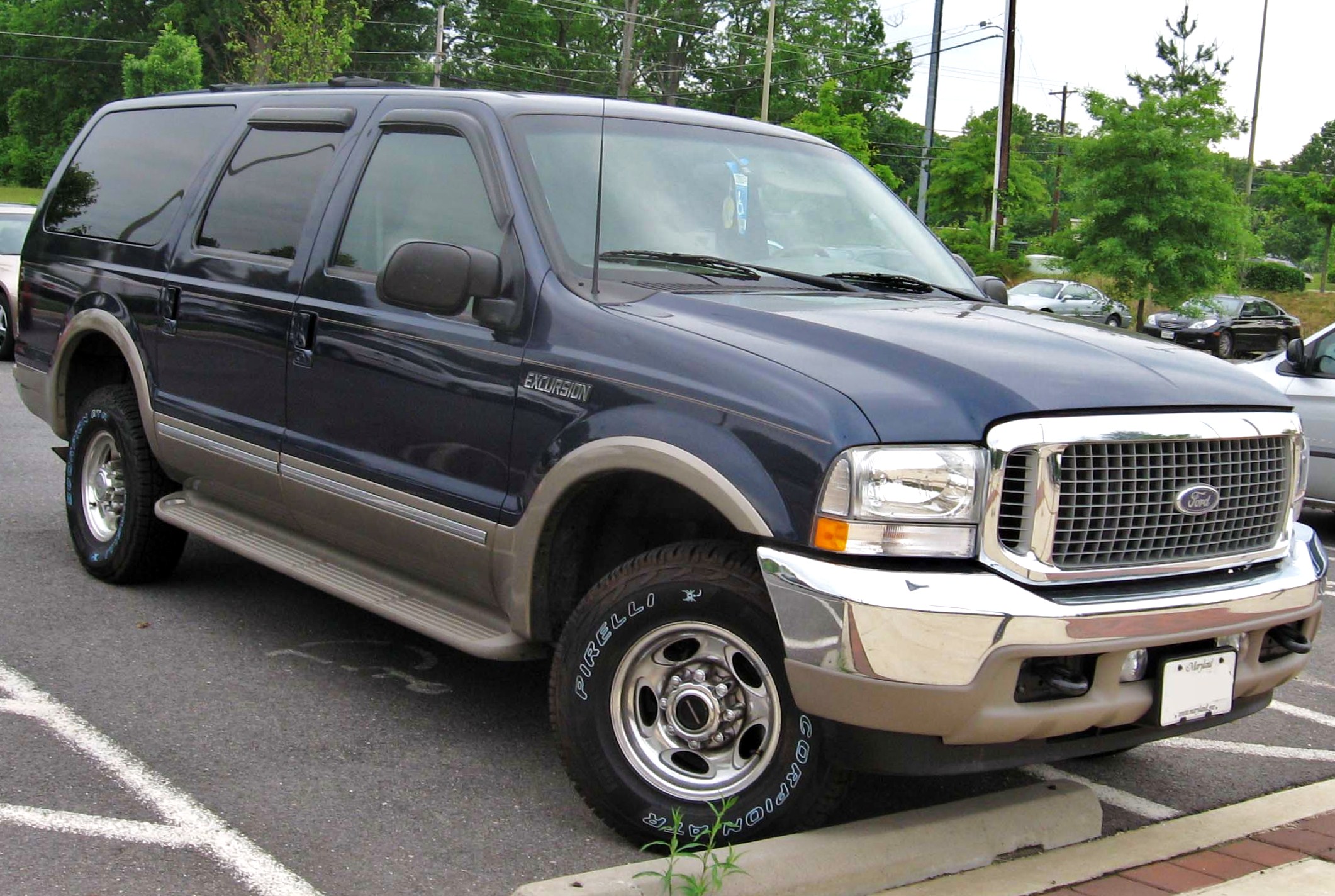
Ford Excursion
"...y the last expedition I drove. You know, when the excursions are so old now they're what they're twenty five y..."
The Ford Excursion is a very large SUV that’s built to handle heavy use, like towing and carrying many people. The podcast notes that these are now quite old, so they may need more maintenance than newer cars. When you’re considering one, it’s important to check the condition of major parts that wear out with age.
The Ford Excursion is a full-size, body-on-frame SUV built on a truck platform, designed for towing and for carrying a lot of passengers. The podcast context suggests it’s an older vehicle now—around the mid-20s in age—so the conversation likely focuses on what it’s like to drive and what ownership issues come with that age. Vehicles like this often get discussed in terms of durability, maintenance needs, and common wear items over time.
Duramax
"I like, I have no problem with the Duramax. Have you owned diesels before?"
Duramax is a brand name for GM’s diesel engines. The speaker is saying he’s comfortable with diesel ownership and the extra care it often requires.
Duramax refers to General Motors’ diesel engine family used in certain Chevrolet and GMC trucks. The host brings it up while discussing how diesel ownership changes maintenance expectations and costs.
diesels
"as long as you're versed in diesel, and you know, you get the difference, and you know, it's just a little bit more maintenance... I think diesels are a little less forgiving for the person that's not doing maintenance."
Diesel cars often need more careful upkeep. If you don’t maintain them regularly, they can be harder to live with and repairs can cost more.
Diesel engines generally require more disciplined maintenance than many gas engines, and breakdowns can be more expensive. The host emphasizes that diesels are “less forgiving” if you don’t keep up with service.
Lemon Law vehicle
"It's a branded vehicle. So a comeback on the Lemon Law... and it was an engine replacement at sixty nine miles... So it's a Lemon Law vehicle."
A Lemon Law car is one that had serious problems and couldn’t be fixed properly after multiple attempts. The speaker is saying that kind of history makes it harder to trust the car even after repairs.
A “Lemon Law vehicle” is a car that has repeatedly failed to meet quality or repair standards under the law, leading to a buyback or replacement process. The host uses it to explain why the vehicle’s history includes major repairs and why the current owner may still not know the root cause.
engine replacement
"I got the list of stuff that went wrong with this thing, and it was an engine replacement at sixty nine miles, we got a lower oil pan replacement at ten thousand miles..."
An “engine replacement” means the manufacturer or shop swapped in a different engine rather than repairing the original. In this segment, it’s listed as one of several major failures, supporting the claim that the vehicle had repeated issues.
lower oil pan replacement
"...it was an engine replacement at sixty nine miles, we got a lower oil pan replacement at ten thousand miles..."
The oil pan is where the engine oil sits. Replacing the lower oil pan usually means there was a leak or damage, and the speaker is using it as evidence of repeated problems.
The lower oil pan is the part of the engine’s oil system that holds oil at the bottom of the crankcase. Replacing it typically points to an oil leak or damage, and here it’s cited as another early failure item.
fuel pump
"...we got a lower oil pan replacement at ten thousand miles, we got a fuel pain filler at eleven thousand miles, we got a couple of censors at fourteen and fifteen thousand miles..."
The fuel pump is what sends gas from the tank to the engine. The speaker is saying this car needed fuel-system work more than once.
A fuel pump moves fuel from the tank to the engine under pressure. The host lists a “fuel pain filler” (likely a transcription error for fuel-related service such as a fuel pump or fuel system component) as part of the vehicle’s repeated repair history.
mileage
"I think that's a big risk. You know how many miles are on the other ones. Around? I give this team some like fifty to seventy thousand."
Mileage just means how many miles are on the car. When you’re buying after repairs, it matters because it can show whether the problem came back after the fix.
In used-car and repair discussions, mileage is the odometer reading that helps estimate how much wear the vehicle has and how long a problem may have been present. Comparing mileage at the time of repairs versus after the fix can indicate whether the issue truly went away.
pre-purchase inspection
"I'd rather buy the fifty thousand mile version as long as I could see maintenance records and get a general feeling of proof that it was done."
A pre-purchase inspection is when a mechanic checks a car before you buy it. It helps confirm the car was really fixed and can reveal problems that aren’t obvious during a quick look.
A pre-purchase inspection (PPI) is an independent inspection done before buying a car, often to verify that repairs were actually performed and that there aren’t hidden issues. In this context, the host is emphasizing the value of seeing maintenance records and getting evidence the work was done correctly.
repair history
"There was four repairs of some degree done to this vehicle in the last twenty thousand miles. Right, yeah, you know, Hey, your vehicles fixed. Hey, your vehicles fixed."
Repair history is the record of how many times a vehicle has been serviced for problems, especially repeated repairs for the same issue. Multiple repairs in a short period can suggest the underlying cause wasn’t fully resolved, even if each repair came with some form of guarantee.
P0300
"…my son in law Zo nine Morano and I had a zero three oh six which morphed into a P zero three hundred…"
P0300 is a computer code that usually means the engine is misfiring in one or more cylinders. A misfire can waste fuel and make the engine run rough.
P0300 is an OBD-II diagnostic trouble code for random/multiple cylinder misfires. It means the engine control unit is detecting ignition or combustion problems across more than one cylinder, which can lead to poor fuel economy and rough running.
pressure test cooling system
"You had suggested to take into a pressure test cooling system overnight and then take a borscope and check the cylinders out."
This test pressurizes the engine’s coolant system to see if anything is leaking. It can help find problems like a failing seal that lets coolant or gases where they shouldn’t be.
A cooling system pressure test checks for leaks in the radiator, hoses, water pump, and—importantly—head-gasket-related leaks. If combustion gases or coolant are getting into the wrong places, it can cause misfires and abnormal cylinder conditions.
boroscope
"…and then take a borscope and check the cylinders out."
A boroscope is like a tiny camera that lets you look inside the engine. It helps diagnose misfires by showing what’s happening inside each cylinder.
A boroscope is a small camera used to inspect inside cylinders through the spark plug or injector openings. Comparing cylinder cleanliness and deposits can reveal whether coolant intrusion, oil burning, or combustion issues are affecting specific cylinders.
misfiring
"At that point we had one three and five on the six cylinder was we're misfiring…"
A misfire is when a cylinder doesn’t burn the fuel correctly. That can cause rough running and can also trigger engine warning codes.
Misfiring means the air-fuel mixture in a cylinder doesn’t ignite properly, so that cylinder produces little or no power. When misfires are uneven across cylinders, it often points to issues like ignition components, fuel delivery, vacuum leaks, or coolant intrusion.
fuel pressure test
"And also we did a fuel press sure test, uh just static without it running, and fuel pressure was good."
This test checks whether the fuel pump is pushing fuel at the right pressure. If fuel pressure is wrong, the engine may misfire.
A fuel pressure test verifies that the fuel system is delivering the correct pressure to the injectors. Even with no leaks, low or unstable fuel pressure can cause misfires, so checking it helps separate fuel-delivery problems from ignition or mechanical issues.
injectors
"…pulled the fuel rail and the injectors out and just made sure that nothing was leaking out of them…"
Fuel injectors spray fuel into the engine in the right amount and timing. If they’re leaking or not spraying correctly, the engine can misfire.
Fuel injectors are electronically controlled valves that spray fuel into the engine’s intake (or directly into the cylinder on some engines). If injectors leak, clog, or don’t deliver fuel correctly, they can cause cylinder-specific misfires.
fuel rail
"And we actually pulled the fuel rail and the injectors out and just made sure that nothing was leaking out of them, and that was all good."
The fuel rail is the part that holds pressurized fuel and feeds it to the fuel injectors. If there’s a leak there, the engine can run poorly or misfire.
The fuel rail is the pressurized pipe that supplies fuel to the injectors. Checking the fuel rail and injector area for leaks helps confirm whether misfires could be caused by fuel escaping or incorrect injector operation.
cats
"…because we had my son in law had new cats put on… and so you'd suggest to just just because they were just put on, take them off and see if we have something plug."
“Cats” means catalytic converters, which clean up exhaust gases. If one gets clogged, the engine can feel like it’s running wrong.
“Cats” is shorthand for catalytic converters. If a catalytic converter is clogged or failing, it can restrict exhaust flow and contribute to drivability issues that may mimic or worsen misfire symptoms.
coils
"So they said, well, let's let's switch them back one more time, and we left the plugs where they were, switched the coils back one three and five for two, four and six, and they followed back over to one three and five and we changed the coils and boom, we're good to go."
Coils help create the spark that lights the fuel in each cylinder. If a coil is bad, that cylinder can misfire, and swapping coils can show whether the problem follows the coil.
Ignition coils are the components that generate high voltage to fire the spark plugs. If a coil is weak or failing, it can cause misfires on the cylinders it serves, and swapping coils between cylinders is a common diagnostic test.
misfires
"We put the one three and five coils and two four and six, and when we went and read misfires this time, now they were on two fore and six..."
A misfire means a cylinder didn’t burn the fuel the way it should. When that happens, the engine wastes fuel and can feel rough or run poorly.
An engine misfire is when one or more cylinders don’t ignite properly during combustion. That can cause rough running, reduced power, and higher fuel use because the engine isn’t converting fuel into motion efficiently.
banks
"I've never seen three on the same bank go bad. ... something was affecting vacuum on both banks..."
On some engines, cylinders are split into two sides. Those sides are called banks, and seeing whether a problem is on one side or both helps diagnose where it’s coming from.
“Banks” are groups of cylinders in engines with two cylinder rows, such as V6 and V8 layouts. Problems that affect one bank versus both can help narrow down whether the issue is tied to a specific side’s components or a more general timing/airflow problem.
chain had jumped
"because it didn't make sense that the chain had jumped. I've never seen one of those jump a chain and just affect one side. If it jumps the chain, it's usually both."
The timing chain controls when the engine’s valves open and close. If it jumps, the timing gets out of sync, and the engine can run very badly or not run at all.
When a timing chain “jumps,” the chain slips relative to the camshaft and crankshaft timing marks. That can cause incorrect valve timing, which often leads to severe running issues and can affect multiple cylinders/banks depending on the engine design.
vacuum
"But something was affecting vacuum on both banks, so you know, but the fact that both all I'm sorry that all three coils went bad."
Vacuum is a kind of suction inside the engine’s intake system. If it’s not right, the engine may not be getting the correct airflow, which can lead to running problems.
Engine vacuum refers to the pressure difference created in the intake manifold as cylinders draw air in. When vacuum is off on one or more banks, it can point to issues like intake leaks, valve timing problems, or other airflow-related faults that can also contribute to misfires.

Ford Escape
"But my wife, why do we go buy Why don't we go buy another escape? ... It's going to be an escape. It's going to be"
The Ford Escape is a compact SUV—basically a smaller family car with more space than a sedan. They’re talking about whether to buy another one or switch to something similar.
The Ford Escape is a compact SUV that’s often chosen for its size, fuel economy, and straightforward ownership. In this discussion, the hosts are comparing it to other similar-sized vehicles for a replacement purchase.

Honda Pilot
"It's going to be a REP four. It's going to be a Honda Pilot, [1518.6s] I believe is the model."
A Honda Pilot is a family SUV with room for people and cargo. Here, it’s mentioned as another option similar in size to what they’re considering.
The Honda Pilot is a midsize three-row SUV known for family-friendly packaging and easy daily drivability. In this segment, it’s brought up as a practical alternative to an Escape-sized vehicle.
heads up display
"oh, a twenty twenty three Lincoln whatever. It was big, you know, heads up display, [1573.9s] you know, spentometer, oil temperature, everything displayed out over the front of the hood."
A heads-up display shows important info on the windshield. That way you don’t have to take your eyes off the road to check the dashboard.
A heads-up display (HUD) projects key driving information—like speed or navigation—onto the windshield so you can see it without looking down at the instrument cluster. The speaker is using it to illustrate how modern cars can feel “busy” with extra tech.
oil temperature
"heads up display, ... spentometer, oil temperature, everything displayed out over the front of the hood."
Oil temperature tells you how hot the engine oil is. If it runs too hot, it can mean the engine is working harder than it should or something isn’t right.
Oil temperature is a gauge of how hot the engine oil is running. It matters because oil needs to reach the right temperature for lubrication, and overheating can indicate problems or heavy use.
knobs and whistles and buttons
"There were so many knobs and whistles and buttons in this car. I felt like strapping"
They’re talking about how modern cars can have lots of controls and alerts. The point is that it can feel overwhelming compared with older cars.
This phrase is describing the increasing number of physical controls and alerts in modern vehicles. While not a technical term by itself, it points to the “more tech and more interfaces” reality the speaker is reacting to.
vapor lock
"So they'd put post bends on there to help steady the temperature of that gas line. I think to get rid of those air bubbles vapor lock, that would cost to not run right."
Vapor lock happens when fuel gets so hot that it turns into gas in the fuel line. If that happens, the engine may not get the fuel it needs, so it can run poorly or stall until things cool off.
Vapor lock is when fuel in the fuel line turns into vapor instead of staying liquid. That can interrupt fuel delivery to the carburetor, causing rough running or preventing the engine from restarting until the line cools down.
carburetor
"between that steel pump and the carburetor that seemed to develop vapor lock on the v eights... Nobody remembers this nobody remembers carburetors anymore."
A carburetor is an older-style device that mixes fuel and air so the engine can burn it. If fuel delivery is interrupted, the engine won’t run correctly.
A carburetor is a fuel-mixing device used on many older engines. It blends fuel with incoming air to create the right mixture for combustion, and vapor lock can disrupt that fuel supply.
flathead
"I think you're going back to the back to the forties early fifties on Forge with their flatthead vights because the steel pump was up on the back end of the engine driven by a little push rod..."
A flathead is an older engine design where the valves sit in the engine block. It’s a vintage engine style, and in this story it’s part of why the fuel system could overheat.
A flathead is an engine design where the valves are located in the engine block rather than in the cylinder head. This older layout was common on early V8s and other engines, and it’s associated here with the fuel-pump/line setup that contributed to vapor lock.
V8
"between that steel pump and the carburetor that seemed to develop vapor lock on the v eights... We never had vights... It was a big deal when V eights came out then."
A V8 is an engine with eight cylinders. The speaker is comparing V8s to six-cylinder engines and saying they had different experiences with starting and fuel heating.
A V8 is an engine with eight cylinders arranged in a V shape. The transcript contrasts V8s with Ford’s inline-six, and ties the V8-era setup to fuel-line overheating and vapor lock concerns.

Ford Transit
"Oh? I know they have. I've got a twenty seventeen transit that's just been a dynamite piece of machinery for me, and it's and I take care of it like you say, you don't, You don't go these ten thousand mile oil changes."
The Ford Transit is a work van that lots of people use for jobs. Ron is saying his Transit has been reliable and that he takes maintenance seriously.
The Ford Transit is a light commercial van known for being durable and widely used for work. In this segment, Ron Ananian uses his Ford Transit as an example of how he maintains it carefully to keep it running well.
oil changes
"and I take care of it like you say, you don't, You don't go these ten thousand mile oil changes. I do them sooner than that."
An oil change is when you replace the engine’s oil. Fresh oil helps the engine stay clean and run cooler, so doing it too late can be worse for the engine.
An oil change is the scheduled replacement of engine oil, which carries away heat and contaminants. The host is emphasizing that waiting for very long intervals can let oil degrade and reduce how well it protects the engine.
transmission fluid
"it holds seven courts of oil, and I actually have been adding for the last quart of quart of transmission fluid to clean it out to help help keep the oil cleaner."
Transmission fluid is the fluid that helps the car’s transmission shift smoothly. Ron is describing a maintenance habit involving adding fluid to help keep things cleaner.
Transmission fluid is the lubricant and hydraulic fluid used by an automatic transmission (and some other driveline systems) to control shifting and reduce wear. Ron mentions adding fluid in small amounts as an “old school trick” to help keep the oil cleaner.
quart
"and I actually have been adding for the last quart of quart of transmission fluid to clean it out to help help keep the oil cleaner."
A quart is a measurement of liquid volume. Ron is talking about how much transmission fluid he’s adding.
A quart is a unit of volume commonly used for measuring how much fluid goes into an engine or transmission. Ron is describing fluid capacity and how much he adds during maintenance.
tire pressure
"And when was the last time you checked tire pressure? When was the last time you used a fuel system cleaning kit..."
Tire pressure is how much air is in your tires. If it’s too low or too high, the car has to work harder to roll, which can waste fuel.
Tire pressure is the amount of air inside your tires, measured in PSI. Incorrect pressure changes rolling resistance and can reduce fuel economy, while also affecting tire wear and handling.
fuel system cleaning kit
"When was the last time you used a fuel system cleaning kit like the CRCGDI kit you can get at your local Advanced Total Parts."
A fuel system cleaning kit is a product you use to clean the parts that deliver fuel to the engine. If those parts get dirty, the engine may burn fuel less efficiently, so cleaning can help.
A fuel system cleaning kit is an aftermarket product (often a cleaner added to the fuel or run through the system) meant to remove deposits from parts like injectors and intake passages. If deposits build up, they can disrupt spray pattern and combustion, which can hurt fuel economy.
CRC GDI kit
"When was the last time you used a fuel system cleaning kit like the CRCGDI kit you can get at your local Advanced Total Parts."
CRC makes car cleaning products. In this case, the host is pointing to a CRC kit you can use to clean the fuel system yourself.
CRC is an aftermarket brand that makes vehicle maintenance products, including fuel system cleaners. The speaker specifically mentions a CRC GDI kit as an example of a do-it-yourself fuel system cleaning option.
flooded battery
"You've heard about InHand flooded batteries. They're a better upgrade of flooded battery versus a standard flooded battery which most cars have today."
A flooded battery is a common type of car battery that uses liquid acid inside. Different flooded-battery designs can charge a little differently, which can change how the car’s charging system behaves.
A flooded battery is a lead-acid battery where the electrolyte is in liquid form and the battery is designed to vent gases during charging. The speaker contrasts it with “enhanced flooded” versions, implying different internal construction and charge behavior that can affect how the car manages charging and, indirectly, fuel economy.
AGM battery
"There's talk of using enhanced flooded batteries in place of an AGM battery right and you can read about a GM batteries..."
An AGM battery is a sealed type of car battery that uses special material to hold the battery fluid. Because it charges differently than a flooded battery, the car may need to manage it differently.
AGM stands for Absorbent Glass Mat, a sealed lead-acid battery design where the electrolyte is absorbed in fiberglass mats. AGM batteries typically have different charging requirements and behavior than flooded batteries, which is why swapping battery types can change how the battery management system operates.
Clarios
"And you can read about a GM batteries at auto batteries dot com from the folks over at clarios."
Clarios is a company that supplies automotive battery products. The host is using them as a source for information about battery options.
Clarios is a company involved in automotive battery brands and technology. The speaker directs listeners to read about GM batteries from the folks over at Clarios, tying battery type discussion to a specific supplier.
battery management system
"That'll affect fuel economy because that will alter how the battery management system works."
The battery management system is the car’s control system that keeps track of the battery and decides how to charge it. If you change the battery type, the car may charge it differently, which can influence how much fuel the car uses.
The battery management system (BMS) is the car’s electronics that monitor battery state and control charging strategy. If you replace the battery with a different type (like AGM vs enhanced flooded), the BMS may adjust charging behavior to match the new battery’s characteristics, which can affect parasitic loads and fuel economy.
Request an Explanation
Heard something you'd like explained? We'll add it to this episode.
Sign in to request explanations for terms you heard.
Want to learn more?
Browse our glossary for plain-English explanations of automotive terms, jargon, and concepts.
Help improve this episode
See something that's not quite right? Our annotations are AI-generated and can sometimes miss the mark. Click the flag icon on any annotation to suggest a correction.