Ron Ananian, The Car Doctor - November 1, 2025 - Hour 1 - Cheaper By The Dozen? Bagels & Oil Changes - (855)560-9900 24/7 Hotline
About this episode
Ron Ananian dives into the often-overlooked value of quality oil changes compared to everyday expenses like bagels. He shares a personal anecdote about the rising costs of bagels and breakfast sandwiches, questioning why people readily accept high food prices but balk at the cost of proper vehicle maintenance. Through engaging discussions with callers, Ron emphasizes the importance of professional oil changes, the risks of DIY approaches, and the critical nature of maintenance for vehicle longevity. He also addresses specific car repair issues, providing insights and advice for listeners.
The $49 Bagel Test — Why a Real Oil Change Costs What It Costs
Bagels don’t get price complaints—but oil changes do. Ron compares a $49 North Jersey bagel run to the true value of a proper oil change: factory drain-plug gaskets, under-car inspection, torque specs, shields off/on, and a road test that keeps you safe at highway speeds. Plus: a Buick saved by an “it-won’t-work” ECU re-flash, diagnosing a P0300 random misfire and lean trims (cat damage risk), Quadra-jet hot-start basics, and chasing brake shake after a subframe swap with dial indicators and mount checks. Call in your oil-change price and what you actually got.
- Grab your Car Doctor gear – T-shirts & more at CarDoctorShow.com
-
Follow the wrench – Instagram @ronananian for shop life & behind-the-scenes
-
Watch & learn – Auto repair tips & videos on our YouTube Channel
-
Got a car question? Call the Car Doctor Hotline 24/7 – (855) 560-9900
-
Join the conversation LIVE – Saturdays 2–4 PM Eastern
See omnystudio.com/listener for privacy information.
reflashing
"I want to talk to you about reflashing and how reflashing fixed a Buick this week that I didn't expect it to fix..."
Reflashing is like updating the software on your phone, but for a car's computer. It helps fix problems or improve how the car runs.
Reflashing refers to the process of updating or modifying the software in a vehicle's engine control unit (ECU). This can improve performance, fix issues, or enable new features. It's often used in automotive diagnostics and repairs to resolve specific problems.
oil change
"But the first time you tell somebody an oil change, a real oil change is close to $200. You think we burn the Statue of Liberty. It's just that crazy. And all of a sudden you hear, well, I can go to Walmart and I can buy oil for, you know, $6 a quart."
An oil change is when you replace the old oil in your car's engine with new oil. This helps keep the engine running smoothly and prevents damage.
An oil change is the process of removing old engine oil and replacing it with fresh oil to ensure proper engine lubrication and performance. Regular oil changes are crucial for maintaining engine health and longevity.
drain plug gasket
"The simplest of which is the drain plug gasket on the drain plug. I'm not sure why."
A drain plug gasket is a small rubber or metal ring that helps keep oil from leaking out of the engine when you change the oil. If it's not in good shape, your car can lose oil, which is not good for the engine.
The drain plug gasket is a crucial component that seals the connection between the oil pan and the drain plug, preventing oil leaks during an oil change. If this gasket is not properly installed or is damaged, it can lead to significant oil loss and engine damage.
Honda
"And I've been talking about, complaining about, ranting about, bitching about this for years. That, you know, if it's some type of a metal gasket, we'll talk about Hondas."
Honda is a car company from Japan that makes many popular cars. They are known for building reliable vehicles that last a long time.
Honda is a well-known Japanese automotive manufacturer recognized for producing reliable vehicles, including cars, motorcycles, and power equipment. They have a reputation for engineering durable engines and efficient vehicles.
oil pan
"Because they don't want you to over tighten the drain plug to get it to seal and ruin the threads in the oil pan. Ergo, that's where we get stripped oil pans from."
An oil pan is a container that holds the engine oil in a car. It's located underneath the engine and is important for keeping the oil where it needs to be.
The oil pan is a reservoir that holds the engine oil in a vehicle. It is located at the bottom of the engine and is crucial for oil storage and drainage during maintenance.
spark plugs
"...you do $1,500 worth of service, whatever it is. Cylinder, you know, fuel system cleaning, cylinder examination, spark plugs..."
Spark plugs are small parts in your car's engine that help start the engine by creating a tiny spark. This spark ignites the fuel, making the engine run.
Spark plugs are essential components in gasoline engines that ignite the air-fuel mixture in the combustion chamber. They play a crucial role in engine performance, fuel efficiency, and emissions control.
coolant
"...you do $1,500 worth of service, whatever it is. Cylinder, you know, fuel system cleaning, cylinder examination, spark plugs, you know, coolant..."
Coolant is a liquid in your car that helps keep the engine from getting too hot. It moves heat away from the engine to keep it running well.
Coolant is a fluid used in vehicles to regulate engine temperature. It absorbs heat from the engine and dissipates it through the radiator, preventing overheating and ensuring optimal engine performance.
odometer
"Till you look down at the odometer and you go, wow, the car's got 140,000 miles on it."
An odometer is a part of your car that counts how far you've driven. It helps you know when to take your car in for maintenance or check-ups.
An odometer is a device in a vehicle that measures the distance traveled. It is important for tracking maintenance schedules and the overall wear and tear on the vehicle.

Nissan Pathfinder
"It's a 2006 Pathfinder with the four liter v6. Right. Came to me two years ago and needed new primary cats."
The Nissan Pathfinder is a type of SUV that can carry families and gear. The 2006 version has a strong engine and is good for driving on rough roads.
The Nissan Pathfinder is a mid-size SUV known for its ruggedness and off-road capabilities. The 2006 model features a V6 engine and is popular for family use and outdoor activities.
catalytic converters
"...needed new primary cats. And so the good ones were 2400. The cheap ones were 700. So I took a chance on the cheap ones."
Catalytic converters help clean the air by reducing pollution from the car's exhaust. They can be costly to replace, and there are different types available, some of which are better than others.
Catalytic converters are components in a vehicle's exhaust system that reduce harmful emissions. They can be expensive to replace, and the quality can vary significantly between OEM (original equipment manufacturer) and aftermarket options.
timing chain
"...the timing chain had a nasty rattle to it. It did not have the vacuum supercharger wine..."
The timing chain is a part of the engine that helps keep everything running smoothly. If it makes a rattling noise, it could mean there's a problem that needs fixing.
The timing chain is a crucial component in an engine that ensures the synchronization of the crankshaft and camshaft. A rattle from the timing chain can indicate wear or improper tension, which may lead to engine performance issues.
PO300
"And it had the PO300 and reduced power. And I knew what the problem was before I even looked at the car."
PO300 is a trouble code that means the engine is misfiring in one or more cylinders. This can cause the car to lose power and run poorly.
The PO300 code indicates a random/multiple cylinder misfire detected by the vehicle's onboard diagnostics. It often signifies that the engine is not firing properly, which can lead to reduced power and performance.
exhaust gasket
"As it pulled up to my house, I could hear the blown exhaust gasket. It blew out between the primary and secondary cats."
An exhaust gasket helps seal the connection between the engine and the exhaust system. If it blows, it can cause loud noises and make the car run poorly.
An exhaust gasket is a sealing component that prevents exhaust gases from leaking between the engine and the exhaust system. A blown exhaust gasket can lead to performance issues and increased emissions.
vacuum test
"So to check for exhaust blockage, I did a vacuum test and it passed."
A vacuum test checks how much air pressure is in the engine's intake. It helps find problems that might make the engine run poorly.
A vacuum test is a diagnostic procedure used to measure the vacuum pressure in an engine's intake manifold. It helps identify issues such as leaks or blockages that can affect engine performance.
manifold vacuum
"What was manifold vacuum bill at idle? Well, so it's a 16."
Manifold vacuum is a measurement of air pressure in the engine's intake area. It helps mechanics understand how well the engine is running and if there are any issues.
Manifold vacuum refers to the pressure in the intake manifold of an engine, which can indicate how well the engine is performing. It is measured in inches of mercury (inHg) and can provide insights into engine health, fuel mixture, and overall efficiency.
misfiring
"Or, or, you know, that, you know, it's just, it's misfiring."
Misfiring is when an engine doesn't fire correctly in one of its cylinders. This can make the engine run rough and lose power.
Misfiring occurs when an engine cylinder fails to ignite the air-fuel mixture properly, leading to a loss of power and increased emissions. This can be caused by various issues, including faulty spark plugs, fuel delivery problems, or air intake issues.
piston
"...can we look at the piston tops or the intake valves left bank to right bank?"
A piston is a part inside the engine that moves up and down to help turn fuel into power. It's essential for making the engine work.
A piston is a cylindrical component of an engine that moves up and down within a cylinder, converting the energy from fuel combustion into mechanical work. It plays a crucial role in the engine's operation and performance.
intake valves
"...can we look at the piston tops or the intake valves left bank to right bank?"
Intake valves are parts of the engine that open up to let air and fuel in so the engine can run. They need to work well for the engine to perform properly.
Intake valves are components in an internal combustion engine that open to allow the air-fuel mixture to enter the combustion chamber. Their proper functioning is vital for engine efficiency and performance.
burning oil
"...I'm wondering if this engine's burning oil."
Burning oil means that the engine is using up oil as part of the fuel process, which can happen if there are issues inside the engine. It can cause problems and is not good for the car.
Burning oil refers to a condition where engine oil is consumed during the combustion process, often due to worn engine components or seals. This can lead to increased emissions and engine wear.
Borescope
"Let's Borscope it. Do we have carbon deposits left to right?"
A borescope is a camera that helps mechanics look inside engines to find problems without taking them apart. It's like a tiny camera on a stick that shows what's happening inside.
A borescope is a tool used to inspect the interior of engines and other mechanical components. It allows technicians to visually check for issues like carbon deposits or coolant leaks without disassembling the engine.
pressurize the cooling system
"If we pressurize the cooling system, plugs out, pressurize the cooling system, come back in the morning..."
Pressurizing the cooling system means adding pressure to the part of the car that keeps it cool. This helps mechanics find leaks where coolant might be escaping.
Pressurizing the cooling system is a diagnostic technique used to check for leaks. By increasing the pressure in the system, technicians can see if coolant escapes, indicating a leak in hoses, gaskets, or other components.
Quadrajet carburetor
"...about my Chevy van and the Quadrajet carburetor that was having a hot start issues."
A Quadrajet carburetor is a device that mixes air and fuel for an engine, helping it to run smoothly. It's known for being able to adjust to different driving conditions, making it a popular choice in many cars.
The Quadrajet carburetor is a type of carburetor that was widely used in General Motors vehicles, known for its versatility and ability to provide good performance across a range of conditions. It features a unique design that allows for both efficient fuel delivery and power when needed.
metal brass float
"And, oh, and I put a metal brass float in it this time. Okay."
A metal brass float is a part inside the carburetor that helps control how much fuel is in it. It moves up and down as the fuel level changes.
A metal brass float is a component in a carburetor that helps regulate the fuel level. It rises and falls with the fuel level, ensuring the carburetor maintains the correct mixture of air and fuel.
oil fouling
"...I've had an oil fouling issue in the past. Right. But I'm running an engine additive that's cut the oil consumption down a lot on it."
Oil fouling is when oil gets on the spark plug, which can cause the engine to run poorly. It usually happens if the engine is using too much oil or has some wear and tear.
Oil fouling occurs when engine oil contaminates the spark plug, leading to misfires and poor engine performance. This can happen due to excessive oil consumption or worn engine components.
fuel deposits
"...It had some fuel deposits."
Fuel deposits are leftover bits from fuel that didn't burn completely in the engine. They can cause problems and usually mean something is off with how the engine is running.
Fuel deposits are residues left in the combustion chamber or on spark plugs due to incomplete combustion of fuel. They can lead to engine performance issues and are often a sign of improper fuel mixture or engine tuning.
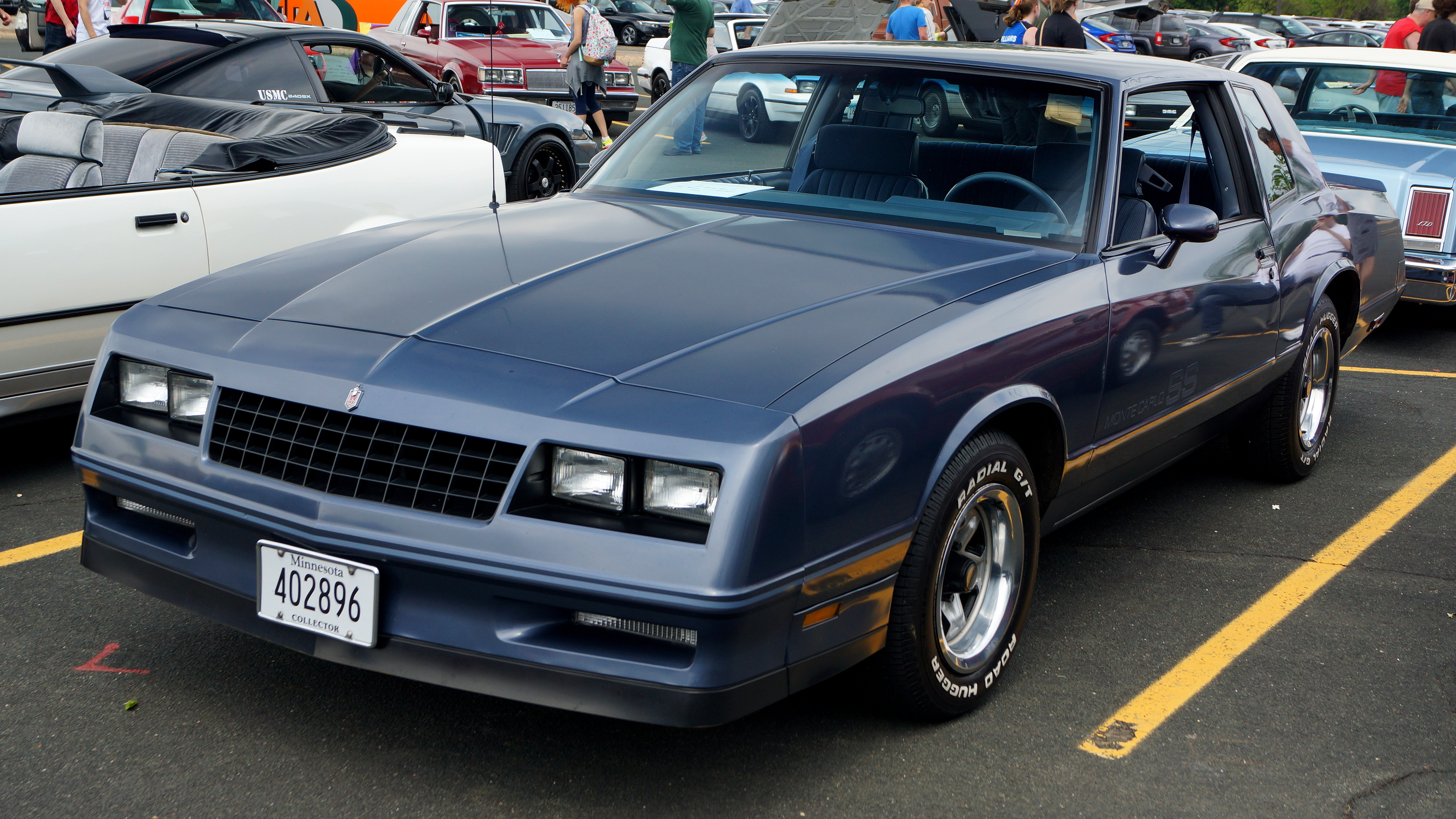
Chevrolet Monte Carlo
"... get it from? I found a great carburetor for the Monte Carlo through advanced auto parts. They've got, they'r..."
The Chevrolet Monte Carlo is a type of car that looks sporty and was made for many years, especially popular in the 70s and 80s. It’s known for being fast and having a powerful engine, which makes it exciting to drive. People talk about it because it's a classic car that many fans still love today.
The Chevrolet Monte Carlo is a classic American coupe that was produced from the 1970s until the late 2000s, known for its stylish design and performance. It has a strong following among car enthusiasts, particularly for its V8 engine options and involvement in NASCAR racing. The Monte Carlo is often discussed for its nostalgic value and as a representation of American muscle cars.

Chrysler Pacifica
"...mpany. Let's go to Renee in Maine real quick, 17 Pacifica. What's going on, Renee?"
The Chrysler Pacifica is a type of family car called a minivan that has lots of room inside for passengers and cargo. It's popular because it has features that make traveling with kids easier, like extra storage and entertainment options. People often talk about it because it's a good choice for families who need space and comfort.
The Chrysler Pacifica is a versatile minivan known for its spacious interior, advanced technology, and family-friendly features. It has gained popularity for its hybrid variant, which offers improved fuel efficiency and eco-friendliness. Discussions around the Pacifica often focus on its practicality for families and its innovative design.
Request an Explanation
Heard something you'd like explained? We'll add it to this episode.
Sign in to request explanations for terms you heard.
Want to learn more?
Browse our glossary for plain-English explanations of automotive terms, jargon, and concepts.
Help improve this episode
See something that's not quite right? Our annotations are AI-generated and can sometimes miss the mark. Click the flag icon on any annotation to suggest a correction.