Ron Ananian, The Car Doctor, Talks EV's & The Ford F150 Lightning, on Mendte In The Morning, WOR 710AM, December 29, 2025
About this episode
Ron Ananian discusses the significant challenges facing Ford's F-150 Lightning and the broader electric vehicle market. With Ford halting production and taking a $20 billion charge, Ananian explains the financial struggles linked to EVs, including high production costs and declining demand after government subsidies ended. He emphasizes the importance of hybrid technology as a potential solution, while also addressing concerns about maintenance and battery replacement costs. The conversation highlights the complexities of transitioning to electric vehicles and the ongoing need for reliable infrastructure.
On Mendte in the Morning on WOR Radio 710, Ron Ananian, The Car Doctor, joins holiday host Ken Rosato to break down one of the biggest automotive stories of the year. Following Ford Motor Company’s decision to halt production of the F-150 Lightning and take a reported $20-billion charge tied to its EV strategy, Ron explains why the move isn’t a failure of the vehicle—but a reality check on profitability, subsidies, infrastructure, and consumer demand. The conversation expands into the future of EVs, the growing shift toward hybrids, the hidden costs of new technology like start-stop systems, and what all of this means for drivers long term.
Catch Ron Ananian every other week on Mendte in the Morning at 9:40 AM on WOR 710 AM.
- Grab your Car Doctor gear – T-shirts & more at CarDoctorShow.com
-
Follow the wrench – Instagram @ronananian for shop life & behind-the-scenes
-
Watch & learn – Auto repair tips & videos on our YouTube Channel
-
Got a car question? Call the Car Doctor Hotline 24/7 – (855) 560-9900
-
Join the conversation LIVE – Saturdays 2–4 PM Eastern
See omnystudio.com/listener for privacy information.
all-electric
"Ford has halted production of the all-electric"
All-electric cars use only batteries and electric motors, so they don’t run on gasoline or diesel.
All-electric vehicles (EVs) run solely on electric motors powered by rechargeable batteries, producing zero tailpipe emissions.
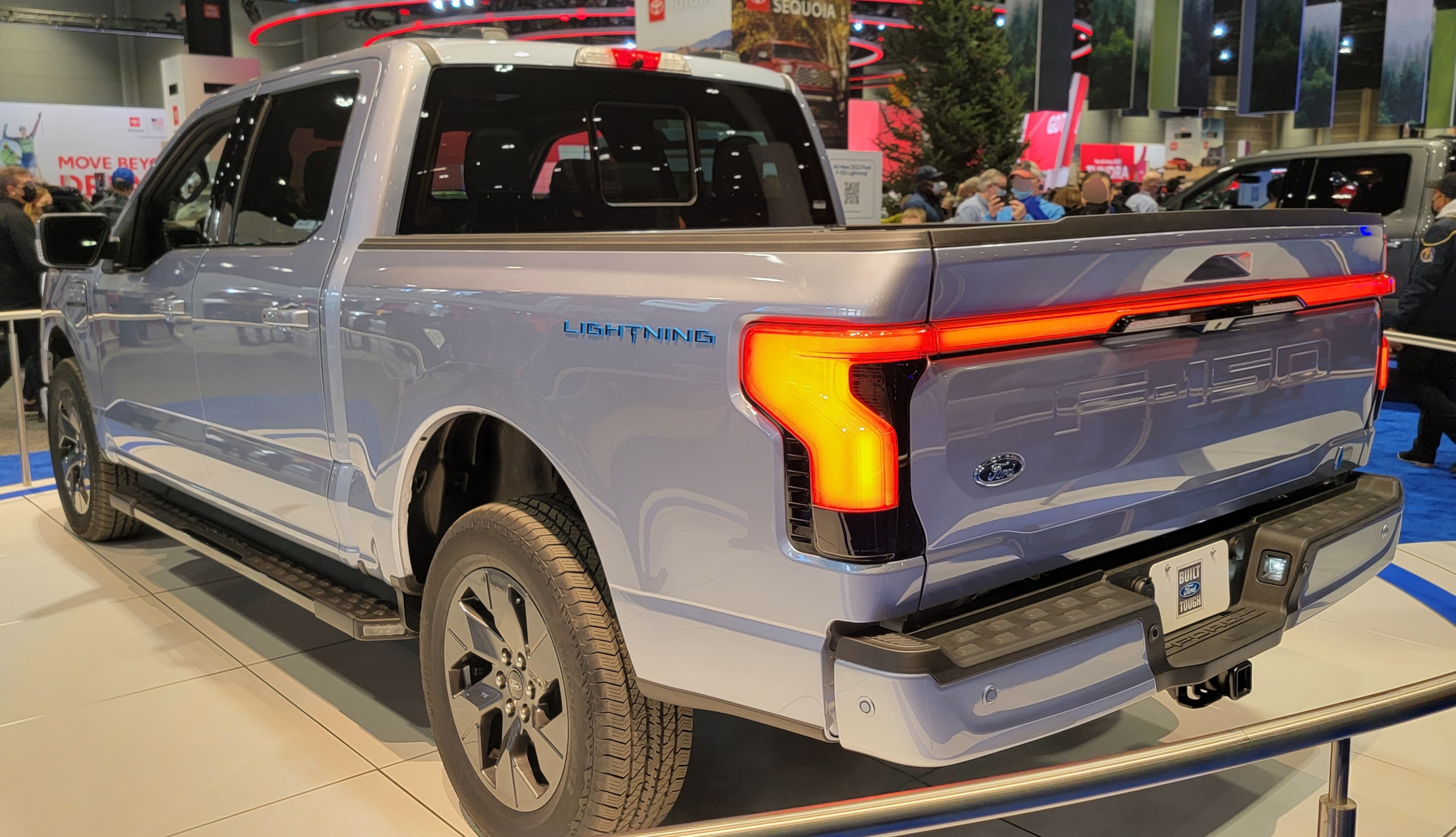
Ford F150 Lightning
"F-150 Lightning, and now they're taking a $20 billion charge tied to its EV strategy."
It’s the electric version of Ford’s best‑selling pickup truck, meant to run on batteries instead of gasoline.
The F-150 Lightning is Ford’s all-electric version of its popular pickup truck, featuring a dual-motor setup and a 200‑kWh battery pack.
EV course corrections
"it's one of the biggest EV course corrections we've seen from a U.S. automaker."
It means the company is changing its electric car plans a lot, which can cost a lot of money.
This refers to major strategic shifts companies make in their electric vehicle plans, often involving large financial adjustments.
government subsidies
"after the government subsidies went away because there were government subsidies to buy an EV vehicle."
These are money help from the government to make buying electric cars cheaper.
Financial incentives provided by governments to encourage the purchase of electric vehicles, such as tax credits or rebates.
electric pickups
"[309.5s] there wasn't enough. And, you know, it sends a signal. Electric pickups really aren't selling the way they shouldn't."
Electric pickups are trucks that run on batteries instead of gasoline. They’re cleaner and cheaper to run, but they haven’t sold as many as people expected.
Electric pickups are pickup trucks powered by electric motors instead of internal combustion engines. They offer zero tailpipe emissions and lower operating costs but currently face challenges in sales volume and profitability.
retooling
"[324.2s] all over the world now retooling, right? Going back in many cases to producing more fossil fuel engines again."
Retooling means factories are being changed to make different cars. If a company isn’t selling enough electric trucks, they might switch back to making regular gasoline ones.
Retooling refers to manufacturers shifting production lines and resources from one type of vehicle (e.g., electric) back to another (e.g., internal combustion). It reflects changing market demand and profitability concerns.
fossil fuel engines
"[324.2s] all over the world now retooling, right? Going back in many cases to producing more fossil fuel engines again."
Fossil fuel engines are the traditional gasoline or diesel engines that most cars use today. They’re still common because electric charging isn’t everywhere yet.
Fossil fuel engines are internal combustion engines that burn gasoline or diesel to produce power. They remain the dominant technology for most vehicles, especially in markets where electric infrastructure is limited.
carbon footprint
"point till about the 60,000 mile mark in terms of their impact on the environment, the carbon footprint. And we can, you know, have that conversation another time."
It’s the amount of carbon dioxide a car releases into the air over its life, from manufacturing to driving.
Carbon footprint measures the total greenhouse gas emissions caused directly or indirectly by a vehicle, often expressed in CO₂ equivalents.
internal combustion
"We're going to go back towards internal combustion. But we're going to go to internal combustion and hybrid, which is what I kind of said two years ago"
It’s the kind of engine that makes most cars today by burning gasoline or diesel inside a small chamber to push pistons and turn the wheels.
Internal combustion refers to engines that burn fuel inside a cylinder to create power, the traditional technology used in most gasoline and diesel cars.
start-stop technology
"We're seeing now, for example, a little off subject, start-stop technology, right? You're familiar with start-stop. You stop and the engine goes off, sure."
When a car is stopped, the engine turns off and then starts again when you need it. It helps save gas and lower pollution.
Start‑stop technology automatically shuts off the engine when a vehicle is idling (e.g., at traffic lights) and restarts it when the driver releases the brake or presses the accelerator, reducing fuel consumption and emissions.
cam shaft parts
"We're seeing a lot of issues with certain manufacturers, Ford among them, where it's causing issues with variable valve timing components, cam shaft parts."
The camshaft is a gear that tells the engine when to open and close its valves. Too many starts and stops can wear it out.
Camshaft parts control the opening and closing of engine valves. In start‑stop engines, frequent on/off cycles can stress these components, leading to wear or failure.
variable valve timing components
"We're seeing a lot of issues with certain manufacturers, Ford among them, where it's causing issues with variable valve timing components, cam shaft parts."
These parts help the engine open and close its valves at the right times. If they break, the car may run poorly or have trouble starting.
Variable valve timing (VVT) components adjust the timing of engine valves to improve performance and efficiency. Issues can arise when these parts wear or fail, especially in engines with start‑stop systems.
engine controls and timing
"To make it simple, things that are affecting engine controls and timing, particularly if the person isn't due diligent about their oil changes..."
These are the parts of a car’s computer that decide when to spark and how much fuel to put in, making the engine run smoothly.
Engine controls and timing refer to the computer systems that manage ignition, fuel injection, and valve operation to keep an engine running efficiently.
oil changes
"particularly if the person isn't due diligent about their oil changes and we're seeing long-term complications..."
Changing the oil keeps your car’s engine parts moving smoothly and stops dirt from damaging them.
Oil changes involve draining old engine oil and replacing it with fresh oil to lubricate moving parts, remove contaminants, and maintain engine health.
long-term complications
"and we're seeing long-term complications when these engines get 60, 70, 80,000 miles on them..."
These are issues that show up after a car has driven many miles, like needing expensive repairs because parts wore out.
Long-term complications refer to mechanical problems that develop over many miles, often due to neglect or wear of critical components.
fuel saving feature
"I thought I had a bad tank of gas and then I realized, no, that's the feature. It's supposed to save fuel"
Some cars turn off the engine when you stop at a light to save gas. When you press the gas pedal, it starts up again.
Many modern cars have a stop‑start system that turns the engine off when the car is idle to save fuel and reduce emissions. The engine restarts automatically when you press the accelerator.
EVs
"EVs didn't pan out to be what they were supposed to be because of the technology, the costs associated with them"
EVs are cars that run on electricity from batteries, so they don't use gasoline or diesel.
EVs stands for electric vehicles, cars powered primarily by electric motors and rechargeable batteries instead of gasoline engines.
battery replacement
"you know, yeah, it's, you know, the EV battery replacement is more expensive than replacing the engine on most internal combustion"
When the battery in an electric car no longer holds enough charge, it needs to be replaced with a new one.
Battery replacement refers to swapping out the main rechargeable battery pack in an electric vehicle when it loses capacity or fails.
Request an Explanation
Heard something you'd like explained? We'll add it to this episode.
Sign in to request explanations for terms you heard.
Want to learn more?
Browse our glossary for plain-English explanations of automotive terms, jargon, and concepts.
Help improve this episode
See something that's not quite right? Our annotations are AI-generated and can sometimes miss the mark. Click the flag icon on any annotation to suggest a correction.