
S&YE231 - Snail Works Design & Fabrication
About this episode
Alex (Escargo) and the hosts kick off with Subaru Crosstrek build talk, then zoom out to Overland Expo P&W plans and Subaru booth logistics. The conversation shifts into Snail Works Design & Fabrication: how a Crosstrek project helped start the business, the CNC/CAD workflow, and why certain rear bumper designs stopped due to time and shipping costs. Along the way, they cover off-road fitment details like 31-inch tires, plus a long, practical story about roof-rack water leaks and sealing mistakes.
Alex, owner of Snail Works Design & Fabrication joins us today to talk about how the business got started and why, to talk about his Crosstrek, and his recent move to Arizona.
Links from the show, links to sponsors and discount partners, and ways to support the podcast:
Snail Works Design & Fabrication
https://www.instagram.com/snailworks.us/
Website
Escrgo
https://www.instagram.com/escrgo/
- - - - - - - - - - - - - - - - - - - - - - - - - - -
Subie & YOU! Podcast Website!!
https://subieandyoupodcast.com/
Go check out the Subie & YOU! Podcast website!!
Subie & YOU! YouTube Channel
https://www.youtube.com/@subieyou
Please visit the channel and subscribe.
- - - - - - - - - - - - - - - - - - - - - - - - - - -
Sponsors of the Podcast:
Subaru Gear
Use code subieandyou2026 to get 20% off your purchase!
Get FREE shipping for orders over $50 after 20% discount!
Website:
Accentrek Designs
Instagram:
https://www.instagram.com/accentrek.designs/
Website:
https://www.accentrekdesigns.com/
Mele Design Firm
Use code subieandyou on most products store wide to get 10% off your purchase!
Website:
- - - - - - - - - - - - - - - - - - - - - - - - - - -
Other Brands Offering Discounts
Orbis Overlanding
10% discount off Orbis Overlanding and partnering car products
(excludes apparel)
Discount code: subieandyou
Website:
trail stuff
"If you're listening to this podcast and you're in Arizona, hit me up. Let's go do some fun trail stuff with the Subarus."
They mean taking the cars onto dirt or rough trails instead of just regular roads. It’s the kind of driving where you want the car to handle uneven ground.
“Trail stuff” is shorthand for off-road or light off-road driving activities. In Subaru/overlanding circles, it usually implies setups meant to handle dirt roads, obstacles, and variable traction.
vinyl overlays
"For those of you who don't know, Accentric Designs is a small, community-driven business that offers custom-fit vinyl overlays for most Subaru models. This includes various designs for the rear reflectors, tail lights, and side tail lights."
Vinyl overlays are stickers made from vinyl that you stick onto a surface. In this case, they’re used to customize parts of the Subaru’s exterior without swapping the whole part.
Vinyl overlays are adhesive vinyl pieces applied over existing surfaces—here, exterior lighting and trim areas. They’re commonly used to change appearance (color/graphics) without replacing the underlying parts.
rear reflectors
"This includes various designs for the rear reflectors, tail lights, and side tail lights. I also offer fun, detailed designs like the popular fender stripes and stickers."
Rear reflectors are the little reflective pieces on the back of the car that help other drivers see you at night. If you cover them with graphics, you want to make sure they still reflect light.
Rear reflectors are the safety reflectors mounted on the back of the car that bounce light back toward other drivers. They’re often customized with overlays/graphics, but they still need to remain visible and functional.
tail lights
"This includes various designs for the rear reflectors, tail lights, and side tail lights. I also offer fun, detailed designs like the popular fender stripes and stickers."
Tail lights are the lights on the back of the car that turn on when you brake or at night. Any customization should still let them work properly so other drivers can see you.
Tail lights are the rear lamps that illuminate when you’re braking or driving at night. Custom overlays can change the look, but they must not interfere with the light output or legal requirements.
fender stripes
"I also offer fun, detailed designs like the popular fender stripes and stickers. To find designs for your Subi, head on over to AccentricDesigns.com."
Fender stripes are decorative lines or graphics on the front or rear fenders. They’re mainly for style, not for improving how the car drives.
Fender stripes are decorative graphics applied along the fender area (the body panel above the wheel). They’re a common way to add a sporty look to a vehicle without changing mechanical components.
badge of ownership
"The other thing that you can find at SubaruGear.com is the badge of ownership. So if you go to the badge of ownership, you can get your loyalty number, which tells what number Subaru you were on."
It’s like a fun label that shows how many Subarus you’ve owned. The site gives you a number so you can show off your “Subaru streak.”
A “badge of ownership” is a branded digital/visual identifier tied to your Subaru ownership history. In this context, it’s used to show a “loyalty number” indicating which number Subaru you’ve owned.
engine bay caps
"One of the best things that you can get for your engine, because your engine isn't necessarily that pretty, are the engine bay caps. Those really help to enhance the look of your engine bay."
Engine bay caps are aftermarket covers that dress up visible areas in the engine compartment. They’re often chosen for appearance, and here they’re described as “billeted aluminum,” which is a machined metal finish that tends to look more premium than stamped parts.
billeted aluminum
"Plus, they're just really cool and they're billeted aluminum."
Billeted aluminum means the part is cut/machined from a solid chunk of aluminum. It usually looks higher-end and can fit more precisely.
Billeted aluminum refers to parts machined from a solid block of aluminum (“billet”), rather than cast or stamped. That process can produce tighter tolerances and a cleaner, more detailed surface finish for showy engine-bay accessories.

Subaru STI model
"[611.6s] Okay. [612.7s] And he like converted it and everything into like sort of an STI model. [618.1s] That thing was just like really cool."
STI is Subaru’s performance arm. Saying it was converted into an “STI model” usually means the car was modified to feel more like the higher-performance STI version.
STI refers to Subaru Tecnica International, the performance division that makes the WRX’s more hardcore, rally-bred variant. When someone says a car was converted “into sort of an STI model,” they mean it was modified to resemble the STI’s higher-performance setup (often including drivetrain and suspension changes).
World Rally Blue
"[618.1s] That thing was just like really cool. [620.4s] And it was in the World Rally Blue. [622.1s] It was just like a really cool car."
World Rally Blue is a particular Subaru paint color. It’s a recognizable color that’s often linked with rally-style WRX/STI cars.
“World Rally Blue” is a specific Subaru paint color associated with rally heritage, especially on WRX/STI models. It’s mentioned because the color helps identify the vibe and era of the car the speaker’s dad’s friend owned.
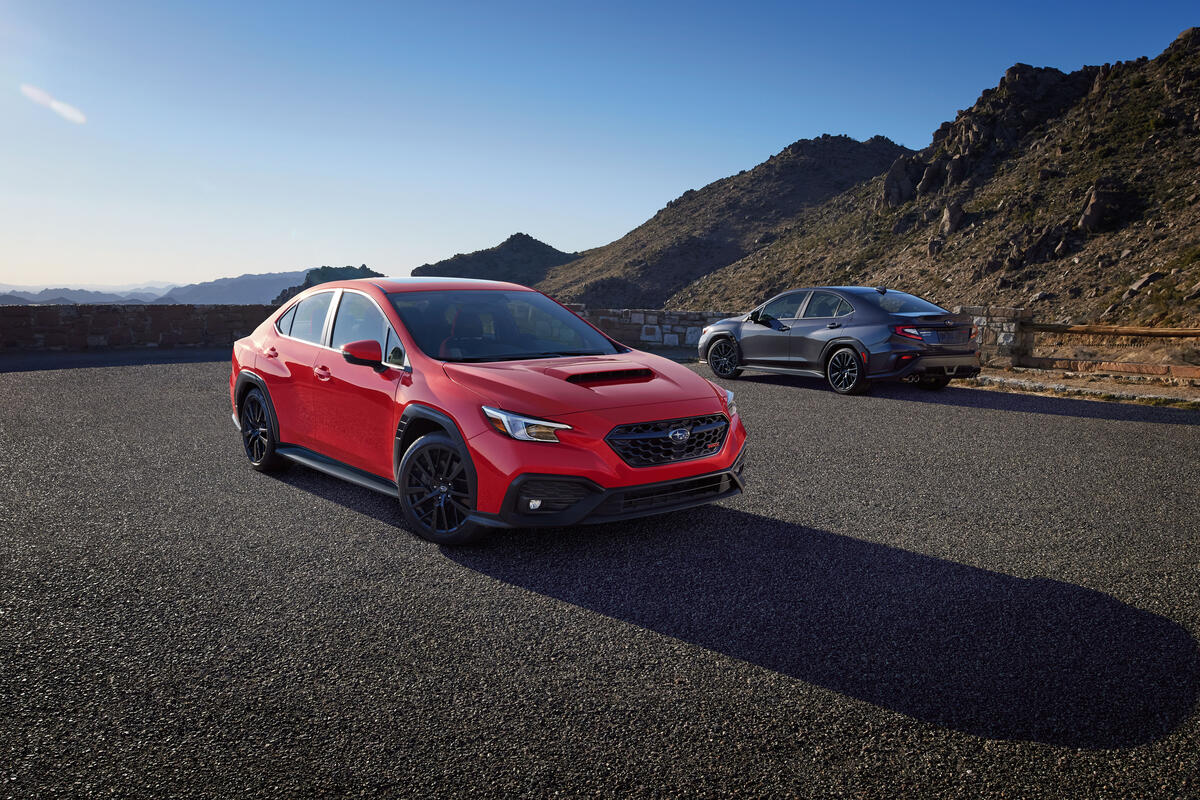
Subaru WRX
"And he influenced my dad to get a Blah by WRX, also World Rally Blue. [639.2s] And I was in, I was in like elementary school at the time."
The Subaru WRX is a sporty Subaru that’s built for quick driving. It’s famous for having all-wheel drive and a turbo engine, and it’s the kind of car enthusiasts get excited about.
The Subaru WRX is a performance-focused compact sedan/wagon from Subaru, known for its turbocharged engine and rally-inspired all-wheel-drive setup. In this story, the host’s dad choosing a WRX (specifically World Rally Blue) is a memorable “gateway” moment into Subaru culture.

Renault Scenic RX4
"She had a, people are going to love this one. [713.1s] It was a Renault Scenic RX4."
This is a rare Renault model (Renault Scenic RX4). The host is saying it’s the car they learned to drive stick in, so it matters to their driving story.
The Renault Scenic RX4 is a niche, European-market crossover/wagon variant of the Renault Scenic, notable for its off-road-leaning RX4 styling and manual-transmission availability. In this episode, it’s the specific car the speaker learned to drive a manual in while living in Taiwan.

Aztek Pontiac Aztec
"...nic RX4. It's like the European equivalent of the Pontiac Aztec. Oh, man."
The Pontiac Aztek is a crossover-style car with a very unusual, standout design. People mention it because it looks different from most other cars. In the podcast, it’s used as a comparison for another vehicle’s styling.
The Pontiac Aztek is a distinctive, crossover-style vehicle that’s often remembered for its unusual design and styling. In the podcast, it’s referenced as a “European equivalent” to another car, which shows how it’s used as a comparison point for a quirky, attention-grabbing look. It comes up in automotive discussions because it’s a recognizable example of a bold design direction.
Top Gear
"It was on Top Gear for episode and they just tore that car apart, but that's the car that I learned how to drive it. [733.8s] How do you spell that?"
Top Gear is a car TV show. The speaker is saying the Renault Scenic RX4 was on it and they broke down the car to show what’s inside.
Top Gear is a long-running automotive TV show known for reviewing cars and sometimes doing tear-downs to show how components work. The speaker references it to say the Renault Scenic RX4 was featured and “tore that car apart,” reinforcing how unusual it was.
five-speed
"It was a five-speed. All the trim, because it was like really cheap French plastic, all the trim would just start coming apart at a certain point,"
“Five-speed” means the car has a manual gearbox with five gears you shift through. It affects how the car feels when you accelerate and cruise.
A “five-speed” refers to a manual transmission with five forward gears. More gears can help keep the engine in its best power/efficiency range, but the driving feel depends on gearing and clutch/shift quality.

Subaru Crosstrek
"...and was practical and was incredibly safe was the Crosstrek. Yeah."
The Subaru Crosstrek is a small SUV-style car meant for everyday driving. It’s known for being practical and for having features that help keep you safe. It also typically comes with all-wheel drive, which can help on slippery roads.
The Subaru Crosstrek (often spelled “Crosstrek,” commonly referred to as the Crosstrek/Crosstrek) is a compact crossover that’s positioned as practical and safety-focused, with standard all-wheel drive. In the podcast, it’s highlighted as being both practical and “incredibly safe,” which matches its typical appeal for everyday driving. It’s discussed because it’s an easy-to-live-with alternative to larger SUVs while still offering confidence on varied roads.
Attleboro, Massachusetts
"It was still called Patriot Subaru at the time, up in Attleboro, Massachusetts."
This is the city in Massachusetts where the dealership was located. The host is sharing where they bought the car.
Attleboro, Massachusetts is the location where the speaker bought the Subaru Crosstrek from a dealership they mention by name. It’s included here because the episode is about the buying story and the specific dealer experience.
base
"So both manuals, both 21, both base. Hey, that's all you need... And even though they're both 21s, they're both manuals, they're both base, yours looks way different than mine."
“Base” means the car is the simpler, lower-trim version with fewer options. It often has less tech or fewer convenience features than higher trims.
“Base” refers to a lower trim level with fewer factory features and usually simpler equipment. In this context, the hosts are comparing two similar Crosstrek setups that are both manual and base, but still look and feel different due to other choices or modifications.
modding
"So when you bought it, did you have any plans or did you even know about modding the Crosstrek? Did you know that you could mod off-road-ish Subarus?"
“Modding” means customizing your car with aftermarket parts instead of leaving it stock. In this case, they’re talking about changes that make a Crosstrek better for rougher roads.
“Modding” is enthusiast shorthand for modifying a vehicle from its stock (factory) configuration. Here, it’s specifically about changing a Crosstrek to better suit off-road-ish use—typically via suspension, tires, and other exterior or drivetrain-related upgrades.
off-road-ish
"Did you even know about modding the Crosstrek? Did you know that you could mod off-road-ish Subarus?"
“Off-road-ish” means you’re not doing extreme off-roading, but you want the car to handle dirt roads and rough paths better than stock. It’s usually about mild trail capability.
“Off-road-ish” describes a style of driving and setup that’s not full rock-crawling or race-off-road, but is meant to handle dirt roads, mild trails, and rougher conditions. Owners often target this with upgrades like taller suspension and more aggressive tires rather than building a dedicated off-road machine.

Ford F150
"[1039.6s] Yeah, so I think starting junior year, I had a really good friend. [1046.2s] He had a Ford F-150."
The Ford F-150 is a big pickup truck made by Ford. Here, it’s just the specific truck the guest’s friend had, which helped them work on car-related projects.
The Ford F-150 is a full-size pickup truck from Ford, known for being one of the most popular trucks in North America. In this context, it’s mentioned as a real-world vehicle that helped spark hands-on car design projects.
Crosstrek Cross Track
"...t sort of like dripped onto me and then I had the cross track at the time already. And I was like, I'm not goin..."
The Crosstrek is a Subaru compact crossover, meaning it’s a small SUV-style car. In the podcast, it’s mentioned as the car the person already had. It’s typically chosen because it’s practical for everyday driving and usually includes all-wheel drive.
The Crosstrek referenced in the podcast is the Subaru Crosstrek, a compact crossover known for being practical and for offering safety-focused features. The context about “dripped onto me” and having a Crosstrek already suggests it’s being discussed as a personal, everyday vehicle choice. It’s relevant because the Crosstrek is often chosen for daily usability with all-wheel-drive confidence.
five inch exhaust
"I'd say the first significant thing would be the exhaust that I put on, which was a nameless five inch exhaust."
An “exhaust” is the pipe system that carries gases out of the engine. “Five inch” means the pipe is about 5 inches wide, which can help the gases flow more easily—though it’s not automatically better without the whole system matching.
“Five inch exhaust” refers to an exhaust system with a roughly 5-inch diameter piping. Bigger diameter tubing can reduce exhaust backpressure and change how the engine breathes, but it also depends heavily on the rest of the system (headers/cat/muffler) and the car’s setup.
gasket
"I still have that thing on the track right now. I think like the gasket is like rotting out already, but it was like the first thing that I put on."
A gasket is a thin sealing piece that helps two parts stay sealed together. If the exhaust gasket goes bad, exhaust can leak out where it shouldn’t.
An exhaust gasket is a sealing part used at joints (like between exhaust sections) to prevent exhaust leaks. If it’s “rotting out,” it can fail and cause leaks that may lead to noise, fumes, and performance issues.
relation brace wheels
"So we put on the exhaust and right after that we ended up getting a relation brace wheels. I save no money to get a relation race wheels bumper, front bumper, and we put that on."
They’re talking about upgrading the wheels and doing other front-end changes. Wheels and bumpers can affect how the car looks and how it drives, especially through steering and tire grip.
This appears to be a mis-transcription of “Enkei” or another wheel brand, but the key automotive idea is that the speaker upgraded to aftermarket wheels and related front bumper fitment. Wheel swaps can change unsprung weight, steering feel, and tire options, while bumper changes are usually about fitment/aesthetics and airflow.
printer rack
"And then right after that we, I also ended up getting a printer rack at it. Like a pretty steep discount if I remember correctly. And we also put that on and he was like, yeah, I know how to put this on and it's going to be fine."
This sounds like they added a roof rack or mounting system. If it’s not sealed correctly, rainwater can get in and cause leaks inside the car.
“Printer rack” is likely a mis-transcription for a roof rack or similar mounting hardware. Roof racks are aftermarket systems that attach to the roof to carry gear, and they require correct sealing/installation to prevent water intrusion.
sealant
"How you usually do it with those refracts and he didn't do the sealant correctly on it. And so like the car would just continuously leak for like, I don't know, for a year every time."
Sealant is the waterproof glue/seal used to stop leaks. If it’s applied wrong, rain can seep in through the mounting points.
Sealant is the waterproofing material used around mounts and seams (like roof rack hardware) to keep water out. If the installer “didn’t do the sealant correctly,” it can lead to leaks that persist until the problem is fixed.
air a pillar trim
"There was a downpour and we just like, we'd have to hold the air a pillar trim up so that the water wouldn't get into the cabin."
The A-pillar is the front support area next to the windshield. The trim is the interior cover there, and they had to hold it to keep water from getting inside.
This likely refers to the A-pillar trim, the interior paneling around the front windshield support. The speaker describing having to hold it up to stop water suggests the leak was entering through the windshield/roof area and then getting into the cabin.
spider roof rack
"Dude, I had something similar because whenever, because I got the spider roof rack and I put mine on and the guys that I was talking to, they said, make sure you put plenty of sealant."
A roof rack lets you carry things on top of your car. The “spider” style usually means a particular mounting design, and it often needs sealant so rain water doesn’t leak inside.
A roof rack is an aftermarket mounting system that attaches to the roof so you can carry gear. A “spider” roof rack typically refers to a specific mounting style/brand that uses multiple contact points and can require careful sealing to prevent water leaks.
Subaru Flatfest
"And I drove from Houston all the way up to Madison, Wisconsin for Subaru Flatfest. This was in 2022."
Subaru Flatfest is a Subaru event the host went to. They mention it to explain when the leak problem occurred.
Subaru Flatfest is a Subaru-focused event the host attended, used here as a timeline marker for when the roof-rack leak happened. It helps listeners place the story in a real-world trip context.
fabric headliner
"So I soaked up as much of the water, you know, like on that fabric headliner as much as I could."
The headliner is the fabric-covered ceiling inside the car. If water gets in, it can soak into that material and then drip down.
The headliner is the interior ceiling panel, often covered in fabric or foam-backed material. When water leaks, it can pool in the headliner material and then drip down to lower interior areas.
screw threads
"I was like, okay, this is going to be enough... And then I was like, okay, something's not right... I saw that it was literally like channeling through the threads of the screw."
The screw threads are the spiral grooves on a bolt. Water can travel along those grooves like it’s following a path, so sealant has to be used where the water would try to go.
Screw threads are the helical ridges on a fastener that can act like tiny channels. If sealant isn’t applied to the threads, water can wick along them (capillary action) and travel into the vehicle interior even if the outside looks sealed.
water was leaking in
"So then I like drove around with the headliner down for a bit just to see what was going on whenever like water was leaking in."
They’re basically troubleshooting a leak by removing the inside roof cover and watching where the water comes in. It helps pinpoint the exact spot instead of guessing.
This describes a leak path diagnosis: the speaker drives with interior trim removed to observe exactly where water enters. That approach helps confirm whether the leak is coming from the roof rack mounting points or from another penetration.
F-150 Raptor
"... was my friend, the guy with the, keep calling it Raptor. It's not a Raptor."
The Ford F-150 is a large pickup truck. It’s the kind of truck people use for hauling and general driving needs. The podcast is clarifying that the truck mentioned is an F-150, not a specific performance version called a Raptor.
The Ford F-150 is a full-size pickup truck known for being widely used for work and everyday hauling. The podcast context specifically corrects a common mix-up about a “Raptor,” pointing out that the truck being discussed is an F-150 rather than a Raptor. It’s brought up because the F-150 is a common reference point when people talk about pickup trucks and their trims.
cut the bumper
"[1579.0s] He cut the bumper because I was, I was too much of a scaredy cat to do it on my own car. [1585.5s] And I was like, you do it, you do it bro. [1602.2s] I've had so many customers come in and to, you know, just ask me to cut the bumper for them."
“Cut the bumper” means trimming the front or rear bumper with tools to change how it fits or looks. People do it for clearance or style, but it can be risky if you don’t measure and secure it properly.
“Cut the bumper” refers to physically modifying a vehicle’s bumper by trimming it, usually to change clearance, fitment, or appearance. It’s a DIY body modification that can be quick, but it also affects how the bumper mounts and how well it protects the vehicle.
Relation Race Wheels
"[1640.0s] I remember speaking of that though, I bought that bumper with like full intention of buying the rear bumper from Relation Race Wheels. [1651.3s] And by the time I had enough money to buy the rear bumper, it wasn't on their side anymore."
Relation Race Wheels is a shop/supplier they were planning to buy a bumper from. It’s an aftermarket part source, not the original factory bumper.
Relation Race Wheels is referenced as the seller of a rear bumper the speaker intended to buy. The key point here is that the bumper was sourced from a specific aftermarket supplier rather than the factory.
31 inch tires
"I'd say the 31 inch tires are definitely a statement. ... they're true 31 LT tires, 31 by 10 and a half are 15."
Bigger tires (31-inch) can help a car handle rough roads better and also make it look more rugged. But bigger tires take more space, so you usually need other suspension or lift changes to make them fit.
Running 31-inch tires is a common off-road/overland upgrade that increases tire diameter for more ground clearance and a more aggressive stance. On a Subaru CrossTrek, it also creates fitment challenges—clearance for suspension travel and wheel well space—so the rest of the build has to be planned around the tire size.
31 LT tires
"I don't, I don't really know of that many other people who have 31s on a second gen. ... they're true 31 LT tires, 31 by 10 and a half are 15."
“LT” means the tire is made for heavier-duty use, like light trucks and off-road driving. It’s typically tougher than regular car tires, which helps when you run big 31-inch tires.
“LT” in tire sizing stands for Light Truck, meaning the tire is built with a tougher construction intended for heavier loads and more abuse than typical passenger tires. For a 31-inch LT tire setup, that matters because the tire is expected to handle off-road conditions while still fitting the suspension and wheel-well constraints of the build.
Bilstein
"And the way that that they could fit was I had fit. So I have B6 suspension from Bilstein, which if anyone's considering suspension for their cross-track, I only recommend those."
Bilstein makes suspension parts like shocks and struts. They’re saying Bilstein’s suspension (B6) is what they used and recommend for this kind of build.
Bilstein is a suspension brand known for performance-oriented shocks/struts and off-road-capable setups. The host specifically mentions Bilstein B6 suspension as part of their CrossTrek build, implying it’s chosen to control the car’s behavior with larger tires and lift components.
rally tech
"I have B6 suspension from Bilstein, which if anyone's considering suspension for their cross-track, I only recommend those. ... I have one inch lift springs from rally tech."
Rally Tech makes aftermarket suspension parts. They’re using Rally Tech one-inch lift springs to raise the car slightly so bigger tires can fit properly.
Rally Tech is an aftermarket suspension brand associated with lift springs and off-road-focused components. The host says they run one-inch lift springs from Rally Tech, which is a key part of making larger tires fit while maintaining usable ride height and suspension geometry.
two and a half inch spacers
"And then I also have the two and a half inch spacers from rally tech. And that was enough to sort of fit the 31s without, if I, if I'd never had to turn the steering wheel, then I'd be okay."
Wheel spacers are like add-on rings that move your wheels outward. That can help fit bigger tires, but it may also require extra work if the tire still hits something when you turn.
These are wheel spacers—thick rings installed between the wheel and hub to push the wheel outward. On this car, the extra track width helps fit larger tires without rubbing as much, but it can also change steering clearance requirements.
31s
"And that was enough to sort of fit the 31s without, if I, if I'd never had to turn the steering wheel, then I'd be okay. But unfortunately, if you've trippin' before, you know, you have to turn the steering wheel at some point."
“31s” means tires that are about 31 inches tall. Taller tires can hit the wheel well when you turn, so you may need spacers or trimming to make them fit.
“31s” is shorthand for 31-inch tires. Bigger tire diameter increases the chance of rubbing the wheel well, so fitment often requires spacers and/or trimming the bodywork.
wheel well
"Yeah. So then you have to go into the wheel well and then you just cut like, I don't know, to the inch and a half off of the pinch weld."
The wheel well is the part of the car body that surrounds the tire. With bigger tires, the tire can rub on this area, so it sometimes needs trimming.
The wheel well is the inner and outer body area around the tire. When you run larger tires, the wheel well becomes the main clearance problem, so people may trim it to prevent rubbing.
pinch weld
"Yeah. So then you have to go into the wheel well and then you just cut like, I don't know, to the inch and a half off of the pinch weld. And then just sort of re-weld the seam."
The pinch weld is a factory seam where two metal pieces are folded and welded together. People sometimes trim it to stop a tire from rubbing, but it needs careful re-welding afterward.
A pinch weld is the folded seam where two body panels meet and are spot-welded. In off-road tire fitment, trimming the pinch weld can create extra clearance for the tire, but it also means you’re altering a structural seam that must be reworked properly.
re-weld the seam
"And then you just cut like, I don't know, to the inch and a half off of the pinch weld. And then just sort of re-weld the seam. Yeah. Yeah. That's that's one of your pin posts."
If you cut into a welded seam to make room for the tire, you have to weld it back together. Doing it right matters so the car doesn’t rust later.
After trimming a body seam (like a pinch weld), re-welding restores the metal connection and helps maintain strength and alignment. It’s a common step in tire-clearance bodywork, but it must be done cleanly to avoid future rust.
pin posts
"Yeah. That's that's one of your pin posts. Yeah. Yeah. Cause people were like asking, they were like, oh, you know, did you just like take off the fender liner and then you're good, right?"
“Pin posts” sounds like small metal mounting points near the wheel area. The point is that there are specific parts of the body you have to work around when making clearance.
“Pin posts” here likely refers to small body mounting points/anchors near the wheel opening that can interfere with tire clearance. The key idea is that the trimming isn’t just random cutting—you’re working around specific metal features.
fender liner
"Yeah. Yeah. Cause people were like asking, they were like, oh, you know, did you just like take off the fender liner and then you're good, right? And I'm like, oh, honey, you know, no, no."
A fender liner is the plastic or composite inner cover inside the wheel arch. Removing it can reduce minor rubbing, but in this case the host implies it wasn’t enough—metal trimming was required.
dynamic lights
"I got a ton of dynamic lights, dynamic or one of the brands I brought on with the business... we definitely ran some dynamic lights on quite a few vehicles."
“Dynamic lights” means car lights that aren’t just on or off. They can change how they work (like patterns or behavior) depending on the setup or what the car is doing.
“Dynamic lights” refers to lighting systems that change behavior based on driving conditions or vehicle inputs, rather than staying fixed. In the context of this episode, it’s about aftermarket lighting products that can be configured and installed on vehicles for a more animated/interactive look.
SEMA
"I was going to SEMA starting... SEMA, if anyone knows, it's like only your, you can only get into SEMA if you're in the industry."
SEMA is a big event for the car aftermarket world—things like custom parts, accessories, and specialty shops. It’s mostly for people who work in the industry, so getting in can help you meet brands and other builders.
SEMA is the Specialty Equipment Market Association’s annual trade show, focused on aftermarket automotive products and industry networking. The host mentions applying to get in because it’s restricted to people in the industry, which is why it matters for building distributor and brand connections.
diodynamics
"I just went there to like treat it as a networking event... and diodynamics... they're like, oh, you're the guy with the crazy cross track."
Diode Dynamics is a company that makes aftermarket LED car lights. The host is saying they met the brand at SEMA and ended up working with them to sell their lights.
Diode Dynamics (spoken here as “diodynamics”) is an aftermarket lighting brand known for LED lighting products. In this segment, the host connects their “crazy cross track” setup with Diode Dynamics and discusses selling their lights and getting discounts through that relationship.
torque master torque locker
"[1987.2s] I recently put on a torque master torque locker. [1991.5s] Oh, very nice. [1992.5s] And yeah, it works like 50% of the time."
A “torque locker” is a device that helps your car put power to the wheels that have traction. It’s meant to reduce spinning when you’re accelerating. If it doesn’t work reliably, it may be because it wasn’t installed or adjusted correctly.
A “torque locker” is an aftermarket traction device that helps limit wheelspin by mechanically biasing torque to the wheels with grip. “Torque Master” is the brand name of that specific locker kit. If it only works some of the time, it can point to setup/fitment issues or incorrect clearances.
tolerances
"[1995.7s] I think I did one of the tolerances wrong, so I need to get it redone. [1998.6s] If any of you listening know a good shop in Phoenix to get work done on a cross track, let me know because I no longer have my own shop."
“Tolerances” are the small, precise clearances that parts are supposed to have when they’re installed. If those clearances are off, the part may not work the way it should. That can cause intermittent or unreliable operation.
In mechanical installs, “tolerances” are the allowed gaps and fitment ranges between parts. If tolerances are set incorrectly during installation, a locker or other drivetrain hardware can engage improperly or intermittently. That’s why the host thinks they “did one of the tolerances wrong” and need it redone.
Prinsu roof rack
"[2016.4s] I have a Prinsu roof rack. [2018.3s] I have asked for a skid plate for the oil pan."
A roof rack is a platform on top of the vehicle for carrying gear. The Prinsu version is made for off-road/overlanding use, so it’s built to handle rough roads and extra accessories. It’s a common upgrade for people who travel with lots of stuff.
A Prinsu roof rack is an off-road-focused roof rack system designed to carry gear and accessories on top of the vehicle. Roof racks like this are common for overlanding because they add mounting points for lights, storage, and recovery gear. The host lists it as part of their build, implying a utility-first setup.
skid plate for the oil pan
"[2018.3s] I have asked for a skid plate for the oil pan. [2023.3s] And then I have a, I believe it's a primitive racing transmission and rear diff skid plates."
A skid plate is a protective shield underneath the car. An oil-pan skid plate protects the engine’s oil reservoir from getting hit by rocks or debris off-road. It helps prevent expensive damage when you’re driving on rough trails.
An oil-pan skid plate is an underbody protection panel that shields the engine’s oil pan from impacts with rocks, logs, or uneven terrain. It’s a common off-road/overlanding modification because the oil pan is vulnerable when ground clearance is limited. The host specifically requests one, suggesting they’re building for trail use.
primitive racing transmission and rear diff skid plates
"[2023.3s] And then I have a, I believe it's a primitive racing transmission and rear diff skid plates. [2030.5s] Nice. [2031.7s] And then Oxbeam switch panel, a ton of rally tech suspension parts, adjustable trailing arms, adjustable LCAs, obviously a nameless axle back."
Skid plates are protective panels that keep important parts from getting damaged by rocks or obstacles. Transmission and rear differential skid plates protect the drivetrain parts that sit low under the car. Primitive Racing makes aftermarket versions of these parts.
Skid plates protect vulnerable drivetrain components from underbody strikes. “Transmission skid plates” shield the transmission case, while “rear diff skid plates” protect the rear differential housing—both are frequent impact points on trails. “Primitive Racing” is the brand of these specific skid plate parts.
adjustable trailing arms
"[2031.7s] And then Oxbeam switch panel, a ton of rally tech suspension parts, adjustable trailing arms, adjustable LCAs, obviously a nameless axle back. [2044.5s] And I got Nomad 503 Saharas, one of my favorite looking wheels out there."
Trailing arms are part of the suspension that helps control how the wheels move. If they’re adjustable, you can change the suspension geometry to improve how the car handles. Off-road setups use them to better match the car to rough terrain.
Adjustable trailing arms are suspension links whose length/position can be tuned to change wheel alignment and handling characteristics. On off-road builds, they’re often used to dial in geometry for better ride control and traction. The host pairs them with other adjustable suspension components, suggesting a setup meant for rally/terrain tuning.
adjustable LCAs
"[2031.7s] And then Oxbeam switch panel, a ton of rally tech suspension parts, adjustable trailing arms, adjustable LCAs, obviously a nameless axle back. [2044.5s] And I got Nomad 503 Saharas, one of my favorite looking wheels out there."
An LCA (lower control arm) is a key suspension link that helps hold the wheel in the right position. If it’s adjustable, you can fine-tune how the tires sit on the road. That can improve steering and traction, especially after other modifications.
“LCA” stands for lower control arm. Adjustable LCAs let you tune suspension geometry such as camber and caster, which affects tire contact and steering feel. In an off-road or rally-style setup, that adjustability helps compensate for lift, tire size, or desired handling balance.
axle back
"[2031.7s] And then Oxbeam switch panel, a ton of rally tech suspension parts, adjustable trailing arms, adjustable LCAs, obviously a nameless axle back."
An axle-back exhaust upgrade changes the mufflers and pipes toward the back of the car. It’s usually done to change sound (and sometimes performance) without doing a full exhaust replacement. The host is saying theirs is an unbranded version.
An “axle-back” exhaust is a modification that replaces the exhaust section starting at (or near) the rear axle, typically including the mufflers and piping behind them. It’s a common upgrade because it changes sound and sometimes flow without replacing the entire exhaust system. The host calls it “nameless,” implying a generic or unbranded axle-back muffler setup.
Nomad 503 Saharas
"[2044.5s] And I got Nomad 503 Saharas, one of my favorite looking wheels out there. "
Nomad 503 Saharas are a specific set of wheels. Wheels aren’t just for looks—on off-road cars they also affect how the tires fit and how tough the setup is. The host likes how these look and likely chose them for their build.
“Nomad 503 Saharas” refers to a specific wheel model/finish from the Nomad wheel lineup. Wheel choices matter for off-road builds because wheel design affects strength, weight, and how tires fit and perform on rough terrain. The host calls them one of their favorite-looking wheels, indicating a visual and build-spec importance.
overlanding
"They're really popular with the Cayenne crowds, like the Cayenne, Porsche Cayenne overlanding scene."
Overlanding means taking a vehicle on long trips, often off the usual roads, and bringing the gear you need to camp and handle problems. It’s why people add things like roof racks and recovery equipment.
Overlanding is long-distance, self-reliant travel—often with off-road capability—where you carry gear for camping and recovery. It typically drives accessory choices like roof storage, recovery gear, and off-road bumpers.

Porsche Cayenne
"They're really popular with the Cayenne crowds, like the Cayenne, Porsche Cayenne overlanding scene."
The Porsche Cayenne is Porsche’s SUV. People often modify it for road trips and off-road adventures, like adding special wheels and gear mounts.
The Porsche Cayenne is Porsche’s SUV built around a performance-oriented chassis and available all-wheel-drive. In this segment, it’s mentioned as a common platform for overlanding-style wheel and accessory setups.

Toyota Land Cruiser
"...landing scene. They love putting those on or like land cruiser guys, they love putting those on. It's a really s..."
The Toyota Land Cruiser is a large SUV designed to handle rough roads and long trips. It’s built to be tough and reliable for driving in difficult conditions. That’s why it often comes up when people talk about dependable off-road-capable vehicles.
The Toyota Land Cruiser is a rugged, body-on-frame SUV built for long-distance driving and off-road capability. The podcast mentions it in the context of people “putting those on,” which fits how Land Cruiser owners often value durability and capability. It’s discussed because it’s a well-known choice for buyers who want a serious, dependable SUV.
hybrid winch bumper
"And then obviously I have all the snail works, the front hybrid winch bumper."
A winch bumper is a stronger front bumper made so you can mount a winch. A winch helps you pull the car out if you get stuck, and the bumper is designed to support that setup.
A winch bumper is an off-road front bumper designed to mount a winch for self-recovery or helping others. The “hybrid” wording usually means it’s built to combine multiple functions—like protection, mounting points, and airflow/fitment—into one bumper package.
snail works
"And then obviously I have all the snail works, the front hybrid winch bumper. Snail works and then the rear snail works off-road bumper."
Snail Works is a company that sells aftermarket parts for off-road/overlanding builds. Here they’re talking about bumpers and other gear-mounting accessories.
Snail Works is an aftermarket brand that makes off-road styling and functional components for overlanding builds. In this segment, it’s referenced for front and rear bumpers, plus other accessories.
off-road bumper
"Snail works and then the rear snail works off-road bumper."
An off-road bumper is a tougher bumper meant for rough driving. It’s designed to handle impacts better and to support recovery gear like winches or tow points.
An off-road bumper is a reinforced bumper designed for impacts and for mounting recovery and lighting accessories. Compared with stock bumpers, it often provides better clearance and stronger attachment points for off-road use.
tire swing outs
"And then also the snail works tire swing outs and also our carbon steering wheel as well."
Tire swing outs are a spare-tire mount that lets the tire swing open like a door. It keeps your spare protected but still easy to grab if you get a flat.
Tire swing outs are off-road accessories that mount a spare tire on a hinged arm so it swings out for access. They’re common on overlanding builds because they keep the spare secure while still making it reachable when you need it.
carbon steering wheel
"And then also the snail works tire swing outs and also our carbon steering wheel as well."
A carbon steering wheel is a steering wheel made with carbon fiber. People like it because it can feel more responsive and it looks more high-end or race-inspired.
A carbon steering wheel uses carbon fiber in its construction to reduce weight and improve stiffness compared with many traditional materials. In enthusiast builds, it’s often chosen for both feel and a motorsport-inspired look.
five inches taller than a standard one
"Yeah, it's also like, I guess at this point, like five inches taller than a standard one. [2154.1s] So he was rightfully upset, but we got that sorted out."
They’re saying the setup they’re talking about sits about five inches higher than the usual version. When a car is taller, it can change how other parts and accessories fit.
This describes a height difference versus a “standard” configuration, which matters for clearance, fitment, and how accessories like roof cargo or bumpers sit on the vehicle. In modified builds, small height changes can require re-checking everything that mounts to the body.
roof boxes
"But I had to take the roof boxes off. [2159.8s] So not putting those at the moment."
Roof boxes are storage containers that you strap or mount on top of a car. People use them to carry extra luggage or gear.
Roof boxes are cargo containers mounted on the roof, typically used to carry gear for trips. Removing them can affect fitment and clearance when working on or transporting a modified vehicle.
Snareworks rear bumper
"Well, my favorite mod would probably be the Snareworks rear bumper. [2185.8s] That bumper that's on my vehicle is the original prototype..."
A rear bumper is a structural and protective component at the back of the vehicle, and aftermarket versions are often designed for off-road use. Here, the host specifically calls out the “Snareworks rear bumper” as a favorite modification and ties it to the business’s prototype history.
Rhino 3D
"So I just went into, I think I was using Rhino at the time, Rhino 3D."
Rhino 3D is a design program used to model parts on a computer. They used it to help design the kind of smooth, organic shapes they wanted for the car.
Rhino 3D is a computer-aided design (CAD) software commonly used for creating complex shapes and surfaces. Here, it’s mentioned as the tool they used while designing a “sub D” (subdivision-surface) style, fluid, organic-looking bodywork.
SOLIDWORKS
"I was, you know, my restless mind ADHD and everything. I was like, oh, we can leave it alone. So I just went into, I think I was using Rhino at the time, Rhino 3D. I was trying to use SOLIDWORKS in school..."
SOLIDWORKS is a computer program for designing parts. They’re saying they tried it in school, but their project work leaned more toward Rhino for the kind of shapes they wanted.
SOLIDWORKS is a CAD program often used for mechanical design and precise part modeling. The host contrasts it with Rhino for their design workflow, and mentions using Rhino for more organic “sub D” surface work.
sub D design
"…but we also did a lot of Rhino in terms of doing a sub D design work, which is more like fluid organic style design method."
“Sub D” is a way to model smooth, curvy shapes in CAD. They’re saying it’s good for making organic-looking designs, like custom body parts.
“Sub D” (short for subdivision surface) design is a modeling approach that creates smooth, curved geometry by refining a base shape. The host describes it as a fluid, organic style method—useful for designing custom exterior bodywork and sculpted components.
rear tube style pre runner looking bumper
"And so I drew up a rear tube style pre runner looking bumper with a hitch integrated into it, because I was like the original one, I don't think they had a hitch integrated."
This is an off-road bumper design inspired by desert-racing trucks. The “tube style” means it’s made from metal tubes, and it’s usually built to take hits and make it easier to attach things like a hitch or gear.
A “pre-runner” style bumper is an off-road-focused design inspired by desert racing trucks, typically built to handle impacts and protect the front/rear of the vehicle. A “tube style” bumper uses tubular steel for strength and clearance, and it’s often paired with accessories like tow points or hitch receivers for utility.
hitch integrated
"And so I drew up a rear tube style pre runner looking bumper with a hitch integrated into it, because I was like the original one, I don't think they had a hitch integrated."
A hitch is the part you use to tow or attach things to the back of a car. “Integrated” means it’s built into the bumper so it’s stronger and more protected, and it’s easier to use for racks and gear.
Integrating a hitch into the bumper means the hitch receiver is built into the bumper structure rather than being a separate add-on. This is common on off-road builds because it keeps the receiver protected and makes it easier to mount accessories like bike racks or cargo carriers.
fabrication
"And I was like, I'm really good with design. I have no idea, you know, the first thing that comes to like fabrication. So I did it."
Fabrication is the process of making the real part from the design. It usually involves building it with tools like cutting and welding, not just drawing it on a computer.
In automotive design, “fabrication” means turning a design or render into a physical part—typically involving cutting, welding, and assembling metal components. The speaker contrasts their design skills with the hands-on manufacturing steps needed to build the bumper.
render
"No, I just had the design. I just had a render. Gotcha."
A render is basically a digital picture or 3D preview of what the part will look like. They’re saying they only had the visual mockup, not the finished bumper on the car yet.
A “render” is a computer-generated visual preview of a part or product. Here, the speaker says they only had a render (a visual mockup) rather than the part physically installed on a vehicle.
carbon fiber
"he was selling a lot of high-end car parts that he was importing from China, a lot of carbon fiber parts."
Carbon fiber is a strong, lightweight material used in car parts. It’s often used to make parts lighter and a bit more “premium,” like steering wheels or trim.
Carbon fiber is a lightweight, high-strength material made from thin carbon strands woven into fabric and then hardened with resin. In car parts, it’s popular because it can reduce weight while still being stiff and strong, especially for cosmetic and performance-oriented components.
standard weave
"carbon steering wheels that had, you know, standard weave. It had a forged, you know, pretty much any style you wanted."
Carbon fiber is made from woven strands. “Weave” here is basically the pattern you can see on the surface of the part.
“Weave” refers to how the carbon fiber fabric is patterned before it’s cured into a part. Different weave patterns can change the look (and sometimes the stiffness/feel), so “standard weave” is a way to describe a common, recognizable carbon fiber pattern.
forged
"It had a forged, you know, pretty much any style you wanted. You could direct the actual manufacturer to do any type of colored stitching."
“Forged” means the part was made by pressing and shaping metal under high force. That process is often used to make parts stronger.
In this context, “forged” suggests the part (or a component of it) is made by shaping metal under high pressure, which can improve strength and durability versus some casting methods. For steering wheels, “forged” is often used to describe the quality of the underlying structure or hardware.
Alcantara perforated leather
"They had Alcantara perforated leather, standard leather, you know, the full gamut."
Alcantara is a soft, suede-like material used in car interiors. “Perforated leather” just means leather with tiny holes, often to help it feel cooler and more comfortable.
Alcantara is a synthetic suede-like material commonly used on steering wheels and interior trims for its soft feel and grip. “Perforated leather” refers to leather with small holes, usually to improve breathability and reduce heat buildup during driving.
Piper tube
"they were like, well, you know, is this, are you planning on using Piper tube for this?"
This sounds like a type of metal tubing the fabricator would use for the project. The shop is basically asking what kind of tube/material you plan to use.
“Piper tube” is likely a specific tubing product or material type used by fabricators for structural or fabrication work (the transcript implies the shop is asking about what tubing you’ll use). Without more context, it’s unclear whether they mean a brand name, a particular alloy, or a common shop term for a tube specification.
DOM tube
"We met a, you know, coffee and I was like, this has to be DOM tube. It has to be, you know, mangel bent."
DOM tube is a special kind of metal tubing made to be very straight and consistent. Fabricators like it because it’s easier to build with and the parts tend to line up better.
DOM tube means "Drawn Over Mandrel" tubing. It’s a type of steel tubing made with a mandrel so it has very consistent diameter and a smooth, uniform wall—popular for fabrication where fit and finish matter.
pipe bent
"It has to be, you know, mangel bent. It can't be pipe bent. He was like, okay, okay."
They’re talking about how the metal was bent. One method gives a cleaner, more controlled bend; the other is more likely to distort the metal.
“Pipe bent” here contrasts with bending DOM tube using a mandrel setup. The speaker is implying that bending plain pipe (or using a less precise method) won’t produce the same structural/fit results as properly bending tube for a prototype bumper.
mandrel bender
"And I went in and I was like, so where's your mandrel bender? And he brings out a pipe bender from Harbor Freight."
A mandrel bender is a bending tool that supports the inside of a tube while you bend it. That helps the tube keep its shape instead of getting crushed or wavy.
A mandrel bender is a tool used to bend tubing while supporting the inside of the tube with a mandrel. That helps prevent the tube from collapsing or wrinkling and keeps the bend radius more consistent—important for clean-looking fabrication.
pipe bender
"And he brings out a pipe bender from Harbor Freight. And I'm like, oh, buddy, that's, that's not going to work."
A pipe bender is a tool for bending metal pipe/tube. It may not keep the inside perfectly supported, so the bend can come out less clean than with a mandrel bender.
A pipe bender is a simpler bending tool for bending round stock, but it often doesn’t provide the same internal support as a mandrel bender. In practice, that can lead to more deformation (like flattening or wrinkling) when bending tubing for fabrication.
roll cages
"Then tube is mostly a structural material that's used to, you know, for, for a structural purpose, if you're building, you know, roll cages and whatnot."
A roll cage is a metal safety frame inside a car. It helps protect you if the car flips or crashes hard, and it’s usually made from strong metal tubing.
A roll cage is a reinforced metal frame inside a car, designed to protect occupants during rollovers or severe impacts. It’s typically built from strong tubing and welded into the body structure.
bumpers
"But we produced, we produced the first 10 sets of bumpers, [3118.6s] of rear bumpers in that shop."
Bumpers are the parts at the front and back of a car meant to take hits. Here, they’re talking about making custom bumpers for cars, not just buying them off a shelf.
Bumpers are the front and rear impact-protection structures on a car. In this context, the shop is fabricating aftermarket-style bumper sets, including rear bumpers, which are often used for durability and clearance when modifying a vehicle.
end caps
"the original bumpers that I shipped, the rear bumpers, every single one of those end caps was welded together."
End caps are the small pieces that finish off the ends of a bumper. Welding them in place usually means a sturdier, more “built” look than using a simple plastic plug.
End caps are the finishing pieces at the ends of a bumper assembly. The host emphasizes that, in the original design, these end caps were welded together—an approach that typically indicates more labor and potentially better structural integration than snap-in plastic pieces.
welded together
"was welded together. Most of these companies today, they just slap a plastic end plug on there and then call it a day."
Welding means melting/joining parts together so they become one solid piece. The host is saying their older bumpers were made more like metal fabrication than quick plastic assembly.
“Welded together” refers to joining metal parts using welding rather than relying on plastic inserts or simple assembly. In bumper fabrication, welding can improve alignment and structural rigidity, which is why the host contrasts it with companies using plastic end plugs.
plastic end plug
"Most of these companies today, they just slap a plastic end plug on there and then call it a day."
A plastic end plug is a small plastic piece used to finish the end of a bumper. The host is contrasting it with a more labor-intensive metal-welded construction.
A plastic end plug is a non-welded finishing piece used to close off or cap the ends of a bumper. The host uses it as a shorthand for a cheaper, faster manufacturing approach compared with welded end caps, implying a difference in perceived quality and detail.
halo product
"They were great halo product. But I had to stop doing that at a certain point."
A halo product is something you make partly to make your brand look good and build interest. The host is saying those bumpers were impressive, even if they weren’t the most profitable to produce.
A “halo product” is an item that’s mainly meant to build brand reputation and desirability, even if it doesn’t generate the best day-to-day profit. The host calls the original bumpers “great halo product,” suggesting they helped establish credibility and attention.
profit margins
"There are certain products that weren't the profit margins were just not quite there. And so had to sort of chop those for the list."
Profit margin is how much money you actually keep after costs. They’re saying some bumper products didn’t make enough profit to justify making them.
Profit margins are a business metric that describes how much profit you keep relative to sales. The host says some products weren’t worth continuing because the profit margins “were just not quite there,” tying fabrication decisions to profitability.
front
"I don't foresee them coming back for a while. So at the moment, I'm just selling the front"
They’re saying they’re only selling the front bumper right now. That means the rear bumper isn’t available at the moment.
The host ends by saying they’re “just selling the front,” referring to bumper availability by vehicle end (front vs rear). This is relevant because bumper fabrication and demand can differ significantly between front and rear assemblies.
frame rails
"And yeah, I totally get it when it comes to, when someone wants to buy a rear bumper from me now, it really is an awesome product. It costs a lot of money to produce. And so it's not really economic for me to do them anymore. ... with additional channel supports through the frame rails."
Frame rails are the main metal “backbone” beams under a body-on-frame vehicle. The speaker is saying their bumper was reinforced by connecting it to those beams.
Frame rails are the main longitudinal structural members in a body-on-frame vehicle. The speaker says their bumpers were updated with additional channel supports through the frame rails, meaning the bumper structure was tied into the truck’s main frame for strength.
tie down spots
"And I started offering them with actual tie down spots. And so they got to a point where they're really like, it was a really well done product."
Tie-down spots are places you can hook straps to keep gear from moving. The speaker says their bumper design added real anchor points for securing cargo.
Tie-down spots are dedicated mounting points (often welded or bolted) used to secure cargo with straps or ropes. The speaker notes their bumper iterations added actual tie-down spots, turning the bumper into a more functional cargo-anchoring surface.

Toyota 4Runner
"And at the same, around that time, I also had got a Toyota 4Runner, to a brand new Toyota 4Runner, the new 6Genz, and started developing parts for that."
The Toyota 4Runner is a rugged SUV that’s popular for off-roading. Here, the speaker says they bought a new one and started designing aftermarket bumper parts for it.
The Toyota 4Runner is a body-on-frame SUV known for off-road capability and a strong aftermarket. In this segment, the host mentions getting a new Toyota 4Runner and developing bumper-related parts for it, which is a common path for small fabrication shops.
production
"They never made it to production. Before they even got to production, I had made friends with this guy, Jeff Westcott over at Westcott Designs, and his manufacturing facility is here in Phoenix, Arizona."
“Production” here refers to moving a design from prototype/fabrication into repeatable manufacturing for customers. The speaker says their swing-out and front bumper ideas “never made it to production,” meaning they didn’t reach a stage where they could be sold as a consistent product.

Tesla
"I flew over. I know it'd be a long drive, but yeah. Yeah, yeah, it was too far for that situation. I have made this trip over a few times in the car. But yeah, in this situation, I just flew over, I rented a Tesla for a weekend"
Tesla is a company that makes electric cars. Here, it’s just the car the speaker rented for a weekend trip.
Tesla is an electric-vehicle brand known for modern battery-electric powertrains and software-driven features. In this segment, the speaker rents a Tesla for a weekend trip, which is a practical example of using an EV for travel rather than a specific performance or model discussion.
CNC manufacturing
"And he had really advanced CNC manufacturing capacity in the shop. And they're doing a lot of interesting stuff for Toyota trucks, Ford trucks."
CNC manufacturing is a way of making parts using computers to control machines. It helps produce parts accurately and consistently, which matters a lot for car components.
CNC manufacturing uses computer-controlled machine tools (like mills and lathes) to cut and shape parts with high precision and repeatability. The speaker highlights that the shop has advanced CNC capacity and uses it to produce automotive-related components for truck brands.
Request an Explanation
Heard something you'd like explained? We'll add it to this episode.
Sign in to request explanations for terms you heard.
Want to learn more?
Browse our glossary for plain-English explanations of automotive terms, jargon, and concepts.
Help improve this episode
See something that's not quite right? Our annotations are AI-generated and can sometimes miss the mark. Click the flag icon on any annotation to suggest a correction.