Ryan from Fortnine joins the Highside/Lowside podcast to discuss his documentary chronicling a record-breaking motorcycle trip around the world. Alongside co-stars Connor and Edwin, they share behind-the-scenes stories, the challenges of filming on the road, and the dynamics of their unique journey. The episode also features a lighthearted debate about motorcycle choices, including Spencer's upcoming wedding bike dilemma, and insights into the filmmaking process. Listeners will enjoy the blend of adventure, humor, and camaraderie as they explore the highs and lows of long-distance riding.
The legendary Ryan from FortNine drops in to go deep into his most ambitious project yet: a feature-length documentary chronicling a record-breaking, 16-day motorcycle trip around the entire world.
With Zack Courts still out on the mend, Spurgeon Dunbar is joined by CTXP producer Spenser Robert to ask Ryan about his chaotic time in India, the freezing "Nullarbor" of Australia, the logistical miracles worked by Ducati fixers at the Turkish border, and what it's really like to live on a bike for 24+ hours at a time.
"...option is a 2020 Harley-Davidson Livewire and option number two is a 2018 Euro CT..."
The Harley-Davidson Livewire is an electric motorcycle made by Harley-Davidson. It's known for being fast and has a modern design, making it different from traditional gas-powered bikes.
The Harley-Davidson Livewire is an electric motorcycle that represents Harley's entry into the electric vehicle market. It features a unique design and offers a sporty riding experience, appealing to both traditional motorcycle enthusiasts and new riders interested in electric options.
"...do you get a sporty naked, probably soon to be non-existent electric motorcycle from Harley..."
An electric motorcycle runs on electricity instead of gas. This means it's quieter and better for the environment, and you don't have to fill it up with gas.
An electric motorcycle is powered by electric motors instead of traditional gasoline engines. They are known for being quieter, more environmentally friendly, and often require less maintenance than gas-powered bikes.
"...option number two is a 2018 Euro CT, which is basically the one-wheel-drive Euro sidecar..."
The Euro CT is a motorcycle that comes with a sidecar, which is a seat attached to the bike for an extra passenger. It's designed to be stable and can handle different types of roads.
The Euro CT is a unique motorcycle that features a sidecar, providing a different riding experience compared to standard motorcycles. It is designed for one-wheel drive, making it suitable for various terrains and offering stability.
"...the Harley, I think, when it came out was like $20,000..."
Harley-Davidson is a famous American company that makes motorcycles. They are known for their big bikes that are great for long rides.
Harley-Davidson is a well-known American motorcycle manufacturer famous for its heavyweight motorcycles designed for cruising on highways. Founded in 1903, it has a rich history and a strong brand identity.
A Euro sidecar is an attachment that you can put on a motorcycle to carry another person or some luggage. It's common in Europe and adds extra space to the bike.
A Euro sidecar refers to a sidecar that is typically made in Europe, often associated with classic motorcycle designs. Sidecars are attached to motorcycles to carry passengers or cargo, enhancing the motorcycle's utility.
"...you can probably get it for like $3,000 out the door said and done. Okay, so for rolling into your wedding,..."
'Out the door' means the total price you pay for a car, including everything like taxes and fees, so you know exactly how much it will cost you in the end.
The term 'out the door' refers to the total cost of a vehicle after all fees, taxes, and additional charges are included. It represents the final amount a buyer needs to pay to drive the car off the lot.
"The Euro, you know, a couple of years older, the reliability Lex originally brought up the absence of parts."
Reliability means how well a car works over time without having problems. A reliable car is one that you can trust to run well for a long time.
Reliability in automotive terms refers to how dependable a vehicle is over time, including its ability to perform without frequent breakdowns or issues. It is a key factor for buyers when considering a vehicle's long-term value.
"... We built one recently out of out of the Kawasaki Vulcan and it was awesome. It was powerful and it ran be..."
The Aston Martin Vulcan is a very special and powerful sports car that is made for racing. It's not something you see every day because only a few were made, and it's designed to be super fast and exciting to drive.
The Aston Martin Vulcan is a limited-edition supercar known for its extreme performance and track-focused design. It is significant in the automotive world due to its rarity and the engineering excellence that Aston Martin is known for, making it a topic of interest for car enthusiasts.
"...we built one recently out of the Kawasaki Vulcan and it was awesome. It was powerful and it ran beautifully and it shifted beautifully."
The Kawasaki Vulcan is a type of motorcycle that is designed for comfortable long rides. It's known for its classic look and powerful engine, making it a favorite among motorcycle enthusiasts.
The Kawasaki Vulcan is a line of cruiser motorcycles known for their comfortable riding position and classic styling. They are popular for both cruising and touring due to their powerful engines and smooth handling.
Car
Alfa Sprints
"...g a TV crew around. And so there are these little sprints with big stretches of sleeping in between. And it..."
The Alfa Romeo Sprint is a sporty little car that looks really nice and is fun to drive. It's known for being stylish and is loved by people who enjoy driving cars that have a bit of flair.
The Alfa Romeo Sprint is a classic sports coupe that is celebrated for its stylish design and engaging driving experience. It is often discussed for its Italian heritage and the emotional connection many enthusiasts have with the brand and its performance-oriented vehicles.
"...you forged a partnership with Ducati and, you know, they were able to provide a lot of assistance,..."
Ducati is a well-known brand that makes motorcycles, especially popular for their speed and style. They are based in Italy and are famous for their racing bikes.
Ducati is an Italian motorcycle manufacturer known for its high-performance bikes and distinctive design. The brand is particularly famous for its sport and racing motorcycles, which often feature advanced technology and engineering.
"...the V4 engine is a huge laugh. So if you're exhausted and you want to wake up, you can twist your wrist and wake up."
A V4 engine has four cylinders arranged in a V shape, which helps it be smaller while still providing a lot of power. It's often used in fast bikes and cars.
A V4 engine is a four-cylinder engine with the cylinders arranged in a V configuration. This design allows for a more compact engine size while maintaining power output, making it popular in performance motorcycles and cars.
"...the service intervals are really long and it's for us at least a flawlessly reliable platform."
Service intervals are the times when a vehicle needs to be checked or maintained. If these are longer, it usually means the vehicle is more reliable and doesn't need as much attention.
Service intervals refer to the recommended time or mileage at which a vehicle should undergo maintenance or inspections. Longer service intervals can indicate a more reliable vehicle, as it suggests less frequent need for maintenance.
"...to the point where they were like, do you want tire warmers on the bike at the airport?"
Tire warmers are special blankets that keep motorcycle tires warm before riding, helping them grip the road better when you start moving.
Tire warmers are devices used to heat motorcycle tires before a race or ride, ensuring optimal grip and performance from the start. They help maintain the tires at the right temperature for better traction.
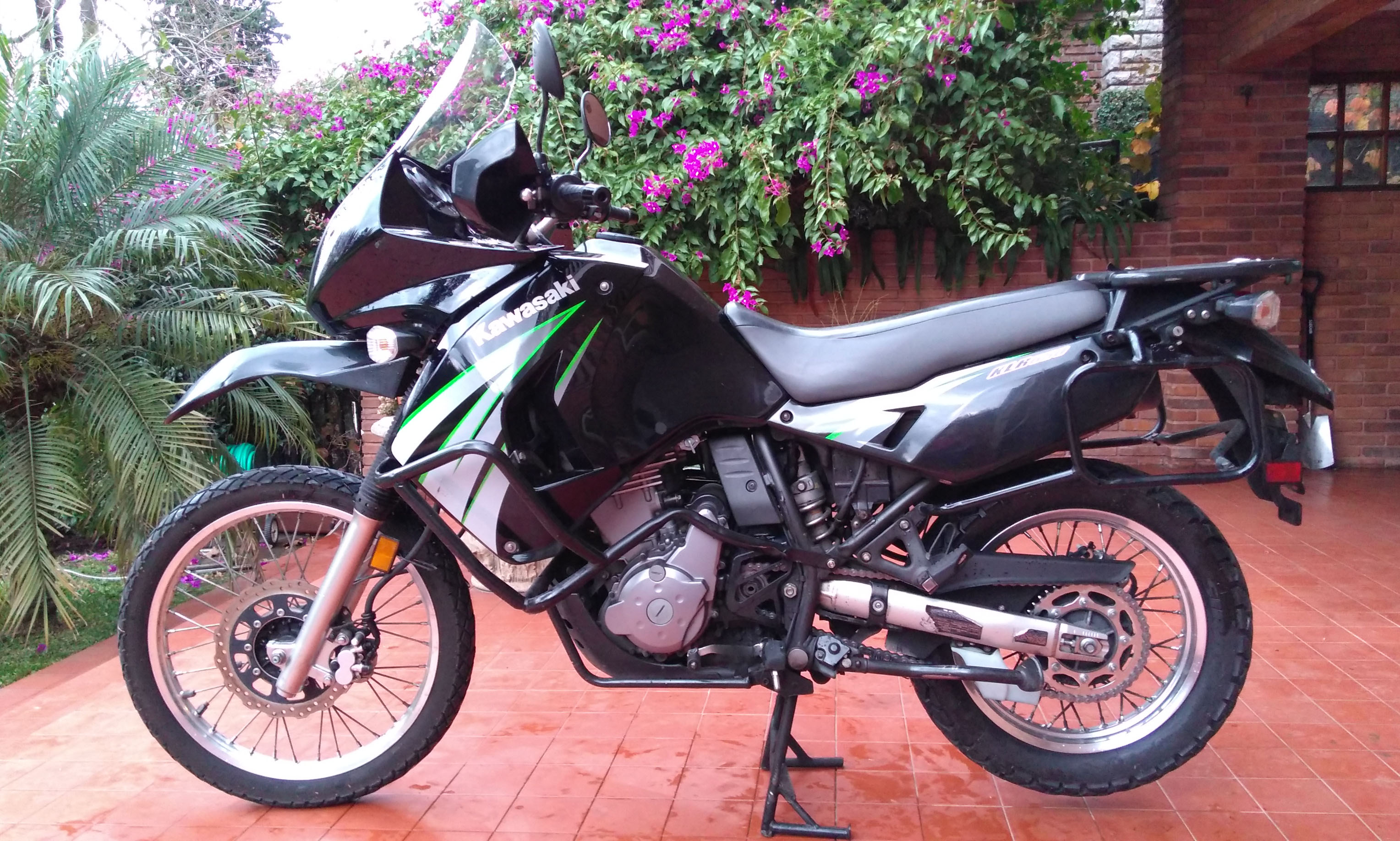
"...like, is that KLR 650? That's not the clue. That's just me pontificating..."
The KLR 650 is a motorcycle made by Kawasaki that can be used on both streets and dirt roads. It's known for being tough and reliable.
The Kawasaki KLR 650 is a dual-sport motorcycle known for its versatility and durability. It's popular among adventure riders for its ability to handle both on-road and off-road conditions.
"...I hear, I thought I heard V twin, but then when it revs up, I thought I heard big single. So I don't know what that means..."
A V-twin engine has two cylinders that are shaped like a V. It's common in motorcycles and gives them a unique sound and feel.
A V-twin engine is a type of internal combustion engine with two cylinders arranged in a V configuration. This design is often used in motorcycles for its compact size and distinctive sound.
"...but then when it revs up, I thought I heard big single. So I don't know what that means. Single is my guess..."
A big single is a motorcycle engine with just one cylinder that is larger than usual. It's simple and can be very powerful for its size.
A 'big single' refers to a single-cylinder engine with a larger displacement, often found in motorcycles. This type of engine can provide a lot of torque and is known for its simplicity and lightweight design.
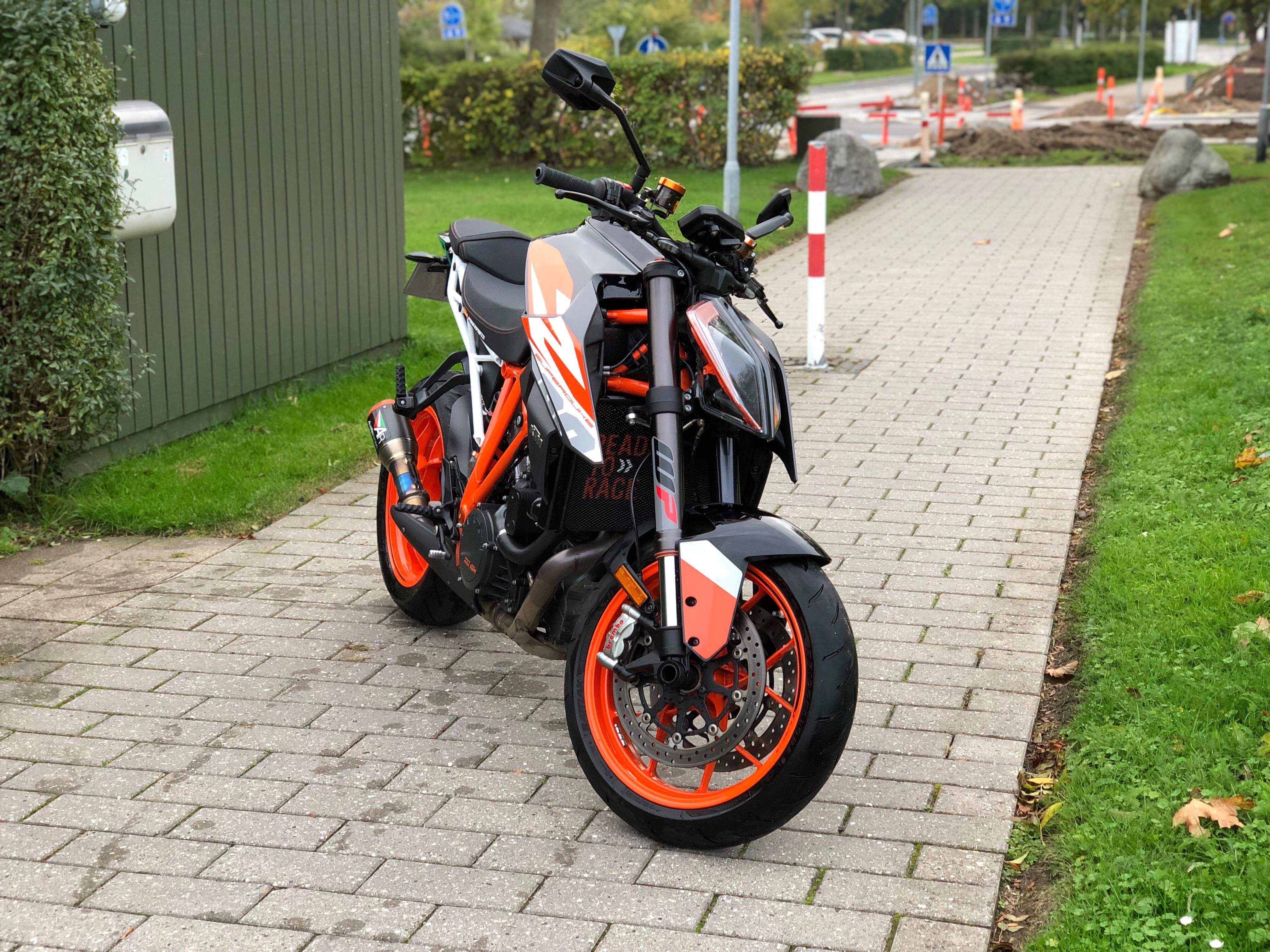
The 1290 Super is a powerful motorcycle made by KTM. It's built for speed and can be used for long rides as well as racing.
The KTM 1290 Super is a high-performance motorcycle known for its powerful engine and advanced technology. It's designed for both sport riding and touring, offering a balance of speed and comfort.
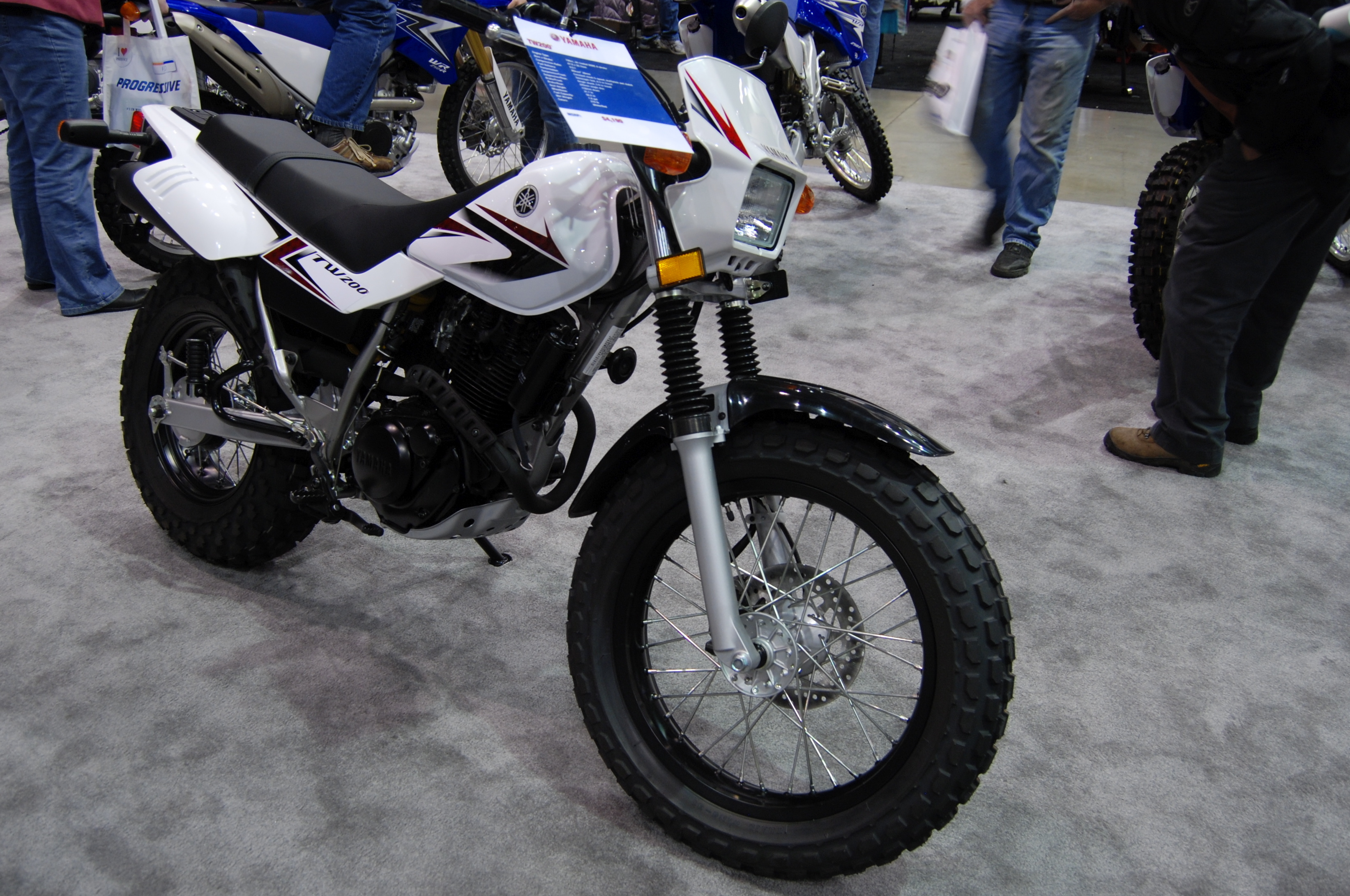
"2021, the engine sound is from a 2021 Yamaha TW 200. Oh, Ryan, Ryan had it. He was like 1987 first year of the model."
The Yamaha TW 200 is a type of motorcycle that can be used on different types of terrain, including dirt and pavement. It's known for its wide tires, which help it handle rough surfaces better.
The Yamaha TW 200 is a dual-sport motorcycle known for its versatility and off-road capabilities. It features a unique fat tire design, making it suitable for both on-road and off-road riding.
"...my 2019 Honda Africa Twin DCT has exceeded all my expectations. But my challenge with the Africa twin is that it's so comfortable..."
The Honda Africa Twin is a motorcycle designed for adventure riding. The 2019 version is known for being comfortable and good for long rides, whether on highways or rough trails.
The Honda Africa Twin is a popular adventure motorcycle known for its versatility and off-road capabilities. The 2019 model features advanced technology and comfort, making it suitable for both on-road and off-road riding.
"...my 2019 Honda Africa Twin DCT has exceeded all my expectations..."
DCT means Dual Clutch Transmission, which is a special kind of automatic transmission that helps the motorcycle change gears quickly and smoothly.
DCT stands for Dual Clutch Transmission, a type of automatic transmission that uses two separate clutches for odd and even gears, allowing for faster gear shifts and improved performance.
"...if you're getting such a kick out of going those speeds and you find going slow is just sort of not doing it for you anymore, perhaps try, if you like the ADV stuff, try some more challenging..."
ADV means Adventure Motorcycle, which are bikes made for riding on both roads and off-road. They are usually comfortable and can handle different types of surfaces.
ADV stands for Adventure Motorcycle, a category designed for both on-road and off-road riding. These bikes typically offer a comfortable riding position and features that make them versatile for various terrains.
"...taking it to a track day. You can get a set of street oriented tires and take your Africa Twin..."
A track day is when you can take your motorcycle or car to a racetrack and drive it fast in a safe place. It's a fun way to see what your vehicle can do without worrying about traffic.
A track day is an event where motorcycle or car enthusiasts can take their vehicles to a racetrack to practice driving or riding in a safe environment. It allows participants to push their vehicles to their limits without the risks of public roads.
"I wouldn't dare call them a sport bike because there would be a litany of comments saying adventure bikes aren't sport bikes."
Sport bikes are motorcycles made for going fast and handling well. They usually have a design that makes the rider lean forward, which helps with speed and control.
A sport bike is a type of motorcycle designed for high performance, agility, and speed, typically featuring a more aggressive riding position and advanced handling capabilities. They are built for spirited riding and often excel on paved roads and racetracks.
"However, I do think an exception, one other idea would be a small displacement sport bike could maybe scratch that edge. Like a Ninja 400..."
The Ninja 400 is a small, fast motorcycle made by Kawasaki. It's great for beginners because it's easy to handle but still fun to ride.
The Kawasaki Ninja 400 is a lightweight sport bike known for its balance of performance and ease of use, making it a popular choice for both new and experienced riders. It features a 399cc engine that provides a good mix of power and agility.
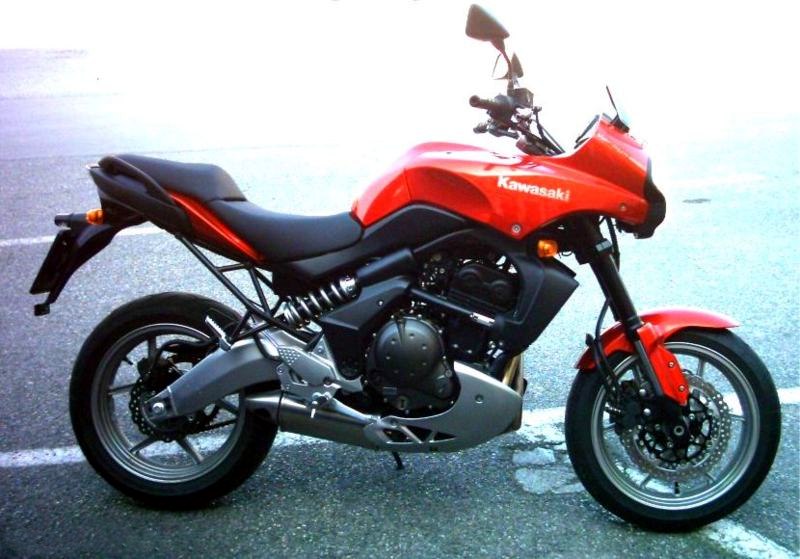
"...I am genuinely surprised that you did not say a Versys 650..."
The Versys 650 is a type of motorcycle that can handle different types of roads. It's comfortable for long rides and has a strong engine that helps it go up hills easily.
The Kawasaki Versys 650 is an adventure motorcycle designed for versatility and comfort on various terrains. It features a parallel-twin engine that provides good mid-range torque, making it suitable for both city riding and longer journeys.
"...maybe a nice parallel twin with some good mid-range torque..."
A parallel twin engine has two cylinders next to each other. This setup helps the motorcycle be smaller and lighter while still providing enough power to ride comfortably.
A parallel twin is a type of engine configuration where two cylinders are arranged side by side. This design is known for its compact size and can provide a good balance of power and smoothness, making it popular in motorcycles.
Select text to request an explanation
Welcome to High Side, Low Side.
I am joined today by Spencer Robert, who is going to be my fill-in co-host while Zachary is recovering
from a bit of a motorcycle tumble.
And today we are going to be sitting down with none other than Ryan from Ford 9 to talk
about his new documentary, his round-the-world trip with his co-stars, Connor and Edwin,
and we're going to get all the behind-the-scenes dirt about what the experience was really
like.
We're also going to dive into Sophie's choice, or in this case, Spencer's choice.
He's going to buy one of two motorcycles we get to help him pick and is buying a sport
bike the correct way to slow down when you want to ride your motorcycle.
I don't know.
But we'll get into all of that and more, but first, a word from our sponsor.
Before we dive into the show, special thanks to Motul for its longtime sponsorship of High
Side, Low Side.
You know, you can lubricate your engine or clean your machine with lots of different
products, I'll be honest, but there's only one brand that gives you that warm, fuzzy
feeling of supporting your favorite motorcycle podcast.
That's right.
A little bit of every dollar you spend on Motul products at RevZilla.com goes into
producing this show.
So to learn more about Motul's catalog of products, go to RevZilla.com slash
Motul.
That's RevZilla.com slash M-O-T-U-L.
And while you're over there on RevZilla.com, make sure you check out the airbag save
page.
RevZilla is dedicated to making sure that you are informed about all the newest safety
technology coming down the pike.
And the newest, most protective safety technology that we've seen in recent years is the
evolution of airbag technology.
So to learn about the entire line of airbag products and which one might be right for
you and your ride, check out RevZilla.com slash Airbags.
Now, all with the show.
Everyone, welcome to High Side Low Side and welcome to Spencer, who is our special guest
today.
Hello, my friend.
Welcome to me.
This episode is not about you, you sadistic, self-centered, you lured me in under that
as usual.
You just know how much I love talking about myself.
I know.
And we'll talk about you a little bit, but we are here today joined by another
special guest, Ryan from Fort9.
He's going to be talking about his most latest release, which is a pretty big departure from,
you know, really the content that we've seen Fort9 put out to date.
Yeah.
Yeah, certainly if you're listening to this podcast, you are probably aware and familiar
of Fort9 and all of the great content they make, but they have really set a new
bar and that is made a documentary about a record-breaking trip around the entire world
via motorcycles.
So apparently they've done it in 16 days, give or take, and not only have they broken that
record of just doing it, but they made an entire feature-length movie, which is super
impressive.
It's got Ryan, it's got his co-worker, co-host Connor, as well as their cameraman
who actually rode on the bike with them, Edwin, and it's just an insane journey.
If you haven't seen the trailer or the video, take a minute, go watch the trailer.
And if you've already seen the video, then hopefully we'll be able to ask some behind
the scenes of how they actually pulled off such a daunting feat.
And I will fluff your feathers here, Spencer, for a little bit.
You know, with Zach on the mend during the time of this recording, we really could
think of no one better than yourself.
I mean, for those of you that don't remember Spencer from previous episodes, he is also
our very own producer extraordinaire, the man behind most of the CTXP, pretty
much all the CTXP shenanigans that you see on RevZill's YouTube channel, as well
as the producer for the shop manual and for daily riders.
So Spencer, you are no slouch when it comes to being able to have an interesting
conversation about the inner workings of, you know, what probably went into
filming this and also, wait, I'm sorry, before we jump right in, there's a there's
a big life change in your future.
And by the time this episode goes out, the life change will have already happened.
But for our audience, Spencer, what are we really excited about in the
next like week or so for you?
Well, it's either one of the motorcycles that I'm going to purchase
that you'll help with, hopefully, or you could you could perhaps be
referring to the wedding, my wedding a week from now, roughly.
So I'm getting married, everybody.
Finally found somebody to put up with him until death does them part.
So it took a while, but we got there.
Well, congratulations, man.
Thank you very much.
We're very excited and it does segue well into this bike discussion
because as part of the wedding ceremony or actually rather the reception,
there is an idea that we will be we're going to go take some pictures
and then we're going to come back to the main reception area and ride in
on a motorcycle.
And of course, I have motorcycles available, but it's a good excuse
to look for a quirky, interesting motorcycle that we can look back on
in 60 years and be like, oh, yeah, that was that that funny bike that we had.
So, Spurgeon, you should have a couple of links of the two bikes
I am deliberating on.
And I do feel confident in saying these two machines have never been
cross-shopped, but through some sheer coincidence, as disparate as they are,
we are looking at very similar prices for very different machines.
All right, so let's go with option number one, Spencer.
What is option number one for you and your loving fiance wife to be to ride it on?
So option number one, and I don't know which link you clicked on exactly,
but the one option is a 2020 Harley-Davidson Livewire and option
number two is a 2018 Euro CT, which is basically the one-wheel-drive
Euro sidecar.
So do you get a sporty naked, probably soon to be non-existent electric
motorcycle from Harley and now Livewire?
Or do you get a also probably soon to be defunct sidecar from a
Ukrainian slash now made in Kazakhstan?
I think the interesting thing is that the the Harley, I think,
when it came out was like $20,000 and the Euro was like, you know,
$15,000 or $16,000 and they've now they've now funneled into my Facebook
marketplace algorithm to leave me with this impossible decision of which
one, Spurgeon, would you rather roll into your wedding reception
on a Harley-Davidson Livewire or a Euro sidecar?
So a couple of things here.
One, according to these posts, the asking price for the Euro sidecar
is $8,000.
The asking price for the Harley-Davidson Livewire, $7,500.
Lance and I were just talking about this a couple of weeks ago
because for some reason, you know, you say the potentially soon
to be defunct Livewire, their stock price over the last six months
is up 207% and Lance and I were trying to figure out why.
Like there's like there's something fishy going on here
where it's like why nobody's buying Livewire.
So like why is their stock price through the roof?
This is a fun little like, well, you're not helping my negotiation.
I'm trying to sell this guy.
I'm like, listen, it's basically a paperweight.
You don't want it.
You're not going to be able to get it serviced.
Like let me help you and just why don't you give it away?
I would say that, you know, the problem is I know the date of your wedding
and I think the Harley board meeting should actually happen
like three or four days before.
So you might know a little bit more definitively
what's happening with Livewire and you can really use that to your advantage.
I will say this out loud for the audience.
Spencer is probably one of the most shrew negotiators I've ever seen.
So if they're asking $7,500,
you can probably get it for like $3,000 out the door said and done.
Okay, so for rolling into your wedding,
I just feel like the no-brainer here is the Euro, right?
Like you can have so much fun with that.
Now here's the problem.
The Euro, I have spoken to numerous Euro mechanics and dealers.
Euro parts and this is perhaps breaking news for the audience.
Euro parts are basically nonexistent.
Nobody can get Euro parts anymore
because of some shenanigans related to the, you know, they were in,
I believe they were in Ukraine and then they moved out of Europe.
They moved to Kazakhstan and now there's like an ownership change.
So every dealer I've spoken to says, yep, can't get parts for it.
We've been waiting over a year to get parts
and this one does need a couple parts.
Come on, I would say the beauty of a Euro is that it never breaks down, right?
It's one of the most kindable motorcycles you can get.
Yeah, yeah, I don't think any of the dealers I spoke to would agree with that
based on the backlog of Euro service that they have and no parts available.
So that's the problem is, you know, that's the sort of potentially defunct issue either way.
But the Euro, perhaps more pressingly, the little things I would want to fix
may not be a way to fix it unless I maybe buy a second Euro
and then combine them into one super Euro.
Having, having so my, the most of my Euro experience
was Abbey who has been on the podcast before of a bike curious
and iconic motorbike fame.
He and I took a Euro for LAB2V once and we filmed that for a video for RevZilla
and I would say even taking out the off-road abuse that we threw at that Euro,
it broke a lot in the week that we had it
and that probably doesn't speak volumes to your option.
I guess my gut reaction is like the Euro is my no-brainer
for like what you're trying to do here.
But if you're worried about parts, there's a lot of torque to be had
with a, with a live wire and from a distant standpoint,
you're not going to have range anxiety, you know,
riding from the photo shoot to the, to the ceremony.
But I would say this is probably the perfect segue to say,
Ryan, you're here, you're with us,
you've listened to the conundrum that Spencer is in at the moment.
Which motorcycle are you picking for, for Spencer and his upcoming nuptials?
Congratulations on your upcoming nuptials.
This is very exciting.
For me, I would go with the live wire.
I like the story of this being, you know, Harley-Davidson's flagship entry
into the electric segments.
They want to win over a big crowd of, of, of crusty old dudes
who are biased against electric bikes.
So they pour everything into this machine and price of it.
I don't know what you said, 20 something thousand dollars.
They were like 35 up in Canada.
So to see this 2020 model, it looks pretty fresh sitting at seven and a half
grand and knowing that the master negotiator could get it down to five
and change to me.
That's a really good buy.
The Euro, you know, a couple of years older, the reliability Lex
originally brought up the absence of parts.
You know, you might be looking at really large paper weights, a big piece
of, of, of garage candy there, not to bash your old too much, but man, I,
you know, yeah, you know, I don't have a lot of trust in them.
I wrote one for maybe like six weeks or something like that.
And it was some of the most fun I had.
And I just never not stressed that it was about to give up the ghost.
And that thing was brand new.
So, yeah, I think six weeks is six weeks is longer than most people make
it with their URLs as far as I can tell us.
You probably have above average URL writing experience.
Yeah, it was right at the scheduled catastrophic engine.
But let me hang on.
Let me ask you, was it, was it that the URL was a lot of fun?
Or was it just like a motorcycle with a sidecar is a lot of fun?
It was that a motorcycle with a sidecar is a lot of fun.
You know, you can, you can put a kid in it.
People at the gas station want to talk about it.
Anything with a sidecar is a riot.
The fact that it's a URL doesn't make a huge difference.
We built one recently out of out of the Kawasaki Vulcan and it was awesome.
It was powerful and it ran beautifully and it shifted beautifully.
Have you ever shifted gears on a URL?
Oh, yeah.
Yeah.
Yeah.
It's like a track.
It's like a just like a K-K-K-K-K-K-K-K-K-K-K-K-K, it was a full body experience.
Yeah.
Yeah.
So now, Ryan, talk to me about this Kawasaki sidecar.
What's your bottom dollar?
All right, delivered to Arizona.
What are we talking here?
Because I'm, I'm, I'm interested.
I'm open, you know, open to suggestion sidecar wise here.
Yeah, I wish I could sell it to you.
Unfortunately, it's not mine to sell.
We, we decided to be a fun idea to pick up exhibits mantle and do some pimping of bikes.
So we, we found a guy who had a busted up Kawasaki Vulcan, um, and he didn't care much
about it. You know, this bike's not worth much for me. I've crashed it four times,
like take it and do whatever, uh, which was great cause we wanted to do something stupid.
So we, we stuck a Ural sidecar on it, actually, um, from a 1960s Ural, uh, and painted the
whole thing lavender. Uh, it's, it's pretty tasty. It came out looking like an ice cream cone
and it's awesome. Uh, and unfortunately not, not mine to sell, but I can get you
his contact information, see if you can make a deal. He might hate what we did and be eager
to get rid of the thing. You know, so, uh, yeah.
Ryan, you mentioned, uh, sticking kids in a sidecar and, um, I think since our last chat on the podcast,
you now have, uh, two, two little girls at home. Is that correct?
Yeah. I've got two little girls and we've got another one, uh, on the way in January.
So thanks very much. Yeah. Yeah. We're, we're loving it. Kids are a lot of fun.
So I wanna, it's funny. Like it's, it's one of the questions that I have for you, um,
in regards to, uh, to this documentary that you've created and like maybe, you know,
some of the balance between fatherhood and, and the work that we sometimes do.
But I want to save that a little bit later in the conversation and, and kind of like
just start things off with this was a, this was a big project for you guys, right?
Like, and it seems to me, um, you know, for our audience to get an understanding here,
you know, the, the rough cut that we watched by the time this episode releases,
you will have had published the actual video, right? But you were gracious enough to let us see,
you know, a rough cut of, of this, you know, round the world trip that you took.
Um, I guess from a starting point, you know, with the version that we're seeing,
how, how finalized is, is this form of the video and then we'll start kind of talking
about the process a little bit. Yeah. Um, thank you for watching it. You say, I graciously
shared a rough cut. The reality is that I foisted upon you a half a day to take
and force both of you poor guys to eat it, uh, primarily because I wanted to hear
what you thought and what was boring and what worked and what didn't,
because we still have the opportunity to make changes with this thing.
And you guys make some of the best mode of concepts around. So you're good people to
ask, especially Spencer, you shoot today. It's a bunch of stuff. So, uh, thank you guys for,
for suffering through it. It's a picture wise, I think really close to what will be released.
I don't think the length will change much. We might substitute a few scenes here and there,
but, um, broadly speaking, this is near picture lock. Um, having said that, there's,
there's a lot that will change in the way that the movie feels. So much of the music is just
placeholders, much of the ADR work is not done. So because we were trying to break a speed record
and shoot at the same time, we didn't always have the luxury of like rigging good mics or, uh,
capturing good audio, especially with people that we were interacting with that weren't
part of this production. Um, so we have a bit of ADR work getting,
getting nice sounding audio in a, in a bunch of the scenes.
And, and for those who might not know, ADR is basically a process where you
rerecord audio that, you know, at Ryan, as you suggested,
you're running around the, you happen to talk to someone, whether it's a border patrol agent
or someone in a bar and you don't have a microphone nearby. And so you can kind of get
like a vague sense of what was said enough so that you can kind of rerecord those lines.
But, uh, is that, am I describing that correctly? Would you say Ryan?
Yeah, totally. No.
Well, it's Berger and Spencer watched was like,
and we'll do a better job of, of a bit of that for, uh, for the final viewer.
So when you, when you rerecord that audio, do you just, uh, to make it as authentic as
possible? I assume you won't sleep for like, you know, a week straight,
and then you'll record all your lines to really capture that feeling.
Funnily enough, we actually did that. So again, trying to break a speed record and make a movie,
we had a lot of the, in the trenches footage from the original 16 day, 23 hour trip.
And that drives the narrative of arc of the movie, but a lot of the, like nice
riding footage, drone shots, um, some of the onboard like POV stuff,
we had to go back and take in around a pickup. So we were super tired again in May because we went
back around most of the world and spent like a couple of weeks riding and shooting crazy hours.
And we use that to record a bunch of this ADR work because your voice does different things
when it's super tired and when you've been like screaming into a calm, uh, for 30 or 40 hours,
it's just sounds really different. And it's hard to replicate that way. If I just wake up
and silk bedsheets. Right. You sit in a nice cozy office and you try to, to recapture that,
that absolute desperation and exhaustion. Yeah. It is, it is amazing how even,
even when you try your hardest, it's, there's something intangible there that you really
can't recreate unless you, you do it for real twice. It sounds like you,
you had the pleasure of, uh, that type of experience. Yeah, exactly. We, uh, we set
the records, uh, last September, um, and then in, gosh, was it January? No, May. We went back to,
to Istanbul, to Mumbai, to Malaysia, to Australia, um, to shoot a bunch more of, of the more scenic
and, and actiony riding footage. And then in September again, we went back to Alaska
because you might have noticed in some of the shots, like all the larches were firing off
golden in the Alaska footage, which is really beautiful. And that's something that only happens
for a couple of weeks in September. So when we were coming back set in the record, we were like,
wow, this looks amazing. Aren't we so lucky? And we were lucky, but it turned out that
we were also a little bit unlucky because it meant we had to wait a whole year
to go back and get decent, uh, ACAM stuff from sticks and drum stuff and that kind of thing.
That's really, that's really interesting because Spencer, um, and again, for those in the
audience, um, Spencer is the, the mastermind behind a lot of what we do here with CTXP, um,
amongst other productions, you know, Spencer. So forgive me if I didn't give you a grandiose
introduction of why you are here today. But Spencer will often come to me after a shoot
and be like, man, if only I could go back and redo this again. I'm like, no man,
there's no budget for that. Like you got what you got. So it sounds like, it sounds like
you were afforded that opportunity. So Spencer, I don't want you getting any ideas.
Spencer, you want to, you want a job buddy? I mean, we could talk, you know,
the joke we always make with a CTXP episode is the perfect way to make an episode would be
to film it in its entirety, edit it in its entirety, and then go refilm the entire thing
and only shoot the exact scenes that you need, the exact, you know, pieces of dialogue, the
exact, you know, B-roll shots. Cause I imagine with the, the trip you guys did,
there's probably quite a bit on the cutting room floor. There's a lot that didn't make it
even in a, you know, hour plus documentary. Heaps. Yeah. We had to, we had to reinvent our
story, like video storage system when we got back from the trip, because we had so many
terabytes of footage. We didn't actually have a place to put it all. So the first thing we
did was like overall of our hardware in the office, just we had a place to park this project.
And even then, I think Edwin spent two or three months cutting and the first,
the first version of the movie we watched together was still like 12 hours long.
So we sat down for a whole day and watched like 12 hours of footage. And that was the
trimmed down version. So there's, there's lots on the cutting room floor. I mean,
there's, there's whole countries that aren't even visually represented in the film because
I wanted to make something that was like one package. I get annoyed when I watch series
because they have to invent these fake little plot arcs for each episode to keep
you coming back to the next one. And you're contriving these little story arcs to keep
someone coming back across eight episodes, which always felt a bit phony. So I wanted to
present the trip as like one cohesive thing because the way it felt to us doing it was one
cohesive ride around the world. So that meant making a movie that was like an hour
and a half long. And that meant that we had to like jettison a bunch of good material.
But I would say for the audience that may not have watched it yet, and the video is out on
Fortnite's YouTube channel. So it was three characters in the film, right? It's yourself,
it's Connor, and it's Edwin. Edwin is writing, Pillion, he's writing as your passenger for
the trip. I guess getting into like a little bit of the concept thing, where did your,
where did the concept start with this? Did you, did you know that you were going to do it just
the three of you? Like it is a bit of a departure from, you know, maybe a little bit more of the
specific content that you've historically created. Like walk us through where the
the little kernel started with this whole project. Yeah, I always wanted to do a
big motorcycle trip while I could call it work because we're lucky little
shits who get to go on big trips and get paid for it. And so I was over in the UK at
the ABR festival and this guy, Nick Sanders was up on stage talking about how he set the
round the world. I call it the overland circumnavigation record. So the fastest time around
the world by like car, boat, motorcycle, it's always been done by motorcycles because they
get through traffic easier than everything else. So he was talking about how he had
set this record like 25 years ago and it was 19 days and four hours. And so that immediately
to me, like set off set off the bells because here was a big round the world trip that I could
do and still be able to say to my wife like, Hey, I'm only going to be gone for two weeks,
you know, because when you're a father of two or soon to be three going away for
months at a time is not a cool thing to do. Did you tell her at that point,
you were going to do the trip twice? Or did you just tell her you're going to go once?
So at the time, I was only planning to do it once and it's at its origin. It was just
going to be me and some go pros. And I was like, I'm going to ride around the world
to try to break the record and maybe we'll like make some kind of weird cut to put up on the YouTube
channel. It was supposed to be like a very minimal thing that I just wanted to do to see if I could
do it. And then I made the mistake of talking about it around my buddies who are cool and
adventurous dudes. I say mistake turned out to be a good thing. But of course, Connor immediately
said like, I'm coming. Like I got to be a part of that. And Edwin was like, Yeah, me too. I
wanted to go. So okay, I grew to be a bigger thing. And if you're going to send three people, okay,
we need a bigger product at the end of this to make it work on the budget sheet. So then we
started talking about making a movie. And the only way to film a speed record real time is to
have Edwin sitting on the back of my bike because you have no hope of ever hooking up with a
film car. They'll get stuck, you'll lose each other and they'll just never catch you again because
the only way to set the record is to be like constantly in motion. Like most of our rad days
are like 24 or 30 or 40 hours. And the only way for it to work is for everyone to be on the same
train. So fortunately, Edwin is like a hardcore like Himalayan climber dude. And he's happy to
just sit on the back of my bike. This first ever motorcycle trip, he never been on one.
And what he just saw back there for, you know, 30, 40 hour ride days and was tough as nails.
His job was definitely the hardest because when we would finally get to a place where Connor
and I could like get off the bike and just do something else for five minutes. Those were
the moments where I've been had to pop open that top box and pull out the camera and start
filming. So his real works kind of started when Connor and I were resting. So it was,
I think, extremely difficult for him. But anyway, that's a brief synopsis of how the project came to
be. Yeah. I mean, not to mention for Edwin, I imagine even just offloading footage throughout
the course of the trip. There are so many nuances of big trips like this from a production
standpoint that are such an impediment to what a speedrun would be. You know, whether it's
the, you know, people are used to seeing a road trip video and you have maybe some point of view
and then the, do you see two bikes go by a camera that's on the side of the road? Well,
if you're doing that in real time, that means that a cameraman had to be on the side of the road
and, you know, if he was with you guys, then you guys had to go past him and then flip
around and come pick him up. And so I imagine you were trying to avoid that as much as
possible. But, you know, even, even in avoiding that, he's filming off the back of the bike
and you guys are shooting with, I imagine all these cameras as much as possible because you
never know what's going to happen. And you guys captured so many, I can't believe you got that
on camera moments. And then you stopped somewhere and cards are full, right? So is he also offloading
everything and those, those sort of, you know, very rare moments where you're not making forward
progress? Yeah, he is. That's another reason where it's brutal for him. So most of our
sleeps were somewhere on the order of like one to three hours. And so if Connor and I got like
two and a half or two 45 of sleep, Edwin probably got like one because he would actually have to be
dumping some footage, at least starting the process before he could crash a little bit and then
keep going. And like you say, there's a different priority for a cameraman, right? He always wants
to get off and take a passing shot or, you know, hook up cameras or hook up microphones. He's
thinking about the whole thing differently, which was very valuable to have in the end. In the
moment, it was like butting heads because Klon and to a lesser extent, me, like we were really just
there because we wanted to set the record. We wanted to win this race. And that's what we were
tunnel focused on. Edwin was entirely opposite. He couldn't have given two shits about the
record. He just wanted to make a cool movie. So the whole way around, he's like, ah, let's
stop. I want to take a shot. Let's do this. Let's go back and shoot that kind of like,
ah, you know, because we're trying to make the best time that we could. But having those
multiple chefs in the kitchen was, was pretty critical because the footage that we got out
of it at the end, I think was, was very good. I was actually, we were, I was impressed with the
amount of footage you got. You know, you talk about like the being constantly in motion and
trying to break a record. Like there were drone shots and, you know, run buys and like,
I was actually impressed with it, how much it appeared that you were stopping to get those,
those shots. Yeah. I mean, some of that came from the pickup trips in which case we weren't
racing. But I would say like probably 90% or 95% of the dialogue and like the narrative force is
all like real from the trip. That was really important to me. I didn't want to have to like
fake anything. So, so the whole narrative force in the movie is all real. Sometimes,
yeah, the visuals are stuff that we took a few months later when we had a bit more time.
And so Edwin's laying on the floor outside the motel room talking about how
you guys are sleeping. And he's like, yeah, they get to sleep, but I'm here offloading footage.
That was, that was real. That was for sure. Yeah, that's all real. Basically,
anytime we're talking, it's real. Yeah. And all the calm stuff is real. And
yeah, we wanted it to be as authentic as possible because we really just wanted a
movie that felt like what the experience felt like because it was, it was a weird one. And
we were trying something that was pretty new. So the, the times that the records
have been set in the past, Kevin and Julia Sanders, or sorry, Nick Sanders did it first
on a ride sponsored by Triumph. He needed like 31 days or something like this.
And then Kevin and Julia Sanders broke it. They did 19 days, eight hours. But 19 days,
eight hours was actually like 42 days because they would ride across a continent and then
ship their bike. And so they would have this like week where they were able to sleep and
rest and recuperate and then like sprint across the next stage, which is fine. That's,
that's the sort of the way it would have to be done if you're taking one motorcycle.
But then the next time Nick Sanders broke it in 19 days, four hours, he shot a TV show for men
and motors. So then the 19 days, four hours was actually like 90 days because they were
moving a TV crew around. And so there are these little sprints with big stretches of sleeping
in between. And it started this fight where Kevin and Julia kind of called out, Nick and
said, your record is bullshit. We don't recognize it. He's like, nah, yours was
kind of bullshit. I don't know how to read it. And they're kind of spatting over it. And
left the record in this weird, uncertain zone where no one tried it for almost three decades
because no one knew who's time they had to break, how much sleep is too much,
brought a lot of uncertainty to it. So we wanted to do it in like the simplest way possible to
see if we could like start the clock when, when we left move in East and not stop the
clock until we came background from the, from the West. So all the flights and all
the borders and all the seats just count everything because that's, that's the
simplest way to, to set a time. Yeah. That's, it's an unbelievable undertaking to include the,
the transit between the actual writing. And that was something I kept thinking about when
I was watching it is the, I don't know how much of a stress point this was for you guys.
If it actually came up at all, maybe it did, maybe it didn't, but basically if one of your
flights was delayed because you ended up beating that, you know, the record, however
you want to couch it by a few hours is that, or sorry, a few days rather.
Yeah. It was originally 19 days and you guys, it's 16 days, right?
19 four and we did 16 23. Yeah.
Yeah. So I mean, a flight often can be delayed, like, you know, it's an evening flight,
you're delayed until the next day and then that met, then you mess up your next connection.
Like one of those could have just absolutely rippled into everything else was that ever
close to happening. I know not making it to the airport was close to happening,
but did you have anything that was completely out of your control like that? We were like,
oh, shit, of all the things to have happen, you know, they're doing plane maintenance or
something like that. Yeah. Of course. I mean, plane maintenance, whether like these things
are never within our control. We built enough enough time into our ride plan to miss a flight
or two. Like we had built a ride plan to get around in like 17 and a half. So we thought
if we miss a flight or two, you know, we can add a day and still make it, it'll be close.
And that might make a good ending for the movie. We ended up being extremely
fortunate that every flight went, they all went on time. Like when does that ever happen?
And that was a huge difference maker in the end because that last leg,
when you're trying to get from Australia to Alaska,
that's something that only happens every 24 hours. So if you miss that flight,
you're like a full day behind and there's no alternative because the route from Hawaii to
Anchorage is like a rare route. Was that the motivation for the night scene? I don't want to
ruin the film for anyone who hasn't seen it, but the scene with the kangaroos and the riding
cross, like was the urgency there just about like the flight? Yeah, it basically always is.
And this is something that hopefully will do a good job of representing in the graphics.
Like a lot of the graphic sections, which for you guys are just like blank,
blank slates with like GFX written on it are going to show us, you know, heading towards an airport
with a series of Ducati vans like connecting the dots, because at every airport, we needed to hit
it right when they were getting there. So we could like drop our bikes and run to make the
flight. But meanwhile, on the next continent, there's a Ducati van coming because as soon
as we land, it's got to be there so we can like run out of the airport and hop on the bike
and keep moving. And another logistical challenge there is traveling without luggage,
right? Like you never want to have to have to wait for bags or risk losing them. So the whole
thing you have to you have to fit in what you can carry on the plane, which from a filmmaking
perspective is like pretty tough because there's yeah, it can't be too big and there's lithium
requirements and all the rest of it. So yeah, making flights was was like the constant
stress. And when we when we spoiled the ending, but when we finally made that last flight
to Alaska, we kind of looked around, we were like, Damn, guys, we sort of have this record
in the bag. Like, if we made this one, then, you know, we can we can basically chill and get
around in 17 and a half or 18 or 18 and a half or whatever. And that's, that's kind of where we
took the decision to just keep doing dumb, dumb shit and try to do it in 1623.
If you're gonna do it, you might as well, you'd come that far, right? I feel like,
you know, it was a probably I don't know how much you had that discussion going up to
that moment, or maybe you weren't allowing yourself to think about that possibility
until you actually got there. But it does seem like everything you had endured up to that point,
if you had gone through that, then there's the classic like, it's the last push and might as
well see what you can really do with the, you know, the time and energy you have left.
Yeah, absolutely. Yeah, that's that's that's what it was.
So you just you mentioned the packing part and I want to back up.
I mean, I've got so many questions, but packing on a motorcycle trip is already hard
enough, right? Like if you're just taking a motorcycle trip around the world by yourself,
fitting everything you might possibly need into two saddlebags is a challenge.
But you had three people, two motorcycles, four saddlebags, right? And you also were
trying to film this like during the planning phase, you know, what went in, like how much
time and effort were you trying to just figure out what you're going to take with you?
Like temperature ranges. Spurgeon wants to know how many pairs of underwear did you
bring? He's been he's not I mean, I feel like one pair is plenty. But then, you know,
as you saw, Connor's got, you know, athlete's foot and, you know, runs into you while trying
to get to a drugstore. So it's like, you know, maybe two pairs of socks would have been necessary.
I ran into him. That was completely. But yeah, my feeling on motorcycle packing is that
people overthink it way too much. Like if you want to go around the world and you have
a passport and a credit card, you can go. But most people aren't filming, right? Like you were
also trying to bring back a product, right? So from the film side of things, we had that
yellow box that lived on top of the luggage rack of the multi strata. And that that was very
organized. So inside of this Pelican case, there's like a couple V mount batteries or like
big batteries that charge off the bike so that from that we can power all the different
little things. So action cameras and communicators and our our camera batteries for our our ACAM
and a variety of other stuff. And so that was built out very strategically. And it had to be
organized in a way so that when we stopped for, you know, gas stations had to be less than
like seven minutes and like a good one would be like sub five. So we'd stop and everyone would
like hop off, open the thing and have to be able to like pull up the camera and the lens
and you didn't get shooting right away. So that was organized quite well. From a packing standpoint
for us, though, yeah, each each dude had a saddle bag. So four saddle bags. So I had one Connor had
one Edwin had one and then one of them was also for film gear. So we each just had like one one
of these aluminum paniers. And you know, to go into Spurgeon's underwear, you know question,
I think I had seven pairs of underwear. I think luxury luxury only let me have two pair when
went to India. If you go inside and outside, that's you know, that's really that's exactly
I was like in two weeks or 14 days, you know, one on one on each side. I had lots of socks,
but then like clothing is like, you know, I mean, you've seen the film on basically on the whole
way around and like one of two pairs of pants, which are the exact same pair of of pants.
Right. Yeah, that's it. So that's a tricky thing. That's where the record has to be set
now to the fall or the spring. Because you need there to not be snow in Alaska, but you need it
to top be like disasterously hot in like Miami and Portugal and Spain, India and Malaysia,
where it's hot anyway. I apologize for the coughing. I've got something right now. I
don't know. That's okay. I was just choking on my drink. So like, we're good. Yeah. Yeah,
totally. I managed to hit the view button quick enough as I was dying over here.
So yeah, anyway, fall or spring so that so that the temperature swing is not as extreme
as it could be, but even still it's pretty gnarly. So like a huge chunk of the
India, Thailand, Malaysia, Singapore leg, I'm just in a t-shirt. It's not a safe choice,
but it's very comfortable. And in the context of the overall risk taking of the episode,
you know, it's probably fair game, right? Like at that point, you're kind of like,
I just got to get to the next. Yeah, but I saw that. I was more about like, I would just imagine
like the sunburn like going across India. Like I feel like at least like a mesh jacket keeps the
sun like I was watching you do the t-shirt thing. I was like, you got to be frying, man.
It's even mesh jackets are so hot. Con tried it for a while. He like was really like wearing
his jacket for for much of it. And he's like, no, like safety, you know, we do this and that's,
you know, great for him. But even him by then was like screw this, dude, it's so freaking hot.
You get so caked like your arms are just black from like the sit in the road grid after a while.
It actually keeps the sunburn off reasonably well. So yeah, it was, you know, a t-shirt
and pants for for a huge chunk of the way around. And then it was like a sweater and pants for the
rest of it. I had a rain shell that I put on like when it when it was really cold, which it did get
like there were there were parts of the Australian leg where we're seeing like minus seven minus eight
on the dash was actually colder than than we ever saw in Alaska, which surprised us. We we
didn't do our research properly and didn't realize that Australia in September was was
that cold on the Neller board. So yeah, big swings. But yeah, credit card passport and like
some clothes, you know, you can pack for around the world trip in 10 minutes, for sure.
There you go. That's a hot take right there. I have some some questions about specific scenes.
But before we get to that, I do I feel like it would I mean, I was curious when I first
heard about you guys doing this and especially knowing what it takes as we already discussed
to incorporate filming into a trip like this. Ryan, can you sort of walk through the full
timeline of this project from this is when we actually decided we were going to do it. It's
it's a real thing. How long did that sort of planning stage take to the time you actually filmed?
And then even, you know, we're now over a year since you filmed and it's coming out,
you know, a little bit from now. So like what's what's the kind of 10,000 foot view of
everything you guys put into this? Yeah, I think I think two and a half years. So
I heard about the trip at the ABR festival, which is usually like late June.
And then we started planning and we did the ride the following September. So
like a year and three months after I first heard about it. And then
we didn't finish the pickups until the September after that. So then we're at
like two years and three months. And then it's coming out, you know, three months after that.
So yeah, two and a half years from start to finish, basically a year and a bit just in planning.
And when I say planning, I mean, mostly like figuring out film permits visas and a motorcycle
sponsor. And then we did the ride itself. And then it's a year and a bit in post
production between getting those pickups that we had to wait for the the fall for
and also just editing. A film takes takes a really long time is
is Edwin your editor, as well as he editing the whole thing? Yeah, Edwin's editing the whole thing.
We have another one of my buddies, Luke, doing the graphics. He he shoots and edits for us too.
He's a really good motion and graphic designer. And then another one of our buddies said
is doing the sound design and the music. And we have some original music in the film too,
which is which is cool. So so we've hired a few places, but Edwin is doing the bulk of the edit.
How how sick is he of looking at the footage at this point? Or is he so excited?
I think I think he's pretty sick of it at this point. The audio files were just
ridiculous because we were wearing mics 24 hours a day. And so when he got back,
he had to just like, you know, put in the headphones and like go for runs and live his life
and just like do life while listening to us talking shit in our helmets because he had
to somehow get through like 17 days of audio files. For those of you listening,
you can't see the look on Spencer's face right now. Spencer, this is like he looks shell shot.
Yeah, my my palms are sweating thinking about going through that much audio. I mean, we
will regularly do shoots that are a week or two, but we're not recording constantly.
It feels like we are, but compared to I think what you guys were probably doing, it's really
not constant. And yeah, just the the amount of audio that that was one of my biggest takeaways
from the video is the I mean, the audio truly is your backbone of this experience because
it is it is this like constant sort of way to anchor the audience and what you're experiencing.
It's one thing to see it. And obviously you have a lot of beautiful shots and a lot of
diverse locales, but you know, whether it's the the sort of you know, going insane moments where
it's late at night and you guys are semi hallucinating or maybe actually hallucinating
or you know, it's some of it is even commenting on things that as an audience member, I might not
have known what we were looking at like the guy sitting in the middle of the road in India.
You know, like these heavy moments that the audio you need that audio in order to
tell the story and to go through that much of it and make it coherent to make it,
you know, put it in a sequence where the audience can follow what's being said and why that context
matters is absolutely herculean herculean task. So my hat is off to him. That's amazing.
Yeah, mine too. It was it was a mammoth task. But like you say, we thought really an important one
because we wanted the whole narrative to be to be real and and that was critical to getting
those moments. Like when we passed the guy, you know, who's in the middle of the road
trying to commit suicide, you can hear our voices like, whoa, you know, like, let's stop
everything and like go see and whatever. Same thing when we're super tired in Australia,
you can hear in our voices like our voices are cracking and just brutal. And it's like,
well, man, this sucks, you know, I don't want to do this anymore. And that's that's that's
great too. And it's I think in a lot of places a little bit funny. I wanted the the film to be
almost almost more of a dark comedy than it is an adventure film, because I don't really like the
cliche like, ah, you know, we're going to go around the world and find ourselves and like
have the journey and the journey is inside and what was at home mattered. And like this whole
like cliche storylines have been worn in like so many times. And the reality is that we're
lucky to get to go on vacation and call at work. And it's just kind of stupid and fun
and funny. And so we wanted the film to be a little bit stupid and fun and funny.
And a big part of that was getting getting, you know, really good location audio,
which which poor Edwin had to sift sift through when we got back.
Hope after the video comes out, you guys just you don't talk to him for like six months.
You don't need to hear our voices. We're only going to do we'll do sign language in the
office. You know, we're going to give you a break because you earned it.
Yeah, he needs it every time every time I see him, which is not that often because
he's usually deep in the editing suite and and working on the film. When I do see him,
I'm always like, oh, buddy, you know, it's good to see you catch up. And he's like, oh,
man, I feel like I've seen you this whole time. He's been he's been living in our heads in our
absence. So yeah. So from a from a like a, you know, a production, you know, kind of angle,
like, did you guys have conversations ahead of time? Like you talked about like you wanted
it to be more of a dark comedy than a traditional adventure type piece, right? So like,
there were moments where, you know, just kind of talking about the guy sitting in the middle
of the road. What kind of discussions did you guys have about like commentary about it versus just
letting the moment happen? Because it seems like what you what you tried not to do and maybe
correct me if I'm wrong, but you tried not to, you know, break down the experience for the
viewer by then sitting down and having like a quick interview with Ryan or Connor saying,
like, what did you see here? It was more about like letting the audience see it through your
perspective and then moving on. And how much of that was a decision with, you know,
what you wanted the film to be versus like 12 hours down to an hour and a half?
It was a conscious decision and what we wanted the film to be.
Edwin and I both enjoy things that are like more show than tell. And
we found through like doing, doing, you know, the job that all of us have for a number of years,
like the audience is usually like extremely intelligent. And so you don't have to sit down
and like do a diary can be like, ah, man, like today I saw a dead guy on the road and I'm feeling
like it sucks. And I've got a family at home. And what are we really doing here? Like,
when you spell those things out, it's okay. But you can also just show that moment and like show
your real reaction to it, which will not be very profound. Like when I'm reacting to that moment,
I'm like wiping bum cream on my butt because I've like got a huge rash. I'm like, oh man,
we just saw a dead guy. It freaking sucks. And then, you know, in Malaysia, I'm calling my
daughters, right? And so like the audience kind of in watching that will understand
the same conclusions that you would spell out for them anyway. But there'll be conclusions
that are like more real to them because they filled in the blanks rather than like you try to
fill it in for them. So I always like show rather than tell because I think in the end,
the story feels more profound to the viewer because they're like putting their own life
experience in to fill in the blanks rather than me filling it with my noise. So
yeah, so that was that was a decision we made pretty early on. Like another example of it
would be the confabulation. So like there's this thing that happens when you're like,
if you have a patient who's like clinically sleep deprived, their brain will start to
confabulate like reality and imagination, but in a way where you can't tell the difference.
So particularly in the latter stretch, like through Asia and through Australia,
I would be seeing like really specific things. Like I was always seeing like big skulls and
men on horses like statues. And it was to the point where it'd be like, Oh man, like there's
like this must be some like war hero or something guys like just talking because I've seen this
like statue of a guy on a horse. And then when you come by it, it just turns into like a bush
or a tree or something. And it's really weird because your brain like fully saw it and you're
like planning how to ride based on this thing you're talking about this thing like you fully
see it as reality. And then sometime later, it just switches to something else and you're
like, can't trust what you're looking at anymore. And that's a real thing that happens. And I could
like sit down in a diary cam and like explain that to the audience. But we thought it'd be
more fun to like just put the audience in the driver's seat and let them wonder if what
they saw was real or not. So, excuse me, there's all kinds of places in the film, some of which
you'll have seen and some of which are coming with the graphic work where there's
riding footage and there's things on the side of the road that are there and then gone the next
or that are one thing and then become something else. And we're not going to talk about it.
We're just going to have it there so that the viewer who's watching the movie is like,
what the hell was that? Did I just see that? And they start to realize like, okay, like this
is what it feels like to be super, super tired on a motorcycle. So, yeah, creative choice.
Well, we'll see in the end whether it works out or not. Well, that I guess
what's interesting to hear you talk about that is, you know, you have, there's the
often sort of said mantra about filmmaking that the story gets written three times, right? You have
your initial script or concept of what you're going to do that you write out and you're like,
this is I have a vision and this is what it's going to be. And then you go and film it and
it gets rewritten because you can't script reality. You don't know what you're going
to encounter. You can't you can't predict exactly those border crossings you had that are
you just sort of absolutely brought with tension. And, you know, and that I imagine that shifts
all of a sudden this is a scene that we need to sit in and experience. And it wasn't something
we necessarily planned for. And then you have the third time you write it, which is when you
edit it and you then get another opportunity to tell the story. So I guess I'm curious,
how similar is the final version or as final as we've seen to the version that you
originally you and your team imagined when you set out to make it? Has did it shift
more than you expected? Or do you feel like, oh, yeah, that's kind of what we set out to make?
Yeah, it's I think it shifted like 100%. I think the original script would be
unrecognizable to what the movie ended up being. For those who don't know, you still script and
write a documentary, which is weird. But if you're pitching a documentary to studio or
you want to make a documentary, you still write a script. And it's just all imagined stuff
that what you think might happen. So I wrote a full script for this movie that had a story arc
and points attention and a climax and whatever, based on what I thought might happen. And the
reason you do that is partially so that you can show it to studios or sponsors or whoever
that you need to sell the movie to. And it's partially so that you can storyboard it.
And when you go, you're not like flying blind, you at least have some idea what you're
trying to get to make a movie out of it. But of course, the reality was in the trip,
entirely different things happened. We had different tense points and things that we
thought were hard were easy and things that we thought were easy were going to be hard. And
it changed the way the whole movie was so that we rewrote it when we got back.
And then kind of rewrote it again after we were watching the early cuts because
a lot of the times what you remember as being interesting is not that interesting when
you see it on the screen. So it's at a point now where it's changed completely from
yeah, from what we originally envisioned. And for us, that was like a very new challenge because
for nine videos, typically are 100% scripted. I really like research and writing.
And so I kind of put all my work there. And when it comes to the production day,
I just deliver precisely what we've written in storyboarded. And that's the cut and it
goes out. So working like doxile for us was an entirely new thing.
Was it hard for you as a host? I would imagine that you're used to knowing what your lines are,
you deliver your lines, you're excellent at it. And then this is something where it's a little
bit more off the cuff. What was that like for you being the main character in the film?
Super challenging. I think so challenging that I'm maybe not the main character in the
film. The thing we realized when we got back is that my buddy Connor is a whole lot more
interesting to watch than I am in real life, because I'm like a pretty flat guy. Most of the time
everyone can start camera face. He's like, you know, day 13, you know, we've been awake 40 hours.
How are you feeling? I'm like, yeah, pretty good. Tired, you know, which doesn't make a
great movie. And if I were to like script, you know, script a movie, I'd have written
something else, right? Yeah, that was, you know, along some plot arc and pithy and funny and whatever,
but I don't want to do that because we wanted to make something real. So when we came back,
we realized that I'm in real life pretty boring. And Connor is actually much more
interesting. He wears his emotions on his sleeve and he's funnier off the cuff. So
that shifted a lot of a lot of the movie as well, where the original script was sort of
a movie about Ryan. And then we came back and it became more of a movie about like the three of us
and then became in the end, maybe a movie more about Connor. All of us, of course, feature heavily in
the film and the relationships between us are quite important. But yeah, it's a big challenge
for me, very different from what I'm used to. Well, I want to jump more into the
relationships between the three of you. We're going to take a quick break for a word
from our sponsor and then we'll be back more with Ryan on the new documentary coming out from Fortnite.
It's hard to believe that Highside Lowside has been around for 10 seasons.
It's truly remarkable to take a minute and look back and see how far we've come.
So much of which wouldn't have been possible without the sponsorship of Motul,
who has supported us since season three. Not only has Motul been an amazing supporter of
this podcast and motorcycling in general, but they've given me free reign to come up with wacky
ads as I see fit. They never balked when I referred to a Stallone classic over the top to let folks
know that their oil tasted like shit. Or when I researched neon green drinks like the fuzzy
leprechaun and hammered Hulk to drive home the dangers of confusing their 300V oil for cocktail.
They weren't phased when I found a way to work in British Prime Minister Margaret Thatcher's
nickname of Thatcher the Milk Snatcher to promote lubricants. And they should have cringed, but they
didn't. And my poem about bugs to introduce their line of cleaning products. So please take a minute
to join me in giving the old Highside Lowside tip of the cap to Motul. For everything they've
done to help us make it through 10 seasons of this podcast and for everything they do for all
motorcyclists out there, we thank you. All right. So we are back and we were just kind of starting
to touch on like the characters in the film, right? So there's Edwin, there's Connor, and there's
yourself, Ryan. And I think anytime you're involved in a production like this, the interpersonal
relationships really can be make or break, especially on some of these larger form
video recording sessions, motorcycle trips. You're talking about how lucky we are to get to do this.
But if you're doing it with people you don't like, sometimes that can feel like more mature than
Spencer and I are very fortunate. We work with a lot of people that we consider friends.
So can you break down? I mean, maybe Spencer doesn't consider me a friend,
but I don't know. That's another podcast for the day. Can you walk down? You walk us
through, Ryan, a little bit of the interpersonal relationships that exist between the three
of you off-camera and how did that really kind of help or hurt the production?
Yeah. Off-camera background. I mean, Con is a guy that I've known for probably,
I don't know, three years, something like that. He works at Fortnight. So he did some
moto videos for us for a while. He's doing some boating content for us now.
Fortnight sells boat stuff too. And they want YouTube videos about it. So I've known him that
long. Edwin, he's actually even shorter. We were quite lucky to get Edwin. He is a Lebanese guy
who left when things were kind of popping off there and landed in Vancouver and just needed
a job. And we were the first thing he found. He was sort of overqualified for the little
YouTube racket we're running. He's done a lot more higher-level filmmaking in the past.
But we were lucky to just be in the right place at the right time to land the guy.
So none of us have known each other like a crazy long time. But we're good buddies.
And we're the same, we have the exact same level of comfort with discomfort, which I think
is the critical thing when you're choosing people to go on a motorcycle trip with or do
a climbing expedition with or anything that's going to be a strain on your personal relationships.
We're all kind of in the same ballpark where we like to push to the same amount and we're kind
of comfortable with the same amount of risk. And at the same time, when it gets really silly
or really hard, we're kind of all looking around at each other, waiting to see like,
okay, who's going to throw in the towel because we all want to quit at this point.
So that made things quite easy. I'd say
like on the world tour or the world record, our relationships weren't a critical point
either to the film or to the real life experience. We weren't screaming at each other,
we weren't falling apart, we weren't ever worried about that being a problem.
There's like kind of like the cliche like when you do something hard,
that's like the truck going over the bridge and then like all the cracks in your
relationship like come out under that strain. I'd say we were not really close to finding the cracks.
We were all still making jokes and laughing and being buddies and yeah, it was all cool.
So not much drama there, but it made for an enjoyable shoot and an enjoyable ride.
Yeah, I mean, and especially I think there's a degree of trust having a passenger that goes
both ways, right? I think that's something you guys don't really address in the
documentary is I imagine that was not always easy. It seemed like Ryan, you had Edwin on the back
for most of it. Do you have him on the back the entire time?
All of it. Yeah, we wanted to kind of like to meet all the previous record breakers on their
own ground and Kevin and Julia, when they set the record, did it two up. So at least one of
us wanted to try doing it two up and I have more years riding than Connor did and I was
happy to be the guy who took Edwin. Yeah, was there any point when you regretted that decision
perhaps ripping through India with an instant clearance on either side of you?
Yeah, of course.
It'd be dicey riding solo, let alone with, you know, a cameraman, I filmed a lot off the back
of the bike and you know, occasionally we swing a camera over to one side and it shifts the
whole weight of the bike and it's not easy. Yeah, absolutely. And Edwin, having never
gone on a motorcycle trip before, I think was unaware of the effect his body had on the
dynamics of the machine. So he'd be like doing yoga back there and like doing full stretch
routines and like rolling cigarettes in his little kangaroo pouch. And yeah, film in like
contortionist positions because he wants a shot like low to the ground, all kinds of
weird stuff. And I'm like, oh, but in many ways, he's the perfect pillion because
he's not stressed by anything. And he keeps it interesting by moving around a lot, but boy,
that keeps you awake. And the trust he had in me is, yeah, it's like a very like
it's sort of awe-inspiring or like maybe I'm dumbstruck by it. I don't know how to feel about it
because I would never sit behind someone. You're like, I would never trust me would
do it. But it's like being a motorcyclist and riding pillion is probably one of the hardest
things to do mentally. Like you're putting your trust in somebody else to ride the way
you want to ride. I think it's harder. The more experience you have riding, the harder it becomes.
But I feel like if you aren't used to really being in control for a lot of years of riding,
then it's maybe easier to be like, I don't know. It seems like you know what you're
doing. It's probably not that bad up there, right? Not realizing how challenging that probably
was for you at times. Yeah, it's maybe good that he had almost no riding experience because
he just took it totally out of his hands. Like we had a conversation earlier on where he was like,
I trust you completely, like you do that and I worry about the film and like we're good.
But then there was a B-roll shot. So we're like weaving through shit.
And then he had like- Yeah, but there was a B-roll shot in Australia where you did a jump
with him on the back. Yeah. And like it looked like he was like just throwing himself into
you. Oh my God. Yeah. It was a bad idea. We rocked up on this like perfect looking jump.
And him and I both kind of got to talking. We were like, I've never done a jump with a pillion.
He's like, I've never done a jump as a pillion. Like, I think we could do it.
Send it. Yeah, just send it, right? Like, I don't know. I don't think either of us had any
idea what to really do to prepare for that. Was that in the actual record? Did you film
that on the actual record or was that- No, that wasn't the pickup trip in May. We had a
little more time to like- I would say like the risk reward of like we're trying to beat a record.
Let's go do a two-up jump shoot. It didn't make any sense. And like the shot isn't even that good,
but we put it in the cut because we're, I think we're both just so fond of that, that moment.
Because it was just completely, see the path is like, I'm going to try standing like you try
like hunkering as small as you can and just try to be like a bag on the back and we'll
just send this thing and see how it goes. And we were like a hair's breadth from crashing.
One of my feet is like way up off the peg because I'm like losing the bike and it was,
that was dumb. It was pretty close to being a bad ending there.
Isn't it great when you do all that and then you see the shot and you're like, it's okay.
It happens all the time. All the cool as s*** looks like nothing in the final shot.
But yeah, you know, what do you think? And I mean, I feel like kind of on the
topic of riding with a pillion and everything you guys are trying to do, can you talk to
us about the bikes? Obviously, it sounds like, and it was evident in the video,
you forged a partnership with Ducati and, you know, they were able to provide a lot of assistance,
but it also had to be a platform that made sense for what you were trying to do. So
how did that come about? Yeah, that was a big challenge. So when
What were the bikes for the audience that hasn't seen?
Like what? Yeah, the bikes are Multistrada V4 rallies. So the bigger 30-liter tank
Multistrada V4, which is a great platform, it can run on just the rear two cylinders,
so it can go pretty far between tanks. The V4 engine is a huge laugh. So if you're exhausted
and you want to wake up, you can twist your wrist and wake up. It's the engine that they tune to
200-and-some horsepower in their world super bikes, a variance of it. So in its detuned state,
like it makes 160 in the Multistrada, it's actually really under stress. So the service intervals
are really long and it's for us at least a flawlessly reliable platform. We didn't have
any problems with it, but I'm very bike agnostic. So when we started this process,
I just reached out to everyone I know in the manufacturer side of the industry
to say, hey, I want to do this round-the-world race thing. And it would mean being able to drop
a bike off at the airport in Miami, pick one up in Lisbon, drop that off in Istanbul, pick
the next one up in Mumbai, drop that off in Calcutta, pick the next one up in Bangkok,
drop that off in Singapore, pick the next one up in Perth, drop that off in Sydney,
pick the next one up in Anchorage and then ride back. So it's logistically quite difficult and
requires a company that has global coverage and the ability to sort out all those bikes. So
a few manufacturers off the bat were just like, we can't really do this. But most of them just
said, we don't want any part of this. It's too dangerous, both in that we could really hurt
ourselves, but also dangerous from a marketing perspective, because if anything goes wrong
with the bike, that will probably be the reason that we don't get the record. And that will probably
be the climax of the movie. And then you have a whole movie made on how your bike screwed up and
ruined a world record attempt, which is not a good look. So to Ducati's credit, they were the
only manufacturer that was in and right off the bat. There were no other contenders.
No other contenders. Nobody else wanted it. And Ducati from the get-go was like,
yes, what a racing company like we can do this. It would be very funny. We understand.
To the point where they were like, do you want tire warmers on the bike at the airport?
I was like, I don't know. I'm not going to be going like knee down coming out of the parking
lot, you know? But they were all in. They understood that it was a race, that it was
dangerous, but that that is part of the joy of racing. And they had the global reach to
be able to make it happen logistically. It seemed like they also like it seemed
like in addition to the bikes, they truly did support you. There was a scene,
I believe it was at the Serbian or the Turkish border where there were issues happening because
the bikes were technically not your bikes and you were on the phone with them and they were almost
acting as a fixer for you as well in certain situations. Were those conversations you guys
had ahead of time? Were they knew that they were going to be playing a larger role? Or was
that just like, hey, we're stuck at the border and we need your help?
Yeah, it was not something that we knew we would need ahead of time. We picked up those bikes in
Lisbon and one of them was missing its paperwork and the papers for it were in Barcelona
because they were Spanish press bikes, I guess. So we had to kind of detour from our route to
go get these papers and we thought, okay, this all be fine. And then when we get to Turkey,
we find out it's actually far more complicated than that. And because neither of us are EU citizens,
but they're EU bikes, we can't even legally bring them into Turkey. And the paperwork was not good
paperwork. One of them was a copy and that wasn't going to work. And there was a variety of problems.
And it got to the point where we were kind of talking about, okay, this is not going to happen.
Can we leave the bikes in Bulgaria and somehow beg or borrow a motorcycle to ride
to the airport? Because it's only like two and a half hours to the airport from the Turkish border,
but it has to be done on a bike or else the record is not really the record.
So we were looking at losing like a day and finding out an alternative way to make it happen.
And I was on the phone with the Dukati Istanbul guy saying, hey, like, you know,
this is what's going on. We might not be not be making it unfortunately.
And I didn't realize how things work in Turkey where he's immediately like,
who's talking to you? What are you talking about? Put me on the phone with them.
So he's on the phone with this lady and he's like, I know this guy and this is bullshit and
you're going to make this happen. And he's coming right now. And so this Dukati fixer guy sends
another man who comes up to the border and is like doing a rush import. So they're like legally
going to like sell the bikes to Dukati Istanbul. So they become Turkish bikes and then we're
going to ride them there. And this process takes like a week and he's trying to get it done
in like 30 minutes. And there's all kinds of like money flying different directions. And
some people are pissed and some people are really happy. And we're sort of like, I don't
understand anything. And the whole time doesn't stop doesn't stop rolling. No,
Edwin's rolling the whole time. And we got body cameras on and Connor and I are going to stop
rolling. And he's like, Oh, I'm not I'm not I'm presuming he's just like standing there.
Right. Like, yeah, he's standing there like this. He's like, I'm not rolling.
No, but nobody believes right. And and and Con and I are trying this like good cop
bad cop thing where I'm like working with a Spanish police officer like, look, I got
papers, I got this, we got a visa approved, like solve of board and decays this that and
the other and Connor is chatting with this other cop and he's like, Hey, how you doing,
you know, and like, check out these stickers and like, oh, if you've been to Austria,
and he's like kind of flirting with her. And Edwin meanwhile is filming the whole thing
and he's not supposed to do that. And we finally get released from the Turkish border.
Our flight is in like 45 minutes. And it's a two and a half hour ride. So we're still
thinking this is never going to happen. But we'll get there and figure it out.
And our jacquardy fixer guy is saying, I don't think you can make it. This is not
going to happen. But I, you know, I just saw and your flight got delayed and our
flight was delayed, like, you know, an hour or something, which bought us a little bit
of time, but still probably not enough. So then he's saying, like, I've done this
in my car in an hour and a half, you can make it in 45 minutes on the bikes,
disregard the speed limits, use the emergency lane, this is an emergency.
And so I'm like, this is the, I've been trading my whole life for this moment.
Like, so we hop on the bike and we fill gas and Connor goes to pay for it
because he doesn't have as much experience riding fast. And then we are just like, let's go,
you know, this bike can do 265 and we can just hold it there and just fly to the airport.
I'm like screaming on the bike because I'm having the time of my life.
And from all the screaming, I just get this nose bleed. And because the air is rushing
like super fast, my nose is like pouring because it's just getting sucked out from
the low pressure. So there's blood everywhere all over me and all over the bike and we're
just racing. And we finally meet this jacquardy fixer guy and he looks at me and he's like,
what happened? He thought I killed like a pedestrian or something.
You can't go to the airport like this. So he's kind of like cleaning me off and like we're
trying to get me presentable and meanwhile Connor's still coming. And then he's arranged
another guy who I guess used to work for Turkish Airlines or something
to be our handler through the airport. So we enter Istanbul airport and the place is like
heaving. There's like mobs of people. There's a million people everywhere. You'd never
get through to a flight in the, you know, 10 minutes that we had left at that point.
But this bald guy who doesn't speak English, the jacquardy fixer is like,
don't lose this guy because he's your ticket, but you can't talk to him.
We just follow him through this side door and we're in this like pristine other world
where there's check-in and security, but none of it is really check-in and security. They just
kind of like look at you and go, here you go, sir. And you go to security and they look at
you and go, here you go, sir. And nothing gets looked at. It's some sort of like first
class private plane side of the airport. I don't even know a world that we don't belong to.
And this guy whisks us through there and down to the plane and we get there and the flight's
been delayed another 30 minutes. So he's like 30 minutes. Starbucks is there. Here you go.
And he just disappears. That was the end of probably the most insane day of my life because
that morning started in Aranzano in Italy. All the border kerfuffle that took four or five hours
in the end, then this mad dash to the airport. And so now we hop on the plane. We have, you
know, five, six hours to sleep. And then it's 5 a.m. in Mumbai. And, you know, it's a new stage.
And thankfully, the ride through Mumbai was very relaxing. You could really just sort of turn
your brain off. So chill. Yeah. I feel like I want to have an entire podcast episode just
talking about like what it's like to ride in India because like watching your little section
in India just took me back to when Zach and I were in India. And like it's just,
was there a more stressful part of the trip from a riding perspective or was like India like a whole
new level? India was definitely the most, it was the most fun. I hesitate to even call it stressful
because it's such a free for all that you're not even really thinking. That's one way of putting
it. Yeah. It's sort of schools of fish, right? There's no rules that you have to obey.
So if you can dart across there, you can. If you want to go on the wrong side of a two-lane
highway at night with your lights off, you can do that. And there's going to be cows and
like a farmer with goats and, you know, but you can take the sidewalk or you could go through
that person's yard. I've never ridden in a place where you have total freedom.
I like carts of launch. Do whatever you want. That seems like the way that most of the
locals ride. And pretty quickly we were doing the same. Yeah. I apologize to anyone that
I like cut off and wasn't to you because we definitely got a little carried away after a while.
But as you said, that is sort of the nature of transit there. It's a little, it's kind of
liberating because yeah, people are honking their horns and cutting you off, but it's not,
nothing is ever personal. It's just sort of like, yeah, I had to get over there. So I went
over there and you're like, cool. I guess we're all allowed to do that. Then I'm not,
I'm not pissed off by one little infraction because we're all just kind of doing our thing.
There's zero road rich like nobody ever gets mad, which is amazing because you drive around here
and land of law and order and people are screaming at each other and getting violent
over some merging thing. And over there, because it's a free for all, nobody's stressed, nobody's
angry. It's just like everyone's taken in the insane colors and the insane
bustle and honk it five times a minute, but nobody's pissed about it. It's actually like,
it's really beautiful. And I think for a city like Mumbai, Mumbai has a population
officially that's like the same as Canada is and unofficially, it's probably quite a bit more.
I think the only way to get that amount of people around a city like that is the system
that they have. If you had people like obeying a grid work of traffic laws like we have here,
it would take 12 hours for you to get five blocks over. Do you remember seeing any traffic
lights? No, well, there are some. I think leaving Mumbai, there were a few places
that had them. There was one boulevard that was like lined with palm trees. You had to
thought you were in Los Angeles for a moment. It was like new and immaculate. And the country
is developing so fast that it's in a really interesting place right now where you have
areas like that and then you have areas that are look like India
three or four years ago probably where you're never going to see a traffic light. So
very interesting worlds. My buddy Anish who shoots nets for Fortnite all the time
is the guy that I kind of grew the channel with like seven, eight years ago now.
It's from Mumbai, near Mumbai, Pune. So we had him to help us through that, which is pretty cool
because we pretty immediately just locked on to his back time and did what he did.
When Spencer and I were there, we started in New Delhi and that was my first thing was like,
I'm like, where are all these? There's no stoplights. You get to an intersection and it's just kind of
make your way through it. Stoplights just slow you down, spirit.
They slow you down. Yeah, it's the rule of the majority. People are going when they're the
big group, but that'll stop other people. And when they get big enough that they realize like,
I can eat this fish, they just start to go. And then everyone else has to stop because
they're not the big group anymore, right? And so it organically like works because the majority
eventually will exert their dominance, but it's such an interesting way to do traffic is so different
from what we have here. Well, on the topic of law and order, I feel like I saw some snippets,
but I can't entirely be sure. What was your relationship with both speed limits and speed
enforcement? Yeah, I couldn't point out, I was like, was that a traffic stop or was that just
perks of washing the film before graphics? So we may end up blurring some things in the final cut
to whatever degree, not that there's anything to blur. Sure. But you know, there's specific
moments like the race to the Istanbul airport, where I think it will always be pretty obvious
that we're riding extremely fast. Generally speaking, breaking the record is not about going
quickly. It's about riding as continuously as you can and like minimizing your stop time.
And riding quickly fatigues you more because everything's coming out faster and the wind is
like exponential and whatever. So the general beta on breaking this record is to actually do
the speed limit or near it and just ride tank to tank, make sure your gas stops are five to
seven minutes and then ride 24, 30, 40 hours and then sleep for like two or three. And if you do that,
you can break the record. It's not really about riding fast. It's just about riding really,
really long. But yeah, there's definitely moments in the film where I think we'll have a hard
case trying to prove that we're not breaking records even with whatever graphic magic we
could do. We're not breaking laws, I should say. So yeah, well,
did you have any off the record incidents where you had to like sweet talk your way out of a
any speeding tickets or any like that? We only got pulled over once or I got pulled over once in
Australia. In Australia, you obey the speed limit. And we were warned about this by some of
the people that we knew there. The Nullarbor means like no trees, but there's also like
no buildings and no water and no food and no nothing. It was just if you're on Mars for like
two days. And for the cops, that means that they can get you with their radar gun before you can
even see them. They're like at the curve of the earth, you know, from like seven miles away
or whatever, and they'll get you. And they enforce it to a very rigorous extent to speed
cameras. And so the the the rule in Australia is basically do the speed limit because if
you go more than you will be caught, you will be given a ticket. It will take longer than if you
just did the speed limit. So, you know, you're better off to obey. And I forgot about that at one
point and got a little goofy and and of course got pulled over. But otherwise, no, we we never
got pulled over in North America and Europe. We got on. We got pulled over once in India
and were able to pay the fine on the roadside, which I think is a system that's that's been
well used in in much of the world for a long long portion of human history. But generally,
yeah, not not much in the way of incidents. Did did you get any sympathy from the Australian
officer when you said, yeah, we started in Vancouver, you know, like 12 days ago with
today? Did they have any appreciation for what you were trying to do? No, not really.
You know, he was kind of like, oh, yeah, Ron Cooster, right? Anyway, like, okay, you've been,
you know, because I don't know, maybe that's a common way people try to get around speeding
seconds was the same at the Turkish border, like we tried to tell him the cop like, hey,
we're trying to break the record and we're trying to get his bull. They're like, oh,
yeah, really, you know, that's cool. It doesn't matter to them. And to be fair, we don't
look like we're making a movie. Because Carter and I are pretty rag tag and Edwin's got a camera,
but we're obviously, we don't look like a film crew. We look like three dudes on on some kind
of dumb trip. So that that didn't pull any favors for us. Sure. So you talked about the continuous
movement, right? And I think one of the things that struck me was the beginning of the film
feels a little bit more relaxed, right? Like you pull in the Livingston, Montana.
It's so funny because you pull it down, by the way. I it's so funny because you pull it and
you're looking at this historic hotel. And I immediately freak out and I call Chase because
you pull up to the Murray Hotel. And my wife and I got engaged in Glacier. And the night of our
engagement, we stopped on the way home in Livingston and stayed at the Murray. And so
I have all these pictures of Nicole and I in front of the Murray.
What'd you say, Ron? Did you meet Vicky, the lady at the front desk?
And then you guys went to the Mint to go drinking and there's another bar called the Owl.
And I originally, when you guys were showing pictures of the Mint, I have all these pictures
of Nicole and I drinking and playing cards at the Owl. And I was like going back to see
if like which bar you guys were at versus which bar we were at. But like that whole scene is like
it's relaxed and you're having a beer with the locals. And I was like, oh, like this is going
to be really interesting. Like it's not about breaking the record. It's more about like interacting
with the locals. And then all of a sudden it gets into like this sense of urgency in the film.
And it kind of builds from there. And it goes right from there into Edwin.
Visa doesn't work. And like he's going to have to fly somewhere else. So like,
you know, what was there an actual shifting point when you were filming where like all of a sudden
you realized like, oh, this is going to, we're going to have to be more continuous in our
travel. And we're not going to be able to be as relaxed. Or was that something where you knew
you had a little bit more time on the front end and then you had to go a little bit faster?
How did that naturally play out for you? I think for me, it was an organic realization.
Like I, I'd seen the Gantt charts. I'd seen our ride schedule. I knew it was going to be tight,
but I didn't feel yet how tight that had to be. And so our first ride, you know, we got from
Hope to Livingston, which is like, I don't know, it was like 1,100 kilometers something. It's
like way short. Like we're supposed to be doing like more like 2000 a day at that point in the
trip. But we hit a thunderstorm and we were kind of cold. We were like, oh, let's, you know, let's,
let's grab the next exit. Did you really just find that hotel though? Or I feel like the crazy
thing is we did. I'd never heard of Livingston before in my life. I told I was on the phone
with Chase. There's no way you just found the Murray hotel. Like, yeah, we realized it was,
it was cool in hindsight. So it started hailing. And I was like, next exit, let's,
let's get off because this isn't super safe. Because the thunderstorms in Montana are crazy.
Crazy. And so we pull in there and we didn't know what town it was. And
turns out it was Livingston. And the Murray hotel is like the hotel you see, right? It's got
like a big light. And it's how it's also like, I'll go ask in here. And Vicky at the front desk was
like, tell me how, you know, usually it's like really expensive. It might be like $400 or $500
a night, but I could do you a deal because you saw that we were like freezing and it
just come off the road. And later after the trip, we got talking to Connor's partner,
Cass, who spends a bunch of time in Montana. And she was like, oh, Livingston is awesome.
Like, you guys got so lucky, but we didn't know at the time. That whole first night was just
the luck of the draw. Another weird thing. And you guys can cut this from the episode if
you want to or not. But did you recognize Jordan, the guy in the bar in Montana?
No. Okay. So I walk into this bar because it was the only place that was still open for food.
And from across the bar here, you fucking Canadian. And this guy comes over and he used to work for
Revzilla. He did some like writing stuff or something for you guys. But anyway, he knows
like exactly who we are. And we tell him what we're doing. He's like, no way. It doesn't
work for you guys anymore. But anyway, he used to work for Revzilla. That was the guy you
were talking to there. Yeah, the guy in the bar who's like half drunk. And he's like,
what are you doing now? And like, so you're you got to be he didn't see you lucky whatever.
Yeah, he's I don't know. Look through the books. I'm gonna go back. I'm gonna go back.
If he did writing, I'd be interested if it was if it was copyrighting, because if he did
writing, he was on my team. So I'll have to I'll have to go back and take a closer look.
That's how that's how virgin is as a manager. He's like, I don't know who's on my team.
I mean, I'm barely aware of what Spencer's doing half the time. So that's it.
But yeah, no, that whole first night was was not the way it was supposed to be planned.
And you can kind of see in a lot of the bar scenes, like Connor is quite stressed and a little bit
pissed that he doesn't want to be having beers. He knows that we're like 600 miles behind and that
we're kind of out. I am not that aware of that. And I'm just kind of having a good time thinking
like, Oh, these will make cool shots for the movie. And this is a nice natural way to
like talk through some of the process stuff. Because we knew in America, we wanted to explain
to people like, this is what the record is. And this is how you break it. And you have
to ride these distances and make your gas stops really short. We wanted America to just be like
some logistical information stuff. So that when we got to Europe and India and Malaysia and things
were getting hard, people had a good understanding of the baseline. And so I thought I thought that
that night and let me sit would would help with that. The next morning is when we started
to realize or I started to feel how far behind we were and the pace kind of accelerates from
there. I'm going to I'm going to stop. I'm going to say out loud as we're having this conversation.
We much like fort nine is dabbling in boats. We had dabbled a little bit in utv-atv content.
Jordan, Jordan was the individual we had hired from Montana. When we were going to dabble a
little bit heavier in utv-utv, then we ended up doing it. You have an earpiece in? No, no, no.
I'm literally in my girlfriend Jordan. I'm like Montana. I'm like Montana, but he never I we never
actually met in person. Like it was about higher. It was during the pandemic. So that's why I
the seeing him in the video, I didn't I didn't recognize myself. You wouldn't know his face.
But you're listening to this, I remember you and it's you know, good time. It's such a crazy
small world. And Jordan, if you listen to this, thanks for asking all of the right questions.
He gave us a good excuse to be like, oh, yeah, we're going to Miami and then we're going to fly
here and then we're going to go there and let's just like spell out the route without having to
like, you know, do a piece to camera or something to drop. I know I'm interested in
particular with some of the the nuts and bolts of how you put the documentary together.
But to me, that brings up the scene of when you first crossed the border into the United
States. Was it your original plan that you were going to use that border crossing as you
you basically sort of backdoor it as a way to explain some exposition, possibly with some post
production magic. But was that an idea you had initially or was that a post production thing
where you're like, oh, we can actually use this as a way to get that exposition out there.
That was something that we had kind of planned for. It was in the original scripts
that when we crossed the American border, we knew they would kind of ask what we were doing
and that it might be a good opportunity to really explain what we were doing.
The problem that we had is that the guard was like not at all interested in the project.
How many vegetables do you have? Tell me you bastard.
Yeah. No cigarettes. Do you have any tobacco or firearms?
That's it. He's kind of like so, you know, questions you always ask, where are you
coming from? And I'm like, this is my opportunity. So like, oh, we left from hope
and that's on the route. And it goes to Miami. We're doing this and Kevin and Julie
Sanderson, you know, I'm trying to like travel these things in.
And post production magic for sure. Because in the real uncut audio, he kind of
trusts me. He's like, I don't need, you know, I don't want to know about all this and like
tell me more about these cameras you're bringing in and whatever. So we kind of
snip that out and then do some work to make the explanation more seamless because we're
going to have graphics over it all that trace out the original reads and whatever.
But to answer your question, yeah, I kind of knew going in that I was a little bit of a
double agent was going to try to like turn this into a piece of camera.
And it was it came off kind of, kind of half successfully.
Yeah, well, I mean, it's a great idea to, you know, I think as Spurgeon brought up earlier,
it's a way to avoid having to do these to my memory, there are only maybe, you know,
two moments or maybe maybe two or three, or you really address the camera as sort of a,
you know, talking directly to the audience of, and this is what we're doing.
And this is how I feel. And this is what, you know, why it matters or how it relates to things,
because for the most part, there are many times where the information is woven,
sort of organically into another scene where you're telling someone else about what you're
doing or even when you're, you know, you're talking to your daughters and it ends up,
you know, providing all of this, all this context for the audience of,
I mean, a little bit how you're feeling, but also where you are and what you're doing and
the time change and all these different things that you sort of just absorb organically
through that conversation. Yeah, you're right. We kind of have three,
there's three instances where we talked to the camera. So Edwin talks to the camera once
because his visa gets denied for Portugal. He can't enter Portugal.
And because of that, he had quite a bit more time than we did because he flew ahead to Italy,
Con and I went to Portugal and rode the bikes through Italy and picked him up on the side
of the road. And so he talks to the camera briefly there because he had the surprise
luxury of time, not such a nice surprise for him. And then Conner talks to the camera in India
after the crash. So that's the gold bond foot powder. Yeah, exactly. He finally gets his
foot powder and, you know, if you're listening to this before seeing the movie Conner's feet,
diabolical smelling, not like, you know, it sounds like a little joke like, ha ha,
you know, our travel buddies and his feet smell bad. By his own admission, he's like,
they're the worst I've ever smelled. There was like, medically a problem. We're all like,
dude, we're really worried about this, like something, it's going to fall off or something.
I don't know what. And so he was desperate to get to this pharmacy and in India, saw one
and hucked like a really quick U-turn. I was behind him and didn't react quick enough
and we crashed into each other, had the joy of joys going to our very kind Ducati people in India
who arranged his press bikes for him and had to explain that I crashed one of their press
bikes into the other press bike. And so after that, we, we got off the road and had a bit
more time to like, okay, we need to like settle a bit and figure out, you know,
sleep a bit and figure out what we want to do from here because we had a crash and
we didn't want to have a crash. And so he had some moments there to talk to the camera.
And then the last one comes in Hawaii because the layover in Hawaii is like 12 hours. You fly from
Australia to Hawaii. We had 12 hours to sleep and take some footage and then you fly from
there to Anchorage and go home. So that's where I talked to the camera in the airport in Hawaii
and kind of lay out our options, which is basically to be safe or to not. So yeah,
three kind of traditional diary cams, but otherwise the narrative is just pushed organically.
And we have the diary cams. We actually took quite a few more diary cams throughout the
world tour and we made the decision in post to not use them because we felt like we were just
recapping stuff that we could show in the moment rather than in the hotel room.
Well, that brings up, I know we probably have to move on to other things. I have one more
question here. And that is, is there a moment you can think of a darling that you had from
this video from the 12 hour cut that you had to kill? It didn't make it into the final video
that you're like, man, I just, I love that moment. I so desperately wish we could have kept it,
but it didn't make sense for X, Y and Z reason. Is there a moment that sticks out?
Yeah. Boy, there's a few. There's a really great scene in India where we're stuck behind
these two buses. They're like trying to past each other in West Bengal. So like really curvy
mountainous region of India. And they're having this like gnarly race. And we decided to be
like a fun game to just commentate on it. Like it's MotoGP. And so like for 20 minutes,
we're like really living this race between these two buses. And one of them is yellow. So he became
Valentino and the other one was red. And I think we decided he was Casey and it was red. And at
the time we thought it was so funny. We're like, just to be a great moment in the film.
And then we come back and the cameras were like dirty as hell. The footage looks like crap.
The audio is blown out because we're like too excited and destroying the bike.
So that that was definitely one there. Connor hit a huge bird in India and just
like showered me with gore. And that was awesome and didn't make the cut because we couldn't find a
place to put it. And India had so much in it. We probably lost the most from there because you
could you could easily make an hour and a half from India. I mean, as you guys know,
you made a very good film in India. And so we lost we lost a lot of it there. We made
a buddy in the traffic in Kolkata who is in this salmon shirt. And he was just kind of
like, I'm the fastest guy in India. Like see if you can hang with this. And we did.
There were lots of like little stories within the big story that that unfortunately didn't
didn't have a place to be put. So yeah, that gosh, those are a few. But Matt, I could chew
you're out for hours of stuff that got cut. Australia too, because we like I hit
a number of kangaroos. But because it all happened at night, like we don't really
have footage of it. The footage we have is like, we have some close calls and like we
have lots of dead bodies and stuff. But you know, luck of the draw, you're not wearing the nice
the nice helmet camera that on the moment after you hit the first kangaroo, you didn't
put the nice helmet camera on. You do. Well, you hit one, you put the camera on, then you'll
see none. They're like 30 minutes. Yeah, don't don't let him give you a hard time. There's
nothing that grinds my gears more than getting back from a long shoot. And there's something
you miss. And we're like, whoa, you weren't rolling on that. Yeah, I was just rolling for
two weeks. After after when when Spencer and I were in India, arguably the trip down from
Umling La was in some ways, much more interesting. And we didn't roll cameras for the whole
way. Tress passed into China on accident. Yeah, yeah. Got detained by the Indian military
at the border. But like our cell phone switch service and it was like, oh, we're not supposed
to do that. And I'm like, Spencer, are you rolling? He's like, no, the film is over. I got
what I need. Like we're not we're not filming this. And I'm like, this is really, you know,
that's I mean, that's kind of the cool thing too is like there's there's a movie that will
always only exist in your guys's heads. Yeah. And in a lot of ways, that's like,
that's really like the golden nugget, you know, like what what you produce for work is
like great. But but the kind of stuff that's not captured that you just have in memories
is is is kind of the more special thing. And con is really good. Remind me of that. He like
literally couldn't care less about the movie. He's like, if we get back and and our orange box
got waterlogged and we have nothing like I'm happy as a clam, like he just wants the
memories and the experience. He lives for nothing else. It's it's pretty cool. So,
you know, that's kind of where I want to leave my last question. So, you know,
you talked about, you know, you're in the bar scene and, you know, Conor's like,
hey, man, we're trying to do something here. Let's put the beers down. And like we got a
we got, you know, time and he seemed throughout the entire film, you know, a bit more urgent.
You know, he talked about he was having trouble sleeping while you guys were having an easier
time sleeping. And then there's you, who I think Conor refers to as the fast oak tree,
because like you're just unfloppable and like you're very calm and cool and steady.
And then there's, you know, Edwin, who's just trying to document the whole thing. And
it is almost a character in his own right. So, you know, I like how you earlier said,
you know, it went from being a film about, you know, maybe in the script, a film about yourself to
really a film about these three friends, these three characters. And, you know, we talked at the
beginning of this conversation about, you know, if you had a chance to refilm it and you went
back and you added some pickup shots and things like that. But if you were to think about,
you know, yourself and Conor and Edwin, and you were starting this project from scratch all over
again, knowing what you know now, what are there any things that you would change going into it?
Is there anything that you would kind of augment to shift? Or are you 100% just like, no, we would
do it exactly the same way? No, I don't think I'm cocky enough to think that I would do it
the same way the second time. If I were to do it again, and this is actually a discussion that
Edwin and I had when we first got back, you could radically change this movie to be a movie about
Conor and it would be quite a good movie because he in many ways had like a typical hero's journey.
He started motorcycling like later in life. He hasn't been riding very long at all. He was
like very self-conscious when he started this job that he's like, I don't really know what I'm
doing. I just started riding. So he was super thrown in the deep end to jump into like a world
record attempt that is really hard thing to do. And he went through like different stages throughout
the trip where he was super stressed about it. He just thought, I'm not going to be able to do
this. I'm not going to make it. I'm going to hurt myself or whatever. And he kind of broke
through that and started to see the like and enjoy the experience kind of for what it was.
Meanwhile, I'm starting from like a pretty egotistical place where it's like, I'm like this
like, you know, big motorcycle guy and like, this will be fine. We'll get a cool movie and
it'll be easy. I kind of start from there. And later in the movie, we sort of switch.
Like, you know, we have this accident in India. That's my fault. And then we have this kind
of meditative moment in Malaysia where you realize that my motives are probably not
necessarily good ones. And towards the end of the film, and it's not something that we captured
super well, because at this point, we were really just tunnel vision on getting to that finish line
and breaking the 16 day mark. Connor was like, he was the hero of it because I can't see at
night very well. And it was like raining like crazy. And for the last like, I don't know,
a couple hundred miles, he was like the only reason where I kind of got back because I
was just like sitting on the back of stars like I'm following you, man, like this, this
records in your hands at this point. And so there's this really nice story there
of both of our characters kind of starting in different places and ending up in very
different places. And, and I think it would make quite a great movie would make a more serious
movie would be like more of a drama documentary. And we probably had the footage to make it
happen. So, so we had that conversation. We were missing way more to tell that story.
It would have been a case of, of in shooting pickups actually like recreating scenes and
trying to act. And it was stuff that really happened, we just didn't capture it. And so
we made the choice to not go there, primarily because we wanted our film to be a good time,
like voyeurism, life is hard, like let's just give people a good time and let them
have an enjoyable escape. So we didn't really want to tell this like kind of sappy,
dramatic story anyway. But also we're not actors and we weren't confident in our
ability to go back and pull off that, that narrative arc. So we didn't do it. But if
I was starting from zero, I would have scripted that story and shot that story in real time
as it happens. And we probably would have got a pretty neat product out of it.
Was the shift for you in Malaysia, the scene where you're talking to your
daughters and like kind of like letting the audience see that like maybe your
priorities, you know, are, you know, sometimes your head is back with your
family versus being in the moment? For sure. Yeah, it's exactly that. And that's that
tension and every motorcyclist probably wrestles with this. We have moments where
we're like, what the hell are we doing? You know what I mean? Like we all have
people who love and care about us. We're all very important to somebody. And so
there are moments where, you know, riding just seems dumb. And it's easy on this
trip to point to a bunch of moments where it was like, man, I haven't slept in 40 hours and
I'm like flying through Malaysia or the traffic of Bangkok. Like that is objectively dumb.
But even like every rider listening to this has probably had moments where they're like,
whoa, that was not smart. You know, and you scare yourself a little bit and you feel like
you took a risk that you didn't really have permission to take from yourself,
from your family, from your God, from whatever. And that's a tension that I think
motorcyclists constantly wrestle with. And it's something that we could have
delved into quite a lot more. There's philosophical consequences of this.
We can talk about, you know, risk taking and why it may or may not ever be worth it.
And there's movies there too. As it is, we kind of didn't delve into it and just
just let people see the things and decide how they feel about it for themselves.
Well, I think that's probably a great place to wrap it up in the fact that like there is a movie
out from not just Ryan, but Connor and Edwin over on Fortnite. And it sounds like there's no
shortage of ideas for future smaller movies, other movies.
Yeah, so Edwin, he can go ahead and start working on the next version of the cut,
which will be released next year. Every year he can release a new version of this.
Yeah, I think we'd kill him if we did it. Now we're going to put this one to bed. We'll
figure out how we're going to release it. And by the time this goes out,
hopefully we'll be able to have a link for people where they can go watch this thing.
Well, do you have a title for it yet? Like I know by the time we air this,
we'll have a title to share with the world. Do you have a title for it?
Yeah, embarrassingly, no. Internally, we've been calling it like around the world in 16
days. It's kind of like just what we've been calling it when we talk about the project.
But I don't know if that'll be the title. We're going to have to settle on something.
We do have a new trailer, actually. So if you wanted to throw a trailer in this anywhere,
I could provide that to you guys. And a bunch of photos and stuff. We have a press kit that's
coming together. But as of yet, no title. But I'm speaking from the past when people see this.
We'll have all that worked out by producer Chase is a magical man. He will figure this
all out. But with that being said, would you like to play an engine sound guessing game
with Spencer and I before you leave? Yes. The only reason I'm here as always.
All right. So we are going to play the engine sound guessing game.
Spencer, I'm excited to see how how you fare at this without Zach here to kind of like
steal the show. We got Ryan. The engine sound guessing game is brought to you by our friends
at Acropovich. It is everyone's favorite engine sound guessing game. And if you'd like a little
bit of extra sound from your motorcycle, you can check out a premium Acropovich exhaust to get
the most bang for your buck. As always, if you want to play along, crank up your stereo speakers at
home. And here is the first audio clip of the engine sound.
All right. Well, guest on first of all, everybody finish listening to the clip.
I did. Okay. We'll do guest honors. And since you're both guests, we'll start with Ryan and
then we'll go to Spencer. So Ryan off the cuff. Damn guests there. You know what this feels like
is when you like run into somebody in public that you know, you know, but you can't place it.
You can't place their face or the name. It feels like that right here. And I'm like,
oh yeah, I've heard this bike before, but how many, how many cylinders I know what that is.
I thought, I thought maybe two, but I feel like I'm pretty bad at this. Well, I thought maybe V
twin and 270, but I don't know if those are the only listening Spencer. Spencer just gave a very
agreeing look. It has three one and six cylinders. I'm certain I'm positive of that. Yeah. I thought,
I don't know. I'm shit at music, but I thought I could hear a bit of a syncopation
that you might get from like a V twin or 270, but maybe I'm way off. What do you think?
Spurgeon? No, no, I'm going. Spencer. No, no, no. Spencer. No, not Spencer. Spurgeon.
I am not a guest. I am stuck here in perpetuity with. So much better. I'm so much better at
guessing what it is not than what it is. I know it's not a Harvey Livewire. I'm pretty
sure it's not a Euro. It's not a Euro. It's not a CBX 1000 narrowing it down here. Yeah,
can we, can we, maybe if we named every single bike it isn't, we'll eventually arrive at the
all right. We'll play it one more time and then we'll get a hint.
All right. So like, it sounds relatively basic, right? Like, we're not hearing liquid cooling.
We're not hearing high performance, kind of like a lawnmower meets, you know,
something slightly bigger than a lawnmower, right? Like, is that KLR 650? That's not the
clue. That's just me pontificating. It doesn't, I didn't hear any like fuel injection wine.
It starts up really quick. It's like, boom, and it's like going already.
When it's idling, I hear, I thought I heard V twin, but then when it revs up, I thought I
heard big single. So I don't know what that means. Single is my guess, but that's not
based on, that was just my, my first instinct was it sounds sort of, it sounds, you know, relatively
low rev ceiling and, you know, smaller displacement possibly, but if you told me it was a 1290 Super
Duke, I'd be like, yeah, that's how good I am at this game. All right. Well, it doesn't rev very
high. We have two hints. I'm going to pull open the first hint and hit number one from
producer Chase. It is a single cylinder motorcycle. Oh, great. So that's, so we've narrowed it down from
Super Hawk or what would you say? Would you say a Super Duke, a 1290 Super Duke? So yeah,
it's not a Super Duke. Yeah. We're a single cylinder at this point.
Is it me? Is it like a CRF, like CRF 300 or something?
I mean, that's, that's a guess. I'm also wondering like, I'm trying to go down the
road of like producer Chase's mentality of like, maybe something from Ryan's trip around the world.
Like, is it a, is it not a year old, a Royal Enfield, like a bike that he might have seen a
lot of while in India? Like, that's interesting. Is it the V4 running on one cylinder?
That's right. Super economy mode. Yeah. I mean, gosh, we saw a lot of single cylinders who
didn't ride any. I feel like it doesn't sound quite as agricultural as a Royal Enfield. That,
that could be, I could be way off there, but. No, maybe not right. Yeah. All right. Let's do,
we'll do final hint and then we'll see if anybody has any final guesses. So
Spencer says it does not sound as agricultural as a Royal Enfield. He might be onto something.
So the final hint is first introduced in 1987. This model was the best selling motorcycle in Japan
in 2000. First introduced in 1987. This model was the best selling motorcycle in Japan
by the year 2000. 2000. So like a. Bikes from 1987. I think the Tdub 200 came out in 1987 and I
think the KLR, to the KLR 650 starting in 1987. That was in 1985. I'm pretty sure it started,
it was the KLR 600 first and then it got bumped up in displacement. I believe 87,
it got bumped in displacement to the 650. Yeah, interesting. Best selling bike in Japan. I mean,
it's got to be a Japanese one, right? Well, if you, I mean, you said you were pretty confident with
TW 200 was 87. But do you think that was the best selling bike in Japan? I don't think so. I
don't think I saw that many of those anywhere. I mean, it's never been the best selling bike
anywhere. But we just had, so like Dustin Whelan, our main writer for Common Tread just got back
from Japan and his big, his big commentary was like, like he got to ride some like bigger horsepower
sport bikes and he's like, it was brutal. He's like, you just want to be on a small displacement
little bike. Yeah. What was the first year of a small displacement Ninja, like whatever,
Ninja 250 or something. It doesn't seem like it would have been the 80s. I think it was 90s.
I want to say like, I want to say like mid 90s, maybe. It sounds worse because it was
a Ninja five and then that's a parallel twin anyway. So the Ninja was a parallel twin.
And that wouldn't have been a single. Hmm. What was the Suzuki? What was the TU 250?
TU 250X? Yeah. Yeah. That's a cool bike. Kind of kind of a triumphant thing. Yeah. Have you
done a video on that recently? Not recently. A while back though, it was in a video.
If Chase is trying to like feed me bikes that I've ridden before.
He's sneaky that way. That could be. Yeah. He really likes making you look stupid when
he did this to me with a GS one time. I think the last time I played this game,
I was like, Oh, it's a single. And then it was a twin. And then this one, it's a twin and it was
a single. So yeah, I mean, shows how much I know. But yeah, I don't know. I feel like it's got
a bigger thump. I feel like maybe it's a little, it's, it's, it's on the bigger end. But
the KLR is, is I know it. The years don't exactly align unless it's specifically the 650.
I can't imagine the KLR being the best selling bike in Japan in 2000.
Can't imagine it either. What would have sold well in Japan in 2000?
Isn't that kind of a sport bike era? I feel like it's 2000. Yeah, it's true. Yeah, sport bikes were,
were good in 2000, but also like choppers in that era too. It could be some weird.
But I think we're thinking about this in like a North American angle.
SR 400 kind of thing. Yeah.
All right. Any final guesses? Producer Chase is blowing us up. He said,
we're rambling too hard here. We need to make a guess.
What are we, what are we, any final guesses?
I'll, I'll, I'll, I'll go KLR 650. Let's maybe the Japanese love them. I never knew it.
Spencer?
It's not a good guess, but it is a guess. I, I don't want to say KLR because you just said it.
I'm going to say it's a, it's a small CBR of some kind. And I don't, I don't know what,
why that would be, but I'm just trying to provide options here. We're trying to
diversify our portfolio. The answer, little single sport bike.
This goes back to test taking skills. When I was a teacher, we used to tell people it's like the
first, it's like the first thing you think of, don't doubt yourself. 2021, the engine sound is
from a 2021 Yamaha TW 200. Oh, Ryan, Ryan had it. He was like 1987 first year of the model.
Yeah. Todd sent in a engine clip of his bike. Thank you, Todd. Around 1996,
nine years after its release, the popularity amongst riders in their teens and twenties
capitulated the TW to the best seller status. Man, right on for the TW 200 in Japan.
We got to dig more into that story. What was happening in Japan in 2000, where everyone was
like, I need the TW. In 2000, the model sold 15,000 units, the highest ever.
And it made it Japan's best selling motorcycle for the third consecutive year.
Holy cow. Wow. There's a whole TW scene that we didn't know.
Oh, and some fun facts. Producer Chase said that Fortnite did crossing Canada's only desert on a
Yamaha TW 200 in 2018. And for Spencer, throttle out conquering winter with a KLR650 and a TW 200.
So producer Chase threw a bike that most of us are familiar with. Just whisked in that knife.
So there you have it. The engine sound guessing game. Todd, please do send us an email
with your preferred t-shirt size and t-shirt design. And we will get you a t-shirt for
anybody else that wants to play the engine sound guessing game. You can shoot an email
to highsidelowside at revzilla.com with your year make model. Any mods that you've made to
it? Get us the bike firing up, let it idle a couple good cranks. And we might pick your bike for the
next engine sound guessing game. There we have it. You guys were both stumped by producer Chase
throwing bikes at you. And Ryan, you had it, man. You're like 1987 TW 200. I know. I should have
should have trusted my first first guess there. Well, I appreciate you taking almost
two hours out of your day to chat with us about the film. Super exciting to see,
you know, the direction that you've taken with this. And I'm really excited for you
and for Connor and for Edwin, you know, to get this out in the wild. And I know that you're
probably still, you know, a month and a half, you know, two months away at this point. But
it's got to be, it's got to be really exciting for you guys, you know, on the precipice of
releasing this thing. Yeah, it's nice to be close. It's light in a fire under us for
sure. The work we're doing now is like, okay, we got, we got to get this done.
Yeah, let Edwin know that we're thinking of him and his editing dungeon that we send
positivity and easy editing solutions his way. And I, we hope he has a nice vacation
planned for the holidays when he's done. Yes, that's right. May premiere never crash and
to venture resolve itself flawlessly. Yeah. Thank you for your time today, Ryan.
Nice to have you guys. Well, that was an amazing conversation. And I would just want to go on
the record saying, don't get any crazy ideas that you're going to get to go back out and
re-film CTXP episodes, you know, two or three times. It's not that version. It just sounds like
now we have to go around the world in 16, was it 16 days and 22 hours?
You might have noticed doing it in 15 days, just 15 days.
That's the spirit. That's the winning spirit we need. It seemed like a lot of fun.
And yeah, and now we have the perfect blueprint that they did all the hard work.
Would, like, would you want to do it like the way that Edward did it? Would you want to be sitting
on the back of a motorcycle to hold? Like, is that, like, knowing that you've produced CTXP
episodes, would you ever want to just be on the back of a motorcycle for 16 days straight,
trying to film and produce at the same time? The reality is, and this is why they did it in
Testament to them committing to that. I don't think it's a matter of one. I think if you
are going to film it and do it in the amount of time that would sustain a record, then that's
either the people riding need to film themselves entirely, which is a whole other can of worms,
and whether or not you have the brainpower to do that while covering that many miles.
Either you do that or you have a cameraman sitting on the back of a bike.
So I'm asking if you want to be the cameraman sitting on the back of a bike.
Yeah. Yeah. Okay. So Spurgeon, as soon as you're ready to do the round the world trip,
I'm just, I just have such an appreciation for Edwin and all this, right? Like, I think, you know,
the idea that knowing now that he had never ridden a bike before, and that he was trying
to operate a camera off the back of a motorcycle, that he was sleeping probably less than, you
know, maybe Connor had a few nights where he wasn't sleeping as much, but like,
that's just, it's just a lot. Like, it's just crazy.
Yeah. I mean, I said as much to Ryan as we were saying goodbye to him,
but really hats off to all three of them, because there are so many things in a video
like this that the audience will never appreciate. And that's not, there's no fault of the audience,
but there are just, there are so many little logistical nightmares that you have to deal with
on a daily, if not hourly basis. And whether that's futzing with microphones or cameras or
permits or carnets, you can get equipment in and out of different countries. I mean,
the list would go on and on and on. And the fact that they actually did it is hugely impressive.
And maybe the record will fall one day as many records do, but I would be very impressed if
someone was able to break the record and make a documentary about it in the way that they did.
Doing both of those at the same time is its own category of record breaking in my mind.
Yeah, 100%. So if you haven't seen it yet, the documentary is live over on Fortnite's YouTube
channel. Make sure to check it out and drop a comment below letting us know what you thought
of it and whether or not you would want to be in, which seat in the documentary would you
want? Would you want to be the Ryan seat where you've got a pillion on the back? Do
you want to be Edwin's seat just along for the ride? Or do you want to be Connor,
riding solo? But if you choose Connor, it comes with the foot fungus. So maybe you
don't have a passenger, but you do have to ride with a foot fungus through all sorts of
miserable conditions. Did you keep the boots afterwards? That's what we should have asked,
Ryan. What happened? Did you throw them away, set them on fire? I assume they burned everything.
Well, let's move along to the high side, low side comment review section. So
for those of you listening for the first time, you get a chance to win a t-shirt
much like with the engine sound guessing game. We look at Apple podcast reviews. We
look at Spotify comments. We look at emails sent into high side, low side at revzilla.com.
And the email today comes from Matthew. Spencer, do you want to do us the
honors of reading Matthew's email? I would love to. Matthew says,
I'm a 48 year old rider who got his motorcycle license two years ago. My 2019 Honda Africa twin
DCT has exceeded all my expectations. But my challenge with the Africa twin is that it's
so comfortable. It makes it too easy to go fast. I often find myself cruising at redacted. There's
his own writing redacted miles per hour and accelerating past redacted miles per hour
when entering the highway as a reasonable mature adult and responsible father and husband
parentheses all up for debate. I struggled to maintain the speed limit on this motorcycle
primarily because I don't feel the desired rush at lower speeds. When I discuss this with a friend
who has over 30 years of riding experience, he suggested I get a legitimate sport bike to help
reduce my speeding. Do you agree that a less comfortable, more challenging motorcycle would
lead to a more engaging experience at lower speeds and help me avoid speeding?
Well, that's a question for the ages. What are you off the cuff, Spencer? Should Matthew be buying
a sport bike so that he speeds less? Yeah. Yeah, that is sort of like someone saying,
I feel like I'm smoking too much weed. And then a friend says, well, have you tried
crystal meth? Because if you do meth, you won't like the weed as much.
I guess I sort of get what he's saying. He's suggesting that the reason he's going so fast
is because of the comfort of an Africa twin. It's a big smooth motorcycle. It's a DCT.
So you can kind of turn your brain off and all of a sudden you're going redacted miles per
hour. But on a sport bike, it is it forces you to be a little bit more conscious of what you're
doing, at least theoretically, like you're hunched over, you feel the weight on your wrist, you've
got your knees up into your armpits. And so perhaps you're just a little bit more focused on
the fact that you're you're going, you know, whatever, 100 miles an hour or something.
But no, I wouldn't I feel like I feel like I would I would say is, hey, if you're getting
such a kick out of going those speeds and you find going slow is just sort of
not doing it for you anymore, perhaps try, if you like the ADV stuff, try some more challenging
trails. Maybe instead of saying, I am looking for my kicks on the freeway on ramp, be open to the idea
of doing some dual sport trails, because all of a sudden you will find that 15 miles an hour can be
plenty thrilling and terrifying. If it's, you know, a steep downhill or an uphill rock garden
or whatever it might be, that would be my take. But, you know, Spurgeon, let's let's hear
your yeah, I mean, I have not smoked as much crystal meth as you have, apparently, but I
but I would agree with you. I think, you know, honestly, Matthew, taking your Africa twin off
road is a recommendation that I would pull right on my playbook or taking it to a track day.
You know, you can get a set of street oriented tires and take your Africa twin to to a
track day and kind of see how you're how you're enjoying it there and being in a situation
where you can push the envelope of the motorcycle you have and not feel weird about it. A lot of
these large adventure bikes are very much like big sporty motorcycles, right? I wouldn't dare call
them a sport bike because there would be a litany of comments saying adventure bikes aren't sport
bikes. But the idea of going to, you know, something like a pure sport bike, I think
you're just going to be uncomfortable on a motorcycle that has an even a more heightened
set of urgency. Like I've never been on a sport bike and been like, you know what, I just want to
kind of cruise along at 30 miles an hour. When you're on a sport bike, it's like you just,
it only wants to go fast. Right. If I'm this uncomfortable, it might as well be for a reason.
And then you're like, you know, then you have more problems. However, I do think an exception,
one other idea would be a small displacement sport bike could maybe scratch that edge.
Like a Ninja 400, it goes back to the, the, you know, very often referred mantra of it's
more fun to ride a slow bike fast than a fast bike slow. The nice thing about something like
a Ninja 400 is it has a little bit of that whiff of sport bike. But if you ring its neck,
you're probably not actually going that fast. You can go up a freeway on ramp in
second or third gear, just bouncing off the rev limiter. And you're probably still doing like
40 or 50 miles an hour. So you get a little bit of, you know, you can scratch that
edge a bit without actually endangering yourself or others.
You know, I am genuinely surprised that you did not say a Versys 650.
You think, you think he can handle a Versys 650?
I'm just saying, maybe, maybe a nice parallel twin with some good mid-range torque,
but still like the seating position of an adventure bike.
Like, no, most people can't handle the raw performance potential of a Versys 650.
I reserve that recommendation for only the most experienced of track and off-road riders.
Well, Matthew, you heard it. You know, while you can't necessarily step into the power and
performance of a Versys 650, maybe a Ninja 400 or Ninja 500 or something like that would help you
get a little bit of that aggression out, but at lower speeds.
So either way, Matthew, hopefully that helps you in some way or not at all.
But yeah, I would probably not recommend following your buddy's advice and just
going and buying a pure sport bike.
Also, your friend is definitely a drug dealer.
Are you probably a good guy? You could definitely be a drug dealer.
All right, Matthew, you do win a t-shirt out of all these shenanigans.
And I will, I'll tell you, we would even send your friend a t-shirt.
So shoot us an email to highside, lowside, at revsoil.com.
We need your address and your preferred shirt style and shirt size.
We have a couple different high side, low side shirts at this point in time.
And let us know which one your friend would like and we'll take care of both of you.
So we have done it, Spencer. We've gotten to the end of the episode.
I just want to thank you again for taking time out of your schedule
to fill in for our colleague, Zach, with his injured wing.
Any final thoughts? Your first time co-hosting an episode, not just being a guest.
Oh, goodness. Well, I think it was great. You're a very generous co-host and it was
awesome talking to Ryan. And, you know, and the fact that Zach wasn't here.
So often, Zach gives me a hard times for the ideas that I suggest over on CTXP.
You know, they'll be like, oh, that's uncomfortable or, you know, those bikes are too small.
A lot of excuses. I'm excited to now forever have the benchmark set by the,
by the 419 that it could be so much worse. I can always say, well, I'm not making you
ride around the world in 16 days. So stop complaining.
Yeah. My takeaway here was the subtle little job opportunity that Ryan threw your way.
And I'm just like, shut up, man. Like, don't take Spencer away from us.
Because, I mean, as we can see, not only can you produce the videos, but when Zach's hanging
out at home being lazy, just drinking my ties and not working, you can fill in.
You can do anything. You can be behind the camera. You can be in front of the camera.
And it never ceases to amaze me the breadth of talent that you bring to our team.
Oh, wow. That must have been a lot more serious of an offer from Ryan than I realized,
because you're panicking over there. I know. I am. I'm sweating.
Final question for you, Spencer. And I know that this is not a podcast about yourself,
but I'm interested. You know, from a facial hair standpoint, for the wedding,
you know, seven days away, are you doing, are you keeping the beard?
You're trimming it down. What are your plans here?
Sure. For the listeners, I have what can only be described as an early stage neck beard.
You know, we're really filling out the full face and Adam's apple area. I think that might be a
game day decision. You know, we'll, we'll just, we'll see if that's a dangerous game, man.
Like, like make it like grooming the facial hair. That is a dangerous game.
To bookend this whole thing, Spurgeon, it depends on which motorcycle I end up getting.
I think if I end up with a year old, that is perhaps a mutton chop situation.
If I end up with a live wire, is that more of a handlebar mustache in honor of the Harley?
I think you got to let the bike dictate what your facial hair looks like on your wedding day.
Well, for those of you listening, I am going to do my best to make sure by the time you
are watching this podcast, there is a photo of Spencer and his future wife, Claire, on whatever
motorcycle they choose with whatever facial hair they go with to put in right now.
So we get, we get to see that for the entire internet to behold.
So Spencer, thank you. I know you got a lot in your plate right now.
Thank you for taking the time to help fill in for Zach and to have this conversation with Brian.
It was a hoot.
Great as always. Thanks, Spurgeon.
See you all next time.
you
Request an explanation for:
Request an Explanation
Heard something you'd like explained? We'll add it to this episode.
Sign in to request explanations for terms you heard.
Want to learn more?
Browse our glossary for plain-English explanations of automotive terms, jargon, and concepts.
See something that's not quite right? Our annotations are AI-generated and can sometimes miss the mark.
Click the flag icon on any annotation to suggest a correction.