Ari Henning fills in for Zach Courts as they dive deep into the legacy of the Suzuki GSX-R, focusing on the iconic GSX-R750. The episode covers marketplace finds, the evolution of the GSX-R through its various generations, and the significance of its design and performance in the sportbike world. With discussions on historical context, notable features, and personal anecdotes, the hosts explore how the GSX-R revolutionized motorcycling and its lasting impact on modern sportbikes. Listeners will also enjoy insights into the bike's racing pedigree and the culture surrounding it.
In the last episode before Zack's triumphant return, Spurg and guest host Ari Henning celebrate the 40th anniversary of the Suzuki GSX-R by digging into its rise, fall, and rebirth as one of the most prolific motorcycles in the industry.
The guys also dive into the challenge of finding a good used GSX-R and discuss the "Gixxer Bro" culture. Plus, stick around for a very special Engine Sound Guessing Game!
"But before we do any of that, how about a word from our sponsor, Motul. Here at Highside, Lowside, we love all forms of two-wheel transportation, and that includes you, scooter riders."
Motul makes oils and lubricants that help keep your scooter running smoothly. They have products for different types of engines, whether they are two-stroke or four-stroke.
Motul is a well-known manufacturer of automotive and motorcycle lubricants, oils, and maintenance products. They offer a wide range of products tailored for different types of vehicles, including scooters.
"That's right. Whether you're rocking a two-stroke or a four-stroke, you can change your scooter's oil using a..."
A two-stroke engine is a type of engine that works in two movements instead of four. This makes it smaller and often more powerful for its size, which is why it's used in things like scooters.
A two-stroke engine is an internal combustion engine that completes a power cycle in two strokes of the piston, which allows for a more compact design and higher power output relative to size. They are commonly used in smaller vehicles like scooters and dirt bikes.
"That's right. Whether you're rocking a two-stroke or a four-stroke, you can change your scooter's oil using a..."
A four-stroke engine is a type of engine that works in four movements. This design is usually more efficient and cleaner than two-stroke engines, which is why it's found in many motorcycles and cars.
A four-stroke engine is an internal combustion engine that completes a power cycle in four strokes of the piston. This design is more fuel-efficient and produces less pollution, making it common in larger vehicles and motorcycles.
"...this is going to be an episode about the Suzuki GSX-R 750 specifically. Some of you may have heard of it."
The Suzuki GSX-R 750 is a popular sport motorcycle made by Suzuki. It's known for being fast and fun to ride, making it a favorite for many motorcycle fans.
The Suzuki GSX-R 750 is a sport motorcycle that has been a significant model in Suzuki's lineup since its introduction in the late 1980s. Known for its performance and agility, it has become a favorite among sportbike enthusiasts.
"...this is over on iconic motorbikes auctions. I'll be selling this one."
Iconic Motorbikes is a website where you can buy and sell classic motorcycles. They focus on unique bikes that collectors might be interested in.
Iconic Motorbikes is an auction platform specializing in the sale of classic and collectible motorcycles. They provide a venue for buyers and sellers to connect, often featuring unique and rare bikes.
"and the tank looks pretty rusty. So you can make you can make some updates to it."
A rusty fuel tank can cause problems for a vehicle because it can contaminate the fuel. Cleaning or replacing it is important to keep the engine running well.
A rusty fuel tank can lead to fuel contamination and engine problems. It's essential to clean or replace a rusty tank to ensure the vehicle runs smoothly and to prevent damage to the fuel system.
"Well, the good news is if you're into GSXRs, there is no shortage of bikes to leave through and decide which one you spend your money on."
GSXR refers to a line of high-performance motorcycles made by Suzuki. They're designed for speed and handling, making them popular with riders who enjoy racing or sporty rides.
The GSXR is a series of sport motorcycles produced by Suzuki, known for their performance and racing capabilities. They are popular among enthusiasts and are often used in competitive racing.
"...you'd be thinking to yourself, oh, that's that's a gen four Jixxer, which, you know, really was revolutionary because of X, Y, Z."
'Gen four Jixxer' means the fourth version of the Suzuki GSXR motorcycle. Each generation usually brings improvements in speed and technology, making them better for riding.
The term 'gen four Jixxer' refers to the fourth generation of the Suzuki GSXR series, which introduced significant advancements in technology and performance compared to previous models. This generation is often praised for its handling and power.
"...check out, bring a trailer or iconic motorbikes and see if there's anything out there..."
Bring a Trailer is a website where people can buy and sell classic cars and motorcycles. It's popular among car enthusiasts looking for unique vehicles.
Bring a Trailer is an online auction platform that specializes in classic and enthusiast vehicles. It connects buyers and sellers in a community-focused environment.
"...go rescue some old Jixer and give it some TLC like we did with old Dave, the 2005 that I'm sure we'll talk about later."
The Suzuki GSX-R is a type of motorcycle that is designed for speed and handling. The 2005 version is one of the models in this popular series.
The Suzuki GSX-R is a popular line of sportbikes known for their performance and agility. The 2005 model is part of the GSX-R series, which has a strong following among motorcycle enthusiasts.
"...when a lot of the Japanese manufacturers were basically taking what we what we call UJMs, universal Japanese motorcycle and making them a little bit more powerful..."
UJM means Universal Japanese Motorcycle, which refers to a type of bike made by Japanese companies that were designed to be practical and suitable for many riders. They were popular in the past for their reliability and ease of use.
UJM stands for Universal Japanese Motorcycle, a term used to describe a category of motorcycles produced by Japanese manufacturers in the 1970s and 1980s. These bikes were characterized by their standard design and versatility, appealing to a wide range of riders.
"...he time that had full fairings. Honda had the V45 Interceptor, which was a 750. Kawasaki had what the GPZ 900 N..."
The Jensen Interceptor is a classic British car that was made a long time ago, known for being stylish and fast. It's a mix of a luxury car and a sports car, which makes it special among older vehicles.
The Jensen Interceptor is a British grand tourer produced from 1966 to 1976, known for its unique design and powerful performance. It combined luxury with sports car capabilities, making it a notable vehicle in automotive history.
Car
Honda V45 Interceptor
"...Honda had the V45 Interceptor, which was a 750. ..."
The Honda V45 Interceptor is a type of motorcycle that was made by Honda in the 1980s. It was designed for speed and had a unique engine shape that made it different from many other bikes at the time.
The Honda V45 Interceptor was a sport motorcycle introduced in the early 1980s, known for its performance and innovative design. It featured a V4 engine and was part of Honda's effort to compete in the growing sport bike market.
The Kawasaki GPZ 900 Ninja is a motorcycle that came out in the 1980s and is known for being one of the fastest bikes of its time. It had a powerful engine and was designed for racing and performance.
The Kawasaki GPZ 900 Ninja, launched in the mid-1980s, is often credited as one of the first modern sport bikes. It featured advanced technology for its time, including a liquid-cooled engine and a lightweight frame, making it a popular choice among performance enthusiasts.
"...at the time 750 was considered a super bike..."
A super bike is a type of motorcycle that is built for speed and performance. These bikes are very powerful and are often used in racing.
A super bike is a high-performance motorcycle designed for speed and agility, typically featuring powerful engines and advanced technology. They are often used in racing and are known for their capability on the track.
"...they reduce the displacement limit from 1,000 cc down to 750 cc..."
Displacement limit is the biggest size an engine can be in a certain race. It helps to keep the competition fair by making sure all bikes have similar power levels.
Displacement limit refers to the maximum engine size allowed in a racing class, measured in cubic centimeters (cc). It determines the power and performance capabilities of the motorcycles competing in that class.
"...built the RG250 and 83, which was a two stroke and the GSXR four hundred and eighty four, which had an aluminum frame."
The Suzuki RG250 is a motorcycle made in 1983 that is designed to be light and fast. It's a two-stroke bike, which means it has a specific type of engine that helps it perform well.
The Suzuki RG250 is a lightweight two-stroke motorcycle that was produced in 1983. It is known for its agility and performance, making it a favorite among sportbike enthusiasts.
"...which had an aluminum frame. And so they had already practiced with increasing performance by reducing weight."
An aluminum frame is a part of a motorcycle made from a lightweight metal called aluminum. This makes the bike easier to handle and faster because it weighs less.
An aluminum frame is a motorcycle or bicycle frame made from aluminum, which is lighter than steel. This helps improve performance by reducing the overall weight of the vehicle, allowing for better handling and speed.
"Honda, Yamaha and Kawasaki all had liquid cooling, which adds a lot of weight and complexity."
Liquid cooling is a system that uses liquid to keep an engine from getting too hot. It can make engines heavier and more complicated.
Liquid cooling is a method used to cool an engine by circulating coolant through it, helping to maintain optimal operating temperatures. While effective, it adds weight and complexity to the design.
"One of the, frankly, traditional, but also revolutionary ways they approached this was to have it be air oil cooled."
Air oil cooling is a way to keep an engine cool by using air and oil instead of water. It's lighter and simpler than using liquid cooling.
Air oil cooling is a method of cooling an engine using air and oil instead of liquid coolant. This system can reduce weight and complexity, making it a simpler alternative to liquid cooling.
"The Saks, the Suzuki Advanced Cooling System, where they had a two chamber oil pump, a high pressure pump for lubricating like the Conrad and the transmission..."
This is a special system used by Suzuki that helps keep the engine cool using oil instead of water. It has two pumps: one for sending oil to lubricate parts and another for cooling the engine.
The Suzuki Advanced Cooling System is a unique cooling technology that uses oil instead of traditional coolant to manage engine temperatures. It features a two-chamber oil pump that includes both a high-pressure pump for lubrication and a low-pressure pump for cooling.
"And then it also had oil jets squirting on the underside of the piston to remove heat from the combustion chamber in the piston..."
Oil jets are little nozzles that spray oil onto parts of the engine, like the pistons, to keep them cool while they work. This helps prevent overheating and keeps the engine running well.
Oil jets are components used in engines to spray oil onto specific areas, such as the underside of pistons, to help cool them and reduce heat buildup during combustion. This technology enhances engine performance and longevity.
"until you got to 150 horsepower. And my mind is just boggled to think that they were modifying these engines up to 150 horsepower."
Horsepower is a way to measure how powerful an engine is. The higher the horsepower, the faster and stronger the car can go.
Horsepower is a unit of measurement for power, commonly used to quantify the power output of engines. In automotive contexts, it indicates how much work an engine can perform over time, impacting acceleration and overall performance.
"was that like the race teams at the time? Yeah, that was like Yoshimura. Yoshimura. Yeah."
Yoshimura is a company that makes parts and upgrades for motorcycles to make them faster and perform better, especially in racing.
Yoshimura is a well-known company specializing in performance parts and modifications for motorcycles. They are particularly famous for their exhaust systems and tuning expertise, often associated with racing and high-performance applications.
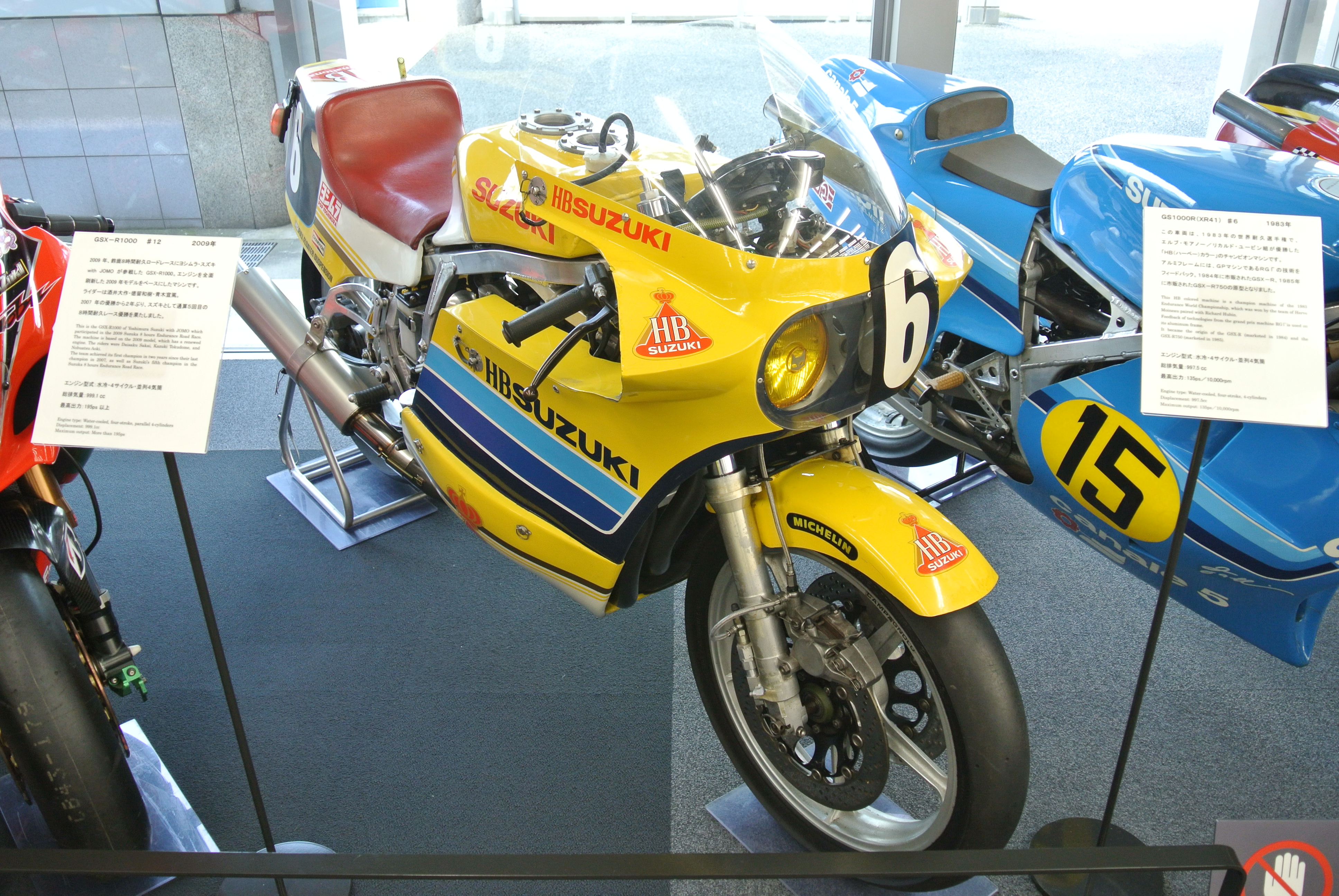
"...I know that their their Suzuka eight hour GS 1000R was like a big inspiration for like what they were trying to achieve. You know, in a smaller, more compact street friendly package..."
The Suzuki GS1000R is a motorcycle that was built for racing but also made for everyday use on the streets. It was known for being very fast and powerful.
The Suzuki GS1000R is a sport motorcycle known for its performance and racing pedigree. It was designed to be a competitive race bike while also being street-legal, which was a unique approach at the time.
Car
Honda That Honda
"...ed about was, I believe it was the 88 or 89 RC 30 that Honda introduced. And when you think about the fact tha..."
The Honda That's is a small car made by Honda that was popular in Japan. It's known for being practical and having a quirky design, making it stand out from other cars.
The Honda That's is a compact car produced by Honda, primarily for the Japanese market, known for its unique design and practicality. It is significant as a representation of Honda's innovative approach to small car design in the late 1980s.
"And that is something that has carried forward. Every manufacturer has done it. Homologation specials always have something cool about them."
Homologation specials are special cars made in small numbers so that car companies can use them in racing. They usually have cool features that make them better for racing.
Homologation specials are vehicles that are produced in limited numbers to meet specific regulations for racing. These cars often feature unique performance enhancements and are made available to the public to allow manufacturers to compete in motorsport events.
"...an engine to rev higher. So it went up to 13,000 RPM, more RPM typically leads to more horsepower."
RPM means how fast the engine is spinning. The faster it spins, the more power it can make, which is why higher RPMs are often better for performance.
RPM stands for revolutions per minute, a measure of how many times the engine's crankshaft makes a full rotation in one minute. Higher RPMs typically indicate that an engine can produce more power, as it allows for more fuel and air to be burned in a given time.
"... seeing now is not the sale of more penigales and R1s and GSX-Rs but the sale of bikes like the AIDAR,"
The Rivian R1S is a new electric SUV that runs on batteries instead of gas. It's built for outdoor adventures and has a lot of space inside, making it a popular choice for families who like to explore.
The Rivian R1S is an all-electric SUV designed for adventure and outdoor activities. It features a spacious interior, advanced technology, and impressive off-road capabilities, making it significant in the growing electric vehicle market.
Select text to request an explanation
Welcome back to another episode of Highside, Lowside.
I am joined today by my fill-in co-host, Ari Henning.
And we will be discussing the Suzuki GSX-R for a motorcycle icon.
Ari and I will start off with some marketplace finds on some great deals on Jixxers.
We're going to break down the good, the bad of what break feel actually means after
our historical look at the Suzuki.
And is it too early to talk about get on Adventure Fest in the summer and dream about
riding in warmer days?
Probably not.
But before we do any of that, how about a word from our sponsor, Motul.
Here at Highside, Lowside, we love all forms of two-wheel transportation, and that includes
you, scooter riders.
So whether you are just riding around town or maybe you've checked out that episode
of CTXP where Ari and Zack are ripping around a racetrack on a super scooter
that they built, and you've got aspirations to do the same thing.
We have got you covered because Motul has a full line of scooter lubricants.
That's right.
Whether you're rocking a two-stroke or a four-stroke, you can change your scooter's oil using a
quality Motul product.
You can learn more about all of the scooter oil over on RevZilla.com slash Motul.
That's RevZilla.com slash M-O-T-U-L.
And while you're over there on RevZilla.com, make sure you check out the RPM program.
It's the riders' preferred membership program now, only $39.99 a year.
You get all kinds of discounts on motorcycle gear and apparel.
You get $15 for just signing up, free two-day shipping, concierge service, and it works
across all of RevZilla's sister brands.
That means J&P Cycles, Cycle Gear, RevZilla, and RevR to learn more about all the
benefits of the RPM program, head over to RevZilla.com slash RPM.
That's RevZilla.com slash RPM.
Now, on with the show.
All right.
Well, Ari Heading, welcome to the podcast, filling in for our Out of Commission co-host,
Zach Quartz today.
Welcome, and thank you for joining us.
Happy to join you filling in, quite literally, sitting in the buttocks divots of Zachary's
chair.
So these are literally big shoes to fill, not only in terms of a seat, but in terms
of hosting highside with you.
Yeah.
We've been a guest many times, so I'm excited to have you as my honorable
co-host.
For those of you that are constantly peppering in questions about Zach, at the
time of recording this, it is just before the Christmas holiday.
At the time you're listening to this, it'll be into the new year of 2026.
Zach is still recovering.
He is healing nicely at home, and we are hoping to have him back at his desk sometime
shortly into the new year.
But I just want to say again, he is reading all the kind messages that you have
been sending in, and he is very excited to get back to not only his highside,
lowside seat, but I think just back to a little bit of life as normal.
Would you say that's about accurate, Ari?
Yeah.
I mean, injuries are awful.
We've all experienced them to some degree, and yeah, this is an unfortunate one
for Zach, but the well wishes certainly mean a lot.
And I know he's going to be back as soon as he can.
So I know that we're talking to you, a highside, lowside audience, a little bit
in the future, but for you, Mr. Henning, any exciting upcoming plans for your
holiday break at all?
Oh, well, probably going to be trying to get out and ride my off-road bike.
Winter is an excellent time to ride here in Southern California.
The bastard.
Yeah, we get rain, and then the desert is so good, the dust is down,
and things are growing, so it's riding season.
And yeah, just spending time with the family, kind of laying low, enjoying the
crisp mornings followed by sunshine and seven degrees, as it always is here
in Southern California.
So nothing major, just trying to get on two wheels.
What about you?
I do not live in Southern California, and I do not do a lot of riding, but I did
get, and maybe we'll talk about this at a different point in the podcast.
But Matt Oxley sent me a copy of his new book, which is all about Mark Marquez.
Mark the Magnificent.
You're looking for a little post-holiday reading, and you're not in some place like
Ari Henning, where you can ride all winter long.
You can check out a copy of Mark the Magnificent by Matt Oxley.
This is my holiday plans for what we got going on, just kind of a little bit of relaxation,
and not doing too much of anything, but maybe catching up on some reading.
Yeah, sure it'll be a great read with some awesome photos.
So that's a great segue.
Speaking of a great read with awesome photos, what Ari and I have planned to kick off this
episode is a little bit of fun Suzuki action.
So this is going to be the Moto Icons episode.
We've done this in the past, and this is actually our third motorcycle Icons episode,
and it's actually our second Suzuki.
This is going to be an episode about the Suzuki GSX-R 750 specifically.
Some of you may have heard of it.
Yeah, we'll talk about ancillarily, I'm sure, some of the other GSXR variants, but I think
the kind of focus is going to be on the 750 and how that revolutionized sport bikes
and really what that kind of turned into.
We'll get a little bit more into that intro in a minute, but we wanted to kick things
off with some online finds.
And so Ari and I were challenged by producer Chase to find our favorite ad for a Suzuki
for sale, a GSXR 750.
So Ari, guest honors, guest hose honors, what is your find?
Prolific on the used market.
And because the bike has been around for so gosh darn long, there are so many options.
But yeah, I found I went back in time because I am a rider who enjoys a classic bike.
I found a listing for a 1987, excuse me, yes, 87 second year GSXR 750 here in Los Angeles.
It's got a really crappy POV of them starting it and it sounding like it runs reasonably
well, but it's all there.
It looks fully intact and it just absolutely tugs at my heartstrings for like a full
on DT1 CT 90 style restoration on it because it's a it's a survivor.
Everything works perfect, 15,000 miles, lots of extra parts, come grab it says the ad.
Ari, the one thing I'm noticing here as I flip through your photos is that can you can you
describe to the audience the rear tire is on this bike?
Yeah, well, here's the thing is the bike ran 18 inch rims, which are currently hard
to find.
And most commonly you find an 18 inch rim on the rear of a modern ADV bike.
So it looks as though this motorcycle has a TKC 70 on it, maybe something which is not
quite appropriate for a sport bike, but it is only a 160 60 rear.
So that's like the same size tire that you get on an SV 650, which just kind of goes
to show how far we've moved along.
But it's it's $6,000, which I feel like there's definitely room to negotiate.
However, it still seems like a reasonable price.
And if 15,000 miles is accurate, then that motor is presumably in great condition.
And I did follow up with the seller to see what the extras are.
He said there's an extra gas tank and some turn signals, which is good because it doesn't
look like the turn signals on the bike are original.
Well, that is interesting in the fact that, you know, even if you wanted to, you know,
buy the bike, talk them down a little bit and then sell the gas tank, you probably
got a few hundred bucks back just selling off the gas tank if you wanted to.
Yeah, yeah.
But it's a it's pretty cool to see a bike that's that old available and complete
and for what I would say is a reasonable price.
Well, I I did not go as far back as as you did.
And I certainly did not go as far as to reaching out to my seller.
But I think I think that's a I think that's a cool pick.
You'll you'll the dear audience, you will find as we get into this episode
that 85 was the first year of the GSXR 750.
I'm interested, though, like I don't was 84 was the first year in North America,
correct? No, no, 86 was the first year in North America.
It was introduced to the clone show in 84.
It didn't hit the I believe European markets first in 85.
So then what year is this one that the ad what year is yours then for this ad?
87. So technically second year in the US market.
OK. And I think it was it was pretty much unchanged,
like the bodywork is different or excuse me, it's the same slab side,
like the flat sided fairing.
The colorway is slightly different from the first year 86.
Well, let's not we'll get it.
Don't worry, dear audience, we'll get into all of those specific
details here in a minute.
However, my I have two picks.
One is a cheater because it already sold.
But if you click on if you click on the link there,
my first pick from bring a trailer is a 787 mile.
Ninety ninety three GSXR 750
fully restored with the crazy purple colorway.
For those of you listening, this is just full on 90s colorway.
It is it is three shades of purple with the lightning splash down the side
in a fainter purple and the wheels are purple.
It is just screaming frosted tips and white.
It was funny when I was doing the course of my research,
one of the I went back and I was reading old articles and they have
they have the archives up on Cycle World and there was an article from
1993, which was a the new 750 cc superbike shootout.
And the the Jixxer 750 that was in that particular article was
not this identical bike, but it was this paint scheme, which was the loud purple.
And I think for me, there's something very special about like the early
to mid 90s era of sport bikes.
Like this is just so just in terms of the iconics.
Yeah, it's coming. It's coming back, right?
Like we see it in motocross and Kawasaki's got some anniversary
bikes that are rocking like late 80s, early 90s colorways.
Like I think it's cool. I'm happy to see it coming back.
But you also so that's a cheater because it's sold and it was restored.
You're not going out and buying that.
But what you said you had a runner up.
Yeah, this one did sell for sixteen thousand dollars.
So if you're if you're trying to find, you know, if you're trying to get
an idea of what it would cost you to get, you know, a restored,
you know, mint looking early 90s Jixxer 750,
that's kind of like the high end of what I think you'd probably expect to pay.
If you click on the link for the one that's not a cheater,
this is over on iconic motorbikes auctions.
I'll be selling this one.
This is this is a nineteen ninety seven Jixxer 750 for thirty seven hundred dollars.
And what I what I like about this one is, you know, when you get into like
nineteen ninety seven, this really starts getting up
into like a more modern era of the Jixxer.
And this is something that, you know, if I was looking at this bike,
I would be interested to buy this.
And, you know, use it at a local track day, you know, for under four grand.
You can grab you can grab this.
You can go out.
It's, you know, going to be a fun, a fun usable track bike.
It looks thrashed up.
Not what I would recommend, though, Spurgeon.
I would not recommend it based on scrolling through the listing
and it shows a date code of the tires from twenty nineteen
and the tank looks pretty rusty.
So you can make you can make some updates to it.
You can clean the tank out and put a set of new tires on.
But here's the thing is you can probably buy like a two thousand ten
Jixxer seven fifty for four thousand dollars.
This is this is bordering on like collector ask.
It's kind of in that no man's land of like the nineties when like the late
nineties when you're like, it's not old enough to be cool
and it's certainly not new enough to be fully modern.
It's a good find, Spurgeon.
I'm not trying to throw it out of the bus, but don't take this to the racetrack.
I think you could probably still enjoy a sporting ride with this motorcycle.
There's a generation of people that, you know, live with this bike on the on the
racetrack, maybe maybe not like, you know, go full hall hog on a on a modern course.
But like, I don't know, I feel like you have some fun.
And that's the that's the that's the generation.
Jixxer that Mladen won the first his first superbike title with.
And I mean, I think about all the fun that, you know, even watching
when I was down with with you and and Zach last year in Barbara
and, you know, looking at like something like this for, you know, vintage class,
you know, we're only, yeah, I mean, this is like this is eligible for vintage
class at this point. Right. That's so wild. Yeah, it is.
And you're right. If you if you threw some cash at it,
there's some tasteful updates, some technological stuff.
You'd probably have a lot of fun on that bike.
I think it depends on what this will end up going for over on iconic, right?
Like thirty thirty seven hundred bucks is what it's currently,
you know, asking, you know, whether it goes for that or not.
That's remains to be seen.
Well, the good news is if you're into GSXRs,
there is no shortage of bikes to leave through and decide
which one you spend your money on.
Yeah. And so if we were looking at this particular ad,
you'd be thinking to yourself, oh, that's that's a gen four Jixxer,
which, you know, really was revolutionary because of X, Y, Z.
And that X, Y, Z is what we're going to get into now in this discussion.
Hopefully, if nothing else, maybe our ads have inspired you to
hit up your local Facebook marketplace or check out,
bring a trailer or iconic motorbikes and see if there's anything out there
that piques your fancy for a post holiday gift for your own garage.
Yeah. If you're stuck in the cold winter and you can't ride like Spurge
and a lot of other people, then this is a great project.
You know, go go rescue some old Jixer and give it some TLC like we did
with old Dave, the 2005 that I'm sure we'll talk about later.
Crank up some episodes of Airy's shop manual and, you know,
figure out how to change those wheel bearings and make sure that the
the bike doesn't, you know, mousetrap you.
All right. We're already we're already getting so much into this.
I do want to start off by saying that, you know, as we talk about
these icon episodes, this is going to be a loose timeline.
There's going to be some fun facts thrown out.
But, you know, even as Ari and I were joking in pre-production,
you know, we started going really heavy into the notes.
And all of a sudden we're like, oh, my gosh, we're only we're only
like 10 years into this, you're like marking stuff down and you get
into like the third or fourth generation.
You're like, I still have 20 years of this timeline to cover.
It is. It spans many decades and we are by no means experts.
We have done research. We have lived experience.
I've actually ridden a lot of these bikes, including an original 85 and an 86.
But we are not experts.
So we might we might misstep a little bit, especially since there's
a lot of distinctions between the European market and the US market.
But there's a lot to talk about here.
And this is obviously a super significant motorcycle
that frankly, if you're into the two world world, this is an important
bike to know about because it had a huge impact on how motorcycles evolved.
So let's let's go ahead and kick things off right there, Mr. Henning.
So what is a Suzuki GSX dash R?
It is a sport bike that changed the sport bike world.
It was one of the first race bikes with lights.
And this is during an era when a lot of the Japanese manufacturers
were basically taking what we what we call UJMs,
universal Japanese motorcycle and making them a little bit more powerful
or hand a little better.
And they were calling that a sport bike.
Whereas when the GSXR came on the scene, it was actually focused
at the racetrack and it was focused at performance.
And it had a full fairing.
There were other bikes at the time that had full fairings.
Honda had the V45 Interceptor, which was a 750.
Kawasaki had what the GPZ 900 Ninja.
But these were like they were hugely heavy.
They were 500 pounds plus.
Yeah.
And so the GSXR, Suzuki did some things that totally changed
the tide of those sport bikes.
And I do want to specify that 750 at the time was the top of the charts.
That was what the World Endurance series used for their super bikes.
That's what AMA followed suit with, with the super bike class.
So nowadays, 750 seems like almost a middle weight.
But at the time, 750 was considered a super bike.
Yeah, it was it was 1983 for the AMA.
They they reduce the displacement limit from 1,000 cc down to 750 cc.
So this would have been the the premier class in AMA Superbike
when the bike was introduced in in 1984, 85.
Yeah. And when did this bike arrive, Spurge?
The Jixxer 750.
Correct. Yeah.
1984, as you mentioned earlier, it would debuted at the Colm
Motorcycle Show in Germany, which is now referred to as
Intermont. And then in 1985, it was released to the public in Europe.
And we got it in here in North America in 1986.
Yeah. And the reason in a nutshell, it was such a game changer
is that it was incredibly lightweight.
As I said before, bikes like the Interceptor, the FC750,
they weighed upwards of 500 pounds.
This bike weighed closer to 450.
So Suzuki put a lot of effort into making it lighter.
So it had 100 horsepower.
It had a lower curb weight than the other bikes.
One of the ways it got there is by using an aluminum chassis.
All the bikes preceding that were using steel, even the Interceptor.
Its frame was considered somewhat revolutionary
because it was square tube steel, but this was actually aluminum.
So it had dual disc front brakes.
It ran 18 inch wheels instead of the 1816 combo
that a lot of manufacturers were doing.
And yeah, it had like the full slab side bodywork
that's now iconic in the dual headlights.
And I actually reached out to a friend of mine, Kent Kunisugu,
who was around when this bike was launched
and was the editor at Sport Rider for years and asked him about it.
And yeah, he's just said that the difference in performance on track
was night and day compared to the competition.
And it all boiled down to that weight difference
and how that 100 horsepower was able to accelerate the bike
and allow it to go through corners so much faster than the other motorcycles.
Yeah, that's I mean, when we're talking about
some of the stories from this time, you know,
one of the one of the articles that I had found when I was doing research
was a previous colleague of Ari, as well as myself
and a damn good motorcycle journalist, Mark Cook.
He had actually written an article for us on Common Tread.
That was an excerpt from a book that he published, I think, in 2005,
which was a historical look back on the GSXR line at that time.
And he had done an interview with the
the engineer at Suzuki, who was considered pretty much the father of the GSXR line.
And that's Itosu Itosu.
At Suo.
Is it Ito? At Suo.
At Suo, you got to pronounce the S.
Itosu. At Suo.
At Suo, OK. At Suo, Yokochi.
That's a hard one.
Yokochi, Mr. Yokochi.
But one of the one of the things that I really liked about the story was,
you know, he went in and he was looking at the bike that they were building at the time.
He was looking at the engine and he said, let's take.
I want you I want you to take the engine out of the bike.
And I want us to look at all the parts that are worn out.
And I want you to take all the parts that are worn out.
And I want you to, you know, mark them in blue or mark them in red.
And if the parts are still, you know, operating, I want you to mark it in blue.
And what they found was most of the parts were marked in blue.
And he said, see, as an engineer, you know, I think the quote was,
when we brought all the parts together, they were almost all blue.
We're building the bikes too well.
Yeah, almost nothing broke. Yeah.
And as an engineer, this is wasteful.
We have become too conservative.
And that was really kind of the mindset,
especially with Suzuki at the time, they were only like one fourth
the size of Honda and they were just a very conservative manufacturer.
And they were trying to shake that reputation of like post war,
you know, junk being produced in Japan.
So they were overbuilding these bikes.
And his whole theory was, no, like we need we need to make them lighter.
And, you know, we need to make them, you know, more powerful
and worry about breaking parts less.
Yeah. And Yokuchi-san was also a big fan of making bikes lighter
and preceding the GSXR 750.
They had built the RG250 and 83, which was a two stroke and the GSXR
four hundred and eighty four, which had an aluminum frame.
And so they had already practiced with increasing performance by reducing weight.
And that was the philosophy they brought forward into this new bike,
the GSXR 750 that was going to enable it to outperform the competition.
And another thing that they did, aside from the aluminum frame,
is they didn't go liquid cooled.
Honda, Yamaha and Kawasaki all had liquid cooling,
which adds a lot of weight and complexity.
One of the, frankly, traditional, but also revolutionary ways they approached this
was to have it be air oil cooled.
So the motor actually has four quarts of oil, which is a lot of oil.
And it was the whole, what do they call it?
The Saks, the Suzuki Advanced Cooling System,
where they had a two chamber oil pump, a high pressure pump
for lubricating like the Conrad and the transmission
and the low pressure one that pushed oil through the cooling array.
So it had a big radiator for the oil.
So it kind of looked liquid cool, but it was using oil.
And then it also had oil jets squirting on the underside of the piston
to remove heat from the combustion chamber in the piston,
which is technology that was originally pioneered like World War Two
with radial engines and is frankly something that almost every motorcycle
uses today because it's so effective.
Interesting. And this is all in 1985, like 40 years ago.
Yeah. Well, I know I remember one of the things that I read was part
of the reason, too, was that Suzuki's casting abilities were limited at the time
and it would have just been so expensive that it would have been
prohibitively expensive to even think about adding liquid cooling
during the development of this.
Yeah. And it worked.
I mean, that the conversation I had with Kent Kunatsuku
who's telling me that like back in the day, the oil cooling worked well
until you got to 150 horsepower.
And my mind is just boggled to think that they were modifying these engines
up to 150 horsepower. It made a hundred.
It made a hundred stock.
So increasing that by 50 percent is remarkable.
And were they when when you say they were doing that, was that like the race teams
at the time? Yeah, that was like Yoshimura.
Yoshimura. Yeah.
But but yeah, so all of this technology rolled into a motorcycle
that was debuted in the US market in 86.
And at that point, it had already been in the European
and I believe Australian markets since 85.
So by the time it got here, people had read the reviews.
They had heard about it and it just sold like crazy.
I mean, this became the sport bike because it was so much better
than anything else you could buy.
It was immediately successful in racing.
Very popular at the club level and professional level.
And yeah, it's it's hard to put into context now how seismic that was
because back in this era, the technological jumps were so much larger
than what we see today. Yeah.
But to have a motorcycle that is suddenly that much better than everything else
kind of blows everyone's hair back in a big way.
Well, you said it earlier and I want to just kind of stress it again.
It was like the mindset from this from the get go was that
they wanted to build a race bike with headlights, right?
Like they wanted to build something for the street.
You know, I know that their their Suzuka eight hour GS 1000R
was like a big inspiration for like what they were trying to achieve.
You know, in a smaller, more compact street friendly package.
But like no one was doing that at the time.
Like even when you know, you talked about the the Ninja 900
that everybody knows from Top Gun, but that wasn't.
I mean, that was a bike that was heavy and big. Yes, it had 100 plus.
Yeah. How about the fact that like the V 45 interceptor
that was winning AMA Superbike titles, that exact same engine
was in the saber was in a cruiser.
Like that gives you an idea of kind of like how how leggy these parts were
where it was like imagine having whatever an R one engine
or a Pentagon engine in like a recumbent cruiser now.
Like it's just that we've grown, we've become so specialized,
whereas in this area, it was still a lot of universal applications.
It was interesting, Zach and I were talking before his crash.
We were doing some some pre-work for this upcoming high side season.
And one of the bikes that we had talked about was,
I believe it was the 88 or 89 RC 30 that Honda introduced.
And when you think about the fact that like this bike
predated that machine by three to four years,
you know, it's it's amazing to see what Suzuki did
and how it left everybody else scrambling to catch up, you know,
in real time. And to your point, it was a really exciting time
in sport bikes because, you know, changes were coming so rapidly.
And Suzuki would release a bike and then Honda would answer
or Yamaha would answer or Kawasaki would answer.
And it was it was happening so quickly.
But to have Suzuki be the first to really throw the gauntlet down
with this motorcycle, especially considering
how small they really were by comparison.
I think the number that I found was Suzuki sales in 1981
were 500 billion yen, which wasn't even
a quarter of what Honda was was doing at the time.
So like it was just they were so small by comparison.
And that was really, you know, part of what I think led to the lore
of of this first generation GSXR 750.
I want to pause for one second because, you know, we kind of we kind of jump
right into like, what is this Suzuki GSXR to, you know, back to the beginning?
And I think that that's OK.
But one of the things that I always found interesting was,
you know, I was working at a dealership.
It would have been around 2011 or 2012.
And I had a young kid come in and he said, you know, I want to buy a Jixxer.
And I said, well, we don't sell Suzuki.
We sold Kawasaki and Honda and Triumph.
And and he said, well, I want to buy it.
I want to buy a GSXR.
And I was more GBs.
Well, I was like, well, we don't we don't have that.
I don't sell that brand.
And he goes, no, you have one right there on the floor.
Like that's that's the bike I want to buy.
And he pointed at a Ninja 636 at the time.
And I was like, oh, you just want to buy a sport bike.
He just has a paradigm of a sport bike.
And in his mind, a Jixxer was a sport bike.
And I think it's just an interesting story because it's it was the name was
so synonymous, somebody said, just go get a Jixxer.
And what they were referring to was just a sport bike in general.
Yeah, that's why I think that's so important in like, what is this?
Suzuki GSXR.
I mean, over the past, you know, what, 35 years, 40, 40 years,
it's become synonymous with sport bike.
Yeah, indeed.
And it's fun to kind of explore why that is.
And there are so many generations.
Like you said, it's been around since 85.
It is still in Suzuki's lineup today, the 600, the 750 and the 1000.
So this is an extremely long running model
that's obviously evolved a lot over the years.
So we've got a timeline with some milestones.
We're not going to go over it granularly, necessarily year by year,
probably front loaded toward the 80s and 90s, because that's when things
were changing the fastest, but there's a lot to talk about.
And there's stuff like the slabby that you might have heard of,
the slingshot model that you might have heard of, the SRAD model.
We want to explain all of that so you can kind of have an understanding
of this iconic motorcycle, because frankly, it should be, you know,
it's part of foundational knowledge for anyone who's really into bikes,
because it plays such a crucial role in the sport bike lineage,
which is such a big part of the market and in the world of motorcycling today.
I'm realizing that, you know, it's almost like we timed this perfectly
because the bike was introduced in 1986 in North America.
And this episode will go out at the very start of 2026.
So it's it's almost like we intentionally picked the 40th anniversary.
But we didn't. We picked this earlier this week.
Erie, so I know that we hit on a lot of the the core facts with the first gen there.
But just from an aesthetic standpoint,
you know, what what stands out to you with like this first this first generation?
1985, 86, she has 6R 750.
Yeah, well, full bodywork first and foremost, which doesn't necessarily
follow the form fact that we're used to seeing today.
But it was pretty revolutionary then and clearly spoke to the fact that it was
meant to be a performance race bike.
This one's called the slabby the slab side because the fairings are so flat on the side.
And it does have a bench seat.
So, you know, there's some semblance of the kind of UGM approach.
But I remember I wrote an 85 in Australia.
We actually borrowed one out of a museum and I wrote it on the Great Ocean Road
for an episode, Zach, and I did back in like 2017.
And I just remember so distinctly the cockpit being so race bike.
It had this like thin steel support structure for the fairing and then the
tachometer and the speedometer.
And I think it had like a maybe a gas gauge or a temp gauge were in a foam surround.
So like not in a plastic framework or anything.
It was literally this like foam, which obviously at the time was like kind
of degraded, but like that is so race bike and then it's got this hose that
runs from this kind of hump on the top of the gas tank down into the frame as
events and like the whole, the whole perspective from the cockpit of like
these these clip ons, which were, which were kind of new in the day.
And the foams around on the gauges and that fuel line.
I mean, that's that just screams race bike.
Like if you get on a modern race bike, that is kind of the perspective you have.
So that's something that really stands out in my mind.
And something else is the ergonomics, which I can only describe as absurd.
Like you sit so deep in this motorcycle.
There is no perching up on it.
Like you're down, the tank is like way up in front of you.
And then the clip ons, I remember it was just such a long reach to the handlebars.
It is a very bizarre rider triangle that
was considered extreme at the time for some reason.
And now I would only say it's extreme because of how awkward it is.
But yeah, those are the two things that stand out for me was the cockpit.
And then just the ergos when you when you and I was trying to I was trying
to find the article because I think you or Zach actually wrote the article
for Common Tread when you were in Australia riding that bike.
I should dig that up.
Yeah, I know that was that was on that was back.
That was on two wheels.
That was pre.
Oh, was it? Yeah.
That was a long time ago.
I think that was twenty seventeen.
Yeah, it was twenty seventeen.
Because Zach went to Phillip Island to ride the twenty seventeen.
That was the first one with variable valve timing.
And then we parlayed that into a onto wheels episode.
We pulled an eighty five out of a local museum.
I remember you guys eating a Vegemite for the first time in that episode.
So yeah, I have a distinct memory of that.
And I I spread it with my pocket knife with which many people informed me via
the comments had a blade that made it illegal in Australia.
Well, so I'm an outlaw.
What when you when you think about like, you know, that bike and it was interesting.
One of the things that I was reading about was you had mentioned the foam
backing for the cage clusters, but like it speaks.
It speaks to like everything factored in to cutting weight, right?
Like they literally wanted they wanted a speedo attack and a fuel gauge.
And that was all that they wanted, you know, and they wanted to put it in foam
so it cut down on weight.
You know, I was reading that the frame for this bike itself weighed only 18 pounds.
It was five different cast pieces that they welded together.
And that was revolutionary at the time.
But for yourself, you know, what was revolutionary in nineteen eighty five
versus riding it side by side with something from two thousand seventeen.
You know, how did how did that hold up over that span?
Do you remember riding them side by side?
Yeah, I didn't ride the modern bike, but obviously I had plenty of seat time
in modern bikes at that point.
I remember the brakes were terrible, but that could be attributed to like bad
seals, old fluid, bad pads, actually rode in eighty six on the track.
A restored eighty six on the track in Fontana.
And I think we've got some video.
There's some video of that somewhere.
And I remember it was a lot of fun.
I had modern tires on it, had upgraded brakes, had rebuilt suspension
and it worked very well.
It was a super linear engine.
Motor is really smooth compared to what we're used to now, although I will say
sport bikes have kind of evolved back toward a broadband, a broader power band
as opposed to being peakier, but it had great power only revved to like,
I think eleven or twelve thousand.
I was it was on a barb bike, so I wasn't exactly making it scream.
But one thing that stands out that I'm remembering now is the smell.
It is an air oil cooled bike.
So there was just this aroma of hot vaporized oil and hot paint and a lot
of engine heat coming up off of you that you just don't get on a modern bike
because they're liquid cooled and they've got ducting and they do such a good
job with channeling that hot air away from the engine and the rider.
But back, you know, on the older bikes, you're basically just sitting
on this huge lump of heat soaked aluminum that's radiating heat,
but also very nostalgic aromas.
Well, it's interesting.
You had mentioned you had mentioned, you know, how it felt.
And maybe I miss maybe I'm missing this.
You said it felt a little bit more relaxed than like a modern sport bike.
Yeah, kind of.
I don't relax isn't the word.
It's just awkward because of the seat to peg distance was so low and you're
sitting way down in the chassis on the seat and the tank goes way up high
in front of you and then you're reaching so far forward to the clip
on.
It's just a I guess they were trying to get almost a little bit recumbent
on the chassis to some degree.
We've we've evolved more toward sitting on top of the bike where your weight
is much higher behind the seat or excuse me, behind the tank.
So that's something that stood out is just how how low you sat.
And maybe, you know, it was it was ancient seat feel.
Maybe it had compressed several inches in its in the years.
Yeah. No, I mean, it's it happens.
No, I was trying to find.
So I know one of the things that I had read about the original 85
was that, you know, with 26 degrees of rake and 4.2 inches of trail, that it was,
you know, it was a pretty steep and aggressive, you know, rake and trail.
Angle at that time.
And I was trying to find like how that compares to like a modern and like that
information isn't even on I'm on Suzuki's website right now and I'm having
trouble even finding they're not listing it.
It's I'm pretty pretty standard stuff.
Trail typically falls around four inches between 3.9 and 4.2.
And then rake.
Yeah, it varies, it varies between manufacturers.
But yeah, you're not going to get a lot steeper than like 20.
I think the maybe the new R9 has an incredibly steep head angle that I'm
recalling is like 24, 5 or 25, 5.
But in any case, I mean, that's those are factors to look at.
But you also have to look at wheel base.
You have to look at wheel size, 18 inch wheels like center of gravity on this
thing. Like there's a lot of things.
It handled well stability.
It certainly had in spades and linear power.
So when I wrote it at Fontana, when I wrote at the Great Ocean Road,
certainly enjoyable to ride.
I also rode I rode a limited version.
I think it was called the SE a collector bike for the 25th anniversary article.
I did it motorcyclist and that was the one that was like the homologation
special that had the dry clutch flats like carburetors, close ratio, six speed.
And that was awesome.
I got to ride it on GMR and I just had a blast.
It was super fun.
I remember it like power wheeling out of some corners in first gear.
So give give the audience.
So for each of these years, and maybe this is a good time to say like
we tried to do a good job of giving a little bit of a disclaimer in the beginning
that we're not experts on GSXRs.
And obviously the timelines here get a little bit fuzzy when we're talking
about like when the bike was released to the rest of the world versus when we
got at the United States.
But with each of these additions,
did they did not each year get some kind of a homologated special?
Maybe the generations got homologated specials.
And for those of you that aren't savvy with racing,
a homologation special is a quantity of a motorcycle that a manufacturer has
to produce and send to a market to make it eligible for production racing in that market.
So Suzuki built, I think it was the 87 750 R.
Yeah, that's what it was.
No, 86.
And I think they had to send like 200 of them to America so that it could
be considered publicly available so that then the race teams could use
that bike in production racing.
And that is something that has carried forward.
Every manufacturer has done it.
Homologation specials always have something cool about them,
whether it's whatever forged connecting rods or magnesium engine cases or a dry clutch.
It's always like allows the race teams to then utilize that part without it
being like a special part.
Cool, cool.
And so that was when you say that that's the one you got to ride.
You got to ride one of those limited edition ones.
Yeah, I got to ride a limited edition one that belongs to a collector in
Southern California.
It was originally owned by a mechanic at Yoshimura.
And yeah, it had the dry clutch, the closer ratio.
What else does it have?
It had like magnesium side covers, had a quick release body work.
Yeah, it was a beautiful bike.
So, Eric, you're providing us with great segues today because Yoshimura is
a great segue to the second generation GSXR 750, which would have been
introduced around 1988, give or take the country you're living in.
And really the story here is that as this as this bike gets into the late 80s,
thanks in no small part to Yoshimura Suzuki,
they start chipping away at Honda's dominance.
I think it was starting in like 1983 or 1982.
Honda won like five years in a row with the Interceptor AMA Superbike.
And so now, all of a sudden, when you get into 87 and 88,
you have Suzuki actually winning more races than Honda was at the time.
And that's because of the partnership with Yoshimura.
Yeah, they had a lot of engineering prowess.
They were here in Southern California.
They worked closely with Suzuki up until not that long ago.
And so that to put a to put a bow on it, that first generation was 85
in the European markets through 87.
And that was what was called the slabby the slab side because of the style
of the fairing being very flat.
And then as we get into the second generation, 88 through 91,
there are quite a few changes.
These are the early years of this bike.
They're making big changes.
This one is what's called the slingshot.
And that refers to the carburetor slides that had a profile that was flat
on the front and kind of tapered on the back.
So like if you looked at it from above, it was a slingshot shape.
It was totally marketing ploy to talk about how like it slingshotted gas
into the engine, whatever it stuck.
And these were these were Makuni carburetors, correct?
Correct. Yeah.
People still know this generation as the slingshot.
So that literally just refers to the carburetors, which is silly that
that's what's it's become known for.
But it was and the whole point there was that it was like more optimized
power across the whole rev range was what the carburetors were claiming.
Is that more more gas equals more power?
That's all we know, Spurgeon.
OK, but it had this engine had a shorter stroke, shorter stroke allows
an engine to rev higher.
So it went up to 13,000 RPM, more RPM typically leads to more horsepower.
So we're leaning more toward an engine that's very much top focus
with the power band and had new bodywork.
It was still pretty angular, still had that like sloping graphic
that was kind of quintessential late 80s.
I think some of the later models in this generation had inverted
forks for some markets.
And I do know that it had 17 inch wheels, which all sport bikes have now.
Seventeen is the standard, but back in this era, it was still
like you could have a 16 inch front with an 18 inch rear or you could have
a set of 18s like the first generation Jixer did, or now we've moved on to 17s.
Yeah, I think that was one of the notes that I had here is like it's
probably often overlooked, but the the move to universal 17 inch rims
on sport bikes is something that I think we almost take for granted
at this point and entire selection is something we almost take for granted
at this point.
But this this generation in 1988 was the first to really issue
in that 17 inch front and back, which would ultimately become the standard
that we recognize now for sport bikes.
Yeah, and that's that's a good a good point to point out,
which is that a lot of the things we're seeing the GSXR present
in these early years are now completely ubiquitous in motorcycling.
Talk about aluminum twins bar frame.
We talked about 17 inch wheels.
Talk about dual disc.
I mean, it's this is this is the foundation.
This is we're watching the evolution of the little slimy lizard
come out of the swamp and turn into an alligator and then start walking
on two legs. It's really cool to see.
Well, you know, you mentioned the changes to the bore and stroke with the engine.
We're now going from the first gen, which was revolutionary
for hitting 100 horsepower and roughly 46 foot pounds of torque to
we're now up to 112 horsepower and 55 foot pounds of torque.
So a nice, you know, over over over 10 percent increase in power.
And like Ari said, it's now getting to be a little bit more of that,
that peaky in line for which I think people sometimes, you know,
think of when they're thinking of that in line for power.
And imagine if a bike that is common today suddenly had a 12 percent
increase in horsepower year over year, like these are huge steps.
Nowadays, the engines are getting bigger just to maintain horsepower
because of emissions and emissions was not a concern at this point.
The other thing to note here,
and this is going to be income a little bit more important later on,
is we are starting to slowly see that weight creep up.
Keep in mind that one of the things that was revolutionary,
you know, as Ari mentioned earlier, was that the first gen
had a dry weight of 388 pounds.
You know, so when you were looking at, you know, sans fluid,
it was it was under that 400 pound mark.
And we're now starting to see that creep up.
And and we'll we'll talk about it in later generations
when there's a drastic weight decrease again.
But with with some of these things that are changing,
one of the things that slightly starts to fall by the wayside
a little bit with Generation Two is that that tight stranglehold
on on keeping weight down.
Yeah, well said.
And then in 92 through 95, we move into the third generation
where once again, there's a pretty drastic change
in the bodywork style.
We're definitely fully 90s at this point with the the colorway
that we discussed before as well as my pick, baby.
That lots of other outrageous options.
But most importantly is we move on to liquid cooling,
which adds allows the engine to make more power
because you can carry the heat of combustion away,
but also adds weight.
So further to what Spurgeon was saying,
we're kind of getting that weight creep, but we're back up.
We're up to 118 horsepower.
So that means the top speed of close to 160 miles an hour,
which is like, I mean, in 1969, when Honda had the CB 750
and that thing could go close to 100, people were like,
your brain's not going to be able to handle the speed.
And now we're selling motorcycles that'll go 160.
It's bonkers.
Also the year that the GSXR 600 debuted,
which is essentially just a sleeves down version of the 750.
And it did very poorly and was very quickly discontinued.
They sort of swept that one under the rug,
but later the 600.
Oh, yeah, yeah.
Yeah, the 600, which will be more of a conversation later on.
One of the things that I think is really cool
and it will soon disappear as we talk about.
But the the first two generations,
something that's really unique on them in my mind
is that the round, the dual round headlights.
Yeah. And even as we get into this third gen,
there's there's now like as you're looking at the fairing change on this,
there's like a cover over the two round headlights,
but it kind of maintains the the two round headlight look,
even as it's becoming more aerodynamic in its approach.
And I think to me, it's something really classic
in that era of motorcycles from a sport bike design.
You know, I think it's something even as
fans of like the Triumph Street Triple and Speed Triple.
Yeah, tell you like they miss those old round headlight look.
Yeah, it is it is such a
it's such an anchor point in time, right, to see those twin headlights.
And it just gives a bike such a unique feel.
But yeah, you're right.
It starts to be enclosed in like a plexiglass cover
instead of just these lenses that are protruding from the fairing.
So one of the things that I did during this era for gen three
was I had gone back and this was what I was referencing earlier,
but I had found an article from the from the vaults over on Cycle World
where they did a comparison test between a ZX7 GSXR 750
and a Yamaha YZF 750.
And in fairness, the YZF 750 as they addressed in the article
was a homologated bike.
There was only, I think, like a small handful of them
that were brought into the country and they were extremely
expensive and unobtainium.
And like they even talked about in the article,
like they almost ruled that one out.
But, you know, to the point about the weight, you know,
they're adding liquid cooling.
They were a little bit, you know, disappointed
with like the overall bump in power that provided
given the increase in weight at the time.
And it was starting to not be as comparable, you know,
as something as like the ZX7.
Now, again, I'm going back and I'm using, you know, other reviewers,
you know, words from a from a time piece.
But it seemed like maybe the competition was starting to creep
up on Suzuki during the third generation.
And, you know, they almost seemed a bit more inspired
to develop something that would kind of strike back
and, you know, harken back to what was a little bit more
revolutionary with that first gen.
And I want to I want to shift into that fourth gen.
But this is probably a good little point in time to say
with that little suspenseful note, we can take a word
from our sponsor Motul.
There you are sitting at a red light.
The sun's out.
The wind in your face.
Does it get any better than this?
And then a good looking individual pulls up next to you.
They're on a bike, too.
And could it be?
Are they checking you out?
I think they are.
You rev your engine.
And they smile.
You give them a nod.
They give you a wink.
You're both on the same page.
It's about to happen.
The light turns green.
You shift into gear and bang.
Premature engine failure.
There's nothing more embarrassing and worse yet.
This could have all been avoided.
If only you'd regularly change your oil.
Don't let the starting line be your finish line.
If your bike is overdue for an oil change,
check out Motul's full line of synthetic
and semi-synthetic oils.
The best-selling engine oil at RevZilla.com.
Okay, so we are almost a generation four.
We've got 17-inch wheels.
We've got liquid cooling.
We are on inverted forks.
And in 1996, that is when Suzuki launches
the fourth generation known as the SRAD.
Once again, we've got a marketing term
that kind of identifies a motorcycle.
Can you tell us what it stands for 10 times fast?
SRAD, SRAD, SRAD, SRAD, SRAD.
It stands for Suzuki Ram Air Direct.
And so those are like little...
Suzuki Ram Air Direct.
Yes, they had the little openings
on the other side of the headlight.
And the idea was that when you're going real fast,
there's pressure at the front of the bike.
It forces the air into those ducts
and into the air box.
It essentially pressurizes the air box.
It's a passive way of doing turbo.
You're putting more pressure in.
You're essentially giving yourself a larger engine
without actually increasing displacement.
But I think from a historical standpoint,
it's these little things that look cool
and you look back and you can tell
how much it actually worked is one thing.
But to look back, it's cool
because you have these two snorkels
kind of coming in through the front of the fairing.
And it's a good place to stash your gloves
when you get to wherever you're going.
Or your friends can stick potatoes
or cans of Coke in there to screw with you.
Well, speaking of the power
and whether or not the Suzuki Ram Air Direct
had anything to do with it,
we went from roughly 118 horsepower in generation three
to we're now knocking on almost 130 horsepower.
I think the claims that I was seeing at the time
was 128 horsepower for generation four.
But really the story here isn't the increase in power
as much as it is the decrease in weight.
The engine, I know the focus was on like magnesium covers
and like shaving weight and size where it wasn't needed.
They basically shaved almost 40 pounds
of weight off the bike.
That's remarkable.
And it did have part of that was the frame.
So this is the first generation
to have a twin spar aluminum frame,
which again is ubiquitous in sport bikes today,
unless you're talking about penigallis and stuff,
but that is-
Can you paint a picture for the audience
as to what a twin spar frame is?
Yes.
So a modern twin spar frame wraps over
and around the engine.
You have these two big frame tubes
that basically go back and around the top of the engine
and the engine is used as a stress member.
The preceding generation had,
I believe it was called a double crater
or a duplex frame where the frame rails,
they were aluminum,
went down and under the engine and supported it.
So a twin spar frame is lighter.
It's got some rigidity benefits,
utilizes the engine as a beam
to help support the rest of the chassis.
And that is what all motorcycles
moving forward from this point had.
It is just a very functional design.
It's also lighter.
And I think on this generation,
that style frame was derived
from Suzuki's Grand Prix bike, the RG500.
It utilized a twin spar frame.
So this is another example of that trickle down effect
from factories racing at the world level
and then taking the technology
they have developed there in prototype bikes
and bringing it to production on street bikes.
It's funny, I think it bears mender for the audience
that part of the pre-production for this
was Ari went off into his dark hole of research
and I went off into my dark hole of research
and we came back and we didn't really compare notes
before this, but I actually think it's interesting
with some of the overlap of what we found
and then also some of the unique standalone stuff.
But one of the things that I thought was interesting
was the whole discussion up until this point
was really around AMA super bike
and kind of going after that.
But now all of a sudden, like you said,
you're starting to see the MotoGP trickle down into this.
And this was really the first time
that I saw some of that technology,
at least in my research,
playing a role in this particular design.
Yep, and that was, excuse me,
other notable updates, significant updates
for the fourth generation or that it went to EFI.
So it abandoned carburetors and got fuel injection.
That wasn't right away, that wasn't until 98.
Correct, it wasn't until later in 98, I believe.
No, 99 was the first year that Matt Muladden,
the Australian racer, won the first
of I think seven super bike titles on a Suzuki.
And 97 was also the year
they reintroduced the GSXR 600
that they had briefly had in the earlier 90s.
And that was because super sport racing
had become popular, the 600 class had become popular.
So Suzuki was creating a bike for that.
And we're also at the forefront,
or I guess we're knocking on the door of
the split between 600 and 1000
with 750 running down the middle.
And when are like, we're still wanting,
with generation four, the 750 class is still
the premier class for AMAs super bike.
It's still super bike, correct?
Yeah, yeah.
Okay, so that's why, when we're looking at generation four,
generation four was really kind of like in some ways
that really last era of like the significant,
750s before from an AMAs super bike standpoint,
it went back up to the 1000s.
Yeah, and it's worth pointing out
that fourth generation was
when Suzuki started having success again
because there was a lull in the third generation
and I believe the second part of the second generation,
where as you said before,
the other manufacturers, Honda, Kawasaki, Yamaha
had bikes that were competitive and successful.
So this is when Suzuki reinvents the bike,
updates it and starts having a lot of success
in American and international racing again.
I was reading an article.
If nothing else, I love these episodes
because it gives me an excuse to like lock myself
in my office for hours and just like go back
and reread all this old literature
that's littered all over the internet.
And it's amazing to me, the archives
that you can kind of find.
But I was reading a thing that said
that the generation four GSXR 750 was considered
nearly as revolutionary as the 1985 machine
with what it kind of brought back to the forefront.
You're looking at now it has a dry weight of 395 pounds,
which is the first time I believe it dipped back
under 400 pounds since it was introduced.
It was something where you start to see,
like you mentioned, fuel injection is added,
power is up to almost 130 horsepower.
It's winning again, the new frame.
All of these things kind of came together
at a time when maybe the competition
had caught up to where Suzuki was
and then they came out with the gen four bike.
Yeah, it's pretty amazing.
And from an aesthetic perspective,
this bike is like super bulbous.
It's got like the big round tail section
and the big round fairing and the big tank.
It is a distinct aesthetic kind of an evolution
into the moderate.
It still has like the two headlights
behind like the plexiglass,
but we're getting into that era of big bodied sport bikes
where the fairings are getting larger.
And it starts to almost, it's funny,
like if you look at a series of pictures of them
from back to back, the gen four and gen five
are probably the two more of the bulbous eras
before it starts to get a little bit more,
what do you say, aggressive and it gets its style
and aerodynamic look, would that be about correct?
Yeah, they start, I believe in 2000,
they do a total redesign where
they kind of reverse course a little bit,
becomes more of the modern look that we're used to.
They kind of streamline it, reduce frontal area,
make it narrower, make it more angular.
The headlight drops down to a single kind of diamond shape.
Some people, it's not a super popular nickname,
but some people call this the Superman bike
because it's kind of the shape of Superman's S on his chest.
So we've lost the two headlights.
We've gone to a single headlight,
which is way more identifiable with the modern bikes.
And I would say that this is where we transition
from the classic era to the modern era.
It's also the following year, 2001,
when the GSXR 1000 is introduced.
And that is where the story sort of,
at least from my perspective,
changes course a little bit from the lineage of the 750
to what the 750 spawned for Suzuki,
which is a class to race in the production Superbike class,
which is now 1000 CC,
as well as the smaller 600 to race in Supersport.
So it just, we're throwing a lot of numbers
at you dear audience.
We're throwing a lot at you guys.
So really the generation four,
which ran from roughly 96 to 99,
was really the last of the original classic GSXR 750s.
I would say you could probably think of that
as a turning point, right?
And the generation four comes back strong.
It reverses course on what we were seeing as a little bit.
I don't want to say the downturn of generation three,
but Suzuki's return to glory with what it's doing
with improved power, reduced weight, new technologies.
And it really is a great way
to kind of wrap up that part of the story.
And then when you get into 2000 to 2001,
we're now looking at gen five.
And this is where everything starts to move really quickly
because right around 2000 was when Suzuki basically said,
we're no longer gonna do major updates every 48 months.
We're gonna do major updates every 24 months.
So instead of doing them every four years,
we're not gonna do them every two years.
And because of that, the changes are less revolutionary
and they're more just, you know,
they're more incremental.
Updates along the way, yeah, incremental.
Yeah, and applying new technologies as they come about.
But that 2001, the first year, the Jackson 1000,
I mean, you're talking about a 988cc bike
that's only 10 pounds heavier than the 750
and a lot faster.
It's making 160 horsepower.
So the racing regulations at the time
switched from 750cc for the endurance
and super bike classes to 1000cc for super bike.
So that is why the manufacturers followed suit.
They followed the displacement rules.
While at the same time, as I said,
the 600 supersport class is becoming popular.
So Suzuki is disincentivized to invest in the 750
and incentivize to work on the 600 and the 1000.
But the 750 continues and is still a popular bike.
I mean, it's still popular to this day.
It's raised in next gen supersport with Moto America.
But the story is not over because,
I don't know if you'll agree with this, Spurgeon,
but I think the focus now shifts to the Jix or Thao
because that's the evolution of the lineage
and the bike that becomes more popular.
It's interesting when you think about the fact
that Suzuki didn't just discontinue the 750.
It's still, you can still buy one.
You can go to a dealership right now and buy one.
And it has badass anniversary bodywork.
So I think in a day and an age where manufacturers
are quick to say, well, we're just gonna give you
a bigger bike and we're gonna get rid of the old one
and we're just gonna out with the old and with the new.
You go from the 750 to the introduction of the 1000.
And now you have three bikes to choose from.
And to Ari's point about like,
it's only, would you say, 11 pounds heavier?
10 pounds heavier is what the article of time said.
And then the same thing goes with the 600.
If you're looking at the 600 versus the 750,
the 750 is only five pounds heavier than the 600.
So these bikes really were so close in what the weight was,
but now all of a sudden you're looking at
some pretty monumental power differences
in what they're putting down
and also how that power is being delivered.
And I would say, Ari, if you wanna take the shift
from this standpoint on of the gen five,
and shift over to the 1000s,
Dave the Jixer comes to mind, right?
Like Dave the Jixer that you raced against
a modern De Ducati was from this same era, was it not?
Yeah, I mean, so 2005, they redesigned the Jixer Thou.
So the engine got 11 cc's larger.
So it was a proper 999 cc engine.
It also got a slipper clutch.
It got dual injectors, really strong mid-range and top end.
And this is what's known as the K5.
So that's like we talked about.
We had the slab side, we had the sling shots,
we had the SRAD, this is known as the K5.
K stands for 2005, stands for the actual year
of that decade.
So all we're talking about is the 2005 GSXR,
but that's what it's become known as.
And many people consider that the high watermark
of not only the GSXR lineup,
but of super bikes in general, of 1000 cc bikes,
because we're at a point where weight,
power and technology have come a long way,
but bikes have not been hemmed in and strangled by emissions,
which become increasingly restrictive
and cause bikes to basically add weight.
So the K5, really famous for its incredible mid-range,
it's an incredible top end, fantastic handling.
And as Spurgeon mentioned,
Zach and I for an episode of CTXP,
we dredged up a K5, affectionately known as
Dave the Jixer, Dave because he took on Goliath,
the Pentagon, and if you haven't seen that episode,
it's super fun.
It's a rare instance where Zach and I
are genuinely confused, but I got to ride the bike.
I'd never ridden a K5 before.
And like granted, we rebuilt the fork
and we put a fresh shock on it and new tires,
I put new head bearings, like refreshing the thing up.
It's got 55,000 miles on it, but it was awesome.
It was so much fun, especially having ridden
so many modern bikes that have all these like
technical features like quick shifters
and traction control to ride a completely analog bike
that works so well.
I mean, it's still, it's a high water point for me
in riding motorcycles because like managing rear tire spin
and like riding a bike where it's you and the machine.
And that's separate.
That's an impression having ridden modern bikes,
but even taking in and of itself
without that framework of comparison
to modern motorcycles, it's a fantastic bike.
It genuinely is like all the hype is real.
The K5 Jixer is a kick ass leader bike.
Funny ride in the street.
And one of the things that you talked about, you know
and for those of you that haven't seen the episode
and a lot of you have, but you went out on a racetrack
and you know, you were basically taking
what should have been an equated machine.
2020 Panigale, excuse me, yeah.
2020 Ducati Panigale S, which is like
whatever a 25, $26,000 bike at the time, I think.
Top of the pile.
And then at that time, a 20 year old, are we right?
15 year old.
15 year old, 15 year old leader bike
that had been like used in abuse and putting them head to head.
55,000 miles on it.
You bought it for like, what, a couple thousand bucks?
Not a lot.
Yeah.
It's all beat up.
It's got like spray paint and stickers on it.
Classic Jixer bike, which we'll get into.
But yeah, it was, we still have it.
Dave's downstairs.
He's got fresh bodywork on now
because I actually crashed him in a track day, unfortunately,
but that we'd use that opportunity to give him fresh clothes.
But that is a bike that's like
one of the characters that we've collected
that we'll hold onto because it is such a kick ass motorcycle.
So the hype is real.
The K5 was legitimately good.
And then after that, it is said
that the model took some steps back
and that's primarily again,
because of weight due to emissions
and other technologies being added.
But basically, yeah, that K5,
that's the explanation of why it's called the K5.
And that is my impression of why it is so popular
because it's really good.
So, you know, airy talks about how, you know,
it might have been a bit of a high watermark,
you know, as we shift from milestones,
you know, into modern day.
One of the things that I mentioned earlier was,
you know, right around the 2003 era, 2000, 2003,
they start updating more frequently, right?
So Suzuki is basically saying,
we're gonna create these updates every 24 months.
And that lasts up until about 2010.
And if you remember the world in 2010,
2008, 2009, 2010, we, you know,
have a economic crisis in North America
that spreads to the world
and there's a recession that happens.
And one of the main points for those of you
that are not old enough to remember it,
I had just started my first job as a high school teacher
and, you know, you couldn't walk
into a motorcycle dealership
without someone trying to just give you a bike.
You know, there were some instances
where bikes were half off
because they couldn't move them.
No one was buying motorcycles.
The economy was incredibly uncertain.
And all of a sudden, all of this money
that was flowing into R&D, especially for sport bikes,
just really seemed to dry up overnight.
And so we now are looking at 2011,
you know, the 11th generation in 2011
was introduced of the GSXR 750.
And that's been essentially the same bike for ever.
You know, we haven't seen another update since then
and you can still buy that bike today.
Yeah, 2011 is basically like the 750,
you would go to buy that in the dealership today
is the same bike from 2011.
They've, you know, we have this joke
that was used like bold new graphics for the states.
Oh, it's new and improved
and all it has is new graphics on it,
but literally 2011.
And I think for the 1000,
there hasn't been a major update since 2017.
2017 is when it did get a major overhaul.
It got an IMU, it got trash control.
It got a VVT variable valve timing,
centrifugal system on the cams
that again, it was trickled down for MotoGP
but that's a pretty rad technology.
But yeah, it's been fairly stagnant
in the last 10 to 15 years.
Suzuki as a company,
I don't want to use the word stagnant,
it's a little bit insulting
but they've lagged behind some of the other manufacturers
in terms of innovation and new models.
That being said, it's still a popular bike.
It is still being raced in Moto America.
I mean, what last year,
Sean Dillon Kelly, Richie Escalante,
like Team Hammer still runs Suzuki's.
They're still out there.
They're still competitive.
They might not be at the absolute bleeding edge
of technology in the forefront
but the fact they're still being raced
shows that it still has the performance
which is remarkable considering it's been four decades
or more accurately, you know,
over a decade since the bike saw a major overhaul.
So this is where I want to channel our colleague,
Zach Courts, as we kind of shift into this modern day
evolution of what the GSX-R has become.
And Zach recently wrote an article
for Common Tread back in October
and the title of the article was
the Suzuki GSX-8R and the new age of sport bikes.
And while you can still go to Suzuki's showrooms
and you can buy a GSX-R 600, 750, 1,000
and to Ari's point, they're largely unchanged
for quite a few years at this point
depending on which model you're looking at.
One of the things that Zach talks about
and he starts off the article saying
is did you know that sport bike sales
are up 71% over the past five years?
Sales are skyrocketing according to data
from the Motorcycle Industry Council
fueled by Gen Z leaning into what everyone
has always loved about sport riding.
So the question becomes is,
are you seeing more penigales
and S1000RRs on the road
or is there a new generation of sport bikes
that's starting to creep up
and what does that necessarily mean
for the evolution of something like the GSX-R?
Yeah, that's interesting, right?
Because the original Jixxer in 8586
brought along this paradigm shift of bikes
from UJM to being more focused
and what we're seeing now is not the sale
of more penigales and R1s and GSX-Rs
but the sale of bikes like the AIDAR,
the YZF-7R, the YZF, did I say that right?
Nine R, the R9, excuse me.
Yeah, I'm getting my-
The R7 and the R9.
The R7 and the R9, the RS660 from Reprilia.
These are bikes that are sport bikes
but they are much more utilitarian sport bikes.
It's almost a move back to pre-85
where these bikes are better on the street.
They're parallel twins now.
They have a lot more torque.
They're not as committed, as cutting edge,
as focused as the sport bikes
and yet there are classes for them in racing.
I mean, there's the SuperSport class,
like the 750 is still being run
in next gen SuperSport
but that is very quickly being replaced
by Suzuki's own AIDAR as well as the R9 from Yamaha.
So it's a shift back towards bikes
that are a little more practical
and a little more functional.
So sales are up
because people are adapting to these motorcycles.
I mean, Zach and I have been beating
the naked bike drum for decades.
Like everyone wants to go out.
Like you said, that guy that walked
into your dealership back in the day
and wanted a Jixer because he wanted a sport bike.
When he would probably be much better served
on a street triple, something with a handlebar,
something with some mid-range torque
because bikes that only make power above 10,000 RPM
only work well at the racetrack
where you can keep them screaming.
So this new generation of motorcycles
that is successful, offers more accessible power,
also has lower price points
because guys and gals making inline fours
that rev to 14,500 RPM is expensive.
It's a lot cheaper to make a twin cylinder
that only revs to 11.
And honestly, for those of you that,
and again, this is where I want to just pause for a second
because I think Ari and I sometimes
will get caught up and throw that stuff out there.
Really what we're saying is
that all those bikes that Ari mentioned,
whether it's the R9 or the R7,
the R9 is an inline triple.
The R7 is a parallel twin.
The Suzuki GSX-8R that I was talking about
for this article that Zach wrote is a parallel twin.
These are bikes that have engine characteristics
that are much more enjoyable
if you're just out on a Sunday afternoon ride.
Even in the canyons or in the twisties,
like you are gonna have a lot more fun
with that type of power in real world conditions.
And even going to do a track day,
you can have a lot of fun with that kind of power.
You've got a choice between gears going through a corner
if you fall off the power band, you're not screwed.
And I think the fact that these bikes
that are popular in racing is going to bolster
their overall popularity and make them more acceptable,
which it's overall, in my opinion,
it's a really good move for motorcycling
to have bikes like this that are easier
and more enjoyable for the average rider to ride
because the new guy you're talking about
getting on a Jix or 600 or 750 or 1,000,
like that's just not a good match, unfortunately.
And I think that's the key is that like
while I probably wouldn't recommend someone
go out and get a GSX-8R as a first bike,
it's probably still in my mind a little bit too spicy.
It's a lot more approachable than like a GSX-R750
where it's a little bit more focused as a race machine.
And there's probably people in the comment section
that would disagree with that,
but I think that realistically getting something
that is a little bit more manageable
is a better place to start.
And it's interesting that you made the comparison
of this kind of going back
almost to like that pre-85 mentality.
Yeah, well, so speaking of mentalities,
it's so interesting to me how this bike,
the Jixer has spawned its own culture.
Like there is the prototype,
the stereotype of the Jixer bro.
Like we emulated that in that Dave the Jixer episode
against the Pentagon where I pretended
to be Barry Henning, the classic Jixer bro.
And like I saw one on the way to work today.
I was in traffic and there's like a guy in a Jixer thaw.
He's missing his bar ends.
He's had his mirrors removed.
He's, you can see the air pod cable running up.
He's like bobbing his head looking around.
He's like revving his engine.
He's wearing sneakers.
He's got stickers all over his rims.
Like the Jixer bro stereotype is so real
and so predictable.
And of course, as he pulled away,
he like tried to do a wheelie.
He did a terrible job.
Barry left the front wheel off the ground.
And then like went through the on ramp to the highway,
like pushing the bike down under him like a motocrosser.
Like I'm not knocking anybody,
but there is a stereotype that falls in line
with this motorcycle that it has somehow cultivated.
And I think you would have to speak to a sociologist
and a historian to really understand how that all worked out.
But it's really intriguing to me.
When I was in college, I came home with the Bonneville
and I was living in this,
I had just moved out of my parents house
and I was living in this small little town
in central PA called Topton.
And I was in an apartment in the front of the house
and then there was an apartment in the back of the house
and then there was a garage behind the house as a whole.
And the couple that was living behind me,
the man of the house had a GSXR 750.
It was a fourth gen
and that was actually the first GSXR that I ever rode.
And I had just, you know,
I had been riding the Bonneville
for maybe about a year and a half at that point.
And I remember getting on that bike
and not liking it.
I was just like, this isn't like, I want it,
I like a little bit more, where's my power at?
And I didn't feel comfortable winding the thing
all the way out to make power.
And he was somewhere that was,
I would say he was like a cross between like,
what was to become a stereotypical GSXR bro.
I doubt he's listening to this podcast to this day,
but if he is, I wouldn't want to throw him under the bus.
You've omitted names to protect the innocent.
Exactly, but it was like, he had, you know,
I think he was getting back into riding.
He wasn't much older than I was.
And it was just kind of like a,
he was pretty good in a straight line, kind of a rider.
But I remember at the time, like,
that wasn't the kind of bike
that I wanted to ride on the street.
Now my tastes have evolved a little bit.
You're an old soul.
I can see the benefit of that.
No, but I do think it speaks to, you know,
especially for newer riders that are starting out,
which I was, you know, 20 years ago when I rode that bike,
I didn't see the enjoyment of having to rev the bike sky high
to get power out of it.
And then there was definitely a misunderstanding in my part
at that time in my motorcycle and career
of what that bike was used for.
But also I have to imagine that owner of that bike
probably wasn't on the right bike for him either.
He just didn't know it at the time.
Exactly.
Most people would have been better off on a Bonneville.
So that was, was it memorable though?
That was your first experience on a GSXR?
I have, that was just, you know, man,
it was such a period in time
where like everything was memorable.
Like I remember riding that bike.
I remember riding, my buddy had the Superhawk,
which I talk about quite lovingly with the Honda Superhawk.
That was my first time riding a big sport touring bike
in 2006 with the Sprint ST-1050.
And I remember being blown away.
And that was something where I really liked
that was the triple the Triumph had at the time,
but it was like a really wide power range power band.
So like it made power low and high.
And like that was, I just remembered my buddy had a Buell.
I had another buddy with a Ducati.
And like I think everything in that like late 2000s
cause all the bikes that are the early 2000s
like everything that we were riding
was leftover from the 90s, right?
Cause that's kind of like my brand new Bonneville
was the newest bike that I had.
And that was archaic technology.
And so like all the bikes that my buddies were riding
were these 90s sport bikes that were kind of like leftover
and everything just felt memorable.
Everything was like something special
I think about that era of motorcycling.
Well, that's sweet nostalgia, Spurgeon.
What about you?
What's a memory that you have, a fun memory
you would want to leave the audience with
about maybe a Jixxer story.
I've actually got two.
My first Jixxer experience is not so warm and fuzzy.
It was one of the first class of tests
that we did at Motorcyclists magazine.
The very first time I rode, I think it was a K7 Jixxer
and I crashed it almost immediately
cause I had a classic Jixxer bro moment
where I thought I was a better rider than I was.
I low sided into turn one at streets of Willow
trying to chase a faster rider.
So that's probably happened to a lot of guys
on GSXRs over the years, I imagine.
Was it your first, was it like your first session
out of the day?
I think it was like second or third session.
I grabbed my head around the racetrack
and then I was like, okay, I got this now.
And I was like gonna go out and like, it was stupid.
It was my warm-up lap and this guy I was chasing
who was one of our established test riders
was on like his fourth lap.
So his tires are warm.
Like I said, classic Jixxer move.
So that would have been in 2007 or 2008
but then in 2010, I got to ride
Mount Melodin's factory Suzuki championship winning
AMA Superbike at Fontana.
So that was like, he had just wrapped up the season.
I think that was his last year of racing
and we got this opportunity to ride the bike
and I remember it being the seat height was insane.
This bike was jacked up so high
so that he carried an ankle and it was so frickin' stiff.
And Suzuki's like, okay, you get five laps on this bike
and I ignored the flags.
They did the checkered flag from Hot Pit
on my fifth lap and I just ignored it.
I ignored it until someone actually came out
onto the front straight, which at Fontana is the banking
where you're going 160, 70, 80 miles an hour
and like waved me in.
And from my perspective, I was having so much fun
on this exquisite factory bike
and I knew that it was like, after this, it's getting parked.
It's gonna go into retirement in a museum.
And like, this is my one shot.
And like, if someone's upset at me,
ultimately how upset can they be if I'm having fun
and I'm loving the bike
and I didn't crash or anything like I did my first one.
But yeah, that was my memory.
I had a great time on that bike.
It was the first time I ever rode a proper-
Did you intentionally ignore the flag or like?
Oh yeah.
Okay.
Oh yeah, I was very much like
I'm going to ask forgiveness, not permission.
And I was the last rider of the day.
There'd been like four other journalists there.
And so I was like, I'm not screwing up anyone else's day.
I'm just gonna keep riding this bike
until they really, really make it clear
that I'm not supposed to.
So yeah, those are my big, my big memos.
And then obviously riding the OG Jixxer in Australia
and that R model 86 that I got to ride in GMR
was pretty cool.
I have a more embarrassing one,
not crashing or anything like that.
But I remember, and this speaks to,
anytime that we try to stop and pause for the audience
to explain, well, this is what we're talking about,
I think is really important because I remember
I was in, I think it was before I moved to Tennessee.
So maybe I was either in California,
I was living in California or I just moved to Tennessee
and I had someone that had a Suzuki GSX 600F,
which is otherwise known as the Katana.
And I remember, and they were like,
oh, like, I got this 600cc super sport bike,
blah, blah, blah, blah, blah.
And for those of you listening,
the Katana is like, it's an air cool
in line for- Air oil cooled,
harkens back to the original GSXR engine.
Yes, but it was just lethargic.
It's a putt, yeah.
It's actually interesting.
So when we were pre-pro-ing for this, I said to Ari,
I was like, when did liquid cooling get started?
And Ari is so much smarter than I am
when it comes to engine work.
And he's like- When it comes to ridiculous factoids.
The original engine was liquid cooled.
Oil is a liquid.
And what you're talking,
you gave me like the official name for coolant,
which is- Oh, ethylene glycol.
Ethylene, it's like ethylene glycol cooled bikes
weren't until, and I'm like, okay, sorry.
So yes.
Now it's polypropylene glycol,
the blue stuff instead of the green stuff,
it's not poisonous, it still tastes sweet though.
Well, either way, my first time
throwing a leg over a Katana 600,
I was like, I don't see what all the fuss is about.
Like these bikes aren't that fast.
Like this is not, this isn't that exciting.
I had a buddy in high school that got a GSX 500F,
and thought he was getting a GSXR,
and the 500F was a parallel twin.
And it was just like, it was a super cheap bike.
It was super slow.
I think he traded it into like two days.
I think, I'm looking it up right now.
I feel like that was a parallel twin, right?
I think so.
I remember he was so excited,
and at the time I had a bandit 600,
which has the same engine as the Katana.
It's an inline four air oil cooled.
It's a solid engine.
It's just not high performance.
And the Katana is a fine bike.
It works well, but yeah,
that little GSX 500F or whatever it was,
was like, I mean, it's basically like a Ninja 500.
Yeah.
It wasn't what you were,
it wasn't what you're,
you're getting 39 horsepower,
and you're expecting north of a 100.
Yeah.
Well, this is all, this is a good conversation.
I think that I could continue to talk about GSXRs
until the cows come home.
But don't we have some sounds to listen to?
I'm kind of excited.
Oh my God, look at you taking segues.
I love it.
You're a ranger.
I mean, I just, I like this.
This is good.
I got this link just staring at me on the screen
for the engine sound.
I'm not very good at this, but I really enjoy it.
Hopefully you all enjoyed a little bit
of a walk down memory lane.
And if it feels like,
if it feels like maybe we hit the fifth gen
of the GSXR, the sixth gen of GSXR
and kind of rushed through the rest.
You know, I think a lot of the history
that Ari and I were really the most excited about,
you know, was with some of that,
some of those early generations.
And like I said, the beauty of a GSXR one way or another
is that for the last, you know, decade or so,
you can go out and buy one
and you're not missing out too much
on buying a brand new one off the showroom floor.
Yeah, as far as Suzuki's go,
there's other motorcycles
that are a little bit more modernized since then.
A little bit.
I'm just saying, as far as the GSXR history goes,
yeah, you can, in Ari's case,
you can go buy a K5 with 55,000 miles on it,
do a light upgrade and maybe embarrass some people
with their brand new motorcycles at a racetrack.
They're expensive.
K5s are collectible.
People want them.
In the condition of David Jixer or?
Probably not.
But I mean, it's a great project, honestly.
You can still get so many parts for them,
even performance parts.
There you go.
If you're looking for a winter project,
you can check out some episodes of the shop manual
and update a Jixer in your free time.
But to Ari's point, it is now time
for the engine sound guessing game.
I just want to take a second
and thank our friends at Acropovich
for sponsoring the engine sound guessing game
here on Highside, Lowside.
If you are looking to make your Suzuki
or any other motorcycle you're upgrading
this winter season sound a little bit better,
check out a brand new exhaust from Acropovich.
And without any further ado,
for those of you listening at home,
Ari and I have not heard the engine sound.
If this is your first time playing along,
we are going to play the engine sound.
Producer Chase will provide us with some hints
and we do hope that you're playing along.
Shout out your answers at your stereo speakers.
Ari, are you ready to start your engine?
I'm ready.
I said we won't hear you when you shout out,
but someone in your household might.
All right, let's fire it up.
I'm willing to wait here, I guess.
Uh-oh, Spurgeon froze.
I'm sorry, say it again?
I said I'm willing to wager, I guess.
I've got some foundational, what I believe to be facts.
Yeah, I was still listening.
I was still listening when you started talking.
I would say, Ari, guest honors.
Let's do this Zach Quartzway.
How many cylinders are you hearing?
Well, before I say cylinder count,
I want to say how many strokes I'm hearing,
which is two.
How many?
It is definitely a two stroke.
It also sounds like it is a parallel twin.
Really?
I guess.
Yep.
It is air cooled.
OK.
It has not been warmed up very well,
or it is quite worn out because I can hear the piston
rattle.
Did you hear a Kickstarter?
Oh, I didn't know if I heard a Kickstarter.
It's a great.
I didn't hear an electric starter.
So yeah, it must have been kicked over, huh?
OK.
I'm going to listen to it again.
All right, hold on.
So if Ari's going to listen to it again,
let's play it one more time.
We'll play it one more time for the audience as well.
And then we'll get into some hints.
That's a good one.
I can smell it from here.
So it's interesting.
When I first listened to it, I was going to say a single.
But you can definitely, it feels
like you can hear like the fuel.
The syncopations.
Like it would be it would be a little bit more
of a lull between power strokes.
But yeah, so we know it's a two stroke.
We know it's kickstart, both of which
tell us that it's old.
And we think it's a parallel twin.
Yeah, if it was a single, it would be something.
It could be a modern dirt bike, but.
Not with that rattle.
That's air cooled for sure.
What do you what do you go at?
What do you give it?
Do you want to take a guess?
I would say it's probably one of the most popular
parallel twin two strokes, which is an RD 400 or 350.
Or 350.
Probably 350.
Yeah, the Yamaha.
So I'm referring to a Yamaha RD 350 or RD 400,
which would have been a vintage motorcycle,
a street bike.
You cannot find two stroke street bikes really much these days,
except for maybe not the US.
Yeah. Yeah.
All right, well, let's do a hint.
What are you?
What do you audience or do I think it's a I think it's a great guess.
It's the only it's the only parallel twin.
So you're getting on my you're getting on my RD bandwagon.
I'm falling right behind you.
You're getting on the passenger seat of me in my RD ride.
Listen, I'm not going to I'm not going to go against
such a strong strong guess.
I've been so wrong with these before, though.
I've had all this confidence and then it's like completely different.
So if you've got an inkling that it might be something else,
I'm curious, because I could be swayed.
I'm just trying to think of what other engines.
I mean, there were so many.
Every every manufacturer had a parallel twin two stroke at that era.
All right, let's do a hint. Come on.
All right.
First hint.
First hint is a V twin.
See, I was way off base.
I was I should have not followed you.
I was I trusted you and you let me down.
Well, V twin.
Yeah, two stroke kickstart.
We've already listened to it twice.
So I don't need to listen to it again.
Air cooled V twin two stroke.
I'm going to give.
Do you want to listen?
You want to listen to it a third time?
No, I'm just flipping through the roll of decks of bikes
in my head right now, trying to think what is a kickstart
air cooled V twin two stroke.
Here's the final hint.
And we're going to we'll we'll keep this.
We'll keep this both.
Both hints will be given out.
We've listened to it twice.
The final hint from producer Chase.
It is considered.
And this is from this is a Google AI hint.
Oh, geez.
Google AI, I don't know anything about that.
Doesn't have context.
Considered the ultimate 250 CC race replica of its era.
OK, we've got three options then.
It could be a Honda RS, it could be a Yamaha TZ,
which I don't think they had the TZ 250 air cooled.
But I don't know if this is going back before my time
and it could be in a Prelia.
I would say.
The ultimate 250 race replica.
That's I don't see the AI things throwing me off
because a Prelia is really good at doing race replicas.
But like ignore, ignore the AI thing.
And here's my question in Europe.
I know that producer Chase vetted this with Lance Oliver.
So I don't know if this Lance know his two stroke 250.
I mean, I know Lance knows racing.
Yeah, I just don't.
I don't know what a street version of the TZ or the RS would be.
Does it have it doesn't have to be a street version.
Oh, race replica. That doesn't.
I just assumed it meant street.
Maybe. I don't know.
Nothing. Yeah, we're getting we're getting into the weeds here
because you could buy an RS 250 or TZ 250.
It was not a replica.
It was a genuine factory race bike.
You bought it in a crate. Anywho, give me the answer.
I listen, I have I'm you I'm lost.
So even as you were like, you were pretty definitive about
could be three bikes and you were like Honda,
I was definitive about being an RD 350.
I know, I know.
But I'm just I'm really trusting of you at this point in time
because I do not know my 250 cc race like this.
Hopefully producer Chase will throw some RS 250 and TZ 250.
Zach Race to RS 125.
And I've ridden a TZ 250 at the track.
And there's all the twins.
Correct. Wow.
Two stroke V twins, but they're liquid cool.
There's something new.
Yeah, I don't know.
I don't think that anyway.
The answer is a 1994 Honda
NSR 250 SP NSR.
Oh, my gosh.
Yeah, I'm looking it up right now.
There's a producer Chase has a wicked cool picture of this motorcycle.
Yeah, it's a freaking wicked bike.
Talking about like just 90s coolness.
So it is a street bike.
Yeah. OK. Yeah.
Yeah. And the NSR, I don't remember the difference
between NSR and RS.
Wouldn't this have been import only?
Yes, it would have been a great market bike.
We I don't think we would have sold those here in the US.
Yeah, so that's so it's actually something else
that came up for our high side, low side audience out there.
One of the other things that kind of came up in the research here
was a lot of the bikes that were produced at the time
but they weren't imported into America.
And some of these small displacement sport bikes
that were prevalent in the in the early nineties
where you can buy them now.
They they didn't exist for us,
but now you can import them in because they're old enough
and they're past that 20 year that 20 year mark
and you can bring them into the United States,
which is something that iconic does from time to time,
who was part of the my find earlier from an ad.
Now, some fun fikes about some fun facts about this.
Two and a half years ago,
Ari joined us for season seven
episode four, which is a best beginner bikes episode.
After playing the engine sound guessing game,
Ari said, you know what I'd like to hear
on high side, low side at some point.
Oh, no, multi cylinder two stroke.
Someone out there has to have one get it on the show for us.
And this is this is why producer Chase makes the big bucks
because I don't remember you saying that.
But at some point, producer Chase either jotted this down
or in preparation for this episode,
he went back and listened to all the episodes that you're on
to try and find and nugget.
And so in response to Ari saying what is four seasons ago now.
Amazing. He said, you know what?
I'd like to hear on high side,
low side at some point, a multi cylinder two stroke.
Someone else has to have one.
That's like those people who are really good.
Like when they hear someone say, oh, man,
I really need to get like a new flashlight.
Mine's all broken.
They like take a note in their phone
and then for Christmas, a new flashlight shows up.
That's what Chase just did here.
I am appreciative of that bike being on the show.
I am embarrassed that I was wrong about it being a parallel twin.
And I was wrong about being air cooled
because that the 94 is definitely liquid cooled.
So well, I want to take a second.
So rusty.
Ari asked for someone out there to get us one on the show.
Terrell answered.
So, Terrell, thank you so much
for supplying an engine sound guessing game sound.
We are going to send you a free t-shirt.
Shoot us an email.
With your preferred t-shirt size
and high side, low side t-shirt design,
as well as the mailing address
where you would like your shirt sent to.
And we're going to send you a t-shirt.
And thank you, Terrell.
That was that was a treat, man.
Also, congrats on owning that bike.
Yeah, that's a bad ass.
You don't see a lot of these out there.
That's I mean, that's kind of the cool thing
about the import market right now
is that you don't see a lot of these on the market.
I will say it sounds like it needs to top in
because that little mammot gym is rattling.
Well, there you have it, Terrell.
Areas diagnosed your problem for you
on the high side, low side engine sound guessing game.
If you too want to play the high side,
low side engine sound guessing game
with a bike that's hanging out in your garage,
send in your year, make model and mods
that you made to the bike.
Give us a sound of the bike starting up,
idling a couple of good revs, idling.
And we might pick your engine sound for the game.
And then we'll stump somebody with it.
So we have made it through the engine
sound guessing game and we have arrived
at the high side, low side comment slash review.
Just a reminder, you can win a T-shirt
by shooting us an email to high side, lowside at RevZilla.com.
You can leave us a review on Apple, not iTunes.
What is it called now?
Apple podcasts as well as Spotify.
I do want to take a minute to acknowledge
that we did have some hiccups
with Spotify earlier in the season.
We want to thank everyone who sent in a message saying,
hey, Spotify is, you know, not showing us your podcast.
It was an issue with some of the technology
Spotify had put out and we've hopefully resolved that issue.
And Spotify will no longer be blocking you
from downloading your favorite motorcycle podcast.
But that being said, we have got we get a comment to do.
Did you want me to read the comment
for you to take the first stab at answering here, Mr.
Heading? Yeah, sure.
So I thought you got that smooth announcer voice.
I think you're I think this is going to be one
that you will enjoy explaining to Thomas.
Thomas wrote it and said,
when journalists describe how a motorcycle breaks,
they will often say it has a lot of feel.
What does this mean?
What is the difference?
If you could attempt to describe it in words between quote
unquote, shitty breaks and awesome breaks,
how would you convey that information through the break lever?
What does good break feel actually feel like?
Or is it one of those things that once you finally experience,
you sit back and go, damn, that's what they were talking about.
Great question, honestly.
And I think that is one of those things that like you
probably hear it a lot in articles and videos more so now.
And maybe you wonder what it is.
So, yeah, this is a great opportunity to kind of explain to people
the subjective and objective impressions that we gather when we're
test riding a bike.
Feel is a summarization of all of the physical
sensations that you get from the braking system,
as well as what the brakes are doing to the motorcycle.
So I will start by describing, as you described it, Thomas,
perhaps you say your name, Tomas, I don't know, as he breaks,
which is a spongy lever, breaks that are weak or non-linear,
such as you squeeze a little bit and it breaks a lot.
And then you squeeze more and it breaks a little bit more,
but not commensurate with how much you have squeezed breaks
that don't slow down well, breaks that shutter,
those sort of things would create what I would describe as a break system.
Now, feel is the sensation you get back.
So what I describe as good feel is a break lever that is stiff,
that does not have a lot of what is called idle stroke,
which is free movement of the lever before break pressure begins to build
and then also has linear and progressive pressure as you pull on the lever.
So it is a firm lever and the harder you push it,
you get a commensurate amount of breaking power from your caliper down at the front wheel.
There's a lot of little nuances to that.
If you're pushing a bike on the racetrack,
you can get much deeper into the stroke of the lever.
You can push the brakes harder in terms of putting heat into them,
which will also affect how they feel.
They may start to fade.
They may lose breaking force as they get hot.
The lever may get squishy as the brake fluid literally boils down at the calipers
and you get air bubbles in there.
So all of this is stuff that we incorporate into feel.
And I had an editor who we referred to earlier, Mark Cook,
who wrote the GSXR book in 2005
and who we quoted from his article in Common Tread,
who when I worked under him was very good about teasing out what it meant.
If you were to say he breaks or great breaks and he would force us in our writing
to be more objective and to give examples.
So like the GSXR, for example, a modern GSXR has really good brakes.
It has an adjustable lever so you can get that lever throw right where you want it.
It doesn't have a lot of idle stroke.
It's got a firm feel and it has linear and progressive breaking force
that is sustained even when you tax the brakes at high speed.
So hopefully that expands on what it means.
But the word feel is a very extreme distillation
of all of the different factors that would affect your interaction
with the brakes and how they slow the bike down.
I think it's also also a little bit of, oh, damn,
that's what those are good breaks.
Yeah, that's good feel.
Yeah, like a transmission, a smooth shifting transmission.
Like once you feel a good transmission and again, there's the word feel, right?
Like it moves through the gears and it's very succinct.
It is very positive and engaged through each gear.
It is something that once you've experienced it, you'll probably understand
if you want to experience bikes with incredible break feel, ride any modern triumph.
They're exceptional at their brakes, especially on their sport bikes.
But generally speaking, they've got the best
feeling brakes on the market, I would say.
I was so a couple of little anecdotes.
I had actually gone back.
I wanted to double check my my review of a Triumph Street Triple RS.
Because some of the best some of the best brakes in the market, although a little aggressive.
I think that so much of what I like about that bike is the MCS system
that's at the lever because you can you can really fine tune how you want the lever to feel.
Do you want it to be a little bit more progressive or a little bit more linear?
Do you want a stronger initial bite or linear?
Yeah, and that's all like that's all.
Subjective, right?
Like, airy might like the lever to be out or in a little bit closer.
I want the lever to be out a little bit further.
I want less bite off the bat and airy once more.
So to be able to adjust that is is really kind of cool.
But I remember, you know, I talk a lot about the Bonneville,
my old Bonneville on the podcast.
And for so many years, it was the only bike that I rode.
And I'm like, it's great.
And I get on it now and I love it for what it is in my memory.
But the brakes are horrible.
And like you think about, like, you don't know how bad something is
until you ride something good.
And if you go ride an old, you know, something, something bike from the mid 2000s,
I never understood what people meant when they said, oh, the brakes feel wooden.
And now you go back and I ride the Bonneville.
I'm like, oh, it feels really wooden.
It feels like I'm just pulling a lever down and two pieces of wood
are just clamping it on on the on the road.
That's a common way to describe it.
Like Yamaha is like the R6 has what I've described as wooden brakes
where like you squeeze harder and all you get is more pressure
but not more deceleration, if that makes sense.
And to to help expand on the concept of feel, I'll use another noun, which is feedback.
So like good brakes that have strong feel will kind of let you know how much
more is left in the in the break, like how much more pressure you can apply.
And it also kind of bleeds over into suspension and tires
with with that feel and feedback of like how close to the edge of traction.
You know, what's what's left in store for being able to slow down
but yeah, it's a great question. That's a that's a that's a perceptive request.
I appreciate that, Thomas.
So, Thomas, I'm not sure what bike you are currently riding, but to Ari's point,
if you have a friend or an opportunity through maybe like a dealership,
you know, try, you know, test ride day,
you should definitely try and throw your leg over a modern
triumph motorcycle just to see what because the four hundreds aren't necessarily
the four hundred brakes aren't great.
That's kind of a different.
If you get a chance to ride like a street triple or street triple or a speed triple,
something like that, it would give you a really good idea of what we're talking about.
But Thomas, you have one yourself, a t-shirt as well.
So make sure to send us an email to high side, low side at Revzilla.com.
We need your mailing address as well as your preferred t-shirt style and size.
It's just a reminder for you.
I know we're past the holidays, technically,
but you too can can grab yourself an extra
little post holiday gift, if you will.
We've got new high side, low side t-shirts up on the website.
And if you didn't win one, you can always buy one with your credit card.
Is that courts would say?
Thank you for hanging out with us for another episode of the podcast.
I want to take a minute and remind you you can leave us a comment on YouTube.
You can share us a thought over on Spotify
or you can leave us a review on Apple podcast.
And I just want to take a minute and thank you for joining
Ari and I for an episode of Suzuki GSXR Jixxerbro talk.
Mr. Heading, as we're rounding this episode down, any final thoughts?
Got to respect your elders, you know, that the OG Jixxers look goofy
by modern standards, but you got to you got to appreciate
what they did for the world of sport bikes, even if you're not
into sport bikes and drag and knee and racing and going fast in the street.
Even if you're riding cruisers or ADVs,
those bikes set the groundwork and brought about technologies
that have benefited us all. So thank you.
Well, I will say that one of the things that I appreciated
most about this episode from a research standpoint was
how much I do miss a bit of the aesthetics of the 90s sport bike era.
And they were just there were a lot of things you found that second
gen Jixxer, man, you can buy it. I'm telling you.
You got winter ahead of you and Philly.
Allentown is going to be cold this winter, man.
I might reach out to Abbey and say, hey, you know, what are we?
What are we going?
I think it's hard because like I would I would probably be better
served with like like an SV 650.
If I'm being honest with my myself, I think that would probably be the.
I think most people would be better served with an SV 650 versus
a 35 year old GSXR.
So as I sit here lamenting about the cold in the winter,
I do want to give a call out to the fact that when you're listening to this,
there will be a landing page up on RevZilla.com backslashadv-fest.
And I would say one of the things that we had provided feedback on was
we wanted to venture fest, get on a TV fest to be advertised a little bit
earlier and it's January and at this point in time,
you should be able to head over to that landing page and check out
ticket packages and read what it's about.
If you've never been to get on a venture fest before,
it's kind of like a party in the Black Hills where we go out and we ride
all kinds of adventure bikes.
You can also bring a street bike.
There's also street routes.
So Ari and I are hoping to be there in July.
I'll be there, man.
And looking forward to it.
And we are excited to maybe ride some motorcycles with all of you out there.
So if you've never heard about get on a venture fest or maybe you've thought
about going in the past, we will be there with Bell's on.
And as of the time you're listening to this,
you can go over and check out the landing page.
So that's that's what I'm doing to get through the winter.
Ari's actually out riding dirt bikes.
I'm dreaming of riding dirt bikes.
Yeah. Yeah. I'm sorry, but that's the price you pay.
Well, until next time, this is a lot of fun.
I really enjoyed it.
Hopefully the audience learned something about this iconic motorcycle
and Spurgeon, it is always a treat to spend time chat with you.
Well, you are doing a great job helping us get through the absence
of our buddy, Zach, and I know that he thanks you as well as I thank you
for taking time out of your busy schedule to join us.
And to the audience, we'll see you next time.
Request an explanation for:
2 cars
2 cars featured
Request an Explanation
Heard something you'd like explained? We'll add it to this episode.
Sign in to request explanations for terms you heard.
Want to learn more?
Browse our glossary for plain-English explanations of automotive terms, jargon, and concepts.
See something that's not quite right? Our annotations are AI-generated and can sometimes miss the mark.
Click the flag icon on any annotation to suggest a correction.