00:00
Hey everybody, it's that time of week where we huddle in the pod shed and drop a new episode
00:03
of the Truck Show podcast for your education and enjoyment.
00:07
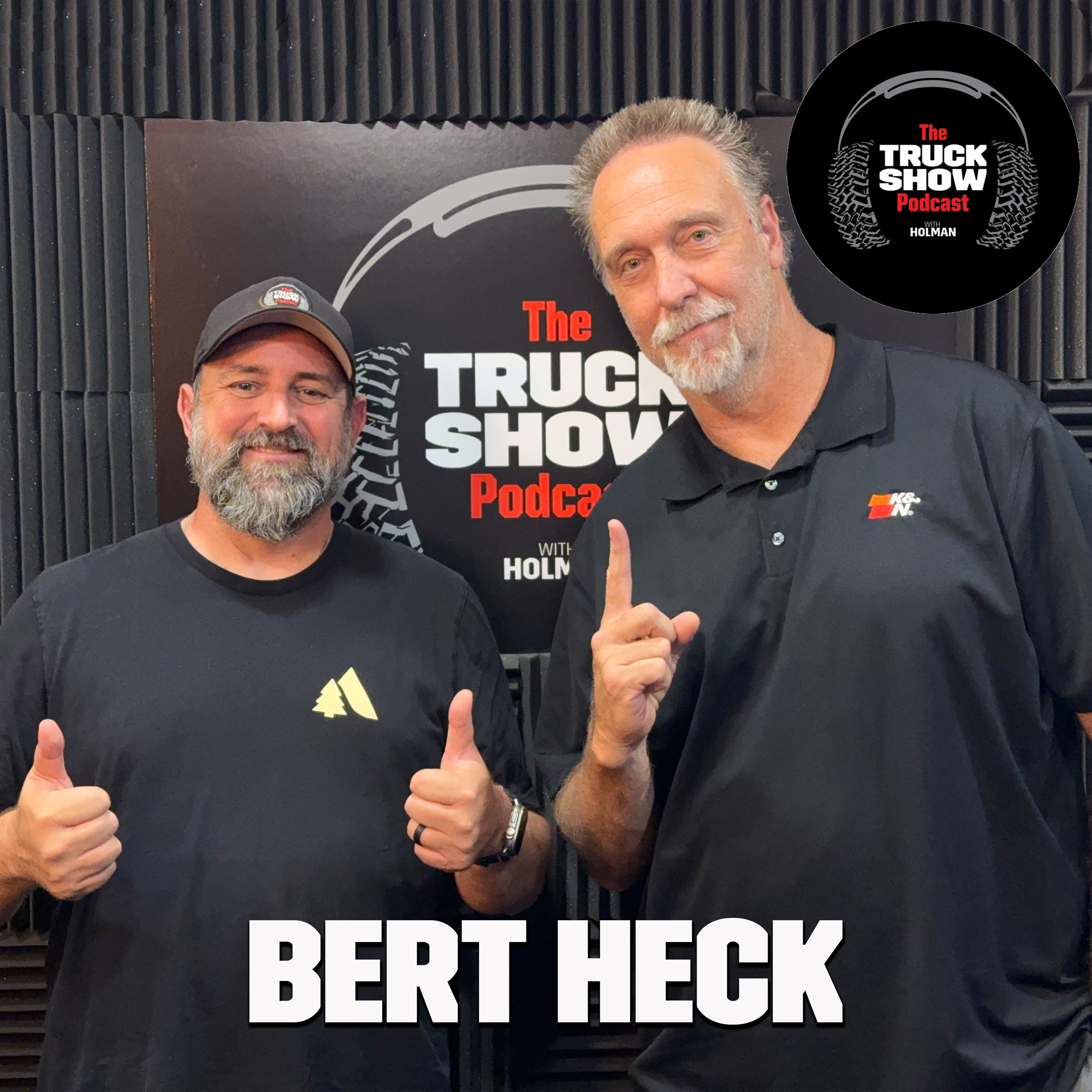
On this episode, we invite Bert Heck from K&N and we have a whole slew of questions for
00:11
him about the brand, the product, and even where K&N is headed.
00:15
It's a storied brand that's had several significant changes in the past few years
00:18
and it is positioning itself to be relevant for years to come, so we'll find out more
00:24
Beyond that, we'll check in with our listeners to see what messages we have in the inbox
00:27
and the five-star hotline.
00:30
And funny side note, I just got back from Colorado and it was the first time Marin and I have
00:35
been on an airplane since an accident, we were out there to see some friends and be there
00:39
So for those of you who travel, you know that getting a rental car is always a pain in
00:43
Fortunately, I've got some status with Hertz, which puts me in gold with the President
00:47
Circle and I like that because you can get a certain level of car and if a better
00:52
car is in the lot, you can take that for no extra charge.
00:56
So we've done that a few times where it's like, okay, got a midsize, look, there's some
01:01
cool SUV, we'll grab that or there's a sports car or whatever.
01:05
So we go through the airport, we get off the plane, flight was great, we both survived
01:09
and we get to Hertz and I look on the board and we get off the shuttle bus and it says
01:14
S. Holman, President Circle.
01:16
So I'm thinking, yeah, President Circle, that's pretty good.
01:18
That means we're going to get some nicer cars and we roll out to the President
01:22
Circle and we get off the bus and everybody in the bus is President Circle and the
01:27
selection is pretty awful.
01:29
There's a Buick SUV that was probably the nicest thing there and immediately got
01:36
So then we move over down the row and there's some Kia's and Hyundai's.
01:40
I'm not taking one of those.
01:41
A clapped out Forester outback.
01:43
Nope, sunny and nope, I don't need the all wheel drive and I need space
01:48
because we're going to have five people in the car and do an airport runs,
01:52
So then I look at Volkswagen Atlas and it was like, okay, well, that's probably
01:57
I've rented Volkswagen before it was fine, walked up, boom, somebody's
02:02
So then I looked and there are two Jeep compasses, one Trailhawk and one
02:05
limited and one of them had 8,000 miles, won't have 5,000 miles.
02:08
And I'm like, well, I guess I'll grab the compass, even though it's going
02:12
to be really tight for five people.
02:14
And in the last ditch moment of desperation, I looked up and I realized,
02:19
you know, the next row over also says president circle on it.
02:24
And so I walked over, there's no cars at all.
02:28
I mean, I think there were like two cars and again, almost everything was gone.
02:33
So I was super bummed out and I thought to myself, all right, well,
02:38
And I looked to my right and there are four Ram 2500 HDs all sitting
02:44
together against the building.
02:46
And of course in that moment, I made eye contact with the Ram I knew was
02:49
going to be mine and I heard.
02:56
So I walked over, I said, Mayor, stay here by this car that I think, you
02:59
know, we didn't quite lick the door handle or take the keys, but I'm
03:01
like, just stand here and make it look like somebody's already grabbed
03:04
I'll be right back.
03:04
So I walk over, I see three Rams and one of the Rams is a brand new 1900
03:12
miles white Ram 2500 HD crew cab, four by four, six, four Hemi big 12 inch
03:22
screen has the bench seat in the front and a bed liner, the LED
03:28
bed lights, I'm like, whoa, full running boards.
03:32
So I go back to Marin and I go, Hey, I think I found her car.
03:36
So I texted my wife a picture and I said the Ram or the compass and
03:41
she goes, no brainer, I'm like, sweet.
03:44
So for like, I don't remember what it was like 120 bucks a day.
03:48
We got a Ram 2500 HD with 1900 miles, so smooth, all the tech that I
03:54
needed, you know, adaptive crews, I will say the one thing about
03:57
the new Rams I don't like are the mirrors.
03:59
I prefer the old mirrors that you could flip up for trailer
04:03
towing and things like that.
04:03
I thought those were way better and less obnoxious when you
04:06
didn't have a trailer.
04:07
But I do love that the little convex mirrors are now power.
04:10
So that's pretty cool.
04:11
And their power, uh, telescoping as well.
04:13
So I have this white Ram or driving it all over the Denver area.
04:16
And the thing that kept occurring to me is what a nice truck that was.
04:21
And I tried to build it on the Ram configurator and I came up
04:25
with something around $65,000 roughly based on what I think
04:28
the packages it had on it are, but it really rode nice.
04:32
And I got almost 15 miles to the gallon in it and it did
04:36
everything we wanted it to do.
04:37
The wedding was at some property in the back country.
04:40
And so there's some dirt roads and stuff.
04:42
I mean, it wasn't anything you needed for a drive for, but it's
04:45
just nice having a big four wheel drive truck driving around I 70
04:49
and all the freeways out there.
04:50
It's just like commanding view.
04:53
Great ride considering it was an empty 2,500.
04:56
It was totally acceptable ride wise for a daily driver.
04:59
So I just wanted to say like, Hey, you know what hurts.
05:02
Thanks for taking care of me.
05:03
Thanks for the president circle and thanks for putting an
05:05
awesome truck in there that made me feel like the person
05:08
I think I am versus squeezing myself into a little economy
05:12
car for for the week.
05:13
And I know nobody really cares about what I was running.
05:18
I don't recall asking for a really, really, really, really,
05:20
really, really, really, really, really, really, really,
05:22
really, really, really, really, really, really, really, really,
05:23
really, really, really, really, really, really, really, really,
05:24
A really boring story, my God.
05:27
What you understand, no one cares.
05:29
But I think you care because I think I hit
05:32
I hit a jackpot in the president's circle.
05:34
It's not often that you get a brand new
05:36
full-size truck for a deal.
05:37
Anyway, enough about that.
05:38
Before we get started, we have to thank the companies
05:40
that make the Truck Show podcast possible.
05:43
The Truck Show podcast is brought to you
05:45
by the following sponsors.
05:46
Amsoil launched the industry's first synthetic motor oil
05:49
back in 1972, and Amsoil continues to innovate
05:53
with a wide selection of synthetics that are formulated,
05:56
blended, and packaged right here in the United States.
05:59
These specialized lubricants are engineered
06:01
for what you drive and how you drive.
06:03
Amsoil's shop-buy vehicle tool offers package size
06:06
recommendations to maximize savings
06:08
and includes Amsoil's ultimate oil change kits.
06:11
Amsoil offers the protection you demand
06:13
and the performance you deserve.
06:14
Get yours today at amsoil.com.
06:17
The perfect compliment to your truck is a Kershaw knife.
06:20
All Kershaw knives come with a limited lifetime
06:22
warranty and repair parts are readily available
06:24
through the website.
06:25
Kershaw knives include lifetime sharpening
06:27
and the lineup has everything from EDC knives
06:30
that can be used and abused for under $50
06:32
all the way up to high-end collectibles.
06:34
Thanks to our generous partnership
06:35
with Kershaw knives Truck Show podcast listeners
06:38
can get 40% off MSRP and free shipping over $50
06:42
by using code 2TSP2025.
06:45
It can be used more than once
06:46
and even includes automatics.
06:48
Visit kershaw.chiusa.com today.
06:52
When it comes to amazing vehicle-based adventure content
06:54
how to use and great storytelling
06:56
only one brand is doing it right in the print magazine space
06:58
and that's OVR outdoor vehicle recreation.
07:01
OVR is about getting out there in our vehicles
07:03
to explore and discover the world around us.
07:05
Get complimentary access for a year to the digital library
07:08
or a discount on your print subscription today
07:13
Use the promotional code at Truck Show podcast.
07:16
The Truck Show podcast survives off of sponsorships
07:19
Please help me to keep it free by supporting our sponsors
07:22
and leaving reviews and comments on Apple Podcasts
07:29
we're gonna show you what we know.
07:33
We're gonna answer what the truck
07:36
cause truck rides with the ****.
07:41
we have the lifted, we have the lowered
07:44
and everything in between.
07:46
We'll talk about trucks that run on diesel,
07:49
electricity and our gasoline.
07:58
It's the Truck Show with your host,
08:12
Who doesn't love our jingle?
08:13
Seven years still sounds fresh
08:15
whereas Lightning used to say freshy fresh
08:17
which was super annoying
08:21
All right, let's get to it.
08:22
Here's a great and informative interview
08:23
with K&N's Bert Heck.
08:26
All right, welcome to the pod shed.
08:28
I've got three strapping young lads
08:30
in here with me today
08:31
but I think we're only gonna hear from one
08:33
and that's gonna be Bert Heck from K&N.
08:36
So we're gonna talk about K&N
08:37
and everybody else is just staring at you.
08:38
Yeah, everybody's just looking at me like,
08:40
hey, what's this guy doing here?
08:42
So I don't know you well
08:43
but we've run into each other before
08:45
because you've been at K&N for about 400 years.
08:52
And I remember we used to bring vehicles by the riverside
08:55
where you guys had the office and the dinos
08:57
and if we had something with four wheeler of the year
08:59
that you hadn't had on the dyno yet
09:01
you wanted to scan it or check it.
09:02
Sometimes we would do a little horse trading
09:04
and bring a vehicle by so.
09:06
Those were the good old days.
09:07
Yeah, those were the good old days.
09:08
Good to see you, Bert.
09:09
And then we've got Christian
09:11
who's hiding in the corner who oversees the brand
09:14
and then we have James who's taking video of us
09:16
that you might end up seeing on social
09:18
but before we get started, everyone gets a jingle.
09:24
It's the inside job, baby.
09:28
It's the inside job now.
09:31
It's the inside job, baby.
09:35
It's never used to share what you do.
09:39
All right, Bert, so you're the inside job today
09:42
so you've been at K&N almost 30 years.
09:45
And what is your role there?
09:47
So I'm the senior director of all automotive development.
09:52
So everything that has to do with intakes,
09:55
drop in replacement filters, all of that kind of stuff.
09:59
Oil filters, oil, we have wipers.
10:01
Let's try again, wipers.
10:02
We have chemicals, brake clean, a few additives.
10:06
So pretty much anything automotive,
10:08
it kind of starts with me and my group.
10:10
All right, so you guys probably know K&N
10:12
as the originator of the reusable air filter.
10:15
And during probably the 2000s,
10:18
K&N innovated with rotomolded intakes, the FitBic,
10:21
and things like that, those were a big deal
10:23
because before that was really just the aluminum tubes
10:26
and things like that.
10:27
And you guys were able to get shapes for horsepower
10:29
and also to fit certain engine bays.
10:31
And that was kind of a big deal when those came out.
10:33
You've always stood on real dyno gains.
10:35
That's another thing that K&N is known for
10:37
is that what you say is what you got
10:39
and you've got it dyno sheets to prove it.
10:42
But our listeners may have noticed
10:43
you guys have been a little bit quiet lately,
10:45
but I'm here to let everybody know
10:46
that K&N is alive and well
10:48
and continuing to innovate.
10:49
In fact, you guys have extra brand new,
10:51
shiny product lines we'll talk about.
10:53
K&N has a lot going on.
10:55
And maybe start us off with the history of K&N.
10:58
Who is K&N and how did you become
11:05
almost 30 year employee?
11:06
Yeah, okay, so K&N started in 69 between K&N norm.
11:10
Two motorcycle racers, they were out racing the desert.
11:14
The big problem, dirt, air filters and so on.
11:17
So during their workings on the motorcycles,
11:20
went out there like, okay, hey,
11:21
we need to come up with a fix.
11:23
So after a lot of research or whatnot,
11:25
they actually came up with a oiled cotton gods filter.
11:28
And then from there, it just has gone nuts.
11:32
So when did you hire in?
11:37
Yeah, so K&N bought a composite shop
11:40
and actually I was there helping just build the shop.
11:44
I was talking to the owner of the composite shop
11:47
that we bought it was going back and forth.
11:49
And he knew I had a lot of drag racing background
11:53
from street racing and all that kind of stuff.
11:55
And so he's like, hey, I need someone like you
11:57
that understands when you look at a valve cover
12:00
or whatever part you understand what it is, right?
12:02
So I got hired on, I ran the composite shop
12:05
for probably about four or five years.
12:09
And then when K&N made a change
12:11
to go into like mass production of composite parts, right?
12:14
I didn't really build 500 of one part, right?
12:17
I love the skunk works part.
12:18
I love building the valve covers
12:19
and scoops and all that crazy stuff.
12:22
So then I go, okay,
12:23
then I worked myself into intake development.
12:27
And then I started from the bottom
12:29
and worked my way up to where I'm at right now.
12:32
I mean, that's pretty amazing.
12:33
I mean, that's actually,
12:35
it's kind of like the American career dream
12:38
that you could start at the low end at a company
12:41
and rise and be with it for so many years.
12:43
I mean, I feel like that just doesn't happen
12:48
And not only me, but there is still a handful of people
12:51
at K&N that has the same story, right?
12:53
So we have a lot of people that work at K&N
12:55
that have been there 30 years, 20 years, 10, 15 years.
13:01
So we still have a lot of those people
13:02
that still have the passion for the company
13:04
and are there for the red and orange.
13:08
So a lot has changed in filtration in 30 years.
13:12
We've seen the oiled cotton gauze filters,
13:15
which was really pioneered by K&N.
13:17
We've seen competitors come into the space.
13:19
We've seen dry filters come into the space.
13:21
We've seen OE filters get better
13:22
than they have been in the past.
13:25
What makes K&N different
13:26
and why is your technology still
13:29
the preferred technology for today's vehicles?
13:33
Because I feel like there's so much coming at us.
13:37
It's the longevity and the staying power
13:39
that K&N has had over the years is great.
13:42
But I feel like sometimes people just go to new things
13:45
because they're new, not necessarily because they're better.
13:48
I think the short answer to that
13:49
is the amount of testing we do, right?
13:52
So we're nonstop testing, right?
13:56
Technology's changing as we know.
13:57
And we're keeping up with the technology
14:00
and looking at medias, oils, even dyno-ing.
14:05
I mean, we nonstop test our product
14:08
to make sure we stay ahead of that curve.
14:11
So when we're looking at, I guess, media,
14:16
is the K&N filter, media and oil today
14:20
different than it was when you started?
14:23
The oil has, right?
14:25
So technology and oil has changed, right?
14:28
It's gotten better than what it was 10, 15 years ago.
14:32
But the oil is still a tachypher, right?
14:35
And so we've looked at the ingredients
14:37
to make the oil a better tachypher.
14:39
So the way it works is you guys have a higher flowing media,
14:43
but by adding the oil to it,
14:45
the oil is able to pull the dust,
14:47
kind of like a magnet out of the air as it goes by.
14:49
And that's sort of the theory behind K&N
14:52
and what allows you to make those performance gains
14:54
is because you can flow higher
14:56
while still capturing the dirt.
14:58
So the cotton oil filter, right?
15:00
So it's got the airflow.
15:02
And so you needed to say, okay,
15:04
so we've got airflow, we've got the performance,
15:06
but what makes it an air filter?
15:08
So obviously the media,
15:09
we're always looking at new medias
15:11
and then like I said, the oil.
15:12
Once we get the oil on the media
15:14
and it, like I said, acts as a tachypher,
15:16
that is what is actually grabbing the dirt
15:18
and still being able to perform like we want.
15:21
So I know when people think of performance,
15:24
performance can mean a lot of different things.
15:26
For me, horsepower can be torque,
15:27
it can be dyno number.
15:28
Sometimes it's filtration efficiency,
15:30
sometimes performance is, you know,
15:34
It's different things to different people.
15:36
I would say that even more important
15:37
than the filters in terms of like an intake or something
15:41
where you kind of have a little bit of noise,
15:43
a little bit more of the gains,
15:45
your drop-ins are probably a massive part of your business
15:47
because there's a lot of people who are like,
15:49
I don't necessarily want to change the OE part
15:51
but I do want to have the benefits
15:52
from a drop-in filter,
15:54
which is something that you can do
15:55
with your panel filters or your drop-in filters
15:57
because you do see some of those gains.
15:59
What are the benefits versus OE
16:02
and what makes Canon better for somebody who's thinking,
16:03
oh, I've got my $60,000, $70,000 truck
16:06
but I'm going to go put a Canon filter in it.
16:09
So the good thing, it's cleanable, reusable, right?
16:12
So with our filter is you look at it and it's like,
16:14
okay, it can go 30,000 miles without even touching it
16:18
or it can go 50,000 depending on what area
16:21
and how you're driving the vehicle, right?
16:23
Then you pull it out, you clean it,
16:25
you re-oil it, you put it back in and you go.
16:28
So it's a lifetime filter.
16:31
So the benefit, like I said,
16:32
is it's the last filter you'll ever buy
16:35
and it's a filter that is designed to perform.
16:38
The airflow, the amount of dirt, the efficiency
16:42
So there's a lot of it that makes the package, right?
16:46
How much of the development goes into
16:48
the ceiling gaskets around the edges and stuff?
16:51
The reason I ask that is I had a filter
16:54
that I was asked to try for the magazine from a competitor
16:56
and I said, okay, no problem.
16:57
So it was just a panel filter.
16:59
So I took out my OE filter and I put this other one in
17:03
and it had air leaks even with it installed correctly
17:06
inside the air box where I could take my finger
17:09
inside the intake tube and it was covered in dirt
17:13
because dirt had bypassed the filter
17:14
and gotten around the edges.
17:17
So in the earlier years, we used to use a gasket, right?
17:21
And as we went through in testing
17:23
and so Canaan has its own in-house lab, right?
17:27
So we have a lab that we can dirt test, efficiency test
17:32
and it's basically do all the ISO testing that we need, right?
17:36
So what we have learned over the years
17:37
instead of using these gaskets, we've looked at bulb seal
17:41
where the filter basically has a bulb seal in place there,
17:45
So when we come up with a new filter
17:47
that filter will go into the lab
17:49
and it'll be tested.
17:50
It'll be tested for efficiency, how much dirt it'll hold.
17:55
And the biggest thing we do look at is how it seals, right?
17:58
So we buy the factory air box, we get all the measurements,
18:03
we design our filter and then we run it through the lab.
18:06
And if at any point that filter has a leak problem,
18:11
Then our lab technician gets with our product engineers
18:15
and say, look it, I just seen this
18:18
and the filter like say failed at X amount of grams of dirt
18:21
and introduced to it or whatever the situation is, right?
18:25
Then they stop, they go back
18:26
and they look and see what happens.
18:28
So the biggest thing that we found with the OE boxes
18:32
is they don't really seal very good, right?
18:35
So we had to make a filter that would seal
18:37
around the small issues that their box has.
18:41
Sure, because there's a lot of mass production.
18:44
We know that there's a lot of inconsistency
18:46
or the allowances for how the parts fit together
18:50
are a lot looser than maybe you want
18:52
if you're building a one-off system.
18:54
And so you have to build enough tolerance in your product
18:56
that soak up their lack of tolerance
18:59
in the pieces that they're building.
19:01
So I was actually surprised,
19:04
I never thought that I would have an air filter fail
19:07
by not sealing in the box.
19:08
To me, that seemed like one of the easiest first things
19:14
that you'd wanna get right on a drop-in filter
19:17
and you don't really think about there being
19:19
a lot of technology in a drop-in filter.
19:21
But really, there's quite a bit that goes
19:23
into just a direct replacement.
19:25
Yeah, so like the year thing, right?
19:27
That's the black part of the filter.
19:29
A lot of competitors don't use a year thing like we do.
19:33
So you have shrink rate, what does the heat do to it?
19:36
What does the cold do to it, right?
19:37
So the filter's actually moving within that air box
19:40
that isn't perfect from the beginning.
19:42
So then when you have a filter that does that,
19:44
then obviously you're gonna have the air leaks.
19:46
Going back to what you said about technology
19:49
and looking, not only media and oil do we look at,
19:52
but we look at the year things
19:53
and all the other components to that filter.
19:56
Cause you have to have something that's temperature stable,
19:58
but also vibration stable too,
20:00
if you're doing off-roading trucks, things like that.
20:03
And then something that still performs
20:05
when it's packed with dirt.
20:06
And I know with filter technology,
20:10
we like to talk about surface area of the media.
20:12
And what people don't understand is that two filters
20:15
side-by-side could look identical
20:17
and have completely different filtration properties.
20:20
And a lot of times you'll look at one filter
20:22
that has a ton of pleats.
20:24
Well, that's extra surface area
20:25
that can absorb the dust and things.
20:27
And you have one that you can see through.
20:30
And so there's a wide gamut of what you get
20:32
that presumably is gonna replace a single part,
20:36
but you may have something that has deeper pleats in it.
20:38
You might have something that has more pleats in it
20:41
You might have something that has different media.
20:44
And so there's a lot that goes into just
20:46
what looks like a very simple automotive replacement product.
20:51
It's not that simple.
20:52
No, and like I said, the testing, right?
20:54
So we spend a lot of money on testing,
20:57
even if it's a filter for, I don't know, a Prius, right?
21:02
First is the testing that we do for a Chevy Dermax, right?
21:06
It's the same test and they're looked at the same way, right?
21:09
And when you go to it as media on holding dirt,
21:13
we can go from a 5 eighths pleat to a 7 eighths pleat.
21:16
We can use an inch and a half pleat.
21:19
And all that is thought about
21:20
on the front side during the development.
21:22
So the product engineers, when they're looking at it,
21:24
they look at the application, right?
21:26
And we say, we know what kind of media
21:28
we'd want to put in a Dermax.
21:31
And we would know what kind of media and depth
21:35
and size of the media for like a standard street car.
21:41
Well, it's what I was looking at, different filter prices.
21:45
And I wanna say just looking at like Wrangler 392, for example,
21:52
I think the K&N filter is like 65, 70 bucks,
21:56
something like that retail.
21:58
And you go to Mopar for the replacement filter.
22:01
And even on the discounted Mopar sites,
22:05
it's more expensive than your filter
22:07
by not an insignificant amount.
22:10
You know, it's like $80 to $100 for a drop in filter.
22:12
And you're sitting there going, wow, I get a better product
22:16
that's gonna last me the lifetime for cheaper than the OE.
22:19
That's a hell of a value proposition right there.
22:22
And you think about it as like,
22:23
so the OE replacement filter, right?
22:26
So you ask yourself, did Chrysler price that
22:29
because of the vehicle it's going into?
22:31
Right, we don't look at that way.
22:32
We look at basically the makeup of the filter.
22:35
So when we go through the costing models or not,
22:37
we don't look at that as for 392 or what?
22:40
We don't look at that.
22:40
We look at the media, everything that's put into it.
22:43
Then we look at the number and say, okay,
22:45
this is what we're gonna sell for.
22:46
So we've seen that in the past where it's like,
22:49
okay, I got the 392 or a Z06 Corvette.
22:53
Right, so it's a $300, $400 filter.
22:55
We don't look at that way.
22:56
Yeah, you guys have the 392 one
22:58
on your website right now, 68.99.
23:01
And it's $20 or $30 less than some of the places
23:04
have the OE filter, which is pretty crazy.
23:07
And real quick, it's the last filter you ever buy.
23:09
When you go into the dealer and they're like,
23:11
oh, it's, you know, your air filter changes $200
23:14
and you're like, what?
23:15
Oh yeah, 125 of labor and 80 plus or a hundred bucks
23:19
I mean, you're just kind of tossing money.
23:20
We all know how easy it is to replace a filter.
23:23
The only sad thing is it's one of those parts
23:24
that you kind of don't see, you know?
23:26
And so you may feel it and you know it's there
23:30
and your cost of ownership is gonna be much better
23:32
because you can use it.
23:34
So let's move on to intakes.
23:36
So maybe walk us through the process.
23:38
You've selected a vehicle.
23:40
What goes from the time that vehicle rolls into the shop?
23:42
And you guys have determined, we did the study,
23:45
our product planner said this is the vehicle,
23:47
they're gonna sell a ton of these
23:48
and there's a big user base who wants an intake.
23:51
What's that process like for you guys?
23:53
Okay, so let's use your 392, right?
23:55
So we know when Chrysler came out with 392 is like,
23:58
so Kana's like, we gotta do something for it.
24:01
So we did all our case studies and looked and said,
24:03
yes, without a doubt, we're gonna do it.
24:04
Before you go, let me just bring this one thing up.
24:07
The 392 is both special and complicated in a couple of ways
24:11
and you guys have a very different intake design
24:14
than your competitors do on it.
24:15
And just for people who are listening, if you don't know,
24:18
the hood scoop on a Gladiator Mojave is fake.
24:22
The same top part of that hood is used on the 392
24:24
but it's hood scoop is real.
24:26
And what it does is it goes in through the hood
24:29
and kind of circles back to the air box
24:31
and it's got these flaps on the back
24:32
so that if you were to forward water
24:34
and it sucked in water through the hood,
24:35
you can dump an enormous amount of water
24:37
at the backside of the engine and not get to the filter.
24:40
So it's probably as close to a weird
24:43
like cold air snorkely thing that you could get it
24:45
by being in a hood.
24:47
Now you guys have your intake
24:49
and I won't give up the secret
24:51
but I'll let you talk about it
24:53
but it's the design philosophy
24:55
and how it works is a lot different
24:56
than what else is out there.
24:57
So I just wanted to,
24:58
so as you're talking people are visualizing
25:00
and they go, okay, now I can see what you're talking about.
25:02
So we bring the vehicle in like we were talking about.
25:04
So what we do is we scan the vehicle
25:07
basically from the floor up from fender to fender, right?
25:11
So we basically scan the whole complete front of that vehicle
25:14
under the hood, top of the hood, everything, right?
25:16
We take that data back, then the engineers get it,
25:18
throw it on the computer and start with the design.
25:21
So we know what kind of design
25:22
we're looking for but we kind of just throw it up in the air
25:26
and let them kind of put it together
25:28
because the engineers we've had, we have at Canaan,
25:31
have been there for 10 plus years.
25:33
So they know kind of what the-
25:35
They understand the homework assignment.
25:38
So they know what we're looking for.
25:39
So they go through and they build it, design it.
25:41
Then we review it and look at it and say,
25:43
okay, this design is within what Canaan wants
25:46
as an intake system.
25:48
Once we do the buy off on that,
25:50
then what we'll do is we'll 3D print the intake.
25:55
Once that's all done,
25:56
then what we'll do is we'll put it on the vehicle, right?
26:00
So we'll fit check it,
26:01
make sure whatever the engineer design, it'll fit,
26:03
make sure the bolts screw in the right place.
26:05
You know, we like to use all factory hardware possible.
26:08
We're not big on having a customer drill
26:12
or put holes in the vehicle.
26:13
Well, and on top of it,
26:14
a lot of the factory stuff now use like rubber pushdown.
26:18
Yeah, to isolate it and allow it to move with the engine.
26:21
But so you don't want a hard mounted air box.
26:24
You want something that moves with the rest of the drivetrain
26:26
and it moves with the engine and can do its thing.
26:29
And you don't want to make something so rigid
26:31
that it wants to pull the, you know, the boot off
26:35
or something like that from the intake tube
26:36
because it's too rigid, doesn't move with the drivetrain.
26:39
And that's another thing we look at
26:40
during the development side is
26:41
if you look at most of our intakes at the throttle body,
26:45
there's obviously a silk on hose to the throttle body
26:47
and the tube, right?
26:48
And if you look, most of our intakes use hump hoses.
26:51
And if it's not at the throttle body,
26:53
it'll be at the filter side.
26:54
So when that engine goes through its torque movement,
26:57
it's act like an accordion.
26:59
Yeah, perfect example, we'll go back to the 392
27:02
because we're talking about it.
27:03
But if you rev a 392, the entire body goes side to side
27:07
like old muscle car
27:08
because the Jeep suspension is so soft.
27:10
And if you do it with the hood open,
27:11
the engine does it more and then the body does it.
27:13
So it's like the whole things moving around
27:15
like that big old V8, you know, revving up in there.
27:19
And so these are all the things that we look at, right?
27:21
So during the development stage,
27:23
that is in the thought when they design the intake.
27:27
And then like I said, once we do a 3D print,
27:29
we fit it in the vehicle and look at it and say,
27:30
okay, you know, the bolt, you know, bolts in here,
27:33
fits here, you know, hood, we look at it
27:35
and look at it, they don't hit it 100% each time.
27:37
So we go back and modify as we go.
27:40
Once we are completely happy
27:41
with the way it fits in the vehicle,
27:44
then that's when we really start doing our testing, right?
27:46
We start doing airflow testing.
27:49
Then we'll take the vehicle and do road testing.
27:52
So we'll collect the data factory from the vehicle.
27:54
So we download all the data off the computer when it's stock,
27:58
go put the intake on, go on the road,
28:00
collect all the data from the intake.
28:03
Then we look at all the data,
28:04
make sure that what we're doing
28:05
isn't messing with airflow numbers, fuel trams,
28:08
you know, just, so on that point,
28:11
there's a lot of modern vehicles now
28:13
that you can put an intake on
28:15
and the car because of emissions and things like that
28:18
will go, oh, there's too much airflow
28:20
and it'll actually back out.
28:22
So you may do the first few runs
28:23
and you get big power gains
28:25
and then you do run two or three and they're gone
28:27
because the car itself has adjusted down.
28:29
And so there's like some tricks you have to do
28:31
to fool the computer or things you have to do
28:34
with airflow, like how hard is that
28:36
in a modern vehicle for some of these vehicles
28:38
that the computer is trying to keep everything
28:40
within this really tight box
28:42
and you're trying to say no,
28:43
we're trying to give the enthusiast
28:44
something a little bit more.
28:46
So one thing that we've done is
28:49
we worked with several companies,
28:51
actually we worked with GMO and whatnot
28:52
and we came up with a machine
28:55
that can test mass air flow sensors, right?
28:57
So we'll take the mass air, put it on the flow bench
29:00
and we'll read what the mass air shows
29:03
in a factory air box.
29:04
And then what we'll do is we'll take our device,
29:06
put it on there and do the same test.
29:09
And then we'll look at the math readings
29:11
and we'll give it a little bit of variance
29:13
so because the car will adapt to it, right?
29:16
So we know that if you go like 10% more
29:19
than what the factory is,
29:21
the things that throw check-ins like
29:22
and it's gonna be a mess.
29:25
It's not like the 2000s were intake headers
29:28
and exhaust and maybe a chip
29:29
and you had 25% more power.
29:32
We're calling for every little bit of percentage
29:35
to get more now because all these manufacturers
29:38
are so constrained and they also look at warranty
29:40
and things like that and they don't want you too far outside
29:43
because they are so tightly engineered now
29:45
and there's not as much on the table
29:47
for you as there used to be.
29:48
Yeah, and emissions, right?
29:50
So we won't go down that road,
29:51
but you get the emissions issue.
29:53
But the biggest thing that,
29:54
especially in the late model vehicles,
29:56
is the air flow and how the mass air works
29:59
with that intake system, right?
30:01
Because we've seen it,
30:02
the guys will run a car in a dyno
30:04
and let's say it makes 40 horsepower, 50 horsepower
30:07
and I'll look at them, I'm like, really?
30:10
What are we missing here, right?
30:11
And then next thing you know, they make another run
30:13
or they do a road, go on a road trip and whatnot
30:15
and then the things throwing check engine lights
30:17
are going lip mode.
30:18
So the most important or one of the most important things
30:21
is obviously making sure that mass air
30:24
is completely happy, right?
30:26
And here again, it goes all about the air flow.
30:28
So it's air flow, mass air,
30:31
get it on the dyno, see what it does
30:32
and then obviously look at what the vehicle was seeing
30:36
So we'll take a vehicle out
30:37
and we'll run it like 30, 40 miles,
30:40
collect all the data, we'll go on the freeway,
30:41
we'll do, you know, stop and go,
30:43
we'll try to do real world testing
30:45
and then when the intake is put on,
30:47
we copy that same test.
30:49
And like I said, then we overlay all the data
30:52
and say, okay, we're good here, we're good here,
30:54
we're bad here, how do we adjust?
30:56
And I look at, we've been doing this for forever, right?
30:59
And there's many times where the engineers
31:01
are coming back and saying,
31:02
hey, I have to reprint this
31:04
because the air flow was too high,
31:07
let's just say, right?
31:08
Whoever thought that you'd have
31:09
too much air for a vehicle.
31:10
Totally, and I mean, it's K&N engineering.
31:13
I mean, you guys are an engineering firm first, right?
31:16
Like, yeah, you make all these great products
31:18
and you're known for your filters
31:19
and things like that,
31:20
but the building's filled with engineers.
31:22
So you have a building filled with problem solvers
31:24
who are working toward a common goal
31:26
of delivering some gains in one way or the other
31:30
Yeah, at the end of the day, right?
31:32
So what I've told our group knows
31:35
that it's fit form function, right?
31:38
When someone spins good money on the intake system, right?
31:41
They wanna make sure it fits, right?
31:43
And then second, they wanna make sure that it performs, right?
31:47
Is it gonna give me the 15, 20 horsepower,
31:49
whatever we're talking about?
31:51
And the function is the thing
31:54
gonna have drivability issues, right?
31:56
That's the last thing that we want
31:58
is to build an intake and have people calling us saying,
32:02
hey, I got check engine light issues
32:03
or the car's going limp and whatnot.
32:06
So we really, really stress when it comes to the end of the day,
32:11
it's gotta be fit form and function.
32:13
Okay, so you go through all of this data for the 392.
32:17
It's got the special hydroguide system.
32:19
It's this cold air sort of through the hood from the factory,
32:22
but then you guys do something really different
32:24
with the air box that nobody else do.
32:26
Everybody kind of has this closed deal.
32:28
You guys sort of have a open element to draw in more air.
32:31
Yes, so that's one of the traditional intakes
32:34
that we did, right?
32:36
It's not an extension.
32:37
So yeah, what we did is obviously,
32:38
we built a custom intake tube, right?
32:41
It's like goes down to, I don't know what it was,
32:42
like two and a half and then the opening of it's like
32:46
So we've got a big six inch conical filter
32:49
and the filter is a massive filter on it, right?
32:52
And part of that was obviously the airflow and all that,
32:55
but the dirt retention, right?
32:57
So we know it's gonna be exposed.
32:59
We know it's gonna be in a Jeep
33:00
and the Jeep should be on the dirt.
33:02
So it's like, get the biggest filter we can
33:04
and so it holds as much dirt as it can.
33:07
But going back to what you said is the design
33:09
is we wanted with the heat extracting and all that,
33:12
we wanted to make sure that we incorporated the heat shield
33:15
that it uses that factory inlet
33:18
so either to get air in or get air out, right?
33:21
Yeah, so the hood still feeds
33:22
the side of your custom air box.
33:24
Yep, and it's the same kind of technology
33:26
like what we do on say the Dermaxes
33:29
where they have the front mounted inlet
33:31
and it's got this big twisty deal
33:33
and it goes the same exact thing.
33:35
We try to use where the manufacturer has like
33:39
inlets and whatnot because look, they did.
33:41
They already did the millions of dollars of research.
33:44
So if we can improve on certain areas,
33:46
that's where we're gonna improve on it, right?
33:48
But if we try to, what we do try to do
33:51
is try to use some of the stuff
33:53
that they've already engineered, right?
33:55
And that's where we went with the 392.
33:58
Yeah, you don't have to rebuild the entire mousetrap,
34:00
but if you can catch more mice with the same one,
34:02
that's pretty good.
34:03
That's a little bit better, right?
34:04
Yeah. Make it cooler, you know?
34:05
So that's how we look at all the applications,
34:09
whether it's a 392 or like I said,
34:11
a Ford truck, a Honda or whatever we did for an intake.
34:15
Yeah, that's awesome.
34:17
With the intakes, one of the biggest things
34:18
that we've tried to our consumer now
34:20
is like you're gonna get the most horsepower
34:23
on a factory tune, right?
34:25
Yeah. So when you buy an intake from us,
34:28
you do not have to go and get a tuner or any other stuff.
34:32
When we say you're basically optimizing
34:34
for what your vehicle came with from the factory.
34:37
Yes, right, with no issues, right?
34:40
So that's the biggest thing that we really,
34:43
you know, kind of pound our chest is,
34:45
we've done the testing, we've done our homework,
34:48
this is what you're gonna see when you buy it
34:51
and you will not have these issues.
34:53
Now, let's go extreme.
34:55
We do have sometimes where there's a vehicle
34:57
that just will not accept an intake, right?
35:01
And if that is what happens
35:03
and we work with the customer and go back and forth,
35:05
there's a lot of times where that customer
35:06
will call customer service,
35:08
they try to do what they can do,
35:09
but a lot of times I'll get the calls
35:11
and I'll talk to the customer and say,
35:12
all right, what's going on?
35:14
And kind of hear what they're saying
35:15
and kind of just get the real world
35:17
of what's happening, right?
35:19
And look at it, and if it doesn't work,
35:21
we have a no-house or warranty.
35:23
I mean, we will give you your money back,
35:26
not question it and say,
35:28
hey, hopefully on your next vehicle
35:29
or whatever. You'll think of us.
35:30
Yeah, yeah. So that's another thing that as K&N,
35:35
the company is like,
35:36
we want to make sure that we take care of that consumer.
35:38
And if by any chance there is a problem,
35:42
we'll make it right.
35:43
So having been at the magazines for over 20 years
35:47
and doing a ton of installs and product testing,
35:49
a couple of things I could tell you is,
35:51
I was always impressed by the K&N fit.
35:54
Many installs, especially when you got into
35:57
the more rotomolded newer style
35:59
where it looks like an air box
36:00
versus just an open filter element.
36:02
Most of that stuff you can install in 25, 30 minutes
36:05
if you have your tools laid out right to go.
36:09
The products that you guys make are very user-friendly
36:12
for DIY and self-install.
36:14
And they've always had a gain for me.
36:16
I've always felt like, oh wow, okay,
36:18
this made a difference on the vehicle that I put on.
36:20
Right. So we just introduced
36:22
what we call our Next Gen Intix.
36:24
I was gonna ask you about that
36:25
because I saw that and they look pretty cool.
36:28
Yeah, so we believe that the best-looking intake
36:31
and the best-performing intake on the market, right?
36:34
And going back to what you were saying is,
36:37
what we have done is we've engineered out
36:39
all the hassle of the hardware, the nuts and bolts.
36:44
So yeah, you're gonna have a few nuts and bolts
36:46
here and there, but it's not like
36:47
what you would have seen, say, five, 10 years ago.
36:50
These intakes basically drop in and within 30 minutes
36:55
you pull the stock, you're probably harder
36:57
to pull the stock intake out than it is
36:59
to put one of our Next Gen intakes in, right?
37:03
So we're really happy with that product line.
37:07
We've gotten a lot of positive reviews
37:09
and people are getting, it's just a bitchin' lookin' intake.
37:14
And you're looking at, with those,
37:17
I'm guessing is it more engineered?
37:19
Because going through the marketing materials
37:21
you have your classic, which, for example,
37:24
just keep going back to the Jeep,
37:26
which you say is five to 10% over stock
37:28
and on the Jeep it's pretty much exactly 5% on 392.
37:31
It's just short of 27 horsepower on that.
37:34
So that's in line with the classic.
37:35
On the Next Gen, you talk about being able to get
37:38
10 to 15% hybrid air box with a large factory inlet,
37:43
oversize tube with integrated airflow channels,
37:45
Next Gen oversize quick lock,
37:47
high flow oil cotton filter.
37:49
So maybe walk us through,
37:51
what are you doing different on the Next Gen?
37:53
By the way, I like the racing stripe on the filter.
37:56
You have the conical filter and it's that normal,
37:57
like the reddish pink oil,
38:01
but then the top has the orange stripe on one of the pleats.
38:04
And I think it looks super cool.
38:05
Yeah, so that write-up that you just read,
38:08
that's Christian's fault.
38:10
He did all that, right?
38:11
So going to the intake, like I said,
38:15
with technology, right?
38:16
So like I told you about the scanning
38:18
and going onto the computer or whatnot.
38:20
So yeah, there's a lot more engineering
38:22
on the front side where an engineer
38:23
is basically, you know, is designing a,
38:27
like a masterpiece, right?
38:29
One of the goals that we want to do with this Next Gen
38:32
is we wanted it to look as if it was gonna come
38:34
from the manufacturer that way, right?
38:37
So it's got a little bit of the OEM look,
38:39
but it's still an aftermarket part
38:42
that obviously performs and, you know.
38:44
Is that because consumers these days,
38:47
there's a lot more technology in the cars
38:49
and you get a lot of the engineering types
38:51
who are like, I like the performance,
38:53
I like the filter media,
38:55
but I don't want something under there
38:57
that's gonna draw a lot of attention
38:58
when you open the hood.
38:59
I want it to work and I want it to be the best,
39:02
but I don't need the boy racer parts of it.
39:05
That's where it kind of the OEM look, right?
39:07
That's why when you look at the tube and airbox,
39:09
it's got the texture to it,
39:11
because it kind of matches what's going on
39:13
underneath the hood.
39:14
And when we're building intake safe,
39:17
it's for, you know, a Chevy truck or whatnot.
39:20
We'll look at how the under hood looks
39:21
and we try to make sure that that intake
39:24
kind of goes with the flow of how the engine looks, right?
39:28
So each one is designed completely different.
39:31
Each one is designed per the applications going on.
39:34
So it's not any universal parts, right?
39:36
So when you buy a next gen for your Chevy truck,
39:40
now obviously it'll fit all the GM trucks, right?
39:43
But it's not gonna fit a Toyota.
39:45
Yeah, it'll be a different filter, part number.
39:47
Completely different because the design of the intake,
39:51
here goes, goes back to the size of the tube,
39:53
mass air placement.
39:54
It's more of a bespoke kind of approach to it
39:58
because rather than saying, okay,
39:59
here's all the parts we have on the shelf.
40:01
And if we make a custom tube and box,
40:03
we can put the rest of these things together
40:05
and make an intake and it's a great commodity.
40:07
The next gen is like, no,
40:08
we're gonna design the whole system specific
40:10
to that application.
40:11
Yes, and no universal, right?
40:13
So each kit is made for that application.
40:16
What do you think the enthusiast is looking for these days?
40:20
The customer's a little bit different, I would argue.
40:23
We talked about a little bit with the next gen,
40:24
but going back to the idea that performance
40:27
is a lot of different things.
40:28
It could be a better sound,
40:30
it could be more horsepower and torque,
40:31
it could be more fuel economy,
40:33
it could be more filtration efficiency.
40:38
Do you think it's platform specific
40:39
as to how you design these things
40:41
or do you think that in general,
40:43
the user is moving to one particular kind of want
40:49
I think a little bit of both, right?
40:50
I think platform, right?
40:52
It's like the truck guy, he wants a certain look, right?
40:56
And then the, like the tuner market,
40:59
they're gonna want a certain look.
41:00
So definitely it's driven by platform.
41:05
So what is, speaking of platforms,
41:07
the biggest up and coming applications
41:10
that you guys are working on?
41:11
What are the things that you're seeing?
41:14
This is on the way, stay tuned,
41:15
we know you want it, we're hard at work at it.
41:17
So this is something that's out of Canaan's wheelhouse, right?
41:21
So we are just getting ready to introduce
41:23
another line of next gen intakes, but with a dry filter.
41:30
So they're gonna be gas, it's gonna be Chevy Ford Dodge,
41:34
and I believe Toyota truck.
41:37
So we're gonna introduce, basically it's like the next gen,
41:40
the first release, but dry filter.
41:43
And then the first of next year, here's another one
41:47
that's out of our wheelhouse, is we're gonna do
41:48
a next gen diesel application, dry.
41:54
So obviously we're, you know, Canaan is oiled gauze,
41:58
you know, we know the whole story there,
42:00
but we felt there are, there are customers out there.
42:02
That you're losing because there's of choice.
42:07
So it's like we kind of, we didn't turn our back to it, right?
42:10
We didn't ignore it, we knew it was there,
42:13
but after having conversations with consumers,
42:16
and I mean, you'll go into the different cars
42:19
and coffees and stuff like that,
42:21
we're like, okay, there is a want for it, so.
42:25
I would agree with that.
42:26
I think that in certain segments,
42:28
the oiled filter, absolutely zero issues, no problem,
42:32
but I think that there are some people that are gun shy,
42:35
and I think they see Canaan as a filtration expert,
42:39
and I think you guys could put in whatever,
42:42
and they would go to it.
42:44
I think there's some people that for whatever reasons,
42:46
I mean, there's been plenty of internet posts,
42:48
rumors, this, that, over the years of,
42:50
oh, you know, Canaan does it, so no, it doesn't,
42:53
there's, here's all the data to back it up,
42:55
and you guys have done a good job
42:56
of kind of counter messaging when somebody pops up,
42:59
it's like whack-a-mole,
43:01
but it has poisoned a certain amount
43:03
of your potential consumer base,
43:05
and so when you're moving into dry filter,
43:08
I know it, you know, from a marketing standpoint,
43:10
you probably go, well, it's counter to our message
43:12
of what we have, but I don't think so,
43:13
because I think your message is filtration,
43:15
so I think it's just another alternative
43:17
under your banner, I would run a dry Canaan filter,
43:19
no questions asked, tomorrow,
43:21
like no issue with that whatsoever,
43:23
I think that would be cool.
43:24
Yeah, because if you know the history of Canaan
43:26
and going back earlier, we've tested it, right?
43:29
So we're not gonna release.
43:30
On dirt bikes, by the way,
43:31
so people go, oh, these things,
43:33
let all this dirt into your engine.
43:34
I'm like, you realize the company was founded
43:36
in racing in the desert, right?
43:38
You know, that's your roots.
43:40
Yeah, and the big segment now is side-by-sides, right?
43:43
So we've got those covered also.
43:45
So yeah, we felt the dry was something
43:47
that we needed to jump into.
43:50
There are the consumers that, like I said,
43:51
are afraid of oil just because of the myth from before,
43:55
and a lot of guys want the ease of a dry filter, right?
43:59
You pull it off, you hose it off, let it dry, throw it in.
44:03
So now we got them covered, right?
44:05
So you want a wet filter with a premium air filter,
44:08
maximum air flow and all that, you got it.
44:10
You want a dry filter for ease of cleaning
44:12
and just to make you feel better, we got you.
44:16
Will they be comparable in flow and filtration?
44:20
Is there a trade-off between the two?
44:22
There is a little difference in flow.
44:24
Filtration, depending on the application,
44:27
filtration is almost identical to the oil.
44:31
And that's one of the things
44:32
that took us a little bit to release this, right?
44:34
We wanted to make sure that our oil filter,
44:38
we know what the filtration is on that, right?
44:40
So we need to make sure that we get the dry
44:43
pretty much spot on to what the oil is.
44:46
So we can tell the consumer, like,
44:47
look, you are buying the best filter
44:49
whether it's wet or dry, right?
44:51
And for me, as an off-roader,
44:54
I'm not afraid of the oil filter at all.
44:57
But if I'm doing a four or 500-mile trip
44:59
with a lot of people,
45:01
I'm not worried about the filter not filtering.
45:03
What I'm worried about is the dust packing up
45:05
which it could do on any filter with a dry filter.
45:07
I could take it out of the air box,
45:08
bang it out and throw it back in,
45:10
whereas I have to do a little maintenance,
45:11
which would be harder in the field on an oil filter.
45:14
So, you know, for that type of application
45:16
and for people who are doing that,
45:17
I think having that choice to say, okay,
45:19
here's a great intake.
45:21
Which way do you want to go is not a bad thing at all.
45:24
No, and like I said,
45:25
it took us a little bit to jump into that arena, right?
45:28
But I really think once we get in there,
45:30
Christian does some good write-ups on it, what not,
45:32
I'm gonna give them all the time.
45:33
I know some magazine guys who, yeah.
45:35
Some magazine guys, right?
45:36
And we give them all the data that is needed
45:39
to tell the consumer, like, hey, look it,
45:41
you can still feel safe with a dry filter.
45:43
Yeah, I think for me,
45:45
just coming from the marketing and media side is,
45:48
it's not even the data,
45:49
you provide the data, cool, thumbs up.
45:50
It's really the story behind it.
45:52
Who is this one right for
45:54
make it really easy for the customer to go,
45:55
oh, that's me, I'm gonna go with this one.
45:57
And that way you don't have any fence sitters like,
45:59
I just don't know, right?
46:00
If you can put a clear case for use case for each one
46:03
and it's not whether or not you get the K&N,
46:05
it's which one you get based on how you use your vehicle.
46:07
That's the way to go.
46:08
And that's very hard, right?
46:09
So we've done oil forever, right?
46:11
And for us to jump into the dry,
46:14
I mean, it's a tough jump,
46:16
but from the testing that we've done,
46:19
we have no doubts that the dry oil is,
46:24
you pick what you want
46:25
and you're gonna get the best product.
46:27
Can we go back to panel filters or replacements for a second?
46:30
Because I don't think people realize
46:32
you guys have the long life disposable,
46:34
the extended life disposable,
46:36
and of course the high flow lifetime oil,
46:38
which you've talked about.
46:39
Maybe walk us through that product line a little bit
46:41
because I think there's plenty of people out there
46:42
who maybe they can't afford a high flow
46:45
or maybe they just don't wanna deal with it
46:47
and they'll just drop in a replacement
46:49
or they want a quality replacement.
46:50
So yeah, so that are two of the main reasons we did this, right?
46:54
So cost, a lot of people,
46:56
some people just can't afford a $70, $80 filter,
46:59
but they want the performance, right?
47:01
So now we came up with the advantage line
47:03
that it's an affordable filter,
47:07
but it still has the K&N technology, right?
47:09
And it's disposable, right?
47:12
So you can throw it away,
47:13
but you can still buy them pretty inexpensive
47:16
and still get the guarantee that what K&N brings.
47:19
Including on the long life,
47:20
you guys say 50% more mileage than a traditional OE air filter.
47:24
And then you've got the extended life,
47:26
so it's double the mileage of a traditional air filter.
47:29
So the benefit is you're also getting a longer service life.
47:33
So it may not be the lifetime filter,
47:35
but you're getting pretty close to those numbers
47:37
before you would have to service a lifetime,
47:39
before you have to replace
47:40
one of your extended life disposables.
47:43
Yeah, cause one of the toughest thing about that was,
47:45
is finding a media that would be able to hold
47:49
to what we just noted, right?
47:50
And so here again, the testing,
47:53
going through the lab and going back and forth.
47:55
So once we finally landed on a media
47:58
that was gonna work for us,
48:00
then that's when we came out with the disposal site.
48:03
So I don't know, it's been less than 10 years probably,
48:05
but you guys made a big push into cabin air filters.
48:08
And cabin air filters are exploding.
48:12
They used to be only been luxury cars.
48:14
And now a lot of mainstream vehicles
48:16
have the cabin filters and you guys have jumped headfirst
48:19
into a reusable cabin filter.
48:22
And I've used them on my vehicles since they came out.
48:25
I absolutely love them.
48:26
And I've pulled out the stock filter
48:30
and you're like, ooh, you know,
48:31
and I've pulled out the K&N filter,
48:33
the same amount of that stuff,
48:34
but be able to wash it, reuse it,
48:36
throw it back in the car.
48:37
I think they're great.
48:38
Maybe talk about the cabin filters a little bit.
48:40
So yeah, so when the cabin filter thing came out,
48:43
a lot of people didn't even know they had them, right?
48:46
So once we got in and started looking at them,
48:48
the one of the big things here on the cabin filters is,
48:52
so it obviously goes within the air box
48:54
of the air conditioning system of the vehicle, right?
48:57
So the biggest thing, the key thing was not,
49:00
was restriction, right?
49:02
We didn't wanna restrict the airflow of the AC unit, right?
49:06
But we still needed to have a media
49:09
that was gonna be able to collect that dust and pollen
49:12
that you see on these cabin filters.
49:15
So the fitment of them, it's a lot difficult.
49:20
We can't just go out and buy an air box, right?
49:22
So we literally had to get vehicles.
49:25
We had to get, you know, get in there, scan them.
49:27
We had to tear the dashes apart.
49:28
I mean, it was a lot of work there, right?
49:30
Now, I'm talking the early years
49:32
before any of this data was out there.
49:36
We went headfirst here again.
49:39
I said it testing, right?
49:40
We had to find a media that wasn't restrictive,
49:43
but we had to get a media that would collect the dust
49:49
You guys, I believe you guys make disposable ones as well,
49:52
but I use the washable ones.
49:55
So yeah, we do have disposables
49:58
and we are actually looking at improving on that line
50:01
because here again, there are some people
50:02
that don't wanna clean up.
50:04
Well, maybe it's a lease car.
50:06
You're not gonna have it long enough
50:07
to pay the price for it.
50:08
You just wanna replace it, but you want something good.
50:10
I know that you guys have some of the claims on those filters
50:14
are like blocks up to 99.6% of influenza A viruses.
50:18
And I've seen what it blocks
50:21
because from an off-roading standpoint,
50:22
all the bugs and things that come into your car,
50:24
I'm like, well, all of this stuff stayed
50:27
out of my pasture compartment.
50:29
That's pretty nice.
50:30
And the nice thing about it too
50:31
is you don't get that big puff of dust
50:33
when you get back on the road and turn your AC up on high
50:36
and get all that dust in your face.
50:37
Especially like in your Jeep, right?
50:39
You go out on the trail, you get on a road, you turn the AC
50:41
and you're like, oh my God, right?
50:43
So does it stop 100% of that?
50:46
No, but does it stop a good 70, 80%?
50:51
And then you guys also have it where it controls odor
50:54
and they're great and they're super easy to install.
50:56
Like for example, on the Jeep is instead of one panel
50:59
that's a paper media that you're bending
51:02
and trying to get it in there,
51:03
you just have to side by side, you put one in,
51:05
slide it over and put the next one in,
51:06
close the door, you're off to the race.
51:08
And that's an easy one, but we do have applications
51:10
where customer basically has to squeeze it together,
51:14
put it in the air box and then let it go and spring out, right?
51:18
And here again, that was in our design, right?
51:20
But we were able to design a filter
51:22
that you could squeeze, get in, let go and it works
51:26
Now, you guys have been doing oil filters for a long time.
51:29
People probably don't think of K&N necessarily
51:32
So maybe let's move on to oil filters for a moment.
51:35
So we've been doing oil filters,
51:37
I would say probably since the early, mid 90s, right?
51:43
Our cans are, I'm trying to remember off the top of my head.
51:48
I think the thing that makes them special
51:51
is you guys have the wrench nut on the backside
51:54
because it's so much easier,
51:56
especially if somebody cranks it on there
51:59
to get it off, cause you can put a wrench right,
52:01
you don't need an oil filter wrench,
52:02
you can use a regular open-ended or box-end wrench
52:05
and be able to get it off, that's a big deal.
52:07
So the nut and out where I was going is a can.
52:09
The can is a heavy case can.
52:11
So if it's on an off-road vehicle
52:13
and it gets hit by rocks and whatnot,
52:15
it's not gonna affect it.
52:15
But the biggest thing is the nut.
52:19
The message we keep telling people it's a wrench off filter.
52:22
We get a lot of people with that wrench or mind...
52:26
Yeah, hand tide in the oil filter, you're good.
52:28
And then when you go to get it off
52:29
you get a one-inch socket, get on there,
52:31
put it comes off and you know,
52:33
the ease of insulation is there.
52:35
You don't have to get an oil wrench
52:36
or any other stuff.
52:38
And the filters, they're a top line filter, right?
52:43
The media we put in, it's a synthetic media.
52:46
And it's compatible with synthetic
52:48
or traditional more oils as well.
52:51
Yeah, and even diesel, right?
52:53
So the oils that we put in diesel
52:54
is on how bad diesels are on oil.
52:57
The filter performs above what it should.
53:01
And now you guys are moving
53:02
into some industrial applications too.
53:04
You've got air conditioning filters
53:06
and things like that as well.
53:06
I mean, you guys have really expanded the product line
53:08
from, oh, I had a, you know,
53:11
conical intake on my, you know,
53:13
I think the first one I installed
53:15
was my 94 Ford Ranger four liter, right?
53:18
Like, that's how far back I go.
53:19
And then I had all sorts of canine stuff over the years,
53:22
but to think of like that to your product line now,
53:27
it's pretty incredible,
53:28
all the different things that canine does.
53:29
Yeah, so it kind of went back to what you said earlier.
53:31
It was like, you know,
53:32
where did canine go the last few years, right?
53:35
but we were investing in the core business on new products,
53:39
the HVAC, the commercial filters on it.
53:42
That's where we were looking at
53:43
because we know that's the next,
53:45
that's the next thing, right?
53:46
Is making sure that we have home filters
53:49
and industrial filters.
53:51
It's a natural progression.
53:52
I mean, let's be honest, there was a time about,
53:54
oh, let's say three or four months ago
53:56
where it looked like there's gonna be an EV mandate
53:58
and internal combustion agents were gonna go away
54:00
and that's a big part of your business.
54:02
So how do you diversify
54:04
while taking the technology that you're known for
54:05
in this area and applying to others?
54:06
So that totally get that.
54:08
But I'm sure that now that the EV mandate's gone away
54:11
and manufacturers like, ooh, let's bring back ice,
54:13
everybody probably taking a deep breath
54:14
and went, okay, all right, we're gonna be all right.
54:16
And it caught our attention, right?
54:18
So when that was going on,
54:20
I mean, we were paying attention, right?
54:21
And we had to start making some decisions, right?
54:26
So with that, it's like,
54:27
okay, we need to get into the home air conditioning
54:30
and the commercial and all that stuff
54:32
because we didn't know where the automotive industry
54:35
was heading, right?
54:36
So it was scary, especially for us gear heads, right?
54:39
It's like, man, so you tell me when I buy my next truck,
54:41
it's gonna be electric?
54:43
It's like, I'm keeping my truck forever.
54:44
Forever, yeah, yeah.
54:47
And that doesn't help when you have a lifetime filter.
54:48
You're not gonna see that guy again.
54:50
Right, so it caught our attention
54:53
and we dug in and we said, okay,
54:56
what do we need to do for the next new product
54:59
that will take Kane into the next level?
55:02
Yeah, I was just looking at on the website,
55:05
all the different stuff that you guys have.
55:08
I mean, you've got the pre-charger filters,
55:09
which I used to use on my Ranger all the time
55:11
for when I go to the desert.
55:12
I'd throw the sock over it and you've got,
55:16
I mean, I could go down and list fuel pumps,
55:18
custom, and think about the old round air filters
55:20
for hot rods and things like that.
55:22
Like you guys still have that kind of stuff.
55:23
And believe it or not, fuel filters.
55:25
I was just looking at the numbers
55:26
are 14 inch and are 16 inch filters.
55:28
We still sell quite a few.
55:30
Yeah, I'm like, who's gonna buy these, right?
55:32
Areas feel injected now, right?
55:34
But the hot rodders out there,
55:36
we make a 14 inch filter with what we call the extreme top
55:40
with the filter on the lid.
55:40
The filter on the lid instead of the aluminum
55:42
or metal top, yeah.
55:43
We're still building those things
55:44
and we still have a lot of, or it's like.
55:48
It's like, man, who uses a carburetor anymore?
55:52
Yeah, I know, I get it, but it's like.
55:53
Hey, I've got a 1941 Ford Flat Fender in the garage
55:56
with a Buick Audifier V6 in it.
55:59
I'm one of those guys.
56:00
Yeah, I get, well, so am I.
56:02
I mean, my race cars all have carburetors on, right?
56:04
So I'm still that old guy.
56:05
It's like, everybody's like, put fuel injection on.
56:07
It's like, nah, I know how to tune a carburetor.
56:09
Fuel injection, that's for the young guy, right?
56:12
Stubstacks, planems, carburetor adapters,
56:15
inline fuel and oil filters for gas engines.
56:17
You've got, you even got a line of carbon fiber pieces
56:20
to make it look modern.
56:23
I mean, vent breathers for diffs and transmissions
56:26
and things like that.
56:28
And then chemicals.
56:29
The chemicals, of course you've got the cleaners
56:32
for getting all the old oil and dirt out
56:34
and then you've got the new oil
56:36
and the aerosol oil's nice
56:38
because you don't over oil.
56:39
I remember when people first got
56:42
into servicing their filters,
56:44
they would just put gobs of oils that was just dripping up
56:47
and all you need to do is just,
56:48
I used to put a little bit of a few drops on the ridge
56:51
and let it soak through, flip it over to the other side,
56:54
Yeah, so you'd want the wick, right?
56:56
Kind of goes back to the problem
56:57
where the oil versus the drying.
56:59
Where people don't want to do that.
57:02
They just want to clean it and run, right?
57:04
But the guys that know how to oil filters,
57:06
they know that you don't just get in there
57:08
and smash it, right?
57:09
You just got to be real selective
57:11
of how much oil you put on them.
57:12
So tell me something about K&N that nobody knows about.
57:15
Ooh, that's a good one.
57:17
Let me think about that for a second.
57:19
I'm just trying to see where that can go, right?
57:22
That's a hard question
57:23
because we're pretty open about what we do.
57:26
I mean, obviously every intake that you do
57:29
has the dyno chart that you can download
57:31
right on the website, right under the application.
57:33
You explain the whole process to people of how you test,
57:37
which is pretty interesting
57:38
if anybody wants to go to the K&N website,
57:40
which is knfilters.com.
57:42
There's just a ton of resource on there
57:44
that is really great.
57:45
I know you guys recently moved manufacturing to Texas.
57:48
That was a pretty big deal.
57:49
Yeah, so we took our, our facility was in Riverside
57:54
and we moved to Texas.
57:56
And really the bottom line is that move was logistics, right?
57:59
So we basically put us right in the country.
58:01
Your central country.
58:02
So it can go to both sides in two days, right?
58:05
So we wanna make sure that we can get the product
58:07
out to people without them having to wait
58:08
to five, seven, 10 days.
58:10
So our main manufacturing is in Texas.
58:15
that's where all of our product development is.
58:18
So that's where the dinos is, the-
58:20
So you guys are still there, HQ is still there,
58:22
but the logistics manufacturing shipping
58:24
is what moved to Texas.
58:26
So Riverside has roughly 40 people in there.
58:31
And then like I said, then in Dallas,
58:33
we've got, I think our number is like close to 500 or so.
58:38
And you're close to carb too,
58:39
because you still gotta get EO numbers
58:40
and things like that and go through that process,
58:42
which is a whole lot of fun for every manufacturer.
58:45
We don't need to talk about that right now.
58:46
Yeah, they're actually,
58:48
which is funny, carb is like a rock throw
58:52
Yeah, so I mean, if you're gonna be doing it,
58:53
you might as well try and be in the neighborhood
58:55
and have a good relationship with it.
58:56
And we do have a good relationship.
58:58
Fine folks at that alphabet agency.
59:00
Yes, yeah, we love them.
59:01
Car people all love tremendously.
59:04
Love you, love you carb.
59:05
Okay, so what would you like the people listening
59:08
to the podcast to know about Canaan?
59:09
Is there anything we didn't cover?
59:10
Is there anything about the brand that you feel like
59:13
somebody's on the fence,
59:14
they're thinking about a filter,
59:16
they're thinking about intake.
59:17
What's the one thing you'd want them to know
59:18
to push them over to the edge and get your product?
59:20
So the big thing is research, right?
59:23
If you have any doubts,
59:25
we have a ton of data on our website, right?
59:28
So if you're nervous about oil filter and mass airs,
59:31
we have a big write up about the testing we did
59:34
with oil and mass airs.
59:35
If you have questions about dry filters,
59:37
look at everything that we build,
59:40
we have an answer on our website that you can go in
59:43
and you can, you know, research it.
59:44
Do yourself that, at least that, you know,
59:47
get in there and see what we do
59:48
and see what we're saying.
59:50
Because I guarantee our customers are,
59:54
the people that are competing with us
59:56
don't have nearly as much data as what we have.
59:59
You know, dyno testing, right?
00:01
I mean, if you talk about in a year,
00:03
we will dyno probably over 250 vehicles a year, right?
00:08
Tell me who can do that.
00:10
You know, some of the dyno's that we use,
00:12
we even had those manufacturers come to us
00:14
and test product on their dyno
00:16
because they know we're running a dyno's.
00:19
Air filter, the filtration side of it.
00:21
I mean, our lab, we test, test, test,
00:23
and all that data is on our website.
00:25
So if you had any questions, go and look
00:28
because it's right there.
00:30
Okay, so we've talked a lot about the 392G.
00:37
I guess you can say it saved my life
00:38
since I tried to pancake one on the highway.
00:41
So I, here's my deal.
00:45
I got a 392, the second I drove it,
00:47
I was like, man, this thing is stupid, awesome.
00:50
It doesn't have auto start stop.
00:52
It doesn't have a second battery.
00:54
It doesn't have a hybrid.
00:55
It doesn't have a turbo.
00:57
It's just a big, stupid V8.
00:58
Now, if you look at it, it's an older V8.
01:00
Yeah, it's an older V8 that they built millions of
01:03
in RAM heavy duties, in SRTs, and all sorts of stuff.
01:08
And it's, again, it's like you pull up next
01:12
to a kid in a Civic or a Mustang
01:13
and you smoke them in a dumb Jeep
01:15
and then you push the little quiet exhaust button,
01:17
like the happy neighbor button.
01:18
And people like look around like, what made that noise?
01:21
And you're like, you know?
01:23
So you're missing something else.
01:26
We should make that happen.
01:27
So my 23392 is being replaced with a 25
01:31
and that is now sitting at AV right now
01:33
and I'll pick it up and I think four weeks or so.
01:37
And then I'll bring it home
01:38
and we'll start making it cool.
01:40
I'm looking at the 35 extra pound feet of torque
01:43
from that intake and it's making me go, hmm.
01:45
So to tell you, I think we got some coolness
01:48
in the trunk of our car.
01:51
All right, well, I like that.
01:52
Well, all right, so now you guys are listening
01:53
and you're getting jealous
01:54
but you don't have to be jealous
01:56
because when we're talking about the K&N crew,
01:59
nobody ever says lower than the suckage.
02:03
No, they say increase the suckage
02:04
because they're high flow
02:06
and K&N has graciously offered listeners
02:10
for the next 30 days from when this episode aired,
02:14
listeners of the Truck Show podcast,
02:15
you can get 15% off from the K&N filter website,
02:19
intake, air filters, oil filters, cabin filters.
02:22
So use lower case Truck Show pod
02:25
and that's on the website, which is knfilters.com
02:29
and we will put that on the website as well.
02:31
So if you wanna pass that on to a friend,
02:33
buy as many intakes and filters
02:36
and I just heard the crowd,
02:38
the people listening, they just responded.
02:42
They're very happy with that discount.
02:44
Like you said, just don't buy one, buy two, buy three.
02:47
Think about it, Christmas is coming up.
02:48
Oh, yeah, that's right.
02:49
All days are here, so time to share the love.
02:52
That's right, get your Christmas shopping in early.
02:55
Also, I noticed that on some of your intakes,
02:57
when you buy the intake,
02:58
you also get the cabin filters included,
03:01
which is, that's like a no branch.
03:02
So if that application comes with cabin filters,
03:04
you get it as part of the deal.
03:06
So go on our website, we're always running sales like that.
03:10
And that's obviously one of the Christians,
03:12
one of his jobs is to make sure that gets done correctly.
03:14
I mean, you just see, you're like,
03:15
man, I should probably get a cabin filter.
03:17
I'll just do the intake.
03:18
Oh, I get it for free.
03:19
Boom, I'm just getting done, right?
03:21
So really appreciate you guys coming out
03:23
to the pod shed and the fact that, again,
03:26
15% off on knfilters.com for the next 30 days,
03:29
intake, air, oil, cabin filters.
03:31
So that's lower case Truck Show pod.
03:33
Make sure you guys take advantage of that
03:35
and thanks for coming out.
03:37
Thanks for having us.
03:39
And here again, I'm gonna put this out
03:40
if you want to come to-
03:44
Yeah, well, that went long, but at any point,
03:48
the development center is in Riverside,
03:51
back in the old days,
03:51
if you want to come out, you're more than welcome.
03:53
I'd love to, I haven't,
03:54
I've probably, it's been no joke 10 or more years
03:57
since I've been out to the Riverside facility.
03:59
It's been a long time.
04:00
Things have changed and it's all been for the better.
04:02
Yeah, I would love to check it out.
04:04
All right, well, I'll see you guys in Riverside.
04:07
Thank you, Bert Heck, and thank you, K&N, for joining us
04:09
and thank you for the awesome discount code
04:11
for the Truck Show podcast listeners.
04:12
So for you guys are looking for an intake
04:14
or filters, oil filters, air filters, cabin filters,
04:17
don't forget to use the code Truck Show pod,
04:19
all lower case on the K&N website, knfilters.com
04:24
and get yourself or some friends
04:26
some new filtration products.
04:28
All right, before we go,
04:29
let's see what's going on in the inbox.
04:31
You email, yeah, I email, do it, we email,
04:36
that's right, everybody email, type it up,
04:39
you email, proofread, I email, send it,
04:43
we email, click it, everybody email.
04:47
All right, got this one from Dan Church
05:00
and he says, what's going on, Mr. Holman?
05:02
First, so glad you and Marin are healing up
05:04
and getting back to normal.
05:06
We're making some good progress.
05:08
She'll be doing PT hopefully soon,
05:10
her skin graft's almost healed up on her foot
05:11
and I've been doing lots of shoulder PT in the pool
05:14
so we're both feeling pretty good
05:17
and working our way back.
05:18
Love seeing the posts of her walking across the stage
05:20
and hearing the magical of my voice
05:21
has spontaneously returned to episode.
05:25
I mean, think of where I was just a couple months ago
05:28
and listen to my voice now.
05:29
This is all new content
05:31
and I couldn't be happier to be able to bring it back
05:34
to you guys and not struggle through.
05:35
So anyway, says continued prayer for you both.
05:39
We're not out of the woods yet
05:40
in terms of what we need for recovery and things like that
05:43
so appreciate all your prayers.
05:45
We definitely heard them
05:46
and thank you for all the listeners.
05:48
You guys have been like family to us
05:50
and we greatly appreciate it.
05:52
Second, I just finished the Mike Rice episode
05:55
and new rig deliberation, great choice.
05:57
I went Bronco Raptor and absolutely love it.
05:59
My buddy has a 392 and we hit some deep Sierra Nevada snow
06:02
over the winter and then the Rubicon several weeks ago.
06:04
I did post some content you may recall, who knows?
06:07
Yes, I do remember that.
06:09
Over the runs we've done,
06:09
he's inked me out of some sketchy spots
06:11
and I've done the same for him.
06:12
We both agree the machines are both amazing
06:14
and we are all very fortunate to have these choices
06:17
and are splitting hairs across these rigs
06:19
with so much of it as you always say
06:21
quote unquote use case specific
06:22
and just flat out personal preference.
06:24
I've always been a Ford guy
06:25
so know if I ran your shoes
06:27
I'd probably go back to a Raptor variant
06:28
but if I'm you, it's 100% go 392.
06:31
That thing is a beast.
06:33
I was listening to the episode
06:34
telling myself he's going 392.
06:36
We already know this
06:37
but loved the honest look into all the options out there
06:39
and Rice trying to get you to consider
06:40
some big dude three quarter tons.
06:42
That said, I'm curious if the 392 makes his way
06:44
into the gladiator, would you have gone that way
06:48
Take care of my friend
06:49
and hope to see you on the trail someday, Dan Church.
06:51
Yeah, Dan, the 392 was never destined
06:54
for the gladiator ever.
06:56
I think I've explained it on here before
06:58
it was a program called J9.
06:59
It was done under Kineskis when he was at Jeep
07:02
and then priorities had changed by the time
07:04
he left and Morrison came back
07:06
and it would just never got the development dollars
07:09
even though it's the same basic platform.
07:10
And as we've talked in the more recent episodes
07:12
with Bob at the helm
07:14
and Kineskis fighting hard for the return of Hemi.
07:16
Stalantis is righting a lot of wrongs.
07:18
Of course, the big beautiful bill
07:19
and the EV mandate and some of the things
07:20
are changing the landscape and regulations.
07:23
All of those things are getting to a point
07:25
where yes, a V8's coming to the gladiator
07:27
probably the 392 because the development's
07:30
basically done on that.
07:32
If there were a 392 gladiator,
07:35
I would have been all over that.
07:36
To me, it's the best of all the worlds
07:38
and the one thing the gladiator lacks
07:40
is a lot of powertrain options.
07:42
And so while the V6 is great for most people,
07:45
I think that platform can give a little bit more
07:47
and it needs more power to do that
07:49
and the 392 is great, but I'll tell you,
07:51
if it came out tomorrow
07:52
with a Ram 5.7 Hemi, I wouldn't be mad.
07:55
I think a truck Hemi would be awesome in the gladiator.
07:58
So that's kind of where I land on that.
08:01
I think the gladiator is a great vehicle.
08:03
I think that having a mid-sized solid axle pickup truck
08:07
I'm glad we have that out there.
08:09
And we'll see what the future brings,
08:11
but I'm definitely excited for it.
08:12
All right, let's check in with the five-star hotline.
08:17
Oh, come on and be part of the show.
08:20
Call the five-star hotline.
08:26
It's the five-star hotline.
08:37
Hey, it's Rich, and you're a period holster.
08:39
Hey, I'm not sure if anybody or how many people know or not,
08:44
but just because I deal with the big fleet of vehicles
08:47
and we've had a lot of issues during the last few years
08:51
with heavy rain, is everybody aware
08:54
that if you have a leak in your truck, for example,
08:57
your sunroof is leaking?
08:59
I know a lot of the superduties, especially the 2011
09:05
through 2016, one of the trucks, my big black truck
09:09
that I drive, has issues with the sunroof leaking.
09:15
Everybody on here know that by simply placing charcoal
09:19
in your truck, a bag of charcoal, I don't do a full bag,
09:22
but I usually stuff, I'll put three or four things of charcoal
09:26
into a black sock, and I'll put it under the seat.
09:30
Charcoal absorbs the moisture.
09:32
And my mom's Jetta had a huge leak
09:37
where it comes in up with that particular year of Jetta
09:40
in the 2013, where the water was just pouring in.
09:45
I put a bag of charcoal in the trunk,
09:48
along with a bag of charcoal in the back seat, so on.
09:50
And the charcoal absorbed all the moisture,
09:52
got rid of everything.
09:55
So just a handy tip, if you don't know
09:59
how to get rid of that stench from your car,
10:02
just put some charcoal in there.
10:04
I guarantee you it'll work.
10:06
I wouldn't put it directly onto nice carpet
10:09
because it'll stain it.
10:10
But put it into a black sock or put it into a bag,
10:14
something like a potato sack or something.
10:16
Put it in your car, and in a matter of a few days,
10:19
it'll absorb the smell and the moisture.
10:21
So anyway, you're doing awesome, brother.
10:26
It's so nice to have you back.
10:27
It's nice to hear your voice again.
10:30
Man, God is good, and we're so, so freaking blessed
10:34
to have you and your daughter still with us.
10:36
Hope you have an awesome day.
10:38
Keep monitoring those crazy, funky parameters.
10:41
And love you, dude.
10:43
Bouncer, monitor key engine parameters.
10:48
Always great to hear from you,
10:49
and thanks for the tip for the Truck Show Podcast listeners.
10:52
We appreciate it greatly.
10:53
All right, well, that's gonna do it
10:54
for this episode of the Truck Show Podcast.
10:56
If you miss us between shows,
10:58
be sure to follow us on social at Truck Show Podcast
11:00
or at Sean B. Holman.
11:02
Or be part of the show, five star hotline,
11:04
657-205, 61 to five.
11:06
The Truck Show, the Truck Show, the Truck Show, whoa, whoa.
11:11
And don't forget to give us your feedback,
11:13
Truck Show Podcast at gmail.com.
11:15
I might read your letter or your thoughts on the air.
11:18
And be sure to join the Facebook group,
11:20
The Podshed Insiders, because, well, why not?
11:23
Send me events if you have them, know your notes.
11:25
And I'd like to thank our great sponsors,
11:27
Amazon Oil, obviously one of the best out there.
11:29
If you love your vehicles like we do,
11:31
they offer the best in synthetics.
11:34
You can get oil change kits,
11:35
car care products, and you can buy online, amsoil.com.
11:38
And for the fantastic line of Kershaw knives,
11:41
get yours today, kershaw.kaiusa.com
11:45
and use the code 2TSP2025
11:48
for a special Truck Show Podcast listener deal.
11:51
And of course, if you love adventure and gear,
11:53
you wanna check out OVR Magazine, ovrmag.com.
11:57
And you also get a discount there as well.
11:59
And please, if you wanna know what the discount codes are
12:01
or what the current offers are,
12:03
go to the website, truckshowpodcast.com
12:06
and you can go under the featured products tab.
12:08
You can also listen to the episodes there as well.
12:11
All right, thank you everybody for listening.
12:13
Thank you so much for the crew from K&N
12:15
for coming in studio.
12:17
And that'll wrap it up.
12:19
Let's do it again real soon.
12:24
The Truck Show Podcast
12:25
is a production of Truck Famous LLC.
12:28
This podcast was created by Sean Holman and Jay Tillis,
12:31
hosted by Sean Holman.
12:33
And uses production elements by DJ Omar Khan and Jay Tillis.
12:37
If you like what you've heard,
12:38
please open your Apple Podcast or Spotify app
12:40
and leave us a five star review.
12:42
And if you're a fan, there's no better way
12:44
to support the show than by sharing it
12:46
and patronizing our sponsors.
12:50
Some vehicles may have been harmed
12:51
during the making of this podcast.
13:03
For those seeking a monitor, only the brand new GPX1 stock
13:15
is now available for Dodge Cummins
13:17
and has a full five inch color display
13:20
with a captive touch.
13:22
It's quick to start and magnetic mount
13:24
allows you effortlessly
13:26
master monitor key engine parameters
13:31
right from your dash.